

HIV effects on age-associated neurocognitive dysfunction: premature cognitive aging or neurodegenerative disease?
Open accessThe DOI matches its Crossref record; 123 of the 123 references it cites were found in a registry or an index.
Abstract
Marked improvements in survival and health outcome for people infected with HIV have occurred since the advent of combination antiretroviral therapy over a decade ago. Yet HIV-associated neurocognitive disorders continue to occur with an alarming prevalence. This may reflect the fact that infected people are now living longer with chronic infection. There is mounting evidence that HIV exacerbates age-associated cognitive decline. Many middle-aged HIV-infected people are experiencing cognitive decline similar that to that found among much older adults. An increased prevalence of vascular and metabolic comorbidities has also been observed and is greatest among older adults with HIV. Premature age-associated neurocognitive decline appears to be related to structural and functional brain changes on neuroimaging, and of particular concern is the fact that pathology indicative of neurodegenerative disease has been shown to occur in the brains of HIV-infected people. Yet notable differences also exist between the clinical presentation and brain disturbances occurring with HIV and those occurring in neurodegenerative conditions such as Alzheimer’s disease. HIV interacts with the aging brain to affect neurological structure and function. However, whether this interaction directly affects neurodegenerative processes, accelerates normal cognitive aging, or contributes to a worsening of other comorbidities that affect the brain in older adults remains an open question. Evidence for and against each of these possibilities is reviewed.
Overview
The claims and statistics of this paper haven’t been checked yet.
Free: it reads the open-access text and checks the first 5 claims that cite a source we can check. Create a free account to check every claim.
Integrity signals
Registry
Cites
Statistics
Figures
Verification
Claims the paper makes
The claims and statistics of this paper haven’t been checked yet.
Free: it reads the open-access text and checks the first 5 claims that cite a source we can check. Create a free account to check every claim.
Claims other papers make about this one
Each is checked against this paper’s own text: does it say what the citing paper says it does?
The cited source says what the claim attributes to it.
In the citing paper
“HIV/AIDS itself is a risk factor for dementia.332”
From 2023 Alzheimer's disease facts and figures (2023) · cites this paper as [332]
Experimental — accuracy not yet measuredThe cited source says what the claim attributes to it.
In the citing paper
“HIV/AIDS itself is a risk factor for dementia.”
From 2024 Alzheimer's disease facts and figures (2024) · cites this paper as [360]
Self-check
Percentages, sums and reported differences re-computed from the paper’s own numbers.
The self-check needs the paper’s full text.
Citations
Cites
The Cardiovascular Health Study: design and rationale.
Fried, L. P., Borhani, N. O., Enright, P., Furberg, C. D., Gardin, J. M., Kronmal, R. A., Kuller, L. H., Manolio, T. A., Mittelmark, M. B., Newman, A., et al. (1991) · Annals of Epidemiology · doi:10.1016/1047-2797(91)90005-w · Cited by 3,652
Microbial translocation is a cause of systemic immune activation in chronic HIV infection
Brenchley, J. M., Price, D. A., Schacker, T. W., Asher, T. E., Silvestri, G., Rao, S., Kazzaz, Z., Bornstein, E., Lambotte, O., Altmann, D., et al. (2006) · Nature Medicine · doi:10.1038/nm1511 · Cited by 3,559
Braak, H., Alafuzoff, I., Arzberger, T., Kretzschmar, H., & Del Tredici, K. (2006) · Acta Neuropathologica · doi:10.1007/s00401-006-0127-z · Cited by 3,172 · cited 2×
“The location of Aβ accumulation varies in AD but tends to occur in neocortical areas first [74].”
BackgroundHeaton, R. K., Clifford, D. B., Franklin, D. R., Woods, S. P., Ake, C., Vaida, F., Ellis, R. J., Letendre, S. L., Marcotte, T. D., Atkinson, J. H., et al. (2010) · Neurology · doi:10.1212/wnl.0b013e318200d727 · Cited by 2,353 · cited 1×
“It is interesting to note that problems with learning and memory are reported to a greater extent in the cART era [15,16,29-31], indicating a change in the typical presentation of HAND in older adults with HIV.”
BackgroundThe AIDS dementia complex: I. Clinical features
Navia, B. A., Jordan, B. D., & Price, R. W. (1986) · Annals of Neurology · doi:10.1002/ana.410190602 · Cited by 1,660
Self-citationGroups, F. T. C. A. H., Heaton, R. K., Franklin, D. R., Ellis, R. J., McCutchan, J. A., Letendre, S. L., LeBlanc, S., Corkran, S. H., Duarte, N. A., Clifford, D. B., et al. (2011) · Journal of NeuroVirology · doi:10.1007/s13365-010-0006-1 · Cited by 1,533 · cited 2×
“Yet HAND continues to occur in 30% to 50% of infected people [8,15-17].”
BackgroundLongstreth, W. T., Manolio, T. A., Arnold, A., Burke, G. L., Bryan, N., Jungreis, C. A., Enright, P. L., O'Leary, D., & Fried, L. (1996) · Stroke · doi:10.1161/01.str.27.8.1274 · Cited by 1,464
Longitudinal Magnetic Resonance Imaging Studies of Older Adults: A Shrinking Brain
Resnick, S. M., Pham, D. L., Kraut, M. A., Zonderman, A. B., & Davatzikos, C. (2003) · The Journal of Neuroscience · doi:10.1523/jneurosci.23-08-03295.2003 · Cited by 1,425
Price, R. W., & Brew, B. J. (1988) · Journal of Infectious Diseases · doi:10.1093/infdis/158.5.1079 · Cited by 1,368
Estimation of HIV Incidence in the United States
Hall, H. I. (2008) · JAMA · doi:10.1001/jama.300.5.520 · Cited by 1,317 · cited 1×
“HIV-infected adults over age 55 comprise the fastest-growing age group in the HIV-positive population [6], and advanced age at the time of seroconversion increases the risk for neurocognitive impairment [7].”
BackgroundPrice, J. L., Davis, P. B., Morris, J. C., & White, D. L. (1991) · Neurobiology of Aging · doi:10.1016/0197-4580(91)90006-6 · Cited by 818 · cited 1×
“In the context of HIV, pTau is generally found in the hippocampus and entorhinal cortex and later spreads to surrounding areas [78], which mirrors the pattern seen in normal aging and AD [81].”
BackgroundFjell, A. M., McEvoy, L., Holland, D., Dale, A. M., & Walhovd, K. B. (2014) · Progress in Neurobiology · doi:10.1016/j.pneurobio.2014.02.004 · Cited by 799 · cited 1×
“Aggregated Aβ can also occur in older people without cognitive disturbances, but whereas it is ubiquitous and extensive in AD [76], it is not a fundamental aspect of normal cognitive aging.”
BackgroundThe impact of HIV-associated neuropsychological impairment on everyday functioning
HEATON, R. K., MARCOTTE, T. D., MINDT, M. R., SADEK, J., MOORE, D. J., BENTLEY, H., MCCUTCHAN, J. A., REICKS, C., GRANT, I., & THE HNRC GROUP (2004) · Journal of the International Neuropsychological Society · doi:10.1017/s1355617704102130 · Cited by 726 · cited 1×
“Though less severe than dementia, ANI and MND affect occupational and psychosocial functioning, quality of life, and health outcomes [9,18,19].”
BackgroundThe HNRC 500-Neuropsychology of Hiv infection at different disease stages
Heaton, R. K., Grant, I., Butters, N., White, D. A., Kirson, D., Atkinson, J. H., McCutchan, J. A., Taylor, M. J., Kelly, M. D., Ellis, R. J., et al. (1995) · Journal of the International Neuropsychological Society · doi:10.1017/s1355617700000230 · Cited by 631
Trajectories of brain aging in middle-aged and older adults: Regional and individual differences
Raz, N., Ghisletta, P., Rodrigue, K. M., Kennedy, K. M., & Lindenberger, U. (2010) · NeuroImage · doi:10.1016/j.neuroimage.2010.03.020 · Cited by 630 · cited 1×
“As people reach advanced age, cortical and subcortical volumes gradually decrease [51].”
BackgroundApoE genotype accounts for the vast majority of AD risk and AD pathology
Raber, J., Huang, Y., & Ashford, J. W. (2004) · Neurobiology of Aging · doi:10.1016/j.neurobiolaging.2003.12.023 · Cited by 599 · cited 2×
“The relationship between ApoEε4 and cognitive functioning is more robust in AD than in HIV, as carriers with two alleles have up to a 90% chance of having AD by age 80, and ApoEε4 has been said to account for the majority of the risk associated with developing AD [91].”
BackgroundPfefferbaum, A., Sullivan, E. V., Hedehus, M., Lim, K. O., Adalsteinsson, E., & Moseley, M. (2000) · Magnetic Resonance in Medicine · doi:10.1002/1522-2594(200008)44:2<259::aid-mrm13>3.0.co;2-6 · Cited by 595 · cited 1×
“Declines in DTI measures of white matter integrity also occur with increased age [55], with anterior regions showing the greatest changes [56].”
BackgroundHIV-associated cognitive impairment before and after the advent of combination therapy
Sacktor, N., McDermott, M. P., Marder, K., Schifitto, G., Selnes, O. A., McArthur, J. C., Stern, Y., Albert, S., Palumbo, D., Kieburtz, K., et al. (2002) · Journal of Neurovirology · doi:10.1080/13550280290049615 · Cited by 584 · cited 2×
“Yet HAND continues to occur in 30% to 50% of infected people [8,15-17].”
BackgroundBlood–Brain Barrier Dysfunction as a Cause and Consequence of Alzheimer's Disease
Erickson, M. A., & Banks, W. A. (2013) · Journal of Cerebral Blood Flow & Metabolism · doi:10.1038/jcbfm.2013.135 · Cited by 572 · cited 3×
“Neurotoxicity has also been implicated in AD, other neurodegenerative diseases, and normal brain aging [90,108].”
BackgroundCarey, C. L., Woods, S. P., Gonzalez, R., Conover, E., Marcotte, T. D., Grant, I., & Heaton, R. K. (2004) · Journal of Clinical and Experimental Neuropsychology · doi:10.1080/13803390490510031 · Cited by 544 · cited 2×
“In the cART era, as before, cognitive and motor slowing are major elements of HAND, along with impairments of attention, working memory, and executive functioning [17].”
BackgroundEdison, P., Archer, H. A., Gerhard, A., Hinz, R., Pavese, N., Turkheimer, F. E., Hammers, A., Tai, Y. F., Fox, N., Kennedy, A., et al. (2008) · Neurobiology of Disease · doi:10.1016/j.nbd.2008.08.001 · Cited by 513 · cited 1×
“PET studies show that widespread microglial activation also occurs in AD and is linked to cognitive dysfunction [106].”
BackgroundCognitive aging, executive function, and fractional anisotropy: a diffusion tensor MR imaging study.
Grieve, S. M., Williams, L. M., Paul, R. H., Clark, C. R., & Gordon, E. (2007) · PubMed Central · Cited by 432
A meta-analysis of diffusion tensor imaging in mild cognitive impairment and Alzheimer's disease
Sexton, C. E., Kalu, U. G., Filippini, N., Mackay, C. E., & Ebmeier, K. P. (2011) · Neurobiology of Aging · doi:10.1016/j.neurobiolaging.2010.05.019 · Cited by 410 · cited 1×
“AD is also associated with widespread DTI abnormalities [61].”
Background(Pre)diabetes, brain aging, and cognition
S. Roriz-Filho, J., Sá-Roriz, T. M., Rosset, I., Camozzato, A. L., Santos, A. C., Chaves, M. L. F., Moriguti, J. C., & Roriz-Cruz, M. (2009) · Biochimica et Biophysica Acta (BBA) - Molecular Basis of Disease · doi:10.1016/j.bbadis.2008.12.003 · Cited by 386 · cited 3×
“Each of these conditions can adversely affect neurocognitive functioning [116,117].”
BackgroundMarra, C. M., Zhao, Y., Clifford, D. B., Letendre, S., Evans, S., Henry, K., Ellis, R. J., Rodriguez, B., Coombs, R. W., Schifitto, G., et al. (2009) · AIDS · doi:10.1097/qad.0b013e32832c4152 · Cited by 347 · cited 2×
“In one study, decreased CSF Aβ, but not elevated total tau or pTau, was found in people with HAND [84].”
BackgroundHarezlak, J., Buchthal, S., Taylor, M., Schifitto, G., Zhong, J., Daar, E., Alger, J., Singer, E., Campbell, T., Yiannoutsos, C., et al. (2011) · AIDS · doi:10.1097/qad.0b013e3283427da7 · Cited by 331 · cited 2×
“Findings have been mixed [30,84], but overall it seems unlikely that cART is the major cause of brain dysfunction in most patients.”
BackgroundSelf-citationChanges in pathological findings at autopsy in AIDS cases for the last 15 years
Masliah, E., DeTeresa, R. M., Mallory, M. E., & Hansen, L. A. (2000) · AIDS · doi:10.1097/00002030-200001070-00008 · Cited by 321
Reduced basal ganglia volume in HIV‐1‐associated dementia: Results from quantitative neuroimaging
Aylward, E. H., Henderer, J. D., McArthur, J. C., Brettschneider, P. D., Harris, G. J., Barta, P. E., & Pearlson, G. D. (1993) · Neurology · doi:10.1212/wnl.43.10.2099 · Cited by 317 · cited 2×
“Historically, research focused on the basal ganglia and cerebral white matter, regions considered to be particularly vulnerable to HIV [35].”
BackgroundThinning of the cerebral cortex visualized in HIV/AIDS reflects CD4 + T lymphocyte decline
Thompson, P. M., Dutton, R. A., Hayashi, K. M., Toga, A. W., Lopez, O. L., Aizenstein, H. J., & Becker, J. T. (2005) · Proceedings of the National Academy of Sciences · doi:10.1073/pnas.0502548102 · Cited by 309 · cited 1×
“Yet when compared with seronegative controls, people with HIV also show reduced grey matter and cortical thinning [32-34,36], especially in frontal and temporal regions [37].”
BackgroundCalcium ions in neuronal degeneration
Wojda, U., Salinska, E., & Kuznicki, J. (2008) · IUBMB Life · doi:10.1002/iub.91 · Cited by 301 · cited 1×
“Neurotoxicity has also been implicated in AD, other neurodegenerative diseases, and normal brain aging [90,108].”
BackgroundBrain deposition of beta-amyloid is a common pathologic feature in HIV positive patients
Green, D. A., Masliah, E., Vinters, H. V., Beizai, P., Moore, D. J., & Achim, C. L. (2005) · AIDS · doi:10.1097/01.aids.0000161770.06158.5c · Cited by 299 · cited 5×
“In HIV, plaques tend to be diffuse, and amyloid depositions commonly occur in neuronal somas as well as in extracellular plaques and along axonal tracks [70,71,73].”
BackgroundInfluentialMattson, M. P., Haughey, N. J., & Nath, A. (2005) · Cell Death & Differentiation · doi:10.1038/sj.cdd.4401577 · Cited by 285 · cited 2×
“The oxidative stress and cell damage caused by ROS have been proposed as a major driver underlying brain aging [98] and may also contribute to HIV effects on the aging brain, along with abnormal insulin signaling [99].”
BackgroundEl‐Sadr, W., Mullin, C., Carr, A., Gibert, C., Rappoport, C., Visnegarwala, F., Grunfeld, C., & Raghavan, S. (2005) · HIV Medicine · doi:10.1111/j.1468-1293.2005.00273.x · Cited by 284 · cited 1×
“Vascular and metabolic comorbidities, including diabetes, metabolic syndrome, obesity, and vascular disease, are now occurring with increased prevalence as chronically HIV-infected people age [114], and there is mounting evidence that HIV contributes to their development or expression [115].”
BackgroundPre-Clinical Detection of Alzheimer's Disease Using FDG-PET, with or without Amyloid Imaging
Mosconi, L., Berti, V., Glodzik, L., Pupi, A., De Santi, S., & de Leon, M. J. (2010) · Journal of Alzheimer's Disease · doi:10.3233/jad-2010-091504 · Cited by 277 · cited 1×
“PET research in AD shows parietal, temporal, and posterior cingulate glucose metabolism decreases that predict cortical volume loss [65], with decreases in the frontal cortex as the disease progresses [66], whereas in HIV frontal hypometabolism is seen early on in the disease.”
BackgroundAIDS dementia complex and HIV‐1 brain infection: Clinical‐virological correlations
Brew, B. J., Rosenblum, M., Cronin, K., & Price, R. W. (1995) · Annals of Neurology · doi:10.1002/ana.410380404 · Cited by 255 · cited 1×
“HIV infection, predominantly involving macrophages, in the absence of opportunistic infection [11].”
BackgroundIndependent Effects of HIV, Aging, and HAART on Brain Volumetric Measures
Ances, B. M., Ortega, M., Vaida, F., Heaps, J., & Paul, R. (2012) · JAIDS Journal of Acquired Immune Deficiency Syndromes · doi:10.1097/qai.0b013e318249db17 · Cited by 241 · cited 1×
“Although greater cognitive and neurological deficits in older people with HIV may result from independent additive effects of the pathophysiological mechanisms of aging and HIV [25,26], longitudinal studies show significant interaction effects of HIV and age [27,28], suggesting that the mechanisms are synergistic.”
BackgroundDeclining incidence of AIDS dementia complex after introduction of zidovudine treatment.
Portegies, P., de Gans, J., Lange, J. M., Derix, M. M., Speelman, H., Bakker, M., Danner, S. A., & Goudsmit, J. (1989) · BMJ · doi:10.1136/bmj.299.6703.819 · Cited by 235 · cited 1×
“The advent of combination antiretroviral therapy (cART) in the late 1990s led to reductions in HIV-associated mortality and morbidity [5] and a precipitous decline in incidence of dementia [12].”
BackgroundHOLLAND, J. C., & TROSS, S. (1985) · Annals of Internal Medicine · doi:10.7326/0003-4819-103-5-760 · Cited by 223 · cited 1×
“During the early years of the HIV epidemic, the cognitive and functional consequences of HIV were devastating for patients and their families [2].”
BackgroundEnhancing antiretroviral therapy for human immunodeficiency virus cognitive disorders
Letendre, S. L., McCutchan, J. A., Childers, M. E., Woods, S. P., Lazzaretto, D., Heaton, R. K., Grant, I., Ellis, R. J., & the HNRC Group (2004) · Annals of Neurology · doi:10.1002/ana.20198 · Cited by 222 · cited 1×
“Certain antiretroviral drugs penetrate the BBB and enter the brain more easily than others, making them good candidates to treat HIV-associated brain dysfunction [110].”
BackgroundLoessner, A., Alavi, A., Lewandrowski, K., Mozley, D. P., Souder, E., & Gur, R. E. (1995) · PubMed · Cited by 221
Neuenburg, J. K., Brodt, H. R., Herndier, B. G., Bickel, M., Bacchetti, P., Price, R. W., Grant, R. M., & Schlote, W. (2002) · JAIDS Journal of Acquired Immune Deficiency Syndromes · doi:10.1097/00126334-200210010-00007 · Cited by 215
Neurodegeneration and Ageing in the HAART Era
Brew, B. J., Crowe, S. M., Landay, A., Cysique, L. A., & Guillemin, G. (2009) · Journal of Neuroimmune Pharmacology · doi:10.1007/s11481-008-9143-1 · Cited by 207 · cited 2×
“Abnormal beta-amyloid (Aβ) accumulation is a hallmark of AD that has been found to occur in HIV [70,71].”
BackgroundBurt, T. D., Agan, B. K., Marconi, V. C., He, W., Kulkarni, H., Mold, J. E., Cavrois, M., Huang, Y., Mahley, R. W., Dolan, M. J., et al. (2008) · Proceedings of the National Academy of Sciences · doi:10.1073/pnas.0803526105 · Cited by 205 · cited 2×
“ApoEε4 has been shown to increase cell susceptibility to HIV infection in vitro [93].”
BackgroundPrevalence of cognitive disorders differs as a function of age in HIV virus infection
Becker, J. T., Lopez, O. L., Dew, M. A., & Aizenstein, H. J. (2004) · AIDS · doi:10.1097/00002030-200401001-00003 · Cited by 204 · cited 1×
“Advanced age is among demographic factors associated with reduced neurocognitive performance and susceptibility to HAND in HIV-infected people [21-24], as greater neurocognitive impairment exists among older HIV-infected adults relative to normative data and compared with younger infected individuals.”
ResultWhite matter abnormalities in HIV-1 infection: A diffusion tensor imaging study
Pomara, N., Crandall, D. T., Choi, S. J., Johnson, G., & Lim, K. O. (2001) · Psychiatry Research: Neuroimaging · doi:10.1016/s0925-4927(00)00082-2 · Cited by 202 · cited 1×
“There is evidence that the earliest HIV-associated white matter effects occur in the frontal lobes [44], with more widespread damage occurring as the disease increases in severity [43,45].”
BackgroundHaga, K. K., Khor, Y. P., Farrall, A., & Wardlaw, J. M. (2009) · Neurobiology of Aging · doi:10.1016/j.neurobiolaging.2007.07.005 · Cited by 199 · cited 1×
“Furthermore, MRS research indicates that there is an age-related decline in NAA and increases in Cho and Cr [57].”
BackgroundCSF amyloid β42 and tau levels correlate with AIDS dementia complex
Brew, B. J., Pemberton, L., Blennow, K., Wallin, A., & Hagberg, L. (2005) · Neurology · doi:10.1212/01.wnl.0000183293.95787.b7 · Cited by 199
Correia, S. C., Santos, R. X., Carvalho, C., Cardoso, S., Candeias, E., Santos, M. S., Oliveira, C. R., & Moreira, P. I. (2012) · Brain Research · doi:10.1016/j.brainres.2011.12.063 · Cited by 195 · cited 1×
“Epidemiological studies have long suggested that these conditions increase risk for developing AD [116,117,119], and increased vascular risk is associated with greater amyloid burden in both HIV [120] and AD [111,121].”
Backgroundβ-Amyloid Is Different in Normal Aging and in Alzheimer Disease
Piccini, A., Russo, C., Gliozzi, A., Relini, A., Vitali, A., Borghi, R., Giliberto, L., Armirotti, A., D'Arrigo, C., Bachi, A., et al. (2005) · Journal of Biological Chemistry · doi:10.1074/jbc.m501694200 · Cited by 193 · cited 1×
“Aβ aggregates in similar brain areas in healthy aging as in AD but usually more slowly and with less neurotoxicity [77].”
BackgroundCohen, R. A., Harezlak, J., Schifitto, G., Hana, G., Clark, U., Gongvatana, A., Paul, R., Taylor, M., Thompson, P., Alger, J., et al. (2010) · Journal of Neurovirology · doi:10.3109/13550280903552420 · Cited by 191 · cited 10×
“PET research in AD shows parietal, temporal, and posterior cingulate glucose metabolism decreases that predict cortical volume loss [65], with decreases in the frontal cortex as the disease progresses [66], whereas in HIV frontal hypometabolism is seen early on in the disease.”
BackgroundInfluentialSelf-citationOxidative stress and neuroAIDS: triggers, modulators and novel antioxidants
Mollace, V., Nottet, H. S. L. M., Clayette, P., Turco, M. C., Muscoli, C., Salvemini, D., & Perno, C. F. (2001) · Trends in Neurosciences · doi:10.1016/s0166-2236(00)01819-1 · Cited by 187 · cited 3×
“Chronic neuroinflammation resulting from prolonged glial and astrocyte activation has been shown to lead to neuronal dysfunction and death [87,96] and has been linked to HIV-associated brain abnormalities [97].”
BackgroundMolecular and pathologic insights from latent HIV-1 infection in the human brain
Desplats, P., Dumaop, W., Smith, D., Adame, A., Everall, I., Letendre, S., Ellis, R., Cherner, M., Grant, I., & Masliah, E. (2013) · Neurology · doi:10.1212/wnl.0b013e31828c2e9e · Cited by 187 · cited 1×
“Although pre-existing genetic factors may influence the impact of HIV on neurological structure and function, HIV also causes epigenetic changes that may contribute to neurodegeneration and cognitive impairment as well [95].”
BackgroundMetabolic Syndrome and Cognitive Disorders: Is the Sum Greater Than Its Parts?
Yaffe, K. (2007) · Alzheimer Disease & Associated Disorders · doi:10.1097/wad.0b013e318065bfd6 · Cited by 185 · cited 2×
“Each of these conditions can adversely affect neurocognitive functioning [116,117].”
BackgroundBhaskaran, K., Mussini, C., Antinori, A., Walker, A. S., Dorrucci, M., Sabin, C., Phillips, A., Porter, K., & CASCADE Collaboration (2008) · Annals of Neurology · doi:10.1002/ana.21225 · Cited by 182 · cited 1×
“HIV-infected adults over age 55 comprise the fastest-growing age group in the HIV-positive population [6], and advanced age at the time of seroconversion increases the risk for neurocognitive impairment [7].”
BackgroundEverall, I., Vaida, F., Khanlou, N., Lazzaretto, D., Achim, C., Letendre, S., Moore, D., Ellis, R., Cherner, M., Gelman, B., et al. (2009) · Journal of Neurovirology · doi:10.3109/13550280903131915 · Cited by 181 · cited 1×
“In HIV, plaques tend to be diffuse, and amyloid depositions commonly occur in neuronal somas as well as in extracellular plaques and along axonal tracks [70,71,73].”
BackgroundStout, J. C. (1998) · Archives of Neurology · doi:10.1001/archneur.55.2.161 · Cited by 177
Vascular risk factors, HIV serostatus, and cognitive dysfunction in gay and bisexual men
Becker, J. T., Kingsley, L., Mullen, J., Cohen, B., Martin, E., Miller, E. N., Ragin, A., Sacktor, N., Selnes, O. A., & Visscher, B. R. (2009) · Neurology · doi:10.1212/wnl.0b013e3181bd10e7 · Cited by 174 · cited 1×
“Tau phosphorylation in HIV may result from pro-inflammatory cytokines and viral proteins that alter amyloidosis, which precede the formation of tau tangles [80].”
BackgroundPalmer, C. S., Ostrowski, M., Gouillou, M., Tsai, L., Yu, D., Zhou, J., Henstridge, D. C., Maisa, A., Hearps, A. C., Lewin, S. R., et al. (2014) · AIDS · doi:10.1097/qad.0000000000000128 · Cited by 170 · cited 1×
“Increased basal ganglia metabolism may seem counterintuitive, although HIV-infected astrocytes require increased glucose to proliferate [50], and the basal ganglia are known to be particularly vulnerable to HIV [35].”
BackgroundCognitive impairment in older HIV-1-seropositive individuals: prevalence and potential mechanisms
Valcour, V. G., Shikuma, C. M., Watters, M. R., & Sacktor, N. C. (2004) · AIDS · doi:10.1097/00002030-200401001-00012 · Cited by 168
Peluso, M. J., Meyerhoff, D. J., Price, R. W., Peterson, J., Lee, E., Young, A. C., Walter, R., Fuchs, D., Brew, B. J., Cinque, P., et al. (2013) · Journal of Infectious Diseases · doi:10.1093/infdis/jit088 · Cited by 162 · cited 1×
“In contrast, elevated CSF pTau was shown in patients with asymptomatic HIV compared with controls in a recent study [85], and recent findings yet to be published by our group indicate elevated CSF pTau among older HIV-infected people with HAND.”
ResultAnthony, I. C., Ramage, S. N., Carnie, F. W., Simmonds, P., & Bell, J. E. (2006) · Acta Neuropathologica · doi:10.1007/s00401-006-0037-0 · Cited by 158 · cited 4×
“However, elevated pTau occurs at earlier ages in people with HIV than in healthy controls [78].”
BackgroundInfluentialOxidative Stress and Transcriptional Regulation in Alzheimer Disease
Shi, Q., & Gibson, G. E. (2007) · Alzheimer Disease & Associated Disorders · doi:10.1097/wad.0b013e31815721c3 · Cited by 157 · cited 2×
“Similarly, alterations in brain mitochondrial function, glucose metabolism, and oxygen utilization have been implicated in AD [101,102].”
BackgroundLyn-Cook, L. E., Lawton, M., Tong, M., Silbermann, E., Longato, L., Jiao, P., Mark, P., Wands, J. R., Xu, H., & de la Monte, S. M. (2009) · Journal of Alzheimer's Disease · doi:10.3233/jad-2009-0984 · Cited by 150 · cited 1×
“Hepatic ceramides produced in response to HIV have also been linked to metabolic syndrome, apoptosis, and neurodegeneration [112].”
BackgroundHogg, R. S., Lima, V., Sterne, J. A. C., Grabar, S., Battegay, M., Bonarek, M., Monforte, A. D., Esteve, A., Gill, M. J., Harris, R., et al. (2008) · Cited by 149
Garvey, L. J., Pavese, N., Politis, M., Ramlackhansingh, A., Brooks, D. J., Taylor-Robinson, S. D., & Winston, A. (2014) · AIDS · doi:10.1097/01.aids.0000432467.54003.f7 · Cited by 147 · cited 1×
“Regional microglial activation measured by PET has been shown to correspond to executive dysfunction in HIV [103], consistent with autopsy findings showing frontal cortical accumulation of DNA oxidative damage induced by ROS in people with AIDS [104].”
ResultAmyloid and tau cerebrospinal fluid biomarkers in HIV infection
Gisslén, M., Krut, J., Andreasson, U., Blennow, K., Cinque, P., Brew, B. J., Spudich, S., Hagberg, L., Rosengren, L., Price, R. W., et al. (2009) · BMC Neurology · doi:10.1186/1471-2377-9-63 · Cited by 147 · cited 1×
“Elevated pTau and decreased Aβ have been reported in the CSF of people with symptomatic HIV [82], mirroring the pattern found in people with AD, although this finding has been inconsistent, particularly for total tau and pTau [83].”
ResultMcArthur, J. C., McDermott, M., McClernon, D. R., Hillaire, C. S., Conant, K., Marder, K. S., Schifitto, G., Selnes, O. A., Sacktor, N. C., Stern, Y., et al. (2004) · Archives of Neurology · doi:10.1001/archneur.61.11.1687 · Cited by 142 · cited 1×
“Overall, cART use led to improved cognitive functioning [13] and reduced neurological damage [14].”
BackgroundAnderson, E., Zink, W., Xiong, H., & Gendelman, H. E. (2002) · JAIDS Journal of Acquired Immune Deficiency Syndromes · doi:10.1097/00126334-200210012-00004 · Cited by 142 · cited 5×
“HIV-associated brain dysfunction is potentiated by a cascade of excitotoxic and apoptotic processes that amplify immunologic and inflammatory responses to the virus [87,96,99].”
BackgroundInfluentialContemplating Alzheimer’s Disease and the Contribution of White Matter Hyperintensities
Brickman, A. M. (2013) · Current Neurology and Neuroscience Reports · doi:10.1007/s11910-013-0415-7 · Cited by 141 · cited 1×
“As in HIV, WMHs have been shown to occur in frontal and parietal lobes in AD, and the degree of WMH in parietal lobes and posterior periventricular areas corresponds with level of cognitive impairment [60].”
BackgroundGongvatana, A., Schweinsburg, B. C., Taylor, M. J., Theilmann, R. J., Letendre, S. L., Alhassoon, O. M., Jacobus, J., Woods, S. P., Jernigan, T. L., Ellis, R. J., et al. (2009) · Journal of Neurovirology · doi:10.1080/13550280902769756 · Cited by 139 · cited 2×
“Case-controlled diffusion tensor imaging (DTI) studies show that HIV is associated with lower white matter integrity globally [41] and in specific areas such as the corpus callosum, internal capsules, and the frontal and parietal lobes [42,43].”
BackgroundPsychomotor slowing in HIV infection: A predictor of dementia, AIDS and death
Sacktor, N. C., Bacellar, H., Hoover, D. R., Nance‐Sproson, T. E., Seines, O. A., Miller, E. N., Pan, G. J. D., Kleeberger, C. A., Brown, A., Saah, A. J., et al. (1996) · Journal of NeuroVirology · doi:10.3109/13550289609146906 · Cited by 139 · cited 2×
“Patients with severe ADC usually experienced the greatest impairments in attention, working memory, and executive functions, along with fine motor and information processing speed [8,9].”
BackgroundChang, L.-H., Andres, M., Sadino, J., Jiang, C. S., Nakama, H., Miller, E. N., & Ernst, T. (2011) · NeuroImage · doi:10.1016/j.neuroimage.2011.07.010 · Cited by 128 · cited 2×
“ApoEε4 has also been linked to reduced cognitive performance in HIV compared with age-matched seronegative ApoEε4 participants [92], although some research does not support a significant association between ApoEε4 and HAND [94].”
BackgroundResultNakamura, T., Watanabe, A., Fujino, T., Hosono, T., & Michikawa, M. (2009) · Molecular Neurodegeneration · doi:10.1186/1750-1326-4-35 · Cited by 124 · cited 1×
“Similarly, alterations in brain mitochondrial function, glucose metabolism, and oxygen utilization have been implicated in AD [101,102].”
BackgroundTowgood, K. J., Pitkänen, M., Kulasegaram, R., Fradera, A., Kumar, A., Soni, S., Sibtain, N. A., Reed, L. J., Bradbeer, C. S., Barker, G. J., et al. (2011) · Cortex · doi:10.1016/j.cortex.2011.03.006 · Cited by 119 · cited 1×
“A study of asymptomatic individuals with HIV revealed decreased frontal grey matter volumes in the absence of other brain changes [38], suggesting that cortical atrophy begins in frontal areas.”
BackgroundFactors affecting brain structure in men with HIV disease in the post-HAART era
Study, F. T. M. A. C., Becker, J. T., Maruca, V., Kingsley, L. A., Sanders, J. M., Alger, J. R., Barker, P. B., Goodkin, K., Martin, E., Miller, E. N., et al. (2012) · Neuroradiology · doi:10.1007/s00234-011-0854-2 · Cited by 117 · cited 1×
“Although greater cognitive and neurological deficits in older people with HIV may result from independent additive effects of the pathophysiological mechanisms of aging and HIV [25,26], longitudinal studies show significant interaction effects of HIV and age [27,28], suggesting that the mechanisms are synergistic.”
BackgroundBrain Ventricular Volume and Cerebrospinal Fluid Biomarkers of Alzheimer's Disease
Ott, B. R., Initiative, T. A. D. N., Cohen, R. A., Gongvatana, A., Okonkwo, O. C., Johanson, C. E., Stopa, E. G., Donahue, J. E., & Silverberg, G. D. (2010) · Journal of Alzheimer's Disease · doi:10.3233/jad-2010-1406 · Cited by 114 · cited 1×
“This signifies that HIV may progress to involve processes that bear a greater resemblance to age-related neurodegenerative diseases, such as AD, of which cortical atrophy and ventricular enlargement are hallmarks [59].”
BackgroundSelf-citationNeurocognitive performance enhanced by highly active antiretroviral therapy in HIV-infected women
Cohen, R. A., Boland, R., Paul, R., Tashima, K. T., Schoenbaum, E. E., Celentano, D. D., Schuman, P., Smith, D. K., & Carpenter, C. C. J. (2001) · AIDS · doi:10.1097/00002030-200102160-00007 · Cited by 114 · cited 1×
“Overall, cART use led to improved cognitive functioning [13] and reduced neurological damage [14].”
BackgroundSelf-citationCysique, L. A., Moffat, K., Moore, D. M., Lane, T. A., Davies, N. W. S., Carr, A. D., Brew, B. J., & Rae, C. D. (2013) · PLoS ONE · doi:10.1371/journal.pone.0061738 · Cited by 113 · cited 1×
“N-acetylaspartate (NAA), a marker of neuronal integrity that decreases in response to neuronal damage, has been shown to be lower in people with HIV compared with age-matched controls, especially in the basal ganglia and frontal white matter [46,48].”
Ragin, A. B., Wu, Y. G., Storey, P., Cohen, B. A., Edelman, R. R., & Epstein, L. G. (2005) · Journal of NeuroVirology · doi:10.1080/13550280590953799 · Cited by 112 · cited 1×
“There is evidence that the earliest HIV-associated white matter effects occur in the frontal lobes [44], with more widespread damage occurring as the disease increases in severity [43,45].”
BackgroundVascular and cognitive functions associated with cardiovascular disease in the elderly
Cohen, R. A., Poppas, A., Forman, D. E., Hoth, K. F., Haley, A. P., Gunstad, J., Jefferson, A. L., Tate, D. F., Paul, R. H., Sweet, L. H., et al. (2009) · Journal of Clinical and Experimental Neuropsychology · doi:10.1080/13803390802014594 · Cited by 112 · cited 1×
“It should also be emphasized that vascular risk factors are highly prevalent in the elderly, and there is strong evidence that these can be associated with vascular cognitive impairment, even in the absence of discrete cerebrovascular events [118].”
BackgroundSelf-citationCoughlin, J. M., Wang, Y., Ma, S., Yue, C., Kim, P. K., Adams, A. V., Roosa, H. V., Gage, K. L., Stathis, M., Rais, R., et al. (2014) · Journal of NeuroVirology · doi:10.1007/s13365-014-0239-5 · Cited by 102 · cited 1×
“Increased glial activation was found in cases of neuroasymptomatic HIV, with significant increases in frontal and parietal activation among people with HAD, suggesting that excessive glial activation and neuroinflammation precede cognitive decline [105].”
BackgroundMetabolic syndrome, diabetes, and cardiovascular risk in HIV
Nix, L. M., & Tien, P. C. (2014) · Current HIV/AIDS Reports · doi:10.1007/s11904-014-0219-7 · Cited by 96 · cited 1×
“Vascular and metabolic comorbidities, including diabetes, metabolic syndrome, obesity, and vascular disease, are now occurring with increased prevalence as chronically HIV-infected people age [114], and there is mounting evidence that HIV contributes to their development or expression [115].”
BackgroundThe Blood-Brain Barrier in NeuroAIDS
Banks, W., Ercal, N., & Otamis Price, T. (2006) · Current HIV Research · doi:10.2174/157016206777709447 · Cited by 95 · cited 10×
“HIV affects neuronal endocytosis, which alters the integrity of the microvascular endothelial cells that compose the BBB [86].”
BackgroundInfluentialThe HIV Neurobehavioral Research Program (HNRP) Group, Morgan, E. E., Woods, S. P., Smith, C., Weber, E., Scott, J. C., & Grant, I. (2012) · AIDS and Behavior · doi:10.1007/s10461-012-0229-7 · Cited by 90 · cited 1×
“Although greater cognitive and neurological deficits in older people with HIV may result from independent additive effects of the pathophysiological mechanisms of aging and HIV [25,26], longitudinal studies show significant interaction effects of HIV and age [27,28], suggesting that the mechanisms are synergistic.”
BackgroundImpact of HIV and aging on neuropsychological function
Wendelken, L. A., & Valcour, V. (2012) · Journal of NeuroVirology · doi:10.1007/s13365-012-0094-1 · Cited by 88 · cited 1×
“Advanced age is among demographic factors associated with reduced neurocognitive performance and susceptibility to HAND in HIV-infected people [21-24], as greater neurocognitive impairment exists among older HIV-infected adults relative to normative data and compared with younger infected individuals.”
ResultClinical contributors to cerebral white matter integrity in HIV-infected individuals
Gongvatana, A., Cohen, R. A., Correia, S., Devlin, K. N., Miles, J., Kang, H., Ombao, H., NAVIA, B. A., Laidlaw, D. H., & Tashima, K. T. (2011) · Journal of NeuroVirology · doi:10.1007/s13365-011-0055-0 · Cited by 85 · cited 2×
“Case-controlled diffusion tensor imaging (DTI) studies show that HIV is associated with lower white matter integrity globally [41] and in specific areas such as the corpus callosum, internal capsules, and the frontal and parietal lobes [42,43].”
BackgroundSelf-citationZhang, Y., Wang, M., Li, H., Zhang, H., Shi, Y., Wei, F., Liu, D., Liu, K., & Chen, D. (2012) · Brain Research · doi:10.1016/j.brainres.2012.04.001 · Cited by 82 · cited 5×
“AD: Alzheimer’s disease; ADC: AIDS dementia complex; ANI: Asymptomatic neurocognitive impairment; ApoEε4: Apolipoprotein-E ε4; Aβ: Beta-amyloid; BBB: Blood–brain barrier; cART: Combination antiretroviral therapy; Cho: Choline; Cr: Creatine; CSF: Cerebrospinal fluid; DTI: Diffusion tensor imaging; gp120: Glycoprotein 1…”
ResultInfluentialvon Giesen, H.-J., Antke, C., Hefter, H., Wenserski, F., Seitz, R. J., & Arendt, G. (2000) · Archives of Neurology · doi:10.1001/archneur.57.11.1601 · Cited by 81 · cited 1×
“PET studies have shown that glucose hypometabolism in the frontal cortex, suggesting deficient functioning, and basal ganglia hypermetabolism occur in HIV [49].”
BackgroundPaul, R. H., Ernst, T., Brickman, A. M., Yiannoutsos, C. T., Tate, D. F., Cohen, R. A., & NAVIA, B. A. (2008) · Journal of the International Neuropsychological Society · doi:10.1017/s1355617708080910 · Cited by 81 · cited 2×
“Converging lines of evidence indicate that cerebral metabolite disturbances are common among HIV-infected individuals and contribute to neurocognitive and brain abnormalities [47,87,96].”
BackgroundSelf-citationCohen, R. A., Harezlak, J., Gongvatana, A., Buchthal, S. D., Schifitto, G., Clark, U. S., Paul, R. H., Taylor, M. J., Thompson, P. M., Tate, D. F., et al. (2010) · Journal of NeuroVirology · doi:10.3109/13550284.2010.520817 · Cited by 81
Self-citationVerbal memory declines more rapidly with age in HIV infected versus uninfected adults
Seider, T. R., Luo, X., Gongvatana, A., Devlin, K. N., de la Monte, S. M., Chasman, J. D., Yan, P., Tashima, K. T., NAVIA, B. A., & Cohen, R. A. (2014) · Journal of Clinical and Experimental Neuropsychology · doi:10.1080/13803395.2014.892061 · Cited by 80 · cited 2×
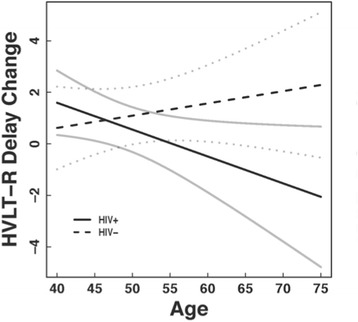
“For example, Seider and colleagues [27] showed that older people with HIV showed significant memory decline in 1 year, but no decline was seen in younger people with HIV or in seronegative controls regardless of age (Figure 1).”
BackgroundMethodSelf-citationNeurocognitive Effects of HIV, Hepatitis C, and Substance Use History
Devlin, K. N., Gongvatana, A., Clark, U. S., Chasman, J. D., Westbrook, M. L., Tashima, K. T., NAVIA, B. A., & Cohen, R. A. (2011) · Journal of the International Neuropsychological Society · doi:10.1017/s1355617711001408 · Cited by 78 · cited 2×
“Others, like hepatitis C, exacerbate the neurocognitive effects of HIV through similar mechanisms [29,42].”
BackgroundSelf-citationProgressive cerebral injury in the setting of chronic HIV infection and antiretroviral therapy
Gongvatana, A., Harezlak, J., Buchthal, S. D., Daar, E. S., Schifitto, G., Campbell, T., Taylor, M. J., Singer, E. J., Algers, J., Zhong, J., et al. (2013) · Journal of NeuroVirology · doi:10.1007/s13365-013-0162-1 · Cited by 77 · cited 1×
“Persistent and progressive neuronal loss occurs in people with chronic HIV despite successful viral suppression by cART [69], suggesting that they are developing a concurrent neurodegenerative disorder in the setting of stable HIV infection, that HIV is causing neurodegenerative changes or that both are occurring.”
BackgroundSelf-citationRole of HIV in Amyloid Metabolism
Ortega, M., & Ances, B. M. (2014) · Journal of Neuroimmune Pharmacology · doi:10.1007/s11481-014-9546-0 · Cited by 76 · cited 1×
“age is a risk factor for Aβ deposition in HIV, but recent evidence suggests that HIV and aging independently affect Aβ deposition [72], whereas AD and aging clearly interact.”
BackgroundHIV-1 Tat Interacts with and Regulates the Localization and Processing of Amyloid Precursor Protein
Kim, J., Yoon, J.-H., & Kim, Y.-S. (2013) · PLoS ONE · doi:10.1371/journal.pone.0077972 · Cited by 74 · cited 1×
“Furthermore, Tat can induce astrocytosis and neuronal death and interacts with amyloid precursor protein to increase Aβ [107].”
BackgroundNeurocognitive and psychological contributions to quality of life in HIV-1-infected women
Osowiecki, D. M., Cohen, R. A., Morrow, K. M., Paul, R. H., Carpenter, C. C. J., Flanigan, T., & BOLAND, R. J. (2000) · AIDS · doi:10.1097/00002030-200007070-00004 · Cited by 70 · cited 1×
“Though less severe than dementia, ANI and MND affect occupational and psychosocial functioning, quality of life, and health outcomes [9,18,19].”
BackgroundSelf-citationApolipoprotein E4 genotype does not increase risk of HIV-associated neurocognitive disorders
Morgan, E. E., Woods, S. P., Letendre, S. L., Franklin, D. R., Bloss, C. S., Goate, A., Heaton, R. K., Collier, A. C., Marra, C. M., Gelman, B. B., et al. (2013) · Journal of NeuroVirology · doi:10.1007/s13365-013-0152-3 · Cited by 70 · cited 2×
“ApoEε4 has also been linked to reduced cognitive performance in HIV compared with age-matched seronegative ApoEε4 participants [92], although some research does not support a significant association between ApoEε4 and HAND [94].”
ResultLongitudinal Grey and White Matter Changes in Frontotemporal Dementia and Alzheimer’s Disease
Frings, L., Yew, B., Flanagan, E., Lam, B. Y. K., Hüll, M., Huppertz, H.-J., Hodges, J. R., & Hornberger, M. (2014) · PLoS ONE · doi:10.1371/journal.pone.0090814 · Cited by 69 · cited 1×
“However, cortical changes in AD cases are typically more pronounced than in cases of HIV, and hippocampal atrophy occurs early and ubiquitously in AD whereas the hippocampus is not as vulnerable in HIV [62,63].”
BackgroundCortical Atrophy and White Matter Hyperintensities in HIV: The Hawaii Aging with HIV Cohort Study
McMurtray, A., Nakamoto, B., Shikuma, C., & Valcour, V. (2008) · Journal of Stroke and Cerebrovascular Diseases · doi:10.1016/j.jstrokecerebrovasdis.2008.02.005 · Cited by 66 · cited 1×
“White matter hyperintensities (WMHs) on MRI reflect white matter damage, and studies show WMHs occurring at younger ages in people with HIV than they do in adults aging without HIV [39,40].”
BackgroundAmyloid beta accumulation in HIV‐1‐infected brain: The role of the blood brain barrier
András, I. E., & Toborek, M. (2013) · IUBMB Life · doi:10.1002/iub.1106 · Cited by 65 · cited 2×
“BBB dysfunction has been linked to Aβ accumulation in HIV and other diseases resulting from a failure to filter amyloid peptides [88].”
BackgroundHua, X., Boyle, C. P., Harezlak, J., Tate, D. F., Yiannoutsos, C. T., Cohen, R. A., Schifitto, G., Gongvatana, A., Zhong, J., Zhu, T., et al. (2013) · NeuroImage Clinical · doi:10.1016/j.nicl.2013.07.009 · Cited by 65 · cited 10×
“PET research in AD shows parietal, temporal, and posterior cingulate glucose metabolism decreases that predict cortical volume loss [65], with decreases in the frontal cortex as the disease progresses [66], whereas in HIV frontal hypometabolism is seen early on in the disease.”
BackgroundInfluentialSelf-citationNelson, L., Gard, P., & Tabet, N. (2014) · Journal of Alzheimer s Disease · doi:10.3233/jad-140024 · Cited by 63 · cited 1×
“Epidemiological studies have long suggested that these conditions increase risk for developing AD [116,117,119], and increased vascular risk is associated with greater amyloid burden in both HIV [120] and AD [111,121].”
BackgroundFree Radical Theory of Aging: Effect of Dietary Fat on Central Nervous System Function*
HARMAN, D., HENDRICKS, S., EDDY, D. E., & SEIBOLD, J. (1976) · Journal of the American Geriatrics Society · doi:10.1111/j.1532-5415.1976.tb06800.x · Cited by 61 · cited 1×
“The oxidative stress and cell damage caused by ROS have been proposed as a major driver underlying brain aging [98] and may also contribute to HIV effects on the aging brain, along with abnormal insulin signaling [99].”
BackgroundCognitive Functioning in Younger and Older HIV-1-Infected Adults
Wilkie, F. L., Goodkin, K., Khamis, I., van Zuilen, M. H., Lee, D., Lecusay, R., Concha, M., Symes, S., Suarez, P., & Eisdorfer, C. (2003) · JAIDS Journal of Acquired Immune Deficiency Syndromes · doi:10.1097/00126334-200306012-00006 · Cited by 60 · cited 1×
“Advanced age is among demographic factors associated with reduced neurocognitive performance and susceptibility to HAND in HIV-infected people [21-24], as greater neurocognitive impairment exists among older HIV-infected adults relative to normative data and compared with younger infected individuals.”
ResultTate, D. F., Conley, J. J., Paul, R. H., Coop, K., Zhang, S., Zhou, W., Laidlaw, D. H., Taylor, L. E., Flanigan, T., NAVIA, B. A., et al. (2010) · Brain Imaging and Behavior · doi:10.1007/s11682-009-9086-z · Cited by 59 · cited 1×
“Case-controlled diffusion tensor imaging (DTI) studies show that HIV is associated with lower white matter integrity globally [41] and in specific areas such as the corpus callosum, internal capsules, and the frontal and parietal lobes [42,43].”
BackgroundSelf-citationNebuloni, M., Pellegrinelli, A., Ferri, A., Bonetto, S., Boldorini, R. L., Vago, L., Grassi, M. P., & Costanzi, G. (2001) · AIDS · doi:10.1097/00002030-200103300-00005 · Cited by 59 · cited 1×
“Neuropathology studies suggest that, in HIV, Aβ aggregates preferentially in the hippocampus, frontal lobe, and basal ganglia [70,75].”
BackgroundSmith, D. B., Peter Simmonds, K., & Bell, J. E. (2014) · Journal of NeuroVirology · doi:10.1007/s13365-013-0225-3 · Cited by 58 · cited 1×
“Although pTau levels appear to be unrelated to HIV viral levels in the brain [79], pTau is associated with microglial activation.”
BackgroundWhite Matter Predictors of Cognitive Functioning in Older Adults
Meier, I. B., Manly, J. J., Provenzano, F. A., Louie, K. S., Wasserman, B. T., Griffith, E. Y., Hector, J. T., Allocco, E., & Brickman, A. M. (2012) · Journal of the International Neuropsychological Society · doi:10.1017/s1355617712000227 · Cited by 58 · cited 1×
“WMHs in frontal and parietal regions have been especially associated with older age and greater cognitive dysfunction [53], and longitudinal studies show greater age-related volumetric decline in anterior versus posterior white matter regions [54].”
BackgroundPharmacogenetics of adverse effects due to antiretroviral drugs.
Vidal, F., Gutiérrez, F., Gutiérrez, M. D. M., Olona, M., Sánchez, V., Mateo, G. M., Peraire, J., Viladés, C., Veloso, S., López-Dupla, M., et al. (2010) · PubMed · Cited by 56
HIV-1-induced amyloid beta accumulation in brain endothelial cells is attenuated by simvastatin
András, I. E., Eum, S. Y., Huang, W., Zhong, Y., Hennig, B., & Toborek, M. (2010) · Molecular and Cellular Neuroscience · doi:10.1016/j.mcn.2009.11.004 · Cited by 56 · cited 1×
“HIV has been shown to increase in vitro intracellular Aβ accumulation in microvascular endothelial cells [89].”
BackgroundCysique, L. A., Brew, B. J., Halman, M. H., Catalán, J., Sacktor, N., Price, R. W., Brown, S., Atkinson, J. H., Clifford, D. B., Simpson, D. M., et al. (2005) · JAIDS Journal of Acquired Immune Deficiency Syndromes · doi:10.1097/01.qai.0000165799.59322.f5 · Cited by 56 · cited 1×
“The absence of circulating HIVRNA in the blood and cerebrospinal fluid (CSF) does not guarantee that infected people are free of the virus, its adverse immunological effects, or risk for HAND [68].”
BackgroundMultiple Actions of the Human Immunodeficiency Virus Type-1 Tat Protein on Microglial Cell Functions
Minghetti, L., Visentin, S., Patrizio, M., Franchini, L., Ajmone‐Cat, M. A., & Levi, G. (2004) · Neurochemical Research · doi:10.1023/b:nere.0000021241.90133.89 · Cited by 49 · cited 4×
“Chronic neuroinflammation resulting from prolonged glial and astrocyte activation has been shown to lead to neuronal dysfunction and death [87,96] and has been linked to HIV-associated brain abnormalities [97].”
BackgroundInfluentialHarezlak, J., Cohen, R. A., Gongvatana, A., Taylor, M. J., Buchthal, S. D., Schifitto, G., Zhong, J., Daar, E. S., Alger, J. R., Brown, M. S., et al. (2014) · Journal of NeuroVirology · doi:10.1007/s13365-014-0246-6 · Cited by 41 · cited 2×
“MRS studies show increased myoinositol (MI), choline (Cho), and total creatine (Cr) in brain disorders with chronic inflammation and glial activation, including HIV [32,34,46,47].”
BackgroundSelf-citationIżycka‐Świeszewska, E., Żółtowska, A., Rzepko, R., Gross, M., & Borowska-Lehman, J. (2000) · PubMed · Cited by 39
Functional connectivity measured with magnetoencephalography identifies persons with HIV disease
Becker, J. T., Bajo, R., Fabrizio, M., Sudre, G. P., Cuesta, P., Aizenstein, H. J., López, O. L., Wolk, D. A., Parkkonen, L. T., Maestú, F., et al. (2012) · Brain Imaging and Behavior · doi:10.1007/s11682-012-9149-4 · Cited by 36 · cited 1×
“Yet when compared with seronegative controls, people with HIV also show reduced grey matter and cortical thinning [32-34,36], especially in frontal and temporal regions [37].”
BackgroundHIV infection and drug use: influence on cognitive function
Grassi, M. P., Clerici, F., Perin, C., Zocchetti, C., Borella, M., Cargnel, A., & Mangoni, A. (1995) · AIDS · doi:10.1097/00002030-199502000-00008 · Cited by 34 · cited 1×
“Some comorbid conditions, like chronic substance abuse, contribute to HIV transmission, functional outcomes, and cognitive problems in their own right, largely independent of the direct effects of HIV [113].”
BackgroundAdvances in High-Field Magnetic Resonance Spectroscopy in Alzheimer’s Disease
Zhang, N., Song, X., Bartha, R., Beyea, S., D’Arcy, R. C. N., Zhang, Y., & Rockwood, K. J. (2014) · Current Alzheimer Research · doi:10.2174/1567205011666140302200312 · Cited by 34 · cited 1×
“In AD, decreased NAA is generally found in all major lobes of the brain as well as the medial temporal lobe and the posterior cingulate gyrus [64].”
BackgroundTian, C., Sun, L., Jia, B., Ma, K., Curthoys, N. P., Ding, J., & Zheng, J. (2012) · Journal of Neuroimmune Pharmacology · doi:10.1007/s11481-012-9364-1 · Cited by 33 · cited 2×
“Mitochondrial dysfunction has also been associated with increased neuroinflammation, glutamate overproduction, and calcium accumulation, all of which can be neurotoxic [100].”
BackgroundHIV infection and drug use: influence on cognitive function
Grassi, M. P., Clerici, F., Perin, C., et al. (1995) · AIDS · doi:10.1097/00002030-199509020-00008 · Cited by 25
Lai, D., Tarwater, P. M., & Hardy, R. (2006) · Public Health · doi:10.1016/j.puhe.2005.12.009 · Cited by 15
Adriaanse, S. M., Dijk, K. R. A. V., Ossenkoppele, R., Reuter, M., Tolboom, N., Zwan, M. D., Yaqub, M. M., Boellaard, R., Windhorst, A. D., van der Flier, W. M., et al. (2014) · European Journal of Nuclear Medicine and Molecular Imaging · doi:10.1007/s00259-014-2704-z · Cited by 11 · cited 1×
“PET research in AD shows parietal, temporal, and posterior cingulate glucose metabolism decreases that predict cortical volume loss [65], with decreases in the frontal cortex as the disease progresses [66], whereas in HIV frontal hypometabolism is seen early on in the disease.”
BackgroundMortality and survival trends in patients with AIDS in North East England from 1984–1992
Dorrell, L., Snow, M. H. L., & Ong, E. L. C. (1995) · Journal of Infection · doi:10.1016/s0163-4453(95)92743-3 · Cited by 8 · cited 2×
“Prior to the availability of antiretroviral drugs, dementia occurred in over 20% of HIV-infected people [4].”
Background
Research works printed but not linked: 1
- Seider T, Cohen RA, Correia S, Gongvatana A, Cummings T, Tashima KT, et al. Synergistic effects of age and HIV on white matter hyperintensities [abstract]. Annual American Academy of Clinical Neuropsychology Conference. 25–28 June 2014; New York, NY.
Cited by
2023 Alzheimer's disease facts and figures
(2023) · Alzheimer's & Dementia · doi:10.1002/alz.13016 · Cited by 3,212
2024 Alzheimer's disease facts and figures
(2024) · Alzheimer's & Dementia · doi:10.1002/alz.13809 · Cited by 2,536
2025 Alzheimer's disease facts and figures
(2025) · Alzheimer's & Dementia · doi:10.1002/alz.70235 · Cited by 474
Ageing and inflammation in patients with HIV infection
Nasi, M., De Biasi, S., Gibellini, L., Bianchini, E., Pecorini, S., Bacca, V, Guaraldi, G., Mussini, C., Pinti, M., & Cossarizza, A. (2016) · Clinical and Experimental Immunology · doi:10.1111/cei.12814 · Cited by 277
HIV and ageing: improving quantity and quality of life
Althoff, K. N., Smit, M., Reiss, P., & Justice, A. C. (2016) · Current Opinion in HIV and AIDS · doi:10.1097/coh.0000000000000305 · Cited by 169
“Changes in brain structure have been correlated with cognitive impairment in HIVinfected adults [74], with a recent study in suppressed HIV-infected and uninfected adults showing that microstructural abnormalities were more common in HIV-infected adults [76].”
Result
Metadata
- Authors
- Cohen, R. A., Seider, T. R., & Navia, B.
- Affiliations
- University of Florida (US)
- University of Florida Health (US)
- Tufts University (US)
- Corresponding author
- Cohen, Ronald A
- Venue
- Alzheimer's Research & Therapy
- Published
- 2015-04-06
- Volume
- 7
- Issue
- 1
- Pages
- 37-37
- ISSN
- 1758-9193 (ISSN-L)
- PMC
- PMC4386102
- OpenAlex
- W2152317386
- Cited by
- 149
- References
- 122
- Citations by year
- 2026: 13 · 2025: 5 · 2024: 8 · 2023: 11 · 2022: 18 · 2021: 17 · 2020: 14 · 2019: 17 · 2018: 10 · 2017: 18 · 2016: 12 · 2015: 5
- FWCI
- 7.59
- Type
- journal article
- Language
- en
- Open access
- gold
- doi.org
- Licence
- cc-by
- creativecommons.org/licenses/by/4.0 (tdm)
- creativecommons.org/licenses/by/4.0 (vor)
- Locations
- Alzheimer s Research & Therapy (publishedVersion, cc-by)
- Europe PMC (PubMed Central) (publishedVersion, cc-by)
- PubMed Central (publishedVersion, cc-by)
- PubMed (publishedVersion)
- Funders
- National Institutes of Health
- National Institute on Alcohol Abuse and Alcoholism (P01AA019072)
- National Institute on Aging (T32AG020499, P30AG028740)
- National Institute of Mental Health (R01MH074368)
- National Institute of Neurological Disorders and Stroke (R01NS080655)
- Topics
- Life Sciences › Immunology and Microbiology › Virology › HIV Research and Treatment
- Health Sciences › Medicine › Infectious Diseases › HIV-related health complications and treatments
- Health Sciences › Medicine › Psychiatry and Mental health › Dementia and Cognitive Impairment Research
- Keywords
- HIV-associated neurocognitive disorders, age-related cognitive decline, neurodegeneration, Alzheimer's disease, vascular comorbidities, metabolic comorbidities, brain structural and functional changes, antiretroviral therapy
About these checks
Registry, retraction, Cites and statistics results are computed, not judged, with one exception: a printed reference that no index lists is read once by a model before it counts as a citation error. Claims are extracted by a model and kept only when their quote appears verbatim in the text; each cited source is then checked, with a model’s help, for whether it says what the claim relies on. Those verdicts can be wrong — read the claim’s quote and the cited source before relying on one.
Statistics and arithmetic are recomputed, not judged.
Confidence bands are shown only for fields calibrated on our annotated test set. None is calibrated yet, so no band is shown.
What counts as a claim ›How we measure confidence ›How we check this ›
Are you an author, or do you see a problem with this page? Request a review
Data sources
Bibliographic data: Semantic Scholar, OpenAlex, Crossref.
Contains information from the Semantic Scholar Academic Graph Datasets, made available under the ODC Attribution License (ODC-BY 1.0).
Semantic Scholar’s data is described in: Kinney, R., et al. (2023). The Semantic Scholar Open Data Platform. arXiv:2301.10140.
