

FUNDAMANT: an interventional 72-week phase 1 follow-up study of AADvac1, an active immunotherapy against tau protein pathology in Alzheimer's disease
Open accessThe DOI matches its Crossref record; 52 of the 52 references it cites were found in a registry or an index.
Abstract
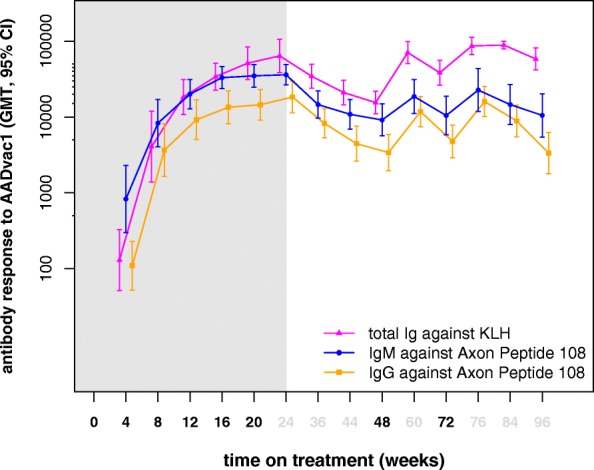
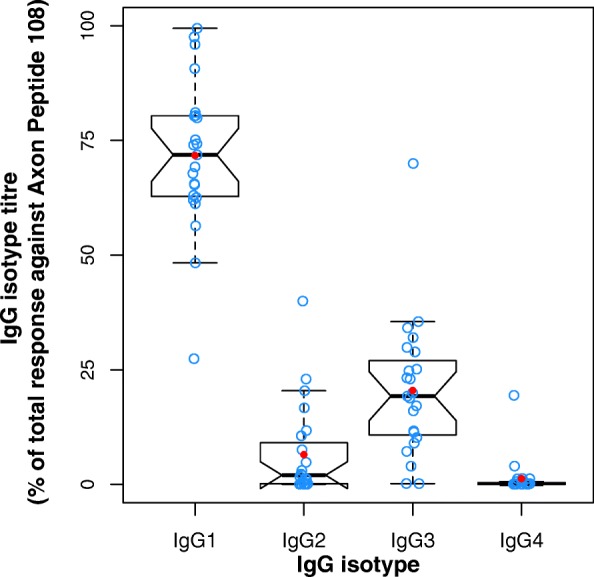
BACKGROUND: Neurofibrillary pathology composed of tau protein is closely correlated with severity and phenotype of cognitive impairment in patients with Alzheimer's disease and non-Alzheimer's tauopathies. Targeting pathological tau proteins via immunotherapy is a promising strategy for disease-modifying treatment of Alzheimer's disease. Previously, we reported a 24-week phase 1 trial on the active vaccine AADvac1 against pathological tau protein; here, we present the results of a further 72 weeks of follow-up on those patients. METHODS: We did a phase 1, 72-week, open-label study of AADvac1 in patients with mild to moderate Alzheimer's disease who had completed the preceding phase 1 study. Patients who were previously treated with six doses of AADvac1 at monthly intervals received two booster doses at 24-week intervals. Patients who were previously treated with only three doses received another three doses at monthly intervals, and subsequently two boosters at 24-week intervals. The primary objective was the assessment of long-term safety of AADvac1 treatment. Secondary objectives included assessment of antibody titres, antibody isotype profile, capacity of the antibodies to bind to AD tau and AADvac1, development of titres of AADvac1-induced antibodies over time, and effect of booster doses; cognitive assessment via 11-item Alzheimer's Disease Assessment Scale cognitive assessment (ADAS-Cog), Category Fluency Test and Controlled Oral Word Association Test; assessment of brain atrophy via magnetic resonance imaging (MRI) volumetry; and assessment of lymphocyte populations via flow cytometry. RESULTS: The study was conducted between 18 March 2014 and 10 August 2016. Twenty-six patients who completed the previous study were enrolled. Five patients withdrew because of adverse events. One patient was withdrawn owing to noncompliance. The most common adverse events were injection site reactions (reported in 13 [50%] of vaccinated patients). No cases of meningoencephalitis or vasogenic oedema were observed. New micro-haemorrhages were observed only in one ApoE4 homozygote. All responders retained an immunoglobulin G (IgG) antibody response against the tau peptide component of AADvac1 over 6 months without administration, with titres regressing to a median 15.8% of titres attained after the initial six-dose vaccination regimen. Booster doses restored previous IgG levels. Hippocampal atrophy rate was lower in patients with high IgG levels; a similar relationship was observed in cognitive assessment. CONCLUSIONS: AADvac1 displayed a benign safety profile. The evolution of IgG titres over vaccination-free periods warrants a more frequent booster dose regimen. The tendency towards slower atrophy in MRI evaluation and less of a decline in cognitive assessment in patients with high titres is encouraging. Further trials are required to expand the safety database and to establish proof of clinical efficacy of AADvac1. TRIAL REGISTRATION: The studies are registered with the EU Clinical Trials Register and ClinicalTrials.gov : the preceding first-in-human study under EudraCT 2012-003916-29 and NCT01850238 (registered on 9 May 2013) and the follow-up study under EudraCT 2013-004499-36 and NCT02031198 (registered 9 Jan 2014), respectively.
Overview
The claims and statistics of this paper haven’t been checked yet.
Free: it reads the open-access text and checks the first 5 claims that cite a source we can check. Create a free account to check every claim.
Integrity signals
Registry
Cites
Statistics
Figures
Verification
Claims the paper makes
The claims and statistics of this paper haven’t been checked yet.
Free: it reads the open-access text and checks the first 5 claims that cite a source we can check. Create a free account to check every claim.
Claims other papers make about this one
Each is checked against this paper’s own text: does it say what the citing paper says it does?
The cited source says what the claim attributes to it.
In the citing paper
“The AADvac1 vaccine (containing the tau peptide aa 294-305-4R) has been shown to be safe and well tolerated in an open-label trial enrolling participants with Alzheimer's disease.89”
From Advances and controversies in frontotemporal dementia: diagnosis, biomarkers, and therapeutic considerations (2022) · cites this paper as [89]
Self-check
Percentages, sums and reported differences re-computed from the paper’s own numbers.
The self-check needs the paper’s full text.
Citations
Cites
McKhann, G. M., Knopman, D. S., Chertkow, H., Hyman, B. T., Jack, C. R., Kawas, C. H., Klunk, W. E., Koroshetz, W. J., Manly, J. J., Mayeux, R., et al. (2011) · Alzheimer's & Dementia · doi:10.1016/j.jalz.2011.03.005 · Cited by 18,657
Neuropathological stageing of Alzheimer-related changes.
Braak, H., & Braak, E. (1991) · Acta Neuropathologica · doi:10.1007/bf00308809 · Cited by 16,123
Advances in functional and structural MR image analysis and implementation as FSL
Smith, S. M., Jenkinson, M., Woolrich, M. W., Beckmann, C. F., Behrens, T. E. J., Johansen-Berg, H., Bannister, P. R., De Luca, M., Drobnjak, I., Flitney, D. E., et al. (2004) · NeuroImage · doi:10.1016/j.neuroimage.2004.07.051 · Cited by 13,630
Grundke-Iqbal, I., Iqbal, K., Tung, Y. C., Quinlan, M., Wisniewski, H. M., & Binder, L. I. (1986) · Proceedings of the National Academy of Sciences · doi:10.1073/pnas.83.13.4913 · Cited by 3,676
Pathways towards and Away from Alzheimer’s Disease
Mattson, M. P. (2004) · Nature · doi:10.1038/nature02621 · Cited by 3,052
Within-subject template estimation for unbiased longitudinal image analysis
Reuter, M., Schmansky, N. J., Rosas, H. D., & Fischl, B. (2012) · NeuroImage · doi:10.1016/j.neuroimage.2012.02.084 · Cited by 2,356
Tau in physiology and pathology
Wang, Y., & Mandelkow, E. (2016) · Nature Reviews Neuroscience · doi:10.1038/nrn.2015.1 · Cited by 2,251
Cryo-EM structures of tau filaments from Alzheimer’s disease
Fitzpatrick, A. W. P., Falcon, B., He, S., Murzin, A. G., Murshudov, G., Garringer, H. J., Crowther, R. A., Ghetti, B., Goedert, M., & Scheres, S. H. W. (2017) · Nature · doi:10.1038/nature23002 · Cited by 2,061
Nelson, P. T., Alafuzoff, I., Bigio, E. H., Bouras, C., Braak, H., Cairns, N. J., Castellani, R. J., Crain, B. J., Davies, P., Tredici, K. D., et al. (2012) · Journal of Neuropathology & Experimental Neurology · doi:10.1097/nen.0b013e31825018f7 · Cited by 2,050
Accurate, Robust, and Automated Longitudinal and Cross-Sectional Brain Change Analysis
Smith, S. M., Zhang, Y., Jenkinson, M., Chen, J., Matthews, P. M., Federico, A., & De Stefano, N. (2002) · NeuroImage · doi:10.1006/nimg.2002.1040 · Cited by 2,013
Two Phase 3 Trials of Bapineuzumab in Mild-to-Moderate Alzheimer's Disease
Salloway, S., Sperling, R., Fox, N. C., Blennow, K., Klunk, W., Raskind, M., Sabbagh, M., Honig, L. S., Porsteinsson, A. P., Ferris, S., et al. (2014) · New England Journal of Medicine · doi:10.1056/nejmoa1304839 · Cited by 1,960
Epidemiology of Alzheimer disease
Reitz, C., Brayne, C., & Mayeux, R. (2011) · Nature Reviews Neurology · doi:10.1038/nrneurol.2011.2 · Cited by 1,675
Highly accurate inverse consistent registration: A robust approach
Reuter, M., Rosas, H. D., & Fischl, B. (2010) · NeuroImage · doi:10.1016/j.neuroimage.2010.07.020 · Cited by 1,388
Clinical effects of Aβ immunization (AN1792) in patients with AD in an interrupted trial
Gilman, S., Koller, M., Black, R. S., Jenkins, L., Griffith, S. G., Fox, N. C., Eisner, L., Kirby, L., Rovira, M. B., Forette, F., et al. (2005) · Neurology · doi:10.1212/01.wnl.0000159740.16984.3c · Cited by 1,329 · cited 4×
“Gilman S, et al. Clinical effects of Aβ immunization (AN1792) in patients with AD in an interrupted trial.”
BackgroundInfluentialTau pathology and neurodegeneration
Spillantini, M. G., & Goedert, M. (2013) · The Lancet Neurology · doi:10.1016/s1474-4422(13)70090-5 · Cited by 1,133
Tau and neurodegenerative disease: the story so far
Iqbal, K., Liu, F., & Gong, C.-X. (2016) · Nature Reviews Neurology · doi:10.1038/nrneurol.2015.225 · Cited by 806
The A4 Study: Stopping AD Before Symptoms Begin?
Sperling, R. A., Rentz, D. M., Johnson, K. A., Karlawish, J., Donohue, M., Salmon, D. P., & Aisen, P. (2014) · Science Translational Medicine · doi:10.1126/scitranslmed.3007941 · Cited by 760
Alzheimer's disease drug development pipeline: 2018
Cummings, J., Lee, G., Ritter, A., & Zhong, K. (2018) · Alzheimer's & Dementia: Translational Research & Clinical Interventions · doi:10.1016/j.trci.2018.03.009 · Cited by 697
Schneider, L. S., Mangialasche, F., Andreasen, N., Feldman, H., Giacobini, E., Jones, R., Mantua, V., Mecocci, P., Pani, L., Winblad, B., et al. (2014) · Journal of Internal Medicine · doi:10.1111/joim.12191 · Cited by 651
Self-citationAlzheimer's disease drug development pipeline: 2017
Cummings, J., Lee, G., Mortsdorf, T., Ritter, A., & Zhong, K. (2017) · Alzheimer's & Dementia: Translational Research & Clinical Interventions · doi:10.1016/j.trci.2017.05.002 · Cited by 549
Tau, tangles, and Alzheimer's disease
Binder, L. I., Guillozet-Bongaarts, A. L., Garcia-Sierra, F., & Berry, R. W. (2005) · Biochimica et Biophysica Acta (BBA) - Molecular Basis of Disease · doi:10.1016/j.bbadis.2004.08.014 · Cited by 434
Whitwell, J. L., Dickson, D. W., Murray, M. E., Weigand, S. D., Tosakulwong, N., Senjem, M. L., Knopman, D. S., Boeve, B. F., Parisi, J. E., Petersen, R. C., et al. (2012) · The Lancet Neurology · doi:10.1016/s1474-4422(12)70200-4 · Cited by 419
Novak, M., Kabat, J., & Wischik, C. M. (1993) · The EMBO Journal · doi:10.1002/j.1460-2075.1993.tb05665.x · Cited by 398
Novak, P., Schmidt, R., Kontsekova, E., Zilka, N., Kovacech, B., Skrabana, R., Vince-Kazmerova, Z., Katina, S., Fialova, L., Prcina, M., et al. (2017) · The Lancet Neurology · doi:10.1016/s1474-4422(16)30331-3 · Cited by 304
Self-citationDrugs in Clinical Trials for Alzheimer's Disease: The Major Trends
Bachurin, S. O., Bovina, E. V., & Ustyugov, A. A. (2017) · Medicinal Research Reviews · doi:10.1002/med.21434 · Cited by 304
Lazuardi, L., Jenewein, B., Wolf, A. M., Pfister, G., Tzankov, A., & Grubeck‐Loebenstein, B. (2005) · Immunology · doi:10.1111/j.1365-2567.2004.02006.x · Cited by 263
Theunis, C., Crespo-Biel, N., Gafner, V., Pihlgren, M., López-Deber, M. P., Reis, P., Hickman, D. T., Adolfsson, O., Chuard, N., Ndao, D. M., et al. (2013) · PLoS ONE · doi:10.1371/journal.pone.0072301 · Cited by 259
Vellas, B., Black, R., Thal, L., Fox, N., Daniels, M., McLennan, G., Tompkins, C., Leibman, C., Pomfret, M., & Grundman, M. (2009) · Current Alzheimer Research · doi:10.2174/156720509787602852 · Cited by 255
Zilka, N., Filipcik, P., Koson, P., Fialova, L., Skrabana, R., Zilkova, M., Rolkova, G., Kontsekova, E., & Novak, M. (2006) · FEBS Letters · doi:10.1016/j.febslet.2006.05.029 · Cited by 253
Kontsekova, E., Zilka, N., Kovacech, B., Novak, P., & Novak, M. (2014) · Alzheimer's Research & Therapy · doi:10.1186/alzrt278 · Cited by 248
Human secreted tau increases amyloid-beta production
Bright, J., Hussain, S., Dang, V., Wright, S., Cooper, B., Byun, T., Ramos, C., Singh, A., Parry, G., Stagliano, N., et al. (2015) · Neurobiology of Aging · doi:10.1016/j.neurobiolaging.2014.09.007 · Cited by 230
Novak, M., Jakes, R., Edwards, P. C., Milstein, C., & Wischik, C. M. (1991) · Proceedings of the National Academy of Sciences · doi:10.1073/pnas.88.13.5837 · Cited by 216
Early N-Terminal Changes and Caspase-6 Cleavage of Tau in Alzheimer's Disease
Horowitz, P. M., Patterson, K. R., Guillozet-Bongaarts, A. L., Reynolds, M. R., Carroll, C. A., Weintraub, S. T., Bennett, D. A., Cryns, V. L., Berry, R. W., & Binder, L. I. (2004) · The Journal of Neuroscience · doi:10.1523/jneurosci.1988-04.2004 · Cited by 215
The economic impact of dementia in Europe in 2008—cost estimates from the Eurocode project
Wimo, A., Jönsson, L., Gustavsson, A., McDaid, D., Ersek, K., Georges, J., Gulácsi, L., Karpati, K., Kenigsberg, P., & Valtonen, H. (2011) · International Journal of Geriatric Psychiatry · doi:10.1002/gps.2610 · Cited by 210
Collin, L., Bohrmann, B., Göpfert, U., Oroszlan-Szovik, K., Ozmen, L., & Grüninger, F. (2014) · Brain · doi:10.1093/brain/awu213 · Cited by 208
Tau deletion promotes brain insulin resistance
Marciniak, E., Leboucher, A., Caron, E., Ahmed, T., Tailleux, A., Dumont, J., Issad, T., Gerhardt, E., Pagesy, P., Vileno, M., et al. (2017) · Journal of Experimental Medicine · doi:10.1084/jem.20161731 · Cited by 205
Taniguchi-Watanabe, S., Arai, T., Kametani, F., Nonaka, T., Masuda-Suzukake, M., Tarutani, A., Murayama, S., Saito, Y., Arima, K., Yoshida, M., et al. (2016) · Acta Neuropathologica · doi:10.1007/s00401-015-1503-3 · Cited by 200 · cited 1×
“microtubule-binding region is absolutely necessary for all forms of tau aggregation [46, 47] and thus a common trait of all pathological tau forms, AADvac1 has the potential to be a disease-modifying therapy in non-AD tauopathies as”
BackgroundEvans, L. D., Wassmer, T., Fraser, G., Smith, J., Perkinton, M., Billinton, A., & Livesey, F. J. (2018) · Cell Reports · doi:10.1016/j.celrep.2018.03.021 · Cited by 191
Anti‐tau antibody reduces insoluble tau and decreases brain atrophy
Yanamandra, K., Jiang, H., Mahan, T. E., Maloney, S. E., Wozniak, D. F., Diamond, M. I., & Holtzman, D. M. (2015) · Annals of Clinical and Translational Neurology · doi:10.1002/acn3.176 · Cited by 185
Assessing the Immunogenicity of Biopharmaceuticals
Pineda, C., Castañeda Hernández, G., Jacobs, I. A., Alvarez, D. F., & Carini, C. (2016) · BioDrugs · doi:10.1007/s40259-016-0174-5 · Cited by 142
Active Aβ immunotherapy CAD106 in Alzheimer's disease: A phase 2b study
Vandenberghe, R., Riviere, M., Caputo, A., Sovago, J., Maguire, R. P., Farlow, M., Marotta, G., Sanchez‐Valle, R., Scheltens, P., Ryan, J. M., et al. (2017) · Alzheimer's & Dementia: Translational Research & Clinical Interventions · doi:10.1016/j.trci.2016.12.003 · Cited by 141
Barnes, J., Foster, J., Boyes, R. G., Pepple, T., Moore, E. K., Schott, J. M., Frost, C. D., Scahill, R. I., & Fox, N. C. (2008) · NeuroImage · doi:10.1016/j.neuroimage.2008.01.012 · Cited by 129
Tariot, P. N., Lopera, F., Langbaum, J. B., Thomas, R. G., Hendrix, S., Schneider, L. S., Rios‐Romenets, S., Giraldo, M., Acosta, N., Tobon, C., et al. (2018) · Alzheimer's & Dementia: Translational Research & Clinical Interventions · doi:10.1016/j.trci.2018.02.002 · Cited by 128 · cited 2×
“, A4: Anti-Amyloid Treatment in Asymptomatic Alzheimer’s Disease [21] or the API: Alzheimer’s Prevention Initiative [22]).”
BackgroundRelevance of Phosphorylation and Truncation of Tau to the Etiopathogenesis of Alzheimer’s Disease
Zhou, Y., Shi, J., Chu, D., Hu, W., Guan, Z., Gong, C.-X., Iqbal, K., & Liu, F. (2018) · Frontiers in Aging Neuroscience · doi:10.3389/fnagi.2018.00027 · Cited by 122
Kontsekova, E., Zilka, N., Kovacech, B., Skrabana, R., & Novak, M. (2014) · Alzheimer's Research & Therapy · doi:10.1186/alzrt277 · Cited by 112 · cited 5×
“For the purpose of assay consistency and quality, we used quality control samples with two concentrations of the humanised version of mAb DC8E8 (AX004) that was used in the design of AADvac1 [19, 20] as positive controls.”
BackgroundMethodInfluentialAssessing atrophy measurement techniques in dementia: results from the MIRIAD atrophy challenge
Cash, D. M., Frost, C., Iheme, L. O., Ünay, D., Kandemir, M., Fripp, J., Salvado, O., Bourgeat, P., Reuter, M., Fischl, B., et al. (2015) · NeuroImage · doi:10.1016/j.neuroimage.2015.07.087 · Cited by 72
Arrighi, H. M., Barakos, J., Barkhof, F., Tampieri, D., Jack, C., Melançon, D., Morris, K., Ketter, N., Liu, E., & Brashear, H. R. (2015) · Journal of Neurology, Neurosurgery & Psychiatry · doi:10.1136/jnnp-2014-309493 · Cited by 67
Agadjanyan, M. G., Petrovsky, N., & Ghochikyan, A. (2015) · Alzheimer's & Dementia · doi:10.1016/j.jalz.2015.06.1884 · Cited by 64
Žilka, N., Korenova, M., & Novák, M. (2009) · Acta Neuropathologica · doi:10.1007/s00401-009-0499-y · Cited by 48
Czerkowicz, J., Chen, W., Wang, Q., Shen, C., Wager, C., Stone, I., Stebbins, C., Lamb, M., Setser, J., Cantone, G., et al. (2017) · Alzheimer's & Dementia · doi:10.1016/j.jalz.2017.06.1903 · Cited by 22
Human Truncated Tau Induces Mature Neurofibrillary Pathology in a Mouse Model of Human Tauopathy
Zimova, I., Brezováková, V., Hromádka, T., Weisová, P., Cubinkova, V., Valachova, B., Filipčík, P., Jadhav, S., Smolek, T., Novák, M., et al. (2016) · Journal of Alzheimer s Disease · doi:10.3233/jad-160347 · Cited by 22
Self-citationHenley, D. B., Sundell, K. L., Sethuraman, G., & Siemers, E. (2011) · Alzheimer s & Dementia · doi:10.1016/j.jalz.2011.05.2413 · Cited by 14
Cited by
History and progress of hypotheses and clinical trials for Alzheimer’s disease
Liu, P.-P., Xie, Y., Meng, X.-Y., & Kang, J.-S. (2019) · Signal Transduction and Targeted Therapy · doi:10.1038/s41392-019-0063-8 · Cited by 723
Peptide-Based Vaccines: Current Progress and Future Challenges
Malonis, R. J., Lai, J. R., & Vergnolle, O. (2020) · Chemical Reviews · doi:10.1021/acs.chemrev.9b00472 · Cited by 602
Alzheimer’s disease: Recent treatment strategies
Vaz, M., & Silvestre, S. (2020) · European Journal of Pharmacology · doi:10.1016/j.ejphar.2020.173554 · Cited by 547
Tau-targeting therapies for Alzheimer disease: Current status and future directions
Congdon, E. E., Ji, C., Tetlow, A. M., Jiang, Y., & Sigurdsson, E. M. (2023) · Nature Reviews Neurology · doi:10.1038/s41582-023-00883-2 · Cited by 371
“A follow-up phase I study (NCT02031198, FUNDAMANT) revealed a similar safety profile 258 .”
BackgroundImmunotherapy for Alzheimer’s disease: targeting β-amyloid and beyond
Song, C., Shi, J., Zhang, P., Zhang, Y., Xu, J., Zhao, L., Zhang, R., Wang, H., & Chen, H. (2022) · Translational Neurodegeneration · doi:10.1186/s40035-022-00292-3 · Cited by 266
Metadata
- Authors
- Novak, P., Schmidt, R., Kontsekova, E., Kovacech, B., Smolek, T., Katina, S., Fialova, L., Prcina, M., Parrak, V., Dal-Bianco, P., Brunner, M., Staffen, W., Rainer, M., Ondrus, M., Ropele, S., Smisek, M., Sivak, R., Zilka, N., Winblad, B., & Novak, M.
- Affiliations
- University of Graz (AT)
- AXON Neuroscience (Slovakia) (SK)
- Medical University of Vienna (AT)
- Christian Doppler Klinik (AT)
- Karolinska University Hospital (SE)
- ORCID
- Venue
- Alzheimer's Research & Therapy
- Published
- 2018-10-24
- Volume
- 10
- Issue
- 1
- Pages
- 108-108
- ISSN
- 1758-9193 (ISSN-L)
- PMC
- PMC6201586
- OpenAlex
- W2898091943
- Cited by
- 147
- References
- 52
- Citations by year
- 2026: 10 · 2025: 16 · 2024: 25 · 2023: 11 · 2022: 16 · 2021: 24 · 2020: 23 · 2019: 19 · 2018: 2
- FWCI
- 11.66
- Type
- journal article
- Language
- en
- Open access
- gold
- doi.org
- Licence
- cc-by
- creativecommons.org/licenses/by/4.0/ (tdm)
- Locations
- Alzheimer s Research & Therapy (publishedVersion, cc-by)
- Europe PMC (PubMed Central) (publishedVersion, other-oa)
- PubMed Central (publishedVersion, cc-by)
- PubMed (publishedVersion)
- DOAJ (DOAJ: Directory of Open Access Journals) (submittedVersion)
- Funders
- AXON NEUROSCIENCE SE
- Topics
- Life Sciences › Neuroscience › Cellular and Molecular Neuroscience › Alzheimer's disease research and treatments
- Health Sciences › Medicine › Psychiatry and Mental health › Dementia and Cognitive Impairment Research
- Life Sciences › Neuroscience › Neurology › Neuroinflammation and Neurodegeneration Mechanisms
- Keywords
- tau protein, Alzheimer's disease, active immunotherapy, booster vaccination, long-term safety, antibody titers, neurofibrillary pathology, hippocampal atrophy, cognitive decline, lymphocyte populations, APOE ε4, disease-modifying therapy, ADAS-Cog
- MeSH terms
- Aged, Alzheimer Disease, Female, Follow-Up Studies, Humans, Male, Middle Aged, Immunotherapy, Active, tau Proteins, Treatment Outcome, Alzheimer Vaccines
About these checks
Registry, retraction, Cites and statistics results are computed, not judged, with one exception: a printed reference that no index lists is read once by a model before it counts as a citation error. Claims are extracted by a model and kept only when their quote appears verbatim in the text; each cited source is then checked, with a model’s help, for whether it says what the claim relies on. Those verdicts can be wrong — read the claim’s quote and the cited source before relying on one.
Statistics and arithmetic are recomputed, not judged.
Confidence bands are shown only for fields calibrated on our annotated test set. None is calibrated yet, so no band is shown.
What counts as a claim ›How we measure confidence ›How we check this ›
Are you an author, or do you see a problem with this page? Request a review
Data sources
Bibliographic data: Semantic Scholar, OpenAlex, Crossref.
Contains information from the Semantic Scholar Academic Graph Datasets, made available under the ODC Attribution License (ODC-BY 1.0).
Semantic Scholar’s data is described in: Kinney, R., et al. (2023). The Semantic Scholar Open Data Platform. arXiv:2301.10140.
