

Linguistic camouflage in girls with autism spectrum disorder
Open accessThe DOI matches its Crossref record; 56 of the 56 references it cites were found in a registry or an index; 16 of the 64 sources its claims cite were checked for support.
Abstract
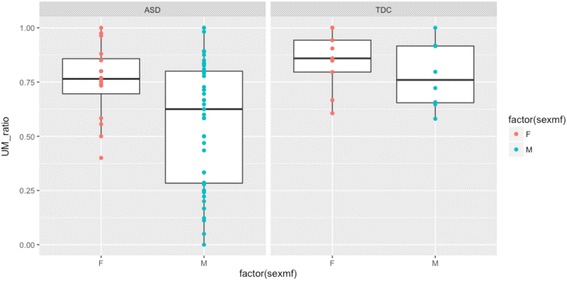
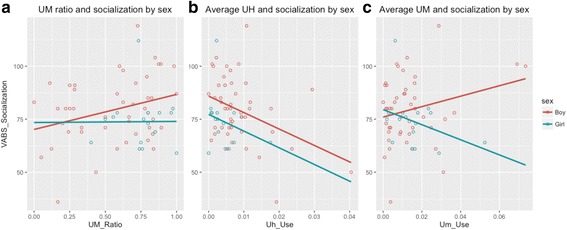
BACKGROUND: Autism spectrum disorder (ASD) is diagnosed more frequently in boys than girls, even when girls are equally symptomatic. Cutting-edge behavioral imaging has detected "camouflaging" in girls with ASD, wherein social behaviors appear superficially typical, complicating diagnosis. The present study explores a new kind of camouflage based on language differences. Pauses during conversation can be filled with words like UM or UH, but research suggests that these two words are pragmatically distinct (e.g., UM is used to signal longer pauses, and may correlate with greater social communicative sophistication than UH). Large-scale research suggests that women and younger people produce higher rates of UM during conversational pauses than do men and older people, who produce relatively more UH. Although it has been argued that children and adolescents with ASD use UM less often than typical peers, prior research has not included sufficient numbers of girls to examine whether sex explains this effect. Here, we explore UM vs. UH in school-aged boys and girls with ASD, and ask whether filled pauses relate to dimensional measures of autism symptom severity. METHODS: Sixty-five verbal school-aged participants with ASD (49 boys, 16 girls, IQ estimates in the average range) participated, along with a small comparison group of typically developing children (8 boys, 9 girls). Speech samples from the Autism Diagnostic Observation Schedule were orthographically transcribed and time-aligned, with filled pauses marked. Parents completed the Social Communication Questionnaire and the Vineland Adaptive Behavior Scales. RESULTS: Girls used UH less often than boys across both diagnostic groups. UH suppression resulted in higher UM ratios for girls than boys, and overall filled pause rates were higher for typical children than for children with ASD. Higher UM ratios correlated with better socialization in boys with ASD, but this effect was driven by increased use of UH by boys with greater symptoms. CONCLUSIONS: Pragmatic language markers distinguish girls and boys with ASD, mirroring sex differences in the general population. One implication of this finding is that typical-sounding disfluency patterns (i.e., reduced relative UH production leading to higher UM ratios) may normalize the way girls with ASD sound relative to other children, serving as "linguistic camouflage" for a naïve listener and distinguishing them from boys with ASD. This first-of-its-kind study highlights the importance of continued commitment to understanding how sex and gender change the way that ASD manifests, and illustrates the potential of natural language to contribute to objective "behavioral imaging" diagnostics for ASD.
Overview
CoChat Summary
TL;DR
This study examined sex differences in filled pauses (UM vs. UH) during conversation in school-aged children with autism spectrum disorder (ASD) and typically developing children. Girls with ASD showed higher UM ratios than boys with ASD, driven by lower UH production, which the authors interpret as possible “linguistic camouflage.”
Key findings
- Girls used UH less often than boys across both diagnostic groups: boys with ASD produced more UH relative to total words (mean = 0.0084, SD = 0.0077) than girls with ASD (mean = 0.0044, SD = 0.0044; Z = −1.98, p = 0.02, r = 0.29).
- Girls had higher UM ratios than boys with ASD: girls produced UM during approximately 75% of pauses filled by UM or UH (SD = 17%), while boys produced UM during an average of 56% (SD = 29%; mean difference = 19%, p = 0.03, r = 0.26).
- Typical children filled more pauses overall than children with ASD (Z = −2.33, p = 0.02, r = 0.26), and higher UM ratios correlated with better socialization in boys with ASD (ρ = 0.30, p = 0.04) but not girls (ρ = 0.007, p = 0.98); this effect was driven by increased UH use by boys with greater symptoms.
- Girls and boys with ASD did not differ on seven other linguistic features, including total word count, filled pause rate, speech rate, number of turns, duration of turns, response latency, or pitch variation (all ps > 0.35).
Methods
- Sixty-five verbal school-aged participants with ASD (49 boys, 16 girls; ages 6–17; IQ estimates in average range) and a small comparison group of typically developing children (8 boys, 9 girls) were included.
- Speech samples came from the interview section of the ADOS-2 Module 3, were orthographically transcribed and time-aligned, and filled pauses were marked; parents completed the Social Communication Questionnaire and Vineland Adaptive Behavior Scales.
- Analyses used generalized linear mixed effects logistic regression models for UM, UH, and UM ratio in the ASD group, plus nonparametric Mann-Whitney U tests and Spearman’s Rho correlations.
Limitations
- The paper states unequal numbers of girls and boys with ASD led to power issues when examining variables within each sex separately, and the typically developing control sample was small.
- The paper states it focused only on the ADOS-2 interview section and Module 3 recordings, used semi-structured evaluations where clinicians could vary question order, and all clinicians were female, which may have affected language samples from male participants.
- The paper states it did not examine co-occurring disorders or dimensions such as anxiety, ADHD, and executive dysfunction, and did not measure motor ability; it also notes the lack of an age effect may reflect the sample’s age range.
Model-written summary. Check it against the paper before relying on it.
Integrity signals
Registry
Cites
Statistics
Figures
Verification
Claims the paper makes
10 Valid · 0 Not valid · 25 Not checked · 94 Own results and interpretations
The cited sources support only part of this claim — read each source’s verdict below.
In the paper
“A significant body of research suggests that children and adults with ASD produce unusually high rates of various speech disfluencies [16, 35, 42, 50, 51, 54], but only three studies have specifically examined UM and UH.”
§ Linguistic camouflage in girls with autism spectrum disorder > Background > Filled pauses in ASD
What the sources say
- Partly supportedcites [16] De Marchena A Eigsti I-M The art of common ground: emergence of a complex pragmatic language skill in adolescents with autism spectrum disorders J Child Lang 2016 43 01 43 80 10.1017/S0305000915000070 25708810 PMC4764348 sourceExperimental — accuracy not yet measured
The Results section reports that adolescents with ASD had a significantly higher overall disfluency rate than typically developing adolescents. The Methods section classifies several types of disfluency, but this study does not establish elevated rates across children and adults or for each type separately. (LLM, conf=0.86)
- Partly supportedcites [35] Lake JK Humphreys KR Cardy S Listener vs. speaker-oriented aspects of speech: studying the disfluencies of individuals with autism spectrum disorders Psychon Bull Rev 2011 18 1 135 140 10.3758/s13423-010-0037-x 21327345 sourceExperimental — accuracy not yet measured
The Conversation sample section reports higher rates of silent pauses and disfluent repetitions in participants with ASD, supporting the claim for those types. It also reports fewer filled pauses (ums and uhs) and revisions than in controls. The Discussion identifies the study's participants as adults; its account of research on children does not establish the same pattern across children and adults. (LLM, conf=0.88)
- Partly supportedcites [42] MacFarlane H Gorman K Ingham R Presmanes Hill A Papadakis K Kiss G van Santen J Quantitative analysis of disfluency in children with autism spectrum disorder or language impairment PLoS One 2017 12 3 e0173936 10.1371/journal.pone.0173936 28296973 PMC5352011 sourceExperimental — accuracy not yet measured
The Introduction reports more repetitions in adults and in children or adolescents with ASD than in comparison groups. But it also reports fewer revisions and ums, while the Abstract finds no significant group differences in the relative frequencies of repetitions, revisions, or false starts in this study. The source supports atypical patterns of disfluency, not generally high rates across various types. (LLM, conf=0.88)
- Supportedcites [50] Scaler Scott K Tetnowski JA Flaitz JR Yaruss JS Preliminary study of disfluency in school-aged children with autism: disfluency in autism Int J Lang Commun Disord 2014 49 1 75 89 10.1111/1460-6984.12048 24372887 source
The Introduction describes stuttering-like, non-stuttering-like, and atypical disfluencies in children and adults on the autism spectrum, and reports increased silent pauses and disfluent repetitions in an adult comparison study. The paper’s Frequency and type of speech disfluencies section also reports increased stuttering-like disfluencies among children with Asperger’s syndrome. Page numbers are not supplied in our copy. (LLM, conf=0.88)
- Not checked yetcites [51] Shriberg LD Paul R McSweeny JL Klin A Cohen DJ Volkmar FR Speech and prosody characteristics of adolescents and adults with high-functioning autism and Asperger syndrome J Speech Lang Hear Res 2001 44 5 1097 1115 10.1044/1092-4388(2001/087) 11708530 source
- Supportedcites [54] Suh J Eigsti I-M Naigles L Barton M Kelley E Fein D Narrative Performance of optimal outcome children and adolescents with a history of an autism spectrum disorder (ASD) J Autism Dev Disord 2014 44 7 1681 1694 10.1007/s10803-014-2042-9 24500659 PMC4058343 source
The Language Functioning in ASDs section reports that studies found more dysfluent speech in people with ASD than in typically developing peers, including a study of adults. The Results > Dysfluency section finds higher rates of repetitions and self-corrections in the studied ASD group, though not of fillers; the claim says 'various' disfluencies, not every type. (LLM, conf=0.88)
hedgedstates an association- Asserted: passes — The authors put it forward as true.
- Checkable: passes — It can be checked against evidence.
- Load-bearing: unclear — It is unclear whether the paper’s conclusions depend on it.
- Based: passes — The paper gives a reason why it holds.
- Partly supported
The cited sources support only part of this claim — read each source’s verdict below.
In the paper
“misdiagnoses that are more common in girls than boys [33].”
§ Linguistic camouflage in girls with autism spectrum disorder > Discussion
What the sources say
- Partly supportedcites [33] Lai M-C Lombardo MV Auyeung B Chakrabarti B Baron-Cohen S Sex/gender differences and autism: setting the scene for future research J Am Acad Child Adolesc Psychiatry 2015 54 1 11 24 10.1016/j.jaac.2014.10.003 25524786 PMC4284309 sourceExperimental — accuracy not yet measured
The 'Diagnostic Challenge' section (Results) of our copy is the closest passage: it says the later diagnosis of females 'may also be due to greater diagnostic overshadowing or substitution in females, by co-occurring/secondary conditions ... or misdiagnoses (e.g., borderline personality disorder),' and that higher-functioning/atypical females 'might be under- or misrecognized until later in adolescence or adulthood.' So the source does carry the comparative (misdiagnosis/overshadowing greater in females) and the idea of misrecognition in girls/women, but it presents this as a hedged possible explanation ('may', 'might') for the age-at-diagnosis gap, not as an established fact that misdiagnoses are more common in girls than boys, and its examples (borderline personality disorder, adulthood) extend beyond children. The citing sentence drops that hedge, so the unqualified factual framing is not supported by our copy. (LLM, conf=0.70)
plainstates an association- Asserted: passes — The authors put it forward as true.
- Checkable: passes — It can be checked against evidence.
- Load-bearing: passes — The paper’s conclusions depend on it.
- Based: passes — The paper gives a reason why it holds.
- Partly supported
Every source the paper cites for this claim was checked and supports it.
In the paper
“Our results are based on longer language samples than prior research (e.g., 20 min vs. 60 s in [28]).”
§ Linguistic camouflage in girls with autism spectrum disorder > Discussion > Limitations
What the sources say
- Supportedcites [28] Irvine CA Eigsti I-M Fein DA Uh, um, and autism: filler disfluencies as pragmatic markers in adolescents with optimal outcomes from autism spectrum disorder J Autism Dev Disord 2016 46 3 1061 1070 10.1007/s10803-015-2651-y 26586555 PMC7536647 source
The Discussion explicitly describes this study’s speech samples as “60 seconds total.” The Methods (Measures, Experimental Task) also describes six relevant trials lasting 10 seconds each, confirming the comparison attributed to this source. (LLM, conf=0.95)
plain- Asserted: passes — The authors put it forward as true.
- Checkable: passes — It can be checked against evidence.
- Load-bearing: unclear — It is unclear whether the paper’s conclusions depend on it.
- Based: passes — The paper gives a reason why it holds.
- Supported
Every source the paper cites for this claim was checked and supports it.
In the paper
“our results are consistent with recent large-scale research showing that sex differences in the cognitive and motor profiles of infant siblings of children with ASD are not unique to ASD risk, but rather reflect broader sex differences in the general population [44].”
§ Linguistic camouflage in girls with autism spectrum disorder > Discussion > Do sex-linked behavior differences necessitate sex-specific diagnostics and treatments for ASD?
What the sources say
- Supportedcites [44] Messinger DS Young GS Webb SJ Ozonoff S Bryson SE Carter A Early sex differences are not autism-specific: a Baby Siblings Research Consortium (BSRC) study Mol Autism 2015 6 1 32 10.1186/s13229-015-0027-y 26045943 PMC4455973 source
Split into 2 atoms — 2 confirmed, 0 partially supported, 0 disputed, 0 misattributed, 0 unverifiable. Expand the claim to see per-atom verdicts.
plain- Asserted: passes — The authors put it forward as true.
- Checkable: passes — It can be checked against evidence.
- Load-bearing: unclear — It is unclear whether the paper’s conclusions depend on it.
- Based: passes — The paper gives a reason why it holds.
- Supported
Every source the paper cites for this claim was checked and supports it.
In the paper
“We analyzed UM/UH data from the largest group of individuals with ASD reported to date (65 in this study vs. 50 in [24] and 24 in [28]).”
§ Linguistic camouflage in girls with autism spectrum disorder > Discussion > Limitations
What the sources say
- Supportedcites [24] Gorman K, Olson L, Hill AP, Lunsford R, Heeman PA, & van Santen JPH. “Uh” and “um” in children with autism spectrum disorders or language impairment. Autism Res. 2016, n/a-n/a. 10.1002/aur.1578. PMC4958035 26800246 source
The Methods > Participants passage reports 50 children with ASD, and the Results > Inferential Analyses passage confirms that the study analyzed um use. This supports the comparison attributed to this source; the citing study’s own sample of 65 and the separate sample of 24 are not claims about this paper. (LLM, conf=0.94)
- Supportedcites [28] Irvine CA Eigsti I-M Fein DA Uh, um, and autism: filler disfluencies as pragmatic markers in adolescents with optimal outcomes from autism spectrum disorder J Autism Dev Disord 2016 46 3 1061 1070 10.1007/s10803-015-2651-y 26586555 PMC7536647 source
The Methods > Participants passage reports 24 individuals in the current-ASD group. The Results passage reports analyses of both um and uh rates across the groups, supporting the cited comparison's description of this paper as providing UM/UH data from 24 individuals with ASD. The citing study's own sample of 65 and its comparison with another study's 50 are not attributed to this source. (LLM, conf=0.93)
plain- Asserted: passes — The authors put it forward as true.
- Checkable: passes — It can be checked against evidence.
- Load-bearing: unclear — It is unclear whether the paper’s conclusions depend on it.
- Based: passes — The paper gives a reason why it holds.
- Supported
54 more claims
Create a free account to see all 129 claims and to verify the 48 references still open.
- It may state two separate claims as one. 43
- Probably not a substantial claim. 40
Claims other papers make about this one
Each is checked against this paper’s own text: does it say what the citing paper says it does?
The source backs part of the claim, not all of it — or backs it for a different population, condition or comparison.
In the citing paper
“autistic females with high autistic traits and/or autism diagnoses demonstrated less autistic social behaviour than males with autistic traits and/or autism diagnoses, despite having equivalent (or poorer) social communication skills, autistic traits, and ToM abilities”
From Camouflaging in autism: A systematic review (2021) · cites this paper as Parish-Morris et al., 2017
Experimental — accuracy not yet measured
Statistics that don’t add up
Each reported p-value recomputed from its test statistic and degrees of freedom, each partial η² from its F, and each ratio, mean difference or B printed with a p checked against its own confidence interval.
Rated minor: it would not touch a result — a value no result rests on, a p-value that stays on the same side of the significance level, or a conflict that is clerical, resolved elsewhere in the paper, or outside its own findings.
In the paper
“Z = −1.98, p = 0.02”
§ Linguistic camouflage in girls with autism spectrum disorder > Results > Predictors of UM and UH in ASD
Reported p = .02 · recomputed p = .048
Rated minor: it would not touch a result — a value no result rests on, a p-value that stays on the same side of the significance level, or a conflict that is clerical, resolved elsewhere in the paper, or outside its own findings.
In the paper
“Z = 1.60, p = 0.10”
§ Linguistic camouflage in girls with autism spectrum disorder > Methods > Participants
Reported p = .1 · recomputed p = .110
Statistics recomputed
Every reported test result, recomputed from its test statistic and degrees of freedom. A result shows as not adding up only once an independent check has confirmed it.
- Doesn’t add upz = 1.6reported p = .1 · recomputed p = .110
“Z = 1.60, p = .10”
- Doesn’t add upz = -1.98reported p = .02 · recomputed p = .048
“Z = −1.98, p = .02”
- Consistentz = -0.07reported p = .95 · recomputed p = .944
“Z = −0.07, p = .95”
- Consistentz = -0.35reported p = .73 · recomputed p = .726
“Z = −0.35, p = .73”
- Consistentz = -0.24reported p = .81 · recomputed p = .810
“Z = −0.24, p = .81”
13 more recomputed tests
Create a free account to see every test the Stats check recomputed.
Self-check
Percentages, sums and reported differences re-computed from the paper’s own numbers.
Each contradiction between two passages listed here was confirmed by an independent check.
Rated minor: it would not touch a result — a value no result rests on, a p-value that stays on the same side of the significance level, or a conflict that is clerical, resolved elsewhere in the paper, or outside its own findings.
In the paper
“Age | −0.21 (0.16) | −1.38 | 0.17 | −0.15 (0.12) | −1.21 | 0.23 | 0.05 (0.08) | −0.58 | 0.56”
§ Linguistic camouflage in girls with autism spectrum disorder > Results > Predictors of UM and UH in ASD
Reported -0.58 · recomputed 0.625
Rated minor: it would not touch a result — a value no result rests on, a p-value that stays on the same side of the significance level, or a conflict that is clerical, resolved elsewhere in the paper, or outside its own findings.
In the paper
§ Linguistic camouflage in girls with autism spectrum disorder > Results > UM and UH in typical controls
“girls (mean = 0.0234, SD = 0.0184, 95% CI = 0.0011–0.0053;”
§ Linguistic camouflage in girls with autism spectrum disorder > Results > UM and UH in typical controls
“typical girls (mean = 0.0032, SD = 0.0027, 95% CI = 0.0011–0.0053;”
Rated minor: it would not touch a result — a value no result rests on, a p-value that stays on the same side of the significance level, or a conflict that is clerical, resolved elsewhere in the paper, or outside its own findings.
In the paper
“GCA | 0.08 (0.16) | 0.55 | 0.58 | −0.11 (0.12) | −0.95 | 0.34 | −0.04 (0.07) | 0.53 | 0.59”
§ Linguistic camouflage in girls with autism spectrum disorder > Results > Predictors of UM and UH in ASD
Reported 0.53 · recomputed -0.571429
Rated minor: it would not touch a result — a value no result rests on, a p-value that stays on the same side of the significance level, or a conflict that is clerical, resolved elsewhere in the paper, or outside its own findings.
In the paper
§ Linguistic camouflage in girls with autism spectrum disorder > Abstract > Conclusions
“our terminology is drawn from World Health Organization definitions [51].”
§ Linguistic camouflage in girls with autism spectrum disorder > References
“51. Shriberg LD Paul R McSweeny JL Klin A Cohen DJ Volkmar FR Speech and prosody characteristics of adolescents and adults with high-functioning autism and Asperger syndrome”
Rated minor: it would not touch a result — a value no result rests on, a p-value that stays on the same side of the significance level, or a conflict that is clerical, resolved elsewhere in the paper, or outside its own findings.
In the paper
§ Linguistic camouflage in girls with autism spectrum disorder > Results > Parsing heterogeneity in ASD
“| SCQ current | 20.81 (4.98) | 19.00 (6.64) | 18.81 (6.99) |”
§ Linguistic camouflage in girls with autism spectrum disorder > Methods > Measures
“This study reports lifetime SCQ scores, with higher scores indicating greater lifetime autism symptomology.”
Citations
Cites
1 retracted
Christensen, D. L., Baio, J., Braun, K. V. N., Bilder, D., Charles, J., Constantino, J. N., Daniels, J., Durkin, M. S., Fitzgerald, R. T., Kurzius-Spencer, M., et al. (2016) · MMWR. Surveillance Summaries · doi:10.15585/mmwr.ss6503a1 · Cited by 1,964
RetractedDiagnostic and Statistical Manual of Mental Disorders
American Psychiatric Association (2013) · doi:10.1176/appi.books.9780890425596 · Cited by 116,369
Diagnostic and Statistical Manual of Mental Disorders
Williams, J. B. W., & First, M. (2013) · Encyclopedia of Social Work · doi:10.1093/acrefore/9780199975839.013.104 · Cited by 109,519
(2017) · Cited by 16,319
What Is the Male-to-Female Ratio in Autism Spectrum Disorder? A Systematic Review and Meta-Analysis
Loomes, R., Hull, L., & Mandy, W. P. L. (2017) · Journal of the American Academy of Child & Adolescent Psychiatry · doi:10.1016/j.jaac.2017.03.013 · Cited by 2,804 · cited 1×
“Background Autism spectrum disorder (ASD) is a behaviorally defined condition predominantly found in males [10, 19, 40, 49].”
BackgroundGlobal Prevalence of Autism and Other Pervasive Developmental Disorders
Elsabbagh, M., Divan, G., Koh, Y., Kim, Y. S., Kauchali, S., Marcín, C., Montiel‐Nava, C., Patel, V., Paula, C. S., Wang, C., et al. (2012) · Autism Research · doi:10.1002/aur.239 · Cited by 2,636 · cited 1×
“Background Autism spectrum disorder (ASD) is a behaviorally defined condition predominantly found in males [10, 19, 40, 49].”
BackgroundAutism Diagnostic Interview-Revised
Rutter, M., LeCouteur, A., & Lord, C. (2016) · PsycTESTS Dataset · doi:10.1037/t18128-000 · Cited by 1,627
Standardizing ADOS Scores for a Measure of Severity in Autism Spectrum Disorders
Gotham, K., Pickles, A., & Lord, C. (2009) · Journal of Autism and Developmental Disorders · doi:10.1007/s10803-008-0674-3 · Cited by 1,605 · cited 2×
“ADOS-2 calibrated severity scores estimate the extent to which an individual is affected by ASD symptoms (0–10, with 0 representing least affected and 10 most affected [25]).”
BackgroundMethodThe origins of sex differences in human behavior: Evolved dispositions versus social roles.
Eagly, A. H., & Wood, W. (1999) · American Psychologist · doi:10.1037/0003-066x.54.6.408 · Cited by 1,499
Using uh and um in spontaneous speaking
Clark, H. (2002) · Cognition · doi:10.1016/s0010-0277(02)00017-3 · Cited by 1,235 · cited 2×
“However, there is growing evidence to suggest that UM and UH are not the same; UH is used to signal a short delay while UM may be used to signal more significant delays [11].”
Background
Research works printed but not linked: 5
- Acton EK. On gender differences in the distribution of um and uh. University of Pennsylvania Working Papers in Linguistics. 2011;17(2):2.
- Elliott CD Differential Ability Scales®-II-DAS-II 2007 San Antonio Harcourt Assessment
- Lord C Rutter M DiLavore PS Risi S Gotham K Bishop SL Autism diagnostic observation schedule, second edition (ADOS-2) 2012 Torrance Western Psychological Services
- Rutter M Bailey A Lord C SCQ: The Social Communication Questionnaire 2003 Los Angeles Western Psychological Services
- Starkweather WC Fluency and stuttering (Vol. xiv) 1987 Englewood Cliffs Prentice-Hall, Inc.
Cited by
The Female Autism Phenotype and Camouflaging: a Narrative Review
Hull, L., Petrides, K. V., & Mandy, W. (2020) · Review Journal of Autism and Developmental Disorders · doi:10.1007/s40489-020-00197-9 · Cited by 614
Camouflaging in autism: A systematic review
Cook, J., Hull, L., Crane, L., & Mandy, W. (2021) · Clinical Psychology Review · doi:10.1016/j.cpr.2021.102080 · Cited by 554
Development and validation of the camouflaging autistic traits questionnaire (CAT-Q)
Hull, L., Mandy, W., Lai, M.-C., Baron-Cohen, S., Allison, C., Smith, P., & Petrides, K. V. (2019) · Journal of Autism and Developmental Disorders · doi:10.1007/s10803-018-3792-6 · Cited by 496
“2016), or filling pauses in conversation (Parish-Morris et al. 2017), despite overall comparable social skills.”
BackgroundGender differences in self-reported camouflaging in autistic and non-autistic adults
Hull, L., Lai, M.-C., Baron-Cohen, S., Allison, C., Smith, P., Petrides, K., & Mandy, W. (2020) · Autism · doi:10.1177/1362361319864804 · Cited by 337
Compensatory strategies below the behavioural surface in autism: a qualitative study
Livingston, L. A., Shah, P., & Happé, F. (2019) · The Lancet Psychiatry · doi:10.1016/s2215-0366(19)30224-x · Cited by 311
Sex and gender in neurodevelopmental conditions
Bölte, S., Neufeld, J., Marschik, P. B., Williams, Z. J., Gallagher, L., & Lai, M.-C. (2023) · Nature Reviews Neurology · doi:10.1038/s41582-023-00774-6 · Cited by 249
Sex and gender impacts on the behavioural presentation and recognition of autism
Lai, M.-C., & Szatmari, P. (2020) · Current Opinion in Psychiatry · doi:10.1097/yco.0000000000000575 · Cited by 237
Sex Differences in Autism Spectrum Disorder: Diagnostic, Neurobiological, and Behavioral Features
Napolitano, A., Schiavi, S., La Rosa, P., Rossi-Espagnet, M. C., Petrillo, S., Bottino, F., Tagliente, E., Longo, D., Lupi, E., Casula, L., et al. (2022) · Frontiers in Psychiatry · doi:10.3389/fpsyt.2022.889636 · Cited by 234
“Studies have found that females with ASD display greater engagement with peers on the playground (52), greater social motivation (11), greater social reciprocity (53), and showed increased use of pragmatic social communication (54).”
BackgroundSex/Gender Differences in Camouflaging in Children and Adolescents with Autism
Wood-Downie, H., Wong, B., Kovshoff, H., Mandy, W., Hull, L., & Hadwin, J. A. (2021) · Journal of Autism and Developmental Disorders · doi:10.1007/s10803-020-04615-z · Cited by 228
Missed diagnoses and misdiagnoses of adults with autism spectrum disorder
Fusar-Poli, L., Brondino, N., Politi, P., & Aguglia, E. (2022) · European Archives of Psychiatry and Clinical Neuroscience · doi:10.1007/s00406-020-01189-w · Cited by 219
“Particularly, camouflaging of the autistic core deficits in females with ASD has been related to better language and social mimicry skills [44], more “active but odd” interactional behavior, less challenging behaviors or hyperactivity in the school environment, and less eccentric special interests [42].”
Background‘Anything but the phone!’: Communication mode preferences in the autism community
Howard, P. L., & Sedgewick, F. (2021) · Autism · doi:10.1177/13623613211014995 · Cited by 168
“…talked about how written communication was preferred as it required less camouflaging and masking, such as not needing to ‘do eye contact’ or ‘make my face and hands do the right thing’, in line with work on linguistic and gestural camouflaging (Parish-Morris et al., 2017; Rynkiewicz et al., 2016).”
BackgroundSocial Camouflaging in Females with Autism Spectrum Disorder: A Systematic Review
Tubío-Fungueiriño, M., Cruz, S., Sampaio, A., Carracedo, A., & Fernández-Prieto, M. (2021) · Journal of Autism and Developmental Disorders · doi:10.1007/s10803-020-04695-x · Cited by 168
Wood‐Downie, H., Wong, B., Kovshoff, H., Cortese, S., & Hadwin, J. A. (2021) · Journal of Child Psychology and Psychiatry · doi:10.1111/jcpp.13337 · Cited by 162
“…large-scale studies (N = 967) also found autistic males and female individuals (ages © 2020 Association for Child and Adolescent Mental Health. ranged from 1 to 56 years) had similar overall social communication and interaction difficulties (Mussey, Ginn, & Klinger, 2017; Ratto et al., 2018).”
BackgroundInfluentialEnglish, M. C. W., Gignac, G. E., Visser, T. A. W., Whitehouse, A. J. O., Enns, J. T., & Maybery, M. T. (2021) · Molecular Autism · doi:10.1186/s13229-021-00445-7 · Cited by 148
“For example, females are more likely than males to be aware of their differences and engage in ‘masking’ behaviours and other strategies to fit in with their peers [33, 34], which may be potentially enabled by females’ greater communicative abilities [31, 47, 48].”
BackgroundMcQuaid, G. A., Lee, N., & Wallace, G. L. (2021) · Autism · doi:10.1177/13623613211042131 · Cited by 239
“Sex differences in camouflaging in ASD have been reported in children (Dean et al., 2017; Parish-Morris et al., 2017; Rynkiewicz et al., 2016), adolescents (Bernardin et al., 2021; Hull et al., 2021; Jorgenson et al., 2020), and adults (Cage & TroxellWhitman, 2019; Hull et al., 2020; Schuck et al.,…”
BackgroundNeural self-representation in autistic women and association with ‘compensatory camouflaging’
Lai, M.-C., Lombardo, M. V., Chakrabarti, B., Ruigrok, A. N., Bullmore, E. T., Suckling, J., Auyeung, B., Happé, F., Szatmari, P., Baron-Cohen, S., et al. (2019) · Autism · doi:10.1177/1362361318807159 · Cited by 134
“More refined measurements for camouflaging and associated latent constructs are still being developed (Dean et al., 2017; Hull et al., 2017; Lai et al., 2017b; Livingston et al., 2018; Livingston and Happé, 2017; Parish-Morris et al., 2017; Rynkiewicz et al., 2016), and more studies are required to examine the extent…”
BackgroundSex differences in social attention in autism spectrum disorder
Harrop, C., Jones, D., Zheng, S., Nowell, S. W., Boyd, B. A., & Sasson, N. (2018) · Autism Research · doi:10.1002/aur.1997 · Cited by 125
“…have been reported to be more socially motivated [Sedgewick et al., 2016] and have a greater ability to camouflage within social settings [Dean et al., 2017; Parish-Morris et al., 2017], a dynamic paradigm may reveal stronger findings than a static, less naturalistic one like the task used here.”
BackgroundAllely, C. S. (2019) · Advances in Autism · doi:10.1108/aia-09-2018-0036 · Cited by 123
Is There a Bias Towards Males in the Diagnosis of Autism? A Systematic Review and Meta-Analysis
Cruz, S., Zubizarreta, S. C.-P., Costa, A. D., Araújo, R., Martinho, J., Tubío-Fungueiriño, M., Sampaio, A., Cruz, R., Carracedo, Á., & Fernández‐Prieto, M. (2024) · Neuropsychology Review · doi:10.1007/s11065-023-09630-2 · Cited by 191
Corbett, B. A., Schwartzman, J. M., Libsack, E. J., Muscatello, R. A., Lerner, M. D., Simmons, G. L., & White, S. W. (2021) · Autism Research · doi:10.1002/aur.2440 · Cited by 113
“…differentiated by marginally significant better vocal expression, which appears to corroborate previous findings showing females with ASD exhibit more appropriate language skills in social interactions (Halladay et al., 2015; Hiller et al., 2016; Messinger et al., 2015; Parish-Morris et al., 2017).”
BackgroundMethodResultInfluentialReindal, L., Nærland, T., Weidle, B., Lydersen, S., Andreassen, O. A., & Sund, A. M. (2021) · Journal of Autism and Developmental Disorders · doi:10.1007/s10803-020-04853-1 · Cited by 170
Visual attention to faces in children with autism spectrum disorder: are there sex differences?
Harrop, C., Jones, D., Zheng, S., Nowell, S., Schultz, R., & Parish-Morris, J. (2019) · Molecular Autism · doi:10.1186/s13229-019-0276-2 · Cited by 107
“Participant age range was selected in light of a meta-analysis suggesting that behavioral differences between females and males with ASD are most often detected after the age of six [39] and compensatory behaviors (reported in particular for ASD females—[23, 24, 26]; Tint et al.”
MethodSelf-citationLinguistic markers of autism in girls: evidence of a “blended phenotype” during storytelling
Boorse, J., Cola, M., Plate, S., Yankowitz, L., Pandey, J., Schultz, R. T., & Parish-Morris, J. (2019) · Molecular Autism · doi:10.1186/s13229-019-0268-2 · Cited by 98
“Researchers have argued that autism is associated with unusual verbal disfluency patterns [47, 51, 65], but autistic girls produce disfluency patterns that are sex-typical, and measurably distinct from the disfluency patterns of autistic boys [82].”
BackgroundSelf-citationHeffler, K. F., Sienko, D. M., Subedi, K., McCann, K. A., & Bennett, D. S. (2020) · JAMA Pediatrics · doi:10.1001/jamapediatrics.2020.0230 · Cited by 92
Keating, C. T., Hickman, L., Geelhand, P., Takahashi, T., Leung, J., Schuster, B. A., Rybicki, A. J., Girolamo, T. M., Clin, É., Papastamou, F., et al. (2021) · PLoS ONE · doi:10.1371/journal.pone.0261774 · Cited by 96
Rynkiewicz, A., Janas-Kozik, M. H., & Słopień, A. (2019) · Psychiatria Polska · doi:10.12740/pp/onlinefirst/95098 · Cited by 132
“A diagnosis of autism in girls and women is additionally impacted by developmental, psychological, social and cultural influences [14].”
Jorgenson, C. D., Lewis, T., Rose, C. A., & Kanne, S. M. (2020) · Journal of Autism and Developmental Disorders · doi:10.1007/s10803-020-04491-7 · Cited by 105
Commentary: ‘Camouflaging’ in autistic people – reflection on Fombonne (2020)
Lai, M., Hull, L., Mandy, W., Chakrabarti, B., Nordahl, C. W., Lombardo, M. V., Ameis, S. H., Szatmari, P., Baron‐Cohen, S., Happé, F., et al. (2021) · Journal of Child Psychology and Psychiatry · doi:10.1111/jcpp.13344 · Cited by 78
“, fine-grained analysis of behaviour/language (Parish-Morris et al., 2017)), discrepancies between internal autistic”
BackgroundMcQuaid, G. A., Pelphrey, K. A., Bookheimer, S. Y., Dapretto, M., Webb, S. J., Bernier, R., McPartland, J. C., Horn, J. D. V., & Wallace, G. L. (2021) · Autism · doi:10.1177/1362361321995620 · Cited by 94
“…behaviors include appearing more socially motivated (Head et al., 2014), demonstrating more fluent use of verbal and nonverbal pragmatic markers (Parish-Morris et al., 2017) and showing greater facility in modulating behavior based on context (Hiller et al., 2014), along with showing a strong…”
BackgroundA Systematic Review of Passing as Non-autistic in Autism Spectrum Disorder
Libsack, E. J., Keenan, E. G., Freden, C. E., Mirmina, J., Iskhakov, N., Krishnathasan, D., & Lerner, M. D. (2021) · Clinical Child and Family Psychology Review · doi:10.1007/s10567-021-00365-1 · Cited by 68
Sex differences in the first impressions made by girls and boys with autism
Cola, M., Plate, S. N., Yankowitz, L. D., Petrulla, V., Bateman, L., Zampella, C., de Marchena, A. B., Pandey, J., Schultz, R. T., & Parish‐Morris, J. (2020) · Molecular Autism · doi:10.1186/s13229-020-00336-3 · Cited by 88
Self-citationMilner, V. L., Mandy, W., Happe, F. G. E., & Colvert, E. (2022) · Autism · doi:10.1177/13623613221098240 · Cited by 88
“Other studies adopting observation methods have found that autistic females demonstrate greater non-verbal social skills (Rynkiewicz et al., 2016), more social behaviours (Dean et al., 2017) and increased social language (Parish-Morris et al., 2017) compared to autistic males.”
BackgroundNeurological Diseases With Autism Spectrum Disorder: Role of ASD Risk Genes
Xiong, J., Chen, S., Pang, N., Deng, X., Yang, L., He, F. P., Wu, L., Chen, C., Yin, F., & Peng, J. (2019) · Frontiers in Neuroscience · doi:10.3389/fnins.2019.00349 · Cited by 67
The Pathways in ASD Study Team, Conlon, O., Volden, J., Smith, I. M., Duku, E., Zwaigenbaum, L., Waddell, C., Szatmári, P., Mirenda, P., Vaillancourt, T., et al. (2019) · Journal of Autism and Developmental Disorders · doi:10.1007/s10803-018-03873-2 · Cited by 76
Saure, E., Castrén, M. L., Mikkola, K., & Salmi, J. (2022) · Journal of Intellectual Disability Research · doi:10.1111/jir.12989 · Cited by 82
A comparison of methods for measuring camouflaging in autism
Hannon, B., Mandy, W., & Hull, L. (2022) · Autism Research · doi:10.1002/aur.2850 · Cited by 59
“When investigating differences between sexes and those with and without a diagnosis, Parish-Morris et al. (2017) found that autistic girls, and typically developing children having higher “ UM ” ratios when compared to autistic boys, during an ADOS.”
ResultFriend matters: sex differences in social language during autism diagnostic interviews
Cola, M., Yankowitz, L. D., Tena, K. G., Russell, A. R. B., Bateman, L., Knox, A., Plate, S. N., Cubit, L. S., Zampella, C., Pandey, J., et al. (2022) · Molecular Autism · doi:10.1186/s13229-021-00483-1 · Cited by 73
“However, children’s use of social words more broadly during the interview sections of the ADOS-2 has not been explored, and critically, only two prior studies included large enough samples of autistic girls or women to examine potential sex differences [30, 33].”
BackgroundSelf-citationNeural Correlates of Auditory Hypersensitivity in Fragile X Syndrome
Razak, K. A., Binder, D. K., & Ethell, I. M. (2021) · Frontiers in Psychiatry · doi:10.3389/fpsyt.2021.720752 · Cited by 61
Harrop, C., Jones, D. R., Sasson, N. J., Zheng, S., Nowell, S. W., & Parish‐Morris, J. (2019) · Autism Research · doi:10.1002/aur.2245 · Cited by 59
Self-citationNatural language markers of social phenotype in girls with autism
Song, A. Y., Cola, M., Plate, S. N., Petrulla, V., Yankowitz, L. D., Pandey, J., Schultz, R. T., & Parish‐Morris, J. (2020) · Journal of Child Psychology and Psychiatry · doi:10.1111/jcpp.13348 · Cited by 60
Self-citationCumin, J., Peláez, S., & Mottron, L. (2021) · Autism · doi:10.1177/13623613211042719 · Cited by 67
Félix, J., Santos, M. E., & Benítez‐Burraco, A. (2022) · Review Journal of Autism and Developmental Disorders · doi:10.1007/s40489-022-00327-5 · Cited by 67
“Regarding autistic individuals, pauses during discourse can be filled with words like ‘um’ or ‘uh’, being that ‘um’ is used to signal longer pauses and may correlate with greater social communicative sophistication than ‘uh’ (Parish-Morris et al., 2017).”
InfluentialUnderstanding camouflaging and identity in autistic children and adolescents using photo-elicitation
Howe, S. J., Hull, L., Sedgewick, F., Hannon, B., & McMorris, C. A. (2023) · Research in Autism · doi:10.1016/j.rasd.2023.102232 · Cited by 121
Health profiles of adults with autism spectrum disorder: Differences between women and men
DaWalt, L. S., Taylor, J. L., Movaghar, A., Hong, J., Kim, B. I., Brilliant, M. H., & Seltzer, M. M. (2021) · Autism Research · doi:10.1002/aur.2563 · Cited by 57
McFayden, T. C., Antezana, L., Albright, J., Muskett, A., & Scarpa, A. (2019) · Review Journal of Autism and Developmental Disorders · doi:10.1007/s40489-019-00183-w · Cited by 47
A systematic review of social camouflaging in autistic adults and youth: Implications and theory
Klein, J. L., Krahn, R., Howe, S. J., Lewis, J., McMorris, C. A., & Macoun, S. J. (2024) · Development and Psychopathology · doi:10.1017/s0954579424001159 · Cited by 48
“…(e.g., behavioral impressions, linguistic presentations, and repetitive behaviors) (Cola et al., 2020; Collis et al., 2022; Dean et al., 2016; Parish-Morris et al., 2017; Rynkiewicz et al., 2016); and 2) one study was excluded because the data that was reported within the autistic group did…”
Brief Report: “Um” Fillers Distinguish Children With and Without ASD
McGregor, K. K., & Hadden, R. R. (2018) · Journal of Autism and Developmental Disorders · doi:10.1007/s10803-018-3736-1 · Cited by 41
Keating, C. T., Hickman, L., Geelhand, P., Takahashi, T., Leung, J., Monk, R., Schuster, B. A., Rybicki, A. J., Girolamo, T. M., Clin, É., et al. (2024) · PLoS ONE · doi:10.1371/journal.pone.0299824 · Cited by 47
Two-Person Approaches to Studying Social Interaction in Psychiatry: Uses and Clinical Relevance
Pan, Y., & Cheng, X. (2020) · Frontiers in Psychiatry · doi:10.3389/fpsyt.2020.00301 · Cited by 31
Knott, R., Johnson, B. P., Tiego, J., Mellahn, O. J., Finlay, A., Kallady, K., Kouspos, M., Sindhu, V. P. M., Hawi, Z., Arnatkevičiūtė, A., et al. (2021) · Molecular Autism · doi:10.1186/s13229-021-00457-3 · Cited by 30
Sturrock, A., Adams, C., & Freed, J. (2021) · Frontiers in Psychology · doi:10.3389/fpsyg.2021.621742 · Cited by 35
Engelhardt, P. E., Alfridijanta, O., McMullon, M. E. G., & Corley, M. M. B. (2017) · Journal of Autism and Developmental Disorders · doi:10.1007/s10803-017-3215-0 · Cited by 34
Verbal entrainment in autism spectrum disorder and first-degree relatives
Patel, S. P., Cole, J., Lau, J. C. Y., Fragnito, G., & Losh, M. C. (2022) · Scientific Reports · doi:10.1038/s41598-022-12945-4 · Cited by 33
van der Putten, W., van Rentergem, J. A. A., Radhoe, T. A., Torenvliet, C., Groenman, A. P., Mol, A. J. J., & Geurts, H. M. (2022) · Research in Autism · doi:10.1016/j.rasd.2022.102072 · Cited by 31
Sex differences in the temporal dynamics of autistic children’s natural conversations
Cho, S., Cola, M., Knox, A., Pelella, M. R., Russell, A. R. B., Hauptmann, A., Covello, M., Cieri, C., Liberman, M., Schultz, R. T., et al. (2023) · Molecular Autism · doi:10.1186/s13229-023-00545-6 · Cited by 51
“” This interpretation aligns with previous observations that girls and women with autism report engaging in more effortful social masking than boys and men with autism [23], and evidence of potentially incomplete or inaccurate speech camouflaging behaviors in other studies [30].”
BackgroundResultSelf-citationWorking toward a better understanding of the life experiences of women on the autism spectrum
Taylor, J. L., & DaWalt, L. S. (2020) · Autism · doi:10.1177/1362361320913754 · Cited by 28
“Women are more likely than men to camouflage their autism symptoms (Green et al., 2019; Lai et al., 2017; Parish-Morris et al., 2017) and may be at higher risk for many health and mental health conditions (Jones et al.”
BackgroundLacroix, A., Dutheil, F., Logemann, A., Cserjesi, R., Peyrin, C., Biro, B., Gomot, M., & Mermillod, M. (2022) · Autism · doi:10.1177/13623613211062776 · Cited by 21
“In the EST, shorter RT for females than males in both groups shows that some sex differences in autism mirror sex differences in the general population (see Parish-Morris et al., 2017).”
Cossavella, F., & Cevasco, J. (2021) · Journal of Cognitive Psychology · doi:10.1080/20445911.2021.1893325 · Cited by 30
“…studies suggest adults and children with ASD produce fewer filled pauses than their typical peers (Gorman et al., 2016; Irvine et al., 2016; Lake et al., 2011; MacFarlane et al., 2017), and that girls with ASD tend to produce fewer filled pauses than boys with ASD (Parish-Morris et al., 2017).”
BackgroundInfluentialPersonal victimization experiences of autistic and non-autistic children
Libster, N., Knox, A., Engin, S., Geschwind, D. H., Parish‐Morris, J., & Kasari, C. L. (2022) · Molecular Autism · doi:10.1186/s13229-022-00531-4 · Cited by 31
“Two of the completed studies [33, 34] took place at UCLA, one study [35] took place at both the University of North Carolina, Chapel Hill and the University of Chicago, and the other two studies [36, 37] took place at Children’s Hospital of Philadelphia.”
MethodResultSelf-citationMcQuaid, G. A., Sadowski, L. Y., Lee, N., & Wallace, G. L. (2024) · Autism in Adulthood · doi:10.1089/aut.2022.0121 · Cited by 26
Please listen to us: Adolescent autistic girls speak about learning and academic success
Jacobs, P., Beamish, W., & McKay, L. (2020) · Improving Schools · doi:10.1177/1365480220973112 · Cited by 29
“Girls often seem to have better pragmatic language and social communication skills than boys, but they are more adept at social mimicry or ‘linguistic camouflage’ (Parish-Morris et al., 2017, p. 8).”
BackgroundParish‐Morris, J., Sarıyanidi, E., Zampella, C., Bartley, G. K., Ferguson, E. F., Pallathra, A. A., Bateman, L., Plate, S. N., Cola, M., Pandey, J., et al. (2018) · Workshop on Computational Linguistics and Clinical Psychology (CLPsych) · doi:10.18653/v1/w18-0616 · Cited by 19
Self-citationDiagnostic Challenges of High-Functioning Autism Spectrum Disorder in Females
Gupta, M., & Chaudhary, R. (2021) · Cureus · doi:10.7759/cureus.13006 · Cited by 30
“Girls used more “um” as compared to “uh,” which is more sophisticated linguistic camouflaging [16].”
BackgroundSex differences in social and emotional insight in youth with and without autism
Mattern, H., Cola, M., Tena, K. G., Knox, A., Russell, A. R. B., Pelella, M. R., Hauptmann, A., Covello, M., Parish‐Morris, J., & McCleery, J. P. (2023) · Molecular Autism · doi:10.1186/s13229-023-00541-w · Cited by 29
Self-citationAtypical auditory language processing in adolescents with autism spectrum disorder
Tanigawa, J., Kagitani-Shimono, K., Matsuzaki, J., Ogawa, R., Hanaie, R., Yamamoto, T., Tominaga, K., Nabatame, S., Mohri, I., Taniike, M., et al. (2018) · Clinical Neurophysiology · doi:10.1016/j.clinph.2018.05.014 · Cited by 17
Cancino-Barros, I., Villacura-Herrera, C., & Castillo, R. D. (2025) · Scientific Reports · doi:10.1038/s41598-025-06137-z · Cited by 23
“In addition, autistic females have superior language skills, observable in communicative gestures 71 interjections 72 and vocal expressiveness 73 .”
Libster, N., Knox, A., Engin, S., Geschwind, D. H., Parish‐Morris, J., & Kasari, C. L. (2023) · Molecular Autism · doi:10.1186/s13229-023-00542-9 · Cited by 38
“We thank Dr. Catherine Lord from the University of California, Los Angeles, as well as all clinicians, staff, volunteers, and students at the UCLA Center for Autism Research and Treatment and at the Center for Autism Research at Children’s Hospital of Philadelphia.”
MethodResultInfluentialSelf-citationWellness Efforts for Autistic Women
Tint, A., Hamdani, Y., Sawyer, A., Desarkar, P., Ameis, S. H., Bardikoff, N., & Lai, M. (2018) · Current Developmental Disorders Reports · doi:10.1007/s40474-018-0148-z · Cited by 19
den Hartog, A., de la Roche, L., Derby, B., Psaradellis, E., & Kelley, E. A. (2023) · Research in Autism · doi:10.1016/j.rasd.2023.102229 · Cited by 16
Wehrle, S., Grice, M., & Vogeley, K. T. (2023) · Journal of Autism and Developmental Disorders · doi:10.1007/s10803-023-06000-y · Cited by 20
“…the speech of children or adolescents (Gorman et al., 2016; Irvine et al., 2016; Jones et al., 2022; Lunsford et al., 2010; McGregor & Hadden, 2020; Parish-Morris et al., 2017; Suh et al., 2014), while one analysed the speech of autistic adults interacting with a—presumably…”
BackgroundResultDonati, G., Dumontheil, I., Pain, O., Asbury, K., & Meaburn, E. L. (2021) · Scientific Reports · doi:10.1038/s41598-021-82877-y · Cited by 16
Frequency-specific neural synchrony in autism during memory encoding, maintenance and recognition
Audrain, S., Urbain, C. M., Yuk, V., Leung, R. C., Wong, S. M., & Taylor, M. J. (2020) · Brain Communications · doi:10.1093/braincomms/fcaa094 · Cited by 20
Intersecting effects of sex/gender and autism on structural language: A scoping review
Oates, M., & Bean, A. (2023) · Autism · doi:10.1177/13623613221151095 · Cited by 15
“, 2021), and producing filler words um and uh in gender-normative distributions (Parish-Morris et al., 2017).”
BackgroundSex Differences in Social Participation of High School Students with Autism Spectrum Disorder
DaWalt, L. S., Taylor, J. L., Bishop, S. L., Hall, L. J., Steinbrenner, J. R. D., Kraemer, B., Hume, K., & Odom, S. L. (2020) · Autism Research · doi:10.1002/aur.2348 · Cited by 21
Rynkiewicz, A., Szura, M., Bernaciak, D., Kozak, A., & Karwowska, M. (2021) · Brain Sciences · doi:10.3390/brainsci11060682 · Cited by 15
“Developmental, psychological, social, and cultural factors impact autistic presentation [12,20].”
BackgroundUsing natural conversations to classify autism with limited data: Age matters
Hauser, M., Sarıyanidi, E., Tunç, B., Zampella, C., Brodkin, E. S., Schultz, R. T., & Parish‐Morris, J. (2019) · Workshop on Computational Linguistics and Clinical Psychology (CLPsych) · doi:10.18653/v1/w19-3006 · Cited by 12
“Before becoming junior annotators for this cohort, each team member received at least 10 hours of training in Quick Transcription [27] modified for use with clinical interviews of participants with ASD [10, 11, 28].”
MethodSelf-citationThe State of Natural Language Sampling in Autism Research: A Scoping Review
Plate, S. N. (2025) · Autism & Developmental Language Impairments · doi:10.1177/23969415251341247 · Cited by 13
“These include the ratio of “ um ” to “ uh ” utterances (Parish-Morris et al., 2017), number of “ wh-” questions (Goodwin et al., 2012), and rating of topic maintenance (Nadig et al., 2010).”
Payne, M. M., Mali, I., McKinnell, Z. E., Vangsness, L., Shrestha, T. B., Bossmann, S. H., & Plakke, B. (2021) · Brain Research · doi:10.1016/j.brainres.2021.147495 · Cited by 14
Prevalence of Autism Spectrum Disorder in Children in Andalusia (Spain)
Lirola, F. V. (2022) · Journal of Autism and Developmental Disorders · doi:10.1007/s10803-022-05728-3 · Cited by 26
“…factors for women (Jacquemont et al., 2014), or methodological reasons such as lower detection in females with ASD and higher IQ (Delobel-Ayoub et al., 2015; Fuentes et al., 2020; Parish-Morris et al., 2017) or lower sensitivity of identification tools towards females (Kirkovski et al., 2013).”
BackgroundLawley, G. O., Bedrick, S. D., MacFarlane, H., Dolata, J. K., Salem, A. C., & Fombonne, E. J. (2022) · Journal of Autism and Developmental Disorders · doi:10.1007/s10803-022-05565-4 · Cited by 11
“Thus far, the studies investigating filler usage in the language of individuals with ASD support Clark and Fox Tree’s (2002) view that fillers are intentionally used by the speaker to benefit the listener (Engelhardt, 2019; Engelhardt et al., 2017; Gorman et al., 2016; Irvine et al., 2016; Lake, 2008; Lake et al., 201…”
BackgroundSex/Gender Differences in Camouflaging in Children and Adolescents with Autism
(2020) · Children and Young People Now · doi:10.12968/cypn.2020.12.46 · Cited by 11
Like, it's important: The frequency and use of the discourse marker like in older autistic children
Jones, R., Zane, E. R., & Grossman, R. B. (2022) · Autism & Developmental Language Impairments · doi:10.1177/23969415221129132 · Cited by 14
How Do Children and Adolescents with ASD Look at Animals? A Scoping Review
Toutain, M., Dollion, N., Henry, L., & Grandgeorge, M. (2024) · Children · doi:10.3390/children11020211 · Cited by 14
Doi, S. K., Kobayashi, Y., Takebayashi, Y., Mizokawa, E., Nakagawa, A., Mimura, M., & Horikoshi, M. (2021) · Frontiers in Psychology · doi:10.3389/fpsyg.2021.697717 · Cited by 10
Dovgan, K. N., Nowell, K. P., & Hecmanczuk, T. (2022) · Research in Developmental Disabilities · doi:10.1016/j.ridd.2022.104231 · Cited by 8
Huntingtin gene CAG repeat size affects autism risk: Family‐based and case–control association study
Piras, I. S., Picinelli, C., Iennaco, R., Baccarin, M., Castronovo, P., Tomaiuolo, P., Cucinotta, F., Ricciardello, A., Turriziani, L., Nanetti, L., et al. (2020) · American Journal of Medical Genetics Part B Neuropsychiatric Genetics · doi:10.1002/ajmg.b.32806 · Cited by 8
Physiological, psychosocial, and environmental factors in depression among autistic girls
Sharpley, C. F., Bitsika, V., McMillan, M., & Agnew, L. L. (2021) · International Journal of Developmental Neuroscience · doi:10.1002/jdn.10122 · Cited by 7
“Autistic girls experience high levels of psychosocial stress and often become aware of their relative difficulty in maintaining appropriate social interactions, and try to camouflage their autistic behaviour (Dean et al., 2017; Parish- Morris et al., 2017).”
BackgroundJames, S., Hallur, S., Anbar, J. S., Matthews, N. L., Pierce, K., & Smith, C. J. (2023) · Autism Research · doi:10.1002/aur.2927 · Cited by 11
“Moreover, given recent research on linguistic camouflaging (Parish-Morris et al., 2017), it is important to better understand when masking behaviors emerge in children with ASD and how camouflaging behaviors may influence level of consistency between reporters of development for girls and boys with…”
Backgroundde la Roche, L., & Kelley, E. A. (2024) · Review Journal of Autism and Developmental Disorders · doi:10.1007/s40489-024-00451-4 · Cited by 9
Kinds behaving badly: intentional action and interactive kinds
Allen, S. R. (2018) · Synthese · doi:10.1007/s11229-018-1870-0 · Cited by 10
Brief Report: Predicting Sex Differences and Diagnosis from Early Parent Concerns
Wallisch, A. M., Behrens, S., Salley, B. J., Jamison, R., & Boyd, B. A. (2021) · Journal of Autism and Developmental Disorders · doi:10.1007/s10803-020-04866-w · Cited by 14
Investigating sex differences in narrative production of autistic pre-adolescents and adolescents
Belenger, M., Dumont, C., Geelhand, P., & Kissine, M. (2025) · Research in Autism · doi:10.1016/j.reia.2025.202589 · Cited by 7
Clin, É., & Kissine, M. (2023) · Journal of Speech Language and Hearing Research · doi:10.1044/2023_jslhr-23-00002 · Cited by 9
Barsotti, J., Mangani, G., Nencioli, R., Narzisi, A., Pfanner, L., Chilosi, A. M., Cipriani, P., Mancini, A., Cosenza, A., Tancredi, R., et al. (2023) · Journal of Clinical Medicine · doi:10.3390/jcm12154923 · Cited by 7
Network-based prediction of polygenic disease genes involved in cell motility
Bern, M., King, A., Applewhite, D. A., & Ritz, A. (2019) · BMC Bioinformatics · doi:10.1186/s12859-019-2834-1 · Cited by 7
Objective Linguistic Markers Associated with Callous-Unemotional Traits in Early Childhood
Waller, R. E., Flum, M., Paz, Y., Perkins, E. R., Rodriguez, Y., Knox, A. W., Pelella, M. R., Jones, C., Sun, S., Denham, S. A., et al. (2024) · Research on Child and Adolescent Psychopathology · doi:10.1007/s10802-024-01219-4 · Cited by 5
“…– another condition with pervasive social difficulties – suggest that autism manifests differently in boys and girls, and male-referenced clinical conceptualizations hinder early identification and effective treatment for girls (Boorse et al., 2019; Cho et al., 2023 ; Parish-Morris et al., 2017 ).”
BackgroundSelf-citationLanguageARC: Developing Language Resources Through Citizen Linguistics
Fiumara, J., Cieri, C., Wright, J., & Liberman, M. (2020) · Language Resources and Evaluation · Cited by 5
Self-citationTimko, C. A., Herrington, J. D., Bhattacharya, A., Kuschner, E. S., & Yerys, B. E. (2021) · Frontiers in Psychology · doi:10.3389/fpsyg.2020.586264 · Cited by 5
“Given the emerging evidence that females on the autism spectrum may present as unique from males, (Parish-Morris et al., 2017) it is critical for the field and clinicians to understand where the ASD phenotype overlaps and where it is unique in males and females.”
BackgroundSelf-citation
Metadata
- Authors
- Parish-Morris, J., Liberman, M. Y., Cieri, C., Herrington, J. D., Yerys, B. E., Bateman, L., Donaher, J., Ferguson, E., Pandey, J., & Schultz, R. T.
- Affiliations
- University of Pennsylvania (US)
- Children's Hospital of Philadelphia (US)
- ORCID
- Venue
- Molecular Autism
- Published
- 2017-09-30
- Volume
- 8
- Issue
- 1
- Pages
- 48-48
- ISSN
- 2040-2392 (ISSN-L)
- PMC
- PMC5622482
- OpenAlex
- W2758446026
- Semantic Scholar
- b11e03b5193c0f95347793f230a3408227b20e75
- Cited by
- 181
- References
- 56
- Citations by year
- 2026: 17 · 2025: 12 · 2024: 17 · 2023: 22 · 2022: 24 · 2021: 32 · 2020: 28 · 2019: 16 · 2018: 12 · 2017: 1
- FWCI
- 8.95
- Type
- journal article
- Language
- en
- Open access
- gold
- doi.org
- Licence
- cc-by
- creativecommons.org/licenses/by/4.0/ (tdm)
- creativecommons.org/licenses/by/4.0/ (vor)
- Locations
- Molecular Autism (publishedVersion, cc-by)
- Europe PMC (PubMed Central) (publishedVersion, cc-by)
- PubMed Central (publishedVersion, cc-by)
- PubMed (publishedVersion)
- DOAJ (DOAJ: Directory of Open Access Journals) (submittedVersion, cc-by-sa)
- Funders
- Autism Science Foundation (Postdoctoral Fellowship)
- National Institute of Child Health and Human Development (U54HD086984)
- National Institute of Mental Health (RC1MH08879)
- Topics
- Life Sciences › Neuroscience › Cognitive Neuroscience › Autism Spectrum Disorder Research
- Social Sciences › Psychology › Developmental and Educational Psychology › Language Development and Disorders
- Social Sciences › Arts and Humanities › Language and Linguistics › Language, Discourse, Communication Strategies
- Keywords
- autism spectrum disorder, pragmatic language, sex differences, autistic girls, autism severity, social communication, disfluency, autism diagnosis
- MeSH terms
- Autism Spectrum Disorder, Adolescent, Child, Communication, Female, Humans, Language, Male, Sensitivity and Specificity, Sex Factors, Social Behavior, Verbal Behavior
About these checks
Registry, retraction, Cites and statistics results are computed, not judged, with one exception: a printed reference that no index lists is read once by a model before it counts as a citation error. Claims are extracted by a model and kept only when their quote appears verbatim in the text; each cited source is then checked, with a model’s help, for whether it says what the claim relies on. Those verdicts can be wrong — read the claim’s quote and the cited source before relying on one.
The claim verdicts this report counts are experimental: their accuracy is not yet measured.
A language model drew the claims from the paper on 2026-10-05, under version 3 of the claim definition (model deepseek-v4.1-flash, prompt extract-v3).
A second model labelled each claim on 2026-10-05 (model jev-1.13-20260917, definition revision gold-guideline-v0.2).
Cited sources are checked with a language model’s help (gpt-6-sol and qwen3.8-omni-flash).
Statistics and arithmetic are recomputed, not judged.
Confidence bands are shown only for fields calibrated on our annotated test set. None is calibrated yet, so no band is shown.
What counts as a claim ›How we measure confidence ›How we check this ›
Are you an author, or do you see a problem with this page? Request a review
Data sources
Bibliographic data: Semantic Scholar, OpenAlex, Crossref.
Contains information from the Semantic Scholar Academic Graph Datasets, made available under the ODC Attribution License (ODC-BY 1.0).
Semantic Scholar’s data is described in: Kinney, R., et al. (2023). The Semantic Scholar Open Data Platform. arXiv:2301.10140.
