

Attitudes and perceptions of UK medical students towards artificial intelligence and radiology: a multicentre survey
Open accessThe DOI matches its Crossref record; 13 of the 13 references it cites were found in a registry or an index.
Abstract
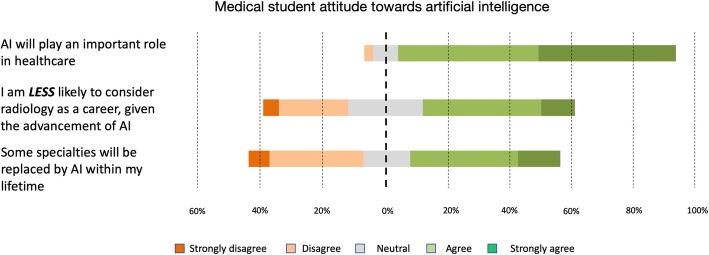
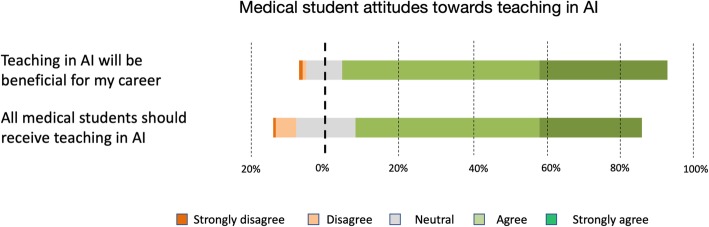
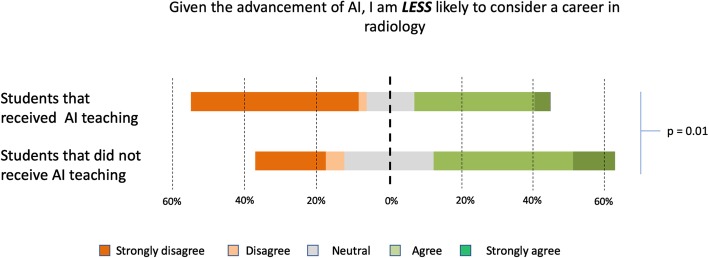
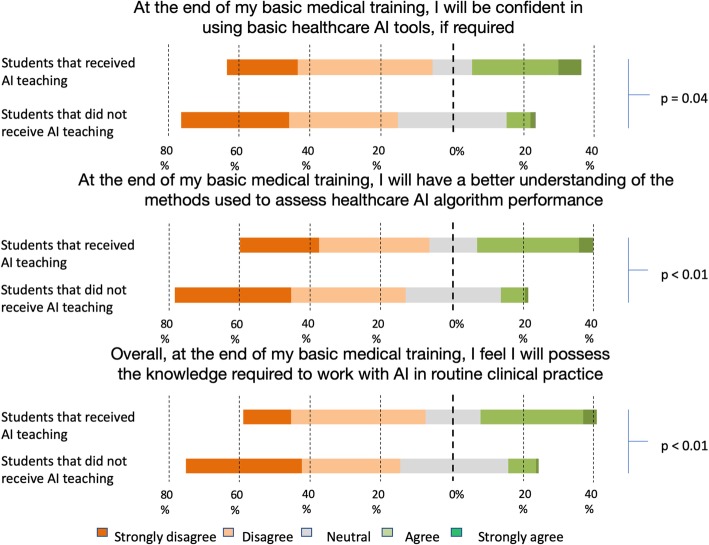
Objectives: To explore the attitudes of United Kingdom (UK) medical students regarding artificial intelligence (AI), their understanding, and career intention towards radiology. We also examine the state of education relating to AI amongst this cohort. Methods: UK medical students were invited to complete an anonymous electronic survey consisting of Likert and dichotomous questions. Results: Four hundred eighty-four responses were received from 19 UK medical schools. Eighty-eight percent of students believed that AI will play an important role in healthcare, and 49% reported they were less likely to consider a career in radiology due to AI. Eighty-nine percent of students believed that teaching in AI would be beneficial for their careers, and 78% agreed that students should receive training in AI as part of their medical degree. Only 45 students received any teaching on AI; none of the students received such teaching as part of their compulsory curriculum. Statistically, students that did receive teaching in AI were more likely to consider radiology (p = 0.01) and rated more positively to the questions relating to the perceived competence in the post-graduation use of AI (p = 0.01–0.04); despite this, a large proportion of students in the taught group reported a lack of confidence and understanding required for the critical use of healthcare AI tools. Conclusions: UK medical students understand the importance of AI and are keen to engage. Medical school training on AI should be expanded and improved. Realistic use cases and limitations of AI must be presented to students so they will not feel discouraged from pursuing radiology.
Overview
The claims and statistics of this paper haven’t been checked yet.
Free: it reads the open-access text and checks the first 5 claims that cite a source we can check. Create a free account to check every claim.
Integrity signals
Registry
Cites
Statistics
Figures
Verification
Claims the paper makes
The claims and statistics of this paper haven’t been checked yet.
Free: it reads the open-access text and checks the first 5 claims that cite a source we can check. Create a free account to check every claim.
Claims other papers make about this one
Each is checked against this paper’s own text: does it say what the citing paper says it does?
The source backs part of the claim, not all of it — or backs it for a different population, condition or comparison.
In the citing paper
“Moreover, many studies emphasized the relevance of AI literacy in higher and adult education (Lee, 2021a;Rodríguez-García et al., 2020;Sit et al., 2020;Xu & Babaian, 2021).”
From Artificial intelligence literacy in higher and adult education: A scoping literature review (2022) · cites this paper as Sit et al., 2020
Experimental — accuracy not yet measuredThe source backs part of the claim, not all of it — or backs it for a different population, condition or comparison.
In the citing paper
“Overall, in addition to positive attitudes toward AI, students generally expressed enthusiasm for integrating it into their future medical practice [70, 71]. Many believed AI had the potential to enhance and transform medicine by optimizing physicians’ workloads and reducing healthcare costs [42, 72, 73]. Additionally, students viewed AI as a supportive tool that can assist physicians, help”
From Artificial intelligence in undergraduate medical education: an updated scoping review (2025) · cites this paper as [70]
Experimental — accuracy not yet measuredThe source backs part of the claim, not all of it — or backs it for a different population, condition or comparison.
In the citing paper
“However, they are generally enthusiastic about learning and using AI in their practice [16, 17].”
From AI in medical education: medical student perception, curriculum recommendations and design suggestions (2023) · cites this paper as [16]
Experimental — accuracy not yet measuredThe source backs part of the claim, not all of it — or backs it for a different population, condition or comparison.
In the citing paper
“the current medical school curricula very rarely cover aspects of medical informatics, let alone AI, as part of their mandatory study programs [ 16 – 18 ].”
From Effect of a flipped classroom course to foster medical students’ AI literacy with a focus on medical imaging: a single group pre-and post-test study (2022) · cites this paper as [16]
Experimental — accuracy not yet measuredThe cited source says what the claim attributes to it.
In the citing paper
“Moreover, medical students who have received training in AI may be better equipped and more comfortable using AI tools and technologies in their later clinical work as they learn to understand and use AI concepts and their potential applications from the beginning of their careers [12, 13].”
From Biomedical Ethical Aspects Towards the Implementation of Artificial Intelligence in Medical Education (2023) · cites this paper as [12]
2 more claims about this paper
Create a free account to see every claim other papers make about this one.
Self-check
Percentages, sums and reported differences re-computed from the paper’s own numbers.
The self-check needs the paper’s full text.
Citations
Cites
R: A Language and Environment for Statistical Computing
R Core Team (2025) · doi:10.32614/r.manuals · Cited by 352,181
High-performance medicine: the convergence of human and artificial intelligence
Topol, E. J. (2019) · Nature Medicine · doi:10.1038/s41591-018-0300-7 · Cited by 10,450
Artificial intelligence and deep learning in ophthalmology
Ting, D. S. W., Pasquale, L. R., Peng, L., Campbell, J. P., Lee, A. Y., Raman, R., Tan, G. S. W., Schmetterer, L., Keane, P. A., & Wong, T. Y. (2019) · British Journal of Ophthalmology · doi:10.1136/bjophthalmol-2018-313173 · Cited by 1,554
Artificial Intelligence and Deep Learning in Ophthalmology
Wang, Z., Keane, P. A., Chiang, M., Cheung, C. Y., Wong, T. Y., & Ting, D. S. W. (2022) · Artificial Intelligence in Medicine · doi:10.1007/978-3-030-64573-1_200 · Cited by 1,524
Rajpurkar, P., Irvin, J., Ball, R. L., Zhu, K., Yang, B., Mehta, H., Duan, T., Ding, D., Bagul, A., Langlotz, C. P., et al. (2018) · PLOS Medicine · doi:10.1371/journal.pmed.1002686 · Cited by 1,449
Digital pathology and artificial intelligence
Niazi, M. K. K., Parwani, A. V., & Gurcan, M. N. (2019) · The Lancet Oncology · doi:10.1016/s1470-2045(19)30154-8 · Cited by 1,232
Deep learning algorithms for detection of critical findings in head CT scans: a retrospective study
Chilamkurthy, S., Ghosh, R., Tanamala, S., Biviji, M., Campeau, N. G., Venugopal, V. K., Mahajan, V., Rao, P., & Warier, P. (2018) · The Lancet · doi:10.1016/s0140-6736(18)31645-3 · Cited by 1,020
Medical students' attitude towards artificial intelligence: a multicentre survey
Pinto dos Santos, D., Giese, D., Brodehl, S., Chon, S. H., Staab, W., Kleinert, R., Maintz, D., & Baeßler, B. (2019) · European Radiology · doi:10.1007/s00330-018-5601-1 · Cited by 754
Deep Learning—A Technology With the Potential to Transform Health Care
Hinton, G. (2018) · JAMA · doi:10.1001/jama.2018.11100 · Cited by 667 · cited 1×
“It is only more recently that an increasingly circumspect view of AI adaptation in medical imaging has gained acceptance [13], including by some of the same thought leaders that originally predicted the rapid demise of radiologists [15].”
BackgroundGong, B., Nugent, J. P., Guest, W., Parker, W., Chang, P. J., Khosa, F., & Nicolaou, S. (2019) · Academic Radiology · doi:10.1016/j.acra.2018.10.007 · Cited by 325 · cited 2×
“in a Canadian cohort (N = 322) [9], where one sixth of medical students interested in radiology”
Background
Cited by
Items 301–400 of 607
Alkhayat, D. S., Alsubaiyi, H. N., Alharbi, Y. A., Alkahtani, L. M., Akhwan, A. M., & Alharbi, A. A. (2025) · Journal of Medical Education and Curricular Development · doi:10.1177/23821205251340129 · Cited by 8
Alhumaidi, W. A., AlQurashi, N. N. S., Alnumani, R. D., Althagafi, E. S., Bajunaid, F. R., & Alnefaie, G. (2023) · Cureus · doi:10.7759/cureus.42648 · Cited by 7
“Furthermore, in another study in the United Kingdom, more than half of the individuals agreed with the significance of AR in the medical field [14].”
BackgroundFitzek, S., & Choi, К.-E. (. (2023) · Postmodernism Problems · doi:10.46324/pmp2302148 · Cited by 8
“…2021; Dijmarescu, 2021; Postmodernism Problems / Проблеми на постмодерността Vol. 13, No. 2, 2023, ISSN: 1314-3700, https://pmpjournal.org https://doi.org/10.46324/PMP2302148 Mosteanu, 2020; Pană et al., 2021; Qurashi et al., 2021; Săniuță & Filip, 2021; Sit et al., 2020; Sunarti et al., 2021).”
InfluentialAn evaluation of information online on artificial intelligence in medical imaging
Mulryan, P., Chleirigh, N. N., O’Mahony, A. T., Crowley, C., Ryan, D. J., McLaughlin, P., McEntee, M. F., Maher, M. M., & O’Connor, O. J. (2022) · Insights into Imaging · doi:10.1186/s13244-022-01209-4 · Cited by 7
“Studies of medical student perspectives in North America, Europe and the United Kingdom conveyed heterogenous opinions on the potential implications of AI on radiology possibly with geographical variation [8–10].”
BackgroundMwaniki, E. K., Onyambu, C. K., & Rodrigues, J. C. (2023) · Research Square · doi:10.21203/rs.3.rs-2492173/v1 · Cited by 7
Rezazadeh, H., Mahani, A. M., & Salajegheh, M. (2025) · Health Science Reports · doi:10.1002/hsr2.71169 · Cited by 7
“Sit et al. (2020) stated that medical students trained in AI feel more confident about working with AI in the future than those who did not receive this training [12].”
Wei, L.-W. (2025) · Beijing international review of education · doi:10.1177/25902547251372084 · Cited by 8
“Accordingly, there exists an increasing imperative to address UA among Fine Arts students by integrating AI literacy and ethical deliberations into curricula (Sapci & Sapci, 2020; Sit et al., 2020).”
da Costa, R. L., Pereira, M., Pereira, A. A., Canas, J. M., Correia, R., & Dimande, C. (2025) · Businesses · doi:10.3390/businesses5040044 · Cited by 6
“…2021), the violation of ethical and privacy issues (Gerke et al., 2020; Maassen et al., 2021), and medical students’ attitudes towards AI systems (Sit et al., 2020) proved to be of little significance when it comes to influencing the intentionality of managers and health professionals in the…”
Simoni, J., Mengual, E., Aschenbrenner-Noriega, I., Monforte-Martínez, C., Pérez-Merino, M., Sawczyn, G., Zurita, R., & Pereira, J. L. (2025) · MedEdPublish · doi:10.12688/mep.21319.1 · Cited by 7
“9,10,54 Understanding how students utilize AI early in their education provides a solid foundation for determining how AI instruction can be effectively integrated into medical curricula.”
Dempere, J. M., Flores, P., & Allam, H. (2023) · Atlantis highlights in social sciences, education and humanities/Atlantis Highlights in Social Sciences, Education and Humanities · doi:10.2991/978-94-6463-286-6_15 · Cited by 6
Alzamel, L. G., Hassouneh, L., & Jallad, S. T. (2026) · BMC Medical Education · doi:10.1186/s12909-026-09053-6 · Cited by 6
Kara, A. V., HARMANCI, H., & Yılmaz, Y. (2026) · BMC Medical Education · doi:10.1186/s12909-026-09108-8 · Cited by 6
Hakami, K., Alameer, M., Jaawna, E., Sudi, A., Bahkali, B. I., Mohammed, A., Hakami, A. A., Mahfouz, M. S., Alhazmi, A., & Dhayihi, T. (2023) · Cureus · doi:10.7759/cureus.41840 · Cited by 6
“The experience extended to many specialties, such as radiology [2].”
BackgroundResultGenerative AI in Assessment: Towards Understanding the Student View
Haddley, J., & Ardito, C. G. (2024) · MSOR Connections · doi:10.21100/msor.v23i1.1515 · Cited by 7
Longarón, S. S., Johansson, L. F., Christiaans, I., Birnie, E., van Gijn, M. E., Ranchor, A. V., & Plantinga, M. (2025) · Health Policy and Technology · doi:10.1016/j.hlpt.2025.100982 · Cited by 6
Yapay Zekâya Yönelik Tutum Ölçeğinin Türkçeye Uyarlanması: Geçerlik ve Güvenirlik Çalışması
İlhan, A. G., & Önal, N. (2025) · Temel Eğitim · doi:10.52105/temelegitim.1606097 · Cited by 6
Khajeali, N., Kohan, N., Rezaei, S., & Saberi, A. (2025) · PLoS ONE · doi:10.1371/journal.pone.0323543 · Cited by 7
“Additionally, some questionnaires have been developed, but they have not undergone psychometric evaluation and have only assessed the attitude and knowledge of medical students or physicians toward AI [8,9,13,15–18].”
Artificial intelligence: how it works and criteria for assessment
Леонидовна, Ш. И., Garanina, O. E., Klemenova, I. A., Uskova, K. A., Mironycheva, A. M., Dardyk, V. I., & Laskov, V. (2021) · Consilium Medicum · doi:10.26442/20751753.2021.8.201148 · Cited by 7
Artificial Intelligence in The Healthcare System; A Cross-Sectional Study Involving Medical Students
Sabah, N. U., Fazal, F., Khan, A. J., Arooj, H., Rafiq, I., Dar, M. A., & Ahmed, M. (2023) · Pakistan Journal of Medicine and Dentistry · doi:10.36283/pjmd12-3/004 · Cited by 7
Parker, K., Bartholomew, K., Sandiford, P., & Crengle, S. M. (2025) · Journal of the Royal Society of New Zealand · doi:10.1080/03036758.2025.2458037 · Cited by 5
“Health professionals’ express concerns with the implementation of AI in practice and report a need for guidance and support to do this appropriately (Sit et al. 2020; Scheetz et al. 2021).”
Adopción de la inteligencia artificial y tecnologías digitales en la educación superior, Volumen 1
California, U. A. D. B. (2025) · Qartuppi eBooks · doi:10.29410/qtp.25.05 · Cited by 5
Pham, C., Nguyen, K.-H., & Le, D. T. (2025) · World Congress on Medical Physics and Biomedical Engineering, September 7 - 12, 2009, Munich, Germany · doi:10.1007/978-3-031-90194-2_35 · Cited by 5
Kaur, H., Verma, T., Mago, M., & Phoolka, S. (2025) · Journal of International Education in Business · doi:10.1108/jieb-08-2024-0097 · Cited by 6
Sirajudeen, N., Bhatt, N., Patel, A., Fallouh, G., Hyclová, A., Varadpande, M., Goel, A. R., Rajaratnam, W., & Dost, S. (2025) · BMC Medical Education · doi:10.1186/s12909-025-08319-9 · Cited by 5
“However, students within the UK who had received AI training were less likely to rule out a career within radiology [8].”
InfluentialZand, J., Šuvakov, M., Overgaard, S. M., Kozikowski, C., Jimison, R. C., Nelson, K. B., Silvano, C. J., Meiners, L. M., Fan, J. W., Schultz, K. E., et al. (2026) · Mayo Clinic Proceedings · doi:10.1016/j.mayocp.2025.11.008 · Cited by 6
Cabellos, B., de Aldama, C., & Pozo, J. I. (2026) · Revista de Educación a Distancia (RED) · doi:10.6018/red.671331 · Cited by 5
Medical Students’ Perceptions and Attitude Toward the Use of Artificial Intelligence in Healthcare
Albusmait, A., AlSaleh, A. F. F., & Ahmed, J. (2026) · Advances in Medical Education and Practice · doi:10.2147/amep.s541284 · Cited by 7
“11 Likewise, a study conducted in Saudi Arabia found 87% of students believed that AI will play significant role in healthcare.”
AI Integration in Spanish Undergraduate Medical Education: National Cross-Sectional Study
Janeiro, A. E., Pereira, K. P., Mayol, J., Crespo, J., Carballo, F., Cabello, J. B., Ramos-Casals, M., Corbacho, B. P., & Turnés, J. (2026) · JMIR Medical Education · doi:10.2196/88511 · Cited by 5
“Global and regional surveys show broad support for its teaching, calling for its inclusion in curricula while also expressing concern about ethical issues, the physician-patient relationship, and its impact on specialty choice [4,5].”
Hong, H., Kang, Y., Kim, Y., & Kim, B. (2023) · Journal of Medicine and Life Science · doi:10.22730/jmls.2023.20.2.53 · Cited by 7
Qin, K. X., Ahmad, N., Soomro, K., Yogaiswaaran, S., Singogo, T. D., & Rasheed, A. J. (2024) · Quest International Journal of Medical and Health Sciences · doi:10.5281/zenodo.13139999 · Cited by 5
Feigerlová, E., Hani, H., Lopes, R. G., Zuily, S., & Braun, M. (2020) · Pédagogie médicale · doi:10.1051/pmed/2020048 · Cited by 6
Ringeval, M., Raymond, L., Pomey, M.-P., & Paré, G. (2025) · Journal of Medical Internet Research · doi:10.2196/64804 · Cited by 4
“…typically examined isolated technologies (eg, AI in radiology [14,15], EHRs [16], or telemedicine [17]) or local contexts (eg, studies conducted in Canada [14], the United Kingdom [15], Vietnam [18], or Finland [19]), offering fragmented insights into how students engage with dHealth more broadly.”
Willis, K., Shakespeare, R., Chandrasekaran, L., Chaudhry, U. A. R., Wahlich, C., Chambers, R., Bolter, L., Anderson, J., Olvera‐Barrios, A., Fajtl, J., et al. (2025) · Diabetic Medicine · doi:10.1111/dme.70165 · Cited by 5
Usha, G. V., Nadar, B., Almalki, S. A., Bhagat, T. V., & Gowdar, I. M. (2025) · F1000Research · doi:10.12688/f1000research.173028.1 · Cited by 6
Hawal, M. V., Simon, M., Husain, N. H. A., Al-Harrasi, S. K. R., & Al-Hinai, L. N. S. (2025) · Journal of Medical Education Development · doi:10.61882/edcj.18.3.14 · Cited by 5
Jiang, Y., Ma, H., Zhang, S., Bao, H., Chen, C., & Luo, Y. (2025) · BMC Medical Education · doi:10.1186/s12909-025-08290-5 · Cited by 5
“This transformation has fundamentally reshaped the production and distribution of digital information [6], while also introducing unprecedented technical and governance challenges in verifying the authenticity of online medical and health information [7, 8].”
Nursing Students’ Knowledge and Attitudes Regarding Artificial Intelligence
Kadhim, J. J., & Alkhaqani, A. L. (2026) · The Malaysian Journal of Nursing · doi:10.31674/mjn.2026.v17i03.006 · Cited by 4
Buckmaster, F., van Staden, D. B., & Coetzee, L. (2026) · Ophthalmic and Physiological Optics · doi:10.1007/s44402-026-00053-z · Cited by 4
“As the survey was conducted online, responses may over-represent digitally engaged participants.”
Sayed, Z. A., Alnjadat, R. M., Khwaldeh, A., & Alqudah, L. M. M. (2026) · Nursing in Critical Care · doi:10.1111/nicc.70477 · Cited by 4
“Slightly more than half of participants agreed with positive attitude statements (54.9%), consistent with acceptance patterns reported by Ahmed [41] and Sit [42].”
InfluentialAlrasheeday, A., Alhawsawi, A. A., Alshammari, B., Alkubati, S. A., Aouicha, W., Tlili, M. A., Alharbi, A., Siam, B. G. A. E., Mahmoud, S. K. M., Elamin, B. A., et al. (2026) · Nursing Reports · doi:10.3390/nursrep16050154 · Cited by 4
“These findings were corroborated by several recent studies [27,29,31].”
Zhao, Z., Liu, Z., Guo, L., Pan, T., Zhang, Y., Miao, C., Ge, Y., Wang, Y., Hu, X., Wang, X., et al. (2026) · JMIR Medical Education · doi:10.2196/98949 · Cited by 5
Kochis, M. A., Parsons, M. Q., Rothman, D., PETRUSA, E. R., & Phitayakorn, R. (2024) · Global Surgical Education - Journal of the Association for Surgical Education · doi:10.1007/s44186-024-00292-z · Cited by 5
Ng, I. S. H., Siu, A., Han, C. S. J., Ho, O. S. H., Sun, J., Markiv, A., Knight, S., & Sagoo, M. G. (2025) · Behavioral Sciences · doi:10.3390/bs15091284 · Cited by 4
Giavina-Bianchi, B., Bianchi, M. G., Wolosker, N., Amaro, E., & Machado, B. S. (2025) · Einstein (São Paulo) · doi:10.31744/einstein_journal/2025ao1401 · Cited by 4
Arini, D. N., Almubarak, Im, J., Alderaan, H., Taqwiem, A., & Suparman, A. R. (2026) · Disciplinary and Interdisciplinary Science Education Research · doi:10.1186/s43031-025-00147-7 · Cited by 16
“Ethical and Professional Concern.”
What Are the Challenges and Opportunities of Integrating AI Into Existing Healthcare Infrastructure?
Ustabaşı, K. N. (2024) · Next frontier. · doi:10.62802/dvmbnm16 · Cited by 4
Almuhanna, A., Almohsen, D. S., Alsultan, D. H., Alhuraish, D., AlRatrout, F., Alzanadi, R. H., & Abbas, R. (2025) · Journal of Medical Education and Curricular Development · doi:10.1177/23821205251358005 · Cited by 4
Job Satisfaction among Primary Health Care Workers in Buraidah, Qassim, Saudi Arabia
Aljumail, E., & Rabbani, U. (2021) · World Family Medicine Journal/Middle East Journal of Family Medicine · doi:10.5742/mewfm.2021.94173 · Cited by 6
Mantello, P. A., Ho, T. M., Vuong, Q., & Nguyen, M. (2021) · SocArXiv (OSF Preprints) · doi:10.31235/osf.io/c59aw · Cited by 4
Dere, A. A., Mustapha, M. J., Wahab, K., & Bello, K. (2024) · doi:10.2196/preprints.64883 · Cited by 4
Mastour, H., Mirzaei, S., Sohrabi, S., & Toofaninejad, E. (2026) · BMC Medical Education · doi:10.1186/s12909-026-09630-9 · Cited by 3
“Recommendations for integrating AI in medical curriculums Cherry Sit et al. [33] 378 out of 484 of participants (78”
InfluentialSadiq, S., Rizwan, S., Arslan, S. A., Rabeya, Qamar, S., & Shahalam, S. (2024) · Pakistan Journal of Health Sciences · doi:10.54393/pjhs.v5i09.1973 · Cited by 3
Gkikas, D. C., Georgopoulos, V. P., & Theodorou, J. Α. (2024) · Water · doi:10.3390/w16243595 · Cited by 4
What are the perceptions of AI in radiology among UK medical students and junior doctors?
Baker, J., Elliott, C., Boden, A., Antypas, A., Singh, S., Aggarwal, P., Jayasinghe, N., & Narasimhan, P. (2025) · Acta Radiologica · doi:10.1177/02841851251339010 · Cited by 4
“A UK-based survey by Sit et al. also indicated that many medical students felt unprepared to work alongside AI, with some reconsidering radiology as a career due to these concerns (16).”
Visci, P., Lupelli, F., Calò, F., Sirago, G., Solarino, B., Dell'Erba, A., & Ferorelli, D. (2026) · Medical Teacher · doi:10.1080/0142159x.2026.2663855 · Cited by 4
Qiu, H., Zhang, G., Li, J., Yan, P., Chen, G., Xu, C., Li, Y., & Shang, L. (2026) · Academic Radiology · doi:10.1016/j.acra.2026.01.033 · Cited by 3
Mapping Your Career in the Era of Artificial Intelligence: It’s Up to You, Not Google
Fishman, E. K., Weisberg, E. M., Chu, L. C. H., & Rowe, S. P. (2020) · Journal of the American College of Radiology · doi:10.1016/j.jacr.2020.03.035 · Cited by 3
Şahin, E., & Berk, H. (2023) · Journal of Surgery and Medicine · doi:10.28982/josam.7709 · Cited by 3
Aplicação da Inteligência Artificial no Ensino Superior: Áreas e Características
Cavalcanti, W. M., Tavares, E. M., & Júnior, J. L. C. P. (2021) · Revista ADM.MADE/Adm.MADE · doi:10.5935/2237-51392020v25n1p040061 · Cited by 7
Dudok, O. V., Dumych, T. I., Hzhehotska-Solonko, S., Yuzych, O., & Chelpanova, I. V. (2024) · Wiadomości Lekarskie · doi:10.36740/wlek202408257 · Cited by 3
Asim-Ittah, G. A., Etim, N. M., Inyang, S. I., Oguzie, B. A., & Ekong, J. S. (2024) · The American Journal of Social Science and Education Innovations · doi:10.37547/tajssei/volume06issue09-17 · Cited by 3
Sengupta, P., Dutta, S., Bagchi, S., Hegde, P., Sebastian, S. K., Taylor, D., & Henkel, R. (2025) · Reproductive Sciences · doi:10.1007/s43032-025-01903-w · Cited by 4
“Version control systems enable traceable feedback on algorithm iterations [31, 32], while embedding feedback prompts into clinical workflows increases response rates [33].”
Wangguway, Y., Mandala, A. S., & Ugadje, E. F. (2025) · Journal of Education Research and Evaluation · doi:10.23887/jere.v9i2.94144 · Cited by 3
Use of artificial intelligence in oral radiology: a multicenter cross-sectional study in Egypt
Saif, N., Elkoumi, A., & Shaalan, A. (2025) · BMC Oral Health · doi:10.1186/s12903-025-07269-4 · Cited by 4
“Although previous research has examined the perceptions of dental and medical students regarding AI, this study is the first to specifically focus on practicing dentists in Egypt and their views on AI in oral radiological diagnostics and applications [23, 24].”
Alasmari, I. H., Saleh, M. M. A., Alahmari, M. A., Asiri, S. M., & Asiri, A. Y. (2021) · World Family Medicine Journal/Middle East Journal of Family Medicine · doi:10.5742/mewfm.2021.94184 · Cited by 4
Alomary, S. A., Alorainy, B. A., Albargan, N. S., Alotaibi, F. Z., & Alkholaiwi, F. (2021) · World Family Medicine Journal/Middle East Journal of Family Medicine · doi:10.5742/mewfm.2021.94191 · Cited by 4
Altaf, M., Altaf, L. Z., Farahat, F. M., & Althaqafi, A. (2021) · World Family Medicine Journal/Middle East Journal of Family Medicine · doi:10.5742/mewfm.2021.94170 · Cited by 3
Feng, X., Li, P., Zhao, R., Li, W., Zhu, T., Hao, X., & Chen, G. (2025) · Journal of Medical Internet Research · doi:10.2196/60304 · Cited by 5
“These findings are consistent with previous studies in various medical fields, highlighting the increasing acceptance and benefits of integrating informatics tools in health care [49,50].”
Research on the Application of Artificial Intelligence in Medical Education
Li, M., & Wang, X. (2024) · Learning and analytics in intelligent systems · doi:10.1007/978-3-031-69457-8_60 · Cited by 3
Perez-Torrents, J. (2024) · theses.fr (ABES) · doi:10.70675/97d0e67ez9ba4z4494z98d7z5a282887792f · Cited by 3
Artificial Intelligence in Oculoplastics: A Survey-Based Study on Provider Perspective
Fazekas, B., Moledina, M., Singhania, N., & Tambe, K. (2025) · Cureus · doi:10.7759/cureus.81271 · Cited by 3
Gyesi, K., Amponsah, V., & Ankamah, S. (2025) · Biblios Journal of Librarianship and Information Science · doi:10.5195/biblios.2025.1211 · Cited by 5
Huang, Y. K., Kleespies, M. W., & Shiang‐Yao, L. (2025) · Biochemistry and Molecular Biology Education · doi:10.1002/bmb.21905 · Cited by 3
“Previous research has investigated medical students' perceptions and attitudes toward AI [4, 5], revealing their awareness of AI's potential applications in medicine and support for its integration into medical training.”
Nasrolahzadeh, M., & Akbari, A. (2025) · Psychiatry Research Neuroimaging · doi:10.1016/j.pscychresns.2025.112005 · Cited by 2
Evaluation of the Medical Artificial Intelligence Readiness Status of Medical Faculty Students
Denizli, F. (2025) · Current Perspectives on Health Sciences · doi:10.58208/cphs.1533819 · Cited by 2
Attitudes and Perceptions of Health Sciences Academicians on Artificial Intelligence
Yağcıoğlu, G. A., Akkurt, L., & Duygu, S. Ç. (2025) · Journal of Basic and Clinical Health Sciences · doi:10.30621/jbachs.1606219 · Cited by 2
The Role of Artificial Intelligence in Workforce Adaptation and Skill Development
Karmali, Y. (2026) · Biomedical visualization · doi:10.1007/978-3-032-06520-9_10 · Cited by 2
Elhoshy, H. S., Aref, S. R., Fouad, S., Abouzeid, E., & Talaat, W. (2025) · Education in Medicine Journal · doi:10.21315/eimj2025.17.4.4 · Cited by 3
Education Research: Bridging the Artificial Intelligence Training Gap
Vozzi, C., Sibilla, M., Sandri, D., Marinato, V., Micolonghi, G., Oliveri, S., Filippi, M., Marceglia, S. R. F., & Priori, A. (2026) · Neurology Education · doi:10.1212/ne9.0000000000200289 · Cited by 2
“15,16 Although some leading US institutions have begun introducing AI teaching modules into medical training, these initiatives remain the exception rather than the rule, with many countries outside the United States, especially in Europe and low and middle-income regions, still facing gaps in AI…”
Aghajani, M. S., Hatami, J., & Toofaninejad, E. (2026) · Teaching and Learning in Medicine · doi:10.1080/10401334.2025.2608190 · Cited by 2
Belyaev, D. A., Smirnov, M. Y., & Rochnyak, E. V. (2026) · Perspectives of science and education · doi:10.32744/pse.2026.1.41 · Cited by 2
Zhang, W., Han, J., Han, X., Xu, H., Wang, L., Lin, T., Tan, P., Peng, Z., & Zheng, X. (2026) · JMIR Medical Education · doi:10.2196/89411 · Cited by 3
“A total of 96 studies were included [10,”
InfluentialUses of Artificial Intelligence in Healthcare: A Structured Literature Review
Collinsworth, A., & Benjamin, D. (2022) · Educational communications and technology: issues and innovations · doi:10.1007/978-3-030-84729-6_24 · Cited by 2
School Teachers’ Knowledge and Attitude toward School Students with Epilepsy
Alsugair, R. S., Alyabis, M. A., Algadi, M. A., Attieh, A. I., Juha, L. A., Alawa, R. G., Alghannam, S. G., Alsaadoon, N. Z., El-Sayed, N., & Alfadeel, M. A. (2021) · World Family Medicine Journal/Middle East Journal of Family Medicine · doi:10.5742/mewfm.2021.94183 · Cited by 3
El-Gamal, F., Alsubhi, N., Badr, S., Althaqafi, N., Al-Qadasi, F., & Hammed, M. (2021) · World Family Medicine Journal/Middle East Journal of Family Medicine · doi:10.5742/mewfm.2021.94179 · Cited by 2
Sachdev, R., Garg, K., & Srivastava, A. (2021) · Dentistry and Medical Research · doi:10.4103/dmr.dmr_17_21 · Cited by 2
What Do People Think About Artificial Intelligence and Robots in Healthcare? A Study on Generations
BOZKURT, Ş. A., & HOŞGÖR, H. (2023) · DergiPark (Istanbul University) · Cited by 2
Prospective Physicians’ Intention to Adopt Artificial Intelligence: A Configurational Perspective
Paré, G., Raymond, L., Castonguay, A., & Wagner, G. (2023) · Hawaii International Conference on System Sciences (HICSS) · doi:10.24251/hicss.2023.369 · Cited by 2
Fitzek, S. (2024) · Journal of Community Positive Practices · doi:10.35782/jcpp.2024.1.04 · Cited by 2
INTELIGÊNCIA ARTIFICIAL NA RADIOLOGIA
do Rosário, D. J., Neto, R. D. C. B., & Pinto, E. V. (2024) · Revista Ibero-Americana de Humanidades, Ciências e Educação · doi:10.51891/rease.v10i5.14009 · Cited by 26
Sapientiae, U. C. S., Rodríguez, N. C. V., Vidaurre, S. M. E., de Tacna, U. P., Quelopana, R. L. G., de Tacna, U. P., Valdivia, A. N. M., de Tacna, U. P., Cruz, K. M. L.-D. L., de Tacna, E. D. P. N., et al. (2024) · doi:10.59899/ges-cono-66-c2 · Cited by 2
Indu, M., Shankar, V. G., Cherian, L. M., Krishna, R., Paul, S., & Sathyan, P. (2022) · Saudi Journal of Oral Sciences · doi:10.4103/sjoralsci.sjoralsci_19_22 · Cited by 2
Ekici, Ö. (2025) · Turkiye Klinikleri Journal of Dental Sciences · doi:10.5336/dentalsci.2024-105062 · Cited by 2
Yang, B. X., Zhou, F., Bai, N., Zhou, S., Luo, C., Wáng, Q., Wong, A. K. C., & Lin, F. (2025) · Frontiers of digital education. · doi:10.1007/s44366-025-0046-y · Cited by 2
Asonganyi, E. A., Tanue, E. A., Kwalar, G. I., Kibu, O. D., Ondua, M., Sandeu, M. M., Ema, P. J. N., Nkweteyim, D. L., Nyamsi, M. L., Achankeng, P. L., et al. (2025) · Journal of Tropical Medicine · doi:10.1155/jotm/8896234 · Cited by 3
Montazeri, E. A., Zarei, J., Pour, B. G. H., & Bahadori, A. (2026) · BMC Medical Education · doi:10.1186/s12909-026-08865-w · Cited by 2
“A thorough understanding of AI enables students to critically evaluate AI-generated outputs and integrate them effectively into decision-making processes (15), which directly influences their future professional attitudes and clinical judgment quality (16, 17).”
Bohan, H. H., JASIM, B. A., Nsaif, N. G., Muneam, N. A., Jassim, H. A., Nsaif, M. S., Muneam, S. A., Salman, R. S., & Atteah, A. S. (2025) · Al-Iraqia Medical College Journal · doi:10.58564/aimcj2.3.2025.235 · Cited by 2
Cartoon illustration in teaching and learning research statistics
Noor, N. H. M. (2024) · Selangor Business Review · Cited by 2
Wojda, T. R., Hoffman, C., Kindler, K., Desai, A., & Visweswaran, S. (2024) · Artificial intelligence · doi:10.5772/intechopen.114907 · Cited by 3
Mantello, P. A., Ho, T. M., Nguyen, M., & Vuong, Q. (2021) · arXiv (Cornell University) · doi:10.48550/arxiv.2102.04213 · Cited by 2
“However, overall, most medical students’ population found students express interest and desire to receive more AI training in their degree (Bin Dahmash et al., 2020; Pinto dos Santos et al., 2019; Sit et al., 2020).”
Background
Metadata
- Authors
- Sit, C., Srinivasan, R., Amlani, A., Muthuswamy, K., Azam, A., Monzon, L., & Poon, D. S.
- Affiliations
- St Thomas' Hospital (GB)
- King's College London (GB)
- Corresponding author
- Poon, Daniel Stephen
- Venue
- Insights into Imaging
- Published
- 2020-02-05
- Volume
- 11
- Issue
- 1
- Pages
- 14-14
- ISSN
- 1869-4101 (ISSN-L)
- PMC
- PMC7002761
- OpenAlex
- W3012668909
- Cited by
- 507
- References
- 12
- Citations by year
- 2026: 81 · 2025: 118 · 2024: 113 · 2023: 72 · 2022: 52 · 2021: 57 · 2020: 13
- FWCI
- 14.28
- Type
- journal article
- Language
- en
- Open access
- gold
- doi.org
- Licence
- cc-by
- creativecommons.org/licenses/by/4.0 (tdm)
- creativecommons.org/licenses/by/4.0 (vor)
- Locations
- Insights into Imaging (publishedVersion, cc-by)
- Europe PMC (PubMed Central) (publishedVersion, cc-by)
- PubMed Central (publishedVersion, cc-by)
- PubMed (publishedVersion)
- DOAJ (DOAJ: Directory of Open Access Journals) (submittedVersion)
- Topics
- Health Sciences › Medicine › Health Informatics › Artificial Intelligence in Healthcare and Education
- Health Sciences › Medicine › Radiology, Nuclear Medicine and Imaging › Radiology practices and education
- Social Sciences › Education › Innovations in Medical Education
- Keywords
- artificial intelligence in healthcare, medical students, attitudes toward AI, medical school training, UK medical education
About these checks
Registry, retraction, Cites and statistics results are computed, not judged, with one exception: a printed reference that no index lists is read once by a model before it counts as a citation error. Claims are extracted by a model and kept only when their quote appears verbatim in the text; each cited source is then checked, with a model’s help, for whether it says what the claim relies on. Those verdicts can be wrong — read the claim’s quote and the cited source before relying on one.
Statistics and arithmetic are recomputed, not judged.
Confidence bands are shown only for fields calibrated on our annotated test set. None is calibrated yet, so no band is shown.
What counts as a claim ›How we measure confidence ›How we check this ›
Are you an author, or do you see a problem with this page? Request a review
Data sources
Bibliographic data: Semantic Scholar, OpenAlex, Crossref.
Contains information from the Semantic Scholar Academic Graph Datasets, made available under the ODC Attribution License (ODC-BY 1.0).
Semantic Scholar’s data is described in: Kinney, R., et al. (2023). The Semantic Scholar Open Data Platform. arXiv:2301.10140.
