

Attitudes and perceptions of UK medical students towards artificial intelligence and radiology: a multicentre survey
Open accessThe DOI matches its Crossref record; 13 of the 13 references it cites were found in a registry or an index.
Abstract
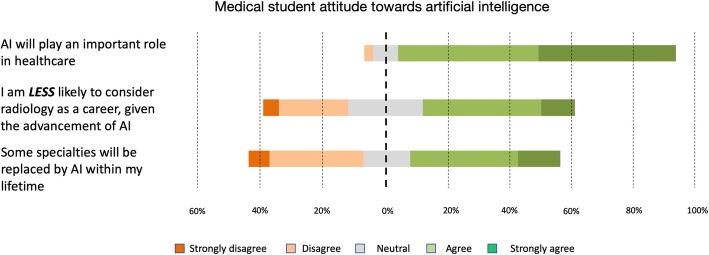
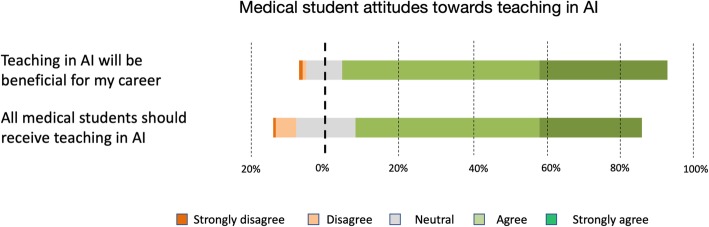
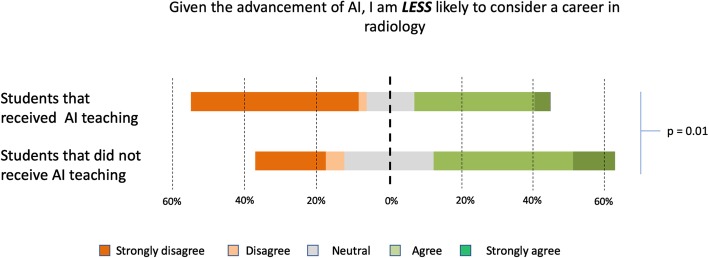
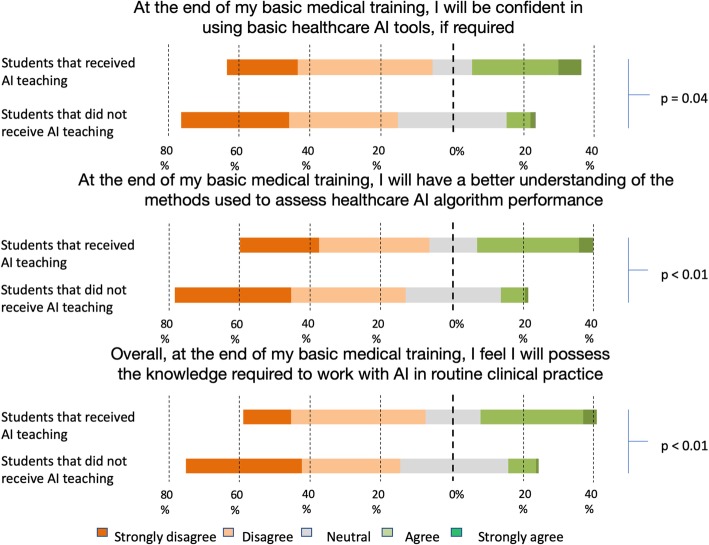
Objectives: To explore the attitudes of United Kingdom (UK) medical students regarding artificial intelligence (AI), their understanding, and career intention towards radiology. We also examine the state of education relating to AI amongst this cohort. Methods: UK medical students were invited to complete an anonymous electronic survey consisting of Likert and dichotomous questions. Results: Four hundred eighty-four responses were received from 19 UK medical schools. Eighty-eight percent of students believed that AI will play an important role in healthcare, and 49% reported they were less likely to consider a career in radiology due to AI. Eighty-nine percent of students believed that teaching in AI would be beneficial for their careers, and 78% agreed that students should receive training in AI as part of their medical degree. Only 45 students received any teaching on AI; none of the students received such teaching as part of their compulsory curriculum. Statistically, students that did receive teaching in AI were more likely to consider radiology (p = 0.01) and rated more positively to the questions relating to the perceived competence in the post-graduation use of AI (p = 0.01–0.04); despite this, a large proportion of students in the taught group reported a lack of confidence and understanding required for the critical use of healthcare AI tools. Conclusions: UK medical students understand the importance of AI and are keen to engage. Medical school training on AI should be expanded and improved. Realistic use cases and limitations of AI must be presented to students so they will not feel discouraged from pursuing radiology.
Overview
The claims and statistics of this paper haven’t been checked yet.
Free: it reads the open-access text and checks the first 5 claims that cite a source we can check. Create a free account to check every claim.
Integrity signals
Registry
Cites
Statistics
Figures
Verification
Claims the paper makes
The claims and statistics of this paper haven’t been checked yet.
Free: it reads the open-access text and checks the first 5 claims that cite a source we can check. Create a free account to check every claim.
Claims other papers make about this one
Each is checked against this paper’s own text: does it say what the citing paper says it does?
The source backs part of the claim, not all of it — or backs it for a different population, condition or comparison.
In the citing paper
“Moreover, many studies emphasized the relevance of AI literacy in higher and adult education (Lee, 2021a;Rodríguez-García et al., 2020;Sit et al., 2020;Xu & Babaian, 2021).”
From Artificial intelligence literacy in higher and adult education: A scoping literature review (2022) · cites this paper as Sit et al., 2020
Experimental — accuracy not yet measuredThe source backs part of the claim, not all of it — or backs it for a different population, condition or comparison.
In the citing paper
“Overall, in addition to positive attitudes toward AI, students generally expressed enthusiasm for integrating it into their future medical practice [70, 71]. Many believed AI had the potential to enhance and transform medicine by optimizing physicians’ workloads and reducing healthcare costs [42, 72, 73]. Additionally, students viewed AI as a supportive tool that can assist physicians, help”
From Artificial intelligence in undergraduate medical education: an updated scoping review (2025) · cites this paper as [70]
Experimental — accuracy not yet measuredThe source backs part of the claim, not all of it — or backs it for a different population, condition or comparison.
In the citing paper
“However, they are generally enthusiastic about learning and using AI in their practice [16, 17].”
From AI in medical education: medical student perception, curriculum recommendations and design suggestions (2023) · cites this paper as [16]
Experimental — accuracy not yet measuredThe source backs part of the claim, not all of it — or backs it for a different population, condition or comparison.
In the citing paper
“the current medical school curricula very rarely cover aspects of medical informatics, let alone AI, as part of their mandatory study programs [ 16 – 18 ].”
From Effect of a flipped classroom course to foster medical students’ AI literacy with a focus on medical imaging: a single group pre-and post-test study (2022) · cites this paper as [16]
Experimental — accuracy not yet measuredThe cited source says what the claim attributes to it.
In the citing paper
“Moreover, medical students who have received training in AI may be better equipped and more comfortable using AI tools and technologies in their later clinical work as they learn to understand and use AI concepts and their potential applications from the beginning of their careers [12, 13].”
From Biomedical Ethical Aspects Towards the Implementation of Artificial Intelligence in Medical Education (2023) · cites this paper as [12]
2 more claims about this paper
Create a free account to see every claim other papers make about this one.
Self-check
Percentages, sums and reported differences re-computed from the paper’s own numbers.
The self-check needs the paper’s full text.
Citations
Cites
R: A Language and Environment for Statistical Computing
R Core Team (2025) · doi:10.32614/r.manuals · Cited by 352,181
High-performance medicine: the convergence of human and artificial intelligence
Topol, E. J. (2019) · Nature Medicine · doi:10.1038/s41591-018-0300-7 · Cited by 10,450
Artificial intelligence and deep learning in ophthalmology
Ting, D. S. W., Pasquale, L. R., Peng, L., Campbell, J. P., Lee, A. Y., Raman, R., Tan, G. S. W., Schmetterer, L., Keane, P. A., & Wong, T. Y. (2019) · British Journal of Ophthalmology · doi:10.1136/bjophthalmol-2018-313173 · Cited by 1,554
Artificial Intelligence and Deep Learning in Ophthalmology
Wang, Z., Keane, P. A., Chiang, M., Cheung, C. Y., Wong, T. Y., & Ting, D. S. W. (2022) · Artificial Intelligence in Medicine · doi:10.1007/978-3-030-64573-1_200 · Cited by 1,524
Rajpurkar, P., Irvin, J., Ball, R. L., Zhu, K., Yang, B., Mehta, H., Duan, T., Ding, D., Bagul, A., Langlotz, C. P., et al. (2018) · PLOS Medicine · doi:10.1371/journal.pmed.1002686 · Cited by 1,449
Digital pathology and artificial intelligence
Niazi, M. K. K., Parwani, A. V., & Gurcan, M. N. (2019) · The Lancet Oncology · doi:10.1016/s1470-2045(19)30154-8 · Cited by 1,232
Deep learning algorithms for detection of critical findings in head CT scans: a retrospective study
Chilamkurthy, S., Ghosh, R., Tanamala, S., Biviji, M., Campeau, N. G., Venugopal, V. K., Mahajan, V., Rao, P., & Warier, P. (2018) · The Lancet · doi:10.1016/s0140-6736(18)31645-3 · Cited by 1,020
Medical students' attitude towards artificial intelligence: a multicentre survey
Pinto dos Santos, D., Giese, D., Brodehl, S., Chon, S. H., Staab, W., Kleinert, R., Maintz, D., & Baeßler, B. (2019) · European Radiology · doi:10.1007/s00330-018-5601-1 · Cited by 754
Deep Learning—A Technology With the Potential to Transform Health Care
Hinton, G. (2018) · JAMA · doi:10.1001/jama.2018.11100 · Cited by 667 · cited 1×
“It is only more recently that an increasingly circumspect view of AI adaptation in medical imaging has gained acceptance [13], including by some of the same thought leaders that originally predicted the rapid demise of radiologists [15].”
BackgroundGong, B., Nugent, J. P., Guest, W., Parker, W., Chang, P. J., Khosa, F., & Nicolaou, S. (2019) · Academic Radiology · doi:10.1016/j.acra.2018.10.007 · Cited by 325 · cited 2×
“in a Canadian cohort (N = 322) [9], where one sixth of medical students interested in radiology”
Background
Cited by
Items 101–200 of 606
Vidaurre, S. M. E., Rodríguez, N. C. V., Quelopana, R. L. G., Valdivia, A. N. M., Rossi, E. L., & Nolasco-Mamani, M. A. (2024) · Sustainability · doi:10.3390/su16209005 · Cited by 65
Medical Students’ Perspectives on Trust in Medical AI: A Quantitative Comparative Study
Kajanová, J., & Badrov, A. (2024) · Asian Journal of Ethics in Health and Medicine · doi:10.51847/36mpdz9az8 · Cited by 58
Arvai, N., Katonai, G., & Mesko, B. (2025) · Journal of Medical Internet Research · doi:10.2196/66986 · Cited by 57
“They demonstrate curiosity and openness to participate in training related to this field as they foresee the use of AI as the future trajectory [20-22].”
Shinners, L., Aggar, C., Stephens, A. S., & Grace, S. (2023) · Australian Journal of Rural Health · doi:10.1111/ajr.13045 · Cited by 61
Truong, N. M., Vo, T. Q., Tran, H. T. B., Nguyen, H. T., & Pham, V. N. H. (2023) · Heliyon · doi:10.1016/j.heliyon.2023.e22653 · Cited by 56
“Meanwhile, reduced exposure to AI causes anxiety among undergraduate medical students, thereby influencing their future career decisions [29,30].”
BackgroundPerceptions About Generative AI and ChatGPT Use by Faculty and College Students
Petricini, T., Wu, C., & Zipf, S. T. (2023) · doi:10.35542/osf.io/jyma4 · Cited by 54
Eschert, T., Schwendicke, F., Krois, J., Bohner, L., Vinayahalingam, S., & Hanisch, M. (2022) · Medicina · doi:10.3390/medicina58081059 · Cited by 53
“Despite several serious concerns, clinicians in various surveys agree on the positive impact of AI on their profession [15,17,18,20,23,24].”
BackgroundThe cases for and against artificial intelligence in the medical school curriculum
Ngo, B., Nguyen, D., & vanSonnenberg, E. (2022) · Radiology: Artificial Intelligence · doi:10.1148/ryai.220074 · Cited by 53
Artificial intelligence in medical education: promise, pitfalls, and practical pathways
Saroha, S. (2025) · Advances in Medical Education and Practice · doi:10.2147/amep.s523255 · Cited by 53
The Mediating Effect of AI Trust on AI Self-Efficacy and Attitude Toward AI of College Students
Obenza, B. N., Baguio, J. S. I. E., Bardago, K. M. W., Granado, L. B., Loreco, K. C. A., Matugas, L. P., Talaboc, D. J., Zayas, R. K. D. D., Caballo, J. H. S., & Caangay, R. B. R. (2023) · International Journal of Metaverse · doi:10.54536/ijm.v2i1.2286 · Cited by 36
“…AI training as part of their medical degrees and believing it would benefit their future careers, emphasizing positive outlook on the role of AI in improving medical practices (Al Saad et al., 2022; Bisdas et al., 2021; Mehta et al., 2021; Sit et al., 2020; Stewart et al., 2023; Tung et al., 2023).”
BackgroundInfluentialOluwadiya, K. S., Adeoti, A. O., Agodirin, S. O., Nottidge, T. E., Usman, M. I., Gali, M. B., Onyemaechi, N. O., Ramat, A. M., Adedire, A., & Zakari, L. Y. (2023) · Nigerian Postgraduate Medical Journal · doi:10.4103/npmj.npmj_186_23 · Cited by 51
Hui, E. S. Y. E. (2024) · Education 3-13 · doi:10.1080/03004279.2024.2332469 · Cited by 68
“Furthermore, this cognitive relationship has not been adequately investigated within a specific problem-solving framework in a quantifiable manner (Ottenbreit-Leftwich et al. 2021; Sit et al. 2020).”
Wong, K., Gallant, F., & Szumacher, E. (2021) · Journal of Medical Imaging and Radiation Sciences · doi:10.1016/j.jmir.2020.11.013 · Cited by 43
McLennan, S., Meyer, A., Schreyer, K., & Buyx, A. (2022) · PLOS Digital Health · doi:10.1371/journal.pdig.0000114 · Cited by 50
“In 2020, Sit and colleagues reported the results of an online survey conducted with 484 medical students from 19 UK medical schools; it was found that a majority (88%) of the students believed that AI will play an important role in healthcare, and just under half (49%) of the students reported they were less likely to…”
BackgroundSi, J. (2025) · BMC Medical Education · doi:10.1186/s12909-025-07766-8 · Cited by 57
“However most existing research has focused on conceptual discussions [9–12], or learners’ attitudes and emotional responses toward AI [3, 5, 13–16].”
Artificial intelligence in radiology: Are Saudi residents ready, prepared, and knowledgeable?
Khafaji, M. A., Safhi, M. A., Albadawi, R. H., Al-Amoudi, S. O., Shehata, S. S., & Toonsi, F. (2022) · Saudi Medical Journal · doi:10.15537/smj.2022.43.1.20210337 · Cited by 48
Impact of the Rise of Artificial Intelligence in Radiology: What Do Students Think?
Barreiro-Ares, A., Morales-Santiago, A., Sendra-Portero, F., & Souto-Bayarri, M. (2023) · International Journal of Environmental Research and Public Health · doi:10.3390/ijerph20021589 · Cited by 42
“when choosing radiology or not, feeling prepared to work with them at the end of their degree [28].”
BackgroundAlshehri, B. (2023) · International Journal of Educational Sciences and Arts · doi:10.59992/ijesa.2023.v2n8p7 · Cited by 59
Risk of AI in Healthcare: A Comprehensive Literature Review and Study Framework
Muley, A., Muzumdar, P., Kurian, G., & Basyal, G. P. (2023) · Asian Journal of Medicine and Health · doi:10.9734/ajmah/2023/v21i10903 · Cited by 54
“Several factors make existing medical AI technologies susceptible to human error or incorrect use [32].”
BackgroundIsbanner, S., O’Shaughnessy, P., Steel, D., Wilcock, S., & Carter, S. (2022) · Journal of Medical Internet Research · doi:10.2196/37611 · Cited by 45
Hegde, S., Nanayakkara, S., Jordan, A., Jeha, O., Patel, U., Luu, V., & Gao, J. (2024) · European Journal Of Dental Education · doi:10.1111/eje.13042 · Cited by 50
“The research team developed the questionnaire based on the literature review and similar previously published surveys [33, 37].”
Determining medical students' anxiety and readiness levels about artificial intelligence
Özbek Güven, G., Yilmaz, Ş., & Inceoğlu, F. (2024) · Heliyon · doi:10.1016/j.heliyon.2024.e25894 · Cited by 44
“Although AI is unlikely to replace doctors and nurses, it is widely recognized as a reliable tool for clinical decision-making [6].”
BackgroundMethodZhang, X., Tsang, C. C. S., Ford, D. D., & Wang, J. (2024) · American Journal of Pharmaceutical Education · doi:10.1016/j.ajpe.2024.101309 · Cited by 45
To adopt or to ban? Student perceptions and use of generative AI in higher education
Farinosi, M., & Melchior, C. (2025) · Humanities and Social Sciences Communications · doi:10.1057/s41599-025-05982-7 · Cited by 47
“Most students agree that AI is signi fi cantly affecting their academic fi elds and career prospects (e.g. Bisdas et al., 2021; Sit et al., 2020), and they also express a desire to integrate AI into their educational pursuits and future practice (e.g. Lee et al., 2022), ultimately considering AI an…”
Artificial Intelligence and the Trainee Experience in Radiology
Simpson, S. A., & Cook, T. S. (2020) · Journal of the American College of Radiology · doi:10.1016/j.jacr.2020.09.028 · Cited by 38
(2021) · doi:10.2196/30940 · Cited by 43
“effectively use novel digital tools, including those underpinned by AI [22].”
MethodZhao, Y., Yuan, Y., Wen, Z., Leng, L., Shi, L., Hu, X., Xiaoman, W., Zuo, M., Mou, J., Luo, Q., et al. (2025) · Frontiers in Public Health · doi:10.3389/fpubh.2025.1648416 · Cited by 46
Qian, X., Jingying, H., Xian, S., Zhao, Y., Wu, L., Baorui, C., Guo, W., Yefeng, Z., Zhang, Q., Chunyan, C., et al. (2022) · Frontiers in Public Health · doi:10.3389/fpubh.2022.1025271 · Cited by 46
Daniyal, M., Qureshi, M., Marzo, R. R., Aljuaid, M. M., & Shahid, D. (2024) · BMC Health Services Research · doi:10.1186/s12913-024-10928-x · Cited by 50
“Similar findings have been given in the previous studies conducted in the USA [16, 54], where a majority of doctors expressed that AI should be part of the medical curriculum.”
BackgroundResultThe Perception of Health Professionals in Bangladesh toward the Digitalization of the Health Sector
Hossain, M. S., Syeed, M. M. M., Fatema, K., & Uddin, M. F. (2022) · International Journal of Environmental Research and Public Health · doi:10.3390/ijerph192013695 · Cited by 47
“However, in some studies, students were found to be pessimistic toward the digitization of health services [22,23].”
BackgroundHabib, M. M., Hoodbhoy, Z., & Siddiqui, M. A. R. (2024) · PLOS Digital Health · doi:10.1371/journal.pdig.0000443 · Cited by 41
Readiness Towards Artificial Intelligence Among Undergraduate Medical Students in Malaysia
Faculty of Medicine, M. U. C. M., Xuan, P. Y., Fahumida, M. I. F., Faculty of Medicine, M. U. C. M., Al Nazir Hussain, M. I., Faculty of Medicine, M. U. C. M., Jayathilake, N. T., Faculty of Medicine, M. U. C. M., Khobragade, S., Faculty of Medicine, M. U. C. M., et al. (2023) · Education in Medicine Journal · doi:10.21315/eimj2023.15.2.4 · Cited by 41
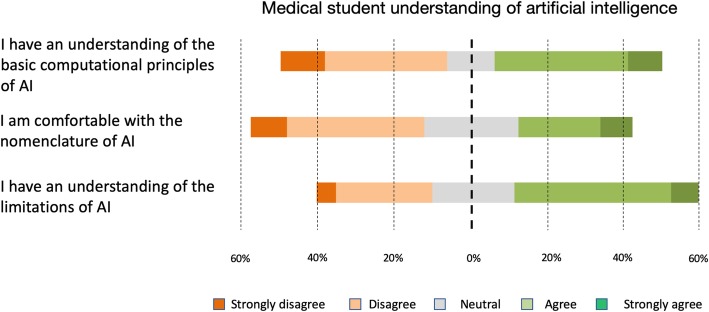
“This result is supported by a previous cohort study in the UK, whereby nearly half of the total 484 medical students from UK medical schools responded they had a clear understanding of the basic computational principles that underpin AI (27).”
BackgroundResultInfluentialKnowledge and attitudes of pharmacy students towards artificial intelligence and the ChatGPT
Iwasawa, M., Kobayashi, M., & Otori, K. (2023) · Pharmacy Education · doi:10.46542/pe.2023.231.665675 · Cited by 43
Daum, N., Blaivas, M., Goudie, A., Hoffmann, B., Jenssen, C., Neubauer, R., Recker, F., Moga, T. V., Zervides, C., & Dietrich, C. F. (2024) · The Ultrasound Journal · doi:10.1186/s13089-024-00382-5 · Cited by 45
“Nevertheless, most medical students agree that AI training would enhance their careers and think that AI training should be part of their university education [34, 35].”
BackgroundHoffman, J., Hattingh, L., Shinners, L., Angus, R. L., Richards, B., Hughes, I., & Wenke, R. (2024) · JMIR Formative Research · doi:10.2196/57204 · Cited by 40
Attitudes towards artificial intelligence in emergency medicine
Stewart, J. E., Freeman, S., Eroglu, E., Dumitrascu, N., Lü, J., Goudie, A., Sprivulis, P., Akhlaghi, H., Tran, V., Sanfilippo, F. M., et al. (2023) · Emergency Medicine Australasia · doi:10.1111/1742-6723.14345 · Cited by 43
Elhassan, S. E., Sajid, M. R., Syed, A. M., Fathima, S. A., Khan, B. S., & Tamim, H. (2025) · JMIR Medical Education · doi:10.2196/63065 · Cited by 39
Alghamdi, S. A., & Alashban, Y. I. (2024) · Journal of Radiation Research and Applied Sciences · doi:10.1016/j.jrras.2023.100815 · Cited by 56
Fazakarley, C.-A., Breen, M. A., Thompson, B. T., Leeson, P., & Williamson, V. (2024) · Digital Health · doi:10.1177/20552076241230075 · Cited by 38
“10 Only by thoroughly understanding the thoughts and needs of those who will be involved in the use of AI in healthcare can future acceptability and implementation be improved.”
BackgroundResultLi, Z., & Xiao, Y. (2025) · BMC Medical Education · doi:10.1186/s12909-025-07669-8 · Cited by 39
“For instance, studies revealed that 87% in Saudi Arabia and 89% in the UK seeing significant benefits, including improved diagnostic accuracy [9, 114].”
Medical students’ perceptions of the impact of artificial intelligence in radiology
Galán, G. C., & Sendra‐Portero, F. (2022) · Radiología (English Edition) · doi:10.1016/j.rxeng.2021.03.008 · Cited by 39
Vázquez-Parra, J. C., Henao-Rodríguez, C., Lis-Gutiérrez, J. P., & Palomino-Gámez, S. (2024) · Societies · doi:10.3390/soc14080141 · Cited by 37
“This instrument is an adaptation of the “Attitudes and Perceptions of Students Towards Artificial Intelligence” scale designed by Sit et al. [28] to measure students’ attitudes and perceptions regarding the teaching and use of AI tools among medical students at King’s College London.”
MethodPerrier, E., Rifai, M., Terzic, A., Dubois, C., & Cohen, J. F. (2022) · Frontiers in Pediatrics · doi:10.3389/fped.2022.1065957 · Cited by 37
Orok, E. N., Okaramee, C., Egboro, B., Egbochukwu, E., Bello, K., Etukudo, S., Ogologo, M.-S., Onyeka, P. C., Etukokwu, O., Kolawole, M., et al. (2024) · BMC Medical Education · doi:10.1186/s12909-024-06255-8 · Cited by 47
“Our findings are consistent with those reported by Sit and colleagues, who observed similar concerns among medical students about AI potentially replacing teachers and diminishing the role of human interaction in education [20].”
Ziapour, A., Darabı, F., Janjani, P., Amani, M. A., Yıldırım, M., & Motevaseli, S. (2025) · BMC Medical Education · doi:10.1186/s12909-025-06852-1 · Cited by 39
Dou, A., Xu, W., Li, X., Zhang, S., & Zhang, J. (2025) · International Journal of Distance Education Technologies · doi:10.4018/ijdet.385045 · Cited by 40
Artificial Intelligence in Anesthetic Care: A Survey of Physician Anesthesiologists
Estrada Alamo, C. E., Diatta, F., Monsell, S. E., & Lane-Fall, M. B. (2024) · Anesthesia & Analgesia · doi:10.1213/ane.0000000000006752 · Cited by 36
Abuzaid, M. M., Tekin, H. O., Reza, M., Elhag, I. R., & Elshami, W. (2021) · Radiography · doi:10.1016/j.radi.2021.07.007 · Cited by 36
Allam, R. M., Abdelfatah, D., Khalil, M. I. M., Elsaieed, M. M., & Desouky, E. D. E. (2024) · BMC Medical Education · doi:10.1186/s12909-024-06201-8 · Cited by 39
“%) this was more or less the same as the results of Al Saad et al. (2022) [30], but higher than finding of A study by Sit et al. (2020) [31], on UK medical students towards AI only 45 (9”
BackgroundResultInfluentialOptimization of diagnosis and treatment of hematological diseases via artificial intelligence
Wang, S., Huang, Z., Li, J., Wu, Y., Du, J., & Li, T. (2024) · Frontiers in Medicine · doi:10.3389/fmed.2024.1487234 · Cited by 43
Tseng, R. M. W. W., Gunasekeran, D. V., Tan, S. S. H., Rim, T. H., Lum, E., Tan, G. S. W., Wong, T. Y., & Tham, Y. C. (2021) · Asia-Pacific Journal of Ophthalmology · doi:10.1097/apo.0000000000000400 · Cited by 37
“57 Some tertiary institutions have started to supplement opportunities for medical students to learn more about the innovative advances in emerging fields of health care.”
BackgroundBhandari, A., Purchuri, S. N., Sharma, C., Ibrahim, M., & Prior, M. (2021) · Clinical Imaging · doi:10.1016/j.clinimag.2021.08.004 · Cited by 28
Challenges of Radiology education in the era of artificial intelligence
Gorospe‐Sarasúa, L., Muñoz-Olmedo, J. M., Sendra‐Portero, F., & de Luis-García, R. (2022) · Radiología (English Edition) · doi:10.1016/j.rxeng.2020.10.012 · Cited by 39
Rainey, C., O’Regan, T., Matthew, J., Skelton, E., Woznitza, N., Chu, K.-Y., Goodman, S., McConnell, J., Hughes, C., Bond, R., et al. (2022) · Journal of medical imaging and radiation sciences · doi:10.1016/j.jmir.2022.05.010 · Cited by 40
The development of new remote technologies in disaster medicine education: A scoping review
Kao, C., Chien, L.-C., Wang, M.-C., Tang, J., Huang, P.-C., Chuang, C., & Shih, C. (2023) · Frontiers in Public Health · doi:10.3389/fpubh.2023.1029558 · Cited by 39
Promises, Pitfalls, and Clinical Applications of Artificial Intelligence in Pediatrics
Bhargava, H., Salomon, C., Suresh, S., Chang, A. C., Kilian, R., van Stijn, D., Oriol, A., Low, D. H., Knebel, A., & Taraman, S. (2024) · Journal of Medical Internet Research · doi:10.2196/49022 · Cited by 41
“This has left both students and practicing clinicians with knowledge and confidence gaps regarding the application of AI in clinical practice [47-49].”
Özbey, F., & Yaşa, Y. (2025) · BMC Medical Education · doi:10.1186/s12909-024-06630-5 · Cited by 36
Pedersen, M. R. V., Kusk, M. W., Lysdahlgaard, S., Mork-Knudsen, H., Malamateniou, C., & Jensen, J. (2024) · Radiography · doi:10.1016/j.radi.2024.02.020 · Cited by 32
Tierney, A., Peasey, P., & Gould, J. (2024) · Research and Practice in Technology Enhanced Learning · doi:10.58459/rptel.2025.20005 · Cited by 56
“…with AI tools, desire more engagement with AI within their curriculum to support their future career ambitions, and the majority believe they understand the limitations of AI (Sit et al., 2020; see also comparable subject studies in the USA and Canada from Wood et al., 2021; Teng et al., 2022).”
BackgroundHui, E. S. Y. E. (2024) · Interactive Learning Environments · doi:10.1080/10494820.2024.2364237 · Cited by 55
“However, this cognitive relationship and its specific application to problem-solving have not been thoroughly investigated quantitatively (Ottenbreit-Leftwich et al., 2024; Sit et al., 2020).”
Yousef, M., Deeb, S., & Alhashlamon, K. (2025) · BMC Medical Education · doi:10.1186/s12909-025-07272-x · Cited by 34
Digitalization in Medicine: Are German Medical Students Well Prepared for the Future?
Sorg, H., Ehlers, J. P., & Sorg, C. G. G. (2022) · International Journal of Environmental Research and Public Health · doi:10.3390/ijerph19148308 · Cited by 34
“While students are to some extent well aware of the possibilities and limitations of AI [85,100], it has also been shown that the absence of such content in the curriculum leads to helplessness, anxiety, and altered career choices in dealing with this topic and should therefore be urgently included as a digital litera…”
BackgroundSharma, A., Al-Haidose, A., Al‐Asmakh, M., & Abdallah, A. M. (2024) · Clinics and Practice · doi:10.3390/clinpract14040112 · Cited by 39
“Similar findings were found among pathologists and radiologists in various surveys conducted related to the incorporation of AI in the medical field [71,72].”
ResultAdithyan, N., Chowdhury, R. R., Padmavathy, L., Peter, R. M., & Anantharaman, V. V. (2024) · Cureus · doi:10.7759/cureus.69910 · Cited by 36
“A survey conducted by Sit et al. [8] found that while healthcare professionals recognized the potential benefits of AI, they also expressed concerns about job security, lack of transparency, and the need for adequate training.”
ResultInfluentialAlwadani, F., Lone, A., Hakami, M., Moria, A., Alamer, W., Alghirash, R., Alnawah, A., & Hadadi, A. (2024) · Journal of Multidisciplinary Healthcare · doi:10.2147/jmdh.s455260 · Cited by 30
“23 Based on demographic factors, the findings of this study provide insight into medical students’ attitudes, understanding, and confidence regarding AI.”
BackgroundResultInfluentialWang, S., Yang, L., Li, M., Zhang, X., & Tai, X. (2024) · JMIR Medical Education · doi:10.2196/51411 · Cited by 31
“A multicenter survey assessing UK medical students’ attitudes and perceptions of AI and radiology revealed that students recognize the significance of AI and are eager to engage [17].”
BackgroundAmin, M. H. J., Elmahi, M. A. M. E., Abdelmonim, G. A., Fadlalmoula, G. A. A. G. A., Amin, J. H. J., Alrabee, N. H. K., Awad, M. H., omer, Z. Y. M., Dayyeh, N. T. I. A., Abdalkareem, N. A. H., et al. (2024) · Annals of Medicine and Surgery · doi:10.1097/ms9.0000000000002070 · Cited by 33
Yu, Z., Hu, N., Zhao, Q., Hu, X. Y., Jia, C., Zhang, C., Liu, B., & Li, Y. (2025) · Journal of Medical Internet Research · doi:10.2196/62768 · Cited by 37
“Scholars have also expressed concerns about humans being replaced by AI in health care [20].”
The perceptions of medical physicists towards relevance and impact of artificial intelligence
Santos, J. C., Wong, J. H. D., Pallath, V., & Ng, K. H. (2021) · Physical and Engineering Sciences in Medicine · doi:10.1007/s13246-021-01036-9 · Cited by 28
Retos de la formación en radiología en la era de la inteligencia artificial
Gorospe‐Sarasúa, L., Muñoz-Olmedo, J. M., Sendra‐Portero, F., & de Luis-García, R. (2021) · Radiología · doi:10.1016/j.rx.2020.10.003 · Cited by 32
Australian perspectives on artificial intelligence in medical imaging
Currie, G. M., Nelson, T., Hewis, J., Chandler, A., Spuur, K. M., Nabasenja, C., Thomas, C. J., & Wheat, J. M. (2022) · Journal of Medical Radiation Sciences · doi:10.1002/jmrs.581 · Cited by 31
“The challenges (legal, ethical and implementation) are being learned in parallel to development and application of AI.”
BackgroundInfluentialMoodi Ghalibaf, A., Moghadasin, M., Emadzadeh, A., & Mastour, H. (2023) · BMC Medical Education · doi:10.1186/s12909-023-04553-1 · Cited by 29
Alabbad, F. A., Almeneessier, A. S., Alshalan, M. H., & Aljarba, M. N. (2025) · Journal of Family Medicine and Primary Care · doi:10.4103/jfmpc.jfmpc_1812_24 · Cited by 31
Suchánek, P., & Kŕaĺová, M. (2025) · Journal of Innovation & Knowledge · doi:10.1016/j.jik.2025.100781 · Cited by 29
US primary care in 2029: A Delphi survey on the impact of machine learning
Blease, C., Kharko, A., Locher, C., DesRoches, C. M., & Mandl, K. D. (2020) · PLOS ONE · doi:10.1371/journal.pone.0239947 · Cited by 27
Ampofo, J. W., Emery, C. V., & Ofori, I. N. (2023) · Radiology Research and Practice · doi:10.1155/2023/4704342 · Cited by 31
“Similar recommendations have been made by doctors, radiologists, and medical and dental students who have suggested the need to include AI courses in the current medical education curriculum and residency training [1, 6, 23, 30, 32].”
BackgroundResultArtificial intelligence in education: Next-gen teacher perspectives
National University of Science and Technology Politehnica Bucharest, U. C. P., Samarescu, N., Bumbac, R., Bucharest University of Economic Studies, B., Zamfiroiu, A., Bucharest University of Economic Studies, B., Iorgulescu, M.-C., & Bucharest University of Economic Studies, B. (2024) · Amfiteatru Economic · doi:10.24818/ea/2024/65/145 · Cited by 28
“Sit et al. (2020) confirm this with the example of medical students who feel unprepared but understand the growing importance of AI in their future work and therefore would like to learn more about it.”
AI in medical education: the moderating role of the chilling effect and STARA awareness
Wu, M., Huang, X., Jiang, B., Li, Z., Zhang, Y., & Gao, B. (2024) · BMC Medical Education · doi:10.1186/s12909-024-05627-4 · Cited by 30
“Furthermore, a survey encompassing medical students from 19 universities in the UK highlighted that nearly half of the respondents voiced concerns about job displacement as a result of AI [72].”
BackgroundPercepciones de estudiantes de Medicina sobre el impacto de la inteligencia artificial en radiología
Galán, G. C., & Sendra‐Portero, F. (2021) · Radiología · doi:10.1016/j.rx.2021.03.006 · Cited by 36
Wagner, G., Raymond, L., & Paré, G. (2023) · JMIR Medical Education · doi:10.2196/45631 · Cited by 27
“For instance, Sit et al [17] explored the attitudes of 484 United Kingdom medical students regarding training in AI technologies, their understanding of AI, and career intention toward radiology.”
BackgroundSharma, V., Saini, U., Pareek, V., Sharma, L., & Kumar, S. (2023) · Scripta Medica · doi:10.5937/scriptamed54-46267 · Cited by 27
“A study conducted by Gong et al 21 and Sit et al 22 showed participants’ concern about the replacement of radiologists by AI in the future, thus causing anxiety in medical students considering radiology specialties.”
MethodMosaic mentoring: finding the right mentor for the issue at hand
Khatchikian, A. D., Chahal, B. S., & Kielar, A. Z. (2021) · Abdominal Radiology · doi:10.1007/s00261-021-03314-2 · Cited by 27
“Early mentorship should be encouraged in medical schools given that recent trends in the USA have demonstrated that fewer medical students are choosing radiology as a career [9, 10].”
BackgroundHassankhani, A., Amoukhteh, M., Valizadeh, P., Jannatdoust, P., Sabeghi, P., & Gholamrezanezhad, A. (2023) · Academic Radiology · doi:10.1016/j.acra.2023.05.024 · Cited by 30
Sassis, L., Kefala-Karli, P., Sassi, M., & Zervides, C. (2021) · Journal of Artificial Intelligence for Medical Sciences · doi:10.2991/jaims.d.210617.002 · Cited by 26
Radiological education in the era of artificial intelligence: A review [RETRACTED]
Wang, C., Xie, H., Wang, S., Yang, S., & Hu, L. (2023) · Medicine · doi:10.1097/md.0000000000032518 · Cited by 27
“Sit (2020) (21) Anonymous electronic survey consisting of Likert and dichotomous questions Nineteen United Kingdom medical universities (484 respondents) (1) 49.2% agreed that they were less likely to consider radiology as a career due to AI.”
BackgroundInfluentialRetractedArtificial Intelligence developments in medical education: a conceptual and practical framework
Masters, K. (2020) · MedEdPublish · doi:10.15694/mep.2020.000239.1 · Cited by 25
Bhatia, A. P., Lambat, A. R., & Jain, T. (2024) · Cureus · doi:10.7759/cureus.60006 · Cited by 29
“We believe that tomorrow's doctors must be able to utilize digital technologies, including AI, in a way that is consistent with rational evidence-based drug usage [14].”
BackgroundPedersen, M. R. V., Kusk, M. W., Lysdahlgaard, S., Mork-Knudsen, H., Malamateniou, C., & Jensen, J. (2024) · Radiography · doi:10.1016/j.radi.2024.04.020 · Cited by 28
Exploring Artificial Intelligence Readiness in Medical Students: Analysis of a Global Survey
Luong, J., Tzang, C.-C., McWatt, S. C., Brassett, C., Stearns, D. A., Sagoo, M. G., Kunzel, C., Sakurai, T., Chien, C.-L., Noël, G. P. J. C., et al. (2024) · Medical Science Educator · doi:10.1007/s40670-024-02190-x · Cited by 27
“Its impact extends across various medical specialties such as radiology, as well as disease diagnostics, playing a pivotal role in improving human decision-making and efficiency [7, 8].”
A Pilot Study of Medical Student Opinions on Large Language Models
Xu, A. Y., Piranio, V. S., Speakman, S., Rosen, C. D., Lu, S., Lamprecht, C. B., Medina, R. E., Corrielus, M., Griffin, I. T., Chatham, C. E., et al. (2024) · Cureus · doi:10.7759/cureus.71946 · Cited by 28
Rani, S., Kumari, A., Ekka, S. C., & Chakraborty, R. (2025) · Cureus · doi:10.7759/cureus.77514 · Cited by 23
Syeda, L. H., Batool, Z., Hayder, Z., & Ali, S. (2025) · BMC Medical Education · doi:10.1186/s12909-025-07223-6 · Cited by 26
“Students’ positive perceptions of AI’s potential to enhance patient care, particularly in diagnostics, treat-ment planning, and preventative health, are consistent with findings from Mehta et al. [15] and Sit et al. [20].”
Rezazadeh, H., Ahmadipour, H., & Salajegheh, M. (2023) · BMC Medical Education · doi:10.1186/s12909-023-04516-6 · Cited by 22
“Introduction The application of artificial intelligence (AI) in medicine has seen significant growth in recent years and holds great potential for improving healthcare outcomes [1].”
BackgroundInfluentialReal-World Monitoring of Artificial Intelligence in Radiology: Challenges and Best Practices
Dean, G., Montañà, E., Kyriazi, S., Shelmerdine, S. C., Buckens, C. F. M., Agrell, H., Ranschaert, E. R., Marušić, A., Davies, G. J., Wardle, P., et al. (2025) · Korean Journal of Radiology · doi:10.3348/kjr.2025.0962 · Cited by 23
“• Use transparent monitoring visualization to support AI uptake, compliance, and trust [36] and tailor education and training programs to individual user needs, informed by behavior monitoring and feedback [37].”
Arboit, L., Schneider, D. N., Collins, T., Hashimoto, D. A., Perretta, S., Dallemagne, B., Marescaux, J., Mintz, Y., Nakajima, K., Diana, M., et al. (2025) · European Journal of Surgical Oncology · doi:10.1016/j.ejso.2025.110525 · Cited by 24
“These trends have also been reported in other medical specialties, such as radiology and endoscopy, further underscoring the interdisciplinary nature of this challenge [20, 15, 36].”
Complex thinking and adopting artificial intelligence tools: a study of university students
Parra, J. C. V., González, C. S. G., Zamora, J. A. A., Cotino-Arbelo, A. E., Palomino-Gámez, S., & Cruz-Sandoval, M. A. (2024) · Frontiers in Education · doi:10.3389/feduc.2024.1377553 · Cited by 23
Thulasi, M. S., Sowjanya, B., Sreenivasulu, K., & Ranjeeth Kumar, M. (2022) · International Journal of Intelligent Systems and Applications in Engineering · Cited by 22
Güler, K. G., & Atasayar, B. Ş. (2025) · International Nursing Review · doi:10.1111/inr.70008 · Cited by 23
“…that nursing students tend to adopt more positive attitudes toward AI when they view it as a practical and advantageous tool in their field (Ahmed et al., 2022; Chao et al., 2021; Gado et al., 2022; Kelly et al., 2022; Mousavi Baigi et al., 2023; Sit et al., 2020; Yılmaz & ¸Sekereo˘glu, 2019).”
Integrating AI into Education: Preparation Factors and Teachers' Digital Competencies
Flores, W., & Chiappe, A. (2025) · Revista Colombiana de Educación · doi:10.17227/rce.num97-20825 · Cited by 27
Luo, J., Peng, Q., Cao, H., Li, W., & Tan, S. (2025) · BMC Medical Education · doi:10.1186/s12909-025-08388-w · Cited by 23
“%) had received any AI teaching [48].”
Metadata
- Authors
- Sit, C., Srinivasan, R., Amlani, A., Muthuswamy, K., Azam, A., Monzon, L., & Poon, D. S.
- Affiliations
- St Thomas' Hospital (GB)
- King's College London (GB)
- Corresponding author
- Poon, Daniel Stephen
- Venue
- Insights into Imaging
- Published
- 2020-02-05
- Volume
- 11
- Issue
- 1
- Pages
- 14-14
- ISSN
- 1869-4101 (ISSN-L)
- PMC
- PMC7002761
- OpenAlex
- W3012668909
- Cited by
- 507
- References
- 12
- Citations by year
- 2026: 81 · 2025: 118 · 2024: 113 · 2023: 72 · 2022: 52 · 2021: 57 · 2020: 13
- FWCI
- 14.28
- Type
- journal article
- Language
- en
- Open access
- gold
- doi.org
- Licence
- cc-by
- creativecommons.org/licenses/by/4.0 (tdm)
- creativecommons.org/licenses/by/4.0 (vor)
- Locations
- Insights into Imaging (publishedVersion, cc-by)
- Europe PMC (PubMed Central) (publishedVersion, cc-by)
- PubMed Central (publishedVersion, cc-by)
- PubMed (publishedVersion)
- DOAJ (DOAJ: Directory of Open Access Journals) (submittedVersion)
- Topics
- Health Sciences › Medicine › Health Informatics › Artificial Intelligence in Healthcare and Education
- Health Sciences › Medicine › Radiology, Nuclear Medicine and Imaging › Radiology practices and education
- Social Sciences › Education › Innovations in Medical Education
- Keywords
- artificial intelligence in healthcare, medical students, attitudes toward AI, medical school training, UK medical education
About these checks
Registry, retraction, Cites and statistics results are computed, not judged, with one exception: a printed reference that no index lists is read once by a model before it counts as a citation error. Claims are extracted by a model and kept only when their quote appears verbatim in the text; each cited source is then checked, with a model’s help, for whether it says what the claim relies on. Those verdicts can be wrong — read the claim’s quote and the cited source before relying on one.
Statistics and arithmetic are recomputed, not judged.
Confidence bands are shown only for fields calibrated on our annotated test set. None is calibrated yet, so no band is shown.
What counts as a claim ›How we measure confidence ›How we check this ›
Are you an author, or do you see a problem with this page? Request a review
Data sources
Bibliographic data: Semantic Scholar, OpenAlex, Crossref.
Contains information from the Semantic Scholar Academic Graph Datasets, made available under the ODC Attribution License (ODC-BY 1.0).
Semantic Scholar’s data is described in: Kinney, R., et al. (2023). The Semantic Scholar Open Data Platform. arXiv:2301.10140.
