

Attitudes and perceptions of UK medical students towards artificial intelligence and radiology: a multicentre survey
Open accessThe DOI matches its Crossref record; 13 of the 13 references it cites were found in a registry or an index.
Abstract
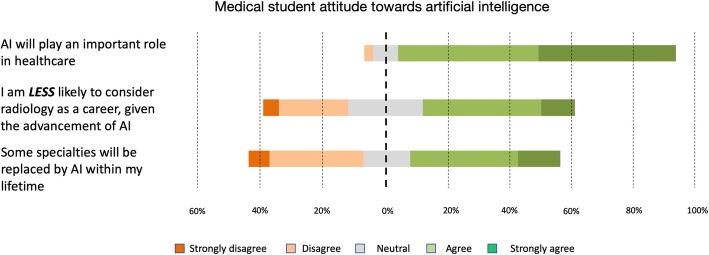
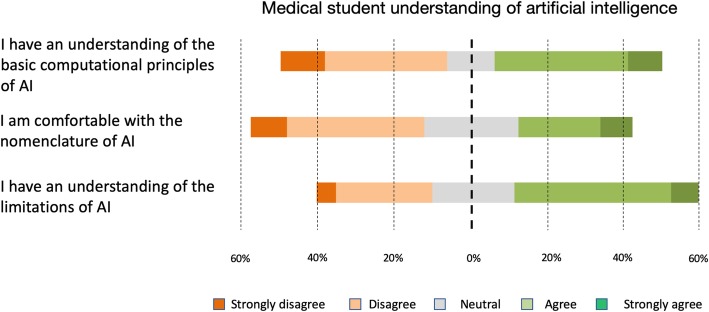
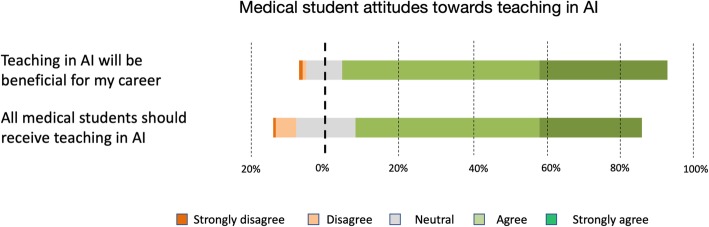
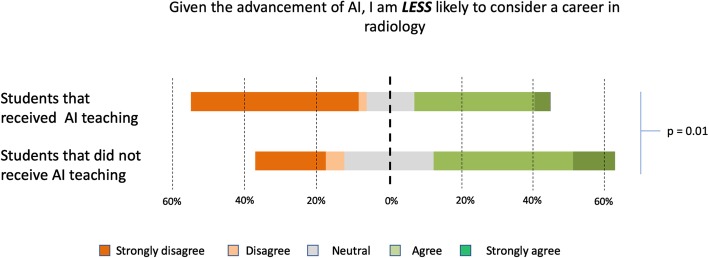
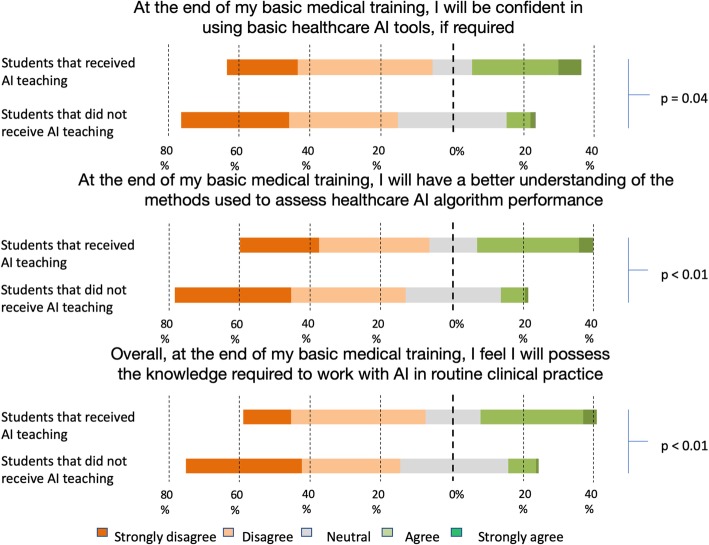
Objectives: To explore the attitudes of United Kingdom (UK) medical students regarding artificial intelligence (AI), their understanding, and career intention towards radiology. We also examine the state of education relating to AI amongst this cohort. Methods: UK medical students were invited to complete an anonymous electronic survey consisting of Likert and dichotomous questions. Results: Four hundred eighty-four responses were received from 19 UK medical schools. Eighty-eight percent of students believed that AI will play an important role in healthcare, and 49% reported they were less likely to consider a career in radiology due to AI. Eighty-nine percent of students believed that teaching in AI would be beneficial for their careers, and 78% agreed that students should receive training in AI as part of their medical degree. Only 45 students received any teaching on AI; none of the students received such teaching as part of their compulsory curriculum. Statistically, students that did receive teaching in AI were more likely to consider radiology (p = 0.01) and rated more positively to the questions relating to the perceived competence in the post-graduation use of AI (p = 0.01–0.04); despite this, a large proportion of students in the taught group reported a lack of confidence and understanding required for the critical use of healthcare AI tools. Conclusions: UK medical students understand the importance of AI and are keen to engage. Medical school training on AI should be expanded and improved. Realistic use cases and limitations of AI must be presented to students so they will not feel discouraged from pursuing radiology.
Overview
The claims and statistics of this paper haven’t been checked yet.
Free: it reads the open-access text and checks the first 5 claims that cite a source we can check. Create a free account to check every claim.
Integrity signals
Registry
Cites
Statistics
Figures
Verification
Claims the paper makes
The claims and statistics of this paper haven’t been checked yet.
Free: it reads the open-access text and checks the first 5 claims that cite a source we can check. Create a free account to check every claim.
Claims other papers make about this one
Each is checked against this paper’s own text: does it say what the citing paper says it does?
The source backs part of the claim, not all of it — or backs it for a different population, condition or comparison.
In the citing paper
“Moreover, many studies emphasized the relevance of AI literacy in higher and adult education (Lee, 2021a;Rodríguez-García et al., 2020;Sit et al., 2020;Xu & Babaian, 2021).”
From Artificial intelligence literacy in higher and adult education: A scoping literature review (2022) · cites this paper as Sit et al., 2020
Experimental — accuracy not yet measuredThe source backs part of the claim, not all of it — or backs it for a different population, condition or comparison.
In the citing paper
“Overall, in addition to positive attitudes toward AI, students generally expressed enthusiasm for integrating it into their future medical practice [70, 71]. Many believed AI had the potential to enhance and transform medicine by optimizing physicians’ workloads and reducing healthcare costs [42, 72, 73]. Additionally, students viewed AI as a supportive tool that can assist physicians, help”
From Artificial intelligence in undergraduate medical education: an updated scoping review (2025) · cites this paper as [70]
Experimental — accuracy not yet measuredThe source backs part of the claim, not all of it — or backs it for a different population, condition or comparison.
In the citing paper
“However, they are generally enthusiastic about learning and using AI in their practice [16, 17].”
From AI in medical education: medical student perception, curriculum recommendations and design suggestions (2023) · cites this paper as [16]
Experimental — accuracy not yet measuredThe source backs part of the claim, not all of it — or backs it for a different population, condition or comparison.
In the citing paper
“the current medical school curricula very rarely cover aspects of medical informatics, let alone AI, as part of their mandatory study programs [ 16 – 18 ].”
From Effect of a flipped classroom course to foster medical students’ AI literacy with a focus on medical imaging: a single group pre-and post-test study (2022) · cites this paper as [16]
Experimental — accuracy not yet measuredThe cited source says what the claim attributes to it.
In the citing paper
“Moreover, medical students who have received training in AI may be better equipped and more comfortable using AI tools and technologies in their later clinical work as they learn to understand and use AI concepts and their potential applications from the beginning of their careers [12, 13].”
From Biomedical Ethical Aspects Towards the Implementation of Artificial Intelligence in Medical Education (2023) · cites this paper as [12]
2 more claims about this paper
Create a free account to see every claim other papers make about this one.
Self-check
Percentages, sums and reported differences re-computed from the paper’s own numbers.
The self-check needs the paper’s full text.
Citations
Cites
R: A Language and Environment for Statistical Computing
R Core Team (2025) · doi:10.32614/r.manuals · Cited by 352,181
High-performance medicine: the convergence of human and artificial intelligence
Topol, E. J. (2019) · Nature Medicine · doi:10.1038/s41591-018-0300-7 · Cited by 10,450
Artificial intelligence and deep learning in ophthalmology
Ting, D. S. W., Pasquale, L. R., Peng, L., Campbell, J. P., Lee, A. Y., Raman, R., Tan, G. S. W., Schmetterer, L., Keane, P. A., & Wong, T. Y. (2019) · British Journal of Ophthalmology · doi:10.1136/bjophthalmol-2018-313173 · Cited by 1,554
Artificial Intelligence and Deep Learning in Ophthalmology
Wang, Z., Keane, P. A., Chiang, M., Cheung, C. Y., Wong, T. Y., & Ting, D. S. W. (2022) · Artificial Intelligence in Medicine · doi:10.1007/978-3-030-64573-1_200 · Cited by 1,524
Rajpurkar, P., Irvin, J., Ball, R. L., Zhu, K., Yang, B., Mehta, H., Duan, T., Ding, D., Bagul, A., Langlotz, C. P., et al. (2018) · PLOS Medicine · doi:10.1371/journal.pmed.1002686 · Cited by 1,449
Digital pathology and artificial intelligence
Niazi, M. K. K., Parwani, A. V., & Gurcan, M. N. (2019) · The Lancet Oncology · doi:10.1016/s1470-2045(19)30154-8 · Cited by 1,232
Deep learning algorithms for detection of critical findings in head CT scans: a retrospective study
Chilamkurthy, S., Ghosh, R., Tanamala, S., Biviji, M., Campeau, N. G., Venugopal, V. K., Mahajan, V., Rao, P., & Warier, P. (2018) · The Lancet · doi:10.1016/s0140-6736(18)31645-3 · Cited by 1,020
Medical students' attitude towards artificial intelligence: a multicentre survey
Pinto dos Santos, D., Giese, D., Brodehl, S., Chon, S. H., Staab, W., Kleinert, R., Maintz, D., & Baeßler, B. (2019) · European Radiology · doi:10.1007/s00330-018-5601-1 · Cited by 754
Deep Learning—A Technology With the Potential to Transform Health Care
Hinton, G. (2018) · JAMA · doi:10.1001/jama.2018.11100 · Cited by 667 · cited 1×
“It is only more recently that an increasingly circumspect view of AI adaptation in medical imaging has gained acceptance [13], including by some of the same thought leaders that originally predicted the rapid demise of radiologists [15].”
BackgroundGong, B., Nugent, J. P., Guest, W., Parker, W., Chang, P. J., Khosa, F., & Nicolaou, S. (2019) · Academic Radiology · doi:10.1016/j.acra.2018.10.007 · Cited by 325 · cited 2×
“in a Canadian cohort (N = 322) [9], where one sixth of medical students interested in radiology”
Background
Cited by
Students’ voices on generative AI: perceptions, benefits, and challenges in higher education
Chan, C. K. Y., & Hu, W. (2023) · International Journal of Educational Technology in Higher Education · doi:10.1186/s41239-023-00411-8 · Cited by 2,301
“Most students agreed that AI have a profound impact on their disciplines and future careers (e.g., Bisdas et al., 2021; Gong et al., 2019; Sit et al., 2020) and expressed an intention to utilise AI in their learning and future practice (e.g., Bisdas et al., 2021; Lee et al., 2022), and thus…”
BackgroundArtificial Intelligence in Education: A Systematic Literature Review
Wang, S., Wang, F., Zhu, Z., Wang, J., Tran, T., & Du, Z. (2024) · Expert Systems with Applications · doi:10.1016/j.eswa.2024.124167 · Cited by 977
A scoping review of artificial intelligence in medical education: BEME Guide No. 84
Gordon, M., Daniel, M., Ajiboye, A., Uraiby, H., Xu, N. Y., Bartlett, R., Hanson, J., Haas, M., Spadafore, M., Grafton-Clarke, C., et al. (2024) · Medical Teacher · doi:10.1080/0142159x.2024.2314198 · Cited by 679
Artificial intelligence literacy in higher and adult education: A scoping literature review
Laupichler, M. C., Aster, A., Schirch, J., & Raupach, T. (2022) · Computers and Education Artificial Intelligence · doi:10.1016/j.caeai.2022.100101 · Cited by 658
Schepman, A., & Rodway, P. (2023) · International Journal of Human–Computer Interaction · doi:10.1080/10447318.2022.2085400 · Cited by 503
“Recent work suggests that the impact of specific AI training is of relevance in AI attitudes (e.g., Ehsan et al., 2021; Sit et al., 2020).”
BackgroundKaraca, O., Çalışkan, S. A., & Demir, K. (2021) · BMC Medical Education · doi:10.1186/s12909-021-02546-6 · Cited by 377
Artificial intelligence in medical education: a cross-sectional needs assessment
Civaner, M. M., Uncu, Y., Bulut, F., Chalil, E. G., & Tatli, A. (2022) · BMC Medical Education · doi:10.1186/s12909-022-03852-3 · Cited by 363
“The limited foci of the relevant studies can be categorized as follows; [21]), • ‘General thoughts of students on AI in medicine’ ([7, 16–18], Cho et al. ( 100 students / 1 medical school in Rebuplic of Korea) [22]), • ‘Concerns about replacing physicians and losing jobs’ [15, 16, 18, 20–22], •…”
BackgroundResultArtificial intelligence education programs for health care professionals: Scoping review
Charow, R., Jeyakumar, T., Younus, S., Dolatabadi, E., Salhia, M., Al-Mouaswas, D., Anderson, M., Balakumar, S., Clare, M., Dhalla, A., et al. (2021) · JMIR Medical Education · doi:10.2196/31043 · Cited by 291
Kwak, Y., Ahn, J.-W., & Seo, Y. H. (2022) · BMC Nursing · doi:10.1186/s12912-022-01048-0 · Cited by 291
“Most students responded that the current education was not sufficiently helpful in pre-paring for new technologies in healthcare, despite their awareness of the importance of AI and related education [25, 26].”
BackgroundScheetz, J., Rothschild, P., McGuinness, M., Hadoux, X., Soyer, H. P., Janda, M., Condon, J. J. J., Oakden-Rayner, L., Palmer, L. J., Keel, S., et al. (2021) · Scientific Reports · doi:10.1038/s41598-021-84698-5 · Cited by 273
Wood, E. A., Ange, B. L., & Miller, D. D. (2021) · Journal of Medical Education and Curricular Development · doi:10.1177/23821205211024078 · Cited by 261
Chen, M., Zhang, B., Cai, Z., Seery, S., Gonzalez, M. J., Ali, N. M., Ren, R., Qiao, Y., Xue, P., & Jiang, Y. (2022) · Frontiers in Medicine · doi:10.3389/fmed.2022.990604 · Cited by 258
Mousavi Baigi, S. F., Sarbaz, M., Ghaddaripouri, K., Ghaddaripouri, M., Mousavi, A. S., & Kimiafar, K. (2023) · Health Science Reports · doi:10.1002/hsr2.1138 · Cited by 255
Bisdas, S., Topriceanu, C.-C., Zakrzewska, Z., Irimia, A.-V., Shakallis, L., Subhash, J., Casapu, M.-M., Leon-Rojas, J., Pinto dos Santos, D., Andrews, D. M., et al. (2021) · Frontiers in Public Health · doi:10.3389/fpubh.2021.795284 · Cited by 232
“A few other studies have explored the views of medical students on AI including a narrow investigation on specific subspecialties (10, 14, 30, 31).”
Unveiling the shadows: beyond the hype of AI in education
Al-Zahrani, A. M. (2024) · Heliyon · doi:10.1016/j.heliyon.2024.e30696 · Cited by 225
Health Care Students’ Perspectives on Artificial Intelligence: Countrywide Survey in Canada
Teng, M., Singla, R., Yau, O., Lamoureux, D., Gupta, A., Hu, Z., Hu, R., Aissiou, A., Eaton, S., Hamm, C., et al. (2022) · JMIR Medical Education · doi:10.2196/33390 · Cited by 214
“In addition, limited AI exposure has been shown to induce anxiety in undergraduate medical students, affecting their future career decision-making [15,16].”
BackgroundMethodResultInfluentialAhmed, Z., Bhinder, K. K., Tariq, A., Tahir, M. J., Mehmood, Q., Tabassum, M. S., Malik, M., Aslam, S., Asghar, M. S., & Yousaf, Z. (2022) · Annals of Medicine & Surgery · doi:10.1016/j.amsu.2022.103493 · Cited by 208
“The largest application of AI algorithms is witnessed in radiology but examples of its applications in other fields like dermatology, ophthalmology, psychiatry, cardiology, oncology, neurosciences, pathology and medicine are also available [2,7 – 12].”
BackgroundDevelopment and Validation of a Scale Measuring Student Attitudes Toward Artificial Intelligence
Suh, W., & Ahn, S. (2022) · Sage Open · doi:10.1177/21582440221100463 · Cited by 148
Labrague, L. J., Aguilar-Rosales, R., Yboa, B. C., Sabio, J. B., & de los Santos, J. A. (2023) · Nurse Education in Practice · doi:10.1016/j.nepr.2023.103815 · Cited by 196
Almaraz-López, C., Almaraz-Menéndez, F., & López-Esteban, C. (2023) · Education Sciences · doi:10.3390/educsci13060609 · Cited by 137
“[18], who observed that 88% of respondents in their study on medicine students believed that AI will play an important role in healthcare in the future.”
BackgroundMethodInfluentialZahlan, A., Ranjan, R. P., & Hayes, D. (2023) · Technology in Society · doi:10.1016/j.techsoc.2023.102321 · Cited by 152
Exploring stakeholder attitudes towards AI in clinical practice
Scott, I. A., Carter, S. M., & Coiera, E. (2021) · BMJ Health & Care Informatics · doi:10.1136/bmjhci-2021-100450 · Cited by 193
Artificial Intelligence in Medical Education- Perception Among Medical Students
Jackson, P., S, G. P., Babu, C., Tony, C., Jack, D. S., Davis, D., R, R. V., Kurian, N., & John, A. (2024) · doi:10.21203/rs.3.rs-3833999/v1 · Cited by 187
Moldt, J.-A., Festl-Wietek, T., Madany Mamlouk, A., Nieselt, K., Fuhl, W., & Herrmann-Werner, A. (2023) · Medical Education Online · doi:10.1080/10872981.2023.2182659 · Cited by 186
“…great deal of uncertainty and skepticism regarding chatbots due to the lack of integration of AI topics into the medical curriculum (as yet), as well as a lack of knowledge about the basic conditions and legal and ethical requirements of AI use [33], reflecting findings from other studies [34–36].”
ResultArtificial intelligence in medical education - perception among medical students
Jackson, P., Ponath Sukumaran, G., Babu, C., Tony, M. C., Jack, D. S., Reshma, V. R., Davis, D., Kurian, N., & John, A. (2024) · BMC Medical Education · doi:10.1186/s12909-024-05760-0 · Cited by 185
Swed, S., Alibrahim, H., Elkalagi, N. K. H., Nasif, M. N., Rais, M. A., Nashwan, A. J., Aljabali, A., Elsayed, M., Sawaf, B., Albuni, M. K., et al. (2022) · Frontiers in Artificial Intelligence · doi:10.3389/frai.2022.1011524 · Cited by 185
Vo, V., Chen, G., Aquino, Y. S. J., Carter, S. M., Do, Q. N., & Woode, M. E. (2023) · Social Science & Medicine · doi:10.1016/j.socscimed.2023.116357 · Cited by 154
Laupichler, M. C., Aster, A., Meyerheim, M., Raupach, T., & Mergen, M. (2024) · BMC Medical Education · doi:10.1186/s12909-024-05400-7 · Cited by 170
“At the same time, a “consensus on what and how to teach AI” [7, p1] in the medical curriculum appears to be lacking, and although there are individual elective courses attempting to foster AI competencies [8–9], the majority of medical students still receive very little AI education [10–11].”
BackgroundKnoth, N., Decker, M., Laupichler, M. C., Pinski, M., Buchholtz, N., Bata, K., & Schultz, B. (2024) · Computers and Education Open · doi:10.1016/j.caeo.2024.100177 · Cited by 117
“This is increasingly important, as students outside of computer science often feel unprepared for the growing integration of AI into their fields [136,151,158].”
Grunhut, J., Wyatt, A. T., & Marques, O. (2021) · Journal of Medical Education and Curricular Development · doi:10.1177/23821205211036836 · Cited by 161
“24,25 29 Finally, overlooking a technology that will be transformative for the foreseeable future would place medical students at a disadvantage.”
BackgroundInvestigating Students’ Perceptions towards Artificial Intelligence in Medical Education
Buabbas, A. J., Miskin, B., Alnaqi, A. A., Ayed, A. K., Shehab, A. A., Syed-Abdul, S., & Uddin, M. (2023) · Healthcare · doi:10.3390/healthcare11091298 · Cited by 152
“In a cohort of UK medical students, the responses were drastically different, with the majority not feeling that they will be ready to work with AI, be confident in using AI tools if required, or understand the methods used to assess AI performance by the end of their degrees [5].”
BackgroundMethodResultInfluential“ChatGPT seems too good to be true”: College students’ use and perceptions of generative AI
Baek, C., Tate, T., & Warschauer, M. (2024) · Computers and Education: Artificial Intelligence · doi:10.1016/j.caeai.2024.100294 · Cited by 306
Amiri, H., Peiravi, S., rezazadeh shojaee, S. S., Rouhparvarzamin, M., Nateghi, M. N., Etemadi, M. H., ShojaeiBaghini, M., Musaie, F., Anvari, M. H., & Asadi Anar, M. (2024) · BMC Medical Education · doi:10.1186/s12909-024-05406-1 · Cited by 149
“These studies were performed in several countries, including the U.S.A [18], Germany [19, 20], Lebanon [21], Pakistan [22], Canada [23], The U.K. [24], United Arab Emirates [25], Nigeria [26], Turkey [27, 28], Spain [29] Saudi Arabia [30], India [31–33], Egypt [34], Peru [35], Nepal [36], Kuwait…”
BackgroundClinical applications of artificial intelligence in radiology
Mello-Thoms, C. R., & Mello, C. A. B. (2023) · British Journal of Radiology · doi:10.1259/bjr.20221031 · Cited by 159
General Practitioners’ Attitudes Toward Artificial Intelligence–Enabled Systems: Interview Study
Buck, C., Doctor, E., Hennrich, J., Jöhnk, J., & Eymann, T. (2022) · Journal of Medical Internet Research · doi:10.2196/28916 · Cited by 147
“Different quantitative studies have investigated the relationship between attitude and the intention to use AI-enabled systems, for example, regarding medical students [51,52].”
BackgroundMehta, N., Harish, V., Bilimoria, K., Morgado, F., Ginsburg, S., Law, M., & Das, S. (2021) · MedEdPublish · doi:10.15694/mep.2021.000075.1 · Cited by 145
Mapping the use of artificial intelligence in medical education: a scoping review
Rincón, E. H. H., Jimenez, D., Aguilar, L. A. C., Flórez, J. M. P., Tapia, Á. E. R., & Peñuela, C. L. J. (2025) · BMC Medical Education · doi:10.1186/s12909-025-07089-8 · Cited by 145
“Similarly, UK students recognized AI’s potential in radiology but feared it might limit career opportunities [36].”
Cho, K. A., & Seo, Y. H. (2024) · BMC Nursing · doi:10.1186/s12912-024-01887-z · Cited by 114
“This resemblance suggests that the students’ expectations for AI in healthcare — particularly its potential to alleviate routine task burdens and enrich nursing care quality [2–4] — have significantly shaped [6, 24].”
BackgroundJha, N., Shankar, P. R., Al-Betar, M. A., Mukhia, R., Hada, K., & Palaian, S. (2022) · Advances in Medical Education and Practice · doi:10.2147/amep.s368519 · Cited by 143
“34 However, it is also important to note that radiologists and pathologists do many other jobs other than just reading and reporting radiology images or biopsy slides.”
BackgroundLi, Q., & Qin, Y. (2023) · BMC Medical Education · doi:10.1186/s12909-023-04700-8 · Cited by 131
“However, they are generally enthusiastic about learning and using AI in their practice [16, 17].”
BackgroundA healthy debate: Exploring the views of medical doctors on the ethics of artificial intelligence
Martinho, A., Kroesen, M., & Chorus, C. (2021) · Artificial Intelligence in Medicine · doi:10.1016/j.artmed.2021.102190 · Cited by 124
Demir, K., & Güraksın, G. E. (2022) · Participatory Educational Research · doi:10.17275/per.22.41.9.2 · Cited by 133
“There are many studies investigating the perceptions of higher education students towards AI (Sit et al., 2020; Yun et al., 2020; Yüzbaşıoğlu, 2021).”
BackgroundAbuzaid, M. M., Elshami, W., Tekin, H., & Issa, B. (2022) · Academic Radiology · doi:10.1016/j.acra.2020.09.014 · Cited by 120
The Role of Artificial Intelligence in Medical Education: A Systematic Review
Tozsin, A., Ucmak, H., Soyturk, S., Aydin, A., Gozen, A. S., Fahim, M. A., Güven, S., & Ahmed, K. (2024) · Surgical Innovation · doi:10.1177/15533506241248239 · Cited by 79
Artificial intelligence in medical education curriculum: An e-Delphi study for competencies
Çalışkan, S. A., Demir, K., & Karaca, O. (2022) · PLOS ONE · doi:10.1371/journal.pone.0271872 · Cited by 115
Wang, X., Fei, F., Wei, J., Huang, M., Xiang, F., Tu, J., Wang, Y., & Gan, J. (2024) · Frontiers in Public Health · doi:10.3389/fpubh.2024.1433252 · Cited by 133
Busch, F., Hoffmann, L., Truhn, D., Ortiz-Prado, E., Makowski, M. R., Bressem, K. K., Adams, L. C., COMFORT Consortium, Abdala, N., Navarro, Á. A., et al. (2024) · BMC Medical Education · doi:10.1186/s12909-024-06035-4 · Cited by 108
Rainey, C., O'Regan, T., Matthew, J., Skelton, E., Woznitza, N., Chu, K.-Y., Goodman, S., McConnell, J., Hughes, C., Bond, R., et al. (2021) · Frontiers in Digital Health · doi:10.3389/fdgth.2021.739327 · Cited by 85
“Similarly medical students have reported either no AI training at all or insufficient training in AI with many believing it should be taught at undergraduate level and be part of the compulsory curriculum (11, 19).”
BackgroundEjaz, H., McGrath, H., Wong, B. L., Guise, A., Vercauteren, T., & Shapey, J. (2022) · DIGITAL HEALTH · doi:10.1177/20552076221089099 · Cited by 105
“Previous studies have shown positive results in local and national surveys regarding the knowledge and perspectives of medical students and trainee doctors for an AI-driven future.(21,22) These studies indicated that, in high-income settings, students were keen to learn more about AI but received minimal specific trai…”
BackgroundResultStudents' voices on generative ai: perceptions, benefits, and challenges in higher education
Chan, C. K. Y., & Hu, W. (2023) · arXiv · doi:10.48550/arxiv.2305.00290 · Cited by 2,504
“Most students agreed that AI have a profound impact on their disciplines and future careers (e.g., Bisdas et al., 2021; Gong et al., 2019; Sit et al., 2020) and expressed an intention to utilise AI in their learning and future practice (e.g., Bisdas et al., 2021; Lee et al., 2022), and thus…”
BackgroundWestern Australian medical students’ attitudes towards artificial intelligence in healthcare
Stewart, J., Lu, J., Gahungu, N., Goudie, A., Fegan, P. G., Bennamoun, M., Sprivulis, P., & Dwivedi, G. (2023) · PLOS ONE · doi:10.1371/journal.pone.0290642 · Cited by 104
AI Course Design Planning Framework: Developing Domain-Specific AI Education Courses
Schleiss, J., Laupichler, M. C., Raupach, T., & Stober, S. (2023) · Education Sciences · doi:10.3390/educsci13090954 · Cited by 76
“However, it is becoming increasingly clear that students outside of computer science do not feel adequately prepared for the increased integration of AI into their field [30,31].”
Omari, O. A., Alshammari, M., Jabri, W. A., Yahyaei, A. A., Aljohani, K. A., Sanad, H. M., Al‐Jubouri, M. B., Bashayreh, I., Fawaz, M. A., ALBashtawy, M., et al. (2024) · BMC Medical Education · doi:10.1186/s12909-024-06452-5 · Cited by 106
Schubert, T., Oosterlinck, T., Stevens, R. D., Maxwell, P. H., & van der Schaar, M. (2025) · eClinicalMedicine · doi:10.1016/j.eclinm.2024.102968 · Cited by 103
Ghotbi, N., Ho, M. T., & Mantello, P. (2022) · AI & SOCIETY · doi:10.1007/s00146-021-01168-2 · Cited by 99
Are physicians and medical students ready for artificial intelligence applications in healthcare?
AlZaabi, A., AlMaskari, S., & AalAbdulsalam, A. (2023) · DIGITAL HEALTH · doi:10.1177/20552076231152167 · Cited by 93
Bin Dahmash, A., Alabdulkareem, M., Alfutais, A., Kamel, A. M., Alkholaiwi, F., Alshehri, S., Al Zahrani, Y., & Almoaiqel, M. (2020) · BJR|Open · doi:10.1259/bjro.20200037 · Cited by 92
Shishehgar, S., Murray‐Parahi, P., Alsharaydeh, E., Mills, S., & Liu, X. (2025) · International Nursing Review · doi:10.1111/inr.70045 · Cited by 133
“It is crucial to conduct additional research to delve into and address these concerns more comprehensively (Sit et al. 2020; Groeneveld et al. 2024).”
Doumat, G., Daher, D., Ghanem, N.-N., & Khater, B. (2022) · Frontiers in Artificial Intelligence · doi:10.3389/frai.2022.1015418 · Cited by 91
“study that selected strongly agree or agree to this question (Sit et al., 2020).”
BackgroundLiu, D. S., Sawyer, J., Luna, A., Aoun, J., Wang, J., Boachie, L., Halabi, S., & Joe, B. (2022) · JMIR Medical Education · doi:10.2196/38325 · Cited by 90
Artificial Intelligence and Radiology Education
Tejani, A. S., Elhalawani, H., Moy, L., Kohli, M., & Kahn, C. E. (2023) · Radiology: Artificial Intelligence · doi:10.1148/ryai.220084 · Cited by 74
Busch, F., Adams, L. C., & Bressem, K. K. (2023) · Medical Science Educator · doi:10.1007/s40670-023-01815-x · Cited by 88
“Moreover, medical students who have received training in AI may be better equipped and more comfortable using AI tools and technologies in their later clinical work as they learn to understand and use AI concepts and their potential applications from the beginning of their careers [12, 13].”
BackgroundTran, A. Q., Nguyen, L. H., Nguyen, H. S. A., Nguyen, C. T., Vu, L. G., Zhang, M., Vu, T. M. T., Nguyen, S. H., Tran, B. X., Latkin, C. A., et al. (2021) · Frontiers in Public Health · doi:10.3389/fpubh.2021.755644 · Cited by 87
“Previous research found that 17% of German medical students agreed that AI could replace health professionals (30), and 49% of English medical students stated that they did not prefer the radiology field because of AI (18).”
BackgroundResultInfluentialTung, A. Y. Z., & Dong, L. W. (2023) · Journal of Medical Education and Curricular Development · doi:10.1177/23821205231201164 · Cited by 84
Malamateniou, C., McFadden, S. L., McQuinlan, Y., England, A., Woznitza, N., Goldsworthy, S., Currie, C., Skelton, E., Chu, K.-Y., Alware, N., et al. (2021) · Radiography · doi:10.1016/j.radi.2021.07.028 · Cited by 92
Blease, C., Kharko, A., Bernstein, M., Bradley, C., Houston, M., Walsh, I., Hägglund, M., DesRoches, C., & Mandl, K. D. (2022) · BMJ Health & Care Informatics · doi:10.1136/bmjhci-2021-100480 · Cited by 81
Busch, F., Hoffmann, L., Truhn, D., Palaian, S., Alomar, M., Shpati, K., Makowski, M. R., Bressem, K. K., & Adams, L. C. (2024) · British Journal of Clinical Pharmacology · doi:10.1111/bcp.15911 · Cited by 80
Pupic, N., Ghaffari-zadeh, A., Hu, R., Singla, R., Darras, K., Karwowska, A., & Forster, B. B. (2023) · PLOS Digital Health · doi:10.1371/journal.pdig.0000255 · Cited by 79
Dasari, D., Hendriyanto, A., Sahara, S., Suryadi, D., Muhaimin, L. H., Chao, T., & Fitriana, L. (2024) · Frontiers in Education · doi:10.3389/feduc.2023.1295413 · Cited by 50
Shinners, L., Aggar, C., Grace, S., & Smith, S. (2021) · DIGITAL HEALTH · doi:10.1177/20552076211003433 · Cited by 62
“35 36-40 A questionnaire that measures health-care professionals’ perception of AI more broadly does not yet exist.”
BackgroundLennox-Chhugani, N., Chen, Y., Pearson, V., Trzcinski, B., & James, J. (2021) · BMJ Health & Care Informatics · doi:10.1136/bmjhci-2020-100293 · Cited by 70
“Previous studies 7 11 found that those who are identified as ‘patients’ are more likely to perceive positive effects of new technology than those who are identified as ‘healthy users’.”
BackgroundMigdadi, M. K., Oweidat, I. A., Alosta, M. R., Al-Mugheed, K., Saeed Alabdullah, A. A., & Farghaly Abdelaliem, S. M. (2024) · DIGITAL HEALTH · doi:10.1177/20552076241301958 · Cited by 54
Allam, A. H., Eltewacy, N. K., Alabdallat, Y. J., Owais, T. A., Salman, S., Ebada, M. A., for the EARG Group, Aldare, H. A., Rais, M. A., Salem, M., et al. (2023) · European Radiology · doi:10.1007/s00330-023-10509-2 · Cited by 77
“Correspondingly, a study conducted in the UK reported that 88% of students shared the belief that AI would play a crucial role in the realm of healthcare [19].”
Medical education and physician training in the era of artificial intelligence
Xu, Y., Jiang, Z., Ting, D. S. W., Kow, A. W. C., Bello, F., Car, J., Tham, Y.-C., & Wong, T. Y. (2024) · Singapore Medical Journal · doi:10.4103/singaporemedj.smj-2023-203 · Cited by 76
“[52] , 53 ]”
Kansal, R., Bawa, A., Bansal, A., Trehan, S., Goyal, K., Goyal, N., & Malhotra, K. (2022) · Cureus · doi:10.7759/cureus.21434 · Cited by 76
Pauwels, R., & Del Rey, Y. C. (2021) · Dentomaxillofacial Radiology · doi:10.1259/dmfr.20200461 · Cited by 70
Student perspectives on the integration of artificial intelligence into healthcare services
Ahmad, M. N., Abdallah, S. A., Abbasi, S. A., & Abdallah, A. M. (2023) · Digital Health · doi:10.1177/20552076231174095 · Cited by 82
“Indeed, German medical students perceived a higher threat to their jobs compared with qualified medical professionals,(37) and half of medical students from 19 different medical schools in the UK were less likely to consider a career in radiology due to the development of AI in this sector.(38) The high percentage of…”
BackgroundPedro, A. R., Dias, M. B., Laranjo, L., Cunha, A. S., & Cordeiro, J. V. (2023) · PLOS ONE · doi:10.1371/journal.pone.0290613 · Cited by 74
Gillissen, A., Kochanek, T., Zupanic, M., & Ehlers, J. (2022) · Healthcare · doi:10.3390/healthcare10040723 · Cited by 74
“In some studies, students indicate their intention to abstain from medical fields, such as radiology, where AI was regarded as a potential competitor to physicians’ work [9,11].”
BackgroundBotwe, B. O., Antwi, W. K., Arkoh, S., & Akudjedu, T. N. (2021) · Journal of Medical Radiation Sciences · doi:10.1002/jmrs.460 · Cited by 73
“Similarly, Sit and colleagues 16 reported that respondents who had received some form of education in AI felt more ready to work with these tools.”
BackgroundCatalina, Q. M., Fuster-Casanovas, A., Vidal-Alaball, J., Escalé-Besa, A., Marin-Gomez, F. X., Femenia, J., & Solé-Casals, J. (2023) · DIGITAL HEALTH · doi:10.1177/20552076231180511 · Cited by 71
“It should be taken into account that several studies have mentioned a certain reluctance to adopt AI in radiology due to the fact that in the future there will be a decrease in the demand for radiologists to interpret radiographs, as well as the definitive replacement of radiologists in the future.(29,51) However, bot…”
BackgroundInfluentialSurbaya, S. H., Khan, A. A., Surbaya, S. H., & Alzahrani, S. (2024) · Advances in Medical Education and Practice · doi:10.2147/amep.s448422 · Cited by 76
“20,27 In a study conducted in Pakistan among physicians and medical students, 74.4% of our study population acknowledged the importance of AI in modern diagnostics.”
BackgroundInfluentialWeidener, L., & Fischer, M. (2023) · JMIR Medical Education · doi:10.2196/46428 · Cited by 70
“Moreover, current publications on the knowledge and perception of medical students concerning AI show that the overall level of confidence and knowledge is comparably low, given the anticipated impact in the field of medicine [28-30].”
BackgroundRadiographers’ knowledge, attitudes and expectations of artificial intelligence in medical imaging
Coakley, S., Young, R., Moore, N., England, A., O'Mahony, A., O'Connor, O. J., Maher, M., & McEntee, M. F. (2022) · Radiography · doi:10.1016/j.radi.2022.06.020 · Cited by 52
Medical and Dental Professionals Readiness for Artificial Intelligence for Saudi Arabia Vision 2030
Aboalshamat, K., Alhuzali, R., Alalyani, A., Alsharif, S., Qadhi, H., Almatrafi, R., Ammash, D., & Alotaibi, S. (2022) · International Journal of Pharmaceutical Research And Allied Sciences · doi:10.51847/nu8y6y6q1m · Cited by 66
“Several studies have investigated AI literacy and knowledge among healthcare professionals (workers and students) [24-26] However, very few have investigated AI readiness among health professionals.”
BackgroundQurashi, A. A., Alanazi, R. K., Alhazmi, Y. M., Almohammadi, A. S., Alsharif, W. M., & Alshamrani, K. M. (2021) · Journal of Multidisciplinary Healthcare · doi:10.2147/jmdh.s340786 · Cited by 59
“A similar finding was found in a study that was carried out in the UK, where students reported that they were less likely to consider a career in radiology due to AI.28 It was evident in another study that there is a concern that increasing use of AI technology could result in negative perceptions being drawn towards…”
Resultvan de Venter, R., Skelton, E., Matthew, J., Woznitza, N., Tarroni, G., Hirani, S. P., Kumar, A., Malik, R., & Malamateniou, C. (2023) · Insights into Imaging · doi:10.1186/s13244-023-01372-2 · Cited by 70
Hameed, B. M. Z., Naik, N., Ibrahim, S., Tatkar, N. S., Shah, M., Prasad, D., Hegde, P., Chłosta, P. L., Rai, B. P., & Somani, B. K. (2023) · Big Data and Cognitive Computing · doi:10.3390/bdcc7020105 · Cited by 73
“[14] in 19 UK medical schools to evaluate the attitudes and perceptions of UK medical students towards artificial intelligence and radiology revealed that the majority of medical students recognize the importance of artificial intelligence (AI) in healthcare and believe that it will play a crucial role in the field.”
BackgroundFazakarley, C.-A., Breen, M. A., Leeson, P., Thompson, B. T., & Williamson, V. (2023) · BMJ Open · doi:10.1136/bmjopen-2023-076950 · Cited by 75
Santomartino, S. M., & Yi, P. H. (2022) · Academic Radiology · doi:10.1016/j.acra.2021.12.032 · Cited by 61
Layard Horsfall, H., Palmisciano, P., Khan, D. Z., Muirhead, W., Koh, C. H., Stoyanov, D., & Marcus, H. J. (2021) · World Neurosurgery · doi:10.1016/j.wneu.2020.10.171 · Cited by 64
Karan-Romero, M., Salazar-Gamarra, R. E., & Leon-Rios, X. A. (2023) · Dentistry Journal · doi:10.3390/dj11050125 · Cited by 63
“3% of students expressed concern about the possibility of being replaced by AI, considering the success artificial intelligence may have [16].”
BackgroundJebreen, K., Radwan, E., Kammoun-Rebai, W., Alattar, E., Radwan, A., Safi, W., Radwan, W., & Alajez, M. (2024) · BMC Medical Education · doi:10.1186/s12909-024-05465-4 · Cited by 63
“The changes in relation to participants’ characteristics and AI questions were drawn from published articles and literature reviews [41, 42].”
BackgroundLaupichler, M. C., Hadizadeh, D. R., Wintergerst, M. W. M., von der Emde, L., Paech, D., Dick, E. A., & Raupach, T. (2022) · BMC Medical Education · doi:10.1186/s12909-022-03866-x · Cited by 62
“However, the current medical school curricula very rarely cover aspects of medical informatics, let alone AI, as part of their mandatory study programs [16–18].”
BackgroundArtificial intelligence in undergraduate medical education: an updated scoping review
Simoni, J., Urtubia-Fernandez, J., Mengual, E., Simoni, D. A., Royo, M., Egaña-Yin, D., Hertog, O. L. A., López-Ortiz, L., Muñoz-Tomás, A., Santiago-Martínez, P., et al. (2025) · BMC Medical Education · doi:10.1186/s12909-025-08188-2 · Cited by 62
“Overall, in addition to positive attitudes toward AI, students generally expressed enthusiasm for integrating it into their future medical practice [70, 71].”
Dumić-Čule, I., Orešković, T., Brkljačić, B., Kujundžić Tiljak, M., & Orešković, S. (2020) · Croatian Medical Journal · doi:10.3325/cmj.2020.61.457 · Cited by 61
Gunasekeran, D. V., Zheng, F., Lim, G. Y. S., Chong, C. C. Y., Zhang, S., Ng, W. Y., Keel, S., Xiang, Y., Park, K. H., Park, S. J., et al. (2022) · Frontiers in Medicine · doi:10.3389/fmed.2022.875242 · Cited by 69
Medical Students’ Knowledge and Attitude Towards Artificial Intelligence: An Online Survey
Al Saad, M. M., Shehadeh, A., Alanazi, S., Alenezi, M., Abu alez, A., Eid, H., Alfaouri, M. S., Aldawsari, S., & Alenezi, R. (2022) · The Open Public Health Journal · doi:10.2174/18749445-v15-e2203290 · Cited by 60
Impact of artificial intelligence on US medical students' choice of radiology
Reeder, K., & Lee, H. (2022) · Clinical Imaging · doi:10.1016/j.clinimag.2021.09.018 · Cited by 60
Unveiling Insights: A Bibliometric Analysis of Artificial Intelligence in Teaching
Ivanova, M., Grosseck, G., & Holotescu, C. (2024) · Informatics · doi:10.3390/informatics11010010 · Cited by 69
Metadata
- Authors
- Sit, C., Srinivasan, R., Amlani, A., Muthuswamy, K., Azam, A., Monzon, L., & Poon, D. S.
- Affiliations
- St Thomas' Hospital (GB)
- King's College London (GB)
- Corresponding author
- Poon, Daniel Stephen
- Venue
- Insights into Imaging
- Published
- 2020-02-05
- Volume
- 11
- Issue
- 1
- Pages
- 14-14
- ISSN
- 1869-4101 (ISSN-L)
- PMC
- PMC7002761
- OpenAlex
- W3012668909
- Cited by
- 507
- References
- 12
- Citations by year
- 2026: 81 · 2025: 118 · 2024: 113 · 2023: 72 · 2022: 52 · 2021: 57 · 2020: 13
- FWCI
- 14.28
- Type
- journal article
- Language
- en
- Open access
- gold
- doi.org
- Licence
- cc-by
- creativecommons.org/licenses/by/4.0 (tdm)
- creativecommons.org/licenses/by/4.0 (vor)
- Locations
- Insights into Imaging (publishedVersion, cc-by)
- Europe PMC (PubMed Central) (publishedVersion, cc-by)
- PubMed Central (publishedVersion, cc-by)
- PubMed (publishedVersion)
- DOAJ (DOAJ: Directory of Open Access Journals) (submittedVersion)
- Topics
- Health Sciences › Medicine › Health Informatics › Artificial Intelligence in Healthcare and Education
- Health Sciences › Medicine › Radiology, Nuclear Medicine and Imaging › Radiology practices and education
- Social Sciences › Education › Innovations in Medical Education
- Keywords
- artificial intelligence in healthcare, medical students, attitudes toward AI, medical school training, UK medical education
About these checks
Registry, retraction, Cites and statistics results are computed, not judged, with one exception: a printed reference that no index lists is read once by a model before it counts as a citation error. Claims are extracted by a model and kept only when their quote appears verbatim in the text; each cited source is then checked, with a model’s help, for whether it says what the claim relies on. Those verdicts can be wrong — read the claim’s quote and the cited source before relying on one.
Statistics and arithmetic are recomputed, not judged.
Confidence bands are shown only for fields calibrated on our annotated test set. None is calibrated yet, so no band is shown.
What counts as a claim ›How we measure confidence ›How we check this ›
Are you an author, or do you see a problem with this page? Request a review
Data sources
Bibliographic data: Semantic Scholar, OpenAlex, Crossref.
Contains information from the Semantic Scholar Academic Graph Datasets, made available under the ODC Attribution License (ODC-BY 1.0).
Semantic Scholar’s data is described in: Kinney, R., et al. (2023). The Semantic Scholar Open Data Platform. arXiv:2301.10140.
