

Attitudes and perceptions of UK medical students towards artificial intelligence and radiology: a multicentre survey
Open accessThe DOI matches its Crossref record; 13 of the 13 references it cites were found in a registry or an index.
Abstract
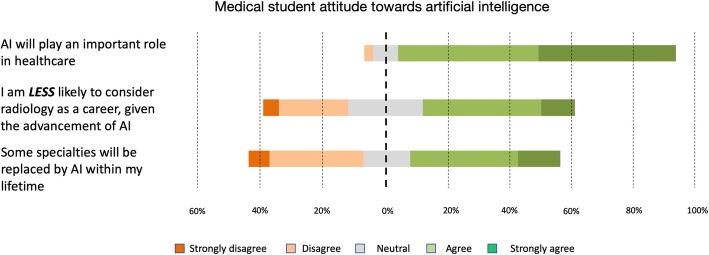
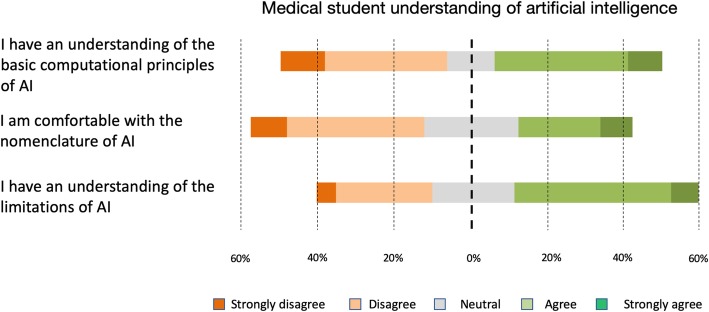
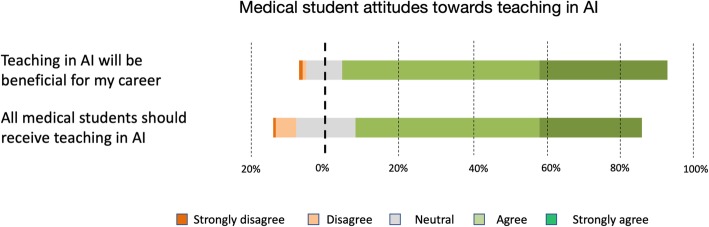
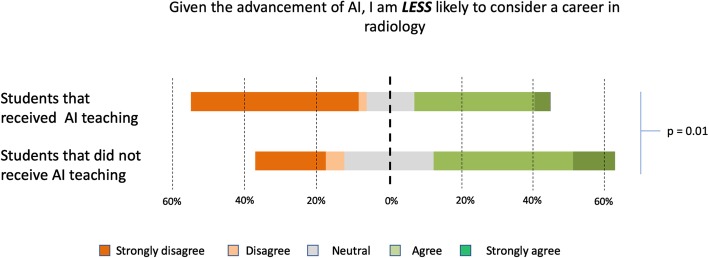
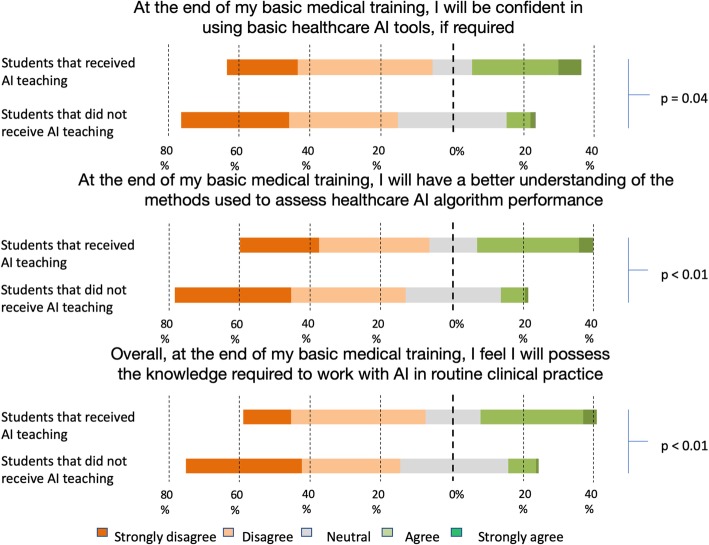
Objectives: To explore the attitudes of United Kingdom (UK) medical students regarding artificial intelligence (AI), their understanding, and career intention towards radiology. We also examine the state of education relating to AI amongst this cohort. Methods: UK medical students were invited to complete an anonymous electronic survey consisting of Likert and dichotomous questions. Results: Four hundred eighty-four responses were received from 19 UK medical schools. Eighty-eight percent of students believed that AI will play an important role in healthcare, and 49% reported they were less likely to consider a career in radiology due to AI. Eighty-nine percent of students believed that teaching in AI would be beneficial for their careers, and 78% agreed that students should receive training in AI as part of their medical degree. Only 45 students received any teaching on AI; none of the students received such teaching as part of their compulsory curriculum. Statistically, students that did receive teaching in AI were more likely to consider radiology (p = 0.01) and rated more positively to the questions relating to the perceived competence in the post-graduation use of AI (p = 0.01–0.04); despite this, a large proportion of students in the taught group reported a lack of confidence and understanding required for the critical use of healthcare AI tools. Conclusions: UK medical students understand the importance of AI and are keen to engage. Medical school training on AI should be expanded and improved. Realistic use cases and limitations of AI must be presented to students so they will not feel discouraged from pursuing radiology.
Overview
The claims and statistics of this paper haven’t been checked yet.
Free: it reads the open-access text and checks the first 5 claims that cite a source we can check. Create a free account to check every claim.
Integrity signals
Registry
Cites
Statistics
Figures
Verification
Claims the paper makes
The claims and statistics of this paper haven’t been checked yet.
Free: it reads the open-access text and checks the first 5 claims that cite a source we can check. Create a free account to check every claim.
Claims other papers make about this one
Each is checked against this paper’s own text: does it say what the citing paper says it does?
The source backs part of the claim, not all of it — or backs it for a different population, condition or comparison.
In the citing paper
“Moreover, many studies emphasized the relevance of AI literacy in higher and adult education (Lee, 2021a;Rodríguez-García et al., 2020;Sit et al., 2020;Xu & Babaian, 2021).”
From Artificial intelligence literacy in higher and adult education: A scoping literature review (2022) · cites this paper as Sit et al., 2020
Experimental — accuracy not yet measuredThe source backs part of the claim, not all of it — or backs it for a different population, condition or comparison.
In the citing paper
“Overall, in addition to positive attitudes toward AI, students generally expressed enthusiasm for integrating it into their future medical practice [70, 71]. Many believed AI had the potential to enhance and transform medicine by optimizing physicians’ workloads and reducing healthcare costs [42, 72, 73]. Additionally, students viewed AI as a supportive tool that can assist physicians, help”
From Artificial intelligence in undergraduate medical education: an updated scoping review (2025) · cites this paper as [70]
Experimental — accuracy not yet measuredThe source backs part of the claim, not all of it — or backs it for a different population, condition or comparison.
In the citing paper
“However, they are generally enthusiastic about learning and using AI in their practice [16, 17].”
From AI in medical education: medical student perception, curriculum recommendations and design suggestions (2023) · cites this paper as [16]
Experimental — accuracy not yet measuredThe source backs part of the claim, not all of it — or backs it for a different population, condition or comparison.
In the citing paper
“the current medical school curricula very rarely cover aspects of medical informatics, let alone AI, as part of their mandatory study programs [ 16 – 18 ].”
From Effect of a flipped classroom course to foster medical students’ AI literacy with a focus on medical imaging: a single group pre-and post-test study (2022) · cites this paper as [16]
Experimental — accuracy not yet measuredThe cited source says what the claim attributes to it.
In the citing paper
“Moreover, medical students who have received training in AI may be better equipped and more comfortable using AI tools and technologies in their later clinical work as they learn to understand and use AI concepts and their potential applications from the beginning of their careers [12, 13].”
From Biomedical Ethical Aspects Towards the Implementation of Artificial Intelligence in Medical Education (2023) · cites this paper as [12]
2 more claims about this paper
Create a free account to see every claim other papers make about this one.
Self-check
Percentages, sums and reported differences re-computed from the paper’s own numbers.
The self-check needs the paper’s full text.
Citations
Cites
R: A Language and Environment for Statistical Computing
R Core Team (2025) · doi:10.32614/r.manuals · Cited by 352,181
High-performance medicine: the convergence of human and artificial intelligence
Topol, E. J. (2019) · Nature Medicine · doi:10.1038/s41591-018-0300-7 · Cited by 10,450
Artificial intelligence and deep learning in ophthalmology
Ting, D. S. W., Pasquale, L. R., Peng, L., Campbell, J. P., Lee, A. Y., Raman, R., Tan, G. S. W., Schmetterer, L., Keane, P. A., & Wong, T. Y. (2019) · British Journal of Ophthalmology · doi:10.1136/bjophthalmol-2018-313173 · Cited by 1,554
Artificial Intelligence and Deep Learning in Ophthalmology
Wang, Z., Keane, P. A., Chiang, M., Cheung, C. Y., Wong, T. Y., & Ting, D. S. W. (2022) · Artificial Intelligence in Medicine · doi:10.1007/978-3-030-64573-1_200 · Cited by 1,524
Rajpurkar, P., Irvin, J., Ball, R. L., Zhu, K., Yang, B., Mehta, H., Duan, T., Ding, D., Bagul, A., Langlotz, C. P., et al. (2018) · PLOS Medicine · doi:10.1371/journal.pmed.1002686 · Cited by 1,449
Digital pathology and artificial intelligence
Niazi, M. K. K., Parwani, A. V., & Gurcan, M. N. (2019) · The Lancet Oncology · doi:10.1016/s1470-2045(19)30154-8 · Cited by 1,232
Deep learning algorithms for detection of critical findings in head CT scans: a retrospective study
Chilamkurthy, S., Ghosh, R., Tanamala, S., Biviji, M., Campeau, N. G., Venugopal, V. K., Mahajan, V., Rao, P., & Warier, P. (2018) · The Lancet · doi:10.1016/s0140-6736(18)31645-3 · Cited by 1,020
Medical students' attitude towards artificial intelligence: a multicentre survey
Pinto dos Santos, D., Giese, D., Brodehl, S., Chon, S. H., Staab, W., Kleinert, R., Maintz, D., & Baeßler, B. (2019) · European Radiology · doi:10.1007/s00330-018-5601-1 · Cited by 754
Deep Learning—A Technology With the Potential to Transform Health Care
Hinton, G. (2018) · JAMA · doi:10.1001/jama.2018.11100 · Cited by 667 · cited 1×
“It is only more recently that an increasingly circumspect view of AI adaptation in medical imaging has gained acceptance [13], including by some of the same thought leaders that originally predicted the rapid demise of radiologists [15].”
BackgroundGong, B., Nugent, J. P., Guest, W., Parker, W., Chang, P. J., Khosa, F., & Nicolaou, S. (2019) · Academic Radiology · doi:10.1016/j.acra.2018.10.007 · Cited by 325 · cited 2×
“in a Canadian cohort (N = 322) [9], where one sixth of medical students interested in radiology”
Background
Cited by
Items 201–300 of 607
Luo, J., Peng, Q., Cao, H., Li, W., & Tan, S. (2025) · BMC Medical Education · doi:10.1186/s12909-025-08388-w · Cited by 23
“%) had received any AI teaching [48].”
An Introduction to Artificial Intelligence in Developmental and Behavioral Pediatrics
Aylward, B. S., Abbas, H., Taraman, S., Salomon, C., Gal‐Szabo, D. E., Kraft, C. A., Ehwerhemuepha, L., Chang, A. C., & Wall, D. P. (2022) · Journal of Developmental & Behavioral Pediatrics · doi:10.1097/dbp.0000000000001149 · Cited by 29
“11 – 13 A number of preliminary frameworks for integrating AI curriculum into medical training have been proposed 3,5,51 ; however, additional research is urgently required to develop and then integrate standardized AI content into medical training pathways.”
BackgroundRadiography students’ perceptions of artificial intelligence in medical imaging
Arruzza, E. S. (2024) · Journal of medical imaging and radiation sciences · doi:10.1016/j.jmir.2024.02.014 · Cited by 21
Dehkharghanian, T., Rahnamayan, S., Riasatian, A., Bidgoli, A. A., Kalra, S., Zaveri, M., Babaie, M., Sajadi, M. S. S., Gonzalelz, R., Diamandis, P., et al. (2021) · American Journal Of Pathology · doi:10.1016/j.ajpath.2021.08.013 · Cited by 21
Maqbool, T., Ishaq, H., Shakeel, S., Un-Nisa, A. Z., Rehman, H., Kashif, S., Sadia, H., Naveed, S., Mumtaz, N., Siddiqui, S., et al. (2025) · PLoS ONE · doi:10.1371/journal.pone.0314045 · Cited by 25
Ghasemian, A., Salehi, M., Ghavami, V., Yari, M., Tabatabaee, S. S., & Moghri, J. (2025) · BMC Medical Education · doi:10.1186/s12909-025-07220-9 · Cited by 22
“Similarly, a survey in the United Kingdom reported that 88% of medical students acknowledged AI’s positive role in healthcare, although nearly half expressed concerns about the potential replacement of human professionals by AI [21].”
Garin, S. P., Zhang, V., Jeudy, J. J., Parekh, V. S., & Yi, P. H. (2023) · Journal of the American College of Radiology · doi:10.1016/j.jacr.2023.02.031 · Cited by 24
Reimagining healthcare education through nurturing AI-driven innovation
Mendes, J. M. (2025) · BMC Medical Education · doi:10.1186/s12909-025-08254-9 · Cited by 22
“Surveys across various regions confirm that while medical students recognise the transformative potential of AI, they often feel unprepared to engage with these tools in clinical contexts [16, 39, 40].”
Barakat, A., Mobarak, O., Javaid, H. A., Awad, M. R., Hamweyah, K., Ouban, A., & Al-Hazzaa, S. A. F. (2023) · Frontiers in Medicine · doi:10.3389/fmed.2023.1303300 · Cited by 19
ALruwail, B., Alshalan, A., Thirunavukkarasu, A., Alibrahim, A., Alenezi, A. M., & Aldhuwayhi, T. Z. A. (2025) · Journal of Multidisciplinary Healthcare · doi:10.2147/jmdh.s499902 · Cited by 22
Fitzek, S., & Choi, K.-E. A. (2024) · BMC Medical Education · doi:10.1186/s12909-024-05826-z · Cited by 18
Gualda-Gea, J. J., Barón-Miras, L. E., Bertran, M. J., Vilella, A., Rocamora, I. T., & Prat, A. (2025) · Frontiers in Medicine · doi:10.3389/fmed.2025.1529305 · Cited by 26
Rafidi, T. J., & Khatib, N. (2025) · Discover Education · doi:10.1007/s44217-025-00721-1 · Cited by 20
Knowledge and Perceptions of AI Among Medical Students in Morocco: Cross-Sectional Study
Chakri, I., Khayali, O. E., & Lahlou, L. (2025) · JMIR Formative Research · doi:10.2196/66156 · Cited by 18
“The questionnaire was created using commonly used questions from previous studies [17-19] and reviewed by the authors to ensure clarity, completeness, and relevance, with specific improvements made based on feedback.”
InfluentialAI triage or manual triage? Exploring medical staffs’ preference for AI triage in China
Cao, B., Huang, S., & Tang, W. (2023) · Patient Education and Counseling · doi:10.1016/j.pec.2023.108076 · Cited by 22
Pawelczyk, J., Kraus, M., Eckl, L., Nehrer, S., Aurich, M. E., Izadpanah, K., Siebenlist, S., & Rupp, M. (2024) · Archives of Orthopaedic and Trauma Surgery · doi:10.1007/s00402-024-05408-0 · Cited by 19
“Existing literature reports favourable views towards AI, as well as insufficient expertise [3, 9, 14, 39, 56] paired with inadequate AI education in medical training [13, 14, 21, 54], generating a strong demand for increased integration of AI into medical curricula [7, 8, 21, 44, 47, 54, 56].”
BackgroundInfluentialPalomares, S. M., Ferrara, G., Sguanci, M., Gazineo, D., Godino, L., Palmisano, A., Paderno, A., Vrenna, G., Faraglia, E., Petrelli, F., et al. (2026) · Journal of Renal Nutrition · doi:10.1053/j.jrn.2025.06.002 · Cited by 17
La inteligencia artificial en la educación médica y la predicción en salud
Joison, A. N., Barcudi, R. J., Majul, E. A., Ruffino, S., J, D. M. R. J., Joison, A. M., & Baiardi, G. (2021) · Methodo Investigación Aplicada a las Ciencias Biológicas · doi:10.22529/me.2021.6(1)07 · Cited by 24
Challenges of Machine Learning and AI (What Is Next?), Responsible and Ethical AI
Gkontra, P., Quaglio, G., Garmendia, A. T., & Lekadir, K. (2023) · Springer eBooks · doi:10.1007/978-3-031-36678-9_17 · Cited by 22
Zainal, H., Xin, X., Thumboo, J., & Yong, F. K. (2025) · JMIR Medical Education · doi:10.2196/64768 · Cited by 20
Artificial Intelligence Attitude Scale
Aktay, S., Gök, S., & Yildirim, A. (2024) · International Technology and Education Journal · doi:10.71410/esapub.itej.1 · Cited by 32
“However, in Sit et al.'s (2020) study with a total of 484 medical students from 19 universities, the participants stated that AI may have an important role in healthcare, but may lead to job loss.”
Baseer, S., Jamil, B., Khan, S. A., Khan, M. O. F., Syed, A., & Ali, L. (2025) · BMC Medical Education · doi:10.1186/s12909-025-06911-7 · Cited by 23
“Multiple studies have examined the level of artificial intelligence knowledge and literacy among healthcare providers, including both students and workers [12–14] but not many have looked into health professional’s read-iness.”
Rezazadeh, H., Mahani, A. M., & Salajegheh, M. (2025) · Health Science Reports · doi:10.1002/hsr2.70870 · Cited by 20
Artificial Intelligence: Knowledge and Attitude Among Lebanese Medical Students
Daher, O. A., Dabbousi, A. A., Chamroukh, R., Saab, A. Y., Al Ayoubi, A. R., & Salameh, P. (2024) · Cureus · doi:10.7759/cureus.51466 · Cited by 16
Ahmed, W. M. M., Abdalmotalib, M. M., Elbadawi, M. H., Mohammed, G. T. F., Mohamed, W. M. I., Mohammed, F. Z., Salih, H. S., & Mohamed, H. O. Y. (2025) · PLoS ONE · doi:10.1371/journal.pone.0324698 · Cited by 18
“These include limited financial and technical resources, lack of skilled professionals, legal and data privacy concerns, and social skepticism [17–19].”
Paré, G., Raymond, L., Pomey, M., Grégoire, G., Castonguay, A., & Ouimet, A. G. (2022) · Digital Health · doi:10.1177/20552076221114195 · Cited by 17
“For instance, Sit et al.(32) explored the attitudes of 484 United Kingdom (UK) medical students regarding training in AI technologies, their understanding of AI, and career intention towards radiology.”
BackgroundGandhi, R. B., Parmar, A. J., Kagathara, J., Lakkad, D., Kakadiya, J. P., & Yogesh, M. (2024) · Cureus · doi:10.7759/cureus.67288 · Cited by 21
“The observed knowledge gap in AI between undergraduate and postgraduate medical students, while aligning with previous studies [24,25], suggests a nuanced interpretation.”
ResultHamd, Z. Y., Alorainy, A. I., Aldhahi, M. I., Gareeballah, A., Alsubaie, N. F., Alshanaiber, S. A., Almudayhesh, N. S., Alyousef, R. A., AlNiwaider, R. A., Moammar, L. A. B., et al. (2024) · Journal of Multidisciplinary Healthcare · doi:10.2147/jmdh.s465508 · Cited by 16
“,7–9 AI’s benefits also extend to radiographers, improving patient scanning, image acquisition, and processing.”
BackgroundAngkurawaranon, S., Inmutto, N., Bannangkoon, K., Wonghan, S., Kham-ai, T., Khumma, P., Daengpisut, K., Thabarsa, P., & Angkurawaranon, C. (2024) · BMC Medical Education · doi:10.1186/s12909-024-06150-2 · Cited by 18
“[20].”
BackgroundMethodResultInfluentialAlmarzouki, A. F., Alem, A., Shrourou, F., Kaki, S., Khushi, M., Mutawakkil, A., Bamabad, M., Fakharani, N., Alshehri, M., & Binibrahim, M. (2025) · BMC Medical Education · doi:10.1186/s12909-024-06446-3 · Cited by 19
Alselaiti, N. (2023) · World Journal of Advanced Research and Reviews · doi:10.30574/wjarr.2023.19.3.1922 · Cited by 19
Navigating AI-self-efficacy: Mediating student attitudes and AI literacy
Asio, J. M. R. (2025) · Journal of Pedagogical Sociology and Psychology · doi:10.33902/jpsp.202535272 · Cited by 20
Güngören, Ö. C., Erdoğan, D. G., & Horzum, M. B. (2026) · BMC Psychology · doi:10.1186/s40359-026-03977-w · Cited by 18
Shu, C., Yue-yue, C., Yang, H., Tao, R., Chen, X., & Yu, J. (2023) · JMIR Formative Research · doi:10.2196/41820 · Cited by 15
Perception of AI tool adoption and training: initial validation using GSEM method
Parra, J. C. V., Henao-Rodríguez, C., Lis-Gutiérrez, J.-P., Palomino-Gámez, S., & Suárez-Brito, P. (2024) · Applied Computing and Informatics · doi:10.1108/aci-09-2024-0370 · Cited by 15
Navigating the AI Revolution in Medicine—Adopting Strategies for Medical Education
Greengrass, C. J. (2024) · Medical Science Educator · doi:10.1007/s40670-024-02257-9 · Cited by 15
“Moreover, Sit et al. [20] report that medical students’ attitudes towards AI in medicine have been positive, with many acknowledging the benefits of AI training, as an integral component of medical education programmes and as being crucial for their preparedness in future healthcare settings [21].”
Baigi, S. F. M., Sarbaz, M., Darroudi, A., & Kimiafar, K. (2025) · Health Science Reports · doi:10.1002/hsr2.71046 · Cited by 15
Atalay, M. K., Baird, G. L., Stib, M. T., George, P., Oueidat, K., & Cronan, J. J. (2022) · Academic Radiology · doi:10.1016/j.acra.2022.07.003 · Cited by 15
Ren, Y., Wang, Y., Dong, S., Su, W., Wu, Y., Liang, S., & Yang, X. (2026) · Advances in Medical Education and Practice · doi:10.2147/amep.s567190 · Cited by 18
Yu, S., Jeon, B. R., Liu, C., Kim, D., Park, H., Park, H., Shin, J. H., Lee, J. H., Choi, Q., Kim, S., et al. (2024) · Annals of Laboratory Medicine · doi:10.3343/alm.2024.0111 · Cited by 14
“Most respondents had a general understanding of AI, which was more advanced than that of medical students [27, 28], and anticipated its adoption in LM, particularly for image analysis and data interpretation.”
BackgroundVasudevan, R., Alqahtani, T., Alqahtani, S., Devanandan, P., Kandasamy, G., Saad, R., Amer, A., Abduallah, R., Waleed, G., Hasan, R., et al. (2025) · Healthcare · doi:10.3390/healthcare13111265 · Cited by 14
“This highlights the need for clear guidelines and regulations to ensure the responsible use of AI in educational settings [3,11–13].”
Alsharif, W. M., Qurashi, A. A., Toonsi, F. A., Alanazi, A. H., Alhazmi, F. H., Abdulaal, O. M., Aldahery, S. T., & Alshamrani, K. M. (2022) · BJR|Open · doi:10.1259/bjro.20210029 · Cited by 16
“Sit et al.(2020).”
BackgroundInfluentialEsteban, C. L. (2023) · Ediciones Universidad de Salamanca eBooks · doi:10.14201/0aq0347 · Cited by 17
Artificial Intelligence Readiness Status of Medical Faculty Students
EMİR, B., YURDEM, T., OZEL, T., SAYAR, T., UZUN, T. A., AKAR, U., & COLAK, U. A. (2024) · Konuralp Tıp Dergisi · doi:10.18521/ktd.1387826 · Cited by 13
Jin, Y., Li, X., Han, X., Qiu, Y., Zhang, H., Xu, J., & Han, M. (2025) · Frontiers in Neurology · doi:10.3389/fneur.2025.1678463 · Cited by 16
Attitudes and perceptions of dental students towards artificial intelligence
Shrateh, O. N., Al-batat, S., Al-Qudimat, A. R., Ghannam, L. I., & Abuhanoud, L. J. (2025) · BMC Medical Education · doi:10.1186/s12909-025-07854-9 · Cited by 13
“AI can help bridge these gaps through adaptive e-learning systems, virtual patient simulations, and AI-assisted diagnostic tools [9, 10].”
Malešević, A., Kolesárová, M., & Čartolovni, A. (2024) · BMC Medical Ethics · doi:10.1186/s12910-024-01092-2 · Cited by 15
“Previous studies have focused on Western countries such as Germany [48–50], Switzerland [37], the United Kingdom [39, 40], Canada [7, 10, 12], and Asian countries [11, 13, 51–58].”
BackgroundHarbi, M. A., Alotaibi, A., Alanazi, A., Alsughayir, F., Alharbi, D., Qassim, A. B., Alkhwaiter, T., Olayan, L. H., Alzaid, M., & Alsabani, M. H. (2024) · Health Science Reports · doi:10.1002/hsr2.70099 · Cited by 15
“20 AI has been widely studied among students 19 and clinicians 17 who acknowledged its potential and engaged, to variable extents, in using AI.”
BackgroundBarcelona, A. B., & Cruz, S. R. B. D. (2025) · International Journal of Evaluation and Research in Education (IJERE) · doi:10.11591/ijere.v14i5.34809 · Cited by 16
Artificial Intelligence in Medical Education: A citation-based systematic literature review
Burney, I. A., & Ahmad, N. (2022) · Journal of Shifa Tameer-e-Millat University · doi:10.32593/jstmu/vol5.iss1.183 · Cited by 16
Alyami, A. S., Majrashi, N. A. A., & Shubayr, N. (2023) · Current Medical Imaging Formerly Current Medical Imaging Reviews · doi:10.2174/0115734056250970231117111810 · Cited by 13
Assessing the Impact of AI Education on Hispanic Healthcare Professionals’ Perceptions and Knowledge
Heredia, F. L., Tosado-Rodríguez, E. L., Meléndez-Berrios, J., Nieves-Rodríguez, B. G., Amaya-Ardila, C. P., & Roche-Lima, A. (2024) · Education Sciences · doi:10.3390/educsci14040339 · Cited by 14
“Existing studies assessing training of AI in healthcare professionals have found that while healthcare professionals acknowledge the potential benefits of AI, there is a significant lack of preparation regarding concepts and applications [13,16,17].”
InfluentialAnkamah, S., Gyesi, K., & Amponsah, V. (2024) · Information Development · doi:10.1177/02666669241283790 · Cited by 16
“Some studies have elaborated on the usefulness of AI-assisted technologies in several aspects of medical practices including ophthalmology, dermatology, respiratory medicine, and radiology (Kaplan et al., 2021; Sit et al., 2020).”
Student Perceptions of Generative AI in LIS Coursework
Kizhakkethil, P., & Perryman, C. (2024) · Proceedings of the Association for Information Science and Technology · doi:10.1002/pra2.1053 · Cited by 12
“…and graduate students as reported in other studies (e.g. Bailey, et al., 2021; Chen et al., 2023), with most in concordance with student opinions from other disciplines about impact on future careers (Bisdas et al., 2021; Gong, et al., 2019; Sit, et al, 2020, cited in Chan & Hu, 2023).”
Reagan, K. L., Boudreaux, K. A., & Keller, S. M. (2025) · American Journal of Veterinary Research · doi:10.2460/ajvr.25.03.0082 · Cited by 14
Li, C., Tsuei, S. H., & Wu, H. (2026) · JMIR Medical Education · doi:10.2196/80604 · Cited by 14
“Although this defies common logic that deeper knowledge should portend more use [50], this trend aligns with previous international studies of medical staff and trainees who held generally positive attitudes toward AI despite low exposure in formal use [36,51].”
Artificial intelligence in healthcare: Opportunities and challenges
Zhang, H. (2023) · Theoretical and Natural Science · doi:10.54254/2753-8818/21/20230845 · Cited by 12
Exploring the potential of artificial intelligence in airway management
Via, L. L., Maniaci, A., Gage, D., Cuttone, G., Misseri, G., Lentini, M., Paternò, D. S., Pappalardo, F., & Sorbello, M. (2024) · Trends in Anaesthesia and Critical Care · doi:10.1016/j.tacc.2024.101512 · Cited by 17
Considerations for the application of artificial intelligence in vascular surgical education
Rigberg, D. A., & Jim, J. (2023) · Seminars in Vascular Surgery · doi:10.1053/j.semvascsurg.2023.07.004 · Cited by 13
Lin, G. S. S., Tan, W. W., & Hashim, H. (2024) · BDJ · doi:10.1038/s41415-024-7184-3 · Cited by 12
Chiu, J., Castro, B., Ballard, I., Nelson, K., Zarutskie, P., Olaiya, O. K., Song, D., & Zhao, Y. (2025) · Medical Science Educator · doi:10.1007/s40670-025-02394-9 · Cited by 11
Chen, X., Chen, Y., Xie, Y., & Cheng, L. (2025) · BMC Nursing · doi:10.1186/s12912-025-03852-w · Cited by 13
“Key challenges include the absence of standardized curricula [6], limited practical implementation of AI tools [7], restricted access to AI training [8], inadequate student knowledge and competencies [9], a shortage of educators with AI expertise [10], and varying student attitudes and preparedness…”
Tin, T. T. (2024) · Pakistan Journal of Life and Social Sciences (PJLSS) · doi:10.57239/pjlss-2024-22.2.000876 · Cited by 16
“Presenting realistic AI use cases and limitations will prevent discouragement among students interested in pursuing radiology (Sit et al. 2020).”
Developing a curriculum in artificial intelligence for emergency radiology
Weisberg, E. M., & Fishman, E. K. (2020) · Emergency Radiology · doi:10.1007/s10140-020-01795-0 · Cited by 11
Blease, C., Kharko, A., Bernstein, M., Bradley, C., Houston, M., Walsh, I., & D Mandl, K. (2023) · JMIR Medical Education · doi:10.2196/42639 · Cited by 10
Şimşek, E., Kudubeş, A. A., & Semerci, R. (2025) · Teaching and learning in nursing · doi:10.1016/j.teln.2025.02.036 · Cited by 11
How are faculty and college students embracing AI? — A multi-informant mixed method study
Xie, L., Jiang, Y., Chang, C., Zeng, X.-Y., Hong, J. S., & Mo, F. (2025) · Computers and Education Artificial Intelligence · doi:10.1016/j.caeai.2025.100506 · Cited by 10
Nursing Students' Perception of and Readiness for Artificial Intelligence in Saudi Arabia
Bakarman, S. S., Alshammari, A., & Aboshaiqah, A. E. (2025) · Nursing Open · doi:10.1002/nop2.70386 · Cited by 11
“Ethical concerns remain prominent, especially regarding patient safety, preferences and privacy (Sit et al. 2020; Chikhaoui et al. 2022).”
Başar, E. E., & Kes-Erkul, A. (2024) · Bezmialem Science · doi:10.14235/bas.galenos.2024.26879 · Cited by 12
The Applications of Artificial Intelligence in Radiology: Opportunities and Challenges
Yordanova, M. Z. (2024) · European Journal of Medical and Health Sciences · doi:10.24018/ejmed.2024.6.2.2085 · Cited by 11
“A study by Sit et al . shows that radiologists who have little to no knowledge of artificial intelligence fear the new technology [33].”
BackgroundAl‐Roomi, K., Alzayani, S., Almarabheh, A. J., Alqahtani, M. M., Aldosari, F., Aladwani, M., Aldeyouli, N., Alhobail, R., Atwa, H. S. M., & Deifalla, A. (2024) · Cureus · doi:10.7759/cureus.73425 · Cited by 12
Sadiq, F., Sadiq, F., Gul, R., Zuhra, F. T., Khan, M. K., Shah, S., Uzma, F., Khattak, N. U. H., Alam, W., & Khan, M. U. (2024) · Cureus · doi:10.7759/cureus.75355 · Cited by 10
Li, A., & Wang, S. (2025) · Higher Education · doi:10.1007/s10734-025-01497-x · Cited by 10
“Additionally, domain-specific investigations address varied facets of AI perceptions: medical students’ confidence in healthcare AI applications (Sit et al., 2020), technology’s role in education (Pellas, 2023), technical literacy fundamentals (Yüzbaşıoğlu, 2021), and information acquisition…”
Alhazmi, A. H., Ibrahem, M. D., & Dawria, A. (2025) · BMJ Open · doi:10.1136/bmjopen-2025-104230 · Cited by 10
“23 Similarly, Zhang et al Open access reported healthcare professionals’ concern about being displaced by AI in specific tasks.”
How AI Is Transforming Medical Education: Bibliometric Analysis
Wang, Y., Chang, C., Shi, W., Liu, H., Huang, X., & Jiao, Y. (2025) · JMIR Medical Education · doi:10.2196/75911 · Cited by 9
“The possibility of being replaced by AI or losing control over machines also generates distrust among stakeholders in medical education [3].”
Essel, H. B., Vlachopoulos, D., Johnson, E. E., & Quansah, E. K. (2026) · Discover Artificial Intelligence · doi:10.1007/s44163-025-00725-8 · Cited by 10
“Such findings corroborate other studies indicating increasing acceptance of GenAI as an integral part of students' learning processes and a good resource for their careers [12, 39, 57].”
Zainal, H., Chuan, V. T., Xin, X., Thumboo, J., & Yong, F. K. (2026) · Medical Education · doi:10.1111/medu.70195 · Cited by 9
Alamer, A. (2022) · Current Medical Imaging Formerly Current Medical Imaging Reviews · doi:10.2174/1573405618666220907111422 · Cited by 9
Yerlikaya, N., & KÜÇÜKASLAN, Ö. (2024) · Ankara Üniversitesi Veteriner Fakültesi Dergisi · doi:10.33988/auvfd.1221352 · Cited by 9
“AI has an increasing interest day by day and attracts the attention of various professional groups and many studies address the views of university youth on the concept of AI (13, 14, 17, 35, 39).”
BackgroundWillis, K., Chaudhry, U. A. R., Chandrasekaran, L., Wahlich, C., Olvera‐Barrios, A., Chambers, R., Bolter, L., Anderson, J., Barman, S. A., Fajtl, J., et al. (2023) · BMJ Open · doi:10.1136/bmjopen-2023-075558 · Cited by 9
Medical Students’ Knowledge and Attitudes about Artificial Intelligence: A Cross-Sectional Survey
Eker, A., Çalışkan, A., ZORALİ, A., KAYNAK, B., & Derin, M. E. (2023) · Tıp Eğitimi Dünyası · doi:10.25282/ted.1292846 · Cited by 9
Prahl, A., & Jin, K. T. W. (2024) · Human-Machine Communication · doi:10.30658/hmc.8.8 · Cited by 10
“Across the board, students surveyed felt that AI will play an important role in health care in the future, and in one study, 89% of students stated that teaching in AI would be beneficial for their future (Sit et al., 2020 ).”
BackgroundSorte, S. R., Rawekar, A. R. A., Rathod, S. B., & Gandhi, N. S. (2025) · Journal of Education and Health Promotion · doi:10.4103/jehp.jehp_1030_24 · Cited by 9
Alsultan, M. M., Baraka, M. A., Alhajri, L. H., Althayf, L., Omar, N., Alhomoud, F., Alhomoud, F. K., Alsultan, A., Alqarni, Y. S., Alsulami, F. T., et al. (2025) · BMC Medical Education · doi:10.1186/s12909-025-07577-x · Cited by 9
“A systematic review revealed a knowledge gap in AI applications among healthcare students; however, their attitude toward learning AI is positive due to its increase in medicine [8, 19].”
Attitude, Readiness, and Predictors of AI Adoption among Undergraduate Medical Students
Sarkar, M., Sain, S., Mukhopadhyay, P., & Sarkar, A. P. (2025) · National Journal of Community Medicine · doi:10.55489/njcm.160920255559 · Cited by 9
“Study tools were pre-designed pre-tested structured questionnaire, attitude towards AI scale by Sit et al. 12 and Medical AI Readiness Scale for Medical Students (MAIRS-MS) by Karaca et al. 13 Sit et al. attitude towards AI questionnaire is a valid and reliable tool with 5-point Likert scale, having a total of 11 item…”
Kavadella, A., Uribe, S. E., da Silva, M. A. D., Schwendicke, F., Tichý, A., Jacobs, R., Karni, D., Chaurasia, A., & Giannakopoulos, K. (2026) · BMC Medical Education · doi:10.1186/s12909-026-08699-6 · Cited by 10
“The lack of formal learning opportunities led most students to feel unprepared to work with AI [18, 24].”
AI in UK Medical Education: A Framework for Curriculum Reform
Gaur, A., Shah, M. H., Rao, M. S., Tan, J. K., Fuad, M., Bhatti, T., Bharadwaj, H. R., & Ahmed, K. A. H. M. (2026) · JMIR Medical Education · doi:10.2196/81953 · Cited by 8
“A recent national survey reported that 88% (432/484) of UK medical students recognized the importance of AI in health care yet only a minority had received formal instruction, highlighting a significant educational gap [5].”
InfluentialAlmusharraf, A. I., Shaikh, A. K., Attar, R. W., & Alwassil, O. I. (2025) · Frontiers in Education · doi:10.3389/feduc.2025.1550671 · Cited by 8
Seçer, E., & Kaya, D. Ö. (2024) · Turkiye Klinikleri Journal of Health Sciences · doi:10.5336/healthsci.2023-100746 · Cited by 13
Bodaubekov, A., Agaidarova, S., Zhussipbek, T., Gaipov, D., & Balta, N. (2025) · Contemporary Educational Technology · doi:10.30935/cedtech/15687 · Cited by 7
Wichmann, J., Gesk, T. S., & Leyer, M. (2024) · JMIR Formative Research · doi:10.2196/48600 · Cited by 8
“While the overall attitude toward AI-based HIS improved in society over the last years, training toward the use of such systems also improves the overall perception, as determined by Sit et al [5].”
BackgroundInfluentialStudents' Attitude Towards Artificial Intelligence and Its Predictive Factors
Maier, R., Ghiocanu, S., Costin, A., & Simion, I. (2025) · BRAIN BROAD RESEARCH IN ARTIFICIAL INTELLIGENCE AND NEUROSCIENCE · doi:10.70594/brain/16.s1/22 · Cited by 10
Braunstein, D., Farooq, H., Paolino, M., Moynihan, A., & Cahill, R. A. (2025) · Irish Journal of Medical Science (1971 -) · doi:10.1007/s11845-025-04079-z · Cited by 7
“Sit et al. found that UK medical students were similarly optimistic about the capabilities of AI in radiology, despite limited exposure to AI in clinical settings [13].”
Seçer, M. B., & Seçer, E. (2025) · İzmir Katip Çelebi Üniversitesi Sağlık Bilimleri Fakültesi Dergisi · doi:10.61399/ikcusbfd.1621606 · Cited by 7
Hacıalioğlu, N., Şeker, E. B., & Kaya, F. (2025) · BMC Psychology · doi:10.1186/s40359-025-03467-5 · Cited by 7
Comparison Of Knowledge and Attitude Towards Chat GPT In First and Final-Year Dental Students
Naureen, S., Kiani, H. G., Naureen, N., & Shafique, M. (2024) · Journal of Rawalpindi Medical College · doi:10.37939/jrmc.v28i1.2425 · Cited by 9
Hawezy, D. J., Mahmood, K. A., Hawezy, G. A., Sadraldeen, G. S., & Ahmad, S. T. (2024) · Cureus · doi:10.7759/cureus.70545 · Cited by 7
“As medicine and the delivery of healthcare age increase, the need for competent human-machine interactions for the use of data to aid clinical decision-making will increase [7].”
BackgroundAlsenany, S. A., Al‐Maraira, O. A., & Mansour, S. E.-S. (2024) · Edelweiss Applied Science and Technology · doi:10.55214/25768484.v8i6.2138 · Cited by 7
“This result was consistent with [15]; [16] who reported in their study that the student nurses have a favorable perception of the use of AI in nursing practice, hold positive attitudes towards its integration into their work, and express high intentions to adopt AI technology in their future…”
ResultPerceptions of Medical Students towards Artificial Intelligence
Rizwan, S., Rizwan, S., Rizwan, M., Hashim, A., Nawal, & Batool, S. (2025) · Pakistan Journal of Health Sciences · doi:10.54393/pjhs.v6i1.2364 · Cited by 7
Sajjad, W., Inam, A., Ahmed, B., Zahir, M., Mujtaba, A., Khan, Z., Saddique, M. N., Iqbal, J., & Nasrallah, J. (2025) · Annals of Medicine and Surgery · doi:10.1097/ms9.0000000000002953 · Cited by 7
Metadata
- Authors
- Sit, C., Srinivasan, R., Amlani, A., Muthuswamy, K., Azam, A., Monzon, L., & Poon, D. S.
- Affiliations
- St Thomas' Hospital (GB)
- King's College London (GB)
- Corresponding author
- Poon, Daniel Stephen
- Venue
- Insights into Imaging
- Published
- 2020-02-05
- Volume
- 11
- Issue
- 1
- Pages
- 14-14
- ISSN
- 1869-4101 (ISSN-L)
- PMC
- PMC7002761
- OpenAlex
- W3012668909
- Cited by
- 507
- References
- 12
- Citations by year
- 2026: 81 · 2025: 118 · 2024: 113 · 2023: 72 · 2022: 52 · 2021: 57 · 2020: 13
- FWCI
- 14.28
- Type
- journal article
- Language
- en
- Open access
- gold
- doi.org
- Licence
- cc-by
- creativecommons.org/licenses/by/4.0 (tdm)
- creativecommons.org/licenses/by/4.0 (vor)
- Locations
- Insights into Imaging (publishedVersion, cc-by)
- Europe PMC (PubMed Central) (publishedVersion, cc-by)
- PubMed Central (publishedVersion, cc-by)
- PubMed (publishedVersion)
- DOAJ (DOAJ: Directory of Open Access Journals) (submittedVersion)
- Topics
- Health Sciences › Medicine › Health Informatics › Artificial Intelligence in Healthcare and Education
- Health Sciences › Medicine › Radiology, Nuclear Medicine and Imaging › Radiology practices and education
- Social Sciences › Education › Innovations in Medical Education
- Keywords
- artificial intelligence in healthcare, medical students, attitudes toward AI, medical school training, UK medical education
About these checks
Registry, retraction, Cites and statistics results are computed, not judged, with one exception: a printed reference that no index lists is read once by a model before it counts as a citation error. Claims are extracted by a model and kept only when their quote appears verbatim in the text; each cited source is then checked, with a model’s help, for whether it says what the claim relies on. Those verdicts can be wrong — read the claim’s quote and the cited source before relying on one.
Statistics and arithmetic are recomputed, not judged.
Confidence bands are shown only for fields calibrated on our annotated test set. None is calibrated yet, so no band is shown.
What counts as a claim ›How we measure confidence ›How we check this ›
Are you an author, or do you see a problem with this page? Request a review
Data sources
Bibliographic data: Semantic Scholar, OpenAlex, Crossref.
Contains information from the Semantic Scholar Academic Graph Datasets, made available under the ODC Attribution License (ODC-BY 1.0).
Semantic Scholar’s data is described in: Kinney, R., et al. (2023). The Semantic Scholar Open Data Platform. arXiv:2301.10140.
