

Optimal database combinations for literature searches in systematic reviews: a prospective exploratory study
Open accessThe DOI matches its Crossref record; 27 of the 27 references it cites were found in a registry or an index; 3 of the 22 sources its claims cite were checked for support.
Abstract
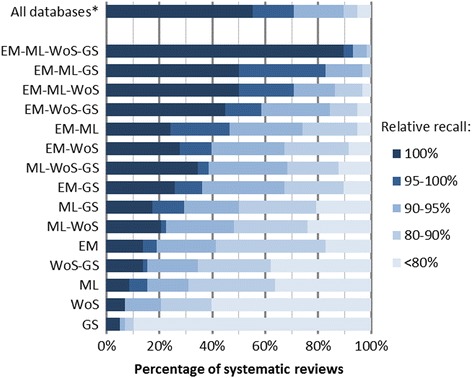
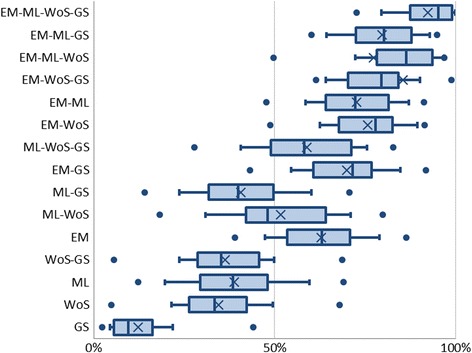
BACKGROUND: Within systematic reviews, when searching for relevant references, it is advisable to use multiple databases. However, searching databases is laborious and time-consuming, as syntax of search strategies are database specific. We aimed to determine the optimal combination of databases needed to conduct efficient searches in systematic reviews and whether the current practice in published reviews is appropriate. While previous studies determined the coverage of databases, we analyzed the actual retrieval from the original searches for systematic reviews. METHODS: Since May 2013, the first author prospectively recorded results from systematic review searches that he performed at his institution. PubMed was used to identify systematic reviews published using our search strategy results. For each published systematic review, we extracted the references of the included studies. Using the prospectively recorded results and the studies included in the publications, we calculated recall, precision, and number needed to read for single databases and databases in combination. We assessed the frequency at which databases and combinations would achieve varying levels of recall (i.e., 95%). For a sample of 200 recently published systematic reviews, we calculated how many had used enough databases to ensure 95% recall. RESULTS: A total of 58 published systematic reviews were included, totaling 1746 relevant references identified by our database searches, while 84 included references had been retrieved by other search methods. Sixteen percent of the included references (291 articles) were only found in a single database; Embase produced the most unique references (n = 132). The combination of Embase, MEDLINE, Web of Science Core Collection, and Google Scholar performed best, achieving an overall recall of 98.3 and 100% recall in 72% of systematic reviews. We estimate that 60% of published systematic reviews do not retrieve 95% of all available relevant references as many fail to search important databases. Other specialized databases, such as CINAHL or PsycINFO, add unique references to some reviews where the topic of the review is related to the focus of the database. CONCLUSIONS: Optimal searches in systematic reviews should search at least Embase, MEDLINE, Web of Science, and Google Scholar as a minimum requirement to guarantee adequate and efficient coverage.
Overview
CoChat Summary
TL;DR
This prospective exploratory study analyzed actual database retrieval for 58 published systematic reviews and found that searching Embase, MEDLINE, Web of Science Core Collection, and Google Scholar together achieved the best recall. The authors estimate that many published systematic reviews fail to retrieve 95% of relevant references because they omit key databases.
Key findings
- Among 1,746 relevant references identified by database searches, 292 (17%) were found by only one database; Embase retrieved the most unique references (n = 132), followed by MEDLINE, Web of Science, and Google Scholar.
- The combination of Embase, MEDLINE, Web of Science Core Collection, and Google Scholar achieved an overall recall of 98.3% and retrieved all included references in 72% of the studied systematic reviews.
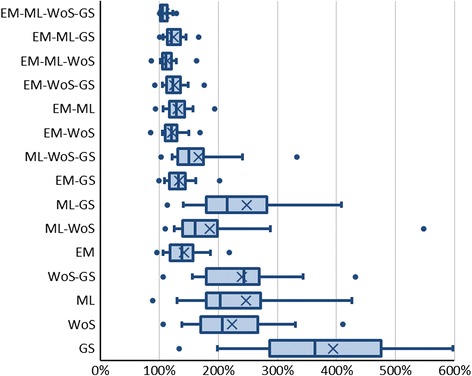
- Searching only Embase produced an average number needed to read (NNR) of 57, whereas the optimal four-database combination had an NNR of 73.
- In a sample of 200 recent systematic reviews, 97% searched MEDLINE, 61% searched Embase, 35% searched Web of Science, and only 10% used Google Scholar; the authors estimate that 60% of published systematic reviews do not retrieve 95% of all available relevant references.
Methods
- Since May 2013, the first author prospectively recorded results from systematic review searches performed at Erasmus MC; PubMed was searched in July 2016 for reviews published since 2014 with Erasmus MC first authors, yielding 58 included reviews.
- Included reviews had documented search strategies and results and had used at least Embase, MEDLINE, Cochrane CENTRAL, Web of Science, and Google Scholar; included references were extracted and located in original EndNote libraries to determine which database retrieved them.
- Recall, precision, and number needed to read were calculated for single databases and combinations in Excel; a separate sample of 200 recent PubMed systematic reviews was analyzed to assess current database selection practice.
Limitations
- The authors state they did not investigate whether missing references changed review conclusions, and because the finding that Web of Science and Google Scholar improve recall is novel, they cannot conclude whether it is due to their dataset or is generalizable.
- The authors note that all searches were performed by one experienced biomedical information specialist, that searcher skill strongly affects search effectiveness, and that their searches still missed some relevant references; they also state that Scopus as a replacement for Embase or Web of Science remains uncertain.
- The text makes evident additional constraints: the study is exploratory, based at a single institution, and relies on a relatively small set of 58 systematic reviews, with specialized databases such as CINAHL and PsycINFO used only when topic-appropriate.
Model-written summary. Check it against the paper before relying on it.
Integrity signals
Registry
Cites
Statistics
Figures

Verification
Claims the paper makes
2 Valid · 1 Not valid · 6 Not checked · 91 Own results and interpretations
A result the paper reports from its own data — it cites no other source for it, so there is none to check. The quote shows it is in the paper.
In the paper
“Using that combination, 93% of the systematic reviews in our study obtained levels of recall that could be considered acceptable (> 95%).”
§ Optimal database combinations for literature searches in systematic reviews: a prospective exploratory study > Discussion
plainstates a cause- Asserted: passes — The authors put it forward as true.
- Checkable: passes — It can be checked against evidence.
- Load-bearing: passes — The paper’s conclusions depend on it.
- Based: passes — The paper gives a reason why it holds.
A result the paper reports from its own data — it cites no other source for it, so there is none to check. The quote shows it is in the paper.
In the paper
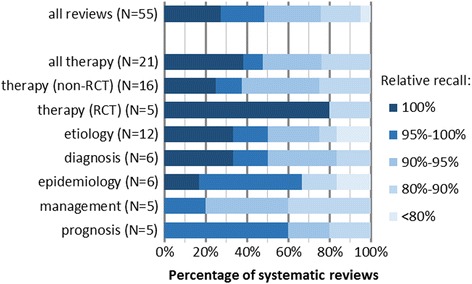
“For all but one domain, the traditional combination of Embase, MEDLINE, and Cochrane CENTRAL did not retrieve enough included references.”
§ Optimal database combinations for literature searches in systematic reviews: a prospective exploratory study > Results > Differences between domains of reviews
plain- Asserted: passes — The authors put it forward as true.
- Checkable: passes — It can be checked against evidence.
- Load-bearing: passes — The paper’s conclusions depend on it.
- Based: passes — The paper gives a reason why it holds.
A result the paper reports from its own data — it cites no other source for it, so there is none to check. The quote shows it is in the paper.
In the paper
“Embase was searched in 61% and Web of Science in 35%, and Google Scholar was only used in 10% of all reviews.”
§ Optimal database combinations for literature searches in systematic reviews: a prospective exploratory study > Results > Status of current practice of database selection
plain- Asserted: passes — The authors put it forward as true.
- Checkable: passes — It can be checked against evidence.
- Load-bearing: unclear — It is unclear whether the paper’s conclusions depend on it.
- Based: passes — The paper gives a reason why it holds.
A result the paper reports from its own data — it cites no other source for it, so there is none to check. The quote shows it is in the paper.
In the paper
“Of the five reviews that included only RCTs, four reached 100% recall if MEDLINE, Web of Science, and Google Scholar combined were complemented with Cochrane CENTRAL.”
§ Optimal database combinations for literature searches in systematic reviews: a prospective exploratory study > Discussion
plainstates a cause- Asserted: passes — The authors put it forward as true.
- Checkable: passes — It can be checked against evidence.
- Load-bearing: passes — The paper’s conclusions depend on it.
- Based: passes — The paper gives a reason why it holds.
A result the paper reports from its own data — it cites no other source for it, so there is none to check. The quote shows it is in the paper.
In the paper
“Based on our findings, this combination achieves acceptable recall about half the time (47%).”
§ Optimal database combinations for literature searches in systematic reviews: a prospective exploratory study > Results > Status of current practice of database selection
plainstates a cause- Asserted: passes — The authors put it forward as true.
- Checkable: passes — It can be checked against evidence.
- Load-bearing: passes — The paper’s conclusions depend on it.
- Based: passes — The paper gives a reason why it holds.
51 more claims
Create a free account to see all 100 claims and every source verdict.
- Probably not a substantial claim. 26
- It may state two separate claims as one. 24
- The quote only partly states this claim. 2
Claims other papers make about this one
Each is checked against this paper’s own text: does it say what the citing paper says it does?
The source backs part of the claim, not all of it — or backs it for a different population, condition or comparison.
In the citing paper
“although deduplication of references is essential to ensure the quality of SRs, there is currently no universal method to do so”
From Reducing systematic review burden using Deduklick: a novel, automated, reliable, and explainable deduplication algorithm to foster medical research (2022) · cites this paper as [5]
Experimental — accuracy not yet measuredThe source backs part of the claim, not all of it — or backs it for a different population, condition or comparison.
In the citing paper
“Although this database is one of the largest academic databases, offers extensive multidisciplinary coverage, and is widely used in bibliometric analyses, relevant publications indexed elsewhere or published in regional and non-indexed outlets may not have been captured [130].”
From Toward Holistic Aging in Lebanon: A Mapping of Gerontology and Geriatrics Research Trends, Gaps, and Future Directions (2026) · cites this paper as [130]
Experimental — accuracy not yet measuredThe source backs part of the claim, not all of it — or backs it for a different population, condition or comparison.
In the citing paper
“Meanwhile, others are highly specialized (e.g., PubMed, Medline, Compendix, etc.), which makes them unsuitable for more inclusive tasks, in particular, for the wide scope analysis and evaluation of multidisciplinary units [42,43].”
From Web of Science (WoS) and Scopus: The Titans of Bibliographic Information in Today’s Academic World (2021) · cites this paper as [43]
Experimental — accuracy not yet measuredThe source backs part of the claim, not all of it — or backs it for a different population, condition or comparison.
In the citing paper
“These databases are widely used in review studies and the majority of them are included in the optimal database combination search19 which guarantee an adequate and efficient coverage of the scientific literature.”
From Occupational therapy interventions for adults with severe mental illness: a scoping review (2021) · cites this paper as [19]
Experimental — accuracy not yet measuredThe cited source says what the claim attributes to it.
In the citing paper
“These differences have led to recommendations that systematic review teams search multiple databases to maximize the likelihood of finding relevant studies [6, 39, 40].”
From PRISMA-S: an extension to the PRISMA Statement for Reporting Literature Searches in Systematic Reviews (2021) · cites this paper as [40]
5 more claims about this paper
Create a free account to see every claim other papers make about this one.
Self-check
Percentages, sums and reported differences re-computed from the paper’s own numbers.
Each contradiction between two passages listed here was confirmed by an independent check.
Rated minor: it would not touch a result — a value no result rests on, a p-value that stays on the same side of the significance level, or a conflict that is clerical, resolved elsewhere in the paper, or outside its own findings.
In the paper
§ Optimal database combinations for literature searches in systematic reviews: a prospective exploratory study > Abstract > Results
“Sixteen percent of the included references (291 articles) were only found in a single database;”
§ Optimal database combinations for literature searches in systematic reviews: a prospective exploratory study > Results > Unique references per database
“A total of 292 (17%) references were found by only one database.”
Citations
Cites
Cochrane Handbook for Systematic Reviews of Interventions Version 5.0.1. The Cochrane Collaboration
Higgins, J. P. T., Green, S. R., & Higgins, J. P. T. (2008) · Cited by 7,171
A systematic approach to searching: an efficient and complete method to develop literature searches
Bramer, W. M., De Jonge, G. B., Rethlefsen, M. L., Mast, F., & Kleijnen, J. (2018) · Journal of the Medical Library Association · doi:10.5195/jmla.2018.283 · Cited by 863
Self-citationComparing two sampling methods to engage hard-to-reach communities in research priority setting
Valerio, M. A., Rodriguez, N., Winkler, P., Lopez, J., Dennison, M., Liang, Y., & Turner, B. J. (2016) · BMC Medical Research Methodology · doi:10.1186/s12874-016-0242-z · Cited by 543
Rethlefsen, M. L., Farrell, A. M., Osterhaus Trzasko, L. C., & Brigham, T. J. (2015) · Journal of Clinical Epidemiology · doi:10.1016/j.jclinepi.2014.11.025 · Cited by 331
Self-citationSystematic reviews need systematic searchers.
(2005) · Europe PMC (PubMed Central) · Cited by 257
Bramer, W. M., Giustini, D., & Kramer, B. M. R. (2016) · Systematic Reviews · doi:10.1186/s13643-016-0215-7 · Cited by 202
Self-citationHalladay, C. W., Trikalinos, T. A., Schmid, I. T., Schmid, C. H., & Dahabreh, I. J. (2015) · Journal of Clinical Epidemiology · doi:10.1016/j.jclinepi.2014.12.017 · Cited by 166 · cited 1×
“Prior research on database importance for systematic reviews has looked primarily at whether included references could have theoretically been found in a certain database, but most have been unable to ascertain whether the researchers actually found the articles in those databases [10, 12, 16, 17, 26].”
BackgroundSearching multiple databases for systematic reviews: added value or diminishing returns?
Stevinson, C., & Lawlor, D. A. (2004) · Complementary Therapies in Medicine · doi:10.1016/j.ctim.2004.09.003 · Cited by 143
Bramer, W. M., Giustini, D., Kramer, B. M., & Anderson, P. (2013) · Systematic Reviews · doi:10.1186/2046-4053-2-115 · Cited by 139 · cited 1×
“Nevertheless others have concluded that a single database is not sufficient to retrieve all references for systematic reviews [18, 19].”
BackgroundSelf-citationSearching one or two databases was insufficient for meta-analysis of observational studies
Lemeshow, A. R., Blum, R. E., Berlin, J. A., Stoto, M. A., & Colditz, G. A. (2005) · Journal of Clinical Epidemiology · doi:10.1016/j.jclinepi.2005.03.004 · Cited by 137
Cited by
Rethlefsen, M. L., Kirtley, S., Waffenschmidt, S., Ayala, A. P., Moher, D., Page, M. J., & Koffel, J. (2019) · doi:10.31219/osf.io/sfc38 · Cited by 3,696
Self-citationRethlefsen, M. L., Kirtley, S., Waffenschmidt, S., Ayala, A. P., Moher, D., Page, M. J., Koffel, J. B., PRISMA-S Group, Blunt, H., Brigham, T., et al. (2021) · Systematic Reviews · doi:10.1186/s13643-020-01542-z · Cited by 3,714
Self-citationWeb of Science (WoS) and Scopus: The Titans of Bibliographic Information in Today’s Academic World
Pranckutė, R. (2021) · Publications · doi:10.3390/publications9010012 · Cited by 2,696
The art of crafting a systematic literature review in entrepreneurship research
Kraus, S., Breier, M., & Dasí-Rodríguez, S. (2020) · International Entrepreneurship and Management Journal · doi:10.1007/s11365-020-00635-4 · Cited by 1,319
“Authors should use more than one database to cover most articles (Bramer et al. 2017).”
MethodAguirre Velasco, A., Cruz, I. S. S., Billings, J., Jimenez, M., & Rowe, S. (2020) · BMC Psychiatry · doi:10.1186/s12888-020-02659-0 · Cited by 736
“Four databases were selected including MEDLINE®, Embase, PsycINFO, and Web of Science, as well as the search engine Google scholar, identified as an optimal database combination [20].”
Muka, T., Glisic, M., Milic, J., Verhoog, S., Bohlius, J., Bramer, W., Chowdhury, R., & Franco, O. H. (2020) · European Journal of Epidemiology · doi:10.1007/s10654-019-00576-5 · Cited by 660
Self-citationDiener, A., & Mudu, P. (2021) · Science of The Total Environment · doi:10.1016/j.scitotenv.2021.148605 · Cited by 558
Rethlefsen, M. L., Kirtley, S., Waffenschmidt, S., Ayala, A. P., Moher, D., Page, M. J., Koffel, J. B., & Group, P.-S. (2021) · Journal of the Medical Library Association · doi:10.5195/jmla.2021.962 · Cited by 409
“These differences have led to recommendations that systematic review teams search multiple databases to maximize the likelihood of finding relevant studies [5, 38, 39].”
BackgroundMethodSelf-citationAssessing risk of bias due to missing results in a synthesis
Page, M. J., Higgins, J. P., & Sterne, J. A. (2019) · Cochrane Handbook for Systematic Reviews of Interventions · doi:10.1002/9781119536604.ch13 · Cited by 402
Henkelmann, J.-R., de Best, S., Deckers, C., Jensen, K., Shahab, M., Elzinga, B., & Molendijk, M. (2020) · BJPsych Open · doi:10.1192/bjo.2020.54 · Cited by 388
Definitions, key themes and aspects of ‘ageing in place’: a scoping review
Pani-Harreman, K. E., Bours, G. J. J. W., Zander, I., Kempen, G. I. J. M., & van Duren, J. M. A. (2021) · Ageing and Society · doi:10.1017/s0144686x20000094 · Cited by 350
Marquez-Chin, C., & Popovic, M. R. (2020) · BioMedical Engineering OnLine · doi:10.1186/s12938-020-00773-4 · Cited by 349
Mediation analysis methods used in observational research: a scoping review and recommendations
Rijnhart, J. J. M., Lamp, S. J., Valente, M. J., MacKinnon, D. P., Twisk, J. W. R., & Heymans, M. W. (2021) · BMC Medical Research Methodology · doi:10.1186/s12874-021-01426-3 · Cited by 345
“First, we searched both the MEDLINE and EMBASE, as EMBASE has been shown to contain many unique references compared to MEDLINE when performing medically-oriented searches [68].”
MethodTangkiatkumjai, M., Boardman, H., & Walker, D.-M. (2020) · BMC Complementary Medicine and Therapies · doi:10.1186/s12906-020-03157-2 · Cited by 326
Cochlear implantation outcomes in adults: A scoping review
Boisvert, I., Reis, M., Au, A., Cowan, R., & Dowell, R. C. (2020) · PLOS ONE · doi:10.1371/journal.pone.0232421 · Cited by 318
Pilania, M., Yadav, V., Bairwa, M., Behera, P., Gupta, S. D., Khurana, H., Mohan, V., Baniya, G., & Poongothai, S. (2019) · BMC Public Health · doi:10.1186/s12889-019-7136-z · Cited by 299
“One hundred pages of Google scholar were reviewed to enrich and supplement the search results [17, 18].”
BackgroundAlqenae, F. A., Steinke, D., & Keers, R. N. (2020) · Drug Safety · doi:10.1007/s40264-020-00918-3 · Cited by 287
IoT-based telemedicine for disease prevention and health promotion: State-of-the-Art
Albahri, A. S., Alwan, J. K., Taha, Z. K., Ismail, S. F., Hamid, R. A., Zaidan, A. A., Albahri, O. S., Zaidan, B. B., Alamoodi, A. H., & Alsalem, M. A. (2021) · Journal of Network and Computer Applications · doi:10.1016/j.jnca.2020.102873 · Cited by 284
Problematic Mobile Phone and Smartphone Use Scales: A Systematic Review
Harris, B., Regan, T., Schueler, J., & Fields, S. A. (2020) · Frontiers in Psychology · doi:10.3389/fpsyg.2020.00672 · Cited by 275
“PsycINFO was utilized due to being a specialized database that can provide unique search results specific to topics of psychology; additionally, it has been used in several largely cited systematic reviews (Bramer et al., 2017; Elhai et al., 2017).”
MethodEmotional Intelligence Measures: A Systematic Review
Bru-Luna, L. M., Martí-Vilar, M., Merino-Soto, C., & Cervera-Santiago, J. L. (2021) · Healthcare · doi:10.3390/healthcare9121696 · Cited by 254
Gartland, D., Riggs, E., Muyeen, S., Giallo, R., Afifi, T. O., MacMillan, H., Herrman, H., Bulford, E., & Brown, S. J. (2019) · BMJ Open · doi:10.1136/bmjopen-2018-024870 · Cited by 248
“In hindsight, some relevant papers may have been missed due to the databases chosen—a recent paper by Bramer et al 76 suggests that a combination of Embase, MEDLINE, Web of Science Core Collection and Google Scholar performs best for systematic reviews.”
Khosravi, N., Stoner, L., Farajivafa, V., & Hanson, E. D. (2019) · Brain, Behavior, and Immunity · doi:10.1016/j.bbi.2019.08.187 · Cited by 230
Singh, A., & Kumari, K. (2019) · Journal of Environmental Management · doi:10.1016/j.jenvman.2019.109569 · Cited by 229
Sustainable energy development: History of the concept and emerging themes
Gunnarsdottir, I., Davidsdottir, B., Worrell, E., & Sigurgeirsdottir, S. (2021) · Renewable and Sustainable Energy Reviews · doi:10.1016/j.rser.2021.110770 · Cited by 220
Gréaux, M., Moro, M. F., Kamenov, K., Russell, A. M., Barrett, D., & Cieza, A. (2023) · International Journal for Equity in Health · doi:10.1186/s12939-023-02035-w · Cited by 213
“We searched two scientific databases, MEDLINE (Ovid) and Web of Science, which represent the highest scoring database combination accessible to the team after considerations of access and capacity constraints [40].”
MethodSearch where you will find most: Comparing the disciplinary coverage of 56 bibliographic databases
Gusenbauer, M. (2022) · Scientometrics · doi:10.1007/s11192-022-04289-7 · Cited by 211
“In all cases, users should search multiple databases when searching systematically (Konno & Pullin, 2020), including databases with specialized content (Table 5) (Bramer et al., 2017).”
BackgroundElectric vehicles’ consumer behaviours: Mapping the field and providing a research agenda
Secinaro, S., Calandra, D., Lanzalonga, F., & Ferraris, A. (2022) · Journal of Business Research · doi:10.1016/j.jbusres.2022.06.011 · Cited by 196
Mbanda, N., Dada, S., Bastable, K., Ingalill, G.-B., & Ralf W., S. (2021) · Patient Education and Counseling · doi:10.1016/j.pec.2020.11.034 · Cited by 194
The importance of literature reviews in small business and entrepreneurship research
Kraus, S., Mahto, R. V., & Walsh, S. T. (2023) · Journal of Small Business Management · doi:10.1080/00472778.2021.1955128 · Cited by 176
“They provide significant aid in identifying the necessary literature and allowing for systematic approaches (Bramer et al., 2017; Gusenbauer & Haddaway, 2019).”
BackgroundSearching two or more databases decreased the risk of missing relevant studies: a metaresearch study
Ewald, H., Klerings, I., Wagner, G., Heise, T. L., Stratil, J. M., Lhachimi, S. K., Hemkens, L. G., Gartlehner, G., Armijo-Olivo, S., & Nussbaumer-Streit, B. (2022) · Journal of Clinical Epidemiology · doi:10.1016/j.jclinepi.2022.05.022 · Cited by 168
Nyadanu, S. D., Dunne, J., Tessema, G. A., Mullins, B., Kumi-Boateng, B., Lee Bell, M., Duko, B., & Pereira, G. (2022) · Environmental Pollution · doi:10.1016/j.envpol.2022.119465 · Cited by 162
Scalia, P., Durand, M.-A., Berkowitz, J. L., Ramesh, N. P., Faber, M. J., Kremer, J. A. M., & Elwyn, G. (2019) · Patient Education and Counseling · doi:10.1016/j.pec.2018.12.020 · Cited by 160
Loprinzi, P., Blough, J., Crawford, L., Ryu, S., Zou, L., & Li, H. (2019) · Brain Sciences · doi:10.3390/brainsci9040087 · Cited by 158
Adoption of digital financial transactions: A review of literature and future research agenda
Kajol, K., Singh, R. K. P. G., & Paul, J. (2022) · Technological Forecasting and Social Change · doi:10.1016/j.techfore.2022.121991 · Cited by 219
Deep learning-based data analytics for safety in construction
Liu, J., Luo, H., & Liu, J. (2022) · Automation in Construction · doi:10.1016/j.autcon.2022.104302 · Cited by 169
d’Afflitto, M., Upadhyaya, A., Green, A., & Peiris, M. (2022) · Journal of Clinical Gastroenterology · doi:10.1097/mcg.0000000000001676 · Cited by 142
Zurba, M., Petriello, M. A., Madge, C., McCarney, P., Bishop, B., McBeth, S., Denniston, M., Bodwitch, H., & Bailey, M. (2021) · Sustainability Science · doi:10.1007/s11625-021-00996-x · Cited by 193
The Supportive Care Needs of Cancer Patients: a Systematic Review
Webb, M. E., Murray, E., Younger, Z. W., Goodfellow, H., & Ross, J. (2021) · Journal of Cancer Education · doi:10.1007/s13187-020-01941-9 · Cited by 181
Adverse Childhood Experiences and Justice System Contact: A Systematic Review
Graf, G. H.-J., Chihuri, S. T., Blow, M., & Li, G. (2021) · PEDIATRICS · doi:10.1542/peds.2020-021030 · Cited by 180
Willems, R. P. J., van Dijk, K., Vehreschild, M. J. G. T., Biehl, L. M., Ket, J. C. F., Remmelzwaal, S., & Vandenbroucke‐Grauls, C. M. J. E. (2023) · The Lancet Infectious Diseases · doi:10.1016/s1473-3099(22)00811-8 · Cited by 134
Social Support and Cognition: A Systematic Review
Costa‐Cordella, S., Arévalo-Romero, C. A., Parada, F. J., & Rossi, A. (2021) · Frontiers in Psychology · doi:10.3389/fpsyg.2021.637060 · Cited by 159
Laine, J., Minkkinen, M., & Mäntymäki, M. (2024) · Information & Management · doi:10.1016/j.im.2024.103969 · Cited by 224
“Consulting several databases during an SLR is useful because it increases the comprehensiveness of the search, enables the identification of relevant studies that may be missed in a narrower search, and helps minimize bias in the selection of studies (e.g., [15]).”
Hong, Y., Wu, S., & Wei, G. (2023) · The Science of The Total Environment · doi:10.1016/j.scitotenv.2023.166258 · Cited by 145
Gusenbauer, M., & Gauster, S. P. (2024) · Technological Forecasting and Social Change · doi:10.1016/j.techfore.2024.123833 · Cited by 215
A systematic review on spatial crime forecasting
Kounadi, O., Ristea, A., de Araujo, A., & Leitner, M. (2020) · Crime Science · doi:10.1186/s40163-020-00116-7 · Cited by 146
“In addition, as also discussed by Bramer et al. (2017) in an exploratory study for database combinations, if the research question is more interdisciplinary, a broader science database such as Web of Science is likely to add value.”
BackgroundDefining Severe and Persistent Mental Illness—A Pragmatic Utility Concept Analysis
Zumstein, N., & Riese, F. (2020) · Frontiers in Psychiatry · doi:10.3389/fpsyt.2020.00648 · Cited by 161
Mertala, P. (2019) · Computers in Human Behavior · doi:10.1016/j.chb.2019.08.003 · Cited by 187
Borissov, N., Haas, Q., Minder, B., Kopp-Heim, D., von Gernler, M., Janka, H., Teodoro, D., & Amini, P. (2022) · Systematic Reviews · doi:10.1186/s13643-022-02045-9 · Cited by 116
“Furthermore, although deduplication of references is essential to ensure the quality of SRs, there is currently no universal method to do so, and the timeintensive task is still mostly performed manually [5].”
BackgroundMethodLee, R., den Uyl, R. M., & Runhaar, H. A. C. (2019) · Crop Protection · doi:10.1016/j.cropro.2019.104929 · Cited by 142
Conversano, C., Orrù, G., Pozza, A., Miccoli, M., Ciacchini, R., Marchi, L., & Gemignani, A. (2021) · International Journal of Environmental Research and Public Health · doi:10.3390/ijerph18062882 · Cited by 113
Buchlak, Q. D., Esmaili, N., Leveque, J., Bennett, C. C., Farrokhi, F. R., & Piccardi, M. (2021) · Journal of Clinical Neuroscience · doi:10.1016/j.jocn.2021.04.043 · Cited by 123
The Burden of Drug Abuse in Nigeria: A Scoping Review of Epidemiological Studies and Drug Laws
Jatau, A. I., Sha’aban, A., Gulma, K. A., Shitu, Z., Khalid, G. M., Isa, A., Wada, A. S., & Mustapha, M. (2021) · Public Health Reviews · doi:10.3389/phrs.2021.1603960 · Cited by 110
“” Based on previous recommendations, only the first 200 search results from the Google scholar search were considered for inclusion [8].”
BackgroundEsfandiar, K., Pearce, J., Dowling, R., & Goh, E. (2022) · Tourism Management Perspectives · doi:10.1016/j.tmp.2022.100943 · Cited by 146
Ariom, T. O., Dimon, E., Nambeye, E., Diouf, N. S., Adelusi, O. O., & Boudalia, S. (2022) · Sustainability · doi:10.3390/su141811370 · Cited by 169
Multi-Criteria Decision-Making Methods to Address Water Allocation Problems: A Systematic Review
Gebre, S. L., Cattrysse, D., & Orshoven, J. V. (2021) · Water · doi:10.3390/w13020125 · Cited by 132
Cheng, L. J., Tan, R. L.-Y., & Luo, N. (2021) · Value in Health · doi:10.1016/j.jval.2021.02.003 · Cited by 123
Zambrano, J., Celano, C. M., Januzzi, J. L., Massey, C. N., Chung, W., Millstein, R. A., & Huffman, J. C. (2020) · Journal of the American Heart Association · doi:10.1161/jaha.120.018686 · Cited by 108
The Environmental Sustainability of Plant-Based Dietary Patterns: A Scoping Review
Carey, C. N., Paquette, M. A., Sahye‐Pudaruth, S., Dadvar, A., Dinh, D., Khodabandehlou, K., Liang, F., Mishra, E., Sidhu, M., Brown, R., et al. (2023) · Journal of Nutrition · doi:10.1016/j.tjnut.2023.02.001 · Cited by 137
Effects of forest bathing (shinrin-yoku) on individual well-being: an umbrella review
Antonelli, M., Donelli, D., Carlone, L., Maggini, V., Firenzuoli, F., & Bedeschi, E. (2021) · International Journal of Environmental Health Research · doi:10.1080/09603123.2021.1919293 · Cited by 133
“In consideration of optimal database combinations recommended for literature reviews (Bramer et al. 2017), Medline (via PubMed), EMBASE, Web of Science, Cochrane Library, Google Scholar, Scopus, PsycINFO, CINAHL and the Directory of Open Access Journals (DOAJ) were systematically searched for…”
MethodRaman, R., Kowalski, R. M., Achuthan, K., Iyer, A., & Nedungadi, P. (2025) · Scientific Reports · doi:10.1038/s41598-025-92190-7 · Cited by 170
“Relying solely on Scopus within the PRISMA framework may introduce selection biases, omitting relevant studies from other databases like Web of Science, IEEE Xplore, and arXiv, potentially limiting the comprehensiveness of the review 142 .”
Immersive technologies and consumer behavior: A systematic review of two decades of research
Ambika, A., Shin, H., & Jain, V. (2023) · Australian Journal of Management · doi:10.1177/03128962231181429 · Cited by 153
“The search was conducted via Scopus and Web of Science for articles with relevant terms in the title, abstract, or specified keywords to obtain optimal results (Bramer et al., 2017).”
Skoglund, G., Nilsson, B. B., Olsen, C. F., Bergland, A., & Hilde, G. (2022) · BMC Public Health · doi:10.1186/s12889-022-12885-8 · Cited by 135
“This choice of databases is in line with suggestions presented in the systematic review on optimal database combinations for literature searches in systematic reviews [31].”
MethodDemont, A., Bourmaud, A., Kechichian, A., & Desmeules, F. (2019) · Disability and Rehabilitation · doi:10.1080/09638288.2019.1674388 · Cited by 101
“Overall description of included studies The search strategy generated 1326 citations from the included databases, (CINAHL, PubMed, Embase, Web of Science, and PEDro) and after the removal of duplicates, a total of 1109 citations remained.”
MethodThe GABAergic system in Alzheimer’s disease: a systematic review with meta-analysis
Carello-Collar, G., Bellaver, B., Ferreira, P. C. L., Ferrari-Souza, J. P., Ramos, V. G., Therriault, J., Tissot, C., De Bastiani, M. A., Soares, C., Pascoal, T. A., et al. (2023) · Molecular Psychiatry · doi:10.1038/s41380-023-02140-w · Cited by 98
“…or systematic review, or meta-analysis; (d) it was a case report, editorial, commentary, opinion, protocol, hypothesis, letter to the editor, conference abstract, or book chapter; (e) it was not AD-focused (i.e., the term “ Alzheimer ’ s disease ” was mentioned in the abstract only to…”
van Nooijen, C. C. A., de Koning, B. B., Bramer, W. M., Isahakyan, A., Asoodar, M., Kok, E. M., van Merriënboer, J. J. G., & PAAS, F. G. W. C. (2024) · Educational Psychology Review · doi:10.1007/s10648-024-09848-3 · Cited by 198
Self-citationGilat, M., Ginis, P., Zoetewei, D., Vleeschhauwer, J. D., Hulzinga, F., D’Cruz, N., & Nieuwboer, A. (2021) · npj Parkinson s Disease · doi:10.1038/s41531-021-00224-4 · Cited by 120
Oliveira Silva, G., Oliveira, F. S. E., Coelho, A. S. G., Cavalcante, A. M. R. Z., Vieira, F. V. M., Fonseca, L. M. M., Campbell, S. H., & Aredes, N. D. A. (2022) · International Journal of Nursing Studies · doi:10.1016/j.ijnurstu.2022.104282 · Cited by 91
Stagewise Overview of Issues Influencing Organizational Technology Adoption and Use
Saghafian, M., Laumann, K., & Skogstad, M. R. (2021) · Frontiers in Psychology · doi:10.3389/fpsyg.2021.630145 · Cited by 152
“Future research can be a systematic literature review, including more databases and with adherence to the required protocols for a systematic review (Bramer et al., 2017).”
BackgroundINCIDENCE OF HERPES SIMPLEX VIRUS KERATITIS AND OTHER OCULAR DISEASE: GLOBAL REVIEW AND ESTIMATES
McCormick, I., James, C. R., Welton, N. J., Mayaud, P., Turner, K., Gottlieb, S. L., Foster, A., & Looker, K. J. (2021) · Ophthalmic Epidemiology · doi:10.1080/09286586.2021.1962919 · Cited by 96
“key databases identified as having appropriate levels of coverage.(42) We identified relatively few available studies, and even fewer studies which met our quality criteria,(15,16,28,30,32,35,36) limiting the extent to which we could speculate with any confidence on global disease burden.”
ResultA Literature Review of Inter-Organizational Sustainability Learning
Dzhengiz, T. (2020) · Sustainability · doi:10.3390/su12124876 · Cited by 89
Key influencing factors on hydrogen storage and transportation costs: A systematic literature review
Lu, X., Krutoff, A.-C., Wappler, M., & Fischer, A. (2025) · International Journal of Hydrogen Energy · doi:10.1016/j.ijhydene.2025.01.196 · Cited by 100
Ma, T.-W., Yuen, A. S.-K., & Yang, Z. (2023) · The Clinical Journal of Pain · doi:10.1097/ajp.0000000000001096 · Cited by 88
Lartey, D., & Law, K. M. Y. (2025) · Landscape and Urban Planning · doi:10.1016/j.landurbplan.2025.105337 · Cited by 129
Systematic Review of Polygenic Risk Scores for Type 1 and Type 2 Diabetes
Padilla-Martínez, F., Collin, F., Kwaśniewski, M., & Kretowski, A. J. (2020) · International Journal of Molecular Sciences · doi:10.3390/ijms21051703 · Cited by 105
Castellaro, M., Tamanti, A., Pisani, A. I., Pizzini, F. B., Crescenzo, F., & Calabrese, M. (2020) · Diagnostics · doi:10.3390/diagnostics10121025 · Cited by 87
Normative body image development: A longitudinal meta-analysis of mean-level change
Lacroix, E., Smith, A. J., Incé A. Husain, Orth, U., & von Ranson, K. M. (2023) · Body Image · doi:10.1016/j.bodyim.2023.03.003 · Cited by 123
Systematic review of prediction models for pulmonary tuberculosis treatment outcomes in adults
Peetluk, L. S., Ridolfi, F. M., Rebeiro, P. F., Liu, D., Rolla, V. C., & Sterling, T. R. (2021) · BMJ Open · doi:10.1136/bmjopen-2020-044687 · Cited by 99
Database combinations to retrieve systematic reviews in overviews of reviews: a methodological study
Goossen, K., Hess, S., Lunny, C., & Pieper, D. (2020) · BMC Medical Research Methodology · doi:10.1186/s12874-020-00983-3 · Cited by 85
Biodiverse food plants in the semiarid region of Brazil have unknown potential: A systematic review
Jacob, M. C. M., de Medeiros, M. F. A., & Albuquerque, U. P. (2020) · PLoS ONE · doi:10.1371/journal.pone.0230936 · Cited by 110
“We used the first three because of their excellent performance in collecting evidence for SR [18].”
MethodNnko, S., Kuringe, E., Nyato, D., Drake, M., Casalini, C., Shao, A. F., Komba, A., Baral, S., Wambura, M., & Changalucha, J. M. (2019) · BMC Public Health · doi:10.1186/s12889-018-6362-0 · Cited by 99
“However, a systematic review on ideal database combinations for article searches suggested that the inclusion of MEDLINE and WoS databases alone can lead to the overall recall of about 85% [61].”
BackgroundKim, D. Y., Patel, S. K. S., Rasool, K., Lone, N., Bhatia, S. K., Seth, C. S., & Ghodake, G. S. (2023) · The Science of The Total Environment · doi:10.1016/j.scitotenv.2023.168318 · Cited by 100
Thelen, J., Fruchtman, C. S., Bilal, M., Gabaake, K., Iqbal, S., Keakabetse, T. R., Kwamie, A., Mokalake, E. N., Mupara, L. M., Seitio-Kgokgwe, O., et al. (2023) · BMJ Global Health · doi:10.1136/bmjgh-2022-010191 · Cited by 102
Antezack, A., Etchecopar‐Etchart, D., Scola, B. L., & Monnet‐Corti, V. (2023) · Journal of Periodontal Research · doi:10.1111/jre.13173 · Cited by 89
Powell, B. J., Mettert, K. D., Dorsey, C. N., Weiner, B. J., Stanick, C. F., Lengnick-Hall, R., Ehrhart, M. G., Aarons, G. A., Barwick, M. A., Damschroder, L. J., et al. (2021) · Implementation Research and Practice · doi:10.1177/26334895211018862 · Cited by 79
“…culture, implementation climate, and related constructs; (2) we did not search the gray literature; (3) the original literature searches for this study were completed in 2017; and (4) we did not search all potentially relevant databases (e.g., PsycINFO, Google Scholar; Bramer et al., 2017).”
BackgroundInfluentialTomkinson, G. R., Lang, J. J., Rubín, L., McGrath, R. P., Gower, B., Boyle, T., Klug, M. G., Mayhew, A., Blake, H. T., Ortega, F. B., et al. (2024) · Journal of sport and health science/Journal of Sport and Health Science · doi:10.1016/j.jshs.2024.101014 · Cited by 152
Littering behaviour: A systematic review
Chaudhary, A. H., Polonsky, M. J., & McClaren, N. (2021) · International Journal of Consumer Studies · doi:10.1111/ijcs.12638 · Cited by 107
Tsui, B. C. H., Kirkham, K. R., Kwofie, K., Tran, D. Q. H., Wong, P., Chin, K. J., & Sondekoppam, R. V. (2019) · Canadian Journal of Anesthesia/Journal canadien d anesthésie · doi:10.1007/s12630-019-01466-w · Cited by 90
Zarean, M., Keikha, M., Feizi, A., Kazemitabaee, M., & Kelishadi, R. (2019) · Environmental Pollution · doi:10.1016/j.envpol.2019.01.026 · Cited by 93
Predictive Validity of Pretrial Risk Assessments: A Systematic Review of the Literature
Desmarais, S. L., Zottola, S. A., Duhart Clarke, S. E., & Lowder, E. M. (2021) · Criminal Justice and Behavior · doi:10.1177/0093854820932959 · Cited by 79
“In keeping with practices used in prior reviews, we restricted our review of Google results to the first 300 hits of each search (see, for example, Bramer et al., 2017; Haddaway et al., 2015; Piasecki et al., 2018; Viljoen et al., 2019).”
MethodWound dressings: curbing inflammation in chronic wound healing
Verdolino, D. V., Thomason, H. A., Fotticchia, A., & Cartmell, S. H. (2021) · Emerging Topics in Life Sciences · doi:10.1042/etls20200346 · Cited by 92
Reuse assessment of WEEE: Systematic review of emerging themes and research directions
Anandh, G., PrasannaVenkatesan, S., Goh, M., & Mathiyazhagan, K. (2021) · Journal of Environmental Management · doi:10.1016/j.jenvman.2021.112335 · Cited by 80
Chee, R. M., Capper, T. S., & Muurlink, O. T. (2023) · Midwifery · doi:10.1016/j.midw.2023.103623 · Cited by 126
Prescription Drug Monitoring Programs and Prescription Opioid–Related Outcomes in the United States
Puac‐Polanco, V., Chihuri, S. T., Fink, D. S., Cerdá, M., Keyes, K. M., & Li, G. (2020) · Epidemiologic Reviews · doi:10.1093/epirev/mxaa002 · Cited by 83
“These databases have been identified as the most reliable combination and minimum requirement of search engines for a reliable recall rate of literature (14).”
BackgroundRoy, J., Some, S., Das, N., & Pathak, M. (2021) · Environmental Research Letters · doi:10.1088/1748-9326/abd81a · Cited by 79
Steps in undertaking meta-analysis and addressing heterogeneity in meta-analysis
Gandhi, A. P., Shamim, M. A., & Padhi, B. K. (2023) · The Evidence · doi:10.61505/evidence.2023.1.1.7 · Cited by 114
Feroz, A. K., Zo, H., Eom, J., & Chiravuri, A. (2023) · Technology in Society · doi:10.1016/j.techsoc.2023.102257 · Cited by 126
Al-Tameemi, R. A. N., Johnson, C., Gitay, R., Abdel‐Salam, A. G., Hazaa, K. A., Said, A. B., & Romanowski, M. H. (2023) · International Journal of Educational Research Open · doi:10.1016/j.ijedro.2023.100232 · Cited by 155
Considerations of the built environment for autistic individuals: A review of the literature
Black, M. H., McGarry, S., Churchill, L., D’Arcy, E., Dalgleish, J., Nash, I., Jones, A., Tse, T. Y., Gibson, J., Bölte, S., et al. (2022) · Autism · doi:10.1177/13623613221102753 · Cited by 124
“Database searches including ProQuest, Web of Science, PsycINFO (Ovid), EMBASE (Ovid) and Google Advanced Search were searched based on recommendations provided by optimal database searches (Bramer et al., 2017).”
MethodRisk factors for self-harm repetition in adolescents: A systematic review
Rahman, F., Webb, R. T., & Wittkowski, A. (2021) · Clinical Psychology Review · doi:10.1016/j.cpr.2021.102048 · Cited by 108
Suicidal behaviour prediction models using machine learning techniques: A systematic review
Nordin, N., Zainol, Z. B., Noor, M. H. M., & Chan, L. F. (2022) · Artificial Intelligence in Medicine · doi:10.1016/j.artmed.2022.102395 · Cited by 99
Metadata
- Authors
- Bramer, W. M., Rethlefsen, M. L., Kleijnen, J., & Franco, O. H.
- Affiliations
- Erasmus MC (NL)
- University of Utah (US)
- Maastricht University (NL)
- Corresponding author
- Bramer, Wichor M.
- Venue
- Systematic Reviews
- Published
- 2017-12
- Volume
- 6
- Issue
- 1
- Pages
- 245-245
- ISSN
- 2046-4053 (ISSN-L)
- PMC
- PMC5718002
- OpenAlex
- W2774587119
- Cited by
- 2,114
- References
- 27
- Citations by year
- 2026: 373 · 2025: 411 · 2024: 332 · 2023: 292 · 2022: 252 · 2021: 231 · 2020: 145 · 2019: 64 · 2018: 12 · 2017: 2
- FWCI
- 14.94
- Type
- journal article
- Language
- en
- Open access
- gold
- doi.org
- Licence
- cc-by
- creativecommons.org/licenses/by/4.0/ (tdm)
- creativecommons.org/licenses/by/4.0/ (vor, 5 d)
- Locations
- Systematic Reviews (publishedVersion, cc-by)
- Europe PMC (PubMed Central) (publishedVersion, cc-by)
- PubMed Central (publishedVersion, cc-by)
- PubMed (publishedVersion)
- Research Publications (Maastricht University) (publishedVersion, cc-by)
- EUR Research Repository (Erasmus University Rotterdam) (publishedVersion, other-oa)
- EUR Research Repository (Erasmus University Rotterdam) (submittedVersion, other-oa)
- RePub (Erasmus University Rotterdam) (submittedVersion, other-oa)
- DOAJ (DOAJ: Directory of Open Access Journals) (submittedVersion, cc-by-sa)
- Research Publications (Maastricht University) (submittedVersion, other-oa)
- Funders
- National Center for Advancing Translational Sciences (UL1TR001067)
- Topics
- Social Sciences › Decision Sciences › Statistics, Probability and Uncertainty › Meta-analysis and systematic reviews
- Social Sciences › Library and Information Sciences › scientometrics and bibliometrics research
- Physical Sciences › Computer Science › Information Systems › Information Retrieval and Search Behavior
- Keywords
- literature search strategies, search recall, search precision, database coverage, Embase, MEDLINE, Web of Science, Google Scholar, CINAHL, PsycINFO, number needed to read
- MeSH terms
- Humans, Prospective Studies, Review Literature as Topic, Databases, Bibliographic, Information Storage and Retrieval
About these checks
Registry, retraction, Cites and statistics results are computed, not judged, with one exception: a printed reference that no index lists is read once by a model before it counts as a citation error. Claims are extracted by a model and kept only when their quote appears verbatim in the text; each cited source is then checked, with a model’s help, for whether it says what the claim relies on. Those verdicts can be wrong — read the claim’s quote and the cited source before relying on one.
A language model drew the claims from the paper on 2026-09-29, under version 3 of the claim definition (model deepseek-v4.1-flash, prompt extract-v3).
A second model labelled each claim on 2026-09-29 (model jev-1.13-20260917, definition revision gold-guideline-v0.2).
Statistics and arithmetic are recomputed, not judged.
Confidence bands are shown only for fields calibrated on our annotated test set. None is calibrated yet, so no band is shown.
What counts as a claim ›How we measure confidence ›How we check this ›
Are you an author, or do you see a problem with this page? Request a review
Data sources
Bibliographic data: Semantic Scholar, OpenAlex, Crossref.
Contains information from the Semantic Scholar Academic Graph Datasets, made available under the ODC Attribution License (ODC-BY 1.0).
Semantic Scholar’s data is described in: Kinney, R., et al. (2023). The Semantic Scholar Open Data Platform. arXiv:2301.10140.
