

Optimal database combinations for literature searches in systematic reviews: a prospective exploratory study
Open accessThe DOI matches its Crossref record; 27 of the 27 references it cites were found in a registry or an index; 3 of the 22 sources its claims cite were checked for support.
Abstract
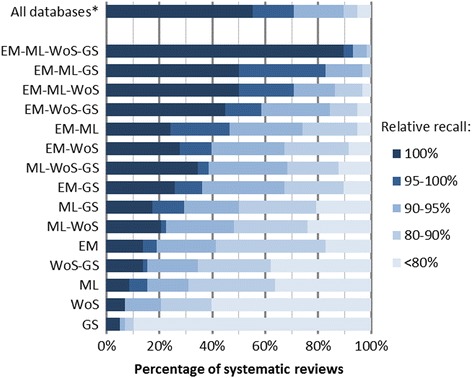
BACKGROUND: Within systematic reviews, when searching for relevant references, it is advisable to use multiple databases. However, searching databases is laborious and time-consuming, as syntax of search strategies are database specific. We aimed to determine the optimal combination of databases needed to conduct efficient searches in systematic reviews and whether the current practice in published reviews is appropriate. While previous studies determined the coverage of databases, we analyzed the actual retrieval from the original searches for systematic reviews. METHODS: Since May 2013, the first author prospectively recorded results from systematic review searches that he performed at his institution. PubMed was used to identify systematic reviews published using our search strategy results. For each published systematic review, we extracted the references of the included studies. Using the prospectively recorded results and the studies included in the publications, we calculated recall, precision, and number needed to read for single databases and databases in combination. We assessed the frequency at which databases and combinations would achieve varying levels of recall (i.e., 95%). For a sample of 200 recently published systematic reviews, we calculated how many had used enough databases to ensure 95% recall. RESULTS: A total of 58 published systematic reviews were included, totaling 1746 relevant references identified by our database searches, while 84 included references had been retrieved by other search methods. Sixteen percent of the included references (291 articles) were only found in a single database; Embase produced the most unique references (n = 132). The combination of Embase, MEDLINE, Web of Science Core Collection, and Google Scholar performed best, achieving an overall recall of 98.3 and 100% recall in 72% of systematic reviews. We estimate that 60% of published systematic reviews do not retrieve 95% of all available relevant references as many fail to search important databases. Other specialized databases, such as CINAHL or PsycINFO, add unique references to some reviews where the topic of the review is related to the focus of the database. CONCLUSIONS: Optimal searches in systematic reviews should search at least Embase, MEDLINE, Web of Science, and Google Scholar as a minimum requirement to guarantee adequate and efficient coverage.
Overview
CoChat Summary
TL;DR
This prospective exploratory study analyzed actual database retrieval for 58 published systematic reviews and found that searching Embase, MEDLINE, Web of Science Core Collection, and Google Scholar together achieved the best recall. The authors estimate that many published systematic reviews fail to retrieve 95% of relevant references because they omit key databases.
Key findings
- Among 1,746 relevant references identified by database searches, 292 (17%) were found by only one database; Embase retrieved the most unique references (n = 132), followed by MEDLINE, Web of Science, and Google Scholar.
- The combination of Embase, MEDLINE, Web of Science Core Collection, and Google Scholar achieved an overall recall of 98.3% and retrieved all included references in 72% of the studied systematic reviews.
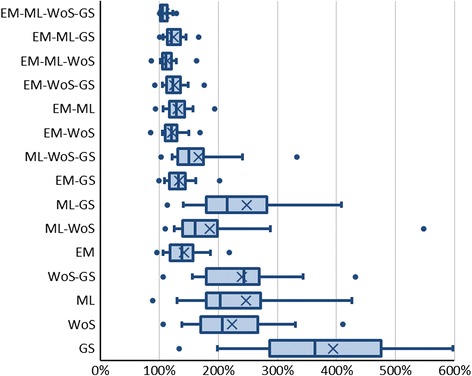
- Searching only Embase produced an average number needed to read (NNR) of 57, whereas the optimal four-database combination had an NNR of 73.
- In a sample of 200 recent systematic reviews, 97% searched MEDLINE, 61% searched Embase, 35% searched Web of Science, and only 10% used Google Scholar; the authors estimate that 60% of published systematic reviews do not retrieve 95% of all available relevant references.
Methods
- Since May 2013, the first author prospectively recorded results from systematic review searches performed at Erasmus MC; PubMed was searched in July 2016 for reviews published since 2014 with Erasmus MC first authors, yielding 58 included reviews.
- Included reviews had documented search strategies and results and had used at least Embase, MEDLINE, Cochrane CENTRAL, Web of Science, and Google Scholar; included references were extracted and located in original EndNote libraries to determine which database retrieved them.
- Recall, precision, and number needed to read were calculated for single databases and combinations in Excel; a separate sample of 200 recent PubMed systematic reviews was analyzed to assess current database selection practice.
Limitations
- The authors state they did not investigate whether missing references changed review conclusions, and because the finding that Web of Science and Google Scholar improve recall is novel, they cannot conclude whether it is due to their dataset or is generalizable.
- The authors note that all searches were performed by one experienced biomedical information specialist, that searcher skill strongly affects search effectiveness, and that their searches still missed some relevant references; they also state that Scopus as a replacement for Embase or Web of Science remains uncertain.
- The text makes evident additional constraints: the study is exploratory, based at a single institution, and relies on a relatively small set of 58 systematic reviews, with specialized databases such as CINAHL and PsycINFO used only when topic-appropriate.
Model-written summary. Check it against the paper before relying on it.
Integrity signals
Registry
Cites
Statistics
Figures

Verification
Claims the paper makes
2 Valid · 1 Not valid · 6 Not checked · 91 Own results and interpretations
A result the paper reports from its own data — it cites no other source for it, so there is none to check. The quote shows it is in the paper.
In the paper
“Using that combination, 93% of the systematic reviews in our study obtained levels of recall that could be considered acceptable (> 95%).”
§ Optimal database combinations for literature searches in systematic reviews: a prospective exploratory study > Discussion
plainstates a cause- Asserted: passes — The authors put it forward as true.
- Checkable: passes — It can be checked against evidence.
- Load-bearing: passes — The paper’s conclusions depend on it.
- Based: passes — The paper gives a reason why it holds.
A result the paper reports from its own data — it cites no other source for it, so there is none to check. The quote shows it is in the paper.
In the paper
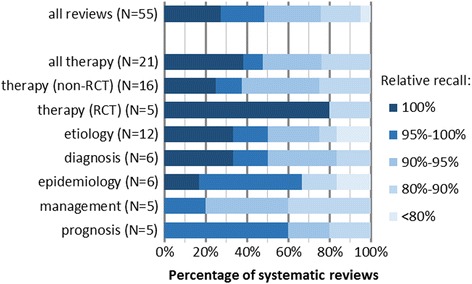
“For all but one domain, the traditional combination of Embase, MEDLINE, and Cochrane CENTRAL did not retrieve enough included references.”
§ Optimal database combinations for literature searches in systematic reviews: a prospective exploratory study > Results > Differences between domains of reviews
plain- Asserted: passes — The authors put it forward as true.
- Checkable: passes — It can be checked against evidence.
- Load-bearing: passes — The paper’s conclusions depend on it.
- Based: passes — The paper gives a reason why it holds.
A result the paper reports from its own data — it cites no other source for it, so there is none to check. The quote shows it is in the paper.
In the paper
“Embase was searched in 61% and Web of Science in 35%, and Google Scholar was only used in 10% of all reviews.”
§ Optimal database combinations for literature searches in systematic reviews: a prospective exploratory study > Results > Status of current practice of database selection
plain- Asserted: passes — The authors put it forward as true.
- Checkable: passes — It can be checked against evidence.
- Load-bearing: unclear — It is unclear whether the paper’s conclusions depend on it.
- Based: passes — The paper gives a reason why it holds.
A result the paper reports from its own data — it cites no other source for it, so there is none to check. The quote shows it is in the paper.
In the paper
“Of the five reviews that included only RCTs, four reached 100% recall if MEDLINE, Web of Science, and Google Scholar combined were complemented with Cochrane CENTRAL.”
§ Optimal database combinations for literature searches in systematic reviews: a prospective exploratory study > Discussion
plainstates a cause- Asserted: passes — The authors put it forward as true.
- Checkable: passes — It can be checked against evidence.
- Load-bearing: passes — The paper’s conclusions depend on it.
- Based: passes — The paper gives a reason why it holds.
A result the paper reports from its own data — it cites no other source for it, so there is none to check. The quote shows it is in the paper.
In the paper
“Based on our findings, this combination achieves acceptable recall about half the time (47%).”
§ Optimal database combinations for literature searches in systematic reviews: a prospective exploratory study > Results > Status of current practice of database selection
plainstates a cause- Asserted: passes — The authors put it forward as true.
- Checkable: passes — It can be checked against evidence.
- Load-bearing: passes — The paper’s conclusions depend on it.
- Based: passes — The paper gives a reason why it holds.
51 more claims
Create a free account to see all 100 claims and every source verdict.
- Probably not a substantial claim. 26
- It may state two separate claims as one. 24
- The quote only partly states this claim. 2
Claims other papers make about this one
Each is checked against this paper’s own text: does it say what the citing paper says it does?
The source backs part of the claim, not all of it — or backs it for a different population, condition or comparison.
In the citing paper
“although deduplication of references is essential to ensure the quality of SRs, there is currently no universal method to do so”
From Reducing systematic review burden using Deduklick: a novel, automated, reliable, and explainable deduplication algorithm to foster medical research (2022) · cites this paper as [5]
Experimental — accuracy not yet measuredThe source backs part of the claim, not all of it — or backs it for a different population, condition or comparison.
In the citing paper
“Although this database is one of the largest academic databases, offers extensive multidisciplinary coverage, and is widely used in bibliometric analyses, relevant publications indexed elsewhere or published in regional and non-indexed outlets may not have been captured [130].”
From Toward Holistic Aging in Lebanon: A Mapping of Gerontology and Geriatrics Research Trends, Gaps, and Future Directions (2026) · cites this paper as [130]
Experimental — accuracy not yet measuredThe source backs part of the claim, not all of it — or backs it for a different population, condition or comparison.
In the citing paper
“Meanwhile, others are highly specialized (e.g., PubMed, Medline, Compendix, etc.), which makes them unsuitable for more inclusive tasks, in particular, for the wide scope analysis and evaluation of multidisciplinary units [42,43].”
From Web of Science (WoS) and Scopus: The Titans of Bibliographic Information in Today’s Academic World (2021) · cites this paper as [43]
Experimental — accuracy not yet measuredThe source backs part of the claim, not all of it — or backs it for a different population, condition or comparison.
In the citing paper
“These databases are widely used in review studies and the majority of them are included in the optimal database combination search19 which guarantee an adequate and efficient coverage of the scientific literature.”
From Occupational therapy interventions for adults with severe mental illness: a scoping review (2021) · cites this paper as [19]
Experimental — accuracy not yet measuredThe cited source says what the claim attributes to it.
In the citing paper
“These differences have led to recommendations that systematic review teams search multiple databases to maximize the likelihood of finding relevant studies [6, 39, 40].”
From PRISMA-S: an extension to the PRISMA Statement for Reporting Literature Searches in Systematic Reviews (2021) · cites this paper as [40]
5 more claims about this paper
Create a free account to see every claim other papers make about this one.
Self-check
Percentages, sums and reported differences re-computed from the paper’s own numbers.
Each contradiction between two passages listed here was confirmed by an independent check.
Rated minor: it would not touch a result — a value no result rests on, a p-value that stays on the same side of the significance level, or a conflict that is clerical, resolved elsewhere in the paper, or outside its own findings.
In the paper
§ Optimal database combinations for literature searches in systematic reviews: a prospective exploratory study > Abstract > Results
“Sixteen percent of the included references (291 articles) were only found in a single database;”
§ Optimal database combinations for literature searches in systematic reviews: a prospective exploratory study > Results > Unique references per database
“A total of 292 (17%) references were found by only one database.”
Citations
Cites
Cochrane Handbook for Systematic Reviews of Interventions Version 5.0.1. The Cochrane Collaboration
Higgins, J. P. T., Green, S. R., & Higgins, J. P. T. (2008) · Cited by 7,171
A systematic approach to searching: an efficient and complete method to develop literature searches
Bramer, W. M., De Jonge, G. B., Rethlefsen, M. L., Mast, F., & Kleijnen, J. (2018) · Journal of the Medical Library Association · doi:10.5195/jmla.2018.283 · Cited by 863
Self-citationComparing two sampling methods to engage hard-to-reach communities in research priority setting
Valerio, M. A., Rodriguez, N., Winkler, P., Lopez, J., Dennison, M., Liang, Y., & Turner, B. J. (2016) · BMC Medical Research Methodology · doi:10.1186/s12874-016-0242-z · Cited by 543
Rethlefsen, M. L., Farrell, A. M., Osterhaus Trzasko, L. C., & Brigham, T. J. (2015) · Journal of Clinical Epidemiology · doi:10.1016/j.jclinepi.2014.11.025 · Cited by 331
Self-citationSystematic reviews need systematic searchers.
(2005) · Europe PMC (PubMed Central) · Cited by 257
Bramer, W. M., Giustini, D., & Kramer, B. M. R. (2016) · Systematic Reviews · doi:10.1186/s13643-016-0215-7 · Cited by 202
Self-citationHalladay, C. W., Trikalinos, T. A., Schmid, I. T., Schmid, C. H., & Dahabreh, I. J. (2015) · Journal of Clinical Epidemiology · doi:10.1016/j.jclinepi.2014.12.017 · Cited by 166 · cited 1×
“Prior research on database importance for systematic reviews has looked primarily at whether included references could have theoretically been found in a certain database, but most have been unable to ascertain whether the researchers actually found the articles in those databases [10, 12, 16, 17, 26].”
BackgroundSearching multiple databases for systematic reviews: added value or diminishing returns?
Stevinson, C., & Lawlor, D. A. (2004) · Complementary Therapies in Medicine · doi:10.1016/j.ctim.2004.09.003 · Cited by 143
Bramer, W. M., Giustini, D., Kramer, B. M., & Anderson, P. (2013) · Systematic Reviews · doi:10.1186/2046-4053-2-115 · Cited by 139 · cited 1×
“Nevertheless others have concluded that a single database is not sufficient to retrieve all references for systematic reviews [18, 19].”
BackgroundSelf-citationSearching one or two databases was insufficient for meta-analysis of observational studies
Lemeshow, A. R., Blum, R. E., Berlin, J. A., Stoto, M. A., & Colditz, G. A. (2005) · Journal of Clinical Epidemiology · doi:10.1016/j.jclinepi.2005.03.004 · Cited by 137
Cited by
Items 601–700 of 2,083
Bañares, J., Pons, M., Reiberger, T., Mandorfer, M., Jachs, M., Semmler, G., Colecchia, A., Colecchia, L., Dajti, E., Bureau, C., et al. (2025) · Journal of Hepatology · doi:10.1016/j.jhep.2025.10.014 · Cited by 27
Integrating case reports into systematic reviews: methodological strategies and challenges
Taha, M. J. J., & Abuawwad, M. T. (2025) · Systematic Reviews · doi:10.1186/s13643-025-02955-4 · Cited by 22
“Here, we propose six databases (PubMed, Scopus, Web of Science, EMBASE, Cochrane, and Google Scholar) [40].”
Nyadanu, S. D., Tessema, G. A., Mullins, B. J., Kumi-Boateng, B., Bell, M. L., & Pereira, G. F. (2020) · International Journal of Environmental Research and Public Health · doi:10.3390/ijerph17228658 · Cited by 16
Occupational Therapy Interventions for Dementia Caregivers: Scoping Review
Martínez-Campos, A., Gabucio, L. M. C., Torres‐Collado, L., & de la Hera, M. G. (2022) · Healthcare · doi:10.3390/healthcare10091764 · Cited by 24
Insurance in the Industry 4.0 environment: A literature review, synthesis, and research agenda
Srivastava, R., Prashar, A., Iyer, S. V., & Gotise, P. (2022) · Australian Journal of Management · doi:10.1177/03128962221132458 · Cited by 23
Tan, K. S. A., Chua, S. K. K., Yeo, E. Y. H., & Razak, H. R. B. A. (2022) · Arthroscopy The Journal of Arthroscopic and Related Surgery · doi:10.1016/j.arthro.2022.10.042 · Cited by 14
Mathew, J., Perez, T. M., Adhia, D. B., Ridder, D. D., & Mani, R. (2022) · Clinical EEG and Neuroscience · doi:10.1177/15500594221138292 · Cited by 19
Effects of oropharyngeal exercises on the swallowing mechanism of older adults: A systematic review
Chua, D. M. N., Choi, Y.-Y., & Chan, K. M. K. (2023) · International Journal of Speech-Language Pathology · doi:10.1080/17549507.2023.2221409 · Cited by 14
A Comparison of Clinical Outcomes of Robot-Assisted and Conventional Laparoscopic Surgery
Chabot, S., Calleja‐Agius, J., & Horeman, T. (2024) · Surgical Techniques Development · doi:10.3390/std13010003 · Cited by 22
“Another study [83] suggests that an optimal search in a systematic review and meta-analysis requires exploring at least four databases instead of the two that we used.”
Crichton, M., Dissanayaka, T. D., Marx, W., Gamage, E., Travica, N., Bowers, A. P., Isenring, E. A., Yates, P. M., & Marshall, S. (2024) · Maturitas · doi:10.1016/j.maturitas.2024.107941 · Cited by 18
Longo, P., Bevione, F., Lacidogna, M. C., Lavalle, R., Daga, G. A., & Preti, A. (2024) · Psychiatry Research · doi:10.1016/j.psychres.2024.116346 · Cited by 21
“…multiple databases is advised, with the Excerpta Medica Database (EMBASE) offering the most unique references, and the use of specialized databases, such as PsycINFO, adding further unique references where the topic of the review is related to the focus of the database (Bramer et al., 2017).”
Peer Mentors and Desistance: A Systematic Literature Review and Synthesis
Brierley, A., Best, D. W., McDermott, D., & Woodfield, R. (2025) · Criminal Justice and Behavior · doi:10.1177/00938548241313387 · Cited by 16
“…excLUsion criteria A scoping search was conducted across the article title, abstract, and subject fields of three databases—Scopus, JSTOR, and Science Direct—and the first 200 Google Scholar articles, as recommended by Bramer et al. (2017), yielding 320 papers, journal articles, and book chapters.”
Apps in der Sekundärprävention nach Schlaganfall
Fruhwirth, V., Enzinger, C., Weiss, E. M., Schwerdtfeger, A. R., Gattringer, T., & Pinter, D. (2019) · Wiener Medizinische Wochenschrift · doi:10.1007/s10354-019-00707-3 · Cited by 14
Blumrich, L., Telles, J. P. M., da Silva, S. A., Iglésio, R., Teixeira, M. J., & Figueiredo, E. G. (2021) · Neurosurgical Review · doi:10.1007/s10143-021-01473-w · Cited by 14
Mordant, G., Dupont, J., Heghe, A. V., Dejaeger, M., Laurent, M. R., & Gielen, E. (2022) · Calcified Tissue International · doi:10.1007/s00223-021-00943-z · Cited by 15
lncRNA deregulation in childhood acute lymphoblastic leukemia: A systematic review
Illarregi, U., Telleria, J., Bilbao‐Aldaiturriaga, N., López-López, E., Ballesteros, J., Martín‐Guerrero, I., & Gutiérrez-Camino, Á. (2022) · International Journal of Oncology · doi:10.3892/ijo.2022.5348 · Cited by 15
Liebermann‐Jordanidis, H., Roheger, M., Boosfeld, L., Franklin, J. G., & Kalbe, E. (2022) · Journal of Parkinson s Disease · doi:10.3233/jpd-223238 · Cited by 16
Considering the team in team formulation: a systematic review
Short, V., Covey, J. A., Webster, L. A. D., Wadman, R., Reilly, J. G., Hay‐Gibson, N. V., & Stain, H. J. (2019) · Mental Health Review Journal · doi:10.1108/mhrj-12-2017-0055 · Cited by 14
Sharma, S., Mahajan, A., Mittal, A., Gohil, R., Sachdeva, S., Khan, S., & Dhillon, M. S. (2020) · Bone · doi:10.1016/j.bone.2020.115507 · Cited by 14
World Health Organization (WHO) COVID-19 Database: Who Needs It?Preprint
Kodvanj, I., Homolak, J., Virag, D., & Trkulja, V. (2020) · Preprints.org · doi:10.20944/preprints202007.0051.v2 · Cited by 13
Aguirre Velasco, A., Silva Santa Cruz, I., Billings, J., Jimenez, M., & Rowe, S. (2025) · Focus · doi:10.1176/appi.focus.25023003 · Cited by 14
Borinuoluwa, R., & Ahmed, Z. (2023) · Trauma Care · doi:10.3390/traumacare3010002 · Cited by 13
Exploring Green Growth in SMEs: Global Trends, Challenges, and Future Directions
Putri, A. N. A., Hermawan, P., Mirzanti, I. R., Meadows, M., & Sadraei, R. (2025) · Foresight-Russia · doi:10.17323/fstig.2025.23708 · Cited by 24
Becerra-Borges, Y. E., Cazón, A., Rodríguez-Ferradas, M. I., Camo, P. M., Etxaniz-Sein, U., Manchado, J. C., & Candal, M. V. (2025) · Rapid Prototyping Journal · doi:10.1108/rpj-10-2024-0444 · Cited by 15
Gutu, B., Mahimbo, A., Percival, N., & Demant, D. (2025) · Perspectives on Sexual and Reproductive Health · doi:10.1111/psrh.70029 · Cited by 29
“We selected these databases based on their relevance to the review topic and the high volume of health-related journals indexed in these databases [58, 59].”
Addressing the Urgent Need for Racial Diversification in Emergency Medicine
Arno, K., Davenport, D., Shah, M., Heinrich, S. A., & Gottlieb, M. A. (2020) · Annals of Emergency Medicine · doi:10.1016/j.annemergmed.2020.06.040 · Cited by 14
Szott, F. A., Westhofen, M., & Hackenberg, S. (2022) · European Archives of Oto-Rhino-Laryngology · doi:10.1007/s00405-022-07580-8 · Cited by 20
Impact of intrawork rest breaks on doctors’ performance and well-being: systematic review
O’Neill, A., Baldwin, D. S., Cortese, S., & Sinclair, J. (2022) · BMJ Open · doi:10.1136/bmjopen-2022-062469 · Cited by 22
Bulloch, G., Seth, I., Alphonse, S., Sathe, A., Jennings, M. D., Sultan, D., Rahmeh, R., & McNab, A. A. (2022) · Ophthalmic Plastic and Reconstructive Surgery · doi:10.1097/iop.0000000000002298 · Cited by 14
Gleadhill, C., Dooley, K., Kamper, S. J., Manvell, N., Corrigan, M., Cashin, A. G., Birchill, N., Donald, B., Leyland, M., Delbridge, A., et al. (2023) · BMJ Open · doi:10.1136/bmjopen-2022-071489 · Cited by 16
Functional Magnetic Resonance Imaging of the Amygdala and Subregions at 3 Tesla: A Scoping Review
Foster, S., Breukelaar, I. A., Ekanayake, K., Lewis, S. J., & Korgaonkar, M. S. (2023) · Journal of Magnetic Resonance Imaging · doi:10.1002/jmri.28836 · Cited by 19
Teo, J. L., Bird, S. R., Wang, X., & Zheng, Z. (2023) · Archives of Gerontology and Geriatrics · doi:10.1016/j.archger.2023.105203 · Cited by 16
Manfredi, C., Ditonno, F., Franco, A., Bologna, E., Licari, L. C., Arcaniolo, D., Tubaro, A., Nunzio, C. D., Antonelli, A., SIO, M. D., et al. (2023) · Current Oncology Reports · doi:10.1007/s11912-023-01470-w · Cited by 13
Cronin, M. M., McLoughlin, K., Foley, T., & McGilloway, S. (2023) · BMC Family Practice · doi:10.1186/s12875-023-02188-1 · Cited by 15
Manfredi, C., Franco, A., Ditonno, F., MATHUR, R., Franco, G., Lombardo, R., Russo, G. I., CILLIS, S. D., Fiori, C., Arcaniolo, D., et al. (2024) · Minerva Urology and Nephrology · doi:10.23736/s2724-6051.23.05552-0 · Cited by 14
Teixeira, A. L. S., Bezerra, O. S., Rohde, L. A., & Graeff‐Martins, A. S. (2024) · Journal of Psychopharmacology · doi:10.1177/02698811241241384 · Cited by 14
Herrmann, K., Beese, F., Wollgast, L., Mauz, E., Kersjes, C., Hoebel, J., & Wachtler, B. (2024) · Frontiers in Public Health · doi:10.3389/fpubh.2024.1397392 · Cited by 18
Calandra, D., Lanzalonga, F., & Biancone, P. (2024) · International Journal of Islamic and Middle Eastern Finance and Management · doi:10.1108/imefm-11-2023-0444 · Cited by 33
The Impact of Clinical Supervision on the Mental Health Nursing Workforce: A Scoping Review
McDonough, J., Rhodes, K., & Procter, N. G. (2024) · International Journal of Mental Health Nursing · doi:10.1111/inm.13463 · Cited by 18
Nordstrand, M. A., Lea, D., & Søreide, J. A. (2025) · Journal of Neuroendocrinology · doi:10.1111/jne.70001 · Cited by 13
“8 A strict search strategy was employed, combining key-words and medical subject headings (MeSH) for gastroenteropancreatic neuroendocrine tumors/neoplasms/carcinomas/carcinoid incidence and population-based studies.”
Breslin, G., Shannon, S., Haughey, T. J., Sarju, N., Neill, D., Leavey, G., & Lawlor, M. P. (2019) · Journal of Applied Sport Psychology · doi:10.1080/10413200.2019.1629547 · Cited by 16
Beecher, T., James, P. M. C., Browne, J. P., Blasi, Z. D., Harding, M., & Whelton, H. P. (2021) · BDJ Open · doi:10.1038/s41405-021-00065-6 · Cited by 14
Learmonth, Y. C., Pilutti, L. A., Herring, M. P., Motl, R. W., Chan, B., & Metse, A. P. (2021) · Systematic Reviews · doi:10.1186/s13643-021-01751-0 · Cited by 14
Thalen, M., Volkers, K. M., van Oorsouw, W. M. W. J., & Embregts, P. J. C. M. (2021) · Journal of Applied Research in Intellectual Disabilities · doi:10.1111/jar.12953 · Cited by 13
Rock the Boat! Shaken by the COVID-19 Crisis: A Review on Teachers’ Competencies in ICT
Montiel, H., & Zermeño, M. G. G. (2022) · Frontiers in Education · doi:10.3389/feduc.2021.770442 · Cited by 23
Suss, R., Mahoney, M., Arslanian, K. J., Nyhan, K., & Hawley, N. L. (2022) · PLoS ONE · doi:10.1371/journal.pone.0262010 · Cited by 13
Guérzoni, S., Baraldi, C., & Pani, L. (2022) · Neurological Sciences · doi:10.1007/s10072-022-06195-5 · Cited by 14
Levay, P., Heath, A., & Tuvey, D. (2022) · Research Synthesis Methods · doi:10.1002/jrsm.1577 · Cited by 14
Risk of skin tears associated with nursing interventions: A systematic review
Cilluffo, S., Bassola, B., Beeckman, D., et al. (2022) · Journal of Tissue Viability · doi:10.1016/j.jtv.2022.11.006 · Cited by 13
HALAL COSMETICS INDUSTRY FOR SUSTAINABLE DEVELOPMENT: A SYSTEMATIC LITERATURE REVIEW
Masood, A., Hati, S. R. H., & Rahim, A. A. (2023) · International Journal of Business and Society · doi:10.33736/ijbs.5609.2023 · Cited by 34
Ensuring the rigor in systematic reviews: Part 3, the value of the search
Batten, J., & Brackett, A. L. (2020) · Heart & Lung · doi:10.1016/j.hrtlng.2020.08.005 · Cited by 20
Liu, H., Topping, A. E., & Guo, P. (2024) · Frontiers in Public Health · doi:10.3389/fpubh.2024.1422134 · Cited by 15
“Five additional studies were found through other methods: two studies were identified through Google Scholar, and three studies by performing citation searching.”
MethodInfluentialJaramillo, G. D., Zuluaga, N. E., & Avellaneda, V. A. V. (2025) · BMC Emergency Medicine · doi:10.1186/s12873-024-01163-y · Cited by 18
“In Google Scholar, 7660 studies were documented, and the first 200 to 250 studies were reviewed following the recommendation of Bramer et al. [9].”
Advances in Biotechnology in the Circular Economy: A Path to the Sustainable Use of Resources
Marques, P. C., Fernandes, P. C. D. B., Sampaio, P., & Silva, J. (2025) · Sustainability · doi:10.3390/su17146391 · Cited by 21
A meta-analysis towards the effectiveness of startup accelerators
Seitz, N., Buratti, M., Lehmann, E. E., & Kurrle, J. (2025) · The Journal of Technology Transfer · doi:10.1007/s10961-025-10218-6 · Cited by 19
The impact of disasters on maternal mental health: a systematic review
Seema, M., Afoakwah, C., Tuzel, E., & Byrnes, J. (2026) · Journal of Global Health · doi:10.7189/jogh.16.04126 · Cited by 15
Özyurt, Ö., Çağıltay, N. E., Özyurt, H., & Akgün, A. (2021) · Journal of Pedagogical Research · doi:10.33902/jpr.2021067651 · Cited by 16
Kutzler, H. L., Lichvar, A. B., Quan, D. J., Bowman, L. J., Diamond, A., Doligalski, C. T., Griffin, T., Melaragno, J. I., Sweiss, H., & Fleming, J. N. (2023) · Pharmacotherapy The Journal of Human Pharmacology and Drug Therapy · doi:10.1002/phar.2808 · Cited by 12
Rudman, J. S., Fritz, C. L., Thomas, S. A., McCartin, M. P., Price, J., Blumen, I. J., & Thomas, S. H. (2023) · Air Medical Journal · doi:10.1016/j.amj.2023.07.003 · Cited by 13
Publication retraction in spine surgery: a systematic review
Levett, J. J., Elkaim, L. M., Alotaibi, N. M., Weber, M. H., Dea, N., & Abd‐El‐Barr, M. M. (2023) · European Spine Journal · doi:10.1007/s00586-023-07927-7 · Cited by 16
Mittly, V., Farkas-Kirov, C., Zana, Á., Szabó, K., Ónodi-Szabó, V., & Purebl, G. (2023) · Systematic Reviews · doi:10.1186/s13643-023-02387-y · Cited by 18
“Based on relevant studies in this field, this combination should cover more than 90% of all relevant references [10, 11].”
BackgroundElectroconvulsive therapy in South Asia: Past, present, and future
Menon, V., Kar, S. K., Gupta, S., Baminiwatta, A., Mustafa, A. B., Sharma, P., Abhijita, B., & Arafat, S. M. Y. (2023) · Asian Journal of Psychiatry · doi:10.1016/j.ajp.2023.103875 · Cited by 13
Abbey, C., Ma, Y., Akhtar, M., Emmers, D., Fairlie, R. W., Fu, N., Johnstone, H. F., Loyalka, P. K., Rozelle, S., Xue, H., et al. (2024) · Computers and Education Open · doi:10.1016/j.caeo.2024.100161 · Cited by 27
Comprehensive evaluation of 45 augmentation drugs for schizophrenia: a network meta-analysis
Etchecopar‐Etchart, D., Yon, D. K., Wojciechowski, P., Aballéa, S., Toumi, M., Boyer, L., & Fond, G. B. (2024) · EClinicalMedicine · doi:10.1016/j.eclinm.2024.102473 · Cited by 15
Effects of Static Meditation Practice on Blood Lipid Levels: A Systematic Review and Meta-Analysis
Antonelli, M., Donelli, D., Gurgoglione, F. L., Lazzeroni, D., Hálasz, G., & Niccoli, G. (2024) · Healthcare · doi:10.3390/healthcare12060655 · Cited by 12
“To attain an optimal methodological combination of scientific databases [35], a systematic screening of PubMed, EMBASE, Web of Science, Cochrane Library, and Google Scholar was conducted to identify pertinent studies.”
He, W., Yang, H.-C., Yang, X., Huang, J., & Wu, Z. (2025) · Human Vaccines & Immunotherapeutics · doi:10.1080/21645515.2024.2445900 · Cited by 11
Zwaan, E., Zipfel, N., Kuijer‐Siebelink, W., Oomens, S. P. C. J., & van der Burg-Vermeulen, S. J. (2025) · Journal of Occupational Rehabilitation · doi:10.1007/s10926-025-10278-3 · Cited by 16
“Instead, it is recommended to combine multiple databases and include the first 200 references from Google Scholar [36, 37].”
Garrett, C., Smith, D. M., & Wittkowski, A. (2025) · Frontiers in Psychiatry · doi:10.3389/fpsyt.2025.1400962 · Cited by 15
“Google Scholar and reference lists of included studies were also searched (34, 35).”
Ioerger, M., Flanders, R. M., Goss, K. D., & Turk, M. A. (2018) · Disability and health journal · doi:10.1016/j.dhjo.2018.11.009 · Cited by 12
Loprinzi, P. D., Ponce, P., Zou, L., & Li, H. (2019) · Brain Sciences · doi:10.3390/brainsci9060145 · Cited by 16
Systematic Review Training Model for Education Librarians: A Case Study
Kogut, A., Ramírez, D., & Foster, M. (2020) · New Review of Academic Librarianship · doi:10.1080/13614533.2020.1784761 · Cited by 13
Vila‐Candel, R., Martínez‐Arnau, F. M., Cámara, J. D. L., Castro‐Sánchez, E., & Pérez‐Ros, P. (2020) · International Journal of Environmental Research and Public Health · doi:10.3390/ijerph17207405 · Cited by 23
A Systematic Review of Drink Specials, Drink Special Laws, and Alcohol-Related Outcomes
Puac‐Polanco, V., Keyes, K. M., Mauro, P. M., & Branas, C. C. (2020) · Current Epidemiology Reports · doi:10.1007/s40471-020-00247-0 · Cited by 12
Naghedi, A., Haghaninejad, H., Varastehravan, H., Naghedi, A., & Farshadi, N. (2021) · Revista Portuguesa de Cardiologia (English Edition) · doi:10.1016/j.repc.2020.10.014 · Cited by 12
Hernandez, J. O., Buot, I. E., & Park, B. B. (2022) · Land · doi:10.3390/land11101645 · Cited by 15
Is career what you make it? A critical review of research on social origin and career success
Andresen, M., & Stapf, J. (2022) · European Management Journal · doi:10.1016/j.emj.2022.12.008 · Cited by 21
Hasanah, I., Nursalam, N., Krisnana, I., Ramdani, W. F., Haikal, Z., & Rohita, T. (2023) · Asian Nursing Research · doi:10.1016/j.anr.2023.07.001 · Cited by 18
Mental fitness in higher education: Intervention Mapping programme design
O’Brien, N., Lawlor, M. P., Chambers, F. C., & O’Brien, W. (2020) · Health Education · doi:10.1108/he-09-2019-0042 · Cited by 14
Journal Club: High-dose methylprednisolone for acute traumatic spinal cord injury
Liu, L. J. W., Rösner, J., & Cragg, J. J. (2020) · Neurology · doi:10.1212/wnl.0000000000009263 · Cited by 12
Is There a Role for Tranexamic Acid in Upper GI Bleeding? A Systematic Review and Meta-Analysis
Burke, E. P., Harkins, P., & Ahmed, I. A. (2021) · Surgery Research and Practice · doi:10.1155/2021/8876991 · Cited by 12
Evaluation and Management of Abdominal Compartment Syndrome in the Emergency Department
Gottlieb, M. A., Koyfman, A., & Long, B. (2019) · Journal of Emergency Medicine · doi:10.1016/j.jemermed.2019.09.046 · Cited by 17
Gottlieb, M. A., Dyer, S., & Peksa, G. D. (2020) · Resuscitation · doi:10.1016/j.resuscitation.2020.02.020 · Cited by 12
Autism diagnosis in children and adolescents: A systematic review and meta-analysis of test accuracy
Fulceri, F., Caruso, A., Micai, M., Gila, L., Tancredi, R., Fatta, L. M., Galati, G., d’Amico, R., Schünemann, H. J., Balduzzi, S., et al. (2025) · Neuroscience & Biobehavioral Reviews · doi:10.1016/j.neubiorev.2025.106164 · Cited by 13
Public Mental Health Approaches to Online Radicalisation: An Empty Systematic Review
Mughal, R., DeMarinis, V., Nordendahl, M., Lone, H., Phillips, V., & Boyd-MacMillan, E. (2023) · International Journal of Environmental Research and Public Health · doi:10.3390/ijerph20166586 · Cited by 21
Gittus, M., O’Cathain, A., Miller, K., Oklopcic, A., Ong, A. C. M., & Fotheringham, J. (2025) · BMC Medicine · doi:10.1186/s12916-025-04194-9 · Cited by 14
“The following databases were searched in line with Bramer et al.: PubMed MEDLINE (including electronic publications ahead of print), EMBASE, Web of Science (Core Collection), Cochrane Library and Google Scholar (the first 200 relevant references) [33].”
Umbrella Reviews: Concepts, Methodological Frameworks, and Step‐by‐Step Implementation
Liu, C., Zhou, D., Xu, W., Pan, H., Wang, X., Peng, J., Ji, X., Huang, J. H., & Zhu, Z. (2025) · Journal of Evidence-Based Medicine · doi:10.1111/jebm.70092 · Cited by 24
Cann, S. M., Corona, B., Han, Q., & Havinga, L. C. (2025) · Journal of Building Engineering · doi:10.1016/j.jobe.2025.114089 · Cited by 17
Significance of including grey literature search in systematic reviews and meta-analyses
Nair, A. S., & Borkar, N. B. (2023) · Saudi Journal of Anaesthesia · doi:10.4103/sja.sja_635_22 · Cited by 15
Temporal trends in equine sperm progressive motility: a systematic review and meta-regression
Harris, I. T., Maddock, C., Farnworth, M. J., Nankervis, K. J., Perrett, J., Pyatt, A. Z., & Blanchard, R. N. (2023) · Reproduction · doi:10.1530/rep-22-0490 · Cited by 14
Optimizing nutrition in pediatric intestinal pseudo‐obstruction syndrome
Pescarin, M., Day, H., Thapar, N., Jackman, L., Saliakellis, E., Lindley, K. J., Nikaki, K., Hill, S. M., Köglmeier, J., Rybak, A., et al. (2023) · Neurogastroenterology & Motility · doi:10.1111/nmo.14562 · Cited by 14
Artificial Intelligence & Smart City Ethics: A Systematic Review
Phillips, C., & Jiao, J. (2023) · IEEE International Symposium on Ethics in Engineering, Science, and Technology (ETHICS) · doi:10.1109/ethics57328.2023.10154961 · Cited by 20
Majid, O. W. (2023) · Evidence-Based Dentistry · doi:10.1038/s41432-023-00938-9 · Cited by 11
van Leeuwen, M. M., Doyle, S., van den Belt‐Dusebout, A. W., van der Mierden, S., Loo, C. E., Mann, R. M., Teuwen, J., & Wesseling, J. (2023) · Insights into Imaging · doi:10.1186/s13244-023-01529-z · Cited by 14
“A comprehensive literature search was performed in Medline via Ovid, Embase.com, and Web of Science Core collection (SCI-expanded, SSCI, A&HCI, ESCI) according to Bramer et al. [51].”
MethodSimpson, A., Filipe, L., Benedetto, V., & Hill, J. E. (2024) · Frontiers in Environmental Health · doi:10.3389/fenvh.2024.1352580 · Cited by 16
“Firstly, while the choice of the databases (Google Scholar and Scopus) to identify suitable studies may re fl ect the generic review question, with only two databases and only fi rst 100 results being used it is possible that important studies were missed resulting in evidence selection bias (11, 12).”
BackgroundManfredi, C., Boeri, L., Sokolakis, I., Schifano, N., Pyrgidis, N., Fernández‐Pascual, E., Sansone, A., García‐Gómez, B., Albersen, M., Corona, G., et al. (2024) · Sexual Medicine · doi:10.1093/sexmed/qfad071 · Cited by 16
“A comprehensive bibliographic search on the MEDLINE, Web of Science, Scopus, and Cochrane Library databases 20 was conducted in February 2023 to identify relevant studies.”
BackgroundJourney towards resiliency: A systematic review and meta-synthesis of cancer patients’ experiences
Khok, X. W., Ng, W. H. D., Lee, A. Y., Yoon, H. J., Devi, M. K., Johnston, B. M., & Ang, W. H. D. (2024) · European Journal of Oncology Nursing · doi:10.1016/j.ejon.2024.102640 · Cited by 14
Ford, K., Duddle, M., Turner, M. R., et al. (2024) · Seminars in Oncology Nursing · doi:10.1016/j.soncn.2024.151673 · Cited by 11
“22 The following search terms were used: (( “ chemotherapy induced peripheral neuropathy ” OR CIPN OR neurotoxic* OR neuropath*) AND (cryotherapy OR ice OR cold therapy OR “ low temperature procedure* ” OR hypothermia OR “ frozen gel* ” OR cryocompression) AND (paclitaxel or taxo* OR antineoplastic…”
BackgroundMethodInfluentialFoodborne Microbiological Hazards in Ghana: A Scoping Review
Ahiabor, W. K., Kotey, F. C. N., Tetteh‐Quarcoo, P. B., & Donkor, E. S. (2024) · Environmental Health Insights · doi:10.1177/11786302241260485 · Cited by 17
van Beurden, K., Vereijken, F. R., Frielink, N., & Embregts, P. J. C. M. (2024) · Journal of Intellectual Disability Research · doi:10.1111/jir.13199 · Cited by 18
“To optimise the search strategy, collaboration terms were integrated within family terms to yield more relevant results (Bramer et al .”
The genesis and prevalence of the HyFlex model: A systematic review and bibliometric analysis
Mahrishi, M., Abbas, A., Siddiqui, M. K., & Aladhadh, S. (2024) · International Journal of Educational Research Open · doi:10.1016/j.ijedro.2024.100410 · Cited by 11
Metadata
- Authors
- Bramer, W. M., Rethlefsen, M. L., Kleijnen, J., & Franco, O. H.
- Affiliations
- Erasmus MC (NL)
- University of Utah (US)
- Maastricht University (NL)
- Corresponding author
- Bramer, Wichor M.
- Venue
- Systematic Reviews
- Published
- 2017-12
- Volume
- 6
- Issue
- 1
- Pages
- 245-245
- ISSN
- 2046-4053 (ISSN-L)
- PMC
- PMC5718002
- OpenAlex
- W2774587119
- Cited by
- 2,114
- References
- 27
- Citations by year
- 2026: 373 · 2025: 411 · 2024: 332 · 2023: 292 · 2022: 252 · 2021: 231 · 2020: 145 · 2019: 64 · 2018: 12 · 2017: 2
- FWCI
- 14.94
- Type
- journal article
- Language
- en
- Open access
- gold
- doi.org
- Licence
- cc-by
- creativecommons.org/licenses/by/4.0/ (tdm)
- creativecommons.org/licenses/by/4.0/ (vor, 5 d)
- Locations
- Systematic Reviews (publishedVersion, cc-by)
- Europe PMC (PubMed Central) (publishedVersion, cc-by)
- PubMed Central (publishedVersion, cc-by)
- PubMed (publishedVersion)
- Research Publications (Maastricht University) (publishedVersion, cc-by)
- EUR Research Repository (Erasmus University Rotterdam) (publishedVersion, other-oa)
- EUR Research Repository (Erasmus University Rotterdam) (submittedVersion, other-oa)
- RePub (Erasmus University Rotterdam) (submittedVersion, other-oa)
- DOAJ (DOAJ: Directory of Open Access Journals) (submittedVersion, cc-by-sa)
- Research Publications (Maastricht University) (submittedVersion, other-oa)
- Funders
- National Center for Advancing Translational Sciences (UL1TR001067)
- Topics
- Social Sciences › Decision Sciences › Statistics, Probability and Uncertainty › Meta-analysis and systematic reviews
- Social Sciences › Library and Information Sciences › scientometrics and bibliometrics research
- Physical Sciences › Computer Science › Information Systems › Information Retrieval and Search Behavior
- Keywords
- literature search strategies, search recall, search precision, database coverage, Embase, MEDLINE, Web of Science, Google Scholar, CINAHL, PsycINFO, number needed to read
- MeSH terms
- Humans, Prospective Studies, Review Literature as Topic, Databases, Bibliographic, Information Storage and Retrieval
About these checks
Registry, retraction, Cites and statistics results are computed, not judged, with one exception: a printed reference that no index lists is read once by a model before it counts as a citation error. Claims are extracted by a model and kept only when their quote appears verbatim in the text; each cited source is then checked, with a model’s help, for whether it says what the claim relies on. Those verdicts can be wrong — read the claim’s quote and the cited source before relying on one.
A language model drew the claims from the paper on 2026-09-29, under version 3 of the claim definition (model deepseek-v4.1-flash, prompt extract-v3).
A second model labelled each claim on 2026-09-29 (model jev-1.13-20260917, definition revision gold-guideline-v0.2).
Statistics and arithmetic are recomputed, not judged.
Confidence bands are shown only for fields calibrated on our annotated test set. None is calibrated yet, so no band is shown.
What counts as a claim ›How we measure confidence ›How we check this ›
Are you an author, or do you see a problem with this page? Request a review
Data sources
Bibliographic data: Semantic Scholar, OpenAlex, Crossref.
Contains information from the Semantic Scholar Academic Graph Datasets, made available under the ODC Attribution License (ODC-BY 1.0).
Semantic Scholar’s data is described in: Kinney, R., et al. (2023). The Semantic Scholar Open Data Platform. arXiv:2301.10140.
