

Optimal database combinations for literature searches in systematic reviews: a prospective exploratory study
Open accessThe DOI matches its Crossref record; 27 of the 27 references it cites were found in a registry or an index; 3 of the 22 sources its claims cite were checked for support.
Abstract
BACKGROUND: Within systematic reviews, when searching for relevant references, it is advisable to use multiple databases. However, searching databases is laborious and time-consuming, as syntax of search strategies are database specific. We aimed to determine the optimal combination of databases needed to conduct efficient searches in systematic reviews and whether the current practice in published reviews is appropriate. While previous studies determined the coverage of databases, we analyzed the actual retrieval from the original searches for systematic reviews. METHODS: Since May 2013, the first author prospectively recorded results from systematic review searches that he performed at his institution. PubMed was used to identify systematic reviews published using our search strategy results. For each published systematic review, we extracted the references of the included studies. Using the prospectively recorded results and the studies included in the publications, we calculated recall, precision, and number needed to read for single databases and databases in combination. We assessed the frequency at which databases and combinations would achieve varying levels of recall (i.e., 95%). For a sample of 200 recently published systematic reviews, we calculated how many had used enough databases to ensure 95% recall. RESULTS: A total of 58 published systematic reviews were included, totaling 1746 relevant references identified by our database searches, while 84 included references had been retrieved by other search methods. Sixteen percent of the included references (291 articles) were only found in a single database; Embase produced the most unique references (n = 132). The combination of Embase, MEDLINE, Web of Science Core Collection, and Google Scholar performed best, achieving an overall recall of 98.3 and 100% recall in 72% of systematic reviews. We estimate that 60% of published systematic reviews do not retrieve 95% of all available relevant references as many fail to search important databases. Other specialized databases, such as CINAHL or PsycINFO, add unique references to some reviews where the topic of the review is related to the focus of the database. CONCLUSIONS: Optimal searches in systematic reviews should search at least Embase, MEDLINE, Web of Science, and Google Scholar as a minimum requirement to guarantee adequate and efficient coverage.
Overview
CoChat Summary
TL;DR
This prospective exploratory study analyzed actual database retrieval for 58 published systematic reviews and found that searching Embase, MEDLINE, Web of Science Core Collection, and Google Scholar together achieved the best recall. The authors estimate that many published systematic reviews fail to retrieve 95% of relevant references because they omit key databases.
Key findings
- Among 1,746 relevant references identified by database searches, 292 (17%) were found by only one database; Embase retrieved the most unique references (n = 132), followed by MEDLINE, Web of Science, and Google Scholar.
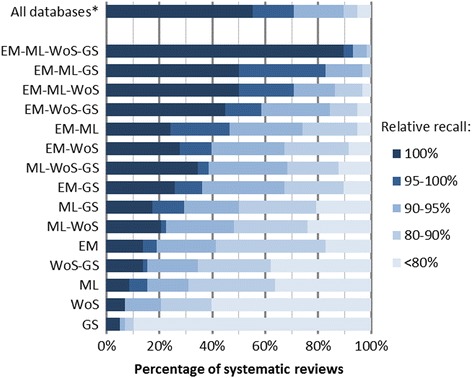
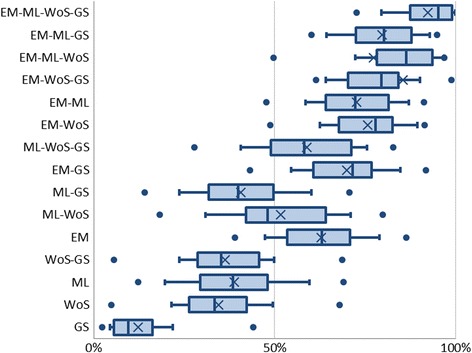
- The combination of Embase, MEDLINE, Web of Science Core Collection, and Google Scholar achieved an overall recall of 98.3% and retrieved all included references in 72% of the studied systematic reviews.
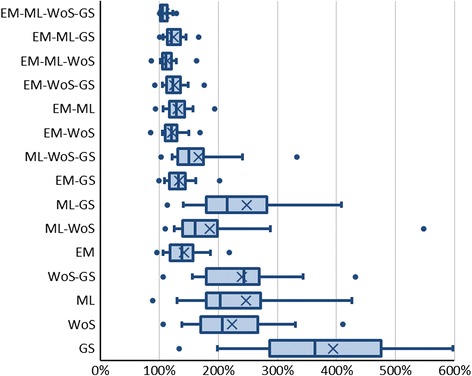
- Searching only Embase produced an average number needed to read (NNR) of 57, whereas the optimal four-database combination had an NNR of 73.
- In a sample of 200 recent systematic reviews, 97% searched MEDLINE, 61% searched Embase, 35% searched Web of Science, and only 10% used Google Scholar; the authors estimate that 60% of published systematic reviews do not retrieve 95% of all available relevant references.
Methods
- Since May 2013, the first author prospectively recorded results from systematic review searches performed at Erasmus MC; PubMed was searched in July 2016 for reviews published since 2014 with Erasmus MC first authors, yielding 58 included reviews.
- Included reviews had documented search strategies and results and had used at least Embase, MEDLINE, Cochrane CENTRAL, Web of Science, and Google Scholar; included references were extracted and located in original EndNote libraries to determine which database retrieved them.
- Recall, precision, and number needed to read were calculated for single databases and combinations in Excel; a separate sample of 200 recent PubMed systematic reviews was analyzed to assess current database selection practice.
Limitations
- The authors state they did not investigate whether missing references changed review conclusions, and because the finding that Web of Science and Google Scholar improve recall is novel, they cannot conclude whether it is due to their dataset or is generalizable.
- The authors note that all searches were performed by one experienced biomedical information specialist, that searcher skill strongly affects search effectiveness, and that their searches still missed some relevant references; they also state that Scopus as a replacement for Embase or Web of Science remains uncertain.
- The text makes evident additional constraints: the study is exploratory, based at a single institution, and relies on a relatively small set of 58 systematic reviews, with specialized databases such as CINAHL and PsycINFO used only when topic-appropriate.
Model-written summary. Check it against the paper before relying on it.
Integrity signals
Registry
Cites
Statistics
Figures

Verification
Claims the paper makes
2 Valid · 1 Not valid · 6 Not checked · 91 Own results and interpretations
A result the paper reports from its own data — it cites no other source for it, so there is none to check. The quote shows it is in the paper.
In the paper
“Using that combination, 93% of the systematic reviews in our study obtained levels of recall that could be considered acceptable (> 95%).”
§ Optimal database combinations for literature searches in systematic reviews: a prospective exploratory study > Discussion
plainstates a cause- Asserted: passes — The authors put it forward as true.
- Checkable: passes — It can be checked against evidence.
- Load-bearing: passes — The paper’s conclusions depend on it.
- Based: passes — The paper gives a reason why it holds.
A result the paper reports from its own data — it cites no other source for it, so there is none to check. The quote shows it is in the paper.
In the paper
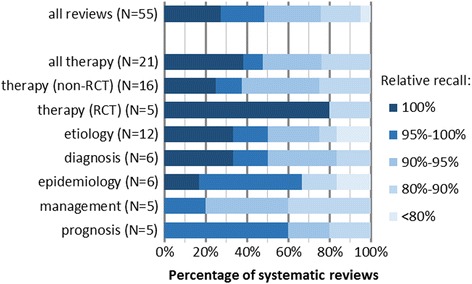
“For all but one domain, the traditional combination of Embase, MEDLINE, and Cochrane CENTRAL did not retrieve enough included references.”
§ Optimal database combinations for literature searches in systematic reviews: a prospective exploratory study > Results > Differences between domains of reviews
plain- Asserted: passes — The authors put it forward as true.
- Checkable: passes — It can be checked against evidence.
- Load-bearing: passes — The paper’s conclusions depend on it.
- Based: passes — The paper gives a reason why it holds.
A result the paper reports from its own data — it cites no other source for it, so there is none to check. The quote shows it is in the paper.
In the paper
“Embase was searched in 61% and Web of Science in 35%, and Google Scholar was only used in 10% of all reviews.”
§ Optimal database combinations for literature searches in systematic reviews: a prospective exploratory study > Results > Status of current practice of database selection
plain- Asserted: passes — The authors put it forward as true.
- Checkable: passes — It can be checked against evidence.
- Load-bearing: unclear — It is unclear whether the paper’s conclusions depend on it.
- Based: passes — The paper gives a reason why it holds.
A result the paper reports from its own data — it cites no other source for it, so there is none to check. The quote shows it is in the paper.
In the paper
“Of the five reviews that included only RCTs, four reached 100% recall if MEDLINE, Web of Science, and Google Scholar combined were complemented with Cochrane CENTRAL.”
§ Optimal database combinations for literature searches in systematic reviews: a prospective exploratory study > Discussion
plainstates a cause- Asserted: passes — The authors put it forward as true.
- Checkable: passes — It can be checked against evidence.
- Load-bearing: passes — The paper’s conclusions depend on it.
- Based: passes — The paper gives a reason why it holds.
A result the paper reports from its own data — it cites no other source for it, so there is none to check. The quote shows it is in the paper.
In the paper
“Based on our findings, this combination achieves acceptable recall about half the time (47%).”
§ Optimal database combinations for literature searches in systematic reviews: a prospective exploratory study > Results > Status of current practice of database selection
plainstates a cause- Asserted: passes — The authors put it forward as true.
- Checkable: passes — It can be checked against evidence.
- Load-bearing: passes — The paper’s conclusions depend on it.
- Based: passes — The paper gives a reason why it holds.
51 more claims
Create a free account to see all 100 claims and every source verdict.
- Probably not a substantial claim. 26
- It may state two separate claims as one. 24
- The quote only partly states this claim. 2
Claims other papers make about this one
Each is checked against this paper’s own text: does it say what the citing paper says it does?
The source backs part of the claim, not all of it — or backs it for a different population, condition or comparison.
In the citing paper
“although deduplication of references is essential to ensure the quality of SRs, there is currently no universal method to do so”
From Reducing systematic review burden using Deduklick: a novel, automated, reliable, and explainable deduplication algorithm to foster medical research (2022) · cites this paper as [5]
Experimental — accuracy not yet measuredThe source backs part of the claim, not all of it — or backs it for a different population, condition or comparison.
In the citing paper
“Although this database is one of the largest academic databases, offers extensive multidisciplinary coverage, and is widely used in bibliometric analyses, relevant publications indexed elsewhere or published in regional and non-indexed outlets may not have been captured [130].”
From Toward Holistic Aging in Lebanon: A Mapping of Gerontology and Geriatrics Research Trends, Gaps, and Future Directions (2026) · cites this paper as [130]
Experimental — accuracy not yet measuredThe source backs part of the claim, not all of it — or backs it for a different population, condition or comparison.
In the citing paper
“Meanwhile, others are highly specialized (e.g., PubMed, Medline, Compendix, etc.), which makes them unsuitable for more inclusive tasks, in particular, for the wide scope analysis and evaluation of multidisciplinary units [42,43].”
From Web of Science (WoS) and Scopus: The Titans of Bibliographic Information in Today’s Academic World (2021) · cites this paper as [43]
Experimental — accuracy not yet measuredThe source backs part of the claim, not all of it — or backs it for a different population, condition or comparison.
In the citing paper
“These databases are widely used in review studies and the majority of them are included in the optimal database combination search19 which guarantee an adequate and efficient coverage of the scientific literature.”
From Occupational therapy interventions for adults with severe mental illness: a scoping review (2021) · cites this paper as [19]
Experimental — accuracy not yet measuredThe cited source says what the claim attributes to it.
In the citing paper
“These differences have led to recommendations that systematic review teams search multiple databases to maximize the likelihood of finding relevant studies [6, 39, 40].”
From PRISMA-S: an extension to the PRISMA Statement for Reporting Literature Searches in Systematic Reviews (2021) · cites this paper as [40]
5 more claims about this paper
Create a free account to see every claim other papers make about this one.
Self-check
Percentages, sums and reported differences re-computed from the paper’s own numbers.
Each contradiction between two passages listed here was confirmed by an independent check.
Rated minor: it would not touch a result — a value no result rests on, a p-value that stays on the same side of the significance level, or a conflict that is clerical, resolved elsewhere in the paper, or outside its own findings.
In the paper
§ Optimal database combinations for literature searches in systematic reviews: a prospective exploratory study > Abstract > Results
“Sixteen percent of the included references (291 articles) were only found in a single database;”
§ Optimal database combinations for literature searches in systematic reviews: a prospective exploratory study > Results > Unique references per database
“A total of 292 (17%) references were found by only one database.”
Citations
Cites
Cochrane Handbook for Systematic Reviews of Interventions Version 5.0.1. The Cochrane Collaboration
Higgins, J. P. T., Green, S. R., & Higgins, J. P. T. (2008) · Cited by 7,171
A systematic approach to searching: an efficient and complete method to develop literature searches
Bramer, W. M., De Jonge, G. B., Rethlefsen, M. L., Mast, F., & Kleijnen, J. (2018) · Journal of the Medical Library Association · doi:10.5195/jmla.2018.283 · Cited by 863
Self-citationComparing two sampling methods to engage hard-to-reach communities in research priority setting
Valerio, M. A., Rodriguez, N., Winkler, P., Lopez, J., Dennison, M., Liang, Y., & Turner, B. J. (2016) · BMC Medical Research Methodology · doi:10.1186/s12874-016-0242-z · Cited by 543
Rethlefsen, M. L., Farrell, A. M., Osterhaus Trzasko, L. C., & Brigham, T. J. (2015) · Journal of Clinical Epidemiology · doi:10.1016/j.jclinepi.2014.11.025 · Cited by 331
Self-citationSystematic reviews need systematic searchers.
(2005) · Europe PMC (PubMed Central) · Cited by 257
Bramer, W. M., Giustini, D., & Kramer, B. M. R. (2016) · Systematic Reviews · doi:10.1186/s13643-016-0215-7 · Cited by 202
Self-citationHalladay, C. W., Trikalinos, T. A., Schmid, I. T., Schmid, C. H., & Dahabreh, I. J. (2015) · Journal of Clinical Epidemiology · doi:10.1016/j.jclinepi.2014.12.017 · Cited by 166 · cited 1×
“Prior research on database importance for systematic reviews has looked primarily at whether included references could have theoretically been found in a certain database, but most have been unable to ascertain whether the researchers actually found the articles in those databases [10, 12, 16, 17, 26].”
BackgroundSearching multiple databases for systematic reviews: added value or diminishing returns?
Stevinson, C., & Lawlor, D. A. (2004) · Complementary Therapies in Medicine · doi:10.1016/j.ctim.2004.09.003 · Cited by 143
Bramer, W. M., Giustini, D., Kramer, B. M., & Anderson, P. (2013) · Systematic Reviews · doi:10.1186/2046-4053-2-115 · Cited by 139 · cited 1×
“Nevertheless others have concluded that a single database is not sufficient to retrieve all references for systematic reviews [18, 19].”
BackgroundSelf-citationSearching one or two databases was insufficient for meta-analysis of observational studies
Lemeshow, A. R., Blum, R. E., Berlin, J. A., Stoto, M. A., & Colditz, G. A. (2005) · Journal of Clinical Epidemiology · doi:10.1016/j.jclinepi.2005.03.004 · Cited by 137
Cited by
Items 301–400 of 2,083
Nieto-Quero, A., Chaves-Peña, P., Santín, L. J., Pérez‐Martín, M., & Pedraza, C. (2021) · Neurobiology of Stress · doi:10.1016/j.ynstr.2021.100356 · Cited by 34
Woulfe, F., Fadahunsi, K. P., Smith, S. D., Chirambo, G. B., Larsson, E. E. C., Henn, P., Mawkin, M., & O’Donoghue, J. (2021) · JMIR mhealth and uhealth · doi:10.2196/28384 · Cited by 33
Association between Daily Pattern of Physical Activity and Depression: A Systematic Review
Gianfredi, V., Ferrara, P., Pennisi, F., Casu, G., Amerio, A., Odone, A., Nucci, D., & Dinu, M. (2022) · International Journal of Environmental Research and Public Health · doi:10.3390/ijerph19116505 · Cited by 34
Oral Health Promotion under the 8020 Campaign in Japan—A Systematic Review
Takehara, S., Karawekpanyawong, R., Okubo, H., Tun, T. Z., Ramadhani, A., Chairunisa, F., Tanaka, A., Wright, C., & Ogawa, H. (2023) · International Journal of Environmental Research and Public Health · doi:10.3390/ijerph20031883 · Cited by 31
Associations between short-chain fatty acid levels and mood disorder symptoms: a systematic review
Bruun, C. F., Hansen, T. H., Vinberg, M., Kessing, L. V., & Coello, K. (2023) · Nutritional Neuroscience · doi:10.1080/1028415x.2023.2277970 · Cited by 35
Moyo, E., Dzinamarira, T., Moyo, P. N., Murewanhema, G., & Ross, A. J. (2024) · Midwifery · doi:10.1016/j.midw.2024.103993 · Cited by 45
Kimber, B., Oxlad, M., & Twyford, L. (2024) · International Journal of Transgender Health · doi:10.1080/26895269.2024.2380903 · Cited by 36
Toval, Á., Bakker, E. A., Granada-Maia, J. B., de Arenas‐Arroyo, S. N., Solis‐Urra, P., Eijsvogels, T. M. H., Esteban‐Cornejo, I., Martínez‐Vizcaíno, V., & Ortega, F. B. (2025) · European Heart Journal · doi:10.1093/eurheartj/ehae870 · Cited by 38
“33 The search strategy was developed among several researchers (A.T., E.A.B., J.B.G.-M., F.B.O., P.S.-U., and I.E.-C.) and optimized for different search engines using the Polyglot Search Translator tool from SR-Accelerator website (https://sr-accelerator.com/).”
Scientific response to intensifying bark beetle outbreaks in Europe and North America
Hlásny, T., Zimová, S., & Bentz, B. (2021) · Forest Ecology and Management · doi:10.1016/j.foreco.2021.119599 · Cited by 35
Francisco, H., Marques, D. N. D. S., Pinto, A. C., Aiquel, L. L., & Caramês, J. (2021) · Clinical Oral Implants Research · doi:10.1111/clr.13811 · Cited by 31
Urban Agriculture Education and Youth Civic Engagement in the U.S.: A Scoping Review
Russ, A., & Gaus, M. B. (2021) · Frontiers in Sustainable Food Systems · doi:10.3389/fsufs.2021.707896 · Cited by 45
Computerized migraine diagnostic tools: a systematic review
Woldeamanuel, Y. W., & Cowan, R. P. (2022) · Therapeutic Advances in Chronic Disease · doi:10.1177/20406223211065235 · Cited by 35
Kang, H., Miksche, M. S., & Ellingsen, D. (2022) · Pain · doi:10.1097/j.pain.0000000000002753 · Cited by 38
Oppegaard, K. R., Armstrong, T. S., Anguera, J. A., Kober, K. M., Kelly, D. L., Laister, R. C., Saligan, L. N., Ayala, A. P., Kuruvilla, J. G., Alm, M., et al. (2022) · Critical Reviews in Oncology/Hematology · doi:10.1016/j.critrevonc.2022.103822 · Cited by 32
The impostor phenomenon in post‐secondary students: A review of the literature
Ménard, A. D., & Chittle, L. (2023) · Review of Education · doi:10.1002/rev3.3399 · Cited by 29
Shigella and childhood stunting: Evidence, gaps, and future research directions
Bagamian, K. H., Anderson, J. D., IV, Blohm, G. M., & Scheele, S. K. (2023) · PLoS neglected tropical diseases · doi:10.1371/journal.pntd.0011475 · Cited by 41
The effects of exercise on insomnia disorders: An umbrella review and network meta-analysis
Tian, C., Wei, Y., Xu, M., Liu, J., Tong, B., Ning, J., Wang, Y., Wang, Y., Estill, J. A. M., & Ge, L. (2024) · Sleep Medicine · doi:10.1016/j.sleep.2024.02.002 · Cited by 38
Integrating Design for Manufacture and Assembly (DfMA) with BIM for infrastructure
Widanage, C., & Kim, K. P. (2024) · Automation in Construction · doi:10.1016/j.autcon.2024.105705 · Cited by 28
Oncologic Emergencies: Palliative Care in the Emergency Department Setting
Long, D., Koyfman, A., & Long, B. (2020) · Journal of Emergency Medicine · doi:10.1016/j.jemermed.2020.09.027 · Cited by 28
Trends and opportunities in research on disability and work: An interdisciplinary perspective
Jurado-Caraballo, M. Á., García, C. Q., & Rodríguez-Fernández, M. (2020) · BRQ Business Research Quarterly · doi:10.1177/2340944420972715 · Cited by 45
Pranata, R., Huang, I., Lawrensia, S., Henrina, J., Lim, M. A., Lukito, A. A., Kuswardhani, R. A. T., & Wibawa, I. D. N. (2021) · Pharmacological Reports · doi:10.1007/s43440-021-00263-x · Cited by 29
Bui, H. T., & Filimonau, V. (2021) · International Journal of Contemporary Hospitality Management · doi:10.1108/ijchm-03-2021-0330 · Cited by 28
Venning, A., Oswald, T. K., Stevenson, J., Tepper, N., Azadi, L., Lawn, S., & Redpath, P. (2021) · BMC Public Health · doi:10.1186/s12889-021-11898-z · Cited by 39
Carvalho, A. S., Fernandes, Ó. B., de Lange, M., Lingsma, H. F., Klazinga, N., & Kringos, D. S. (2022) · BMC Health Services Research · doi:10.1186/s12913-022-08166-0 · Cited by 30
Basil, J. H., Premakumar, C. M., Ali, A. M., Tahir, N. A. M., & Shah, N. M. (2022) · Drug Safety · doi:10.1007/s40264-022-01236-6 · Cited by 38
Emergency medical services and palliative care: a scoping review
Gage, C. H., Stander, C., Gwyther, L., & Stassen, W. (2023) · BMJ Open · doi:10.1136/bmjopen-2022-071116 · Cited by 33
Chang, O., Holbrook, A. M., Lohit, S., Deng, J., Xu, J., Lee, M., & Cheng, A. (2023) · Evaluation & the Health Professions · doi:10.1177/01632787231165797 · Cited by 28
Barrington, M. J., D'Souza, R. S., Mascha, E. J., Narouze, S., & Kelley, G. A. (2023) · Regional Anesthesia & Pain Medicine · doi:10.1136/rapm-2023-104801 · Cited by 41
Searching for and selecting studies
Spijker, R., Dinnes, J., Glanville, J., & Eisinga, A. (2023) · Wiley eBooks · doi:10.1002/9781119756194.ch6 · Cited by 34
Ayre, M. J., Lewis, P. J., & Keers, R. N. (2023) · BMC Psychiatry · doi:10.1186/s12888-023-04850-5 · Cited by 38
Violence against nurses by patients and visitors in the emergency department: An integrative review
Hou, Y., Corbally, M., & Timmins, F. (2023) · Journal of Advanced Nursing · doi:10.1111/jan.15837 · Cited by 35
Diet quality and depression risk: A systematic review and meta-analysis of prospective studies
Molero, P., Lorenzi, F. D., Gędek, A., Strater, C., Popescu, E., Ortuño, F., van der Does, W. A. J., Martínez‐González, M. Á., & Molendijk, M. L. (2025) · Journal of Affective Disorders · doi:10.1016/j.jad.2025.03.162 · Cited by 36
Guazzini, A., Valdrighi, G., Fiorenza, M. M., & Duradoni, M. (2025) · Sustainability · doi:10.3390/su17083686 · Cited by 60
Mahrishi, M., Ramakrishna, S., Hosseini, S., et al. (2025) · Discover Sustainability · doi:10.1007/s43621-025-01496-z · Cited by 27
“Sco-pus is a bibliographic database operated by Elsevier, whereas Web of Science is a bibliographic database maintained by Clarivate Analytics [19].”
Wahyudi, I., Suroso, A. I., Arifin, B., et al. (2021) · Economies · doi:10.3390/economies9040156 · Cited by 27
Lee, S., Patel, P., Myers, N. D., Pfeiffer, K. A., Smith, A. L., & Kelly, K. S. (2022) · Behavioral Medicine · doi:10.1080/08964289.2022.2065239 · Cited by 32
Grimaldi, S., Guye, M., Bianciardi, M., & Eusébio, A. (2023) · Brain Sciences · doi:10.3390/brainsci13101398 · Cited by 31
The effect of brain metastasis location on clinical outcomes: A review of the literature
Kancharla, P., Ivanov, A., Chan, S., Ashamalla, H. L., Huang, R. Y., & Yanagihara, T. K. (2019) · Neuro-Oncology Advances · doi:10.1093/noajnl/vdz017 · Cited by 27
Machine Learning and Traditional Econometric Models: A Systematic Mapping Study
Pérez-Pons, M. E., Parra-Domínguez, J., Omatu, S., Herrera‐Viedma, E., & Corchado, J. M. (2021) · Journal of Artificial Intelligence and Soft Computing Research · doi:10.2478/jaiscr-2022-0006 · Cited by 42
Bromelain supplementation and inflammatory markers: A systematic review of clinical trials
Pereira, I. C., Vieira, E. E. S., Torres, L. R. D. O., da Silva, F. C. C., Sousa, J. M. D. C. E., & Torres‐Leal, F. L. (2023) · Clinical Nutrition ESPEN · doi:10.1016/j.clnesp.2023.02.028 · Cited by 34
The Relationship Between Attachment to Pets and Mental Health and Wellbeing: A Systematic Review
Northrope, K., Shnookal, J., Ruby, M. B., & Howell, T. J. (2025) · Animals · doi:10.3390/ani15081143 · Cited by 42
“For Google Scholar, we reviewed the titles of the first 200 articles, as recommended in previous research [46,47].”
An emergency medicine-focused review of malignant otitis externa
Long, D., Koyfman, A., & Long, B. (2020) · The American Journal of Emergency Medicine · doi:10.1016/j.ajem.2020.04.083 · Cited by 31
Developing systematic search methods for the library literature: Methods and analysis
Stapleton, J. E., Carter, C., & Bredahl, L. (2020) · The Journal of Academic Librarianship · doi:10.1016/j.acalib.2020.102190 · Cited by 41
Justesen, T. F., Freyberg, J., & Schultz, A. N. Ø. (2021) · BMC Medical Research Methodology · doi:10.1186/s12874-021-01281-2 · Cited by 41
Dimova, E. D., & Mitchell, D. (2021) · Drugs Education Prevention and Policy · doi:10.1080/09687637.2021.1932754 · Cited by 33
Hydrodissection for Carpal Tunnel Syndrome
Neo, E. J. R., Shan, N. T., & Tay, S. S. (2021) · American Journal of Physical Medicine & Rehabilitation · doi:10.1097/phm.0000000000001846 · Cited by 26
Jones, K., Schnitzler, K., & Borgstrom, E. (2022) · Health & Social Care in the Community · doi:10.1111/hsc.13969 · Cited by 35
Gamification of warehousing: exploring perspectives of warehouse managers in the UK
Bahr, W., Mavrogenis, V., & Sweeney, E. (2021) · International Journal of Logistics Research and Applications · doi:10.1080/13675567.2021.1892042 · Cited by 34
The simulation design in health and nursing: A scoping review
Silva, G. O., Fonseca, L. M. M., Siqueira, K. M., de Góes, F. D. S. N., Ribeiro, L. M., & Aredes, N. D. (2022) · Nursing Open · doi:10.1002/nop2.1466 · Cited by 35
Review of treatment options for a multidrug-resistant fungus: Candida auris
Wang, S., Pan, J., Gu, L., Wang, W., Wei, B., Zhang, H., Chen, J., & Wang, H. (2023) · Medical Mycology · doi:10.1093/mmy/myad127 · Cited by 35
Kraft, R., Reichert, M., & Pryss, R. C. (2024) · Sensors · doi:10.3390/s24020472 · Cited by 28
“These databases provided sufficient coverage in our research area [22].”
BackgroundIngram, L. A., Tomkinson, G. R., d’Unienville, N. M. A., Gower, B., Gleadhill, S., Boyle, T., & Bennett, H. (2024) · Sports Medicine · doi:10.1007/s40279-024-02143-9 · Cited by 42
Arthur, M., Afari, E. L., Alexa, E. A., Zhu, M. J., Gaffney, M. T., Frías, J. M., & Burgess, C. M. (2024) · Comprehensive Reviews in Food Science and Food Safety · doi:10.1111/1541-4337.70083 · Cited by 35
Antibiotic duration for common bacterial infections—a systematic review
Mo, Y., Tan, W. C., & Cooper, B. S. (2024) · JAC-Antimicrobial Resistance · doi:10.1093/jacamr/dlae215 · Cited by 41
Machine Learning Approaches for FDM-Based 3D Printing: A Literature Review
Aktepe, E., & Ergün, U. (2025) · Applied Sciences · doi:10.3390/app151810001 · Cited by 36
Thamminaina, A., Kanungo, P., & Mohanty, S. (2020) · Children and Youth Services Review · doi:10.1016/j.childyouth.2020.105350 · Cited by 35
A scoping review of measures used to assess body image in women with breast cancer
Brunet, J., & Price, J. (2021) · Psycho-Oncology · doi:10.1002/pon.5619 · Cited by 26
Mgawadere, F., & Shuaibu, U. (2021) · International Journal of Clinical Medicine · doi:10.4236/ijcm.2021.125021 · Cited by 37
Social entrepreneurship organisations and collaboration: taking stock and looking forward
Kosmynin, M. (2021) · International Journal of Entrepreneurial Behaviour & Research · doi:10.1108/ijebr-02-2021-0144 · Cited by 35
Olayode, I. O., Severino, A. G., Campisi, T., & Tartibu, L. K. (2022) · Sustainability · doi:10.3390/su14159586 · Cited by 31
Experience of loneliness on well-being among young individuals: A systematic scoping review
Adib, N. A. B. M., & Sabharwal, J. K. (2023) · Current Psychology · doi:10.1007/s12144-023-04445-z · Cited by 42
Lanzone, J., Motolese, F., Ricci, L., Tecchio, F., Tombini, M., Zappasodi, F., Cruciani, A., Capone, F., Lazzaro, V. D., & Assenza, G. (2023) · Neurological Sciences · doi:10.1007/s10072-023-06981-9 · Cited by 30
Lagisz, M., Yang, Y., Young, S., & Nakagawa, S. (2025) · Research Synthesis Methods · doi:10.1017/rsm.2024.6 · Cited by 24
Family Factors Associated with Problematic Use of the Internet in Children: A Scoping Review
Nannatt, A., Tariang, N. M., Gowda, M., & Devassy, S. M. (2022) · Indian Journal of Psychological Medicine · doi:10.1177/02537176221090862 · Cited by 35
Complexity in the context of palliative care: a systematic review
Ohinata, H., Aoyama, M., & Miyashita, M. (2022) · Annals of Palliative Medicine · doi:10.21037/apm-22-623 · Cited by 24
Zinc Status and Autism Spectrum Disorder in Children and Adolescents: A Systematic Review
do Nascimento, P. K. D. S. B., Silva, D. F. O., de Morais, T. L. S. A., & de Rezende, A. A. (2023) · Nutrients · doi:10.3390/nu15163663 · Cited by 34
Mercurio, M., Gasparini, G., Galasso, O., et al. (2023) · Archives of Orthopaedic and Trauma Surgery · doi:10.1007/s00402-023-05088-2 · Cited by 24
Carroll, S. C., Castellanos, M. E., Stevenson, R., & Henning, L. (2024) · Journal of Travel Medicine · doi:10.1093/jtm/taae008 · Cited by 32
“21,22 The search was repeated independently by a second researcher one day later (Table S3, available as Supplementary data at JTM online).”
Effectiveness of workplace health promotion programs for industrial workers: a systematic review
Javanmardi, S., Rappelt, L., Zangenberg, S., Heinke, L. N., Baumgart, C., Niederer, D., & Freiwald, J. (2025) · BMC Public Health · doi:10.1186/s12889-025-21365-8 · Cited by 47
“An electronic literature search was conducted using the following recommended databases: PubMed, Cochrane Library, Web of Science, Scopus, EMBASE(assessed via Cochrane), CINAHL (assessed via Cochrane), and EBSCOHost [32, 33].”
Edwards, A. W., Brockway, P. E., Bickerstaff, K., & Nijsse, F. J. M. M. (2025) · Environmental Research Letters · doi:10.1088/1748-9326/adc9c6 · Cited by 34
Antimicrobial & antiparasitic use and resistance in British sheep and cattle: a systematic review
Hennessey, M., Whatford, L., Payne-Gifford, S., Johnson, K. F., Winden, S. C. L. V., Barling, D. M., & Häsler, B. (2020) · Preventive Veterinary Medicine · doi:10.1016/j.prevetmed.2020.105174 · Cited by 28
MacIntosh, H. B., & Ménard, A. D. (2021) · Journal of Child Sexual Abuse · doi:10.1080/10538712.2020.1847227 · Cited by 37
System Dynamics for Sustainable Transportation Policies: A Systematic Literature Review
Fontoura, W. B., & Ribeiro, G. M. (2021) · urbe Revista Brasileira de Gestão Urbana · doi:10.1590/2175-3369.013.e20200259 · Cited by 31
Can intranasal oxytocin reduce craving in automated addictive behaviours? A systematic review
Houghton, B., Kouimtsidis, C., Duka, T., Paloyelis, Y., & Bailey, A. (2021) · British Journal of Pharmacology · doi:10.1111/bph.15617 · Cited by 29
Verhülsdonk, I., Shahab, M. K., & Molendijk, M. L. (2021) · BJPsych Open · doi:10.1192/bjo.2021.1026 · Cited by 31
A Practical Guide to Perform a Systematic Literature Review and Meta-analysis
Ortíz, A. F. H., Camacho, E. C., Rojas, J. D. C., Cadavid, T., Guevara, S. Z., Cuenca, N. T. R., Perdomo, A. F. V., Herazo, V. D. C., & Malo, R. G. (2021) · Principles and Practice of Clinical Research Journal · doi:10.21801/ppcrj.2021.74.6 · Cited by 34
Gottlieb, M. A., Patel, D., Marks, A., & Peksa, G. D. (2022) · Academic Emergency Medicine · doi:10.1111/acem.14454 · Cited by 34
Mutala, T. M., Mwango, G. N., Aywak, A. A., Cioni, D., & Neri, E. (2022) · Cancer Imaging · doi:10.1186/s40644-022-00447-5 · Cited by 29
White, K. C., Kinarivala, M., & Scott, I. A. (2022) · BMJ Open · doi:10.1136/bmjopen-2021-055755 · Cited by 25
Wibowo, M. I. N. A., Yasin, N. M., Kristina, S. A., & Prabandari, Y. S. (2022) · Dove Medical Press (Taylor and Francis Group) · Cited by 24
Makrides, T., Ross, L., Gosling, C. M., Acker, J. J., & O'Meara, P. F. (2021) · International Journal of Emergency Services · doi:10.1108/ijes-05-2021-0025 · Cited by 24
Busili, A., Kumar, K., Kudrna, L., & Busaily, I. (2024) · Heliyon · doi:10.1016/j.heliyon.2024.e28782 · Cited by 37
“To achieve optimal searching in the review [45], five electronic bibliographic databases were used: Medline via PubMed, Web of Science, EMBASE, CINHAL, and PsycINFO from inception to November 17, 2022 to identify systematic reviews with and without meta-analyses examining associations of factors…”
MethodImaduddin, M., & Eilks, I. (2024) · Sustainable Chemistry and Pharmacy · doi:10.1016/j.scp.2024.101833 · Cited by 53
Vermeulen, R. J., Andersson, V., Banken, J., Hannink, G., Govers, T. M., Rovers, M. M., & Rikkert, M. O. (2025) · Alzheimer s & Dementia · doi:10.1002/alz.70069 · Cited by 29
Kleinhout‐Vliek, T., de Bont, A., & Boer, B. (2017) · Health Policy · doi:10.1016/j.healthpol.2017.04.011 · Cited by 25
Evaluation and management of the critically ill adult asthmatic in the emergency department setting
Long, B., Lentz, S. A., Koyfman, A., & Gottlieb, M. A. (2020) · The American Journal of Emergency Medicine · doi:10.1016/j.ajem.2020.03.029 · Cited by 24
The Association Between Shift Work And Affective Disorders: A Systematic Review
D’Oliveira, T. C., & Anagnostopoulos, A. (2020) · Chronobiology International · doi:10.1080/07420528.2020.1838533 · Cited by 31
Gomes, S. M., Jacob, M. C., Rocha, C., Medeiros, M. F., Lyra, C. D. O., & Noro, L. R. (2021) · Public Health Nutrition · doi:10.1017/s1368980021001671 · Cited by 29
Palliative and End-of-Life Care Service Models: To What Extent Are Consumer Perspectives Considered?
Rumbold, B. D., & Aoun, S. M. (2021) · Healthcare · doi:10.3390/healthcare9101286 · Cited by 32
Neal, K., McMahon, C. M., Hughes, S., & Boisvert, I. (2022) · Frontiers in Psychology · doi:10.3389/fpsyg.2022.786347 · Cited by 31
El estigma de la obesidad y su impacto en la salud: una revisión narrativa
Sánchez‐Carracedo, D. (2022) · Endocrinología Diabetes y Nutrición · doi:10.1016/j.endinu.2021.12.002 · Cited by 60
Crichton, M., Yates, P. M., Agbejule, O. A., Spooner, A. J., Chan, R. J., & Hart, N. H. (2022) · Nutrients · doi:10.3390/nu14122403 · Cited by 34
Giles, G., Lutton, G., & Martin, J. R. (2022) · Journal of Functional Morphology and Kinesiology · doi:10.3390/jfmk7040114 · Cited by 36
Philip, A. M., Venkatesan, S. P., & Mustafee, N. (2022) · SIMULATION · doi:10.1177/00375497221139282 · Cited by 25
Behavioral strategy: A systematic literature review and research framework
Hesselbarth, I., Alnoor, A., & Tiberius, V. (2023) · Management Decision · doi:10.1108/md-09-2021-1274 · Cited by 31
Eyzaguirre, I. A. L., Iwama, A. Y., & Fernandes, M. E. B. (2023) · Environmental Development · doi:10.1016/j.envdev.2023.100895 · Cited by 35
Bakouni, H., Sharafi, H., Bahremand, A., Drouin, S., Ziegler, D., Bach, P., Foll, B. L., Schütz, C. G., Tardelli, V. S., Ezard, N., et al. (2023) · Drug and Alcohol Dependence · doi:10.1016/j.drugalcdep.2023.111018 · Cited by 26
Current evidence of the economic value of One Health initiatives: A systematic literature review
Auplish, A., Raj, E., Booijink, Y., Balogh, K. D., Peyre, M., Taylor, K., Sumption, K. J., & Häsler, B. (2024) · One Health · doi:10.1016/j.onehlt.2024.100755 · Cited by 34
“Google Scholar was not used as part of the search strategy due to limitations in creating a thorough search strategy (its inability to utilise truncation, parentheses etc. compared to bibliographic databases) [94].”
MethodOverview authors rarely defined systematic reviews that are included in their overviews
Faggion, C. M., & Diaz, K. T. (2019) · Journal of Clinical Epidemiology · doi:10.1016/j.jclinepi.2019.01.004 · Cited by 24
Meta-Analysis Steps and Reporting
AŞIK, Z., & Özen, M. (2019) · Turkish Journal of Family Medicine & Primary Care · doi:10.21763/tjfmpc.569924 · Cited by 34
Metadata
- Authors
- Bramer, W. M., Rethlefsen, M. L., Kleijnen, J., & Franco, O. H.
- Affiliations
- Erasmus MC (NL)
- University of Utah (US)
- Maastricht University (NL)
- Corresponding author
- Bramer, Wichor M.
- Venue
- Systematic Reviews
- Published
- 2017-12
- Volume
- 6
- Issue
- 1
- Pages
- 245-245
- ISSN
- 2046-4053 (ISSN-L)
- PMC
- PMC5718002
- OpenAlex
- W2774587119
- Cited by
- 2,114
- References
- 27
- Citations by year
- 2026: 373 · 2025: 411 · 2024: 332 · 2023: 292 · 2022: 252 · 2021: 231 · 2020: 145 · 2019: 64 · 2018: 12 · 2017: 2
- FWCI
- 14.94
- Type
- journal article
- Language
- en
- Open access
- gold
- doi.org
- Licence
- cc-by
- creativecommons.org/licenses/by/4.0/ (tdm)
- creativecommons.org/licenses/by/4.0/ (vor, 5 d)
- Locations
- Systematic Reviews (publishedVersion, cc-by)
- Europe PMC (PubMed Central) (publishedVersion, cc-by)
- PubMed Central (publishedVersion, cc-by)
- PubMed (publishedVersion)
- Research Publications (Maastricht University) (publishedVersion, cc-by)
- EUR Research Repository (Erasmus University Rotterdam) (publishedVersion, other-oa)
- EUR Research Repository (Erasmus University Rotterdam) (submittedVersion, other-oa)
- RePub (Erasmus University Rotterdam) (submittedVersion, other-oa)
- DOAJ (DOAJ: Directory of Open Access Journals) (submittedVersion, cc-by-sa)
- Research Publications (Maastricht University) (submittedVersion, other-oa)
- Funders
- National Center for Advancing Translational Sciences (UL1TR001067)
- Topics
- Social Sciences › Decision Sciences › Statistics, Probability and Uncertainty › Meta-analysis and systematic reviews
- Social Sciences › Library and Information Sciences › scientometrics and bibliometrics research
- Physical Sciences › Computer Science › Information Systems › Information Retrieval and Search Behavior
- Keywords
- literature search strategies, search recall, search precision, database coverage, Embase, MEDLINE, Web of Science, Google Scholar, CINAHL, PsycINFO, number needed to read
- MeSH terms
- Humans, Prospective Studies, Review Literature as Topic, Databases, Bibliographic, Information Storage and Retrieval
About these checks
Registry, retraction, Cites and statistics results are computed, not judged, with one exception: a printed reference that no index lists is read once by a model before it counts as a citation error. Claims are extracted by a model and kept only when their quote appears verbatim in the text; each cited source is then checked, with a model’s help, for whether it says what the claim relies on. Those verdicts can be wrong — read the claim’s quote and the cited source before relying on one.
A language model drew the claims from the paper on 2026-09-29, under version 3 of the claim definition (model deepseek-v4.1-flash, prompt extract-v3).
A second model labelled each claim on 2026-09-29 (model jev-1.13-20260917, definition revision gold-guideline-v0.2).
Statistics and arithmetic are recomputed, not judged.
Confidence bands are shown only for fields calibrated on our annotated test set. None is calibrated yet, so no band is shown.
What counts as a claim ›How we measure confidence ›How we check this ›
Are you an author, or do you see a problem with this page? Request a review
Data sources
Bibliographic data: Semantic Scholar, OpenAlex, Crossref.
Contains information from the Semantic Scholar Academic Graph Datasets, made available under the ODC Attribution License (ODC-BY 1.0).
Semantic Scholar’s data is described in: Kinney, R., et al. (2023). The Semantic Scholar Open Data Platform. arXiv:2301.10140.
