

Optimal database combinations for literature searches in systematic reviews: a prospective exploratory study
Open accessThe DOI matches its Crossref record; 27 of the 27 references it cites were found in a registry or an index; 3 of the 22 sources its claims cite were checked for support.
Abstract
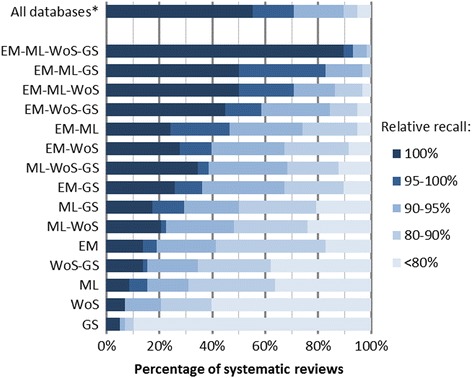
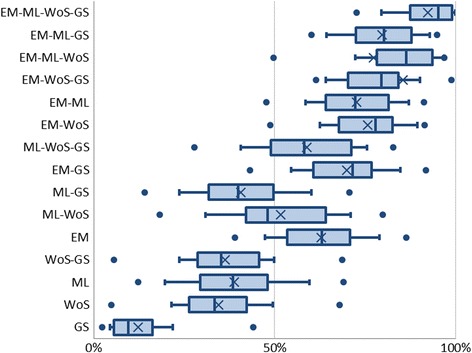
BACKGROUND: Within systematic reviews, when searching for relevant references, it is advisable to use multiple databases. However, searching databases is laborious and time-consuming, as syntax of search strategies are database specific. We aimed to determine the optimal combination of databases needed to conduct efficient searches in systematic reviews and whether the current practice in published reviews is appropriate. While previous studies determined the coverage of databases, we analyzed the actual retrieval from the original searches for systematic reviews. METHODS: Since May 2013, the first author prospectively recorded results from systematic review searches that he performed at his institution. PubMed was used to identify systematic reviews published using our search strategy results. For each published systematic review, we extracted the references of the included studies. Using the prospectively recorded results and the studies included in the publications, we calculated recall, precision, and number needed to read for single databases and databases in combination. We assessed the frequency at which databases and combinations would achieve varying levels of recall (i.e., 95%). For a sample of 200 recently published systematic reviews, we calculated how many had used enough databases to ensure 95% recall. RESULTS: A total of 58 published systematic reviews were included, totaling 1746 relevant references identified by our database searches, while 84 included references had been retrieved by other search methods. Sixteen percent of the included references (291 articles) were only found in a single database; Embase produced the most unique references (n = 132). The combination of Embase, MEDLINE, Web of Science Core Collection, and Google Scholar performed best, achieving an overall recall of 98.3 and 100% recall in 72% of systematic reviews. We estimate that 60% of published systematic reviews do not retrieve 95% of all available relevant references as many fail to search important databases. Other specialized databases, such as CINAHL or PsycINFO, add unique references to some reviews where the topic of the review is related to the focus of the database. CONCLUSIONS: Optimal searches in systematic reviews should search at least Embase, MEDLINE, Web of Science, and Google Scholar as a minimum requirement to guarantee adequate and efficient coverage.
Overview
CoChat Summary
TL;DR
This prospective exploratory study analyzed actual database retrieval for 58 published systematic reviews and found that searching Embase, MEDLINE, Web of Science Core Collection, and Google Scholar together achieved the best recall. The authors estimate that many published systematic reviews fail to retrieve 95% of relevant references because they omit key databases.
Key findings
- Among 1,746 relevant references identified by database searches, 292 (17%) were found by only one database; Embase retrieved the most unique references (n = 132), followed by MEDLINE, Web of Science, and Google Scholar.
- The combination of Embase, MEDLINE, Web of Science Core Collection, and Google Scholar achieved an overall recall of 98.3% and retrieved all included references in 72% of the studied systematic reviews.
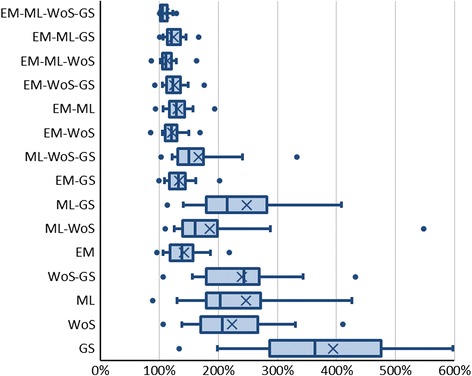
- Searching only Embase produced an average number needed to read (NNR) of 57, whereas the optimal four-database combination had an NNR of 73.
- In a sample of 200 recent systematic reviews, 97% searched MEDLINE, 61% searched Embase, 35% searched Web of Science, and only 10% used Google Scholar; the authors estimate that 60% of published systematic reviews do not retrieve 95% of all available relevant references.
Methods
- Since May 2013, the first author prospectively recorded results from systematic review searches performed at Erasmus MC; PubMed was searched in July 2016 for reviews published since 2014 with Erasmus MC first authors, yielding 58 included reviews.
- Included reviews had documented search strategies and results and had used at least Embase, MEDLINE, Cochrane CENTRAL, Web of Science, and Google Scholar; included references were extracted and located in original EndNote libraries to determine which database retrieved them.
- Recall, precision, and number needed to read were calculated for single databases and combinations in Excel; a separate sample of 200 recent PubMed systematic reviews was analyzed to assess current database selection practice.
Limitations
- The authors state they did not investigate whether missing references changed review conclusions, and because the finding that Web of Science and Google Scholar improve recall is novel, they cannot conclude whether it is due to their dataset or is generalizable.
- The authors note that all searches were performed by one experienced biomedical information specialist, that searcher skill strongly affects search effectiveness, and that their searches still missed some relevant references; they also state that Scopus as a replacement for Embase or Web of Science remains uncertain.
- The text makes evident additional constraints: the study is exploratory, based at a single institution, and relies on a relatively small set of 58 systematic reviews, with specialized databases such as CINAHL and PsycINFO used only when topic-appropriate.
Model-written summary. Check it against the paper before relying on it.
Integrity signals
Registry
Cites
Statistics
Figures

Verification
Claims the paper makes
2 Valid · 1 Not valid · 6 Not checked · 91 Own results and interpretations
A result the paper reports from its own data — it cites no other source for it, so there is none to check. The quote shows it is in the paper.
In the paper
“Using that combination, 93% of the systematic reviews in our study obtained levels of recall that could be considered acceptable (> 95%).”
§ Optimal database combinations for literature searches in systematic reviews: a prospective exploratory study > Discussion
plainstates a cause- Asserted: passes — The authors put it forward as true.
- Checkable: passes — It can be checked against evidence.
- Load-bearing: passes — The paper’s conclusions depend on it.
- Based: passes — The paper gives a reason why it holds.
A result the paper reports from its own data — it cites no other source for it, so there is none to check. The quote shows it is in the paper.
In the paper
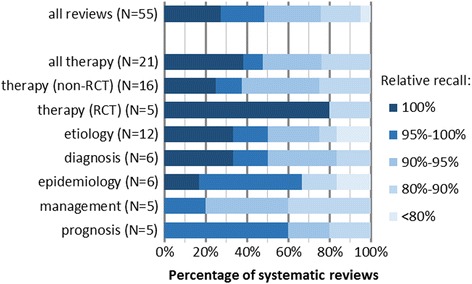
“For all but one domain, the traditional combination of Embase, MEDLINE, and Cochrane CENTRAL did not retrieve enough included references.”
§ Optimal database combinations for literature searches in systematic reviews: a prospective exploratory study > Results > Differences between domains of reviews
plain- Asserted: passes — The authors put it forward as true.
- Checkable: passes — It can be checked against evidence.
- Load-bearing: passes — The paper’s conclusions depend on it.
- Based: passes — The paper gives a reason why it holds.
A result the paper reports from its own data — it cites no other source for it, so there is none to check. The quote shows it is in the paper.
In the paper
“Embase was searched in 61% and Web of Science in 35%, and Google Scholar was only used in 10% of all reviews.”
§ Optimal database combinations for literature searches in systematic reviews: a prospective exploratory study > Results > Status of current practice of database selection
plain- Asserted: passes — The authors put it forward as true.
- Checkable: passes — It can be checked against evidence.
- Load-bearing: unclear — It is unclear whether the paper’s conclusions depend on it.
- Based: passes — The paper gives a reason why it holds.
A result the paper reports from its own data — it cites no other source for it, so there is none to check. The quote shows it is in the paper.
In the paper
“Of the five reviews that included only RCTs, four reached 100% recall if MEDLINE, Web of Science, and Google Scholar combined were complemented with Cochrane CENTRAL.”
§ Optimal database combinations for literature searches in systematic reviews: a prospective exploratory study > Discussion
plainstates a cause- Asserted: passes — The authors put it forward as true.
- Checkable: passes — It can be checked against evidence.
- Load-bearing: passes — The paper’s conclusions depend on it.
- Based: passes — The paper gives a reason why it holds.
A result the paper reports from its own data — it cites no other source for it, so there is none to check. The quote shows it is in the paper.
In the paper
“Based on our findings, this combination achieves acceptable recall about half the time (47%).”
§ Optimal database combinations for literature searches in systematic reviews: a prospective exploratory study > Results > Status of current practice of database selection
plainstates a cause- Asserted: passes — The authors put it forward as true.
- Checkable: passes — It can be checked against evidence.
- Load-bearing: passes — The paper’s conclusions depend on it.
- Based: passes — The paper gives a reason why it holds.
51 more claims
Create a free account to see all 100 claims and every source verdict.
- Probably not a substantial claim. 26
- It may state two separate claims as one. 24
- The quote only partly states this claim. 2
Claims other papers make about this one
Each is checked against this paper’s own text: does it say what the citing paper says it does?
The source backs part of the claim, not all of it — or backs it for a different population, condition or comparison.
In the citing paper
“although deduplication of references is essential to ensure the quality of SRs, there is currently no universal method to do so”
From Reducing systematic review burden using Deduklick: a novel, automated, reliable, and explainable deduplication algorithm to foster medical research (2022) · cites this paper as [5]
Experimental — accuracy not yet measuredThe source backs part of the claim, not all of it — or backs it for a different population, condition or comparison.
In the citing paper
“Although this database is one of the largest academic databases, offers extensive multidisciplinary coverage, and is widely used in bibliometric analyses, relevant publications indexed elsewhere or published in regional and non-indexed outlets may not have been captured [130].”
From Toward Holistic Aging in Lebanon: A Mapping of Gerontology and Geriatrics Research Trends, Gaps, and Future Directions (2026) · cites this paper as [130]
Experimental — accuracy not yet measuredThe source backs part of the claim, not all of it — or backs it for a different population, condition or comparison.
In the citing paper
“Meanwhile, others are highly specialized (e.g., PubMed, Medline, Compendix, etc.), which makes them unsuitable for more inclusive tasks, in particular, for the wide scope analysis and evaluation of multidisciplinary units [42,43].”
From Web of Science (WoS) and Scopus: The Titans of Bibliographic Information in Today’s Academic World (2021) · cites this paper as [43]
Experimental — accuracy not yet measuredThe source backs part of the claim, not all of it — or backs it for a different population, condition or comparison.
In the citing paper
“These databases are widely used in review studies and the majority of them are included in the optimal database combination search19 which guarantee an adequate and efficient coverage of the scientific literature.”
From Occupational therapy interventions for adults with severe mental illness: a scoping review (2021) · cites this paper as [19]
Experimental — accuracy not yet measuredThe cited source says what the claim attributes to it.
In the citing paper
“These differences have led to recommendations that systematic review teams search multiple databases to maximize the likelihood of finding relevant studies [6, 39, 40].”
From PRISMA-S: an extension to the PRISMA Statement for Reporting Literature Searches in Systematic Reviews (2021) · cites this paper as [40]
5 more claims about this paper
Create a free account to see every claim other papers make about this one.
Self-check
Percentages, sums and reported differences re-computed from the paper’s own numbers.
Each contradiction between two passages listed here was confirmed by an independent check.
Rated minor: it would not touch a result — a value no result rests on, a p-value that stays on the same side of the significance level, or a conflict that is clerical, resolved elsewhere in the paper, or outside its own findings.
In the paper
§ Optimal database combinations for literature searches in systematic reviews: a prospective exploratory study > Abstract > Results
“Sixteen percent of the included references (291 articles) were only found in a single database;”
§ Optimal database combinations for literature searches in systematic reviews: a prospective exploratory study > Results > Unique references per database
“A total of 292 (17%) references were found by only one database.”
Citations
Cites
Cochrane Handbook for Systematic Reviews of Interventions Version 5.0.1. The Cochrane Collaboration
Higgins, J. P. T., Green, S. R., & Higgins, J. P. T. (2008) · Cited by 7,171
A systematic approach to searching: an efficient and complete method to develop literature searches
Bramer, W. M., De Jonge, G. B., Rethlefsen, M. L., Mast, F., & Kleijnen, J. (2018) · Journal of the Medical Library Association · doi:10.5195/jmla.2018.283 · Cited by 863
Self-citationComparing two sampling methods to engage hard-to-reach communities in research priority setting
Valerio, M. A., Rodriguez, N., Winkler, P., Lopez, J., Dennison, M., Liang, Y., & Turner, B. J. (2016) · BMC Medical Research Methodology · doi:10.1186/s12874-016-0242-z · Cited by 543
Rethlefsen, M. L., Farrell, A. M., Osterhaus Trzasko, L. C., & Brigham, T. J. (2015) · Journal of Clinical Epidemiology · doi:10.1016/j.jclinepi.2014.11.025 · Cited by 331
Self-citationSystematic reviews need systematic searchers.
(2005) · Europe PMC (PubMed Central) · Cited by 257
Bramer, W. M., Giustini, D., & Kramer, B. M. R. (2016) · Systematic Reviews · doi:10.1186/s13643-016-0215-7 · Cited by 202
Self-citationHalladay, C. W., Trikalinos, T. A., Schmid, I. T., Schmid, C. H., & Dahabreh, I. J. (2015) · Journal of Clinical Epidemiology · doi:10.1016/j.jclinepi.2014.12.017 · Cited by 166 · cited 1×
“Prior research on database importance for systematic reviews has looked primarily at whether included references could have theoretically been found in a certain database, but most have been unable to ascertain whether the researchers actually found the articles in those databases [10, 12, 16, 17, 26].”
BackgroundSearching multiple databases for systematic reviews: added value or diminishing returns?
Stevinson, C., & Lawlor, D. A. (2004) · Complementary Therapies in Medicine · doi:10.1016/j.ctim.2004.09.003 · Cited by 143
Bramer, W. M., Giustini, D., Kramer, B. M., & Anderson, P. (2013) · Systematic Reviews · doi:10.1186/2046-4053-2-115 · Cited by 139 · cited 1×
“Nevertheless others have concluded that a single database is not sufficient to retrieve all references for systematic reviews [18, 19].”
BackgroundSelf-citationSearching one or two databases was insufficient for meta-analysis of observational studies
Lemeshow, A. R., Blum, R. E., Berlin, J. A., Stoto, M. A., & Colditz, G. A. (2005) · Journal of Clinical Epidemiology · doi:10.1016/j.jclinepi.2005.03.004 · Cited by 137
Cited by
Items 201–300 of 2,083
Bani-Khaled, S. M., Azevedo, G., & Oliveira, J. D. S. (2025) · AMS Review · doi:10.1007/s13162-025-00303-2 · Cited by 112
“Additionally, disparities in citation counts across databases arise from distinct indexing standards (Bramer et al., 2017), reinforcing our decision to exclusively utilise Scopus.”
Crowther, M. E., Ferguson, S. A., Vincent, G. E., & Reynolds, A. C. (2021) · Clocks & Sleep · doi:10.3390/clockssleep3010009 · Cited by 46
Saha, S., Behnke, A., Oldewage-Theron, W. H., Mubtasim, N., & Miller, M. (2021) · Journal of Nutrition in Gerontology and Geriatrics · doi:10.1080/21551197.2021.1988027 · Cited by 44
Romero-Sánchez, A., Perdomo-Charry, G., & Burbano-Vallejo, E. L. (2024) · Heliyon · doi:10.1016/j.heliyon.2024.e27258 · Cited by 43
Makrides, T., Ross, L., Gosling, C. M., Acker, J. J., & O'Meara, P. F. (2022) · Australasian Emergency Care · doi:10.1016/j.auec.2022.05.001 · Cited by 42
Dillner, P., Eggenschwiler, L. C., Rutjes, A. W., Berg, L. M., Musy, S. N., Simon, M., Moffa, G., Förberg, U., & Unbeck, M. (2022) · BMJ Quality & Safety · doi:10.1136/bmjqs-2022-015298 · Cited by 48
Ogundiya, O., Rahman, T. J., Valnarov-Boulter, I., & Young, T. (2024) · Journal of Medical Internet Research · doi:10.2196/60312 · Cited by 74
“The biomedical and health science emphasis of PubMed and Embase is balanced by the broader scientific coverage of Web of Science, Scopus, and Google Scholar [23,24].”
Learning by exporting: A system‐based review and research agenda
Freixanet, J., & Federo, R. (2023) · International Journal of Management Reviews · doi:10.1111/ijmr.12336 · Cited by 47
Goodman, S. P. J., Collins, B. E. G., Shorter, K. A., Moreland, A. T., Papic, C., Hamlin, A. S., Kassman, B., & Marino, F. E. (2025) · Behavior Research Methods · doi:10.3758/s13428-025-02620-7 · Cited by 61
“…(“mental fatigue” OR “cognitive fatigue” OR “cognitive exertion” OR “mental exertion” OR “mental strain” OR “cognitive strain” OR “ego depletion”) via Embase, PubMed, the Web of Science, and SportsDiscus databases, and captured the first 200 citations from Google Scholar (Bramer et al., 2017).”
Noone, C., Warner, N. Z., Byrne, M., Durand, H., Lavoie, K., McGuire, B. E., McSharry, J., Meade, O., Morrissey, E. C., Molloy, G. J., et al. (2021) · Health Psychology Review · doi:10.1080/17437199.2021.1934062 · Cited by 43
Kodama, S., Fujihara, K., Horikawa, C., Kitazawa, M., Iwanaga, M., Kato, K., Watanabe, K., Nakagawa, Y., Matsuzaka, T., Shimano, H., et al. (2022) · Journal of Diabetes Investigation · doi:10.1111/jdi.13736 · Cited by 51
Consumer preferences for finfish: A systematic literature review
Saidi, A., Cavallo, C., Giudice, T. D., Vecchio, R., & Cicia, G. (2022) · Food Quality and Preference · doi:10.1016/j.foodqual.2022.104786 · Cited by 49
Landschaft, A., Antweiler, D., Mackay, S., Kugler, S., Rüping, S., Wrobel, S., Höres, T., & Allende-Cid, H. (2024) · International Journal of Medical Informatics · doi:10.1016/j.ijmedinf.2024.105531 · Cited by 41
Control interventions in randomised trials among people with mental health disorders
Faltinsen, E., Todorovac, A., Staxen Bruun, L., Hróbjartsson, A., Gluud, C., Kongerslev, M. T., Simonsen, E., & Storebø, O. J. (2022) · Cochrane Database of Systematic Reviews · doi:10.1002/14651858.mr000050.pub2 · Cited by 40
Patient-Reported Morbidity Instruments: A Systematic Review
Oemrawsingh, A., Swami, N. S., Valderas, J. M., Hazelzet, J. A., Pusic, A. L., Gliklich, R. E., & Bergmark, R. W. (2020) · Value in Health · doi:10.1016/j.jval.2020.02.006 · Cited by 43
Fisher, A. P., Lynch, J. D., Jacquez, F., Mitchell, M. J., Kamimura-Nishimura, K. I., & Wade, S. L. (2022) · Autism · doi:10.1177/13623613221128171 · Cited by 57
Norris, P., Gow, J., Arthur, T., Conway, A., Fleming, F. J., & Ralph, N. (2023) · International Journal of Surgery · doi:10.1097/js9.0000000000000834 · Cited by 53
Little, B., Anwyll, M., Norsworthy, L., Corbett, L., Schultz‐Froggatt, M., & Gallagher, P. (2023) · Bipolar Disorders · doi:10.1111/bdi.13396 · Cited by 46
Tenschert, J., Furtner, M. R., & Peters, M. (2024) · Management Review Quarterly · doi:10.1007/s11301-024-00448-7 · Cited by 110
Tian, K., Zhu, Z., Mbachu, J., Ghanbaripour, A. N., & Moorhead, M. (2025) · Journal of Innovation & Knowledge · doi:10.1016/j.jik.2025.100711 · Cited by 89
Han, S., & Kuhlicke, C. (2019) · Water · doi:10.3390/w11122599 · Cited by 54
Albahri, A. S., Al-Qaysi, Z. T., Alzubaidi, L., Alnoor, A., Albahri, O. S., Alamoodi, A. H., & Bakar, A. A. (2023) · International Journal of Telemedicine and Applications · doi:10.1155/2023/7741735 · Cited by 55
Kerins, C., McSharry, J., Hayes, C. B., Perry, I. J., Geaney, F., & Kelly, C. N. M. (2018) · Systematic Reviews · doi:10.1186/s13643-018-0752-3 · Cited by 39
Ultrasound for the diagnosis of necrotizing fasciitis: A systematic review of the literature
Marks, A., Patel, D., Sundaram, T., Johnson, J., & Gottlieb, M. A. (2022) · The American Journal of Emergency Medicine · doi:10.1016/j.ajem.2022.12.037 · Cited by 44
Plessas, A., Paisi, M., Ahmed, N., Brookes, Z. L. S., Burns, L., & Witton, R. (2024) · BMC Medical Education · doi:10.1186/s12909-024-06367-1 · Cited by 75
“The following databases were searched to achieve optimal coverage of healthcare and subject focus of education: Scopus, MEDLINE, Embase, CINAHL, ERIC and BEI [23].”
Evaluating Article Search and Selection Procedures in Special Education Literature Reviews
King, S. A., Davidson, K. A., Chitiyo, A., & Apple, D. (2018) · Remedial and Special Education · doi:10.1177/0741932518813142 · Cited by 48
Urban governance and policy mixes for nature-based solutions and integrated water policy
Kirsop-Taylor, N., Russel, D., & Jensen, A. (2022) · Journal of Environmental Policy & Planning · doi:10.1080/1523908x.2021.1956309 · Cited by 38
Mercurio, M., Gasparini, G., Sanzo, V., Familiari, F., Castioni, D., & Galasso, O. (2022) · Journal of Arthroplasty · doi:10.1016/j.arth.2022.04.013 · Cited by 37
Barriers and Facilitators to Participation in Health Screening: an Umbrella Review Across Conditions
Bonniec, A. L., Sun, S., Andrin, A., Dima, A. L., & Letrilliart, L. (2022) · Prevention Science · doi:10.1007/s11121-022-01388-y · Cited by 43
The Experiences of Informal Carers during the COVID-19 Pandemic: A Qualitative Systematic Review
Bailey, C., Guo, P., MacArtney, J. I., Finucane, A., Swan, S., Meade, R., & Wagstaff, E. (2022) · International Journal of Environmental Research and Public Health · doi:10.3390/ijerph192013455 · Cited by 49
Nature-based solutions in Hindu Kush Himalayas: IUCN global standard based synthesis
Mehta, D., Pandey, R., Gupta, A. K., & Juhola, S. K. (2023) · Ecological Indicators · doi:10.1016/j.ecolind.2023.110875 · Cited by 41
Digital innovations: Implications for African agribusinesses
Arthur, K. K., Bannor, R. K., Masih, J., Oppong-Kyeremeh, H., & Appiahene, P. (2024) · Smart Agricultural Technology · doi:10.1016/j.atech.2024.100407 · Cited by 60
Zou, J., Shen, L., Wang, F., Tang, H., & Zhou, Z. (2024) · Journal of Integrative Agriculture · doi:10.1016/j.jia.2024.07.016 · Cited by 39
A Systematic Literature Review on AI Safety: Identifying Trends, Challenges, and Future Directions
Salhab, W., Ameyed, D., Jaafar, F., & Mcheick, H. (2024) · IEEE Access · doi:10.1109/access.2024.3440647 · Cited by 67
Carvalho, R., Lucas, M. R., & Marta‐Costa, A. (2025) · Sustainability · doi:10.3390/su17073236 · Cited by 59
Cerebellar Degeneration in Epilepsy: A Systematic Review
Ibdali, M., Hadjivassiliou, M., Grünewald, R. A., & Shanmugarajah, P. D. (2021) · International Journal of Environmental Research and Public Health · doi:10.3390/ijerph18020473 · Cited by 42
Clinical efficacy of medical hydrology: an umbrella review
Antonelli, M., Donelli, D., Veronesi, L., Vitale, M., & Pasquarella, C. I. M. (2021) · International Journal of Biometeorology · doi:10.1007/s00484-021-02133-w · Cited by 47
Pasanen, B. E., Tomkinson, J. M., Dufner, T. J., Park, C. W., Fitzgerald, J. S., & Tomkinson, G. R. (2021) · American Journal of Human Biology · doi:10.1002/ajhb.23657 · Cited by 53
Challenges and opportunities in smallholder agriculture digitization in South Africa
Nxumalo, G., & Chauke, H. (2025) · Frontiers in Sustainable Food Systems · doi:10.3389/fsufs.2025.1583224 · Cited by 72
Gunnell, K. E., Belcourt, V. J., Tomasone, J. R., & Weeks, L. C. (2022) · International Review of Sport and Exercise Psychology · doi:10.1080/1750984x.2021.1966823 · Cited by 58
The Influence of Light Wavelength on Human HPA Axis Rhythms: A Systematic Review
Robertson-Dixon, I., Murphy, M., Crewther, S. G., & Riddell, N. (2023) · Life · doi:10.3390/life13101968 · Cited by 50
A review of recent research on antifungal agents against dermatophyte biofilms
Pereira, F. D. O. (2021) · Medical Mycology · doi:10.1093/mmy/myaa114 · Cited by 41
The prevalence of dermatophytoses in Brazil: a systematic review
Pereira, F. D. O., Gomes, S. M., Silva, S. L., Teixeira, A. P. D. C., & Lima, I. O. (2021) · Journal of Medical Microbiology · doi:10.1099/jmm.0.001321 · Cited by 51
McCuistian, C. L., Peteet, B. J., Burlew, K., & Jacquez, F. (2021) · Health Education & Behavior · doi:10.1177/10901981211008378 · Cited by 47
Al-Qaysi, Z. T., Ahmed, M. A., Hammash, N. M., Hussein, A. F., Albahri, A. S., Suzani, M. S., Al‐Bander, B., Shuwandy, M. L., & Salih, M. M. (2021) · Health and Technology · doi:10.1007/s12553-021-00560-8 · Cited by 43
Nursing assistants and resident satisfaction in long-term care: A systematic review
Li, X., Dorstyn, D., Mpofu, E., O’Neill, L., Li, Q., Zhang, C., & Ingman, S. (2021) · Geriatric Nursing · doi:10.1016/j.gerinurse.2021.08.006 · Cited by 45
Bretschneider, S. F., Los, F. S., Eygendaal, D. E., Kuijer, P., & van der Molen, H. F. (2021) · American Journal of Industrial Medicine · doi:10.1002/ajim.23303 · Cited by 48
Wibowo, M. I. N. A., Yasin, N. M., Kristina, S. A., & Prabandari, Y. S. (2022) · Patient Preference and Adherence · doi:10.2147/ppa.s347079 · Cited by 48
Virtual Reality in the Treatment of Patients with Overweight and Obesity: A Systematic Review
Al‐Rasheed, A., Alabdulkreem, E. A., Alduailij, M. A., Alduailij, M. A., Alhalabi, W., Alharbi, S., & Lytras, M. D. (2022) · Sustainability · doi:10.3390/su14063324 · Cited by 40
Nibbio, G., Barlati, S., Calzavara-Pinton, I., Necchini, N., Invernizzi, E., Dell'Ovo, D., Lisoni, J., Deste, G., & Vita, A. (2022) · Frontiers in Psychiatry · doi:10.3389/fpsyt.2022.934005 · Cited by 36
Available Assistive Technology Outcome Measures: Systematic Review
Borgnis, F., Desideri, L., Converti, R. M., & Salatino, C. (2023) · JMIR Rehabilitation and Assistive Technologies · doi:10.2196/51124 · Cited by 44
Segur-Ferrer, J., Moltó-Puigmartí, C., Pastells‐Peiró, R., & Vivanco‐Hidalgo, R. M. (2024) · Journal of Medical Internet Research · doi:10.2196/48694 · Cited by 39
Systematic reviews and meta-analysis in nutrition research
Kelley, G. A., & Kelley, K. S. (2019) · British Journal Of Nutrition · doi:10.1017/s0007114519002241 · Cited by 38
Hordowicz, M., Klimkiewicz, A., Jarosz, J., Wysocka, M., & Jastrzębska, M. (2021) · Drug and Alcohol Dependence · doi:10.1016/j.drugalcdep.2021.108652 · Cited by 47
Haywood, S., Hasking, P. A., & Boyes, M. E. (2023) · Journal of Affective Disorders · doi:10.1016/j.jad.2023.01.027 · Cited by 47
Fujioka, J. K., Budhwani, S., Thomas-Jacques, T., De Vera, K., Challa, P., Fuller, K., Hogeveen, S., Gordon, D., Shahid, S., Seto, E., et al. (2020) · JMIR Research Protocols · doi:10.2196/22847 · Cited by 34
Bairagi, A., Griffin, B. R., Banani, T., McPhail, S., Kimble, R. M., & Tyack, Z. F. (2021) · Burns · doi:10.1016/j.burns.2021.04.005 · Cited by 39
Kapuka, A., & Hlásny, T. (2021) · Ecosphere · doi:10.1002/ecs2.3860 · Cited by 42
Demont, A., Lafrance, S., Gaska, C., Kechichian, A., Bourmaud, A., & Desmeules, F. (2022) · PM&R · doi:10.1002/pmrj.12856 · Cited by 50
Heck, T., Keller, C., & Rittberger, M. (2023) · International Journal on Digital Libraries · doi:10.1007/s00799-023-00364-3 · Cited by 62
Ang, W. R., Ang, W. H. D., Cham, S. Q. G., Mel, S. D., Chew, H. S. J., & Devi, M. K. (2023) · European Journal of Oncology Nursing · doi:10.1016/j.ejon.2023.102446 · Cited by 45
Molero, P., Reina, G., Blom, J. D., Martínez‐González, M. Á., Reinken, A., de Kloet, E. R., & Molendijk, M. L. (2023) · Epidemiology and Psychiatric Sciences · doi:10.1017/s2045796023000719 · Cited by 44
Cobbaert, L., Hay, P., Mitchell, P. B., Roza, S. J., & Perkes, I. E. (2024) · International Journal of Eating Disorders · doi:10.1002/eat.24184 · Cited by 44
Childhood Sexual Abuse and Adult Sexual Risk Behavior: A Review and Critique
Ménard, A. D., & MacIntosh, H. B. (2021) · Journal of Child Sexual Abuse · doi:10.1080/10538712.2020.1869878 · Cited by 48
Smithies, T. D., Toth, A. J., Dunican, I. C., Caldwell, J. A., Kowal, M., & Campbell, M. J. (2021) · SLEEP · doi:10.1093/sleep/zsab008 · Cited by 43
Young, K., Bowers, A. P., & Bradford, N. (2021) · Psycho-Oncology · doi:10.1002/pon.5745 · Cited by 38
Nylander, E. M., Ramstrand, N., Hjort, M., & Rusaw, D. F. (2021) · Prosthetics and Orthotics International · doi:10.1097/pxr.0000000000000019 · Cited by 251
Caldwell, D. M., Davies, S. R., Thorn, J. C., Palmer, J. C., Caro, P., Hetrick, S. E., Gunnell, D., Anwer, S., López-López, J. A., French, C. E., et al. (2021) · Public Health Research · doi:10.3310/phr09080 · Cited by 45
Improving oral health in people with severe mental illness (SMI): A systematic review
Macnamara, A., Mishu, M. P., Faisal, M. R., Islam, M. M., & Peckham, E. J. (2021) · PLoS ONE · doi:10.1371/journal.pone.0260766 · Cited by 44
Gottlieb, M. A., Peksa, G. D., & Carlson, J. N. (2023) · Cochrane Database of Systematic Reviews · doi:10.1002/14651858.cd015089.pub2 · Cited by 52
Interventions that support novice nurses' transition into practice: A realist review
Melissant, H. C., Hendriks, R. R. A., Bakker, E. J. M., Kox, J. H. A. M., Rietveld, N., Miedema, H. S., Roelofs, P. D. D. M., & Verhaegh, K. J. (2024) · International Journal of Nursing Studies · doi:10.1016/j.ijnurstu.2024.104785 · Cited by 48
Midwifery students’ experiences of bullying and workplace violence: A systematic review
Capper, T. S., Muurlink, O. T., & Williamson, M. J. (2020) · Midwifery · doi:10.1016/j.midw.2020.102819 · Cited by 38
Mutono, N., Wright, J., Mutembei, H. M., Muema, J., Thomas, M., Mutunga, M., & Thumbi, S. M. (2021) · AAS Open Research · doi:10.12688/aasopenres.13225.1 · Cited by 33
Machmud, P. B., Glasauer, S., Gottschick, C., & Mikolajczyk, R. (2021) · Vaccines · doi:10.3390/vaccines9060625 · Cited by 48
Daniel, M., Gottlieb, M., Wooten, D., Stojan, J., Haas, M. R. C., Bailey, J., Evans, S., Lee, D., Goldberg, C., Fernandez, J., et al. (2022) · Medical Teacher · doi:10.1080/0142159x.2022.2130038 · Cited by 33
“…could adequately assess clinical, research, and mentorship opportunities, rotation schedules, program salary, benefits, and academic prestige (e.g. Brueggeman et al. 2021; DiGiusto et al. 2021; Kamboj, Raffals et al. 2021), but struggled to get a feel for diversity of the patient population,…”
BackgroundResultInfluentialTherapeutic strategies for sarcopenic obesity: a systematic review
Poggiogalle, E., Parrinello, E., Barazzoni, R., Busetto, L., & Donini, L. M. (2021) · Current Opinion in Clinical Nutrition & Metabolic Care · doi:10.1097/mco.0000000000000714 · Cited by 32
Precision health in behaviour change interventions: A scoping review
Mauch, C. E., Edney, S. M., Viaña, J. N. M., Gondalia, S. V., Sellak, H., Boud, S. J., Nixon, D. D., & Ryan, J. C. (2022) · Preventive Medicine · doi:10.1016/j.ypmed.2022.107192 · Cited by 41
A Systematic Review of Violence Risk Assessment Tools Currently Used in Emergency Care Settings
Sammut, D., Hallett, N., Lees, L., & Dickens, G. L. (2022) · Journal of Emergency Nursing · doi:10.1016/j.jen.2022.11.006 · Cited by 32
Wijck, S. F. M. V., Prins, J. T. H., Verhofstad, M. H. J., Wijffels, M. M. E., & Lieshout, E. M. M. V. (2024) · European Journal of Trauma and Emergency Surgery · doi:10.1007/s00068-023-02421-7 · Cited by 42
“The Embase, Medline, Web of Science Core Collection, Cochrane Central Register of Controlled Trials, and Google Scholar were searched on September 12, 2022, for studies pertaining to CPR-related injuries [20].”
Hickman, R., D’Oliveira, T. C., Davies, A., & Shergill, S. S. (2024) · Sensors · doi:10.3390/s24144701 · Cited by 47
Oweini, D. A., Jawad, M., & Akl, E. A. (2019) · Tobacco Control · doi:10.1136/tobaccocontrol-2018-054870 · Cited by 37
Bateman, A. G., Myers, N. D., Chen, S., & Lee, S. (2021) · Measurement in Physical Education and Exercise Science · doi:10.1080/1091367x.2021.1962324 · Cited by 35
Buchlak, Q. D., Esmaili, N., Bennett, C. C., & Farrokhi, F. R. (2021) · Acta neurochirurgica. Supplementum · doi:10.1007/978-3-030-85292-4_32 · Cited by 39
Crowther, M. E., Ferguson, S. A., & Reynolds, A. C. (2022) · Sleep Medicine Reviews · doi:10.1016/j.smrv.2022.101612 · Cited by 39
Diener, J., Rayling, S., Bezold, J., Krell‐Roesch, J., Wöll, A., & Wunsch, K. (2022) · Frontiers in Physiology · doi:10.3389/fphys.2022.894397 · Cited by 41
Golds, L., Gillespie‐Smith, K., Nimbley, E., & MacBeth, A. M. (2022) · Infant Mental Health Journal · doi:10.1002/imhj.22011 · Cited by 48
Houston, L., Probst, Y., Singh, M. C., & Neale, E. P. (2023) · Advances in Nutrition · doi:10.1016/j.advnut.2023.05.004 · Cited by 38
Jayakumar, S., Jennings, S., Halvorsrud, K., Clesse, C., Yaqoob, M. M., Carvalho, L. A., & Bhui, K. S. (2022) · Psychological Medicine · doi:10.1017/s0033291722003099 · Cited by 36
Obesity stigma and its impact on health: A narrative review
Sánchez‐Carracedo, D. (2022) · Endocrinología Diabetes y Nutrición (English ed ) · doi:10.1016/j.endien.2021.12.007 · Cited by 60
Belabyad, M., Kontovas, C. A., Pyne, R., & Chang, C. (2025) · Maritime Policy & Management · doi:10.1080/03088839.2025.2475177 · Cited by 79
“Its methodological robustness can contribute significantly to the transparency and replicability of reviews, regardless of the subject matter (Bramer et al. 2017).”
Defining precision health: a scoping review protocol
Ryan, J. C., Viaña, J. N. M., Sellak, H., Gondalia, S. V., & O’Callaghan, N. J. (2021) · BMJ Open · doi:10.1136/bmjopen-2020-044663 · Cited by 35
Zolopa, C., Høj, S. B., Minoyan, N., Bruneau, J., Makarenko, I., & Larney, S. (2022) · Addiction · doi:10.1111/add.15813 · Cited by 33
Gottlieb, M. A., Dyer, S., & Peksa, G. D. (2019) · Resuscitation · doi:10.1016/j.resuscitation.2019.11.019 · Cited by 33
Mehmood, K., Ullah, S., Qiu, X., & Abrar, M. M. (2023) · Gondwana Research · doi:10.1016/j.gr.2023.02.009 · Cited by 44
A scoping review of Q methodology nursing education studies
Hensel, D., Toronto, C. E., Lawless, J., & Burgess, J. (2021) · Nurse Education Today · doi:10.1016/j.nedt.2021.105220 · Cited by 38
da Mota, M. S. S., Ulguim, H. B., Jansen, K., Cardoso, T. D. A., & Souza, L. D. D. M. (2023) · Journal of Affective Disorders · doi:10.1016/j.jad.2023.11.002 · Cited by 52
The association between sensory processing and stress in the adult population: A systematic review
Harrold, Á., Keating, K., Larkin, F., & Setti, A. (2024) · Applied Psychology Health and Well-Being · doi:10.1111/aphw.12554 · Cited by 59
Liu, J., Luo, H., & Wu, D. (2025) · Advanced Engineering Informatics · doi:10.1016/j.aei.2025.103109 · Cited by 69
Harding, A. J. E., Morbey, H., Ahmed, F., Opdebeeck, C., Elvish, R., Leroi, I., Williamson, P. R., Keady, J. D., & Reilly, S. (2020) · The Gerontologist · doi:10.1093/geront/gnaa071 · Cited by 37
Cloyes, K. G., & Candrian, C. B. (2021) · Current Oncology Reports · doi:10.1007/s11912-021-01034-w · Cited by 37
Metadata
- Authors
- Bramer, W. M., Rethlefsen, M. L., Kleijnen, J., & Franco, O. H.
- Affiliations
- Erasmus MC (NL)
- University of Utah (US)
- Maastricht University (NL)
- Corresponding author
- Bramer, Wichor M.
- Venue
- Systematic Reviews
- Published
- 2017-12
- Volume
- 6
- Issue
- 1
- Pages
- 245-245
- ISSN
- 2046-4053 (ISSN-L)
- PMC
- PMC5718002
- OpenAlex
- W2774587119
- Cited by
- 2,114
- References
- 27
- Citations by year
- 2026: 373 · 2025: 411 · 2024: 332 · 2023: 292 · 2022: 252 · 2021: 231 · 2020: 145 · 2019: 64 · 2018: 12 · 2017: 2
- FWCI
- 14.94
- Type
- journal article
- Language
- en
- Open access
- gold
- doi.org
- Licence
- cc-by
- creativecommons.org/licenses/by/4.0/ (tdm)
- creativecommons.org/licenses/by/4.0/ (vor, 5 d)
- Locations
- Systematic Reviews (publishedVersion, cc-by)
- Europe PMC (PubMed Central) (publishedVersion, cc-by)
- PubMed Central (publishedVersion, cc-by)
- PubMed (publishedVersion)
- Research Publications (Maastricht University) (publishedVersion, cc-by)
- EUR Research Repository (Erasmus University Rotterdam) (publishedVersion, other-oa)
- EUR Research Repository (Erasmus University Rotterdam) (submittedVersion, other-oa)
- RePub (Erasmus University Rotterdam) (submittedVersion, other-oa)
- DOAJ (DOAJ: Directory of Open Access Journals) (submittedVersion, cc-by-sa)
- Research Publications (Maastricht University) (submittedVersion, other-oa)
- Funders
- National Center for Advancing Translational Sciences (UL1TR001067)
- Topics
- Social Sciences › Decision Sciences › Statistics, Probability and Uncertainty › Meta-analysis and systematic reviews
- Social Sciences › Library and Information Sciences › scientometrics and bibliometrics research
- Physical Sciences › Computer Science › Information Systems › Information Retrieval and Search Behavior
- Keywords
- literature search strategies, search recall, search precision, database coverage, Embase, MEDLINE, Web of Science, Google Scholar, CINAHL, PsycINFO, number needed to read
- MeSH terms
- Humans, Prospective Studies, Review Literature as Topic, Databases, Bibliographic, Information Storage and Retrieval
About these checks
Registry, retraction, Cites and statistics results are computed, not judged, with one exception: a printed reference that no index lists is read once by a model before it counts as a citation error. Claims are extracted by a model and kept only when their quote appears verbatim in the text; each cited source is then checked, with a model’s help, for whether it says what the claim relies on. Those verdicts can be wrong — read the claim’s quote and the cited source before relying on one.
A language model drew the claims from the paper on 2026-09-29, under version 3 of the claim definition (model deepseek-v4.1-flash, prompt extract-v3).
A second model labelled each claim on 2026-09-29 (model jev-1.13-20260917, definition revision gold-guideline-v0.2).
Statistics and arithmetic are recomputed, not judged.
Confidence bands are shown only for fields calibrated on our annotated test set. None is calibrated yet, so no band is shown.
What counts as a claim ›How we measure confidence ›How we check this ›
Are you an author, or do you see a problem with this page? Request a review
Data sources
Bibliographic data: Semantic Scholar, OpenAlex, Crossref.
Contains information from the Semantic Scholar Academic Graph Datasets, made available under the ODC Attribution License (ODC-BY 1.0).
Semantic Scholar’s data is described in: Kinney, R., et al. (2023). The Semantic Scholar Open Data Platform. arXiv:2301.10140.
