

Genomic characterization of the uncultured Bacteroidales family S24-7 inhabiting the guts of homeothermic animals
Open accessThe DOI matches its Crossref record; 116 of the 117 references it cites were found in a registry or an index, and 1 are not checked yet.
Abstract
BACKGROUND: Our view of host-associated microbiota remains incomplete due to the presence of as yet uncultured constituents. The Bacteroidales family S24-7 is a prominent example of one of these groups. Marker gene surveys indicate that members of this family are highly localized to the gastrointestinal tracts of homeothermic animals and are increasingly being recognized as a numerically predominant member of the gut microbiota; however, little is known about the nature of their interactions with the host. RESULTS: Here, we provide the first whole genome exploration of this family, for which we propose the name "Candidatus Homeothermaceae," using 30 population genomes extracted from fecal samples of four different animal hosts: human, mouse, koala, and guinea pig. We infer the core metabolism of "Ca. Homeothermaceae" to be that of fermentative or nanaerobic bacteria, resembling that of related Bacteroidales families. In addition, we describe three trophic guilds within the family, plant glycan (hemicellulose and pectin), host glycan, and α-glucan, each broadly defined by increased abundance of enzymes involved in the degradation of particular carbohydrates. CONCLUSIONS: "Ca. Homeothermaceae" representatives constitute a substantial component of the murine gut microbiota, as well as being present within the human gut, and this study provides important first insights into the nature of their residency. The presence of trophic guilds within the family indicates the potential for niche partitioning and specific roles for each guild in gut health and dysbiosis.
Overview
The claims and statistics of this paper haven’t been checked yet.
Free: it reads the open-access text and checks the first 5 claims that cite a source we can check. Create a free account to check every claim.
Integrity signals
Registry
Cites
Statistics
Figures
Verification
Claims the paper makes
The claims and statistics of this paper haven’t been checked yet.
Free: it reads the open-access text and checks the first 5 claims that cite a source we can check. Create a free account to check every claim.
Self-check
Percentages, sums and reported differences re-computed from the paper’s own numbers.
The self-check needs the paper’s full text.
Citations
Cites
1 retracted
Molecular characterization of Legionella pneumophila-induced interleukin-8 expression in T cells
Takamatsu, R., Teruya, H., Takeshima, E., Ishikawa, C., Matsumoto, K., Mukaida, N., Li, J.-D., Heuner, K., Higa, F., Fujita, J., et al. (2010) · BMC Microbiology · doi:10.1186/1471-2180-10-1 · Cited by 337
RetractedBasic local alignment search tool
Altschul, S. F., Gish, W., Miller, W., Myers, E. W., & Lipman, D. J. (1990) · Journal of Molecular Biology · doi:10.1006/jmbi.1990.9999 · Cited by 98,669
Moderated estimation of fold change and dispersion for RNA-seq data with DESeq2
Love, M. I., Huber, W., & Anders, S. (2014) · Genome Biology · doi:10.1186/s13059-014-0550-8 · Cited by 95,106
Trimmomatic: a flexible trimmer for Illumina sequence data
Bolger, A. M., Lohse, M., & Usadel, B. (2014) · Bioinformatics · doi:10.1093/bioinformatics/btu170 · Cited by 65,548
Fast and accurate short read alignment with Burrows-Wheeler transform
Li, H., & Durbin, R. (2009) · Bioinformatics · doi:10.1093/bioinformatics/btp324 · Cited by 58,607
MAFFT Multiple Sequence Alignment Software Version 7: Improvements in Performance and Usability
Katoh, K., & Standley, D. M. (2013) · Molecular Biology and Evolution · doi:10.1093/molbev/mst010 · Cited by 46,209
The SILVA ribosomal RNA gene database project: improved data processing and web-based tools
Quast, C., Pruesse, E., Yilmaz, P., Gerken, J., Schweer, T., Yarza, P., Peplies, J., & Glöckner, F. O. (2012) · Nucleic Acids Research · doi:10.1093/nar/gks1219 · Cited by 33,055 · cited 6×
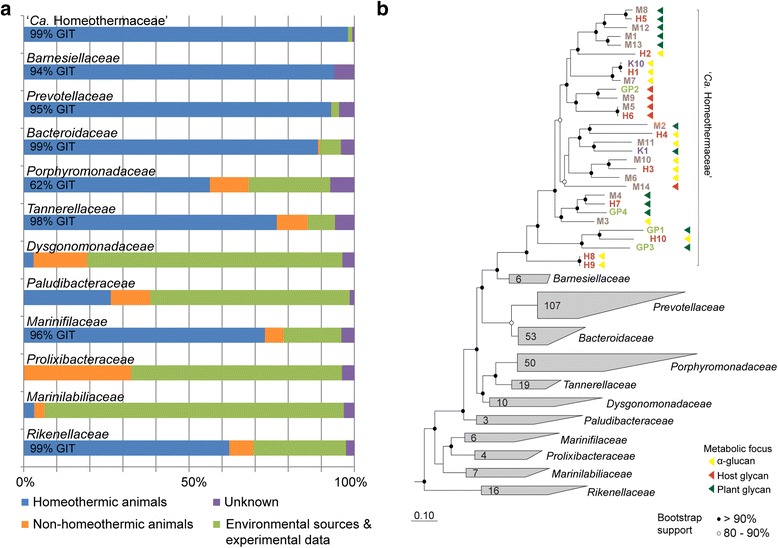
“1 Habitat and phylogenetic positioning of “Ca. Homeothermaceae” (S24-7). a Habitat source of 16S rRNA gene sequences described in the Silva database [9] belonging to members of the Bacteroidales order.”
BackgroundMethodInfluentialvegan: Community Ecology Package
Oksanen, J., Simpson, G. L., Blanchet, F. G., Kindt, R., Legendre, P., Minchin, P. R., O'Hara, R. B., Solymos, P., Stevens, M. H. H., Szoecs, E., et al. (2001) · CRAN: Contributed Packages · doi:10.32614/cran.package.vegan · Cited by 22,615
Prokka: rapid prokaryotic genome annotation
Seemann, T. (2014) · Bioinformatics · doi:10.1093/bioinformatics/btu153 · Cited by 18,818
FastTree 2 – Approximately Maximum-Likelihood Trees for Large Alignments
Price, M. N., Dehal, P. S., & Arkin, A. P. (2010) · PLoS ONE · doi:10.1371/journal.pone.0009490 · Cited by 14,894
Research works printed but not linked: 1
- Krieg NR Staley JT Brown DR Hedlund BP Paster BJ Ward NL Bergey’s manual of systematic bacteriology, 2 edn 2011 New York Springer
Cited by
A communal catalogue reveals Earth's multiscale microbial diversity
Thompson, L. R., Sanders, J. G., McDonald, D., Amir, A., Ladau, J., Locey, K. J., Prill, R. J., Tripathi, A., Gibbons, S. M., Ackermann, G., et al. (2017) · Nature · doi:10.1038/nature24621 · Cited by 2,684
Emerging Pathogenic Links Between Microbiota and the Gut-Lung Axis
Budden, K. F., Gellatly, S. L., Wood, D. L. A., Cooper, M. A., Morrison, M., Hugenholtz, P., & Hansbro, P. M. (2017) · Nature Reviews Microbiology · doi:10.1038/nrmicro.2016.142 · Cited by 1,606
Self-citationLagkouvardos, I., Lesker, T. R., Hitch, T. C. A., Gálvez, E. J. C., Smit, N., Neuhaus, K., Wang, J., Baines, J. F., Abt, B., Stecher, B., et al. (2019) · Microbiome · doi:10.1186/s40168-019-0637-2 · Cited by 776
Schroeder, B. O., Birchenough, G. M. H., Ståhlman, M., Arike, L., Johansson, M. E. V., Hansson, G. C., & Bäckhed, F. (2018) · Cell Host & Microbe · doi:10.1016/j.chom.2017.11.004 · Cited by 713
“The loss of potential fiber-degrading bacteria such as the S24-7 family and Bifidobacterium (Kaoutari et al., 2013; Ormerod et al., 2016) is likely attributable to the lack of dietary fiber in the WSD. Dietary fiber is mainly fermented into short-chain fatty acids (SCFAs) by the gut microbiota.”
BackgroundExploration of the Muribaculaceae Family in the Gut Microbiota: Diversity, Metabolism, and Function
Zhu, Y., Chen, B., Zhang, X., Akbar, M. T., Wu, T., Zhang, Y., Zhi, L., & Shen, Q. (2024) · Nutrients · doi:10.3390/nu16162660 · Cited by 596
“These enzymes account for approximately 6% of the gene sequence and use starch as the basic source of energy [12].”
BackgroundInfluentialThe Effects of Captivity on the Mammalian Gut Microbiome
McKenzie, V. J., Song, S. J., Delsuc, F., Prest, T. L., Oliverio, A. M., Korpita, T. M., Alexiev, A., Amato, K. R., Metcalf, J. L., Kowalewski, M., et al. (2017) · Integrative and Comparative Biology · doi:10.1093/icb/icx090 · Cited by 446
Lung microbiome: new insights into the pathogenesis of respiratory diseases
Li, R., Li, J., & Zhou, X. (2024) · Signal Transduction and Targeted Therapy · doi:10.1038/s41392-023-01722-y · Cited by 434
Waite, D. W., Vanwonterghem, I., Rinke, C., Parks, D. H., Zhang, Y., Takai, K., Sievert, S. M., Simon, J., Campbell, B. J., Hanson, T. E., et al. (2017) · Frontiers in Microbiology · doi:10.3389/fmicb.2017.00682 · Cited by 414
Self-citationZeng, S.-L., Li, S.-Z., Xiao, P.-T., Cai, Y.-Y., Chu, C., Chen, B.-Z., Li, P., Li, J., & Liu, E.-H. (2020) · Science Advances · doi:10.1126/sciadv.aax6208 · Cited by 393
Analysis of 1,000 Type-Strain Genomes Improves Taxonomic Classification of Bacteroidetes
García-López, M., Meier-Kolthoff, J. P., Tindall, B. J., Gronow, S., Woyke, T., Kyrpides, N. C., Hahnke, R. L., & Göker, M. (2019) · Frontiers in Microbiology · doi:10.3389/fmicb.2019.02083 · Cited by 350
Smith, B. J., Miller, R. A., Ericsson, A. C., Harrison, D. C., Strong, R., & Schmidt, T. M. (2019) · BMC Microbiology · doi:10.1186/s12866-019-1494-7 · Cited by 349
Sun, J., Xu, J., Yang, B., Chen, K., Kong, Y., Fang, N., Gong, T., Wang, F., Ling, Z., & Liu, J. (2020) · Molecular Nutrition & Food Research · doi:10.1002/mnfr.201900636 · Cited by 302
Liu, X., Li, X., Xia, B., Jin, X., Zou, Q., Zeng, Z., Zhao, W., Yan, S., Li, L., Yuan, S., et al. (2021) · Cell Metabolism · doi:10.1016/j.cmet.2021.02.002 · Cited by 298
Mutlu, E. A., Comba, I. Y., Cho, T., Engen, P. A., Yazıcı, C., Soberanes, S., Hamanaka, R. B., Niğdelioğlu, R., Meliton, A. Y., Ghio, A. J., et al. (2018) · Environmental Pollution · doi:10.1016/j.envpol.2018.04.130 · Cited by 296
Minter, M. R., Hinterleitner, R., Meisel, M., Zhang, C., Leone, V., Zhang, X., Oyler-Castrillo, P., Zhang, X., Musch, M. W., Shen, X., et al. (2017) · Scientific Reports · doi:10.1038/s41598-017-11047-w · Cited by 292
Microbiome effects on immunity, health and disease in the lung
Shukla, S. D., Budden, K. F., Neal, R., & Hansbro, P. M. (2017) · Clinical & Translational Immunology · doi:10.1038/cti.2017.6 · Cited by 287
Self-citationAn automated Raman-based platform for the sorting of live cells by functional properties
Lee, K. S., Palatinszky, M., Pereira, F. C., Nguyen, J., Fernandez, V. I., Mueller, A. J., Menolascina, F., Daims, H., Berry, D., Wagner, M., et al. (2019) · Nature Microbiology · doi:10.1038/s41564-019-0394-9 · Cited by 275
Ng, K. M., Aranda-Díaz, A., Tropini, C., Frankel, M. R., Van Treuren, W., O’Loughlin, C. T., Merrill, B. D., Yu, F. B., Pruss, K. M., Oliveira, R. A., et al. (2019) · Cell Host & Microbe · doi:10.1016/j.chom.2019.10.011 · Cited by 273
Microbes vs. chemistry in the origin of the anaerobic gut lumen
Friedman, E. S., Bittinger, K., Esipova, T. V., Hou, L., Chau, L., Jiang, J., Mesaros, C., Lund, P. J., Liang, X., FitzGerald, G. A., et al. (2018) · Proceedings of the National Academy of Sciences · doi:10.1073/pnas.1718635115 · Cited by 271
Respiratory disease following viral lung infection alters the murine gut microbiota
Groves, H. T., Cuthbertson, L., James, P., Moffatt, M. F., Cox, M. J., & Tregoning, J. S. (2018) · Frontiers in Immunology · doi:10.3389/fimmu.2018.00182 · Cited by 258
Transient Osmotic Perturbation Causes Long-Term Alteration to the Gut Microbiota
Tropini, C., Moss, E. L., Merrill, B. D., Ng, K. M., Higginbottom, S. K., Casavant, E. P., Gonzalez, C. G., Fremin, B., Bouley, D. M., Elias, J. E., et al. (2018) · Cell · doi:10.1016/j.cell.2018.05.008 · Cited by 257
Shao, X., Sun, C., Tang, X., Zhang, X., Han, D., Liang, S., Qu, R., Hui, X., Shan, Y., Hu, L., et al. (2020) · Journal of Agricultural and Food Chemistry · doi:10.1021/acs.jafc.0c04773 · Cited by 247
Nogacka, A., Salazar, N., Suárez, M., Milani, C., Arboleya, S., Solís, G., Fernández, N., Alaez, L., Hernández-Barranco, A. M., de los Reyes-Gavilán, C. G., et al. (2017) · Microbiome · doi:10.1186/s40168-017-0313-3 · Cited by 236
“Moreover, the levels of the group classified as Family S24–7 (Muribaculaceae), a Bacteroidetes group commonly found in feces from homoeothermic animals [39], but whose first cultured representative remained elusive till recently [40], were significantly increased in IAP infants all along the study.”
Staley, C., Kaiser, T., Beura, L. K., Hamilton, M. J., Weingarden, A. R., Bobr, A., Kang, J., Masopust, D., Sadowsky, M. J., & Khoruts, A. (2017) · Microbiome · doi:10.1186/s40168-017-0306-2 · Cited by 229
Tian, B., Zhao, J., Zhang, M., Chen, Z., Ma, Q., Liu, H., Nie, C., Zhang, Z., An, W., & Li, J. (2021) · Molecular Nutrition & Food Research · doi:10.1002/mnfr.202000745 · Cited by 226
Lysogeny is prevalent and widely distributed in the murine gut microbiota
Kim, M.-S., & Bae, J.-W. (2018) · The ISME Journal · doi:10.1038/s41396-018-0061-9 · Cited by 224
Jubair, W. K., Hendrickson, J. D., Severs, E. L., Schulz, H. M., Adhikari, S., Ir, D., Pagan, J. D., Anthony, R. M., Robertson, C. E., Frank, D. N., et al. (2018) · Arthritis & Rheumatology · doi:10.1002/art.40490 · Cited by 190
“These 2 bacterial groups, S24-7 and Lactobacillaceae, are well-described inhabitants of the gastrointestinal tract of humans and animals (31,32).”
BackgroundManipulation of host and parasite microbiotas: Survival strategies during chronic nematode infection
White, E. C., Houlden, A., Bancroft, A. J., Hayes, K. S., Goldrick, M., Grencis, R. K., & Roberts, I. S. (2018) · Science Advances · doi:10.1126/sciadv.aap7399 · Cited by 190
“2018;4 : eaap7399 14 March 2018 a large family of predominantly uncultured but prevalent murine commensals (17).”
BackgroundSoil exposure modifies the gut microbiota and supports immune tolerance in a mouse model
Ottman, N., Ruokolainen, L., Suomalainen, A., Sinkko, H., Karisola, P., Lehtimäki, J., Lehto, M., Hanski, I., Alenius, H., & Fyhrquist, N. (2019) · Journal of Allergy and Clinical Immunology · doi:10.1016/j.jaci.2018.06.024 · Cited by 177
Social networks strongly predict the gut microbiota of wild mice
Raulo, A., Allen, B. E., Troitsky, T. S., Husby, A., Firth, J. A., Coulson, T. N., & Knowles, S. C. L. (2021) · The ISME Journal · doi:10.1038/s41396-021-00949-3 · Cited by 174
Smith, B. J., Miller, R. A., & Schmidt, T. M. (2021) · mSphere · doi:10.1128/msphere.00851-21 · Cited by 170
The gut microbiome-joint connection: implications in osteoarthritis
Favazzo, L. J., Hendesi, H., Villani, D. A., Soniwala, S., Dar, Q.-A., Schott, E. M., Gill, S. R., & Zuscik, M. J. (2019) · Current Opinion in Rheumatology · doi:10.1097/bor.0000000000000681 · Cited by 166
Pinkerton, J. W., Kim, R. Y., Robertson, A. A. B., Hirota, J. A., Wood, L. G., Knight, D. A., Cooper, M. A., O’Neill, L. A. J., Horvat, J. C., & Hansbro, P. M. (2017) · Molecular Immunology · doi:10.1016/j.molimm.2017.01.014 · Cited by 165
Self-citationSpatial metagenomic characterization of microbial biogeography in the gut
Sheth, R. U., Li, M., Jiang, W., Sims, P. A., Leong, K. W., & Wang, H. H. (2019) · Nature Biotechnology · doi:10.1038/s41587-019-0183-2 · Cited by 162
Ke, X., Walker, A., Haange, S.-B., Lagkouvardos, I., Liu, Y., Schmitt-Kopplin, P., von Bergen, M., Jehmlich, N., He, X., Clavel, T., et al. (2019) · Molecular Metabolism · doi:10.1016/j.molmet.2019.01.012 · Cited by 160
Metagenomic binning and association of plasmids with bacterial host genomes using DNA methylation
Beaulaurier, J., Zhu, S., Deikus, G., Mogno, I., Zhang, X.-S., Davis-Richardson, A., Canepa, R., Triplett, E. W., Faith, J. J., Sebra, R., et al. (2018) · Nature Biotechnology · doi:10.1038/nbt.4037 · Cited by 154
Species identity dominates over environment in shaping the microbiota of small mammals
Knowles, S. C. L., Eccles, R. M., & Baltrūnaitė, L. (2019) · Ecology Letters · doi:10.1111/ele.13240 · Cited by 153
Arresting microbiome development limits immune system maturation and resistance to infection in mice
Lubin, J., Green, J., Maddux, S., Denu, L., Duranova, T., Lanza, M. R., Wynosky-Dolfi, M. A., Flores, J. N., Grimes, L. P., Brodsky, I. E., et al. (2023) · Cell Host & Microbe · doi:10.1016/j.chom.2023.03.006 · Cited by 153
Chemical and pathogen-induced inflammation disrupt the murine intestinal microbiome
Borton, M. A., Sabag-Daigle, A., Wu, J., Solden, L. M., O’Banion, B. S., Daly, R. A., Wolfe, R. A., Gonzalez, J. F., Wysocki, V. H., Ahmer, B. M. M., et al. (2017) · Microbiome · doi:10.1186/s40168-017-0264-8 · Cited by 149
Ma, Y., Jiang, S., & Zeng, M. (2021) · Food Research International · doi:10.1016/j.foodres.2021.110646 · Cited by 146
Tsiaoussis, J., Antoniou, M. N., Koliarakis, I., Mesnage, R., Vardavas, C. I., Izotov, B. N., Psaroulaki, A., & Tsatsakis, A. M. (2019) · Toxicology Letters · doi:10.1016/j.toxlet.2019.04.014 · Cited by 145
Zhang, B., Sun, W., Yu, N., Sun, J., Yu, X., Li, X., Xing, Y., Yan, D., Ding, Q., Xiu, Z., et al. (2018) · Journal of Functional Foods · doi:10.1016/j.jff.2018.04.070 · Cited by 145
Exposure to toxic metals triggers unique responses from the rat gut microbiota
Richardson, J. B., Dancy, B. C. R., Horton, C. L., Lee, Y. S., Madejczyk, M. S., Xu, Z. Z., Ackermann, G. L., Humphrey, G., Palacios, G. F., Knight, R. D., et al. (2018) · Scientific Reports · doi:10.1038/s41598-018-24931-w · Cited by 144
Preventing dysbiosis of the neonatal mouse intestinal microbiome protects against late-onset sepsis
Singer, J. R., Blosser, E. G., Zindl, C. L., Silberger, D. J., Conlan, S., Laufer, V. A., DiToro, D., Deming, C., Kumar, R., Morrow, C. D., et al. (2019) · Nature Medicine · doi:10.1038/s41591-019-0640-y · Cited by 143
Ruiz, V. E., Battaglia, T., Kurtz, Z. D., Bijnens, L., Ou, A., Engstrand, I., Zheng, X., Iizumi, T., Mullins, B. J., Müller, C. L., et al. (2017) · Nature Communications · doi:10.1038/s41467-017-00531-6 · Cited by 143
Understanding the Connection between Gut Homeostasis and Psychological Stress
Zhang, H., Wang, Z., Wang, G., Song, X., Qian, Y., Liao, Z., Sui, L., Ai, L., & Xia, Y. (2023) · Journal of Nutrition · doi:10.1016/j.tjnut.2023.01.026 · Cited by 139
Subversion of Systemic Glucose Metabolism as a Mechanism to Support the Growth of Leukemia Cells
Ye, H., Adane, B., Khan, N., Alexeev, E. E., Nusbacher, N. M., Minhajuddin, M., Stevens, B. M., Winters, A. C., Lin, X., Ashton, J. M., et al. (2018) · Cancer Cell · doi:10.1016/j.ccell.2018.08.016 · Cited by 138
Passmore, I. J., Letertre, M. P. M., Preston, M. D., Bianconi, I., Harrison, M. A., Nasher, F., Kaur, H., Hong, H. A., Baines, S. D., Cutting, S. M., et al. (2018) · PLOS Pathogens · doi:10.1371/journal.ppat.1007191 · Cited by 138
Myelin as a regulator of development of the microbiota-gut-brain axis
Keogh, C. E., Kim, D. H. J., Pusceddu, M. M., Knotts, T. A., Rabasa, G., Sladek, J. A., Hsieh, M. T., Honeycutt, M., Brust-Mascher, I., Barboza, M., et al. (2021) · Brain, Behavior, and Immunity · doi:10.1016/j.bbi.2020.11.001 · Cited by 137
Mei, R., Nobu, M. K., Narihiro, T., & Liu, W. (2020) · Frontiers in Microbiology · doi:10.3389/fmicb.2020.593006 · Cited by 137
Rodríguez-Daza, M.-C., Daoust, L., Boutkrabt, L., Pilon, G., Varin, T. V., Dudonné, S., Levy, E. H., Marette, A., Roy, D., & Desjardins, Y. (2020) · Scientific Reports · doi:10.1038/s41598-020-58863-1 · Cited by 135
Liu, D., Huang, J., Luo, Y. L., Wen, B., Wu, W., Zeng, H., & Zhonghua, L. (2019) · Journal of Agricultural and Food Chemistry · doi:10.1021/acs.jafc.9b05833 · Cited by 132
Osaka, T., Moriyama, E., Arai, S., Date, Y., Yagi, J., Kikuchi, J., & Tsuneda, S. (2017) · Nutrients · doi:10.3390/nu9121329 · Cited by 131
Effects of the Artificial Sweetener Neotame on the Gut Microbiome and Fecal Metabolites in Mice
Chi, L., Bian, X., Gao, B., Tu, P., Lai, Y., Ru, H., & Lu, K. (2018) · Molecules · doi:10.3390/molecules23020367 · Cited by 124
Sibai, M., Altuntaş, E., Yıldırım, B., Öztürk, G., Yıldırım, S., & Demircan, T. (2020) · OMICS A Journal of Integrative Biology · doi:10.1089/omi.2020.0116 · Cited by 123
Chen, X., Song, P., Fan, P. F., He, T., Jacobs, D. R., Levesque, C. L., Johnston, L. J., Ji, L., Ma, N., Chen, Y., et al. (2018) · Frontiers in Cellular and Infection Microbiology · doi:10.3389/fcimb.2018.00246 · Cited by 119
Human milk oligosaccharides protect against the development of autoimmune diabetes in NOD-mice
Xiao, L., Land, B. V., Engen, P. A., Naqib, A. D., Green, S. J., Nato, A., Leusink-Muis, T., Garssen, J., Keshavarzian, A., Stahl, B., et al. (2018) · Scientific Reports · doi:10.1038/s41598-018-22052-y · Cited by 117
Ficus carica polysaccharide attenuates DSS-induced ulcerative colitis in C57BL/6 mice
Zou, Q., Zhang, X., Liu, X., Li, Y., Tan, Q., Dan, Q., Yuan, T., Liu, X., Liu, R. H., & Liu, Z. (2020) · Food & Function · doi:10.1039/d0fo01162b · Cited by 115
Kohl, K. D., Varner, J., Wilkening, J. L., & Dearing, M. D. (2017) · Journal of Animal Ecology · doi:10.1111/1365-2656.12692 · Cited by 113
Ren, X., Liu, L., Gamallat, Y., Zhang, B., & Xin, Y. (2017) · Biomedicine & Pharmacotherapy · doi:10.1016/j.biopha.2017.11.119 · Cited by 110
Waite, D. W., Vanwonterghem, I., Rinke, C., Parks, D. H., Zhang, Y., Takai, K., Sievert, S. M., Simon, J., Campbell, B. J., Hanson, T. E., et al. (2018) · Frontiers in Microbiology · doi:10.3389/fmicb.2018.00772 · Cited by 110
Self-citationBacterial Dissemination to the Brain in Sepsis
Singer, B. H., Dickson, R. P., Denstaedt, S. J., Newstead, M. W., Kim, K., Falkowski, N. R., Erb-Downward, J. R., Schmidt, T. M., Huffnagle, G. B., & Standiford, T. J. (2018) · American Journal of Respiratory and Critical Care Medicine · doi:10.1164/rccm.201708-1559oc · Cited by 109
Changes in intestinal barrier functions and gut microbiota in rats exposed to zearalenone
Zhang, W., Zhang, S., Wang, J., Shan, A., & Li, X. (2020) · Ecotoxicology and Environmental Safety · doi:10.1016/j.ecoenv.2020.111072 · Cited by 109
Aa, L., Fei, F., Qi, Q., Sun, R., Gu, S., Di, Z., Aa, J., Wang, G., & Liu, C. (2019) · Acta Pharmacologica Sinica · doi:10.1038/s41401-019-0279-8 · Cited by 108
Enhancement of IFNγ Production by Distinct Commensals Ameliorates Salmonella-Induced Disease
Thiemann, S., Smit, N., Roy, U., Lesker, T. R., Gálvez, E. J. C., Koblitz, J., Basic, M., Bleich, A., Goodman, A. L., Kalinke, U., et al. (2017) · Cell Host & Microbe · doi:10.1016/j.chom.2017.05.005 · Cited by 107
Recipient mucosal-associated invariant T cells control GVHD within the colon
Varelias, A., Bunting, M. D., Ormerod, K. L., Koyama, M., Olver, S. D., Straube, J., Kuns, R. D., Robb, R. J., Henden, A. S., Cooper, L., et al. (2018) · Journal of Clinical Investigation · doi:10.1172/jci91646 · Cited by 107
Self-citationBaxter, N. T., Lesniak, N. A., Sinani, H., Schloss, P. D., & Koropatkin, N. M. (2019) · mSphere · doi:10.1128/msphere.00528-18 · Cited by 107
Lists of names of prokaryotic Candidatus taxa
Oren, A., Garrity, G. M., Parker, C. T., Chuvochina, M. S., & Trujillo, M. E. (2020) · INTERNATIONAL JOURNAL OF SYSTEMATIC AND EVOLUTIONARY MICROBIOLOGY · doi:10.1099/ijsem.0.003789 · Cited by 106
Lactation Stage-Dependency of the Sow Milk Microbiota
Chen, W., Mi, J., Lv, N., Gao, J., Cheng, J., Wu, R., Ma, J., Lan, T., & Liao, X. (2018) · Frontiers in Microbiology · doi:10.3389/fmicb.2018.00945 · Cited by 106
Chen, R., Wang, J., Zhan, R., Zhang, L., & Wang, X. (2019) · Journal of Ethnopharmacology · doi:10.1016/j.jep.2019.112139 · Cited by 105
Cultured microbes represent a substantial fraction of the human and mouse gut microbiota
Lagkouvardos, I., Overmann, J., & Clavel, T. (2017) · Gut Microbes · doi:10.1080/19490976.2017.1320468 · Cited by 104
“As in the case of culture-based studies of the human gut microbiota, this work allowed the description of novel taxa, including for instance the first cultured member of family S24–7 (now renamed Muribaculaceae) within the Bacteroidales, which is highly prevalent and dominant in the mouse intestine.(46,47) Of the 100…”
BackgroundCistanche polysaccharides enhance echinacoside absorption in vivo and affect the gut microbiota
Fu, Z., Han, L., Zhang, P., Mao, H., Zhang, H., Wang, Y., Gao, X., & Liu, E. (2020) · International Journal of Biological Macromolecules · doi:10.1016/j.ijbiomac.2020.01.216 · Cited by 104
Human encroachment into wildlife gut microbiomes
Fackelmann, G., Gillingham, M. A. F., Schmid, J., Heni, A. C., Wilhelm, K., Schwensow, N., & Sommer, S. (2021) · Communications Biology · doi:10.1038/s42003-021-02315-7 · Cited by 103
Variable selection in microbiome compositional data analysis
Susín, A., Wang, Y., Cao, K. L., & Calle, M. L. (2020) · NAR Genomics and Bioinformatics · doi:10.1093/nargab/lqaa029 · Cited by 101
Zhang, M., Yang, L., Zhu, M., Yang, B., Yang, Y.-J., Jia, X., & Feng, L. (2022) · International Journal of Biological Macromolecules · doi:10.1016/j.ijbiomac.2022.03.077 · Cited by 101
Curcumin Alleviates DSS‐Induced Anxiety‐Like Behaviors via the Microbial‐Brain‐Gut Axis
Zhang, F., Zhou, Y., Chen, H., Jiang, H., Zhou, F., Lü, B., & Xu, M. (2022) · Oxidative Medicine and Cellular Longevity · doi:10.1155/2022/6244757 · Cited by 99
Natural diets promote retention of the native gut microbiota in captive rodents
Martínez‐Mota, R., Kohl, K. D., Orr, T. J., & Dearing, M. D. (2019) · The ISME Journal · doi:10.1038/s41396-019-0497-6 · Cited by 98
Parker, K. D., Albeke, S. E., Gigley, J. P., Goldstein, A. M., & Ward, N. L. (2018) · Frontiers in Microbiology · doi:10.3389/fmicb.2018.01598 · Cited by 97
Mefferd, C. C., Bhute, S. S., Phan, J. R., Villarama, J. V., Do, D. M., Alarcia, S., Abel‐Santos, E., & Hedlund, B. P. (2020) · mSystems · doi:10.1128/msystems.00765-19 · Cited by 95
Diamante, G., Cely, I., Zamora, Z., Ding, J., Blencowe, M., Lang, J., Bline, A. P., Singh, M., Lusis, A. J., & Yang, X. (2020) · Environment International · doi:10.1016/j.envint.2020.106260 · Cited by 95
Chen, H., Zhao, R., Wang, B., Zheng, L., Ouyang, H., Wang, H., Zhou, X., Zhang, D., Chai, Z., Zhao, Y., et al. (2018) · Advanced Healthcare Materials · doi:10.1002/adhm.201701313 · Cited by 93
The Koala ( Phascolarctos cinereus ) faecal microbiome differs with diet in a wild population
Brice, K. L., Trivedi, P., Jeffries, T. C., Blyton, M. D. J., Mitchell, C., Singh, B. K., & Moore, B. D. (2019) · PeerJ · doi:10.7717/peerj.6534 · Cited by 93
Zhang, R., Yuan, S., Ye, J., Wang, X., Zhang, X., Shen, J., Yuan, M., & Liao, W. (2020) · International Journal of Biological Macromolecules · doi:10.1016/j.ijbiomac.2020.02.044 · Cited by 92
Ma, Q., Zhou, X., Hu, L., Chen, J., Zhu, J., & Shan, A. (2020) · Food & Function · doi:10.1039/c9fo03084k · Cited by 91
Kappaphycus alvarezii as a Food Supplement Prevents Diet-Induced Metabolic Syndrome in Rats
Wanyonyi, S. S., du Preez, R., Brown, L., Paul, N. A., & Panchal, S. K. (2017) · Nutrients · doi:10.3390/nu9111261 · Cited by 90
Lyte, M., Daniels, K. M., & Schmitz-Esser, S. (2019) · PeerJ · doi:10.7717/peerj.6199 · Cited by 89
Fucoxanthin modulates cecal and fecal microbiota differently based on diet
Guo, B., Yang, B. K., Pang, X., Chen, T., Chen, F., & Cheng, K. (2019) · Food & Function · doi:10.1039/c9fo01018a · Cited by 89
Toxicology data of graphene-family nanomaterials: an update
Xiaoli, F., Qiyue, C., Weihong, G., Zhang, Y., Hu, C., Wu, J., & Shao, L. (2020) · Archives of Toxicology · doi:10.1007/s00204-020-02717-2 · Cited by 89
Identification of the core bacteria in rectums of diarrheic and non-diarrheic piglets
Sun, J., Du, L., Li, X., Zhong, H., Ding, Y., Liu, Z., & Ge, L. (2019) · Scientific Reports · doi:10.1038/s41598-019-55328-y · Cited by 89
Luo, S., Li, W., Li, Q., Zhang, M., Wang, X., Wu, S., & Li, Y. (2023) · Frontiers in Cellular and Infection Microbiology · doi:10.3389/fcimb.2023.1160993 · Cited by 87
Human Gut Microbiome Across Different Lifestyles: From Hunter-Gatherers to Urban Populations
Rosas-Plaza, S., Hernández‐Terán, A., Navarro-Díaz, M., Escalante, A. E., Morales-Espinosa, R., & Cerritos, R. (2022) · Frontiers in Microbiology · doi:10.3389/fmicb.2022.843170 · Cited by 87
Skin and gut microbiomes of a wild mammal respond to different environmental cues
Lavrinienko, A., Tukalenko, E., Mappes, T., & Watts, P. C. (2018) · Microbiome · doi:10.1186/s40168-018-0595-0 · Cited by 87
High-Fat Diet Alters the Intestinal Microbiota in Streptozotocin-Induced Type 2 Diabetic Mice
Liu, S., Qin, P., & Wang, J. (2019) · Microorganisms · doi:10.3390/microorganisms7060176 · Cited by 86
den Abbeele, P. V., Ghyselinck, J., Marzorati, M., Koch, A.-M., Lambert, W., Michiels, J., & Chalvon‐Demersay, T. (2022) · Microorganisms · doi:10.3390/microorganisms10040762 · Cited by 86
Monk, J. M., Lepp, D., Wu, W., Pauls, K. P., Robinson, L. E., & Power, K. A. (2017) · The Journal of Nutritional Biochemistry · doi:10.1016/j.jnutbio.2017.08.002 · Cited by 85
Hu, L., Zhu, S., Peng, X., Li, K., Peng, W., Zhong, Y., Kang, C., Cao, X., Liu, Z., & Zhao, B. (2020) · Journal of Alzheimer s Disease · doi:10.3233/jad-200035 · Cited by 84
Antigen discovery and specification of immunodominance hierarchies for MHCII-restricted epitopes
Graham, D. B., Luo, C., O’Connell, D. J., Lefkovith, A., Brown, E. M., Yassour, M., Varma, M., Abelin, J. G., Conway, K. L., Jasso, G. J., et al. (2018) · Nature Medicine · doi:10.1038/s41591-018-0203-7 · Cited by 82
Altered gut microbiota in infants is associated with respiratory syncytial virus disease severity
Harding, J. N., Siefker, D. T., Vu, L. D., You, D., DeVincenzo, J. P., Pierre, J. F., & Cormier, S. A. (2020) · BMC Microbiology · doi:10.1186/s12866-020-01816-5 · Cited by 81
Early-life gut dysbiosis linked to juvenile mortality in ostriches
Videvall, E., Song, S. J., Bensch, H. M., Strandh, M., Engelbrecht, A., Serfontein, N., Hellgren, O., Olivier, A., Cloete, S. W. P., Knight, R. D., et al. (2020) · Microbiome · doi:10.1186/s40168-020-00925-7 · Cited by 80
Shiffman, M. E., Soo, R. M., Dennis, P. G., Morrison, M., Tyson, G. W., & Hugenholtz, P. (2017) · Europe PMC (PubMed Central) · doi:10.7717/peerj.4075 · Cited by 80
Self-citation
Metadata
- Authors
- Ormerod, K. L., Wood, D. L. A., Lachner, N., Gellatly, S. L., Daly, J. N., Parsons, J. D., Dal’Molin, C. G. O., Palfreyman, R. W., Nielsen, L. K., Cooper, M. A., Morrison, M., Hansbro, P. M., & Hugenholtz, P.
- Affiliations
- The University of Queensland (AU)
- Hunter Medical Research Institute (AU)
- Translational Research Institute (AU)
- Corresponding author
- Hugenholtz, Philip
- ORCID
- Venue
- Microbiome
- Published
- 2016-07-07
- Volume
- 4
- Issue
- 1
- Pages
- 36-36
- ISSN
- 2049-2618 (ISSN-L)
- PMC
- PMC4936053
- OpenAlex
- W2473313158
- Semantic Scholar
- b51360db136b325a8a641509a84140cec658db6b
- Cited by
- 728
- References
- 115
- Citations by year
- 2026: 55 · 2025: 71 · 2024: 51 · 2023: 80 · 2022: 80 · 2021: 100 · 2020: 82 · 2019: 103 · 2018: 59 · 2017: 41 · 2016: 5
- FWCI
- 19.85
- Type
- journal article
- Language
- en
- Open access
- gold
- doi.org
- Licence
- cc-by
- Locations
- Microbiome (publishedVersion, cc-by)
- PubMed Central (publishedVersion, cc-by)
- PubMed (publishedVersion)
- Figshare (submittedVersion, cc-by)
- UTS ePRESS (University of Technology Sydney) (submittedVersion)
- NOVA (University of Newcastle Australia) (submittedVersion, cc-by)
- Funders
- National Health and Medical Research Council (Program Grant APP1071822, Project Grant APP1059239)
- Lung Foundation Australia (AU)
- Topics
- Life Sciences › Biochemistry, Genetics and Molecular Biology › Molecular Biology › Gut microbiota and health
- Life Sciences › Biochemistry, Genetics and Molecular Biology › Molecular Biology › Genomics and Phylogenetic Studies
- Physical Sciences › Environmental Science › Ecology › Microbial Community Ecology and Physiology
- Keywords
- gut microbiota, host-microbe interactions, population genomics, core metabolism, fermentative bacteria, carbohydrate degradation, glycan degradation, trophic guilds, resource partitioning, human gut microbiome, mouse gut microbiome, dysbiosis
- MeSH terms
- Animals, Feces, Guinea Pigs, Humans, Phylogeny, Polysaccharides, Genome, Bacterial, Bacteroidetes, Gastrointestinal Tract, Phascolarctidae, Mice, Host-Pathogen Interactions, Metagenomics, Microbiota
About these checks
Registry, retraction, Cites and statistics results are computed, not judged, with one exception: a printed reference that no index lists is read once by a model before it counts as a citation error. Claims are extracted by a model and kept only when their quote appears verbatim in the text; each cited source is then checked, with a model’s help, for whether it says what the claim relies on. Those verdicts can be wrong — read the claim’s quote and the cited source before relying on one.
Statistics and arithmetic are recomputed, not judged.
Confidence bands are shown only for fields calibrated on our annotated test set. None is calibrated yet, so no band is shown.
What counts as a claim ›How we measure confidence ›How we check this ›
Are you an author, or do you see a problem with this page? Request a review
Data sources
Bibliographic data: Semantic Scholar, OpenAlex, Crossref.
Contains information from the Semantic Scholar Academic Graph Datasets, made available under the ODC Attribution License (ODC-BY 1.0).
Semantic Scholar’s data is described in: Kinney, R., et al. (2023). The Semantic Scholar Open Data Platform. arXiv:2301.10140.
