

The DOI matches its Crossref record; 201 of the 201 references it cites were found in a registry or an index.
Microbiome definition re-visited: old concepts and new challenges
Open accessAbstract
The field of microbiome research has evolved rapidly over the past few decades and has become a topic of great scientific and public interest. As a result of this rapid growth in interest covering different fields, we are lacking a clear commonly agreed definition of the term “microbiome.” Moreover, a consensus on best practices in microbiome research is missing. Recently, a panel of international experts discussed the current gaps in the frame of the European-funded MicrobiomeSupport project. The meeting brought together about 40 leaders from diverse microbiome areas, while more than a hundred experts from all over the world took part in an online survey accompanying the workshop. This article excerpts the outcomes of the workshop and the corresponding online survey embedded in a short historical introduction and future outlook. We propose a definition of microbiome based on the compact, clear, and comprehensive description of the term provided by Whipps et al. in 1988, amended with a set of novel recommendations considering the latest technological developments and research findings. We clearly separate the terms microbiome and microbiota and provide a comprehensive discussion considering the composition of microbiota, the heterogeneity and dynamics of microbiomes in time and space, the stability and resilience of microbial networks, the definition of core microbiomes, and functionally relevant keystone species as well as co-evolutionary principles of microbe-host and inter-species interactions within the microbiome. These broad definitions together with the suggested unifying concepts will help to improve standardization of microbiome studies in the future, and could be the starting point for an integrated assessment of data resulting in a more rapid transfer of knowledge from basic science into practice. Furthermore, microbiome standards are important for solving new challenges associated with anthropogenic-driven changes in the field of planetary health, for which the understanding of microbiomes might play a key role.
Overview
The claims and statistics of this paper haven’t been checked yet.
Run the check — free, no account needed. It reads the open-access text and checks the sources it cites.
Integrity signals
Registry
Cites
Statistics
Figures
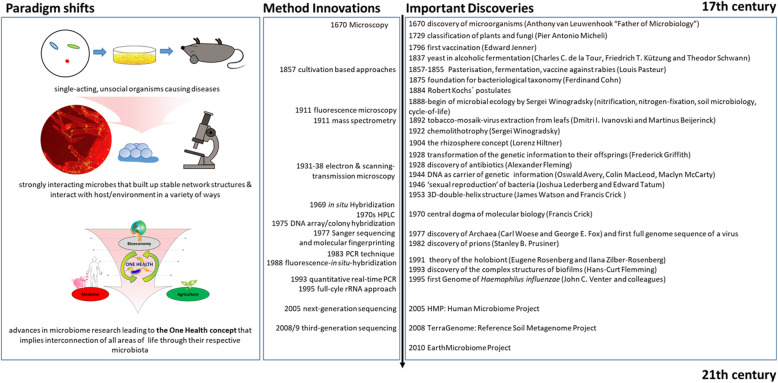
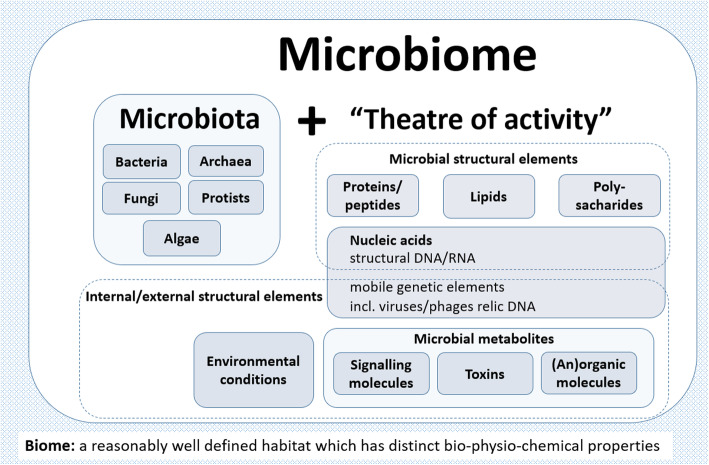
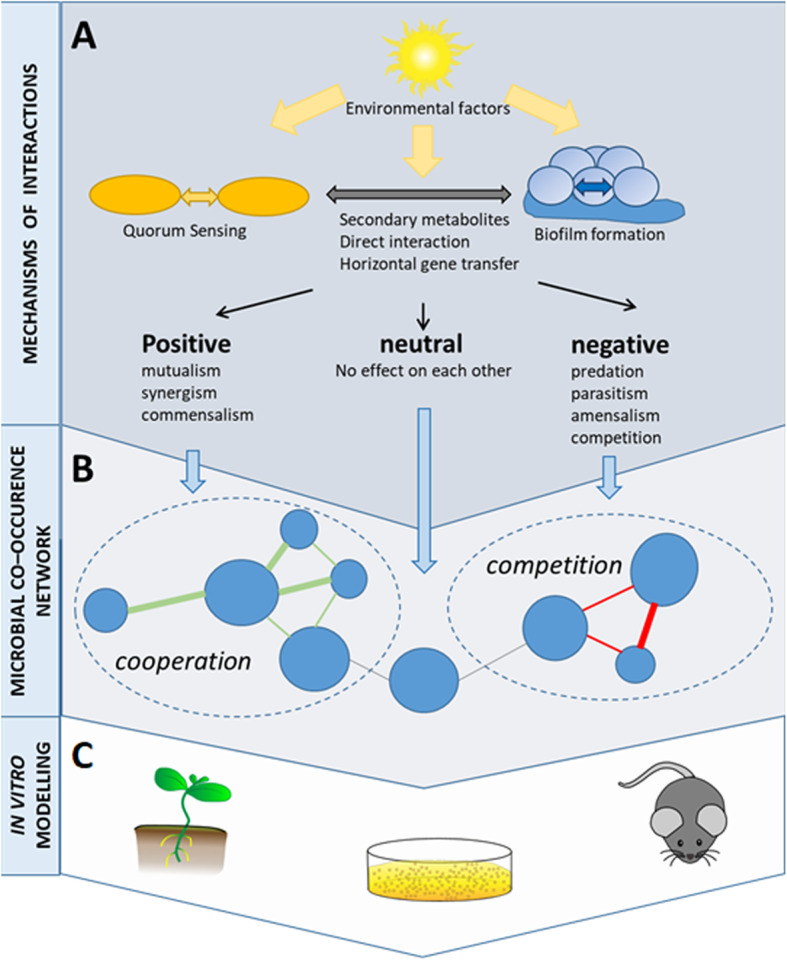
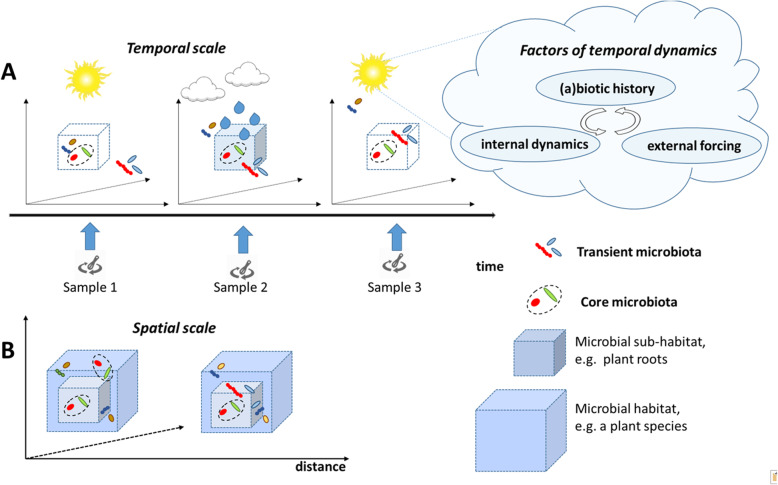
Verification
Claims the paper makes
The claims and statistics of this paper haven’t been checked yet.
Run the check — free, no account needed. It reads the open-access text and checks the sources it cites.
Claims other papers make about this one
Each is checked against this paper’s own text: does it say what the citing paper says it does?
The source backs part of the claim, not all of it — or backs it for a different population, condition or comparison.
In the citing paper
“Complex microbial communities exist everywhere in nature and, over the years, microorganisms have been mutating and evolving to adapt to ever-changing ecosystems [1,2].”
From Microbiota of Cheese Ecosystems: A Perspective on Cheesemaking (2025) · cites this paper as [1]
Experimental — accuracy not yet measuredThe source backs part of the claim, not all of it — or backs it for a different population, condition or comparison.
In the citing paper
“These interactions are critical for adaptation to stress, survival, evolution, and the expression of diverse phenotypes [1,10,22,36,37].”
From Microbiota of Cheese Ecosystems: A Perspective on Cheesemaking (2025) · cites this paper as [1]
Experimental — accuracy not yet measured
Self-check
Percentages, sums and reported differences re-computed from the paper’s own numbers.
The self-check needs the paper’s full text.
Citations
Cites
Reproducible, interactive, scalable and extensible microbiome data science using QIIME 2
Bolyen, E., Rideout, J. R., Dillon, M. R., Bokulich, N. A., Abnet, C. C., Al-Ghalith, G. A., Alexander, H., Alm, E. J., Arumugam, M., Asnicar, F., et al. (2019) · Nature Biotechnology · doi:10.1038/s41587-019-0209-9 · Cited by 23,742
Schloss, P. D., Westcott, S. L., Ryabin, T., Hall, J. R., Hartmann, M., Hollister, E. B., Lesniewski, R. A., Oakley, B. B., Parks, D. H., Robinson, C. J., et al. (2009) · Applied and Environmental Microbiology · doi:10.1128/aem.01541-09 · Cited by 19,549
Report of the Ad Hoc Committee on Reconciliation of Approaches to Bacterial Systematics
Wayne, L. G., Moore, W. E., Stackebrandt, E. S., Kandler, O., Colwell, R. R., Krichevsky, M. I., Trüper, H. G., Murray, R. G. E., Grimont, P. A. D., Brenner, D. J., et al. (1987) · INTERNATIONAL JOURNAL OF SYSTEMATIC AND EVOLUTIONARY MICROBIOLOGY · doi:10.1099/00207713-37-4-463 · Cited by 7,338
Planetary Boundaries: Exploring the Safe Operating Space for Humanity
Rockström, J., Steffen, W., Noone, K., Persson, Å., Chapin, F. S. I., Lambin, E., Lenton, T. M., Scheffer, M., Folke, C., Schellnhuber, H. J., et al. (2009) · Ecology and Society · doi:10.5751/es-03180-140232 · Cited by 7,187
Obesity alters gut microbial ecology
Ley, R. E., Bäckhed, F., Turnbaugh, P., Lozupone, C. A., Knight, R. D., & Gordon, J. I. (2005) · Proceedings of the National Academy of Sciences · doi:10.1073/pnas.0504978102 · Cited by 6,176
Diversity, stability and resilience of the human gut microbiota
Lozupone, C. A., Stombaugh, J. I., Gordon, J. I., Jansson, J. K., & Knight, R. (2012) · Nature · doi:10.1038/nature11550 · Cited by 5,533
DNA–DNA hybridization values and their relationship to whole-genome sequence similarities
Goris, J., Konstantinidis, K. T., Klappenbach, J. A., Coenye, T., Vandamme, P. A. R., & Tiedje, J. M. (2007) · INTERNATIONAL JOURNAL OF SYSTEMATIC AND EVOLUTIONARY MICROBIOLOGY · doi:10.1099/ijs.0.64483-0 · Cited by 4,733
Environmental genome shotgun sequencing of the sargasso sea
Venter, J. C., Remington, K., Heidelberg, J. F., Halpern, A. L., Rusch, D., Eisen, J. A., Wu, D., Paulsen, I., Nelson, K. E., Nelson, W., et al. (2004) · Science · doi:10.1126/science.1093857 · Cited by 4,376
Phylogenetic structure of the prokaryotic domain: The primary kingdoms
Woese, C. R., & Fox, G. E. (1977) · Proceedings of the National Academy of Sciences · doi:10.1073/pnas.74.11.5088 · Cited by 4,131
Exact sequence variants should replace operational taxonomic units in marker-gene data analysis
Callahan, B. J., McMurdie, P. J., & Holmes, S. (2017) · The ISME Journal · doi:10.1038/ismej.2017.119 · Cited by 3,253
Research works printed but not linked: 5
- Hiltner L. Die Keimungsverhältnisse der Leguminosensamen und ihre Beeinflussung durch Organismenwirkung. In: Parey P, Springer J, editors. Arb Biol Abt Land u Forstw K Gsndhtsamt (3). Berlin, Germany; 1902. p. 1-545.
- Whipps J, Lewis K, Cooke R. Mycoparasitism and plant disease control. In: Burge M, editor. Fungi Biol Control Syst. Manchester University Press; 1988. p. 161-187.
- Nature.com: Microbiome. https://www.nature.com/subjects/microbiome. Accessed 15 Oct 2019.
- ScienceDirect: Microbiome. https://www.sciencedirect.com/topics/immunology-and-microbiology/microbiome. Accessed 15 Oct 2019.
- National Center for Biotechnology Information (NCBI). https://www.ncbi.nlm.nih.gov. Accessed 8 Jun 2019.
Cited by
Sorted by citations
Applications of multi‐omics analysis in human diseases
Chen, C., Wang, J., Pan, D., Wang, X., Xu, Y., Yan, J., Wang, L., Yang, X., Yang, M., & Liu, G. (2023) · MedComm · doi:10.1002/mco2.315 · Cited by 545
Microbial-derived metabolites as a risk factor of age-related cognitive decline and dementia
Connell, E., Le Gall, G., Pontifex, M. G., Sami, S., Cryan, J. F., Clarke, G., Müller, M., & Vauzour, D. (2022) · Molecular Neurodegeneration · doi:10.1186/s13024-022-00548-6 · Cited by 208
Solomon, W., Janda, T., & Molnár, Z. (2024) · Plant Physiology and Biochemistry · doi:10.1016/j.plaphy.2023.108290 · Cited by 202
Lagoumintzis, G., & Patrinos, G. P. (2023) · Human Genomics · doi:10.1186/s40246-023-00561-w · Cited by 132
Spichak, S., Bastiaanssen, T. F. S., Berding, K., Vlckova, K., Clarke, G., Dinan, T. G., & Cryan, J. F. (2021) · Neuroscience & Biobehavioral Reviews · doi:10.1016/j.neubiorev.2021.02.044 · Cited by 127
Metadata
- Authors
- Berg, G., Rybakova, D., Fischer, D., Cernava, T., Vergès, M.-C. C., Charles, T., Chen, X., Cocolin, L., Eversole, K., Corral, G. H., Kazou, M., Kinkel, L., Lange, L., Lima, N., Loy, A., Macklin, J. A., Maguin, E., Mauchline, T., McClure, R., Mitter, B., Ryan, M., Sarand, I., Smidt, H., Schelkle, B., Roume, H., Kiran, G. S., Selvin, J., Souza, R. S. C. D., van Overbeek, L., Singh, B. K., Wagner, M., Walsh, A., Sessitsch, A., & Schloter, M.
- Affiliations
- Graz University of Technology (AT)
- Helmholtz Munich (DE)
- University of Waterloo (CA)
- Guizhou University (CN)
- European Food Information Council (BE)
- Département Microbiologie et Chaîne Alimentaire (FR)
- University of Minnesota (US)
- University of Vienna (AT)
- Agriculture and Agri-Food Canada (CA)
- AgroParisTech (FR)
- Rothamsted Research (GB)
- Pacific Northwest National Laboratory (US)
- AIT Austrian Institute of Technology GmbH (AT)
- CAB International (GB)
- Tallinn University of Technology (EE)
- Wageningen University & Research (NL)
- MetaGenoPolis (FR)
- Pondicherry University (IN)
- Universidade Estadual de Campinas (UNICAMP) (BR)
- Western Sydney University (AU)
- Teagasc - The Irish Agriculture and Food Development Authority (IE)
- Corresponding author
- Berg, Gabriele
- Schloter, Michael
- ORCID
- Berg, Gabriele
- Rybakova, Daria
- Fischer, Doreen
- Cernava, Tomislav
- Charles, Trevor
- Chen, Xiaoyulong
- Cocolin, Luca
- Eversole, Kellye
- Kinkel, Linda
- Lange, Lene
- Loy, Alexander
- Macklin, James A.
- Maguin, Emmanuelle
- Mauchline, Tim
- McClure, Ryan
- Mitter, Birgit
- Ryan, Matthew
- Sarand, Inga
- Smidt, Hauke
- Roume, Hugo
- Kiran, G. Seghal
- Selvin, Joseph
- Souza, Rafael Soares Correa de
- Singh, Brajesh K.
- Wagner, Michael
- Walsh, Aaron
- Sessitsch, Angela
- Schloter, Michael
- Venue
- Microbiome
- Published
- 2020-06-30
- Volume
- 8
- Issue
- 1
- Pages
- 103-103
- ISSN
- 2049-2618 (ISSN-L)
- PMC
- PMC7329523
- OpenAlex
- W3040245690
- Cited by
- 2,275
- References
- 201
- Citations by year
- 2026: 329 · 2025: 443 · 2024: 444 · 2023: 425 · 2022: 367 · 2021: 230 · 2020: 34
- FWCI
- 140.07
- Type
- journal article
- Language
- en
- Update notices
- correction (2020-08-20)
- Open access
- gold
- doi.org
- Locations
- Microbiome (publishedVersion, cc-by)
- PubMed Central (publishedVersion, cc-by)
- PubMed (publishedVersion)
- Socio-Environmental Systems Modeling (acceptedVersion, cc-by)
- Arrow@dit (Dublin Institute of Technology) (acceptedVersion)
- Institutional Research Information System University of Turin (University of Turin) (submittedVersion, other-oa)
- OSTI OAI (U.S. Department of Energy Office of Scientific and Technical Information) (submittedVersion)
- PuSH - Publication Server of Helmholtz Zentrum München (submittedVersion, cc-by)
- HAL (submittedVersion, cc-by)
- HAL (submittedVersion)
- DOAJ (DOAJ: Directory of Open Access Journals) (submittedVersion, cc-by-sa)
- Site cant be reached (submittedVersion, cc-by)
- Portuguese National Funding Agency for Science, Research and Technology (RCAAP Project by FCT) (submittedVersion, other-oa)
- Portuguese National Funding Agency for Science, Research and Technology (RCAAP Project by FCT) (submittedVersion, cc-by-nc-nd)
- T-Stór (Teagasc) (submittedVersion, cc-by-nc-sa)
- Lenus, The Irish Health Repository (Dr Steevens Hospital Library) (submittedVersion)
- Data Archiving and Networked Services (DANS) (submittedVersion, cc-by)
- Funders
- Horizon 2020 (European Union's Horizon 2020)
- Topics
- Physical Sciences › Environmental Science › Ecology › Microbial Community Ecology and Physiology
- Life Sciences › Biochemistry, Genetics and Molecular Biology › Molecular Biology › Gut microbiota and health
- Life Sciences › Agricultural and Biological Sciences › Plant Science › Plant-Microbe Interactions and Immunity
- Keywords
- microbiota, core microbiome, keystone species, microbial community dynamics, microbial network stability, host-microbe interactions, interspecies interactions, planetary health, anthropogenic change
- MeSH terms
- Terminology as Topic, Surveys and Questionnaires, Microbiota
About these checks
Registry, retraction, Cites and statistics results are computed, not judged, with one exception: a printed reference that no index lists is read once by a model before it counts as a citation error. Claims are extracted by a model and kept only when their quote appears verbatim in the text; each cited source is then checked, with a model’s help, for whether it says what the claim relies on. Those verdicts can be wrong — read the claim’s quote and the cited source before relying on one.
Statistics and arithmetic are recomputed, not judged.
Confidence bands are shown only for fields calibrated on our annotated test set. None is calibrated yet, so no band is shown.
What counts as a claim ›How we measure confidence ›How we check this ›
Are you an author, or do you see a problem with this page? Request a review
