

Self-reported race/ethnicity in the age of genomic research: its potential impact on understanding health disparities
Open accessThe DOI matches its Crossref record; 115 of the 115 references it cites were found in a registry or an index.
Abstract
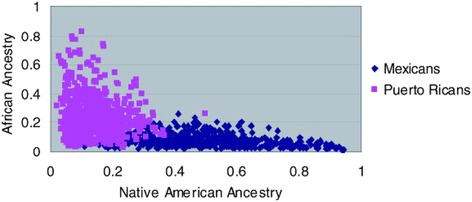
This review explores the limitations of self-reported race, ethnicity, and genetic ancestry in biomedical research. Various terminologies are used to classify human differences in genomic research including race, ethnicity, and ancestry. Although race and ethnicity are related, race refers to a person's physical appearance, such as skin color and eye color. Ethnicity, on the other hand, refers to communality in cultural heritage, language, social practice, traditions, and geopolitical factors. Genetic ancestry inferred using ancestry informative markers (AIMs) is based on genetic/genomic data. Phenotype-based race/ethnicity information and data computed using AIMs often disagree. For example, self-reporting African Americans can have drastically different levels of African or European ancestry. Genetic analysis of individual ancestry shows that some self-identified African Americans have up to 99% of European ancestry, whereas some self-identified European Americans have substantial admixture from African ancestry. Similarly, African ancestry in the Latino population varies between 3% in Mexican Americans to 16% in Puerto Ricans. The implication of this is that, in African American or Latino populations, self-reported ancestry may not be as accurate as direct assessment of individual genomic information in predicting treatment outcomes. To better understand human genetic variation in the context of health disparities, we suggest using "ancestry" (or biogeographical ancestry) to describe actual genetic variation, "race" to describe health disparity in societies characterized by racial categories, and "ethnicity" to describe traditions, lifestyle, diet, and values. We also suggest using ancestry informative markers for precise characterization of individuals' biological ancestry. Understanding the sources of human genetic variation and the causes of health disparities could lead to interventions that would improve the health of all individuals.
Overview
The claims and statistics of this paper haven’t been checked yet.
Free: it reads the open-access text and checks the first 5 claims that cite a source we can check. Create a free account to check every claim.
Integrity signals
Registry
Cites
Statistics
Figures
Verification
Claims the paper makes
The claims and statistics of this paper haven’t been checked yet.
Free: it reads the open-access text and checks the first 5 claims that cite a source we can check. Create a free account to check every claim.
Claims other papers make about this one
Each is checked against this paper’s own text: does it say what the citing paper says it does?
The cited source says what the claim attributes to it.
In the citing paper
“Of note, race can be considered as a social construct rather than a biological construct114,134, as race is a socially derived label that can either be self-reported or assigned and might not justify any biological or genetic differences between populations135,136.”
From A global view of hypertensive disorders and diabetes mellitus during pregnancy (2022) · cites this paper as [136]
Self-check
Percentages, sums and reported differences re-computed from the paper’s own numbers.
The self-check needs the paper’s full text.
Citations
Cites
Inference of Population Structure Using Multilocus Genotype Data
Pritchard, J. K., Stephens, M., & Donnelly, P. (2000) · Genetics · doi:10.1093/genetics/155.2.945 · Cited by 33,908
Initial sequencing and analysis of the human genome
International Human Genome Sequencing Consortium, Whitehead Institute for Biomedical Research, C. F. G. R., Lander, E. S., Linton, L. M., Birren, B., Nusbaum, C., Zody, M. C., Baldwin, J., Devon, K., Dewar, K., et al. (2001) · Nature · doi:10.1038/35057062 · Cited by 24,216 · cited 1×
“The human genome is composed of over three billion bases of DNA and contains between 25,000 and 30,000 protein-coding genes [1].”
An integrated map of genetic variation from 1,092 human genomes
The 1000 Genomes Project Consortium (2012) · Nature · doi:10.1038/nature11632 · Cited by 7,711 · cited 1×
“Because of their sheer number, SNPs are the major sources of genetic and phenotypic diversity, accounting for 95% of all known sequence variations [5].”
THE GENETICAL STRUCTURE OF POPULATIONS
WRIGHT, S. (1949) · Annals of Eugenics · doi:10.1111/j.1469-1809.1949.tb02451.x · Cited by 6,753
Integrating common and rare genetic variation in diverse human populations
The International HapMap 3 Consortium (2010) · Nature · doi:10.1038/nature09298 · Cited by 3,026 · cited 1×
“Large consortium-based next-generation sequencing studies such as the NIH/HLBI GO Exome Sequencing Project, the Consortium on Asthma among African ancestry Populations in the Americas (CAAPA), and the 1000 Genomes Project are currently using next-generation whole exome and whole genome sequencing studies to provide di…”
The Apportionment of Human Diversity
Lewontin, R. C. (1972) · Evolutionary Biology · doi:10.1007/978-1-4684-9063-3_14 · Cited by 2,472 · cited 1×
“Several studies including ours showed that genetic diversity in humans is higher between individuals of the same race (~85%) than between races (~15%) [4,24].”
Identification of Asthma Phenotypes Using Cluster Analysis in the Severe Asthma Research Program
Moore, W. C., Meyers, D. A., Wenzel, S. E., Teague, W. G., Li, H., Li, X., D'Agostino, R., Castro, M., Curran-Everett, D., Fitzpatrick, A. M., et al. (2010) · American Journal of Respiratory and Critical Care Medicine · doi:10.1164/rccm.200906-0896oc · Cited by 2,129 · cited 1×
“A recent study by the NHBLI-SARP caseonly cohort indicated the predictive role of PFT in asthma severity [60,61].”
Prescribing Personalized Nutrition for Cardiovascular Health: Are We Ready?
Juma, S., Imrhan, V., Vijayagopal, P., & Prasad, C. (2014) · Lifestyle Genomics · doi:10.1159/000370213 · Cited by 1,891
The Diploid Genome Sequence of an Individual Human
Levy, S., Sutton, G., Ng, P. C., Feuk, L., Halpern, A. L., Walenz, B. P., Axelrod, N., Huang, J., Kirkness, E. F., Denisov, G., et al. (2007) · PLoS Biology · doi:10.1371/journal.pbio.0050254 · Cited by 1,778 · cited 1×
“(569,000 and 481,000, respectively) [25-27].”
Whole-Genome Patterns of Common DNA Variation in Three Human Populations
Hinds, D. A., Stuve, L. L., Nilsen, G. B., Halperin, E., Eskin, E., Ballinger, D. G., Frazer, K. A., & Cox, D. R. (2005) · Science · doi:10.1126/science.1105436 · Cited by 1,170
Cited by
Items 301–400 of 472
Crutchley, R. D., & Keuler, N. L. (2022) · Frontiers in Pharmacology · doi:10.3389/fphar.2022.884213 · Cited by 7
“Self-reporting of ethnicity may be a limitation as it may not be a true reflection of the true genetic composition of individuals (Mersha and Abebe, 2015).”
BackgroundHardy, D. S., Garvin, J. T., & Baye, T. M. (2024) · Nutrients · doi:10.3390/nu16040567 · Cited by 4
“We used self-reported race as ancestry because reports show that self-reported race is, on average, 89% in agreement with global ancestry in published reports [29].”
Kim, H., Ward, L. M., Thabane, L., Παπαϊωάννου, Α., Wong, A. K. O., Adachi, J. D., Ma, J., & Rauch, F. (2025) · Bone · doi:10.1016/j.bone.2025.117487 · Cited by 4
Autonomic dysfunction in polycystic ovary syndrome
Adams, Z. H., Simpson, L. L., Hart, E. C., & Lord, R. N. (2025) · Autonomic Neuroscience · doi:10.1016/j.autneu.2025.103357 · Cited by 4
Diversity-in-a-dish: A practical framework for hiPSC model development
Weidema, J., Lammertse, H., de Vries, M. C., Mummery, C. L., Munsie, M., & de Graeff, N. (2026) · Stem Cell Reports · doi:10.1016/j.stemcr.2026.102858 · Cited by 4
Luzum, J. A., Edokobi, O., Dorsch, M. P., Peterson, E. L., Liu, B., Gui, H., Williams, L. K., & Lanfear, D. E. (2021) · Journal of Cardiac Failure · doi:10.1016/j.cardfail.2021.08.007 · Cited by 4
“This may be particularly important for Black Americans, who can have substantial differences in the proportion of African ancestry due to admixture.(25,26) Therefore, for the first time, this study compared long-term survival benefit resulting from angiotensin inhibitors by both self-identified race and genomic ancest…”
BackgroundHaeny, A. M., & Polimanti, R. A. (2022) · Biological Psychiatry · doi:10.1016/j.biopsych.2022.02.953 · Cited by 4
Adherence to unilateral hypoglossal nerve stimulation and changes in Epworth Sleepiness Scale scores
Commesso, E. A., Haghighian, C., & Kezirian, E. J. (2025) · Journal of Clinical Sleep Medicine · doi:10.5664/jcsm.11620 · Cited by 4
“28,29 Differences for race with HGNS mirror differences found with CPAP use.”
Role of Genetics in Early-Onset Cardiovascular Disease
van de Meer, M. G., van de Meer, M. G., Mumtaz, M. A., & Jawed, U. (2025) · Cureus · doi:10.7759/cureus.85988 · Cited by 7
“Moreover, the genetic variations responsible for CVD are population-specific due to genetic background and environmental exposure peculiar to different populations [20].”
Kumar, S., & Goel, P. (2025) · Methods in molecular biology · doi:10.1007/978-1-0716-4690-8_20 · Cited by 4
Alexis, A. F., Kircik, L., Chovatiya, R., Rice, Z. P., Soong, W., Bhutani, T., Brown, P. M., Piscitelli, S. C., Rubenstein, D. S., Tallman, A. M., et al. (2025) · Dermatology and Therapy · doi:10.1007/s13555-025-01489-w · Cited by 4
“…was well tolerated with no new safety signals.. People with skin of color comprise a diverse range of individuals from a large number of racial and ethnic backgrounds that may be distinct or heterogeneous [36], and more research may be needed on responses to therapy in some of these groups.”
Grand challenges in stroke genomics
Fornage, M. (2022) · Frontiers in Stroke · doi:10.3389/fstro.2022.984176 · Cited by 6
“Increasing socio-cultural diversity is important because social and cultural measures of identity, such as self-reported “race” or “ethnicity,” are intricately tied to historical, political and traditional contexts that often shape institutional and structural inequalities and result in health disparities (Mersha and…”
BackgroundHao, K., Zhang, J., Narzo, A. D., Zhang, X., Hao, A., Shan, M., Deyssenroth, M. A., Chen, J., Zhang, Z., & Cheng, H. M. (2023) · The Science of The Total Environment · doi:10.1016/j.scitotenv.2023.162390 · Cited by 4
Race and Ethnicity: Understanding Difference in the Genome Era
Kelly, S. J., & Pathak, Y. V. (2018) · Springer eBooks · doi:10.1007/978-981-10-7506-3_5 · Cited by 4
Race and Health: Dilemmas of the South African health researcher
Volmink, J. A., Hendricks, L., Mazibuko, L., & Swartz, L. M. (2020) · African Sun Media eBooks · doi:10.18820/9781928480495/07 · Cited by 6
Social determinants of racial and socioeconomic disparities in CKD and ESRD
Norton, J. M. (2020) · Elsevier eBooks · doi:10.1016/b978-0-12-817080-9.00004-x · Cited by 8
Vieira, M. C., Mendes, F. D. S. N. S., Mazzoli‐Rocha, F., da Silva, R. S., Viana, A., Frota, A. X., da Silva, G. M. S., da Silva, P. S., Hasslocher‐Moreno, A. M., Saraiva, R. M., et al. (2021) · Tropical Medicine & International Health · doi:10.1111/tmi.13537 · Cited by 4
Correa-Agudelo, E., Ding, L., Beck, A. F., Mendy, A., & Baye, T. M. (2023) · Annals of the American Thoracic Society · doi:10.1513/annalsats.202207-580oc · Cited by 4
Framework for Inclusive Literature in Teacher Education
Pfundheller, M., & Liesch, J. (2023) · Journal of Higher Education Theory and Practice · doi:10.33423/jhetp.v23i15.6406 · Cited by 4
The Intersection between Pharmacogenomics and Health Equity: A Case Example
Paetznick, C., & Okoro, O. N. (2023) · Pharmacy · doi:10.3390/pharmacy11060186 · Cited by 4
“In the PGx and warfarin algorithm studies, the patients of African ancestry are an unfortunate example of inappropriate genotyping and misclassifying phenotype that resulted in higher INRs and risk of bleeding compared to European ancestry patients when using PGx-guided dosing algorithm [32–34].”
ResultPharmacogenetics and Oxcarbazepine in Children and Adolescents: Beyond HLA-B *15:02
Stancil, S. L., Sandritter, T. L., & Strawn, J. R. (2024) · Journal of Child and Adolescent Psychopharmacology · doi:10.1089/cap.2023.0064 · Cited by 4
“However, patients may endorse multiple race/ ethnicities and self-report and genetic ancestry may be discrepant (Banda et al., 2015; Mersha and Abebe, 2015), making decisions regarding ancestry-based preemptive genetic testing nebulous.”
Universal G6PD Screening: A Retrospective Chart Review
Baker, J. M., Uduwana, S. R., & Nemerofsky, S. L. (2024) · Clinical Pediatrics · doi:10.1177/00099228241242832 · Cited by 5
How Could Ethnicity-Associated Microbiomes Contribute to Personalized Therapies?
Brooks, A. (2019) · Future Microbiology · doi:10.2217/fmb-2019-0061 · Cited by 4
Baye, T. M., & Abebe, T. (2021) · Human Genomics · doi:10.1186/s40246-021-00322-7 · Cited by 4
Self-citationYadav, G., Rao, J., Miller-Monthrope, Y., Abbarin, N., Park‐Wyllie, L. Y., & Yeung, J. (2024) · JAAD reviews. · doi:10.1016/j.jdrv.2024.11.003 · Cited by 3
“31,38 Racial identity is complex and may not necessarily reflect skin color, particularly for multiracial individuals.”
Investigation of Skin Pigmentation Effect on Performance of Pulse Oximetry
Travers, A. B., Terry, C. R., Merrell, W. P., Heincelman, M. E., Warden, A. D., & Goodwin, A. J., IV (2025) · CHEST Critical Care · doi:10.1016/j.chstcc.2025.100209 · Cited by 3
Updated Review: Using the National Cancer Database for Outcomes-Based Research
Ayoade, O. F., Caturegli, G., Palis, B. E., McCabe, R. M., Weigel, R. J., Canavan, M., Boughey, J. C., & Boffa, D. J. (2026) · Journal of the American College of Surgeons · doi:10.1097/xcs.0000000000001924 · Cited by 3
A Genetics-Focused Lens on Social Constructs in Pharmacy Education
Lipscomb, J. S., Gálvez‐Peralta, M., Cropp, C. D., Delgado, E., Crutchley, R. D., Calinski, D. M., & Iwuchukwu, O. F. (2023) · American Journal of Pharmaceutical Education · doi:10.1016/j.ajpe.2023.100077 · Cited by 3
Rey-Vargas, L., Bejarano-Rivera, L. M., López-Correa, P., Ballén, D. F., & Serrano-Gomez, S. J. (2025) · Frontiers in Oncology · doi:10.3389/fonc.2025.1635681 · Cited by 4
“Self-reported ethnicity comprehends a heterogeneous group with mixed ancestries (57).”
Assessing Clinical Deterioration in Children With Dark‐Coloured Skin: A Scoping Review
Kelly, C., Leslie, G. D., Laird, P. J., Stokes, S., & Gill, F. J. (2025) · Journal of Clinical Nursing · doi:10.1111/jocn.70060 · Cited by 3
“Historically, skin colour has been conflated with race or ethnicity and has led to high variability of terms used to describe dark-coloured skin (Mersha and Abebe 2015).”
Human Population Variability and Its Adaptive Significance
Tibayrenc, M. (2016) · Elsevier eBooks · doi:10.1016/b978-0-12-420190-3.00006-5 · Cited by 3
Sleep Association With Borderline Diabetes Hypertension: A Cross-sectional Analysis
Klingman, K. J., & Boyce, A. A. (2018) · The Journal for Nurse Practitioners · doi:10.1016/j.nurpra.2017.12.027 · Cited by 3
Race Differences: A Very Brief Review
Kirkegaard, E. O. W. (2019) · Mankind Quarterly · doi:10.46469/mq.2019.60.2.2 · Cited by 5
Origen étnico y ancestría genética, ¿qué lugar tienen en la práctica médica en Argentina?
Ruderman, A., Paschetta, C., González‐José, R., & Ramallo, V. (2020) · Revista Argentina de Antropología Biológica · doi:10.24215/18536387e020 · Cited by 3
Maximizing the reusability of gene expression data by predicting missing metadata
Lung, P.-Y., Zhong, D., Pang, X., Li, Y., & Zhang, J. (2020) · PLoS Computational Biology · doi:10.1371/journal.pcbi.1007450 · Cited by 3
Does Reminding of Behavioural Biases Increase Returns from Financial Trading? A Field Experiment
Paola, M. D., Gioia, F., & Piluso, F. (2020) · International Journal of Economics and Finance · doi:10.5539/ijef.v12n2p1 · Cited by 3
Applicability of ancestral genotyping in pharmacogenomic research with hormonal contraception
Lazorwitz, A. M., Aquilante, C. L., Shortt, J., Sheeder, J. L., Teal, S. B., & Gignoux, C. R. (2021) · Clinical and Translational Science · doi:10.1111/cts.13014 · Cited by 3
Hirko, K. A. (2022) · EMJ Innovation · doi:10.33590/emjinnov/10018969 · Cited by 5
Obeng‐Gyasi, S., Handley, D., Elsaid, M. I., Rahurkar, S., Andersen, B. L., Jonnalagadda, P., Chen, J., Owusu‐Brackett, N., Carson, W. E., & Stover, D. G. (2023) · Journal of Racial and Ethnic Health Disparities · doi:10.1007/s40615-023-01788-y · Cited by 3
“For example, most descendants of formerly enslaved Black people in the USA are an admixture of European and African ancestry, suggesting individuals racialized as Black are heterogenous [46].”
Wong, A. K. Y., Klepstad, P., Somogyi, A. A., Vogrin, S., Le, B. H. C., Philip, J. A. M., & Rubio, J. P. (2009) · Pharmacogenomics · doi:10.2217/pgs-2023-0207 · Cited by 3
Ayala, I. N., García-Méndez, J. P., Tekin, A., Malinchoc, M., & Barwise, A. K. (2024) · Journal of Racial and Ethnic Health Disparities · doi:10.1007/s40615-024-01975-5 · Cited by 3
Racial disparities in maternal blood transfusion in the United States by mode of delivery
Hossein-Pour, P., Rajasingham, M., Zeller, M. P., & Muraca, G. M. (2024) · PLoS ONE · doi:10.1371/journal.pone.0312110 · Cited by 3
“Rather, we acknowledge that race is instead a social and cultural context whose value in this analysis is to serve as a proxy for structural and systematic racism [16, 17].”
Human Intergroup Variation and Disease Genetics
Tibayrenc, M. (2016) · Elsevier eBooks · doi:10.1016/b978-0-12-420190-3.00010-7 · Cited by 3
Pharmacogenomics in Latin American Populations
Botton, M. R., Campos, K. C., Duconge-Soler, J., & Scott, S. A. (2019) · Elsevier eBooks · doi:10.1016/b978-0-12-812626-4.00012-7 · Cited by 5
Ethnicity and Workplace Bullying
Bergbom, B., & Vartia, M. A.-L. (2019) · Handbooks of Workplace Bullying, Emotional Abuse and Harassment/Handbooks of workplace bullying, emotional abuse and harassment · doi:10.1007/978-981-10-5338-2_14-1 · Cited by 3
Moodley, K. (2020) · African Sun Media eBooks · doi:10.18820/9781928480495/16 · Cited by 5
The Role of Genetics in Racial Categorisation of Humans
Bardien-Kruger, S., & Müller-Nedebock, A. C. (2020) · African Sun Media eBooks · doi:10.18820/9781928480495/01 · Cited by 5
Taha, A. T., Zhang, Y. S., Thompson, I. J. B., Poddar, A., Keenan, J. D., & Stewart, J. M. (2024) · Ophthalmic Epidemiology · doi:10.1080/09286586.2024.2348050 · Cited by 2
“54 Moreover, categorizations of race and ethnicity cannot be substituted as correlates for biologic or genetic patterns.”
Lee, E., & Orton, K. (2024) · Journal of Medical Genetics · doi:10.1136/jmg-2024-110365 · Cited by 2
“38 Surname-based inference can be particularly confounded by marriage or historical factors that affect surname propagation.”
Diversity matters in Peyronie’s disease clinical trials—a systematic review
Lindenbaum, M. M., Ljubetic, B. M., Leelani, N., Khooblall, P., Bole, R., Lundy, S. D., & Bajic, P. (2025) · The Journal of Sexual Medicine · doi:10.1093/jsxmed/qdaf134 · Cited by 2
Steimle, L., & Schües, C. (2025) · Metamedicine · doi:10.1007/s11017-025-09723-4 · Cited by 2
“Race is therefore not a good surrogate for individualized therapies [19, 74].”
Giles, A., Zayhowski, K., Ruderman, M., Rañola, J. M. O., VanNoy, G. E., & Towne, M. C. (2025) · Genetics in Medicine · doi:10.1016/j.gim.2025.101576 · Cited by 2
Sun, L., Sun, X., Qiao, C., Lu, Y., Li, Q., Wang, Q., & Gao, H. (2026) · Saudi Journal of Gastroenterology · doi:10.4103/sjg.sjg_384_25 · Cited by 2
Insights into inherited genetic variations and genetic ancestry of patients with high-risk melanoma
Tarhini, A., Khaksar, M. A., Chen, Z.-H., Lee, S. J., Hodi, F., Li, T.-Y., Monteiro, A. N., Streicher, H., Sondak, V. K., Wang, X.-F., et al. (2026) · Melanoma research · doi:10.1097/cmr.0000000000001087 · Cited by 2
Historically Marginalized and Minority Populations With Pulmonary Arterial Hypertension
Bernardo, R. J., Ortega, V. E., Glenn, J. E., Stephens, L., Morel, K. C., Elwing, J., & Rischard, F. P. (2026) · CHEST Journal · doi:10.1016/j.chest.2026.07.5000 · Cited by 2
Pap, A. L., & Szitkay, E. K. (2023) · Sociétés plurielles · doi:10.46298/societes-plurielles.2023.11295 · Cited by 6
Prom‐Wormley, E. C., Wells, J. L., Landes, L., Edmondson, A. N., Sankoh, M., Jamieson, B., Delk, K. J., Surya, S., Bhati, S., & Clifford, J. S. (2023) · Frontiers in Genetics · doi:10.3389/fgene.2023.1103966 · Cited by 3
Global impact and application of Precision Healthcare
Mentis, A. A., & Liu, L. (2024) · Elsevier eBooks · doi:10.1016/b978-0-443-13963-5.00001-7 · Cited by 3
Ивановна, А. Е., Yarmolinskaya, M. I., & Osinovskaya, N. S. (2023) · Journal of obstetrics and women s diseases · doi:10.17816/jowd611015 · Cited by 2
Empirical Nutrition Models and Their Impact on Public Health
Khairullina, E., Baspakova, A. M., & Zhumagaliyeva, S. (2024) · Медицинский журнал Западного Казахстана · doi:10.18502/wkmj.v66i1.15681 · Cited by 2
“This tailored approach is particularly crucial in the context of diverse populations with varying dietary habits, cultural practices, and health disparities [22].”
BackgroundZech, J. R., Santos, L., Staffa, S. J., Zurakowski, D., Rosenwasser, K. A., Tsai, A., & Jaramillo, D. (2024) · Radiology · doi:10.1148/radiol.231055 · Cited by 2
Genotype versus phenotype versus environment
Kroon, E. E., Swart, Y., van Rensburg, R., Cuttler, K., Müller-Nedebock, A. C., & Kotze, M. J. (2024) · Elsevier eBooks · doi:10.1016/b978-0-443-18546-5.00007-3 · Cited by 5
Photoprotection and Skin of Color
Buster, K. J., & Ledet, J. J. (2016) · Springer eBooks · doi:10.1007/978-3-319-29382-0_7 · Cited by 2
Genetics and Stevens-Johnson Syndrome/Toxic Epidermal Necrolysis: What Have We Learned?
Dunn, J. P. (2017) · JAMA Ophthalmology · doi:10.1001/jamaophthalmol.2017.0136 · Cited by 3
Tibayrenc, M. (2016) · Elsevier eBooks · doi:10.1016/b978-0-12-420190-3.00037-5 · Cited by 2
Callister, P., Chambers, G. K., & Didham, R. A. (2015) · doi:10.13140/rg.2.1.4146.5683 · Cited by 2
West, K. M. (2017) · ResearchWorks at the University of Washington (University of Washington) · Cited by 5
Pierz, K. A. (2020) · Clinical Orthopaedics and Related Research · doi:10.1097/corr.0000000000001620 · Cited by 2
“When trying to understand human variation in the context of health disparities, Mersha and Abebe [6] recommend using “race” to describe characteristics such as skin color and eye color; “ethnicity” to describe traditions, cultural heritage, and language; and “ancestry” to describe genetic/genomic data, citing that gen…”
BackgroundPRECISION MEDICINE IN SOCIETY: PROMISES, EXPECTATIONS AND CONCERNS AROUND SOCIAL AND HEALTH EQUITY
Galasso, I. (2019) · Archivio Istituzionale della Ricerca (Universita Degli Studi Di Milano) · doi:10.13130/galasso-ilaria_phd2019-01-28 · Cited by 7
Patel, M. S., Mian, A., Jalota, A., Bazeley, P. S., Patil, S. N., Hill, B. T., & Gupta, N. (2024) · medRxiv · doi:10.1101/2024.12.12.24318935 · Cited by 2
Molecular Diagnosis of Genetic Diseases of the Kidney: Primer for Pediatric Nephrologists
Waters, A. M., & Lemaire, M. J. (2023) · Springer eBooks · doi:10.1007/978-3-031-11665-0_4 · Cited by 1
Teong, W. Z., Aziz, M. F. B. A., & Phan, C. (2023) · Developing World Bioethics · doi:10.1111/dewb.12435 · Cited by 1
Richardson, J. D., Kline, H., Ko, B. Y., Hooper, A., Komanapalli, S. A., Alvarez-Del-Pino, J. D., & Yeh, E. S. (2024) · Medical Science Educator · doi:10.1007/s40670-024-02099-5 · Cited by 1
“Although racial groups share some degree of ancestral and geographical origins, there is greater genetic diversity within racial groups than across racial groups [3].”
Patients with glioblastoma: A tale of health care access and genetic ancestry
Asfaw, Z. K., Hernandez‐Marquez, G. C., & Germano, I. M. (2024) · Cancer · doi:10.1002/cncr.35470 · Cited by 1
“13,14 Another previous study that compared the genomic and molecular compositions of patients with GB reported that genetic ancestry influenced pharmacologic response to therapy.”
Implementing population pharmacogenomics: Tailoring drug therapy for diverse populations
Karamperis, K., & Patrinos, G. P. (2024) · Elsevier eBooks · doi:10.1016/b978-0-443-18546-5.00008-5 · Cited by 1
Sildva, T., Miller, E., Henry, A., Noel, K., Ahmed, S., Chowdhary, S., Ghany, M., Wagner, H. E., Bombard, Y., Fleshner, N. E., et al. (2025) · Research Involvement and Engagement · doi:10.1186/s40900-025-00743-x · Cited by 1
“Self-reported race is not always concordant with genetic ancestry, adding a layer of complexity to this analysis [81, 82].”
Epigenetics of Developmental Disorders
Agboola, O., & Adegoke, A. A. (2025) · Path of Science · doi:10.22178/pos.121-21 · Cited by 1
“Recent studies have demonstrated that genetic ancestry significantly modulates epigenetic responses to identical ecological factors, suggesting that intervention strategies derived from other populations may be inadequate for Nigerian children [17].”
Breast Cancer Incidence Rates in Ghanaian and US Black Women From 2013 Through 2015
Lynn, B. C. D., Figueroa, J. D., Laryea, D. O., Awittor, F. K., Oti, N. O. O., Booker, Q., Edusei, L., Titiloye, N. A., Adjei, E., Addai, B. W., et al. (2025) · JAMA Network Open · doi:10.1001/jamanetworkopen.2025.37160 · Cited by 1
Peugh, E. E., Hull, S. C., & Jamal, L. (2025) · Journal of Genetic Counseling · doi:10.1002/jgc4.70124 · Cited by 1
“In practice, most patients do not have a complete understanding of their ancestral origins (Mersha & Abebe, 2015 ).”
Segar, M. W., Keshvani, N., Jaeger, B. C., Rosenblatt, A., Razavi, M., Saeed, M., Rodríguez, C. J., Khan, S. S., Kao, D. P., & Pandey, A. (2025) · Heart Rhythm · doi:10.1016/j.hrthm.2025.12.008 · Cited by 2
Onstwedder, S. M., van El, C. G., Rodenburg, W., Thorogood, A., Cornel, M. C., & Rigter, T. (2026) · Frontiers in Genetics · doi:10.3389/fgene.2025.1603420 · Cited by 1
“Meanwhile, some individuals or populations may experience an unfair distribution of outcomes, e.g., inequitable access to follow-up care and testing (Goering et al., 2008; Mersha and Abebe, 2015).”
Casalino, S., Aujla, N., Frangione, E., Mahajan, R., Iorio, D. D., Fung, C. Y. J., Jayachandran, L., MacDonald, G., Morgan, G., Wolday, D., et al. (2026) · Genetics in Medicine Open · doi:10.1016/j.gimo.2026.104372 · Cited by 1
“60 Finally, we were unable to elucidate participants ’ motivations for enrolling in the GENCOV study and opting to receive GS findings.”
Srinivasan, P., Bristow, S. L., Mendez, F. L., Krinshpun, S., Jurdi, A. A., Liu, M., Rabinowitz, M., Wall, J. D., Bustamante, C. D., Ioannidis, A. G., et al. (2026) · Cancer Epidemiology Biomarkers & Prevention · doi:10.1158/1055-9965.epi-26-0020 · Cited by 1
“Although the concordance between self-reported race/ethnicity and genetic ancestry is relatively high (16), specific populations, such as Hispanic/Latinos, are known to be an admixture of Native American (AMR), African (AFR), and European (EUR) ancestries, the contributions of each varying by…”
Ogden, J. (2014) · Wiley eBooks · doi:10.1002/9781118715017.ch15 · Cited by 1
Cultural Competence and Disaster Mental Health
Mostofi, M., & Brown, L. M. (2020) · Springer eBooks · doi:10.1007/978-3-030-51525-6_7 · Cited by 1
Atkins, R., Kelly, T.-A., Johnson, S., Deatrick, J. A., Wunnenberg, M., Joseph, P. V., Pudasainee‐Kapri, S., Gage, G. S., Pontes, N. M. H., Cresse, N., et al. (2022) · Archives of Psychiatric Nursing · doi:10.1016/j.apnu.2022.07.002 · Cited by 1
Nava-Cedeño, D., Alonso‐Cerezo, M. C., García, A. S., Vega-Zelaya, L., Gordillo-Perdomo, J. J., Heras, M. D. T., Gómez, J. P., Torres, C. V., Pulido, P., & de Sola, R. G. (2022) · Revista de Neurología · doi:10.33588/rn.7509.2022133 · Cited by 1
“Dichas frecuencias pueden variar según la población y explicar diferencias étnicas [7].”
BackgroundMansilla, F. C., Avena, S. A., Dejean, C. B., Turco, C. S., & Capozzo, A. V. (2022) · Journal of Basic and Applied Genetics · doi:10.35407/bag.2022.33.02.02 · Cited by 1
Shui, Y., Liu, Y., Huang, A., & Siegfried, C. J. (2024) · Scientific Reports · doi:10.1038/s41598-024-61071-w · Cited by 1
“However, its reliability and correlation with true ancestral origins are uncertain, potentially impacting genomic assessments 39 .”
BackgroundIdentifying High-Priority Ethical Challenges for Precision Emergency Medicine: Nominal Group Study
Rose, C. C., Shearer, E. J., Woller, I. A., Foster, A. A., Ashenburg, N. G., Kim, I., & Newberry, J. A. (2025) · JMIR Formative Research · doi:10.2196/68371 · Cited by 1
“Furthermore, even when data are available, the actualiza-tion of precision medicine in the care environment may serve only to perpetuate systemic flaws in the health care system if that data is inaccurate, biased, or exclusionary from the start [7,66].”
Influence of Race and Ethnicity on the Precision Diagnosis and Treatment of ILD
Ferraro, V., & Morisset, J. (2025) · Respiratory medicine · doi:10.1007/978-3-031-87183-2_7 · Cited by 1
Kilgour, J. M., & Fulchand, S. (2018) · ORCA Online Research @Cardiff (Cardiff University) · doi:10.18573/bsdj.v2i2 · Cited by 1
Jones-Jack, N. (2016) · ScholarWorks (Walden University) · Cited by 2
Deconstructing the Melting Pot in Pulmonary Arterial Hypertension
Austin, E. D., & Hamid, R. (2020) · American Journal of Respiratory and Critical Care Medicine · doi:10.1164/rccm.202001-0156ed · Cited by 1
“Errors may arise from an individual’s lack of knowledge about his or her actual background and alignment with an ethnic group that has a genetically admixed background (11).”
Identity-by-descent captures shared environmental factors at biobank scalePreprint
Marsico, F. L., Buonaiuto, S., Amos-Abanyie, E. K., Chinthala, L. K., Mohammed, A., Zahr, R., Rooney, R. J., Williams, R. W., Davis, R. L., Finkel, T. H., et al. (2025) · bioRxiv (Cold Spring Harbor Laboratory) · doi:10.1101/2025.05.03.652048 · Cited by 1
Social Factors of Health Covary with Population Stratification and Confound Heritability EstimatesPreprint
Liquori, J. L., Risse-Adams, O. S., Bharadwaj, R., Ong, D., Sinnott-Armstrong, N., & Musharoff, S. A. (2025) · bioRxiv (Cold Spring Harbor Laboratory) · doi:10.1101/2025.06.12.659317 · Cited by 1
Ch, I. A., Qasim, S. A., Zafar, H., Maryam, S. D., Khan, I., Qasim, M., Rahman, S. U., Kalra, A., & Nasir, K. (2025) · medRxiv · doi:10.64898/2025.12.16.25342435 · Cited by 1
Influence of Health Beliefs on Diabetes Self-care in Saudi Adults
Albargawi, M. (2017) · Minds at UW (University of Wisconsin)
Elango, S., & Gupta, I. (2017) · Digital Commons-Sarah Lawrence (Sarah Lawrence College)
Little, K. (2017) · Minerva Access (University of Melbourne)
Metadata
- Authors
- Mersha, T. B., & Abebe, T.
- Affiliations
- University of Northern Iowa (US)
- Venue
- Human Genomics
- Published
- 2015-01-07
- Volume
- 9
- Issue
- 1
- Pages
- 1-1
- ISSN
- 1473-9542 (ISSN-L)
- 1479-7364
- PMC
- PMC4307746
- OpenAlex
- W2113129492
- Cited by
- 450
- References
- 115
- Citations by year
- 2026: 18 · 2025: 49 · 2024: 55 · 2023: 51 · 2022: 56 · 2021: 42 · 2020: 41 · 2019: 39 · 2018: 39 · 2017: 29 · 2016: 22 · 2015: 6
- FWCI
- 22.00
- Type
- journal article
- Language
- en
- Update notices
- correction (2021-06-15)
- Open access
- gold
- doi.org
- Licence
- cc-by
- creativecommons.org/licenses/by/4.0 (tdm)
- creativecommons.org/licenses/by/4.0 (vor)
- Locations
- Human Genomics (publishedVersion, cc-by)
- Europe PMC (PubMed Central) (publishedVersion, cc-by)
- PubMed Central (publishedVersion, cc-by)
- PubMed (publishedVersion)
- UNI ScholarWorks (University of Northern Iowa) (submittedVersion, cc-by)
- UNI ScholarWorks (University of Northern Iowa) (submittedVersion)
- Funders
- National Institutes of Health
- National Heart, Lung, and Blood Institute (K01HL103165)
- Topics
- Social Sciences › Anthropology › Race, Genetics, and Society
- Life Sciences › Biochemistry, Genetics and Molecular Biology › Genetics › Forensic and Genetic Research
- Life Sciences › Biochemistry, Genetics and Molecular Biology › Genetics › Genetic Associations and Epidemiology
- Keywords
- self-reported race, self-reported ethnicity, genetic ancestry, ancestry informative markers, health disparities, African Americans, Latino population, admixture, biogeographical ancestry, human genetic variation, genomic research
- MeSH terms
- Ethnicity, Genetic Markers, Humans, Phenotype, Genomics, Biomedical Research, Racial Groups, Self Report
About these checks
Registry, retraction, Cites and statistics results are computed, not judged, with one exception: a printed reference that no index lists is read once by a model before it counts as a citation error. Claims are extracted by a model and kept only when their quote appears verbatim in the text; each cited source is then checked, with a model’s help, for whether it says what the claim relies on. Those verdicts can be wrong — read the claim’s quote and the cited source before relying on one.
Statistics and arithmetic are recomputed, not judged.
Confidence bands are shown only for fields calibrated on our annotated test set. None is calibrated yet, so no band is shown.
What counts as a claim ›How we measure confidence ›How we check this ›
Are you an author, or do you see a problem with this page? Request a review
Data sources
Bibliographic data: Semantic Scholar, OpenAlex, Crossref.
Contains information from the Semantic Scholar Academic Graph Datasets, made available under the ODC Attribution License (ODC-BY 1.0).
Semantic Scholar’s data is described in: Kinney, R., et al. (2023). The Semantic Scholar Open Data Platform. arXiv:2301.10140.
