

Self-reported race/ethnicity in the age of genomic research: its potential impact on understanding health disparities
Open accessThe DOI matches its Crossref record; 115 of the 115 references it cites were found in a registry or an index.
Abstract
This review explores the limitations of self-reported race, ethnicity, and genetic ancestry in biomedical research. Various terminologies are used to classify human differences in genomic research including race, ethnicity, and ancestry. Although race and ethnicity are related, race refers to a person's physical appearance, such as skin color and eye color. Ethnicity, on the other hand, refers to communality in cultural heritage, language, social practice, traditions, and geopolitical factors. Genetic ancestry inferred using ancestry informative markers (AIMs) is based on genetic/genomic data. Phenotype-based race/ethnicity information and data computed using AIMs often disagree. For example, self-reporting African Americans can have drastically different levels of African or European ancestry. Genetic analysis of individual ancestry shows that some self-identified African Americans have up to 99% of European ancestry, whereas some self-identified European Americans have substantial admixture from African ancestry. Similarly, African ancestry in the Latino population varies between 3% in Mexican Americans to 16% in Puerto Ricans. The implication of this is that, in African American or Latino populations, self-reported ancestry may not be as accurate as direct assessment of individual genomic information in predicting treatment outcomes. To better understand human genetic variation in the context of health disparities, we suggest using "ancestry" (or biogeographical ancestry) to describe actual genetic variation, "race" to describe health disparity in societies characterized by racial categories, and "ethnicity" to describe traditions, lifestyle, diet, and values. We also suggest using ancestry informative markers for precise characterization of individuals' biological ancestry. Understanding the sources of human genetic variation and the causes of health disparities could lead to interventions that would improve the health of all individuals.
Overview
The claims and statistics of this paper haven’t been checked yet.
Free: it reads the open-access text and checks the first 5 claims that cite a source we can check. Create a free account to check every claim.
Integrity signals
Registry
Cites
Statistics
Figures
Verification
Claims the paper makes
The claims and statistics of this paper haven’t been checked yet.
Free: it reads the open-access text and checks the first 5 claims that cite a source we can check. Create a free account to check every claim.
Claims other papers make about this one
Each is checked against this paper’s own text: does it say what the citing paper says it does?
The cited source says what the claim attributes to it.
In the citing paper
“Of note, race can be considered as a social construct rather than a biological construct114,134, as race is a socially derived label that can either be self-reported or assigned and might not justify any biological or genetic differences between populations135,136.”
From A global view of hypertensive disorders and diabetes mellitus during pregnancy (2022) · cites this paper as [136]
Self-check
Percentages, sums and reported differences re-computed from the paper’s own numbers.
The self-check needs the paper’s full text.
Citations
Cites
Inference of Population Structure Using Multilocus Genotype Data
Pritchard, J. K., Stephens, M., & Donnelly, P. (2000) · Genetics · doi:10.1093/genetics/155.2.945 · Cited by 33,908
Initial sequencing and analysis of the human genome
International Human Genome Sequencing Consortium, Whitehead Institute for Biomedical Research, C. F. G. R., Lander, E. S., Linton, L. M., Birren, B., Nusbaum, C., Zody, M. C., Baldwin, J., Devon, K., Dewar, K., et al. (2001) · Nature · doi:10.1038/35057062 · Cited by 24,216 · cited 1×
“The human genome is composed of over three billion bases of DNA and contains between 25,000 and 30,000 protein-coding genes [1].”
An integrated map of genetic variation from 1,092 human genomes
The 1000 Genomes Project Consortium (2012) · Nature · doi:10.1038/nature11632 · Cited by 7,711 · cited 1×
“Because of their sheer number, SNPs are the major sources of genetic and phenotypic diversity, accounting for 95% of all known sequence variations [5].”
THE GENETICAL STRUCTURE OF POPULATIONS
WRIGHT, S. (1949) · Annals of Eugenics · doi:10.1111/j.1469-1809.1949.tb02451.x · Cited by 6,753
Integrating common and rare genetic variation in diverse human populations
The International HapMap 3 Consortium (2010) · Nature · doi:10.1038/nature09298 · Cited by 3,026 · cited 1×
“Large consortium-based next-generation sequencing studies such as the NIH/HLBI GO Exome Sequencing Project, the Consortium on Asthma among African ancestry Populations in the Americas (CAAPA), and the 1000 Genomes Project are currently using next-generation whole exome and whole genome sequencing studies to provide di…”
The Apportionment of Human Diversity
Lewontin, R. C. (1972) · Evolutionary Biology · doi:10.1007/978-1-4684-9063-3_14 · Cited by 2,472 · cited 1×
“Several studies including ours showed that genetic diversity in humans is higher between individuals of the same race (~85%) than between races (~15%) [4,24].”
Identification of Asthma Phenotypes Using Cluster Analysis in the Severe Asthma Research Program
Moore, W. C., Meyers, D. A., Wenzel, S. E., Teague, W. G., Li, H., Li, X., D'Agostino, R., Castro, M., Curran-Everett, D., Fitzpatrick, A. M., et al. (2010) · American Journal of Respiratory and Critical Care Medicine · doi:10.1164/rccm.200906-0896oc · Cited by 2,129 · cited 1×
“A recent study by the NHBLI-SARP caseonly cohort indicated the predictive role of PFT in asthma severity [60,61].”
Prescribing Personalized Nutrition for Cardiovascular Health: Are We Ready?
Juma, S., Imrhan, V., Vijayagopal, P., & Prasad, C. (2014) · Lifestyle Genomics · doi:10.1159/000370213 · Cited by 1,891
The Diploid Genome Sequence of an Individual Human
Levy, S., Sutton, G., Ng, P. C., Feuk, L., Halpern, A. L., Walenz, B. P., Axelrod, N., Huang, J., Kirkness, E. F., Denisov, G., et al. (2007) · PLoS Biology · doi:10.1371/journal.pbio.0050254 · Cited by 1,778 · cited 1×
“(569,000 and 481,000, respectively) [25-27].”
Whole-Genome Patterns of Common DNA Variation in Three Human Populations
Hinds, D. A., Stuve, L. L., Nilsen, G. B., Halperin, E., Eskin, E., Ballinger, D. G., Frazer, K. A., & Cox, D. R. (2005) · Science · doi:10.1126/science.1105436 · Cited by 1,170
Cited by
Items 401–472 of 472
Mapeamento por miscigenação em amostra de pacientes brasileiros com insuficiência cardíaca
Cardena, M. M. S. G. (2018) · Digital Library of Theses and Dissertations (Universidade de São Paulo) · doi:10.11606/t.5.2018.tde-11092018-134127
Ancestry and Risk of Hepatic Fibrosis and Inflammation in Patients With HCV Infection
Thrift, A. P., Liu, Y., Tsavachidis, S., White, D. L., & El‐Serag, H. B. (2018) · Clinical Gastroenterology and Hepatology · doi:10.1016/j.cgh.2018.10.024
Tooth crown dimensions and cusp number in hypodontia: assessed by a new three-dimensional technique
Sassani, S. (2018) · Adelaide Research & Scholarship (AR&S) (University of Adelaide)
Hazrati, S. (2018) · ScholarWorks (Walden University)
Bueno, C. T. (2019) · Digital Library of Theses and Dissertations (Universidade de São Paulo) · doi:10.11606/t.5.2019.tde-07022019-100800
Nurmadhini, D. A., Yohana, W., & Mariam, M. S. (2019) · Jurnal Kedokteran Gigi Universitas Padjadjaran · doi:10.24198/jkg.v31i1.21467
The Social-Construct of Race and Ethnicity: One’s Self-Identity after a DNA Test
Wilson, K. A. (2019)
Influence of Ethnicity on Circulating Biochemical Markers in a Healthy Pediatric Cohort (CALIPER)
Tahmasebi, H. (2018) · TSpace (University of Toronto) · Cited by 1
Sociobiological Transition and Cancer: Prospects for Africa
Mohammed, S. I., Alfarouk, K. O., El-Hassan, A. M., Hamad, K., & Ibrahim, M. E. (2019) · Cambridge University Press eBooks · doi:10.1017/9781139680295.010 · Cited by 1
Effect of ethnicity on the prevalence of allergic disease
Kim, H. S., & Kim, H. H. (2020) · Allergy Asthma & Respiratory Disease · doi:10.4168/aard.2020.8.3.114
Does Reminding of Behavioural Biases Increase Returns from Financial Trading? A Field ExperimentPreprint
Paola, M. D., Gioia, F., & Piluso, F. (2017) · RePEc: Research Papers in Economics · Cited by 1
Non-invasive Detection and Classification of Prostate Cancer using Plasma Cell-free DNA Methylomes
Petricca, J. (2020) · TSpace (University of Toronto)
ORAL HEALTH OUTCOMES AS POTENTIAL INDICATORS OF CANCER EXPERIENCE
Lucas, M. B. C. (2021) · D-Scholarship@Pitt (University of Pittsburgh) · Cited by 1
Dharia, P. (2019) · Digital Commons-TMC (Texas Medical Center)
What do I look like? Narratives of origin, heredity and identity inscribed in appearance
Delgado, A. N., Deister, V. G., & Beltrán, C. L. (2017) · AIBR Revista de Antropologia Iberoamericana · doi:10.11156/aibr.120303e · Cited by 2
Racial differences in Takotsubo cardiomyopathy: more alike than different?
MICHOS, E. D., & Sabouret, P. F. (2021) · Minerva Cardiology and Angiology · doi:10.23736/s2724-5683.20.05571-1
de Souza, C. A. (2022) · Digital Library of Theses and Dissertations (Universidade de São Paulo) · doi:10.11606/d.95.2022.tde-29112022-121409
“…em estudos populacionais, pois usando apenas a referência de raça autodeclarada para a categorização dos indivíduos, o estudo por encontrar fontes de viés, por apenas selecionar as características físicas como determinantes de etnia e levar a conclusões equivocadas (Mersha & Abebe, 2015).”
BackgroundBelleau, P., Deschênes, A., Chambwe, N., Tuveson, D. A., & Krasnitz, A. (2023) · doi:10.1158/0008-5472.c.6514220.v1
Baglaenko, Y., Wagner, C. A., Bhoj, V. G., et al. (2023) · Cambridge Prisms Precision Medicine · doi:10.1017/pcm.2023.14.pr8
Baglaenko, Y., Wagner, C. A., Bhoj, V. G., et al. (2023) · Cambridge Prisms Precision Medicine · doi:10.1017/pcm.2023.14.pr9
Baglaenko, Y., Wagner, C. A., Bhoj, V. G., et al. (2023) · Cambridge Prisms Precision Medicine · doi:10.1017/pcm.2023.14.pr4
Baglaenko, Y., Wagner, C. A., Bhoj, V. G., et al. (2023) · Cambridge Prisms Precision Medicine · doi:10.1017/pcm.2023.14.pr2
Baglaenko, Y., Wagner, C. A., Bhoj, V. G., et al. (2023) · Cambridge Prisms Precision Medicine · doi:10.1017/pcm.2023.14.pr5
Baglaenko, Y., Wagner, C. A., Bhoj, V. G., et al. (2023) · Cambridge Prisms Precision Medicine · doi:10.1017/pcm.2023.14.pr3
Sirota, M. (2023) · Cambridge Prisms Precision Medicine · doi:10.1017/pcm.2023.14.pr1
Sirota, M. (2023) · Cambridge Prisms Precision Medicine · doi:10.1017/pcm.2023.14.pr6
Baglaenko, Y., Wagner, C. A., Bhoj, V. G., et al. (2023) · Cambridge Prisms Precision Medicine · doi:10.1017/pcm.2023.14.pr7
The State of Current Integration of Race and Ethnicity in Medical Education
Stuppy, A., & Chowdhury, I. (2023) · IAMSE manuals · doi:10.1007/978-3-031-31743-9_3
Disparities in Visual Field Testing Frequency Among Subjects With Glaucoma
Madu, C. T., Lee, T., Sohn, A. H., Hu, J., Matayev, R., Paranjpe, V., Fam, J. M., Wronka, A., Kim, E. T., Zambrano, R., et al. (2024) · Translational Vision Science & Technology · doi:10.1167/tvst.13.4.2
“27–29 In conclusion, our study demonstrates that Black and Asian subjects with glaucoma received a lower frequency of VFT per visit than White subjects after controlling for potential confounders.”
BackgroundMarchand, S. (2024) · Springer eBooks · doi:10.1007/978-3-031-56541-0_10
Maldonado, D. P., & Amezcua, L. (2024) · Springer eBooks · doi:10.1007/978-3-031-62727-9_10
Wallen, Z. D., Nesline, M., Pabla, S., Gao, S., Roey, E. V., Hastings, S. B., Ko, H. C., Strickland, K. C., Previs, R. A., Zhang, S., et al. (2024) · Briefings in Bioinformatics · doi:10.1093/bib/bbae557
“Overall, genetic ancestry provides a more precise and objective assessment of an individual’s “biogeographical” ancestry compared to SIRE [7, 9– 11].”
Yamada, H. Y., Rout, M., Xu, C., O’Neill, P. H., Afaq, F., Morris, K. T., Sanghera, D. K., Manne, U., & Rao, C. V. (2024) · npj Precision Oncology · doi:10.1038/s41698-024-00782-9
“Toanalyzegenomebeyondaccuracyof self-identi fi cation statement, improving infrastructure of molecular ethnicity study should be in the scope of future studies 56 .”
Do the Right Thing: Carefully Measuring Social Determinants of Health in Neurologic Research
Hinson, H. E. (2025) · Neurology · doi:10.1212/wnl.0000000000213390
Let the Light In: Examining Assumptions About Racial Disparities and RAAS Inhibitors
Peters, L., & Beavers, C. J. (2025) · Journal of Cardiac Failure · doi:10.1016/j.cardfail.2025.03.009
Mohottige, D., & Farouk, S. S. (2025) · Advances in Kidney Disease and Health · doi:10.1053/j.akdh.2024.12.005
Maternal obesity and ancestry distance in influencing birth outcomes
Le, R., Biedrzycki, R. J., & Ayele, F. T. (2025) · International Journal of Obesity · doi:10.1038/s41366-025-01783-9
A Narrative Review on The Impact of Genomic Research on Personal and Group Identity
Sun, Q. (2025) · International Journal of Education and Social Development · doi:10.54097/vkcpkc89
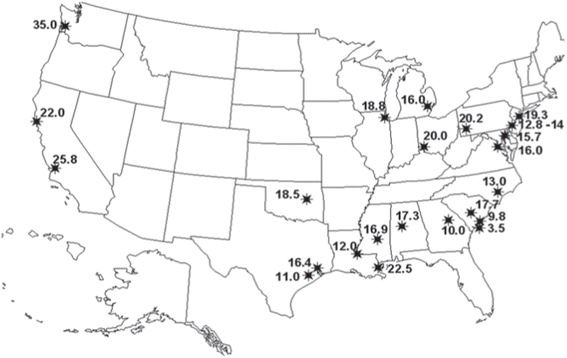
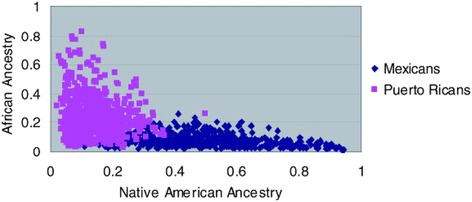
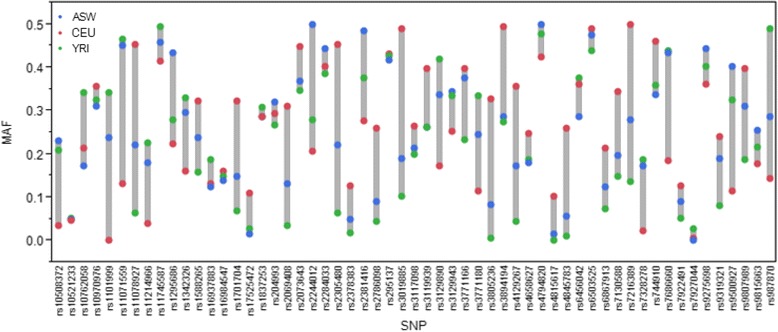
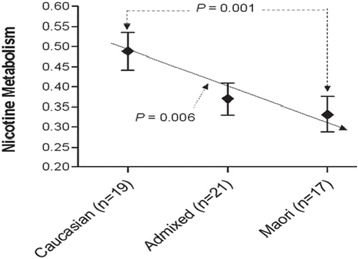
“Figures 1 and 2 below (from Mersha & Abebe 2015, p3) illustrate the complexity underlying straightforward notions of identity like “African American” or “Latino.””
InfluentialMcGowen, J., Ampiah, M., & Hearn, T. J. (2025) · BMJ connections. · doi:10.1136/bmjccgg-2025-000014
Patterns of US citizenship status vs. diet quality among adults of African descent
Jeffery, T. D., Duan, X., Ardakani, A., Batheja, S., Stevinson, G. N., & Monroe-Lord, L. (2025) · BMC Nutrition · doi:10.1186/s40795-025-01108-z
“African Americans possess diverse identities that reflect the admixed influences of [enslaved] African, European, and Native American ancestors [11–13].”
Lloyd, K., Newman, L. A., Glass, C. C., Ogayo, E. R., Mayer, E. L., Chávez‐MacGregor, M., Freedman, R. A., King, T. A., Mittendorf, E. A., & Kantor, O. (2025) · Breast Cancer Research and Treatment · doi:10.1007/s10549-025-07798-0
“Lastly, it is important to acknowledge the implications of race as a self-reported variable in this clinical trial [47].”
Ethical Considerations in Carbamazepine Pharmacogenomics Testing
Yuzwa, M. M., & Bracken, R. C. (2025) · INNOVATIONS in pharmacy · doi:10.24926/iip.v16i2.6339
“22 Clinicians must adopt comprehensive genetic screening protocols that account for the full spectrum of genetic diversity.”
PGT-A Outcomes Across Racial and Ethnic Groups
Sharara, F. I., Dahdouh, E. M., & Scott, R. T. (2025) · Springer eBooks · doi:10.1007/978-3-031-96356-8_12
Bornais, K., Ross, J. P., Schmilovich, Z., Medeiros, M., Castonguay, C.-E., Spiegelman, D., Boileau, B., Marier, J.-J., Laurin, G., Dion, P. A., et al. (2025) · Translational Psychiatry · doi:10.1038/s41398-025-03661-4
“The use of self-reported ancestry may also represent a limitation as self-reports can be inaccurate for determining genetic ancestry given they are often in fl uenced by non-genetic information [54].”
Nobleza, C. O., & Kumar, M. A. (2025) · Current Treatment Options in Neurology · doi:10.1007/s11940-025-00855-5
Alexander, T. A. (2023) · University Libraries (University of Maryland) · doi:10.13016/dspace/nrui-9ysh
Correa-Agudelo, E., Gautam, Y., Mendy, A., & Baye, T. M. (2024) · Figshare · doi:10.6084/m9.figshare.26661224
Additional file 1 of SNVstory: inferring genetic ancestry from genome sequencing data
Bollas, A., Rajkovic, A., Ceyhan, D., Gaither, J. B., Mardis, E. R., & White, P. (2024) · Figshare · doi:10.6084/m9.figshare.26683000
Characterization of DNA methylation and gene expression profiles in post-traumatic stress disorder
Kim, G. S. (2019) · Illinois Digital Environment for Access to Learning and Scholarship (University of Illinois at Urbana-Champaign)
Hospital Emergency Room Visits for Heavy Menstrual Bleeding
Mead, H. J. (2021) · ScholarWorks (Walden University)
Crandon, P. E. (2023) · ScholarWorks (Walden University) · Cited by 1
McCloskey, D. (2023) · ScholarWorks (Walden University)
Chen, J. L., Lavinsky, F., Lee, T., Zambrano, R., & Schuman, J. S. (2025) · Ophthalmology Glaucoma · doi:10.1016/j.ogla.2025.12.007
Naderian, M., Norland, K., Ding, K., Dikilitas, O., & Kullo, I. J. (2026) · American Journal of Preventive Cardiology · doi:10.1016/j.ajpc.2026.101409
“…(PSS)-which reflect socio-environmental status based on social determinants of health (SDOH)-to evaluate whether differences in CHD risk among SIRE groups are primarily driven by socio-environmental and lifestyle factors, consistent with the paradigm that SIRE is a ‘social construct ’ [4,12].”
Race/Ethnicity/Ancestry (REA) and Disease: A Complex Interplay of Social and Biological Factors
Tibayrenc, M. (2026) · Disease Biology Genetics and Socioecology · doi:10.53941/dbgs.2026.100001
“The Ashkenazi Jewish community, which is genetically quite homogeneous, has been at the forefront of personalized medicine, and has promoted a very efficient screening for Mendelian diseases and breast cancer [44].”
Relación de la ancestría genética en las alteraciones moleculares en distintos modelos de cáncer
Rey-Vargas, L., Ovalle, W. J. M., Huertas-Caro, C. A., Ballén, D. F., & Serrano-Gomez, S. J. (2026) · Revista Colombiana de Hematología y Oncología · doi:10.51643/22562915.846
Snipe, B., Huschka, T., Phelan, S. M., Allyse, M. A., Akambase, J.-S. A., & Barwise, A. K. (2026) · Journal of Racial and Ethnic Health Disparities · doi:10.1007/s40615-026-02873-8
2020 Population Updates for Cancer Mortality: An Oklahoma, USA, Experience
Campbell, J. E., Doescher, M. P., Janitz, A. E., Beaver, D. V., & Stephens, L. D. (2026) · Springer eBooks · doi:10.1007/978-3-032-17296-9_6
Indigenous Genetics, Biobanking, Chemistry, and Cancer Research: Data Talks
Haring, R. C. (2026) · Springer eBooks · doi:10.1007/978-3-032-17296-9
Ancestry-informative markers and variants of uncertain significance on hereditary cancer panels
Farooqi, M., Ricker, C. N., Lowe, C. L., Postel, M. D., Resendiz, J., Ovalle, S., Craig, D. W., Salhia, B., & Culver, J. O. (2026) · Frontiers in Oncology · doi:10.3389/fonc.2026.1787278
“As highlighted in prior work, self-reported race/ ethnicity and genetic similarity are often poor proxies for one another (20, 36).”
Layers of Representation: A Multidimensional Book Analysis
Pfundheller, M., Logan, N., Lein, A. E., & Bueno, S. A. (2026) · Kentucky Teacher Education Journal The Journal of the Teacher Education Division of the Kentucky Council for Exceptional Children · doi:10.61611/2995-5904.1081
Badrek-Amoudi, A. H., Alsehemi, Z. O., & Alharthi, H. (2026) · Annals of Medicine and Surgery · doi:10.1097/ms9.0000000000005266
Ancestry in the Margins: Justice, Genomics, and the Ethics of Human Classification
Henriques, S. (2026) · Apollo (University of Cambridge) · doi:10.17863/cam.132081
Meng, J., Wen, G., Wang, H., Wang, R., Xu, Y., Peng, P., Yan, Z., Tang, S., & Zhang, Y. (2026) · Scientific Reports · doi:10.1038/s41598-026-66380-w
Kumar, A., Kannappan, B., Ray, N. R., Kurup, J. T., del Rosario, P., Vito, A. N. D., Cuccaro, M. L., Beecham, G. W., Huey, E. D., & Reitz, C. (2026) · medRxiv · doi:10.64898/2026.08.23.26361161
Caron, A. R., Chaouch, M., Pendlington, Z. M., Parkinson, H., & Welter, D. (2026) · arXiv (Cornell University) · doi:10.48550/arxiv.2608.28030
Lipoprotein(a) in clinical practice: From genetic risk assessment to therapeutic silencing
Feliciano, L. D., Freire, J. P. C., Lopes, C. F., Lima, P. H. M., Costa, J. M. C., & de Melo, F. F. (2026) · World Journal of Translational Medicine · doi:10.5528/wjtm.124606
Mohsen-Pour, N., Esmaeili, S., Feyzi, A., Sharafi, A., Maleki, M., & Kalayinia, S. (2026) · Clinical Cardiology · doi:10.1002/clc.70482
Identity-by-descent captures shared environmental factors at biobank scale
Marsico, F. L., Buonaiuto, S., Amos-Abanyie, E. K., Chinthala, L. K., Mohammed, A., Zahr, R., Rooney, R. J., Williams, R. W., Davis, R. L., Finkel, T. H., et al. (2026) · Genome Research · doi:10.1101/gr.282338.126
Watafua, M., ADELUWOYE, A. O., David, K. O., Jamiu, L., & Alabetutu, A. (2026) · Research Square · doi:10.21203/rs.3.rs-11369877/v1
Thomas, P. (2026) · ImmPort · doi:10.21430/m3mqjhhu58
Metadata
- Authors
- Mersha, T. B., & Abebe, T.
- Affiliations
- University of Northern Iowa (US)
- Venue
- Human Genomics
- Published
- 2015-01-07
- Volume
- 9
- Issue
- 1
- Pages
- 1-1
- ISSN
- 1473-9542 (ISSN-L)
- 1479-7364
- PMC
- PMC4307746
- OpenAlex
- W2113129492
- Cited by
- 450
- References
- 115
- Citations by year
- 2026: 18 · 2025: 49 · 2024: 55 · 2023: 51 · 2022: 56 · 2021: 42 · 2020: 41 · 2019: 39 · 2018: 39 · 2017: 29 · 2016: 22 · 2015: 6
- FWCI
- 22.00
- Type
- journal article
- Language
- en
- Update notices
- correction (2021-06-15)
- Open access
- gold
- doi.org
- Licence
- cc-by
- creativecommons.org/licenses/by/4.0 (tdm)
- creativecommons.org/licenses/by/4.0 (vor)
- Locations
- Human Genomics (publishedVersion, cc-by)
- Europe PMC (PubMed Central) (publishedVersion, cc-by)
- PubMed Central (publishedVersion, cc-by)
- PubMed (publishedVersion)
- UNI ScholarWorks (University of Northern Iowa) (submittedVersion, cc-by)
- UNI ScholarWorks (University of Northern Iowa) (submittedVersion)
- Funders
- National Institutes of Health
- National Heart, Lung, and Blood Institute (K01HL103165)
- Topics
- Social Sciences › Anthropology › Race, Genetics, and Society
- Life Sciences › Biochemistry, Genetics and Molecular Biology › Genetics › Forensic and Genetic Research
- Life Sciences › Biochemistry, Genetics and Molecular Biology › Genetics › Genetic Associations and Epidemiology
- Keywords
- self-reported race, self-reported ethnicity, genetic ancestry, ancestry informative markers, health disparities, African Americans, Latino population, admixture, biogeographical ancestry, human genetic variation, genomic research
- MeSH terms
- Ethnicity, Genetic Markers, Humans, Phenotype, Genomics, Biomedical Research, Racial Groups, Self Report
About these checks
Registry, retraction, Cites and statistics results are computed, not judged, with one exception: a printed reference that no index lists is read once by a model before it counts as a citation error. Claims are extracted by a model and kept only when their quote appears verbatim in the text; each cited source is then checked, with a model’s help, for whether it says what the claim relies on. Those verdicts can be wrong — read the claim’s quote and the cited source before relying on one.
Statistics and arithmetic are recomputed, not judged.
Confidence bands are shown only for fields calibrated on our annotated test set. None is calibrated yet, so no band is shown.
What counts as a claim ›How we measure confidence ›How we check this ›
Are you an author, or do you see a problem with this page? Request a review
Data sources
Bibliographic data: Semantic Scholar, OpenAlex, Crossref.
Contains information from the Semantic Scholar Academic Graph Datasets, made available under the ODC Attribution License (ODC-BY 1.0).
Semantic Scholar’s data is described in: Kinney, R., et al. (2023). The Semantic Scholar Open Data Platform. arXiv:2301.10140.
