

Self-reported race/ethnicity in the age of genomic research: its potential impact on understanding health disparities
Open accessThe DOI matches its Crossref record; 115 of the 115 references it cites were found in a registry or an index.
Abstract
This review explores the limitations of self-reported race, ethnicity, and genetic ancestry in biomedical research. Various terminologies are used to classify human differences in genomic research including race, ethnicity, and ancestry. Although race and ethnicity are related, race refers to a person's physical appearance, such as skin color and eye color. Ethnicity, on the other hand, refers to communality in cultural heritage, language, social practice, traditions, and geopolitical factors. Genetic ancestry inferred using ancestry informative markers (AIMs) is based on genetic/genomic data. Phenotype-based race/ethnicity information and data computed using AIMs often disagree. For example, self-reporting African Americans can have drastically different levels of African or European ancestry. Genetic analysis of individual ancestry shows that some self-identified African Americans have up to 99% of European ancestry, whereas some self-identified European Americans have substantial admixture from African ancestry. Similarly, African ancestry in the Latino population varies between 3% in Mexican Americans to 16% in Puerto Ricans. The implication of this is that, in African American or Latino populations, self-reported ancestry may not be as accurate as direct assessment of individual genomic information in predicting treatment outcomes. To better understand human genetic variation in the context of health disparities, we suggest using "ancestry" (or biogeographical ancestry) to describe actual genetic variation, "race" to describe health disparity in societies characterized by racial categories, and "ethnicity" to describe traditions, lifestyle, diet, and values. We also suggest using ancestry informative markers for precise characterization of individuals' biological ancestry. Understanding the sources of human genetic variation and the causes of health disparities could lead to interventions that would improve the health of all individuals.
Overview
The claims and statistics of this paper haven’t been checked yet.
Free: it reads the open-access text and checks the first 5 claims that cite a source we can check. Create a free account to check every claim.
Integrity signals
Registry
Cites
Statistics
Figures
Verification
Claims the paper makes
The claims and statistics of this paper haven’t been checked yet.
Free: it reads the open-access text and checks the first 5 claims that cite a source we can check. Create a free account to check every claim.
Claims other papers make about this one
Each is checked against this paper’s own text: does it say what the citing paper says it does?
The cited source says what the claim attributes to it.
In the citing paper
“Of note, race can be considered as a social construct rather than a biological construct114,134, as race is a socially derived label that can either be self-reported or assigned and might not justify any biological or genetic differences between populations135,136.”
From A global view of hypertensive disorders and diabetes mellitus during pregnancy (2022) · cites this paper as [136]
Self-check
Percentages, sums and reported differences re-computed from the paper’s own numbers.
The self-check needs the paper’s full text.
Citations
Cites
Inference of Population Structure Using Multilocus Genotype Data
Pritchard, J. K., Stephens, M., & Donnelly, P. (2000) · Genetics · doi:10.1093/genetics/155.2.945 · Cited by 33,908
Initial sequencing and analysis of the human genome
International Human Genome Sequencing Consortium, Whitehead Institute for Biomedical Research, C. F. G. R., Lander, E. S., Linton, L. M., Birren, B., Nusbaum, C., Zody, M. C., Baldwin, J., Devon, K., Dewar, K., et al. (2001) · Nature · doi:10.1038/35057062 · Cited by 24,216 · cited 1×
“The human genome is composed of over three billion bases of DNA and contains between 25,000 and 30,000 protein-coding genes [1].”
An integrated map of genetic variation from 1,092 human genomes
The 1000 Genomes Project Consortium (2012) · Nature · doi:10.1038/nature11632 · Cited by 7,711 · cited 1×
“Because of their sheer number, SNPs are the major sources of genetic and phenotypic diversity, accounting for 95% of all known sequence variations [5].”
THE GENETICAL STRUCTURE OF POPULATIONS
WRIGHT, S. (1949) · Annals of Eugenics · doi:10.1111/j.1469-1809.1949.tb02451.x · Cited by 6,753
Integrating common and rare genetic variation in diverse human populations
The International HapMap 3 Consortium (2010) · Nature · doi:10.1038/nature09298 · Cited by 3,026 · cited 1×
“Large consortium-based next-generation sequencing studies such as the NIH/HLBI GO Exome Sequencing Project, the Consortium on Asthma among African ancestry Populations in the Americas (CAAPA), and the 1000 Genomes Project are currently using next-generation whole exome and whole genome sequencing studies to provide di…”
The Apportionment of Human Diversity
Lewontin, R. C. (1972) · Evolutionary Biology · doi:10.1007/978-1-4684-9063-3_14 · Cited by 2,472 · cited 1×
“Several studies including ours showed that genetic diversity in humans is higher between individuals of the same race (~85%) than between races (~15%) [4,24].”
Identification of Asthma Phenotypes Using Cluster Analysis in the Severe Asthma Research Program
Moore, W. C., Meyers, D. A., Wenzel, S. E., Teague, W. G., Li, H., Li, X., D'Agostino, R., Castro, M., Curran-Everett, D., Fitzpatrick, A. M., et al. (2010) · American Journal of Respiratory and Critical Care Medicine · doi:10.1164/rccm.200906-0896oc · Cited by 2,129 · cited 1×
“A recent study by the NHBLI-SARP caseonly cohort indicated the predictive role of PFT in asthma severity [60,61].”
Prescribing Personalized Nutrition for Cardiovascular Health: Are We Ready?
Juma, S., Imrhan, V., Vijayagopal, P., & Prasad, C. (2014) · Lifestyle Genomics · doi:10.1159/000370213 · Cited by 1,891
The Diploid Genome Sequence of an Individual Human
Levy, S., Sutton, G., Ng, P. C., Feuk, L., Halpern, A. L., Walenz, B. P., Axelrod, N., Huang, J., Kirkness, E. F., Denisov, G., et al. (2007) · PLoS Biology · doi:10.1371/journal.pbio.0050254 · Cited by 1,778 · cited 1×
“(569,000 and 481,000, respectively) [25-27].”
Whole-Genome Patterns of Common DNA Variation in Three Human Populations
Hinds, D. A., Stuve, L. L., Nilsen, G. B., Halperin, E., Eskin, E., Ballinger, D. G., Frazer, K. A., & Cox, D. R. (2005) · Science · doi:10.1126/science.1105436 · Cited by 1,170
Ethnicity and race : making identities in a changing world
Cornell, S., & Hartmann, D. (2007) · Cited by 1,107
Color and genomic ancestry in Brazilians
Parra, F. C., Amado, R. C., Lambertucci, J. R., Rocha, J., Antunes, C. M., & Pena, S. D. J. (2003) · Proceedings of the National Academy of Sciences · doi:10.1073/pnas.0126614100 · Cited by 969 · cited 2×
“This is because visual classification of skin color is interpreted differently by patients, health care workers, and family doctors [31,32].”
Genetic and Fossil Evidence for the Origin of Modern Humans
Stringer, C. B., & Andrews, P. (1988) · Science · doi:10.1126/science.3125610 · Cited by 966 · cited 1×
“Human ancestry Anatomically, modern humans first appeared in Africa some 150,000 to 200,000 years ago [10].”
Analysis of 6,515 exomes reveals the recent origin of most human protein-coding variants
Fu, W., O’Connor, T. D., Jun, G., Kang, H. M., Abecasis, G., Leal, S. M., Gabriel, S., Rieder, M. J., Altshuler, D., Shendure, J., et al. (2013) · Nature · doi:10.1038/nature11690 · Cited by 949 · cited 1×
“This is in agreement with the reported genetic diversity between African and European ancestry genomes [83].”
A genetic atlas of human admixture history
Hellenthal, G., Busby, G. B. J., Band, G., Wilson, J. F., Capelli, C., Falush, D., & Myers, S. (2014) · Science · doi:10.1126/science.1243518 · Cited by 798 · cited 1×
“Although on average, populations that are geographically close to one another show stronger correlation and higher genetic similarity than geographically separated populations and substantial differences in allele frequencies are also observed within geographic regions [23].”
Estimating African American Admixture Proportions by Use of Population-Specific Alleles
Parra, E. J., Marcini, A., Akey, J., Martinson, J., Batzer, M. A., Cooper, R., Forrester, T., Allison, D. B., Deka, R., Ferrell, R. E., et al. (1998) · The American Journal of Human Genetics · doi:10.1086/302148 · Cited by 771 · cited 1×
“Both examples illustrate that researchers should be aware of the limitation of selfidentified race and ethnic categories as proxies for genetic ancestry [71,72].”
Relation Between Racial Discrimination, Social Class, and Health Among Ethnic Minority Groups
Karlsen, S., & Nazroo, J. Y. (2002) · American Journal of Public Health · doi:10.2105/ajph.92.4.624 · Cited by 707 · cited 1×
“Unlike self-reported race-based health disparity studies, which represent a combination of both genetic and environmental background [85], ancestry-based health disparity studies provide a new way to unravel the contribution of genetics to health disparities from nongenetic factors (such as socio-environmental factors…”
Tishkoff, S. A., Varkonyi, R., Cahinhinan, N., Abbes, S., Argyropoulos, G., Destro-Bisol, G., Drousiotou, A., Dangerfield, B., Lefranc, G., Loiselet, J., et al. (2001) · Science · doi:10.1126/science.1061573 · Cited by 630 · cited 1×
“Positive selection in a geographic-specific manner has also been seen in genes that affect skin pigmentation [8] and resistance to malaria [9].”
Kaufman, J. S., Cooper, R. S., & McGee, D. L. (1997) · Epidemiology · doi:10.1097/00001648-199710000-00002 · Cited by 606
Robust Identification of Local Adaptation from Allele Frequencies
Günther, T., & Coop, G. (2013) · Genetics · doi:10.1534/genetics.113.152462 · Cited by 602 · cited 1×
“…across the genome in asthmatic patients relative to controls, but no significant rise in local ancestry at a particular locus, this may point to a stronger role for socio-environmental factors (e.g., income, education, exposures to traffic, home, cigarettes) independent of ancestry [81,86,87].”
Who Is Black? One Nation's Definition.
Daniel, G. R., & Davis, F. J. (1993) · Contemporary Sociology · doi:10.2307/2075727 · Cited by 597
Skin pigmentation, biogeographical ancestry and admixture mapping
Shriver, M. D., Parra, E. J., Dios, S., Bonilla, C., Norton, H., Jovel, C., Pfaff, C., Jones, C., Massac, A., Cameron, N., et al. (2003) · Human Genetics · doi:10.1007/s00439-002-0896-y · Cited by 549 · cited 1×
“Similarly, some selfidentified European Americans have substantial admixture from African ancestry [70].”
Who is black?: one nation's definition
(1992) · Choice Reviews Online · doi:10.5860/choice.29-3615 · Cited by 543
Population genetic structure of variable drug response
Wilson, J. F., Weale, M. E., Smith, A. C., Gratrix, F., Fletcher, B., Thomas, M. G., Bradman, N., & Goldstein, D. B. (2001) · Nature Genetics · doi:10.1038/ng761 · Cited by 460 · cited 1×
“These results reflect a well-known feature of human diversity, that is, different genetic polymorphisms are distributed over the world in a discordant manner [28,29].”
Adler, N. E., & Snibbe, A. C. (2003) · Current Directions in Psychological Science · doi:10.1111/1467-8721.01245 · Cited by 384 · cited 1×
“A good example that illustrates this phenomenon is the recent studies that showed education and socioeconomic factors, but not genetic ancestry, were associated with blood pressure and cancer among African Americans in the US, respectively [91,92].”
Ethnic-affiliation estimation by use of population-specific DNA markers.
Shriver, M. D., Smith, M. W., Li, J., Marcini, A., Akey, J. M., Deka, R., & Ferrell, R. E. (1997) · PubMed · Cited by 382
Molecular genetics of human pigmentation diversity
Sturm, R. A. (2009) · Human Molecular Genetics · doi:10.1093/hmg/ddp003 · Cited by 379 · cited 1×
“Positive selection in a geographic-specific manner has also been seen in genes that affect skin pigmentation [8] and resistance to malaria [9].”
Genome-wide and fine-resolution association analysis of malaria in West Africa
Jallow, M., Teo, Y. Y., Small, K. S., Rockett, K. A., Deloukas, P., Clark, T. G., Kivinen, K., Bojang, K. A., Conway, D. J., Pinder, M., et al. (2009) · Nature Genetics · doi:10.1038/ng.388 · Cited by 374 · cited 1×
“Because of shorter linkage disequilibrium, it has been estimated that a genome-wide association study of an African population would require approximately 1.5 million SNPs to achieve the same resolution as a study of a European population using 0.6 million SNPs [80].”
InfluentialDeconstructing the relationship between genetics and race
Bamshad, M., Wooding, S., Salisbury, B. A., & Stephens, J. C. (2004) · Nature Reviews Genetics · doi:10.1038/nrg1401 · Cited by 371 · cited 1×
“In fact, studies found that mitochondrial DNA can be used to infer the probable assignment of coarse ethnicity with almost 90% accuracy [46].”
Inferring ancestral origin using a single multiplex assay of ancestry-informative marker SNPs
Phillips, C., Salas, A., Sánchez, J. J., Fondevila, M., Gómez-Tato, A., Álvarez-Dios, J., Calaza, M., de Cal, M. C., Ballard, D., Lareu, M. V., et al. (2007) · Forensic Science International: Genetics · doi:10.1016/j.fsigen.2007.06.008 · Cited by 370 · cited 1×
“…SNPs, and X-SNPs Although autosomal SNPs are commonly used as gene-tic markers to infer ancestry or race/ethnicity membership, haploid such as mitochondria, Y-DNA, and X-lined markers are also important to provide separate stories of ancestry of individuals from paternal and maternal sides [42,43].”
Fujimura, J. H., & Rajagopalan, R. (2011) · Social Studies of Science · doi:10.1177/0306312710379170 · Cited by 349 · cited 1×
“Given higher genetic diversity within races than between races, the use of race/ethnicity as a dissimilarity marker is misleading [107,108].”
National surveillance of asthma: United States, 2001-2010.
Moorman, J. E., Akinbami, L. J., Bailey, C. M., Zahran, H. S., King, M. E., Johnson, C. A., & Liu, X. (2012) · PubMed · Cited by 346
The first Korean genome sequence and analysis: Full genome sequencing for a socio-ethnic group
Ahn, S.-M., Kim, T.-H., Lee, S., Kim, D., Ghang, H., Kim, D.-S., Kim, B.-C., Kim, S.-Y., Kim, W.-Y., Kim, C., et al. (2009) · Genome Research · doi:10.1101/gr.092197.109 · Cited by 330 · cited 1×
“(569,000 and 481,000, respectively) [25-27].”
Ritchie, M. D., Denny, J. C., Crawford, D. C., Ramirez, A. H., Weiner, J. B., Pulley, J. M., Basford, M. A., Brown-Gentry, K., Balser, J. R., Masys, D. R., et al. (2010) · The American Journal of Human Genetics · doi:10.1016/j.ajhg.2010.03.003 · Cited by 323 · cited 1×
“[67] analyzed 9,483 samples in the Vanderbilt DNA Databank (BioVU) and found missing ancestry information in 9.”
Genetic research and health disparities.
Sankar, P. (2004) · JAMA · doi:10.1001/jama.291.24.2985 · Cited by 319 · cited 1×
“Furthermore, although disease susceptibility loci can differ in frequency across populations, using genetics as the only basis of explaining for health disparities could reinforce racial stereotypes [73].”
Jobling, M. A., Hurles, M., & Tyler-Smith, C. (2019) · Garland Science eBooks · doi:10.1201/9780203487211 · Cited by 315 · cited 1×
“Genetic diversity of present-day American populations is very complex due to the demographic events that resulted in extremely admixed populations [48].”
The changing racial and ethnic composition of the US population: Emerging American identities
Perez, A. D., & Hirschman, C. (2009) · Population and Development Review · doi:10.1111/j.1728-4457.2009.00260.x · Cited by 302 · cited 2×
“This concern extends to the momentous debate about the development of ‘race-targeted’ drugs, such as BiDil (approved by the US Food and Drug Administration (FDA) to treat heart failure in admixed African Americans), based on subgroup analyses without any adjustment for potential confounders in samples [94].”
Galanter, J. M., Fernandez-Lopez, J. C., Gignoux, C. R., Barnholtz-Sloan, J., Fernandez-Rozadilla, C., Via, M., Hidalgo-Miranda, A., Contreras, A. V., Figueroa, L. U., Raska, P., et al. (2012) · PLoS Genetics · doi:10.1371/journal.pgen.1002554 · Cited by 297 · cited 1×
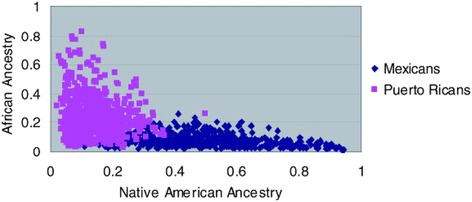
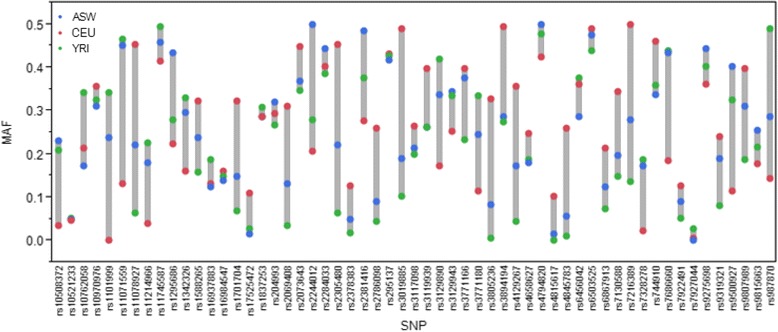
“Mexican Americans, on average, have a higher proportion of Native American ancestry (ranging from 35% to 64%) but a lower proportion of African ancestry (ranging from 3% to 5%) than Puerto Ricans (Native American ancestry ranges between 12% and 15% and African ancestry ranges between 18% and 25%) [18-20] (Figure 2).”
Lara, M., Akinbami, L., Flores, G., & Morgenstern, H. (2006) · Pediatrics · doi:10.1542/peds.2004-1714 · Cited by 286 · cited 1×
“The use of a single Hispanic or Latino ethnic category is insufficient for characterizing genetic background associated with Hispanics or Latinos because Hispanics have variable proportions of European, Native American, and African ancestry [16], as well as disease prevalence including asthma [17].”
The Use of Racial, Ethnic, and Ancestral Categories in Human Genetics Research
(2005) · The American Journal of Human Genetics · doi:10.1086/491747 · Cited by 285 · cited 1×
“Although conceptual distinction between race/ethnicity and ancestry is widely recognized [104-106], it has not”
Perera, M. A., Cavallari, L. H., Limdi, N. A., Gamazon, E. R., Konkashbaev, A., Daneshjou, R., Pluzhnikov, A., Crawford, D. C., Wang, J., Liu, N., et al. (2013) · The Lancet · doi:10.1016/s0140-6736(13)60681-9 · Cited by 276 · cited 1×
“, asthma) and pharmacogenetic studies have been primarily performed in cohorts of European descent [79].”
Ancestry and pharmacogenomics of relapse in acute lymphoblastic leukemia
Yang, J. J., Cheng, C., Devidas, M., Cao, X., Fan, Y., Campana, D., Yang, W., Neale, G., Cox, N. J., Scheet, P., et al. (2011) · Nature Genetics · doi:10.1038/ng.763 · Cited by 274 · cited 1×
“Children with more than 10% Native American ancestry need an additional round of chemotherapy to respond to the treatment [39].”
Kaufman, J. S., Cooper, R. S., & McGee, D. L. (1997) · Epidemiology · doi:10.1097/00001648-199711000-00006 · Cited by 269
Human adaptations to diet, subsistence, and ecoregion are due to subtle shifts in allele frequency
Hancock, A. M., Witonsky, D. B., Ehler, E., Alkorta-Aranburu, G., Beall, C., Gebremedhin, A., Sukernik, R., Utermann, G., Pritchard, J., Coop, G., et al. (2010) · Proceedings of the National Academy of Sciences · doi:10.1073/pnas.0914625107 · Cited by 258
Genetic Ancestry in Lung-Function Predictions
Kumar, R., Seibold, M. A., Aldrich, M. C., Williams, L. K., Reiner, A. P., Colangelo, L., Galanter, J., Gignoux, C., Hu, D., Sen, S., et al. (2010) · New England Journal of Medicine · doi:10.1056/nejmoa0907897 · Cited by 256 · cited 2×
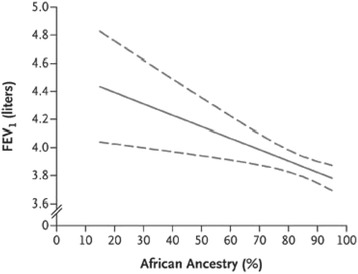
“−4 ml for FEV1 per percentage African ancestry [38]).”
The social and ethical issues of post-genomic human biobanks
Cambon-Thomsen, A. (2004) · Nature Reviews Genetics · doi:10.1038/nrg1473 · Cited by 241
European Population Substructure: Clustering of Northern and Southern Populations
Seldin, M. F., Shigeta, R., Villoslada, P., Selmi, C., Tuomilehto, J., Silva, G., Belmont, J. W., Klareskog, L., & Gregersen, P. K. (2006) · PLoS Genetics · doi:10.1371/journal.pgen.0020143 · Cited by 232 · cited 1×
“However, the same can be said to the CEU population where recent high-density SNP studies showed population gradient including linkage disequilibrium discrepancies across the North–south and even within Finland (East–west) [55].”
Great ape DNA sequences reveal a reduced diversity and an expansion in humans
Kaessmann, H., Wiebe, V., Weiss, G., & Pääbo, S. (2001) · Nature Genetics · doi:10.1038/84773 · Cited by 220 · cited 1×
“(569,000 and 481,000, respectively) [25-27].”
Ancestry and Disease in the Age of Genomic Medicine
Rotimi, C. N., & Jorde, L. B. (2010) · New England Journal of Medicine · doi:10.1056/nejmra0911564 · Cited by 219 · cited 1×
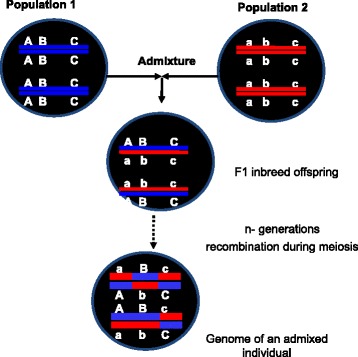
“This is because an admixed individual can have multiple ancestries through intermixing (e.g., ‘ Latino ’ ) [30].”
Race, Ethnicity, and Genomics: Social Classifications as Proxies of Biological Heterogeneity
Foster, M. W., & Sharp, R. R. (2002) · Genome Research · doi:10.1101/gr.99202 · Cited by 200 · cited 1×
“Although conceptual distinction between race/ethnicity and ancestry is widely recognized [104-106], it has not”
Kolbe, J. J., Larson, A., Losos, J. B., & de Queiroz, K. (2008) · Biology Letters · doi:10.1098/rsbl.2008.0205 · Cited by 189 · cited 1×
“The failure to account ancestral background can thus prevent proper characterization of the genetic structure of a given study population, leading to inaccurate prediction of outcome as well as incorrect inferences about the evolutionary factors driving patterns of diversity [76].”
Genetic admixture and asthma‐related phenotypes in Mexican American and Puerto Rican asthmatics
Salari, K., Choudhry, S., Tang, H., Naqvi, M., Lind, D., Avila, P. C., Coyle, N. E., Ung, N., Nazario, S., Casal, J., et al. (2005) · Genetic Epidemiology · doi:10.1002/gepi.20079 · Cited by 182 · cited 1×
“7% baseline FEV1 was observed per 10% increase in European ancestry [56].”
Trends in racial and ethnic-specific rates for the health status indicators: United States, 1990-98.
Keppel, K. G., Pearcy, J. N., & Wagener, D. K. (2002) · PubMed · Cited by 181
Toward a New Vocabulary of Human Genetic Variation
Sankar, P. L., & Cho, M. K. (2002) · Science · doi:10.1126/science.1074447 · Cited by 169 · cited 2×
“to have different biogeographical ancestries or genetic makeup [11].”
Human Evolutionary Genetics: Origins, Peoples and Disease.
Zegura, S. L. (2005) · The American Journal of Human Genetics · doi:10.1086/430427 · Cited by 140 · cited 1×
“Genetic diversity of present-day American populations is very complex due to the demographic events that resulted in extremely admixed populations [48].”
Importance of hedgehog interacting protein and other lung function genes in asthma
Li, X., Howard, T. D., Moore, W. C., Ampleford, E. J., Li, H., Busse, W. W., Calhoun, W. J., Castro, M., Chung, K. F., Erzurum, S. C., et al. (2011) · Journal of Allergy and Clinical Immunology · doi:10.1016/j.jaci.2011.01.056 · Cited by 137 · cited 1×
“A recent study by the NHBLI-SARP caseonly cohort indicated the predictive role of PFT in asthma severity [60,61].”
Charting the ancestry of African Americans.
Salas, A., Carracedo, Á., Richards, M., & Macaulay, V. (2005) · American Journal of Human Genetics · doi:10.1086/491675 · Cited by 133 · cited 1×
“To illustrate, in a recent study, 9 of the 1,247 self-reported African Americans were found to have 100% European ancestry [69].”
Faris, O., & Shein, M. J. (2006) · Circulation · doi:10.1161/circulationaha.106.647800 · Cited by 131
Race and ancestry in biomedical research: exploring the challenges
Caulfield, T., Fullerton, S. M., Ali-Khan, S. E., Arbour, L., Burchard, E. G., Cooper, R. S., Hardy, B.-J., Harry, S., Hyde-Lay, R., Kahn, J., et al. (2009) · Genome Medicine · doi:10.1186/gm8 · Cited by 130 · cited 1×
“Given higher genetic diversity within races than between races, the use of race/ethnicity as a dissimilarity marker is misleading [107,108].”
Hunninghake, G. M., Weiss, S. T., & Celedón, J. C. (2006) · American Journal of Respiratory and Critical Care Medicine · doi:10.1164/rccm.200508-1232so · Cited by 126 · cited 1×
“characterizing genetic background associated with Hispanics or Latinos because Hispanics have variable proportions of European, Native American, and African ancestry [16], as well as disease prevalence including asthma [17].”
Pharmacogenetics and geographical ancestry: implications for drug development and global health
Daar, A. S., & SINGER, P. A. (2005) · Nature Reviews Genetics · doi:10.1038/nrg1559 · Cited by 121 · cited 1×
“Ignoring admixture or stratification within ethnic groups will complicate the promise of personalized medicine [96-99].”
Pharmacogenomics in admixed populations.
Suarez-Kurtz, G. (2007) · TIPS - Trends in Pharmacological Sciences · doi:10.1201/9781498713795 · Cited by 120
Racializing Drug Design: Implications of Pharmacogenomics for Health Disparities
Lee, S. S. (2005) · American Journal of Public Health · doi:10.2105/ajph.2005.068676 · Cited by 112 · cited 2×
“A study by Lee [100] showed that warfarin dosing algorithms that are based on ‘ race ’ terms for well-defined ethnic groups are not applicable to the heterogeneous admixed population.”
African ancestry and lung function in Puerto Rican children
Brehm, J. M., Acosta-Pérez, E., Klei, L., Roeder, K., Barmada, M. M., Boutaoui, N., Forno, E., Cloutier, M. M., Datta, S., Kelly, R., et al. (2012) · Journal of Allergy and Clinical Immunology · doi:10.1016/j.jaci.2012.03.035 · Cited by 109 · cited 1×
“Mexican Americans, on average, have a higher proportion of Native American ancestry (ranging from 35% to 64%) but a lower proportion of African ancestry (ranging from 3% to 5%) than Puerto Ricans (Native American ancestry ranges between 12% and 15% and African ancestry ranges between 18% and 25%) [18-20] (Figure 2).”
BiDil for Heart Failure in Black Patients: The U.S. Food and Drug Administration Perspective
Temple, R., & Stockbridge, N. L. (2007) · Annals of Internal Medicine · doi:10.7326/0003-4819-146-1-200701020-00010 · Cited by 109 · cited 1×
“Ignoring admixture or stratification within ethnic groups will complicate the promise of personalized medicine [96-99].”
Diversity of Lactase Persistence Alleles in Ethiopia: Signature of a Soft Selective Sweep
Jones, B. L., Raga, T. O., Liebert, A., Zmarz, P., Bekele, E., Danielsen, E. T., Olsen, A. K., Bradman, N., Troelsen, J. T., & Swallow, D. M. (2013) · The American Journal of Human Genetics · doi:10.1016/j.ajhg.2013.07.008 · Cited by 104 · cited 1×
“Lactase persistence into adulthood is prevalent in Somali camel herders from Ethiopia where milk consumption continues beyond childhood [7].”
Comparison of measures of marker informativeness for ancestry and admixture mapping
Ding, L., Wiener, H. W., Abebe, T., Altaye, M., Go, R. C. P., Kercsmar, C. M., Grabowski, G., Martin, L. J., Hershey, G. K. K., Chakorborty, R., et al. (2011) · BMC Genomics · doi:10.1186/1471-2164-12-622 · Cited by 100 · cited 3×
“The availability of millions of genetic markers at unprecedented levels from next-generation sequencing technologies and multi-locus ancestry-based dataset analysis approach provide greater power than ever to assign individuals with missing ancestries with great accuracy [36].”
InfluentialSelf-citationAncestry-related assortative mating in Latino populations
Risch, N., Choudhry, S., Via, M., Basu, A., Sebro, R., Eng, C., Beckman, K., Thyne, S., Chapela, R., Rodriguez-Santana, J. R., et al. (2009) · Genome Biology · doi:10.1186/gb-2009-10-11-r132 · Cited by 93 · cited 1×
“Reproduced from Risch et al. [22]. scientist, Seong-Jin Kim.”
Marcheco-Teruel, B., Parra, E. J., Fuentes-Smith, E., Salas, A., Buttenschøn, H. N., Demontis, D., Torres-Español, M., Marín-Padrón, L. C., Gómez-Cabezas, E. J., Álvarez-Iglesias, V., et al. (2014) · PLoS Genetics · doi:10.1371/journal.pgen.1004488 · Cited by 92 · cited 14×
“Another seminal study is the complete sequence of two US scientists of European origin, namely, James Watson and Craig Venter, and an Asian Although Mexicans and Puerto Ricans are both considered Latino or Hispanics, Mexicans, on average, have a higher proportion of Native American ancestry (35% – 64”
InfluentialGravlee, C. C., Non, A. L., & Mulligan, C. J. (2009) · PLoS ONE · doi:10.1371/journal.pone.0006821 · Cited by 91 · cited 1×
“, income, education, exposures to traffic, home, cigarettes) independent of ancestry [81,86,87].”
Keen-Kim, D., Mathews, C. A., Reus, V. I., Lowe, T. L., Herrera, L. D., Budman, C. L., Gross-Tsur, V., Pulver, A. E., Bruun, R. D., Erenberg, G., et al. (2006) · Human Molecular Genetics · doi:10.1093/hmg/ddl408 · Cited by 89 · cited 1×
“Thus, the overrepresentation of rare causal variants in certain population could explain the observed differences in disease prevalence, including asthma [6].”
Perspectives of identity by descent (IBD) mapping in founder populations
TE MEERMAN, G. J., VAN DER MEULEN, M. A., & SANDKUIJL, L. A. (1995) · Clinical & Experimental Allergy · doi:10.1111/j.1365-2222.1995.tb00433.x · Cited by 86 · cited 2×
“Recently, IBD mapping has been proposed as a useful approach to map genes in a founder population [50].”
Education, Genetic Ancestry, and Blood Pressure in African Americans and Whites
Non, A. L., Gravlee, C. C., & Mulligan, C. J. (2012) · American Journal of Public Health · doi:10.2105/ajph.2011.300448 · Cited by 72 · cited 1×
“Associations found between genetic ancestry and disease could be explained by unmeasured environmental factors that are associated with genetic ancestry and contribute to health disparities, such as socioeconomic status (SES), neighborhood environment, and psychosocial factors including perceived stress or discriminat…”
Röhl, A., Brinkmann, B., Forster, L., & Forster, P. (2001) · International Journal of Legal Medicine · doi:10.1007/s004140100217 · Cited by 71 · cited 1×
“c) Mitochondrial DNA (maternal line testing) markers: mitochondrial DNA or mtDNA haploid is the maternally inherited mitochondrial genome (mtDNA) [44].”
Baye, T. M., Kovacic, M. B., Myers, J. M. B., Martin, L. J., Lindsey, M., Patterson, T. L., He, H., Ericksen, M. B., Gupta, J., Tsoras, A. M., et al. (2011) · PLoS ONE · doi:10.1371/journal.pone.0016522 · Cited by 70 · cited 1×
“Differences in ancestry proportion in admixed population could introduce variation among individuals of the same race and potentially alter genetic association and the therapeutic efficacy of commonly used asthma therapies, such as β2-adrenergic receptor agonists (β-agonists) [40,41].”
Buchanan, C. C., Torstenson, E. S., Bush, W. S., & Ritchie, M. D. (2012) · Journal of the American Medical Informatics Association · doi:10.1136/amiajnl-2011-000652 · Cited by 69 · cited 1×
“The HapMap project had identified over 5 million SNPs in the human genome including their distribution among people in different parts of the world [3].”
Race in Biological and Biomedical Research
Cooper, R. S. (2013) · Cold Spring Harbor Perspectives in Medicine · doi:10.1101/cshperspect.a008573 · Cited by 62
Rumpel, J. A., Ahmedani, B. K., Peterson, E. L., Wells, K. E., Yang, M., Levin, A. M., Yang, J. J., Kumar, R., Burchard, E. G., & Williams, L. K. (2012) · Journal of Allergy and Clinical Immunology · doi:10.1016/j.jaci.2012.09.001 · Cited by 58
Race in Epidemiology: New Tools, Old Problems
Kaufman, J. S., & Cooper, R. (2008) · Annals of Epidemiology · doi:10.1016/j.annepidem.2007.09.002 · Cited by 58 · cited 1×
“Although conceptual distinction between race/ethnicity and ancestry is widely recognized [104-106], it has not”
Kovacic, M. B., Myers, J. M. B., Wang, N., Martin, L. J., Lindsey, M., Ericksen, M. B., He, H., Patterson, T. L., Baye, T. M., Torgerson, D. G., et al. (2011) · PLoS ONE · doi:10.1371/journal.pone.0023714 · Cited by 53 · cited 1×
“Differences in ancestry proportion in admixed population could introduce variation among individuals of the same race and potentially alter genetic association and the therapeutic efficacy of commonly used asthma therapies, such as β2-adrenergic receptor agonists (β-agonists) [40,41].”
Genomic control for association studies: a semiparametric test to detect excess-haplotype sharing
Devlin, B. (2000) · Biostatistics · doi:10.1093/biostatistics/1.4.369 · Cited by 53
Mapping genes that predict treatment outcome in admixed populations
Baye, T. M., & Wilke, R. A. (2010) · The Pharmacogenomics Journal · doi:10.1038/tpj.2010.71 · Cited by 41 · cited 4×
“To the contrary, ethnicity is a complex multidimensional construct that reflects biological factors, geographical origins, historical influences, as well as shared customs, beliefs, and traditions among populations that may or may not have a common genetic origin [13].”
InfluentialA High-Density Admixture Scan in 1,670 African Americans with Hypertension
Deo, R. C., Patterson, N., Tandon, A., McDonald, G. J., Haiman, C. A., Ardlie, K., Henderson, B. E., Henderson, S. O., & Reich, D. (2007) · PLoS Genetics · doi:10.1371/journal.pgen.0030196 · Cited by 40 · cited 1×
“, income, education, exposures to traffic, home, cigarettes) independent of ancestry [81,86,87].”
Database mining for selection of SNP markers useful in admixture mapping
Baye, T. M., Tiwari, H. K., Allison, D. B., & Go, R. C. P. (2009) · BioData Mining · doi:10.1186/1756-0381-2-1 · Cited by 38 · cited 2×
“Availability of genetic markers that are ancestryinformative and newly developed statistical methods may overcome concerns regarding race/ethnicity categorization [37].”
Genetics of Asthma Susceptibility and Severity
Slager, R. E., Hawkins, G. A., Li, X., Postma, D. S., Meyers, D. A., & Bleecker, E. R. (2012) · Clinics in Chest Medicine · doi:10.1016/j.ccm.2012.05.005 · Cited by 38 · cited 1×
“Age-, race-, and ethnicappropriate reference equations will be used for PFT results [57-59].”
Inferring the Most Likely Geographical Origin of mtDNA Sequence Profiles
Egeland, T., Bøvelstad, H. M., Storvik, G. O., & Salas, A. (2004) · Annals of Human Genetics · doi:10.1046/j.1529-8817.2004.00109.x · Cited by 37 · cited 1×
“Before modern human traveled across the world, mitochondrial haplogroups were largely restricted to the geographic regions of their origin [45].”
Admixture estimates for the population of Havana City
Cintado, A., Companioni, O., Nazábal, M., Camacho, H., Ferrer, A., de Cossío, M. E. F., Marrero, A., Ale, M., Villarreal, A., Leal, L., et al. (2009) · Annals of Human Biology · doi:10.1080/03014460902817984 · Cited by 35 · cited 12×
“Another seminal study is the complete sequence of two US scientists of European origin, namely, James Watson and Craig Venter, and an Asian Although Mexicans and Puerto Ricans are both considered Latino or Hispanics, Mexicans, on average, have a higher proportion of Native American ancestry (35% – 64”
Influentialda Silva, T. M., Rani, M. R. S., Costa, G. N. D. O., Figueiredo, M. A. A., Melo, P. S., do Nascimento, J. H. F., Molyneaux, N., Barreto, M. L., dos Reis, M. G., Teixeira, M. G., et al. (2014) · European Journal of Human Genetics · doi:10.1038/ejhg.2014.215 · Cited by 34
Genetic Ancestry-Smoking Interactions and Lung Function in African Americans: A Cohort Study
Aldrich, M. C., Kumar, R., Colangelo, L. A., Williams, L. K., Sen, Ś., Kritchevsky, S. B., Meibohm, B., Galanter, J., Hu, D., Gignoux, C. R., et al. (2012) · PLoS ONE · doi:10.1371/journal.pone.0039541 · Cited by 34
Haplotypes in SLC24A5 Gene as Ancestry Informative Markers in Different Populations
Giardina, E., Pietrangeli, I., Martínez‐Labarga, C., Martone, C., Angelis, F. D., Spinella, A., Stefano, G. D., Rickards, O., & Novelli, G. (2008) · Current Genomics · doi:10.2174/138920208784139528 · Cited by 33 · cited 1×
“As a result, multipoint ancestral haplotype methods have the potential to vastly improve and provide high-resolution localization of variants over single-point methods [52].”
Finding a Place for Genomics in Health Disparities Research
Fullerton, S. M., Knerr, S. A., & Burke, W. (2012) · Public Health Genomics · doi:10.1159/000334717 · Cited by 28 · cited 1×
“Genomic researchers in medicine should focus on how genetic association results can be used to understand disease process in a way that can inform the clinical care of racial disparities rather than focusing merely on explaining health differences [78].”
Aspinall, P. J., Dyson, S. M., & Anionwu, E. N. (2002) · Social Science & Medicine · doi:10.1016/s0277-9536(02)00027-8 · Cited by 28 · cited 1×
“Furthermore, several medication dosing algorithms around the world are now being developed using the patient ’ s own genotype data [79,102,103].”
Socioeconomic Status and Lung Cancer: Unraveling the Contribution of Genetic Admixture
Aldrich, M. C., Selvin, S., Wrensch, M., Sison, J. D., Hansen, H. M., Quesenberry, C. P., Seldin, M. F., Barcellos, L. F., Buffler, P. A., & Wiencke, J. K. (2013) · American Journal of Public Health · doi:10.2105/ajph.2013.301370 · Cited by 26 · cited 3×
“cation, they are poor predictor of genetic ancestry [90].”
Admixture and Clinical Phenotypic Variation
Goetz, L. H., Uribe-Bruce, L., Quarless, D. X., Libiger, O., & Schork, N. J. (2014) · Human Heredity · doi:10.1159/000362233 · Cited by 26 · cited 1×
“African ancestry was inversely related to FEV1 ( p = 0.007), FVC ( p = 0.0003), and FEV1/ FVC ( p = 0.035) (Table 2, Figure 3) [38,62].”
InfluentialNative American Ancestry, Lung Function, and COPD in Costa Ricans
Chen, W., Brehm, J. M., Boutaoui, N., Soto-Quirós, M., Ávila, L., Celli, B. R., Bruse, S., Tesfaigzi, Y., & Celedon, J. C. (2013) · CHEST Journal · doi:10.1378/chest.13-1308 · Cited by 25 · cited 1×
“Mexican Americans, on average, have a higher proportion of Native American ancestry (ranging from 35% to 64%) but a lower proportion of African ancestry (ranging from 3% to 5%) than Puerto Ricans (Native American ancestry ranges between 12% and 15% and African ancestry ranges between 18% and 25%) [18-20] (Figure 2).”
Social and Ethical Implications of Genomics, Race, Ethnicity, and Health Inequities
Bonham, V. L., & Knerr, S. A. (2008) · Seminars in Oncology Nursing · doi:10.1016/j.soncn.2008.08.005 · Cited by 22 · cited 1×
“sonalized or individualized genetic-based medicine [77].”
Ellison, G. T. H., Kaufman, J. S., Head, R. F., Martin, P. A., & Kahn, J. (2008) · The Journal of Law Medicine & Ethics · doi:10.1111/j.1748-720x.2008.290.x · Cited by 21 · cited 1×
“Ignoring admixture or stratification within ethnic groups will complicate the promise of personalized medicine [96-99].”
A re‐examination of the use of ethnicity in prenatal carrier testing
Ross, L. F. (2011) · American Journal of Medical Genetics Part A · doi:10.1002/ajmg.a.34361 · Cited by 20 · cited 1×
“In April 2011, the American Congress of Obstetricians and Gynecologists (ACOG) adopted a policy to screen all patients for cystic fibrosis because of the difficulty in assigning ethnicity to individuals [101].”
Inter-chromosomal variation in the pattern of human population genetic structure
Baye, T. M. (2011) · Human Genomics · doi:10.1186/1479-7364-5-4-220 · Cited by 19 · cited 2×
“This haplotype resource at finer scales will facilitate the understanding of genetic variation at genomic and geographic levels [4].”
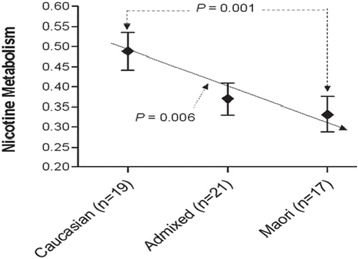
Ethnic differences in nicotine metabolic rate among New Zealanders.
Lea, R. A., Benowitz, N. L., Green, M., Fowles, J. R., Vishvanath, A., Dickson, S. J., Lea, M. G., Woodward, A. J., Chambers, G. K., & Phillips, D. R. (2005) · PubMed · Cited by 19
A Coalescent-Based Estimator of Admixture From DNA Sequences
Wang, J. (2006) · Genetics · doi:10.1534/genetics.105.054130 · Cited by 18
Private Biobanks Spark Ethical Concerns
Kaiser, J. (2002) · Science · doi:10.1126/science.298.5596.1160 · Cited by 15 · cited 1×
“, comprehensive electronic medical records (EMR) data) [65,66] in a consortium setting.”
Genetics of complex human diseases: genome screening, association studies and fine mapping
Xu, Wiesch, & Meyers (1998) · Clinical & Experimental Allergy · doi:10.1046/j.1365-2222.1998.028s5001.x · Cited by 15 · cited 2×
“This approach is referred to as haplotype sharing [50] and involves sharing several markers to identify regions of interest [51] rather than relying on differences in allele frequencies at individual markers.”
Lung function testing in children: importance of race and ethnic-specific reference equations
Stocks, J., Sonnappa, S., & Lum, S. (2014) · Expert Review of Respiratory Medicine · doi:10.1586/17476348.2014.927317 · Cited by 15 · cited 2×
“Age-, race-, and ethnicappropriate reference equations will be used for PFT results [57-59].”
Connor, A. C., & Stoneking, M. (1994) · Journal of Forensic Sciences · doi:10.1520/jfs13725j · Cited by 14 · cited 1×
“This level of accuracy in predicting investigator-assigned ethnicity could be very useful in forensic investigations [47].”
BiDil for Heart Failure in Black Patients
Kahn, J. (2007) · Annals of Internal Medicine · doi:10.7326/0003-4819-147-3-200708070-00019 · Cited by 13 · cited 1×
“Ignoring admixture or stratification within ethnic groups will complicate the promise of personalized medicine [96-99].”
How to avoid misinterpreting lung function tests in children: a few practical tips
Stocks, J., Kirkby, J. C., & Lum, S. (2014) · Paediatric Respiratory Reviews · doi:10.1016/j.prrv.2014.02.001 · Cited by 12 · cited 1×
“Age-, race-, and ethnicappropriate reference equations will be used for PFT results [57-59].”
(2007) · Pharmacogenomics in Admixed Populations · doi:10.1201/9781498713795-7 · Cited by 12 · cited 1×
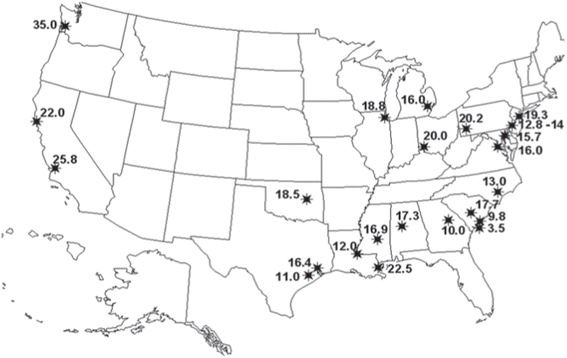
“Parra [15] presents data showing that the percentage of European contribution to several African American communities within the continental US varies tenfold, from 3.5% in the isolated Gullah-speaking Sea Islanders from South Carolina to 35% in Seattle (Figure 1).”
InfluentialNordborg, M. (1999) · Lecture notes-monograph series · doi:10.1214/lnms/1215455547 · Cited by 11
A Small Number of Candidate Gene SNPs Reveal Continental Ancestry in African Americans
Kodaman, N., Aldrich, M. C., Smith, J. R., Signorello, L. B., Bradley, K., Breyer, J. P., Cohen, S. S., Long, J., Cai, Q., Giles, J., et al. (2012) · Annals of Human Genetics · doi:10.1111/j.1469-1809.2012.00738.x · Cited by 10
Non, A. L., Gravlee, C. C., & Mulligan, C. J. (2010) · American Journal of Obstetrics and Gynecology · doi:10.1016/j.ajog.2009.12.014 · Cited by 6 · cited 1×
“A good example that illustrates this phenomenon is the recent studies that showed education and socioeconomic factors, but not genetic ancestry, were associated with blood pressure and cancer among African Americans in the US, respectively [91,92].”
ELYADERANI, M. K., Cinkotai, K., Hyde, K., Waters, H. M., Howarth, J., Goldstone, S., & RICHARDS, J. T. (1998) · Clinical & Laboratory Haematology · doi:10.1046/j.1365-2257.1998.00131.x · Cited by 5 · cited 1×
“patient’s own genotype data [79,102,103].”
BiDil for Heart Failure in Black Patients
Bibbins-Domingo, K. B., & Fernández, A. (2007) · Annals of Internal Medicine · doi:10.7326/0003-4819-147-3-200708070-00018 · Cited by 3
Marcheco, B., & Reed, G. (2014) · MEDICC Review · doi:10.37757/mr2014.v16.n3-4.2 · Cited by 2
Cited by
Cancer health disparities in racial/ethnic minorities in the United States
Zavala, V. A., Bracci, P. M., Carethers, J. M., Carvajal-Carmona, L., Coggins, N. B., Cruz-Correa, M. R., Davis, M., de Smith, A. J., Dutil, J., Figueiredo, J. C., et al. (2021) · British Journal of Cancer · doi:10.1038/s41416-020-01038-6 · Cited by 912
Peterson, R. E., Kuchenbaecker, K., Walters, R. K., Chen, C.-Y., Popejoy, A. B., Periyasamy, S., Lam, M., Iyegbe, C., Strawbridge, R. J., Brick, L., et al. (2019) · Cell · doi:10.1016/j.cell.2019.08.051 · Cited by 797
“For extensive discussion in the context of genomics, including recommendations from professional organizations see: (Banda et al., 2015; Mersha and Abebe, 2015; Race, Ethnicity, and Genetics Working Group, 2005).”
Structure, function, and genetics of lipoprotein (a)
Schmidt, K., Noureen, A., Kronenberg, F., & Utermann, G. (2016) · Journal of Lipid Research · doi:10.1194/jlr.r067314 · Cited by 638
“Genetic studies in African Americans can be complicated by the fact that they represent an admixed population, with substantial contribution of European and Asian ancestry to their gene pool (reviewed in (225)).”
From race-based to race-conscious medicine: how anti-racist uprisings call us to act
Cerdeña, J. P., Plaisime, M. V., & Tsai, J. (2020) · The Lancet · doi:10.1016/s0140-6736(20)32076-6 · Cited by 430
The Burden of Cardiovascular Diseases Among US States, 1990-2016
Global Burden of Cardiovascular Diseases Collaboration, Roth, G. A., Johnson, C. O., Abate, K. H., Abd-Allah, F., Ahmed, M., Alam, K., Alam, T., Alvis-Guzman, N., Ansari, H., et al. (2018) · JAMA Cardiology · doi:10.1001/jamacardio.2018.0385 · Cited by 389
“differed for various regions of the country, suggesting effect modification by local factors.(33,34) The addition of race-”
Metadata
- Authors
- Mersha, T. B., & Abebe, T.
- Affiliations
- University of Northern Iowa (US)
- Venue
- Human Genomics
- Published
- 2015-01-07
- Volume
- 9
- Issue
- 1
- Pages
- 1-1
- ISSN
- 1473-9542 (ISSN-L)
- 1479-7364
- PMC
- PMC4307746
- OpenAlex
- W2113129492
- Cited by
- 450
- References
- 115
- Citations by year
- 2026: 18 · 2025: 49 · 2024: 55 · 2023: 51 · 2022: 56 · 2021: 42 · 2020: 41 · 2019: 39 · 2018: 39 · 2017: 29 · 2016: 22 · 2015: 6
- FWCI
- 22.00
- Type
- journal article
- Language
- en
- Update notices
- correction (2021-06-15)
- Open access
- gold
- doi.org
- Licence
- cc-by
- creativecommons.org/licenses/by/4.0 (tdm)
- creativecommons.org/licenses/by/4.0 (vor)
- Locations
- Human Genomics (publishedVersion, cc-by)
- Europe PMC (PubMed Central) (publishedVersion, cc-by)
- PubMed Central (publishedVersion, cc-by)
- PubMed (publishedVersion)
- UNI ScholarWorks (University of Northern Iowa) (submittedVersion, cc-by)
- UNI ScholarWorks (University of Northern Iowa) (submittedVersion)
- Funders
- National Institutes of Health
- National Heart, Lung, and Blood Institute (K01HL103165)
- Topics
- Social Sciences › Anthropology › Race, Genetics, and Society
- Life Sciences › Biochemistry, Genetics and Molecular Biology › Genetics › Forensic and Genetic Research
- Life Sciences › Biochemistry, Genetics and Molecular Biology › Genetics › Genetic Associations and Epidemiology
- Keywords
- self-reported race, self-reported ethnicity, genetic ancestry, ancestry informative markers, health disparities, African Americans, Latino population, admixture, biogeographical ancestry, human genetic variation, genomic research
- MeSH terms
- Ethnicity, Genetic Markers, Humans, Phenotype, Genomics, Biomedical Research, Racial Groups, Self Report
About these checks
Registry, retraction, Cites and statistics results are computed, not judged, with one exception: a printed reference that no index lists is read once by a model before it counts as a citation error. Claims are extracted by a model and kept only when their quote appears verbatim in the text; each cited source is then checked, with a model’s help, for whether it says what the claim relies on. Those verdicts can be wrong — read the claim’s quote and the cited source before relying on one.
Statistics and arithmetic are recomputed, not judged.
Confidence bands are shown only for fields calibrated on our annotated test set. None is calibrated yet, so no band is shown.
What counts as a claim ›How we measure confidence ›How we check this ›
Are you an author, or do you see a problem with this page? Request a review
Data sources
Bibliographic data: Semantic Scholar, OpenAlex, Crossref.
Contains information from the Semantic Scholar Academic Graph Datasets, made available under the ODC Attribution License (ODC-BY 1.0).
Semantic Scholar’s data is described in: Kinney, R., et al. (2023). The Semantic Scholar Open Data Platform. arXiv:2301.10140.
