

Changes in eating behavior through lifestyle treatment in women with polycystic ovary syndrome (PCOS): a randomized controlled trial
Open accessThe DOI matches its Crossref record; 71 of the 75 references it cites were found in a registry or an index.
Abstract
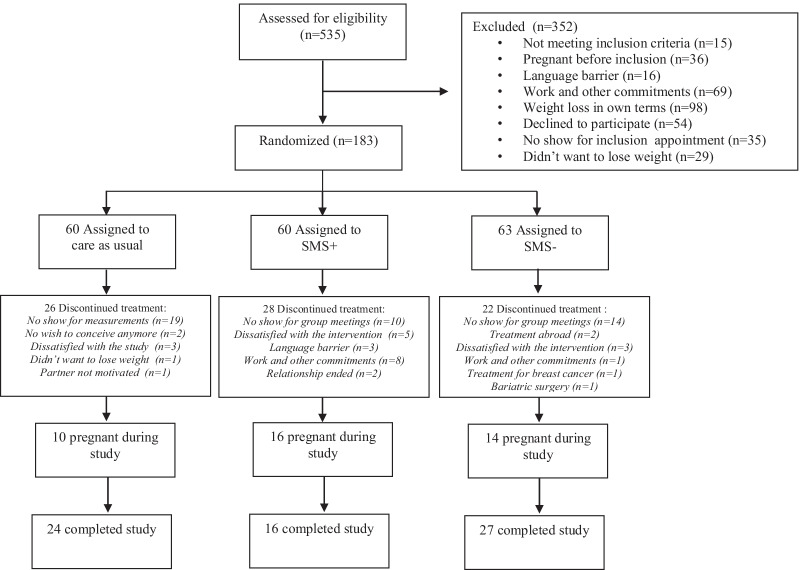
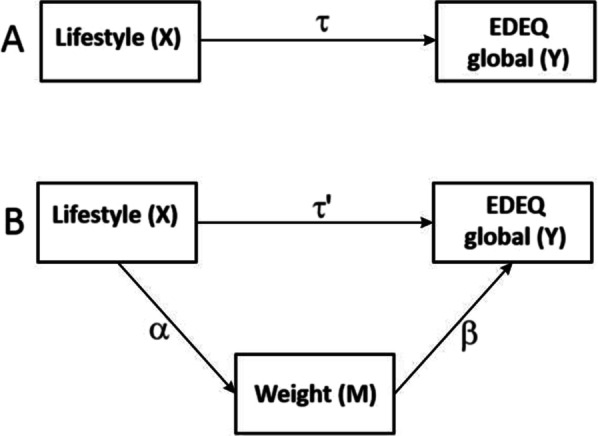
Background: Eating behaviors like emotional eating, external eating and restrained eating play an important role in weight gain and weight loss in the general population. Improvements in eating behavior are important for long-term weight. This has not yet been studied in women with Polycystic Ovary Syndrome (PCOS). The aim of this study is to examine if a three-component lifestyle intervention (LI) is effective for improving disordered eating behavior in women with PCOS. Methods: Women diagnosed with PCOS (N = 183), with a body mass index (BMI) > 25 kg/m 2 and trying to achieve a pregnancy were either assigned to 1 year of 20 group sessions of cognitive behavioral therapy (CBT) combined with nutritional advice and exercise with or without additional feedback through Short Message Service (SMS) or Care As Usual (CAU), which includes the advice to lose weight using publicly available services. Results: The Eating Disorder Examination Questionnaire (EDEQ) scores worsened in CAU (47.5%) and improved in the LI (4.2%) at 12 months. The difference between the LI and CAU was significant ( P = 0.007) and resulted in a medium to large effect size (Cohen’s d: − 0.72). No significant differences were observed in EDEQ scores between LI with SMS compared to LI without SMS (Cohen’s d: 0.28; P = 0.399). Also, weight loss did not mediate the changes in eating behavior. An overall completion rate of 67/183 (36.6%) was observed. Conclusions: A three-component CBT lifestyle program resulted in significant improvements in disordered eating behavior compared to CAU. Changes in disordered eating behavior are important for long-term weight loss and mental health. Trial registration : NTR, NTR2450. Registered 2 August 2010, https://www.trialregister.nl/trial/2344
Overview
The claims and statistics of this paper haven’t been checked yet.
Free: it reads the open-access text and checks the first 5 claims that cite a source we can check. Create a free account to check every claim.
Integrity signals
Registry
Cites
Statistics
Figures
Verification
Claims the paper makes
The claims and statistics of this paper haven’t been checked yet.
Free: it reads the open-access text and checks the first 5 claims that cite a source we can check. Create a free account to check every claim.
Claims other papers make about this one
Each is checked against this paper’s own text: does it say what the citing paper says it does?
The source backs part of the claim, not all of it — or backs it for a different population, condition or comparison.
In the citing paper
“A previous 3-component lifestyle intervention consisting of diet, exercise, and cognitive behavioral therapy, facilitated using texting to track patients’ food intake, physical activity, and mood, can effectively improve eating disorder and mood in patients with PCOS and contribute to weight loss [8,9].”
From Efficacy of WeChat-Based Digital Intervention Versus Metformin in Women With Polycystic Ovary Syndrome: Randomized Controlled Trial (2024) · cites this paper as [9]
Experimental — accuracy not yet measured
Self-check
Percentages, sums and reported differences re-computed from the paper’s own numbers.
The self-check needs the paper’s full text.
Citations
Cites
Diagnostic and Statistical Manual of Mental Disorders
American Psychiatric Association (2013) · doi:10.1176/appi.books.9780890425596 · Cited by 116,369
Applied Longitudinal Data Analysis: Modeling Change and Event Occurrence
Singer, J. D., & Willett, J. B. (2003) · doi:10.1093/acprof:oso/9780195152968.001.0001 · Cited by 10,647
(2004) · Fertility and Sterility · doi:10.1016/j.fertnstert.2003.10.004 · Cited by 9,050 · cited 1×
“reproductive (irregular menstrual cycles, hirsutism, acne and infertility) and metabolic (insulin resistance, metabolic syndrome, prediabetes and type 2 diabetes) [5, 6].”
BackgroundCohen, J. (1992) · Psychological Bulletin · doi:10.1037//0033-2909.112.1.155 · Cited by 8,771
The Rotterdam ESHRE/ASRM-sponsored PCOS consensus workshop group (2004) · Human Reproduction · doi:10.1093/humrep/deh098 · Cited by 6,138 · cited 1×
“The diagnosis of PCOS requires at least two out of three of the following criteria: (1) oligo-ovulation or anovulation (irregular or no menstrual cycle), (2) clinical hyperandrogenism (hirsutism) and/or biochemical signs of hyperandrogenism (elevated free androgen index or elevated testosterone levels), (3) polycystic…”
MethodLippa, N. C., & Sanderson, S. C. (2013) · Human Heredity · doi:10.1159/000353712 · Cited by 6,078
Comparison of Beck Depression Inventories -IA and -II in psychiatric outpatients
Beck, A. T., Steer, R. A., Ball, R., & Ranieri, W. F. (1996) · Journal of Personality Assessment · doi:10.1207/s15327752jpa6703_13 · Cited by 5,965 · cited 1×
“Scores of 0–13 indicate minimal depression, 14–19 (mild depression), 20–28 (moderate depression) and 29–63 (severe depression) [43].”
The prevalence and correlates of eating disorders in the National Comorbidity Survey Replication
Hudson, J. I., Hiripi, E., Pope, H. G., & Kessler, R. C. (2007) · Biological Psychiatry · doi:10.1016/j.biopsych.2006.03.040 · Cited by 4,973 · cited 1×
“This is in line with the general population where higher depression scores were related to eating disorders [63].”
ResultStatistical Analysis With Missing Data
Ghosh, S. (1988) · Technometrics · doi:10.1080/00401706.1988.10488446 · Cited by 4,576
Linear Mixed Models for Longitudinal Data
Molenberghs, G., & Verbeke, G. (2000) · Springer Series in Statistics · doi:10.1007/978-1-4419-0300-6 · Cited by 2,646
Azziz, R., Carmina, E., Chen, Z., Dunaif, A., Laven, J. S. E., Legro, R. S., Lizneva, D., Natterson-Horowtiz, B., Teede, H. J., & Yildiz, B. O. (2016) · Nature Reviews Disease Primers · doi:10.1038/nrdp.2016.57 · Cited by 2,005
Self-citationEstimating Mediated Effects in Prevention Studies
Mackinnon, D. P., & Dwyer, J. H. (1993) · Evaluation Review · doi:10.1177/0193841x9301700202 · Cited by 1,937 · cited 2×
“MacKinnon DP, Dwyer JH. Estimating mediated effects in prevention studies.”
MethodTeede, H. J., Misso, M. L., Costello, M. F., Dokras, A., Laven, J., Moran, L., Piltonen, T., Norman, R. J., & the International PCOS Network (2018) · Clinical Endocrinology · doi:10.1111/cen.13795 · Cited by 1,823
Self-citationMarch, W. A., Moore, V. M., Willson, K. J., Phillips, D. I. W., Norman, R. J., & Davies, M. J. (2010) · Human Reproduction · doi:10.1093/humrep/dep399 · Cited by 1,799
Teede, H., Deeks, A., & Moran, L. (2010) · BMC Medicine · doi:10.1186/1741-7015-8-41 · Cited by 1,565 · cited 1×
“Other psychological aspects such as a lower quality of life and disordered eating have a major impact on women with PCOS [14].”
Bozdag, G., Mumusoglu, S., Zengin, D., Karabulut, E., & Yildiz, B. O. (2016) · Human Reproduction · doi:10.1093/humrep/dew218 · Cited by 1,526
Teede, H. J., Misso, M. L., Costello, M. F., Dokras, A., Laven, J., Moran, L., Piltonen, T., Norman, R. J., Andersen, M., Azziz, R., et al. (2018) · Fertility and Sterility · doi:10.1016/j.fertnstert.2018.05.004 · Cited by 1,325 · cited 1×
“Weight loss by a three-component lifestyle intervention is recommended as first-line treatment for women with PCOS [34].”
BackgroundSelf-citationClarifying conditions and decision points for mediational type inferences in Organizational Behavior
Mathieu, J. E., & Taylor, S. R. (2006) · Journal of Organizational Behavior · doi:10.1002/job.406 · Cited by 961 · cited 1×
“The significance of the mediated effect is given by [50]:”
BackgroundLim, S. S., Davies, M. J., Norman, R. J., & Moran, L. J. (2012) · Human Reproduction Update · doi:10.1093/humupd/dms030 · Cited by 939 · cited 1×
“The prevalence of overweight and obesity is significantly higher in women diagnosed with PCOS compared to women without PCOS [6, 7].”
BackgroundStepto, N. K., Cassar, S., Joham, A. E., Hutchison, S. K., Harrison, C. L., Goldstein, R. F., & Teede, H. J. (2013) · Human Reproduction · doi:10.1093/humrep/des463 · Cited by 747 · cited 1×
“Weight loss can improve psychological, reproductive, and metabolic features of PCOS and is therefore the first line treatment [10].”
BackgroundLifestyle changes in women with polycystic ovary syndrome
Lim, S. S., Hutchison, S. K., Van Ryswyk, E., Norman, R. J., Teede, H. J., & Moran, L. J. (2019) · Cochrane Database of Systematic Reviews · doi:10.1002/14651858.cd007506.pub4 · Cited by 725
Douketis, J. D., Macie, C., Thabane, L., & Williamson, D. F. (2005) · International Journal of Obesity · doi:10.1038/sj.ijo.0802982 · Cited by 665 · cited 1×
“Complete cases analyses can overestimate weight loss because study completers achieve more weight loss than drop-outs [71].”
BackgroundCooney, L. G., Lee, I., Sammel, M. D., & Dokras, A. (2017) · Human Reproduction · doi:10.1093/humrep/dex044 · Cited by 631
Causes of Emotional Eating and Matched Treatment of Obesity
van Strien, T. (2018) · Current Diabetes Reports · doi:10.1007/s11892-018-1000-x · Cited by 501 · cited 4×
“External eating is defined as overeating in response to the sight and smell of attractive food [22].”
BackgroundInfluentialFairburn, C. G., & Bohn, K. (2005) · Behaviour Research and Therapy · doi:10.1016/j.brat.2004.06.011 · Cited by 496 · cited 1×
“Besides these official eating disorders, many individuals do not fulfill all the criteria of an eating disorder while having disordered eating patterns [16].”
BackgroundDiabetes, Metabolic Syndrome and Obesity: Targets and Therapy
(2011) · Diabetes Metabolic Syndrome and Obesity · doi:10.2147/dmsott · Cited by 471
Multilevel Mediation Modeling in Group-Based Intervention Studies
Krull, J. L., & Mackinnon, D. P. (1999) · Evaluation Review · doi:10.1177/0193841x9902300404 · Cited by 419 · cited 3×
“MacKinnon DP, Dwyer JH. Estimating mediated effects in prevention studies.”
MethodValidation of the flexible and rigid control dimensions of dietary restraint
Westenhoefer, J., Stunkard, A. J., & Pudel, V. (1999) · International Journal of Eating Disorders · doi:10.1002/(sici)1098-108x(199907)26:1<53::aid-eat7>3.0.co;2-n · Cited by 418 · cited 1×
“Some researchers suggested that a rigid and a flexible form of dietary restraint exist [58].”
BackgroundLinardon, J., Wade, T. D., de la Piedad Garcia, X., & Brennan, L. (2017) · Journal of Consulting and Clinical Psychology · doi:10.1037/ccp0000245 · Cited by 379 · cited 1×
“and seems Also, CBT has proven to be effective for individuals with bulimia nervosa and binge eating disorder [28].”
BackgroundRandomized trial of a lifestyle program in obese infertile women
Mutsaerts, M. A. Q., van Oers, A. M., Groen, H., Burggraaff, J. M., Kuchenbecker, W. K. H., Perquin, D. A. M., Koks, C. A. M., van Golde, R., Kaaijk, E. M., Schierbeek, J. M., et al. (2016) · New England Journal of Medicine · doi:10.1056/nejmoa1505297 · Cited by 308
Journal of Human Nutrition and Dietetics
(2010) · Journal of Human Nutrition and Dietetics · doi:10.1111/(issn)1365-277x · Cited by 298
Emotional eating and food intake after sadness and joy
van Strien, T., Cebolla, A., Etchemendy, E., Gutiérrez-Maldonado, J., Ferrer-García, M., Botella, C., & Baños, R. (2013) · Appetite · doi:10.1016/j.appet.2013.02.016 · Cited by 295
Lifestyle changes in women with polycystic ovary syndrome
Moran, L. J., Hutchison, S. K., Norman, R. J., & Teede, H. J. (2011) · Cochrane Database of Systematic Reviews · doi:10.1002/14651858.cd007506.pub3 · Cited by 292 · cited 1×
“Several one- or two component interventions achieved short-term weight loss in women with PCOS [52] and did not examine eating behavior.”
Backgroundvan Strien, T., Herman, C. P., & Verheijden, M. W. (2009) · Appetite · doi:10.1016/j.appet.2008.11.010 · Cited by 284
Hoeger, K. M., Kochman, L., Wixom, N., Craig, K., Miller, R. K., & Guzick, D. S. (2004) · Fertility and Sterility · doi:10.1016/j.fertnstert.2004.02.104 · Cited by 278
New Approach to Polycystic Ovary Syndrome and Other Forms of Anovulatory Infertility
Laven, J. S. E., Imani, B., Eijkemans, M. J. C., & Fauser, B. C. J. M. (2002) · Obstetrical & Gynecological Survey · doi:10.1097/00006254-200211000-00022 · Cited by 235 · cited 2×
“The prevalence of overweight and obesity is significantly higher in women diagnosed with PCOS compared to women without PCOS [6, 7].”
BackgroundSelf-citationPalomba, S., Giallauria, F., Falbo, A., Russo, T., Oppedisano, R., Tolino, A., Colao, A., Vigorito, C., Zullo, F., & Orio, F. (2008) · Human Reproduction · doi:10.1093/humrep/dem391 · Cited by 235
Development of healthy and sustainable food-based dietary guidelines for the Netherlands
Brink, E., van Rossum, C., Postma-Smeets, A., Stafleu, A., Wolvers, D., van Dooren, C., Toxopeus, I., Buurma-Rethans, E., Geurts, M., & Ocké, M. (2019) · Public Health Nutrition · doi:10.1017/s1368980019001435 · Cited by 230 · cited 1×
“The Dutch Food Guide was used as a guideline for a healthy diet and daily amounts for the different food groups [40].”
MethodVeltman-Verhulst, S. M., Boivin, J., Eijkemans, M. J. C., & Fauser, B. J. C. M. (2012) · Human Reproduction Update · doi:10.1093/humupd/dms029 · Cited by 215
Cognitive behavioral therapy to aid weight loss in obese patients: current perspectives
Castelnuovo, G., Pietrabissa, G., Manzoni, G. M., Cattivelli, R., Rossi, A., Novelli, M., Varallo, G., & Molinari, E. (2017) · Psychology Research and Behavior Management · doi:10.2147/prbm.s113278 · Cited by 187 · cited 1×
“Important principles and techniques of the CBT component are self-monitoring, realistic and achievable goal setting, control of stressful stimuli and triggers, and promotion of alternative behaviors during emotional situations or negative mood states [37].”
Perceived stress, unhealthy eating behaviors, and severe obesity in low-income women
Richardson, A. S., Arsenault, J. E., Cates, S. C., & Muth, M. K. (2015) · Nutrition Journal · doi:10.1186/s12937-015-0110-4 · Cited by 173 · cited 6×
“Women were eligible if they were diagnosed with PCOS according to the Rotterdam 2003 consensus criteria, had a BMI above 25 kg/m2, between 18 and 38 years old and would like to become pregnant.”
BackgroundInfluentialAdding cognitive therapy to dietetic treatment is associated with less relapse in obesity
Werrij, M. Q., Jansen, A. T. M., Mulkens, S., Elgersma, H. J., Ament, A. J. H. A., & Hospers, H. J. (2009) · Journal of Psychosomatic Research · doi:10.1016/j.jpsychores.2008.12.011 · Cited by 159 · cited 1×
“CBT is used for challenging and changing dysfunctional eating and body-related beliefs and schemas to develop and maintain a healthier eating pattern [36].”
BackgroundKlump, K. L., Burt, S. A., McGue, M., & Iacono, W. G. (2007) · Archives of General Psychiatry · doi:10.1001/archpsyc.64.12.1409 · Cited by 130
de Castro, J. M. (1995) · Physiology & Behavior · doi:10.1016/0031-9384(94)00229-x · Cited by 128 · cited 1×
“In some studies, dietary restraint was associated with a higher BMI [54] but also with a higher intake of healthy foods [55].”
Increased risk of disordered eating in polycystic ovary syndrome
Lee, I., Cooney, L. G., Saini, S., Smith, M. E., Sammel, M. D., Allison, K. C., & Dokras, A. (2017) · Fertility and Sterility · doi:10.1016/j.fertnstert.2016.12.014 · Cited by 127
Meun, C., Franco, O. H., Dhana, K., Jaspers, L., Muka, T., Louwers, Y., Ikram, M. A., Fauser, B. C. J. M., Kavousi, M., & Laven, J. S. E. (2018) · The Journal of Clinical Endocrinology & Metabolism · doi:10.1210/jc.2017-02421 · Cited by 126 · cited 1×
“Most women with PCOS have overweight or obesity throughout their entire lifespan [8, 9].”
BackgroundSelf-citationThannickal, A., Brutocao, C., Alsawas, M., Morrow, A., Zaiem, F., Murad, M. H., & Javed Chattha, A. (2020) · Clinical Endocrinology · doi:10.1111/cen.14153 · Cited by 122 · cited 1×
“96) are higher than in the general population [29].”
BackgroundNeumark‐Sztainer, D., Wall, M., Story, M., & Sherwood, N. E. (2009) · International Journal of Eating Disorders · doi:10.1002/eat.20733 · Cited by 121
Tay, C. T., Teede, H. J., Hill, B., Loxton, D., & Joham, A. E. (2019) · Fertility and Sterility · doi:10.1016/j.fertnstert.2019.03.027 · Cited by 120 · cited 1×
“The current literature suggests that distress, low self-esteem [62] and depression [32] were associated with disordered eating in women with PCOS.”
BackgroundFactors predictive of drop‐out and weight loss success in weight management of obese patients
Ortner Hadžiabdić, M., Mucalo, I., Hrabač, P., Matić, T., Rahelić, D., & Božikov, V. (2015) · Journal of Human Nutrition and Dietetics · doi:10.1111/jhn.12270 · Cited by 110
The effect of eating behavior on weight loss and maintenance during a lifestyle intervention
Keränen, A.-M., Savolainen, M. J., Reponen, A. H., Kujari, M.-L., Lindeman, S. M., Bloigu, R. S., & Laitinen, J. H. (2009) · Preventive Medicine · doi:10.1016/j.ypmed.2009.04.011 · Cited by 109 · cited 1×
“Especially in successful participants there was an increase in dietary restraint and a decrease in emotional and uncontrolled eating [56].”
BackgroundLifestyle modification in the management of the metabolic syndrome: achievements and challenges
Giulio Marchesini, G. (2010) · Diabetes, Metabolic Syndrome and Obesity: Targets and Therapy · doi:10.2147/dmsott.s13860 · Cited by 105 · cited 1×
“Compared to one or two-component lifestyle interventions, three-component lifestyle interventions have the biggest effect to establish a long-term weight loss in general [35].”
BackgroundGenetic and environmental influences on disordered eating: An adoption study.
Klump, K. L., Suisman, J. L., Burt, S. A., McGue, M., & Iacono, W. G. (2009) · Journal of Abnormal Psychology · doi:10.1037/a0017204 · Cited by 103
Nurkkala, M., Kaikkonen, K., Vanhala, M., Karhunen, L. J., Keränen, A.-M., & Korpelainen, R. (2015) · Eating Behaviors · doi:10.1016/j.eatbeh.2015.05.009 · Cited by 102
Mutsaerts, M. A. Q., Kuchenbecker, W. K. H., Mol, B. W., Land, J. A., & Hoek, A. (2013) · Human Reproduction · doi:10.1093/humrep/det026 · Cited by 100 · cited 1×
“It is still unclear if patient or intervention related factors are related to drop-out [70].”
BackgroundBinge eating and menstrual dysfunction
Ålgars, M., Huang, L., Von Holle, A. F., Peat, C. M., Thornton, L. M., Lichtenstein, P., & Bulik, C. M. (2014) · Journal of Psychosomatic Research · doi:10.1016/j.jpsychores.2013.11.011 · Cited by 90 · cited 1×
“Others also suggested that the irregular menstrual cycle (oligomenorrhea) [66, 67] or high levels of insulin [30] may lead to increased hunger and psychological distress, which could result in more binge eating.”
BackgroundHigh levels of free testosterone in women with bulimia nervosa
Sundblad, C., Bergman, L., & Eriksson, E. (1994) · Acta Psychiatrica Scandinavica · doi:10.1111/j.1600-0447.1994.tb01613.x · Cited by 86 · cited 1×
“In women with PCOS, a connection between high androgen levels, polycystic ovaries and behavioral deficits such as impulsivity was suggested, which could make women with PCOS more vulnerable for bulimia nervosa [65].”
BackgroundBinge eating behaviours and food cravings in women with polycystic ovary syndrome
Jeanes, Y. M., Reeves, S., Gibson, E. L., Piggott, C., May, V. A., & Hart, K. H. (2017) · Appetite · doi:10.1016/j.appet.2016.11.010 · Cited by 85 · cited 2×
“Binge eating symptoms were more often present in women with PCOS compared to healthy controls [30].”
BackgroundLarsson, I., Hulthén, L., Landén, M., Pålsson, E., Janson, P., & Stener-Victorin, E. (2016) · Clinical Nutrition · doi:10.1016/j.clnu.2015.02.006 · Cited by 79 · cited 6×
“Women were eligible if they were diagnosed with PCOS according to the Rotterdam 2003 consensus criteria, had a BMI above 25 kg/m2, between 18 and 38 years old and would like to become pregnant.”
ResultInfluentialBohrer, B. K., Forbush, K. T., & Hunt, T. K. (2015) · Appetite · doi:10.1016/j.appet.2014.12.226 · Cited by 77
The long‐term effect of energy restricted diets for treating obesity
Langeveld, M., & DeVries, J. H. (2015) · Obesity · doi:10.1002/oby.21146 · Cited by 73
Lantz, H., Peltonen, M., Ågren, L., & Torgerson, J. S. (2003) · Journal of Internal Medicine · doi:10.1046/j.1365-2796.2003.01187.x · Cited by 71
The role of reproductive hormones in the development and maintenance of eating disorders
Baker, J. H., Girdler, S. S., & Bulik, C. M. (2012) · Expert Review of Obstetrics & Gynecology · doi:10.1586/eog.12.54 · Cited by 68 · cited 1×
“We also tested other potential mediators since a relationship between high levels of androgens and binge eating was found in the general population [64].”
BackgroundJiskoot, G., Timman, R., Beerthuizen, A., Dietz de Loos, A., Busschbach, J., & Laven, J. (2020) · Obesity · doi:10.1002/oby.22980 · Cited by 56
Self-citationJiskoot, G., Benneheij, S. H., Beerthuizen, A., de Niet, J. E., de Klerk, C., Timman, R., Busschbach, J. J., & Laven, J. S. E. (2017) · Reproductive Health · doi:10.1186/s12978-017-0295-4 · Cited by 50 · cited 2×
“More information about which CBT techniques were used at each session and information about the daily amounts according to the Dutch Food Guide were described in the study protocol [39].”
BackgroundMethodSelf-citationTreatment Beliefs and Preferences for Psychological Therapies for Weight Management
Moffitt, R., Haynes, A., & Mohr, P. (2015) · Journal of Clinical Psychology · doi:10.1002/jclp.22157 · Cited by 42 · cited 1×
“Cognitive behavioral therapy (CBT) is recognized as the first-line psychological treatment for obesity to develop healthy eating behavior [27].”
BackgroundGreenwood, E. A., Pasch, L. A., Cedars, M. I., & Huddleston, H. G. (2020) · Fertility and Sterility · doi:10.1016/j.fertnstert.2020.01.016 · Cited by 41 · cited 2×
“The current literature suggests that distress, low self-esteem [62] and depression [32] were associated with disordered eating in women with PCOS.”
BackgroundPaganini, C., Peterson, G., Stavropoulos, V., & Krug, I. (2018) · Current Pharmaceutical Design · doi:10.2174/1381612824666171204151209 · Cited by 35 · cited 1×
“Others also suggested that the irregular menstrual cycle (oligomenorrhea) [66, 67] or high levels of insulin [30] may lead to increased hunger and psychological distress, which could result in more binge eating.”
BackgroundRestrained eating and the breakdown of self-regulation.
Stroebe, W. (2008) · American Psychological Association eBooks · doi:10.1037/11753-005 · Cited by 28 · cited 1×
“After these periods of overeating or eating “forbidden” foods, restraint eaters tend to consume more in general [23, 24].”
BackgroundAssessment of eating disorders: interview or self-report questionnaire
Fairburn, C. G., & Beglin, S. J. (1994) · International Journal of Eating Disorders · doi:10.1002/1098-108x(199412)16:4<363::aid-eat2260160405>3.0.co;2-# · cited 17×
“EDEQ global scores worsened in CAU by 47.5% and improved during LI by 4.2%.”
MethodInfluentialvan Strien (1986) · doi:10.1002/1098-108x(198602)5:2<295::aid-eat2260050209>3.0.co;2-t · cited 10×
“Eating behavior was measured with the Dutch Eating Behavior Questionnaire (DEBQ) and the Eating Disorder Examination Questionnaire (EDEQ).”
MethodInfluential
Research works printed but not linked: 5
- Teede H Deeks A Moran L Polycystic ovary syndrome: a complex condition with psychological, reproductive and metabolic manifestations that impacts on health across the lifespan BMC Med 2010 8 41 10.1186/1741-7015-8-41 20591140 PMC2909929 · DOI · Paper page
- Teede H Deeks A Moran L Polycystic ovary syndrome: a complex condition with psychological, reproductive and metabolic manifestations that impacts on health across the lifespan BMC Med 2010 8 41 10.1186/1741-7015-8-41 20591140 PMC2909929 · DOI · Paper page
- Fairburn CG Beglin SJ Eating disorder examination questionnaire Cognit Behav Ther Eat Disord 2008 309 313
- Roderick JAL, Donald BR. Statistical analysis with missing data: John Wiley and Sons, Inc.; 1986.
- Jiskoot G, Dietz de Loos A, Beerthuizen A, Timman R, Busschbach J, Laven J. Weight reduction through a cognitive behavioral therapy lifestyle intervention in polycystic ovary syndrome (PCOS): the primary outcome of a randomized controlled trial. Obesity. 2020;in press. PMC7702123 32969197 · DOI · Paper page
Cited by
The Role of Lifestyle Interventions in PCOS Management: A Systematic Review
Gautam, R., Maan, P., Jyoti, A., Kumar, A., Malhotra, N., & Arora, T. (2025) · Nutrients · doi:10.3390/nu17020310 · Cited by 115
Prevalence and Etiology of Eating Disorders in Polycystic Ovary Syndrome: A Scoping Review
Lalonde-Bester, S., Malik, M., Masoumi, R., Ng, K., Sidhu, S., Ghosh, M., & Vine, D. (2024) · Advances in Nutrition · doi:10.1016/j.advnut.2024.100193 · Cited by 45
“Increased adiposity may contribute to the development of EDs via impairment of the hypothalamic-neuroregulation of energy balance and food intake, and this applies to those with PCOS and overweight-obesity as we observed in several studies [67,68,88, 93,96].”
BackgroundMethodResultInfluentialDilimulati, D., Shao, X., Wang, L., Cai, M., Zhang, Y., Lu, J., Wang, Y., Liu, H., Kuang, M., Chen, H., et al. (2024) · Journal of Medical Internet Research · doi:10.2196/55883 · Cited by 17
“…3-component lifestyle intervention consisting of diet, exercise, and cognitive behavioral therapy, facilitated using texting to track patients’ food intake, physical activity, and mood, can effectively improve eating disorder and mood in patients with PCOS and contribute to weight loss [8,9].”
Xie, M., Yang, Y., & Zhang, J. (2024) · Frontiers in Endocrinology · doi:10.3389/fendo.2024.1297841 · Cited by 13
Pesonen, E., Nurkkala, M., Niemelä, M., Morin-Papunen, L. C., Tapanainen, J. S., Jämsä, T. J., Korpelainen, R., Ollila, M., & Piltonen, T. (2023) · Obesity · doi:10.1002/oby.23681 · Cited by 12
“On the other hand, the lifestyle intervention in question resulted in improvements in depression, body-image distress [38], and disordered eating behavior [44] in women with PCOS, independent of weight loss.”
Background
Metadata
- Authors
- Jiskoot, G., de Loos, A. D., Timman, R., Beerthuizen, A., Laven, J., & Busschbach, J.
- Affiliations
- Erasmus MC (NL)
- Corresponding author
- Jiskoot, Geranne
- Venue
- Journal of Eating Disorders
- Published
- 2022-05-17
- Volume
- 10
- Issue
- 1
- Pages
- 69-69
- ISSN
- 2050-2974 (ISSN-L)
- PMC
- PMC9116037
- OpenAlex
- W4280609244
- Cited by
- 23
- References
- 75
- Citations by year
- 2026: 8 · 2025: 4 · 2024: 7 · 2023: 3 · 2022: 1
- FWCI
- 3.43
- Type
- journal article
- Language
- en
- Open access
- gold
- doi.org
- Licence
- cc-by
- creativecommons.org/licenses/by/4.0 (tdm)
- creativecommons.org/licenses/by/4.0 (vor)
- Locations
- Journal of Eating Disorders (publishedVersion, cc-by)
- Research Square (acceptedVersion, cc-by)
- PubMed Central (publishedVersion, cc-by)
- PubMed (publishedVersion)
- EUR Research Repository (Erasmus University Rotterdam) (publishedVersion, cc-by)
- EUR Research Repository (Erasmus University Rotterdam) (submittedVersion, cc-by)
- DOAJ (DOAJ: Directory of Open Access Journals) (submittedVersion, cc-by-sa)
- Topics
- Social Sciences › Psychology › Clinical Psychology › Eating Disorders and Behaviors
- Health Sciences › Medicine › Reproductive Medicine › Ovarian function and disorders
- Health Sciences › Nursing › Nutrition and Dietetics › Nutrition, Health and Food Behavior
- Keywords
- polycystic ovary syndrome, dietary habits, disordered eating, lifestyle intervention, cognitive behavioral therapy, nutritional advice, physical activity, weight loss, emotional eating, external eating, dietary restraint, Eating Disorder Examination Questionnaire
About these checks
Registry, retraction, Cites and statistics results are computed, not judged, with one exception: a printed reference that no index lists is read once by a model before it counts as a citation error. Claims are extracted by a model and kept only when their quote appears verbatim in the text; each cited source is then checked, with a model’s help, for whether it says what the claim relies on. Those verdicts can be wrong — read the claim’s quote and the cited source before relying on one.
Statistics and arithmetic are recomputed, not judged.
Confidence bands are shown only for fields calibrated on our annotated test set. None is calibrated yet, so no band is shown.
What counts as a claim ›How we measure confidence ›How we check this ›
Are you an author, or do you see a problem with this page? Request a review
Data sources
Bibliographic data: Semantic Scholar, OpenAlex, Crossref.
Contains information from the Semantic Scholar Academic Graph Datasets, made available under the ODC Attribution License (ODC-BY 1.0).
Semantic Scholar’s data is described in: Kinney, R., et al. (2023). The Semantic Scholar Open Data Platform. arXiv:2301.10140.
