

The DOI matches its Crossref record; 40 of the 41 references it cites were found in a registry or an index.
Blocking microglial activation of reactive astrocytes is neuroprotective in models of Alzheimer’s disease
Open accessAbstract
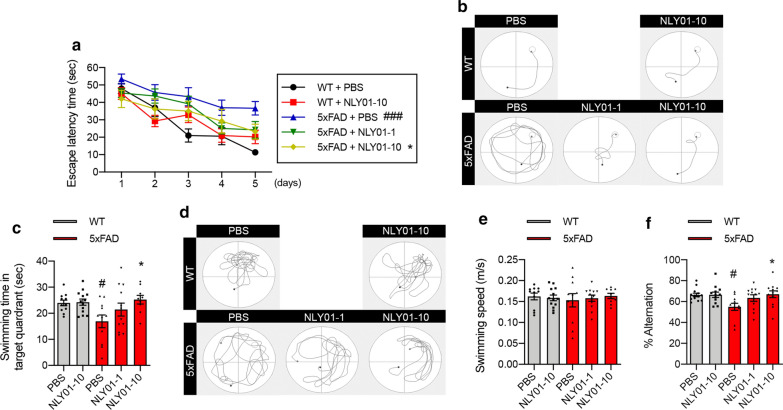
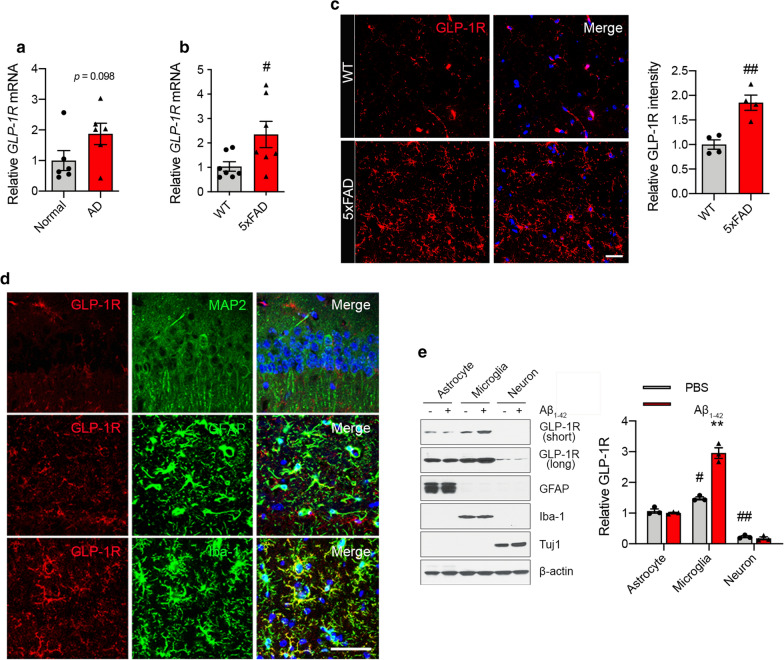
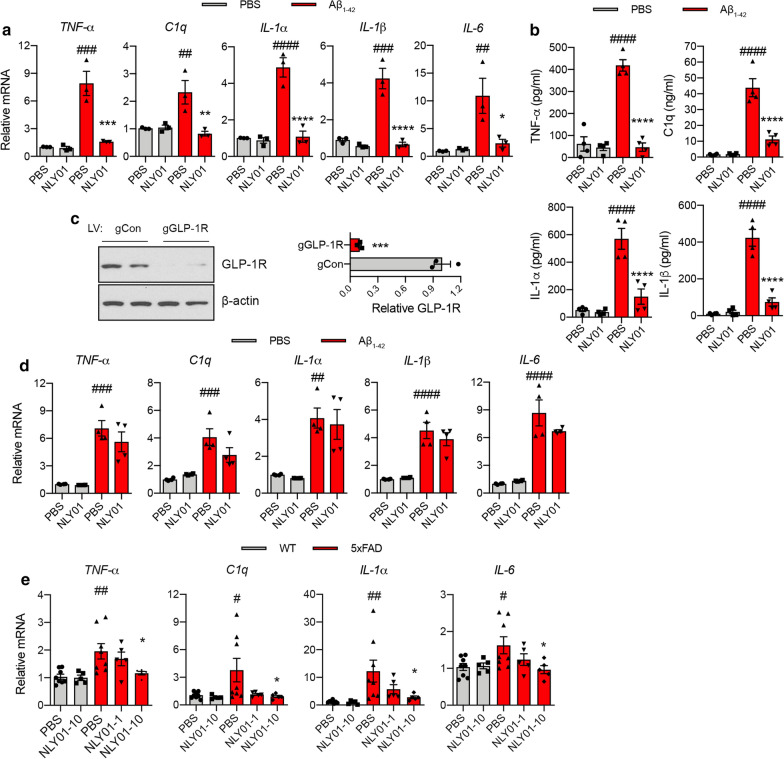
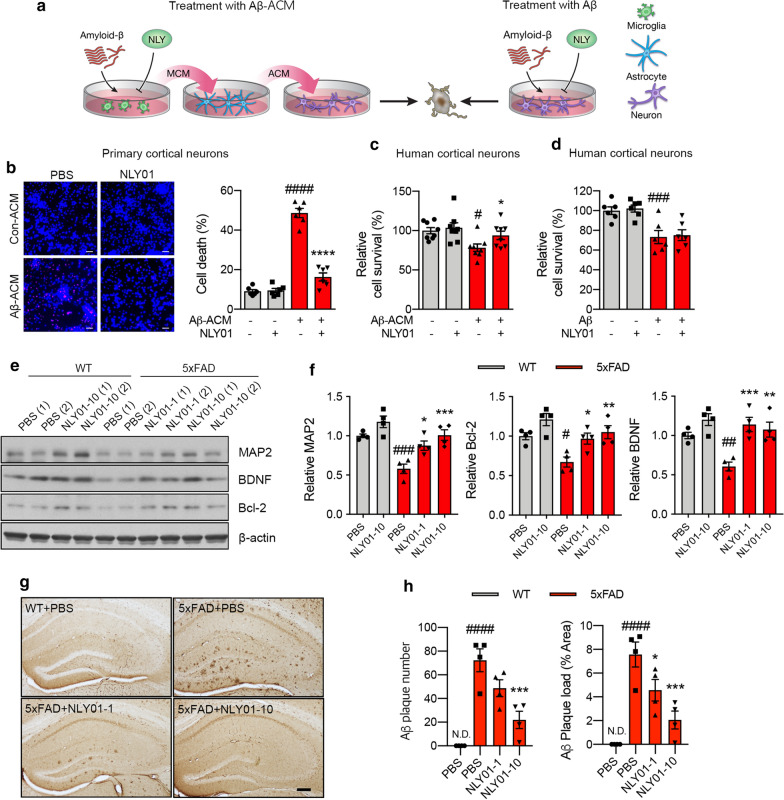
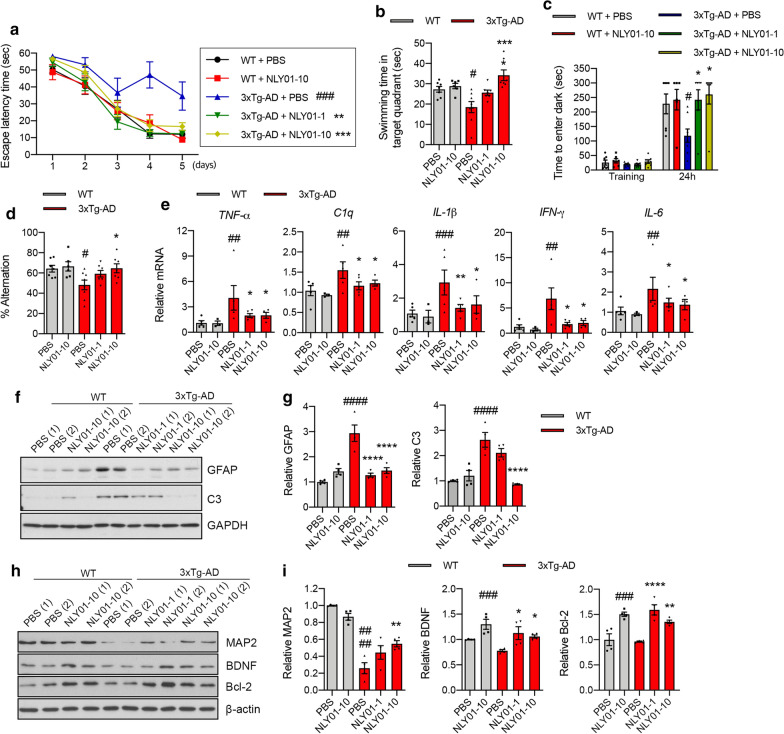
Alzheimer’s disease (AD) is the most common cause of age-related dementia. Increasing evidence suggests that neuroinflammation mediated by microglia and astrocytes contributes to disease progression and severity in AD and other neurodegenerative disorders. During AD progression, resident microglia undergo proinflammatory activation, resulting in an increased capacity to convert resting astrocytes to reactive astrocytes. Therefore, microglia are a major therapeutic target for AD and blocking microglia-astrocyte activation could limit neurodegeneration in AD. Here we report that NLY01, an engineered exedin-4, glucagon-like peptide-1 receptor (GLP-1R) agonist, selectively blocks β-amyloid (Aβ)-induced activation of microglia through GLP-1R activation and inhibits the formation of reactive astrocytes as well as preserves neurons in AD models. In two transgenic AD mouse models (5xFAD and 3xTg-AD), repeated subcutaneous administration of NLY01 blocked microglia-mediated reactive astrocyte conversion and preserved neuronal viability, resulting in improved spatial learning and memory. Our study indicates that the GLP-1 pathway plays a critical role in microglia-reactive astrocyte associated neuroinflammation in AD and the effects of NLY01 are primarily mediated through a direct action on Aβ-induced GLP-1R+ microglia, contributing to the inhibition of astrocyte reactivity. These results show that targeting upregulated GLP-1R in microglia is a viable therapy for AD and other neurodegenerative disorders.
Overview
The claims and statistics of this paper haven’t been checked yet.
Run the check — free, no account needed. It reads the open-access text and checks the sources it cites.
Integrity signals
Registry
Cites
Statistics
Figures
Verification
Claims the paper makes
The claims and statistics of this paper haven’t been checked yet.
Run the check — free, no account needed. It reads the open-access text and checks the sources it cites.
Claims other papers make about this one
Each is checked against this paper’s own text: does it say what the citing paper says it does?
The source backs part of the claim, not all of it — or backs it for a different population, condition or comparison.
In the citing paper
“They are involved in multiple biological pathways that could be beneficial in AD including improvement of BBB integrity and vascular health, promotion of homeostasis in microglia and astrocytes, positive effects on adaptative immune cells (including natural killer cells and activated regulatory T cells), improvement of synaptic viability, and neuroprotection [17–26].”
From evoke and evoke+: design of two large-scale, double-blind, placebo-controlled, phase 3 studies evaluating efficacy, safety, and tolerability of semaglutide in early-stage symptomatic Alzheimer’s disease (2025) · cites this paper as [21]
Experimental — accuracy not yet measuredIn the citing paper
“GLP-1R agonist, NLY01, inhibits Aβ-induced microglial activation via microglial GLP-1R, resulting in reduced reactive astrocyte conversion in both 5xFAD and 3xTg-AD mice.”
From Microbiota–gut–brain axis and its therapeutic applications in neurodegenerative diseases (2024) · cites this paper as [607]
In the citing paper
“Preclinical results in murine models treated with GLP-1RAs suggest that the potential effects of semaglutide in AD may be exerted via impact on several AD-related pathophysiologic processes including neuroinflammatory pathways, vascular and BBB integrity, reduced synaptic loss, and neuroprotection [19, 21, 23–26, 46–48];”
Self-check
Percentages, sums and reported differences re-computed from the paper’s own numbers.
The self-check needs the paper’s full text.
Citations
Cites
Neurotoxic reactive astrocytes are induced by activated microglia
Liddelow, S. A., Guttenplan, K. A., Clarke, L. E., Bennett, F. C., Bohlen, C. J., Schirmer, L., Bennett, M. L., Münch, A. E., Chung, W.-S., Peterson, T. C., et al. (2017) · Nature · doi:10.1038/nature21029 · Cited by 7,971
Self-citationNeuroinflammation in Alzheimer's disease
Heneka, M. T., Carson, M. J., Khoury, J. E., Landreth, G. E., Brosseron, F., Feinstein, D. L., Jacobs, A. H., Wyss-Coray, T., Vitorica, J., Ransohoff, R. M., et al. (2015) · The Lancet Neurology · doi:10.1016/s1474-4422(15)70016-5 · Cited by 6,226
2016 Alzheimer's disease facts and figures
Alzheimer's Association (2016) · Alzheimer's & Dementia · doi:10.1016/j.jalz.2016.03.001 · Cited by 5,069
Triple-Transgenic Model of Alzheimer’s Disease with Plaques and Tangles
Oddo, S., Caccamo, A., Shepherd, J. D., Murphy, M. P., Golde, T. E., Kayed, R., Metherate, R., Mattson, M. P., Akbari, Y., & LaFerla, F. M. (2003) · Neuron · doi:10.1016/s0896-6273(03)00434-3 · Cited by 4,126
Oakley, H., Cole, S. L., Logan, S., Maus, E., Shao, P., Craft, J., Guillozet-Bongaarts, A., Ohno, M., Disterhoft, J., Van Eldik, L., et al. (2006) · The Journal of Neuroscience · doi:10.1523/jneurosci.1202-06.2006 · Cited by 3,530 · cited 1×
“These mice contain five familial AD mutations (APPswe, APPI716V, APPV717I, Psen1M146L, and Psen1L286V) and accumulate high levels of amyloid deposition within 2 months of age with gliosis, resulting in impaired memory function [29].”
BackgroundThe Physiology of Glucagon-like Peptide 1
Holst, J. J. (2007) · Physiological Reviews · doi:10.1152/physrev.00034.2006 · Cited by 3,371
Reactive astrocyte nomenclature, definitions, and future directions
Escartin, C., Galea, E., Lakatos, A., O’Callaghan, J. P., Petzold, G. C., Serrano-Pozo, A., Steinhäuser, C., Volterra, A., Carmignoto, G., Agarwal, A., et al. (2021) · Nature Neuroscience · doi:10.1038/s41593-020-00783-4 · Cited by 2,513 · cited 1×
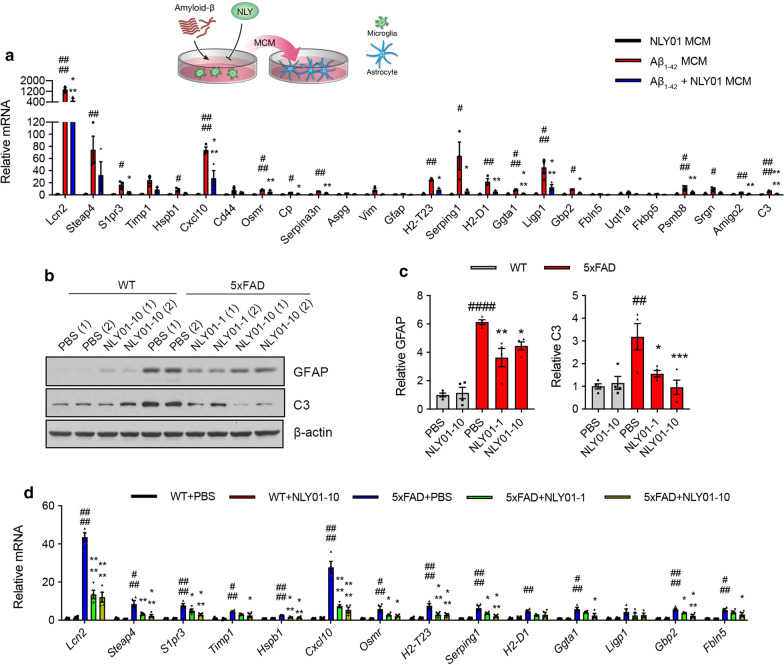
“Aβ1–42 MCM induced mRNA expression of Lcn2, Osmr, Serpina3n, Ggta1, and C3—genes known to be associated with reactive astrocytes [10, 12, 24] (Fig.”
BackgroundDifferential Roles of M1 and M2 Microglia in Neurodegenerative Diseases
Tang, Y., & Le, W. (2016) · Molecular Neurobiology · doi:10.1007/s12035-014-9070-5 · Cited by 2,190
Immune attack: the role of inflammation in Alzheimer disease
Heppner, F. L., Ransohoff, R. M., & Becher, B. (2015) · Nature Reviews Neuroscience · doi:10.1038/nrn3880 · Cited by 2,134
Astrocyte scar formation aids central nervous system axon regeneration
Anderson, M. A., Burda, J. E., Ren, Y., Ao, Y., O’Shea, T. M., Kawaguchi, R., Coppola, G., Khakh, B. S., Deming, T. J., & Sofroniew, M. V. (2016) · Nature · doi:10.1038/nature17623 · Cited by 1,851
A review on Alzheimer's disease pathophysiology and its management: an update
Kumar, A., Singh, A., & Ekavali (2015) · Pharmacological Reports · doi:10.1016/j.pharep.2014.09.004 · Cited by 1,578
Amyloid-β and tau--a toxic pas de deux in Alzheimer’s disease
Ittner, L. M., & Götz, J. (2011) · Nature Reviews Neuroscience · doi:10.1038/nrn2967 · Cited by 1,269
Astrocyte barriers to neurotoxic inflammation
Sofroniew, M. V. (2015) · Nature Reviews Neuroscience · doi:10.1038/nrn3898 · Cited by 1,202
Block of A1 astrocyte conversion by microglia is neuroprotective in models of Parkinson’s disease
Yun, S. P., Kam, T.-I., Panicker, N., Kim, S., Oh, Y., Park, J.-S., Kwon, S.-H., Park, Y. J., Karuppagounder, S. S., Park, H., et al. (2018) · Nature Medicine · doi:10.1038/s41591-018-0051-5 · Cited by 1,123
Self-citationDisease-associated astrocytes in Alzheimer’s disease and aging
Habib, N., McCabe, C., Medina, S., Varshavsky, M., Kitsberg, D., Dvir-Szternfeld, R., Green, G., Dionne, D., Nguyen, L., Marshall, J. L., et al. (2020) · Nature Neuroscience · doi:10.1038/s41593-020-0624-8 · Cited by 1,009
Inflammation in CNS neurodegenerative diseases
Stephenson, J., Nutma, E., van der Valk, P., & Amor, S. (2018) · Immunology · doi:10.1111/imm.12922 · Cited by 966
Microglia in Alzheimer's disease
Sarlus, H., & Heneka, M. T. (2017) · Journal of Clinical Investigation · doi:10.1172/jci90606 · Cited by 911
A systemic view of Alzheimer disease — insights from amyloid-β metabolism beyond the brain
Wang, J., Gu, B. J., Masters, C. L., & Wang, Y.-J. (2017) · Nature Reviews Neurology · doi:10.1038/nrneurol.2017.111 · Cited by 808
Al-Atrache, Z., Cader, A., & Appelt, D. M. (2016) · Alzheimer s & Dementia · doi:10.1016/j.jalz.2016.06.894 · Cited by 765
Alzheimer's disease drug development pipeline: 2018
Cummings, J., Lee, G., Ritter, A., & Zhong, K. (2018) · Alzheimer's & Dementia: Translational Research & Clinical Interventions · doi:10.1016/j.trci.2018.03.009 · Cited by 697
The Role of Astrocyte Dysfunction in Parkinson’s Disease Pathogenesis
Booth, H. D. E., Hirst, W. D., & Wade-Martins, R. (2017) · Trends in Neurosciences · doi:10.1016/j.tins.2017.04.001 · Cited by 633
Hutchinson, E. (2011) · Nature reviews. Neuroscience · doi:10.1038/nrn2985 · Cited by 534
Update on Alzheimer’s Disease Therapy and Prevention Strategies
Graham, W. V., Bonito-Oliva, A., & Sakmar, T. P. (2017) · Annual Review of Medicine · doi:10.1146/annurev-med-042915-103753 · Cited by 506
Microglia and astrocyte dysfunction in parkinson's disease
Kam, T., Hinkle, J. T., Dawson, T. M., & Dawson, V. L. (2020) · Neurobiology of Disease · doi:10.1016/j.nbd.2020.105028 · Cited by 420
Self-citationDiscovery, characterization, and clinical development of the glucagon-like peptides
Drucker, D. J., Habener, J. F., & Holst, J. J. (2017) · Journal of Clinical Investigation · doi:10.1172/jci97233 · Cited by 418 · cited 1×
“This role of GLP-1R in controlling blood sugar levels has resulted in the approval of GLP-1R agonists for treatment of type 2 diabetes [9].”
BackgroundMcClean, P. L., & Hölscher, C. (2013) · Neuropharmacology · doi:10.1016/j.neuropharm.2013.08.005 · Cited by 362
Central effects of GLP-1: new opportunities for treatments of neurodegenerative diseases
Hölscher, C. (2013) · Journal of Endocrinology · doi:10.1530/joe-13-0221 · Cited by 303
Desai, M. K., Mastrangelo, M. A., Ryan, D. A., Sudol, K. L., Narrow, W. C., & Bowers, W. J. (2010) · The American Journal of Pathology · doi:10.2353/ajpath.2010.100087 · Cited by 232
Andrabi, S. A., Kang, H. C., Haince, J.-F., Lee, Y.-I., Zhang, J., Chi, Z., West, A. B., Koehler, R. C., Poirier, G. G., Dawson, T. M., et al. (2011) · Nature Medicine · doi:10.1038/nm.2387 · Cited by 216
Self-citationGlucagon-like Peptide-1 and the Central/Peripheral Nervous System: Crosstalk in Diabetes
Muscogiuri, G., DeFronzo, R. A., Gastaldelli, A., & Holst, J. J. (2017) · Trends in Endocrinology & Metabolism · doi:10.1016/j.tem.2016.10.001 · Cited by 171
Astrocytes, Microglia, and Parkinson’s Disease
Joe, E.-H., Choi, D., An, J., Eun, J.-H., Jou, I., & Park, S.-M. (2018) · Experimental Neurobiology · doi:10.5607/en.2018.27.2.77 · Cited by 142
McClean, P. L., Jalewa, J., & Hölscher, C. (2015) · Behavioural Brain Research · doi:10.1016/j.bbr.2015.07.024 · Cited by 127
Cai, H.-Y., Yang, J.-T., Wang, Z.-J., Zhang, J., Yang, W., Wu, M.-N., & Qi, J.-S. (2018) · Biochemical and Biophysical Research Communications · doi:10.1016/j.bbrc.2017.11.114 · Cited by 108
A new method to isolate microglia from adult mice and culture them for an extended period of time
Moussaud, S., & Draheim, H. J. (2010) · Journal of Neuroscience Methods · doi:10.1016/j.jneumeth.2010.01.017 · Cited by 104
Xu, J.-C., Fan, J., Wang, X., Eacker, S. M., Kam, T., Chen, L., Yin, X., Zhu, J., Chi, Z., Jiang, H., et al. (2016) · Science Translational Medicine · doi:10.1126/scitranslmed.aad0623 · Cited by 94
Self-citationBomba, M., Ciavardelli, D., Silvestri, E., Canzoniero, L. M. T., Lattanzio, R., Chiappini, P. B. O., Piantelli, M., Ilio, C. D., Consoli, A., & Sensi, S. L. (2013) · Cell Death and Disease · doi:10.1038/cddis.2013.139 · Cited by 86
Wang, Y., Chen, S., Zheng, X., Chen, S., Yao, W., & Gao, X. (2017) · Neuropharmacology · doi:10.1016/j.neuropharm.2017.11.048 · Cited by 67
Hansen, H. H., Fabricius, K., Barkholt, P., Wismann, P., Schlumberger, C., Jelsing, J., Terwel, D., Termont, A., Pyke, C., Knudsen, L. B., et al. (2016) · PLoS ONE · doi:10.1371/journal.pone.0158205 · Cited by 65
Kam, T., Park, H., Gwon, Y., Song, S., Kim, S.-H., Moon, S. W., Jo, D., & Jung, Y. (2016) · eLife · doi:10.7554/elife.18691 · Cited by 47
Self-citationModern approaches to investigating non‐neuronal aspects of Alzheimer's disease
Liddelow, S. A. (2019) · The FASEB Journal · doi:10.1096/fj.201802592 · Cited by 26
Cited by
Sorted by citations
Microbiota–gut–brain axis and its therapeutic applications in neurodegenerative diseases
Loh, J. S., Mak, W. Q., Tan, L. K. S., Ng, C. X., Chan, H. H., Yeow, S. H., Foo, J. B., Ong, Y. S., How, C. W., & Khaw, K. Y. (2024) · Signal Transduction and Targeted Therapy · doi:10.1038/s41392-024-01743-1 · Cited by 1,193
Astrocytic and microglial cells as the modulators of neuroinflammation in Alzheimer’s disease
Singh, D. (2022) · Journal of Neuroinflammation · doi:10.1186/s12974-022-02565-0 · Cited by 569
Kopp, K. O., Glotfelty, E. J., Li, Y., & Greig, N. H. (2022) · Pharmacological Research · doi:10.1016/j.phrs.2022.106550 · Cited by 298
Reich, N., & Hölscher, C. (2022) · Frontiers in Neuroscience · doi:10.3389/fnins.2022.970925 · Cited by 248
Cummings, J. L., Atri, A., Feldman, H. H., Hansson, O., Sano, M., Knop, F. K., Johannsen, P., León, T., & Scheltens, P. (2025) · Alzheimer's Research & Therapy · doi:10.1186/s13195-024-01666-7 · Cited by 168
Metadata
- Authors
- Park, J.-S., Kam, T.-I., Lee, S., Park, H., Oh, Y., Kwon, S.-H., Song, J.-J., Kim, D., Kim, H., Jhaldiyal, A., Na, D. H., Lee, K. C., Park, E. J., Pomper, M. G., Pletnikova, O., Troncoso, J. C., Ko, H. S., Dawson, V. L., Dawson, T. M., & Lee, S.
- Affiliations
- Johns Hopkins University (US)
- Chung-Ang University (KR)
- Corresponding author
- Lee, Saebom
- Lee, Seulki
- ORCID
- Venue
- Acta Neuropathologica Communications
- Published
- 2021-04-26
- Volume
- 9
- Issue
- 1
- Pages
- 78-78
- ISSN
- 2051-5960 (ISSN-L)
- PMC
- PMC8074239
- OpenAlex
- W3157204291
- Cited by
- 192
- References
- 41
- Citations by year
- 2026: 30 · 2025: 43 · 2024: 44 · 2023: 41 · 2022: 23 · 2021: 11
- FWCI
- 11.87
- Type
- journal article
- Language
- en
- Open access
- gold
- doi.org
- Locations
- Acta Neuropathologica Communications (publishedVersion, cc-by)
- PubMed Central (publishedVersion, cc-by)
- PubMed (publishedVersion)
- DOAJ (DOAJ: Directory of Open Access Journals) (submittedVersion, cc-by-sa)
- Funders
- Edward N. and Della L. Thome Memorial Foundation
- Maryland Stem Cell Research Fund (2018-MSCRFD-4338)
- National Institute of Neurological Disorders and Stroke (NS38377, NS107404)
- JPB Foundation
- National Research Foundation of Korea
- Topics
- Life Sciences › Neuroscience › Neurology › Neuroinflammation and Neurodegeneration Mechanisms
- Life Sciences › Neuroscience › Cellular and Molecular Neuroscience › Alzheimer's disease research and treatments
- Life Sciences › Neuroscience › Neurology › Neurological Disease Mechanisms and Treatments
- Keywords
- Alzheimer's disease, microglial activation, reactive astrocytes, neuroinflammation, GLP-1 receptor agonists, exenatide, amyloid-beta, astrocyte-microglia interaction, neuroprotection, 5xFAD mice, 3xTg-AD mice, spatial learning and memory, neurodegeneration
- MeSH terms
- Neuroprotection, Glucagon-Like Peptide-1 Receptor, Exenatide, Glucagon-Like Peptide-1 Receptor Agonists, Alzheimer Disease, Animals, Astrocytes, Cells, Cultured, Humans, Male, Mice, Transgenic, Peptide Fragments, Amyloid beta-Peptides, Microglia, Neuroprotective Agents, Maze Learning, Mice
About these checks
Registry, retraction, Cites and statistics results are computed, not judged, with one exception: a printed reference that no index lists is read once by a model before it counts as a citation error. Claims are extracted by a model and kept only when their quote appears verbatim in the text; each cited source is then checked, with a model’s help, for whether it says what the claim relies on. Those verdicts can be wrong — read the claim’s quote and the cited source before relying on one.
Statistics and arithmetic are recomputed, not judged.
Confidence bands are shown only for fields calibrated on our annotated test set. None is calibrated yet, so no band is shown.
What counts as a claim ›How we measure confidence ›How we check this ›
Are you an author, or do you see a problem with this page? Request a review
