

Large language models, social demography, and hegemony: comparing authorship in human and synthetic text
Open accessPublished version of a preprint
The DOI matches its Crossref record; 84 of the 84 references it cites were found in a registry or an index.
Abstract
Large language models have become popular over a short period of time because they can generate text that resembles human writing across various domains and tasks. The popularity and breadth of use also put this technology in the position to fundamentally reshape how written language is perceived and evaluated. It is also the case that spoken language has long played a role in maintaining power and hegemony in society, especially through ideas of social identity and “correct” forms of language. But as human communication becomes even more reliant on text and writing, it is important to understand how these processes might shift and who is more likely to see their writing styles reflected back at them through modern AI. We therefore ask the following question: who does generative AI write like? To answer this, we compare writing style features in over 150,000 college admissions essays submitted to a large public university system and an engineering program at an elite private university with a corpus of over 25,000 essays generated with GPT-3.5 and GPT-4 to the same writing prompts. We find that human-authored essays exhibit more variability across various individual writing style features (e.g., verb usage) than AI-generated essays. Overall, we find that the AI-generated essays are most similar to essays authored by students who are males with higher levels of social privilege. These findings demonstrate critical misalignments between human and AI authorship characteristics, which may affect the evaluation of writing and calls for research on control strategies to improve alignment.
Overview
The claims and statistics of this paper haven’t been checked yet.
Free: it reads the open-access text and checks the first 5 claims that cite a source we can check. Create a free account to check every claim.
Integrity signals
Registry
Cites
Statistics
Figures

Verification
Claims the paper makes
The claims and statistics of this paper haven’t been checked yet.
Free: it reads the open-access text and checks the first 5 claims that cite a source we can check. Create a free account to check every claim.
Claims other papers make about this one
Each is checked against this paper’s own text: does it say what the citing paper says it does?
The source backs part of the claim, not all of it — or backs it for a different population, condition or comparison.
In the citing paper
“This makes LLM outputs less diverse and novel than human-written text (43, 44).”
From Delving into LLM-assisted writing in biomedical publications through excess vocabulary (2025) · cites this paper as [44]
Experimental — accuracy not yet measured
Self-check
Percentages, sums and reported differences re-computed from the paper’s own numbers.
The self-check needs the paper’s full text.
Citations
Cites
Language Models are Few-Shot Learners
Brown, T. B., Mann, B., Ryder, N., Subbiah, M., Kaplan, J., Dhariwal, P., Neelakantan, A., Shyam, P., Sastry, G., Askell, A., et al. (2020) · arXiv · doi:10.48550/arxiv.2005.14165 · Cited by 23,372 · cited 1×
“Recent advances in transformer-based architectures have enabled the development of LLMs that can generate impressively human-like text and respond to complex questions and prompts [19].”
BackgroundAdvances in neural information processing systems 7
Cios, K., & Shields, M. (1997) · Neurocomputing · doi:10.1016/s0925-2312(97)90018-7 · Cited by 22,059
On the Dangers of Stochastic Parrots: Can Language Models Be Too Big? 🦜
Bender, E. M., Gebru, T., McMillan-Major, A., & Shmitchell, S. (2021) · Proceedings of the 2021 ACM Conference on Fairness, Accountability, and Transparency · doi:10.1145/3442188.3445922 · Cited by 6,988 · cited 1×
“A better understanding of LLMs will therefore require consideration of the bias literature alongside studies of sociolinguistic profiles of LLMs. Extensive research has uncovered notable biases within LLMs [13, 25, 32, 47, 50, 63, 65, 80].”
BackgroundThe Development and Psychometric Properties of LIWC2015
Pennebaker, J. W., Boyd, R. L., Jordan, K., & Blackburn, K. (2015) · University of Texas at Austin · doi:10.15781/t25p41 · Cited by 1,674
Artificial hallucinations in ChatGPT: implications in scientific writing
Alkaissi, H., & McFarlane, S. I. (2023) · Cureus · doi:10.7759/cureus.35179 · Cited by 1,540 · cited 1×
“However, the self-evident potential of LLMs has raised critical questions about their biases, tendency to emulate certain political and moral stances, and ability to fabricate references when used as a research assistant [1, 73].”
BackgroundLaMDA: Language Models for Dialog Applications
Thoppilan, R., De Freitas, D., Hall, J., Shazeer, N., Kulshreshtha, A., Cheng, H.-T., Jin, A., Bos, T., Baker, L., Du, Y., et al. (2022) · arXiv · doi:10.48550/arxiv.2201.08239 · Cited by 778 · cited 1×
“For example, Wordcraft [88] employs a LLM [81] to assist writers with tasks such as proofreading, scene interpolation, and content generation.”
MethodSelf-citationRacial disparities in automated speech recognition
Koenecke, A., Nam, A., Lake, E., Nudell, J., Quartey, M., Mengesha, Z., Toups, C., Rickford, J. R., Jurafsky, D., & Goel, S. (2020) · Proceedings of the National Academy of Sciences · doi:10.1073/pnas.1915768117 · Cited by 765
Artificial intelligence and illusions of understanding in scientific research
Messeri, L., & Crockett, M. J. (2024) · Nature · doi:10.1038/s41586-024-07146-0 · Cited by 707 · cited 1×
“The reduced variation could potentially narrow the scope of what is considered an appropriate way to present oneself in writing if the treatment of AI as an “oracle” that is always correct persists [59].”
BackgroundGPT detectors are biased against non-native English writers
Liang, W., Yuksekgonul, M., Mao, Y., Wu, E., & Zou, J. (2023) · Patterns · doi:10.1016/j.patter.2023.100779 · Cited by 673 · cited 1×
“Conversely, students who do not speak English as a first language might find that their writing is more often labeled as “AI-generated” [52], pointing to additional ways that the current AI eco-system could reinforce linguistic hegemony (in this case, English language hegemony).”
BackgroundSocial capital I: measurement and associations with economic mobility
Chetty, R., Jackson, M. O., Kuchler, T., Stroebel, J., Hendren, N., Fluegge, R. B., Gong, S., Gonzalez, F., Grondin, A., Jacob, M., et al. (2022) · Nature · doi:10.1038/s41586-022-04996-4 · Cited by 627
When Small Words Foretell Academic Success: The Case of College Admissions Essays
Pennebaker, J. W., Chung, C. K., Frazee, J., Lavergne, G. M., & Beaver, D. I. (2014) · PLoS ONE · doi:10.1371/journal.pone.0115844 · Cited by 568 · cited 5×
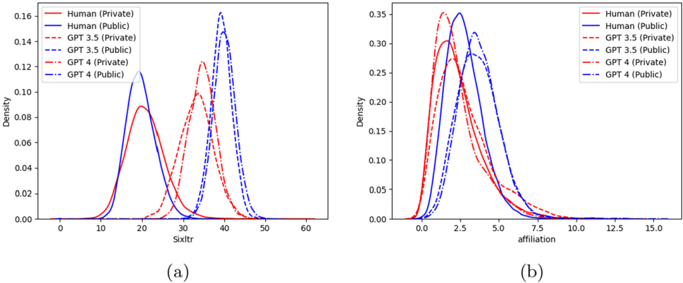
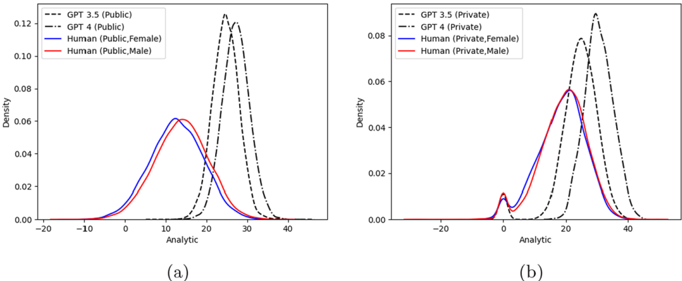
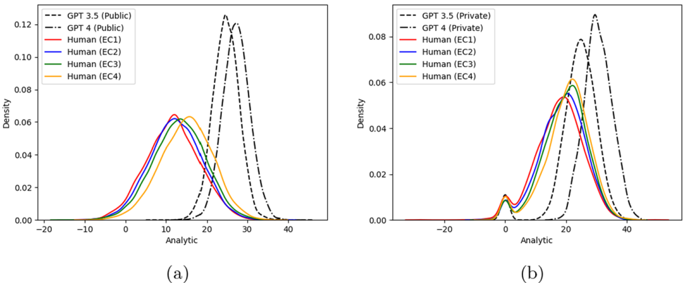
“…by this particular group of students as well as the AI include those found to be predictive of college GPA (article, Analytic; Pennebaker et al. [69]), SAT scores (Sixltr, prep; Alvero et al. [5]), and is more reflective of usage patterns among enrolled college students (focusfuture, space;…”
BackgroundMethodInfluentialLanguage Style Matching Predicts Relationship Initiation and Stability
Ireland, M. E., Slatcher, R. B., Eastwick, P. W., Scissors, L. E., Finkel, E. J., & Pennebaker, J. W. (2011) · Psychological Science · doi:10.1177/0956797610392928 · Cited by 529 · cited 1×
“LIWC models style in this way but with special attention to psychological dimensions, such as the ways that linguistic style can predict things like successful romantic matching [41] often in a way to correlate linguistic styles with personality.”
BackgroundHow Is ChatGPT’s Behavior Changing Over Time?
Chen, L., Zaharia, M., & Zou, J. (2024) · Harvard Data Science Review · doi:10.1162/99608f92.5317da47 · Cited by 507
How is ChatGPT's behavior changing over time?
Chen, L., Zaharia, M., & Zou, J. (2023) · arXiv · doi:10.48550/arxiv.2307.09009 · Cited by 507 · cited 1×
“…internal tweaks and modifications that users may not be entirely aware of, though so far, this has only been observed with respect to specific types of question answering [20] rather than more holistic shifts to the ways that LLMs tend to use language and which people use language most similarly.”
BackgroundElaborated and Restricted Codes: Their Social Origins and Some Consequences
BERNSTEIN, B. (1964) · American Anthropologist · doi:10.1525/aa.1964.66.suppl_3.02a00030 · Cited by 493 · cited 1×
“Educational systems in the US have a long demonstrated preference for the writing and speaking styles of those from higher socioeconomic backgrounds [15]; even if the preference is not explicitly stated, studies have found that writing patterns stratified by social class are highly predictive of…”
BackgroundPsychological Language on Twitter Predicts County-Level Heart Disease Mortality
Eichstaedt, J. C., Schwartz, H. A., Kern, M. L., Park, G., Labarthe, D. R., Merchant, R. M., Jha, S., Agrawal, M., Dziurzynski, L. A., Sap, M., et al. (2015) · Psychological Science · doi:10.1177/0956797614557867 · Cited by 486 · cited 1×
“…analysis across many domains, including psychology, social science, and computer science 6 , often in ways that use LIWC as a means to generate numerical features for a given document to use in some kind of predictive framework, including other studies of writing style and social demography [29].”
Methodlanguage variation and cultural hegemony: toward an integration of sociolinguistic and social theory
WOOLARD, K. A. (1985) · American Ethnologist · doi:10.1525/ae.1985.12.4.02a00090 · Cited by 459 · cited 2×
“It may also reveal sociolinguistically grounded forms of cultural hegemony if certain groups are over-represented in influencing LLMs’ writing styles [85].”
BackgroundWarschauer, M., Tseng, W., Yim, S., Webster, T., Jacob, S., Du, Q., & Tate, T. (2023) · doi:10.2139/ssrn.4404380 · Cited by 425
Large language models propagate race-based medicine
Omiye, J. A., Lester, J. C., Spichak, S., Rotemberg, V., & Daneshjou, R. (2023) · npj Digital Medicine · doi:10.1038/s41746-023-00939-z · Cited by 417 · cited 3×
“A better understanding of LLMs will therefore require consideration of the bias literature alongside studies of sociolinguistic profiles of LLMs. Extensive research has uncovered notable biases within LLMs [13, 25, 32, 47, 50, 63, 65, 80].”
BackgroundWarschauer, M., Tseng, W., Yim, S., Webster, T., Jacob, S., Du, Q., & Tate, T. (2023) · Journal of Second Language Writing · doi:10.1016/j.jslw.2023.101071 · Cited by 410 · cited 1×
“Further, linguistic hegemony may evolve through the popularization of LLMs based on correlations of whose writing is most reflective of the text generated by LLMs [84].”
Gender bias and stereotypes in Large Language Models
Kotek, H., Dockum, R., & Sun, D. (2023) · Proceedings of The ACM Collective Intelligence Conference · doi:10.1145/3582269.3615599 · Cited by 381 · cited 3×
“A better understanding of LLMs will therefore require consideration of the bias literature alongside studies of sociolinguistic profiles of LLMs. Extensive research has uncovered notable biases within LLMs [13, 25, 32, 47, 50, 63, 65, 80].”
BackgroundWordcraft: Story Writing With Large Language Models
Yuan, A., Coenen, A., Reif, E., & Ippolito, D. (2022) · 27th International Conference on Intelligent User Interfaces · doi:10.1145/3490099.3511105 · Cited by 374 · cited 2×
“For example, Wordcraft [88] employs a LLM [81] to assist writers with tasks such as proofreading, scene interpolation, and content generation.”
BackgroundMethodUsing large language models in psychology
Demszky, D., Yang, D., Yeager, D. S., Bryan, C. J., Clapper, M., Chandhok, S., Eichstaedt, J. C., Hecht, C., Jamieson, J., Johnson, M., et al. (2023) · Nature Reviews Psychology · doi:10.1038/s44159-023-00241-5 · Cited by 369 · cited 1×
“In this way, we 9 See https:// www. thejo urnal. ie/ wikip edia-found er- gender-imbal ance-36687 67-Oct20 17/. see our work as helping to lay the foundation for a sociologically oriented complement to ongoing work focused on LLMs and psychology [24].”
BackgroundBiases in Large Language Models: Origins, Inventory, and Discussion
Navigli, R., Conia, S., & Ross, B. (2023) · Journal of Data and Information Quality · doi:10.1145/3597307 · Cited by 364 · cited 1×
“A better understanding of LLMs will therefore require consideration of the bias literature alongside studies of sociolinguistic profiles of LLMs. Extensive research has uncovered notable biases within LLMs [13, 25, 32, 47, 50, 63, 65, 80].”
BackgroundMore human than human: measuring ChatGPT political bias
Motoki, F., Pinho Neto, V., & Rodrigues, V. (2024) · Public Choice · doi:10.1007/s11127-023-01097-2 · Cited by 329 · cited 1×
“Apart from sociodemographic biases, recent research has noted the distinct characteristics or “profiles” of LLMs. Specifically, it has been observed that these models exhibit a left-leaning bias in their responses [57, 61] and an affinity for Western cultural values [80].”
BackgroundAuditing Large Language Models: A Three-Layered Approach
Mökander, J., Schuett, J., Kirk, H. R., & Floridi, L. (2023) · doi:10.2139/ssrn.4361607 · Cited by 292
Auditing large language models: a three-layered approach
Mökander, J., Schuett, J., Kirk, H. R., & Floridi, L. (2023) · arXiv · doi:10.48550/arxiv.2302.08500 · Cited by 292
Auditing large language models: a three-layered approach
Mökander, J., Schuett, J., Kirk, H. R., & Floridi, L. (2024) · AI and Ethics · doi:10.1007/s43681-023-00289-2 · Cited by 289 · cited 1×
“…obvious risks related to misinformation and the perpetuation of socially harmful biases, LLMs are also widely marketed as being able to “adapt” to users given their input [44], making it possible for these same biases to be continually reinforced while also being difficult to properly audit [62].”
BackgroundThe Political Biases of ChatGPT
Rozado, D. (2023) · Social Sciences · doi:10.3390/socsci12030148 · Cited by 281 · cited 1×
“However, the self-evident potential of LLMs has raised critical questions about their biases, tendency to emulate certain political and moral stances, and ability to fabricate references when used as a research assistant [1, 73].”
BackgroundMirowski, P., Mathewson, K. W., Pittman, J., & Evans, R. (2023) · Proceedings of the 2023 CHI Conference on Human Factors in Computing Systems · doi:10.1145/3544548.3581225 · Cited by 240 · cited 3×
“Concurrently, others are employing LLMs to create tools that are capable of generating personalized feedback from open-ended responses for students [58] and even collaborate with writers to co-author screenplays and scripts [60].”
BackgroundAI generates covertly racist decisions about people based on their dialect
Hofmann, V., Kalluri, P. R., Jurafsky, D., & King, S. (2024) · Nature · doi:10.1038/s41586-024-07856-5 · Cited by 233 · cited 2×
“Recent studies indicate that AI has more negative tendencies toward dialectal forms of language [38], suggesting that AI is likely to use higher and more formal registers used by people and communities with higher socioeconomic status.”
BackgroundCausal Inference in Natural Language Processing: Estimation, Prediction, Interpretation and Beyond
Feder, A., Keith, K. A., Manzoor, E., Pryzant, R., Sridhar, D., Wood-Doughty, Z., Eisenstein, J., Grimmer, J., Reichart, R., Roberts, M. E., et al. (2022) · Transactions of the Association for Computational Linguistics · doi:10.1162/tacl_a_00511 · Cited by 220 · cited 1×
“We hope these findings could spur more specified hypothesiza-tion that consider other social contexts as well as experimental and causal frameworks [30, 37].”
BackgroundEgami, N., Hinck, M., Stewart, B., & Wei, H. (2023) · neural information processing systems · doi:10.52202/075280-3000 · Cited by 193 · cited 2×
“LLMs are being rapidly adopted for a wide range of uses among scholars, including document annotation [28, 82], information extraction [21], and tool development with applications to healthcare, education, and finance [48, 58, 71, 87].”
BackgroundConceptualizations of Race: Essentialism and Constructivism
Roth, W. D., van Stee, E. G., & Regla-Vargas, A. (2023) · Annual Review of Sociology · doi:10.1146/annurev-soc-031021-034017 · Cited by 171 · cited 1×
“These sociodemo-graphic trends in writing point to future studies that examine how writing and language with AI could play a role in reproducing essentializing ideologies about not just gender and class but also about race, especially in educational contexts [72].”
BackgroundSelf-citationLarge Language Models and the Reverse Turing Test
Sejnowski, T. J. (2023) · Neural Computation · doi:10.1162/neco_a_01563 · Cited by 169
DISCO: Distilling Counterfactuals with Large Language Models
Chen, Z., Gao, Q., Bosselut, A., Sabharwal, A., & Richardson, K. (2023) · Proceedings of the conference - Association for Computational Linguistics. Meeting · doi:10.18653/v1/2023.acl-long.302 · Cited by 163 · cited 2×
“LLMs are being rapidly adopted for a wide range of uses among scholars, including document annotation [28, 82], information extraction [21], and tool development with applications to healthcare, education, and finance [48, 58, 71, 87].”
BackgroundTörnberg, P. (2023) · arXiv · doi:10.48550/arxiv.2304.06588 · Cited by 152 · cited 2×
“LLMs are being rapidly adopted for a wide range of uses among scholars, including document annotation [28, 82], information extraction [21], and tool development with applications to healthcare, education, and finance [48, 58, 71, 87].”
BackgroundAtari, M., Xue, M. J., Park, P. S., Blasi, D. E., & Henrich, J. (2023) · doi:10.31234/osf.io/5b26t · Cited by 151
Bastedo, M. N., Bowman, N. A., Glasener, K. M., & Kelly, J. (2018) · The Journal of Higher Education · doi:10.1080/00221546.2018.1442633 · Cited by 149 · cited 1×
“College admissions serve as an insightful context since identity is salient in shaping how applicants present themselves, particularly in selective admissions where holistic review of transcripts, essays, and other applicant information is the norm [11, 79].”
BackgroundHarms of Gender Exclusivity and Challenges in Non-Binary Representation in Language Technologies
Dev, S., Monajatipoor, M., Ovalle, A., Subramonian, A., Phillips, J., & Chang, K.-W. (2021) · Proceedings of the 2021 Conference on Empirical Methods in Natural Language Processing · doi:10.18653/v1/2021.emnlp-main.150 · Cited by 123
Kirk, H. R., Vidgen, B., Röttger, P., & Hale, S. A. (2024) · Nature Machine Intelligence · doi:10.1038/s42256-024-00820-y · Cited by 122 · cited 1×
“…obvious risks related to misinformation and the perpetuation of socially harmful biases, LLMs are also widely marketed as being able to “adapt” to users given their input [44], making it possible for these same biases to be continually reinforced while also being difficult to properly audit [62].”
BackgroundMultilingualism and AI: The Regimentation of Language in the Age of Digital Capitalism
Schneider, B. (2022) · Signs and Society · doi:10.1086/721757 · Cited by 115 · cited 1×
“It is possible that this would become a “problem” to fix, but in a practical sense it would be difficult to imagine LLMs permeating across social institutions as they have without sounding like the people who have historically moved through these same institutions with relative ease [75].”
BackgroundHow Novelists Use Generative Language Models: An Exploratory User Study.
Calderwood, A., Qiu, V., Gero, K. I., & Chilton, L. B. (2020) · Cited by 111
Alvero, A., Giebel, S., Gebre-Medhin, B., antonio, A. L., Stevens, M. L., & Domingue, B. W. (2021) · Science Advances · doi:10.1126/sciadv.abi9031 · Cited by 100 · cited 6×
“…group of students as well as the AI include those found to be predictive of college GPA (article, Analytic; Pennebaker et al. [69]), SAT scores (Sixltr, prep; Alvero et al. [5]), and is more reflective of usage patterns among enrolled college students (focusfuture, space; Alvero et al. [7]).”
BackgroundMethodInfluentialSelf-citationPellert, M., Lechner, C. M., Wagner, C., Rammstedt, B., & Strohmaier, M. (2024) · Perspectives on Psychological Science · doi:10.1177/17456916231214460 · Cited by 97 · cited 1×
“These models have also been found to consistently imitate personality traits such as openness, conscientiousness, and agreeableness in their generated outputs [68].”
BackgroundRajashekar, N. C., Shin, Y. E., Pu, Y., Chung, S., You, K., Giuffre, M., Chan, C. E., Saarinen, T., Hsiao, A., Sekhon, J., et al. (2024) · Proceedings of the CHI Conference on Human Factors in Computing Systems · doi:10.1145/3613904.3642024 · Cited by 85 · cited 1×
“LLMs are being rapidly adopted for a wide range of uses among scholars, including document annotation [28, 82], information extraction [21], and tool development with applications to healthcare, education, and finance [48, 58, 71, 87].”
BackgroundSelf-citationStart Generating: Harnessing Generative Artificial Intelligence for Sociological Research
Davidson, T. (2024) · Socius Sociological Research for a Dynamic World · doi:10.1177/23780231241259651 · Cited by 78 · cited 1×
“Social scientists have also been cautiously optimistic about potential uses for LLMs in research [23, 42].”
BackgroundA Survey of Race, Racism, and Anti-Racism in NLP
Field, A., Blodgett, S. L., Waseem, Z., & Tsvetkov, Y. (2021) · Proceedings of the 59th Annual Meeting of the Association for Computational Linguistics and the 11th International Joint Conference on Natural Language Processing (Volume 1: Long Papers) · doi:10.18653/v1/2021.acl-long.149 · Cited by 74 · cited 1×
“Biases in natural language processing (NLP) techniques are well documented [31, 46], but applications of sociolinguistic perspectives on how large language model (LLM) communication styles track with specific social demographics could be instructive in determining whether or not the issues…”
BackgroundA set theory based similarity measure for text clustering and classification
Amer, A. A., & Abdalla, H. I. (2020) · Journal Of Big Data · doi:10.1186/s40537-020-00344-3 · Cited by 68 · cited 1×
“First, we use cosine similarities to find similar essays given the vector representation of all essays [8].”
MethodMapping the Increasing Use of LLMs in Scientific Papers
Liang, W., Zhang, Y., Wu, Z., Lepp, H., Ji, W., Zhao, X., Cao, H., Liu, S., He, S., Huang, Z., et al. (2024) · arXiv · doi:10.48550/arxiv.2404.01268 · Cited by 55 · cited 1×
“Studies have mapped out such patterns in the context of academic writing and review [54], but here we consider a context that is more common and familiar to people living in the US: writing a personal statement for college admissions.”
BackgroundQuestioning the Survey Responses of Large Language Models
Dominguez-Olmedo, R., Hardt, M., & Mendler-Dünner, C. (2023) · arXiv · doi:10.48550/arxiv.2306.07951 · Cited by 48
English with an Accent: Language, Ideology, and Discrimination in the United States
Barrett, R., Cramer, J., & McGowan, K. B. (2022) · Routledge eBooks · doi:10.4324/9781003332886 · Cited by 47
“You Sound Just Like Your Father” Commercial Machine Translation Systems Include Stylistic Biases
Hovy, D., Bianchi, F., & Fornaciari, T. (2020) · Proceedings of the 58th Annual Meeting of the Association for Computational Linguistics · doi:10.18653/v1/2020.acl-main.154 · Cited by 45 · cited 1×
“Some studies have found evidence of these trends with specific types of responses to survey questions [9, 43, 80, 89] and in terms of the limited range of content they produce for a given prompt or task [39, 66].”
BackgroundWhose Language Counts as High Quality? Measuring Language Ideologies in Text Data Selection
Gururangan, S., Card, D., Dreier, S., Gade, E., Wang, L., Wang, Z., Zettlemoyer, L., & Smith, N. A. (2022) · Proceedings of the 2022 Conference on Empirical Methods in Natural Language Processing · doi:10.18653/v1/2022.emnlp-main.165 · Cited by 42
Beyond the Front Yard: The Dehumanizing Message of Accent-Altering Technology
Payne, A. L., Austin, T., & Clemons, A. M. (2024) · Applied Linguistics · doi:10.1093/applin/amae002 · Cited by 41 · cited 1×
“Though the film is fictional, current technologies can manipulate voices to sound like specific individuals or reduce accents by replacing them with more “normalized” speech [67].”
BackgroundDistributed Blackness: African American Cybercultures
Brock, A. (2020) · doi:10.18574/nyu/9781479847228.001.0001 · Cited by 40
Using artificial intelligence to assess personal qualities in college admissions
Lira, B., Gardner, M., Quirk, A., Stone, C., Rao, A., Ungar, L., Hutt, S. J., Hickman, L., D’Mello, S. K., & Duckworth, A. L. (2023) · Science Advances · doi:10.1126/sciadv.adg9405 · Cited by 37 · cited 1×
“Essays also show potential for use in replicating past admissions decisions, given trends toward test-optional and test-blind policies [49], and to infer personal qualities of the applicants that predict academic success [55].”
BackgroundAI and Holistic Review: Informing Human Reading in College Admissions
Alvero, A. J., Arthurs, N., antonio, A. L., Domingue, B. W., Gebre-Medhin, B., Giebel, S., & Stevens, M. L. (2020) · Proceedings of the AAAI/ACM Conference on AI, Ethics, and Society · doi:10.1145/3375627.3375871 · Cited by 35 · cited 1×
“Following previous work, the sociodemographic attributes we focus on include first-generation status (whether or not the applicant has as least one parent who completed a college degree) and gender (recorded only as a binary: Male or Female) [4, 35, 49].”
MethodSelf-citationDialect prejudice predicts AI decisions about people's character, employability, and criminality
Hofmann, V., Kalluri, P. R., Jurafsky, D., & King, S. (2024) · arXiv · doi:10.48550/arxiv.2403.00742 · Cited by 33
Koyutürk, C., Yavari, M., Theophilou, E., Buršić, S., Donabauer, G., Telari, A., Testa, A., Boiano, R., Gabbiadini, A., Hernández‐Leo, D., et al. (2023) · Repositori digital de la UPF (Universitat Pompeu Fabra) · doi:10.48550/arxiv.2306.10645 · Cited by 29 · cited 1×
“LLMs are being rapidly adopted for a wide range of uses among scholars, including document annotation [28, 82], information extraction [21], and tool development with applications to healthcare, education, and finance [48, 58, 71, 87].”
BackgroundAlvero, A., Pal, J., & Moussavian, K. M. (2022) · Journal of Computational Social Science · doi:10.1007/s42001-022-00185-5 · Cited by 24 · cited 1×
“…group of students as well as the AI include those found to be predictive of college GPA (article, Analytic; Pennebaker et al. [69]), SAT scores (Sixltr, prep; Alvero et al. [5]), and is more reflective of usage patterns among enrolled college students (focusfuture, space; Alvero et al. [7]).”
BackgroundSelf-citationLeiby, B. D., & Ahner, D. K. (2023) · Journal Of Big Data · doi:10.1186/s40537-023-00698-4 · Cited by 22 · cited 2×
“This model will then be applied to the AI-generated essays to impute the same characteristics [51] to answer our third research question.”
MethodApplication essays and the ritual production of merit in US selective admissions
Gebre-Medhin, B., Giebel, S., Alvero, A., antonio, A. L., Domingue, B. W., & Stevens, M. L. (2022) · Poetics · doi:10.1016/j.poetic.2022.101706 · Cited by 21 · cited 1×
“Our goal was to generate texts which reflected the wide variety of stories, experiences, and narratives that students included in their admissions essays [34] as a way to try and match human writing as closely as possible.”
BackgroundSelf-citationUser preferences for ChatGPT-powered conversational interfaces versus traditional methods
Sakirin, T., & Said, R. B. (2022) · Mesopotamian Journal of Computer Science · doi:10.58496/mjcsc/2022/002 · Cited by 21 · cited 1×
“But this is especially the case for ChatGPT given its popularity among the world’s population, due partly to its ease of use relative to other LLM tools and technologies early on [74].”
BackgroundDoes Writing with Language Models Reduce Content Diversity?
Padmakumar, V., & He, H. (2023) · arXiv · doi:10.48550/arxiv.2309.05196 · Cited by 21
The Ethico-Political Universe of ChatGPT
Martin, J. L. (2023) · Journal of Social Computing · doi:10.23919/jsc.2023.0003 · Cited by 17 · cited 1×
“Apart from sociodemographic biases, recent research has noted the distinct characteristics or “profiles” of LLMs. Specifically, it has been observed that these models exhibit a left-leaning bias in their responses [57, 61] and an affinity for Western cultural values [80].”
BackgroundHuang, T. J. (2023) · Sociology of Education · doi:10.1177/00380407231202975 · Cited by 17 · cited 1×
“This tension has created an entire cottage industry that helps students balance these expectations [40].”
BackgroundMultilingualism and mismatching: Spanish language usage in college admissions essays
Alvero, A., & Pattichis, R. (2024) · Poetics · doi:10.1016/j.poetic.2024.101903 · Cited by 16 · cited 2×
“Another study found that, despite well-documented social stigmas, approximately 20% of UC applicants include some form of Spanish in their admissions essays, whereas 0% of the synthetic text we examine in our study did the same [3].”
BackgroundResultSelf-citationPellert, M., Lechner, C. M., Wagner, C., Rammstedt, B., & Strohmaier, M. (2022) · doi:10.31234/osf.io/jv5dt · Cited by 16
How do Generative Language Models Answer Opinion Polls?Preprint
Boelaert, J., Coavoux, S., Ollion, É., Petev, I. D., & Präg, P. (2024) · SocArXiv (OSF Preprints) · doi:10.31235/osf.io/r2pnb · Cited by 15
Mesopotamian Journal of Computer Science
(2022) · doi:10.58496/mjcsc · Cited by 14
Karell, D., Sachs, J. D., & Barrett, R. (2024) · Poetics · doi:10.1016/j.poetic.2024.101966 · Cited by 14
Giebel, S., Alvero, A., Gebre-Medhin, B., & antonio, A. L. (2022) · Socius Sociological Research for a Dynamic World · doi:10.1177/23780231221127537 · Cited by 11 · cited 2×
“Following previous work, the sociodemographic attributes we focus on include first-generation status (whether or not the applicant has as least one parent who completed a college degree) and gender (recorded only as a binary: Male or Female) [4, 35, 49].”
BackgroundMethodSelf-citationProduction, perception, and communicative goals of American newscaster speech
Gasser, E., Ahn, B., Napoli, D. J., & Zhou, Z. (2019) · Language in Society · doi:10.1017/s0047404518001392 · Cited by 8 · cited 1×
“The last step in the pre-deployment process is reminiscent to how newscast-ers are trained to speak in a specific way during broadcasts that is intended to convey credibility and authority [33], though here we observe trends with writing and social demographics.”
BackgroundSociolinguistic Perspectives on Machine Learning with Text Data
Alvero, A. (2023) · Oxford University Press eBooks · doi:10.1093/oxfordhb/9780197653609.013.15 · Cited by 7
Self-citationGenerative AI Meets Open-Ended Survey Responses: Participant Use of AI and HomogenizationPreprint
Zhang, S., Xu, J., & Alvero, A. (2024) · SocArXiv (OSF Preprints) · doi:10.31235/osf.io/4esdp · Cited by 6
Self-citationLarge-scale forecasting of information spreading
Severiukhina, O., Kesarev, S., Bochenina, K., Boukhanovsky, A. V., Lees, M., & Sloot, P. M. A. (2020) · Journal Of Big Data · doi:10.1186/s40537-020-00350-5 · Cited by 2
Karell, D., Sachs, J. D., & Barrett, R. (2023) · doi:10.31235/osf.io/htxa4 · Cited by 2
The Shame of Spanish: Cultural Bias in English First Legislation
Olson, W. (1991) · Chicana/o Latina/o Law Review · doi:10.5070/c7111020982 · Cited by 1
Authorship Identity and Spatiality: Social Influences on Text ProductionPreprint
Alvero, A., Luqueño, L. P., Pearman, F. A., & antonio, A. L. (2022) · SocArXiv (OSF Preprints) · doi:10.31235/osf.io/pt6b2 · Cited by 1
Self-citation23rd International Conference on Intelligent User Interfaces
Berkovsky, S., Japan, I. 2. I. C. O. I. U. I. 2. T., Association for Computing Machinery-Digital Library, ACM Special Interest Group on Artificial Intelligence, ACM Special Interest Group on Computer-Human Interaction, & SIGs, A. (2018) · Cited by 1
Egami, N., Hinck, M., Stewart, B. M., & Wei, H. (2023) · arXiv · doi:10.48550/arxiv.2306.04746 · cited 2×
“LLMs are being rapidly adopted for a wide range of uses among scholars, including document annotation [28, 82], information extraction [21], and tool development with applications to healthcare, education, and finance [48, 58, 71, 87].”
BackgroundBLOOM: A 176B-Parameter Open-Access Multilingual Language Model
Workshop, B., :, Scao, T. L., Fan, A., Akiki, C., Pavlick, E., Ilić, S., Hesslow, D., Castagné, R., Luccioni, A. S., et al. (2022) · arXiv · doi:10.48550/arxiv.2211.05100 · cited 1×
“These and many other studies have focused on English language responses, but LLMs are able to generate non-English text as well [86] making it possible to test these results from many different sociocultural paradigms.”
Background
Research works printed but not linked: 17
- 12. Bellemare MG, Dabney W, Munos R. A distributional perspective on reinforcement learning. In: International confer- ence on machine learning, PMLR, pp 449-458. 2017.
- 17. Bohacek M, Farid H. Nepotistically trained generative-AI models collapse. arXiv preprint. 2023. arXiv: 2311. 12202.
- 26. Dhingra H, Jayashanker P, Moghe S, et al. Queer people are people first: deconstructing sexual identity stereotypes in large language models. http:// arxiv. org/ abs/ 2307. 00101, [cs] 2023.
- 32. Gallegos IO, Rossi RA, Barrow J, et al. Bias and fairness in large language models: a survey. http:// arxiv. org/ abs/ 2309. 00770, [cs] 2023.
- 36. Gramsci A. Prison notebooks, vol. 1. New York: Columbia University Press; 1992.
- 43. Kim J, Lee B. Ai-augmented surveys: leveraging large language models for opinion prediction in nationally repre- sentative surveys. arXiv preprint arXiv: 2305. 09620. 2023.
- 45. Kirk HR, Whitefield A, Röttger P, et al. The PRISM alignment project: what participatory, representative and individu- alised human feedback reveals about the subjective and multicultural alignment of large language models. arXiv preprint. 2024. arXiv: 2404. 16019.
- 49. Lee J, Thymes B, Zhou J, et al. Augmenting holistic review in university admission using natural language processing for essays and recommendation letters. arXiv preprint arXiv: 2306. 17575. 2023.
- 50. Lee J, Hicke Y, Yu R, et al (in press) The life cycle of large language models in education: a framework for understand- ing sources of bias. Br J Educ Technol.
- 53. Liang W, Izzo Z, Zhang Y, et al. Monitoring AI-modified content at scale: a case study on the impact of chatgpt on ai conference peer reviews. arXiv preprint. 2024. arXiv: 2403. 07183.
- 56. Lucy L, Blodgett SL, Shokouhi M, et al. "One-size-fits-all"? Observations and expectations of NLG systems across identity-related language features. http:// arxiv. org/ abs/ 2310. 15398, [cs] 2023.
- 58. Matelsky JK, Parodi F, Liu T, et al. A large language model-assisted education tool to provide feedback on open- ended responses. http:// arxiv. org/ abs/ 2308. 02439, [cs] 2023.
- 78. Shen H, Wu T. Parachute: evaluating interactive human-LM co-writing systems. arXiv: 2303. 06333. [cs] 2023.
- 79. Stevens ML. Creating a class. Cambridge: Harvard University Press; 2009.
- 80. Tao Y, Viberg O, Baker RS, et al. Auditing and mitigating cultural bias in llms. arXiv preprint arXiv: 2311. 14096. 2023.
- 83. Wang A, Morgenstern J, Dickerson JP. Large language models cannot replace human participants because they cannot portray identity groups. arXiv preprint arXiv: 2402. 01908. 2024.
- 87. Wu S, Irsoy O, Lu S, et al. BloombergGPT: a large language model for finance. http:// arxiv. org/ abs/ 2303. 17564, [cs, q-fin] 2023.
Cited by
Bias in Large Language Models: Origin, Evaluation, and Mitigation
Guo, Y., Guo, M., Su, J., Yang, Z., Zhu, M., Li, H., Qiu, M., & Liu, S. S. (2026) · Electronics · doi:10.3390/electronics15091824 · Cited by 251
“Another example is that the Latinx population, especially Mexican-American students, remains underrepresented in U.S. higher education (Alvero et al., 2024).”
Delving into LLM-assisted writing in biomedical publications through excess vocabulary
Kobak, D., González-Márquez, R., Horvát, E.-Á., & Lause, J. (2024) · arXiv · doi:10.48550/arxiv.2406.07016 · Cited by 214
“This makes LLM outputs less diverse and novel than human-written text (Padmakumar and He, 2023; Alvero et al., 2024).”
Delving into LLM-assisted writing in biomedical publications through excess vocabulary
Kobak, D., González-Márquez, R., Horvát, E.-Á., & Lause, J. (2025) · Science Advances · doi:10.1126/sciadv.adt3813 · Cited by 213
“This makes LLM outputs less diverse and novel than human-written text (Padmakumar and He, 2023; Alvero et al., 2024).”
Bias in Large Language Models: Origin, Evaluation, and Mitigation
Guo, Y., Guo, M., Su, J., Yang, Z., Zhu, M., Li, H., Qiu, M., & Liu, S. S. (2024) · arXiv · doi:10.48550/arxiv.2411.10915 · Cited by 208
“Another example is that the Latinx population, especially Mexican-American students, remains underrepresented in U.S. higher education (Alvero et al., 2024).”
Tejeda, A. S., Oller, J. C. D., Escandell, J. M. B., Gómez-Díaz, R., & Rodríguez, A. G. (2026) · Frontiers in Education · doi:10.3389/feduc.2025.1711718 · Cited by 131
“There is also concern about the homogenization of language, as GAI could impose uniformity in expression (Alvero et al., 2024).”
Influential
Metadata
- Authors
- Alvero, A. J., Lee, J., Regla-Vargas, A., Kizilcec, R. F., Joachims, T., & Antonio, A. L.
- Affiliations
- Cornell University (US)
- University of Pennsylvania (US)
- Stanford University (US)
- Corresponding author
- Alvero, A. J.
- Antonio, Anthony Lising
- ORCID
- Venue
- Journal of Big Data
- Published
- 2024-09-27
- Volume
- 11
- Issue
- 1
- ISSN
- 2196-1115 (ISSN-L)
- OpenAlex
- W4402923080
- Cited by
- 48
- References
- 72
- Citations by year
- 2026: 17 · 2025: 26 · 2024: 4
- FWCI
- 6.94
- Type
- journal article
- Language
- en
- Open access
- gold
- doi.org
- Licence
- cc-by-nc-nd
- creativecommons.org/licenses/by-nc-nd/4.0 (tdm)
- creativecommons.org/licenses/by-nc-nd/4.0 (vor)
- Locations
- Journal Of Big Data (publishedVersion, cc-by-nc-nd)
- DOAJ (DOAJ: Directory of Open Access Journals) (submittedVersion)
- SocArXiv (OSF Preprints) (submittedVersion, cc-by-nd)
- Funders
- Yale University
- University of Warwick
- Topics
- Physical Sciences › Computer Science › Artificial Intelligence › Authorship Attribution and Profiling
- Physical Sciences › Computer Science › Artificial Intelligence › Ethics and Social Impacts of AI
- Social Sciences › Linguistics and Language › Discourse Analysis in Language Studies
- Keywords
- large language models, generative AI, authorship, writing style, social demography, hegemony, social privilege, gender differences, college admissions essays, GPT-3.5, GPT-4, writing assessment, human-AI comparison, language and power
About these checks
Registry, retraction, Cites and statistics results are computed, not judged, with one exception: a printed reference that no index lists is read once by a model before it counts as a citation error. Claims are extracted by a model and kept only when their quote appears verbatim in the text; each cited source is then checked, with a model’s help, for whether it says what the claim relies on. Those verdicts can be wrong — read the claim’s quote and the cited source before relying on one.
Statistics and arithmetic are recomputed, not judged.
Confidence bands are shown only for fields calibrated on our annotated test set. None is calibrated yet, so no band is shown.
What counts as a claim ›How we measure confidence ›How we check this ›
Are you an author, or do you see a problem with this page? Request a review
Data sources
Bibliographic data: Semantic Scholar, OpenAlex, Crossref.
Contains information from the Semantic Scholar Academic Graph Datasets, made available under the ODC Attribution License (ODC-BY 1.0).
Semantic Scholar’s data is described in: Kinney, R., et al. (2023). The Semantic Scholar Open Data Platform. arXiv:2301.10140.
