

Review on the extraction of bioactive compounds and characterization of fruit industry by-products
Open accessThe DOI matches its Crossref record; 133 of the 133 references it cites were found in a registry or an index.
Abstract
The by-products produced from fruit processing industries could be a potential hazard to environmental pollution. However, these by-products contain several biologically active molecules (essential fatty acid, phenolic compounds, flavonoids, coloring pigments, pectin, proteins, dietary fibers, and vitamins), which can be utilized for various applications in the food, pharmaceutical, cosmetic and textile industries. Nevertheless, during extraction, these bioactive compounds' recovery must be maximized using proper extraction technologies, keeping both economy and environment under consideration. In addition, the characteristics of the extract obtained from those by-products depend mainly on the parameters considered during the extraction process. In this review, an overview of different technologies used to extract bioactive compounds from fruit industry by-products such as seeds and peels has been briefly discussed, along with their mechanisms, process, advantages, disadvantages, and process parameters. In addition, the characteristics of the extracted bioactive compounds have also been briefly discussed in this review.
Overview
The claims and statistics of this paper haven’t been checked yet.
Free: it reads the open-access text and checks the first 5 claims that cite a source we can check. Create a free account to check every claim.
Integrity signals
Registry
Cites
Statistics
Figures
Verification
Claims the paper makes
The claims and statistics of this paper haven’t been checked yet.
Free: it reads the open-access text and checks the first 5 claims that cite a source we can check. Create a free account to check every claim.
Claims other papers make about this one
Each is checked against this paper’s own text: does it say what the citing paper says it does?
The source backs part of the claim, not all of it — or backs it for a different population, condition or comparison.
In the citing paper
“The creation of an innovative methodology for the extraction, purification, quantification, and stabilization of biochemicals, which are usually discarded as waste, is also considered a crucial step for sustainable development [98].”
From From Industrial Food Waste to Bioactive Ingredients: A Review on the Sustainable Management and Transformation of Plant-Derived Food Waste (2023) · cites this paper as [98]
Experimental — accuracy not yet measuredThe source backs part of the claim, not all of it — or backs it for a different population, condition or comparison.
In the citing paper
“Banana peels contain pigments such as carotenoids and anthocyanins, which can impart natural colors ranging from yellow to red.”
From Unlocking the potential of banana peel bioactives: extraction methods, benefits, and industrial applications (2025) · cites this paper as [3]
Experimental — accuracy not yet measuredThe check wasn’t confident either way, so it gives no verdict — never disputed.
In the citing paper
“Extracts obtained from banana peels can be used as a natural food colouring agent in various food products, including beverages, confectionery, and dairy products, as an alternative to synthetic food dyes [90]”
From Unlocking the potential of banana peel bioactives: extraction methods, benefits, and industrial applications (2025) · cites this paper as [3]
Experimental — accuracy not yet measured
Self-check
Percentages, sums and reported differences re-computed from the paper’s own numbers.
The self-check needs the paper’s full text.
Citations
Cites
Chemat, F., Rombaut, N., Sicaire, A.-G., Meullemiestre, A., Fabiano-Tixier, A.-S., & Abert-Vian, M. (2017) · Ultrasonics Sonochemistry · doi:10.1016/j.ultsonch.2016.06.035 · Cited by 3,278
Techniques for extraction of bioactive compounds from plant materials: A review
Azmir, J., Zaidul, I. S. M., Rahman, M. M., Sharif, K. M., Mohamed, A., Sahena, F., Jahurul, M. H. A., Ghafoor, K., Norulaini, N. A. N., & Omar, A. K. M. (2013) · Journal of Food Engineering · doi:10.1016/j.jfoodeng.2013.01.014 · Cited by 2,870
Techniques for extraction and isolation of natural products: A comprehensive review
Zhang, Q.-W., Lin, L.-G., & Ye, W.-C. (2018) · Chinese Medicine · doi:10.1186/s13020-018-0177-x · Cited by 2,321
Phytochemicals: extraction, isolation, and identification of bioactive compounds from plant extracts
Altemimi, A., Lakhssassi, N., Baharlouei, A., Watson, D., & Lightfoot, D. (2017) · Plants · doi:10.3390/plants6040042 · Cited by 1,965
Green Extraction of Natural Products: Concept and Principles
Chemat, F., Vian, M. A., & Cravotto, G. (2012) · International Journal of Molecular Sciences · doi:10.3390/ijms13078615 · Cited by 1,902
Extraction, Isolation And Characterization Of Bioactive Compounds From Plants’ Extracts
Sasidharan, S., Chen, Y., Saravanan, D., Sundram, K., & Latha, L. (2010) · African Journal of Traditional, Complementary and Alternative Medicines · doi:10.4314/ajtcam.v8i1.60483 · Cited by 1,456
Enzyme assisted extraction of biomolecules as an approach to novel extraction technology: A review
Nadar, S. S., Rao, P., & Rathod, V. K. (2018) · Food Research International · doi:10.1016/j.foodres.2018.03.006 · Cited by 696 · cited 1×
“In this technology, the cell wall is hydrolyzed by enzymes, and due to this, the bioactive compounds present inside the cell plasma oozes out from the cell (Nadar et al. 2018; Panja 2018).”
BackgroundMarić, M., Grassino, A. N., Zhu, Z., Barba, F. J., Brnčić, M., & Rimac Brnčić, S. (2018) · Trends in Food Science & Technology · doi:10.1016/j.tifs.2018.03.022 · Cited by 678
Supercritical fluid extraction in plant essential and volatile oil analysis
Pourmortazavi, S. M., & Hajimirsadeghi, S. S. (2007) · Journal of Chromatography A · doi:10.1016/j.chroma.2007.06.021 · Cited by 668
Pomegranate peel and peel extracts: Chemistry and food features
Akhtar, S., Ismail, T., Fraternale, D., & Sestili, P. (2015) · Food Chemistry · doi:10.1016/j.foodchem.2014.11.035 · Cited by 574 · cited 2×
“These compounds exhibit higher antioxidant and antimicrobial activity, which mainly depend on the position of the hydroxyl and carboxyl groups and the double bonds present in the ring (Akhtar et al. 2015; Sanchez-Maldonado 2014).”
BackgroundDzah, C. S., Duan, Y., Zhang, H., Wen, C., Zhang, J., Chen, G., & Ma, H. (2020) · Food Bioscience · doi:10.1016/j.fbio.2020.100547 · Cited by 544
Before the injection—Modern methods of sample preparation for separation techniques
Smith, R. M. (2003) · Journal of Chromatography A · doi:10.1016/s0021-9673(03)00511-9 · Cited by 503 · cited 1×
“However, the basic mechanisms of all the solvent extraction processes are: (1) the solvent penetrates the solid matrix; (2) the compound of interest dissolves in the solvents; (3) the compounds diffused out of the solid matrix; (4) the extracted compounds are collected (Smith 2003).”
BackgroundRecent advances in the extraction of bioactive compounds with subcritical water: A review
Zhang, J., Wen, C., Zhang, H., Duan, Y., & Ma, H. (2020) · Trends in Food Science & Technology · doi:10.1016/j.tifs.2019.11.018 · Cited by 485 · cited 1×
“SWE is a cheap and clean technique; however, oxidation and hydrolysis of the pectin chain were reported in a few situations (Gallego et al. 2019; Zhang et al. 2020).”
BackgroundPhenolic composition and antioxidant potential of grain legume seeds: A review
Singh, B., Singh, J. P., Kaur, A., & Singh, N. (2017) · Food Research International · doi:10.1016/j.foodres.2017.09.026 · Cited by 480 · cited 1×
“The phenolic compounds are the secondary metabolite of the fruits, which can act against the free radicals and oxidative stresses, and hence they are called antioxidants (Singh et al. 2017; Trigo et al. 2020).”
BackgroundMango (Mangifera indica L.) by-products and their valuable components: A review
Jahurul, M. H. A., Zaidul, I. S. M., Ghafoor, K., Al-Juhaimi, F. Y., Nyam, K.-L., Norulaini, N. A. N., Sahena, F., & Mohd Omar, A. K. (2015) · Food Chemistry · doi:10.1016/j.foodchem.2015.03.046 · Cited by 445 · cited 1×
“Similarly, mango’s by-products constitute about 12–15% peel and 15–20% seed kernel which contains fatty acid, triacylglycerols, gallotanins, xanthone, and flavonoids (Jahurul et al. 2015).”
BackgroundAdvances in the pectin production process using novel extraction techniques: A review
Adetunji, L. R., Adekunle, A., Orsat, V., & Raghavan, V. (2017) · Food Hydrocolloids · doi:10.1016/j.foodhyd.2016.08.015 · Cited by 438
Mahato, N., Sinha, M., Sharma, K., Koteswararao, R., & Cho, M. H. (2019) · Foods · doi:10.3390/foods8110523 · Cited by 352
Essien, S. O., Young, B., & Baroutian, S. (2020) · Trends in Food Science & Technology · doi:10.1016/j.tifs.2020.01.014 · Cited by 330 · cited 2×
“basicity, high polarity, high diffusivity, and environmental safety (Essien et al. 2020).”
BackgroundImproving the pressing extraction of polyphenols of orange peel by pulsed electric fields
Luengo, E., Álvarez, I., & Raso, J. (2013) · Innovative Food Science & Emerging Technologies · doi:10.1016/j.ifset.2012.10.005 · Cited by 302
Gallego, R., Bueno, M., & Herrero, M. (2019) · TrAC Trends in Analytical Chemistry · doi:10.1016/j.trac.2019.04.030 · Cited by 292 · cited 1×
“Sometimes, modifiers are used with the fluids to increase their polarity, extracting compounds with high polarity (Gallego et al. 2019).”
BackgroundComplexity and health functionality of plant cell wall fibers from fruits and vegetables
Padayachee, A., Day, L., Howell, K., & Gidley, M. J. (2017) · Critical Reviews in Food Science and Nutrition · doi:10.1080/10408398.2013.850652 · Cited by 279 · cited 1×
“The phenolic compounds, dietary fibers, and fatty acids are non-essential, while the vitamins and minerals are essential nutrients (Guil‐Guerrero et al. 2016; Padayachee et al. 2017).”
BackgroundGreen extraction methods of food polyphenols from vegetable materials
Panja, P. (2018) · Current Opinion in Food Science · doi:10.1016/j.cofs.2017.11.012 · Cited by 272 · cited 2×
“In this technology, the cell wall is hydrolyzed by enzymes, and due to this, the bioactive compounds present inside the cell plasma oozes out from the cell (Nadar et al. 2018; Panja 2018).”
BackgroundKowalska, H., Czajkowska, K., Cichowska, J., & Lenart, A. (2017) · Trends in Food Science & Technology · doi:10.1016/j.tifs.2017.06.016 · Cited by 270 · cited 1×
“It, therefore, helps the industries from an environmental and economic point of view (De Ancos et al. 2015; Kowalska et al. 2017; Trigo et al. 2020).”
BackgroundBelwal, T., Chemat, F., Venskutonis, P. R., Cravotto, G., Jaiswal, D. K., Bhatt, I. D., Devkota, H. P., & Luo, Z. (2020) · TrAC Trends in Analytical Chemistry · doi:10.1016/j.trac.2020.115895 · Cited by 265 · cited 2×
“Several factors are considered during the large-scale extraction process, such as instrumentation, type of process (batch or continuous), kinetics, economics, and energy consumption (Belwal et al. 2020; Chemat et al. 2012).”
BackgroundRodsamran, P., & Sothornvit, R. (2019) · Food Bioscience · doi:10.1016/j.fbio.2019.01.017 · Cited by 249 · cited 1×
“The pineapple peel is a good source of pectin and polyphenolic compounds, which can be extracted through MAE at a power of 420 W and irradiation time of 30 min, compared with CE done for 60 min (Rodsamran and Sothornvit 2019b).”
MethodTrigo, J. P., Alexandre, E. M. C., Saraiva, J. A., & Pintado, M. E. (2020) · Critical Reviews in Food Science and Nutrition · doi:10.1080/10408398.2019.1572588 · Cited by 247 · cited 4×
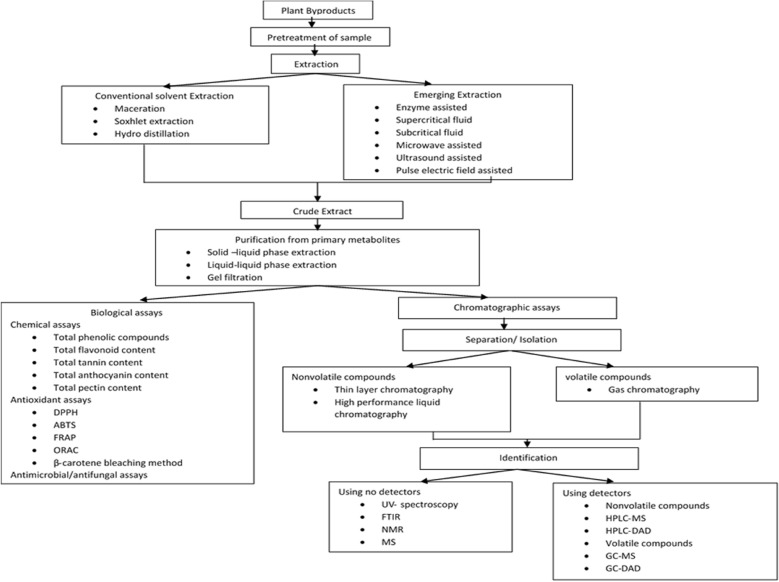
“HPLC/GC is widely used for isolation, identification for quantitative and qualitative analysis of extract; it is coupled with MS, FTIR, NMR, and so on (Trigo et al. 2020).”
BackgroundMethodInfluentialA review on medicinal properties of Carica papaya Linn.
Vij, T., & Prashar, Y. (2015) · Asian Pacific Journal of Tropical Disease · doi:10.1016/s2222-1808(14)60617-4 · Cited by 244 · cited 2×
“The papaya fruit contains 15–20% seed which is rich in oils (30%) with palmitic, stearic, oleic, linoleic acids, carpaine, glucotropacolin, benzyl isothiocyanate (BITC), caricin (sinigrin), and anzymemyosin as primary fatty acids (Vij and Prashar 2015).”
BackgroundKulkarni, S. G., & Vijayanand, P. (2010) · LWT - Food Science and Technology · doi:10.1016/j.lwt.2009.11.006 · Cited by 232 · cited 2×
“…the passion fruit peels are rich in high methoxyl pectin, which was extracted at pH 2.0, peel to solvent ratio of 1:30 (w/v), extraction temperature of 98.7 °C and time of extraction of 60 min, where the solvent was taken as acidified water with hydrochloric acid (Kulkarni and Vijayanand 2010).”
MethodInfluentialIvanović, M., Islamčević Razboršek, M., & Kolar, M. (2020) · Plants · doi:10.3390/plants9111428 · Cited by 230 · cited 2×
“After that, there are several bioactivity assays, such as different radical scavenging (DPPH, ABTS), oxygen reducing power (ORAC), carotene bleaching, iron-chelating (FRAP) assays, microbial inhibition capacity for determination of antioxidant activity, antimicrobial activity, respectively (Ivanović et al. 2020; Trigo…”
MethodPulsed-electric-field-assisted extraction of anthocyanins from purple-fleshed potato
Puértolas, E., Cregenzán, O., Luengo, E., Álvarez, I., & Raso, J. (2013) · Food Chemistry · doi:10.1016/j.foodchem.2012.09.080 · Cited by 227
Pulsed electric field treatment of citrus fruits: Improvement of juice and polyphenols extraction
El Kantar, S., Boussetta, N., Lebovka, N., Foucart, F., Rajha, H. N., Maroun, R. G., Louka, N., & Vorobiev, E. (2018) · Innovative Food Science & Emerging Technologies · doi:10.1016/j.ifset.2017.09.024 · Cited by 219
Microwave assisted extraction of pectin from waste Citrullus lanatus fruit rinds
Prakash Maran, J., Sivakumar, V., Thirugnanasambandham, K., & Sridhar, R. (2014) · Carbohydrate Polymers · doi:10.1016/j.carbpol.2013.09.062 · Cited by 211
Extraction and determination of bioactive compounds from bee pollen
Ares, A. M., Valverde, S., Bernal, J. L., Nozal, M. J., & Bernal, J. (2018) · Journal of Pharmaceutical and Biomedical Analysis · doi:10.1016/j.jpba.2017.08.009 · Cited by 204
Zuin, V. G., & Ramin, L. Z. (2018) · Topics in Current Chemistry · doi:10.1007/s41061-017-0182-z · Cited by 200
Gullón, B., Gagaoua, M., Barba, F. J., Gullón, P., Zhang, W., & Lorenzo, J. M. (2020) · Trends in Food Science & Technology · doi:10.1016/j.tifs.2020.03.039 · Cited by 196 · cited 1×
“It is an advanced form of solvent extraction technology, where different solvents are used as fluid under pressure ranging from about 200 to 400 bar and temperature ranging from 40 to 60 oC (Gullón et al. 2020; Pinto et al. 2020).”
MethodEnzyme-assisted supercritical fluid extraction of phenolic antioxidants from pomegranate peel
Mushtaq, M., Sultana, B., Anwar, F., Adnan, A., & Rizvi, S. S. H. (2015) · The Journal of Supercritical Fluids · doi:10.1016/j.supflu.2015.05.020 · Cited by 195 · cited 1×
“7 caused the highest yield of extract containing phenolic compounds (Mushtaq et al. 2015).”
BackgroundGong, P., Wang, S., Liu, M., Chen, F., Yang, W., Chang, X., Liu, N., Zhao, Y., Wang, J., & Chen, X. (2020) · Carbohydrate Research · doi:10.1016/j.carres.2020.108037 · Cited by 193 · cited 1×
“Washing, cutting, size reduction, and drying are examples of various unit operations (Gong et al. 2020).”
BackgroundDifferent techniques for extraction and micro/nanoencapsulation of saffron bioactive ingredients
Garavand, F., Rahaee, S., Vahedikia, N., & Jafari, S. M. (2019) · Trends in Food Science & Technology · doi:10.1016/j.tifs.2019.05.005 · Cited by 189 · cited 2×
“Besides those, the primary factors influencing extraction efficiency are the type of solvents used, extraction time, the particle size of the sample, temperature of extraction, and solid/solvent ratio (Garavand et al. 2019).”
BackgroundBhagya Raj, G. V. S., & Dash, K. K. (2020) · Ultrasonics Sonochemistry · doi:10.1016/j.ultsonch.2020.105180 · Cited by 189
Mehmood, A., Ishaq, M., Zhao, L., Yaqoob, S., Safdar, B., Nadeem, M., Munir, M., & Wang, C. (2019) · Ultrasonics Sonochemistry · doi:10.1016/j.ultsonch.2018.10.013 · Cited by 184 · cited 1×
“Effect of extraction technologies on bioactive compounds Conventional extraction (CE) Different CE processes used to separate bioactive compounds from plant materials are maceration, soxhlet extraction, percolation, infusion, digestion, decoction, and heat reflux extraction (Mehmood et al. 2019).”
MethodEnzyme-assisted extraction processing from oilseeds: Principle, processing and application
Liu, J.-J., Gasmalla, M. A. A., Li, P., & Yang, R. (2016) · Innovative Food Science & Emerging Technologies · doi:10.1016/j.ifset.2016.05.002 · Cited by 183 · cited 1×
“Some of the most common and frequently used enzymes for this purpose are polygalacturonase, xylanase pectin esterase, polygalacturonase, cellulase, hemicellulase, amylase, b-galactosidase, protease, 1,4-glycosidase, tannase, papainase, and tyrosinase (Barbosa et al. 2020; Liu et al. 2016).”
BackgroundOjha, K. S., Aznar, R., O'Donnell, C., & Tiwari, B. K. (2020) · TrAC Trends in Analytical Chemistry · doi:10.1016/j.trac.2019.115663 · Cited by 183
Alirezalu, K., Pateiro, M., Yaghoubi, M., Alirezalu, A., Peighambardoust, S. H., & Lorenzo, J. M. (2020) · Trends in Food Science & Technology · doi:10.1016/j.tifs.2020.04.010 · Cited by 180 · cited 1×
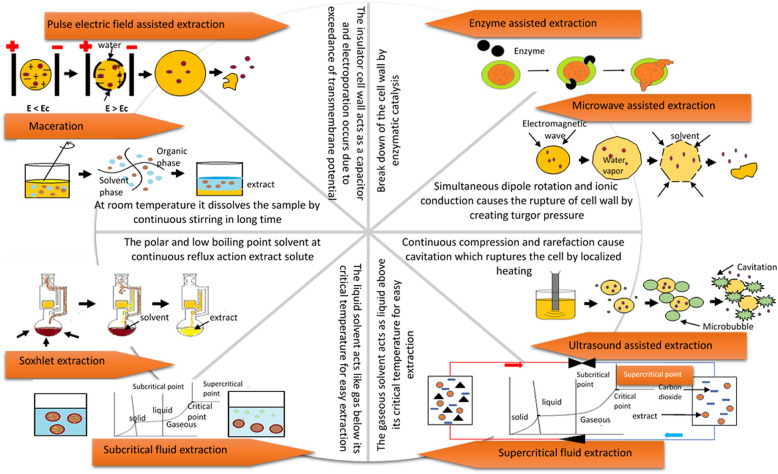
“This cavitation helps in the mass transfer process between the liquid extracting medium and the solid plant materials for enhancing the extraction process (Alirezalu et al. 2020; Grassino et al. 2020; Meregalli et al. 2020).”
BackgroundMicrowave-assisted extraction of chlorogenic acids from green coffee beans
Upadhyay, R., Ramalakshmi, K., & Jagan Mohan Rao, L. (2012) · Food Chemistry · doi:10.1016/j.foodchem.2011.06.057 · Cited by 173
Andreou, V., Dimopoulos, G., Dermesonlouoglou, E., & Taoukis, P. (2020) · Journal of Food Engineering · doi:10.1016/j.jfoodeng.2019.109778 · Cited by 171 · cited 1×
“It is also called a non-thermal extraction process, because the natural compounds are recovered at a minimal temperature without losing quality and nutritional value (Andreou et al. 2020; El Kantar et al. 2018a).”
BackgroundUltrasound-assisted extraction of polysaccharide from Nephelium lappaceum L. fruit peel
Maran, J. P., & Priya, B. (2014) · International Journal of Biological Macromolecules · doi:10.1016/j.ijbiomac.2014.07.032 · Cited by 164 · cited 2×
“Rambutan fruit peels contain a high amount of pectin (Maran and Priya 2014).”
BackgroundMethodParniakov, O., Barba, F. J., Grimi, N., Lebovka, N., & Vorobiev, E. (2016) · Food Chemistry · doi:10.1016/j.foodchem.2015.07.096 · Cited by 163
Duba, K. S., Casazza, A. A., Mohamed, H. B., Perego, P., & Fiori, L. (2015) · Food and Bioproducts Processing · doi:10.1016/j.fbp.2015.01.001 · Cited by 163 · cited 10×
“Mainly carbon dioxide is used as the fluid; it is converted to the supercritical stage beyond its critical point by applying a pressure of 7.38 MPa and temperature of 31 ºC (Al-Otoom et al.”
BackgroundInfluentialMicrowave-assisted extraction of pectic polysaccharide from waste mango peel
Maran, J. P., Swathi, K., Jeevitha, P., Jayalakshmi, J., & Ashvini, G. (2015) · Carbohydrate Polymers · doi:10.1016/j.carbpol.2014.11.072 · Cited by 161
Health Benefits of Punicic Acid: A Review
Aruna, P., Venkataramanamma, D., Singh, A. K., & Singh, R. P. (2016) · Comprehensive Reviews in Food Science and Food Safety · doi:10.1111/1541-4337.12171 · Cited by 160 · cited 1×
“Similarly, pomegranate seeds are a good source of high-quality oil (12–24%), polyunsaturated fatty acids (especially the conjugated punicic acid), protein (10–20%), and insoluble fibers (in which around 30–50% is cellulose and hemicellulose) (Aruna et al. 2016).”
BackgroundKoubaa, M., Barba, F. J., Grimi, N., Mhemdi, H., Koubaa, W., Boussetta, N., & Vorobiev, E. (2016) · Innovative Food Science & Emerging Technologies · doi:10.1016/j.ifset.2016.04.015 · Cited by 160
Grassino, A. N., Ostojić, J., Miletić, V., Djaković, S., Bosiljkov, T., Zorić, Z., Ježek, D., Brnčić, S. R., & Brnčić, M. (2020) · Innovative Food Science & Emerging Technologies · doi:10.1016/j.ifset.2020.102424 · Cited by 158
Li, Y., Cao, H., Liu, M., Zhang, B., Zhang, X., Shi, D., Guo, L., Duan, J., Zhou, X., Zhu, H., et al. (2018) · Chinese Medicine · doi:10.1186/s13020-017-0157-6 · Cited by 156
Green techniques for extraction of bioactive carbohydrates
Mena-García, A., Ruiz-Matute, A. I., Soria, A. C., & Sanz, M. L. (2019) · TrAC Trends in Analytical Chemistry · doi:10.1016/j.trac.2019.07.023 · Cited by 151
Ismail, B. B., Guo, M., Pu, Y., Wang, W., Ye, X., & Liu, D. (2019) · Ultrasonics Sonochemistry · doi:10.1016/j.ultsonch.2018.11.023 · Cited by 147 · cited 1×
“Another study on baobab seed which has a high amount of phenolic compounds reported that the UAE process at 20 min, 30% amplitude, 60 °C temperature, and 30 ml/g solvent to solid ratio results in an extract that contains a high amount of flavonoid contents and antioxidant activity than the conventional solvent extract…”
BackgroundSaleem, M., & Saeed, M. T. (2020) · Journal of King Saud University - Science · doi:10.1016/j.jksus.2019.02.013 · Cited by 147 · cited 1×
“Saleem and Saeed (2020) conducted a study on extracting bioactive compounds from fruit peels using CE technologies with methanol, ethyl acetate, ethanol, and distilled water.”
BackgroundMartínez-Ramos, T., Benedito-Fort, J., Watson, N. J., Ruiz-López, I. I., Che-Galicia, G., & Corona-Jiménez, E. (2020) · Food and Bioproducts Processing · doi:10.1016/j.fbp.2020.03.011 · Cited by 147
Extraction process optimization for bioactive compounds in pomegranate peel
Sood, A., & Gupta, M. (2015) · Food Bioscience · doi:10.1016/j.fbio.2015.09.004 · Cited by 144 · cited 1×
“Sood and Gupta (2015) used the ethanolic solution to extract bioactive compounds from pomegranate peel.”
BackgroundProcess optimization of microwave-assisted extraction of bioactive molecules from avocado seeds
Araújo, R. G., Rodríguez‐Jasso, R. M., Ruíz, H. A., Govea‐Salas, M., Pintado, M., & Aguilar, C. N. (2020) · Industrial Crops and Products · doi:10.1016/j.indcrop.2020.112623 · Cited by 143
Mahindrakar, K. V., & Rathod, V. K. (2020) · Chemical Engineering and Processing - Process Intensification · doi:10.1016/j.cep.2020.107841 · Cited by 141 · cited 2×
“…technologies for extracting the bioactive compounds with higher antioxidant activity (1.2 times higher) from Jamun seed powder at the optimal condition of 12 min extraction time, solid to water ratio 1:15, temperature 35 °C, power 125 W, and duty cycle 60% (Mahindrakar and Rathod 2020).”
BackgroundMethodInfluentialPereira, M. G., Hamerski, F., de Andrade, E. F., Scheer, A. D. P., & Corazza, M. L. (2017) · The Journal of Supercritical Fluids · doi:10.1016/j.supflu.2017.03.021 · Cited by 139 · cited 1×
“This oil extracted using subcritical propane extraction at 60 oC and 6 MPa pressure provided a significantly higher yield than soxhlet extraction at 65 °C for 4 h, where the solvent was taken n-hexane (Pereira et al. 2017).”
MethodBarbosa, J. R., Freitas, M. M. D. S., Martins, L. H. D. S., & de Carvalho, R. N. (2019) · Carbohydrate Polymers · doi:10.1016/j.carbpol.2019.115550 · Cited by 134
Rodsamran, P., & Sothornvit, R. (2019) · Food and Bioproducts Processing · doi:10.1016/j.fbp.2019.09.010 · Cited by 130 · cited 1×
“The pineapple peel is a good source of pectin and polyphenolic compounds, which can be extracted through MAE at a power of 420 W and irradiation time of 30 min, compared with CE done for 60 min (Rodsamran and Sothornvit 2019b).”
MethodSubcritical water extraction of low methoxyl pectin from pomelo (Citrus grandis (L.) Osbeck) peels
Liew, S. Q., Teoh, W. H., Tan, C. K., Yusoff, R., & Ngoh, G. C. (2018) · International Journal of Biological Macromolecules · doi:10.1016/j.ijbiomac.2018.05.013 · Cited by 129
Gonçalves Rodrigues, L. G., Mazzutti, S., Vitali, L., Micke, G. A., & Ferreira, S. R. S. (2019) · Biocatalysis and Agricultural Biotechnology · doi:10.1016/j.bcab.2019.101367 · Cited by 127
A Review on Food Values of Selected Tropical Fruits’ Seeds
Raihana, A. R. N., Marikkar, J. M. N., Amin, I., & Shuhaimi, M. (2015) · International Journal of Food Properties · doi:10.1080/10942912.2014.980946 · Cited by 122
Medina‐Meza, I. G., & Barbosa‐Cánovas, G. V. (2015) · Journal of Food Engineering · doi:10.1016/j.jfoodeng.2015.06.012 · Cited by 121
Chakraborty, S., Uppaluri, R., & Das, C. (2020) · Food and Bioproducts Processing · doi:10.1016/j.fbp.2020.01.003 · Cited by 119 · cited 1×
“The major drawback of this process is the number of repetitions required to complete the extraction process, resulting in a lot of time and energy consumption (Carrillo-Hormaza et al. 2020; Chakraborty et al. 2020).”
BackgroundMa, J., Liu, H., Han, C., Zeng, S.-J., Xu, X., Lu, D., & He, H.-J. (2019) · Carbohydrate Polymers · doi:10.1016/j.carbpol.2019.115409 · Cited by 117
Vasco‐Correa, J., & Zapata, A. D. Z. (2017) · LWT · doi:10.1016/j.lwt.2017.02.024 · Cited by 116
Barrales, F. M., de Rezende, C. A., & Martínez, J. (2015) · The Journal of Supercritical Fluids · doi:10.1016/j.supflu.2015.06.006 · Cited by 115
Saifullah, M., McCullum, R., McCluskey, A., & Vuong, Q. V. (2020) · Heliyon · doi:10.1016/j.heliyon.2020.e03666 · Cited by 115
Process optimization and analysis of microwave assisted extraction of pectin from dragon fruit peel
Thirugnanasambandham, K., Sivakumar, V., & Maran, J. P. (2014) · Carbohydrate Polymers · doi:10.1016/j.carbpol.2014.06.044 · Cited by 110 · cited 1×
“Dragon fruit peels contain beta-carotene, lycopene, vitamin E, essential fatty acid and is also a good pectin source (Thirugnanasambandham et al. 2014).”
BackgroundMeregalli, M. M., Puton, B. M. S., Camera, F. D., Amaral, A. U., Zeni, J., Cansian, R. L., Mignoni, M. L., & Backes, G. T. (2020) · Arabian Journal of Chemistry · doi:10.1016/j.arabjc.2020.04.017 · Cited by 107 · cited 2×
“This cavitation helps in the mass transfer process between the liquid extracting medium and the solid plant materials for enhancing the extraction process (Alirezalu et al. 2020; Grassino et al. 2020; Meregalli et al. 2020).”
BackgroundParniakov, O., Roselló‐Soto, E., Barba, F. J., Grimi, N., Lebovka, N., & Vorobiev, E. (2015) · Food Research International · doi:10.1016/j.foodres.2015.03.031 · Cited by 106
Ferrentino, G., Giampiccolo, S., Morozova, K., Haman, N., Spilimbergo, S., & Scampicchio, M. (2020) · Innovative Food Science & Emerging Technologies · doi:10.1016/j.ifset.2020.102428 · Cited by 103 · cited 1×
“5%, where at 4 h of soxhlet extraction the yield of oil was 22% but the difference between both oil was the percentage of unsaturated fatty acid present in it (Ferrentino et al. 2020).”
BackgroundFidelis, M., do Carmo, M. A. V., Cruz, T. M., Azevedo, L. C., Myoda, T., Furtado, M. M., Marques, M. B., Sant’Ana, A. S., Genovese, M. I., Oh, W. Y., et al. (2019) · Food Chemistry · doi:10.1016/j.foodchem.2019.125909 · Cited by 100
Chen, X., Fang, D., Zhao, R., Gao, J., Kimatu, B. M., Hu, Q., Chen, G., & Zhao, L. (2019) · International Journal of Biological Macromolecules · doi:10.1016/j.ijbiomac.2019.08.163 · Cited by 99 · cited 1×
“The desired compounds are eroded from the plant cell when the cell gets ruptured by turgor pressure created by the cell wall because of the solvent medium’s entry (Chen et al. 2019; Machado et al. 2019; Ojha et al. 2020).”
BackgroundMicrowave assisted extraction and characterization of polysaccharide from waste jamun fruit seeds
Al-Dhabi, N. A., & Ponmurugan, K. (2019) · International Journal of Biological Macromolecules · doi:10.1016/j.ijbiomac.2019.10.204 · Cited by 98 · cited 1×
“Al-Dhabi and Ponmurugan (2020) proved that the Jamun seed contains a high amount of polysaccharides which can be extracted through MAE.”
BackgroundZwingelstein, M., Draye, M., Besombes, J., Piot, C., & Châtel, G. (2019) · Waste Management · doi:10.1016/j.wasman.2019.11.034 · Cited by 97 · cited 1×
“The ratio between solid and solvent should be moderate; a too-high ratio might take more time for extraction (Zwingelstein et al. 2020).”
BackgroundPinto, D., Cádiz-Gurrea, M. D. L. L., Sut, S., Ferreira, A. S., Leyva-Jimenez, F. J., Dall'Acqua, S., Segura-Carretero, A., Delerue-Matos, C., & Rodrigues, F. (2020) · Journal of CO2 Utilization · doi:10.1016/j.jcou.2020.101194 · Cited by 96 · cited 1×
“It is an advanced form of solvent extraction technology, where different solvents are used as fluid under pressure ranging from about 200 to 400 bar and temperature ranging from 40 to 60 oC (Gullón et al. 2020; Pinto et al. 2020).”
MethodTalekar, S., Patti, A. F., Singh, R., Vijayraghavan, R., & Arora, A. (2018) · Industrial Crops and Products · doi:10.1016/j.indcrop.2017.12.023 · Cited by 95
Cuco, R. P., Cardozo-Filho, L., & Silva, C. D. (2019) · The Journal of Supercritical Fluids · doi:10.1016/j.supflu.2018.08.002 · Cited by 94
Walia, M., Rawat, K., Bhushan, S., Padwad, Y. S., & Singh, B. (2014) · Journal of the Science of Food and Agriculture · doi:10.1002/jsfa.6337 · Cited by 88 · cited 1×
“Likewise, the apple seeds are rich in oil (17–23%) containing unsaturated fatty acids in high concentration and phenolic compounds, such as phloridzin and quercetin-3-galactoside fibers (20%) (Walia et al. 2014).”
BackgroundExtraction of antioxidants from mango seed kernel: Optimization assisted by microwave
Torres-León, C., Rojas, R., Serna-Cock, L., Belmares-Cerda, R., & Aguilar, C. N. (2017) · Food and Bioproducts Processing · doi:10.1016/j.fbp.2017.07.005 · Cited by 88
Wang, K., Xie, X., Zhang, Y., Huang, Y., Zhou, S., Zhang, W., Lin, Y., & Fan, H. (2017) · Food Chemistry · doi:10.1016/j.foodchem.2017.08.061 · Cited by 88
Gu, L.-B., Zhang, G.-J., Du, L., Du, J., Qi, K., Zhu, X., Zhang, X., & Jiang, Z. (2019) · LWT · doi:10.1016/j.lwt.2019.05.078 · Cited by 85
Dias, J. L., Mazzutti, S., de Souza, J. A. L., Ferreira, S. R. S., Soares, L. A. L., Stragevitch, L., & Danielski, L. (2018) · The Journal of Supercritical Fluids · doi:10.1016/j.supflu.2018.11.011 · Cited by 82
Lombardelli, C., Liburdi, K., Benucci, I., & Esti, M. (2020) · Food and Bioproducts Processing · doi:10.1016/j.fbp.2020.01.014 · Cited by 82
Industrial Feasibility of Natural Products Extraction with Microwave Technology
Ciriminna, R., Carnaroglio, D., Delisi, R., Arvati, S., Tamburino, A., & Pagliaro, M. (2016) · ChemistrySelect · doi:10.1002/slct.201600075 · Cited by 80 · cited 1×
“However, in MAE, the most frequently used frequency ranges from 915 to 2450 MHz, and wavelength ranges from 12 to 20 cm (Ciriminna et al. 2016; Garavand et al. 2019).”
BackgroundGustinelli, G., Eliasson, L., Svelander, C. A., Alminger, M., & Ahrné, L. (2018) · The Journal of Supercritical Fluids · doi:10.1016/j.supflu.2018.01.002 · Cited by 79
Arrutia, F., Adam, M., Calvo-Carrascal, M. Á., Mao, Y., & Binner, E. R. (2020) · Chemical Engineering Journal · doi:10.1016/j.cej.2020.125056 · Cited by 79
Kantar, S. E., Boussetta, N., Rajha, H. N., Maroun, R., Louka, N., & Vorobiev, E. (2018) · Food Research International · doi:10.1016/j.foodres.2018.01.070 · Cited by 77
Wu, Z., Li, H., Wang, Y., Yang, D., Tan, H., Zhan, Y., Yang, Y., Luo, Y., & Chen, G. (2019) · International Journal of Biological Macromolecules · doi:10.1016/j.ijbiomac.2019.06.020 · Cited by 77
Extraction of dietary fiber from Citrus junos peel with subcritical water
Tanaka, M., Takamizu, A., Hoshino, M., Sasaki, M., & Goto, M. (2011) · Food and Bioproducts Processing · doi:10.1016/j.fbp.2011.03.005 · Cited by 76
Okolie, C. L., Akanbi, T. O., Mason, B., Udenigwe, C. C., & Aryee, A. N. A. (2018) · Food Research International · doi:10.1016/j.foodres.2018.09.018 · Cited by 75
Wang, L., Boussetta, N., Lebovka, N., & Vorobiev, E. (2020) · Food and Bioproducts Processing · doi:10.1016/j.fbp.2020.03.004 · Cited by 74
Roda, A., Faveri, D. M. D., Giacosa, S., Dordoni, R., & Lambri, M. (2015) · Journal of Cleaner Production · doi:10.1016/j.jclepro.2015.07.019 · Cited by 73
Narváez‐Cuenca, C., Inampues-Charfuelan, M.-L., Hurtado-Benavides, A., Parada‐Alfonso, F., & Vincken, J. (2020) · Journal of Food Composition and Analysis · doi:10.1016/j.jfca.2020.103467 · Cited by 73
García‐Magaña, M. D. L., Garcia, H. S., Bello‐Pérez, L. A., Sáyago‐Ayerdi, S. G., & de, M. M.-M. (2013) · Plant Foods for Human Nutrition · doi:10.1007/s11130-013-0364-y · Cited by 72
Enzyme release of phenolics from muscadine grape (Vitis rotundifolia Michx.) skins and seeds
Xu, C., Yağız, Y., Borejsza‐Wysocki, W., Lu, J., Gu, L., Ramírez-Rodrigues, M. M., & Marshall, M. R. (2014) · Food Chemistry · doi:10.1016/j.foodchem.2014.01.128 · Cited by 71
Ðurđević, S., Milovanović, S. L., Šavikin, K., Ristić, M., Menkovic, N. R., Pljevljakušić, D. S., Petrovic, S. D., & Bogdanović, A. (2017) · Industrial Crops and Products · doi:10.1016/j.indcrop.2017.04.024 · Cited by 70
Isolation and Purification of Bioactive Compounds from the Stem Bark of Jatropha podagrica
Minh, T. N., Xuan, T. D., Tran, H.-D., Van, T. M., Andriana, Y., Khanh, T. D., Quan, N. V., & Ahmad, A. (2019) · Molecules · doi:10.3390/molecules24050889 · Cited by 69 · cited 1×
“Besides these, the oils extracted from the seed or peel powder, described in Table 2, have antioxidant, anticancerous, and antidiabetic properties because of the presence of fatty acids, such as polyunsaturated (linoleic acid, linolenic acid), and monounsaturated (oleic acid) (Golkar and Moattar 2019; Minh et al. 2019…”
BackgroundMechanism of enhancing foaming properties of egg white by super critical carbon dioxide treatment
Ding, L., Lu, L., Sheng, L., Tang, C., Chen, Y., & Cai, Z. (2020) · Food Chemistry · doi:10.1016/j.foodchem.2020.126349 · Cited by 61
Lucci, P., Pacetti, D., Loizzo, M. R., & Frega, N. G. (2014) · Food Chemistry · doi:10.1016/j.foodchem.2014.06.123 · Cited by 60
da Cruz, P. N., Pereira, T. C. S., Guindani, C., de Oliveira, D. A., Rossi, M. J., & Ferreira, S. R. S. (2016) · The Journal of Supercritical Fluids · doi:10.1016/j.supflu.2016.09.022 · Cited by 60
Extraction and characterization of guava seed oil: A novel industrial byproduct
Kapoor, S., Gandhi, N., Tyagi, S. K., Kaur, A., & Mahajan, B. V. C. (2020) · LWT · doi:10.1016/j.lwt.2020.109882 · Cited by 60 · cited 2×
“Furthermore, the oil was extracted using n-hexane for 60 °C up time 4 h in a soxhlet extractor (Kapoor et al. 2020).”
BackgroundMethodZuin, V. G., & Ramin, L. Z. (2018) · Topics in current chemistry collections · doi:10.1007/978-3-319-90653-9_8 · Cited by 59
Thinned stone fruits are a source of polyphenols and antioxidant compounds
Redondo, D., Arias, E., Oria, R., & Venturini, M. E. (2016) · Journal of the Science of Food and Agriculture · doi:10.1002/jsfa.7813 · Cited by 58 · cited 1×
“By-products of peach contain bioactive compounds, such as vitamin C and polyphenols, which show antioxidant activities (Redondo et al. 2017).”
BackgroundOil recovery in rosehip seeds from food plant waste products using supercritical CO2 extraction
Salgın, U., Salgın, S., Ekici, D. D., & UludaL·, G. (2016) · The Journal of Supercritical Fluids · doi:10.1016/j.supflu.2016.08.011 · Cited by 58
Torres‐Ossandón, M. J., Vega‐Gálvez, A., López, J., Stucken, K., Romero, J., & Scala, K. C. D. (2018) · The Journal of Supercritical Fluids · doi:10.1016/j.supflu.2018.05.005 · Cited by 58
Vardanega, R., Nogueira, G. C., Nascimento, C. D. O., de Faria‐Machado, A. F., & Meireles, M. A. A. (2019) · The Journal of Supercritical Fluids · doi:10.1016/j.supflu.2019.01.013 · Cited by 54 · cited 1×
“Among the solvents, toluene, ethylene, ammonia, and carbon dioxide are primarily used due to their availability, environment safety, non-explosibility, non-toxicity, less expensive, and easily removable properties (Al-Otoom et al. 2014; Vardanega et al. 2019).”
BackgroundBioactive compounds from vegetable and fruit by‐products
de Ancos, B., Colina-Coca, C., González-Peña, D., & Sánchez‐Moreno, C. (2015) · Wiley eBooks · doi:10.1002/9781118733103.ch1 · Cited by 53
Zhang, R., Li, S., Zhu, Z., & He, J. (2019) · Trends in Food Science & Technology · doi:10.1016/j.tifs.2019.07.012 · Cited by 52 · cited 2×
“It binds with the cell wall’s active site, which is composed of a polysaccharide–lignin network and hydrolyses the polysaccharide and lipid body structures by breaking glycoside bonds in the cell wall and proteolytic bonds in middle lamella (Grassino et al. 2020; Zhang et al. 2019).”
BackgroundBioactive Compounds of Fruits and Vegetables
Yalçın, H., & Çapar, T. D. (2017) · Food engineering series · doi:10.1007/978-1-4939-7018-6_21 · Cited by 49 · cited 3×
“Besides these, the oils extracted from the seed or peel powder, described in Table 2, have antioxidant, anticancerous, and antidiabetic properties because of the presence of fatty acids, such as polyunsaturated (linoleic acid, linolenic acid), and monounsaturated (oleic acid) (Golkar and Moattar 2019; Minh et al. 2019…”
BackgroundShorstkii, I., Khudyakov, D., & Mirshekarloo, M. S. (2020) · Innovative Food Science & Emerging Technologies · doi:10.1016/j.ifset.2020.102309 · Cited by 49
Memarzadeh, S. M., Gholami, A., Pirbalouti, A., & Masoum, S. (2020) · Industrial Crops and Products · doi:10.1016/j.indcrop.2020.112719 · Cited by 49 · cited 1×
“Maceration is used to remove thermolabile compounds, since it requires only normal room temperature (Memarzadeh et al. 2020; Taofiq et al. 2019).”
MethodPlazzotta, S., Ibarz, R., Manzocco, L., & Martín‐Belloso, O. (2020) · Journal of Food Engineering · doi:10.1016/j.jfoodeng.2020.110196 · Cited by 48 · cited 1×
“The electric pulses cause the transfer of ions and molecules from inside the cell towards the cell membrane (phospholipids bounded molecule), acting as an insulator (Plazzotta et al. 2021).”
BackgroundDing, L., Zhao, Q., Zhou, X., Tang, C., Chen, Y., & Cai, Z. (2020) · Journal of Food Engineering · doi:10.1016/j.jfoodeng.2020.110076 · Cited by 44
Machado, I., Faccio, R., & Pistón, M. (2019) · Ultrasonics Sonochemistry · doi:10.1016/j.ultsonch.2019.104752 · Cited by 39 · cited 1×
“The desired compounds are eroded from the plant cell when the cell gets ruptured by turgor pressure created by the cell wall because of the solvent medium’s entry (Chen et al. 2019; Machado et al. 2019; Ojha et al. 2020).”
BackgroundOptimization of enzymatic hydrolysis for acid pretreated date seeds into fermentable sugars
Hamid, H. S. H. B., & Ismail, K. S. K. (2020) · Biocatalysis and Agricultural Biotechnology · doi:10.1016/j.bcab.2020.101530 · Cited by 38
Zengin, G., Cvetanović, A. D., Gašić, U. M., Tešić, Ž., Stupar, A., Bulut, G., Sinan, K. I., Uysal, Ş., Picot-Allain, M. C. N., & Mahomoodally, M. F. (2019) · Process Biochemistry · doi:10.1016/j.procbio.2019.12.002 · Cited by 36
Extraction of oil from uncrushed olives using supercritical fluid extraction method
Al-Otoom, A. Y., Al‐Asheh, S., Allawzi, M. A., Mahshi, K., Alzenati, N., Banat, B., & Alnimr, B. (2014) · The Journal of Supercritical Fluids · doi:10.1016/j.supflu.2014.10.023 · Cited by 35 · cited 1×
“Among the solvents, toluene, ethylene, ammonia, and carbon dioxide are primarily used due to their availability, environment safety, non-explosibility, non-toxicity, less expensive, and easily removable properties (Al-Otoom et al. 2014; Vardanega et al. 2019).”
BackgroundDefatted strawberry seeds as a source of phenolics, dietary fiber and minerals
Grzelak-Błaszczyk, K., Karlińska, E., Grzęda, K., Rój, E., & Kołodziejczyk, K. (2017) · LWT · doi:10.1016/j.lwt.2017.05.014 · Cited by 35
Marić, B. D., Pavlić, B., Čolović, D., Abramović, B., Zeković, Z. P., Bodroža‐Solarov, M., Ilić, N., & Teslić, N. (2020) · LWT · doi:10.1016/j.lwt.2020.109627 · Cited by 35
Taofiq, O., Corrêa, R. C. G., Barros, L., Prieto, M. A., Bracht, A., Peralta, R. M., Gonzaléz‐Paramás, A. M., Barreiro, M. F., & Ferreira, I. C. F. R. (2019) · Food Research International · doi:10.1016/j.foodres.2019.108541 · Cited by 34 · cited 1×
“Maceration is used to remove thermolabile compounds, since it requires only normal room temperature (Memarzadeh et al. 2020; Taofiq et al. 2019).”
MethodCarrillo-Hormaza, L., Duque, L. F., Lopez-Parra, J. S., & Osorio, E. (2020) · Biochemical Engineering Journal · doi:10.1016/j.bej.2020.107676 · Cited by 27
Guil‐Guerrero, J. L., Ramos, L., Moreno, C., Zúñiga‐Paredes, J. C., Carlosama‐Yepez, M., & Ruales, P. (2016) · Agronomy Journal · doi:10.2134/agronj2015.0555 · Cited by 22
Yang, F., Li, Z., Liu, L., & Xi, J. (2020) · Ultrasonics Sonochemistry · doi:10.1016/j.ultsonch.2020.105264 · Cited by 22
Potential of Agro-residues as Sources of Bioactive Compounds
Babbar, N., & Oberoi, H. S. (2013) · Springer eBooks · doi:10.1007/978-1-4614-8005-1_11 · Cited by 14 · cited 1×
“Commonly, the phenolic compounds are in the form of flavonoids, phenolic acids, and tannin (Babbar and Oberoi 2014).”
BackgroundEssential Oil Composition, Bioactive Compounds, and Antioxidant Activities in Iberis amara L.
Golkar, P., & Moattar, F. (2019) · Natural Product Communications · doi:10.1177/1934578x19846355 · Cited by 10 · cited 4×
“Besides these, the oils extracted from the seed or peel powder, described in Table 2, have antioxidant, anticancerous, and antidiabetic properties because of the presence of fatty acids, such as polyunsaturated (linoleic acid, linolenic acid), and monounsaturated (oleic acid) (Golkar and Moattar 2019; Minh et al. 2019…”
BackgroundInfluentialChapter 11 Supercritical fluid extraction: Principles and applications
Gere, D. R., Randall, L. G., & Callahan, D. (1997) · Techniques and instrumentation in analytical chemistry · doi:10.1016/s0167-9244(97)80020-0 · Cited by 6
Polysaccharides as Bioactive Components of Functional Food
Peso‐Echarri, P., González‐Bermúdez, C. A., Ros, G., Martínez‐Graciá, C., & Frontela‐Saseta, C. (2015) · Wiley eBooks · doi:10.1002/9781119108580.ch7 · Cited by 5 · cited 1×
“Besides these, the oils extracted from the seed or peel powder, described in Table 2, have antioxidant, anticancerous, and antidiabetic properties because of the presence of fatty acids, such as polyunsaturated (linoleic acid, linolenic acid), and monounsaturated (oleic acid) (Golkar and Moattar 2019; Minh et al. 2019…”
Background
Research works printed but not linked: 9
- Alara OR Mudalip SKA Abdurahman NH Mahmoud MS Obanijesu EO-O Data on parametric influence of microwave-assisted extraction on the recovery yield, total phenolic content and antioxidant activity of Phaleria macrocarpa fruit peel extract CDC 2019 24 100277
- Bressani R Rodas B Ruiz A La composición química, capacidad antioxidativa y valor nutritivo de la semilla de variedades de aguacate 2009 Tegucigalpa (Guatemala) Fondo Nacional de Ciencia y Tecnología-FONACYT, Universidad del Valle de Guatemala-UVG
- Chemat F Abert-Vian M Fabiano-Tixier AS Strube J Uhlenbrock L Gunjevic V Cravotto GJ Green extraction of natural products Origins Curr Status Fut Challenges 2019 118 248 263
- e Santos DN de Souza LL Ferreira NJ de Oliveira AL Study of supercritical extraction from Brazilian cherry seeds (Eugenia uniflora L.) with bioactive compounds Food Bioprod Process 2015 94 365 374
- Natolino A Da Porto C Supercritical carbon dioxide extraction of pomegranate (Punica granatum L.) seed oil: Kinetic modelling and solubility evaluation Innov Food Sci Emerg Technol 2019 151 30 39
- Parashar S Sharma H Garg M Antimicrobial and antioxidant activities of fruits and vegetable peels: a review J Pharmacogn Phytochem. 2014 3 1 160 164
- Raje V Lokhande S More SS IJoRiE, Science, Management Techniques for extraction and isolation of natural products: a comprehensive review Int J Res Eng Sci Manage 2019 2 10 226 230
- Roberts J, Caserio M (1977) Separation and purification. Identification of organic compounds by spectroscopic techniques. Chapter 9:257–349.
- Tongkham N Juntasalay B Lasunon P Sengkhamparn N Dragon fruit peel pectin: microwave-assisted extraction and fuzzy assessment Agric Nat Resour 2017 51 4 262 267
Cited by
Weremfo, A., Abassah‐Oppong, S., Adulley, F., Dabie, K., & Seidu‐Larry, S. (2023) · Journal of the Science of Food and Agriculture · doi:10.1002/jsfa.12121 · Cited by 224
Recycling food and agriculture by-products to mitigate climate change: a review
Rashwan, A. K., Bai, H., Osman, A. I., Eltohamy, K. M., Chen, Z., Younis, H. A., Al-Fatesh, A. S., Rooney, D. W., & Yap, P. (2023) · Environmental Chemistry Letters · doi:10.1007/s10311-023-01639-6 · Cited by 119
An Overview of Agro-Waste Management in Light of the Water-Energy-Waste Nexus
El-Ramady, H. R., Brevik, E. C., Bayoumi, Y. A., Shalaby, T., El-Mahrouk, M. E., Taha, N. A., Elbasiouny, H., Elbehiry, F., Amer, M. M., Abdalla, N. A., et al. (2022) · Sustainability · doi:10.3390/su142315717 · Cited by 110
Jaouhari, Y., Travaglia, F., Giovannelli, L., Picco, A., Oz, E., Oz, F., & Bordiga, M. (2023) · Foods · doi:10.3390/foods12112183 · Cited by 89
“The creation of an innovative methodology for the extraction, purification, quantification, and stabilization of biochemicals, which are usually discarded as waste, is also considered a crucial step for sustainable development [98].”
MethodThe high-value and sustainable utilization of grape pomace: A review
Wang, C., You, Y., Huang, W., & Zhan, J. (2024) · Food Chemistry: X · doi:10.1016/j.fochx.2024.101845 · Cited by 85
“…times, large solvent consumption, and the need for evaporation or concentration after extraction to obtain purer compounds, which may lead to extra environmental issues (Fontana et al., 2013; Patra et al., 2022), not meeting the requirements of green extraction and sustainable development.”
Background
Metadata
- Authors
- Patra, A., Abdullah, S., & Pradhan, R. C.
- Affiliations
- National Institute of Technology Rourkela (IN)
- Corresponding author
- Patra, Abhipriya
- Abdullah, S.
- Pradhan, Rama Chandra
- Venue
- Bioresources and Bioprocessing
- Published
- 2022-02-18
- Volume
- 9
- Issue
- 1
- Pages
- 14-14
- ISSN
- 2197-4365 (ISSN-L)
- PMC
- PMC10992780
- OpenAlex
- W4213387006
- Cited by
- 213
- References
- 133
- Citations by year
- 2026: 52 · 2025: 66 · 2024: 49 · 2023: 33 · 2022: 13
- FWCI
- 3.68
- Type
- journal article
- Language
- en
- Open access
- gold
- doi.org
- Licence
- cc-by
- creativecommons.org/licenses/by/4.0 (tdm)
- creativecommons.org/licenses/by/4.0 (vor)
- Locations
- Bioresources and Bioprocessing (publishedVersion, cc-by)
- PubMed Central (publishedVersion, cc-by)
- PubMed (publishedVersion)
- DOAJ (DOAJ: Directory of Open Access Journals) (submittedVersion, cc-by-sa)
- Topics
- Life Sciences › Agricultural and Biological Sciences › Food Science › Agricultural and Biological Research
- Health Sciences › Medicine › Biochemistry (medical) › Phytochemicals and Antioxidant Activities
- Physical Sciences › Chemistry › Organic Chemistry › Edible Oils Quality and Analysis
- Keywords
- bioactive compounds, extraction methods, fruit seeds, fruit peel, phenolic compounds, flavonoids, essential fatty acids, pectin, dietary fiber, extraction conditions, waste valorization
About these checks
Registry, retraction, Cites and statistics results are computed, not judged, with one exception: a printed reference that no index lists is read once by a model before it counts as a citation error. Claims are extracted by a model and kept only when their quote appears verbatim in the text; each cited source is then checked, with a model’s help, for whether it says what the claim relies on. Those verdicts can be wrong — read the claim’s quote and the cited source before relying on one.
Statistics and arithmetic are recomputed, not judged.
Confidence bands are shown only for fields calibrated on our annotated test set. None is calibrated yet, so no band is shown.
What counts as a claim ›How we measure confidence ›How we check this ›
Are you an author, or do you see a problem with this page? Request a review
Data sources
Bibliographic data: Semantic Scholar, OpenAlex, Crossref.
Contains information from the Semantic Scholar Academic Graph Datasets, made available under the ODC Attribution License (ODC-BY 1.0).
Semantic Scholar’s data is described in: Kinney, R., et al. (2023). The Semantic Scholar Open Data Platform. arXiv:2301.10140.
