

The effect of culinary interventions (cooking classes) on dietary intake and behavioral change: a systematic review and evidence map
Open accessThe DOI matches its Crossref record; 46 of the 47 references it cites were found in a registry or an index.
Abstract
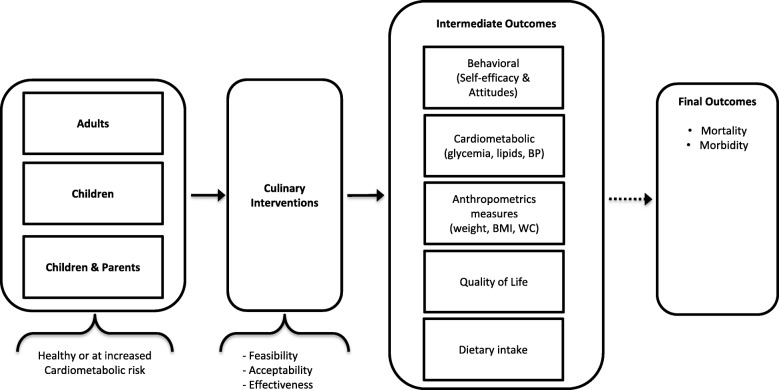
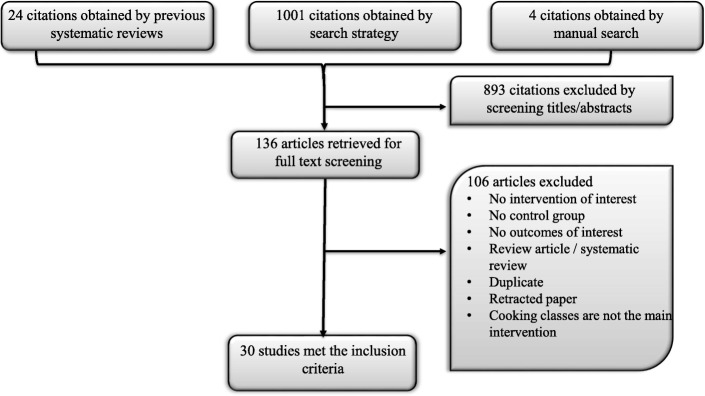
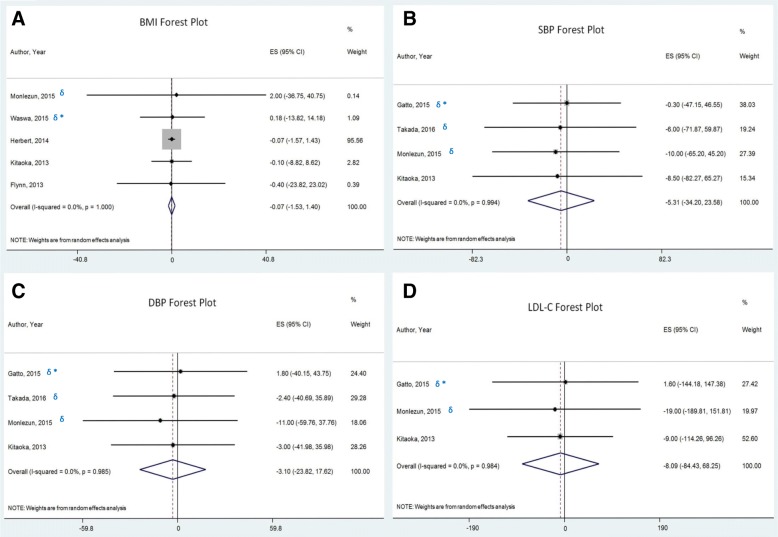
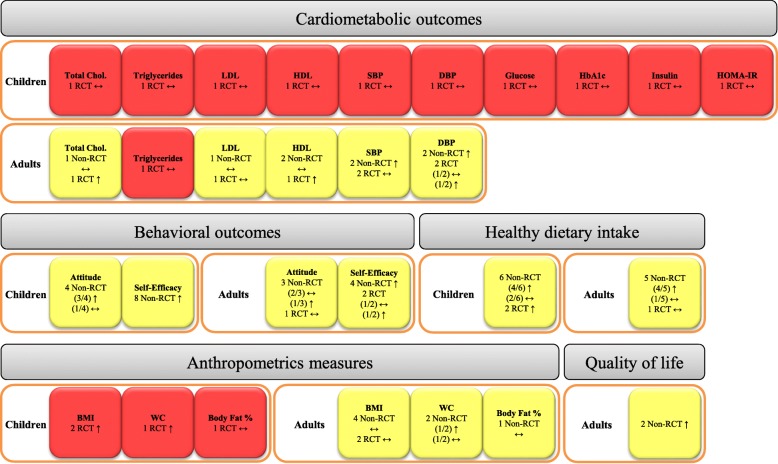
BACKGROUND: Culinary interventions (cooking classes) have been used to improve the quality of dietary intake and change behavior. The aim of this systematic review is to investigate the effects of culinary interventions on dietary intake and behavioral and cardiometabolic outcomes. METHODS: We conducted a systematic review of MEDLINE, EMBASE, Cochrane Central Register of Controlled Trials, Cochrane Database of Systematic Reviews, and Scopus for comparative studies that evaluated culinary interventions to a control group or baseline values. The intervention was defined as a cooking class regardless of its length or delivery approach. Studies included populations of children, healthy adults or adults with morbidities. The risk of bias was assessed using the Cochrane Risk of Bias tool and the Newcastle-Ottawa Scale. Outcomes were pooled using the random-effects model and descriptive statistics and depicted in an evidence map. Simple logistic regression was used to evaluate factors associated with intervention success. RESULTS: , 95% CI: -1.53, 1.40), systolic (- 5.31 mmHg, 95% CI: -34.2, 23.58) or diastolic blood pressure (- 3.1 mmHg, 95% CI: -23.82, 17.62) or LDL cholesterol (- 8.09 mg/dL, 95% CI: -84.43, 68.25). Culinary interventions were associated with improved attitudes, self-efficacy and healthy dietary intake in adults and children. We were unable to demonstrate whether the effect of a culinary intervention was modified by various characteristics of the intervention such as its delivery or intensity. Interventions with additional components such as education on nutrition, physical activity or gardening were particularly effective. CONCLUSIONS: Culinary interventions were not associated with a significant change in cardiometabolic risk factors, but were associated with improved attitudes, self-efficacy and a healthier dietary intake in adults and children.
Overview
The claims and statistics of this paper haven’t been checked yet.
Free: it reads the open-access text and checks the first 5 claims that cite a source we can check. Create a free account to check every claim.
Integrity signals
Registry
Cites
Statistics
Figures
Verification
Claims the paper makes
The claims and statistics of this paper haven’t been checked yet.
Free: it reads the open-access text and checks the first 5 claims that cite a source we can check. Create a free account to check every claim.
Claims other papers make about this one
Each is checked against this paper’s own text: does it say what the citing paper says it does?
The source backs part of the claim, not all of it — or backs it for a different population, condition or comparison.
In the citing paper
“Teaching kitchen curricula for clinicians and individuals has emerging evidence for enhancing nutrition knowledge, culinary skills, and dietary pattern change [[254], [255], [256]].”
From Nutritional priorities to support GLP-1 therapy for obesity: A joint advisory from the American College of Lifestyle Medicine, the American Society for Nutrition, the Obesity Medicine Association, and the Obesity Society (2025) · cites this paper as [254]
Experimental — accuracy not yet measuredThe source backs part of the claim, not all of it — or backs it for a different population, condition or comparison.
In the citing paper
“Teaching kitchen curricula for clinicians and individuals has emerging evidence for enhancing nutrition knowledge, culinary skills, and dietary pattern change [262, 263, 264].”
From Nutritional priorities to support GLP ‐1 therapy for obesity: A joint Advisory from the American College of Lifestyle Medicine, the American Society for Nutrition, the Obesity Medicine Association, and The Obesity Society (2025) · cites this paper as [262]
Experimental — accuracy not yet measuredThe source backs part of the claim, not all of it — or backs it for a different population, condition or comparison.
In the citing paper
“Systematic reviews assessing CM outcomes indicate short‐term improvements in cooking skills and nutrition intake [16, 17].”
From One‐Year Weight Loss Following a Remote Culinary Medicine Program: A Bi‐Center Randomized Controlled Trial (2026) · cites this paper as [16]
Experimental — accuracy not yet measuredThe source backs part of the claim, not all of it — or backs it for a different population, condition or comparison.
In the citing paper
“Among young adults without ID, cooking skills and meal preparation interventions have been shown to improve diet quality19, increase fruit and vegetable consumption20, and reduce fast food intake21.”
From A cooking skills intervention for long-term weight loss in young adults with intellectual disabilities: Rationale and design for a randomized trial (2026) · cites this paper as [19]
Experimental — accuracy not yet measured
Self-check
Percentages, sums and reported differences re-computed from the paper’s own numbers.
The self-check needs the paper’s full text.
Citations
Cites
Preferred Reporting Items for Systematic Reviews and Meta-Analyses: the PRISMA statement
Moher, D., Liberati, A., Tetzlaff, J., Altman, D. G., & for the PRISMA Group (2009) · BMJ · doi:10.1136/bmj.b2535 · Cited by 83,823
Measuring inconsistency in meta-analyses
Higgins, J. P. T., Thompson, S. G., Deeks, J. J., & Altman, D. G. (2003) · BMJ · doi:10.1136/bmj.327.7414.557 · Cited by 63,139
Preferred reporting items for systematic reviews and meta-analyses: the PRISMA Statement.
(2009) · PubMed Central · Cited by 44,859
Meta-analysis in clinical trials
DerSimonian, R., & Laird, N. (1986) · Controlled Clinical Trials · doi:10.1016/0197-2456(86)90046-2 · Cited by 39,552
Quantifying heterogeneity in a meta‐analysis
Higgins, J. P. T., & Thompson, S. G. (2002) · Statistics in Medicine · doi:10.1002/sim.1186 · Cited by 36,763
(2014) · Medical Entomology and Zoology · Cited by 17,633
Heart Disease and Stroke Statistics—2017 Update: A Report From the American Heart Association
Benjamin, E. J., Blaha, M. J., Chiuve, S. E., Cushman, M., Das, S. R., Deo, R., de Ferranti, S. D., Floyd, J., Fornage, M., Gillespie, C., et al. (2017) · Circulation · doi:10.1161/cir.0000000000000485 · Cited by 12,591
Rating the certainty in evidence in the absence of a single estimate of effect
Murad, M. H., Mustafa, R. A., Schünemann, H. J., Sultan, S., & Santesso, N. (2017) · Evidence Based Medicine · doi:10.1136/ebmed-2017-110668 · Cited by 717
Self-citationMiake-Lye, I. M., Hempel, S., Shanman, R., & Shekelle, P. G. (2016) · Systematic Reviews · doi:10.1186/s13643-016-0204-x · Cited by 660
Schwingshackl, L., Schwedhelm, C., Hoffmann, G., Lampousi, A.-M., Knüppel, S., Iqbal, K., Bechthold, A., Schlesinger, S., & Boeing, H. (2017) · The American Journal of Clinical Nutrition · doi:10.3945/ajcn.117.153148 · Cited by 600 · cited 1×
“and nuts and less red meat and sweets/desserts [1].”
Background
Research works printed but not linked: 1
- Higgins J Green S Cochrane handbook for systematic reviews of interventions version 5.1.0 2011
Cited by
Items 101–163 of 163
Wu, X., Duan, Y., Kang, C., Man, S. S., Chen, X., & Zhu, Z. (2024) · Lecture notes in computer science · doi:10.1007/978-3-031-61063-9_14 · Cited by 1
Le, H. N., Sofija, E., Harris, N., Noviasty, R., Nguyen, T., & Phung, H. N. (2025) · Food and Energy Security · doi:10.1002/fes3.70065 · Cited by 2
Schlueter, R., Cooke, J., Isaacson, K. L., & Calhoun, B. G. (2025) · Clinical Journal of the American Society of Nephrology · doi:10.2215/cjn.0000000785 · Cited by 1
Cooking Skills in Health Professionals: A Systematic Review
Conceição, L. M., & Rodrigues, S. S. P. (2025) · Dietetics · doi:10.3390/dietetics4030038 · Cited by 1
Fraser, K., Vidgen, H. A., Spence, A. C., Bolton, K. A., Lacy, K. E., Dunn, K., & Love, P. (2025) · Appetite · doi:10.1016/j.appet.2025.108361 · Cited by 6
Cemali, Ö., Ercan, A., & Dağdeviren, H. N. (2025) · Eurasian Journal of Family Medicine · doi:10.33880/ejfm.2025140407 · Cited by 1
Mohedo, J. C., Murillo-Llorente, M. T., Palau-Ferrè, A. M., Faus, M., Gómez-Taylor, B., Claramunt, F. E., Palomares, S. M., & Sandri, E. (2026) · Advances in Nutrition · doi:10.1016/j.advnut.2026.100627 · Cited by 3
“Nevertheless, evidence mapping highlights heterogeneity in delivery models and outcomes, and inconsistent effects on hard cardiometabolic endpoints [16].”
Vilme, H., Campbell, S. D., Sauls, D. L., Powell, K., Lee, J., Stout, R., Erkanli, A., Reynolds, G., Story, M. T., Matsouaka, R., et al. (2022) · American Journal of Health Education · doi:10.1080/19325037.2022.2120123 · Cited by 1
Best Practices for Culinary Medicine Programming
Krenek, A. M., Mathews, A., & Dahl, W. J. (2022) · EDIS · doi:10.32473/edis-fs445-2022 · Cited by 1
Viera, S., Vivekanandan, N., Cheney, M. K., Le, D., & Lora, K. R. (2023) · Nutrition and Health · doi:10.1177/02601060221146321 · Cited by 2
“…component, are associated with improvements in self-ef fi cacy, attitudes, and healthier intake in both adults and children, in part because such interventions often demonstrate recipes and model skills that help participants prepare more nutrient-rich foods (Hasan et al., 2019; Li et al., 2020).”
Marshall, G. A., Garner, J. A., Hanson, K. L., Ammerman, A. S., Pitts, S. J., Kolodinsky, J., Sitaker, M., & Seguin‐Fowler, R. A. (2023) · Journal of Nutrition Education and Behavior · doi:10.1016/j.jneb.2023.05.002 · Cited by 2
“30,31 Furthermore, observed increases in the preparation of vege-tables were maintained 1 year later; this suggests that, after the CSA season had ended, caregivers were still preparing vegetable snacks for their children 5.7 times/mo more often and preparing vegetables for dinner 10.1 times/mo…”
BackgroundInfluentialFood as Medicine: Can nutrition be a prescription?
Krenek, A. M., Mathews, A., & Dahl, W. J. (2024) · EDIS · doi:10.32473/edis-fs452-2023 · Cited by 1
Almoabadi, R. H., & Hanbazaza, M. A. (2024) · PeerJ · doi:10.7717/peerj.18223 · Cited by 1
Yetişkin Kadınlarda Pişirme ve Yiyecek Hazırlama Becerilerinin Diabetes Mellitus Riski ile İlişkisi
Kahraman, C. Ş., İnan, C. M., & Çetiner, Ö. (2024) · Turkish Journal of Diabetes and Obesity · doi:10.25048/tudod.1573369 · Cited by 1
Jurado-Gonzalez, P., Medina, F. X., Martínez-García, A., & Bach-Faig, A. (2025) · International Journal of Gastronomy and Food Science · doi:10.1016/j.ijgfs.2025.101316 · Cited by 4
Weber, A., Haderer, M., Hofmann, R., Masri, M. A., von Schau, N., & König, L. M. (2025) · medRxiv · doi:10.1101/2025.08.21.25334205 · Cited by 2
Pengembangan Estetika Melalui Kegiatan Cooking Class di RA As-Shofa Ciparay
Hidayat, H., Nuraziani, N., Mutmainah, Q., & Sulistya, S. I. (2021) · JECED Journal of Early Childhood Education and Development · doi:10.15642/jeced.v3i1.947
Richard Hoffman PhD RNutr, F. R. S. A. (2022) · Wiley eBooks · doi:10.1002/9781119826743.ch11
Design of a worksite intervention to lower cardiometabollc risk In South Africa
Singh, S. (2023) · DUT Open Scholar (Durban University of Technology) · doi:10.51415/10321/4822
Poverty in Auckland: A historical review
Haigh, D. (2023) · Whanake The Pacific Journal of Community Development · doi:10.34074/whan.008106
Notes from the field: A collective community food initiative in suburban Whangārei
Stansfield, J. (2023) · Whanake The Pacific Journal of Community Development · doi:10.34074/whan.008107
An Analysis of Foods Promoted in Bronx Supermarket Circulars Based on the Degree of Processing
Wyman, J. M., Samuel, L., & Gurung, S. (2024) · Journal of Hunger & Environmental Nutrition · doi:10.1080/19320248.2024.2319076
Sulley, S., Wilson, A., Juturu, V., Aroche, A., McDaniel, D., & Frazier, D. (2025) · Discover Public Health · doi:10.1186/s12982-025-00810-4 · Cited by 2
Mullis, M. D., Staras, S. A. S., McFarlane, A., Hansen, M. D., Alacevich, C., Duncan, G., Shelnutt, K. P., Bylund, C. L., Harrell, G., Smith, S. M., et al. (2025) · Journal of Agriculture Food Systems and Community Development · doi:10.5304/jafscd.2025.151.003
Cooking skills in relation to diet quality in children: a cross-sectional analysis
Sahye‐Pudaruth, S., David, W. L., Prashad, M., Laila, A., Duncan, A. M., & Haines, J. (2025) · Applied Physiology, Nutrition, and Metabolism · doi:10.1139/apnm-2025-0076 · Cited by 1
Balakrishnan, M., Martinez, P., Deng, B., Arguelles, I., Arguelles, C., Fletcher, T. L., Heredia, N. I., Ibarra, M., & Rome, A. C. (2026) · BMC Nutrition · doi:10.1186/s40795-026-01347-8
“Alternatively, cooking classes and culinary medicine based interventions aim to build dietary knowledge, self-efficacy and practical skills [21].”
Said, B., Baranda, A. B., da Quinta, N., Cruz, E. S., Rioja, P., Ríos, Y., Bargiel-Matusiewicz, K. M., Ziółkowska, N., Erkkola, M., & Meinilä, J. M. (2025) · Research Square · doi:10.21203/rs.3.rs-8016929/v1
van Maldegem, S. J. M. V. C. –., de Kruif, A. J. T. C. M., Seidell, J. C., Franse, L. V. V. D. P. –., Mols, F., & Hoedjes, M. (2025) · PLoS ONE · doi:10.1371/journal.pone.0337089
“…effectiveness of dietary interventions, which found that active dietary consultation, such as cooking demonstrations, teaching real-life skills like vegetable preparation, and hands-on cooking experiences, enhanced healthy eating habits and self-efficacy regarding favorable dietary choices [62,63].”
Farmer, N., Powell‐Wiley, T. M., Middleton, K. R., Roberson, B. D., Flynn, S. L., Brooks, A. T., Kazmi, N., Mitchell, V. M., Collins, B. S., Hingst, R. G., et al. (2020) · Figshare · doi:10.6084/m9.figshare.13115175
Karpouzis, F., Lindberg, R., Walsh, A. C., Shah, S., Abbott, G., & Ball, K. (2024) · Figshare · doi:10.6084/m9.figshare.25329793
Karpouzis, F., Lindberg, R., Walsh, A. C., Shah, S., Abbott, G., & Ball, K. (2024) · Figshare · doi:10.6084/m9.figshare.26687384
Karpouzis, F., Lindberg, R., Walsh, A. C., Shah, S., Abbott, G., & Ball, K. (2024) · Figshare · doi:10.6084/m9.figshare.26687378
Karpouzis, F., Lindberg, R., Walsh, A. C., Shah, S., Abbott, G., & Ball, K. (2024) · Figshare · doi:10.6084/m9.figshare.26687387
Karpouzis, F., Walsh, A. C., S., S., Ball, K., & Lindberg, R. (2024) · Figshare · doi:10.6084/m9.figshare.26691241
Karpouzis, F., Lindberg, R., Walsh, A. C., Shah, S., Abbott, G., & Ball, K. (2024) · Figshare · doi:10.6084/m9.figshare.26687369
Karpouzis, F., Lindberg, R., Walsh, A. C., Shah, S., Abbott, G., & Ball, K. (2024) · Figshare · doi:10.6084/m9.figshare.25329682
Karpouzis, F., A., W., S., S., Ball, K., & R., L. (2024) · Figshare · doi:10.6084/m9.figshare.25376162
Karpouzis, F., Lindberg, R., Walsh, A. C., Shah, S., Abbott, G., & Ball, K. (2024) · Figshare · doi:10.6084/m9.figshare.26687375
Karpouzis, F., Lindberg, R., Walsh, A. C., Shah, S., Abbott, G., & Ball, K. (2024) · Figshare · doi:10.6084/m9.figshare.26687372
Karpouzis, F., Lindberg, R., Walsh, A. C., Shah, S., Abbott, G., & Ball, K. (2024) · Figshare · doi:10.6084/m9.figshare.26687363
Karpouzis, F., Lindberg, R., Walsh, A. C., Shah, S., Abbott, G., & Ball, K. (2024) · Figshare · doi:10.6084/m9.figshare.26687381
Karpouzis, F., Lindberg, R., Walsh, A. C., Shah, S., Abbott, G., & Ball, K. (2024) · Figshare · doi:10.6084/m9.figshare.26687360
Karpouzis, F., Lindberg, R., Walsh, A. C., Shah, S., Abbott, G., & Ball, K. (2024) · Figshare · doi:10.6084/m9.figshare.26687366
Karpouzis, F., Walsh, A. C., S., S., K., B., & Lindberg, R. (2024) · Figshare · doi:10.6084/m9.figshare.25376132
Iglesias-Cans, M., Shahid, M., Alhusseini, L., Walsh, K. R., & Keaver, L. (2026) · Current Oncology · doi:10.3390/curroncol33020076 · Cited by 1
“Culinary nutrition interventions address these needs by providing reliable, hands-on education that empowers individuals to apply recommendations in their daily lives [22,23].”
Vaughan, K. L., Buoncristiano, M., Williams, J., Duleva, V. L., Hejgaard, T., Susovits, K., Abdrakhmanova, S., Petrauskienė, A., Racu, M.-V., Spiroski, I. M., et al. (2026) · European Journal of Nutrition · doi:10.1007/s00394-026-03928-6
Culinary Nutrition Programming for Members of a Community-Based Cancer Program
Hermosura, B. J., Kavanagh, M. E., Slavin, J., Jenkins, D. J. A., & Symington, A. (2026) · Nutrients · doi:10.3390/nu18050858 · Cited by 1
“Culinary interventions have been shown to be an effective method to improve self-efficacy for dietary behavior change [9].”
Kuchii, T., Kuroda, A., Ito, T., Kinoshita, Y., Sato, K., & Fukuda, Y. (2026) · Frontiers in Public Health · doi:10.3389/fpubh.2026.1806647
Raber, M. R., Vazquez, M., Duran, C., & Misra, S. M. (2026) · Journal of Nutrition Education and Behavior · doi:10.1016/j.jneb.2026.04.002
Validation of an Italian version of a questionnaire to assess home cooking skills: HCSQ-ITA
Quintiero, F., Nucci, D., Teixeira, A. R., Slater, B., Neri, L. D. C. L., & Ferraris, C. (2026) · International Journal of Food Sciences and Nutrition · doi:10.1080/09637486.2026.2670766
“This trend aligns with previous findings suggesting that nutrition education often includes practical training that enhances cooking skills (Hasan et al. 2019; Goni et al. 2024).”
Ptomey, L. T., Danon, J. C., Catley, D., Washburn, R. A., Bodde, A., Diaz, F. J., Helsel, B. C., Rice, A. M., Sherman, J. R., Koester, M., et al. (2026) · Contemporary Clinical Trials · doi:10.1016/j.cct.2026.108380
Saxe-Custack, A., Haggerty, D. K., & Egan, S. (2026) · Global Advances in Integrative Medicine and Health · doi:10.1177/27536130261461498
Perspective Chapter: Culinary Medicine
Watanabe, J. A. (2026) · IntechOpen eBooks · doi:10.5772/intechopen.1016376
Müller, A., Weber, S., Hoffmann, J., Schneider, L., & Klein, T. (2026) · Annals of Organizational Culture Leadership and External Engagement Journal · doi:10.51847/eit2znnaaw
Beitel, J. E., O’Connell, M. E., Lieffers, J. R. L., Lawson, K. L., Parrott, E., & Cammer, A. L. (2026) · Journal of Nutrition Education and Behavior · doi:10.1016/j.jneb.2026.05.002
Wabo, T. M. C., Miller-Corcoran, K., Summerlee, E., & Meredith, G. R. (2026) · International Journal of Behavioral Nutrition and Physical Activity · doi:10.1186/s12966-026-01955-4
“While not central to most participants’ experiences, mentions of produce variety, cooking, and nutrition education suggest that these components may enrich and reinforce dietary behavior change [46, 47].”
Vatta, L., Panwar, S., Ahmadi, F., Worsley, A., & Rathi, N. (2026) · BMC Public Health · doi:10.1186/s12889-026-28698-y
“In fact, three systematic reviews have highlighted that cooking interventions have been successful in improving dietary intake (i.e., increased fruit and vegetable intake), cooking confidence, culinary skills, and socialization [91–93] in adults.”
Guillet, C., Chambaron, S., Dijk, W., Gueugneau, M., Kesse‐Guyot, E., Magrini, M.-B., Mariotti, F., Plassin, S., & Savary‐Auzeloux, I. (2026) · Cahiers de Nutrition et de Diététique · doi:10.1016/j.cnd.2026.07.001
Can the development of cooking skills influence nutritional status and diet? A systematic review
Andrade, E. D. D. O., Freitas, É. P. S., do Nascimento, D. D. S. M., Pelonha, R. N. D. C., Galvão, L. L. P., Nascimento, A. B. D. (. )., Piuvezam, G., Jomori, M. M., Passos, T. S., & Maciel, B. L. L. (2026) · PLoS ONE · doi:10.1371/journal.pone.0355940
“The literature also reinforces that a higher frequency of home meal preparation is associated with better diet quality [68,69], supporting the notion that mastering cooking skills represents an effective strategy for the prevention and management of non-communicable chronic diseases.”
InfluentialThomas, O. W., Croxford, S., Boggon, T., Burke, L. M., & Forsyth, A. K. (2026) · Journal of Nutrition · doi:10.1016/j.tjnut.2026.101804
Gyu, P. H., & Lim, H. (2026) · Frontiers in Nutrition · doi:10.3389/fnut.2026.1963264
Shekar, M., Mayol-Kreiser, S. N., Chen, D., & Johnston, C. S. (2026) · Nutrition · doi:10.1016/j.nut.2026.113444
Metadata
- Authors
- Hasan, B., Thompson, W. G., Almasri, J., Wang, Z., Lakis, S., Prokop, L. J., Hensrud, D. D., Frie, K. S., Wirtz, M. J., Murad, A. L., Ewoldt, J. S., & Murad, M. H.
- Affiliations
- Mayo Clinic (US)
- Corresponding author
- Murad, M. Hassan
- ORCID
- Venue
- BMC Nutrition
- Published
- 2019-05-10
- Volume
- 5
- Issue
- 1
- Pages
- 29-29
- ISSN
- 2055-0928 (ISSN-L)
- PMC
- PMC7050805
- OpenAlex
- W2947461269
- Cited by
- 162
- References
- 47
- Citations by year
- 2026: 20 · 2025: 35 · 2024: 40 · 2023: 25 · 2022: 15 · 2021: 14 · 2020: 13
- FWCI
- 1.43
- Type
- journal article
- Language
- en
- Open access
- gold
- doi.org
- Licence
- cc-by
- creativecommons.org/licenses/by/4.0/ (tdm)
- Locations
- BMC Nutrition (publishedVersion, cc-by)
- Europe PMC (PubMed Central) (publishedVersion, cc-by)
- PubMed Central (publishedVersion, cc-by)
- PubMed (publishedVersion)
- DOAJ (DOAJ: Directory of Open Access Journals) (submittedVersion, cc-by-sa)
- Funders
- American Heart Association
- Topics
- Health Sciences › Nursing › Nutrition and Dietetics › Nutrition, Health and Food Behavior
- Health Sciences › Medicine › Public Health, Environmental and Occupational Health › Nutritional Studies and Diet
- Health Sciences › Medicine › Public Health, Environmental and Occupational Health › Obesity, Physical Activity, Diet
- Keywords
- cooking classes, dietary intake, dietary behavior change, cardiometabolic risk factors, blood pressure, LDL cholesterol, self-efficacy, nutrition education, gardening, children, adults
About these checks
Registry, retraction, Cites and statistics results are computed, not judged, with one exception: a printed reference that no index lists is read once by a model before it counts as a citation error. Claims are extracted by a model and kept only when their quote appears verbatim in the text; each cited source is then checked, with a model’s help, for whether it says what the claim relies on. Those verdicts can be wrong — read the claim’s quote and the cited source before relying on one.
Statistics and arithmetic are recomputed, not judged.
Confidence bands are shown only for fields calibrated on our annotated test set. None is calibrated yet, so no band is shown.
What counts as a claim ›How we measure confidence ›How we check this ›
Are you an author, or do you see a problem with this page? Request a review
Data sources
Bibliographic data: Semantic Scholar, OpenAlex, Crossref.
Contains information from the Semantic Scholar Academic Graph Datasets, made available under the ODC Attribution License (ODC-BY 1.0).
Semantic Scholar’s data is described in: Kinney, R., et al. (2023). The Semantic Scholar Open Data Platform. arXiv:2301.10140.
