

The effect of culinary interventions (cooking classes) on dietary intake and behavioral change: a systematic review and evidence map
Open accessThe DOI matches its Crossref record; 46 of the 47 references it cites were found in a registry or an index.
Abstract
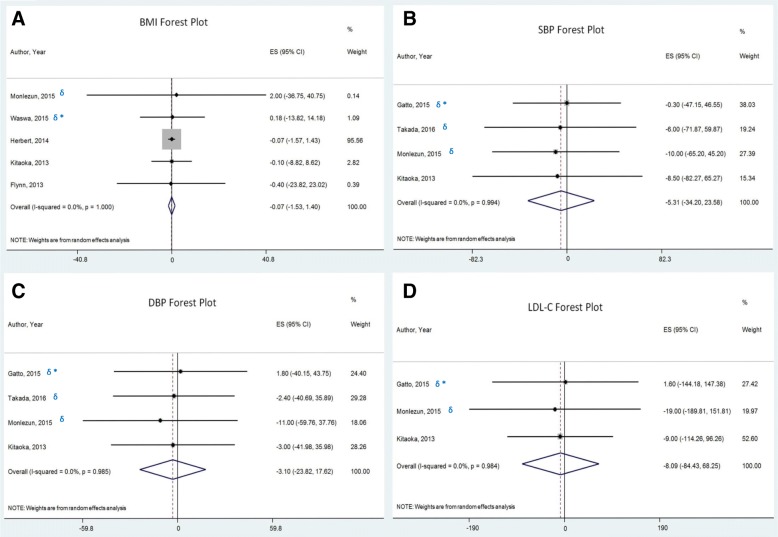
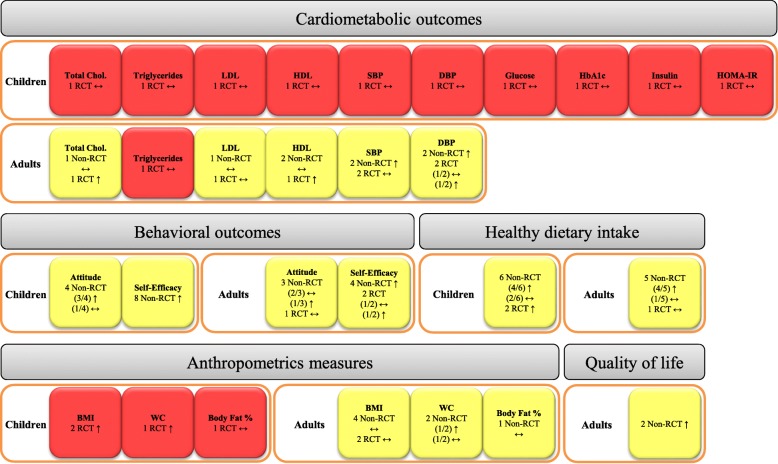
BACKGROUND: Culinary interventions (cooking classes) have been used to improve the quality of dietary intake and change behavior. The aim of this systematic review is to investigate the effects of culinary interventions on dietary intake and behavioral and cardiometabolic outcomes. METHODS: We conducted a systematic review of MEDLINE, EMBASE, Cochrane Central Register of Controlled Trials, Cochrane Database of Systematic Reviews, and Scopus for comparative studies that evaluated culinary interventions to a control group or baseline values. The intervention was defined as a cooking class regardless of its length or delivery approach. Studies included populations of children, healthy adults or adults with morbidities. The risk of bias was assessed using the Cochrane Risk of Bias tool and the Newcastle-Ottawa Scale. Outcomes were pooled using the random-effects model and descriptive statistics and depicted in an evidence map. Simple logistic regression was used to evaluate factors associated with intervention success. RESULTS: , 95% CI: -1.53, 1.40), systolic (- 5.31 mmHg, 95% CI: -34.2, 23.58) or diastolic blood pressure (- 3.1 mmHg, 95% CI: -23.82, 17.62) or LDL cholesterol (- 8.09 mg/dL, 95% CI: -84.43, 68.25). Culinary interventions were associated with improved attitudes, self-efficacy and healthy dietary intake in adults and children. We were unable to demonstrate whether the effect of a culinary intervention was modified by various characteristics of the intervention such as its delivery or intensity. Interventions with additional components such as education on nutrition, physical activity or gardening were particularly effective. CONCLUSIONS: Culinary interventions were not associated with a significant change in cardiometabolic risk factors, but were associated with improved attitudes, self-efficacy and a healthier dietary intake in adults and children.
Overview
The claims and statistics of this paper haven’t been checked yet.
Free: it reads the open-access text and checks the first 5 claims that cite a source we can check. Create a free account to check every claim.
Integrity signals
Registry
Cites
Statistics
Figures
Verification
Claims the paper makes
The claims and statistics of this paper haven’t been checked yet.
Free: it reads the open-access text and checks the first 5 claims that cite a source we can check. Create a free account to check every claim.
Claims other papers make about this one
Each is checked against this paper’s own text: does it say what the citing paper says it does?
The source backs part of the claim, not all of it — or backs it for a different population, condition or comparison.
In the citing paper
“Teaching kitchen curricula for clinicians and individuals has emerging evidence for enhancing nutrition knowledge, culinary skills, and dietary pattern change [[254], [255], [256]].”
From Nutritional priorities to support GLP-1 therapy for obesity: A joint advisory from the American College of Lifestyle Medicine, the American Society for Nutrition, the Obesity Medicine Association, and the Obesity Society (2025) · cites this paper as [254]
Experimental — accuracy not yet measuredThe source backs part of the claim, not all of it — or backs it for a different population, condition or comparison.
In the citing paper
“Teaching kitchen curricula for clinicians and individuals has emerging evidence for enhancing nutrition knowledge, culinary skills, and dietary pattern change [262, 263, 264].”
From Nutritional priorities to support GLP ‐1 therapy for obesity: A joint Advisory from the American College of Lifestyle Medicine, the American Society for Nutrition, the Obesity Medicine Association, and The Obesity Society (2025) · cites this paper as [262]
Experimental — accuracy not yet measuredThe source backs part of the claim, not all of it — or backs it for a different population, condition or comparison.
In the citing paper
“Systematic reviews assessing CM outcomes indicate short‐term improvements in cooking skills and nutrition intake [16, 17].”
From One‐Year Weight Loss Following a Remote Culinary Medicine Program: A Bi‐Center Randomized Controlled Trial (2026) · cites this paper as [16]
Experimental — accuracy not yet measuredThe source backs part of the claim, not all of it — or backs it for a different population, condition or comparison.
In the citing paper
“Among young adults without ID, cooking skills and meal preparation interventions have been shown to improve diet quality19, increase fruit and vegetable consumption20, and reduce fast food intake21.”
From A cooking skills intervention for long-term weight loss in young adults with intellectual disabilities: Rationale and design for a randomized trial (2026) · cites this paper as [19]
Experimental — accuracy not yet measured
Self-check
Percentages, sums and reported differences re-computed from the paper’s own numbers.
The self-check needs the paper’s full text.
Citations
Cites
Preferred Reporting Items for Systematic Reviews and Meta-Analyses: the PRISMA statement
Moher, D., Liberati, A., Tetzlaff, J., Altman, D. G., & for the PRISMA Group (2009) · BMJ · doi:10.1136/bmj.b2535 · Cited by 83,823
Measuring inconsistency in meta-analyses
Higgins, J. P. T., Thompson, S. G., Deeks, J. J., & Altman, D. G. (2003) · BMJ · doi:10.1136/bmj.327.7414.557 · Cited by 63,139
Preferred reporting items for systematic reviews and meta-analyses: the PRISMA Statement.
(2009) · PubMed Central · Cited by 44,859
Meta-analysis in clinical trials
DerSimonian, R., & Laird, N. (1986) · Controlled Clinical Trials · doi:10.1016/0197-2456(86)90046-2 · Cited by 39,552
Quantifying heterogeneity in a meta‐analysis
Higgins, J. P. T., & Thompson, S. G. (2002) · Statistics in Medicine · doi:10.1002/sim.1186 · Cited by 36,763
(2014) · Medical Entomology and Zoology · Cited by 17,633
Heart Disease and Stroke Statistics—2017 Update: A Report From the American Heart Association
Benjamin, E. J., Blaha, M. J., Chiuve, S. E., Cushman, M., Das, S. R., Deo, R., de Ferranti, S. D., Floyd, J., Fornage, M., Gillespie, C., et al. (2017) · Circulation · doi:10.1161/cir.0000000000000485 · Cited by 12,591
Rating the certainty in evidence in the absence of a single estimate of effect
Murad, M. H., Mustafa, R. A., Schünemann, H. J., Sultan, S., & Santesso, N. (2017) · Evidence Based Medicine · doi:10.1136/ebmed-2017-110668 · Cited by 717
Self-citationMiake-Lye, I. M., Hempel, S., Shanman, R., & Shekelle, P. G. (2016) · Systematic Reviews · doi:10.1186/s13643-016-0204-x · Cited by 660
Schwingshackl, L., Schwedhelm, C., Hoffmann, G., Lampousi, A.-M., Knüppel, S., Iqbal, K., Bechthold, A., Schlesinger, S., & Boeing, H. (2017) · The American Journal of Clinical Nutrition · doi:10.3945/ajcn.117.153148 · Cited by 600 · cited 1×
“and nuts and less red meat and sweets/desserts [1].”
BackgroundVan Horn, L., Carson, J. A. S., Appel, L. J., Burke, L. E., Economos, C., Karmally, W., Lancaster, K., Lichtenstein, A. H., Johnson, R. K., Thomas, R. J., et al. (2016) · Circulation · doi:10.1161/cir.0000000000000462 · Cited by 430
Murad, M. H. (2017) · Mayo Clinic Proceedings · doi:10.1016/j.mayocp.2017.01.001 · Cited by 386
Self-citationMills, S., Brown, H., Wrieden, W., White, M., & Adams, J. (2017) · International Journal of Behavioral Nutrition and Physical Activity · doi:10.1186/s12966-017-0567-y · Cited by 310
Mills, S., White, M., Brown, H., Wrieden, W., Kwasnicka, D., Halligan, J., Robalino, S., & Adams, J. (2017) · Appetite · doi:10.1016/j.appet.2016.12.022 · Cited by 300
McKellar, G., Morrison, E., McEntegart, A., Hampson, R., Tierney, A., Mackle, G., Scoular, J., Scott, J. A., & Capell, H. A. (2007) · Annals of the Rheumatic Diseases · doi:10.1136/ard.2006.065151 · Cited by 187
Cooking at Home: A Strategy to Comply With U.S. Dietary Guidelines at No Extra Cost
Tiwari, A., Aggarwal, A., Tang, W., & Drewnowski, A. (2017) · American Journal of Preventive Medicine · doi:10.1016/j.amepre.2017.01.017 · Cited by 183
Expanding Children’s Food Experiences: The Impact of a School-Based Kitchen Garden Program
Gibbs, L. F., Staiger, P. K., Johnson, B., Block, K., Macfarlane, S., Gold, L. H., Kulas, J., Townsend, M., Long, C. M., & Ukoumunne, O. C. (2013) · Journal of Nutrition Education and Behavior · doi:10.1016/j.jneb.2012.09.004 · Cited by 179
Cooking Classes Outperform Cooking Demonstrations for College Sophomores
Levy, J., & Auld, G. (2004) · Journal of Nutrition Education and Behavior · doi:10.1016/s1499-4046(06)60234-0 · Cited by 168
Liquori, T., Koch, P. D., Ruth Contento, I., & Castle, J. (1998) · Journal of Nutrition Education · doi:10.1016/s0022-3182(98)70339-5 · Cited by 155
When chefs adopt a school? An evaluation of a cooking intervention in English primary schools
Caraher, M., Seeley, A., Wu, M., & Lloyd, S. (2012) · Appetite · doi:10.1016/j.appet.2012.11.007 · Cited by 154
Non-pharmacological treatment of depression: a systematic review and evidence map
Farah, W. H., Alsawas, M., Mainou, M., Alahdab, F., Farah, M. H., Ahmed, A. T., Mohamed, E. A., Almasri, J., Gionfriddo, M. R., Castaneda-Guarderas, A., et al. (2016) · Evidence Based Medicine · doi:10.1136/ebmed-2016-110522 · Cited by 141
Self-citationCunningham-Sabo, L., & Lohse, B. (2013) · Childhood Obesity · doi:10.1089/chi.2013.0076 · Cited by 137
Cunningham-Sabo, L. D., & Lohse, B. (2013) · Journal of Nutrition Education and Behavior · doi:10.1016/j.jneb.2013.09.007 · Cited by 116
Waswa, L. M., Jordan, I., Herrmann, J., Krawinkel, M. B., & Keding, G. B. (2015) · Public Health Nutrition · doi:10.1017/s1368980015000920 · Cited by 108
Wider impacts of a 10-week community cooking skills program - Jamie’s Ministry of Food, Australia
Herbert, J., Flego, A., Gibbs, L. F., Waters, E., Swinburn, B. A., Reynolds, J., & Moodie, M. (2014) · BMC Public Health · doi:10.1186/1471-2458-14-1161 · Cited by 103
Gatto, N. M., Martinez, L. C., Spruijt‐Metz, D., & Davis, J. N. (2017) · Pediatric Obesity · doi:10.1111/ijpo.12102 · Cited by 95
Flynn, M. M., Reinert, S. E., & Schiff, A. R. (2013) · Journal of Hunger & Environmental Nutrition · doi:10.1080/19320248.2012.758066 · Cited by 84
Chen, Q., Goto, K., Wolff, C., Bianco‐Simeral, S., Gruneisen, K., & Gray, K. (2014) · Appetite · doi:10.1016/j.appet.2014.05.009 · Cited by 80
Newman, V. A., Thomson, C. A., Rock, C. L., Flatt, S. W., Kealey, S., Bardwell, W. A., Caan, B. J., & Pierce, J. P. (2005) · Journal of the American Dietetic Association · doi:10.1016/j.jada.2004.12.008 · Cited by 80 · cited 1×
“For instance, Newman, 2005 [23] found a significant increase in total daily vegetable, fruit and fiber intake, as well as a significant decrease in fat intake after a cooking classes intervention.”
BackgroundMonlezun, D. J., Kasprowicz, E., Tosh, K. W., Nix, J., Urday, P., Tice, D., Sarris, L., & Harlan, T. S. (2015) · Diabetes Research and Clinical Practice · doi:10.1016/j.diabres.2015.05.007 · Cited by 76
Cooking Schools Improve Nutrient Intake Patterns of People with Type 2 Diabetes
Archuleta, M., VanLeeuwen, D., Halderson, K., Jackson, K., Bock, M. A., Eastman, W., Powell, J., Titone, M., Marr, C., & Wells, L. M. (2012) · Journal of Nutrition Education and Behavior · doi:10.1016/j.jneb.2011.10.006 · Cited by 67
Robson, S. M., Stough, C. C. O., & Stark, L. J. (2016) · Appetite · doi:10.1016/j.appet.2016.01.021 · Cited by 55
D’Adamo, C. R., McArdle, P. F., Balick, L., Peisach, E., Ferguson, T., Diehl, A., Bustad, K., Bowden, B., Pierce, B. A., & Berman, B. (2016) · American Journal of Health Promotion · doi:10.1177/0890117116646333 · Cited by 52
Curtis, P. J., Adamson, A. J., & Mathers, J. C. (2012) · British Journal of Nutrition · doi:10.1017/s0007114511005101 · Cited by 50
ROCHE, M. L., Marquis, G. S., Gyorkos, T. W., Blouin, B., Sarsoza, J., & Kuhnlein, H. V. (2016) · Journal of Nutrition Education and Behavior · doi:10.1016/j.jneb.2016.10.007 · Cited by 50
Burrows, T. L., Lucas, H., Morgan, P. J., Bray, J., & Collins, C. E. (2015) · Canadian Journal of Dietetic Practice and Research · doi:10.3148/cjdpr-2015-005 · Cited by 44
When life gives you lemons: The effectiveness of culinary group intervention among cancer patients
Barak-Nahum, A., Haim, L. B., & Ginzburg, K. (2016) · Social Science & Medicine · doi:10.1016/j.socscimed.2016.07.046 · Cited by 39
Zahr, R., & Sibeko, L. N. (2017) · Canadian Journal of Dietetic Practice and Research · doi:10.3148/cjdpr-2016-030 · Cited by 37
The Impact of CookshopTM on the Dietary Habits and Attitudes of Fifth Graders
Quinn, L. J., Horacek, T. M., & Castle, J. (2003) · Topics in Clinical Nutrition · doi:10.1097/00008486-200301000-00006 · Cited by 34
Takada, T., Imamoto, M., Fukuma, S., Yamamoto, Y., Sasaki, S., Uchida, M., Miura, Y., Shimizu, S., Niihata, K., & Fukuhara, S. (2016) · Public Health · doi:10.1016/j.puhe.2016.07.005 · Cited by 32
Warmin, A., Sharp, J. L., & Condrasky, M. D. (2012) · Topics in Clinical Nutrition · doi:10.1097/tin.0b013e3182542417 · Cited by 28
Harmon, B. E., Smith, N. R., Pirkey, P., Beets, M. W., & Blake, C. E. (2015) · American Journal of Health Education · doi:10.1080/19325037.2015.1056862 · Cited by 26
Watt, T. T., Appel, L., Lopez, V., Flores, B., & Lawhon, B. (2015) · Journal of Racial and Ethnic Health Disparities · doi:10.1007/s40615-015-0102-2 · Cited by 26
Kitaoka, K., Nagaoka, J., Matsuoka, T., Shigemura, C., Harada, K., Aoi, W., Wada, S., Asano, H., Sakane, N., & Higashi, A. (2012) · Clinical and Experimental Hypertension · doi:10.3109/10641963.2012.702830 · Cited by 26
Culinary nutrition education for undergraduate nutrition dietetics students
Kerrison, D. A., Condrasky, M. D., & Sharp, J. L. (2017) · British Food Journal · doi:10.1108/bfj-09-2016-0437 · Cited by 26
Sørensen, L. B., Greve, T., Kreutzer, M., Pedersen, U., Nielsen, C. M., Toubro, S., & Astrup, A. (2011) · Canadian Journal of Dietetic Practice and Research · doi:10.3148/72.4.2011.181 · Cited by 12
Research works printed but not linked: 1
- Higgins J Green S Cochrane handbook for systematic reviews of interventions version 5.1.0 2011
Cited by
Mozaffarian, D., Agarwal, M., Aggarwal, M., Alexander, L., Apovian, C. M., Bindlish, S., Bonnet, J., Butsch, W. S., Christensen, S., Gianos, E., et al. (2025) · The American Journal of Clinical Nutrition · doi:10.1016/j.ajcnut.2025.04.023 · Cited by 154
“Teaching kitchen curricula for clinicians and individuals has emerging evidence for enhancing nutrition knowledge, culinary skills, and dietary pattern change [254 – 256].”
Mozaffarian, D., Agarwal, M., Aggarwal, M., Alexander, L., Apovian, C. M., Bindlish, S., Bonnet, J., Butsch, W. S., Christensen, S., Gianos, E., et al. (2025) · Obesity · doi:10.1002/oby.24336 · Cited by 143
“Teaching kitchen curricula for clinicians and individuals has emerging evidence for enhancing nutrition knowledge, culinary skills, and dietary pattern change [262 – 264].”
Charlton, K., Comerford, T., Deavin, N., & Walton, K. (2021) · Public Health Nutrition · doi:10.1017/s1368980020004024 · Cited by 90
“These benefits are coherent with similar research on culinary interventions in other settings(90,91).”
ResultTani, Y., Fujiwara, T., & Kondo, K. (2020) · International Journal of Behavioral Nutrition and Physical Activity · doi:10.1186/s12966-020-00986-9 · Cited by 81
“A systematic review demonstrated associations between culinary interventions and improved dietary factors, including attitudes, self-efficacy, and healthy dietary intake among adults [19].”
BackgroundFarmer, N. M., & Cotter, E. W. (2021) · Frontiers in Psychology · doi:10.3389/fpsyg.2021.560578 · Cited by 107
Metadata
- Authors
- Hasan, B., Thompson, W. G., Almasri, J., Wang, Z., Lakis, S., Prokop, L. J., Hensrud, D. D., Frie, K. S., Wirtz, M. J., Murad, A. L., Ewoldt, J. S., & Murad, M. H.
- Affiliations
- Mayo Clinic (US)
- Corresponding author
- Murad, M. Hassan
- ORCID
- Venue
- BMC Nutrition
- Published
- 2019-05-10
- Volume
- 5
- Issue
- 1
- Pages
- 29-29
- ISSN
- 2055-0928 (ISSN-L)
- PMC
- PMC7050805
- OpenAlex
- W2947461269
- Cited by
- 162
- References
- 47
- Citations by year
- 2026: 20 · 2025: 35 · 2024: 40 · 2023: 25 · 2022: 15 · 2021: 14 · 2020: 13
- FWCI
- 1.43
- Type
- journal article
- Language
- en
- Open access
- gold
- doi.org
- Licence
- cc-by
- creativecommons.org/licenses/by/4.0/ (tdm)
- Locations
- BMC Nutrition (publishedVersion, cc-by)
- Europe PMC (PubMed Central) (publishedVersion, cc-by)
- PubMed Central (publishedVersion, cc-by)
- PubMed (publishedVersion)
- DOAJ (DOAJ: Directory of Open Access Journals) (submittedVersion, cc-by-sa)
- Funders
- American Heart Association
- Topics
- Health Sciences › Nursing › Nutrition and Dietetics › Nutrition, Health and Food Behavior
- Health Sciences › Medicine › Public Health, Environmental and Occupational Health › Nutritional Studies and Diet
- Health Sciences › Medicine › Public Health, Environmental and Occupational Health › Obesity, Physical Activity, Diet
- Keywords
- cooking classes, dietary intake, dietary behavior change, cardiometabolic risk factors, blood pressure, LDL cholesterol, self-efficacy, nutrition education, gardening, children, adults
About these checks
Registry, retraction, Cites and statistics results are computed, not judged, with one exception: a printed reference that no index lists is read once by a model before it counts as a citation error. Claims are extracted by a model and kept only when their quote appears verbatim in the text; each cited source is then checked, with a model’s help, for whether it says what the claim relies on. Those verdicts can be wrong — read the claim’s quote and the cited source before relying on one.
Statistics and arithmetic are recomputed, not judged.
Confidence bands are shown only for fields calibrated on our annotated test set. None is calibrated yet, so no band is shown.
What counts as a claim ›How we measure confidence ›How we check this ›
Are you an author, or do you see a problem with this page? Request a review
Data sources
Bibliographic data: Semantic Scholar, OpenAlex, Crossref.
Contains information from the Semantic Scholar Academic Graph Datasets, made available under the ODC Attribution License (ODC-BY 1.0).
Semantic Scholar’s data is described in: Kinney, R., et al. (2023). The Semantic Scholar Open Data Platform. arXiv:2301.10140.
