

Reducing stigma among healthcare providers to improve mental health services (RESHAPE): protocol for a pilot cluster randomized controlled trial of a stigma reduction intervention for training primary healthcare workers in Nepal
Open accessThe DOI matches its Crossref record; 107 of the 108 references it cites were found in a registry or an index.
Abstract
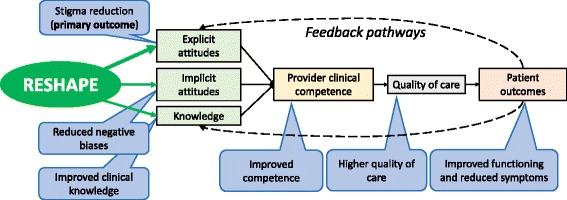
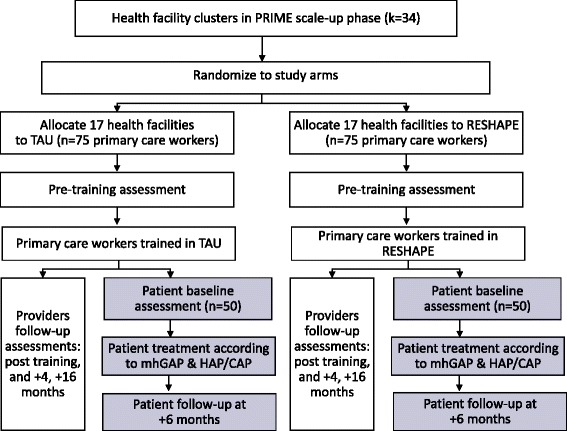
Non-specialist healthcare providers, including primary and community healthcare workers, in low- and middle-income countries can effectively treat mental illness. However, scaling-up mental health services within existing health systems has been limited by barriers such as stigma against people with mental illness. Therefore, interventions are needed to address attitudes and behaviors among non-specialists. Aimed at addressing this gap, REducing Stigma among HealthcAre Providers to ImprovE mental health services (RESHAPE) is an intervention in which social contact with mental health service users is added to training for non-specialist healthcare workers integrating mental health services into primary healthcare. This protocol describes a mixed methods pilot and feasibility study in primary care centers in Chitwan, Nepal. The qualitative component will include key informant interviews and focus group discussions. The quantitative component consists of a pilot cluster randomized controlled trial (c-RCT), which will establish parameters for a future effectiveness study of RESHAPE compared to training as usual (TAU). Primary healthcare facilities (the cluster unit, k = 34) will be randomized to TAU or RESHAPE. The direct beneficiaries of the intervention are the primary healthcare workers in the facilities (n = 150); indirect beneficiaries are their patients (n = 100). The TAU condition is existing mental health training and supervision for primary healthcare workers delivered through the Programme for Improving Mental healthcarE (PRIME) implementing the mental health Gap Action Programme (mhGAP). The primary objective is to evaluate acceptability and feasibility through qualitative interviews with primary healthcare workers, trainers, and mental health service users. The secondary objective is to collect quantitative information on health worker outcomes including mental health stigma (Social Distance Scale), clinical knowledge (mhGAP), clinical competency (ENhancing Assessment of Common Therapeutic factors, ENACT), and implicit attitudes (Implicit Association Test, IAT), and patient outcomes including stigma-related barriers to care, daily functioning, and symptoms. The pilot and feasibility study will contribute to refining recommendations for implementation of mhGAP and other mental health services in primary healthcare settings in low-resource health systems. The pilot c-RCT findings will inform an effectiveness trial of RESHAPE to advance the evidence-base for optimal approaches to training and supervision for non-specialist providers. ClinicalTrials.gov identifier, NCT02793271
Overview
The claims and statistics of this paper haven’t been checked yet.
Free: it reads the open-access text and checks the first 5 claims that cite a source we can check. Create a free account to check every claim.
Integrity signals
Registry
Cites
Statistics
Figures
Verification
Claims the paper makes
The claims and statistics of this paper haven’t been checked yet.
Free: it reads the open-access text and checks the first 5 claims that cite a source we can check. Create a free account to check every claim.
Claims other papers make about this one
Each is checked against this paper’s own text: does it say what the citing paper says it does?
The check wasn’t confident either way, so it gives no verdict — never disputed.
In the citing paper
“While the SDS does not have validated cut-offs, scores of 6 to 10, 11–16, and ≥17 typically reflect low, moderate and high levels of stigma respectively (Kohrt et al., 2018).”
From Siyakhana: A Hybrid Type 2 Effectiveness-Implementation Stepped-Wedge Trial to Reduce Stigma Towards Substance Use and Depression Among Community Health Workers in HIV/TB Care in South Africa (2025) · cites this paper as Kohrt et al., 2018
Experimental — accuracy not yet measured
Self-check
Percentages, sums and reported differences re-computed from the paper’s own numbers.
The self-check needs the paper’s full text.
Citations
Cites
The PHQ-9: Validity of a brief depression severity measure
Kroenke, K., Spitzer, R. L., & Williams, J. B. W. (2001) · Journal of General Internal Medicine · doi:10.1046/j.1525-1497.2001.016009606.x · Cited by 44,910
Three Approaches to Qualitative Content Analysis
Hsieh, H.-F., & Shannon, S. E. (2005) · Qualitative Health Research · doi:10.1177/1049732305276687 · Cited by 44,601 · cited 1×
“[102] for themes of cultural acceptability, experience”
Tong, A., Sainsbury, P., & Craig, J. (2007) · International Journal for Quality in Health Care · doi:10.1093/intqhc/mzm042 · Cited by 42,509 · cited 1×
“Following the Consolidated Criteria for Reporting Qualitative Studies (COREQ), we will document the process according to the 32-item checklist [104].”
The cochrane database of systematic reviews
Geddes, J. (1996) · Journal of Psychosomatic Research · doi:10.1016/s0022-3999(96)90063-x · Cited by 5,989
Cochrane Database of Systematic Reviews
(2011) · Progress in Neurology and Psychiatry · doi:10.1002/pnp.208 · Cited by 4,667
A tutorial on pilot studies: the what, why and how
Thabane, L., Ma, J., Chu, R., Cheng, J., Ismaila, A., Rios, L. P., Robson, R., Thabane, M., Giangregorio, L., & Goldsmith, C. H. (2010) · BMC Medical Research Methodology · doi:10.1186/1471-2288-10-1 · Cited by 3,384
Handbook of Psychotherapy and Behavior Change
Sanford, E. F. (1988) · American Journal of Psychotherapy · doi:10.1176/appi.psychotherapy.1988.42.1.153 · Cited by 2,567
Grand challenges in global mental health
Collins, P. Y., Patel, V., Joestl, S. S., March, D., Insel, T. R., Daar, A. S., Bordin, I. A., Costello, E. J., Durkin, M., Fairburn, C., et al. (2011) · Nature · doi:10.1038/475027a · Cited by 2,043
Self-citationEnabling the implementation of evidence based practice: a conceptual framework.
Kitson, A., Harvey, G., & McCormack, B. (1998) · Quality in Health Care · doi:10.1136/qshc.7.3.149 · Cited by 1,985
The role and interpretation of pilot studies in clinical research
Leon, A. C., Davis, L. L., & Kraemer, H. C. (2011) · Journal of Psychiatric Research · doi:10.1016/j.jpsychires.2010.10.008 · Cited by 1,917
Research works printed but not linked: 5
- Nyblade L Disentangling stigma to find entry points for intervention Sex Health Exch 2016 2 5
- Frank JD, Frank JB: Persuasion and healing: a comparative study of psychotherapy, third edn. Baltimore: Johns Hopkins University Press; 1991.
- Central Bureau of Statistics Statistical year book of Nepal-2013 Ramshahpath, Thapathali, Kathmandu 2013 Nepal Government of Nepal, National Planning Commission Secretariat
- WHO mhGAP intervention guide for mental, neurological and substance-use disorders in non-specialized health settings: mental health Gap Action Programme (mhGAP) 2010 Geneva WHO Press 83 23741783
- WHO Mental health action plan 2013–2020 2013 Geneva World Health Organization
Cited by
Kohrt, B. A., Asher, L., Bhardwaj, A., Fazel, M., Jordans, M. J. D., Mutamba, B. B., Nadkarni, A., Pedersen, G. A., Singla, D. R., & Patel, V. (2018) · International Journal of Environmental Research and Public Health · doi:10.3390/ijerph15061279 · Cited by 347
“One approach has been training service users using a participatory photography research technique known as PhotoVoice and, following the training of service users, having them participate in training primary care and community health workers as well as engaging in theory of change workshops to design community and pri…”
MethodSelf-citationvan Ginneken, N., Chin, W. Y., Lim, Y. C., Ussif, A., Singh, R., Shahmalak, U., Purgato, M., Rojas-García, A., Uphoff, E., McMullen, S., et al. (2021) · Cochrane Database of Systematic Reviews · doi:10.1002/14651858.cd009149.pub3 · Cited by 188
Kohrt, B. A., Turner, E. L., Rai, S., Bhardwaj, A., Sikkema, K. J., Adelekun, A., Dhakal, M., Luitel, N. P., Lund, C., Patel, V., et al. (2020) · Social Science & Medicine · doi:10.1016/j.socscimed.2020.112852 · Cited by 177
“A controlled trial comparing with standardized training against the training plus RESHAPE has been completed and results will be described in a subsequent publication (Kohrt et al., 2018a).”
BackgroundMethodInfluentialSelf-citationRai, S., Gurung, D., Kaiser, B. N., Sikkema, K. J., Dhakal, M., Bhardwaj, A., Tergesen, C., & Kohrt, B. A. (2018) · Families, Systems, & Health · doi:10.1037/fsh0000338 · Cited by 128
“The program in Nepal to train service users and engage them as cofacilitators is entitled REducing Stigma among HealthcAre ProvidErs (RESHAPE, ClinicalTrials.gov identifier: NCT02793271; for the full trial protocol see Kohrt et al., 2018).”
InfluentialSelf-citationHeim, E., Kohrt, B. A., Koschorke, M., Milenova, M., & Thornicroft, G. (2020) · Epidemiology and Psychiatric Sciences · doi:10.1017/s2045796018000458 · Cited by 99
“The protocol for such a study has been published recently (Kohrt et al., 2018).”
Self-citationLi, J., Fan, Y., Zhong, H.-Q., Duan, X.-L., Chen, W., Evans-Lacko, S., & Thornicroft, G. (2019) · International Journal of Mental Health Systems · doi:10.1186/s13033-018-0259-2 · Cited by 98
Kohrt, B. A., Jordans, M. J. D., Turner, E. L., Rai, S., Gurung, D., Dhakal, M., Bhardwaj, A., Lamichhane, J., Singla, D. R., Lund, C., et al. (2021) · JAMA Network Open · doi:10.1001/jamanetworkopen.2021.31475 · Cited by 87
Self-citationPsychological care in low-resource settings for adolescents
Galagali, P. M., & Brooks, M. J. (2020) · Clinical Child Psychology and Psychiatry · doi:10.1177/1359104520929741 · Cited by 100
“It is likely that stigma against mental disorders among non-mental health specialist workers plays a role in this, as well as lack of comfort, lack of training, and potentially unclear policies and guidelines (Kohrt et al., 2018).”
BackgroundWhy we heal: The evolution of psychological healing and implications for global mental health
Kohrt, B. A., Ottman, K. E., Panter‐Brick, C., Konner, M. J., & Patel, V. (2020) · Clinical Psychology Review · doi:10.1016/j.cpr.2020.101920 · Cited by 104
Self-citationVaishnav, M., Javed, A., Gupta, S., Kumar, V., Vaishnav, P., Kumar, A., Salih, H., Levounis, P., Ng, B., Alkhoori, S. A., et al. (2023) · Indian Journal of Psychiatry · doi:10.4103/indianjpsychiatry.indianjpsychiatry_667_23 · Cited by 99
“[10,11] A sense of paternalistic approach is more common among mental health professionals and authorities, which may sometimes be necessary/acceptable by people to provide medical health services.”
Koschorke, M., Oexle, N., Ouali, U., Cherian, A. V., Deepika, V., Mendon, G. B., Gurung, D., Kondrátová, L., Müller, M., Lanfredi, M., et al. (2021) · PLoS ONE · doi:10.1371/journal.pone.0258729 · Cited by 93
“Similarly, for service users involved in stigma interventions [15, 21, 22], questions focused around their experiences of participating in mhGAP trainings with PCPs.”
BackgroundSelf-citationKohrt, B. A., Mutamba, B. B., Luitel, N. P., Gwaikolo, W., Onyango Mangen, P., Nakku, J., Rose, K., Cooper, J., Jordans, M. J. D., & Baingana, F. (2018) · International Review of Psychiatry · doi:10.1080/09540261.2019.1566116 · Cited by 83
“For attitudes, there is a range of self-report measures as well as growing incorporation of implicit association measures that do not suffer from social desirability bias in scoring (Kohrt et al., 2018).”
BackgroundSelf-citationGurung, D., Poudyal, A., Wang, Y. L., Neupane, M., Bhattarai, K., Wahid, S. S., Aryal, S., Heim, E., Gronholm, P. C., Thornicroft, G., et al. (2022) · Epidemiology and Psychiatric Sciences · doi:10.1017/s2045796021000809 · Cited by 79
“Maternal mental health in primary care in five low- and middle-income countries: a situational analysis (Baron et al., 2016) Mothers with mental health problems NA Cross-sectional situation analysis using mixed methods Public stigma and health worker stigma NA NA 3 Pathways and access to mental health care services by…”
BackgroundInfluentialSelf-citationKaiser, B. N., Varma, S., Carpenter-Song, E., Sareff, R., Rai, S., & Kohrt, B. A. (2020) · Psychiatric Rehabilitation Journal · doi:10.1037/prj0000384 · Cited by 62
“As a modification of this training, (Kohrt et al., 2018; Rai et al., 2018) tested an approach in which service users delivered portions of the training, with a focus on sharing their recovery narratives, with the explicit goal of reducing stigma among providers.”
MethodSelf-citationTergesen, C., Gurung, D., Dhungana, S., Risal, A., Basel, P. L., Tamrakar, D., Amatya, A., Park, L. P., & Kohrt, B. A. (2021) · International Journal of Environmental Research and Public Health · doi:10.3390/ijerph18042143 · Cited by 58
“There have also been growing efforts to reduce stigma through in-person social contact interventions embedded in mhGAP-IG trainings [33-36].”
BackgroundSelf-citationHaas, A. D., Ruffieux, Y., van den Heuvel, L. L., Lund, C., Boulle, A., Euvrard, J., Orrell, C., Prozesky, H. W., Tiffin, N., Lovero, K. L., et al. (2020) · The Lancet Global Health · doi:10.1016/s2214-109x(20)30279-5 · Cited by 57
Self-citationNadeem, F., Sadiq, A., Raziq, A., Iqbal, Q., Haider, S., Saleem, F., & Bashaar, M. (2021) · Journal of Multidisciplinary Healthcare · doi:10.2147/jmdh.s338104 · Cited by 66
“However, with a least known disease, like the COVID-19, health-care professionals face multiple challenges because of the limited evidence-based information, circulating myths, and the stigma developed by society.(8,9) Therefore, healthcare’s capacity to respond to a pandemic plays a key role in disease management.”
BackgroundTraditional Healers and Mental Health in Nepal: A Scoping Review
Pham, T. V., Kaiser, B. N., Koirala, R., Maharjan, S. M., Upadhaya, N., Franz, L., & Kohrt, B. A. (2020) · Culture Medicine and Psychiatry · doi:10.1007/s11013-020-09676-4 · Cited by 57
Self-citationHook, K., & Bogdanov, S. (2021) · The Lancet Regional Health - Europe · doi:10.1016/j.lanepe.2021.100182 · Cited by 50
“stigma on mental illness [51], as well as improved community education on mental health awareness and self-care.”
BackgroundRasmussen, J. D., Kakuhikire, B., Baguma, C., Ashaba, S., Cooper‐Vince, C. E., Perkins, J. M., Bangsberg, D. R., & Tsai, A. C. (2019) · PLoS Medicine · doi:10.1371/journal.pmed.1002908 · Cited by 48
Gruner, D., Magwood, O., Bair, L., Duff, L., Adel, S., & Pottie, K. C. (2020) · International Journal of Environmental Research and Public Health · doi:10.3390/ijerph17134618 · Cited by 47
Ryan, G. K., Semrau, M., Nkurunungi, E., & Mpango, R. S. (2019) · Current Opinion in Psychiatry · doi:10.1097/yco.0000000000000506 · Cited by 48
Traditional and biomedical care pathways for mental well‐being in rural Nepal
Pham, T. V., Koirala, R., & Kohrt, B. A. (2021) · International Journal of Mental Health Systems · doi:10.1186/s13033-020-00433-z · Cited by 45
“For individuals who view mental illness in non-biomedical or stigmatized terms, many will never seek treatment [44].”
BackgroundSelf-citationJordans, M. J. D., Luitel, N. P., Lund, C., & Kohrt, B. A. (2020) · Psychiatric Services · doi:10.1176/appi.ps.201900377 · Cited by 39
“Furthermore, we recommend developing, evaluating and comparing other low-cost demand generating strategies, for example stigma reduction (31), systematic awareness raising (32), or invitation cards (23), alongside efforts to scale up mental health care in LMICs.”
MethodSelf-citationAlarcão, V., Stefanovska–Petkovska, M., Virgolino, A., Santos, O., Ribeiro, S., da Costa, A. C. J. S., Nogueira, P., Pascoal, P. M., Pintassilgo, S. C., & Machado, F. L. (2019) · Reproductive Health · doi:10.1186/s12978-019-0795-5 · Cited by 37
“These facilities are important since they are part of the government health care and constitute the first and most important portals for care of both domestic and immigrant populations [51, 52].”
BackgroundCulture, Mind, and Brain: Emerging Concepts, Models, and Applications
Kirmayer, L. J., Worthman, C. M., Kitayama, S., Lemelson, R., & Cummings, C. (2020) · Cambridge University Press eBooks · doi:10.1017/9781108695374 · Cited by 32
Culture in Mind – An Enactivist Account: Not Cognitive Penetration but Cultural Permeation
Hutto, D. D., Gallagher, S., Ilundáin‐Agurruza, J., & Hipólito, I. (2020) · Cambridge University Press eBooks · doi:10.1017/9781108695374.009 · Cited by 40
Integrating Mental Health into Maternal Health Care in Rural Mali: A Qualitative Study
Lasater, M. E., Murray, S. M., Keita, M., Souko, F., Surkan, P. J., Warren, N., WINCH, P. J., Ba, A., Doumbia, S., & Bass, J. (2020) · Journal of Midwifery & Women s Health · doi:10.1111/jmwh.13184 · Cited by 33
Abayneh, S., Lempp, H. K., Rai, S., Girma, E., Getachew, M., Alem, A., Kohrt, B. A., & Hanlon, C. (2022) · BMC Health Services Research · doi:10.1186/s12913-022-08290-x · Cited by 28
“Methods: REducing Stigma among HealthcAreProvidErs (RESHAPE) is a training curriculum for service users, their caregivers and aspirational health workers, which uses PhotoVoice methodology, to prepare them in participation of mental health systems strengthening in LMICs.”
BackgroundMethodSelf-citationRai, S., Gurung, D., & Kohrt, B. A. (2023) · Cambridge Prisms Global Mental Health · doi:10.1017/gmh.2023.73 · Cited by 29
Self-citationSangraula, M., van’t Hof, E., Luitel, N. P., Turner, E. L., Marahatta, K., Nakao, J. H., van Ommeren, M., Jordans, M. J. D., & Kohrt, B. A. (2018) · Pilot and Feasibility Studies · doi:10.1186/s40814-018-0315-3 · Cited by 25
“We will employ statistical analyses comparable to those used in another pilot c-RCT being conducted in Nepal [39].”
MethodSelf-citationKohrt, B. A., Turner, E. L., Gurung, D., Wang, X., Neupane, M., Luitel, N. P., Kartha, M. R., Poudyal, A., Singh, R., Rai, S., et al. (2022) · Implementation Science · doi:10.1186/s13012-022-01202-x · Cited by 24
“strategy To address this research gap in stigma reduction when training PCPs in mental healthcare, we designed an intervention to support the engagement of people with lived experience of mental illness (PWLE) in the delivery of mhGAP-IG training [31].”
MethodSelf-citationPerceived Stigma Regarding Mental Illnesses among Rural Adults in Vellore, Tamil Nadu, South India
Guttikonda, A., Shajan, A. M., Hephzibah, A., Jones, A. S., Susanna, J., Neethu, S., Poornima, S., Jala, S. M., Arputharaj, D., John, D., et al. (2019) · Indian Journal of Psychological Medicine · doi:10.4103/ijpsym.ijpsym_297_18 · Cited by 25
Henderson, C., Ouali, U., Bakolis, I., Berbeche, N., Bhattarai, K., Brohan, E., Cherian, A. V., Girma, E., Gronholm, P. C., Gurung, D., et al. (2022) · Pilot and Feasibility Studies · doi:10.1186/s40814-022-01208-8 · Cited by 23
“Although some single-site studies have been carried out with mental health professionals in middle-income countries [40, 41], to date, work in low-income countries on health care provider stigma has focused mainly on primary care [42] and medical students [43].”
Gendron, M., Mesquita, B., & Barrett, L. F. (2020) · Culture, Mind, and Brain · doi:10.1017/9781108695374.010 · Cited by 20
Ottman, K. E., Wahid, S. S., Flynn, R., Momodu, O., Fisher, H. L., Kieling, C., Mondelli, V., Adewuya, A. O., & Kohrt, B. A. (2022) · SSM - Mental Health · doi:10.1016/j.ssmmh.2022.100093 · Cited by 22
Self-citationMathias, K. R., Jain, S., Fraser, R., Davis, M., Kimijima-Dennemeyer, R. M., Pillai, P., Deshpande, S. N., & Wolters, M. K. (2023) · PLOS Global Public Health · doi:10.1371/journal.pgph.0001736 · Cited by 18
“They also offer a way to raise mental health awareness within communities which is particularly important in South Asian settings where social stigma limits access to mental health services [18, 20, 21].”
BackgroundHook, K., Ametaj, A., Cheng, Y., Serba, E. G., Henderson, D. C., Hanlon, C., & Ng, L. C. (2021) · Psychotherapy · doi:10.1037/pst0000364 · Cited by 18
“Most LMICs have few trained mental health specialists (Kakuma et al., 2011), resulting in psychological care often being delivered via task-sharing (i.e., having providers without specialized mental health training deliver mental health interventions; Padmanathan & De Silva, 2013; Van Ginneken et al., 2011).”
BackgroundInfluentialCulture, Mind, and Brain: Emerging Concepts, Models, and Applications
Kirmayer, L. J., Worthman, C. M., Kitayama, S., Lemelson, R., & Cummings, C. A. (2020) · Cited by 47
Kohrt, B. K., Murray, M. P., & Salinas, L. C. (2020) · Community Mental Health Journal · doi:10.1007/s10597-020-00598-4 · Cited by 14
“Higher levels of stigma have also been tied to higher levels of staff burnout, and recent work examining mental health integration into medical settings in LMICs have found trainings to be less effective when provider stigma is not directly targeted (Gibb et al. 2010; Kohrt et al. 2018).”
BackgroundSelf-citationBhardwaj, A., Gurung, D., Rai, S., Kaiser, B. N., Cafaro, C. L., Sikkema, K. J., Lund, C., Luitel, N. P., & Kohrt, B. A. (2022) · International Journal of Environmental Research and Public Health · doi:10.3390/ijerph19042149 · Cited by 15
“Full details of the cluster design are in the study protocol [22] and details of cluster retention are available in the pilot primary outcome publication [27].”
BackgroundMethodSelf-citationGurung, D., Kohrt, B. A., Wahid, S. S., Bhattarai, K., Acharya, B., Askri, F., Ayele, B., Bakolis, I., Cherian, A. V., Daniel, M., et al. (2023) · SSM - Mental Health · doi:10.1016/j.ssmmh.2023.100253 · Cited by 15
Self-citationWhy Psychiatry Needs the Anthropologist: A Reflection on 80 Years of Culture in Mental Health
Kaiser, B. N., & Kohrt, B. A. (2019) · Psychiatry · doi:10.1080/00332747.2019.1653142 · Cited by 15
“For example, in our own work, we have developed stigma-reduction approaches informed by medical anthropology and social psychology that aim to promote mental healthcare provision in primary care settings (Kaiser et al., 2019; Kohrt et al., 2018).”
Self-citationKafczyk, T., & Hämel, K. (2023) · Discover Mental Health · doi:10.1007/s44192-023-00040-7 · Cited by 12
“Such misconceptions and forms of stigmatization and discrimination can also be found among healthcare workers [43, 44].”
Manganti, J. K., Mahmoud, K. F., Mitchell, A. M., & Germack, H. D. (2021) · Journal of Addictions Nursing · doi:10.1097/jan.0000000000000428 · Cited by 11
“…strategies involving direct contact with people with an SUD (Thornicroft et al., 2016), contact with patients who use mental health treatment (Kohrt et al., 2018), and implementation of acceptance and commitment therapy (i.e., refers to a form of counseling that 104…”
Background“Investigating the Diagnostic Overshadowing Bias in Bangladeshi Health Professionals”
Hinde, K., Mason, J. S., Kannis‐Dymand, L., Millear, P. M. R., & Sultana, R. (2020) · Journal of Mental Health Research in Intellectual Disabilities · doi:10.1080/19315864.2020.1856244 · Cited by 11
Paradigms Lost, Paradigms Found: Lessons Learned in the Fight Against the Stigma of Mental Illness
Stuart, H. L., & Sartorius, N. (2022) · Oxford University Press eBooks · doi:10.1093/med/9780197555804.001.0001 · Cited by 16
Hana, R. A., Heim, E., Cuijpers, P. J., Sijbrandij, M., Chammay, R. E., & Kohrt, B. A. (2024) · BMC Family Practice · doi:10.1186/s12875-024-02680-2 · Cited by 10
Self-citationKohrt, B. K., Saltiel, M. M., Rosen, E. L., & Cholotio, M. (2022) · SSM - Mental Health · doi:10.1016/j.ssmmh.2022.100078 · Cited by 10
Self-citationNeuroanthropological Perspectives on Culture, Mind, and Brain
Lende, D. H., & Downey, G. (2020) · Cambridge University Press eBooks · doi:10.1017/9781108695374.014 · Cited by 10
Andrejek, N., Ravitz, P., Mikelsteins, K., Porte, L. M. L., Kim, J. J., Schiller, C. E., Reyes‐Rodríguez, M. L., Barker, L. C., Dennis, C., Silver, R. K., et al. (2025) · Administration and Policy in Mental Health and Mental Health Services Research · doi:10.1007/s10488-025-01450-1 · Cited by 10
“Although some NSPs expressed discomfort listening to their own sessions and rated themselves lower than their peers, the process can foster awareness and reflective practice in the act of delivering psychotherapy (Kohrt et al. 2018; Singla et al., 2014, 2019, 2024).”
InfluentialSelf-citationBalvanz, P., Olvera, R. G., McGladrey, M., Booty, M. D., Beard, D., Ellison, S., McClay, C. J., Nouvong, M., Oser, C. B., Yamoah, O., et al. (2024) · Journal of Substance Use and Addiction Treatment · doi:10.1016/j.josat.2024.209460 · Cited by 10
Mutual Constitution of Culture and the Mind: Insights from Cultural Neuroscience
Kitayama, S., & Yu, Q. (2020) · Cambridge University Press eBooks · doi:10.1017/9781108695374.006 · Cited by 10
Phoosuwan, N., Lundberg, P. C., Phuthomdee, S., & Eriksson, L. (2020) · BMC Health Services Research · doi:10.1186/s12913-020-5007-z · Cited by 10
Applying the Health Stigma and Discrimination Framework to psychosis stigma in Malawi
Stockton, M. A., Kramer, J., Chienda, J., Morrison, A. M., Tikhiwa, H. A., Sansbury, G. M., Zumazuma, A., Mortensen, H., Ng’oma, M., Nyirongo, P., et al. (2025) · PLOS mental health. · doi:10.1371/journal.pmen.0000306 · Cited by 8
Ritual and Religion as Social Technologies of Cooperation
Kavanagh, C. M., Jong, J., & Whitehouse, H. (2020) · Cambridge University Press eBooks · doi:10.1017/9781108695374.016 · Cited by 10
Epilogue: Interdisciplinarity in the Study of Culture, Mind, and Brain
Kirmayer, L. J., Worthman, C. M., & Kitayama, S. (2020) · Cambridge University Press eBooks · doi:10.1017/9781108695374.028 · Cited by 9
Szabó, Z. P., Lönnqvist, J., Lantos, N. A., & Valtonen, J. (2024) · International Journal of Social Psychiatry · doi:10.1177/00207640241267803 · Cited by 9
“While acknowledging the benefit of education and social contact, our research, in conjunction with other studies (Kapadia, 2023; Kohrt et al., 2018; Tyler & Slater, 2018), highlights the complex connections between macro-level political ideologies and micro-level perceptions of threat.”
Stevens, S. (2018) · International Journal of Nursing & Clinical Practices · doi:10.15344/2394-4978/2018/289 · Cited by 8
“The majority of ADNS students as well as their BSN counterparts, are young adults who may know about people with mental illness only through media reports which tend to focus on the rare but extreme patients who commit violent crimes, and films portraying the mentally ill as bizarre and unapproachable [2,3].”
BackgroundKohrt, B. A., & Bhardwaj, A. (2019) · Elsevier eBooks · doi:10.1016/b978-0-12-814932-4.00003-3 · Cited by 7
Self-citationRose, A. L., Feng, Y., Rai, S., Shrestha, P., Magidson, J. F., & Kohrt, B. A. (2023) · Psychiatric Services · doi:10.1176/appi.ps.202100691 · Cited by 7
Self-citationNeurodiversity as a Conceptual Lens and Topic of Cross-Cultural Study
Cascio, M. A. (2020) · Cambridge University Press eBooks · doi:10.1017/9781108695374.027 · Cited by 10
Introduction: Co-constructing Culture, Mind, and Brain
Kirmayer, L. J., Worthman, C. M., & Kitayama, S. (2020) · Cambridge University Press eBooks · doi:10.1017/9781108695374.002 · Cited by 11
Culture, Self, and Agency: An Ecosocial View
Kirmayer, L. J., Gómez-Carrillo, A., Langlois‐Thérien, T., Ramstead, M. J. D., & Gold, I. (2020) · Cambridge University Press eBooks · doi:10.1017/9781108695374.012 · Cited by 7
The Cultural Brain as Historical Artifact
Boddice, R. (2020) · Cambridge University Press eBooks · doi:10.1017/9781108695374.018 · Cited by 10
Sheehan, K., Chaput, J., Bond, V., Alloo, J., Bonta, M., Soklaridis, S., Zhang, M., & Sockalingam, S. (2023) · Journal of the Academy of Consultation-Liaison Psychiatry · doi:10.1016/j.jaclp.2023.07.004 · Cited by 5
Cultural Priming Effects and the Human Brain
Han, S., & Northoff, G. (2020) · Cambridge University Press eBooks · doi:10.1017/9781108695374.011 · Cited by 7
Response to and perception of nurses during the COVID-19: a qualitative assessmentPreprint
Hashmi, F. K., Iqbal, Q., Haider, S., Ahmed, F. U. D., Saleem, F., & Bashaar, M. (2020) · doi:10.21203/rs.3.rs-26270/v1 · Cited by 5
“However, with a disease like COVID–19 where less is known, healthcare professionals themselves are faced with multiple challenges and are developing stigma about the disease and the patients suffering from the diseases [9, 10].”
BackgroundAbaatyo, J., Nyemara, N., & Ashaba, S. (2024) · PLoS ONE · doi:10.1371/journal.pone.0313153 · Cited by 4
“The higher scores on authoritarianism could stem from societal misconceptions about mental illness, inadequate education, or inadequate exposure to PMI [34, 35].”
InfluentialThe Reward of Musical Emotions and Expectations
Gold, B. P., & Zatorre, R. J. (2020) · Cambridge University Press eBooks · doi:10.1017/9781108695374.021 · Cited by 6
Laurenzi, C. A., Rabie, S., Mamutse, S., Skeen, S., van Vuuren, N. J., Neethling, R., Field, S., & Honikman, S. (2024) · Health Promotion Practice · doi:10.1177/15248399241285888 · Cited by 4
“…middle-income countries (LMICs) including Ethiopia, Jordan, Lebanon, Nepal, Pakistan, and South Africa (Ng et al., 2021), and to assess provider competence in psychological care (Asher et al., 2021), disaster response (Jordans et al., 2020), and mental health stigma reduction (Kohrt et al., 2018).”
Ramaiya, M., McCabe, C. J., Gewali, A., Wangmo, T., Simoni, J. M., Zoellner, L. A., Dorsey, S., Roth, S., & Kohrt, B. A. (2023) · SSM - Mental Health · doi:10.1016/j.ssmmh.2023.100229 · Cited by 4
Self-citationKhan, M. F., Haq, Z. U., Haq, M. M. U., Afridi, A., & Farooq, S. (2023) · Pakistan Journal of Medical Sciences · doi:10.12669/pjms.39.4.7286 · Cited by 3
Being There: Foundations, Theory, Method
Worthman, C. M. (2020) · Cambridge University Press eBooks · doi:10.1017/9781108695374.007 · Cited by 3
The Implications of Accelerated Aging in Nepal
Kamholz, B. A., Marahatta, K., & Magar, S. T. (2022) · American Journal of Geriatric Psychiatry · doi:10.1016/j.jagp.2022.01.003 · Cited by 3
Magidson, J. F., Regenauer, K. S., Johnson, K., Ma, T., Belus, J. M., Rose, A. L., Brown, I., Ciya, N., Ndamase, S., Sacko, C., et al. (2025) · Journal of substance use and addiction treatment · doi:10.1016/j.josat.2025.209634 · Cited by 2
The Neural Mechanisms Underlying Social Norms: Norm Detection, Punishment, and Compliance
Mu, Y., & Gelfand, M. J. (2020) · Cambridge University Press eBooks · doi:10.1017/9781108695374.015 · Cited by 2
Stuart, H. L., & Sartorius, N. (2022) · Oxford University Press eBooks · doi:10.1093/med/9780197555804.003.0001 · Cited by 2
Іmplementation of mhGAP in Medical Students’ Education: An Overview of Opportunities and Challenges
Sodolevska, V., & Misak, I. (2025) · Psychosomatic Medicine and General Practice · doi:10.26766/pmgp.v9i4.584 · Cited by 2
Gender and common mental disorders: A perspective from India
Vibha, K. V., Chandramouli, S., Salazar, L. J., & Srinivasan, K. (2026) · World Journal of Psychiatry · doi:10.5498/wjp.v16.i1.108360 · Cited by 3
Capturing Context Is Not Enough: The Embodied Impact of Story and Emotion in Ethnographic Film
Lemelson, R., & Tucker, A. (2020) · Cambridge University Press eBooks · doi:10.1017/9781108695374.023 · Cited by 2
Stendel, M. S., Ramstead, M. J. D., & Veissière, S. P. L. (2020) · Cambridge University Press eBooks · doi:10.1017/9781108695374.026 · Cited by 2
Child Maltreatment and Global Health: Biocultural Perspectives
Kohrt, B. A., & Juan, C. (2022) · Child maltreatment · doi:10.1007/978-3-030-82479-2_37 · Cited by 2
Self-citationThe Impact of Stigma in Seeking Mental Healthcare
Calluso, C., & Bilotta, E. (2023) · Advances in psychology, mental health, and behavioral studies (APMHBS) book series · doi:10.4018/978-1-6684-5049-9.ch003 · Cited by 2
Najib, D. A., & Adawiyah, P. R. (2023) · Indonesian Journal of Public Administration Review · doi:10.47134/par.v1i1.1936 · Cited by 1
“…bahwa: Mengenai struktur organisasi dan SOP ini sudah dijelaskan mulai awal Tahap pelayanan satgas adminduk yaitu diawali dengan masyarakat melakukan pengajuan permohonan pelayanan administrasi kependudukan kepada satgas adminduk dengan membawa persyaratan yang sudah ditentukan (Kohrt, 2018).”
Shrestha, A. P., Shrestha, R., Risal, A., Shakya, R., Sigdel, K., Bajracharya, R., Paudel, P., Gumudavelly, D., Egger, E. E., Zhuang, S. T., et al. (2025) · Implementation Research and Practice · doi:10.1177/26334895251343644 · Cited by 1
“Stigma among health providers globally hinders identi fi cation and response to mental health concerns (Gurung et al., 2022; Kohrt et al., 2018; Thornicroft et al., 2022).”
Poddar, M., Nalavade, M. T., Suryavanshi, N., Golub, J., Bass, J., Kemp, C. G., & TB Aftermath Study Team (2026) · Cambridge Prisms Global Mental Health · doi:10.1017/gmh.2025.10123 · Cited by 2
Cities, Psychosis, and Social Defeat
Sayanvala, F., Bornstein, L., Choudhury, S., Shah, J. L., Weinstock, D., & Gold, I. (2020) · Cambridge University Press eBooks · doi:10.1017/9781108695374.025 · Cited by 1
Choudhury, S., & Berson, J. (2020) · Cambridge University Press eBooks · doi:10.1017/9781108695374.020 · Cited by 1
Employment Inequity and Workplace Stigma
Stuart, H. L., & Sartorius, N. (2022) · Oxford University Press eBooks · doi:10.1093/med/9780197555804.003.0009 · Cited by 1
Stuart, H. L., & Sartorius, N. (2022) · Oxford University Press eBooks · doi:10.1093/med/9780197555804.003.0012 · Cited by 1
Stuart, H. L., & Sartorius, N. (2022) · Oxford University Press eBooks · doi:10.1093/med/9780197555804.003.0013 · Cited by 1
Using Technology to Fight Stigma
Stuart, H. L., & Sartorius, N. (2022) · Oxford University Press eBooks · doi:10.1093/med/9780197555804.003.0010 · Cited by 1
Global Mental Health Perspectives on Rural and Remote Mental Health Provision
White, R. G., Islam, N., & Kasujja, R. (2021) · Springer eBooks · doi:10.1007/978-981-15-6631-8_3 · Cited by 1
Kusumawaty, I., Yunike, Y., & Upoyo, A. S. (2023) · Health & Social Care in the Community · doi:10.1155/2023/5954810 · Cited by 1
Sharma, P., Rijal, R., & Dhungel, O. (2025) · Springer eBooks · doi:10.1007/978-981-96-7469-5_4 · Cited by 1
Luitel, N. P., Kohrt, B. A., Lamichhane, B., Bhardwaj, A., Gautam, K., & Jordans, M. J. D. (2025) · Trials · doi:10.1186/s13063-025-09014-2 · Cited by 1
“…in Nepal [46], developing a national mental health strategy and action plan [57], creating mental health training manuals for health care providers [41, 44], providing free psychotropic medicines at the lowest level of health care facilities [71], and establishing a standard treatment protocol…”
Self-citationSocial Neuroscience in Global Mental Health: Case Study on Stigma Reduction in Nepal
Kohrt, B. A. (2020) · Cambridge University Press eBooks · doi:10.1017/9781108695374.024 · Cited by 3
Self-citationStout, D. (2020) · Cambridge University Press eBooks · doi:10.1017/9781108695374.005 · Cited by 1
Literary Analysis and Weak Theories
Moses, O. (2020) · Cambridge University Press eBooks · doi:10.1017/9781108695374.022
Metadata
- Authors
- Kohrt, B. A., Jordans, M. J. D., Turner, E. L., Sikkema, K. J., Luitel, N. P., Rai, S., Singla, D. R., Lamichhane, J., Lund, C., & Patel, V.
- Affiliations
- Duke University (US)
- King's College London (GB)
- University of Toronto (CA)
- University of Cape Town (ZA)
- Harvard University (US)
- Corresponding author
- Kohrt, Brandon A.
- ORCID
- Venue
- Pilot and Feasibility Studies
- Published
- 2018-01-24
- Volume
- 4
- Issue
- 1
- Pages
- 36-36
- ISSN
- 2055-5784 (ISSN-L)
- PMC
- PMC5781273
- OpenAlex
- W2786948863
- Cited by
- 141
- References
- 108
- Citations by year
- 2026: 5 · 2025: 9 · 2024: 5 · 2023: 22 · 2022: 29 · 2021: 14 · 2020: 42 · 2019: 9 · 2018: 6
- FWCI
- 24.03
- Type
- journal article
- Language
- en
- Open access
- gold
- doi.org
- Licence
- cc-by
- creativecommons.org/licenses/by/4.0/ (tdm)
- creativecommons.org/licenses/by/4.0/ (vor)
- Locations
- Pilot and Feasibility Studies (publishedVersion, cc-by)
- Europe PMC (PubMed Central) (publishedVersion, cc-by)
- PubMed Central (publishedVersion, cc-by)
- PubMed (publishedVersion)
- TSpace (University of Toronto) (submittedVersion, cc-by)
- Digital Access to Scholarship at Harvard (DASH) (Harvard University) (submittedVersion, cc-by)
- DOAJ (DOAJ: Directory of Open Access Journals) (submittedVersion)
- DukeSpace (Duke University) (submittedVersion, cc-by-nc-nd)
- Research Portal (King's College London) (submittedVersion, cc-by)
- Open University of Cape Town (University of Cape Town) (submittedVersion)
- Greater South Information System
- Funders
- National Institute of Mental Health (K01MH104310)
- Department for International Development, UK Government
- Topics
- Health Sciences › Medicine › Psychiatry and Mental health › Mental Health Treatment and Access
- Health Sciences › Health Professions › General Health Professions › Health Policy Implementation Science
- Social Sciences › Psychology › Clinical Psychology › Psychiatric care and mental health services
- Keywords
- mental health stigma, stigma reduction interventions, primary health care workers, mental health training, integration of mental health into primary care, mental health service users, Implicit Association Test, ENACT, Mental Health Gap Action Programme, prime numbers, low- and middle-income countries, Nepal, feasibility and acceptability, barriers to mental health care
About these checks
Registry, retraction, Cites and statistics results are computed, not judged, with one exception: a printed reference that no index lists is read once by a model before it counts as a citation error. Claims are extracted by a model and kept only when their quote appears verbatim in the text; each cited source is then checked, with a model’s help, for whether it says what the claim relies on. Those verdicts can be wrong — read the claim’s quote and the cited source before relying on one.
Statistics and arithmetic are recomputed, not judged.
Confidence bands are shown only for fields calibrated on our annotated test set. None is calibrated yet, so no band is shown.
What counts as a claim ›How we measure confidence ›How we check this ›
Are you an author, or do you see a problem with this page? Request a review
Data sources
Bibliographic data: Semantic Scholar, OpenAlex, Crossref.
Contains information from the Semantic Scholar Academic Graph Datasets, made available under the ODC Attribution License (ODC-BY 1.0).
Semantic Scholar’s data is described in: Kinney, R., et al. (2023). The Semantic Scholar Open Data Platform. arXiv:2301.10140.
