

Generative AI and the future of higher education: a threat to academic integrity or reformation? Evidence from multicultural perspectives
Open accessThe DOI matches its Crossref record; 48 of the 48 references it cites were found in a registry or an index; none of the 4 sources its claims cite is checked for support yet.
Abstract
In recent years, higher education globally has witnessed extensive adoption of technology, particularly in teaching and research. The emergence of generative AI further accelerates this trend. This study examines the usage, benefits, and concerns of GenAI in higher education from a multicultural standpoint and highlights the need for ethical guidelines.
Overview
CoChat Summary
## TL;DR
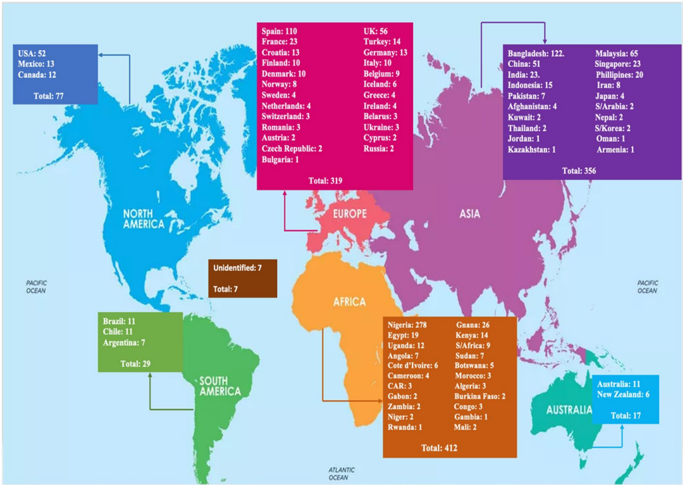
This online survey study examined GenAI in higher education from a multicultural perspective using responses from 1,217 students and teachers across 76 countries. It found high awareness and substantial use of GenAI, but also strong concerns about cheating, plagiarism, and the need for culturally responsive policy regulation.
## Key findings
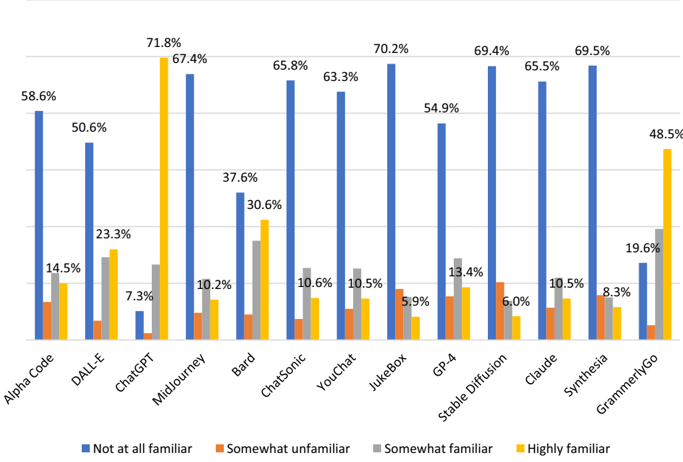
- Among 1,217 respondents, 81.76% were aware of GenAI tools; 71.8% of those aware reported being highly familiar with ChatGPT, followed by GrammarlyGo (48.5%), Bard (30.6%), and DALLE (23.3%).
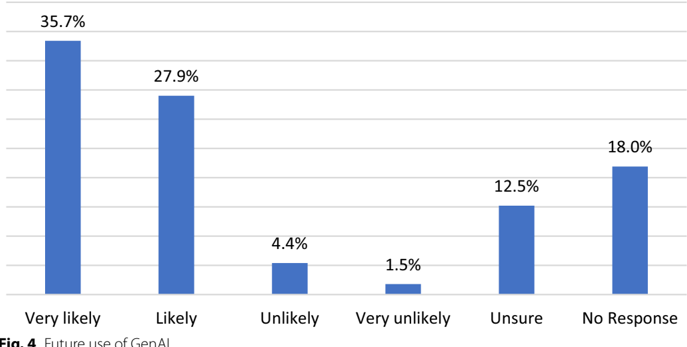
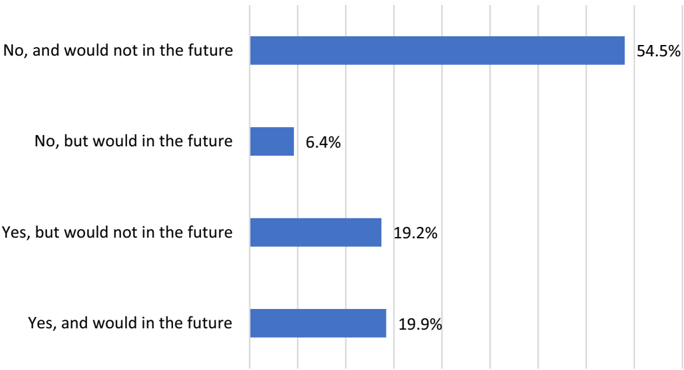
- 691 participants reported prior use of GenAI tools, and 35.7% said they were strongly inclined to use them in the future, with another 27.9% likely to do so.
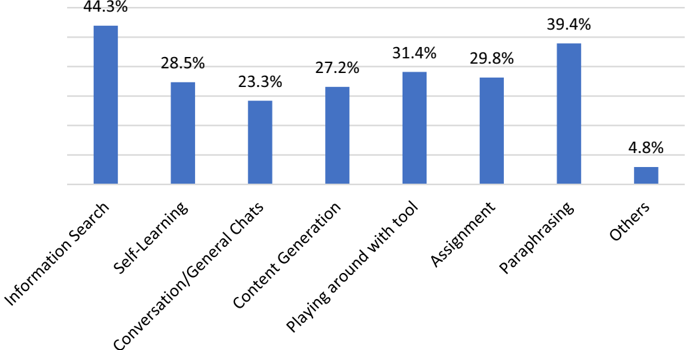
- The most common uses were information retrieval (44.3%) and paraphrasing text (39.4%); 29.8% used GenAI for assignments and 27.2% for generating written content.
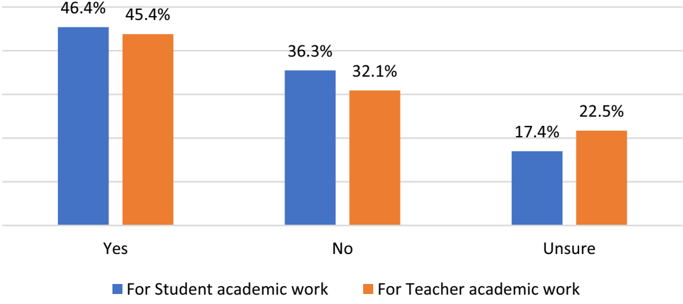
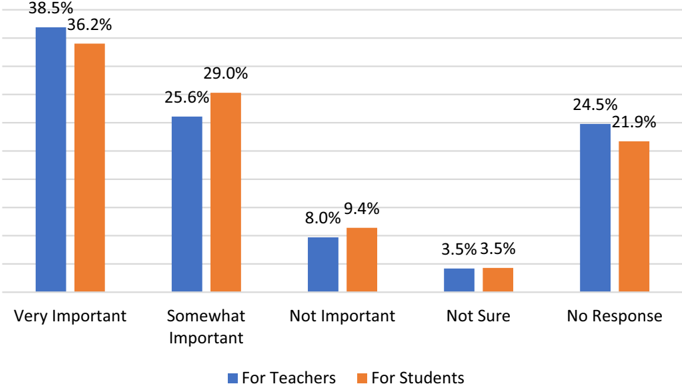
- For cheating/plagiarism, 46.4% and 45.4% believed GenAI use by students and teachers, respectively, constituted cheating; in contrast, 36.3% and 32.1% said it should not be considered cheating.
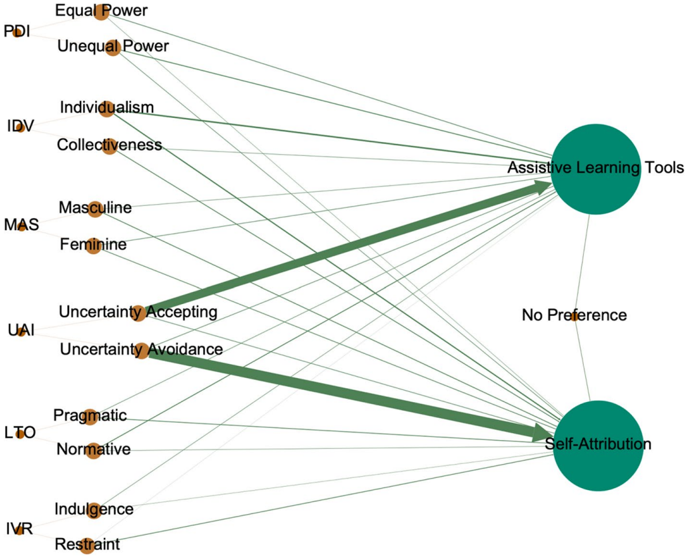
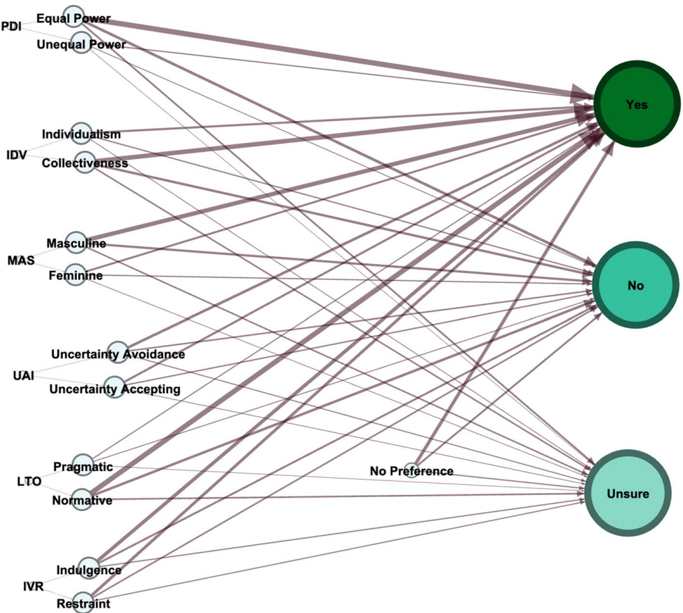
- Cultural dimensions were associated with perceptions: high uncertainty avoidance predicted greater odds of classifying students’ GenAI use as cheating (OR = 3.671, p < 0.001), and long-term orientation also predicted this view (OR = 2.870, p < 0.01).
- On perceived potential, respondents strongly agreed GenAI can answer questions easily (M = 4.302 ± 0.891), provide personalized support (M = 4.082 ± 0.961), and support knowledge acquisition and writing tasks (M = 4.016 ± 0.968); they also expressed strong concern about factual inaccuracy (M = 4.181 ± 1.021) and cheating/plagiarism (M = 4.002 ± 1.108).
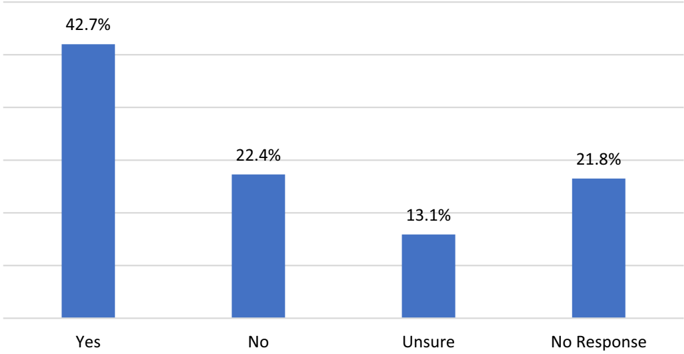
- 42.7% supported regulatory policies for GenAI in higher education, while 22.4% opposed such policies; among policy suggestions, many respondents called for restriction to self-learning, prevention of use in assignments and research, or a total ban, and more than two-thirds called for strict penalties for cheating and plagiarism.
## Methods
- The study used an embedded mixed-method design, with quantitative data as the primary component and qualitative open-ended responses as supporting data.
- Data were collected via a Qualtrics online survey with 20 closed-ended questions and 2 open-ended items; recruitment occurred through social media, research repositories, academic forums, and mailing lists from 25 August to 26 September 2023.
- After removing incomplete, nonconsenting, and inappropriate responses, the final sample was 1,217 participants; quantitative data were analyzed in SPSS using descriptive statistics and ordinal logistic regression/correlation analyses, and qualitative data were analyzed by content analysis with two coders and 95% agreement.
## Limitations
- The authors state that reducing culture to Hofstede’s dimensions may oversimplify the diversity of values and behaviors within societies.
- They also note a demographic imbalance in participant distribution and recommend more balanced recruitment in future multinational studies.
- The text makes evident that some countries could not be categorized because cultural index scores were unavailable, and that participants were not assigned unique survey links, which may have increased the risk of unauthorized or duplicate access.
Model-written summary. Check it against the paper before relying on it.
Integrity signals
Registry
Cites
Statistics
Figures
Verification
Claims the paper makes
0 Valid · 1 Not valid · 3 Not checked · 15 Own results and interpretations
A result the paper reports from its own data — it cites no other source for it, so there is none to check. The quote shows it is in the paper.
In the paper
“A significant majority (81.76%) acknowledged their awareness”
A result the paper reports from its own data — it cites no other source for it, so there is none to check. The quote shows it is in the paper.
In the paper
“a substantial proportion of participants (42.7%) advocated for the implementation”
A result the paper reports from its own data — it cites no other source for it, so there is none to check. The quote shows it is in the paper.
In the paper
“cultures characterized by high uncertainty avoidance (UAI) exhibited a 3.67-fold greater likelihood of categorizing students' utilization of GenAI tools in their academic pursuits as instances of cheating”
A result the paper reports from its own data — it cites no other source for it, so there is none to check. The quote shows it is in the paper.
In the paper
“A substantial proportion of the participants (Mean = 4.302 ± 0.89) strongly agreed with the notion that GenAI tools exhibit a high level of proficiency in responding to queries. Furthermore, a majority of the respondents indicated agreement with several other attributes of GenAI tools, including their capacity to deliver personalized and immediate learning support”
A result the paper reports from its own data — it cites no other source for it, so there is none to check. The quote shows it is in the paper.
In the paper
“A majority of respondents concurred that GenAI systems are susceptible to producing factually inaccurate outputs (M = 4.181 ± 1.021), can generate content that is contextually inappropriate or irrelevant (M = 3.984 ± 1.13), may manifest biases and unfairness in their generated outputs”
14 more claims
Create a free account to see all 19 claims and every source verdict.
Claims other papers make about this one
Each is checked against this paper’s own text: does it say what the citing paper says it does?
The source backs part of the claim, not all of it — or backs it for a different population, condition or comparison.
In the citing paper
“Local learning culture tends toward individualism and politeness (see Yusuf et al., 2024, p.5).”
From Toward Partnership Ethics for Generative Artificial Intelligence in Higher Education (2026) · cites this paper as Yusuf et al., 2024
Experimental — accuracy not yet measuredThe source backs part of the claim, not all of it — or backs it for a different population, condition or comparison.
In the citing paper
“GenAI models are trained on vast datasets scraped from the internet, often including copyrighted works, without explicit notification or consent from original creators.”
From MAPPING GENERATIVE AI'S ETHICAL ISSUES IN HIGHER EDUCATION: A FELT-GUIDED SYSTEMATIC REVIEW [PEMETAAN ISU ETIKA GENERATIVE AI DI PENDIDIKAN TINGGI: TINJAUAN SISTEMATIS BERPANDUAN FELT] (2025) · cites this paper as Yusuf et al., 2024
Experimental — accuracy not yet measuredThe source backs part of the claim, not all of it — or backs it for a different population, condition or comparison.
In the citing paper
“The code compliance with ethical standards emphasises the alignment of AI use with legal frameworks such as the General Data Protection Regulation (GDPR), and with institutional ethics policies (Cai et al., 2025; Essien et al., 2024; Yusuf et al., 2024).”
From Six Institutional Intervention Areas to Support Ethical and Effective Student Use of Generative AI in Higher Education: A Narrative Review (2026) · cites this paper as Yusuf et al., 2024
Experimental — accuracy not yet measuredThe source backs part of the claim, not all of it — or backs it for a different population, condition or comparison.
In the citing paper
“At the same time, Yusuf et al. ' s (2024) large-scale multi-cultural research found that ChatGPT is the most widely utilised tool among both university lecturers and students.”
From Artificial Intelligence for Academic Purposes (AIAP): Integrating AI literacy into an EAP module (2025) · cites this paper as Yusuf et al., 2024
Experimental — accuracy not yet measuredThe source backs part of the claim, not all of it — or backs it for a different population, condition or comparison.
In the citing paper
“These AI technologies can simulate realistic conversations, provide instant feedback, and adapt to individual learning needs, thereby offering accessible, flexible, and personalised learning opportunities [2, 3].”
From Enhancing professional communication training in higher education through artificial intelligence(AI)-integrated exercises: study protocol for a randomised controlled trial (2025) · cites this paper as [3]
Experimental — accuracy not yet measured
20 more claims about this paper
Create a free account to see every claim other papers make about this one.
Citations
Cites
Qualitative Data Analysis: An Expanded Sourcebook
(1994) · Journal of Environmental Psychology · doi:10.1016/s0272-4944(05)80231-2 · Cited by 48,420
Culture's Consequences: International Differences in Work-Related Values
Gladwin, T. N., & Hofstede, G. (1981) · The Academy of Management Review · doi:10.2307/257651 · Cited by 9,275
Dwivedi, Y. K., Kshetri, N., Hughes, L., Slade, E. L., Jeyaraj, A., Kar, A. K., Baabdullah, A. M., Koohang, A., Raghavan, V., Ahuja, M., et al. (2023) · International Journal of Information Management · doi:10.1016/j.ijinfomgt.2023.102642 · Cited by 4,584
Research Design: Qualitative, Quantitative, and Mixed Method Approaches
อุ่นอารมย์เลิศ, ร. ด. ธ. (2016) · Silpakorn Educational Research Journal · Cited by 4,515
Students' voices on generative ai: perceptions, benefits, and challenges in higher education
Chan, C. K. Y., & Hu, W. (2023) · arXiv · doi:10.48550/arxiv.2305.00290 · Cited by 2,504 · cited 8×
“This aligns with the broader trend of AI advancements in natural language processing (Chan & Hu, 2023).”
BackgroundMethodResultInfluentialStudents’ voices on generative AI: perceptions, benefits, and challenges in higher education
Chan, C. K. Y., & Hu, W. (2023) · International Journal of Educational Technology in Higher Education · doi:10.1186/s41239-023-00411-8 · Cited by 2,301 · cited 8×
“This aligns with the broader trend of AI advancements in natural language processing (Chan & Hu, 2023).”
BackgroundMethodResultInfluentialArtificial intelligence in higher education: the state of the field
Crompton, H., & Burke, D. (2023) · International Journal of Educational Technology in Higher Education · doi:10.1186/s41239-023-00392-8 · Cited by 2,010 · cited 1×
“Recent studies have reported the continual proliferation of Artificial Intelligence (AI) tools in HE (e.g., Chu et al., 2022; Crompton & Burke, 2023) owing to their potential benefits, including improved personalized learning (Bhutoria, 2022), automation of repetitive tasks (de la Torre-López et…”
BackgroundWhat if the devil is my guardian angel: ChatGPT as a case study of using chatbots in education
Tlili, A., Shehata, B., Adarkwah, M. A., Bozkurt, A., Hickey, D. T., Huang, R., & Agyemang, B. (2023) · Smart Learning Environments · doi:10.1186/s40561-023-00237-x · Cited by 2,003 · cited 8×
“In addition, they utilize probabilistic models to generate new content that adheres to the learned patterns, resulting in coherent and contextually relevant outputs (Tlili et al., 2023).”
BackgroundInfluentialA comprehensive AI policy education framework for university teaching and learning
Chan, C. K. Y. (2023) · International Journal of Educational Technology in Higher Education · doi:10.1186/s41239-023-00408-3 · Cited by 1,577 · cited 6×
“Individual and small-scale applications penetrated HEIs recently when ChatGPT, a chatbot, was developed by OpenAI in November 2022.”
BackgroundResultInfluentialExamining Science Education in ChatGPT: An Exploratory Study of Generative Artificial Intelligence
Cooper, G. (2023) · Journal of Science Education and Technology · doi:10.1007/s10956-023-10039-y · Cited by 1,263 · cited 1×
“GenAI encompasses a diverse range of artificial intelligence techniques and models designed to create unique and human-like content across various media formats, including texts, images, audio, and video (Cooper, 2023; Strzelecki & ElArabawy, 2023; Tlili et al., 2023).”
Background
Research works printed but not linked: 3
- Chu, H., Tu, Y., & Yang, K. (2022). Roles and research trends of artificial intelligence in higher education: A systematic review of the top 50 most-cited articles. Australasian Journal of Educational Technology, 38 (3), 22-42. https:// doi. org/ 10. 14742/ ajet. 7526 · doi:10.14742/ajet.7526
- Vincent, J. (2023). Top AI conference bans use of ChatGPT and AI language tools to write academic papers. The Verge . https:// www. theve rge. com/ 2023/1/ 5/ 23540 291/ chatg pt- ai- writi ng- tool- banned- writi ng- acade mic- icml- paper. Accessed 16 August 2023.
- Zainuddin, M., Yasin, I. M., Arif, I., & Abdul-hamid, A. (2018). Alternative cross-cultural theories: Why still Hofstede? Proceedings of ISERD-Science Globe International Conference, Jakarta, Indonesia, 30th–31st December 2018.
Cited by
Items 101–118 of 118
The Importance of Collaboration Between Human Intelligence and GenAI in Digitalization of Education
Yakin, A. M. A., Rasyid, A. R., Massyat, M., Muthmainnah, M., Aquino, A. B., Noche, T. H., & Cardoso, L. (2024) · Advances in computer and electrical engineering book series · doi:10.4018/979-8-3693-5762-0.ch006 · Cited by 13
Sok, S., & Heng, K. (2024) · SSRN Electronic Journal · doi:10.2139/ssrn.4806030 · Cited by 17
Generative AI’s Impact on Graduate Student Professional Writing Productivity and Quality
Connell Pensky, A. E., Usdan, J. H., & Chang, H. (2025) · International Journal of Artificial Intelligence in Education · doi:10.1007/s40593-025-00528-z · Cited by 9
“Yusuf et al. ( 2024 ) found that attitudes about the benefits and concerns of genAI may be culturally dependent and that educators have an obligation to help their students learn appropriate and responsible use of these tools.”
Barus, O., Hidayanto, A. N., & Eitiveni, I. (2025) · Polyglot: Jurnal Ilmiah · doi:10.19166/pji.v21i2.10020 · Cited by 12
Transformative potential of generative AI in higher education teaching practices
Ututalum, C. S. (2025) · Environment and Social Psychology · doi:10.59429/esp.v10i9.3291 · Cited by 4
Moderators of academic performance on the use of generative artificial intelligence
Marjerison, R. K., Jun, J. Y., & Kim, J. M. (2025) · Education and Information Technologies · doi:10.1007/s10639-025-13711-5 · Cited by 3
“Recent research sug - gests that students with strong ethical commitments do not necessarily reject AI but instead seek ethical ways to integrate it into their learning (Yusuf et al., 2024).”
Negotiating Writer Identity in Second Language Writing with Generative AI Support
Rahnuma, N. (2026) · Digital Studies in Language and Literature · doi:10.1515/dsll-2026-0009 · Cited by 3
Zhou, X., Chai, Q., Chilukuri, B., & Quach, J. J. Y. (2026) · Journal of University Teaching and Learning Practice · doi:10.53761/pc04tp05 · Cited by 3
“For instance, earlier literature primarily highlighted educators’ internal motivations, such as enhancing personalised learning experiences or administrative efficiencies, as key drivers for AI adoption (Popenici & Kerr, 2017; Yusuf et al., 2024).”
Wu, E. (2026) · Frontiers in Education · doi:10.3389/feduc.2026.1890769 · Cited by 5
Savvidou, C. (2026) · Education Sciences · doi:10.3390/educsci16091568 · Cited by 2
Hu, W. W. (2026) · Studies in Higher Education · doi:10.1080/03075079.2026.2658738 · Cited by 2
Encheva, A., van Es, K., & Nguyen, D. (2025) · Learning, Media and Technology · doi:10.1080/17439884.2025.2578625 · Cited by 1
A Systematic Review of Ethical Integration of Generative AI in Higher Education
Yarboi, P. Y., Adu-Manu, K. S., Amponsah, S., Oheneba-Sakyi, Y., & Barimah, A. (2026) · Education Sciences · doi:10.3390/educsci16071016 · Cited by 1
Falade, A. M., & Mesioye, A. E. (2026) · Methods in Science and Technology Studies · doi:10.64539/msts.v2i1.2026.415
Abdellatif, M. S., Alshehri, M. A., Lamouchi, A., Rahmath, M., & Nemt-allah, M. A. (2026) · Frontiers in Psychology · doi:10.3389/fpsyg.2026.1809174
Toward Partnership Ethics for Generative Artificial Intelligence in Higher Education
Gillette, M., Wackenhut, A., & Olsson, E. (2026) · Journal of University Teaching and Learning Practice · doi:10.53761/yf2gt848 · Cited by 1
“Large-scale international studies indicate that most university students and teachers are familiar with genAI (Yusuf et al., 2024).”
InfluentialSwanson, B. A. (2026) · Journal of ICT and Education · doi:10.69739/jicte.v1i2.2263
Zagami, J. (2026) · International Journal of Educational Technology in Higher Education · doi:10.1186/s41239-026-00625-6
Metadata
- Authors
- Yusuf, A., Pervin, N., & Román-González, M.
- Affiliations
- Sokoto State University (NG)
- North South University (BD)
- Corresponding author
- Yusuf, Abdullahi
- Venue
- International Journal of Educational Technology in Higher Education
- Published
- 2024-03-25
- Volume
- 21
- Issue
- 1
- ISSN
- 2365-9440 (ISSN-L)
- OpenAlex
- W4395483946
- Semantic Scholar
- e5148e92d74dc1f2c0aa59282aa8d83f4a1b9221
- Cited by
- 554
- References
- 45
- Citations by year
- 2026: 292 · 2025: 201 · 2024: 61
- FWCI
- 207.37
- Type
- journal article
- Language
- en
- Open access
- diamond
- doi.org
- Licence
- cc-by
- creativecommons.org/licenses/by/4.0 (tdm)
- creativecommons.org/licenses/by/4.0 (vor)
- Locations
- International Journal of Educational Technology in Higher Education (publishedVersion, cc-by)
- DOAJ (DOAJ: Directory of Open Access Journals) (submittedVersion)
- Topics
- Social Sciences › Education › Artificial Intelligence in Education
- Social Sciences › Education › Academic integrity and plagiarism
- Health Sciences › Medicine › Health Informatics › Artificial Intelligence in Healthcare and Education
- Keywords
- generative AI, higher education, academic integrity, academic dishonesty, cultural dimensions, multicultural perspectives, AI ethics, responsible AI use, AI in teaching, artificial intelligence in research, AI policy, information retrieval
About these checks
Registry, retraction, Cites and statistics results are computed, not judged, with one exception: a printed reference that no index lists is read once by a model before it counts as a citation error. Claims are extracted by a model and kept only when their quote appears verbatim in the text; each cited source is then checked, with a model’s help, for whether it says what the claim relies on. Those verdicts can be wrong — read the claim’s quote and the cited source before relying on one.
A language model drew the claims from the paper on 2026-09-25 (prompt extract-v1).
Statistics and arithmetic are recomputed, not judged.
Confidence bands are shown only for fields calibrated on our annotated test set. None is calibrated yet, so no band is shown.
What counts as a claim ›How we measure confidence ›How we check this ›
Are you an author, or do you see a problem with this page? Request a review
Data sources
Bibliographic data: Semantic Scholar, OpenAlex, Crossref.
Contains information from the Semantic Scholar Academic Graph Datasets, made available under the ODC Attribution License (ODC-BY 1.0).
Semantic Scholar’s data is described in: Kinney, R., et al. (2023). The Semantic Scholar Open Data Platform. arXiv:2301.10140.
