

Generative AI and the future of higher education: a threat to academic integrity or reformation? Evidence from multicultural perspectives
Open accessThe DOI matches its Crossref record; 48 of the 48 references it cites were found in a registry or an index; none of the 4 sources its claims cite is checked for support yet.
Abstract
In recent years, higher education globally has witnessed extensive adoption of technology, particularly in teaching and research. The emergence of generative AI further accelerates this trend. This study examines the usage, benefits, and concerns of GenAI in higher education from a multicultural standpoint and highlights the need for ethical guidelines.
Overview
CoChat Summary
## TL;DR
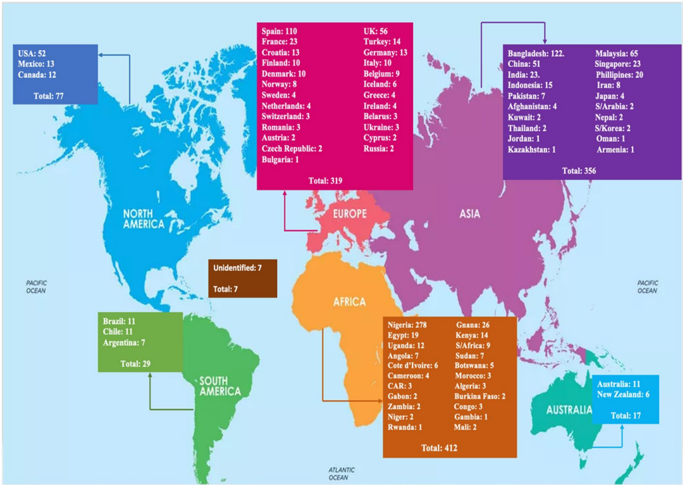
This online survey study examined GenAI in higher education from a multicultural perspective using responses from 1,217 students and teachers across 76 countries. It found high awareness and substantial use of GenAI, but also strong concerns about cheating, plagiarism, and the need for culturally responsive policy regulation.
## Key findings
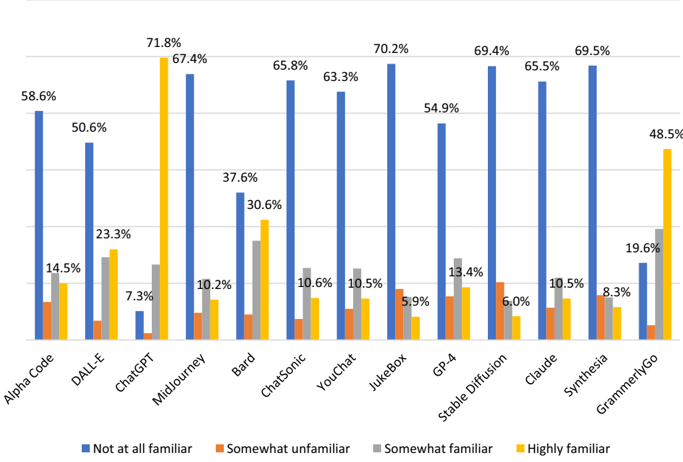
- Among 1,217 respondents, 81.76% were aware of GenAI tools; 71.8% of those aware reported being highly familiar with ChatGPT, followed by GrammarlyGo (48.5%), Bard (30.6%), and DALLE (23.3%).
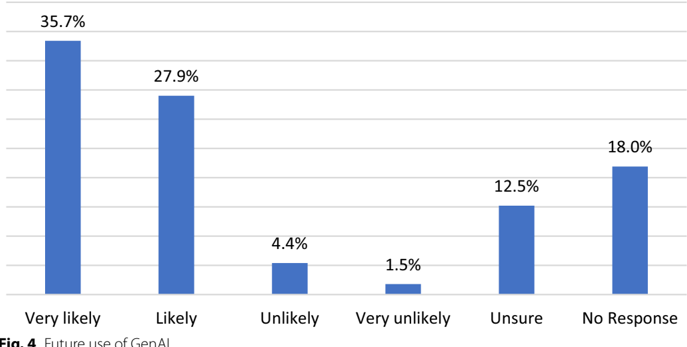
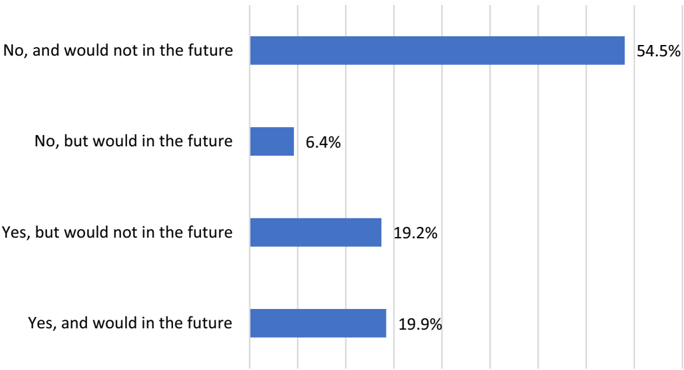
- 691 participants reported prior use of GenAI tools, and 35.7% said they were strongly inclined to use them in the future, with another 27.9% likely to do so.
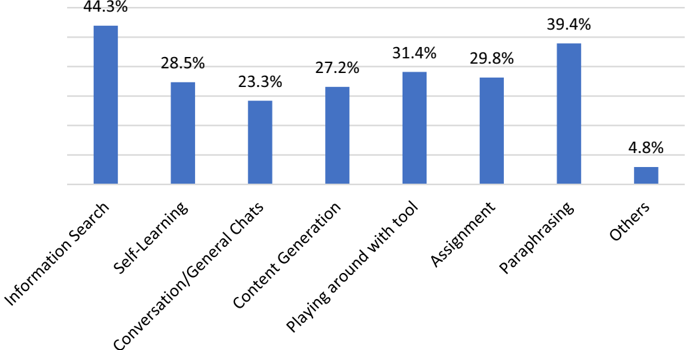
- The most common uses were information retrieval (44.3%) and paraphrasing text (39.4%); 29.8% used GenAI for assignments and 27.2% for generating written content.
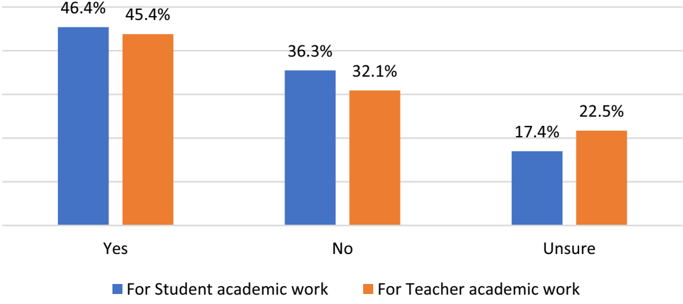
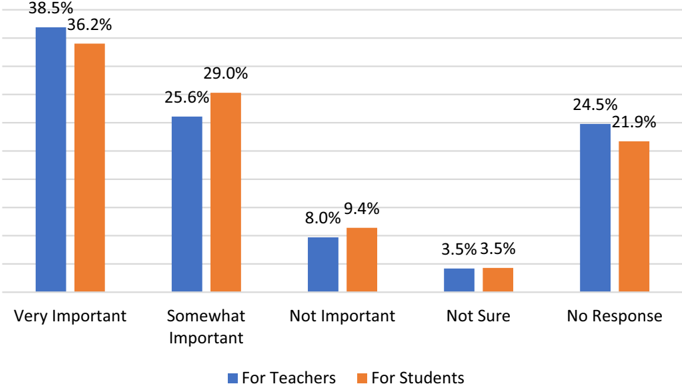
- For cheating/plagiarism, 46.4% and 45.4% believed GenAI use by students and teachers, respectively, constituted cheating; in contrast, 36.3% and 32.1% said it should not be considered cheating.
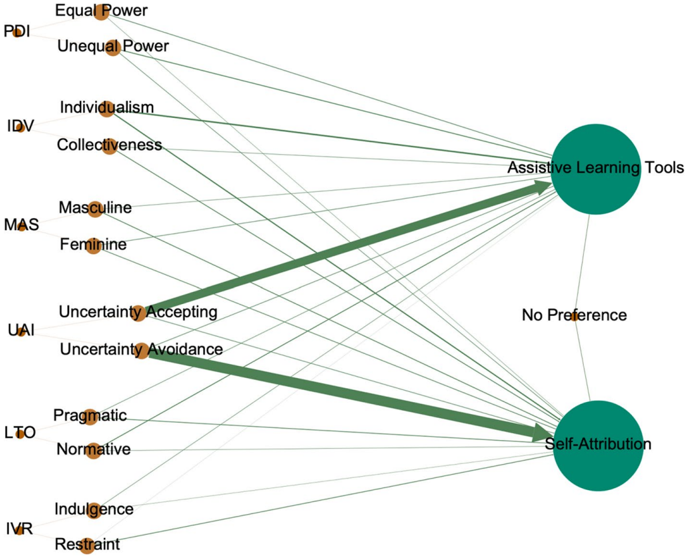
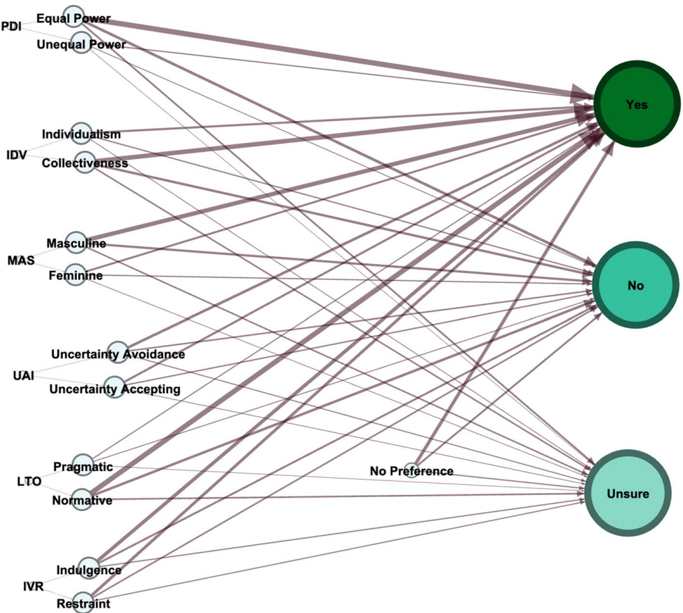
- Cultural dimensions were associated with perceptions: high uncertainty avoidance predicted greater odds of classifying students’ GenAI use as cheating (OR = 3.671, p < 0.001), and long-term orientation also predicted this view (OR = 2.870, p < 0.01).
- On perceived potential, respondents strongly agreed GenAI can answer questions easily (M = 4.302 ± 0.891), provide personalized support (M = 4.082 ± 0.961), and support knowledge acquisition and writing tasks (M = 4.016 ± 0.968); they also expressed strong concern about factual inaccuracy (M = 4.181 ± 1.021) and cheating/plagiarism (M = 4.002 ± 1.108).
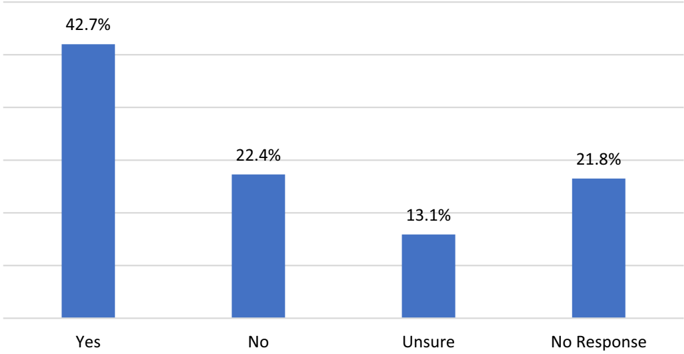
- 42.7% supported regulatory policies for GenAI in higher education, while 22.4% opposed such policies; among policy suggestions, many respondents called for restriction to self-learning, prevention of use in assignments and research, or a total ban, and more than two-thirds called for strict penalties for cheating and plagiarism.
## Methods
- The study used an embedded mixed-method design, with quantitative data as the primary component and qualitative open-ended responses as supporting data.
- Data were collected via a Qualtrics online survey with 20 closed-ended questions and 2 open-ended items; recruitment occurred through social media, research repositories, academic forums, and mailing lists from 25 August to 26 September 2023.
- After removing incomplete, nonconsenting, and inappropriate responses, the final sample was 1,217 participants; quantitative data were analyzed in SPSS using descriptive statistics and ordinal logistic regression/correlation analyses, and qualitative data were analyzed by content analysis with two coders and 95% agreement.
## Limitations
- The authors state that reducing culture to Hofstede’s dimensions may oversimplify the diversity of values and behaviors within societies.
- They also note a demographic imbalance in participant distribution and recommend more balanced recruitment in future multinational studies.
- The text makes evident that some countries could not be categorized because cultural index scores were unavailable, and that participants were not assigned unique survey links, which may have increased the risk of unauthorized or duplicate access.
Model-written summary. Check it against the paper before relying on it.
Integrity signals
Registry
Cites
Statistics
Figures
Verification
Claims the paper makes
0 Valid · 1 Not valid · 3 Not checked · 15 Own results and interpretations
A result the paper reports from its own data — it cites no other source for it, so there is none to check. The quote shows it is in the paper.
In the paper
“A significant majority (81.76%) acknowledged their awareness”
A result the paper reports from its own data — it cites no other source for it, so there is none to check. The quote shows it is in the paper.
In the paper
“a substantial proportion of participants (42.7%) advocated for the implementation”
A result the paper reports from its own data — it cites no other source for it, so there is none to check. The quote shows it is in the paper.
In the paper
“cultures characterized by high uncertainty avoidance (UAI) exhibited a 3.67-fold greater likelihood of categorizing students' utilization of GenAI tools in their academic pursuits as instances of cheating”
A result the paper reports from its own data — it cites no other source for it, so there is none to check. The quote shows it is in the paper.
In the paper
“A substantial proportion of the participants (Mean = 4.302 ± 0.89) strongly agreed with the notion that GenAI tools exhibit a high level of proficiency in responding to queries. Furthermore, a majority of the respondents indicated agreement with several other attributes of GenAI tools, including their capacity to deliver personalized and immediate learning support”
A result the paper reports from its own data — it cites no other source for it, so there is none to check. The quote shows it is in the paper.
In the paper
“A majority of respondents concurred that GenAI systems are susceptible to producing factually inaccurate outputs (M = 4.181 ± 1.021), can generate content that is contextually inappropriate or irrelevant (M = 3.984 ± 1.13), may manifest biases and unfairness in their generated outputs”
14 more claims
Create a free account to see all 19 claims and every source verdict.
Claims other papers make about this one
Each is checked against this paper’s own text: does it say what the citing paper says it does?
The source backs part of the claim, not all of it — or backs it for a different population, condition or comparison.
In the citing paper
“Local learning culture tends toward individualism and politeness (see Yusuf et al., 2024, p.5).”
From Toward Partnership Ethics for Generative Artificial Intelligence in Higher Education (2026) · cites this paper as Yusuf et al., 2024
Experimental — accuracy not yet measuredThe source backs part of the claim, not all of it — or backs it for a different population, condition or comparison.
In the citing paper
“GenAI models are trained on vast datasets scraped from the internet, often including copyrighted works, without explicit notification or consent from original creators.”
From MAPPING GENERATIVE AI'S ETHICAL ISSUES IN HIGHER EDUCATION: A FELT-GUIDED SYSTEMATIC REVIEW [PEMETAAN ISU ETIKA GENERATIVE AI DI PENDIDIKAN TINGGI: TINJAUAN SISTEMATIS BERPANDUAN FELT] (2025) · cites this paper as Yusuf et al., 2024
Experimental — accuracy not yet measuredThe source backs part of the claim, not all of it — or backs it for a different population, condition or comparison.
In the citing paper
“The code compliance with ethical standards emphasises the alignment of AI use with legal frameworks such as the General Data Protection Regulation (GDPR), and with institutional ethics policies (Cai et al., 2025; Essien et al., 2024; Yusuf et al., 2024).”
From Six Institutional Intervention Areas to Support Ethical and Effective Student Use of Generative AI in Higher Education: A Narrative Review (2026) · cites this paper as Yusuf et al., 2024
Experimental — accuracy not yet measuredThe source backs part of the claim, not all of it — or backs it for a different population, condition or comparison.
In the citing paper
“At the same time, Yusuf et al. ' s (2024) large-scale multi-cultural research found that ChatGPT is the most widely utilised tool among both university lecturers and students.”
From Artificial Intelligence for Academic Purposes (AIAP): Integrating AI literacy into an EAP module (2025) · cites this paper as Yusuf et al., 2024
Experimental — accuracy not yet measuredThe source backs part of the claim, not all of it — or backs it for a different population, condition or comparison.
In the citing paper
“These AI technologies can simulate realistic conversations, provide instant feedback, and adapt to individual learning needs, thereby offering accessible, flexible, and personalised learning opportunities [2, 3].”
From Enhancing professional communication training in higher education through artificial intelligence(AI)-integrated exercises: study protocol for a randomised controlled trial (2025) · cites this paper as [3]
Experimental — accuracy not yet measured
20 more claims about this paper
Create a free account to see every claim other papers make about this one.
Citations
Cites
Qualitative Data Analysis: An Expanded Sourcebook
(1994) · Journal of Environmental Psychology · doi:10.1016/s0272-4944(05)80231-2 · Cited by 48,420
Culture's Consequences: International Differences in Work-Related Values
Gladwin, T. N., & Hofstede, G. (1981) · The Academy of Management Review · doi:10.2307/257651 · Cited by 9,275
Dwivedi, Y. K., Kshetri, N., Hughes, L., Slade, E. L., Jeyaraj, A., Kar, A. K., Baabdullah, A. M., Koohang, A., Raghavan, V., Ahuja, M., et al. (2023) · International Journal of Information Management · doi:10.1016/j.ijinfomgt.2023.102642 · Cited by 4,584
Research Design: Qualitative, Quantitative, and Mixed Method Approaches
อุ่นอารมย์เลิศ, ร. ด. ธ. (2016) · Silpakorn Educational Research Journal · Cited by 4,515
Students' voices on generative ai: perceptions, benefits, and challenges in higher education
Chan, C. K. Y., & Hu, W. (2023) · arXiv · doi:10.48550/arxiv.2305.00290 · Cited by 2,504 · cited 8×
“This aligns with the broader trend of AI advancements in natural language processing (Chan & Hu, 2023).”
BackgroundMethodResultInfluentialStudents’ voices on generative AI: perceptions, benefits, and challenges in higher education
Chan, C. K. Y., & Hu, W. (2023) · International Journal of Educational Technology in Higher Education · doi:10.1186/s41239-023-00411-8 · Cited by 2,301 · cited 8×
“This aligns with the broader trend of AI advancements in natural language processing (Chan & Hu, 2023).”
BackgroundMethodResultInfluentialArtificial intelligence in higher education: the state of the field
Crompton, H., & Burke, D. (2023) · International Journal of Educational Technology in Higher Education · doi:10.1186/s41239-023-00392-8 · Cited by 2,010 · cited 1×
“Recent studies have reported the continual proliferation of Artificial Intelligence (AI) tools in HE (e.g., Chu et al., 2022; Crompton & Burke, 2023) owing to their potential benefits, including improved personalized learning (Bhutoria, 2022), automation of repetitive tasks (de la Torre-López et…”
BackgroundWhat if the devil is my guardian angel: ChatGPT as a case study of using chatbots in education
Tlili, A., Shehata, B., Adarkwah, M. A., Bozkurt, A., Hickey, D. T., Huang, R., & Agyemang, B. (2023) · Smart Learning Environments · doi:10.1186/s40561-023-00237-x · Cited by 2,003 · cited 8×
“In addition, they utilize probabilistic models to generate new content that adheres to the learned patterns, resulting in coherent and contextually relevant outputs (Tlili et al., 2023).”
BackgroundInfluentialA comprehensive AI policy education framework for university teaching and learning
Chan, C. K. Y. (2023) · International Journal of Educational Technology in Higher Education · doi:10.1186/s41239-023-00408-3 · Cited by 1,577 · cited 6×
“Individual and small-scale applications penetrated HEIs recently when ChatGPT, a chatbot, was developed by OpenAI in November 2022.”
BackgroundResultInfluentialExamining Science Education in ChatGPT: An Exploratory Study of Generative Artificial Intelligence
Cooper, G. (2023) · Journal of Science Education and Technology · doi:10.1007/s10956-023-10039-y · Cited by 1,263 · cited 1×
“GenAI encompasses a diverse range of artificial intelligence techniques and models designed to create unique and human-like content across various media formats, including texts, images, audio, and video (Cooper, 2023; Strzelecki & ElArabawy, 2023; Tlili et al., 2023).”
BackgroundLim, W. M., Gunasekara, A., Pallant, J. L., Pallant, J. I., & Pechenkina, E. (2023) · The International Journal of Management Education · doi:10.1016/j.ijme.2023.100790 · Cited by 1,261 · cited 4×
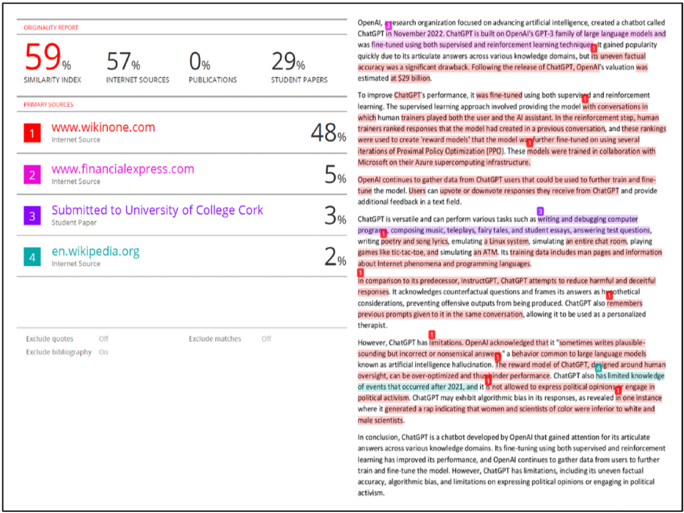
“Lim et al. (2023) provide compelling evidence about GenAI’s support for academic misconduct by revealing a significant self-plagiarism index of 59% (see Fig.”
BackgroundInfluentialResponse Burden and Questionnaire Length: Is Shorter Better? A Review and Meta-analysis
Rolstad, S., Adler, J., & Rydén, A. (2011) · Value in Health · doi:10.1016/j.jval.2011.06.003 · Cited by 945 · cited 1×
“While authors such as Rolstad et al. (2011) stress the importance of survey content as opposed to duration, other authors (e.g., Revilla & Ochoa, 2017) recommend a median of 10 min.”
BackgroundLegal and Ethical Consideration in Artificial Intelligence in Healthcare: Who Takes Responsibility?
Naik, N., Hameed, B. M. Z., Shetty, D. K., Swain, D., Shah, M., Paul, R., Aggarwal, K., Ibrahim, S., Patil, V., Smriti, K., et al. (2022) · Frontiers in Surgery · doi:10.3389/fsurg.2022.862322 · Cited by 931 · cited 1×
“These concerns align with broader discussions on AI ethics, emphasizing the importance of transparency and fairness in AI systems (Chan & Hu, 2023; Naik et al., 2022).”
BackgroundBudhwar, P., Chowdhury, S., Wood, G., Aguinis, H., Bamber, G. J., Beltran, J. R., Boselie, P., Lee Cooke, F., Decker, S., DeNisi, A., et al. (2023) · Human Resource Management Journal · doi:10.1111/1748-8583.12524 · Cited by 908 · cited 1×
“With recent advancements, GenAI tools extend far beyond this function as they can now create new content such as poems, computer codes, written texts, and anything within their capability (Budhwar et al., 2023; Sun et al., 2024; Tlili et al., 2023).”
BackgroundStrzelecki, A. (2024) · Interactive Learning Environments · doi:10.1080/10494820.2023.2209881 · Cited by 807
Yilmaz, R., & Karaoglan Yilmaz, F. G. (2023) · Computers and Education: Artificial Intelligence · doi:10.1016/j.caeai.2023.100147 · Cited by 745 · cited 4×
“As proposed by Yilmaz and Yilmaz (2023b), one of the researchers coded and categorized the qualitative responses, and a second encoder reviewed the code categories to ensure accuracy.”
BackgroundMethodInfluentialJournal of the Association of Physicians of India
(2023) · doi:10.5005/njem · Cited by 734
Jeon, J., & Lee, S. (2023) · Education and Information Technologies · doi:10.1007/s10639-023-11834-1 · Cited by 696 · cited 1×
“First, our findings revealed a high level of awareness and recognition of GenAI in HE, aligning with the broader trend of AI integration across various domains (Chan & Hu, 2023; Jeon & Lee, 2023).”
ResultBhutoria, A. (2022) · Computers and Education: Artificial Intelligence · doi:10.1016/j.caeai.2022.100068 · Cited by 677 · cited 1×
“…(AI) tools in HE (e.g., Chu et al., 2022; Crompton & Burke, 2023) owing to their potential benefits, including improved personalized learning (Bhutoria, 2022), automation of repetitive tasks (de la Torre-López et al., 2023), and provision of efficient administrative processes (Parycek et…”
BackgroundBandi, A., Adapa, P. V. S. R., & Kuchi, Y. E. V. P. K. (2023) · Future Internet · doi:10.3390/fi15080260 · Cited by 638 · cited 1×
“Extensive research has been conducted to understand the potential impacts and concerns of GenAI in HE (see e.g., Bandi et al., 2023; Chan & Hu, 2023; Lim et al., 2023; Tlili et al., 2023).”
BackgroundIntercultural competence: Interpersonal communication across cultures
Cranmer, D. J. (1995) · International Journal of Intercultural Relations · doi:10.1016/0147-1767(95)90057-8 · Cited by 629
Ali, O., Abdelbaki, W., Shrestha, A., Elbasi, E., Alryalat, M. A. A., & Dwivedi, Y. K. (2023) · Journal of Innovation & Knowledge · doi:10.1016/j.jik.2023.100333 · Cited by 568 · cited 2×
“This reflects the growing trend of integrating AI technologies into education (Glaser, 2023), aligning with the literature on adoption (Ali et al., 2023).”
BackgroundA Critique of Hofstede’s Fifth National Culture Dimension
Fang, T. (2003) · International Journal of Cross Cultural Management · doi:10.1177/1470595803003003006 · Cited by 564 · cited 1×
“For example, Fang (2003) argued that the last two dimensions are surrounded by methodological limitations and inherent philosophical flaws.”
BackgroundStrzelecki, A. (2024) · Innovative Higher Education · doi:10.1007/s10755-023-09686-1 · Cited by 477 · cited 1×
“Consequently, there has been an outright discouragement of their usage by some academic journals and HEIs (Chan, 2023; Strzelecki, 2023; Vincent, 2023).”
BackgroundTarhini, A., Hone, K., Liu, X., & Tarhini, T. (2017) · Interactive Learning Environments · doi:10.1080/10494820.2015.1122635 · Cited by 445 · cited 3×
“This could result in a greater willingness to explore and integrate GenAI-driven solutions in teaching, learning, and administrative functions within HE institutions (Tarhini et al., 2017).”
BackgroundInfluentialExploring Artificial Intelligence in Academic Essay: Higher Education Student's Perspective
Malik, A. R., Pratiwi, Y., Andajani, K., Numertayasa, I. W., Suharti, S., Darwis, A., & Marzuki (2023) · International Journal of Educational Research Open · doi:10.1016/j.ijedro.2023.100296 · Cited by 418 · cited 1×
“This contribution was also highlighted by Malik et al. (2023) who reported the potential utility of GenAI to enhance writing creativity and facilitate the creation of original works of art and literature.”
BackgroundAcceptance of artificial intelligence among pre-service teachers: A multigroup analysis
Zhang, C., Schießl, J., Plößl, L., Hofmann, F., & Gläser-Zikuda, M. (2023) · International Journal of Educational Technology in Higher Education · doi:10.1186/s41239-023-00420-7 · Cited by 413 · cited 2×
“Recent studies have reported the continual proliferation of Artificial Intelligence (AI) tools in HE (e.g., Chu et al., 2022; Crompton & Burke, 2023) owing to their potential benefits, including improved personalized learning (Bhutoria, 2022), automation of repetitive tasks (de la Torre-López et al., 2023), and provis…”
BackgroundSome Biases in Likert Scaling Usage and its Correction
Pimentel, J. L. (2019) · International Journal of Sciences: Basic and Applied Research · Cited by 390
Yilmaz, R., & Karaoglan Yilmaz, F. G. (2023) · Computers in Human Behavior: Artificial Humans · doi:10.1016/j.chbah.2023.100005 · Cited by 344 · cited 4×
“As proposed by Yilmaz and Yilmaz (2023b), one of the researchers coded and categorized the qualitative responses, and a second encoder reviewed the code categories to ensure accuracy.”
BackgroundMethodInfluentialChatGPT: Empowering lifelong learning in the digital age of higher education
Rawas, S. (2024) · Education and Information Technologies · doi:10.1007/s10639-023-12114-8 · Cited by 310 · cited 2×
“The commonly accepted assumption is that HE systems would need to prepare citizens for lifelong learning in the age of information and communications technology (Rawas, 2023).”
BackgroundKohnke, L., Moorhouse, B. L., & Zou, D. (2023) · Computers and Education: Artificial Intelligence · doi:10.1016/j.caeai.2023.100156 · Cited by 309 · cited 1×
“This sentiment is echoed by Kohnke et al. (2023), who investigated English language teachers’ perspectives, highlighting GenAI’s ability to foster individualized learning and training support.”
BackgroundStrzelecki, A., & ElArabawy, S. (2024) · British Journal of Educational Technology · doi:10.1111/bjet.13425 · Cited by 260 · cited 1×
“GenAI encompasses a diverse range of artificial intelligence techniques and models designed to create unique and human-like content across various media formats, including texts, images, audio, and video (Cooper, 2023; Strzelecki & ElArabawy, 2023; Tlili et al., 2023).”
BackgroundOrganising for cultural diversity
Hofstede, G. (1989) · European Management Journal · doi:10.1016/0263-2373(89)90075-3 · Cited by 207 · cited 1×
“Firstly, the concept of uncertainty avoidance pertains to a society’s capacity to tolerate ambiguity and its readiness to embrace risks (Hofstede, 1989).”
BackgroundEducational Applications of the ChatGPT AI System: A Systematic Review Research
İpek, Z. H., Gözüm, A. İ. C., Papadakis, S., & Kallogiannakis, M. (2023) · Educational Process International Journal · doi:10.22521/edupij.2023.123.2 · Cited by 201 · cited 4×
“Literature supports the influence of AI accessibility and user-friendliness on adoption (Ipek et al., 2023).”
BackgroundInfluentialImpact of cultural values on technology acceptance and technology readiness
Sunny, S., Patrick, L., & Rob, L. (2019) · International Journal of Hospitality Management · doi:10.1016/j.ijhm.2018.06.017 · Cited by 197 · cited 3×
“In a more recent study, Sun et al. (2019) maintained that countries with high collectiv-ism and long-term orientation are more likely to hold positive perceptions about technology innovations compared to their counterparts with individualism and short-term orientation.”
BackgroundInfluentialIdeal and Maximum Length for a Web Survey
Revilla, M., & Ochoa, C. (2017) · International Journal of Market Research · doi:10.2501/ijmr-2017-039 · Cited by 195 · cited 1×
“While authors such as Rolstad et al. (2011) stress the importance of survey content as opposed to duration, other authors (e.g., Revilla & Ochoa, 2017) recommend a median of 10 min.”
BackgroundSun, D., Boudouaia, A., Zhu, C., & Li, Y. (2024) · International Journal of Educational Technology in Higher Education · doi:10.1186/s41239-024-00446-5 · Cited by 190 · cited 1×
“With recent advancements, GenAI tools extend far beyond this function as they can now create new content such as poems, computer codes, written texts, and anything within their capability (Budhwar et al., 2023; Sun et al., 2024; Tlili et al., 2023).”
BackgroundArtificial intelligence to automate the systematic review of scientific literature
de la Torre-López, J., Ramírez, A., & Romero, J. R. (2023) · Computing · doi:10.1007/s00607-023-01181-x · Cited by 170
Learning with ChatGPT 3.5 as a more knowledgeable other: an autoethnographic study
Stojanov, A. (2023) · International Journal of Educational Technology in Higher Education · doi:10.1186/s41239-023-00404-7 · Cited by 169 · cited 1×
“Stojanov (2023) emphasizes GenAI’s role in revolutionizing teaching, specifically its capacity to customize education to individual needs.”
BackgroundNational Culture and Information Technology Product Adoption
Bagchi, K., Hart, P., & Peterson, M. F. (2004) · Journal of Global Information Technology Management · doi:10.1080/1097198x.2004.10856383 · Cited by 151 · cited 1×
“On another note, Bagchi et al. (2004) revealed that countries with significantly low masculinity are more likely to acknowledge the potential of computer technologies with the belief that they will make significant impacts.”
BackgroundParycek, P., Schmid, V., & Novak, A.-S. (2023) · Journal of the Knowledge Economy · doi:10.1007/s13132-023-01433-3 · Cited by 131 · cited 1×
“…(e.g., Chu et al., 2022; Crompton & Burke, 2023) owing to their potential benefits, including improved personalized learning (Bhutoria, 2022), automation of repetitive tasks (de la Torre-López et al., 2023), and provision of efficient administrative processes (Parycek et al., 2023), among others.”
BackgroundHofstede’s cultural dimensions in technology acceptance models: a meta-analysis
Jan, J., Alshare, K. A., & Lane, P. L. (2024) · Universal Access in the Information Society · doi:10.1007/s10209-022-00930-7 · Cited by 127 · cited 2×
“Authors such as Jan et al. (2022) argued that the acceptance of any technological innovation is significantly contingent upon its alignment with cultural norms prevailing across diverse nationalities.”
BackgroundExploring the Potential of ChatGPT as an Educational Technology: An Emerging Technology Report
Glaser, N. J. (2023) · Technology Knowledge and Learning · doi:10.1007/s10758-023-09684-4 · Cited by 92 · cited 1×
“This reflects the growing trend of integrating AI technologies into education (Glaser, 2023), aligning with the literature on adoption (Ali et al., 2023).”
BackgroundA legal approach to tackling contract cheating?
Draper, M. J., & Newton, P. M. (2017) · International Journal for Educational Integrity · doi:10.1007/s40979-017-0022-5 · Cited by 71 · cited 1×
“The literature acknowledges the role of ethics education and the cultivation of a culture of academic integrity in mitigating plagiarism (Draper & Newton, 2017).”
BackgroundHow AI tools can—and cannot—help organizations become more ethical
De Cremer, D., & Narayanan, D. (2023) · Frontiers in Artificial Intelligence · doi:10.3389/frai.2023.1093712 · Cited by 48 · cited 1×
“Existing research agreed with our findings, highlighting both benefits and concerns in the integration of GenAI in education (De Cremer & Narayanan, 2023; Dwivedi et al., 2023).”
Result(2022) · PubMed · Cited by 12
National Culture and E-Government Readiness
Kovacic, Z. J. (2009) · International Journal of Information Communication Technologies and Human Development · doi:10.4018/jicthd.2009040104 · Cited by 9 · cited 2×
“For example, Kovacic (2009) revealed that countries with strong individualistic cultures are more likely to hold positive perceptions toward technology usage and adoption.”
BackgroundYusuf, A., & Tambuwal, N. I. (2018) · المجلة العربية لجودة التعليم · doi:10.12816/0051288
Self-citation
Research works printed but not linked: 3
- Chu, H., Tu, Y., & Yang, K. (2022). Roles and research trends of artificial intelligence in higher education: A systematic review of the top 50 most-cited articles. Australasian Journal of Educational Technology, 38 (3), 22-42. https:// doi. org/ 10. 14742/ ajet. 7526 · doi:10.14742/ajet.7526
- Vincent, J. (2023). Top AI conference bans use of ChatGPT and AI language tools to write academic papers. The Verge . https:// www. theve rge. com/ 2023/1/ 5/ 23540 291/ chatg pt- ai- writi ng- tool- banned- writi ng- acade mic- icml- paper. Accessed 16 August 2023.
- Zainuddin, M., Yasin, I. M., Arif, I., & Abdul-hamid, A. (2018). Alternative cross-cultural theories: Why still Hofstede? Proceedings of ISERD-Science Globe International Conference, Jakarta, Indonesia, 30th–31st December 2018.
Cited by
Does ChatGPT enhance student learning? A systematic review and meta-analysis of experimental studies
Deng, R., Jiang, M., Yu, X., Lu, Y., & Liu, S. (2025) · Computers & Education · doi:10.1016/j.compedu.2024.105224 · Cited by 531
ChatGPT: The End of Online Exam Integrity?
Susnjak, T. (2022) · arXiv · doi:10.48550/arxiv.2212.09292 · Cited by 370
ChatGPT: The End of Online Exam Integrity?
Susnjak, T., & McIntosh, T. (2024) · Education Sciences · doi:10.3390/educsci14060656 · Cited by 189
Generative AI in education and research: A systematic mapping review
Yusuf, A., Pervin, N., Román‐González, M., & Noor, N. M. (2024) · Review of Education · doi:10.1002/rev3.3489 · Cited by 182
Self-citationThe Use of Generative AI Tools in Higher Education: Ethical and Pedagogical Principles
Nguyen, K. V. (2025) · Journal of Academic Ethics · doi:10.1007/s10805-025-09607-1 · Cited by 163
“To operationalize these principles, frameworks such as the one proposed by Yusuf et al. (2024) offer valuable guidance.”
Influential
Metadata
- Authors
- Yusuf, A., Pervin, N., & Román-González, M.
- Affiliations
- Sokoto State University (NG)
- North South University (BD)
- Corresponding author
- Yusuf, Abdullahi
- Venue
- International Journal of Educational Technology in Higher Education
- Published
- 2024-03-25
- Volume
- 21
- Issue
- 1
- ISSN
- 2365-9440 (ISSN-L)
- OpenAlex
- W4395483946
- Semantic Scholar
- e5148e92d74dc1f2c0aa59282aa8d83f4a1b9221
- Cited by
- 554
- References
- 45
- Citations by year
- 2026: 292 · 2025: 201 · 2024: 61
- FWCI
- 207.37
- Type
- journal article
- Language
- en
- Open access
- diamond
- doi.org
- Licence
- cc-by
- creativecommons.org/licenses/by/4.0 (tdm)
- creativecommons.org/licenses/by/4.0 (vor)
- Locations
- International Journal of Educational Technology in Higher Education (publishedVersion, cc-by)
- DOAJ (DOAJ: Directory of Open Access Journals) (submittedVersion)
- Topics
- Social Sciences › Education › Artificial Intelligence in Education
- Social Sciences › Education › Academic integrity and plagiarism
- Health Sciences › Medicine › Health Informatics › Artificial Intelligence in Healthcare and Education
- Keywords
- generative AI, higher education, academic integrity, academic dishonesty, cultural dimensions, multicultural perspectives, AI ethics, responsible AI use, AI in teaching, artificial intelligence in research, AI policy, information retrieval
About these checks
Registry, retraction, Cites and statistics results are computed, not judged, with one exception: a printed reference that no index lists is read once by a model before it counts as a citation error. Claims are extracted by a model and kept only when their quote appears verbatim in the text; each cited source is then checked, with a model’s help, for whether it says what the claim relies on. Those verdicts can be wrong — read the claim’s quote and the cited source before relying on one.
A language model drew the claims from the paper on 2026-09-25 (prompt extract-v1).
Statistics and arithmetic are recomputed, not judged.
Confidence bands are shown only for fields calibrated on our annotated test set. None is calibrated yet, so no band is shown.
What counts as a claim ›How we measure confidence ›How we check this ›
Are you an author, or do you see a problem with this page? Request a review
Data sources
Bibliographic data: Semantic Scholar, OpenAlex, Crossref.
Contains information from the Semantic Scholar Academic Graph Datasets, made available under the ODC Attribution License (ODC-BY 1.0).
Semantic Scholar’s data is described in: Kinney, R., et al. (2023). The Semantic Scholar Open Data Platform. arXiv:2301.10140.
