

Generative AI and the future of higher education: a threat to academic integrity or reformation? Evidence from multicultural perspectives
Open accessThe DOI matches its Crossref record; 48 of the 48 references it cites were found in a registry or an index; none of the 4 sources its claims cite is checked for support yet.
Abstract
In recent years, higher education globally has witnessed extensive adoption of technology, particularly in teaching and research. The emergence of generative AI further accelerates this trend. This study examines the usage, benefits, and concerns of GenAI in higher education from a multicultural standpoint and highlights the need for ethical guidelines.
Overview
CoChat Summary
## TL;DR
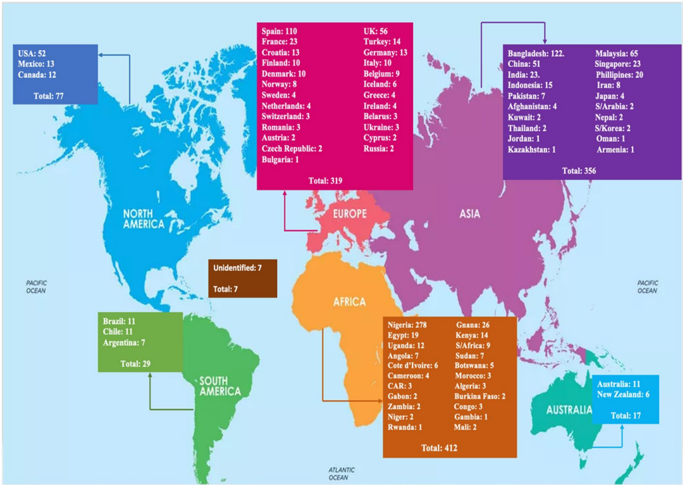
This online survey study examined GenAI in higher education from a multicultural perspective using responses from 1,217 students and teachers across 76 countries. It found high awareness and substantial use of GenAI, but also strong concerns about cheating, plagiarism, and the need for culturally responsive policy regulation.
## Key findings
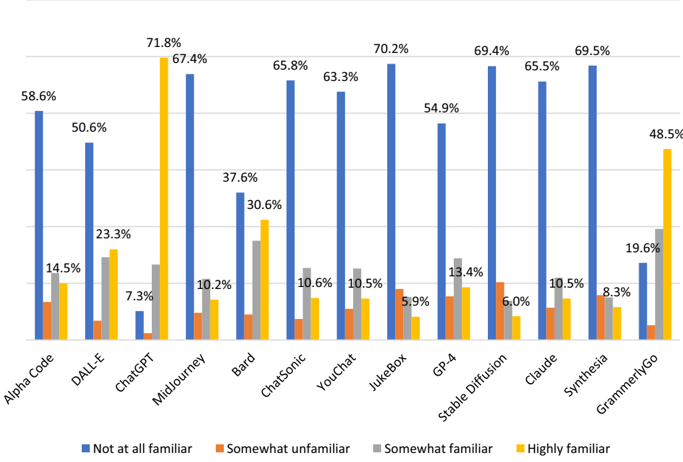
- Among 1,217 respondents, 81.76% were aware of GenAI tools; 71.8% of those aware reported being highly familiar with ChatGPT, followed by GrammarlyGo (48.5%), Bard (30.6%), and DALLE (23.3%).
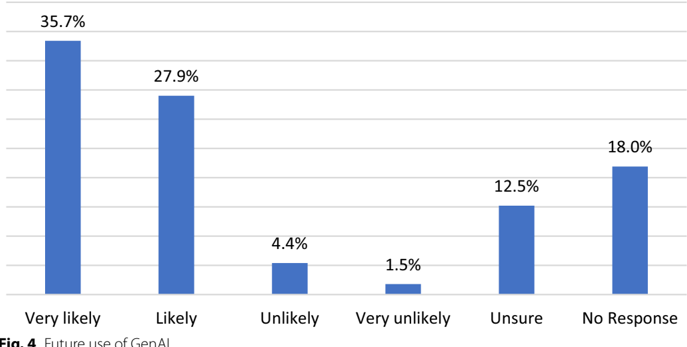
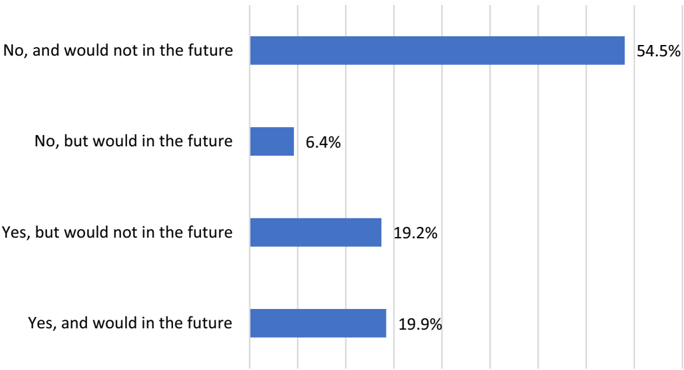
- 691 participants reported prior use of GenAI tools, and 35.7% said they were strongly inclined to use them in the future, with another 27.9% likely to do so.
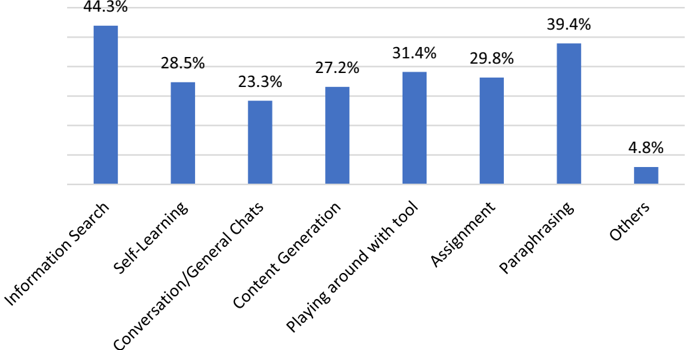
- The most common uses were information retrieval (44.3%) and paraphrasing text (39.4%); 29.8% used GenAI for assignments and 27.2% for generating written content.
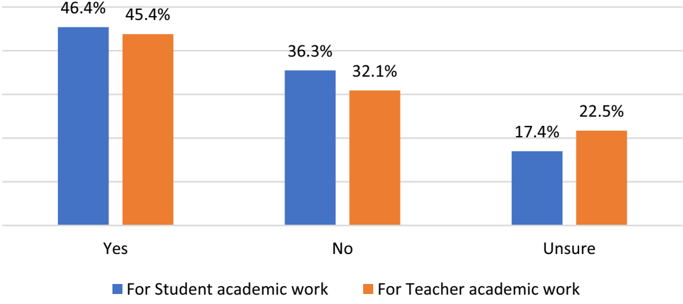
- For cheating/plagiarism, 46.4% and 45.4% believed GenAI use by students and teachers, respectively, constituted cheating; in contrast, 36.3% and 32.1% said it should not be considered cheating.
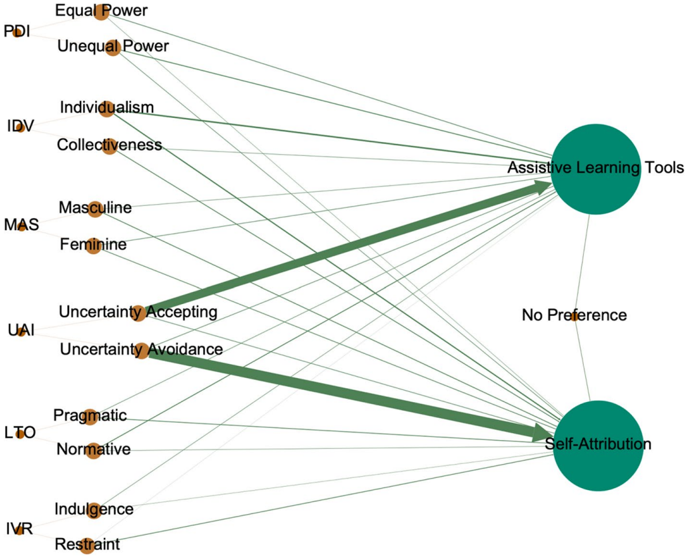
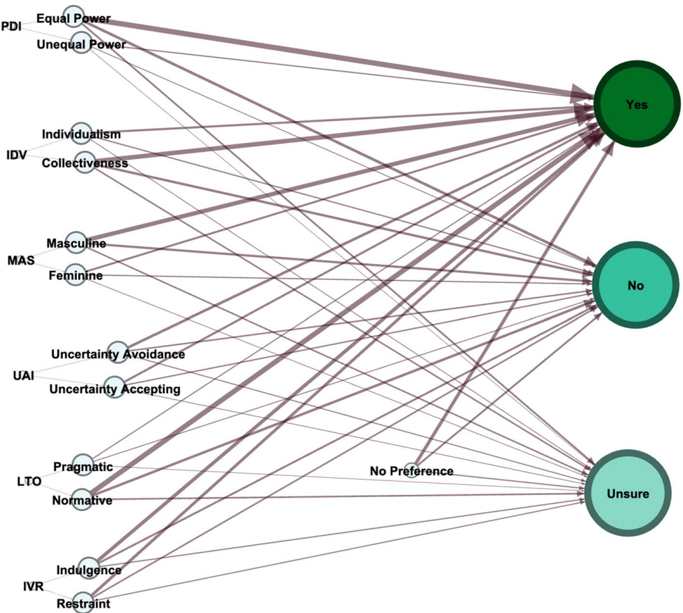
- Cultural dimensions were associated with perceptions: high uncertainty avoidance predicted greater odds of classifying students’ GenAI use as cheating (OR = 3.671, p < 0.001), and long-term orientation also predicted this view (OR = 2.870, p < 0.01).
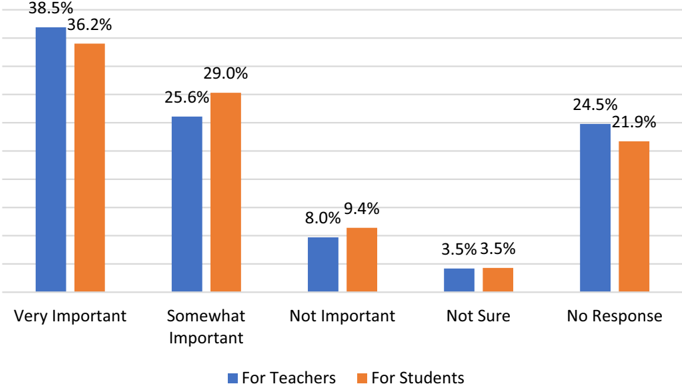
- On perceived potential, respondents strongly agreed GenAI can answer questions easily (M = 4.302 ± 0.891), provide personalized support (M = 4.082 ± 0.961), and support knowledge acquisition and writing tasks (M = 4.016 ± 0.968); they also expressed strong concern about factual inaccuracy (M = 4.181 ± 1.021) and cheating/plagiarism (M = 4.002 ± 1.108).
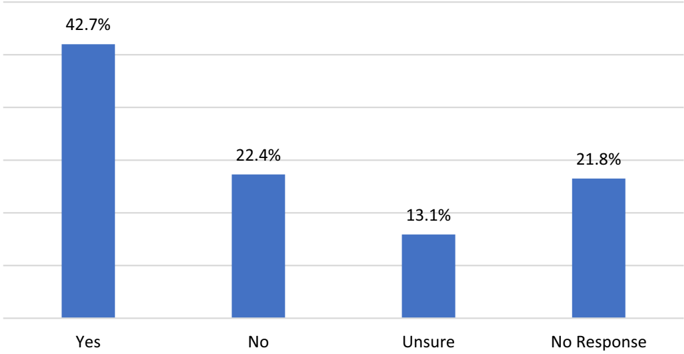
- 42.7% supported regulatory policies for GenAI in higher education, while 22.4% opposed such policies; among policy suggestions, many respondents called for restriction to self-learning, prevention of use in assignments and research, or a total ban, and more than two-thirds called for strict penalties for cheating and plagiarism.
## Methods
- The study used an embedded mixed-method design, with quantitative data as the primary component and qualitative open-ended responses as supporting data.
- Data were collected via a Qualtrics online survey with 20 closed-ended questions and 2 open-ended items; recruitment occurred through social media, research repositories, academic forums, and mailing lists from 25 August to 26 September 2023.
- After removing incomplete, nonconsenting, and inappropriate responses, the final sample was 1,217 participants; quantitative data were analyzed in SPSS using descriptive statistics and ordinal logistic regression/correlation analyses, and qualitative data were analyzed by content analysis with two coders and 95% agreement.
## Limitations
- The authors state that reducing culture to Hofstede’s dimensions may oversimplify the diversity of values and behaviors within societies.
- They also note a demographic imbalance in participant distribution and recommend more balanced recruitment in future multinational studies.
- The text makes evident that some countries could not be categorized because cultural index scores were unavailable, and that participants were not assigned unique survey links, which may have increased the risk of unauthorized or duplicate access.
Model-written summary. Check it against the paper before relying on it.
Integrity signals
Registry
Cites
Statistics
Figures
Verification
Claims the paper makes
0 Valid · 1 Not valid · 3 Not checked · 15 Own results and interpretations
A result the paper reports from its own data — it cites no other source for it, so there is none to check. The quote shows it is in the paper.
In the paper
“A significant majority (81.76%) acknowledged their awareness”
A result the paper reports from its own data — it cites no other source for it, so there is none to check. The quote shows it is in the paper.
In the paper
“a substantial proportion of participants (42.7%) advocated for the implementation”
A result the paper reports from its own data — it cites no other source for it, so there is none to check. The quote shows it is in the paper.
In the paper
“cultures characterized by high uncertainty avoidance (UAI) exhibited a 3.67-fold greater likelihood of categorizing students' utilization of GenAI tools in their academic pursuits as instances of cheating”
A result the paper reports from its own data — it cites no other source for it, so there is none to check. The quote shows it is in the paper.
In the paper
“A substantial proportion of the participants (Mean = 4.302 ± 0.89) strongly agreed with the notion that GenAI tools exhibit a high level of proficiency in responding to queries. Furthermore, a majority of the respondents indicated agreement with several other attributes of GenAI tools, including their capacity to deliver personalized and immediate learning support”
A result the paper reports from its own data — it cites no other source for it, so there is none to check. The quote shows it is in the paper.
In the paper
“A majority of respondents concurred that GenAI systems are susceptible to producing factually inaccurate outputs (M = 4.181 ± 1.021), can generate content that is contextually inappropriate or irrelevant (M = 3.984 ± 1.13), may manifest biases and unfairness in their generated outputs”
14 more claims
Create a free account to see all 19 claims and every source verdict.
Claims other papers make about this one
Each is checked against this paper’s own text: does it say what the citing paper says it does?
The source backs part of the claim, not all of it — or backs it for a different population, condition or comparison.
In the citing paper
“Local learning culture tends toward individualism and politeness (see Yusuf et al., 2024, p.5).”
From Toward Partnership Ethics for Generative Artificial Intelligence in Higher Education (2026) · cites this paper as Yusuf et al., 2024
Experimental — accuracy not yet measuredThe source backs part of the claim, not all of it — or backs it for a different population, condition or comparison.
In the citing paper
“GenAI models are trained on vast datasets scraped from the internet, often including copyrighted works, without explicit notification or consent from original creators.”
From MAPPING GENERATIVE AI'S ETHICAL ISSUES IN HIGHER EDUCATION: A FELT-GUIDED SYSTEMATIC REVIEW [PEMETAAN ISU ETIKA GENERATIVE AI DI PENDIDIKAN TINGGI: TINJAUAN SISTEMATIS BERPANDUAN FELT] (2025) · cites this paper as Yusuf et al., 2024
Experimental — accuracy not yet measuredThe source backs part of the claim, not all of it — or backs it for a different population, condition or comparison.
In the citing paper
“The code compliance with ethical standards emphasises the alignment of AI use with legal frameworks such as the General Data Protection Regulation (GDPR), and with institutional ethics policies (Cai et al., 2025; Essien et al., 2024; Yusuf et al., 2024).”
From Six Institutional Intervention Areas to Support Ethical and Effective Student Use of Generative AI in Higher Education: A Narrative Review (2026) · cites this paper as Yusuf et al., 2024
Experimental — accuracy not yet measuredThe source backs part of the claim, not all of it — or backs it for a different population, condition or comparison.
In the citing paper
“At the same time, Yusuf et al. ' s (2024) large-scale multi-cultural research found that ChatGPT is the most widely utilised tool among both university lecturers and students.”
From Artificial Intelligence for Academic Purposes (AIAP): Integrating AI literacy into an EAP module (2025) · cites this paper as Yusuf et al., 2024
Experimental — accuracy not yet measuredThe source backs part of the claim, not all of it — or backs it for a different population, condition or comparison.
In the citing paper
“These AI technologies can simulate realistic conversations, provide instant feedback, and adapt to individual learning needs, thereby offering accessible, flexible, and personalised learning opportunities [2, 3].”
From Enhancing professional communication training in higher education through artificial intelligence(AI)-integrated exercises: study protocol for a randomised controlled trial (2025) · cites this paper as [3]
Experimental — accuracy not yet measured
20 more claims about this paper
Create a free account to see every claim other papers make about this one.
Citations
Cites
Qualitative Data Analysis: An Expanded Sourcebook
(1994) · Journal of Environmental Psychology · doi:10.1016/s0272-4944(05)80231-2 · Cited by 48,420
Culture's Consequences: International Differences in Work-Related Values
Gladwin, T. N., & Hofstede, G. (1981) · The Academy of Management Review · doi:10.2307/257651 · Cited by 9,275
Dwivedi, Y. K., Kshetri, N., Hughes, L., Slade, E. L., Jeyaraj, A., Kar, A. K., Baabdullah, A. M., Koohang, A., Raghavan, V., Ahuja, M., et al. (2023) · International Journal of Information Management · doi:10.1016/j.ijinfomgt.2023.102642 · Cited by 4,584
Research Design: Qualitative, Quantitative, and Mixed Method Approaches
อุ่นอารมย์เลิศ, ร. ด. ธ. (2016) · Silpakorn Educational Research Journal · Cited by 4,515
Students' voices on generative ai: perceptions, benefits, and challenges in higher education
Chan, C. K. Y., & Hu, W. (2023) · arXiv · doi:10.48550/arxiv.2305.00290 · Cited by 2,504 · cited 8×
“This aligns with the broader trend of AI advancements in natural language processing (Chan & Hu, 2023).”
BackgroundMethodResultInfluentialStudents’ voices on generative AI: perceptions, benefits, and challenges in higher education
Chan, C. K. Y., & Hu, W. (2023) · International Journal of Educational Technology in Higher Education · doi:10.1186/s41239-023-00411-8 · Cited by 2,301 · cited 8×
“This aligns with the broader trend of AI advancements in natural language processing (Chan & Hu, 2023).”
BackgroundMethodResultInfluentialArtificial intelligence in higher education: the state of the field
Crompton, H., & Burke, D. (2023) · International Journal of Educational Technology in Higher Education · doi:10.1186/s41239-023-00392-8 · Cited by 2,010 · cited 1×
“Recent studies have reported the continual proliferation of Artificial Intelligence (AI) tools in HE (e.g., Chu et al., 2022; Crompton & Burke, 2023) owing to their potential benefits, including improved personalized learning (Bhutoria, 2022), automation of repetitive tasks (de la Torre-López et…”
BackgroundWhat if the devil is my guardian angel: ChatGPT as a case study of using chatbots in education
Tlili, A., Shehata, B., Adarkwah, M. A., Bozkurt, A., Hickey, D. T., Huang, R., & Agyemang, B. (2023) · Smart Learning Environments · doi:10.1186/s40561-023-00237-x · Cited by 2,003 · cited 8×
“In addition, they utilize probabilistic models to generate new content that adheres to the learned patterns, resulting in coherent and contextually relevant outputs (Tlili et al., 2023).”
BackgroundInfluentialA comprehensive AI policy education framework for university teaching and learning
Chan, C. K. Y. (2023) · International Journal of Educational Technology in Higher Education · doi:10.1186/s41239-023-00408-3 · Cited by 1,577 · cited 6×
“Individual and small-scale applications penetrated HEIs recently when ChatGPT, a chatbot, was developed by OpenAI in November 2022.”
BackgroundResultInfluentialExamining Science Education in ChatGPT: An Exploratory Study of Generative Artificial Intelligence
Cooper, G. (2023) · Journal of Science Education and Technology · doi:10.1007/s10956-023-10039-y · Cited by 1,263 · cited 1×
“GenAI encompasses a diverse range of artificial intelligence techniques and models designed to create unique and human-like content across various media formats, including texts, images, audio, and video (Cooper, 2023; Strzelecki & ElArabawy, 2023; Tlili et al., 2023).”
Background
Research works printed but not linked: 3
- Chu, H., Tu, Y., & Yang, K. (2022). Roles and research trends of artificial intelligence in higher education: A systematic review of the top 50 most-cited articles. Australasian Journal of Educational Technology, 38 (3), 22-42. https:// doi. org/ 10. 14742/ ajet. 7526 · doi:10.14742/ajet.7526
- Vincent, J. (2023). Top AI conference bans use of ChatGPT and AI language tools to write academic papers. The Verge . https:// www. theve rge. com/ 2023/1/ 5/ 23540 291/ chatg pt- ai- writi ng- tool- banned- writi ng- acade mic- icml- paper. Accessed 16 August 2023.
- Zainuddin, M., Yasin, I. M., Arif, I., & Abdul-hamid, A. (2018). Alternative cross-cultural theories: Why still Hofstede? Proceedings of ISERD-Science Globe International Conference, Jakarta, Indonesia, 30th–31st December 2018.
Cited by
Does ChatGPT enhance student learning? A systematic review and meta-analysis of experimental studies
Deng, R., Jiang, M., Yu, X., Lu, Y., & Liu, S. (2025) · Computers & Education · doi:10.1016/j.compedu.2024.105224 · Cited by 531
ChatGPT: The End of Online Exam Integrity?
Susnjak, T. (2022) · arXiv · doi:10.48550/arxiv.2212.09292 · Cited by 370
ChatGPT: The End of Online Exam Integrity?
Susnjak, T., & McIntosh, T. (2024) · Education Sciences · doi:10.3390/educsci14060656 · Cited by 189
Generative AI in education and research: A systematic mapping review
Yusuf, A., Pervin, N., Román‐González, M., & Noor, N. M. (2024) · Review of Education · doi:10.1002/rev3.3489 · Cited by 182
Self-citationThe Use of Generative AI Tools in Higher Education: Ethical and Pedagogical Principles
Nguyen, K. V. (2025) · Journal of Academic Ethics · doi:10.1007/s10805-025-09607-1 · Cited by 163
“To operationalize these principles, frameworks such as the one proposed by Yusuf et al. (2024) offer valuable guidance.”
InfluentialSergeeva, O. V., Zheltukhina, M. R., Shoustikova, T., Tukhvatullina, L. R., Dobrokhotov, D. A., & Kondrashev, S. V. (2025) · Contemporary Educational Technology · doi:10.30935/cedtech/16039 · Cited by 131
Shata, A., & Hartley, K. (2025) · International Journal of Educational Technology in Higher Education · doi:10.1186/s41239-025-00511-7 · Cited by 127
“A common concern among educators is the potential for Gen AI to result in a decline in student’s cognitive and logical skills (Yusuf et al., 2024).”
InfluentialCai, L., Msafiri, M. M., & Kangwa, D. (2025) · Education and Information Technologies · doi:10.1007/s10639-024-13112-0 · Cited by 104
Yusuf, A., Bello, S., Pervin, N., & Tukur, A. K. (2024) · Thinking Skills and Creativity · doi:10.1016/j.tsc.2024.101619 · Cited by 102
Self-citationAI and academic integrity: Exploring student perceptions and implications for higher education
Lund, B. D., Lee, T. H., Mannuru, N. R., & Arutla, N. (2025) · Journal of Academic Ethics · doi:10.1007/s10805-025-09613-3 · Cited by 96
“The level of sophistication behind these models make it extremely difficult to police academic integrity violations, leading to calls to entirely rethink how we define and discuss academic integrity and misconduct (Yusuf et al., 2024; Zhang et al., 2024 ).”
Sallam, M., El‐Sayed, W., Al‐Shorbagy, M. Y., Barakat, M. M., Khatib, S. E., Ghach, W., Alwan, N. H., Hallit, S. R., & Malaeb, D. N. (2024) · Frontiers in Education · doi:10.3389/feduc.2024.1414758 · Cited by 175
Zhang, X., Zhang, P., Shen, Y., Liu, M., Wang, Q., Gašević, D., & Fan, Y. (2024) · Frontiers of Digital Education · doi:10.1007/s44366-024-0028-5 · Cited by 83
The Impact of AI on the Personal and Collaborative Learning Environments in Higher Education
Msambwa, M. M., Wen, Z., & Daniel, K. (2025) · European Journal of Education · doi:10.1111/ejed.12909 · Cited by 76
Al-Zahrani, A. M., & Alasmari, T. M. (2025) · Education and Information Technologies · doi:10.1007/s10639-024-13300-y · Cited by 74
Zhu, Y., Liu, Q., & Zhao, L. (2025) · Education and Information Technologies · doi:10.1007/s10639-025-13420-z · Cited by 141
Ursavaş, Ö. F., Yalçın, Y., İslamoğlu, H., Bakır-Yalçın, E., & Cukurova, M. (2025) · International Journal of Educational Technology in Higher Education · doi:10.1186/s41239-025-00535-z · Cited by 69
“GenAI tools have significant potential to transform education by enhancing learning experiences, supporting educational development, and streamlining administrative processes (Yusuf et al., 2024).”
Artificial Intelligence for Academic Purposes (AIAP): Integrating AI literacy into an EAP module
Ngo, T. N., & Hastie, D. (2025) · English for Specific Purposes · doi:10.1016/j.esp.2024.09.001 · Cited by 72
“…students have broadly positive attitudes and perceptions towards GenAI predicated on knowledge of the many educational affordances GenAI can offer (Chan & Zhou, 2023; Firat, 2023), and this base positivity appears to be common across different cultures and backgrounds (Yusuf et al., 2024).”
Daniel, K., Msambwa, M. M., & Wen, Z. (2025) · European Journal of Education · doi:10.1111/ejed.70036 · Cited by 71
Lyu, W., Zhang, S., Chung, T., Sun, Y., & Zhang, Y. (2025) · Computers and Education: Artificial Intelligence · doi:10.1016/j.caeai.2025.100383 · Cited by 68
“Dishonesty [122] GenAI is a potential source of misinformation for students in my courses.”
Alsofyani, A. H., & Barzanji, A. M. (2025) · Journal of Educational Computing Research · doi:10.1177/07356331241307297 · Cited by 61
“It can provide instant answers, tailored advice, creative ideas, feedback, and learning opportunities (Yusuf et al., 2024).”
Perception of generative AI use in UK higher education
Arowosegbe, A., Alqahtani, J. S., & Oyelade, T. (2024) · Frontiers in Education · doi:10.3389/feduc.2024.1463208 · Cited by 65
Mumtaz, S., Carmichael, J., Weiss, M., & Nimon-Peters, A. (2025) · Education and Information Technologies · doi:10.1007/s10639-024-13099-8 · Cited by 55
“Despite these advancements, there is a notable lack of studies exploring the intersection of culture and the ethical use of AIT in education, with Yusuf et al. ( 2024 ) being one exception.”
Stone, B. W. (2025) · Teaching of Psychology · doi:10.1177/00986283241305398 · Cited by 54
“…sample at one U.S. university and given the asymmetry in student populations and also in tech adoption and policies across faculty, institutions, and cultures (Ansari et al., 2023; Cambra-Fierro et al., 2024; Yusuf et al., 2024), the speci fi cs may not generalize to all higher education.”
Han, X., Peng, H., & Liu, M. (2025) · Educational Research Review · doi:10.1016/j.edurev.2025.100714 · Cited by 70
Jin, F., Sun, L., Pan, Y., & Lin, C.-H. (2025) · Computers & Education · doi:10.1016/j.compedu.2025.105248 · Cited by 54
Lund, B., Mannuru, N. R., Teel, Z. A., Lee, T. H., Ortega, N. J., Simmons, S., & Ward, E. (2025) · AI in Education · doi:10.3390/aieduc1010002 · Cited by 64
“This echoes earlier findings by Farrelly and Baker (2023), McGrath et al. (2023), and adds weight to Yusuf et al.’s (2024) argument that the landscape of student–AI interaction cannot be flattened into a single institutional approach.”
Zlotnikova, I., Hlomani, H., Mokgetse, T., & Bagai, K. (2025) · Journal of Information, Communication and Ethics in Society · doi:10.1108/jices-07-2024-0104 · Cited by 51
Examining generative AI user continuance intention based on the SOR model
Zhou, T., & Ma, X. (2025) · Aslib Journal of Information Management · doi:10.1108/ajim-08-2024-0620 · Cited by 67
Alsharefeen, R., & Sayari, N. A. (2025) · Frontiers in Education · doi:10.3389/feduc.2025.1621743 · Cited by 102
Fostering responsible AI literacy: A systematic review of K-12 AI ethics education
Ma, M., Ng, D. T. K., Liu, Z., & Wong, G. K. W. (2025) · Computers and Education Artificial Intelligence · doi:10.1016/j.caeai.2025.100422 · Cited by 132
Falebita, O. S., & Kok, P. J. (2024) · Discover Education · doi:10.1007/s44217-024-00252-1 · Cited by 64
Ullah, M., Naeem, S. B., & Boulos, M. N. K. (2024) · Big Data and Cognitive Computing · doi:10.3390/bdcc8120194 · Cited by 77
Song, Z., Qin, J., Jin, F., Cheung, W. M., & Lin, C. (2025) · Teaching and Teacher Education · doi:10.1016/j.tate.2025.105157 · Cited by 70
Wu, X.-Y., & Chiu, T. K. F. (2025) · Journal of New Approaches in Educational Research · doi:10.1007/s44322-025-00028-x · Cited by 82
“GenAI tools facilitate personalized learning by adapting content to match the specific needs and preferences of each learner (Yusuf et al., 2024).”
Generative AI in Education: Perspectives Through an Academic Lens
Întorsureanu, I., Oprea, S., Bârã, A., & VESPAN, D. M. (2025) · Electronics · doi:10.3390/electronics14051053 · Cited by 75
Xiao, L., Pyng, H. S., Ayub, A. F. M., Zhu, Z., Gao, J., & Qing, Z. (2025) · Sustainability · doi:10.3390/su17083541 · Cited by 42
Generative AI and the future of connectivist learning in higher education
Liang, E. S., & Bai, S. (2025) · Journal of Asian Public Policy · doi:10.1080/17516234.2024.2386085 · Cited by 34
Essien, A. E., Salami, A., Ajala, O., Adebisi, B., Shodiya, A., & Essien, G. (2024) · Smart Learning Environments · doi:10.1186/s40561-024-00352-3 · Cited by 73
“The Nigerian HE system is characterised by variability in technological infrastructure, access to educational resources, and community norms, which collectively influence the adoption of new technologies (Yusuf et al., 2024).”
InfluentialPre-service Teacher Perceptions of ChatGPT for Lesson Plan Generation
Kalenda, P. J., Rath, L., Heidt, M. A., & Wright, A. (2024) · Journal of Educational Technology Systems · doi:10.1177/00472395241301388 · Cited by 58
“The primary focus of generative AI tools was originally to mimic human conversation and intelligence; however, this has rapidly expanded to higher-level tasks, such as creating poetry, coding, and writing essays (Yusuf et al., 2024).”
Deroncele-Acosta, Á., Sayán-Rivera, R. M. E., López, Á. D. M., & Norabuena-Figueroa, E. (2025) · Applied System Innovation · doi:10.3390/asi8030083 · Cited by 78
AI-Based Digital Cheating At University, and the Case for New Ethical Pedagogies
Gray, S. L., Edsall, D. G., & Parapadakis, D. (2025) · Journal of Academic Ethics · doi:10.1007/s10805-025-09642-y · Cited by 87
“The rise of generative AI complicates this dynamic by reducing the traditional costs of cheating, such as time and effort, and making detection more complex, which may even be culturally specific (Yusuf et al., 2024).”
Sallam, M., Al-Mahzoum, K., Alaraji, H., Albayati, N., Alenzei, S., AlFarhan, F., Alkandari, A., Alkhaldi, S., Alhaider, N., Al-Zubaidi, D., et al. (2025) · Frontiers in Education · doi:10.3389/feduc.2025.1542769 · Cited by 46
Lelescu, A., Sava, S., Grosseck, G., & Maliţa, L. (2025) · Humanities and Social Sciences Communications · doi:10.1057/s41599-025-06253-1 · Cited by 54
“Yusuf et al. (2024) emphasise the need for educational strategies and ethical guidelines to accommodate cultural diversity, while Bhaskar & Rana (2024) highlight educators ’ responsibility to prevent AI misuse in academic settings.”
InfluentialStrzelecki, A. (2024) · Education and Information Technologies · doi:10.1007/s10639-024-13222-9 · Cited by 53
“…(Hazaimeh & Al‑Ansi, 2024), subjective norms (Ivanov et al., 2024), perceived behavioral control(Al‑Qaysi et al., 2024), life satisfaction (Rehman et al., 2024), perceived importance and perceived concerns (Yusuf et al., 2024), also significantly influence the usage of ChatGPT by students.”
A Systematic Review of User Attitudes Toward GenAI: Influencing Factors and Industry Perspectives
Chen, J., Wei, X., Xie, Q., Hu, A., Qiao, Y., Wan, R., & Liu, Y. (2025) · Journal of Intelligence · doi:10.3390/jintelligence13070078 · Cited by 51
“Meanwhile, individual differences (e.g., teaching experience (X. Lin et al. 2024), cultural background (Yusuf et al. 2024)), institutional policies (Polyportis and Pahos 2024), and geography (Yusuf et al. 2024) are also important moderators of teachers’ attitudes.”
Almisad, B., & Aleidan, A. A. (2025) · Frontiers in Education · doi:10.3389/feduc.2025.1632742 · Cited by 42
Kangwa, D., Msafiri, M. M., & Fute, A. (2025) · Journal of Computer Assisted Learning · doi:10.1111/jcal.70109 · Cited by 22
Xia, Q., Zhang, P., Huang, W., & Chiu, T. K. F. (2025) · Asia Pacific Journal of Education · doi:10.1080/02188791.2025.2530503 · Cited by 44
Understanding Student Attitudes toward GenAI Tools: A Comparative Study of Serbia and Austria
Adžić, S., Tot, T. S., Vuković, V., Radanov, P., & Avakumović, J. (2024) · International Journal of Cognitive Research in Science Engineering and Education · doi:10.23947/2334-8496-2024-12-3-583-611 · Cited by 27
Generative artificial intelligence in education: analysis of trends and prospects
Андреевна, П. Е., Леонидович, О. П., Gorlacheva, E. N., & Faizullin, R. V. (2024) · Vocational education and labour market · doi:10.52944/port.2024.58.3.001 · Cited by 55
Luo, L., & Yusuf, A. (2026) · Assessment & Evaluation in Higher Education · doi:10.1080/02602938.2025.2548919 · Cited by 21
“Against this backdrop, Artificial Intelligence (AI)-driven tools have gained traction for their ability to deliver adaptive feedback (Yusuf, Pervin, and Román-González 2024).”
Self-citationJayasinghe, S., Gamage, K. A. A., Yang, D., Cheng, C., Disanayake, C., & Apeji, U. D. (2026) · Education Sciences · doi:10.3390/educsci16010137 · Cited by 23
Huang, T., Wu, C., & Wu, M. (2025) · Discover Artificial Intelligence · doi:10.1007/s44163-025-00435-1 · Cited by 48
“Meanwhile, some students may use GenAI-generated content to replace their thinking and creativity [48].”
Nie, X., Tian, Y., Liu, M., Wu, D., & Guo, Y. (2025) · Education and Information Technologies · doi:10.1007/s10639-025-13735-x · Cited by 20
“While some express concerns about over-reliance on Gen-AI (Yusuf et al., 2024), emerging evidence highlights its potential to support learning.”
Dai, K., Liu, Y., & Zhang, X. (2026) · Computers and Education Artificial Intelligence · doi:10.1016/j.caeai.2026.100544 · Cited by 55
Alghamdi, A. A. (2025) · Innovations in Education and Teaching International · doi:10.1080/14703297.2025.2600476 · Cited by 67
Li, K. C., Chong, G. H. L., Wong, B. T. M., & Wu, M. M.-F. (2025) · Education Sciences · doi:10.3390/educsci15070798 · Cited by 35
“On the other hand, there have been concerns about students developing an over-reliance on these tools, which may negatively impact their development of cognitive and logical skills, communication, collaboration, and overall academic capacity (Yusuf et al., 2024; Barrot, 2023).”
Bui, T. T. U., & Tong, T. V. A. (2025) · AsiaCALL Online Journal · doi:10.54855/acoj.251615 · Cited by 40
“Recent researchers have been questioning the accountability of these productions since learners are overusing these, they may ignore the citation or reference of the original writing (Burkhard, 2023; Yusuf et al., 2024).”
Generative AI governance in higher education: a case study from Africa
Thaldar, D., Botes, M., Badru, A., Chenia, H., Duma, S., Dlamini, S. B., Amin, N., Hugo, W., Govender, R., Bruce-Brand, J., et al. (2025) · Frontiers in Political Science · doi:10.3389/fpos.2025.1666661 · Cited by 40
Eldakar, M. A. M., Shehata, A. M. K., & Ammar, A. S. A. (2025) · Information Development · doi:10.1177/02666669251314859 · Cited by 37
“Academic integrity – which entails honesty, respect, fairness, and responsibility in academic activities (Yusuf et al., 2024) – is essential to achieving academic excellence.”
InfluentialChatGPT’s impact on student learning outcomes: a meta-analysis of 35 experimental studies
Wu, X., Zhu, P., Zhang, J., Yin, M., & Wang, Y. (2026) · Humanities and Social Sciences Communications · doi:10.1057/s41599-026-07019-z · Cited by 65
“apid advancements in arti fi cial intelligence (AI) have signi fi cantly transformed the education sector in the current digital era (Yusuf et al., 2024).”
Liang, H., & Reiss, M. J. (2025) · Frontiers in Psychology · doi:10.3389/fpsyg.2025.1681635 · Cited by 33
Bilbao, A., & Sagasta, A. A. (2025) · Frontiers in Education · doi:10.3389/feduc.2025.1668078 · Cited by 39
Arslan, S. (2025) · System · doi:10.1016/j.system.2025.103680 · Cited by 36
Kangwa, D., Msafiri, M. M., & Fute, A. (2025) · AI and Ethics · doi:10.1007/s43681-025-00689-6 · Cited by 17
Korayim, D., Bodhi, R., Badghish, S., Yaqub, M. Z., & Bianco, R. (2025) · Journal of Intellectual Capital · doi:10.1108/jic-09-2024-0295 · Cited by 37
Ninghardjanti, P., Umam, M. C., Subarno, A., Winarno, W., Langgi, N. R., & Widodo, J. (2025) · Frontiers in Education · doi:10.3389/feduc.2025.1719625 · Cited by 53
Martin, A. F., Tubaltseva, S., Harrison, A., & Rubin, G. J. (2025) · Behavioral Sciences · doi:10.3390/bs15060808 · Cited by 16
“This echoes broader challenges in the literature, where AI use may complicate traditional definitions of scholarship and independent academic work (Kulkarni et al., 2024; Luo, 2024; Yusuf et al., 2024).”
Hadar‐Shoval, D., Haber, Y., Tal, A., Simon, T., Elyoseph, T., & Elyoseph, Z. (2025) · JMIR Neurotechnology · doi:10.2196/64182 · Cited by 37
Examining Student and Teacher Perspectives on Undisclosed Use of Generative AI in Academic Work
Adnin, R., Pandkar, A., Yao, B., Wang, D., & Das, M. (2025) · Proceedings of the 2025 CHI Conference on Human Factors in Computing Systems · doi:10.1145/3706598.3713393 · Cited by 16
Engineering Educators' Perspectives on the Impact of Generative AI in Higher Education
Dewan, U., Hingle, A., McDonald, N., & Johri, A. (2025) · 2025 IEEE Global Engineering Education Conference (EDUCON) · doi:10.1109/educon62633.2025.11016518 · Cited by 16
BinJwair, A. (2025) · Frontiers in Education · doi:10.3389/feduc.2025.1669750 · Cited by 16
Empowering university teachers in higher education: A generative AI-responsive competency framework
Sun, D., Ba, S., Cha, Y., Jiahui, Y. U., Feng-Kuang, C., Dai, H. M., & Cher-Ping, L. I. M. (2026) · Computers and Education Artificial Intelligence · doi:10.1016/j.caeai.2026.100542 · Cited by 45
Addressing Academic Dishonesty in Higher Education: A Systematic Review of Generative AI’s Impact
Sharma, R. C., & Panja, S. K. (2025) · Open Praxis · doi:10.55982/openpraxis.17.2.820 · Cited by 41
Meinlschmidt, G., Koc, S., Boerner, E., Tegethoff, M., Simacek, T., Schirmer, L., & Schneider, M. (2025) · BMC Medical Education · doi:10.1186/s12909-025-07307-3 · Cited by 15
“These AI technologies can simulate realistic conversations, provide instant feedback, and adapt to individual learning needs, thereby offering accessible, flexible, and personalised learning opportunities [2, 3].”
Hysaj, A., Dean, B. A., & Freeman, M. B. (2025) · Higher Education Research & Development · doi:10.1080/07294360.2025.2488862 · Cited by 39
“A student populous of interest showing increasing use of GenAI tools are those for whom English is not a first language (Yusuf et al., 2024).”
Academic Integrity Within the Medical Curriculum in the Age of Generative Artificial Intelligence
Kldiashvili, E., Ana, M., & Zarnadze, M. (2025) · Health Science Reports · doi:10.1002/hsr2.70489 · Cited by 31
Blasco, A., & Charisi, V. (2024) · SSRN Electronic Journal · doi:10.2139/ssrn.5040921 · Cited by 25
Afolalu, O. F., & Tšoeu, M. S. (2025) · Future Internet · doi:10.3390/fi17120575 · Cited by 57
Liu, J., Keane, T., Sun, D., Yang, Y., & Yang, Y. P. (2025) · Smart Learning Environments · doi:10.1186/s40561-025-00419-9 · Cited by 38
Warren, S., Vogt, E., Tincher, B. E., & Yang, J. (2025) · Quality Assurance in Education · doi:10.1108/qae-09-2024-0183 · Cited by 35
Hoomanfard, M. H., & Shamsi, Y. (2025) · Journal of English for Academic Purposes · doi:10.1016/j.jeap.2025.101570 · Cited by 32
Erosion of Critical Academic Skills Due to AI Dependency Among Tertiary Students: A Path Analysis
Miranda, J. P. P., Cruz, M. A. D., Fernandez, A. B., Balahadia, F. F., Aviles, J. S., Caro, C. A., Liwanag, I. G., & Gaña, E. P. (2025) · Advances in computational intelligence and robotics book series · doi:10.4018/979-8-3373-0122-8.ch002 · Cited by 23
Student self-reflection as a tool for managing GenAI use in large class assessment
Combrinck, C., & Loubser, N. (2025) · Discover Education · doi:10.1007/s44217-025-00461-2 · Cited by 41
Ceallaigh, T. J. Ó., O’ Brien, E., Tømte, C., Kulaksız, T., & Connolly, C. (2025) · European Journal of Teacher Education · doi:10.1080/02619768.2025.2563696 · Cited by 14
“The emergence of GenAI adds a new dimen-sion to the evolving educational landscape, driving further reform in teacher education (Lee et al., 2024; Yusuf, Pervin, and Román-González 2024).”
Dawson, M. G., Deer, R., & Boguslawski, S. (2025) · Computers in Human Behavior Reports · doi:10.1016/j.chbr.2025.100724 · Cited by 30
Huang, C. L., Shao, X., Wu, C., & Yang, S. C. (2025) · International Journal of Educational Technology in Higher Education · doi:10.1186/s41239-025-00516-2 · Cited by 30
“These new features have led to multiple controversies in fields in the social sciences, such as education (Chiu, 2023; Glaser, 2023; Yusuf et al., 2024).”
The missing story of GenAI summarisers: a critical research agenda
Corbin, T., & Walton, J. (2025) · Higher Education Research & Development · doi:10.1080/07294360.2025.2486185 · Cited by 25
“One of these (Yusuf et al., 2024) focused on obtaining multicultural perspectives of students and lecturers on usages, benefits, and concerns related to GenAI use in higher education and concluded that ‘GenAI is primarily used for information retrieval and text paraphrasing in HE, supporting…”
Alamri, J. M. (2025) · Journal of Ecohumanism · doi:10.62754/joe.v4i1.5992 · Cited by 18
“Researchers have investigated the impact of cultural dimensions on AI adoption (Krishnamoorthy et al. 2022; Yusuf et al., 2024); however, none of these few studies have examined cultural values at the individual level.”
InfluentialArtificial intelligence and academic integrity: exploring plagiarism in Ecuadorian universities
Torres-Díaz, J. C., Duart, J. M., Rivera-Rogel, D. D., & Flandoli, A. M. B. (2025) · International Journal for Educational Integrity · doi:10.1007/s40979-025-00209-3 · Cited by 32
“Therefore, scholars emphasize the need for clear and context-sensitive institutional policies to ensure the ethical integration of GenAI into higher education (Tlili et al. 2023; Yusuf et al. 2024; Lund et al. 2025).”
InfluentialAI-assisted academic cheating: a conceptual model based on postgraduate student voices
Hanh, N. V., & Duyen, N. T. (2025) · Frontiers in Computer Science · doi:10.3389/fcomp.2025.1682190 · Cited by 12
Yusuf, A., Mouas, S., Al-khresheh, M. H., & Boudouaia, A. (2025) · Thinking Skills and Creativity · doi:10.1016/j.tsc.2025.101986 · Cited by 15
Self-citationHershkovitz, A., Tabach, M., Reich, Y., Lurie, L., & Cholcman, T. (2025) · Systems · doi:10.3390/systems13070518 · Cited by 26
Tbaishat, D., Amoudi, G., & Elfadel, M. (2025) · Computers and Education: Artificial Intelligence · doi:10.1016/j.caeai.2025.100421 · Cited by 14
Jorolan, J., Cabillo, F., Batucan, R. R., Camansi, C. M., Etoquilla, A., Gapo, J., Hallarte, D. K., Milano, M. L., Gonzales, R. R., & Gonzales, G. G. (2025) · Computers & Education · doi:10.1016/j.compedu.2025.105346 · Cited by 15
Johri, A., Hingle, A., & Schleiß, J. (2024) · IEEE Frontiers in Education Conference (FIE) · doi:10.1109/fie61694.2024.10893017 · Cited by 37
“Similarly, [12] showed that cultural dimensions and cultural expectations influence respondents’ perceptions regarding the benefits and concerns associated with GenAI tools, especially related to academic dishonesty and the necessity for ethical guidelines.”
Alshaibani, M. H., Al-Rahmi, W. M., & Tawafak, R. M. (2025) · Contemporary Educational Technology · doi:10.30935/cedtech/17309 · Cited by 12
Ponce Rojo, A., Fontaines-Ruiz, T., Bracho, A. S., & Cánquiz Rincón, L. (2025) · Education Sciences · doi:10.3390/educsci15091134 · Cited by 11
Liu, R., Wu, T., Chu, J., & Qu, P. (2025) · Thinking Skills and Creativity · doi:10.1016/j.tsc.2025.101967 · Cited by 18
Singh, S., & Paiva, J. (2025) · Information Discovery and Delivery · doi:10.1108/idd-03-2025-0060 · Cited by 25
Metadata
- Authors
- Yusuf, A., Pervin, N., & Román-González, M.
- Affiliations
- Sokoto State University (NG)
- North South University (BD)
- Corresponding author
- Yusuf, Abdullahi
- Venue
- International Journal of Educational Technology in Higher Education
- Published
- 2024-03-25
- Volume
- 21
- Issue
- 1
- ISSN
- 2365-9440 (ISSN-L)
- OpenAlex
- W4395483946
- Semantic Scholar
- e5148e92d74dc1f2c0aa59282aa8d83f4a1b9221
- Cited by
- 554
- References
- 45
- Citations by year
- 2026: 292 · 2025: 201 · 2024: 61
- FWCI
- 207.37
- Type
- journal article
- Language
- en
- Open access
- diamond
- doi.org
- Licence
- cc-by
- creativecommons.org/licenses/by/4.0 (tdm)
- creativecommons.org/licenses/by/4.0 (vor)
- Locations
- International Journal of Educational Technology in Higher Education (publishedVersion, cc-by)
- DOAJ (DOAJ: Directory of Open Access Journals) (submittedVersion)
- Topics
- Social Sciences › Education › Artificial Intelligence in Education
- Social Sciences › Education › Academic integrity and plagiarism
- Health Sciences › Medicine › Health Informatics › Artificial Intelligence in Healthcare and Education
- Keywords
- generative AI, higher education, academic integrity, academic dishonesty, cultural dimensions, multicultural perspectives, AI ethics, responsible AI use, AI in teaching, artificial intelligence in research, AI policy, information retrieval
About these checks
Registry, retraction, Cites and statistics results are computed, not judged, with one exception: a printed reference that no index lists is read once by a model before it counts as a citation error. Claims are extracted by a model and kept only when their quote appears verbatim in the text; each cited source is then checked, with a model’s help, for whether it says what the claim relies on. Those verdicts can be wrong — read the claim’s quote and the cited source before relying on one.
A language model drew the claims from the paper on 2026-09-25 (prompt extract-v1).
Statistics and arithmetic are recomputed, not judged.
Confidence bands are shown only for fields calibrated on our annotated test set. None is calibrated yet, so no band is shown.
What counts as a claim ›How we measure confidence ›How we check this ›
Are you an author, or do you see a problem with this page? Request a review
Data sources
Bibliographic data: Semantic Scholar, OpenAlex, Crossref.
Contains information from the Semantic Scholar Academic Graph Datasets, made available under the ODC Attribution License (ODC-BY 1.0).
Semantic Scholar’s data is described in: Kinney, R., et al. (2023). The Semantic Scholar Open Data Platform. arXiv:2301.10140.
