

Rethinking the importance of social norms in generative AI adoption: investigating the acceptance and use of generative AI among higher education students
Open accessThe DOI matches its Crossref record; 99 of the 99 references it cites were found in a registry or an index.
Abstract
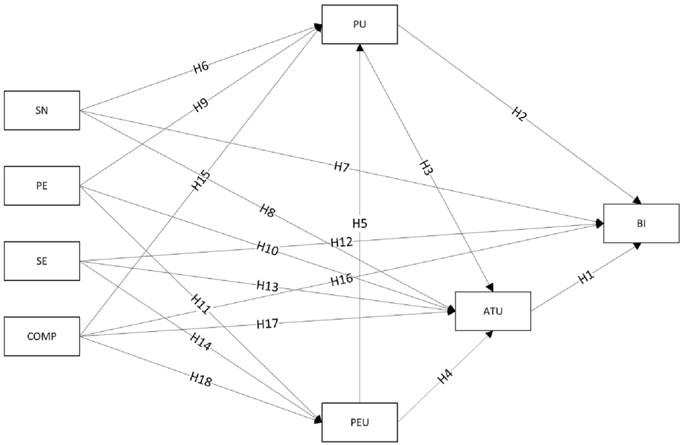
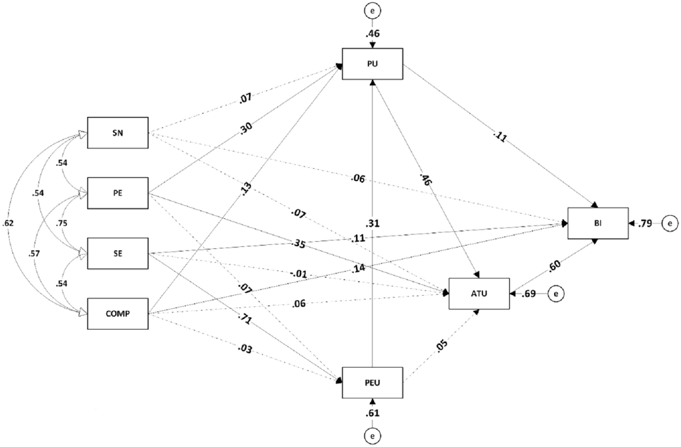
Generative artificial intelligence (GenAI) has the potential to significantly impact educational practices. Despite the apparent increase in the adoption among students, empirical research on understanding AI use and acceptance among university students is scarce. To address this gap, this study employed an extended technology acceptance model (TAM) incorporating subjective norms, perceived enjoyment, self-efficacy, and compatibility with 943 undergraduate students from 140 universities across Turkey. Findings revealed that attitude toward use, perceived usefulness, self-efficacy, and compatibility significantly predicted behavioral intention to use GenAI tools. Notably, subjective norms had a limited influence on students’ intentions to use GenAI tools, challenging traditional assumptions about social pressures in technology adoption. These insights highlight that students prioritize personal perceptions over social influences in adopting GenAI technologies. Theoretically, the study provides insights into the proposed extended TAM, by validating it in a unique socio-cultural context. Practically, the study provides recommendations on how to foster acceptance of GenAI by enhancing the usability, compatibility, and enjoyment of GenAI tools while addressing potential perceived risks and ethical concerns. The study contributes to understanding GenAI’s role in education, providing a foundation for future investigations into additional factors influencing the use and acceptance of GenAI tools in higher education settings.
Overview
The claims and statistics of this paper haven’t been checked yet.
Free: it reads the open-access text and checks the first 5 claims that cite a source we can check. Create a free account to check every claim.
Integrity signals
Registry
Cites
Statistics
Figures
Verification
Claims the paper makes
The claims and statistics of this paper haven’t been checked yet.
Free: it reads the open-access text and checks the first 5 claims that cite a source we can check. Create a free account to check every claim.
Claims other papers make about this one
Each is checked against this paper’s own text: does it say what the citing paper says it does?
The check wasn’t confident either way, so it gives no verdict — never disputed.
In the citing paper
“This study reveals that Human-GenAI Pedagogical Partnership simultaneously activates both cognitive vigilance and cognitive offloading, creating a paradoxical dual-pathway mechanism to transformative learning experiences.”
From Pedagogical partnerships with generative AI in higher education: how dual cognitive pathways paradoxically enable transformative learning (2026) · cites this paper as Ursavaş et al., 2025
Experimental — accuracy not yet measured
Self-check
Percentages, sums and reported differences re-computed from the paper’s own numbers.
The self-check needs the paper’s full text.
Citations
Cites
The theory of planned behavior
Ajzen, I. (1991) · Organizational Behavior and Human Decision Processes · doi:10.1016/0749-5978(91)90020-t · Cited by 134,657
Evaluating structural equation models with unobservable variables and measurement error
Fornell, C., & Larcker, D. F. (1981) · Journal of Marketing Research · doi:10.1177/002224378101800104 · Cited by 109,190 · cited 3×
“Second, according to the Fornell–Larcker criterion, the square root of a construct’s AVE value must be greater than its correlation with any other construct (Fornell & Larcker, 1981).”
InfluentialStatistical Power Analysis for the Behavioral Sciences
Muller, K. (1989) · Technometrics · doi:10.1080/00401706.1989.10488618 · Cited by 99,167
Perceived usefulness, perceived ease of use, and user acceptance of information technology
Davis, F. D. (1989) · MIS Quarterly · doi:10.2307/249008 · Cited by 68,483 · cited 2×
“The findings also suggest that attitude toward use was the strongest predictor of behavioral intention, consistent with the core premise of TAM (Davis, 1989; Davis et al., 1989).”
User Acceptance of Information Technology: Toward A Unified View1
Venkatesh, V., Morris, M. G., Davis, G. B., & Davis, F. D. (2003) · MIS Quarterly · doi:10.2307/30036540 · Cited by 45,035 · cited 1×
“However, as noted by other researchers, the influence of subjective norms can be quite complex and context-dependent (Taylor & Todd, 1995; Venkatesh et al., 2003).”
Principles and Practice of Structural Equation Modeling
Tabri, N., & Elliott, C. M. (2012) · Canadian Graduate Journal of Sociology and Criminology · doi:10.15353/cgjsc-rcessc.v1i1.25 · Cited by 38,891
A new criterion for assessing discriminant validity in variance-based structural equation modeling
Henseler, J., Ringle, C. M., & Sarstedt, M. (2015) · Journal of the Academy of Marketing Science · doi:10.1007/s11747-014-0403-8 · Cited by 38,459 · cited 2×
“Numerous studies have demonstrated the suitability of the Heterotrait-Monotrait (HTMT) ratio of correlations (Henseler et al., 2015) and the Fornell–Larcker criterion (Fornell & Larcker, 1981) for verifying discriminant validity.”
InfluentialStatistical Power Analysis for the Behavioral Sciences (2nd ed.).
Lachenbruch, P. A., & Cohen, J. (1989) · Journal of the American Statistical Association · doi:10.2307/2290095 · Cited by 37,395 · cited 1×
“According to Cohen (1988), effect sizes of 0.2 are classified as small, 0.5 as medium, and 0.8 or higher as large.”
InfluentialUser Acceptance of Computer Technology: A Comparison of Two Theoretical Models
Davis, F. D., Bagozzi, R. P., & Warshaw, P. R. (1989) · Management Science · doi:10.1287/mnsc.35.8.982 · Cited by 25,709 · cited 2×
“The findings also suggest that attitude toward use was the strongest predictor of behavioral intention, consistent with the core premise of TAM (Davis, 1989; Davis et al., 1989).”
A Theoretical Extension of the Technology Acceptance Model: Four Longitudinal Field Studies
Venkatesh, V., & Davis, F. D. (2000) · Management Science · doi:10.1287/mnsc.46.2.186.11926 · Cited by 23,066 · cited 1×
“Subjective norms were identified as a key variable to explain technology acceptance in the Theory of Reasoned Action and Theory of Planned Behavior (Ajzen, 1991) and incorporated into TAM through its second iteration, TAM2 (Venkatesh & Davis, 2000).”
Understanding information technology usage: a test of competing models
Taylor, S., & Todd, P. A. (1995) · Information Systems Research · doi:10.1287/isre.6.2.144 · Cited by 8,815 · cited 1×
“However, as noted by other researchers, the influence of subjective norms can be quite complex and context-dependent (Taylor & Todd, 1995; Venkatesh et al., 2003).”
Technology Acceptance Model 3 and a Research Agenda on Interventions
Venkatesh, V., & Bala, H. (2008) · Decision Sciences · doi:10.1111/j.1540-5915.2008.00192.x · Cited by 8,159 · cited 2×
“Self-efficacy, initially introduced as computer self-efficacy in TAM3 by Venkatesh and Bala (2008), has since emerged as a fundamental variable in technology acceptance research.”
Zawacki-Richter, O., Marín, V. I., Bond, M., & Gouverneur, F. (2019) · International Journal of Educational Technology in Higher Education · doi:10.1186/s41239-019-0171-0 · Cited by 7,242 · cited 1×
“The widespread adoption of ChatGPT is expected to bring significant changes to higher education, particularly in individuals’ learning goals, learning activities, and assessment and evaluation processes (Barber et al., 2021; Dwivedi et al., 2023; Zawacki-Richter et al., 2019; Zhai, 2022).”
Venkatesh, V. (2000) · Information Systems Research · doi:10.1287/isre.11.4.342.11872 · Cited by 6,664 · cited 1×
“This finding aligns with Venkatesh (2000) that in voluntary technology use contexts, subjective norms indirectly affect the intention to use a technology through perceived usefulness.”
(2005) · Cited by 6,097
Measures of multivariate skewness and kurtosis with applications
MARDIA, K. V. (1970) · Biometrika · doi:10.1093/biomet/57.3.519 · Cited by 4,792
Dwivedi, Y. K., Kshetri, N., Hughes, L., Slade, E. L., Jeyaraj, A., Kar, A. K., Baabdullah, A. M., Koohang, A., Raghavan, V., Ahuja, M., et al. (2023) · International Journal of Information Management · doi:10.1016/j.ijinfomgt.2023.102642 · Cited by 4,584
The support of autonomy and the control of behavior.
Deci, E. L., & Ryan, R. M. (1987) · Journal of Personality and Social Psychology · doi:10.1037//0022-3514.53.6.1024 · Cited by 3,242 · cited 1×
“More importantly, in academic settings where autonomy is often valued (Deci & Ryan, 1987), students may prioritize GenAI’s perceived utility and autonomy-driven use, which may diminish the influence of traditional social norms.”
Chatting and cheating: Ensuring academic integrity in the era of ChatGPT
Cotton, D. R. E., Cotton, P. A., & Shipway, J. R. (2024) · Innovations in Education and Teaching International · doi:10.1080/14703297.2023.2190148 · Cited by 3,087 · cited 1×
“…has raised concerns about using these tools, particularly regarding academic integrity and their potential to interfere with independent research (Cotton et al., 2023; Ghimire et al., 2024; Perkins, 2023), students are increasingly utilizing them for academic tasks such as completing…”
Chatting and Cheating. Ensuring academic integrity in the era of ChatGPT
Cotton, D., Cotton, P., & Shipway, J. R. (2023) · doi:10.35542/osf.io/mrz8h · Cited by 3,079
Students' voices on generative ai: perceptions, benefits, and challenges in higher education
Chan, C. K. Y., & Hu, W. (2023) · arXiv · doi:10.48550/arxiv.2305.00290 · Cited by 2,504 · cited 1×
“…academic integrity and their potential to interfere with independent research (Cotton et al., 2023; Ghimire et al., 2024; Perkins, 2023), students are increasingly utilizing them for academic tasks such as completing assignments, studying, and communication (Chan & Hu, 2023; Chen et al., 2024).”
Students’ voices on generative AI: perceptions, benefits, and challenges in higher education
Chan, C. K. Y., & Hu, W. (2023) · International Journal of Educational Technology in Higher Education · doi:10.1186/s41239-023-00411-8 · Cited by 2,301 · cited 1×
“…academic integrity and their potential to interfere with independent research (Cotton et al., 2023; Ghimire et al., 2024; Perkins, 2023), students are increasingly utilizing them for academic tasks such as completing assignments, studying, and communication (Chan & Hu, 2023; Chen et al., 2024).”
Scherer, R., Siddiq, F., & Tondeur, J. (2019) · Computers & Education · doi:10.1016/j.compedu.2018.09.009 · Cited by 1,923 · cited 1×
“Researchers have continuously applied TAM to predict system use in educational settings (Al-Nuaimi & Al-Emran, 2021; Rosli et al., 2022; Scherer et al., 2019).”
ChatGPT for Education and Research: Opportunities, Threats, and Strategies
Rahman, M. M., & Watanobe, Y. (2023) · Applied Sciences · doi:10.3390/app13095783 · Cited by 1,080 · cited 1×
“…to using GenAI tools, their use also raises concerns regarding academic integrity, the potential for misuse, and ethical considerations (Almogren et al., 2024; Chawla et al., 2024; Holland & Ciachir, 2024; Koltovskaia et al., 2024; Lee et al., 2024; Perkins, 2023; Rahman & Watanobe, 2023).”
ChatGPT for Education and Research: Opportunities, Threats, and Strategies
Rahman, M. M., & Watanobe, Y. (2023) · doi:10.20944/preprints202303.0473.v1 · Cited by 1,080
ChatGPT User Experience: Implications for Education
Zhai, X. (2023) · doi:10.2139/ssrn.4312418 · Cited by 935 · cited 1×
“The widespread adoption of ChatGPT is expected to bring significant changes to higher education, particularly in individuals’ learning goals, learning activities, and assessment and evaluation processes (Barber et al., 2021; Dwivedi et al., 2023; Zawacki-Richter et al., 2019; Zhai, 2022).”
Perkins, M. (2023) · Journal of University Teaching and Learning Practice · doi:10.53761/1.20.02.07 · Cited by 839
An Introduction to Applied Multivariate Analysis
Raykov, T., & Marcoulides, G. A. (2008) · doi:10.4324/9780203809532 · Cited by 716 · cited 2×
“Furthermore, multivariate normality was assessed using Mardia’s (1970) normalized multivariate kurtosis and the p × ( p + 2) formula provided by Raykov and Marcoulides (2008).”
Nazaretsky, T., Ariely, M., Cukurova, M., & Alexandron, G. (2022) · British Journal of Educational Technology · doi:10.1111/bjet.13232 · Cited by 589 · cited 1×
“This finding indicates that fostering positive attitudes toward GenAI tools is critical for driving their adoption and use among university students, consistent with previous research (Dahri et al., 2024; Nazaretsky et al., 2022; Zou & Huang, 2023).”
Self-citationYusuf, A., Pervin, N., & Román-González, M. (2024) · International Journal of Educational Technology in Higher Education · doi:10.1186/s41239-024-00453-6 · Cited by 554 · cited 1×
“GenAI tools have significant potential to transform education by enhancing learning experiences, supporting educational development, and streamlining administrative processes (Yusuf et al., 2024).”
Chang, C.-T., Hajiyev, J., & Su, C.-R. (2017) · Computers & Education · doi:10.1016/j.compedu.2017.04.010 · Cited by 479 · cited 1×
“Although contradictory findings exist, a general consensus suggests that subjective norms exert a significant influence on individuals’ attitudes and intentions toward adopting new technologies (Chang et al., 2017; Hopp, 2013; Hung & Jeng, 2013; Mei et al., 2018).”
Generative artificial intelligence: a systematic review and applications
Sengar, S. S., Hasan, A. B., Kumar, S., & Carroll, F. (2024) · Multimedia Tools and Applications · doi:10.1007/s11042-024-20016-1 · Cited by 467 · cited 1×
“generate new data that exhibits similar characteristics (Sengar et al., 2024).”
Lee, D., Arnold, M., Srivastava, A., Plastow, K., Strelan, P., Ploeckl, F., Lekkas, D., & Palmer, E. (2024) · Computers and Education: Artificial Intelligence · doi:10.1016/j.caeai.2024.100221 · Cited by 402 · cited 1×
“…to using GenAI tools, their use also raises concerns regarding academic integrity, the potential for misuse, and ethical considerations (Almogren et al., 2024; Chawla et al., 2024; Holland & Ciachir, 2024; Koltovskaia et al., 2024; Lee et al., 2024; Perkins, 2023; Rahman & Watanobe, 2023).”
Ivanov, S., Soliman, M., Tuomi, A., Alkathiri, N. A., & Al-Alawi, A. N. (2024) · Technology in Society · doi:10.1016/j.techsoc.2024.102521 · Cited by 397 · cited 2×
“…the effects of subjective norms on TAM variables reported a significant effect (Al-Emran et al., 2024; Almogren et al., 2024; Chang et al., 2024; Ivanov et al., 2024; Ma, 2024; Tram et al., 2024; Zhao et al., 2024), however, several others failed to establish the significant role of subjective…”
Barrett, A., & Pack, A. (2023) · International Journal of Educational Technology in Higher Education · doi:10.1186/s41239-023-00427-0 · Cited by 391 · cited 1×
“Studies show that instructors vary widely in their openness and attitudes toward GenAI (Barrett & Pack, 2023; Lin & Chen, 2024), and their perceived control or concern over issues like academic integrity may affect how students evaluate the acceptability of using these tools for learning tasks.”
Generative Artificial Intelligence: Trends and Prospects
Jovanovic, M., & Campbell, M. (2022) · Computer · doi:10.1109/mc.2022.3192720 · Cited by 357
Tiwari, C. K., Bhat, M. A., Khan, S. T., Subramaniam, R., & Khan, M. A. I. (2024) · Interactive Technology and Smart Education · doi:10.1108/itse-04-2023-0061 · Cited by 315 · cited 1×
“…on the effects of these variables on behavioral intention in the GenAI context (Ayanwale & Ndlovu, 2024; Kumar et al., 2024), prior research generally supports the findings of study (Almogren et al., 2024; Alvarez et al., 2024; Ayanwale & Molefi, 2024; Hsiao & Tang, 2024; Tiwari et al., 2024).”
Prompting Higher Education Towards AI-Augmented Teaching and Learning Practice
Eager, B., & Brunton, R. (2023) · Journal of University Teaching and Learning Practice · doi:10.53761/1.20.5.02 · Cited by 287 · cited 1×
“Consequently, GenAI tools have emerged as valuable resources for supporting learning (Ghimire et al., 2024) and reshaping instructional practices (Eager & Brunton, 2023) in universities.”
Lin, H., & Chen, Q. (2024) · BMC Psychology · doi:10.1186/s40359-024-01979-0 · Cited by 269 · cited 1×
“Studies show that instructors vary widely in their openness and attitudes toward GenAI (Barrett & Pack, 2023; Lin & Chen, 2024), and their perceived control or concern over issues like academic integrity may affect how students evaluate the acceptability of using these tools for learning tasks.”
Ruiz-Rojas, L. I., Salvador-Ullauri, L., & Acosta-Vargas, P. (2024) · Sustainability · doi:10.3390/su16135367 · Cited by 263 · cited 1×
“Thanks to their versatile application areas, they have seen widespread adoption in higher education in recent years (Chen et al., 2024; Ruiz-Rojas et al., 2024).”
Strzelecki, A., & ElArabawy, S. (2024) · British Journal of Educational Technology · doi:10.1111/bjet.13425 · Cited by 260 · cited 1×
“…has shown a more consistent effect in the GenAI context, with studies generally reporting a significant relationship with behavioral intention, attitude toward use, or actual use (e.g., Albayati, 2024; Bouteraa et al., 2024; Dahri et al., 2024; Strzelecki & ElArabawy, 2024; Xu & Thien, 2024).”
Dahri, N. A., Yahaya, N., Al-Rahmi, W. M., Aldraiweesh, A., Alturki, U., Almutairy, S., Shutaleva, A., & Soomro, R. B. (2024) · Heliyon · doi:10.1016/j.heliyon.2024.e29317 · Cited by 239 · cited 5×
“This finding indicates that fostering positive attitudes toward GenAI tools is critical for driving their adoption and use among university students, consistent with previous research (Dahri et al., 2024; Nazaretsky et al., 2022; Zou & Huang, 2023).”
InfluentialRaman, R., Mandal, S., Das, P., Kaur, T., Sanjanasri, J. P., & Nedungadi, P. (2024) · Human Behavior and Emerging Technologies · doi:10.1155/2024/3085910 · Cited by 214 · cited 1×
“In the context of chatbots and AI-based tools, compatibility has been identified as a significant predictor of perceived ease of use and behavioral intention to adopt these technologies (Ayanwale & Molefi, 2024; Ayanwale & Ndlovu, 2024; Raman et al., 2024; Yu et al., 2024).”
Huang, F., Teo, T., Sánchez-Prieto, J. C., García-Peñalvo, F. J., & Olmos-Migueláñez, S. (2019) · Computers & Education · doi:10.1016/j.compedu.2019.01.012 · Cited by 193 · cited 1×
“Moreover, previous research has shown that cultural norms play a crucial role in technology adoption, and that the impact of subjective norms tends to be higher in collectivist cultures (Huang et al., 2019; Teo & Huang, 2019; Zhao et al., 2021).”
Almogren, A. S., Al-Rahmi, W. M., & Dahri, N. A. (2024) · Heliyon · doi:10.1016/j.heliyon.2024.e31887 · Cited by 190 · cited 7×
“…on the effects of these variables on behavioral intention in the GenAI context (Ayanwale & Ndlovu, 2024; Kumar et al., 2024), prior research generally supports the findings of study (Almogren et al., 2024; Alvarez et al., 2024; Ayanwale & Molefi, 2024; Hsiao & Tang, 2024; Tiwari et al., 2024).”
InfluentialAlbayati, H. (2024) · Computers and Education: Artificial Intelligence · doi:10.1016/j.caeai.2024.100203 · Cited by 188 · cited 4×
“…has shown a more consistent effect in the GenAI context, with studies generally reporting a significant relationship with behavioral intention, attitude toward use, or actual use (e.g., Albayati, 2024; Bouteraa et al., 2024; Dahri et al., 2024; Strzelecki & ElArabawy, 2024; Xu & Thien, 2024).”
InfluentialKoltovskaia, S., Rahmati, P., & Saeli, H. (2024) · Journal of Second Language Writing · doi:10.1016/j.jslw.2024.101130 · Cited by 181 · cited 2×
“Moreover, ChatGPT has been identified as a potential tool to support the academic writing skills of students who speak English as a second language (Koltovskaia et al., 2024; Picciano, 2024).”
Mei, B., Brown, G. T. L., & Teo, T. (2018) · Journal of Educational Computing Research · doi:10.1177/0735633117700144 · Cited by 168 · cited 1×
“Although contradictory findings exist, a general consensus suggests that subjective norms exert a significant influence on individuals’ attitudes and intentions toward adopting new technologies (Chang et al., 2017; Hopp, 2013; Hung & Jeng, 2013; Mei et al., 2018).”
Learning management systems and technology acceptance models: A systematic review
Al-Nuaimi, M. N., & Al-Emran, M. (2021) · Education and Information Technologies · doi:10.1007/s10639-021-10513-3 · Cited by 167 · cited 1×
“Researchers have continuously applied TAM to predict system use in educational settings (Al-Nuaimi & Al-Emran, 2021; Rosli et al., 2022; Scherer et al., 2019).”
Ayanwale, M. A., & Ndlovu, M. (2024) · Computers in Human Behavior Reports · doi:10.1016/j.chbr.2024.100396 · Cited by 164 · cited 2×
“Although there are contradicting findings on the effects of these variables on behavioral intention in the GenAI context (Ayanwale & Ndlovu, 2024; Kumar et al., 2024), prior research generally supports the findings of study (Almogren et al., 2024; Alvarez et al., 2024; Ayanwale & Molefi, 2024;…”
Students’ Experiences of Using ChatGPT in an Undergraduate Programming Course
Haindl, P., & Weinberger, G. (2024) · IEEE Access · doi:10.1109/access.2024.3380909 · Cited by 164 · cited 1×
“For example, in computer science and engineering, students used ChatGPT for tasks such as debugging, summarizing topics, learning programming concepts, and suggesting algorithms (Ada, 2024; Haindl & Weinberger, 2024).”
Bouteraa, M., Bin-Nashwan, S. A., Al-Daihani, M., Dirie, K. A., Benlahcene, A., Sadallah, M., Zaki, H. O., Lada, S., Ansar, R., Fook, L. M., et al. (2024) · Computers in Human Behavior Reports · doi:10.1016/j.chbr.2024.100402 · Cited by 162 · cited 2×
“Additionally, Bouteraa et al. (2024) found that educational self-efficacy and technological self-efficacy individually predicted ChatGPT use among students.”
Tao, D., Fu, P., Wang, Y., Zhang, T., & Qu, X. (2022) · Interactive Learning Environments · doi:10.1080/10494820.2019.1695214 · Cited by 160 · cited 1×
“It is a frequently studied construct in technology use and acceptance research, with its significance well-documented in the literature (e.g., X. Li et al., 2024a, 2024b; Tao et al., 2022).”
Al‐Emran, M., & Granić, A. (2021) · Studies in systems, decision and control · doi:10.1007/978-3-030-64987-6_1 · Cited by 153
Zou, M., & Huang, L. (2023) · Frontiers in Psychology · doi:10.3389/fpsyg.2023.1259531 · Cited by 150 · cited 3×
“…studies reported the significant effect of perceived ease of use and perceived usefulness on university students’ intention to use GenAI tools (Almogren et al., 2024; Hsiao & Tang, 2024), some others found that the two factors had no significant impact (Ayanwale & Molefi, 2024; Zou & Huang, 2023).”
The Educational Affordances and Challenges of ChatGPT: State of the Field
Crompton, H., & Burke, D. (2024) · TechTrends · doi:10.1007/s11528-024-00939-0 · Cited by 141 · cited 2×
“Tools like ChatGPT offer real-time responses, conversational interfaces, and adaptable support for a variety of tasks (Crompton & Burke, 2024; Zhong et al., 2025), features that may increase students’ sense of usefulness and enjoyment.”
Wang, K., Ruan, Q., Zhang, X., Fu, C., & Duan, B. (2024) · Behavioral Sciences · doi:10.3390/bs14050373 · Cited by 137 · cited 1×
“…related models (e.g., TPB, UTAUT) often emphasize the role of social influence in technology adoption, several studies have shown that the impact of social norms can vary significantly across cultures (Habibi et al., 2024; Hsiao & Tang, 2024; Kavitha & Joshith, 2024; Ma, 2025; Wang et al., 2024).”
ChatGPT as a tool for self-learning English among EFL learners: A multi-methods study
Tram, N. H. M., Nguyen, T. T., & Tran, C. D. (2024) · System · doi:10.1016/j.system.2024.103528 · Cited by 133 · cited 4×
“…on TAM variables reported a significant effect (Al-Emran et al., 2024; Almogren et al., 2024; Chang et al., 2024; Ivanov et al., 2024; Ma, 2024; Tram et al., 2024; Zhao et al., 2024), however, several others failed to establish the significant role of subjective norms in GenAI acceptance…”
InfluentialDo cultural differences affect users’ e‐learning adoption? A meta‐analysis
Zhao, Y., Wang, N., Li, Y., Zhou, R., & Li, S. (2021) · British Journal of Educational Technology · doi:10.1111/bjet.13002 · Cited by 132 · cited 1×
“Moreover, previous research has shown that cultural norms play a crucial role in technology adoption, and that the impact of subjective norms tends to be higher in collectivist cultures (Huang et al., 2019; Teo & Huang, 2019; Zhao et al., 2021).”
Ursavaş, Ö. F., Yalçın, Y., & Bakır-Yalçın, E. (2019) · British Journal of Educational Technology · doi:10.1111/bjet.12834 · Cited by 127 · cited 1×
“Subjective norms have been widely recognized as a key determinant of technology acceptance across various contexts, including education (Ursavaş et al., 2019).”
Self-citationRosli, M. S., Saleh, N. S., Md. Ali, A., Abu Bakar, S., & Mohd Tahir, L. (2022) · Sustainability · doi:10.3390/su141811389 · Cited by 126 · cited 1×
“Researchers have continuously applied TAM to predict system use in educational settings (Al-Nuaimi & Al-Emran, 2021; Rosli et al., 2022; Scherer et al., 2019).”
Examining students’ intention to use ChatGPT: Does trust matter?
Rahman, M. S., Sabbir, M. M., Zhang, D. J., Moral, I. H., & Hossain, G. M. S. (2023) · Australasian Journal of Educational Technology · doi:10.14742/ajet.8956 · Cited by 111 · cited 3×
“…a frequently adopted framework to investigate the acceptance of GenAI technologies in educational settings as well and studies have reported the significance of user perceptions and attitudes in determining behavioral intention (e.g., Almogren et al., 2024; Hsiao & Tang, 2024; Rahman et al., 2023).”
Hsiao, C., & Tang, K. (2024) · Education and Information Technologies · doi:10.1007/s10639-024-13263-0 · Cited by 107 · cited 8×
“However, conflicting evidence reported by researchers suggests the need for further investigation into the effect of subjective norms on behavioral intention in the context of GenAI adoption (Habibi et al., 2024; Hsiao & Tang, 2024).”
InfluentialExploring intention of undergraduate students to embrace chatbots: from the vantage point of Lesotho
Ayanwale, M. A., & Molefi, R. R. (2024) · International Journal of Educational Technology in Higher Education · doi:10.1186/s41239-024-00451-8 · Cited by 106 · cited 3×
“In the context of chatbots and AI-based tools, compatibility has been identified as a significant predictor of perceived ease of use and behavioral intention to adopt these technologies (Ayanwale & Molefi, 2024; Ayanwale & Ndlovu, 2024; Raman et al., 2024; Yu et al., 2024).”
Using generative artificial intelligence/ChatGPT for academic communication: Students' perspectives
Liu, Y., Park, J., & McMinn, S. (2024) · International Journal of Applied Linguistics · doi:10.1111/ijal.12574 · Cited by 106 · cited 1×
“Liu et al. (2024) reported that university students viewed GenAI tools such as ChatGPT positively for academic writing, grammar, and vocabulary.”
Chen, K., Tallant, A. C., & Selig, I. (2025) · Information and Learning Sciences · doi:10.1108/ils-10-2023-0160 · Cited by 104 · cited 2×
“Thanks to their versatile application areas, they have seen widespread adoption in higher education in recent years (Chen et al., 2024; Ruiz-Rojas et al., 2024).”
Shahzad, M. F., Xu, S., & Asif, M. (2025) · British Educational Research Journal · doi:10.1002/berj.4084 · Cited by 103 · cited 1×
“Shahzad et al. (2024) found that self-efficacy significantly predicted trust in ChatGPT among university students.”
Yu, C., Yan, J., & Cai, N. (2024) · Frontiers in Education · doi:10.3389/feduc.2024.1354929 · Cited by 100 · cited 2×
“However, these results contradict prior research, which has reported significant effects of perceived enjoyment and compatibility on perceived ease of use (Alvarez et al., 2024; Cano & Nunez, 2024; Yu et al., 2024).”
Galindo-Domínguez, H., Delgado, N., Losada, D., & Etxabe, J.-M. (2024) · Journal of Digital Learning in Teacher Education · doi:10.1080/21532974.2023.2284726 · Cited by 96
Zhao, Y., Li, Y., Xiao, Y., Chang, H., & Liu, B. (2024) · SAGE Open · doi:10.1177/21582440241289835 · Cited by 94 · cited 2×
“The significant role of subjective norms in shaping behavioral intention to adopt GenAI tools has been corroborated by other studies as well (Ivanov et al., 2024; Ma, 2024; Zhao et al., 2024).”
Alhasan, A., Hussein, M. H., Audah, L., Al-Sharaa, A., Ibrahim, I., & Mahmoud, M. A. (2023) · Education and Information Technologies · doi:10.1007/s10639-022-11537-z · Cited by 74 · cited 1×
“It has been recognized as a critical factor in the adoption of various technologies, with significant effects on perceived ease of use, perceived usefulness, and behavioral intention (Abubakari et al., 2024; Alhasan et al., 2023; Al-Qaysi et al., 2023).”
ChatGPT acceptance and use through UTAUT and TPB: A big survey in five Indonesian Universities
Habibi, A., Mukminin, A., Octavia, A., Wahyuni, S., Danibao, B. K., & Wibowo, Y. G. (2024) · Social Sciences & Humanities Open · doi:10.1016/j.ssaho.2024.101136 · Cited by 73 · cited 5×
“However, conflicting evidence reported by researchers suggests the need for further investigation into the effect of subjective norms on behavioral intention in the context of GenAI adoption (Habibi et al., 2024; Hsiao & Tang, 2024).”
InfluentialXu, X., & Thien, L. M. (2024) · Journal of Applied Research in Higher Education · doi:10.1108/jarhe-12-2023-0555 · Cited by 71
Teo, T., & Huang, F. (2019) · Interactive Learning Environments · doi:10.1080/10494820.2018.1489856 · Cited by 70
Holland, A., & Ciachir, C. (2024) · Interactive Learning Environments · doi:10.1080/10494820.2024.2350655 · Cited by 66 · cited 1×
“…to using GenAI tools, their use also raises concerns regarding academic integrity, the potential for misuse, and ethical considerations (Almogren et al., 2024; Chawla et al., 2024; Holland & Ciachir, 2024; Koltovskaia et al., 2024; Lee et al., 2024; Perkins, 2023; Rahman & Watanobe, 2023).”
Factors influencing future educational technologists' intentions to participate in online teaching
Hung, W., & Jeng, I. (2012) · British Journal of Educational Technology · doi:10.1111/j.1467-8535.2012.01294.x · Cited by 60 · cited 1×
“Although contradictory findings exist, a general consensus suggests that subjective norms exert a significant influence on individuals’ attitudes and intentions toward adopting new technologies (Chang et al., 2017; Hopp, 2013; Hung & Jeng, 2013; Mei et al., 2018).”
Abubakari, M. S., Zakaria, G. A. N., & Musa, J. (2024) · Cogent Education · doi:10.1080/2331186x.2024.2430869 · Cited by 55 · cited 1×
“It has been recognized as a critical factor in the adoption of various technologies, with significant effects on perceived ease of use, perceived usefulness, and behavioral intention (Abubakari et al., 2024; Alhasan et al., 2023; Al-Qaysi et al., 2023).”
Kim, Y. W., Cha, M. C., Yoon, S. H., & Lee, S. C. (2024) · International Journal of Human-Computer Interaction · doi:10.1080/10447318.2024.2375701 · Cited by 53 · cited 1×
“These findings align with prior research on the antecedents of perceived usefulness (Alvarez et al., 2024; Chang et al., 2024; Kim et al., 2024; Ma, 2024; Tram et al., 2024).”
Ma, M. (2025) · International Journal of Applied Linguistics · doi:10.1111/ijal.12603 · Cited by 53 · cited 3×
“…norms on TAM variables reported a significant effect (Al-Emran et al., 2024; Almogren et al., 2024; Chang et al., 2024; Ivanov et al., 2024; Ma, 2024; Tram et al., 2024; Zhao et al., 2024), however, several others failed to establish the significant role of subjective norms in GenAI…”
Al‐Emran, M., Abu-Hijleh, B., & Alsewari, A. A. (2024) · IEEE Transactions on Engineering Management · doi:10.1109/tem.2024.3454169 · Cited by 51 · cited 1×
“The majority of the studies examining the effects of subjective norms on TAM variables reported a significant effect (Al-Emran et al., 2024; Almogren et al., 2024; Chang et al., 2024; Ivanov et al., 2024; Ma, 2024; Tram et al., 2024; Zhao et al., 2024), however, several others failed to establish…”
An empirical investigation of college students’ acceptance of translation technologies
Li, X., Gao, Z., & Liao, H. (2024) · PLoS ONE · doi:10.1371/journal.pone.0297297 · Cited by 46 · cited 3×
“It is a frequently studied construct in technology use and acceptance research, with its significance well-documented in the literature (e.g., X. Li et al., 2024a, 2024b; Tao et al., 2022).”
Unlocking innovation: how enjoyment drives GenAI use in higher education
Cano, J. R., & Núñez, N. A. (2024) · Frontiers in Education · doi:10.3389/feduc.2024.1483853 · Cited by 46 · cited 3×
“However, these results contradict prior research, which has reported significant effects of perceived enjoyment and compatibility on perceived ease of use (Alvarez et al., 2024; Cano & Nunez, 2024; Yu et al., 2024).”
Hays, L., Jurkowski, O., & Sims, S. K. (2024) · TechTrends · doi:10.1007/s11528-023-00924-z · Cited by 40 · cited 1×
“Research indicates that ChatGPT has been used by instructors for a variety of tasks in both K-12 and higher education settings (Galindo-Domínguez et al., 2024; Hays et al., 2024).”
Bikanga Ada, M. (2024) · Education Sciences · doi:10.3390/educsci14101106 · Cited by 40 · cited 1×
“For example, in computer science and engineering, students used ChatGPT for tasks such as debugging, summarizing topics, learning programming concepts, and suggesting algorithms (Ada, 2024; Haindl & Weinberger, 2024).”
Developing a comprehensive theoretical model for adopting social media in higher education
Al-Qaysi, N., Nordin, N. M., & Al‐Emran, M. (2021) · Interactive Learning Environments · doi:10.1080/10494820.2021.1961809 · Cited by 38
Kumar, J., Rani, M., Rani, G., & Rani, V. (2024) · Digital Policy Regulation and Governance · doi:10.1108/dprg-11-2023-0167 · Cited by 38 · cited 1×
“Although there are contradicting findings on the effects of these variables on behavioral intention in the GenAI context (Ayanwale & Ndlovu, 2024; Kumar et al., 2024), prior research generally supports the findings of study (Almogren et al., 2024; Alvarez et al., 2024; Ayanwale & Molefi, 2024;…”
Graduate Teacher Education Students Use and Evaluate ChatGPT as an Essay-Writing Tool
Picciano, A. G. (2024) · Online Learning · doi:10.24059/olj.v28i2.4373 · Cited by 36 · cited 1×
“Moreover, ChatGPT has been identified as a potential tool to support the academic writing skills of students who speak English as a second language (Koltovskaia et al., 2024; Picciano, 2024).”
Ghimire, S. N., Bhattarai, U., & Baral, R. K. (2024) · Higher Education Research & Development · doi:10.1080/07294360.2024.2366323 · Cited by 36 · cited 2×
“Consequently, GenAI tools have emerged as valuable resources for supporting learning (Ghimire et al., 2024) and reshaping instructional practices (Eager & Brunton, 2023) in universities.”
Kavitha, K., & Joshith, V. P. (2024) · Bulletin of Science Technology & Society · doi:10.1177/02704676241283362 · Cited by 36 · cited 1×
“…related models (e.g., TPB, UTAUT) often emphasize the role of social influence in technology adoption, several studies have shown that the impact of social norms can vary significantly across cultures (Habibi et al., 2024; Hsiao & Tang, 2024; Kavitha & Joshith, 2024; Ma, 2025; Wang et al., 2024).”
Zhong, Y., Lian, J., Huang, H., & Deng, H. (2025) · Education and Information Technologies · doi:10.1007/s10639-024-13237-2 · Cited by 36 · cited 2×
“Tools like ChatGPT offer real-time responses, conversational interfaces, and adaptable support for a variety of tasks (Crompton & Burke, 2024; Zhong et al., 2025), features that may increase students’ sense of usefulness and enjoyment.”
Chang, H., Liu, B., Zhao, Y., Li, Y., & He, F. (2024) · Interactive Learning Environments · doi:10.1080/10494820.2024.2331646 · Cited by 30 · cited 3×
“Liu et al. (2024) reported that university students viewed GenAI tools such as ChatGPT positively for academic writing, grammar, and vocabulary.”
Ma, Y. (2025) · European Journal of Education · doi:10.1111/ejed.12923 · Cited by 30 · cited 1×
“…related models (e.g., TPB, UTAUT) often emphasize the role of social influence in technology adoption, several studies have shown that the impact of social norms can vary significantly across cultures (Habibi et al., 2024; Hsiao & Tang, 2024; Kavitha & Joshith, 2024; Ma, 2025; Wang et al., 2024).”
Hopp, T. (2013) · Journalism & Mass Communication Educator · doi:10.1177/1077695813506993 · Cited by 21 · cited 1×
“Although contradictory findings exist, a general consensus suggests that subjective norms exert a significant influence on individuals’ attitudes and intentions toward adopting new technologies (Chang et al., 2017; Hopp, 2013; Hung & Jeng, 2013; Mei et al., 2018).”
Chawla, U., Mohnot, R., & Singh, H. V. (2024) · Education and Information Technologies · doi:10.1007/s10639-024-12702-2 · Cited by 19 · cited 1×
“…to using GenAI tools, their use also raises concerns regarding academic integrity, the potential for misuse, and ethical considerations (Almogren et al., 2024; Chawla et al., 2024; Holland & Ciachir, 2024; Koltovskaia et al., 2024; Lee et al., 2024; Perkins, 2023; Rahman & Watanobe, 2023).”
Navigating the AI era: university communication strategies and perspectives on generative AI tools
Henke, J. (2024) · Journal of Science Communication · doi:10.22323/2.23030205 · Cited by 16 · cited 1×
“As institutions dedicated to learning and research, universities play a central role in addressing these challenges and opportunities associated with GenAI use (Henke, 2024).”
Alvarez, L., Ortoleva, G., Widmer, D. S., Fritz, M., Bugmann, J., Boéchat-Heer, S., & Ramillon, C. (2024) · The Journal of Technology and Teacher Education · doi:10.70725/379206cljimb · Cited by 15 · cited 8×
“…on the effects of these variables on behavioral intention in the GenAI context (Ayanwale & Ndlovu, 2024; Kumar et al., 2024), prior research generally supports the findings of study (Almogren et al., 2024; Alvarez et al., 2024; Ayanwale & Molefi, 2024; Hsiao & Tang, 2024; Tiwari et al., 2024).”
InfluentialUnlocking AI acceptance: an integration of NCA and PLS-SEM to analyse the acceptance of ChatGPT
Kayser, I., & Gradtke, M. (2024) · Journal of Decision System · doi:10.1080/12460125.2024.2443231 · Cited by 9 · cited 1×
“Also, the adoption of GenAI technologies in educational settings might mean that their utility is perceived as self-evident, therefore, decreasing the relevance of social norms in influencing perceptions and behaviors (Kayser & Gradtke, 2024; Venkatesh & Bala, 2008).”
Bıdık, N. Ü. (2024) · European Journal of Education · doi:10.1111/ejed.12848 · Cited by 8 · cited 1×
“In healthcare, midwifery students used Chat-GPT to understand medical terminology, research diseases, prepare care plans, and create assignments and presentations (Bidik, 2024).”
(1994)
Research works printed but not linked: 4
- 14. Barber, M., Bird, L., Fleming, J., Titterington-Giles, E., Edwards, E., & Leyland, C. (2021). Gravity assist: Propelling higher educa- tion towards a brighter future: Report of the digital teaching and learning review [Barber review] (Government Report). Office for Students: Bristol, UK, Issue.
- 18. Brauner, P., Glawe, F., Liehner, G. L., Vervier, L., & Ziefle, M. (2024). AI perceptions across cultures: Similarities and differences in expectations, risks, benefits, tradeoffs, and value in Germany and China. https:// arxiv. org/ pdf/ 2412. 13841 v1
- 57. Li, N., Zhang, L., Lau, K. L., & Liang, Y. (2024a). Predicting Chinese language learners' ChatGPT acceptance in oral language practices: The role of learning motivation and willingness to communicate. Journal of Technology and Chinese Language Teaching, 15(1), 25-48.
- 87. Venkatesh, V., Morris, M. G., & Davis, F. D. (2014). Individual-level technology adoption research: An assessment of the strengths, weaknesses, threats, and opportunities for further research contributions. In H. Topi & A. Tucker (Eds.), Computing Handbook: Information Systems and Information Technology, 3 edn (pp. 38-31-38-25). CRC Press.
Cited by
Bamasoud, D. M., Nassr, R. M., & Bilal, S. (2025) · Big Data and Cognitive Computing · doi:10.3390/bdcc9100264 · Cited by 53
“In technology acceptance research, social influence (or subjective norms) refers to the effect of peers, instructors, or societal expectations on an individual’s intention to use a technology [21,22].”
Koteczki, R., & Balassa, B. E. (2025) · Education Sciences · doi:10.3390/educsci15081044 · Cited by 48
Wang, S., & Zhang, H. (2026) · International Journal of Educational Technology in Higher Education · doi:10.1186/s41239-026-00585-x · Cited by 38
Generative artificial intelligence use in the workplace: implications for management practice
Hernández-Tamurejo, Á., Bužinskienė, R., Barbosa, B., Miceikienė, A., & Saura, J. R. (2025) · Review of Managerial Science · doi:10.1007/s11846-025-00949-z · Cited by 23
“Recent studies continue to apply TAM to GenAI adoption contexts, confirming its continued importance (Hsiao and Tang 2024; Ursavaş et al., 2025).”
Validación de un instrumento para medir el uso académico de la IAGen en estudiantes universitarios
Trejo-Trejo, G. A., & Gordillo-Espinoza, E. (2026) · Pixel-Bit Revista de Medios y Educación · doi:10.12795/pixelbit.117960 · Cited by 18
Metadata
- Authors
- Ursavaş, Ö. F., Yalçın, Y., İslamoğlu, H., Bakır-Yalçın, E., & Cukurova, M.
- Affiliations
- Karadeniz Technical University (TR)
- Recep Tayyip Erdoğan University (TR)
- University College London (GB)
- Corresponding author
- Yalçın, Yasin
- Venue
- International Journal of Educational Technology in Higher Education
- Published
- 2025-06-20
- Volume
- 22
- Issue
- 1
- ISSN
- 2365-9440 (ISSN-L)
- OpenAlex
- W4411443896
- Cited by
- 69
- References
- 96
- Citations by year
- 2026: 57 · 2025: 12
- FWCI
- 68.70
- Type
- journal article
- Language
- en
- Open access
- diamond
- doi.org
- Licence
- cc-by
- creativecommons.org/licenses/by/4.0 (tdm)
- creativecommons.org/licenses/by/4.0 (vor)
- Locations
- International Journal of Educational Technology in Higher Education (publishedVersion, cc-by)
- DOAJ (DOAJ: Directory of Open Access Journals) (submittedVersion, cc-by-sa)
- Topics
- Social Sciences › Decision Sciences › Information Systems and Management › Technology Adoption and User Behaviour
- Social Sciences › Education › Artificial Intelligence in Education
- Social Sciences › Gender Studies › Gender and Technology in Education
- Keywords
- generative AI, technology acceptance, social norms, subjective norms, extended technology acceptance model, AI adoption in higher education, university students, perceived usefulness, self-efficacy, compatibility, perceived enjoyment, behavioral intention, Turkish higher education
About these checks
Registry, retraction, Cites and statistics results are computed, not judged, with one exception: a printed reference that no index lists is read once by a model before it counts as a citation error. Claims are extracted by a model and kept only when their quote appears verbatim in the text; each cited source is then checked, with a model’s help, for whether it says what the claim relies on. Those verdicts can be wrong — read the claim’s quote and the cited source before relying on one.
Statistics and arithmetic are recomputed, not judged.
Confidence bands are shown only for fields calibrated on our annotated test set. None is calibrated yet, so no band is shown.
What counts as a claim ›How we measure confidence ›How we check this ›
Are you an author, or do you see a problem with this page? Request a review
Data sources
Bibliographic data: Semantic Scholar, OpenAlex, Crossref.
Contains information from the Semantic Scholar Academic Graph Datasets, made available under the ODC Attribution License (ODC-BY 1.0).
Semantic Scholar’s data is described in: Kinney, R., et al. (2023). The Semantic Scholar Open Data Platform. arXiv:2301.10140.
