

Mechanisms of provitamin A (carotenoid) and vitamin A (retinol) transport into and out of intestinal Caco-2 cells
Open accessThe DOI matches its Crossref record; 40 of the 42 references it cites were found in a registry or an index.
Abstract
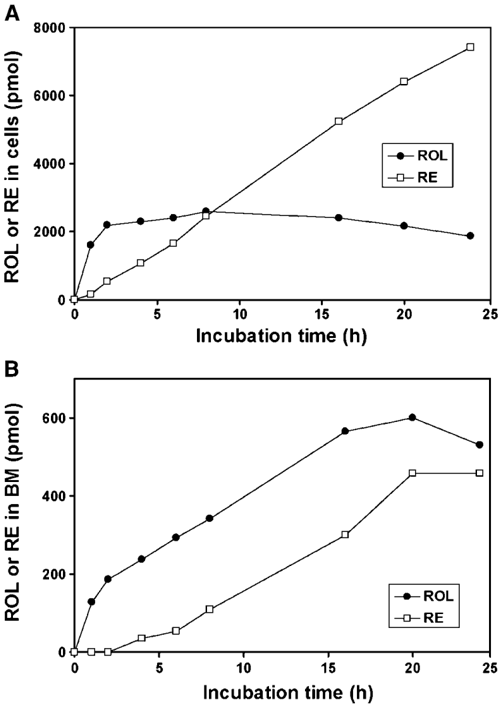
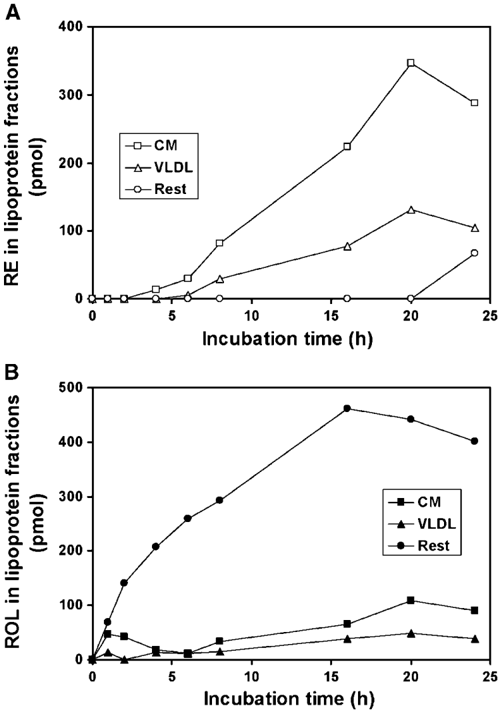
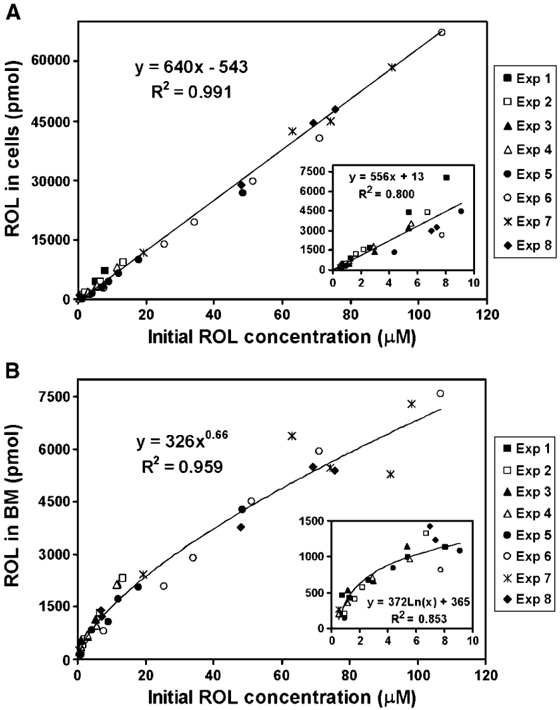
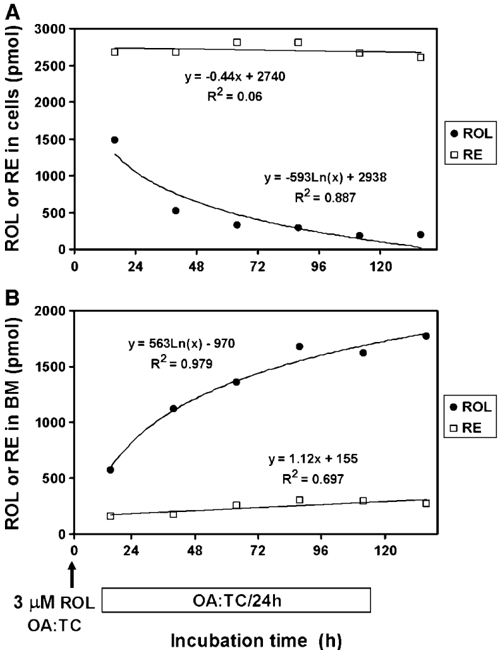
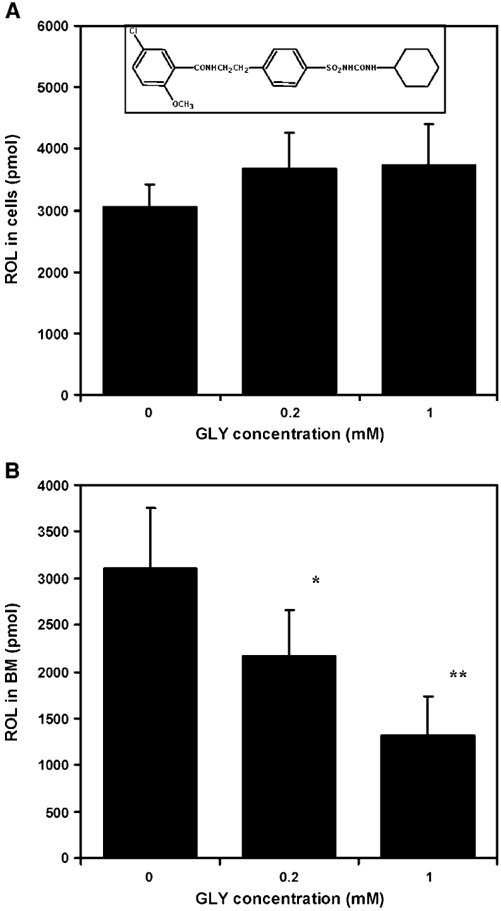
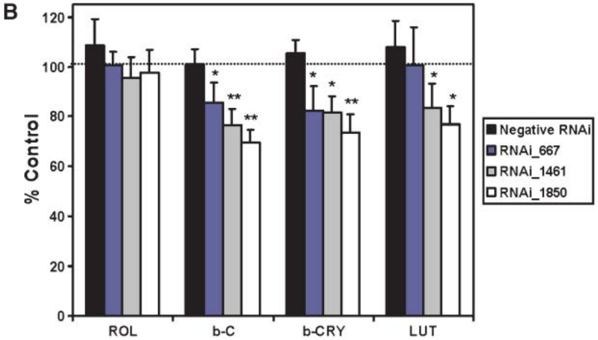
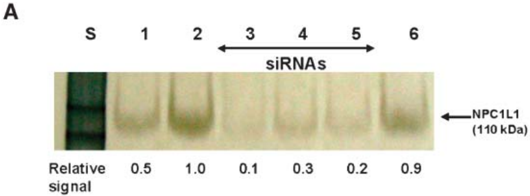
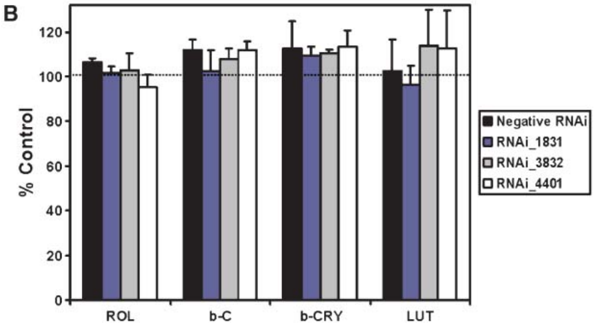
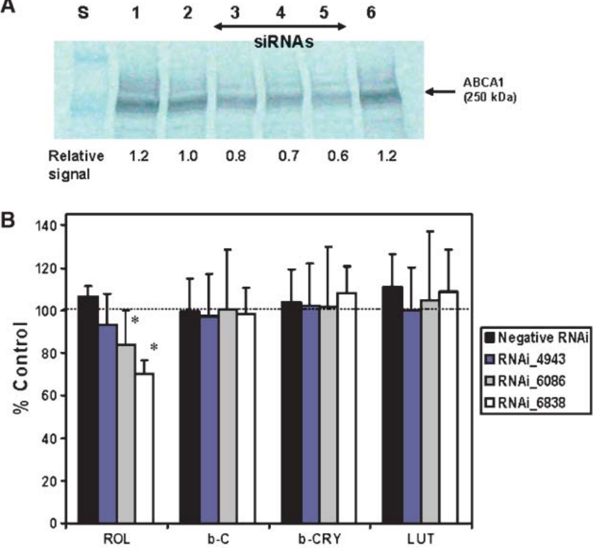
The purpose of this study was to compare the mechanisms of intestinal retinol (ROL) and carotenoid transport. When differentiated Caco-2 cells were incubated with ROL for varying times, cellular ROL plateaued within 2 h, whereas retinyl ester (RE) formation increased continuously. ROL and RE efflux into basolateral medium (BM) increased linearly with time, ROL in the nonlipoprotein fraction and REs in chylomicrons (CMs). In contrast to carotenoids, ROL uptake was proportional to ROL concentration (0.5-110 microM). ROL efflux into BM occurred via two processes: a) a saturable process at low concentrations (<10 microM) and b) a nonsaturable process at higher concentrations. When ROL-loaded cells were maintained on retinoid-free medium, free ROL, but not REs, was secreted into BM. Glyburide significantly reduced ROL efflux but not ROL uptake. Inhibition of ABCA1 protein expression by small interfering RNAs decreased ROL efflux but not carotenoid efflux. Scavenger receptor class B type I (SR-BI) inhibition did not affect ROL transport but decreased carotenoid uptake. The present data suggest that a) ROL enters intestinal cells by diffusion, b) ROL efflux is partly facilitated, probably by the basolateral transporter ABCA1, and c) newly synthesized REs, but not preformed esters, are incorporated into CM and secreted. In contrast to ROL transport, carotenoid uptake is mediated by the apical transporter SR-BI, and carotenoid efflux occurs exclusively via their secretion in CM.
Overview
The claims and statistics of this paper haven’t been checked yet.
Free: it reads the open-access text and checks the first 5 claims that cite a source we can check. Create a free account to check every claim.
Integrity signals
Registry
Cites
Statistics
Figures
Verification
Claims the paper makes
The claims and statistics of this paper haven’t been checked yet.
Free: it reads the open-access text and checks the first 5 claims that cite a source we can check. Create a free account to check every claim.
Claims other papers make about this one
Each is checked against this paper’s own text: does it say what the citing paper says it does?
The cited source says what the claim attributes to it.
In the citing paper
“Unlike retinyl esters, which are hydrolyzed to retinol in the small intestine followed by rapid absorption by enterocytes, uptake of carotenoids is mediated and regulated by scavenger receptor class-B type-I (SR-BI).131,132”
From Chemistry of the Retinoid (Visual) Cycle (2014) · cites this paper as [131]
Self-check
Percentages, sums and reported differences re-computed from the paper’s own numbers.
The self-check needs the paper’s full text.
Citations
Cites
A SIMPLE METHOD FOR THE ISOLATION AND PURIFICATION OF TOTAL LIPIDES FROM ANIMAL TISSUES
Folch, J., Lees, M., & Stanley, G. H. S. (1957) · Journal of Biological Chemistry · doi:10.1016/s0021-9258(18)64849-5 · Cited by 65,189
Modern Nutrition in Health and Disease.
(1988) · Annals of Internal Medicine · doi:10.7326/0003-4819-108-3-508_7 · Cited by 3,379
Niemann-Pick C1 Like 1 Protein Is Critical for Intestinal Cholesterol Absorption
Altmann, S. W., Davis, H. R., Zhu, L.-J., Yao, X., Hoos, L. M., Tetzloff, G., Iyer, S. P. N., Maguire, M., Golovko, A., Zeng, M., et al. (2004) · Science · doi:10.1126/science.1093131 · Cited by 1,577
Modern Nutrition in Health and Disease
Feldman, E. B. (1999) · The American Journal of Clinical Nutrition · doi:10.1093/ajcn/70.5.948 · Cited by 1,423
ATP-binding Cassette Transporter A1 (ABCA1) Functions as a Cholesterol Efflux Regulatory Protein
Wang, N., Silver, D. L., Thiele, C., & Tall, A. R. (2001) · Journal of Biological Chemistry · doi:10.1074/jbc.m102348200 · Cited by 482
Vitamin A metabolism: new perspectives on absorption, transport, and storage
Blomhoff, R., Green, M. H., Green, J. B., Berg, T., & Norum, K. R. (1991) · Physiological Reviews · doi:10.1152/physrev.1991.71.4.951 · Cited by 447 · cited 2×
“Several studies have shown that the recovery of ingested ROL into lymph varied between 20% and 60% (6, 37, 38).”
BackgroundHuang, H. S., & Goodman, D. S. (1965) · Journal of Biological Chemistry · doi:10.1016/s0021-9258(18)97256-x · Cited by 376
The intestinal absorption and metabolism of vitamin A and beta-carotene in man.
Goodman, D. S., Blomstrand, R., Werner, B., Huang, H. S., & Shiratori, T. (1966) · Journal of Clinical Investigation · doi:10.1172/jci105468 · Cited by 349 · cited 1×
“Several studies have shown that the recovery of ingested ROL into lymph varied between 20% and 60% (6, 37, 38).”
BackgroundMembrane transport of long-chain fatty acids: evidence for a facilitated process
Abumrad, N., Harmon, C., & Ibrahimi, A. (1998) · Journal of Lipid Research · doi:10.1016/s0022-2275(20)33310-1 · Cited by 326
During, A., Dawson, H. D., & Harrison, E. H. (2005) · The Journal of Nutrition · doi:10.1093/jn/135.10.2305 · Cited by 325 · cited 3×
“ing in the intestinal cell is a facilitated process that could involve more than one transporter (15).”
BackgroundSelf-citation
Research works printed but not linked: 3
- Levin, M. S. 1994. Intestinal absorption and metabolism of vita- min A. In Physiology and Gastrointestinal Tract. 3 rd edition. L. R. Johnson, editor. Raven Press, New York. 1957-1978.
- Huang, H. S., and D. S. Goodman. 1965. Vitamin A and ca- rotenoids. I. Intestinal absorption and metabolism of 14 C-labeled vitamin A alcohol and b-carotene in the rat. J. Biol. Chem. 240: 2839-2844. · DOI · Paper page
- Kane, J. P., and R. J. Havel. 1995. Disorders of the biogenesis and secretion of lipoproteins containing the B apolipoproteins. In The Metabolic and Molecular Bases of Inherited Disorders, C. R. Scriver, A. L. Beaudet, W. S. Sly, and D. Valle, editors. McGraw- Hill, New York. 1853-1885.
Cited by
Iqbal, J., & Hussain, M. M. (2009) · American Journal of Physiology-Endocrinology and Metabolism · doi:10.1152/ajpendo.90899.2008 · Cited by 811
Vitamin A metabolism: An update
D’Ambrosio, D. N., Clugston, R. D., & Blaner, W. S. (2011) · Nutrients · doi:10.3390/nu3010063 · Cited by 562
“SR-B1 expression in transfected COS-7 cells [11] and in intestinal Caco-2 cells [12] was found to confer on these cells the ability to take up β-carotene from mixed bile salt micelles, phospholipid small unilamellar vesicles, and triglyceride emulsions, thus, providing further evidence for a role for SR-B1 in β-carote…”
BackgroundInfluentialRetinol and retinyl esters: biochemistry and physiology
O'Byrne, S. M., & Blaner, W. S. (2013) · Journal of Lipid Research · doi:10.1194/jlr.r037648 · Cited by 378
Mechanisms involved in the intestinal absorption of dietary vitamin A and provitamin A carotenoids
Harrison, E. H. (2012) · Biochimica et Biophysica Acta (BBA) - Molecular and Cell Biology of Lipids · doi:10.1016/j.bbalip.2011.06.002 · Cited by 365
“Other experiments in the author's laboratoryhave suggested the role of transporters in retinol efflux in Caco-2 cells [8].”
BackgroundMethodInfluentialSelf-citationChemistry of the Retinoid (Visual) Cycle
Kiser, P. D., Golczak, M., & Palczewski, K. (2014) · Chemical Reviews · doi:10.1021/cr400107q · Cited by 353
Absorption of Vitamin A and Carotenoids by the Enterocyte: Focus on Transport Proteins
Reboul, E. (2013) · Nutrients · doi:10.3390/nu5093563 · Cited by 290
“It has been suggested that it could facilitate the efflux of free retinol from intestinal cells [47].”
BackgroundBohn, T., Desmarchelier, C., Dragsted, L. O., Nielsen, C. S., Stahl, W., Rühl, R., Keijer, J., & Borel, P. (2017) · Molecular Nutrition & Food Research · doi:10.1002/mnfr.201600685 · Cited by 249
“Though it was shown that ABCA1 is not involved in the efflux of carotenoids to HDL at the basolateral side of Caco-2 cells [153], a recent study demonstrated that a fraction of carotenoids, at least the xanthophylls, is transferred via ABCA1 to APOA1, not directly to HDL [156].”
Lobo, G. P., Hessel, S., Eichinger, A., Noy, N., Moise, A. R., Wyss, A., Palczewski, K., & Von Lintig, J. (2010) · The FASEB Journal · doi:10.1096/fj.09-150995 · Cited by 248
“SR-B1 facilitates the absorption of dietary lipids, including , -carotene (12, 14), whereas BCMO1 converts absorbed , -carotene to retinaldehyde (19) that can be oxidized to RA.”
BackgroundReboul, E., & Borel, P. (2011) · Progress in Lipid Research · doi:10.1016/j.plipres.2011.07.001 · Cited by 240
Colors with Functions: Elucidating the Biochemical and Molecular Basis of Carotenoid Metabolism
von Lintig, J. (2010) · Annual Review of Nutrition · doi:10.1146/annurev-nutr-080508-141027 · Cited by 237
Scientific Opinion on Dietary Reference Values for vitamin A
EFSA Panel on Dietetic Products, N. (2015) · EFSA Journal · doi:10.2903/j.efsa.2015.4028 · Cited by 232
“…enters by diffusion, and 529 this is likely true for other cell types (During et al., 2002; During and Harrison, 2004; During et al., 530 2005; During and Harrison, 2007), although part of the uptake of RBP-bound retinol into specific 531 target tissues has been shown to be mediated by a cell…”
BackgroundInfluentialDisturbed Vitamin A Metabolism in Non-Alcoholic Fatty Liver Disease (NAFLD)
Saeed, A., Dullaart, R., Schreuder, T., Blokzijl, H., & Faber, K. (2017) · Nutrients · doi:10.3390/nu10010029 · Cited by 227
“Next, retinol is re-esterified to retinyl esters, mainly by lecithin:retinol acyl transferase (LRAT) and diacylglycerol O-acyltransferase (DGAT1), sequestered into chylomicrons (CM) and secreted to the circulation [34,35].”
BackgroundNichols, Z., & Vogt, R. G. (2008) · Insect Biochemistry and Molecular Biology · doi:10.1016/j.ibmb.2007.11.003 · Cited by 206
“During et al., 2005; During and Harrison 2007).”
BackgroundThe Role of Vitamin A in Wound Healing
Polcz, M. E., & Barbul, A. (2019) · Nutrition in Clinical Practice · doi:10.1002/ncp.10376 · Cited by 205
Eroglu, A., & Harrison, E. H. (2013) · Journal of Lipid Research · doi:10.1194/jlr.r039537 · Cited by 192
Self-citationAbsorption and Metabolism of Xanthophylls
Kotake-Nara, E., & Nagao, A. (2011) · Marine Drugs · doi:10.3390/md9061024 · Cited by 174
“mediated by facilitated diffusion [46–53].”
The Vitamin A–Redox Hypothesis: A Biochemical Basis for Honest Signaling via Carotenoid Pigmentation
Hill, G. E., & Johnson, J. D. (2012) · The American Naturalist · doi:10.1086/667861 · Cited by 174
“The important role of SR-B1 in regulating carotenoid uptake has been demonstrated in both the human retina (During and Harrison 2007) and in the guts of Drosophila (Kiefer et al. 2002), domestic mice (van Bennekum et al. 2005; Lobo et al. 2010), and humans (Borel et al. 2011).”
Vitamin A Absorption, Storage and Mobilization
Blaner, W. S., Li, Y., Brun, P.-J., Yuen, J. J., Lee, S.-A., & Clugston, R. D. (2016) · Subcellular Biochemistry · doi:10.1007/978-94-024-0945-1_4 · Cited by 161
During, A., Doraiswamy, S., & Harrison, E. H. (2008) · Journal of Lipid Research · doi:10.1194/jlr.m700580-jlr200 · Cited by 158
Self-citationHigh-density lipoprotein receptor SCARB1 is required for carotenoid coloration in birds
Toomey, M. B., Lopes, R. J., Araújo, P. M., Johnson, J. D., Gazda, M. A., Afonso, S., Mota, P. G., Koch, R. E., Hill, G. E., Corbo, J. C., et al. (2017) · Proceedings of the National Academy of Sciences · doi:10.1073/pnas.1700751114 · Cited by 156
Genetic variations involved in interindividual variability in carotenoid status
Borel, P. (2012) · Molecular Nutrition & Food Research · doi:10.1002/mnfr.201100322 · Cited by 156
Borel, P., Lietz, G., Goncalves, A., Szabo de Edelenyi, F., Lecompte, S., Curtis, P., Goumidi, L., Caslake, M. J., Miles, E. A., Packard, C., et al. (2013) · The Journal of Nutrition · doi:10.3945/jn.112.172734 · Cited by 156
“To date, the involvement of these scavenger receptors in the intestinal uptake of retinol has been studied only for SR-BI (7).”
BackgroundBeydoun, M. A., Chen, X., Jha, K., Beydoun, H. A., Zonderman, A. B., & Canas, J. A. (2018) · Nutrition Reviews · doi:10.1093/nutrit/nuy044 · Cited by 174
Moussa, M., Landrier, J., Reboul, E., Ghiringhelli, O., Coméra, C., Collet, X., Fröhlich, K., Böhm, V., & Borel, P. (2008) · Journal of Nutrition · doi:10.1093/jn/138.8.1432 · Cited by 151
Provitamin A metabolism and functions in mammalian biology
von Lintig, J. (2012) · The American Journal of Clinical Nutrition · doi:10.3945/ajcn.112.034629 · Cited by 138
von Lintig, J., Kiser, P. D., Golczak, M., & Palczewski, K. (2010) · Trends in Biochemical Sciences · doi:10.1016/j.tibs.2010.01.005 · Cited by 119
Mammalian Metabolism of β-Carotene: Gaps in Knowledge
Shete, V., & Quadro, L. (2013) · Nutrients · doi:10.3390/nu5124849 · Cited by 115
“Briefly, we would like to highlight that evidence indicates SR-BI, the specific receptor for HDL [110], as a key player in the intestinal absorption of β-carotene [92,111–113].”
BackgroundThe stellate cell system (vitamin A-storing cell system)
Senoo, H., Mezaki, Y., & Fujiwara, M. (2017) · Anatomical Science International · doi:10.1007/s12565-017-0395-9 · Cited by 127
Palozza, P., Parrone, N., Simone, R. E., & Catalano, A. (2010) · Archives of Biochemistry and Biophysics · doi:10.1016/j.abb.2010.06.031 · Cited by 114
Fleshman, M. K., Lester, G. E., Riedl, K. M., Kopec, R. E., Narayanasamy, S., Curley, R. W., Schwartz, S. J., & Harrison, E. H. (2011) · Journal of Agricultural and Food Chemistry · doi:10.1021/jf200416a · Cited by 102
“Vitamin A deficiency unfortunately affects over 100 million people throughout the world (1).”
BackgroundSelf-citationMechanisms of Transport and Delivery of Vitamin A and Carotenoids to the Retinal Pigment Epithelium
Harrison, E. H. (2019) · Molecular Nutrition & Food Research · doi:10.1002/mnfr.201801046 · Cited by 97
Self-citationIntestinal absorption of vitamin D: from the meal to the enterocyte
Reboul, E. (2014) · Food & Function · doi:10.1039/c4fo00579a · Cited by 103
Borel, P., de Edelenyi, F. S., Vincent-Baudry, S., Malezet-Desmoulin, C., Margotat, A., Lyan, B., Gorrand, J.-M., Meunier, N., Drouault-Holowacz, S., & Bieuvelet, S. (2011) · Annals of Medicine · doi:10.3109/07853890.2010.531757 · Cited by 91
Chemistry, Stability, and Biological Actions of Carotenoids
Yahia, E. M., & Ornelas‐Paz, J. D. J. (2009) · Wiley eBooks · doi:10.1002/9780813809397.ch7 · Cited by 112
Pick, U., Zarka, A., Boussiba, S., & Davidi, L. (2018) · Planta · doi:10.1007/s00425-018-3050-3 · Cited by 90
Transcriptional Factors Mediating Retinoic Acid Signals in the Control of Energy Metabolism
Zhang, R., Wang, Y., Li, R., & Chen, G. (2015) · International Journal of Molecular Sciences · doi:10.3390/ijms160614210 · Cited by 109
“In the postprandial period, REs and intact carotenoids are secreted into lymph as chylomicrons, while a minor fraction of free retinol is secreted into portal circulation [16], possibly due to the secretion of high-density lipoprotein by intestine via an ATP-binding cassette transporter ABCA1-dependent pathway [17].”
BackgroundReboul, E., Trompier, D., Moussa, M., Klein, A., Landrier, J., Chimini, G., & Borel, P. (2008) · American Journal of Clinical Nutrition · doi:10.3945/ajcn.2008.26559 · Cited by 89
Biehler, E., Hoffmann, L., Krause, E., & Bohn, T. (2011) · Journal of Nutrition · doi:10.3945/jn.111.143388 · Cited by 91
“, via the scavenger receptor, class B type I, seems to be involved in the absorption of especially b-carotene and to a lesser extent in lutein absorption (44) across the apical membrane of intestinal cells (45,46), a hypothesis that is further supported by satiable b-carotene uptake kinetics (35,42).”
BackgroundRetinoids in health and disease: A role for hepatic stellate cells in affecting retinoid levels
Haaker, M. W., Vaandrager, A. B., & Helms, J. B. (2020) · Biochimica et Biophysica Acta (BBA) - Molecular and Cell Biology of Lipids · doi:10.1016/j.bbalip.2020.158674 · Cited by 104
The interrelationship between bile acid and vitamin A homeostasis
Saeed, A., Hoekstra, M., Hoeke, M. O., Heegsma, J., & Faber, K. N. (2017) · Biochimica et Biophysica Acta (BBA) - Molecular and Cell Biology of Lipids · doi:10.1016/j.bbalip.2017.01.007 · Cited by 98
Gylling, H. K., Hallikainen, M., Nissinen, M. J., & Miettinen, T. A. (2009) · Clinical Nutrition · doi:10.1016/j.clnu.2009.08.005 · Cited by 78
New insights and changing paradigms in the regulation of vitamin A metabolism in development
Shannon, S. R., Moise, A. R., & Trainor, P. A. (2017) · Wiley Interdisciplinary Reviews Developmental Biology · doi:10.1002/wdev.264 · Cited by 67
“Carotenoids are absorbed in the intestine and are transported in the circulation by association with lipoproteins, mostly chylomicrons.(62,63) Carotenoids are taken up by several organs and tissues such as the liver, eye, ovaries, and fat.”
BackgroundReboul, E. (2022) · Progress in Lipid Research · doi:10.1016/j.plipres.2022.101208 · Cited by 73
Bioaccessibility, Bioavailability and Bioactivities of Carotenoids in Microalgae: A Review
Duan, X., Xie, C., Hill, D. R. A., Barrow, C. J., Dunshea, F. R., Martin, G. J. O., & Suleria, H. A. R. (2024) · Food Reviews International · doi:10.1080/87559129.2023.2165095 · Cited by 62
“[101] Moreover, the absorption competition has been observed between carotenoids, other fat-soluble micronutrients and lipid-digested products due to the selectivity of the transport proteins.”
BackgroundSato, Y., Suzuki, R., Kobayashi, M., Itagaki, S., Hirano, T., Noda, T., Mizuno, S., Sugawara, M., & Iseki, K. (2012) · Journal of Pharmacy & Pharmaceutical Sciences · doi:10.18433/j38k56 · Cited by 72
“The involvement of this membrane transporter is not surprising since SR-B1 seems to have low substrate specificity, mediating the transport of many lipophilic substrates (17, 22, 31, 32).”
BackgroundMethods for Assessing Aspects of Carotenoid Bioavailability
Biehler, E., & Bohn, T. (2010) · Current Nutrition & Food Science · doi:10.2174/157340110790909545 · Cited by 63
“uptake models are cheaper and simpler, with only the apical side and the cells as a compartment, transport models with both basolateral and apical side compartment have been developed, allowing the studying of transport fluxes and sequestration through the cell monolayer [122-125].”
BackgroundMapelli‐Brahm, P., Desmarchelier, C., Margier, M., Reboul, E., Meléndez‐Martínez, A. J., & Borel, P. (2018) · Molecular Nutrition & Food Research · doi:10.1002/mnfr.201800703 · Cited by 62
Chemistry, Stability, and Biological Actions of Carotenoids
Yahia, E. M., Ornelas‐Paz, J. D. J., Emanuelli, T., Lopes, E. J., Zepka, L. Q., & Cervantes‐Paz, B. (2017) · Wiley eBooks · doi:10.1002/9781119158042.ch15 · Cited by 61
Martin Ask, N., Leung, M., Radhakrishnan, R., & Lobo, G. P. (2021) · Nutrients · doi:10.3390/nu13113987 · Cited by 52
“The intestinal uptake and efflux of dietary retinol have been theorized to be facilitated by transport proteins alongside passive diffusion, but the specific transport proteins involved were never fully elucidated [41].”
BackgroundAherne, S. A., Daly, T., Jiwan, M. A., O’Sullivan, L., & O’Brien, N. M. (2010) · Food Research International · doi:10.1016/j.foodres.2010.04.026 · Cited by 56
All-trans Retinoic Acid as a Versatile Cytosolic Signal Modulator Mediated by CRABP1
Nagpal, I., & Wei, L. (2019) · International Journal of Molecular Sciences · doi:10.3390/ijms20153610 · Cited by 57
“ROL can be directly absorbed by the mucosal cell of the small intestine [40], while REs are further hydrolyzed for intestinal absorption by enzymes such as pancreatic triglyceride lipase and pancreatic lipase-related protein 2 [32,41].”
BackgroundVitamin A and provitamin A carotenoids
Blaner, W. S. (2020) · Elsevier eBooks · doi:10.1016/b978-0-323-66162-1.00005-6 · Cited by 89
The role of retinoic acid in the production of immunoglobulin A
Bos, A. V., van Egmond, M., & Mebius, R. E. (2022) · Mucosal Immunology · doi:10.1038/s41385-022-00509-8 · Cited by 55
Sun, H. (2012) · Biochimica et Biophysica Acta (BBA) - Molecular and Cell Biology of Lipids · doi:10.1016/j.bbalip.2011.06.010 · Cited by 46
“In addition to a retinoid transporter/ lipid flippase, another possibility is that in other tissues, ABCA4 functions similarly to ABCA1, its closest homolog that functions in cholesterol and retinol efflux from cells [103,104,113].”
Guo, Z., Liu, Y., & Luo, Y. (2022) · Critical Reviews in Food Science and Nutrition · doi:10.1080/10408398.2022.2119204 · Cited by 49
“Furthermore, ABCA1 may promote ROL efflux in intestinal cells (During and Harrison 2007).”
BackgroundTsuchida, K., & Sakudoh, T. (2015) · Archives of Biochemistry and Biophysics · doi:10.1016/j.abb.2014.12.029 · Cited by 50
Identification of Apolipoprotein A-I as a Retinoic Acid-binding Protein in the Eye
Summers, J. A., Harper, A. R., Feasley, C. L., Van-Der-Wel, H., Byrum, J. N., Hermann, M., & West, C. M. (2016) · Journal of Biological Chemistry · doi:10.1074/jbc.m116.725523 · Cited by 35
“Interestingly, ABCA1 has also been shown to mediate basolateral secretion of free unesterified retinol in an intestinal cell line following absorption of vitamin A (53) similar to that described for basolateral secretion of unesterified cholesterol (54).”
BackgroundBlas, E. G., Mateo, R., Viñuela, J., Pérez‐Rodríguez, L., & Alonso‐Álvarez, C. (2013) · Physiological and Biochemical Zoology · doi:10.1086/671812 · Cited by 35
“It is known that a scavenger receptor type 1 (SR-B1) binds to high-density lipoproteins, which are the main xanthophyll carriers, thus potentially regulating carotenoid levels in specific tissues (Kiefer et al 2002; During and Harrison 2007).”
Gille, A., Hollenbach, R., Trautmann, A., Posten, C., & Briviba, K. (2019) · Food Research International · doi:10.1016/j.foodres.2017.12.040 · Cited by 34
Effects of Mixed Micellar Lipids on Carotenoid Uptake by Human Intestinal Caco-2 Cells
Kotake‐Nara, E., & Nagao, A. (2012) · Bioscience Biotechnology and Biochemistry · doi:10.1271/bbb.110777 · Cited by 39
Shi, Y., Obert, E., Rahman, B., Rohrer, B., & Lobo, G. P. (2017) · Scientific Reports · doi:10.1038/s41598-017-16498-9 · Cited by 31
Lerner, U. H. (2024) · Frontiers in Endocrinology · doi:10.3389/fendo.2024.1298851 · Cited by 45
Vitamin A: Nutritional Aspects of Retinoids and Carotenoids
Ross, A., & Harrison, E. H. (2013) · CRC Press eBooks · doi:10.1201/b15413-2 · Cited by 32
Self-citationGenetic Determinants of Dietary Antioxidant Status
Costa, L. A. D., García‐Bailo, B., Badawi, A. F., & El‐Sohemy, A. (2012) · Progress in molecular biology and translational science · doi:10.1016/b978-0-12-398397-8.00008-3 · Cited by 34
Mashurabad, P. C., Palsa, K., Palika, R., Ghosh, S., Nair, M. K., & Pullakhandam, R. (2015) · Archives of Biochemistry and Biophysics · doi:10.1016/j.abb.2015.11.002 · Cited by 32
O’Callaghan, Y. C., & O’Brien, N. M. (2010) · International Journal of Food Science & Technology · doi:10.1111/j.1365-2621.2010.02285.x · Cited by 29
Vitamin E Secretion by Caco-2 Monolayers to APOA1, but Not to HDL, Is Vitamer Selective
Nicod, N. M., & Parker, R. S. (2013) · Journal of Nutrition · doi:10.3945/jn.113.176834 · Cited by 26
“Measurements of basolateral secretion rates of such lipids by Caco-2 monolayers (40) therefore might be more accurately assessed by blocking SR-BI activity as in the present study.”
BackgroundA question of balance: achieving appropriate nutrient levels in biofortified staple crops
Sanahuja, G., Farré, G., Berman, J., Zorrilla‐López, U., Twyman, R. M., Capell, T., Christou, P., & Zhu, C. (2013) · Nutrition Research Reviews · doi:10.1017/s0954422413000176 · Cited by 33
Vitamin A, systemic T-cells, and the eye: Focus on degenerative retinal disease
Thirunavukarasu, A. J., Ross, A. C., & Gilbert, R. M. (2022) · Frontiers in Nutrition · doi:10.3389/fnut.2022.914457 · Cited by 31
Pinho, L. S., de Lima, P. M., de Sá, S. H. G., Chen, D., Campanella, O. H., Rodrigues, C. E. D. C., & Fávaro-Trindade, C. S. (2022) · Foods · doi:10.3390/foods11172557 · Cited by 27
Liu, X., Zhang, J., Chen, Z., Xiao, J., Zhou, A., Fu, Y., & Cao, Y. (2023) · Food Research International · doi:10.1016/j.foodres.2023.113328 · Cited by 24
Solanki, A. K., Kondkar, A. A., Fogerty, J., Su, Y., Kim, S. H., Lipschutz, J. H., Nihalani, D., Perkins, B. D., & Lobo, G. P. (2020) · Cells · doi:10.3390/cells9051099 · Cited by 24
Digestion and Intestinal Absorption of Dietary Carotenoids and Vitamin A ☆
Harrison, E. H., & Kopec, R. E. (2018) · Elsevier eBooks · doi:10.1016/b978-0-12-809954-4.00050-5 · Cited by 23
Self-citationSolanki, A. K., Kondkar, A. A., Fogerty, J., Su, Y., Kim, S.-H., Lipschutz, J. H., Nihalani, D., Perkins, B. D., & Lobo, G. P. (2020) · doi:10.20944/preprints202003.0296.v1 · Cited by 20
Provitamin A Carotenoids and Immune Function
Stephensen, C. B. (2012) · Humana Press eBooks · doi:10.1007/978-1-62703-203-2_16 · Cited by 19
Therapeutic Uses of Retinol and Retinoid-Related Antioxidants
Vašková, J., Stupák, M., Uğurbaş, M. V., Židzik, J., & Mičková, H. (2025) · Molecules · doi:10.3390/molecules30102191 · Cited by 27
“Retinol enters intestinal cells through simple diffusion within a range of approximately 0.5 to 130 μM [92].”
InfluentialLiu, Y., & Liu, Y. (2022) · Critical Reviews in Food Science and Nutrition · doi:10.1080/10408398.2022.2118229 · Cited by 18
“Previous studies have shown that SR-B1 down-regulation inhibits β-carotene absorption, which is not the case with NPC1L1 down-regulation (During and Harrison 2007).”
BackgroundLow-Density Lipoprotein Receptor Contributes to β-Carotene Uptake in the Maternal Liver
Shete, V., Costabile, B. K., Kim, Y.-K., & Quadro, L. (2016) · Nutrients · doi:10.3390/nu8120765 · Cited by 21
“In both instances, the scavenger receptor B1 (SR-B1) has been shown to mediate absorption of β-carotene in vivo and in vitro [26–31].”
BackgroundDurojaye, B. O., Riedl, K. M., Curley, R. W., & Harrison, E. H. (2019) · Journal of Lipid Research · doi:10.1194/jlr.m093161 · Cited by 18
“model that has been used to study the absorption of the C40 carotenes and xanthophylls (15, 16).”
MethodSelf-citationEpriliati, I., D’Arcy, B., & Gidley, M. J. (2009) · Journal of Agricultural and Food Chemistry · doi:10.1021/jf802226n · Cited by 16
Anti-DNA Damage Mechanisms and the Role of Carotenoids, Vitamin A, and Its Derivatives
Kołodziejczyk, A. M., & Karwowski, B. T. (2025) · Nutrients · doi:10.3390/nu17172721 · Cited by 17
“By contrast, the portion of retinol that is not converted into retinyl esters via intestinal cells is secreted directly into the bloodstream, where it can bind to retinol-binding protein (RBP) [40].”
Fan, S., Wang, F., Xie, Z., Zhao, C., Wang, P., Yan, L. E., Wang, X., Xu, Y., & Qiu, L. (2021) · Electronic Journal of Biotechnology · doi:10.1016/j.ejbt.2021.03.003 · Cited by 15
“mori), birds (Serinus canaria), mice, and humans [13,14,16,49,50].”
Vitamin A Metabolism, Storage and Tissue Delivery Mechanisms
Blaner, W. S., & Li, Y. (2015) · Wiley eBooks · doi:10.1002/9781118628003.ch1 · Cited by 14
Dutta, D., & Dutta, D. (2024) · Process Biochemistry · doi:10.1016/j.procbio.2024.01.003 · Cited by 11
Aster la vista: Unraveling the biochemical basis of carotenoid homeostasis in the human retina
Bandara, S., & Lintig, J. V. (2022) · BioEssays · doi:10.1002/bies.202200133 · Cited by 12
Co-cultures of enterocytes and hepatocytes for retinoid transport and metabolism
Rossi, C., Guantario, B., Ferruzza, S., Guguen‐Guillouzo, C., Sambuy, Y., Scarino, M. L., & Bellovino, D. (2012) · Toxicology in Vitro · doi:10.1016/j.tiv.2012.04.013 · Cited by 12
“The Caco-2 cell line has been shown to transport and partially metabolize carotenoids and ROH, and to package them into chylomicrons (CM) (During et al., 2005, 2002; During and Harrison, 2007; O’Sullivan et al., 2007).”
BackgroundDigestion and Intestinal Absorption of Dietary Carotenoids and Vitamin A
Harrison, E. H. (2012) · Elsevier eBooks · doi:10.1016/b978-0-12-382026-6.00062-2 · Cited by 10
Self-citationBoesch, C., Rimbach, G. H., Jungblut, A., & Frank, J. (2010) · Cytotechnology · doi:10.1007/s10616-010-9324-7 · Cited by 12
“The involvement of the scavenger receptor class B type I (SR-BI) in carotenoid uptake has been demonstrated (van Bennekum et al. 2005; During and Harrison 2007).”
BackgroundMethodInfluentialKamal, S., Junaid, M., Ejaz, A., Bibi, I., & Bigiu, N. (2021) · Springer eBooks · doi:10.1007/978-3-030-46459-2_19 · Cited by 10
Wang, S., Yu, D., Shi, Y., Jiang, L., Yang, F., & Yu, G. (2021) · Food Science and Technology · doi:10.1590/fst.68620 · Cited by 9
Anamthathmakula, P., Jeyakumar, S. M., Giridharan, N. V., & Vajreswari, A. (2014) · Journal of Atherosclerosis and Thrombosis · doi:10.5551/jat.22186 · Cited by 9
Carter, C. (2011) · ISRN Neurology · doi:10.5402/2011/394678 · Cited by 13
“Involved in retinol and alpha- and gamma-tocopherol transport [48, 49]”
BackgroundO’Sullivan, L., Aherne-Bruce, S. A., & O’Brien, N. M. (2009) · International Journal for Vitamin and Nutrition Research · doi:10.1024/0300-9831.79.56.337 · Cited by 11
“The exact number, identity, and specificity of the transporters involved are still under investigation [13].”
BackgroundResultInfluentialLobo, G. P., Pauer, G. J. T., Lipschutz, J. H., & Hagstrom, S. A. (2018) · Advances in experimental medicine and biology · doi:10.1007/978-3-319-75402-4_69 · Cited by 11
Paz-Gómez, D., Castillejos-López, M. D. J., Romero, Y., Flores‐Soto, E., Romero-Martínez, B. S., Vázquez-Pérez, J. A., González-Ávila, G., Ruiz, V., Carlos‐Reyes, Á., Velázquez‐Cruz, R., et al. (2025) · International Journal of Molecular Sciences · doi:10.3390/ijms26115302 · Cited by 8
“On the other hand, the intestinal absorption of β -carotenes is mediated by scavenger receptor class B (SR-B1) [64].”
The multifaceted roles of retinoids in eye development, vision, and retinal degenerative diseases
Engfer, Z. J., & Palczewski, K. (2024) · Current topics in developmental biology/Current Topics in Developmental Biology · doi:10.1016/bs.ctdb.2024.10.003 · Cited by 8
Antioxidant Vitamins and Their Use in Psychiatry
Mazlum, B. (2012) · Psikiyatride Guncel Yaklasimlar - Current Approaches in Psychiatry · doi:10.5455/cap.20120429 · Cited by 8
“15,15′-monooksijenaz-1 (BCMO1) olmak üzere bir dizi enzim ile retinoik asit veya retinole çevrilir.[17,18] Retinil esterleri ve karotenoidler şilomikronların yapısına katılarak lenfatiklere salınır.”
Assessment of dietary carotenoid intake and biologic measurement of exposure in humans
Grainger, E. M., Webb, M. Z., Simpson, C., Chitchumroonchokchai, C., Riedl, K. M., Moran, N. E., & Clinton, S. K. (2022) · Methods in enzymology on CD-ROM/Methods in enzymology · doi:10.1016/bs.mie.2022.05.007 · Cited by 8
Song, J., & Wang, C. (2021) · Genomics · doi:10.1016/j.ygeno.2021.06.015 · Cited by 5
Absorption intestinale des vitamines liposolubles
Reboul, E. (2011) · Oléagineux Corps gras Lipides · doi:10.1051/ocl.2011.0369 · Cited by 11
Metadata
- Authors
- During, A., & Harrison, E. H.
- Affiliations
- Johns Hopkins University (US)
- The Ohio State University (US)
- Corresponding author
- During, Alexandrine
- Venue
- Journal of Lipid Research
- Publisher
- Elsevier BV
- Published
- 2007-10
- Volume
- 48
- Issue
- 10
- Pages
- 2283-2294
- ISSN
- 0022-2275 (ISSN-L)
- OpenAlex
- W2062582874
- Cited by
- 137
- References
- 42
- Citations by year
- 2026: 7 · 2025: 6 · 2024: 4 · 2023: 3 · 2022: 10 · 2021: 6 · 2020: 4 · 2019: 8 · 2018: 5 · 2017: 11 · 2016: 4 · 2015: 6 · 2014: 4 · 2013: 11 · 2012: 14
- FWCI
- 3.54
- Type
- journal article
- Language
- en
- Open access
- hybrid
- doi.org
- Licence
- cc-by
- www.elsevier.com/tdm/userlicense/1.0/ (tdm)
- creativecommons.org/licenses/by/4.0/ (vor, 4764 d)
- Locations
- Journal of Lipid Research (publishedVersion, cc-by)
- PubMed (publishedVersion)
- DOAJ (DOAJ: Directory of Open Access Journals) (submittedVersion, cc-by-sa)
- Funders
- National Institutes of Health
- National Heart, Lung, and Blood Institute (HL-49879, R01HL049879)
- National Institute of Diabetes and Digestive and Kidney Diseases (R01DK044498, DK44498)
- Topics
- Health Sciences › Medicine › Oncology › Drug Transport and Resistance Mechanisms
- Life Sciences › Biochemistry, Genetics and Molecular Biology › Molecular Biology › Retinoids in leukemia and cellular processes
- Life Sciences › Biochemistry, Genetics and Molecular Biology › Biochemistry › Cholesterol and Lipid Metabolism
- Keywords
- retinol transport, carotenoid transport, intestinal absorption, Caco-2 cells, retinyl esters, ABCA1, scavenger receptor class B type I, chylomicrons, basolateral efflux, glibenclamide, diffusion, vitamin A
- MeSH terms
- Biological Transport, Carotenoids, Chromatography, High Pressure Liquid, Chylomicrons, Diffusion, Dose-Response Relationship, Drug, Esters, Humans, Kinetics, Lipids, Lipoproteins, Models, Biological, Retinoids, Time Factors, Vitamin A, Caco-2 Cells, Lipid Metabolism, Scavenger Receptors, Class B
About these checks
Registry, retraction, Cites and statistics results are computed, not judged, with one exception: a printed reference that no index lists is read once by a model before it counts as a citation error. Claims are extracted by a model and kept only when their quote appears verbatim in the text; each cited source is then checked, with a model’s help, for whether it says what the claim relies on. Those verdicts can be wrong — read the claim’s quote and the cited source before relying on one.
Statistics and arithmetic are recomputed, not judged.
Confidence bands are shown only for fields calibrated on our annotated test set. None is calibrated yet, so no band is shown.
What counts as a claim ›How we measure confidence ›How we check this ›
Are you an author, or do you see a problem with this page? Request a review
Data sources
Bibliographic data: Semantic Scholar, OpenAlex, Crossref.
Contains information from the Semantic Scholar Academic Graph Datasets, made available under the ODC Attribution License (ODC-BY 1.0).
Semantic Scholar’s data is described in: Kinney, R., et al. (2023). The Semantic Scholar Open Data Platform. arXiv:2301.10140.
