

Monitoring disease activity in multiple sclerosis using serum neurofilament light protein
Open accessThe DOI matches its Crossref record; 32 of the 32 references it cites were found in a registry or an index.
Abstract
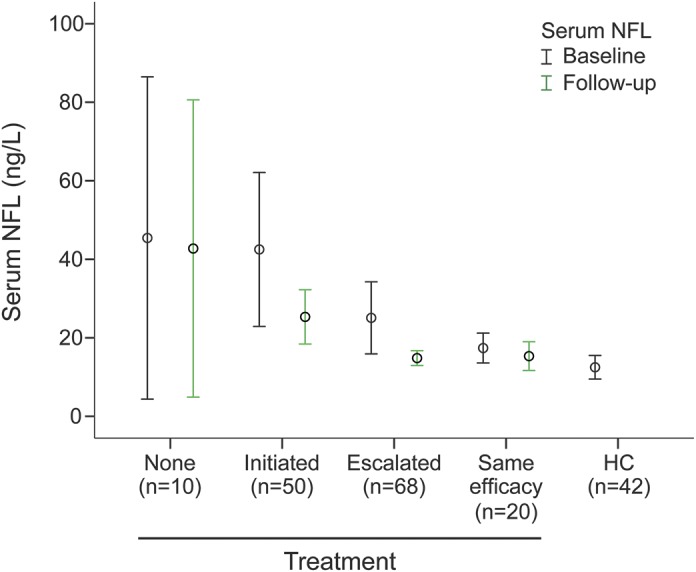
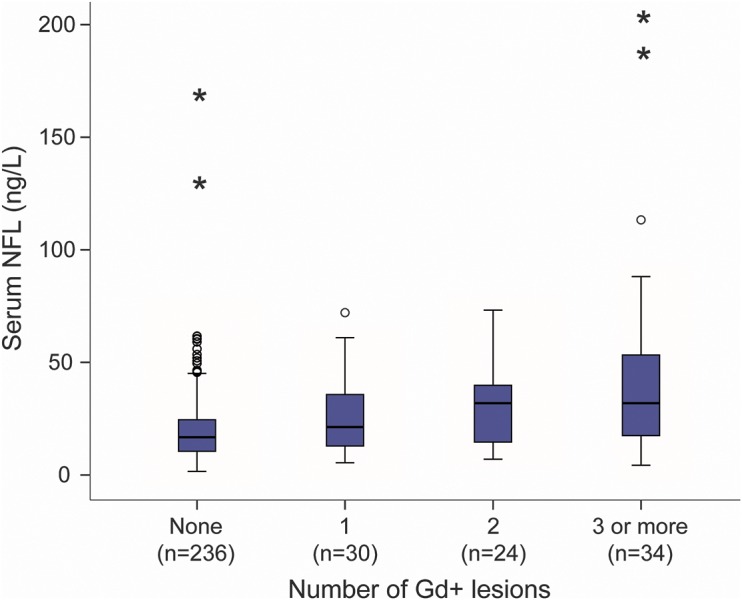
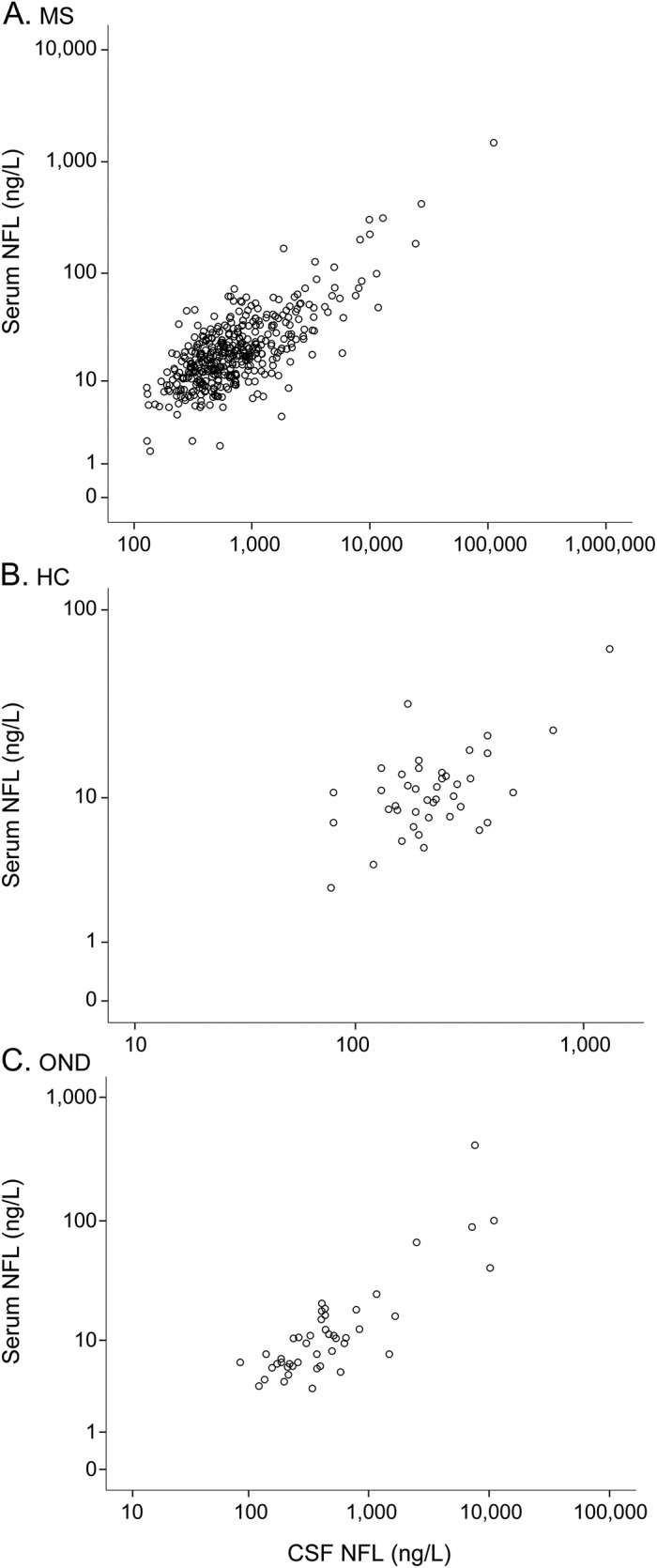
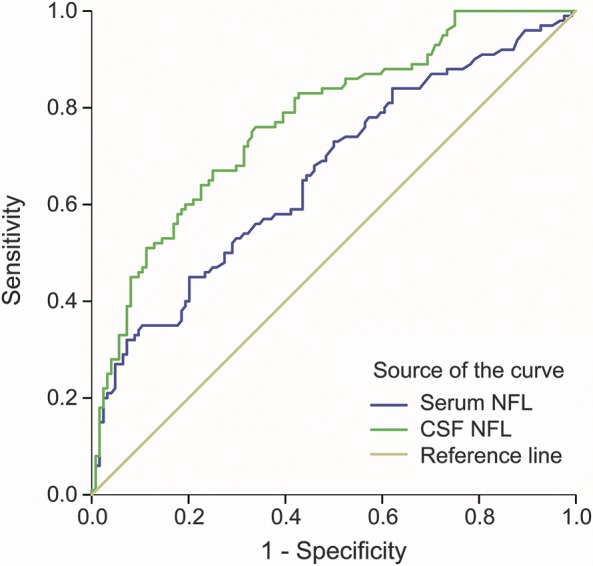
Objective: To examine the effects of disease activity, disability, and disease-modifying therapies (DMTs) on serum neurofilament light (NFL) and the correlation between NFL concentrations in serum and CSF in multiple sclerosis (MS). Methods: NFL concentrations were measured in paired serum and CSF samples (n = 521) from 373 participants: 286 had MS, 45 had other neurologic conditions, and 42 were healthy controls (HCs). In 138 patients with MS, the serum and CSF samples were obtained before and after DMT treatment with a median interval of 12 months. The CSF NFL concentration was measured with the UmanDiagnostics NF-light enzyme-linked immunosorbent assay. The serum NFL concentration was measured with an in-house ultrasensitive single-molecule array assay. Results: In MS, the correlation between serum and CSF NFL was r = 0.62 (p < 0.001). Serum concentrations were significantly higher in patients with relapsing-remitting MS (16.9 ng/L) and in patients with progressive MS (23 ng/L) than in HCs (10.5 ng/L, p < 0.001 and p < 0.001, respectively). Treatment with DMT reduced median serum NFL levels from 18.6 (interquartile range [IQR] 12.6–32.7) ng/L to 15.7 (IQR 9.6–22.7) ng/L (p < 0.001). Patients with relapse or with radiologic activity had significantly higher serum NFL levels than those in remission (p < 0.001) or those without new lesions on MRI (p < 0.001). Conclusions: Serum and CSF NFL levels were highly correlated, indicating that blood sampling can replace CSF taps for this particular marker. Disease activity and DMT had similar effects on serum and CSF NFL concentrations. Repeated NFL determinations in peripheral blood for detecting axonal damage may represent new possibilities in MS monitoring.
Overview
The claims and statistics of this paper haven’t been checked yet.
Free: it reads the open-access text and checks the first 5 claims that cite a source we can check. Create a free account to check every claim.
Integrity signals
Registry
Cites
Statistics
Figures
Verification
Claims the paper makes
The claims and statistics of this paper haven’t been checked yet.
Free: it reads the open-access text and checks the first 5 claims that cite a source we can check. Create a free account to check every claim.
Claims other papers make about this one
Each is checked against this paper’s own text: does it say what the citing paper says it does?
The check wasn’t confident either way, so it gives no verdict — never disputed.
In the citing paper
“Exenatide has also exhibited the potential to lessen brain deterioration and disability in patients with MS. 87”
From Anti-inflammatory role of glucagon-like peptide 1 receptor agonists and its clinical implications (2024) · cites this paper as [87]
Experimental — accuracy not yet measured
Self-check
Percentages, sums and reported differences re-computed from the paper’s own numbers.
The self-check needs the paper’s full text.
Citations
Cites
Rating neurologic impairment in multiple sclerosis: An expanded disability status scale (EDSS)
Kurtzke, J. F. (1983) · Neurology · doi:10.1212/wnl.33.11.1444 · Cited by 15,011
McDonald, W. I., Compston, A., Edan, G., Goodkin, D., Hartung, H., Lublin, F. D., McFarland, H. F., Paty, D. W., Polman, C. H., Reingold, S. C., et al. (2001) · Annals of Neurology · doi:10.1002/ana.1032 · Cited by 6,969 · cited 1×
“A relapse was defined as an episode of neurologic disturbance lasting for at least 24 hours that could not be better explained by another cause.(22)”
BackgroundAxonal transection in the lesions of multiple sclerosis
Trapp, B. D., Peterson, J., Ransohoff, R. M., Rudick, R., Mörk, S., & Bö, L. (1998) · New England Journal of Medicine · doi:10.1056/nejm199801293380502 · Cited by 4,029
Rissin, D. M., Kan, C. W., Campbell, T. G., Howes, S. C., Fournier, D. R., Song, L., Piech, T., Patel, P. P., Chang, L., Rivnak, A. J., et al. (2010) · Nature Biotechnology · doi:10.1038/nbt.1641 · Cited by 2,119 · cited 1×
“Recent technical developments have given rise to ultrasensitive antibody-based analytic techniques such as the single-molecule array (Simoa) technology, which enables quantification of protein biomarkers in blood samples at very low concentrations.(10) We recently developed a Simoa method for NFL in blood samples (ser…”
Multiple Sclerosis Severity Score: Using disability and disease duration to rate disease severity
Roxburgh, R. H. S. R., Seaman, S. R., Masterman, T., Hensiek, A. E., Sawcer, S. J., Vukusic, S., Achiti, I., Confavreux, C., Coustans, M., le Page, E., et al. (2005) · Neurology · doi:10.1212/01.wnl.0000156155.19270.f8 · Cited by 963 · cited 2×
“Disability was scored by the Expanded Disability Status Scale (EDSS),20 and disease severity was scored by the Multiple Sclerosis Severity Score.21 A relapse was defined as an episode of neurologic disturbance lasting for at least 24 hours that could not be better explained by another cause.22 A standard MRI protocol…”
MethodA consensus protocol for the standardization of cerebrospinal fluid collection and biobanking
Teunissen, C. E., Petzold, A., Bennett, J. L., Berven, F. S., Brundin, L., Comabella, M., Franciotta, D., Frederiksen, J. L., Fleming, J. O., Furlan, R., et al. (2009) · Neurology · doi:10.1212/wnl.0b013e3181c47cc2 · Cited by 845 · cited 12×
“They support serum NFL as a biomarker for monitoring disease activity and treatment intervention in MS.”
MethodInfluentialKuhle, J., Barro, C., Andreasson, U., Derfuss, T., Lindberg, R., Sandelius, Å., Liman, V., Norgren, N., Blennow, K., & Zetterberg, H. (2016) · Clinical Chemistry and Laboratory Medicine (CCLM) · doi:10.1515/cclm-2015-1195 · Cited by 740
Self-citationGisslén, M., Price, R. W., Andreasson, U., Norgren, N., Nilsson, S., Hagberg, L., Fuchs, D., Spudich, S., Blennow, K., & Zetterberg, H. (2016) · EBioMedicine · doi:10.1016/j.ebiom.2015.11.036 · Cited by 481 · cited 1×
“We also confirmed the high correlation between serum and CSF NFL levels in patients with OND as in previous studies on traumatic injury(15) and HIV encephalitis.(12) Because of the multiple treatment options, it is increasingly important to accurately identify patients with MS with insufficient treatment response.”
ResultSelf-citationSerum neurofilament light chain protein is a measure of disease intensity in frontotemporal dementia
Rohrer, J. D., Woollacott, I. O. C., Dick, K. M., Brotherhood, E., Gordon, E., Fellows, A., Toombs, J., Druyeh, R., Cardoso, M. J., Ourselin, S., et al. (2016) · Neurology · doi:10.1212/wnl.0000000000003154 · Cited by 432
Self-citationExploring the origins of grey matter damage in multiple sclerosis
Calabrese, M., Magliozzi, R., Ciccarelli, O., Geurts, J. J. G., Reynolds, R., & Martin, R. (2015) · Nature Reviews Neuroscience · doi:10.1038/nrn3900 · Cited by 414
Cited by
Items 301–400 of 425
Kulczyńska‐Przybik, A., Dulewicz, M., Doroszkiewicz, J., Borawska, R., Litman‐Zawadzka, A., Arslan, D., Kułakowska, A., Kochanowicz, J., & Mroczko, B. (2022) · Journal of Clinical Medicine · doi:10.3390/jcm11144122 · Cited by 7
“A relationship of elevated levels of NfL with brain atrophy and spinal cord volume loss has been described in the literature [9,22,32,33].”
BackgroundSerum neurofilament light and prediction of multiple sclerosis in clinically isolated syndrome
Zetterberg, H., & Svenningsson, A. (2019) · Neurology · doi:10.1212/wnl.0000000000006906 · Cited by 6
“In MS, serum NfL correlates with disease activity(4,5) and normalizes in response to effective treatment.(6,7) However, NfL is not specific to MS; data that have accumulated over the last few years show that blood NfL effectively identifies axonal injury and correlates with longitudinal measures of disease intensity/n…”
BackgroundSelf-citationFung, W. H., Wessels, M. H., Coerver, E. M. E., de Beukelaar, J., Bouvy, W. H., Canta, L. R., Gerlach, O. H. H., Hoitsma, E., Hoogervorst, E. L. J., de Jong, B. A., et al. (2025) · Journal of Neurology · doi:10.1007/s00415-025-13231-9 · Cited by 7
Ghafoor, D. D., Ahmad, D. O., Najmuldeen, H. H. R., Mohammed, S. J., Jalal, P. J., Mustafa, F. S., Alghofaili, F., Zangana, B. A., & Al-Bajalan, S. J. (2025) · Inflammopharmacology · doi:10.1007/s10787-025-02012-5 · Cited by 12
“NFL concentrations can be elevated during active disease phases, including relapses, and may also serve as an early indicator of neurodegeneration, even before clinical symptoms appear (Kuhle et al. 2019; Novakova et al. 2017).”
Fleischer, V., Schraad, M., González‐Escamilla, G., Schneider, R., Brummer, T., Steffen, F., Protopapa, M., Hanuscheck, N., Salmen, A., Meuth, S. G., et al. (2026) · Cell Reports Medicine · doi:10.1016/j.xcrm.2026.102609 · Cited by 7
Kakumoto, T., Matsukawa, T., Ishiura, H., Mori, H., Tsuji, S., & Toda, T. (2023) · Annals of Clinical and Translational Neurology · doi:10.1002/acn3.51818 · Cited by 5
Hansson, C., Lebrero‐Fernández, C., Schön, K., Angeletti, D., & Lycke, N. Y. (2023) · Mucosal Immunology · doi:10.1016/j.mucimm.2023.05.006 · Cited by 5
Niculae, A.-Ş., Niculae, L. E., Văcăraș, C., & Văcăraș, V. (2023) · Journal of Neurology · doi:10.1007/s00415-023-11841-9 · Cited by 5
Lee, H. L., Seok, J. M., Chung, Y. H., Min, J., Baek, S., Kim, S., Sohn, E., Kim, J., Kang, S., Hong, Y., et al. (2023) · Multiple Sclerosis and Related Disorders · doi:10.1016/j.msard.2023.104957 · Cited by 5
Bava, C. I., Valentino, P., Malucchi, S., Bottero, R., Martire, S., Sapio, A. D., & Bertolotto, A. (2024) · Multiple Sclerosis and Related Disorders · doi:10.1016/j.msard.2024.105748 · Cited by 7
“…chain (sNFL) is consolidated to be the most promising biomarker for DMTs efficacy (Akgün et al., 2019; Delcoigne et al., 2020; Disanto et al., 2017; Hyun et al., 2020; Ning and Wang, 2022; Novakova et al., 2017; Thebault et al., 2020; Valentino et al., 2021; Varhaug et al., 2019).”
InfluentialFoley, J. F., Xiong, K., Hoyt, T., Singh, C. M., Riddle, E. L., de Moor, C., Plavina, T., & Campbell, N. (2022) · Multiple Sclerosis Journal · doi:10.1177/13524585221130949 · Cited by 6
de Roquemaurel, A., Gallì, P., Landais, A. F., Avendano, S., & Cabre, P. (2019) · Journal of the Neurological Sciences · doi:10.1016/j.jns.2019.05.027 · Cited by 5
Alifirova, V. M., Kamenskikh, E. M., & Koroleva, E. S. (2019) · S S Korsakov Journal of Neurology and Psychiatry · doi:10.17116/jnevro2019119107 · Cited by 6
Clinical trials in multiple sclerosis: past, present, and future
Manouchehri, N., Shirani, A., Salinas, V. H., Tardo, L. M., Hussain, R. Z., Pitt, D., & Stüve, O. (2022) · Neurologia i Neurochirurgia Polska · doi:10.5603/pjnns.a2022.0041 · Cited by 7
Serum NFL levels should be used to monitor multiple sclerosis evolution – No
Myhr, K., & Torkildsen, Ø. (2019) · Multiple Sclerosis Journal · doi:10.1177/1352458519872891 · Cited by 6
Using serum neurofilament-light in clinical practice: Growing enthusiasm that may need bridling
Lycke, J., & Fox, R. J. (2024) · Multiple Sclerosis Journal · doi:10.1177/13524585241291452 · Cited by 5
Self-citationSalamatullah, H. K., Alkhiri, A., Ezzi, S., Alghamdi, G. A., Alharbi, G., Alzahrani, W. S. S., Alghaythee, H. K., Almaghrabi, A. A., Alturki, F., Alamri, A. F., et al. (2024) · Multiple Sclerosis and Related Disorders · doi:10.1016/j.msard.2024.105809 · Cited by 7
Inojosa, H., Werder, L. I., Haase, R., Proschmann, U., Benkert, P., Kühle, J., Huttner, H. B., Ziemssen, T., & Akgün, K. (2025) · Journal of Neuroinflammation · doi:10.1186/s12974-025-03674-2 · Cited by 4
Pretzsch, R., Mahdaoui, S. E., Johnson, P., Soares, M., Koerbel, K., Held, F., Bajrami, A., Pozzilli, V., Lucchini, M., Barbuti, E., et al. (2026) · Multiple Sclerosis Journal · doi:10.1177/13524585251407973 · Cited by 4
“12 In MS, NfL levels have been reported to be higher in patients with inflammatory disease activity compared to those with stable MS 13 and have been observed to increase both before relapse-associated worsening (RAW) and progression independent of relapse activity (PIRA).”
Kühle, J., Leppert, D., Comı, G., Stefano, N. D., Kappos, L., Freedman, M. S., Seitzinger, A., & Roy, S. (2024) · Therapeutic Advances in Neurological Disorders · doi:10.1177/17562864241239101 · Cited by 5
“Studies have found increased sNfL close to the onset of clinical relapse, 15,16,20 with the appearance of T1 Gd + and new and/or enlarging T2 lesions, 15,16,19,20 and EDSS progression.”
BackgroundGasqué-Rubio, R., Cubas-Núñez, L., Tortosa-Carreres, J., Forés-Toribio, L., Castillo-Villalba, J., Carratalà‐Boscà, S., Alcalà-Vicente, C., Quintanilla‐Bordás, C., Górriz, D., Gascón, F., et al. (2024) · Acta Neurologica Scandinavica · doi:10.1155/2024/1950913 · Cited by 4
“Numerous studies have demonstrated the e ff ectiveness of sNfL as a biomarker for tracking disease progression and assessing treatment response in MS patients [10 – 12].”
Neurofilament heavy chain in secondary progressive multiple sclerosis
Angelis, F. D., Ammoscato, F., Parker, R. A., Plantone, D., Doshi, A., John, N. A., Williams, T. E., Stutters, J., MacManus, D. G., Schmierer, K., et al. (2025) · Multiple Sclerosis Journal · doi:10.1177/13524585241311212 · Cited by 5
Serum NFL levels should be used to monitor multiple sclerosis evolution – Commentary
Chitnis, T. (2019) · Multiple Sclerosis Journal · doi:10.1177/1352458519880471 · Cited by 6
Yeo, T., Bayuangga, H. F., Augusto‐Oliveira, M., Sealey, M. A., Claridge, T. D. W., Tanner, R., Leppert, D., Palace, J. A., Kühle, J., Probert, F., et al. (2022) · Journal of Neuroinflammation · doi:10.1186/s12974-022-02614-8 · Cited by 6
“89) [4, 5, 32, 33], hence, it was explored if such a correlation was also present in the DTH model.”
BackgroundFedičová, M., Mikula, P., Gdovinová, Z., Vitková, M., Žilka, N., Hanes, J., Frigová, L., & Szilasiová, J. (2023) · Medicina · doi:10.3390/medicina59050865 · Cited by 5
“Several studies aimed to monitor MS activity presenting a high inter-individual distribution of NfL levels and recommended longitudinal measurements of intra-individual NfL changes as a more appropriate approach for assessing disease activity [5,6,13,29,30].”
BackgroundBrune, S., Høgestøl, E. A., de Rosbo, N. K., Berg‐Hansen, P., Brunborg, C., Blennow, K., Zetterberg, H., Paul, F., Uccelli, A., Villoslada, P., et al. (2023) · Journal of Neuroimmunology · doi:10.1016/j.jneuroim.2023.578175 · Cited by 6
“…progression and treatment response (Barro et al., 2018; Barro et al., 2023b; Bittner et al., 2020; Chitnis et al., 2018; Disanto et al., 2017; Khalil et al., 2018; Kuhle et al., 2019; Leppert and Kuhle, 2019; Loonstra et al., 2023; Meier et al., 2023; Novakova et al., 2017; Rival et al., 2023).”
Self-citationSzejko, N., Picón, C., García‐Caldentey, J., de Yébenes, J. G., Alvarez-Cermeño, J. C., Villar, L. M., & López-Sendón, J. L. (2018) · PLoS Currents · doi:10.1371/currents.hd.280c8f9f7d9fa4f7f0c883d9f8e807da · Cited by 4
Cohen, J. A., Bar‐Or, A., Cree, B., Mao‐Draayer, Y., Han, M. H., Singer, B. A., Jannu, A., Kolodny, S., Meng, X., & Winger, R. C. (2019) · Multiple Sclerosis Journal - Experimental Translational and Clinical · doi:10.1177/2055217318819245 · Cited by 4
Moles, L., Konings, M. C. J. M., Bravo-Miana, R. D. C., Crespillo-Velasco, H., Prada, A. J., Castillo‐Triviño, T., Plat, J., & Otaegui, D. (2025) · Neurobiology of Disease · doi:10.1016/j.nbd.2025.107143 · Cited by 3
Kosa, P. F., Ashida, S., Lumbard, K., Wang, J., Liang, C., Masvekar, R., Kim, Y., Varosanec, M., Jennings, L. L., & Bielekova, B. (2025) · Nature Communications · doi:10.1038/s41467-025-65154-8 · Cited by 3
“Male pwMS form more destructive lesions with higher leukocyte extravasation and ECM degradation To identify likely pathogenic mechanisms of lesional in fl ammation, we used CSF neuro fi lament light chain (NEFL) to measure CEL-associated axonal injury 42 – 44 .”
Ebrahimi, R., Seifi, M., Masouri, M. M., Nejad, M. R., Azad, G., Kabiri, A. H., & Noori, S. (2025) · Experimental Gerontology · doi:10.1016/j.exger.2025.112992 · Cited by 4
Konitsioti, A., Schweitzer, F., Johannis, W., Steffen, F., Bittner, S., Fink, G. R., Schroeter, M., & Warnke, C. (2025) · Journal of Neurology · doi:10.1007/s00415-025-13573-4 · Cited by 4
Dimethyl Fumarate, But Not Rituximab, Reduces Serum GFAP Levels and PIRMA in Relapsing–Remitting MS
Shawket, F., Lycke, J., Salzer, J., Piehl, F., Fink, K., Lange, N., Mellergård, J., Malmeström, C., Sundström, P., Erngren, I., et al. (2026) · Annals of Clinical and Translational Neurology · doi:10.1002/acn3.70395 · Cited by 4
“In addition, the body fluid biomarker of axonal damage NfL has been shown to be a reliable marker of acute inflammatory activity in terms of clinical exacerbation [14] and active MRI lesions displaying contrast enhancement [5, 15, 16].”
Self-citationSantana, J. L. S., Themoteo, R. M., Allioni, G. A., Marzano, L. A. S., Bernal, H. D. M., Veiga, M. L., Sales, A. B. L., Apóstolos‐Pereira, S. L., Adoni, T., Callegaro, D., et al. (2026) · Multiple Sclerosis and Related Disorders · doi:10.1016/j.msard.2026.107330 · Cited by 4
Caminero, A. B., & Fernández, Ó. (2026) · Frontiers in Neurology · doi:10.3389/fneur.2026.1815022 · Cited by 4
“Across randomized trials and real-world cohorts, three clinically relevant principles emerge (7, 10, 15): (i) On-treatment decreases track suppression of inflammatory activity.”
InfluentialNeurofilaments in neurologic disease
Mousele, C., Holden, D., & Gnanapavan, S. (2024) · Advances in clinical chemistry · doi:10.1016/bs.acc.2024.06.010 · Cited by 7
Neurofilament Light Chain Is Associated With Acute Mountain Sickness
Berek, K., Lindner, A., Pauli, F. D., Bsteh, G., Treml, B., Ponleitner, M., Engler, C., Kleinsasser, A. T., Berger, T., Wille, M., et al. (2024) · Brain and Behavior · doi:10.1002/brb3.70165 · Cited by 3
“…prognostic potential in a broad spectrum of disorders affecting the central nervous system, for example, in multiple sclerosis (Disanto et al. 2017; Novakova et al. 2017), traumatic brain injury (Shahim et al. 2017; Shahim et al. 2016; Al Nimer, Thelin, and Nystrom 2015), but also in brain hypoxia…”
Goischke, H.-K. (2019) · International Journal of Molecular Sciences · doi:10.3390/ijms20061513 · Cited by 3
“The number of Gd-enhancement lesions in MRI correlated with the level of sNFL values [14,16].”
BackgroundExperimental laboratory biomarkers in multiple sclerosis
Arneth, B. M., & Kraus, J. (2022) · Wiener Medizinische Wochenschrift · doi:10.1007/s10354-022-00920-7 · Cited by 24
Serum neurofilament level as a biomarker in multiple sclerosis
Jabbar, H. Q., Hassoun, H. K., & Allebban, Z. (2024) · Neurology Asia · doi:10.54029/2024zij · Cited by 4
“Regarding treatment effects, longitudinal NfL reductions have been reported for most established treatments for relapsing and progressive MS, these include dimethyl fumarate 40 , fingolimod 41 , natalizumab 42 siponimod 43 , ocrelizumab 44 , and ofatumumab 45 among others.”
BackgroundSmets, I., Holden, D., Bianchi, L., Ammoscato, F., Allen‐Philbey, K., Baker, D., Turner, B. P., Marta, M., Giovannoni, G., MacDougall, A. M., et al. (2021) · Multiple Sclerosis and Related Disorders · doi:10.1016/j.msard.2021.103409 · Cited by 5
Wu, Q., Thakolwiboon, S., Ali, A. S., Wang, Q., Dwyer, D., Fox, D. A., & Mao‐Draayer, Y. (2023) · Journal of Neuroimmunology · doi:10.1016/j.jneuroim.2023.578143 · Cited by 4
Smets, I., Reyes, S., & Giovannoni, G. (2020) · Multiple Sclerosis and Related Disorders · doi:10.1016/j.msard.2020.102477 · Cited by 4
Neurofilament light for measuring the treatment efficacy in clinical practice: are we there yet?
Novakova, L. (2019) · Journal of Neurology Neurosurgery & Psychiatry · doi:10.1136/jnnp-2019-321615 · Cited by 3
Self-citationInflammatory Demyelinating Diseases of the Central Nervous System
Li, M., & Liu, Q. (2024) · Advances in neurobiology · doi:10.1007/978-3-031-69188-1_8 · Cited by 4
The role of selected NKG2DLs such as MICA, MICB and ULBP4 as potential markers in multiple sclerosis
Pogoda-Wesołowska, A., Świątek, A., Synowiec, A., Zdanowski, R., Stachura, I., Szewczuk, A., Pietras, E., & Stępień, A. (2025) · Scientific Reports · doi:10.1038/s41598-025-12589-0 · Cited by 2
Caron, N. S., Fan, J., Ma, D., Yung, A. C., Ko, S., Bale, K., Anderson, C., Kozłowski, P., Pouladi, M. A., Wellington, C. L., et al. (2025) · Molecular Therapy — Nucleic Acids · doi:10.1016/j.omtn.2025.102710 · Cited by 2
Domínguez, J. M. G., Villar, L. M., Arrambide, G., Blanco, Y., Calles, M. C., Casanova, B., Castillo‐Triviño, T., França, L. C.-F., Eichau, S., Pérez, M. Á. H., et al. (2025) · Neurología (English Edition) · doi:10.1016/j.nrl.2025.501928 · Cited by 3
Dimitriadou, E. M., Tzanetakos, D., Theodorou, A., Akrivaki, A., Papadopoulos, D., Mastorodemos, V. C., Maleska, A., Sotirli, S. A., Fakas, N., Stergiou, C., et al. (2026) · Journal of Neurology · doi:10.1007/s00415-026-13709-0 · Cited by 2
“Previous studies have demonstrated association between DMTs and lower sNfL Z-scores, with DMT exposure been correlated with reduction in sNfL levels [2, 3, 15, 16].”
Fernández, V., Pappolla, A., Carbonell‐Mirabent, P., Castillo, M., Gutiérrez, L., Fissolo, N., Plaza, O. L., Braga, N., Ariño, H., Auger, C., et al. (2026) · Neurology · doi:10.1212/wnl.0000000000218451 · Cited by 2
Predictors of transition from relapsing‑remitting multiple sclerosis to secondary progressive
Urban, M. A., Komissarova, N. V., Khazieva, I. I., & Shamsutdinova, I. I. (2023) · Medical alphabet · doi:10.33667/2078-5631-2023-14-40-44 · Cited by 2
Szilasiová, J., Mikula, P., Rosenberger, J., Fedičová, M., Urban, P., Frigová, L., Vitková, M., Gdovinová, Z., Hanes, J., & Stevens, E. (2021) · Biomedical Papers · doi:10.5507/bp.2021.034 · Cited by 3
Alagaratnam, J., Stöhr, W., Toombs, J., Heslegrave, A., Zetterberg, H., Gisslén, M., Pett, S. L., Nelson, M. R., Clarke, A. E., Nwokolo, N. C., et al. (2021) · Journal of Virus Eradication · doi:10.1016/j.jve.2021.100056 · Cited by 2
Self-citationPrediction in treatment outcomes in multiple sclerosis: challenges and recent advances
Rose, D. R., Amin, M., & Ontaneda, D. (2021) · Expert Review of Clinical Immunology · doi:10.1080/1744666x.2021.1986005 · Cited by 3
Prediabetes is associated with a higher serum neurofilament light chain level in adolescents
Chen, Z., Wu, L.-P., & Peng, T.-C. (2023) · Frontiers in Endocrinology · doi:10.3389/fendo.2023.1207045 · Cited by 2
“As several studies have demonstrated close correlations between CSF and sNfL (13, 14), it is practical to study sNfL in a wide range of neurological disorders.”
BackgroundSayed, A., Ashmawy, G. A. H. O., Ramadan, I., Galeel, A. A., & Hamed, M. (2024) · The Egyptian Journal of Neurology Psychiatry and Neurosurgery · doi:10.1186/s41983-024-00841-9 · Cited by 2
“…that sNfL levels may be able to distinguish between various therapies at the level of patient groups [17] In one analysis of Nova-kova et al. [18] after an average follow-up of 12 months, patients who switched between disease-modifying medi - cines with equivalent effectiveness had stable…”
BackgroundCozart, J. S., Bruce, A. S., Shook, R. P., Befort, C. A., Siengsukon, C. F., Simon, S. D., LYNCH, S. G., Morris, J. K., Mahmoud, R., Drees, B. M., et al. (2025) · Multiple Sclerosis and Related Disorders · doi:10.1016/j.msard.2025.106671 · Cited by 2
No evidence of disease activity in people with multiple sclerosis
Marta, M. (2018) · European Journal of Neurology · doi:10.1111/ene.13771 · Cited by 2
“The biomarkers of MS activity reached a new target when the end products of axonal degeneration [neurofilament light (NFL) chains] started to be reliably measured in the CSF; high levels indicate damage associated with acute inflammation and neurodegeneration [3].”
BackgroundPlasma neurofilament light in progressive multiple sclerosis
Zetterberg, H. (2019) · Acta Neurologica Scandinavica · doi:10.1111/ane.13184 · Cited by 2
Self-citationCOVID-19 vaccines are not associated with axonal injury in patients with multiple sclerosis
de la Maza, S. S., Rodero-Romero, A., Monreal, E., Chico‐García, J. L., Villarrubia, N., Rodríguez‐Jorge, F., Fernández-Velasco, J. I., Sainz-Amo, R., Costa‐Frossard, L., Masjuán, J., et al. (2024) · Frontiers in Immunology · doi:10.3389/fimmu.2024.1439393 · Cited by 1
Proteomics and Management of Multiple Sclerosis
Vo, A., Wong, K., Abram, A., Le, T. T. K., & Ho, L. (2024) · Springer eBooks · doi:10.1007/978-3-031-64021-6_11 · Cited by 1
Polunosika, E., Feldmane, M., Pastare, D., Simrén, J., Blennow, K., Zdanovskis, N., Zetterberg, H., Erts, R., & Karelis, G. (2025) · Neurology International · doi:10.3390/neurolint17080123 · Cited by 1
“Blood NfL has shown utility not only in MS but also in other neurological conditions such as traumatic brain injury, acute stroke, HIV encephalopathy, and neurodegenerative disorders [8,10,11].”
Self-citationRelapse or no relapse in multiple sclerosis: Can disease activity biomarkers support the clinician?
van Pamelen, J., Koel‐Simmelink, M. J. A., Lissenberg-Witte, B. I., Arnoldus, E. P. J., de Beukelaar, J., van Vliet, J., Killestein, J., Teunissen, C. E., & Visser, L. H. (2025) · Multiple Sclerosis Journal - Experimental Translational and Clinical · doi:10.1177/20552173251370830 · Cited by 2
Khedr, E. M., Hassan, M. M., Shokry, A. E., EL-Kady, M. S., El‐Mokhtar, M. A., & Ezzeldin, M. Y. (2025) · The Egyptian Journal of Neurology Psychiatry and Neurosurgery · doi:10.1186/s41983-025-01050-8 · Cited by 1
“%) observed in our study are noteworthy, as they exceed those reported in a previous study [20].”
Ahvenjärvi, H., Lund, I., Portaankorva, A. M., Krüger, J., & Ryytty, M. (2026) · Brain and Behavior · doi:10.1002/brb3.71253 · Cited by 1
“Neuroaxonal damage markers from cerebrospinal fluid have been reported to be high in both patients with MS and in patients with depression (Novakova et al. 2017 ).”
Exercise Training and Biomarkers of Neuroaxonal Injury in Multiple Sclerosis: Narrative Review
Martin, T. B., DuBose, N. G., & Motl, R. W. (2026) · International Journal of Environmental Research and Public Health · doi:10.3390/ijerph23030380 · Cited by 1
“…of DMT effectiveness based on reducing neuroaxonal damage. sNfL levels have been reduced significantly with both platform [22.7 (17.5–39.1) to 20.2 (13.7–28.9) ng/L ( p < 0.005)] and high-efficacy [17.7 (11.8–25.6) to 12.4 (8.3–19.7) ng/L ( p < 0.001)] DMTs compared with untreated controls [38].”
InfluentialKhedr, E. M., Haridy, N. A., El-Deen, H. B., & Abdelwarith, A. (2026) · Journal of Neuroimmunology · doi:10.1016/j.jneuroim.2026.578928 · Cited by 1
Concepts of Immune Therapy and Disease Management
Macaron, G., & Willis, M. A. (2021) · Springer eBooks · doi:10.1007/978-3-030-61883-4_5 · Cited by 1
Windon, C., & Elahi, F. M. (2024) · Springer eBooks · doi:10.1007/978-3-031-49963-0_30 · Cited by 1
Mrabet, S., Sghaier, I., Souissi, A., Gharbi, A., Abida, Y., Kacem, I., Gargouri, A., & Gouider, R. (2024) · Multiple Sclerosis and Related Disorders · doi:10.1016/j.msard.2024.105901 · Cited by 1
Ongoing phase 2 agents for multiple sclerosis: could we break the phase 3 trial deadlock?
Susin-Calle, S., Rodríguez, J., Munteis, E., & Villoslada, P. (2025) · Expert Opinion on Investigational Drugs · doi:10.1080/13543784.2025.2472240 · Cited by 1
“While NfL has been shown to correlate with disease activity, particularly relapses [84–86], elevated NfL levels can also be observed in other conditions, such as traumatic brain injury or other neurodegenerative diseases, making it difficult to attribute changes in NfL only to MS progression [87].”
Esgul, N., Varoğlu, A. O., & Baysal, B. (2025) · Acta Radiologica · doi:10.1177/02841851241305738 · Cited by 1
“Interferon beta, glatiramer acetate, and fi ngolimod all have an impact on NfL levels (23,24).”
Quantification of the Neurofilament Light Chain Protein by Single Molecule Array (Simoa) Assay
Barro, C., Storz, S., Gröbke, S., Michalak, Z., & Kühle, J. (2021) · Neuromethods · doi:10.1007/978-1-0716-1319-1_13 · Cited by 1
Fumagalli, G., Cavaletti, G., Zetterberg, H., & Meregalli, C. (2021) · Neuromethods · doi:10.1007/978-1-0716-1637-6_12 · Cited by 1
Self-citationBiomarkers in multiple sclerosis
Comi, C., Virgilio, E., Vecchio, D., Tesser, F., & Cappellano, G. (2023) · Elsevier eBooks · doi:10.1016/b978-0-443-18578-6.00003-9 · Cited by 1
Insight into Early Diagnosis of Multiple Sclerosis by Targeting Prognostic Biomarkers
Puranik, N., Yadav, D., & Song, M. (2023) · Current Pharmaceutical Design · doi:10.2174/0113816128247471231018053737 · Cited by 1
Molekulare Biomarker bei neuroinflammatorischen Erkrankungen
Müller‐Miny, L., & Lünemann, J. D. (2024) · Neurologie up2date · doi:10.1055/a-2122-8968 · Cited by 1
Serum neurofilament light as a prognostic marker for MS disability: Are we there yet?
van Kempen, Z. L. E., Kryscio, R. J., & Costa, G. D. (2020) · Neurology · doi:10.1212/wnl.0000000000009576 · Cited by 1
“Serum NfL increases in patients with MS during relapses2,3 and in the presence of gadolinium-enhancing lesions on MRI.3,4 Consequently, NfL has been the designated serum biomarker for MS disease activity and treatment response.”
BackgroundSerum Neurofilament Light Chain for Multiple Sclerosis Relapses
Silbermann, E., & Spain, R. (2024) · Neurology · doi:10.1212/wnl.0000000000209456 · Cited by 1
Nýjungar í MS. Áhættuþættir, greining og meðferð
Sveinsson, O. A., Sveinsson, O. A., & Hjaltason, H. (2020) · Læknablaðið · doi:10.17992/lbl.2020.05.580
Dimethyl fumarate for treatment of multiple sclerosis : clinical effects and mechanisms
Granqvist, M. (2020) · Figshare
The role of neurofilament light chain in the context of neurological disorders
Taluntienė, V., Motiekaitytė, R., Kizlaitienė, R., Giedraitienė, N., & Kaubrys, G. (2020) · Neurologijos seminarai · doi:10.29014/ns.2020.37 · Cited by 1
Micronutrient intervention effects on cognitive outcomes in post-acute traumatic brain injury
Denniss, R. J. (2020) · Sheffield Hallam University · doi:10.7190/shu-thesis-00356 · Cited by 2
Serum neurofilament heavy chains as a biomarker of neuronal damage in multiple sclerosis relapse
Beliaziūnas, P., Godelienė, R., Malcienė, L., Natkevičius, V., Gintauskienė, V. M., Šitkauskienė, B., & Malciūtė, M. (2021) · Neurologijos seminarai · doi:10.29014/ns.2021.07
Cavaletti, G. (2019) · Faculty Opinions – Post-Publication Peer Review of the Biomedical Literature · doi:10.3410/f.735057914.793557866
Neurofilament light chain and disease activity in patients with multiple sclerosis
Szilasiová, J., & Fedičová, M. (2021) · Neurologie pro praxi · doi:10.36290/neu.2021.073
“…sa zistili medzi vysokou hladinou NfL a väčšou progresiou choroby vrátane skóre disability, konverzie do sekundárnej progresie, atrofie na MR mozgu a zhoršením kognitívnych funkcií (Disanto et al., 2017; Novakova et al., 2017; Kuhle et al., 2019; Filippi et al., 2020; Jakimovski et al., 2020).”
Gonçalves, M., Nunes, C. C., Santana, I. J., & Correia, I. (2024) · Sinapse · doi:10.46531/sinapse/ar/220018/2023
Hamdy, E., Ramdan, I., Mekky, J. F., Galeel, A. A., & Gaber, D. E. (2023) · International Clinical Neuroscience Journal · doi:10.34172/icnj.2023.05
Toorop, A. A. (2023) · doi:10.5463/thesis.373 · Cited by 1
Utility of Serum Neurofilament Light Protein as a Biomarker in Traumatic Brain Injury
Pasupuleti, S. (2023) · International Journal of Science and Research (IJSR) · doi:10.21275/sr23131154730
Multiple sclerosis: Clinical course, open questions, unmet clinical needs
Zurawski, J. D., & Weiner, H. L. (2024) · Elsevier eBooks · doi:10.1016/b978-0-12-823848-6.00001-4
Data-driven risk/benefit estimator for multiple sclerosis therapiesPreprint
Bielekova, B., Wu, T., Kosa, P. F., & Calcagni, M. (2024) · medRxiv · doi:10.1101/2024.08.16.24312134
Molekulare Biomarker bei neuroinflammatorischen Erkrankungen
Müller‐Miny, L., & Lünemann, J. D. (2024) · Fortschritte der Neurologie · Psychiatrie · doi:10.1055/a-2335-0149
Costa, V., Aluan, K., Schiavetti, I., Bason, C., Vigo, T., Leveraro, E., Cabona, C., Prada, V., Costagli, M., Boccia, V. D., et al. (2025) · PLoS ONE · doi:10.1371/journal.pone.0311214
Blut- und liquorbasierte Biomarker der Multiplen Sklerose
Heider, T., & Mauerer, R. (2025) · Trillium Diagnostik · doi:10.47184/td.2025.01.06
Kaçar, S., Strijbis, E. M. M., Gerth‐Kahlert, C., Petzold, A., Schippling, S., & Hanson, J. V. M. (2025) · Springer eBooks · doi:10.1007/978-3-031-72156-4_11 · Cited by 1
Multi-Omics Profiling of Cerebrospinal Fluid: A Strategy for Unveiling Multiple Sclerosis
Borges, K. D. B., da Silva, V. R., da Silva, J. M., Visani, V., Alves, M. H. M. E., & Martins, D. B. G. (2025) · IntechOpen eBooks · doi:10.5772/intechopen.1010300
Gekommen, um zu bleiben - die Rolle von Serum-NfL als Biomarker
Pawlitzki, M., Masanneck, L., Hagler, R., Aktaş, O., Bittner, S., Leppert, D., Benkert, P., Khalil, M., Wittner, I., Jones, A., et al. (2025) · NeuroTransmitter · doi:10.1007/s15016-025-4025-9
Oh, U., Kwegyir-Aggrey, A., Mufti, F., Dintino, C., Buxhoeveden, S., McVoy, J., Canissario, R., & Goldman, M. D. (2025) · medRxiv · doi:10.1101/2025.09.06.25335236
“In contrast, NfL levels consistently show strong blood to CSF correlation (Novakova et al. 2017; Kuhle, Barro, Disanto, et al. 2016) .”
Yeo, T., Bayuangga, H. F., Augusto‐Oliveira, M., Sealey, M. A., Claridge, T. D. W., Tanner, R., Leppert, D., Palace, J. A., Kühle, J., Probert, F., et al. (2022) · Figshare · doi:10.6084/m9.figshare.21303725
Metadata
- Authors
- Novakova, L., Zetterberg, H., Sundström, P., Axelsson, M., Khademi, M., Gunnarsson, M., Malmeström, C., Svenningsson, A., Olsson, T., Piehl, F., Blennow, K., & Lycke, J.
- Affiliations
- Sahlgrenska University Hospital (SE)
- Corresponding author
- Novakova, Lenka
- ORCID
- Venue
- Neurology
- Published
- 2017-11-28
- Volume
- 89
- Issue
- 22
- Pages
- 2230-2237
- ISSN
- 0028-3878 (ISSN-L)
- 1526-632X
- PMC
- PMC5705244
- OpenAlex
- W2766371671
- Semantic Scholar
- a2239f877551966492df3fbb3b7415f264f80c38
- Cited by
- 426
- References
- 32
- Citations by year
- 2026: 34 · 2025: 40 · 2024: 44 · 2023: 54 · 2022: 51 · 2021: 67 · 2020: 57 · 2019: 58 · 2018: 19 · 2017: 2
- FWCI
- 25.75
- Type
- journal article
- Language
- en
- Open access
- hybrid
- doi.org
- Licence
- cc-by
- Locations
- Neurology (publishedVersion, cc-by)
- Europe PMC (PubMed Central) (publishedVersion, cc-by)
- PubMed Central (publishedVersion, cc-by)
- PubMed (publishedVersion)
- UCL Discovery (University College London) (submittedVersion)
- Funders
- Eli Lilly and Company
- AstraZeneca
- Sanofi
- Biogen
- Teva Pharmaceutical Industries
- Association of Fraternity/Sorority Advisors Foundation
- Knut och Alice Wallenbergs Stiftelse
- Vetenskapsrådet
- Fujirebio Europe
- Göteborgs Universitet
- Topics
- Health Sciences › Medicine › Clinical Neurology › Multiple Sclerosis Research Studies
- Health Sciences › Medicine › Clinical Neurology › Peripheral Neuropathies and Disorders
- Health Sciences › Medicine › Oncology › Polyomavirus and related diseases
- Keywords
- multiple sclerosis, cerebrospinal fluid biomarkers, disease activity, disease-modifying therapy, relapsing-remitting multiple sclerosis, progressive multiple sclerosis, axonal injury, disability, MRI lesion activity, blood-based biomarkers
- MeSH terms
- Adult, Aged, Disability Evaluation, Enzyme-Linked Immunosorbent Assay, Female, Follow-Up Studies, Humans, Magnetic Resonance Imaging, Male, Middle Aged, Monitoring, Physiologic, Multiple Sclerosis, ROC Curve, Statistics as Topic, Sweden, Neurofilament Proteins, Young Adult
About these checks
Registry, retraction, Cites and statistics results are computed, not judged, with one exception: a printed reference that no index lists is read once by a model before it counts as a citation error. Claims are extracted by a model and kept only when their quote appears verbatim in the text; each cited source is then checked, with a model’s help, for whether it says what the claim relies on. Those verdicts can be wrong — read the claim’s quote and the cited source before relying on one.
Statistics and arithmetic are recomputed, not judged.
Confidence bands are shown only for fields calibrated on our annotated test set. None is calibrated yet, so no band is shown.
What counts as a claim ›How we measure confidence ›How we check this ›
Are you an author, or do you see a problem with this page? Request a review
Data sources
Bibliographic data: Semantic Scholar, OpenAlex, Crossref.
Contains information from the Semantic Scholar Academic Graph Datasets, made available under the ODC Attribution License (ODC-BY 1.0).
Semantic Scholar’s data is described in: Kinney, R., et al. (2023). The Semantic Scholar Open Data Platform. arXiv:2301.10140.
