

Monitoring disease activity in multiple sclerosis using serum neurofilament light protein
Open accessThe DOI matches its Crossref record; 32 of the 32 references it cites were found in a registry or an index.
Abstract
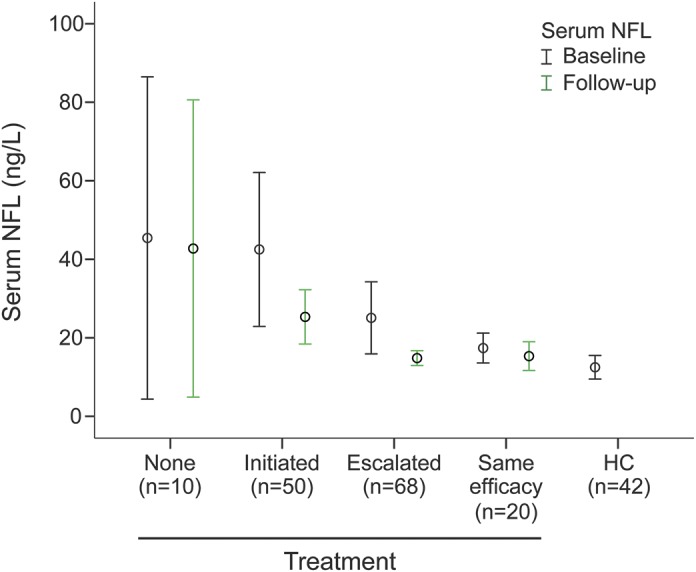
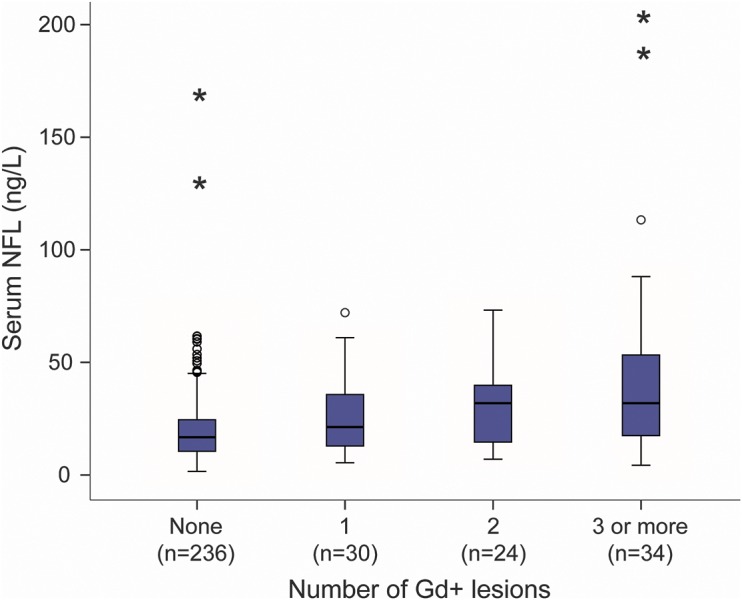
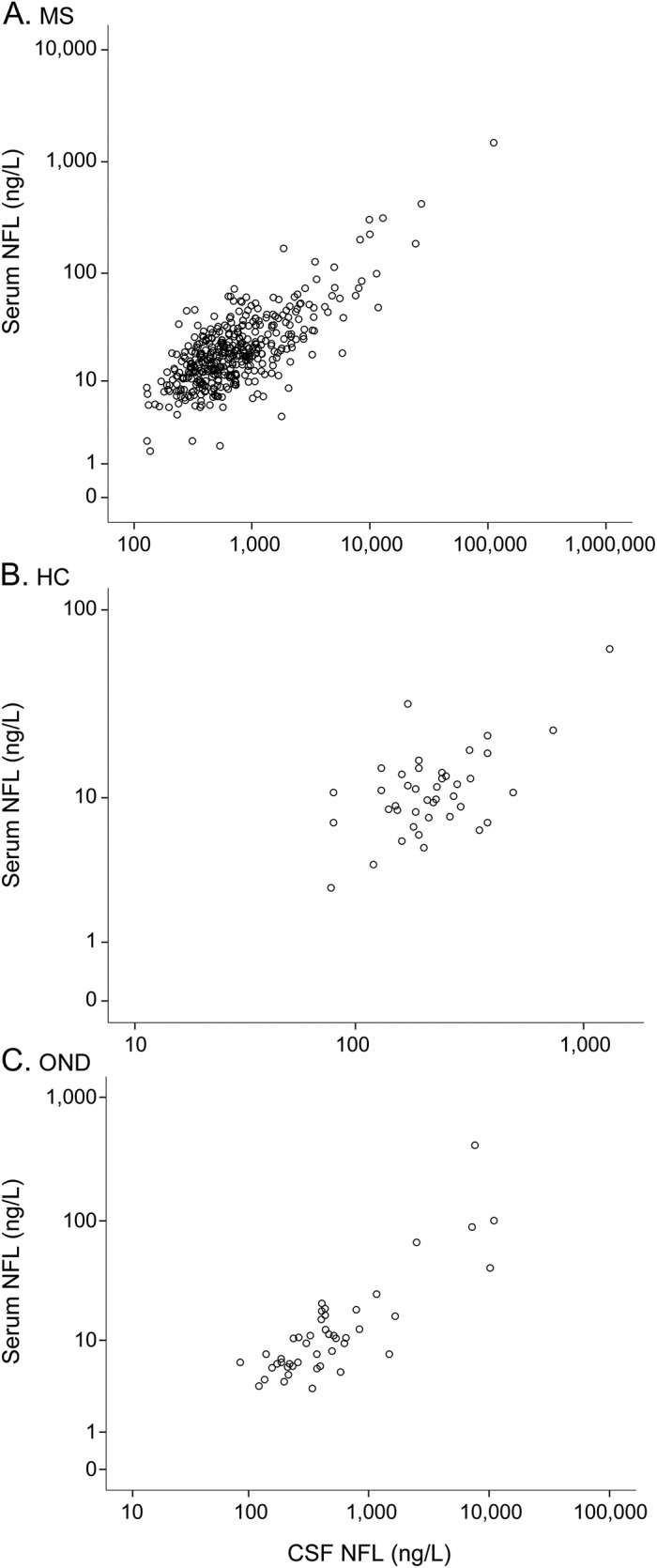
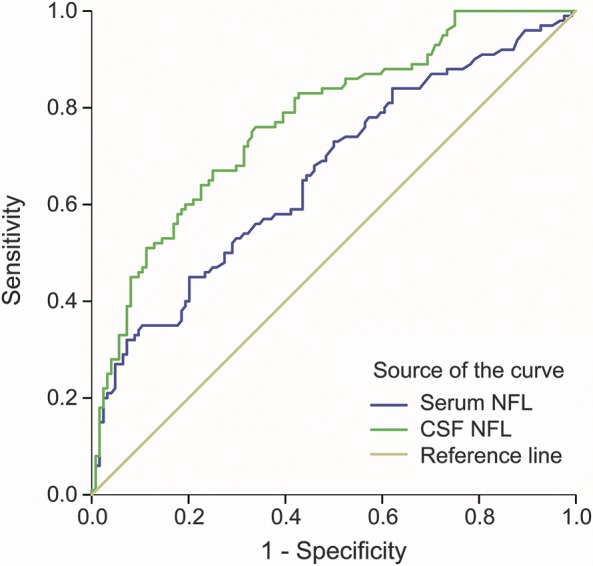
Objective: To examine the effects of disease activity, disability, and disease-modifying therapies (DMTs) on serum neurofilament light (NFL) and the correlation between NFL concentrations in serum and CSF in multiple sclerosis (MS). Methods: NFL concentrations were measured in paired serum and CSF samples (n = 521) from 373 participants: 286 had MS, 45 had other neurologic conditions, and 42 were healthy controls (HCs). In 138 patients with MS, the serum and CSF samples were obtained before and after DMT treatment with a median interval of 12 months. The CSF NFL concentration was measured with the UmanDiagnostics NF-light enzyme-linked immunosorbent assay. The serum NFL concentration was measured with an in-house ultrasensitive single-molecule array assay. Results: In MS, the correlation between serum and CSF NFL was r = 0.62 (p < 0.001). Serum concentrations were significantly higher in patients with relapsing-remitting MS (16.9 ng/L) and in patients with progressive MS (23 ng/L) than in HCs (10.5 ng/L, p < 0.001 and p < 0.001, respectively). Treatment with DMT reduced median serum NFL levels from 18.6 (interquartile range [IQR] 12.6–32.7) ng/L to 15.7 (IQR 9.6–22.7) ng/L (p < 0.001). Patients with relapse or with radiologic activity had significantly higher serum NFL levels than those in remission (p < 0.001) or those without new lesions on MRI (p < 0.001). Conclusions: Serum and CSF NFL levels were highly correlated, indicating that blood sampling can replace CSF taps for this particular marker. Disease activity and DMT had similar effects on serum and CSF NFL concentrations. Repeated NFL determinations in peripheral blood for detecting axonal damage may represent new possibilities in MS monitoring.
Overview
The claims and statistics of this paper haven’t been checked yet.
Free: it reads the open-access text and checks the first 5 claims that cite a source we can check. Create a free account to check every claim.
Integrity signals
Registry
Cites
Statistics
Figures
Verification
Claims the paper makes
The claims and statistics of this paper haven’t been checked yet.
Free: it reads the open-access text and checks the first 5 claims that cite a source we can check. Create a free account to check every claim.
Claims other papers make about this one
Each is checked against this paper’s own text: does it say what the citing paper says it does?
The check wasn’t confident either way, so it gives no verdict — never disputed.
In the citing paper
“Exenatide has also exhibited the potential to lessen brain deterioration and disability in patients with MS. 87”
From Anti-inflammatory role of glucagon-like peptide 1 receptor agonists and its clinical implications (2024) · cites this paper as [87]
Experimental — accuracy not yet measured
Self-check
Percentages, sums and reported differences re-computed from the paper’s own numbers.
The self-check needs the paper’s full text.
Citations
Cites
Rating neurologic impairment in multiple sclerosis: An expanded disability status scale (EDSS)
Kurtzke, J. F. (1983) · Neurology · doi:10.1212/wnl.33.11.1444 · Cited by 15,011
McDonald, W. I., Compston, A., Edan, G., Goodkin, D., Hartung, H., Lublin, F. D., McFarland, H. F., Paty, D. W., Polman, C. H., Reingold, S. C., et al. (2001) · Annals of Neurology · doi:10.1002/ana.1032 · Cited by 6,969 · cited 1×
“A relapse was defined as an episode of neurologic disturbance lasting for at least 24 hours that could not be better explained by another cause.(22)”
BackgroundAxonal transection in the lesions of multiple sclerosis
Trapp, B. D., Peterson, J., Ransohoff, R. M., Rudick, R., Mörk, S., & Bö, L. (1998) · New England Journal of Medicine · doi:10.1056/nejm199801293380502 · Cited by 4,029
Rissin, D. M., Kan, C. W., Campbell, T. G., Howes, S. C., Fournier, D. R., Song, L., Piech, T., Patel, P. P., Chang, L., Rivnak, A. J., et al. (2010) · Nature Biotechnology · doi:10.1038/nbt.1641 · Cited by 2,119 · cited 1×
“Recent technical developments have given rise to ultrasensitive antibody-based analytic techniques such as the single-molecule array (Simoa) technology, which enables quantification of protein biomarkers in blood samples at very low concentrations.(10) We recently developed a Simoa method for NFL in blood samples (ser…”
Multiple Sclerosis Severity Score: Using disability and disease duration to rate disease severity
Roxburgh, R. H. S. R., Seaman, S. R., Masterman, T., Hensiek, A. E., Sawcer, S. J., Vukusic, S., Achiti, I., Confavreux, C., Coustans, M., le Page, E., et al. (2005) · Neurology · doi:10.1212/01.wnl.0000156155.19270.f8 · Cited by 963 · cited 2×
“Disability was scored by the Expanded Disability Status Scale (EDSS),20 and disease severity was scored by the Multiple Sclerosis Severity Score.21 A relapse was defined as an episode of neurologic disturbance lasting for at least 24 hours that could not be better explained by another cause.22 A standard MRI protocol…”
MethodA consensus protocol for the standardization of cerebrospinal fluid collection and biobanking
Teunissen, C. E., Petzold, A., Bennett, J. L., Berven, F. S., Brundin, L., Comabella, M., Franciotta, D., Frederiksen, J. L., Fleming, J. O., Furlan, R., et al. (2009) · Neurology · doi:10.1212/wnl.0b013e3181c47cc2 · Cited by 845 · cited 12×
“They support serum NFL as a biomarker for monitoring disease activity and treatment intervention in MS.”
MethodInfluentialKuhle, J., Barro, C., Andreasson, U., Derfuss, T., Lindberg, R., Sandelius, Å., Liman, V., Norgren, N., Blennow, K., & Zetterberg, H. (2016) · Clinical Chemistry and Laboratory Medicine (CCLM) · doi:10.1515/cclm-2015-1195 · Cited by 740
Self-citationGisslén, M., Price, R. W., Andreasson, U., Norgren, N., Nilsson, S., Hagberg, L., Fuchs, D., Spudich, S., Blennow, K., & Zetterberg, H. (2016) · EBioMedicine · doi:10.1016/j.ebiom.2015.11.036 · Cited by 481 · cited 1×
“We also confirmed the high correlation between serum and CSF NFL levels in patients with OND as in previous studies on traumatic injury(15) and HIV encephalitis.(12) Because of the multiple treatment options, it is increasingly important to accurately identify patients with MS with insufficient treatment response.”
ResultSelf-citationSerum neurofilament light chain protein is a measure of disease intensity in frontotemporal dementia
Rohrer, J. D., Woollacott, I. O. C., Dick, K. M., Brotherhood, E., Gordon, E., Fellows, A., Toombs, J., Druyeh, R., Cardoso, M. J., Ourselin, S., et al. (2016) · Neurology · doi:10.1212/wnl.0000000000003154 · Cited by 432
Self-citationExploring the origins of grey matter damage in multiple sclerosis
Calabrese, M., Magliozzi, R., Ciccarelli, O., Geurts, J. J. G., Reynolds, R., & Martin, R. (2015) · Nature Reviews Neuroscience · doi:10.1038/nrn3900 · Cited by 414
Cited by
Neurofilaments as biomarkers in neurological disorders
Khalil, M., Teunissen, C. E., Otto, M., Piehl, F., Sormani, M. P., Gattringer, T., Barro, C., Kappos, L., Comabella, M., Fazekas, F., et al. (2018) · Nature Reviews Neurology · doi:10.1038/s41582-018-0058-z · Cited by 1,988
Self-citationBenkert, P., Meier, S., Schaedelin, S., Manouchehrinia, A., Yaldizli, Ö., Maceski, A., Oechtering, J., Achtnichts, L., Conen, D., Derfuss, T., et al. (2022) · The Lancet Neurology · doi:10.1016/s1474-4422(22)00009-6 · Cited by 628
Self-citationMultiple sclerosis: clinical aspects
Oh, J., Vidal-Jordana, A., & Montalban, X. (2018) · Current Opinion in Neurology · doi:10.1097/wco.0000000000000622 · Cited by 620
Blood neurofilament light chain as a biomarker of MS disease activity and treatment response
Kuhle, J., Kropshofer, H., Haering, D. A., Kundu, U., Meinert, R., Barro, C., Dahlke, F., Tomic, D., Leppert, D., & Kappos, L. (2019) · Neurology · doi:10.1212/wnl.0000000000007032 · Cited by 568
A multicentre validation study of the diagnostic value of plasma neurofilament light.
Ashton, N. J., Janelidze, S., Al Khleifat, A., Leuzy, A., van der Ende, E. L., Karikari, T. K., Benedet, A. L., Pascoal, T. A., Lleó, A., Parnetti, L., et al. (2021) · Nature Communications · doi:10.1038/s41467-021-23620-z · Cited by 545
Self-citationBenkert, P., Meier, S., Schaedelin, S. A., Manouchehrinia, A., Yaldizli, Ö., Maceski, A. M., Oechtering, J., Achtnichts, L., Conen, D., Derfuss, T. J., et al. (n.d.) · UCL Discovery (University College London) · doi:10.48350/165754 · Cited by 457
Self-citationAnti-inflammatory role of glucagon-like peptide 1 receptor agonists and its clinical implications
Alharbi, S. H. (2024) · Therapeutic Advances in Endocrinology and Metabolism · doi:10.1177/20420188231222367 · Cited by 358
“86 Exenatide has also exhibited the potential to lessen brain deterioration and disability in patients with MS. 87 Furthermore, lixisenatide has been tested for amyotrophic lateral sclerosis, showing promise in slowing disease advancement and enhancing survival.”
BackgroundNeurofilaments: neurobiological foundations for biomarker applications
Gafson, A. R., Barthélemy, N. R., Bomont, P., Carare, R. O., Durham, H. D., Julien, J.-P., Kuhle, J., Leppert, D., Nixon, R. A., Weller, R. O., et al. (2020) · Brain · doi:10.1093/brain/awaa098 · Cited by 325
Self-citationBlood neurofilament light: a critical review of its application to neurologic disease
Barro, C., Chitnis, T., & Weiner, H. L. (2020) · Annals of Clinical and Translational Neurology · doi:10.1002/acn3.51234 · Cited by 296
Reaching an evidence-based prognosis for personalized treatment of multiple sclerosis
Rotstein, D., & Montalban, X. (2019) · Nature Reviews Neurology · doi:10.1038/s41582-019-0170-8 · Cited by 289
Neurofilament Proteins as Biomarkers to Monitor Neurological Diseases and the Efficacy of Therapies
Yuan, A., & Nixon, R. A. (2021) · Frontiers in Neuroscience · doi:10.3389/fnins.2021.689938 · Cited by 290
Meier, S., Willemse, E. A. J., Schaedelin, S., Oechtering, J., Lorscheider, J., Melie-Garcia, L., Cagol, A., Barakovic, M., Galbusera, R., Subramaniam, S., et al. (2023) · JAMA Neurology · doi:10.1001/jamaneurol.2022.5250 · Cited by 289
Self-citationSerum GFAP as a biomarker for disease severity in multiple sclerosis
Abdelhak, A., Huss, A., Kassubek, J., Tumani, H., & Otto, M. (2018) · Scientific Reports · doi:10.1038/s41598-018-33158-8 · Cited by 291
Serum Neurofilament Light Chain Levels in Patients With Presymptomatic Multiple Sclerosis
Bjornevik, K., Munger, K. L., Cortese, M., Barro, C., Healy, B. C., Niebuhr, D. W., Scher, A. I., Kuhle, J., & Ascherio, A. (2020) · JAMA Neurology · doi:10.1001/jamaneurol.2019.3238 · Cited by 269
Neurofilament light as a biomarker in traumatic brain injury
Shahim, P., Politis, A., van der Merwe, A., Moore, B., Chou, Y.-Y., Pham, D. L., Butman, J. A., Diaz-Arrastia, R., Gill, J. M., Brody, D. L., et al. (2020) · Neurology · doi:10.1212/wnl.0000000000009983 · Cited by 257
Self-citationConfounding effect of blood volume and body mass index on blood neurofilament light chain levels
Manouchehrinia, A., Piehl, F., Hillert, J., Kuhle, J., Alfredsson, L., Olsson, T., & Kockum, I. (2020) · Annals of Clinical and Translational Neurology · doi:10.1002/acn3.50972 · Cited by 249
Self-citationMolecular biomarkers in multiple sclerosis
Ziemssen, T., Akgün, K., & Brück, W. (2019) · Journal of Neuroinflammation · doi:10.1186/s12974-019-1674-2 · Cited by 228
The potential of serum neurofilament as biomarker for multiple sclerosis
Bittner, S., Oh, J., Havrdová, E. K., Tintoré, M., & Zipp, F. (2021) · Brain · doi:10.1093/brain/awab241 · Cited by 229
Serum GFAP and neurofilament light as biomarkers of disease activity and disability in NMOSD
Watanabe, M., Nakamura, Y., Michalak, Z., Isobe, N., Barro, C., Leppert, D., Matsushita, T., Hayashi, F., Yamasaki, R., Kuhle, J., et al. (2019) · Neurology · doi:10.1212/wnl.0000000000008160 · Cited by 220
“Our study of Japanese patients withMS has confirmed 2 findings that were reported in European patients withMS: increased sNfL levels inMS, especially during relapse, and the association of sNfL with EDSS score.(20,22,27,41,42) Therefore, sNfL appears to be a biomarker of disease activity and disability inMS across dif…”
ResultRenal function is associated with blood neurofilament light chain level in older adults
Akamine, S., Marutani, N., Kanayama, D., Gotoh, S., Maruyama, R., Yanagida, K., Sakagami, Y., Mori, K., Adachi, H., Kozawa, J., et al. (2020) · Scientific Reports · doi:10.1038/s41598-020-76990-7 · Cited by 213
Neurofilament as a potential biomarker for spinal muscular atrophy
Darras, B. T., Crawford, T. O., Finkel, R. S., Mercuri, E., De Vivo, D. C., Oskoui, M., Tizzano, E. F., Ryan, M. M., Muntoni, F., Zhao, G., et al. (2019) · Annals of Clinical and Translational Neurology · doi:10.1002/acn3.779 · Cited by 203
The Cerebrospinal Fluid in Multiple Sclerosis
Deisenhammer, F., Zetterberg, H., Fitzner, B., & Zettl, U. K. (2019) · Frontiers in Immunology · doi:10.3389/fimmu.2019.00726 · Cited by 194
Self-citationCantó, E., Barro, C., Zhao, C., Caillier, S. J., Michalak, Z., Bove, R., Tomic, D., Santaniello, A., Häring, D. A., Hollenbach, J., et al. (2019) · JAMA Neurology · doi:10.1001/jamaneurol.2019.2137 · Cited by 199
Simrén, J., Andreasson, U., Gobom, J., Suarez Calvet, M., Borroni, B., Gillberg, C., Nyberg, L., Ghidoni, R., Fernell, E., Johnson, M., et al. (2022) · Brain Communications · doi:10.1093/braincomms/fcac174 · Cited by 194
“These include both acute neurological conditions, such as traumatic and vascular brain injury,(6,7) infections(4) as well as in neurodegenerative and neuroinflammatory conditions.(8,9) Notable examples include multiple sclerosis, for which NfL is now starting to be used as a biomarker of disease activity and therapeut…”
BackgroundSelf-citationByrne, L. M., Rodrigues, F. B., Johnson, E. B., Wijeratne, P. A., De Vita, E., Alexander, D. C., Palermo, G., Czech, C., Schobel, S., Scahill, R. I., et al. (2018) · Science Translational Medicine · doi:10.1126/scitranslmed.aat7108 · Cited by 194
Self-citationPicca, A., Guerra, F., Calvani, R., Romano, R., Coelho-Júnior, H. J., Bucci, C., & Marzetti, E. (2021) · Biomolecules · doi:10.3390/biom11101508 · Cited by 189
Neurofilament Light Chain as a Biomarker in Multiple Sclerosis
Varhaug, K. N., Torkildsen, Ø., Myhr, K.-M., & Vedeler, C. A. (2019) · Frontiers in Neurology · doi:10.3389/fneur.2019.00338 · Cited by 185
“Both serum and CSF NF-L levels have been found higher during relapses, and with Gd-lesions (17).”
BackgroundResultInfluentialAn update on blood-based biomarkers for non-Alzheimer neurodegenerative disorders
Ashton, N. J., Hye, A., Rajkumar, A. P., Leuzy, A., Snowden, S., Suárez-Calvet, M., Karikari, T. K., Schöll, M., La Joie, R., Rabinovici, G. D., et al. (2020) · Nature Reviews Neurology · doi:10.1038/s41582-020-0348-0 · Cited by 185
Self-citationCurrent and Future Biomarkers in Multiple Sclerosis
Yang, J., Hamade, M., Wu, Q., Wang, Q., Axtell, R., Giri, S., & Mao-Draayer, Y. (2022) · International Journal of Molecular Sciences · doi:10.3390/ijms23115877 · Cited by 155
Ashton, N. J., Leuzy, A., Lim, Y. M., Troakes, C., Hortobágyi, T., Höglund, K., Aarsland, D., Lovestone, S., Schöll, M., Blennow, K., et al. (2019) · Acta Neuropathologica Communications · doi:10.1186/s40478-018-0649-3 · Cited by 172
Self-citationSerum glial fibrillary acidic protein correlates with multiple sclerosis disease severity
Högel, H., Rissanen, E., Barro, C., Matilainen, M., Nylund, M., Kuhle, J., & Airas, L. (2020) · Multiple Sclerosis Journal · doi:10.1177/1352458518819380 · Cited by 168
Bruijstens, A. L., Wendel, E., Lechner, C., Bartels, F., Finke, C., Breu, M., Flet‐Berliac, L., de Chalus, A., Adamsbaum, C., Capobianco, M. A. N., et al. (2020) · European Journal of Paediatric Neurology · doi:10.1016/j.ejpn.2020.10.005 · Cited by 175
Serum neurofilament light as a biomarker in progressive multiple sclerosis
Kapoor, R., Smith, K. E., Allegretta, M., Arnold, D. L., Carroll, W., Comabella, M., Furlan, R., Harp, C., Kuhle, J., Leppert, D., et al. (2020) · Neurology · doi:10.1212/wnl.0000000000010346 · Cited by 156
Neurofilament light chain serum levels correlate with 10‐year MRI outcomes in multiple sclerosis
Chitnis, T., Gonzalez, C., Healy, B. C., Saxena, S., Rosso, M., Barro, C., Michalak, Z., Paul, A., Kivisakk, P., Diaz‐Cruz, C., et al. (2018) · Annals of Clinical and Translational Neurology · doi:10.1002/acn3.638 · Cited by 149
Alirezaei, Z., Pourhanifeh, M. H., Borran, S., Nejati, M., Mirzaei, H., & Hamblin, M. R. (2020) · Molecular Neurobiology · doi:10.1007/s12035-019-01698-3 · Cited by 142
Blood neurofilament light levels segregate treatment effects in multiple sclerosis
Delcoigne, B., Manouchehrinia, A., Barro, C., Benkert, P., Michalak, Z., Kappos, L., Leppert, D., Tsai, J. A., Plavina, T., Kieseier, B. C., et al. (2020) · Neurology · doi:10.1212/wnl.0000000000009097 · Cited by 139
Self-citationMariotto, S., Farinazzo, A., Magliozzi, R., Alberti, D., Monaco, S., & Ferrari, S. (2018) · Journal of the Peripheral Nervous System · doi:10.1111/jns.12279 · Cited by 137
“Follow-up, median (range), mo Acute neuropathies, median (range), mo 4 (1-14) Chronic neuropathies, median (range), mo 78 (2-228)”
BackgroundMethodBlood-based biomarkers for Alzheimer’s disease—An update
Zetterberg, H. (2019) · Journal of Neuroscience Methods · doi:10.1016/j.jneumeth.2018.10.025 · Cited by 129
Self-citationProfiling individual clinical responses by high-frequency serum neurofilament assessment in MS
Akgün, K., Kretschmann, N., Haase, R., Proschmann, U., Kitzler, H. H., Reichmann, H., & Ziemssen, T. (2019) · Neurology Neuroimmunology & Neuroinflammation · doi:10.1212/nxi.0000000000000555 · Cited by 122
“Of particular interest is the proof that sNfL levels can be used to separate not only patients with MS from healthy controls but also to separate patients with MS with and without persistent clinical and subclinical MRI disease activity.(19,29,30) In previous studies, increased sNfL levels in patients with MS have bee…”
BackgroundResultNeurofilament levels, disease activity and brain volume during follow-up in multiple sclerosis
Håkansson, I., Tisell, A., Cassel, P., Blennow, K., Zetterberg, H., Lundberg, P., Dahle, C., Vrethem, M., & Ernerudh, J. (2018) · Journal of Neuroinflammation · doi:10.1186/s12974-018-1249-7 · Cited by 124
“74) that is in line with what has been reported by others [15, 20].”
Self-citationThe Evolution of Neurofilament Light Chain in Multiple Sclerosis
Ferreira-Atuesta, C., Reyes, S., Giovanonni, G., & Gnanapavan, S. (2021) · Frontiers in Neuroscience · doi:10.3389/fnins.2021.642384 · Cited by 119
Sejbaek, T., Nielsen, H. H., Penner, N., Plavina, T., Mendoza, J. P., Martin, N. A., Elkjaer, M. L., Ravnborg, M. H., & Illes, Z. (2019) · Journal of Neurology, Neurosurgery & Psychiatry · doi:10.1136/jnnp-2019-321321 · Cited by 108
Gaetani, L., Paolini Paoletti, F., Bellomo, G., Mancini, A., Simoni, S., Di Filippo, M., & Parnetti, L. (2020) · Trends in Pharmacological Sciences · doi:10.1016/j.tips.2020.09.011 · Cited by 108
Neurofilament light levels are associated with long-term outcomes in multiple sclerosis
Kuhle, J., Plavina, T., Barro, C., Disanto, G., Sangurdekar, D., Singh, C. M., de Moor, C., Engle, B., Kieseier, B. C., Fisher, E., et al. (2020) · Multiple Sclerosis Journal · doi:10.1177/1352458519885613 · Cited by 107
Alagaratnam, J., von Widekind, S., Francesco, D. D., Underwood, J., Edison, P., Winston, A., Zetterberg, H., & Fidler, S. J. (2021) · BMJ Neurology Open · doi:10.1136/bmjno-2021-000143 · Cited by 129
Self-citationInhibition of CD40L with frexalimab in multiple sclerosis
Vermersch, P., Granziera, C., Mao-Draayer, Y., Cutter, G., Kalbus, O., Staikov, I., Dufek, M., Saubadu, S., Bejuit, R., Truffinet, P., et al. (2024) · New England Journal of Medicine · doi:10.1056/nejmoa2309439 · Cited by 102
Blood Neurofilament Light Chain: The Neurologist’s Troponin?
Thebault, S., Booth, R. A., & Freedman, M. S. (2020) · Biomedicines · doi:10.3390/biomedicines8110523 · Cited by 101
Bar‐Or, A., Thanei, G., Harp, C. T., Bernasconi, C., Bonati, U., Cross, A. H., Fischer, S. K., Gaetano, L., Hauser, S. L., Hendricks, R., et al. (2023) · EBioMedicine · doi:10.1016/j.ebiom.2023.104662 · Cited by 112
Longitudinal measurement of serum neurofilament light in presymptomatic familial Alzheimer’s disease
Weston, P. S. J., Poole, T., O’Connor, A., Heslegrave, A., Ryan, N. S., Liang, Y., Druyeh, R., Mead, S., Blennow, K., Schott, J. M., et al. (2019) · Alzheimer's Research & Therapy · doi:10.1186/s13195-019-0472-5 · Cited by 101
Self-citationJakimovski, D., Zivadinov, R., Ramanthan, M., Hagemeier, J., Weinstock‐Guttman, B., Tomic, D., Kropshofer, H., Fuchs, T. A., Barro, C., Leppert, D., et al. (2019) · Multiple Sclerosis Journal · doi:10.1177/1352458519881428 · Cited by 110
CSF or Serum Neurofilament Light Added to α‐Synuclein Panel Discriminates Parkinson's From Controls
Oosterveld, L. P., Verberk, I. M. W., Majbour, N. K., El‐Agnaf, O. M., Weinstein, H. C., Berendse, H. W., Teunissen, C. E., & van de Berg, W. D. J. (2020) · Movement Disorders · doi:10.1002/mds.27897 · Cited by 95
Plasma neurofilament light levels are associated with risk of disability in multiple sclerosis
Manouchehrinia, A., Stridh, P., Khademi, M., Leppert, D., Barro, C., Michalak, Z., Benkert, P., Lycke, J., Alfredsson, L., Kappos, L., et al. (2020) · Neurology · doi:10.1212/wnl.0000000000009571 · Cited by 94
Self-citationNeurofilaments in progressive multiple sclerosis: a systematic review
Williams, T. E., Zetterberg, H., & Chataway, J. (2020) · Journal of Neurology · doi:10.1007/s00415-020-09917-x · Cited by 90
Self-citationUher, T., McComb, M., Galkin, S., Srpova, B., Oechtering, J., Barro, C., Tyblova, M., Bergsland, N., Krasensky, J., Dwyer, M., et al. (2021) · Multiple Sclerosis Journal · doi:10.1177/1352458520912379 · Cited by 86
Meregalli, C., Fumagalli, G., Alberti, P., Canta, A., Chiorazzi, A., Monza, L., Pozzi, E., Carozzi, V., Blennow, K., Zetterberg, H., et al. (2020) · Archives of Toxicology · doi:10.1007/s00204-020-02755-w · Cited by 90
Self-citationNeurofilaments in disease: what do we know?
Gordon, B. A. (2020) · Current Opinion in Neurobiology · doi:10.1016/j.conb.2020.02.001 · Cited by 94
Neuronal and glial CSF biomarkers in multiple sclerosis: a systematic review and meta-analysis
Momtazmanesh, S., Shobeiri, P., Saghazadeh, A., Teunissen, C. E., Burman, J., Szalárdy, L., Klivènyi, P., Bartoš, A., Fernandes, A. M. A., & Rezaei, N. (2021) · Reviews in the Neurosciences · doi:10.1515/revneuro-2020-0145 · Cited by 88
Lopez, J. A., Denkova, M., Ramanathan, S., Dale, R. C., & Brilot, F. (2021) · Clinical & Translational Immunology · doi:10.1002/cti2.1316 · Cited by 85
Neurofilament Proteins as Prognostic Biomarkers in Neurological Disorders
Lee, Y., Lee, B. H., Yip, W., Chou, P.-C., & Yip, B. (2019) · Current Pharmaceutical Design · doi:10.2174/1381612825666191210154535 · Cited by 84
Neurofilament light chain as a biological marker for multiple sclerosis: a meta-analysis study
Cai, L., & Huang, J. (2018) · Neuropsychiatric Disease and Treatment · doi:10.2147/ndt.s173280 · Cited by 76
“It is one of the common causes of acquired neurological disability in young people in Northern Europe and the USA.(1)”
Benedet, A. L., Ashton, N. J., Pascoal, T. A., Leuzy, A., Mathotaarachchi, S., Kang, M. S., Therriault, J., Savard, M., Chamoun, M., Schöll, M., et al. (2019) · Alzheimer's & Dementia: Diagnosis, Assessment & Disease Monitoring · doi:10.1016/j.dadm.2019.08.002 · Cited by 76
Self-citationTemporal association of sNfL and gad‐enhancing lesions in multiple sclerosis
Rosso, M., Gonzalez, C. T., Healy, B. C., Saxena, S., Paul, A., Bjørnevik, K., Kühle, J., Benkert, P., Leppert, D., Guttmann, C. R. G., et al. (2020) · Annals of Clinical and Translational Neurology · doi:10.1002/acn3.51060 · Cited by 82
“Furthermore, serum samples would likely be the tissue of choice for NfL measurement in a clinical setting.(24,35,36) A final limitation of this study relates to the clinical characteristics of our cohort (e.”
BackgroundResultHigh or increasing serum NfL is predictive of impending multiple sclerosis relapses
Thebault, S., Reaume, M., Marrie, R. A., Marriott, J. J., Furlan, R., Laroni, A., Booth, R. A., Uccelli, A., & Freedman, M. S. (2022) · Multiple Sclerosis and Related Disorders · doi:10.1016/j.msard.2022.103535 · Cited by 83
van Lierop, Z. Y., Toorop, A. A., van Ballegoij, W. J. C., Dubbelink, T. B. G. O., Strijbis, E. M. M., de Jong, B. A., van Oosten, B. W., Moraal, B., Teunissen, C. E., Uitdehaag, B. M. J., et al. (2021) · Multiple Sclerosis Journal · doi:10.1177/13524585211028833 · Cited by 77
Floro, S., Carandini, T., Pietroboni, A. M., De Riz, M. A., Scarpini, E., & Galimberti, D. (2022) · Neurology Neuroimmunology & Neuroinflammation · doi:10.1212/nxi.0000000000001164 · Cited by 73
Diagnosis and Management of Progressive Multiple Sclerosis
Macaron, G., & Ontaneda, D. (2019) · Biomedicines · doi:10.3390/biomedicines7030056 · Cited by 70
“Serum NfL levels correlate with CSF NfL levels and reflect disease activity and response to therapy [61].”
BackgroundChatterjee, P., Zetterberg, H., Goozee, K., Lim, C. K., Jacobs, K. R., Ashton, N. J., Hye, A., Pedrini, S., Sohrabi, H. R., Shah, T., et al. (2019) · Journal of Neuroinflammation · doi:10.1186/s12974-019-1567-4 · Cited by 69
Self-citationAn emerging potential of metabolomics in multiple sclerosis: a comprehensive overview
Zahoor, I., Rui, B., Khan, J. A., Datta, I., & Giri, S. (2021) · Cellular and Molecular Life Sciences · doi:10.1007/s00018-020-03733-2 · Cited by 80
Arslan, B., & Zetterberg, H. (2023) · Clinical Chemistry and Laboratory Medicine (CCLM) · doi:10.1515/cclm-2023-0036 · Cited by 75
“These are categorized as first (western blot [WB] [33]), second (enzyme-linked immunosorbent assay [7, 34]), third (electrochemiluminescence [ECL] [16]), and fourth (Single molecule array [Simoa]) generation immunoassays [35].”
BackgroundSelf-citationNeurofilaments: The C-Reactive Protein of Neurology
Lambertsen, K. L., Soares, C. B., Gaist, D., & Nielsen, H. H. (2020) · Brain Sciences · doi:10.3390/brainsci10010056 · Cited by 73
Serum neurofilament light in MS: The first true blood-based biomarker?
Thebault, S., Bose, G., Booth, R. A., & Freedman, M. S. (2021) · Multiple Sclerosis Journal · doi:10.1177/1352458521993066 · Cited by 74
Metabolome-based signature of disease pathology in MS
Andersen, S. L., Briggs, F. B. S., Winnike, J., Natanzon, Y., Maichle, S., Knagge, K. J., Newby, L. K., & Gregory, S. G. (2019) · Multiple Sclerosis and Related Disorders · doi:10.1016/j.msard.2019.03.006 · Cited by 71
Serum and CSF neurofilament light chain levels in antibody-mediated encephalitis
Mariotto, S., Gajofatto, A., Zuliani, L., Zoccarato, M., Gastaldi, M., Franciotta, D. M., Cantalupo, G., Piardi, F., Polo, A., Alberti, D., et al. (2019) · Journal of Neurology · doi:10.1007/s00415-019-09306-z · Cited by 69
Fluid-based biomarkers for neurodegenerative diseases
Cao, Y., Xu, Y., Cao, M., Chen, N., Zeng, Q., Lai, M. K. P., Fan, D., Sethi, G., & Cao, Y. (2025) · Ageing Research Reviews · doi:10.1016/j.arr.2025.102739 · Cited by 69
NfL predicts relapse-free progression in a longitudinal multiple sclerosis cohort study
Uphaus, T., Steffen, F., Muthuraman, M., Ripfel, N., Fleischer, V., Groppa, S., Ruck, T., Meuth, S. G., Pul, R., Kleinschnitz, C., et al. (2021) · EBioMedicine · doi:10.1016/j.ebiom.2021.103590 · Cited by 70
“…with clinical relapses[21,29,31] and subclinical signs of in fl ammatory activity (T2-lesions[21, , 32, , 33], gadolinium-enhancing lesions [3,21, , 34]), we are able to con fi ne these statements as we observed highest sNfL values in patients with disability relevant in fl ammatory activity (in fl…”
Blood neurofilament light as a potential endpoint in Phase 2 studies in MS
Sormani, M. P., Haering, D. A., Kropshofer, H., Leppert, D., Kundu, U., Barro, C., Kappos, L., Tomic, D., & Kuhle, J. (2019) · Annals of Clinical and Translational Neurology · doi:10.1002/acn3.795 · Cited by 62
“However, a number of studies have shown that blood NfL levels are significantly higher in patients with MS and were reduced after treatment with fingolimod,(26) natalizumab(27), and rituximab(28) in CSF but also in several observational studies in the blood.(10,12,14,16) NfL levels at baseline correlate with clinical…”
High serum neurofilament light chain normalizes after hematopoietic stem cell transplantation for MS
Thebault, S., Tessier, D. R., Lee, H., Bowman, M., Bar‐Or, A., Arnold, D. L., Atkins, H. L., Tabard‐Cossa, V., & Freedman, M. S. (2019) · Neurology Neuroimmunology & Neuroinflammation · doi:10.1212/nxi.0000000000000598 · Cited by 67
Srpová, B., Uher, T., Hrnčiarová, T., Barro, C., Andělová, M., Michalak, Z., Vaněčková, M., Krásenský, J., Nosková, L., Havrdová, E., et al. (2020) · Multiple Sclerosis Journal · doi:10.1177/1352458519901272 · Cited by 67
Bateman, R. J., Blennow, K., Doody, R., Hendrix, S., Lovestone, S., Salloway, S., Schindler, R., Weiner, M., Zetterberg, H., Aisen, P., et al. (2019) · The Journal of Prevention of Alzheimer's Disease · doi:10.14283/jpad.2019.21 · Cited by 63
Self-citationMilo, R., Korczyn, A. D., Manouchehri, N., & Stüve, O. (2019) · Multiple Sclerosis Journal · doi:10.1177/1352458519886943 · Cited by 66
Neurofilament Light in Serum and Cerebrospinal Fluid of Hip Fracture Patients with Delirium
Halaas, N. B., Blennow, K., Idland, A., Wyller, T. B., Raeder, J. C., Frihagen, F., Staff, A. C., Zetterberg, H., & Watne, L. O. (2018) · Dementia and Geriatric Cognitive Disorders · doi:10.1159/000494754 · Cited by 66
Self-citationEvolution of clinical trials in multiple sclerosis
Zhang, Y., Salter, A., Wallström, E., Cutter, G., & Stüve, O. (2019) · Therapeutic Advances in Neurological Disorders · doi:10.1177/1756286419826547 · Cited by 57
Ning, L., & Wang, B. (2022) · PLoS ONE · doi:10.1371/journal.pone.0274565 · Cited by 70
“Despite higher blood NfL levels in MS than in NINDCs, no significant difference is observed between MS and inflammatory neurological disease controls (INDCs) [25, 30].”
BackgroundHuss, A. M., Otto, M., Şenel, M., Ludolph, A. C., Abdelhak, A., & Tumani, H. (2020) · Frontiers in Neurology · doi:10.3389/fneur.2020.00608 · Cited by 65
Leppert, D., Kropshofer, H., Häring, D. A., Dahlke, F., Patil, A., Meinert, R., Tomic, D., Kappos, L., & Kühle, J. (2022) · Neurology · doi:10.1212/wnl.0000000000200258 · Cited by 62
Monreal, E., Fernández-Velasco, J. I., García-Sanchéz, M.-I., de la Maza, S. S., Llufriú, S., Álvarez‐Lafuente, R., Casanova, B., Comabella, M., Ramió‐Torrentà, L., Rodríguez, J., et al. (2023) · JAMA Neurology · doi:10.1001/jamaneurol.2023.0010 · Cited by 62
Chatterjee, P., Cheong, Y., Bhatnagar, A., Goozee, K. G., Wu, Y., McKay, M. J., Martins, I. J., Lim, W. L. F., Pedrini, S., Tegg, M., et al. (2020) · Journal of Neurochemistry · doi:10.1111/jnc.15128 · Cited by 55
“Neurofilament light chain (NF-L), an axonal cytoskeletal protein, is increased in the cerebrospinal fluid (CSF) and blood in several neurodegenerative diseases, including AD (Backstrom et al., 2015; Gaiottino et al., 2013; Hansson et al., 2017; Mattsson et al., 2017; Novakova et al., 2017; Pijnenburg, Verwey, van der…”
BackgroundSelf-citationObrocki, P., Khatun, A., Ness, D., Senkevich, K. A., Hanrieder, J., Capraro, F., Mattsson, N., Andréasson, U., Portelius, E., Ashton, N. J., et al. (2020) · Alzheimer s Research & Therapy · doi:10.1186/s13195-020-00586-6 · Cited by 58
“In Huntington’s disease (HD), plasma NfL levels are closely associated with MRI brain volume and clinical severity and may be a useful outcome measure in tracking clinical response to disease-modifying therapies [50].”
BackgroundInfluentialSelf-citationA roadmap to precision medicine for multiple sclerosis
Chitnis, T., & Prat, A. (2020) · Multiple Sclerosis Journal · doi:10.1177/1352458519881558 · Cited by 56
Long-term prognostic value of longitudinal measurements of blood neurofilament levels
Häring, D. A., Kropshofer, H., Kappos, L., Cohen, J. A., Shah, A. H., Meinert, R., Leppert, D., Tomic, D., & Kühle, J. (2020) · Neurology Neuroimmunology & Neuroinflammation · doi:10.1212/nxi.0000000000000856 · Cited by 54
Sandi, D., Fricska‐Nagy, Z., Bencsik, K., & Vécsei, L. (2021) · Molecules · doi:10.3390/molecules26113423 · Cited by 55
Lee, S., Plavina, T., Singh, C. M., Xiong, K., Qiu, X., Rudick, R. A., Calabresi, P. A., Stevenson, L. F., Graham, D. L., Raitcheva, D., et al. (2022) · Frontiers in Neurology · doi:10.3389/fneur.2022.935382 · Cited by 54
Biernacki, T., Kokas, Z., Sandi, D., Füvesi, J., Fricska‐Nagy, Z., Faragó, P., Kincses, Z. T., Klivènyi, P., Bencsik, K., & Vécsei, L. (2022) · International Journal of Molecular Sciences · doi:10.3390/ijms23063383 · Cited by 54
Fox, R. J., Cree, B., Seze, J. D., Gold, R., Hartung, H., Jeffery, D., Kappos, L., Montalbán, X., Weinstock‐Guttman, B., Singh, C. M., et al. (2024) · Neurology · doi:10.1212/wnl.0000000000209357 · Cited by 53
Bircak-Kuchtova, B., Chung, H., Wickel, J., Ehler, J., & Geis, C. (2023) · Critical Care · doi:10.1186/s13054-023-04497-4 · Cited by 50
“Moreover, using the highly sensitive single molecule array (Simoa) technology a direct and high linear correlation of CSF and serum NfL values has been demonstrated [82, 83].”
MethodNewsome, S. D., Binns, C. C., Kaunzner, U. W., Morgan, S., & Halper, J. (2023) · Neurology and Therapy · doi:10.1007/s40120-023-00549-7 · Cited by 53
Emerging imaging and liquid biomarkers in multiple sclerosis
Gill, A. J., Schorr, E. M., Gadani, S. P., & Calabresi, P. A. (2023) · European Journal of Immunology · doi:10.1002/eji.202250228 · Cited by 53
Vecchio, D., Puricelli, C., Malucchi, S., Virgilio, E., Martire, S., Perga, S., Passarelli, F., Valentino, P., Sapio, A. D., Cantello, R. M., et al. (2023) · Multiple Sclerosis and Related Disorders · doi:10.1016/j.msard.2023.105412 · Cited by 50
Neurofilament light chain in a phase 2 clinical trial of ibudilast in progressive multiple sclerosis
Fox, R. J., Raska, P., Barro, C., Karafa, M., König, V., Bermel, R. A., Chase, M. K., Coffey, C. S., Goodman, A. D., Klawiter, E. C., et al. (2021) · Multiple Sclerosis Journal · doi:10.1177/1352458520986956 · Cited by 46
Calabresi, P. A., Arnold, D. L., Sangurdekar, D. P., Singh, C. M., Altincatal, A., de Moor, C., Engle, B., Goyal, J., Deykin, A., Szak, S. T., et al. (2020) · Multiple Sclerosis Journal · doi:10.1177/1352458520972573 · Cited by 47
Metadata
- Authors
- Novakova, L., Zetterberg, H., Sundström, P., Axelsson, M., Khademi, M., Gunnarsson, M., Malmeström, C., Svenningsson, A., Olsson, T., Piehl, F., Blennow, K., & Lycke, J.
- Affiliations
- Sahlgrenska University Hospital (SE)
- Corresponding author
- Novakova, Lenka
- ORCID
- Venue
- Neurology
- Published
- 2017-11-28
- Volume
- 89
- Issue
- 22
- Pages
- 2230-2237
- ISSN
- 0028-3878 (ISSN-L)
- 1526-632X
- PMC
- PMC5705244
- OpenAlex
- W2766371671
- Semantic Scholar
- a2239f877551966492df3fbb3b7415f264f80c38
- Cited by
- 426
- References
- 32
- Citations by year
- 2026: 34 · 2025: 40 · 2024: 44 · 2023: 54 · 2022: 51 · 2021: 67 · 2020: 57 · 2019: 58 · 2018: 19 · 2017: 2
- FWCI
- 25.75
- Type
- journal article
- Language
- en
- Open access
- hybrid
- doi.org
- Licence
- cc-by
- Locations
- Neurology (publishedVersion, cc-by)
- Europe PMC (PubMed Central) (publishedVersion, cc-by)
- PubMed Central (publishedVersion, cc-by)
- PubMed (publishedVersion)
- UCL Discovery (University College London) (submittedVersion)
- Funders
- Eli Lilly and Company
- AstraZeneca
- Sanofi
- Biogen
- Teva Pharmaceutical Industries
- Association of Fraternity/Sorority Advisors Foundation
- Knut och Alice Wallenbergs Stiftelse
- Vetenskapsrådet
- Fujirebio Europe
- Göteborgs Universitet
- Topics
- Health Sciences › Medicine › Clinical Neurology › Multiple Sclerosis Research Studies
- Health Sciences › Medicine › Clinical Neurology › Peripheral Neuropathies and Disorders
- Health Sciences › Medicine › Oncology › Polyomavirus and related diseases
- Keywords
- multiple sclerosis, cerebrospinal fluid biomarkers, disease activity, disease-modifying therapy, relapsing-remitting multiple sclerosis, progressive multiple sclerosis, axonal injury, disability, MRI lesion activity, blood-based biomarkers
- MeSH terms
- Adult, Aged, Disability Evaluation, Enzyme-Linked Immunosorbent Assay, Female, Follow-Up Studies, Humans, Magnetic Resonance Imaging, Male, Middle Aged, Monitoring, Physiologic, Multiple Sclerosis, ROC Curve, Statistics as Topic, Sweden, Neurofilament Proteins, Young Adult
About these checks
Registry, retraction, Cites and statistics results are computed, not judged, with one exception: a printed reference that no index lists is read once by a model before it counts as a citation error. Claims are extracted by a model and kept only when their quote appears verbatim in the text; each cited source is then checked, with a model’s help, for whether it says what the claim relies on. Those verdicts can be wrong — read the claim’s quote and the cited source before relying on one.
Statistics and arithmetic are recomputed, not judged.
Confidence bands are shown only for fields calibrated on our annotated test set. None is calibrated yet, so no band is shown.
What counts as a claim ›How we measure confidence ›How we check this ›
Are you an author, or do you see a problem with this page? Request a review
Data sources
Bibliographic data: Semantic Scholar, OpenAlex, Crossref.
Contains information from the Semantic Scholar Academic Graph Datasets, made available under the ODC Attribution License (ODC-BY 1.0).
Semantic Scholar’s data is described in: Kinney, R., et al. (2023). The Semantic Scholar Open Data Platform. arXiv:2301.10140.
