

Monitoring disease activity in multiple sclerosis using serum neurofilament light protein
Open accessThe DOI matches its Crossref record; 32 of the 32 references it cites were found in a registry or an index.
Abstract
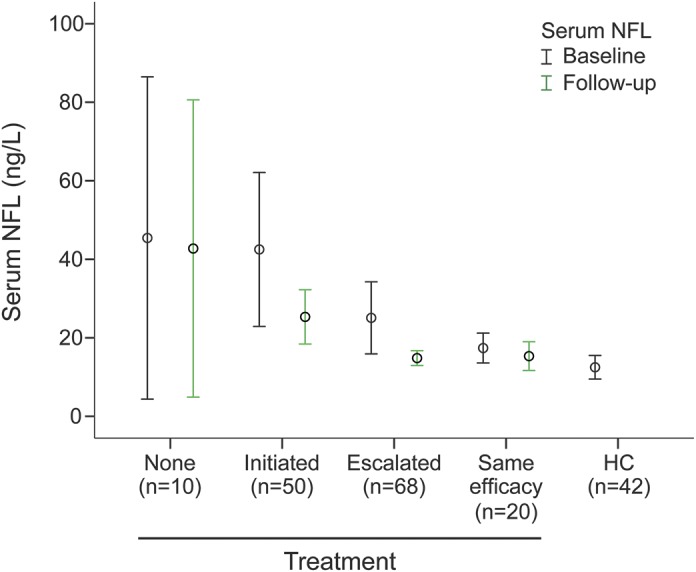
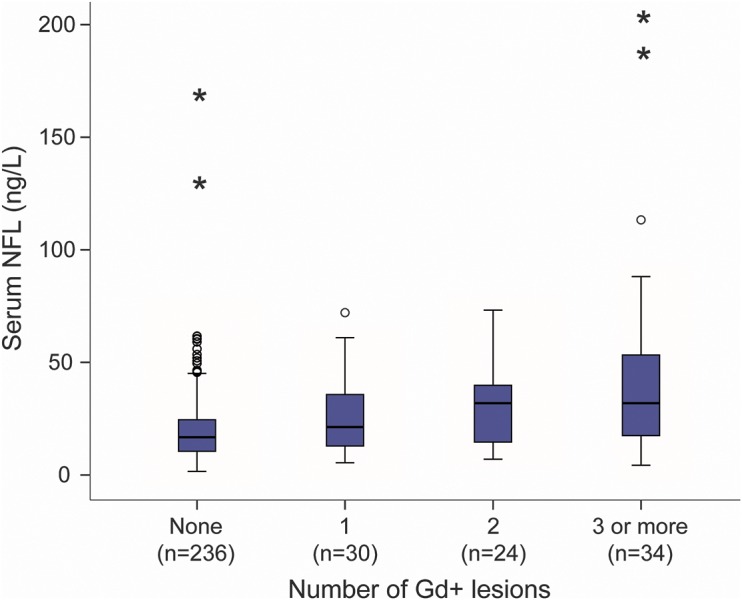
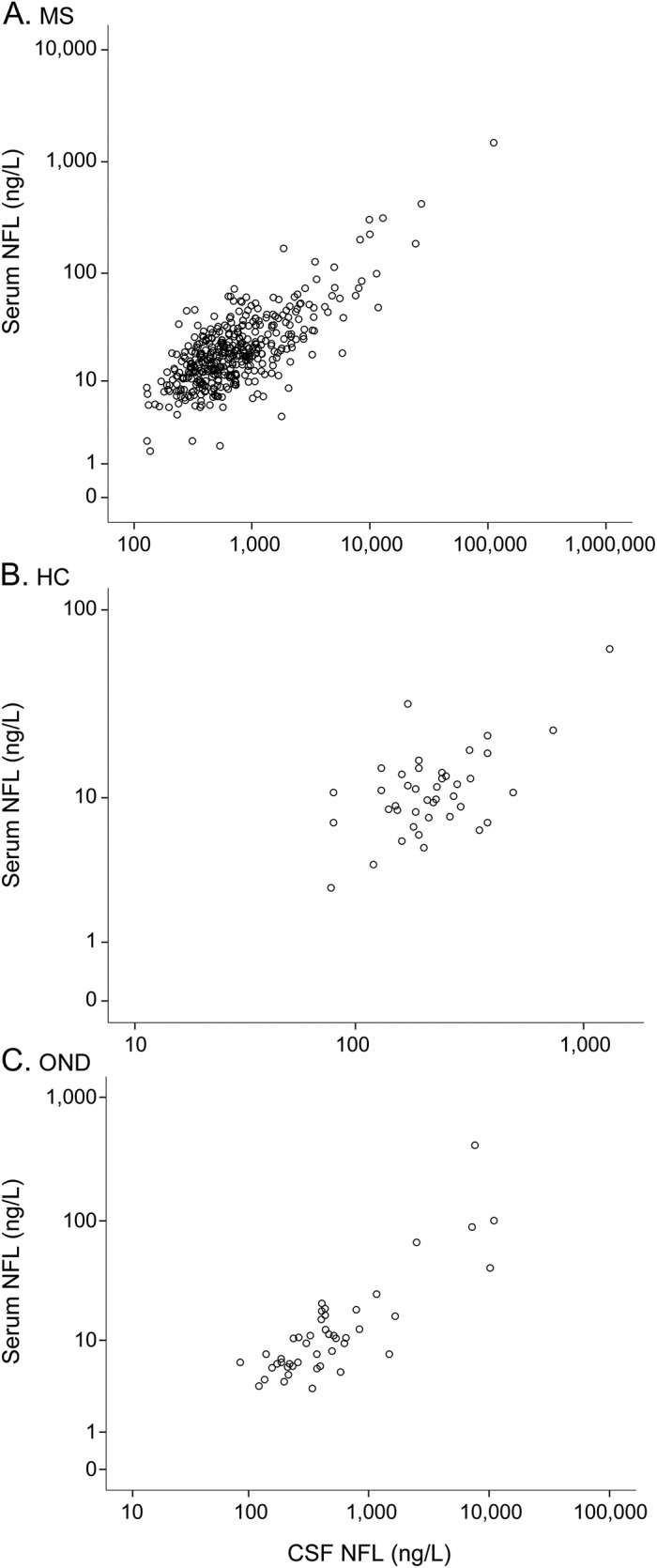
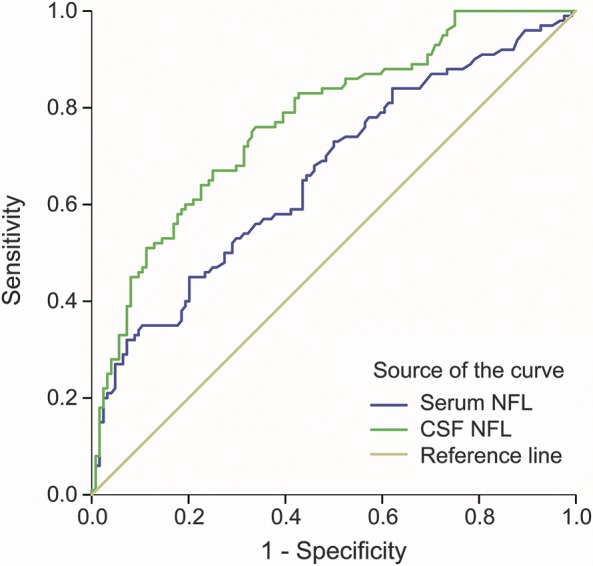
Objective: To examine the effects of disease activity, disability, and disease-modifying therapies (DMTs) on serum neurofilament light (NFL) and the correlation between NFL concentrations in serum and CSF in multiple sclerosis (MS). Methods: NFL concentrations were measured in paired serum and CSF samples (n = 521) from 373 participants: 286 had MS, 45 had other neurologic conditions, and 42 were healthy controls (HCs). In 138 patients with MS, the serum and CSF samples were obtained before and after DMT treatment with a median interval of 12 months. The CSF NFL concentration was measured with the UmanDiagnostics NF-light enzyme-linked immunosorbent assay. The serum NFL concentration was measured with an in-house ultrasensitive single-molecule array assay. Results: In MS, the correlation between serum and CSF NFL was r = 0.62 (p < 0.001). Serum concentrations were significantly higher in patients with relapsing-remitting MS (16.9 ng/L) and in patients with progressive MS (23 ng/L) than in HCs (10.5 ng/L, p < 0.001 and p < 0.001, respectively). Treatment with DMT reduced median serum NFL levels from 18.6 (interquartile range [IQR] 12.6–32.7) ng/L to 15.7 (IQR 9.6–22.7) ng/L (p < 0.001). Patients with relapse or with radiologic activity had significantly higher serum NFL levels than those in remission (p < 0.001) or those without new lesions on MRI (p < 0.001). Conclusions: Serum and CSF NFL levels were highly correlated, indicating that blood sampling can replace CSF taps for this particular marker. Disease activity and DMT had similar effects on serum and CSF NFL concentrations. Repeated NFL determinations in peripheral blood for detecting axonal damage may represent new possibilities in MS monitoring.
Overview
The claims and statistics of this paper haven’t been checked yet.
Free: it reads the open-access text and checks the first 5 claims that cite a source we can check. Create a free account to check every claim.
Integrity signals
Registry
Cites
Statistics
Figures
Verification
Claims the paper makes
The claims and statistics of this paper haven’t been checked yet.
Free: it reads the open-access text and checks the first 5 claims that cite a source we can check. Create a free account to check every claim.
Claims other papers make about this one
Each is checked against this paper’s own text: does it say what the citing paper says it does?
The check wasn’t confident either way, so it gives no verdict — never disputed.
In the citing paper
“Exenatide has also exhibited the potential to lessen brain deterioration and disability in patients with MS. 87”
From Anti-inflammatory role of glucagon-like peptide 1 receptor agonists and its clinical implications (2024) · cites this paper as [87]
Experimental — accuracy not yet measured
Self-check
Percentages, sums and reported differences re-computed from the paper’s own numbers.
The self-check needs the paper’s full text.
Citations
Cites
Rating neurologic impairment in multiple sclerosis: An expanded disability status scale (EDSS)
Kurtzke, J. F. (1983) · Neurology · doi:10.1212/wnl.33.11.1444 · Cited by 15,011
McDonald, W. I., Compston, A., Edan, G., Goodkin, D., Hartung, H., Lublin, F. D., McFarland, H. F., Paty, D. W., Polman, C. H., Reingold, S. C., et al. (2001) · Annals of Neurology · doi:10.1002/ana.1032 · Cited by 6,969 · cited 1×
“A relapse was defined as an episode of neurologic disturbance lasting for at least 24 hours that could not be better explained by another cause.(22)”
BackgroundAxonal transection in the lesions of multiple sclerosis
Trapp, B. D., Peterson, J., Ransohoff, R. M., Rudick, R., Mörk, S., & Bö, L. (1998) · New England Journal of Medicine · doi:10.1056/nejm199801293380502 · Cited by 4,029
Rissin, D. M., Kan, C. W., Campbell, T. G., Howes, S. C., Fournier, D. R., Song, L., Piech, T., Patel, P. P., Chang, L., Rivnak, A. J., et al. (2010) · Nature Biotechnology · doi:10.1038/nbt.1641 · Cited by 2,119 · cited 1×
“Recent technical developments have given rise to ultrasensitive antibody-based analytic techniques such as the single-molecule array (Simoa) technology, which enables quantification of protein biomarkers in blood samples at very low concentrations.(10) We recently developed a Simoa method for NFL in blood samples (ser…”
Multiple Sclerosis Severity Score: Using disability and disease duration to rate disease severity
Roxburgh, R. H. S. R., Seaman, S. R., Masterman, T., Hensiek, A. E., Sawcer, S. J., Vukusic, S., Achiti, I., Confavreux, C., Coustans, M., le Page, E., et al. (2005) · Neurology · doi:10.1212/01.wnl.0000156155.19270.f8 · Cited by 963 · cited 2×
“Disability was scored by the Expanded Disability Status Scale (EDSS),20 and disease severity was scored by the Multiple Sclerosis Severity Score.21 A relapse was defined as an episode of neurologic disturbance lasting for at least 24 hours that could not be better explained by another cause.22 A standard MRI protocol…”
MethodA consensus protocol for the standardization of cerebrospinal fluid collection and biobanking
Teunissen, C. E., Petzold, A., Bennett, J. L., Berven, F. S., Brundin, L., Comabella, M., Franciotta, D., Frederiksen, J. L., Fleming, J. O., Furlan, R., et al. (2009) · Neurology · doi:10.1212/wnl.0b013e3181c47cc2 · Cited by 845 · cited 12×
“They support serum NFL as a biomarker for monitoring disease activity and treatment intervention in MS.”
MethodInfluentialKuhle, J., Barro, C., Andreasson, U., Derfuss, T., Lindberg, R., Sandelius, Å., Liman, V., Norgren, N., Blennow, K., & Zetterberg, H. (2016) · Clinical Chemistry and Laboratory Medicine (CCLM) · doi:10.1515/cclm-2015-1195 · Cited by 740
Self-citationGisslén, M., Price, R. W., Andreasson, U., Norgren, N., Nilsson, S., Hagberg, L., Fuchs, D., Spudich, S., Blennow, K., & Zetterberg, H. (2016) · EBioMedicine · doi:10.1016/j.ebiom.2015.11.036 · Cited by 481 · cited 1×
“We also confirmed the high correlation between serum and CSF NFL levels in patients with OND as in previous studies on traumatic injury(15) and HIV encephalitis.(12) Because of the multiple treatment options, it is increasingly important to accurately identify patients with MS with insufficient treatment response.”
ResultSelf-citationSerum neurofilament light chain protein is a measure of disease intensity in frontotemporal dementia
Rohrer, J. D., Woollacott, I. O. C., Dick, K. M., Brotherhood, E., Gordon, E., Fellows, A., Toombs, J., Druyeh, R., Cardoso, M. J., Ourselin, S., et al. (2016) · Neurology · doi:10.1212/wnl.0000000000003154 · Cited by 432
Self-citationExploring the origins of grey matter damage in multiple sclerosis
Calabrese, M., Magliozzi, R., Ciccarelli, O., Geurts, J. J. G., Reynolds, R., & Martin, R. (2015) · Nature Reviews Neuroscience · doi:10.1038/nrn3900 · Cited by 414
Cited by
Items 201–300 of 425
Uher, T., Havrdová, E., Benkert, P., Bergsland, N., Krásenský, J., Srpová, B., Dwyer, M. G., Týblová, M., Meier, S., Vaněčková, M., et al. (2021) · Multiple Sclerosis Journal · doi:10.1177/13524585211047977 · Cited by 22
Plasma Neurofilament Light (NfL) in Patients Affected by Niemann–Pick Type C Disease (NPCD)
Dardis, A., Pavan, E., Fabris, M., Riol, R. M. D., Sechi, A., Fiumara, A., Santoro, L., Ormazábal, M., Milanič, R., Zampieri, S., et al. (2021) · Journal of Clinical Medicine · doi:10.3390/jcm10204796 · Cited by 18
Neurofilaments in neurologic disorders and beyond
Mak, G. K., Menon, S., & Lu, J. (2022) · Journal of the Neurological Sciences · doi:10.1016/j.jns.2022.120380 · Cited by 19
Biomarkers of Progression Independent of Relapse Activity—Can We Actually Measure It Yet?
Bsteh, G., Dal‐Bianco, A., Krajnc, N., & Berger, T. (2025) · International Journal of Molecular Sciences · doi:10.3390/ijms26104704 · Cited by 17
Frers, R. A. K., Losada, M. E. O., Kobiec, T., Udovin, L., Bertolino, M. L. A., Herrera, M. I., & Capani, F. (2022) · Frontiers in Immunology · doi:10.3389/fimmu.2022.912005 · Cited by 18
“It also correlates with MRI lesion images (3, 6, 7, 63).”
BackgroundMethodInfluentialNeurofilament light chain as a diagnostic and prognostic biomarker in Guillain–Barré syndrome
Hafsteinsdóttir, B., Farman, H. H., Lagerström, N., Zetterberg, H., Andersen, O., Novakova, L., Nellgård, B., Rosén, H., Malmeström, C., Rosenstein, I., et al. (2024) · Journal of Neurology · doi:10.1007/s00415-024-12679-5 · Cited by 18
“From a previously published cohort of relapsing–remitting multiple sclerosis (RRMS) [19], 24 patients with ongoing disease activity and 39 patients without activity were used for comparison.”
Self-citationUnraveling the role of proteins in dementia: insights from two UK cohorts with causal evidence
Gong, J., Williams, D. M., Scholes, S., Assaad, S., Bu, F., Hayat, S. A., Zaninotto, P., & Steptoe, A. (2025) · Brain Communications · doi:10.1093/braincomms/fcaf097 · Cited by 19
“17 NEFL is a marker of axonal injury 61,62 and is implicated in several biological mechanisms related to dementia, 63,64 including neurodegeneration, 65,66 inflammation, 67 central nervous system (CNS) injury 68-70 and atherosclerosis.”
Mills, E. A., Begay, J. A., Fisher, C., & Mao‐Draayer, Y. (2018) · Multiple Sclerosis Journal · doi:10.1177/1352458518800800 · Cited by 18
Serum neurofilament-light concentration and real-world outcome in MS
Anderson, V. M., Bentley, E., Loveless, S., Bianchi, L., Harding, K. E., Wynford‐Thomas, R., Joseph, F., Giovannoni, G., Gnanapavan, S., Robertson, N. P., et al. (2020) · Journal of the Neurological Sciences · doi:10.1016/j.jns.2020.117079 · Cited by 18
Szilasiová, J., Rosenberger, J., Fedičová, M., Mikula, P., Urban, P., Gdovinová, Z., Vitková, M., Hanes, J., & Stevens, E. (2021) · European Neurology · doi:10.1159/000515806 · Cited by 19
Pachner, A. R. (2022) · Biomedicines · doi:10.3390/biomedicines10092099 · Cited by 20
Steffen, F., Uphaus, T., Ripfel, N., Fleischer, V., Schraad, M., González‐Escamilla, G., Engel, S., Groppa, S., Zipp, F., & Bittner, S. (2022) · Neurology Neuroimmunology & Neuroinflammation · doi:10.1212/nxi.0000000000200055 · Cited by 19
Neurofilament light level correlates with brain atrophy, and cognitive and motor performance
Kartau, M., Melkas, S., Kartau, J., Arola, A., Laakso, H., Pitkänen, J., Lempiäinen, J., Koikkalainen, J., Lötjönen, J., Korvenoja, A., et al. (2023) · Frontiers in Aging Neuroscience · doi:10.3389/fnagi.2022.939155 · Cited by 16
“NfL is a dynamic biomarker and it has been suggested as part of a follow-up strategy in, for example, multiple sclerosis (MS) as a marker of disease activity and treatment response (Novakova et al., 2017).”
BackgroundBiomarker panel increases accuracy for identification of an MS relapse beyond sNfL
Gawde, S., Agasing, A. M., Bhatt, N., Toliver, M., Kumar, G., Massey, K., Nguyen, A., Mao‐Draayer, Y., Macwana, S., DeJager, W., et al. (2022) · Multiple Sclerosis and Related Disorders · doi:10.1016/j.msard.2022.103922 · Cited by 19
Seiberl, M., Feige, J., Hilpold, P., Hitzl, W., Machegger, L., Buchmann, A., Khalil, M., Trinka, E., Harrer, A., Wipfler, P., et al. (2023) · International Journal of Molecular Sciences · doi:10.3390/ijms24044067 · Cited by 16
Ziaei, A., Nasr, Z., Hart, J., Francisco, C., Rutatangwa, A., Leppert, D., Kühle, J., Flanagan, E. P., & Waubant, E. L. (2023) · Multiple Sclerosis and Related Disorders · doi:10.1016/j.msard.2023.104704 · Cited by 17
Sandgren, S., Novakova, L., Nordin, A., Axelsson, M., Malmeström, C., Zetterberg, H., & Lycke, J. (2023) · Frontiers in Neurology · doi:10.3389/fneur.2023.1265354 · Cited by 17
Self-citationHuppke, B., Reinert, M., Hummel, H., Stark, W., Gärtner, J., & Huppke, P. (2023) · Neurology · doi:10.1212/wnl.0000000000207791 · Cited by 19
Kühle, J., Chitnis, T., Banwell, B., Tardieu, M., Arnold, D. L., Rawlings, A. M., Geertsen, S. S., Lublin, A. L., Saubadu, S., Truffinet, P., et al. (2023) · Multiple Sclerosis Journal · doi:10.1177/13524585221144742 · Cited by 16
Røsjø, E., Lindstrøm, J. C., Holmøy, T., Myhr, K., Varhaug, K. N., & Torkildsen, Ø. (2020) · Frontiers in Neurology · doi:10.3389/fneur.2020.00329 · Cited by 17
“NfL is a major component of the cytoskeleton in neuronal axons and levels of NfL in cerebrospinal fluid (CSF) and blood reflect axonal loss in RRMS from an early disease stage (2).”
BackgroundFluid phase biomarkers in multiple sclerosis
Selmaj, K. W., Mycko, M. P., Furlan, R., & Rejdak, K. (2022) · Current Opinion in Neurology · doi:10.1097/wco.0000000000001058 · Cited by 15
Hänninen, K., Jääskeläinen, O., Herukka, S., & Soilu‐Hänninen, M. (2020) · Brain and Behavior · doi:10.1002/brb3.1772 · Cited by 19
Sechi, E., Mariotto, S., McKeon, A. B., Krecke, K. N., Pittock, S. J., Ferrari, S., Monaco, S., Flanagan, E. P., Zanzoni, S., Rabinstein, A. A., et al. (2021) · Stroke · doi:10.1161/strokeaha.120.031482 · Cited by 16
Lycke, J., Farman, H. H., & Nordin, A. (2023) · CNS Drugs · doi:10.1007/s40263-023-00985-x · Cited by 18
“The NfL concentration in blood and CSF has previously shown to be highly correlated [28, 29].”
BackgroundSelf-citationBiomarkers in autoimmune diseases of the central nervous system
Zhang, F., Gao, X. M., Liu, J., & Zhang, C. (2023) · Frontiers in Immunology · doi:10.3389/fimmu.2023.1111719 · Cited by 21
“High NfL concentration in serum and CSF is related to Gd enhancement and the number of new/enlarged lesions on MRI, which is not limited to RRMS, but also in patients with progressive MS (8, 15).”
BackgroundBaldassari, L. E., Planchon, S. M., Bermel, R. A., Nakamura, K., Fisher, E., Feng, J. J., Sakaie, K., Ontaneda, D., & Cohen, J. A. (2019) · Multiple Sclerosis Journal - Experimental Translational and Clinical · doi:10.1177/2055217319887198 · Cited by 19
“MSCs are postulated to have a range of anti-inflammatory and repair-promoting activities, making them of interest in several neuroinflammatory and tissue injury conditions, including MS.19–21 Previously published studies regarding MSC transplantation in MS have been mostly phase I trials to examine safety and tolerabi…”
BackgroundResultInfluentialSerum Neurofilaments are a reliable biomarker to early detect PML in Multiple Sclerosis patients
Valentino, P., Malucchi, S., Bava, C. I., Martire, S., Capobianco, M. A. N., Malentacchi, M., Sperli, F., Oggero, A., Sapio, A. D., & Bertolotto, A. (2023) · Multiple Sclerosis and Related Disorders · doi:10.1016/j.msard.2023.104893 · Cited by 14
Miteva, D., Vasilev, G., & Velikova, T. V. (2023) · Antibodies · doi:10.3390/antib12040081 · Cited by 18
Schilke, E. D., Remoli, G., Funelli, E., Galimberti, M. G., Fusco, M. L., Cereda, D., Balducci, C., Frigo, M., & Cavaletti, G. (2023) · Neurological Sciences · doi:10.1007/s10072-023-07228-3 · Cited by 15
“Several studies showed that NfL levels increase during MS relapses and correlate with MRI lesion volume [8, 9], disease activity, disability, and disease progression [10].”
BackgroundHjæresen, S., Sejbæk, T., Axelsson, M., Mortensen, S. K., Vinsløv-Jensen, H., Pihl-Jensen, G., Novakova, L., Pedersen, C. B., Halle, B., Poulsen, F. R., et al. (2022) · Journal of the Neurological Sciences · doi:10.1016/j.jns.2022.120320 · Cited by 14
Self-citationBoehnke, S. E., Robertson, E. L., Armitage‐Brown, B., Wither, R. G., Silva, N. M. L. E., Winterborn, A., Levy, R., Cook, D. J., Felice, F. G. D., & Munoz, D. P. (2020) · Alzheimer s & Dementia Diagnosis Assessment & Disease Monitoring · doi:10.1002/dad2.12069 · Cited by 17
“A previous LP resulted in a mean increase in NFL of 348% (t[21] = 2.”
BackgroundRosso, M., Healy, B. C., Saxena, S., Paul, A., Bjørnevik, K., Kühle, J., Benkert, P., Leppert, D., Guttmann, C. R. G., Bakshi, R., et al. (2021) · Journal of Neuroimaging · doi:10.1111/jon.12826 · Cited by 16
Cutter, G., Rudick, R. A., de Moor, C., Singh, C. M., Fisher, E., Koster, T. M., LUBLIN, F. D., Wolinsky, J. S., McFarland, H. F., Jacobson, S., et al. (2023) · Multiple Sclerosis Journal - Experimental Translational and Clinical · doi:10.1177/20552173231169463 · Cited by 16
Theil, D. J., Kühle, J., Brees, D., Tritto, E., Pognan, F., Frieauff, W., Penraat, K. A., Meseck, E. K., Valdez, R., & Hartmann, A. (2023) · Toxicologic Pathology · doi:10.1177/01926233231180179 · Cited by 13
Biomarkers of Multiple Sclerosis
Pastare, D., Bennour, M. R., Polunosika, E., & Karelis, G. (2019) · The Open Immunology Journal · doi:10.2174/1874226201909010001 · Cited by 14
Molecular biomarkers in the neurological ICU: is there a role?
Diaz-Arrastia, R. R., Shahim, P., & Sandsmark, D. K. (2020) · Current Opinion in Critical Care · doi:10.1097/mcc.0000000000000703 · Cited by 16
Robinson, T., Abdelhak, A., Bose, T., Meinl, E., Otto, M., Zettl, U. K., Dersch, R. S., Tumani, H., Rauer, S., & Huss, A. M. (2020) · Cells · doi:10.3390/cells9122543 · Cited by 15
“Furthermore, the present study confirmed the known strong intraindividual correlation between NfL concentrations in CSF and serum, highlighting the potential as a serum biomarker for MS [52,53].”
BackgroundSzilasiová, J., Mikula, P., Rosenberger, J., Fedičová, M., Gdovinová, Z., Urban, P., & Frigová, L. (2021) · Multiple Sclerosis Journal · doi:10.1177/1352458521998039 · Cited by 15
Ultrasensitive immunoassay allows measurement of serum neurofilament heavy in multiple sclerosis
Verberk, I. M. W., Simmelink, M. J. A., Twaalfhoven, H. A. M., Vrenken, H., Korth, C., Killestein, J., Teunissen, C. E., & Bridel, C. (2021) · Multiple Sclerosis and Related Disorders · doi:10.1016/j.msard.2021.102840 · Cited by 14
Walo-Delgado, P. E., de la Maza, S. S., Villarrubia, N., Monreal, E., Medina, S., Espiño, M., Fernández-Velasco, J. I., Rodríguez‐Martín, E., Roldán, E., Lourido, D., et al. (2021) · Scientific Reports · doi:10.1038/s41598-021-88624-7 · Cited by 17
Krajnc, N., Berger, T., & Bsteh, G. (2021) · Biomolecules · doi:10.3390/biom11091342 · Cited by 14
Robertson, E. L., Boehnke, S. E., Silva, N. M. L. E., Armitage‐Brown, B., Winterborn, A., Cook, D. J., Felice, F. G. D., & Munoz, D. P. (2022) · Alzheimer s & Dementia Translational Research & Clinical Interventions · doi:10.1002/trc2.12289 · Cited by 14
The Role of Cytotoxic T-Lymphocyte Antigen 4 in the Pathogenesis of Multiple Sclerosis
Basile, M. S., Bramanti, P., & Mazzon, E. (2022) · Genes · doi:10.3390/genes13081319 · Cited by 12
Jakimovski, D., Qureshi, F., Ramanathan, M. K., Gehman, V. M., Keshavan, A., Leyden, K. M., Dwyer, M. G., Bergsland, N., Weinstock‐Guttman, B., & Zivadinov, R. (2023) · Brain Communications · doi:10.1093/braincomms/fcad183 · Cited by 13
Recent Advances in Diagnostic, Prognostic, and Disease-Monitoring Biomarkers in Multiple Sclerosis
Chertcoff, A. S., Schneider, R., Azevedo, C. J., Sicotte, N. L., & Oh, J. (2023) · Neurologic Clinics · doi:10.1016/j.ncl.2023.06.008 · Cited by 15
Monteiro, I., Nicolella, V., Fiorenza, M., Novarella, F., Carotenuto, A., Lanzillo, R., Mauriello, L., Scalia, G., Castaldo, G., Terracciano, D., et al. (2024) · Journal of Neurology · doi:10.1007/s00415-024-12434-w · Cited by 12
“In MS, Nfl has been associated with inflammatory activity [7], progression [17], prognosis [18, 19], and treatment response [17, 20].”
BackgroundSchmierer, K., Wiendl, H., Barkhof, F., Montalbán, X., Achiron, A., Derfuss, T., Chan, A., Hodgkinson, S. J., Prat, A., Leocani, L., et al. (2025) · Therapeutic Advances in Neurological Disorders · doi:10.1177/17562864251351760 · Cited by 12
Bose, G., & Freedman, M. S. (2021) · Journal of the Neurological Sciences · doi:10.1016/j.jns.2021.117324 · Cited by 14
Outcome measures assisting treatment optimization in multiple sclerosis
Pardo, G., Coates, S., & Okuda, D. T. (2021) · Journal of Neurology · doi:10.1007/s00415-021-10674-8 · Cited by 15
Cerebrospinal fluid biomarkers as predictors of multiple sclerosis severity
Tolentino, M., Pace, F., Perantie, D. C., Mikesell, R., Huecker, J., Chahin, S., Ghezzi, L., Piccio, L., & Cross, A. H. (2025) · Multiple Sclerosis and Related Disorders · doi:10.1016/j.msard.2025.106268 · Cited by 11
Zheng, Y.-S., Sun, C., Wang, R., Chen, N., Luo, S.-S., Xi, J., Lu, J., Zhao, C., Li, Y., Zhou, L., et al. (2021) · Scientific Reports · doi:10.1038/s41598-021-81721-7 · Cited by 14
Centonze, D., Sapio, A. D., Morra, V. B., Colombo, E., Inglese, M., Paolicelli, D., Salvetti, M., & Furlan, R. (2025) · Frontiers in Neurology · doi:10.3389/fneur.2025.1571605 · Cited by 13
“High correlations between CSF and bNfL levels (10, 13, 14) suggest that blood-based measurements of NfL can reliably reflect neuroaxonal damage, making bNfL a useful tool for monitoring disease activity (10, 11).”
Newsome, S. D., Krzystanek, E., Selmaj, K. W., Dufek, M., Goldstick, L., Pozzilli, C., Figueiredo, C., Townsend, B., Kletzl, H., Bortolami, O., et al. (2025) · Neurology · doi:10.1212/wnl.0000000000213574 · Cited by 13
Novel CSF Biomarkers Tracking Autoimmune Inflammatory and Neurodegenerative Aspects of CNS Diseases
Kapaki, E. N., Vakrakou, A. G., & Boufidou, F. (2022) · Diagnostics · doi:10.3390/diagnostics13010073 · Cited by 11
“Patients with relapse or with radiologic activity display significantly higher serum NFL levels than those in remission, and importantly, effective disease-modifying treatments, reduce NFL levels [90].”
BackgroundEmerging drugs for primary progressive multiple sclerosis
Narayan, R., Forsthuber, T. G., & Stüve, O. (2018) · Expert Opinion on Emerging Drugs · doi:10.1080/14728214.2018.1463370 · Cited by 12
“NLF is often elevated in patients with progressive MS [77].”
BackgroundSerum neurofilament light levels correlate with change of olfactory function in multiple sclerosis
Bsteh, G., Berek, K., Hegen, H., Buchmann, A., Voortman, M. M., Auer, M., Wurth, S., Zinganell, A., Pauli, F. D., Deisenhammer, F., et al. (2019) · Multiple Sclerosis Journal - Experimental Translational and Clinical · doi:10.1177/2055217319885987 · Cited by 11
“sNfL levels have been shown to increase after the occurrence of clinical relapses, decrease after DMT initiation, to be associated with various MRI parameters (T2 lesion load, occurrence of new/ enlarging T2 lesions or contrast enhancing lesions, brain and spinal cord volume loss) and to predict short-term disease act…”
BackgroundInfluentialLiu, C., Zhao, L., Fan, P., Ko, H., Au, C., Ng, A., Au, L. W. C., Wong, A., Kermode, A. G., Mok, V., et al. (2020) · Journal of Clinical Neuroscience · doi:10.1016/j.jocn.2020.11.016 · Cited by 11
Caron, N. S., Byrne, L. M., Lemarié, F. L., Bone, J. N., Aly, A. E.-E., Ko, S., Anderson, C., Casal, L. L., Hill, A. M., Hawellek, D. J., et al. (2024) · Translational Neurodegeneration · doi:10.1186/s40035-024-00443-8 · Cited by 10
The Heterogeneous Multiple Sclerosis Lesion: How Can We Assess and Modify a Degenerating Lesion?
Ellen, O., Ye, S., Nheu, D., Dass, M., Pagnin, M., Öztürk, E., Theotokis, P., Grigoriadis, N., & Petratos, S. (2023) · International Journal of Molecular Sciences · doi:10.3390/ijms241311112 · Cited by 14
Biomarkers of response to ocrelizumab in relapsing–remitting multiple sclerosis
Rodríguez‐Jorge, F., Fernández-Velasco, J. I., Villarrubia, N., Gil, J. G., Fernández, E., Meca‐Lallana, V., Díaz-Pérez, C., de la Maza, S. S., Pacheco, E. M., Quiroga, A., et al. (2024) · Frontiers in Immunology · doi:10.3389/fimmu.2024.1480676 · Cited by 13
“This is interesting, since most relapses in the in fl ammatory group occurred in the fi rst 6 months of treatment, thus corroborating the association of sNfL with acute in fl ammation (21) and the effect of ocrelizumab in patients with highly in fl ammatory disease (7, 9, 15).”
Edwards, K. R., Garten, L., Button, J., O’Connor, J., Kamath, V., & Frazier, C. (2019) · Multiple Sclerosis and Related Disorders · doi:10.1016/j.msard.2019.03.016 · Cited by 10
Disease Biomarkers in Multiple Sclerosis: Current Serum Neurofilament Light Chain Perspectives
Jakimovski, D., Dwyer, M. G., Bergsland, N., Weinstock‐Guttman, B., & Zivadinov, R. (2021) · Neurodegenerative Disease Management · doi:10.2217/nmt-2020-0058 · Cited by 12
GM-CSF is a marker of compartmentalised intrathecal inflammation in multiple sclerosis
Martin, S., Brand‐Arzamendi, K., Saab, G., Muccilli, A. D., Oh, J., & Schneider, R. (2023) · Multiple Sclerosis Journal · doi:10.1177/13524585231195861 · Cited by 10
“As such, they may have a role in disease monitoring 21,23,24 or prediction of disease progression, 22,25,26 but as nonspecific markers of cellular injury, neither are treatment targets.”
BackgroundBarrero, F. J., Villarrubia, A. R., Fernández, C. M., Martínez, V. G., del Moral, A. A., Barrios-López, J. M., Rivas, M. A. R., Muñoz, A. J. G., & Morales, R. P. (2024) · Journal of Personalized Medicine · doi:10.3390/jpm14070692 · Cited by 12
“Higher sNfL concentrations in CSF or serum have been associated with relapses, the emergence of new lesions in neuroimaging, and a worsening of the disease [45].”
BackgroundMadill, E. S., Ferreira, V. M., Healy, B. C., Zurawski, J. D., Polgar‐Turcsanyi, M., Weiner, H. L., & Chitnis, T. (2025) · Multiple Sclerosis Journal · doi:10.1177/13524585251335521 · Cited by 11
“22 Unlike NfL, GFAP was not significantly impacted by DMT initiation with either HEET or LEET in our study.”
Giarraputo, J., Giamberardino, S., Arvai, S., Maichle, S., Eckstein, C. P., Newby, L. K., & Gregory, S. G. (2021) · Journal of Neuroimmunology · doi:10.1016/j.jneuroim.2021.577541 · Cited by 11
Schäefer, J. H., Schaller, M., Wenger, K. J., Mayer, C., Mann, U. M., Bickert, A., Steffen, F., Bittner, S., Yalachkov, Y., & Foerch, C. (2023) · European Journal of Neurology · doi:10.1111/ene.15865 · Cited by 10
Li, Y., Patel, M., Baroudi, J. K., Wu, M., Gatti, S., Liang, M., Wipf, P., Badawi, Y., & Meriney, S. D. (2023) · The Journal of Physiology · doi:10.1113/jp284749 · Cited by 11
“…et al., 2016; Barro et al., 2018; Disanto et al., 2017; Gaiottino et al., 2013; Lu et al., 2015; Mattsson et al., 2017; Meeter et al., 2016; Novakova et al., 2017; Piehl et al., 2018; Reiber, 1994; Siller et al., 2019; Weydt et al., 2016; Wilke et al., 2016), and serum neurofilament levels…”
Ucciferri, C. C., Gower, A., Álvarez‐Sánchez, N., Whetstone, H., Ramaglia, V., Gommerman, J. L., Brand‐Arzamendi, K., Schneider, R., & Dunn, S. E. (2024) · Journal of Visualized Experiments · doi:10.3791/65738 · Cited by 14
Five-year follow up of the original Irish BICAMS validation cohort
Gaughan, M., Monaghan, R., O’Connell, K., McNicholas, N., Yap, S. M., Tubridy, N. J., O’Keeffe, F. M., & McGuigan, C. (2021) · Multiple Sclerosis and Related Disorders · doi:10.1016/j.msard.2021.103257 · Cited by 9
Serum NfL levels in the first five years predict 10-year thalamic fraction in patients with MS
Lokhande, H., Rosso, M., Tauhid, S., Chu, R., Healy, B. C., Saxena, S., Barro, C., Paul, A., Polgar-Turcsanyi, M., Anderson, M., et al. (2022) · Multiple Sclerosis Journal - Experimental Translational and Clinical · doi:10.1177/20552173211069348 · Cited by 10
“NfL levels (sNfL) can be reliably measured with single-molecule array (SIMOA) assays.(11,12) sNfL”
MethodOpportunities and challenges: mesenchymal stem cells in the treatment of multiple sclerosis
Zhang, Y., Gu, J., Wang, X., Li, L., Fu, L.-L., Wang, D., Wang, X., & Han, X. (2022) · International Journal of Neuroscience · doi:10.1080/00207454.2022.2042690 · Cited by 10
Vakrakou, A. G., Paschalidis, N., Pavlos, E., Giannouli, C. C., Karathanasis, D., Tsipota, X., Velonakis, G., Stadelmann, C., Evangelopoulos, M., Stefanis, L., et al. (2023) · Frontiers in Immunology · doi:10.3389/fimmu.2023.1071623 · Cited by 10
“Patients with relapse or radiologic activity display significantly higher serum NFL levels than those in remission, and significantly, effective diseasemodifying treatments reduce NFL levels (32, 33).”
BackgroundUse of neurofilament light chain to identify structural brain diseases in dogs
Sung, J., Chae, Y., Yun, T., Koo, Y., Lee, D., Kim, H., Yang, M., & Kang, B. (2024) · Journal of Veterinary Internal Medicine · doi:10.1111/jvim.17110 · Cited by 8
“28,37,38 The NfL concentration in the blood was remarkably increased in patients with relapsing-remitting MS when gadolinium-enhancing lesions or acute inflammation were present.”
BackgroundPetrou, P., Kassis, I., Levi, Y., Yaghmour, N. E., Epstein, T., Ginzberg, A., & Karussis, D. M. (2025) · Journal of Neuroimmunology · doi:10.1016/j.jneuroim.2025.578613 · Cited by 12
Raman liquid biopsy: a new approach to the multiple sclerosis diagnostics
Валерьевна, Н. А., Bratchenko, I. А., Bratchenko, L. A., Khivintseva, E., Shirolapov, I. V., Shusharina, N. N., Khoimov, M., Zakharov, V. P., & Zakharov, A. (2025) · Frontiers in Neurology · doi:10.3389/fneur.2025.1516712 · Cited by 8
Cerebrospinal fluid neurofilament light chains predicts early disease-activity in Multiple Sclerosis
Toscano, S., Oteri, V., Chisari, C. G., Finocchiaro, C., Fermo, S. L., Valentino, P., Bertolotto, A., Zappia, M., & Patti, F. (2023) · Multiple Sclerosis and Related Disorders · doi:10.1016/j.msard.2023.105131 · Cited by 9
Tortosa-Carreres, J., Cubas-Núñez, L., Sanz, M. T., Castillo-Villalba, J., Gasqué-Rubio, R., Carratalà‐Boscà, S., Alcalà-Vicente, C., Quintanilla‐Bordás, C., Górriz, D., Casanova, B., et al. (2024) · Neurological Sciences · doi:10.1007/s10072-024-07772-6 · Cited by 10
Jakimovski, D., Gibney, B. L., Marr, K., Ramasamy, D. P., Dwyer, M. G., Bergsland, N., Weinstock‐Guttman, B., Ramanathan, M. K., & Zivadinov, R. (2022) · European Journal of Neurology · doi:10.1111/ene.15374 · Cited by 9
“Multiple recent studies used Simoa to demonstrate the reliability of sNfL as a biomarker for neuroinflammatory and neurodegenerative diseases such as MS [8,9].”
MethodSievert, T., Didriksson, I., Spångfors, M., Lilja, G., Blennow, K., Zetterberg, H., Frigyesi, A., & Friberg, H. (2023) · Intensive Care Medicine Experimental · doi:10.1186/s40635-023-00547-x · Cited by 10
Self-citationNew Evidence for Epstein-Barr Virus Infection as a Cause of Multiple Sclerosis
Hacohen, Y., & Ciccarelli, O. (2022) · Neurology · doi:10.1212/wnl.0000000000200243 · Cited by 8
Rzagalinski, I., Bogdanova, A. I., Raghuraman, B. K., Geertsma, E. R., Hersemann, L., Ziemssen, T., & Shevchenko, A. (2022) · Journal of Proteome Research · doi:10.1021/acs.jproteome.2c00014 · Cited by 8
Multiple sclerosis: modern diagnostic markers and prognostic factors of disease progression
Ивановна, П. А., Евгеньевич, А. И., Dorchinets, E. E., Korobko, D. S., & Malkova, N. A. (2024) · Сибирский научный медицинский журнал · doi:10.18699/ssmj20240105 · Cited by 8
Wang, X., Qu, Y., Fan, J., & Ren, H. (2024) · Frontiers in Immunology · doi:10.3389/fimmu.2024.1388734 · Cited by 8
Wurtz, L. I., Knyazhanskaya, E. E., Sohaei, D., Prassas, I., Pittock, S. J., Willrich, M. A. V., Saadeh, R. S., Gupta, R., Atkinson, H. J., Grill, D. E., et al. (2024) · Clinical Proteomics · doi:10.1186/s12014-024-09494-5 · Cited by 7
“This is consistent with other studies on NF-L [20].”
ResultMonitoring multiple sclerosis: digital and fluid phase biomarkers
Ward, K., Reddel, S., Leocani, L., & Barnett, M. H. (2025) · Current Opinion in Neurology · doi:10.1097/wco.0000000000001365 · Cited by 9
Evaluation of sleep-related respiratory disorders in patients with multiple sclerosis
Saçmacı, H., Tanık, N., Özcan, S. S., İntepe, Y. S., Aktürk, T., Çiftçi, B., & İnan, L. E. (2020) · Acta Neurologica Belgica · doi:10.1007/s13760-020-01358-7 · Cited by 7
Engel, S., Protopapa, M., Steffen, F., Papanastasiou, V., Nicolaou, C., Protopapas, M., Zipp, F., Bittner, S., & Luessi, F. (2021) · Therapeutic Advances in Neurological Disorders · doi:10.1177/17562864211001977 · Cited by 8
Rao, D. B., Pardo, I. D. R., Chang, J., Bolon, B. N., & Garman, R. H. (2024) · Elsevier eBooks · doi:10.1016/b978-0-12-821046-8.00007-4 · Cited by 8
Using biomarkers to predict clinical outcomes in multiple sclerosis
Castle, D., Wynford‐Thomas, R., Loveless, S., Bentley, E., Howell, O. W., & Tallantyre, E. C. (2019) · Practical Neurology · doi:10.1136/practneurol-2018-002000 · Cited by 7
Peng, H., Liang, Z., Huang, B., Zhang, S., & Yang, Y. (2024) · Frontiers in Neurology · doi:10.3389/fneur.2024.1457984 · Cited by 6
Sahoo, S., Harper, C., Tsui, A. K. Y., Nakhaei‐Nejad, M., Fong, T., Blevins, G., & Giuliani, F. (2025) · Multiple Sclerosis and Related Disorders · doi:10.1016/j.msard.2025.106637 · Cited by 7
Glial Fibrillary Acidic Protein and Neurofilament Light Reference Intervals in Healthy Individuals
Rousset, R. Z., Honey, M. I. J., den Braber, A., van der Flier, W. M., Holstege, H. H., Lorenz, L., Wessels, M. H. J., Killestein, J., Huisman, M. A., Kok, A. A. L., et al. (2026) · JAMA Network Open · doi:10.1001/jamanetworkopen.2026.12793 · Cited by 6
Saucier, L. E., Healy, B. C., Saxena, S., Sanon, E., & Chitnis, T. (2024) · Multiple Sclerosis Journal - Experimental Translational and Clinical · doi:10.1177/20552173241274567 · Cited by 10
Inaloo, F. B., Askari, R., Haghighi, A. H., Kashani, K., & Paul, F. (2023) · شهباز. · doi:10.61186/mlj.17.3.55 · Cited by 6
Alagaratnam, J., Stöhr, W., Hamlyn, E., Porter, K., Toombs, J., Heslegrave, A., Zetterberg, H., Gisslén, M., Underwood, J., Schechter, M., et al. (2024) · Journal of Virus Eradication · doi:10.1016/j.jve.2024.100381 · Cited by 6
“37 However, plasma NfL concentrations were generally low across all timepoints in this sub-study.”
BackgroundSelf-citationJohnson, M., Fernell, E., Gillberg, C., Fasth, A. L., Dinkler, L., Blennow, K., & Zetterberg, H. (2021) · The World Journal of Biological Psychiatry · doi:10.1080/15622975.2021.1907716 · Cited by 6
Self-citationHołub, T., Kędzierska, K., Muras-Szwedziak, K., & Nowicki, M. P. (2021) · Intractable & Rare Diseases Research · doi:10.5582/irdr.2021.01115 · Cited by 7
“However, previous studies showed that the concentration of NfL in the blood strongly correlates with its concentration in the cerebrospinal fluid (29,30).”
BackgroundOligoclonal M bands unveil occult inflammation in multiple sclerosis
Casanova, B., Castillo-Villalba, J., Quintanilla‐Bordás, C., Sanz, M. T., Fernández-Velasco, J. I., Alcalá, C., Carratalà‐Boscà, S., Gasqué-Rubio, R., Rubio, A., Cubas-Núñez, L., et al. (2022) · Multiple Sclerosis and Related Disorders · doi:10.1016/j.msard.2022.104118 · Cited by 7
Valentino, P., Malucchi, S., Martire, S., Bava, C. I., Capobianco, M. A. N., & Bertolotto, A. (2022) · Multiple Sclerosis and Related Disorders · doi:10.1016/j.msard.2022.104176 · Cited by 7
“…several clinical parameters including radiologic and clinical activity, while they inversely correlate with treatment response (Akgün et al., 2019; Barro et al., 2018; Delcoigne et al., 2020; Disanto et al., 2017; Hyun et al., 2020; Novakova et al., 2017; Srpova et al., 2021; Uher et al., 2020).”
Metadata
- Authors
- Novakova, L., Zetterberg, H., Sundström, P., Axelsson, M., Khademi, M., Gunnarsson, M., Malmeström, C., Svenningsson, A., Olsson, T., Piehl, F., Blennow, K., & Lycke, J.
- Affiliations
- Sahlgrenska University Hospital (SE)
- Corresponding author
- Novakova, Lenka
- ORCID
- Venue
- Neurology
- Published
- 2017-11-28
- Volume
- 89
- Issue
- 22
- Pages
- 2230-2237
- ISSN
- 0028-3878 (ISSN-L)
- 1526-632X
- PMC
- PMC5705244
- OpenAlex
- W2766371671
- Semantic Scholar
- a2239f877551966492df3fbb3b7415f264f80c38
- Cited by
- 426
- References
- 32
- Citations by year
- 2026: 34 · 2025: 40 · 2024: 44 · 2023: 54 · 2022: 51 · 2021: 67 · 2020: 57 · 2019: 58 · 2018: 19 · 2017: 2
- FWCI
- 25.75
- Type
- journal article
- Language
- en
- Open access
- hybrid
- doi.org
- Licence
- cc-by
- Locations
- Neurology (publishedVersion, cc-by)
- Europe PMC (PubMed Central) (publishedVersion, cc-by)
- PubMed Central (publishedVersion, cc-by)
- PubMed (publishedVersion)
- UCL Discovery (University College London) (submittedVersion)
- Funders
- Eli Lilly and Company
- AstraZeneca
- Sanofi
- Biogen
- Teva Pharmaceutical Industries
- Association of Fraternity/Sorority Advisors Foundation
- Knut och Alice Wallenbergs Stiftelse
- Vetenskapsrådet
- Fujirebio Europe
- Göteborgs Universitet
- Topics
- Health Sciences › Medicine › Clinical Neurology › Multiple Sclerosis Research Studies
- Health Sciences › Medicine › Clinical Neurology › Peripheral Neuropathies and Disorders
- Health Sciences › Medicine › Oncology › Polyomavirus and related diseases
- Keywords
- multiple sclerosis, cerebrospinal fluid biomarkers, disease activity, disease-modifying therapy, relapsing-remitting multiple sclerosis, progressive multiple sclerosis, axonal injury, disability, MRI lesion activity, blood-based biomarkers
- MeSH terms
- Adult, Aged, Disability Evaluation, Enzyme-Linked Immunosorbent Assay, Female, Follow-Up Studies, Humans, Magnetic Resonance Imaging, Male, Middle Aged, Monitoring, Physiologic, Multiple Sclerosis, ROC Curve, Statistics as Topic, Sweden, Neurofilament Proteins, Young Adult
About these checks
Registry, retraction, Cites and statistics results are computed, not judged, with one exception: a printed reference that no index lists is read once by a model before it counts as a citation error. Claims are extracted by a model and kept only when their quote appears verbatim in the text; each cited source is then checked, with a model’s help, for whether it says what the claim relies on. Those verdicts can be wrong — read the claim’s quote and the cited source before relying on one.
Statistics and arithmetic are recomputed, not judged.
Confidence bands are shown only for fields calibrated on our annotated test set. None is calibrated yet, so no band is shown.
What counts as a claim ›How we measure confidence ›How we check this ›
Are you an author, or do you see a problem with this page? Request a review
Data sources
Bibliographic data: Semantic Scholar, OpenAlex, Crossref.
Contains information from the Semantic Scholar Academic Graph Datasets, made available under the ODC Attribution License (ODC-BY 1.0).
Semantic Scholar’s data is described in: Kinney, R., et al. (2023). The Semantic Scholar Open Data Platform. arXiv:2301.10140.
