

Nine-year prospective efficacy and safety of brain-responsive neurostimulation for focal epilepsy
Open accessThe DOI matches its Crossref record; 47 of the 49 references it cites were found in a registry or an index.
Abstract
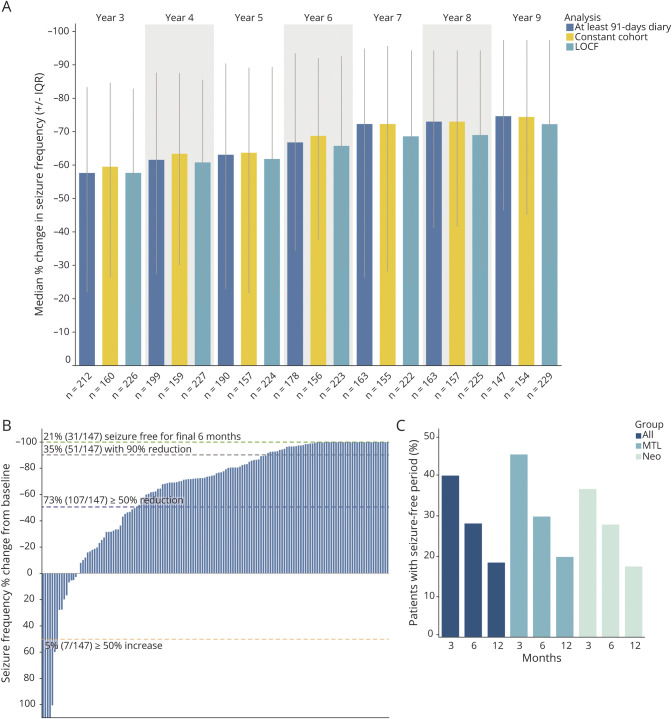
ObjectiveTo prospectively evaluate safety and efficacy of brain-responsive neurostimulation in adults with medically intractable focal onset seizures (FOS) over 9 years. MethodsAdults treated with brain-responsive neurostimulation in 2-year feasibility or randomized controlled trials were enrolled in a long-term prospective open label trial (LTT) to assess safety, efficacy, and quality of life (QOL) over an additional 7 years. Safety was assessed as adverse events (AEs), efficacy as median percent change in seizure frequency and responder rate, and QOL with the Quality of Life in Epilepsy (QOLIE-89) inventory. ResultsOf 256 patients treated in the initial trials, 230 participated in the LTT. At 9 years, the median percent reduction in seizure frequency was 75% (p < 0.0001, Wilcoxon signed rank), responder rate was 73%, and 35% had a ≥90% reduction in seizure frequency. We found that 18.4% (47 of 256) experienced ≥1 year of seizure freedom, with 62% (29 of 47) seizure-free at the last follow-up and an average seizure-free period of 3.2 years (range 1.04–9.6 years). Overall QOL and epilepsy-targeted and cognitive domains of QOLIE-89 remained significantly improved (p < 0.05). There were no serious AEs related to stimulation, and the sudden unexplained death in epilepsy (SUDEP) rate was significantly lower than predefined comparators (p < 0.05, 1-tailed χ2). ConclusionsAdjunctive brain-responsive neurostimulation provides significant and sustained reductions in the frequency of FOS with improved QOL. Stimulation was well tolerated; implantation-related AEs were typical of other neurostimulation devices; and SUDEP rates were low. Classification of evidenceThis study provides Class IV evidence that brain-responsive neurostimulation significantly reduces focal seizures with acceptable safety over 9 years.
Overview
The claims and statistics of this paper haven’t been checked yet.
Free: it reads the open-access text and checks the first 5 claims that cite a source we can check. Create a free account to check every claim.
Integrity signals
Registry
Cites
Statistics
Figures
Verification
Claims the paper makes
The claims and statistics of this paper haven’t been checked yet.
Free: it reads the open-access text and checks the first 5 claims that cite a source we can check. Create a free account to check every claim.
Claims other papers make about this one
Each is checked against this paper’s own text: does it say what the citing paper says it does?
The source backs part of the claim, not all of it — or backs it for a different population, condition or comparison.
In the citing paper
“Previously, data on the long-term safety and stability of ECoG primarily came from its application in epilepsy82,90–92, including the paddle-style surface strip electrodes with the Neuropace responsive neurostimulation system, which has demonstrated safety and signal stability for at least 9 years92.”
From The speech neuroprosthesis (2024) · cites this paper as [92]
Experimental — accuracy not yet measured
Self-check
Percentages, sums and reported differences re-computed from the paper’s own numbers.
The self-check needs the paper’s full text.
Citations
Cites
A Randomized, Controlled Trial of Surgery for Temporal-Lobe Epilepsy
Wiebe, S., Blume, W. T., Girvin, J. P., & Eliasziw, M. (2001) · New England Journal of Medicine · doi:10.1056/nejm200108023450501 · Cited by 3,525
Electrical stimulation of the anterior nucleus of thalamus for treatment of refractory epilepsy
Fisher, R., Salanova, V., Witt, T., Worth, R., Henry, T., Gross, R., Oommen, K., Osorio, I., Nazzaro, J., Labar, D., et al. (2010) · Epilepsia · doi:10.1111/j.1528-1167.2010.02536.x · Cited by 1,918 · cited 2×
“This compares favorably to other neurostimulation therapies that use a pectorally implanted pulse generator such as VNS(28) and DBS for Parkinson disease(24) or epilepsy.(6,7)”
BackgroundSelf-citationDalgleish, T. (2004) · Nature Reviews Neuroscience · doi:10.1038/nrn1432 · Cited by 1,849
Weaver, F. M. (2009) · JAMA · doi:10.1001/jama.2008.929 · Cited by 1,525
Responsive cortical stimulation for the treatment of medically intractable partial epilepsy
Morrell, M. J. (2011) · Neurology · doi:10.1212/wnl.0b013e3182302056 · Cited by 1,282
Self-citationDevinsky, O., & Pacia, S. (1993) · Neurologic Clinics · doi:10.1016/s0733-8619(18)30132-4 · Cited by 1,175
Engel, J., Wiebe, S., French, J., Sperling, M., Williamson, P., Spencer, D., Gumnit, R., Zahn, C., Westbrook, E., & Enos, B. (2003) · Neurology · doi:10.1212/01.wnl.0000055086.35806.2d · Cited by 904
Self-citationLong-term efficacy and safety of thalamic stimulation for drug-resistant partial epilepsy
Salanova, V., Witt, T., Worth, R., Henry, T. R., Gross, R. E., Nazzaro, J. M., Labar, D., Sperling, M. R., Sharan, A., Sandok, E., et al. (2015) · Neurology · doi:10.1212/wnl.0000000000001334 · Cited by 821
Self-citationChronic epilepsy and cognition: A longitudinal study in temporal lobe epilepsy
Helmstaedter, C., Kurthen, M., Lux, S., Reuber, M., & Elger, C. E. (2003) · Annals of Neurology · doi:10.1002/ana.10692 · Cited by 717
Heck, C. N., King‐Stephens, D., Massey, A. D., Nair, D. R., Jobst, B. C., Barkley, G. L., Salanova, V., Cole, A. J., Smith, M. C., Gwinn, R. P., et al. (2014) · Epilepsia · doi:10.1111/epi.12534 · Cited by 651
Self-citation
Research works printed but not linked: 1
- RNS System User Manual (RNS-300M). Mountain View: NeuroPace, Inc; 2018.
Cited by
Items 301–400 of 491
Invasive Neurostimulation for the Treatment of Epilepsy
Omidi, S. J., & Lundstrom, B. N. (2025) · Seminars in Neurology · doi:10.1055/a-2562-1964 · Cited by 3
“21 Symptomatic intracranial hemorrhage, including epidural, subdural, and intraparenchymal hematomas, has been reported in 4.7% of cases, sometimes requiring surgical evacuation.”
InfluentialSelf-citationSuresh, S., Modiano, Y. A., Chaitanya, G., Vashin, V., Chin, J., & Pati, S. B. B. (2025) · Epilepsy Research · doi:10.1016/j.eplepsyres.2025.107555 · Cited by 3
Surgical Treatment of Medically Refractory Epilepsy and Related Neuroimaging
Yang, J. B., Sukumar, R., Muttikkal, T. J. E., Donahue, J., Patel, S. H., Moosa, S., & Batchala, P. P. (2025) · Radiographics · doi:10.1148/rg.240107 · Cited by 3
Enatsu, R., Kanno, A., & Mikuni, N. (2025) · Neurologia medico-chirurgica · doi:10.2176/jns-nmc.2025-0158 · Cited by 3
“38) The RNS system received FDA approval in 2013 and is indicated for adult patients ( (cid:2) 18 years) with drug-resistant focal epilepsy.”
How Neuromodulation Changed the Landscape of Epilepsy Surgery
de Oliveira, T. V. H. F., & Cukiert, A. (2025) · Stereotactic and Functional Neurosurgery · doi:10.1159/000548581 · Cited by 5
“With respect to cognition, only 1 patient reported a memory-related adverse event, while 12.5% demonstrated non-device-related memory impairment, predominantly among those with a prior history of memory dysfunction [181].”
InfluentialFuture opportunities for research in rescue treatments
Wheless, J. W., Friedman, D. J., Krauss, G. L., Rao, V. R., Sperling, M. R., Carrazana, E. J., & Rabinowicz, A. L. (2022) · Epilepsia · doi:10.1111/epi.17363 · Cited by 3
Self-citationTan, H., Nerison, C. S., Bakr, S. M., Stedelin, B., Basha, A. K., Ernst, L. D. L., Kellogg, M. A., & Raslan, A. M. T. (2023) · Clinical Neurophysiology · doi:10.1016/j.clinph.2023.02.159 · Cited by 3
Self-citationNext-generation brain sensing, stimulation, and adaptive control devices for epilepsy
Worrell, G. A., & Křemen, V. (2023) · Elsevier eBooks · doi:10.1016/b978-0-323-91702-5.00009-8 · Cited by 4
Self-citationdo Vale, G. F., Cunha, L. D. Q., Felipe, M. C. C., Assunção, L. F. D. A., Cantídio, M. O. R., Filho, F. M., Bezerra, K. S. R., Bezerra, M. B. L., Oliveira, E., & HOLANDA, A. L. F. D. (2023) · Brazilian Journal of Implantology and Health Sciences · doi:10.36557/2674-8169.2023v5n5p2355-2374 · Cited by 4
Enner, S., El-Hallal, M., Hogan, K., Rodgers, S. D., Karkare, S. N., & Kothare, S. V. (2023) · Seizure · doi:10.1016/j.seizure.2023.12.005 · Cited by 3
Kusyk, D. M., Blaney, N. A., Quezada, T., & Whiting, A. C. (2023) · Journal of Neurosurgery Case Lessons · doi:10.3171/case23590 · Cited by 3
Exploring the Role of the Pulvinar Nucleus of the Thalamus in Occipital Lobe Epilepsy: A Case Report
Abdulrazeq, H., Kimata, A. R., Blum, A. S., Malik, A. N., & Asaad, W. F. (2024) · Cureus · doi:10.7759/cureus.52534 · Cited by 3
“…closed-loop systems targeting the anterior nucleus of the thalamus (ANT) included patients with this pathology in a very small subset of their subjects, and, as a result, it is difficult to draw conclusions about the efficacy of thalamic neuromodulation of the ANT for these patients [5,10,11].”
BackgroundOptimal hippocampal targeting in responsive neurostimulation for mesial temporal lobe epilepsy
Skelton, H. M., Bullinger, K. L., Isbaine, F., Lau, J. C., Willie, J. T., & Gross, R. E. (2024) · Journal of neurosurgery · doi:10.3171/2024.2.jns231732 · Cited by 4
Self-citationSurgical Treatments, Devices, and Nonmedical Management of Epilepsy
Friedman, D. J. (2025) · CONTINUUM Lifelong Learning in Neurology · doi:10.1212/con.0000000000001528 · Cited by 3
Brunette‐Clément, T., Fallah, A., & Weil, A. G. (2022) · Springer eBooks · doi:10.1007/978-3-030-80522-7_38 · Cited by 4
Intrakranielle und epikranielle Fokusstimulation: Konzepte und Zulassungsstatus
Schulze‐Bonhage, A. (2023) · Clinical Epileptology · doi:10.1007/s10309-023-00548-6 · Cited by 3
“Aktuell befinden sich die meisten Patienten in einemLangzeit-Follow-up zurDokumentationder Langzeitwirksamkeit und -verträglichkeitderBehandlung, insbesonderezurFragederStabilitätderAnfallskontrolle und zu möglichen weiteren Verbesserungen über die Zeit, wie sie bei der RNS wie auch bei anderen Stimulationsverfahren b…”
BackgroundEfficacy of ictal neurostimulation—English version
Hirsch, M., & Schulze‐Bonhage, A. (2023) · Clinical Epileptology · doi:10.1007/s10309-023-00597-x · Cited by 3
A pediatrician's guide to epilepsy surgery
Dabrowski, A. K., & Armstrong, C. (2024) · Current problems in pediatric and adolescent health care · doi:10.1016/j.cppeds.2024.101578 · Cited by 4
Local cortical network stimulation as a concept for focal epilepsy treatmentPreprint
van Blooijs, D., van der Stoel, M. D., Huiskamp, G. J. M., Demuru, M., Ramsey, N. F., & Leijten, F. S. S. (2023) · medRxiv · doi:10.1101/2023.10.30.23297463 · Cited by 3
van Blooijs, D., Blok, S., Aarnoutse, E. J., van Klink, N. E. C., Huiskamp, G. J. M., Bourez‐Swart, M., Gebbink, T. A., van Eijsden, P., van der Salm, S. M. A., Ramsey, N. F., et al. (2023) · medRxiv · doi:10.1101/2023.11.11.23298410 · Cited by 3
Philipsberg, P. A., & Shuman, T. (2024) · Epiliepsy currents/Epilepsy currents · doi:10.1177/15357597241258287 · Cited by 3
Balzekas, I., Richardson, J. P., Lorence, I., Lundstrom, B. N., Worrell, G. A., & Sharp, R. R. (2024) · Neurology Clinical Practice · doi:10.1212/cpj.0000000000200245 · Cited by 2
“34 Although many participants named regaining the ability to drive as a motivator, modest and gradual response rates to EBS 19,20 indicate that regaining driving privileges may not be a realistic goal.”
BackgroundSelf-citationPan-cortical electrophysiologic changes underlying attention
Lesser, R. P., Webber, W. R., & Miglioretti, D. L. (2024) · Scientific Reports · doi:10.1038/s41598-024-52717-w · Cited by 3
“With respect to treating intractable epilepsy, neither focal brain resection 55–57 nor focal brain stimulation 58,59 is always successful in completely controlling intractable epilepsy.”
Ehrens, D., Aeed, F., Otor, Y., Charu, V., Razavi, B., Sarma, S. V., Schiller, Y., & Tass, P. A. (2025) · Epilepsy & Behavior · doi:10.1016/j.yebeh.2025.110300 · Cited by 3
Alwazna, E. O., Abdullah, J., Alsini, H., Alshahrani, M. S., Aldhafeeri, W. F., Al-Attas, A. A., Alshaikh, A., Alanazi, M., Alsahli, H., Alshahrani, M., et al. (2025) · Acta Epileptologica · doi:10.1186/s42494-025-00215-5 · Cited by 2
“Current evidence suggests that the neurotrophic effects of the VNS potentially promote neuroplastic changes that contribute to long-term seizure reduction [25, 26].”
An artefact-resilient wide bandwidth bidirectional graphene neural interface
Prokop, M., Esparza-Iaizzo, M., Masvidal‐Codina, E., Illa, X., Codadu, N. K., Rathore, D., Ria, N., Kostarelos, K., del Corro, E., Garcia‐Cortadella, R., et al. (2026) · Nature Communications · doi:10.1038/s41467-026-73790-x · Cited by 2
Bercu, M. M., Spykman, K. E., Johnson, V. M., & Hernandez, A. W. (2025) · Pediatric Neurology · doi:10.1016/j.pediatrneurol.2025.10.026 · Cited by 2
A wireless, 60-channel, AI-enabled neurostimulation platform
Rizzuto, D. S., Herrema, H. G., Hu, Z., Utin, D., Kahn, J., Ho, C., Smiles, A. B., Gross, R. E., Lega, B. C., Das, S. R., et al. (2025) · Brain stimulation · doi:10.1016/j.brs.2025.103013 · Cited by 4
Self-citationThalamic stereoEEG optimizes neurostimulation therapy
Richardson, R. M. (2026) · Brain · doi:10.1093/brain/awaf481 · Cited by 2
Lee, S. T., Patel, S., Karakas, C., Houck, K. M., Trandafir, C., McGinley, M. J., Mohanty, D., Riviello, J. J., Weiner, H. L., Curry, D. J., et al. (2026) · Neurotherapeutics · doi:10.1016/j.neurot.2026.e00865 · Cited by 2
“The RNS System is a closed-loop device with detection-driven targeted stimulation and is Food and Drug Administration-approved for use in adults with focal DRE involving one or two epileptogenic foci [16 – 19].”
InfluentialDataset of chronic intracranial EEG of epilepsy patients via responsive neurostimulation system
Feng, C., Ni, H., Zhu, Z., Jiang, H., Zheng, Z., Ming, W., Wang, S., Xu, K., & ZHU, J. (2026) · Frontiers in Neuroscience · doi:10.3389/fnins.2026.1815732 · Cited by 2
Clinical trials of surgical neuromodulation therapies for epilepsy: Past, present & future
Piper, R. J., & Tisdall, M. M. (2026) · Neurotherapeutics · doi:10.1016/j.neurot.2026.e00935 · Cited by 3
“The nine-year, follow-up, open-label phase of the Pivotal trial and its preceding open-label study demonstrates that RNS provides durable clinical benefit as a long-term therapy [42].”
Gamma suppression correlates with thalamic stimulation therapeutic response in intractable epilepsy
Sanger, Z. T., Zhang, X., Lisko, T., Farooqi, H., Ventz, S., Pati, S. B. B., Henry, T. R., Darrow, D., Park, M. C., Netoff, T. I., et al. (2026) · Epilepsia · doi:10.1002/epi.70340 · Cited by 3
Chen, Q., Huang, N., Tong, C., Liu, P., Que, S., Xue, H., Xiao, X., & Song, E. (2026) · npj Biosensing · doi:10.1038/s44328-026-00109-7 · Cited by 4
“…(1) motor imagery, where chronic stroke patients simulate Responsive stimulation systems detect pathological activity and deliver targeted intervention, while adaptive strategies dynamically adjust stimulation parameters based on neural signals, improving ef fi cacy and reducing side effects 33,34 .”
From trade-offs to translation: An interdisciplinary roadmap for neurotechnology
Serrano, R. R., Troughton, J. G., Mirkhani, N., Martínez, N., Mariello, M., Tsigarides, J., Williamson, S., Sapriza, J., Luca, I. S., Dominguez‐Alfaro, A., et al. (2026) · Science Advances · doi:10.1126/sciadv.aee8595 · Cited by 3
Kognitive Begleiteffekte neurostimulativer Therapieverfahren
Winter, Y., Ellwardt, E., & Civelek, A. (2023) · Clinical Epileptology · doi:10.1007/s10309-023-00565-5 · Cited by 3
Noninvasive brain stimulation for epilepsy
Starnes, K., Schulze‐Bonhage, A., & Lundstrom, B. N. (2023) · Elsevier eBooks · doi:10.1016/b978-0-323-91702-5.00012-8 · Cited by 3
Self-citationHighlights From the Annual Meeting of the American Epilepsy Society 2022
Valencia, I., Alexander, A., Andrade, D. M., Arevalo-Astrada, M., Rubiños, C., Auer, N., Bainbridge, J. L., Baxendale, S., Bartoloméi, F., Becker, D. A., et al. (2023) · Epiliepsy currents/Epilepsy currents · doi:10.1177/15357597231187227 · Cited by 3
Self-citationAutomatic Monitoring of High-Frequency Autoimmune Disorder Related Seizures with Wearable Devices
Cui, J., Duque-Lopez, A., Brinkmann, G., Joseph, B., Faust, L. J., Ethridge, J., Worrell, G. A., Dubey, D., & Brinkmann, B. H. (2024) · Annual International Conference of the IEEE Engineering in Medicine and Biology Society (EMBC) · doi:10.1109/embc53108.2024.10782939 · Cited by 2
“Four Control Subjects (CS), including one normal volunteer and three patients (two monitored in an epilepsy monitoring unit at Mayo Clinic and one at home with seizure confirmation provided by an implanted NeuroPace RNS EEG recording device [9]), were selected from an existing cohort for comparison.”
Self-citationKainic acid pig model of hippocampal epilepsy
Mívalt, F., Maltais, D. D., Kim, I., Kim, J., Began, P., Duque-Lopez, A., Krakorova, V., Winter, B., Kuo, C. Y., Sharma, S., et al. (2026) · Scientific Reports · doi:10.1038/s41598-026-55135-2 · Cited by 2
“Pre-operative MRI scans and stereotactic targeting software (Brainlab AG, Munich, Germany) and porcine brain atlas 65 were used for segmentation and targeting of HPC and ANT, both common targets in mTLE neuromodulation therapy 13,16,18,19,21,22 .”
Self-citationLemus, H. N., Gururangan, K., Fields, M. C., Jetté, N., Bolden, D., & Yoo, J. Y. (2022) · Journal of Clinical Neurophysiology · doi:10.1097/wnp.0000000000000936 · Cited by 2
Salem, T., Chetty, C., & Chetty, O. (2023) · Surgical Science · doi:10.4236/ss.2023.148058 · Cited by 5
Perry, M. S., Bourcier, D., & Brna, P. M. (2025) · Epilepsy & Behavior · doi:10.1016/j.yebeh.2025.110269 · Cited by 2
Narrative Review on Common Traits of Parkinson’s Disease and Epilepsy
Tilz, C., & Wang‐Tilz, Y. (2025) · Journal of Clinical Medicine · doi:10.3390/jcm14082716 · Cited by 2
“After a proof-of-concept trial [23], where a daily application of 3 h was tested, several research groups have continued working on this technique.”
Sharma, E., Pomianoski, B. W., Jabbar, R., Ayesha, A., Silva, Y. P., Łajczak, P. M., Ahmed, A. R., Sahin, O. K., Majeed, M. W., Raake, M., et al. (2025) · Epilepsy & Behavior Reports · doi:10.1016/j.ebr.2025.100774 · Cited by 5
Long-Term Adherence to a Subcutaneous Two-Channel EEG System in Patients With Focal Epilepsy
Zabler, N., Novitskaya, Y., Sprünken, R., Hirsch, M., Dümpelmann, M., & Schulze-Bonhage, A. (2025) · Journal of Clinical Neurophysiology · doi:10.1097/wnp.0000000000001169 · Cited by 2
Targeted multinodal thalamic deep brain stimulation for epilepsy: A retrospective case series
Chang, R., Reid, B. T., McGeoch, P. D., Lusk, Z., Graber, K., Fisher, R. S., Parvizi, J., & Buch, V. (2025) · Epileptic Disorders · doi:10.1002/epd2.70070 · Cited by 2
Highlights From AES2020, a Virtual American Epilepsy Society Experience
Jobst, B. C., Conner, K., Coulter, D. A., Fried, I., Guilfoyle, S. M., Hirsch, L. J., Hogan, R. E., Hopp, J. L., Naritoku, D. K., Plueger, M., et al. (2021) · Epiliepsy currents/Epilepsy currents · doi:10.1177/15357597211018219 · Cited by 2
Self-citationNeuromodulation for Intractable Childhood Epilepsy
Hyslop, A. E., & Tatachar, P. (2021) · Seminars in Pediatric Neurology · doi:10.1016/j.spen.2021.100918 · Cited by 2
Joshi, R. B., & Zaveri, H. P. (2022) · Brain Communications · doi:10.1093/braincomms/fcac114 · Cited by 2
“The responsive neurostimulation (RNS®) System has shown promising results in reducing seizure frequency at a population level, but individual response can show a high degree of variability.(6) To date, no reliable measures can distinguish those who would be expected to respond well versus those whowould not, much like…”
BackgroundRecent Advances in Epilepsy Surgery
Tamimi, A., Juweid, M. E., & Tamimi, I. (2022) · IntechOpen eBooks · doi:10.5772/intechopen.107856 · Cited by 3
Probing cortical excitability under GABAergic modulationPreprint
Lepeu, G., van Maren, E., Slabeva, K., Fuchs, M., Ansó, J., Z'Graggen, W. J., Pollo, C., Schindler, K. A., Adamantidis, A., & Baud, M. O. (2021) · bioRxiv (Cold Spring Harbor Laboratory) · doi:10.1101/2021.02.18.431873 · Cited by 2
Fox, J. (2012) · London School of Economics and Political Science Research Online (London School of Economics and Political Science) · Cited by 3
Epilepsy Surgery: A Story of Diminishing Returns Over Time? Think Differently and Think Again
Joshi, C. (2023) · Epiliepsy currents/Epilepsy currents · doi:10.1177/15357597231178574 · Cited by 2
“In their recent article, authors Hsieh et al 5 have tried to address the above question by designing a retrospective study with a study design similar to one used in the publication on long-term outcome of patients who underwent neuromodulation in the initial responsive neuromodulation trials as published by Nair et a…”
BackgroundMethodInfluentialMenon, K., Tcheng, T. K., Seale, C. G., Greene, D., Morrell, M. J., & Desai, S. A. (2025) · Frontiers in Artificial Intelligence · doi:10.3389/frai.2025.1502504 · Cited by 1
Self-citationEvans, K., Li, Q., Halchenko, Y., Zhang, L., Danielson, V., Lassagne, R., Rego, B. D., & Berger, A. (2025) · Clinical Therapeutics · doi:10.1016/j.clinthera.2025.01.015 · Cited by 1
Offenberg, E. C., Berezutskaya, J., Müller, L., Freudenburg, Z. V., Ramsey, N. F., & Vansteensel, M. J. (2026) · Clinical Neurophysiology · doi:10.1016/j.clinph.2026.2111940 · Cited by 3
Increasing the quantity of electrical stimulation pulses reduces cortical response inhibition
Meikle, S. J., Hagan, M. A., Price, N. S. C., & Wong, Y. T. (2025) · Brain stimulation · doi:10.1016/j.brs.2025.103003 · Cited by 1
The cumulative impact of seizures: the science underlying how seizures beget seizures
Gustin, R. M., Gholipour, T., & Peters, J. M. (2026) · Frontiers in Neurology · doi:10.3389/fneur.2026.1793970 · Cited by 1
“The long-term effects of retraining these neuronal networks are demonstrated by continued seizure burden reduction over 9 years with RNS utilization (8).”
New possibilities of overcoming pharmacoresistance in epilepsy
Sorokovikova, T. V., Menshikova, T. V., Morozov, A. M., Kryukova, A. N., & Naumova, S. A. (2024) · Medical alphabet · doi:10.33667/2078-5631-2023-33-44-49 · Cited by 1
Sudden unexpected death in epilepsy in a patient with a brain‐responsive neurostimulation device
Wang, R., McGoldrick, P. E., Subah, G., Muh, C. R., & Wolf, S. M. (2024) · Annals of the Child Neurology Society · doi:10.1002/cns3.20062 · Cited by 1
Ramos, C. G. L., Shahin, M. N., Shafie, B., Tan, H., Yamamoto, E. A., Rockhill, A. P., Fecker, A. L., Ismail, M., Cleary, D. R., Raslan, A., et al. (2024) · Stereotactic and Functional Neurosurgery · doi:10.1159/000541350 · Cited by 1
“…rarely result in seizure freedom, neurostimulation treatments with the RNS System (NeuroPace, Inc) and deep brain stimulation (DBS) to the anterior nucleus of the thalamus (ANT) resulted in responder rates ( ≥ 50% reduction in seizure frequency) of 73% at 9 years and 75% at 7 years [10, 11].”
Self-citationLarrew, T., Greiner, H. M., Arya, R., Tenney, J. R., Aungaroon, G., Clark, D., Vedala, K., Drake, A. W., Leach, J., Horn, P. S., et al. (2025) · Neurosurgery · doi:10.1227/neu.0000000000003583 · Cited by 1
Brain Tumor Related Epilepsy: Pathophysiology and Multimodal Approach to Management
Heinrich, T., & Pandya, V. (2025) · Current Oncology Reports · doi:10.1007/s11912-025-01705-y · Cited by 2
“In all of the neuromodulatory devices, deep brain stimulation (DBS), vagal nerve stimulation (VNS), and responsive nerve stimulation (RNS), response rates are heavily tied to duration of use, on the order of years [119–121].”
Restoring communication with speech brain–computer interfaces
Prakash, P. R., Luo, S., Crone, N. E., & Slutzky, M. W. (2025) · Elsevier eBooks · doi:10.1016/b978-0-443-24824-5.00015-6 · Cited by 2
Carrick, F. R., Daniels, P., Pelletier, S. R., Prysmakova, S., Hankir, A. K., Abdulrahman, M., & Alrumaihi, N. (2025) · Journal of Personalized Medicine · doi:10.3390/jpm15080385 · Cited by 3
Varalda, A., & Pequito, S. (2025) · IEEE Conference on Control Technology and Applications (CCTA) · doi:10.1109/ccta53793.2025.11151275 · Cited by 2
“…gradually over 1 Division of Systems and Control, Uppsala University, Sweden. alessandro.varalda@it.uu.se 2 Institute for Systems and Robotics, IST, University of Lisboa. sergio.pequito@tecnico.ulisboa.pt time, suggesting complex network-level effects beyond simple seizure interruption [3], [7].”
Neuromodulation for Tourette syndrome: current techniques and future perspectives
Haslam, S., Johnson, K. A., Anderson, D., Mahant, N., & Anderson, C. J. (2025) · Journal of Neural Engineering · doi:10.1088/1741-2552/ae1257 · Cited by 4
“Additionally, in epilepsy, stimulation has yielded compounding improvements in therapeutic outcome over a multi-year time course, suggesting that stimulation may cause stable or increasing efficacy over time [175, 176].”
Clinical advances in investigational epilepsy treatments
Јаnkovic, S. (2025) · Expert Opinion on Investigational Drugs · doi:10.1080/13543784.2025.2574992 · Cited by 1
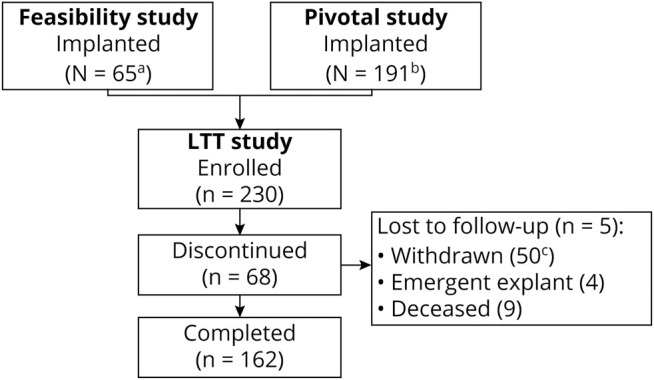
“…initial 2-year feasibility or randomized controlled trials, the adult patients with focal epilepsy (43% mesial temporal lobe only onsets) treated with RNS ( n = 230) were followed in a 7-year prospective open-label trial, which confirmed the exceptional efficiency and safety of this method [20].”
Challenges and advances in the treatment of drug-resistant epilepsy
Barzyk, K., Gryta, N., Brodowska, A., Chrościńska–Krawczyk, M., & Kurek, M. (2025) · Journal of Pre-Clinical and Clinical Research · doi:10.26444/jpccr/213382 · Cited by 1
“I Approximately half of these cases required device removal [34].”
George, D. D., LoPresti, M. A., Shahin, M. N., Widjaja, E., Wensel, A. M., Marupudi, N. I., & Raskin, J. S. (2025) · Child s Nervous System · doi:10.1007/s00381-025-07027-5 · Cited by 1
Petersen, B. H., Azaz, Z., Yorke, K., Petersen, S. H., Kharbat, A. F., & Conner, A. K. (2025) · Stereotactic and Functional Neurosurgery · doi:10.1159/000549636 · Cited by 1
“The discrepancy in seizure reduction rates is likely influenced by the length of follow-up time in each study as neuromodulation benefits tend to accrue over time [22, 38, 63].”
InfluentialWierzbicki, M., Shelley, I., Vinjamuri, S., Skidmore, C. T., Matias, C. M., Sharan, A. D., Wu, C., Sperling, M. R., & Hines, K. (2025) · Neurosurgery · doi:10.1227/neu.0000000000003885 · Cited by 1
Self-citationNeuroimaging and the Epilepsy Journey
Brinkmann, B. H. (2026) · Neuroimaging Clinics of North America · doi:10.1016/j.nic.2025.12.001 · Cited by 1
Deng, D. Z., Jung, B. C., Mnatsakanyan, L., Sazgar, M., King‐Stephens, D., Vadera, S., & Qing, K. Y. (2026) · Epilepsia · doi:10.1002/epi.70115 · Cited by 1
Learning From Our Failures: When Anterior Temporal Lobectomies Fail
Ernst, L. N., Davis, K. A., Staudt, M. D., Tailby, C., Yadala, S., & Wu, C. (2026) · Epiliepsy currents/Epilepsy currents · doi:10.1177/15357597261418793 · Cited by 1
“32,33 In those with dual pathology, combined treatment of all active epileptogenic lesions signi fi cantly improves seizure freedom compared with single-lesion surgery.”
Self-citationPeixin, L., Ye, Y., Dong, Y., Hou, J., Gao, Y., Yan, Y., Wu, C., Yang, L., & Wang, H. (2026) · International Journal of Smart and Nano Materials · doi:10.1080/19475411.2026.2656225 · Cited by 1
Ranpariya, M., Kaur, G., Farooq, O., Glover, R. L., & Li, P. (2026) · Seizure · doi:10.1016/j.seizure.2026.05.010 · Cited by 3
Mabry, M. H., Podkorytova, I., Chinedu-Eneh, E., Alick-Lindstrom, S., Ding, K., Hays, R., & Perven, G. (2026) · NeuroSci · doi:10.3390/neurosci7030068 · Cited by 1
Established and emerging neuromodulation for drug-resistant epilepsy
Eelbode, C., Constanthin, P. E., Momjian, S., & Mégevand, P. (2026) · Clinical Neurology and Neurosurgery · doi:10.1016/j.clineuro.2026.109548 · Cited by 3
Mithani, K., Dinger, T.-F., Gorodetsky, C., & Ibrahim, G. M. (2026) · Neurotherapeutics · doi:10.1016/j.neurot.2026.e00968 · Cited by 1
“These features may be particularly useful in focal, bilateral mesial temporal, eloquent cortical, or multifocal epilepsies with one or two dominant nodes [110, 111,148 – 151].”
Single-neuron responses to neurostimulation: Insights for epilepsy
Cowan, R. L., Merricks, E. M., Davis, T. S., Rolston, J. D., Rahimpour, S., Shofty, B., Schevon, C. A., & Smith, E. H. (2026) · Neurotherapeutics · doi:10.1016/j.neurot.2026.e01031 · Cited by 1
“Efficacy of these devices, however, is also moderate, with RNS achieving a median percentage reduction in seizure frequency of 73%, and 18.4% of patients with seizure-free status for at least one year [11].”
InfluentialRavasio, C. R., Abumuaileq, M., Nasimova, M., Xie, J., Shaw, D. C., Lindsay, A., Chu, C. J., & Han, X. (2026) · Neurotherapeutics · doi:10.1016/j.neurot.2026.e01043 · Cited by 1
“Moreover, in epilepsy, it is broadly recognized that seizures are driven by pathological synchrony of neural firing, which is once again disrupted by electrical stimulation to reduce severity and frequency of seizures [74,66,110,111,70].”
Safety and adverse event profiles in neuromodulation therapies for drug-resistant epilepsy
Tanoue, Y., Izumi, M., Ahn, S. S., Eliashiv, D. S., Engel, J., Bari, A., Fried, I., Fallah, A., & Nariai, H. (2026) · Neurotherapeutics · doi:10.1016/j.neurot.2026.e01042 · Cited by 1
“Clinical trials and long-term prospective follow-up studies have demonstrated sustained seizure reduction in adults with drug-resistant focal-onset seizures treated with RNS, with a median seizure reduction of 75% and a responder rate of 73% at 9 years [24].”
InfluentialZhu, Y., Alabi, O., Sisterson, N. D., Vissani, M., Bush, A., Nanda, P., & Richardson, R. M. (2026) · Neurotherapeutics · doi:10.1016/j.neurot.2026.e01051 · Cited by 1
“This sustained improvement is a defining clinical observation associated with the platform and may reflect, at least in part, continued refinement of detection and stimulation parameters over time [4,49].”
InfluentialMahmoudi, B. (2026) · American Journal of Psychiatry · doi:10.1176/appi.ajp.20260137 · Cited by 1
Anderson, C. T. (2022) · Epiliepsy currents/Epilepsy currents · doi:10.1177/15357597221074521 · Cited by 1
“The LTTwhich has studied RNS patients for an additional 7 years prospectively (after the 2-year pivotal trial).(1) The LTT assessed safety, seizure frequency, and quality of life from 2004 to 2018.”
BackgroundMethodRogowski, B. C., Miller, A., Saway, B. F., Wessell, J. E., Rowland, N. C., Lena, J., & Vandergrift, W. A. (2023) · Journal of Neurosurgery Case Lessons · doi:10.3171/case22435 · Cited by 1
“The rate of these complications is similar to that of DBS devices.(11) Symptomatic DBS-related hemorrhage has been reported to occur in 1.”
ResultNew Progress in the Treatment of Refractory Epilepsy
景, 世. (2023) · Advances in Clinical Medicine · doi:10.12677/acm.2023.13122627 · Cited by 1
Varner, J. A., Rezaie, R., Noorizadeh, N., Boop, F. A., Fulton, S. P., Klimo, P., Shimony, N., Wheless, J. W., & Narayana, S. (2024) · Epilepsy Research · doi:10.1016/j.eplepsyres.2024.107426 · Cited by 2
Yang, J. Y., Cottier, R., Beare, R. J., Genc, S., Diadori, P., Ngo, A., Sahlas, E., Bernhardt, B. C., Arbour, G., Bouthillier, A., et al. (2024) · Journal of Neurosurgery Case Lessons · doi:10.3171/case24139 · Cited by 2
Esmaeili, B., Ko, A. L., & Miller, J. W. (2024) · Epilepsy & Behavior · doi:10.1016/j.yebeh.2024.110074 · Cited by 1
Detection of seizure clustering using ultralong-term subcutaneous EEG monitoring
Novitskaya, Y., Hirsch, M., & Schulze‐Bonhage, A. (2024) · Clinical Epileptology · doi:10.1007/s10309-024-00719-z · Cited by 1
“The NeuroPace system continuously records counts of epileptic events per hour bin and provides responsive neurostimulation (RNS; [31]).”
Pseudoaneurysm Formation after Stereoencephalography for Epilepsy
Skelton, H. M., Laxpati, N. G., Lamanna, J. J., Isbaine, F., Barrow, D. L., & Gross, R. E. (2025) · Stereotactic and Functional Neurosurgery · doi:10.1159/000543531 · Cited by 1
Self-citationNguyen, T., Ivanisevic, M., Giles, A., & Kurukumbi, M. (2025) · Cureus · doi:10.7759/cureus.80331 · Cited by 1
“The limitations described by the patient concerning his driving restrictions manifest as depression and anxiety, ultimately interfering with his quality of life [15-16].”
Alhourani, A., Ostrov, P. B., Schwalb, J. M., Yang, A. I., Palade, A. E., Chang, E. F., & Neimat, J. S. (2025) · Operative Neurosurgery · doi:10.1227/ons.0000000000001614 · Cited by 1
Stimulating the brain: a primer
Opri, E., & Cernera, S. (2025) · Elsevier eBooks · doi:10.1016/b978-0-443-24824-5.00007-7 · Cited by 2
Low Power EEG Data Encoding for Brain Neurostimulation Implants
Fragkou, A., Kakarountas, A. P., & Kokkinos, V. (2022) · Information · doi:10.3390/info13040194 · Cited by 1
Orozco, A. R., Zillgitt, A. J., Burdette, D. E., & Ali, R. (2022) · Neurosurgery Practice · doi:10.1227/neuopn.0000000000000020 · Cited by 1
Neuromodulation in Children with Drug-Resistant Epilepsy
Ali, I., Houck, K. M., & Sully, K. (2023) · Journal of Pediatric Epilepsy · doi:10.1055/s-0042-1760293 · Cited by 1
Metadata
- Authors
- Nair, D. R., Laxer, K. D., Weber, P. B., Murro, A. M., Park, Y. D., Barkley, G. L., Smith, B. J., Gwinn, R. P., Doherty, M. J., Noe, K. H., Zimmerman, R. S., Bergey, G. K., Anderson, W. S., Heck, C., Liu, C. Y., Lee, R. W., Sadler, T., Duckrow, R. B., Hirsch, L. J., Wharen, R. E., Tatum, W., Srinivasan, S., McKhann, G. M., Agostini, M. A., Alexopoulos, A. V., Jobst, B. C., Roberts, D. W., Salanova, V., Witt, T. C., Cash, S. S., Cole, A. J., Worrell, G. A., Lundstrom, B. N., Edwards, J. C., Halford, J. J., Spencer, D. C., Ernst, L., Skidmore, C. T., Sperling, M. R., Miller, I., Geller, E. B., Berg, M. J., Fessler, A. J., Rutecki, P., Goldman, A. M., Mizrahi, E. M., Gross, R. E., Shields, D. C., Schwartz, T. H., Labar, D. R., Fountain, N. B., Elias, W. J., Olejniczak, P. W., Villemarette-Pittman, N. R., Eisenschenk, S., Roper, S. N., Boggs, J. G., Courtney, T. A., Sun, F. T., Seale, C. G., Miller, K. L., Skarpaas, T. L., Morrell, M. J., & Study, O. B. O. T. R. S. L.
- Affiliations
- Cleveland Clinic (US)
- Corresponding author
- Morrell, Martha J.
- ORCID
- Nair, Dileep R.
- Laxer, Kenneth D.
- Gwinn, Ryder P.
- Doherty, Michael J.
- Noe, Katherine H.
- Zimmerman, Richard S.
- Bergey, Gregory K.
- Anderson, William S.
- Liu, Charles Y.
- Lee, Ricky W.
- Hirsch, Lawrence J.
- Wharen, Robert E.
- Tatum, William
- McKhann, Guy M.
- Alexopoulos, Andreas V.
- Jobst, Barbara C.
- Roberts, David W.
- Salanova, Vicenta
- Cash, Sydney S.
- Cole, Andrew J.
- Worrell, Gregory A.
- Lundstrom, Brian N.
- Edwards, Jonathan C.
- Halford, Jonathan J.
- Spencer, David C.
- Ernst, Lia
- Skidmore, Christopher T.
- Sperling, Michael R.
- Miller, Ian
- Rutecki, Paul
- Goldman, Alica M.
- Gross, Robert E.
- Shields, Donald C.
- Schwartz, Theodore H.
- Fountain, Nathan B.
- Villemarette-Pittman, Nicole R.
- Eisenschenk, Stephan
- Roper, Steven N.
- Boggs, Jane G.
- Seale, Cairn G.
- Skarpaas, Tara L.
- Morrell, Martha J.
- Venue
- Neurology
- Published
- 2020-09
- Volume
- 95
- Issue
- 9
- Pages
- e1244-e1256
- ISSN
- 0028-3878 (ISSN-L)
- 1526-632X
- PMC
- PMC7538230
- OpenAlex
- W3044132865
- Semantic Scholar
- 547079eede15c79fc8e9c5ecf806d09dc4419025
- Cited by
- 490
- References
- 49
- Citations by year
- 2026: 65 · 2025: 100 · 2024: 87 · 2023: 93 · 2022: 84 · 2021: 45 · 2020: 15
- FWCI
- 43.23
- Type
- journal article
- Language
- en
- Open access
- hybrid
- doi.org
- Licence
- cc-by-nc-nd
- Locations
- Neurology (publishedVersion, cc-by-nc-nd)
- PubMed Central (publishedVersion, cc-by-nc-nd)
- PubMed (publishedVersion)
- Digital Commons-TMC (Texas Medical Center) (submittedVersion)
- Funders
- National Science Foundation
- U.S. Department of Defense
- American Epilepsy Society
- Epilepsy Foundation
- Citizens United for Research in Epilepsy
- Pfizer
- Brigham and Women's Hospital
- Massachusetts General Hospital
- Yale University
- Biogen
- Emory University
- George Washington University
- Wake Forest University
- Cleveland Clinic
- Cleveland Clinic Foundation
- Johns Hopkins University
- University of Rochester
- Dartmouth College
- Boston Scientific Corporation
- Thomas Jefferson University
- Rush University
- University of South Carolina
- Sunovion
- Dravet Syndrome Foundation
- DUSA Pharmaceuticals
- Augusta University
- Zogenix
- Ultragenyx Pharmaceutical
- GW Pharmaceuticals
- Acorda Therapeutics
- Sage Therapeutics
- Adamas Pharmaceuticals
- Boston Pharmaceuticals
- SK Life Science
- NeuroPace
- Upsher-Smith
- Martin Family Foundation
- University of Oxford
- Carl Zeiss Meditec AG
- Eisai
- H. Lundbeck A/S
- Epilepsy Society
- National Institutes of Health (UL1TR001863)
- Centers for Disease Control and Prevention
- U.S. Food and Drug Administration
- Genentech
- St. Jude Medical
- Weill Cornell Medical College
- School of Medicine, Emory University
- Advanced Research Projects Agency
- Audrey and Theodor Geisel School of Medicine at Dartmouth
- Medical Center, University of Rochester
- School of Medicine, Indiana University
- UCB US
- Greenwich Biosciences
- National Cancer Institute (P30CA023108)
- National Center for Advancing Translational Sciences
- UCB Pharma
- Medical Research and Materiel Command
- Topics
- Health Sciences › Medicine › Clinical Neurology › Epilepsy research and treatment
- Life Sciences › Neuroscience › Neurology › Vagus Nerve Stimulation Research
- Health Sciences › Medicine › Clinical Neurology › Deep Brain Stimulation and Movement Disorders
- Keywords
- focal epilepsy, drug-resistant epilepsy, focal seizures, seizure frequency reduction, seizure freedom, quality of life, sudden unexpected death in epilepsy, long-term safety, adjunctive therapy
- MeSH terms
- Drug Resistant Epilepsy, Sudden Unexpected Death in Epilepsy, Adolescent, Adult, Aged, Depressive Disorder, Electric Stimulation Therapy, Epilepsies, Partial, Female, Follow-Up Studies, Humans, Male, Memory Disorders, Middle Aged, Prospective Studies, Quality of Life, Status Epilepticus, Suicide, Randomized Controlled Trials as Topic, Prosthesis-Related Infections, Treatment Outcome, Intracranial Hemorrhages, Young Adult, Implantable Neurostimulators
About these checks
Registry, retraction, Cites and statistics results are computed, not judged, with one exception: a printed reference that no index lists is read once by a model before it counts as a citation error. Claims are extracted by a model and kept only when their quote appears verbatim in the text; each cited source is then checked, with a model’s help, for whether it says what the claim relies on. Those verdicts can be wrong — read the claim’s quote and the cited source before relying on one.
Statistics and arithmetic are recomputed, not judged.
Confidence bands are shown only for fields calibrated on our annotated test set. None is calibrated yet, so no band is shown.
What counts as a claim ›How we measure confidence ›How we check this ›
Are you an author, or do you see a problem with this page? Request a review
Data sources
Bibliographic data: Semantic Scholar, OpenAlex, Crossref.
Contains information from the Semantic Scholar Academic Graph Datasets, made available under the ODC Attribution License (ODC-BY 1.0).
Semantic Scholar’s data is described in: Kinney, R., et al. (2023). The Semantic Scholar Open Data Platform. arXiv:2301.10140.
