

Exercise and Bariatric Surgery: An Effective Therapeutic Strategy
Open accessThe DOI matches its Crossref record; 60 of the 60 references it cites were found in a registry or an index.
Abstract
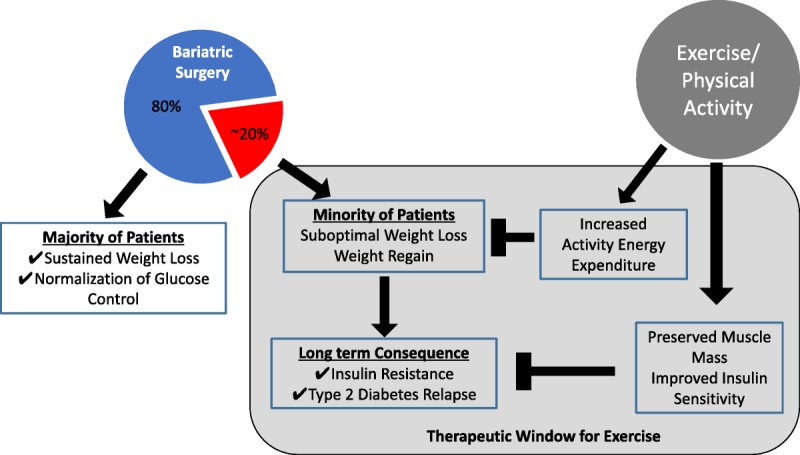
The long-term efficacy of bariatric surgery is not entirely clear, and weight regain and diabetes relapse are problems for some patients. Exercise is a feasible and clinically effective adjunct therapy for bariatric surgery patients. We hypothesize that exercise is also a critical factor for long-term weight loss maintenance and lasting remission of type 2 diabetes.
Overview
The claims and statistics of this paper haven’t been checked yet.
Free: it reads the open-access text and checks the first 5 claims that cite a source we can check. Create a free account to check every claim.
Integrity signals
Registry
Cites
Statistics
Figures
Verification
Claims the paper makes
The claims and statistics of this paper haven’t been checked yet.
Free: it reads the open-access text and checks the first 5 claims that cite a source we can check. Create a free account to check every claim.
Claims other papers make about this one
Each is checked against this paper’s own text: does it say what the citing paper says it does?
The source backs part of the claim, not all of it — or backs it for a different population, condition or comparison.
In the citing paper
“Findings of one study showed only 11% of patients reaching at least 150 min of moderate-intensity AT every week just 1 year after surgery.”
From The Benefits of Exercise Training in Combination With Weight Loss Therapies (2025) · cites this paper as [39]
Experimental — accuracy not yet measuredThe source backs part of the claim, not all of it — or backs it for a different population, condition or comparison.
In the citing paper
“approximately one-quarter of participants increased their sedentary behavior 1 year after surgery, in comparison with physical activity levels before surgery (39).”
From The Benefits of Exercise Training in Combination With Weight Loss Therapies (2025) · cites this paper as [39]
Experimental — accuracy not yet measuredThe cited source says what the claim attributes to it.
In the citing paper
“studies of physical activity among these patients reveal strikingly low adherence to a physically active lifestyle (39).”
From The Benefits of Exercise Training in Combination With Weight Loss Therapies (2025) · cites this paper as [39]
Self-check
Percentages, sums and reported differences re-computed from the paper’s own numbers.
The self-check needs the paper’s full text.
Citations
Cites
Lifestyle, diabetes, and cardiovascular risk factors 10 years after bariatric surgery
Sjöström, L., Lindroos, A.-K., Peltonen, M., Torgerson, J., Bouchard, C., Carlsson, B., Dahlgren, S., Larsson, B., Narbro, K., Sjöström, C. D., et al. (2004) · New England Journal of Medicine · doi:10.1056/nejmoa035622 · Cited by 4,457
Bariatric Surgery versus Intensive Medical Therapy for Diabetes — 5-Year Outcomes
Schauer, P. R., Bhatt, D. L., Kirwan, J. P., Wolski, K., Aminian, A., Brethauer, S. A., Navaneethan, S. D., Singh, R. P., Pothier, C. E., Nissen, S. E., et al. (2017) · New England Journal of Medicine · doi:10.1056/nejmoa1600869 · Cited by 2,934 · cited 7×
“Current evidence indicates that greater BMI, age, diagnosis and duration of T2D, cognitive function, personality, and mental health are strong predictors of suboptimal weight loss and diabetes relapse.”
BackgroundInfluentialTrends in Obesity Among Adults in the United States, 2005 to 2014
Flegal, K. M., Kruszon-Moran, D., Carroll, M. D., Fryar, C. D., & Ogden, C. L. (2016) · JAMA · doi:10.1001/jama.2016.6458 · Cited by 2,803
Obesity and Kidney Disease: Hidden Consequences of the Epidemic
Kovesdy, C. P., Furth, S. L., Zoccali, C., & on behalf of the World Kidney Day Steering Committee (2017) · American Journal of Nephrology · doi:10.1159/000458467 · Cited by 2,217
S UCCESSFUL W EIGHT L OSS M AINTENANCE
Wing, R. R., & Hill, J. O. (2001) · Annual Review of Nutrition · doi:10.1146/annurev.nutr.21.1.323 · Cited by 1,382 · cited 1×
“The long-term improvements in peripheral tissue insulin sensitivity after bariatric surgery occur in proportion to weight loss (57), which typically consist of a ~50% reduced whole body fat mass and a ~60% decrease in VAT after 1 yr (58).”
BackgroundWeight and Metabolic Outcomes 12 Years after Gastric Bypass
Adams, T. D., Davidson, L. E., Litwin, S. E., Kim, J., Kolotkin, R. L., Nanjee, M. N., Gutierrez, J. M., Frogley, S. J., Ibele, A. R., Brinton, E. A., et al. (2017) · New England Journal of Medicine · doi:10.1056/nejmoa1700459 · Cited by 956
Long-term Follow-up After Bariatric Surgery: A Systematic Review
Puzziferri, N., Roshek, T. B., Mayo, H. G., Gallagher, R., Belle, S. H., & Livingston, E. H. (2014) · JAMA · doi:10.1001/jama.2014.10706 · Cited by 819 · cited 3×
“In addition, weight regain may be a factor associated with study participant drop out and loss to follow-up, resulting in a skewed and overly optimistic conclusion regarding the efficacy of bariatric surgery–induced weight loss when follow-up is incomplete — less than 80% (6).”
BackgroundInfluentialLong, C. L., Schaffel, N., Geiger, J. W., Schiller, W. R., & Blakemore, W. S. (1979) · Journal of Parenteral and Enteral Nutrition · doi:10.1177/014860717900300609 · Cited by 763 · cited 1×
“The alterations in RMR after bariatric surgery have been described in three phases: the first is an elevated RMR that occurs immediately after surgery (14); a second phase of adaptive thermogenesis is evident between the third and sixth month postsurgery (15); and third, the adaptive thermogenesis typically disappears…”
BackgroundHealth benefits of gastric bypass surgery after 6 years
Adams, T. D., Davidson, L. E., Litwin, S. E., Kolotkin, R. L., LaMonte, M. J., Pendleton, R. C., Strong, M. B., Vinik, R., Wanner, N. A., Hopkins, P. N., et al. (2012) · JAMA · doi:10.1001/2012.jama.11164 · Cited by 674 · cited 1×
“In addition, a proportion of bariatric surgery patients also experience attenuation in the recovery from other comorbidities (after 6 yr, 13%, 11%, and 4% of patients for T2DM, hypertension, and LDL-cholesterol, respectively) (10,11).”
BackgroundGoodpaster, B. H., DeLany, J. P., Otto, A. D., Kuller, L., Vockley, J., South-Paul, J. E., Thomas, S. B., Brown, J., McTigue, K., Hames, K. C., et al. (2010) · JAMA · doi:10.1001/jama.2010.1505 · Cited by 558 · cited 1×
“2 kg over a 6-month intervention (35)).”
Self-citationBrethauer, S. A., Aminian, A., Romero-Talamás, H., Batayyah, E., Mackey, J., Kennedy, L., Kashyap, S. R., Kirwan, J. P., Rogula, T., Kroh, M., et al. (2013) · Annals of Surgery · doi:10.1097/sla.0b013e3182a5034b · Cited by 552 · cited 4×
“Weight regain and diabetes relapse can occur in a significant proportion of patients (8).”
BackgroundInfluentialChanges in fat-free mass during significant weight loss: a systematic review
Chaston, T. B., Dixon, J. B., & O'Brien, P. E. (2007) · International Journal of Obesity · doi:10.1038/sj.ijo.0803483 · Cited by 493 · cited 1×
“3% of weight loss with RYGB surgery (46).”
BackgroundPhysical activity and resting metabolic rate
Speakman, J. R., & Selman, C. (2003) · Proceedings of The Nutrition Society · doi:10.1079/pns2003282 · Cited by 441 · cited 1×
“Conversely, resistance training has been shown to preserve RMR independently of body composition changes (55) and this could be beneficial after bariatric surgery.”
BackgroundThe danger of weight loss in the elderly
Miller, S. L., & Wolfe, R. R. (2008) · The Journal of nutrition, health and aging · doi:10.1007/bf02982710 · Cited by 384 · cited 1×
“In addition, for the older bariatric surgery patient, the loss of skeletal muscle and bone density may have a negative impact on physical function, progression of sarcopenia, and quality of life (47).”
BackgroundEffect of Exercise on 24-Month Weight Loss Maintenance in Overweight Women
Jakicic, J. M. (2008) · Archives of Internal Medicine · doi:10.1001/archinte.168.14.1550 · Cited by 370 · cited 2×
“Exercise has proven to be an important factor for long-term weight loss maintenance after calorie restriction (44).”
BackgroundOlbers, T., Bj??rkman, S., Lindroos, A., Maleckas, A., L??nn, L., Sj??str??m, L., & L??nroth, H. (2006) · Annals of Surgery · doi:10.1097/01.sla.0000218085.25902.f8 · Cited by 340 · cited 1×
“The long-term improvements in peripheral tissue insulin sensitivity after bariatric surgery occur in proportion to weight loss (57), which typically consist of a ~50% reduced whole body fat mass and a ~60% decrease in VAT after 1 yr (58).”
BackgroundRice, B., Janssen, I., Hudson, R., & Ross, R. (1999) · Diabetes Care · doi:10.2337/diacare.22.5.684 · Cited by 231 · cited 10×
“In the context of diet-induced calorie restriction, a number of randomized studies Volume 46 • Number 4 • October 2018 have shown that during weight loss, supervised exercise prevents the loss of FFM (49).”
BackgroundInfluentialPhysical Fitness in Morbidly Obese Patients: Effect of Gastric Bypass Surgery and Exercise Training
Stegen, S., Derave, W., Calders, P., Van Laethem, C., & Pattyn, P. (2011) · Obesity Surgery · doi:10.1007/s11695-009-0045-y · Cited by 184
The Effect of Physical Activity on Body Weight
Jakicic, J. M. (2009) · Obesity · doi:10.1038/oby.2009.386 · Cited by 184
Factors associated with weight loss after gastric bypass
Campos, G. M. (2008) · Archives of Surgery · doi:10.1001/archsurg.143.9.877 · Cited by 172 · cited 1×
“Volume 46 • Number 4 • October 2018 10%–30% of bariatric surgery patients experience suboptimal weight loss (defined as either ≤50% or ≤40% excess body weight loss after gastric bypass (GB) surgery (9)).”
BackgroundBernhardt, V., Lorenzo, S., Babb, T. G., & Zavorsky, G. S. (2013) · Chest · doi:10.1378/chest.12-0896 · Cited by 168
High‐Volume Exercise Program in Obese Bariatric Surgery Patients: A Randomized, Controlled Trial
Shah, M., Snell, P. G., Rao, S., Adams‐Huet, B., Quittner, C., Livingston, E. H., & Garg, A. (2011) · Obesity · doi:10.1038/oby.2011.172 · Cited by 153 · cited 3×
“Part of the reason for this perception is that there have been very few well-controlled exercise trials in severely obese bariatric surgery patients (27).”
BackgroundInfluentialKing, W. C., Hsu, J. Y., Belle, S. H., Courcoulas, A. P., Eid, G. M., Flum, D. R., Mitchell, J. E., Pender, J. R., Smith, M. D., Steffen, K. J., et al. (2012) · Surgery for Obesity and Related Diseases · doi:10.1016/j.soard.2011.07.018 · Cited by 153 · cited 1×
“264 Exercise and Sport Sciences Reviews date comes from the Longitudinal Assessment of Bariatric Surgery-2 study (LABS-2), wherein 310 participants wore activity monitors for ≥10 h·d−1 for ≥3 d pre- and 1-yr postsurgery (22).”
BackgroundClinical trial demonstrates exercise following bariatric surgery improves insulin sensitivity
Coen, P. M., Tanner, C. J., Helbling, N. L., Dubis, G. S., Hames, K. C., Xie, H., Eid, G. M., Stefanovic-Racic, M., Toledo, F. G. S., Jakicic, J. M., et al. (2015) · Journal of Clinical Investigation · doi:10.1172/jci78016 · Cited by 150 · cited 3×
“8 kg conventional treatment versus 3-month exercise program respectively (4) (see Table 2 for exercise prescription (7,36–41))).”
BackgroundSelf-citationCastello‐Simões, V., Simões, R. P., Dibai, D. B., Catai, A. M., Arena, R. A., & Borghi‐Silva, A. (2010) · Obesity Surgery · doi:10.1007/s11695-010-0319-4 · Cited by 150
Knuth, N. D., Johannsen, D. L., Tamboli, R. A., Marks-Shulman, P. A., Huizenga, R., Chen, K. Y., Abumrad, N. N., Ravussin, E., & Hall, K. D. (2014) · Obesity · doi:10.1002/oby.20900 · Cited by 144 · cited 5×
“The degree of adaptive thermogenesis has been suggested to be related to the degree of energy balance, so patients who are in energy balance have suppressed adaptive thermogenesis (15).”
BackgroundInfluentialThe Importance of Preoperative and Postoperative Physical Activity Counseling in Bariatric Surgery
King, W. C., & Bond, D. S. (2013) · Exercise and Sport Sciences Reviews · doi:10.1097/jes.0b013e31826444e0 · Cited by 139 · cited 4×
“the American Society for Metabolic and Bariatric Surgery (ASMBS), the Obesity Society, and the American Heart Association (20).”
BackgroundInfluentialEnergy Expenditure and Weight Regain in Patients Submitted to Roux-en-Y Gastric Bypass
Faria, S. L., Kelly, E. D. O., & Faria, O. P. (2009) · Obesity Surgery · doi:10.1007/s11695-009-9842-6 · Cited by 125 · cited 1×
“FFM accounts for a significant portion of RMR, and FFM loss may predispose weight regain in the long term (45).”
BackgroundKing, W. C., Chen, J., Bond, D. S., Belle, S. H., Courcoulas, A. P., Patterson, E. J., Mitchell, J. E., Inabnet, W. B., Dakin, G. F., Flum, D. R., et al. (2015) · Obesity · doi:10.1002/oby.21106 · Cited by 119 · cited 1×
“4%) (24); although these numbers may differ across countries (25), this implies that strategies to increase structured exercise or daily PA levels, or alternatively strategies to lower sedentary behaviors, may have therapeutic value in bariatric surgery patients.”
BackgroundThe History and Evolution of Bariatric Surgical Procedures
Baker, M. T. (2011) · Surgical Clinics of North America · doi:10.1016/j.suc.2011.08.002 · Cited by 114 · cited 1×
“Bariatric surgery is a generally safe and effective treatment option for obesity and encompasses a number of different procedures (3).”
BackgroundKnuth, N. D., Johannsen, D. L., Tamboli, R. A., Marks‐Shulman, P. A., Huizenga, R., Chen, K. Y., Abumrad, N. N., Ravussin, E., & Hall, K. D. (2016) · Obesity · doi:10.1002/oby.21634 · Cited by 114
Dunn, J. P., Abumrad, N. N., Breitman, I., Marks-Shulman, P. A., Flynn, C. R., Jabbour, K., Feurer, I. D., & Tamboli, R. A. (2012) · Diabetes Care · doi:10.2337/dc11-1383 · Cited by 111
Hassannejad, A., Khalaj, A., Mansournia, M. A., Rajabian Tabesh, M., & Alizadeh, Z. (2017) · Obesity Surgery · doi:10.1007/s11695-017-2717-3 · Cited by 108
Weight and Metabolic Outcomes 12 Years after Gastric Bypass
Carroll, R. W., Stubbs, R. S., & Krebs, J. D. (2018) · New England Journal of Medicine · doi:10.1056/nejmc1714001 · Cited by 100 · cited 3×
“(13) indicated that the mean change from baseline in body weight in a group of 388 surgery patients was −45.”
BackgroundBaillot, A., Vallée, C.-A., Mampuya, W. M., Dionne, I. J., Comeau, É., Méziat-Burdin, A., & Langlois, M. (2017) · Obesity Surgery · doi:10.1007/s11695-017-2943-8 · Cited by 95 · cited 1×
“To our knowledge, there are only two preoperative PA interventions where participants were followed over 6 months (29) and 12 months after surgery (32); their results confirmed that patients who underwent PA intervention increased their MVPA and steps per d after intervention (Table 1); in addition, their steps per da…”
Huck, C. J. (2015) · Journal of Strength and Conditioning Research · doi:10.1519/jsc.0000000000000667 · Cited by 88 · cited 1×
“To our knowledge, there are only two studies that have examined the effect of resistance training after bariatric surgery, and neither study found significant differences in FFM between resistance training (50) or resistance and endurance training (51).”
BackgroundSchmidt, J. B., Pedersen, S. D., Gregersen, N. T., Vestergaard, L., Nielsen, M. S., Ritz, C., Madsbad, S., Worm, D., Hansen, D. L., Clausen, T. R., et al. (2015) · International Journal of Obesity · doi:10.1038/ijo.2015.162 · Cited by 86 · cited 1×
“However, human studies do not demonstrate significant differences after 6 and 12 months between gastric and vertical banding (−24% and −25%) and RYGB (−19% and −19%) (17,18), although the changes after 12 months were not entirely dependent on body composition changes either in adults (17) or adolescents (18).”
BackgroundBond, D. S., Vithiananthan, S., Thomas, J. G., Trautvetter, J., Unick, J. L., Jakicic, J. M., Pohl, D., Ryder, B. A., Dean Roye, G., Sax, H. C., et al. (2015) · Surgery for Obesity and Related Diseases · doi:10.1016/j.soard.2014.07.010 · Cited by 86
Baillot, A., Mampuya, W. M., Dionne, I. J., Comeau, É., Méziat-Burdin, A., & Langlois, M. (2016) · Obesity Surgery · doi:10.1007/s11695-016-2153-9 · Cited by 85 · cited 1×
“(31) showed that a 12-wk presurgical supervised exercise training program improved 6-min walk time, muscle strength, and physical fitness.”
BackgroundSaeidi, N., Nestoridi, E., Kucharczyk, J., Uygun, M. K., Yarmush, M. L., & Stylopoulos, N. (2012) · International Journal of Obesity · doi:10.1038/ijo.2012.167 · Cited by 82 · cited 1×
“In addition, evidence from animal studies suggested that these dynamic alterations in RMR are likely influenced by the specific surgical procedure (16).”
BackgroundWerling, M., Olbers, T., Fändriks, L., Bueter, M., Lönroth, H., Stenlöf, K., & le Roux, C. W. (2013) · PLoS ONE · doi:10.1371/journal.pone.0060280 · Cited by 81 · cited 1×
“DIT has received little attention (53), and although it has been associated with longer term weight loss (53), little is known about the specific effects of exercise or PA on DIT.”
BackgroundA role for exercise after bariatric surgery?
Coen, P. M., & Goodpaster, B. H. (2016) · Diabetes, Obesity and Metabolism · doi:10.1111/dom.12545 · Cited by 81
Self-citationCarnero, E. A., Dubis, G. S., Hames, K. C., Jakicic, J. M., Houmard, J. A., Coen, P. M., & Goodpaster, B. H. (2017) · Obesity · doi:10.1002/oby.21864 · Cited by 73
Self-citationDose response of exercise training following roux‐en‐Y gastric bypass surgery: A randomized trial
Woodlief, T. L., Carnero, E. A., Standley, R. A., Distefano, G., Anthony, S. J., Dubis, G. S., Jakicic, J. M., Houmard, J. A., Coen, P. M., & Goodpaster, B. H. (2015) · Obesity · doi:10.1002/oby.21332 · Cited by 72
Self-citationMarcon, E. R., Baglioni, S., Bittencourt, L., Lopes, C., Neumann, C. R., & Trindade, M. R. M. (2016) · Obesity Surgery · doi:10.1007/s11695-016-2365-z · Cited by 72
Understanding the Capacity for Exercise in Post-Bariatric Patients
Coleman, K. J., Caparosa, S. L., Nichols, J. F., Fujioka, K., Koebnick, C., McCloskey, K. N., Xiang, A. H., Ngor, E. W., & Levy, S. S. (2017) · Obesity Surgery · doi:10.1007/s11695-016-2240-y · Cited by 71
Creel, D. B., Schuh, L. M., Reed, C. A., Gomez, A. R., Hurst, L. A., Stote, J., & Cacucci, B. M. (2016) · Obesity · doi:10.1002/oby.21548 · Cited by 64
Bond, D. S., Thomas, J. G., Vithiananthan, S., Unick, J. L., Webster, J., Roye, G. D., Ryder, B. A., & Sax, H. C. (2016) · International Journal of Obesity · doi:10.1038/ijo.2016.237 · Cited by 61 · cited 1×
“To our knowledge, there are only two preoperative PA interventions where participants were followed over 6 months (29) and 12 months after surgery (32); their results confirmed that patients who underwent PA intervention increased their MVPA and steps per d after intervention (Table 1); in addition, their steps per da…”
The Effect of Exercise on Obesity, Body Fat Distribution and Risk for Type 2 Diabetes
Goedecke, J. H., & Micklesfield, L. K. (2014) · Medicine and Sport Science · doi:10.1159/000357338 · Cited by 60 · cited 2×
“The long-term improvements in peripheral tissue insulin sensitivity after bariatric surgery occur in proportion to weight loss (57), which typically consist of a ~50% reduced whole body fat mass and a ~60% decrease in VAT after 1 yr (58).”
BackgroundDeLany, J. P., Kelley, D. E., Hames, K. C., Jakicic, J. M., & Goodpaster, B. H. (2014) · Obesity · doi:10.1002/oby.20525 · Cited by 60
Self-citationScibora, L. M. (2014) · Diabetes, Obesity and Metabolism · doi:10.1111/dom.12363 · Cited by 60 · cited 3×
“The potential for exercise training to effectively prevent or attenuate BMC reductions after bariatric surgery remains to be elucidated.”
BackgroundInfluentialEnergetic adaptations persist after bariatric surgery in severely obese adolescents
Butte, N. F., Brandt, M. L., Wong, W. W., Liu, Y., Mehta, N. R., Wilson, T. A., Adolph, A. L., Puyau, M. R., Vohra, F. A., Shypailo, R. J., et al. (2015) · Obesity · doi:10.1002/oby.20994 · Cited by 55 · cited 1×
“However, human studies do not demonstrate significant differences after 6 and 12 months between gastric and vertical banding (−24% and −25%) and RYGB (−19% and −19%) (17,18), although the changes after 12 months were not entirely dependent on body composition changes either in adults (17) or adolescents (18).”
BackgroundSurgical Weight Loss: Impact on Energy Expenditure
Thivel, D., Brakonieki, K., Duche, P., Béatrice, M., Yves, B., & Laferrère, B. (2013) · Obesity Surgery · doi:10.1007/s11695-012-0839-1 · Cited by 52
Wefers, J. F., Woodlief, T. L., Carnero, E. A., Helbling, N. L., Anthony, S. J., Dubis, G. S., Jakicic, J. M., Houmard, J. A., Goodpaster, B. H., & Coen, P. M. (2017) · Surgery for Obesity and Related Diseases · doi:10.1016/j.soard.2016.08.493 · Cited by 44 · cited 1×
“We recently reported that even low levels of PA (7885 to 4343 steps per d for the highest to the lowest quartile) are related to beneficial changes in body composition and insulin sensitivity after bariatric surgery (19,23).”
BackgroundSelf-citationRoad Running After Gastric Bypass for Morbid Obesity: Rationale and Results of a New Protocol
Marchesi, F., Sario, G. D., Reggiani, V., Tartamella, F., Giammarresi, A., Cecchini, S., Costi, R., Guareschi, G., Beltrami, G., Panfilis, C. D., et al. (2014) · Obesity Surgery · doi:10.1007/s11695-014-1517-2 · Cited by 37
An overview of the management of morbid obesity
Monkhouse, S. J. W., Morgan, J. D. T., Bates, S. E., & Norton, S. A. (2009) · Postgraduate Medical Journal · doi:10.1136/pgmj.2009.082271 · Cited by 27
Physical Activity in Obese Type 2 Diabetes After Gastric Bypass or Medical Management
Panosian, J., Ding, S.-A., Wewalka, M., Simonson, D. C., GOEBEL-FABBRI, A. E., Foster, K., Halperin, F., Vernon, A. H., & Goldfine, A. B. (2016) · The American Journal of Medicine · doi:10.1016/j.amjmed.2016.07.019 · Cited by 24
Sellberg, F., Willmer, M., Tynelius, P., & Berglind, D. (2017) · BMC Surgery · doi:10.1186/s12893-017-0318-7 · Cited by 15 · cited 1×
“4%) (24); although these numbers may differ across countries (25), this implies that strategies to increase structured exercise or daily PA levels, or alternatively strategies to lower sedentary behaviors, may have therapeutic value in bariatric surgery patients.”
BackgroundBariatric surgery for T2DM—cure, or remission and relapse?
Goldfine, A. B., & Patti, M. (2013) · Nature Reviews Endocrinology · doi:10.1038/nrendo.2013.222 · Cited by 6 · cited 1×
“The question of whether bariatric surgery should be regarded as an effective “cure” for diabetes has been raised (12); in a 12-yr follow-up study, a 51% remission rate of T2DM was observed (13); however, questions of why weight regain and diabetes relapse occur in some patients and not others remain.”
BackgroundWilms, B., Ernst, B., Thurnheer, M., & Schultes, B. (2015) · Obesity Research & Clinical Practice · doi:10.1016/j.orcp.2015.02.010 · Cited by 4 · cited 1×
“Recent work from our group and others (19,20) indicates that after bariatric surgery, patients following an exercise intervention or health education controls have low daily PA levels relative to recommendations (<7500 steps per d, <150 min·wk−1 in bouts of 10 min or 60–90 min·d−1 of moderate PA (20)) and compare with…”
Background
Research works printed but not linked: 2
- Breymaier S The American Medical Association Adopts New Policies on Second Day of Voting at Annual Meeting: AMA Media Relations; 2013 [cited 2013 2013-06-18]. Press Release]. Available from: http://www.ama-assn.org/ama/pub/news/news/2013/2013-06-18-new-ama-policies-annual-meeting.page.
- Woodlief TL Carnero EA Standley RA Dose response of exercise training following roux-en-Y gastric bypass surgery: a randomized trial. Obesity. 2015; 23(12): 2454– 61. 26537198 PMC5480215
Cited by
Hassannejad, A., Khalaj, A., Mansournia, M. A., Rajabian Tabesh, M., & Alizadeh, Z. (2017) · Obesity Surgery · doi:10.1007/s11695-017-2717-3 · Cited by 108
Effects of Grape Seed Proanthocyanidin Extract on Obesity
Liu, M., Yun, P., Hu, Y., Yang, J., Khadka, R. B., & Peng, X. (2020) · Obesity Facts · doi:10.1159/000502235 · Cited by 71
Tabesh, M. R., Eghtesadi, M., Abolhasani, M., Maleklou, F., Ejtehadi, F., & Alizadeh, Z. (2023) · Obesity Surgery · doi:10.1007/s11695-023-06703-2 · Cited by 78
“Bariatric surgery improves physical activity in patients with obesity [107, 108].”
BackgroundDantas, W. S., Roschel, H., Murai, I. H., Gil, S., Davuluri, G., Axelrod, C. L., Ghosh, S., Newman, S. S., Zhang, H., Shinjo, S. K., et al. (2020) · Diabetes · doi:10.2337/db19-1180 · Cited by 54
“However, the extent of metabolic benefit may be subject to lifestyle changes after the surgery (3).”
BackgroundMendes, C., Carvalho, M., Oliveira, L., Palmeira, A. L., Rodrigues, L. M., & Gregório, J. (2022) · International Journal of Environmental Research and Public Health · doi:10.3390/ijerph19148328 · Cited by 60
“As previously stated, weight regain is dependent on behavioral influences whose impact becomes more obvious many years after bariatric surgery [18].”
Metadata
- Authors
- Coen, P. M., Carnero, E. A., & Goodpaster, B. H.
- Affiliations
- Sanford Burnham Prebys Medical Discovery Institute (US)
- Translational Research Institute for Metabolism and Diabetes, Florida Hospital; and
- Corresponding author
- Goodpaster, Bret H.
- Venue
- Exercise and Sport Sciences Reviews
- Published
- 2018-10
- Volume
- 46
- Issue
- 4
- Pages
- 262-270
- ISSN
- 0091-6331 (ISSN-L)
- 1538-3008
- PMC
- PMC6147093
- OpenAlex
- W2884765547
- Semantic Scholar
- 408011b20d4f1f076c535c70826185952b34a2bb
- Cited by
- 71
- References
- 60
- Citations by year
- 2026: 3 · 2025: 6 · 2024: 8 · 2023: 11 · 2022: 10 · 2021: 16 · 2020: 10 · 2019: 6
- FWCI
- 1.78
- Type
- journal article
- Language
- en
- Open access
- hybrid
- doi.org
- Locations
- Exercise and Sport Sciences Reviews (publishedVersion, cc-by)
- Europe PMC (PubMed Central) (publishedVersion, cc-by)
- PubMed Central (publishedVersion, cc-by)
- PubMed (publishedVersion)
- Funders
- National Institutes of Health (5p30dk046204-15)
- National Institute of Diabetes and Digestive and Kidney Diseases (R01DK078192, P30-DK046204)
- National Center for Research Resources (M01RR000056)
- Topics
- Health Sciences › Medicine › Surgery › Bariatric Surgery and Outcomes
- Health Sciences › Medicine › Public Health, Environmental and Occupational Health › Physical Activity and Health
- Health Sciences › Medicine › Public Health, Environmental and Occupational Health › Obesity, Physical Activity, Diet
- Keywords
- bariatric surgery, physical activity, weight regain, type 2 diabetes remission, weight loss maintenance, adjunctive therapy, obesity
- MeSH terms
- Body Weight Maintenance, Combined Modality Therapy, Diabetes Mellitus, Type 2, Humans, Obesity, Recurrence, Weight Gain, Weight Loss, Exercise, Treatment Outcome, Bariatric Surgery
About these checks
Registry, retraction, Cites and statistics results are computed, not judged, with one exception: a printed reference that no index lists is read once by a model before it counts as a citation error. Claims are extracted by a model and kept only when their quote appears verbatim in the text; each cited source is then checked, with a model’s help, for whether it says what the claim relies on. Those verdicts can be wrong — read the claim’s quote and the cited source before relying on one.
Statistics and arithmetic are recomputed, not judged.
Confidence bands are shown only for fields calibrated on our annotated test set. None is calibrated yet, so no band is shown.
What counts as a claim ›How we measure confidence ›How we check this ›
Are you an author, or do you see a problem with this page? Request a review
Data sources
Bibliographic data: Semantic Scholar, OpenAlex, Crossref.
Contains information from the Semantic Scholar Academic Graph Datasets, made available under the ODC Attribution License (ODC-BY 1.0).
Semantic Scholar’s data is described in: Kinney, R., et al. (2023). The Semantic Scholar Open Data Platform. arXiv:2301.10140.
