

The DOI matches its Crossref record; 83 of the 84 references it cites were found in a registry or an index.
mTOR inhibitors in cancer therapy
Open accessAbstract
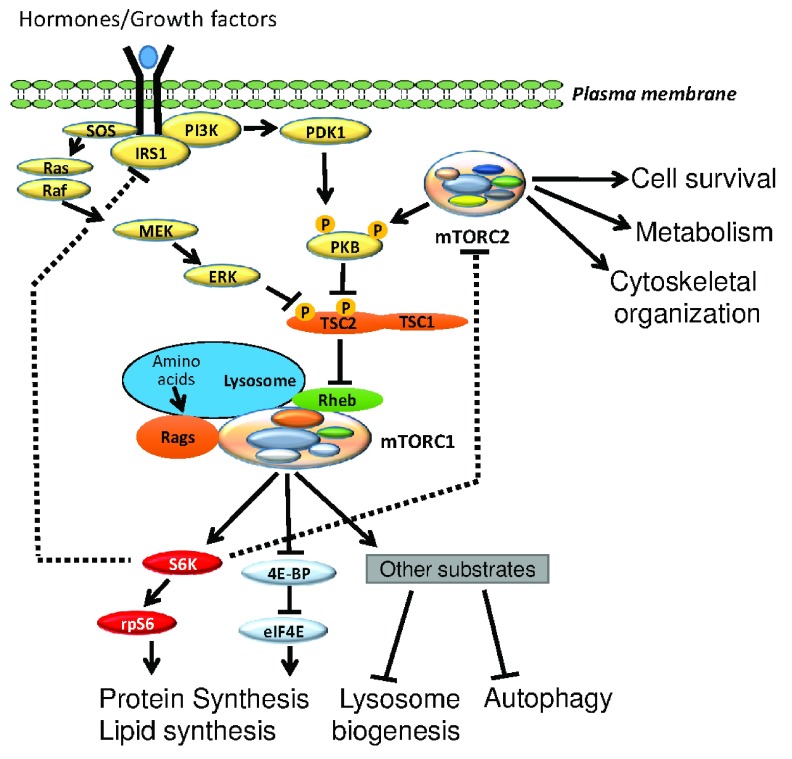
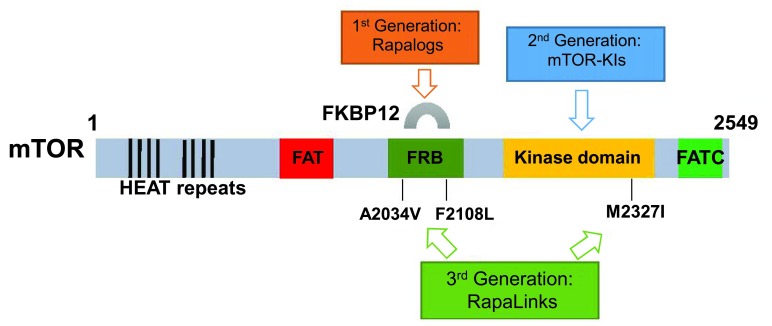
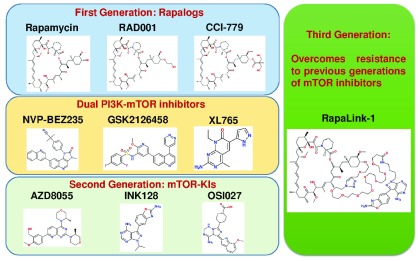
The mammalian target of rapamycin, mTOR, plays key roles in cell growth and proliferation, acting at the catalytic subunit of two protein kinase complexes: mTOR complexes 1 and 2 (mTORC1/2). mTORC1 signaling is switched on by several oncogenic signaling pathways and is accordingly hyperactive in the majority of cancers. Inhibiting mTORC1 signaling has therefore attracted great attention as an anti-cancer therapy. However, progress in using inhibitors of mTOR signaling as therapeutic agents in oncology has been limited by a number of factors, including the fact that the classic mTOR inhibitor, rapamycin, inhibits only some of the effects of mTOR; the existence of several feedback loops; and the crucial importance of mTOR in normal physiology.
Overview
The claims and statistics of this paper haven’t been checked yet.
Run the check — free, no account needed. It reads the open-access text and checks the sources it cites.
Integrity signals
Registry
Cites
Statistics
Figures
Verification
Claims the paper makes
The claims and statistics of this paper haven’t been checked yet.
Run the check — free, no account needed. It reads the open-access text and checks the sources it cites.
Claims other papers make about this one
Each is checked against this paper’s own text: does it say what the citing paper says it does?
In the citing paper
“Rapamycin can also prolong the life cycle of many species as diverse as worms and mice, and its signaling system has been implicated as the master regulator of cellular growth and metabolism.”
From Metformin, the Aspirin of the 21st Century: Its Role in Gestational Diabetes Mellitus, Prevention of Preeclampsia and Cancer, and the Promotion of Longevity (2017) · cites this paper as [236]
In the citing paper
“A family of molecules that are the mechanistic target of the rapamycin (mTOR) complex has been attributed a major role in the biology of cell metabolism, growth, longevity, and even preterm birth(230–236).”
From Metformin, the Aspirin of the 21st Century: Its Role in Gestational Diabetes Mellitus, Prevention of Preeclampsia and Cancer, and the Promotion of Longevity (2017) · cites this paper as [236]
Self-check
Percentages, sums and reported differences re-computed from the paper’s own numbers.
The self-check needs the paper’s full text.
Citations
Cites
Repertoires of Autophagy in the Pathogenesis of Ocular Diseases
Li, Y., Jiang, Q. L., Cao, G.-F., Yao, J., & Yan, B. (2015) · Cellular Physiology and Biochemistry · doi:10.1159/000373980 · Cited by 16,351
Phosphorylation and regulation of Akt/PKB by the rictor-mTOR complex
Sarbassov, D. D., Guertin, D. A., Ali, S. M., & Sabatini, D. M. (2005) · Science · doi:10.1126/science.1106148 · Cited by 6,216 · cited 6×
“DI, dual mammalian target of rapamycin/phosphoinositide 3-kinase inhibitor; HCC, hepatocellular carcinoma; MBC, metastatic breast cancer; mTOR, mammalian target of rapamycin; NSCLC, non-small cell lung cancer; PI3K, phosphoinositide 3-kinase; pNET, pancreatic neuroendocrine tumor; RCC, renal cell carcinoma. shows effe…”
BackgroundInfluentialShapiro, A. M. J., Lakey, J. R. T., Ryan, E. A., Korbutt, G. S., Toth, E., Warnock, G. L., Kneteman, N. M., & Rajotte, R. V. (2000) · New England Journal of Medicine · doi:10.1056/nejm200007273430401 · Cited by 5,237
mTOR: from growth signal integration to cancer, diabetes and ageing
Zoncu, R., Efeyan, A., & Sabatini, D. M. (2011) · Nature Reviews Molecular Cell Biology · doi:10.1038/nrm3025 · Cited by 3,941 · cited 2×
“DI XL765 Phase I/II (5) Sanofi-Aventis, Exelixis Glioblastoma multiforme/NSCLC/ MBC 39”
BackgroundOtto Warburg's contributions to current concepts of cancer metabolism
Koppenol, W. H., Bounds, P. L., & Dang, C. V. (2011) · Nature Reviews Cancer · doi:10.1038/nrc3038 · Cited by 3,427
Prolonged Rapamycin Treatment Inhibits mTORC2 Assembly and Akt/PKB
Sarbassov, D. D., Ali, S. M., Sengupta, S., Sheen, J.-H., Hsu, P. P., Bagley, A. F., Markhard, A. L., & Sabatini, D. M. (2006) · Molecular Cell · doi:10.1016/j.molcel.2006.03.029 · Cited by 2,365 · cited 3×
“Although rapamycin is a highly selective inhibitor against mTOR, it does not completely inhibit all of the activities of mTORC1 28 and will inhibit mTORC2 in only some types of cells upon prolonged treatment 29 .”
BackgroundInfluentialCOSMIC: mining complete cancer genomes in the Catalogue of Somatic Mutations in Cancer
Forbes, S. A., Bindal, N., Bamford, S., Cole, C., Kok, C. Y., Beare, D., Jia, M., Shepherd, R., Leung, K., Menzies, A., et al. (2011) · Nucleic Acids Research · doi:10.1093/nar/gkq929 · Cited by 2,278 · cited 1×
“Given the many oncogenic pathways—and oncogenes or tumor suppressors—linked to mTOR signaling, it is estimated that mTORC1 function is hyperactivated in up to 70% of all human tumors 18 .”
BackgroundMTOR: a pharmacologic target for autophagy regulation
Kim, Y. C., & Guan, K.-L. (2015) · Journal of Clinical Investigation · doi:10.1172/jci73939 · Cited by 2,126 · cited 1×
“DI GSK2126458 Phase I/II (3) GlaxoSmithKline Advanced solid tumors, lymphoma 38”
BackgroundThoreen, C. C., Kang, S. A., Chang, J. W., Liu, Q., Zhang, J., Gao, Y., Reichling, L. J., Sim, T., Sabatini, D. M., & Gray, N. S. (2009) · Journal of Biological Chemistry · doi:10.1074/jbc.m900301200 · Cited by 1,803
Vézina, C., KUDELSKI, A., & Sehgal, S. N. (1975) · The Journal of Antibiotics · doi:10.7164/antibiotics.28.721 · Cited by 1,691
Cited by
Sorted by citations
Items 201–268 of 268
Anitha, J., Muthusankar, A., Sangeetha, M., Kishore, V. L., Sherin, P. J., Selvakumar, R., Chandraprakash, K., & Premkumar, T. (2025) · International Journal of Biological Macromolecules · doi:10.1016/j.ijbiomac.2025.145995 · Cited by 6
verma, H., Panda, P., & Bhaskar, L. V. (2023) · Onco · doi:10.3390/onco3030010 · Cited by 6
Lee, S. H., Kim, E. Y., Han, J. M., Han, G., & Chang, Y. S. (2023) · Cancer Research and Treatment · doi:10.4143/crt.2022.1527 · Cited by 6
mTOR–mLST8 interaction: hot spot identification through quantum biochemistry calculations
de Oliveira, F. L. S., Carletti, J. V., Azevedo, F. F. N., de Sousa, F. J. F., Caetano, E. W. S., Freire, V. N., & Zanatta, G. (2020) · New Journal of Chemistry · doi:10.1039/d0nj04099a · Cited by 6
Huang, Q., Zhang, H., & Liao, Z. (2019) · Current Medical Science · doi:10.1007/s11596-019-2098-z · Cited by 6
Racially Disparate Expression of mTOR/ERK-1/2 Allied Proteins in Cancer
Mishra, S., Charan, M., Verma, A. K., Ramaswamy, B., Ahirwar, D. K., & Ganju, R. K. (2021) · Frontiers in Cell and Developmental Biology · doi:10.3389/fcell.2021.601929 · Cited by 6
Leclercq-Cohen, G., Bacac, M., & Klein, C. (2023) · Expert Opinion on Biological Therapy · doi:10.1080/14712598.2023.2166786 · Cited by 6
Prospects of Pharmacological Interventions to Organismal Aging
Hillson, O., Gonzalez, S., & Rallis, C. (2018) · BioMolecular Concepts · doi:10.1515/bmc-2018-0018 · Cited by 5
Senolysis and Senostasis Through the Plasma Membrane
Kim, K. M., Noh, J. H., & Gorospe, M. (2020) · Healthy ageing and longevity · doi:10.1007/978-3-030-44903-2_7 · Cited by 5
Structural Aspects of mTOR Inhibitors: Search for Potential Compounds
Kaur, K., Anant, A., & Asati, V. (2021) · Anti-Cancer Agents in Medicinal Chemistry · doi:10.2174/1871520621666210720121403 · Cited by 5
Mane, R. R., & Kale, P. P. (2022) · Journal of Complementary and Integrative Medicine · doi:10.1515/jcim-2022-0114 · Cited by 5
ABL1 kinase as a tumor suppressor in AML1-ETO and NUP98-PMX1 leukemias
Golovine, K. V., Abalakov, G., Lian, Z., Chatla, S., Karami, A. L., Chitrala, K. N., Madžo, J., Nieborowska-Skorska, M., Huang, J. Y., & Skórski, T. (2023) · Blood Cancer Journal · doi:10.1038/s41408-023-00810-0 · Cited by 5
“mTOR inhibitor rapamycin [30] inhibited phosphorylation of S6 kinase (Supplemental Fig.”
BackgroundTwo novel TSC2 mutations in renal epithelioid angiomyolipoma sensitive to everolimus
Wang, T., Xie, S., Luo, R., Shi, L., Bai, P., Wang, X., Wan, R., Deng, J., Wu, Z., Li, W., et al. (2019) · Cancer Biology & Therapy · doi:10.1080/15384047.2019.1665955 · Cited by 6
“Indeed, mTORC1 inhibitors such as deforolimus, everolimus and temsirolimus have been prevalently assessed in various cancers, alone or in combination with other targeted therapies or chemotherapies.(17,18) Importantly, everolimus and temsirolimus were recently approved by the FDA for the treatment of renal cell carcin…”
BackgroundVenkataraman, V., Massoth, L. R., Sullivan, R. J., & Friedmann, A. M. (2021) · Pediatric Blood & Cancer · doi:10.1002/pbc.29166 · Cited by 5
Bearden, A. A., Stewart, E. M., Casher, C. C., Shaddix, M. A., Nobles, A. C., & Mockett, R. J. (2024) · International Journal of Molecular Sciences · doi:10.3390/ijms252111504 · Cited by 5
“Second-generation TOR kinase inhibitors block both complexes but not the feedback activation of PI3K, whereas dual kinase inhibitors block both TOR and PI3K [18].”
BackgroundPreclinical autophagy modulatory nanomedicines: big challenges, slow advances
Romero, E. L., & Morilla, M. J. (2021) · Expert Opinion on Drug Delivery · doi:10.1080/17425247.2021.1933428 · Cited by 4
The role of leucine in the activation of cellular metabolism: a large integrative review
Gebrin, A. S., & Filho, I. J. Z. (2022) · International Journal of Nutrology · doi:10.54448/ijn22s201 · Cited by 4
Çetin, F., Kosba, S., Abdik, H., & Bolat, Z. B. (2023) · Medical Oncology · doi:10.1007/s12032-023-02239-8 · Cited by 4
“The mammalian/mechanistic target of rapamycin complex 1 (mTORC1) drives multiple anabolic pathways including nucleotide and protein synthesis, in addition to suppressing important catabolic processes by phosphorylating proteins, altering their activity or subcellular localization [10].”
BackgroundPerspectives on the Therapeutic Benefits of Arginine Supplementation in Cancer Treatment
Beal, F. L. R., Beal, P. R., Beal, J. R., Carvalho-Neves, N., Franco, O. L., & Silva, O. N. (2019) · Endocrine Metabolic & Immune Disorders - Drug Targets · doi:10.2174/1871530319666190116121451 · Cited by 4
Sosa, Y. J., Sosa, H. M., Epiter‐Smith, V., Topaz, G. R., & Stieglitz, K. A. (2020) · Engineering materials · doi:10.1007/978-3-030-31403-3_9 · Cited by 4
Gluskin, J. S., Plodkowski, A. J., Girshman, J., Sarasohn, D. M. M., Viteri, A., Hayan, S., & Torrisi, J. M. (2020) · Clinical Imaging · doi:10.1016/j.clinimag.2020.10.052 · Cited by 4
Lainetti, P. D. F., Leis‐Filho, A. F., Kobayashi, P. E., de Camargo, L. S., Amorim, R. L., Fonseca‐Alves, C. E., & de Souza, F. F. (2021) · Molecules · doi:10.3390/molecules26051213 · Cited by 4
Kuo, H., Chen, Y., Kuo, Y.-H., Ke, M.-C., Tseng, Y.-C., & Wu, P. (2017) · Current Eye Research · doi:10.1080/02713683.2017.1396618 · Cited by 4
“To overcome the detrimental consequences of feedback loop activation, a second generation of inhibitors, which compete with ATP in the catalytic site of mTOR, and inhibit both mTORC1/2complexes, was developed.(36,37) Also, combination therapy regimens have been or are being tested in both the preclinical and clinical…”
BackgroundJawad, N., Burns, M., & Patel, V. (2025) · BDJ · doi:10.1038/s41415-025-8643-1 · Cited by 3
A tumor-selective mRNA system enables precision cancer treatment
Żak, M. M., Yoo, J., Utrero‐Rico, A., Walter, W., Mainkar, G., Adjmi, M., Kurian, A. A., Rahaman, A., Lozano‐Ojalvo, D., Ochando, J., et al. (2025) · Molecular Therapy · doi:10.1016/j.ymthe.2025.11.015 · Cited by 4
Challenges and Innovations in Paediatric Brain Tumour Treatments
Shah, N., Sohl, J., Ganassi, M., Guglielmi, L., & Badodi, S. (2025) · Pharmaceutics · doi:10.3390/pharmaceutics17121561 · Cited by 4
“…constitutive mTOR activation [34] (Figure 4B). mTOR inhibitors are currently approved to treat various cancers, such as renal cell carcinomas, neuroendocrine tumours, and breast cancer [35] and have shown promise as a treatment option for pBTs, both in pre-clinical and clinical settings [36–39].”
Li, A., Wang, Y. Y., Bai, H., Xie, X., Xu, B., Wang, Y., Luo, S., Zhang, L., Zhao, Q., Duan, S., et al. (2026) · Nature Communications · doi:10.1038/s41467-026-73287-7 · Cited by 3
“…tumor growth; this effect arises because rapamycin, as an mTOR inhibitor, caninterferewithmRNAtranscription,proteinsynthesis,andcellcycle transition, inducing autophagy and apoptosis in tumor cells, and inhibiting pro-oncogenic pathways (e.g., EGFR/MET), thereby exerting antitumoreffects 63,64 .”
Bibi, S., Biswas, P., Tareq, M. M. I., Imtiaz, M., Shovon, M. H. J., Hossain, M. R., Ahmed, N., Albekairi, N. A., Alshammari, A., & Hasan, M. N. (2025) · Current Medicinal Chemistry · doi:10.2174/0109298673333884241119063458 · Cited by 3
Comprehensive review on repurposing of approved medicine in the management of COVID-19 infection
Patel, D., Shah, U., Patel, A., Patel, S. P., Patel, M. M., Patel, A. D., Patel, S., Solanki, N. D., & Pandey, N. O. (2022) · Organic Communications · doi:10.25135/acg.oc.117.2110.2244 · Cited by 3
Rashid, M. M., Lee, H., Park, J., & Jung, B. H. (2021) · Biomedical Chromatography · doi:10.1002/bmc.5190 · Cited by 3
LARP1 regulates metabolism and mTORC1 activity in cancerPreprint
Chettle, J., Dedeić, Z., Fischer, R., Vendrell, I., Campo, L., Easton, A., Browne, M., Morris, J., Schwenzer, H., Lascaux, P., et al. (2022) · bioRxiv (Cold Spring Harbor Laboratory) · doi:10.1101/2022.09.04.506559 · Cited by 3
Elshahary, A. E., Safwan, H., Abdelwaly, A., Arafa, R. K., & Helal, M. A. (2025) · RSC Medicinal Chemistry · doi:10.1039/d5md00641d · Cited by 2
Julius, A., Malakondaiah, S., & Pothireddy, R. B. (2025) · Discover Medicine · doi:10.1007/s44337-025-00286-w · Cited by 2
“mTOR inhibitors, such as rapamycin (sirolimus) and its derivatives, are actively studied for their potential in cancer therapy due to their ability to inhibit mTORC1 activity and suppress tumor growth [82].”
An Integrative Proteotranscriptomics Approach Reveals New ADAM9 Substrates and Downstream Pathways
Lu, C., Xu, X., Sindhu, N., Rainey, J., Zhang, Y., Polson, S. W., Qiu, J., & Wei, S. (2026) · Molecular & Cellular Proteomics · doi:10.1016/j.mcpro.2026.101538 · Cited by 2
Hameed, P., Sen, D., & Manivasagam, G. (2020) · Regenerative Engineering and Translational Medicine · doi:10.1007/s40883-020-00179-7 · Cited by 2
Wang, X., & Proud, C. G. (2023) · Faculty Reviews · doi:10.12703/r/12-9 · Cited by 1
Kumarachari, R. K., Bukke, S. P. N., Kammara, L., Chandrakala, A. N., Himasaila, M., & Kamati, M. (2025) · IGI Global eBooks · doi:10.4018/979-8-3693-9730-5.ch004 · Cited by 1
El-Hema, H. S., Adel, E., El-Dougdoug, W. I., Wasfy, A. A. F., El-Sayed, A. F., Nossier, E. S., Hussein, M. F., Binsuwaidan, R., Saleh, A., & Abdel-Rahmanh, A. A. H. (2026) · Pharmaceutics · doi:10.3390/pharmaceutics18080982 · Cited by 1
Mass spectrometric investigations of caloric restriction mimetics
Bibyk, M. J., Campbell, M. J., & Hummon, A. B. (2021) · PROTEOMICS · doi:10.1002/pmic.202000121 · Cited by 1
Avendaño, C., & Menéndez, J. C. (2023) · Elsevier eBooks · doi:10.1016/b978-0-12-818549-0.00011-x · Cited by 1
Lim, S. Y., Kim, S., Kim, H. B., Kim, H., Ha, S., & Lim, K. S. (2024) · Biotechnology and Bioprocess Engineering · doi:10.1007/s12257-024-00015-7 · Cited by 1
“Preclinical studies have demonstrated the antitumor potential of mTOR inhibitors in various cancer models [12, 13].”
Mitochondrial Energy Metabolism in Carcinogenesis
Kurhaluk, N., & Tkaczenko, H. (2024) · Interdisciplinary cancer research · doi:10.1007/16833_2024_226 · Cited by 1
Gu, C., Guo, S., & Li, H. (2025) · Discover Oncology · doi:10.1007/s12672-025-02822-7 · Cited by 1
“In terms of therapy, these insights suggest that targeting metabolic pathways, such as inhibiting LDHA or PFKP to disrupt glycolysis, or using MTORC1 inhibitors like rapamycin, may alleviate tumor growth and invasion [43].”
Verma, H. K., Panda, P., & Bhaskar, L. V. (2023) · Preprints.org · doi:10.20944/preprints202306.1650.v1 · Cited by 1
Complications of biologic therapy for pediatric cancer – What the surgeon needs to know
Malek, M. M. (2019) · Seminars in Pediatric Surgery · doi:10.1016/j.sempedsurg.2019.150863
Zappaterra, M., & Nanda, U. (2020) · Elsevier eBooks · doi:10.1016/b978-0-323-72216-2.00018-1
Targeted Therapies for Treatment of Metastatic Renal Cell Carcinoma
Matande, J., & Reese, A. C. (2020) · Springer eBooks · doi:10.1007/978-3-030-52021-2_21
Pullen, R. L. (2021) · Nursing · doi:10.1097/01.nurse.0000769804.33935.a1
Regulation | mTOR and its Substrates
Proud, C. G., & Xie, J. (2020) · Elsevier eBooks · doi:10.1016/b978-0-12-819460-7.00001-3
Xie, J., & Proud, C. G. (2021) · Springer eBooks · doi:10.1007/978-3-030-21573-6_10068-1
Wong, K. K. V., Gazali, A. M., Zamri, N. B., Rullah, K., & Aluwi, M. F. F. M. (2022) · Journal of Computational Biophysics and Chemistry · doi:10.1142/s2737416522300024
Küçükgüven, A., & Vargel, İ. (2022) · Elsevier eBooks · doi:10.1016/b978-0-323-98804-9.00032-3
Natural Products as Cytotoxic Agents
Pullman, M. K., León, F., & Cutler, S. J. (2021) · Wiley eBooks · doi:10.1002/0471266949.bmc216.pub2
Predisposing deleterious variants in the cancer-associated human kinases in the global populations
Khan, S. A., Anwar, M., Gohar, A., Roosan, M. R., Hoessli, D. C., Khatoon, A., & Shakeel, M. (2024) · PLoS ONE · doi:10.1371/journal.pone.0298747
Molecular pathway analysis using comparative genomic and epigenomic data
Wang, Y., Zolotovskaia, M., & Buzdin, A. A. (2024) · Elsevier eBooks · doi:10.1016/b978-0-443-15568-0.00004-2
Garge, R. N. (2024) · African Journal of Biomedical Research · doi:10.53555/ajbr.v27i4s.1906
Cavelius, P., Haack, M., Awad, D., Brück, T., & Mehlmer, N. (2025) · Cellular and Molecular Life Sciences · doi:10.1007/s00018-025-05662-4
“[8, 9, 13–17].”
Canine prostate cancer cell transcriptome reveals important dysregulation in PI3K/AKT/mTOR pathway
Kobayashi, P. E., Lainetti, P. D. F., Leis‐Filho, A. F., Delella, F. K., Vicente, I. S. T., Fonseca‐Alves, C. E., & Amorim, R. L. (2025) · Journal of Comparative Pathology · doi:10.1016/j.jcpa.2025.03.190
Harnessing Single-Cell RNA-Seq for Computational Drug Repurposing in Cancer Immunotherapy
Cheng, O., Tran, T. T., Chen, Y. A., & Tan, A. C. (2025) · Pharmaceuticals · doi:10.3390/ph18111769
Wang, D., Li, G., Liu, J., Li, M., Peng, X., Deng, J., Zhao, S., Zou, K., Zhang, X., Liu, D. L., et al. (2026) · Journal of Medicinal Chemistry · doi:10.1021/acs.jmedchem.5c03503
Terzi, E., & Güler, Ö. Ö. (2026) · Bratislavské lekárske listy/Bratislava medical journal · doi:10.1007/s44411-026-00527-z
“Due to the limited use of mTOR protein-specific inhibitors, using a CA inhibitor may be an alternative to inhibit these proteins [26].”
Rapamycin and Rapalogs in Cancer Therapy
Duan, Q. (2026) · Highlights in Science Engineering and Technology · doi:10.54097/fxayet35
“…of three pillars: biomarker guidance for patient selection to identify tumors strongly dependent on PI3K/AKT/mTOR signaling; The combination design of limiting compensatory feedback activation and regulating autophagy to transform adaptive resistance into synergistic effects [2,3,8,10].”
Suri, P., Daartey, A. B., Khan, D. M. I. O., Rayana, N. P., Chilamakuri, R., Godugu, D., Azad, M. G., Reeb, K. L., & Richardson, D. R. (2026) · Pharmacological Reviews · doi:10.1016/j.pharmr.2026.100158
Popov, V., Lavrinenko, V., Litau, E., Shurova, A. A., Trofimov, M. A., Danilenko, D., Lioznov, D. A., Kiyamova, R., & Tyazhelnikov, S. F. (2026) · International Journal of Molecular Sciences · doi:10.3390/ijms27198791
“…tyrosine kinase inhibitor [23]; dabrafenib and encorafenib, which inhibit mutant BRAF and suppress MAPK signaling [24,25]; alpelisib, a PI3K α -selective inhibitor [26]; everolimus and temsirolimus, which target mTOR signaling [27,28]; and axitinib, an inhibitor of VEGFR-associated signaling [29].”
BindingDB (2023) · UC San Diego · doi:10.7270/q2zg6xb2
Metadata
- Authors
- Xie, J., Wang, X., & Proud, C. G.
- Affiliations
- South Australian Health and Medical Research Institute (AU)
- Corresponding author
- Proud, Christopher G.
- Venue
- F1000Research
- Publisher
- F1000 Research Ltd
- Published
- 2016-08-25
- Volume
- 5
- Pages
- 2078
- ISSN
- 2046-1402 (ISSN-L)
- PMC
- PMC5007757
- OpenAlex
- W2517175971
- Cited by
- 266
- References
- 84
- Citations by year
- 2026: 8 · 2025: 14 · 2024: 9 · 2023: 21 · 2022: 31 · 2021: 36 · 2020: 49 · 2019: 32 · 2018: 37 · 2017: 28 · 2016: 1
- FWCI
- 2.96
- Type
- journal article
- Language
- en
- Open access
- gold
- doi.org
- Locations
- F1000Research (publishedVersion, cc-by)
- Europe PMC (PubMed Central) (publishedVersion, cc-by)
- PubMed Central (publishedVersion, cc-by)
- PubMed (publishedVersion)
- DOAJ (DOAJ: Directory of Open Access Journals) (submittedVersion, cc-by-sa)
- Topics
- Life Sciences › Biochemistry, Genetics and Molecular Biology › Molecular Biology › PI3K/AKT/mTOR signaling in cancer
- Health Sciences › Medicine › Oncology › Advanced Breast Cancer Therapies
- Life Sciences › Biochemistry, Genetics and Molecular Biology › Molecular Biology › Metabolism, Diabetes, and Cancer
- Keywords
- mTOR inhibitors, mammalian target of rapamycin, mTORC1, mTORC2, rapamycin, cancer therapy, cell growth and proliferation, oncogenic signaling, feedback loops, drug resistance
About these checks
Registry, retraction, Cites and statistics results are computed, not judged, with one exception: a printed reference that no index lists is read once by a model before it counts as a citation error. Claims are extracted by a model and kept only when their quote appears verbatim in the text; each cited source is then checked, with a model’s help, for whether it says what the claim relies on. Those verdicts can be wrong — read the claim’s quote and the cited source before relying on one.
Statistics and arithmetic are recomputed, not judged.
Confidence bands are shown only for fields calibrated on our annotated test set. None is calibrated yet, so no band is shown.
What counts as a claim ›How we measure confidence ›How we check this ›
Are you an author, or do you see a problem with this page? Request a review
