

The DOI matches its Crossref record; 83 of the 84 references it cites were found in a registry or an index.
mTOR inhibitors in cancer therapy
Open accessAbstract
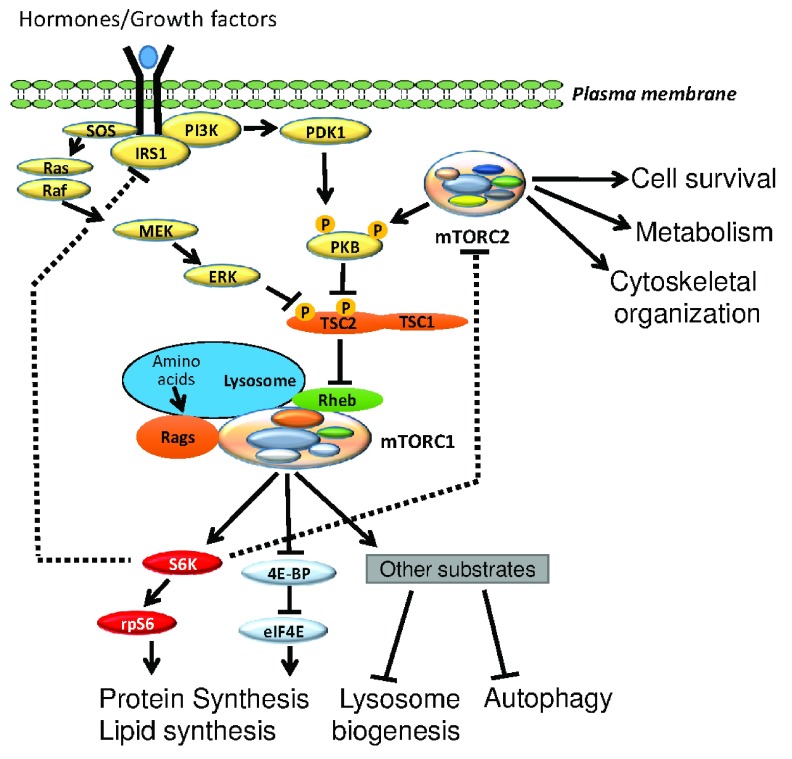
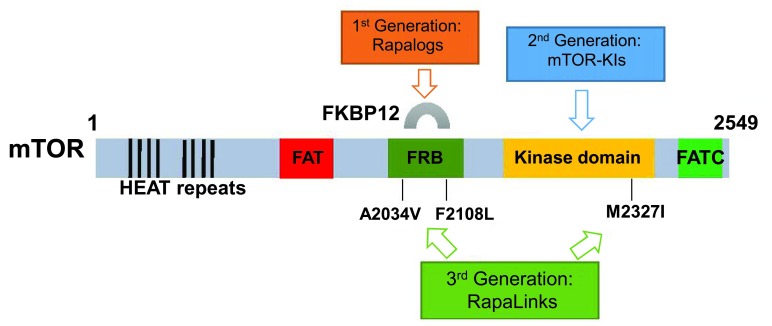
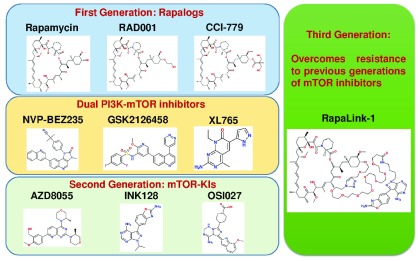
The mammalian target of rapamycin, mTOR, plays key roles in cell growth and proliferation, acting at the catalytic subunit of two protein kinase complexes: mTOR complexes 1 and 2 (mTORC1/2). mTORC1 signaling is switched on by several oncogenic signaling pathways and is accordingly hyperactive in the majority of cancers. Inhibiting mTORC1 signaling has therefore attracted great attention as an anti-cancer therapy. However, progress in using inhibitors of mTOR signaling as therapeutic agents in oncology has been limited by a number of factors, including the fact that the classic mTOR inhibitor, rapamycin, inhibits only some of the effects of mTOR; the existence of several feedback loops; and the crucial importance of mTOR in normal physiology.
Overview
The claims and statistics of this paper haven’t been checked yet.
Run the check — free, no account needed. It reads the open-access text and checks the sources it cites.
Integrity signals
Registry
Cites
Statistics
Figures
Verification
Claims the paper makes
The claims and statistics of this paper haven’t been checked yet.
Run the check — free, no account needed. It reads the open-access text and checks the sources it cites.
Claims other papers make about this one
Each is checked against this paper’s own text: does it say what the citing paper says it does?
In the citing paper
“Rapamycin can also prolong the life cycle of many species as diverse as worms and mice, and its signaling system has been implicated as the master regulator of cellular growth and metabolism.”
From Metformin, the Aspirin of the 21st Century: Its Role in Gestational Diabetes Mellitus, Prevention of Preeclampsia and Cancer, and the Promotion of Longevity (2017) · cites this paper as [236]
In the citing paper
“A family of molecules that are the mechanistic target of the rapamycin (mTOR) complex has been attributed a major role in the biology of cell metabolism, growth, longevity, and even preterm birth(230–236).”
From Metformin, the Aspirin of the 21st Century: Its Role in Gestational Diabetes Mellitus, Prevention of Preeclampsia and Cancer, and the Promotion of Longevity (2017) · cites this paper as [236]
Self-check
Percentages, sums and reported differences re-computed from the paper’s own numbers.
The self-check needs the paper’s full text.
Citations
Cites
Repertoires of Autophagy in the Pathogenesis of Ocular Diseases
Li, Y., Jiang, Q. L., Cao, G.-F., Yao, J., & Yan, B. (2015) · Cellular Physiology and Biochemistry · doi:10.1159/000373980 · Cited by 16,351
Phosphorylation and regulation of Akt/PKB by the rictor-mTOR complex
Sarbassov, D. D., Guertin, D. A., Ali, S. M., & Sabatini, D. M. (2005) · Science · doi:10.1126/science.1106148 · Cited by 6,216 · cited 6×
“DI, dual mammalian target of rapamycin/phosphoinositide 3-kinase inhibitor; HCC, hepatocellular carcinoma; MBC, metastatic breast cancer; mTOR, mammalian target of rapamycin; NSCLC, non-small cell lung cancer; PI3K, phosphoinositide 3-kinase; pNET, pancreatic neuroendocrine tumor; RCC, renal cell carcinoma. shows effe…”
BackgroundInfluentialShapiro, A. M. J., Lakey, J. R. T., Ryan, E. A., Korbutt, G. S., Toth, E., Warnock, G. L., Kneteman, N. M., & Rajotte, R. V. (2000) · New England Journal of Medicine · doi:10.1056/nejm200007273430401 · Cited by 5,237
mTOR: from growth signal integration to cancer, diabetes and ageing
Zoncu, R., Efeyan, A., & Sabatini, D. M. (2011) · Nature Reviews Molecular Cell Biology · doi:10.1038/nrm3025 · Cited by 3,941 · cited 2×
“DI XL765 Phase I/II (5) Sanofi-Aventis, Exelixis Glioblastoma multiforme/NSCLC/ MBC 39”
BackgroundOtto Warburg's contributions to current concepts of cancer metabolism
Koppenol, W. H., Bounds, P. L., & Dang, C. V. (2011) · Nature Reviews Cancer · doi:10.1038/nrc3038 · Cited by 3,427
Prolonged Rapamycin Treatment Inhibits mTORC2 Assembly and Akt/PKB
Sarbassov, D. D., Ali, S. M., Sengupta, S., Sheen, J.-H., Hsu, P. P., Bagley, A. F., Markhard, A. L., & Sabatini, D. M. (2006) · Molecular Cell · doi:10.1016/j.molcel.2006.03.029 · Cited by 2,365 · cited 3×
“Although rapamycin is a highly selective inhibitor against mTOR, it does not completely inhibit all of the activities of mTORC1 28 and will inhibit mTORC2 in only some types of cells upon prolonged treatment 29 .”
BackgroundInfluentialCOSMIC: mining complete cancer genomes in the Catalogue of Somatic Mutations in Cancer
Forbes, S. A., Bindal, N., Bamford, S., Cole, C., Kok, C. Y., Beare, D., Jia, M., Shepherd, R., Leung, K., Menzies, A., et al. (2011) · Nucleic Acids Research · doi:10.1093/nar/gkq929 · Cited by 2,278 · cited 1×
“Given the many oncogenic pathways—and oncogenes or tumor suppressors—linked to mTOR signaling, it is estimated that mTORC1 function is hyperactivated in up to 70% of all human tumors 18 .”
BackgroundMTOR: a pharmacologic target for autophagy regulation
Kim, Y. C., & Guan, K.-L. (2015) · Journal of Clinical Investigation · doi:10.1172/jci73939 · Cited by 2,126 · cited 1×
“DI GSK2126458 Phase I/II (3) GlaxoSmithKline Advanced solid tumors, lymphoma 38”
BackgroundThoreen, C. C., Kang, S. A., Chang, J. W., Liu, Q., Zhang, J., Gao, Y., Reichling, L. J., Sim, T., Sabatini, D. M., & Gray, N. S. (2009) · Journal of Biological Chemistry · doi:10.1074/jbc.m900301200 · Cited by 1,803
Vézina, C., KUDELSKI, A., & Sehgal, S. N. (1975) · The Journal of Antibiotics · doi:10.7164/antibiotics.28.721 · Cited by 1,691
Cited by
Sorted by citations
Hallmarks of Cellular Senescence
Hernandez-Segura, A., Nehme, J., & Demaria, M. (2018) · Trends in Cell Biology · doi:10.1016/j.tcb.2018.02.001 · Cited by 2,605
“Interestingly, major life-extending compounds, such as rapamycin, resveratrol, and metformin, have been shown with variable degree of confidence to reduce the SASP [97,159].”
PI3K/AKT/mTOR signaling transduction pathway and targeted therapies in cancer
Glaviano, A., Foo, A. S. C., Lam, H. Y., Yap, K. C. H., Jacot, W., Jones, R. H., Eng, H., Nair, M. G., Makvandi, P., Geoerger, B., et al. (2023) · Molecular Cancer · doi:10.1186/s12943-023-01827-6 · Cited by 2,138
PI3K/Akt/mTOR inhibitors in cancer: At the bench and bedside
Alzahrani, A. S. (2019) · Seminars in Cancer Biology · doi:10.1016/j.semcancer.2019.07.009 · Cited by 1,056
Gastric cancer: a comprehensive review of current and future treatment strategies
Sexton, R. E., Hallak, M. N. A., Diab, M., & Azmi, A. S. (2020) · Cancer and Metastasis Reviews · doi:10.1007/s10555-020-09925-3 · Cited by 813
The role of ubiquitination in tumorigenesis and targeted drug discovery
Deng, L., Meng, T., Chen, L., Wei, W., & Wang, P. (2020) · Signal Transduction and Targeted Therapy · doi:10.1038/s41392-020-0107-0 · Cited by 744
Metadata
- Authors
- Xie, J., Wang, X., & Proud, C. G.
- Affiliations
- South Australian Health and Medical Research Institute (AU)
- Corresponding author
- Proud, Christopher G.
- Venue
- F1000Research
- Publisher
- F1000 Research Ltd
- Published
- 2016-08-25
- Volume
- 5
- Pages
- 2078
- ISSN
- 2046-1402 (ISSN-L)
- PMC
- PMC5007757
- OpenAlex
- W2517175971
- Cited by
- 266
- References
- 84
- Citations by year
- 2026: 8 · 2025: 14 · 2024: 9 · 2023: 21 · 2022: 31 · 2021: 36 · 2020: 49 · 2019: 32 · 2018: 37 · 2017: 28 · 2016: 1
- FWCI
- 2.96
- Type
- journal article
- Language
- en
- Open access
- gold
- doi.org
- Locations
- F1000Research (publishedVersion, cc-by)
- Europe PMC (PubMed Central) (publishedVersion, cc-by)
- PubMed Central (publishedVersion, cc-by)
- PubMed (publishedVersion)
- DOAJ (DOAJ: Directory of Open Access Journals) (submittedVersion, cc-by-sa)
- Topics
- Life Sciences › Biochemistry, Genetics and Molecular Biology › Molecular Biology › PI3K/AKT/mTOR signaling in cancer
- Health Sciences › Medicine › Oncology › Advanced Breast Cancer Therapies
- Life Sciences › Biochemistry, Genetics and Molecular Biology › Molecular Biology › Metabolism, Diabetes, and Cancer
- Keywords
- mTOR inhibitors, mammalian target of rapamycin, mTORC1, mTORC2, rapamycin, cancer therapy, cell growth and proliferation, oncogenic signaling, feedback loops, drug resistance
About these checks
Registry, retraction, Cites and statistics results are computed, not judged, with one exception: a printed reference that no index lists is read once by a model before it counts as a citation error. Claims are extracted by a model and kept only when their quote appears verbatim in the text; each cited source is then checked, with a model’s help, for whether it says what the claim relies on. Those verdicts can be wrong — read the claim’s quote and the cited source before relying on one.
Statistics and arithmetic are recomputed, not judged.
Confidence bands are shown only for fields calibrated on our annotated test set. None is calibrated yet, so no band is shown.
What counts as a claim ›How we measure confidence ›How we check this ›
Are you an author, or do you see a problem with this page? Request a review
