

Activation and Alliance of Regulatory Pathways in C. albicans during Mammalian Infection
Open accessThe DOI matches its Crossref record; 47 of the 47 references it cites were found in a registry or an index.
Abstract
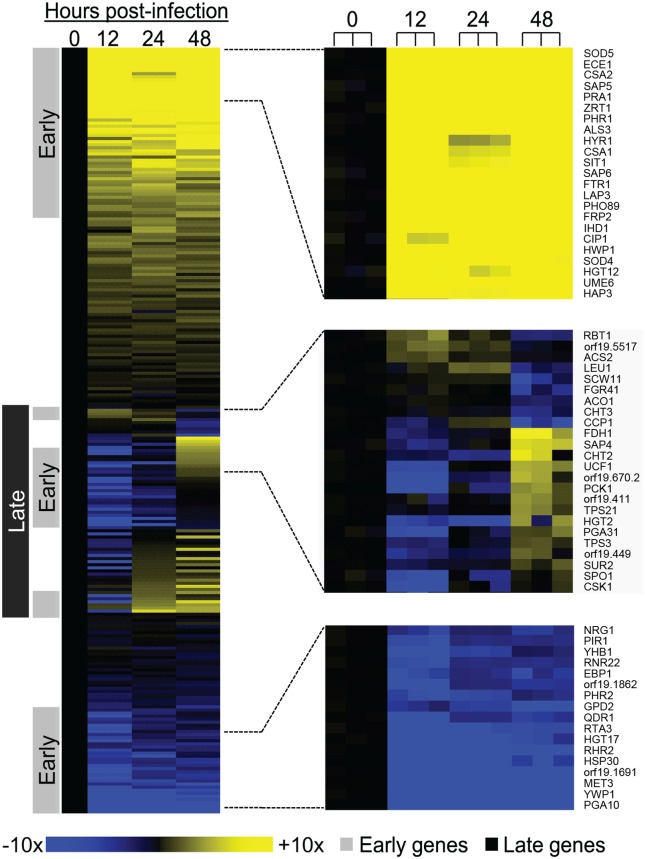
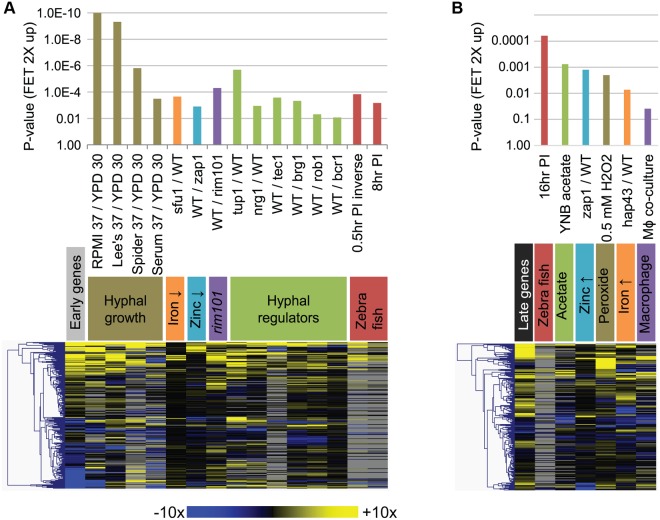
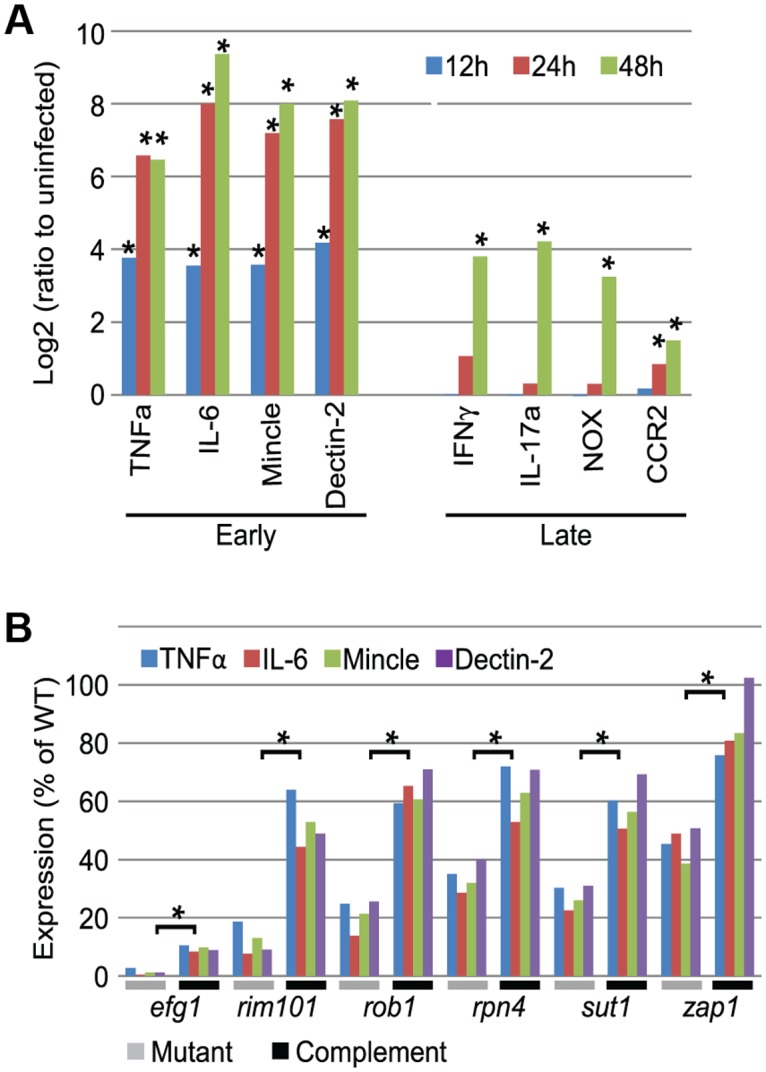
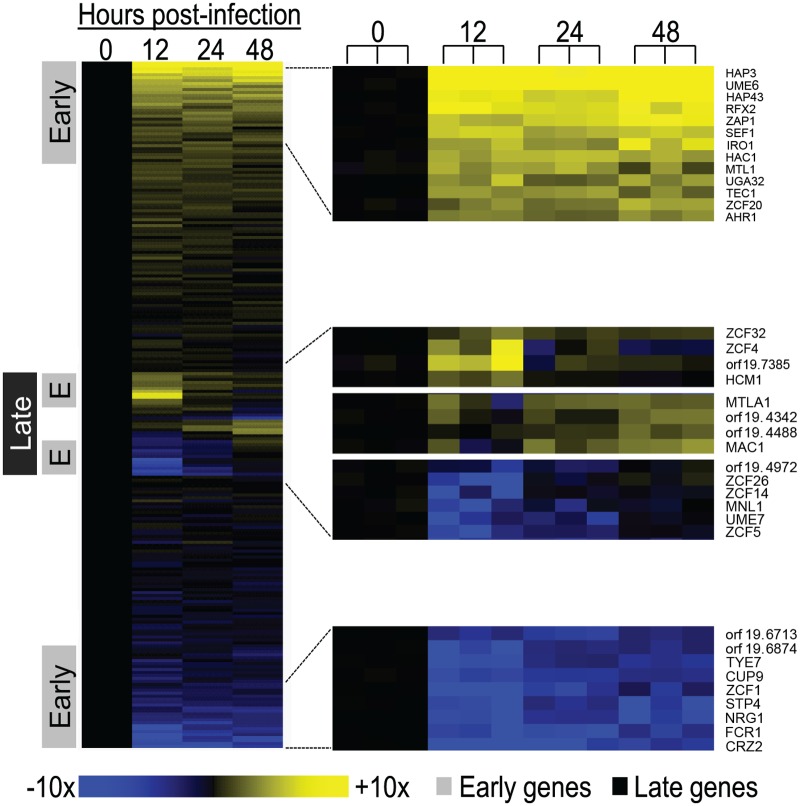
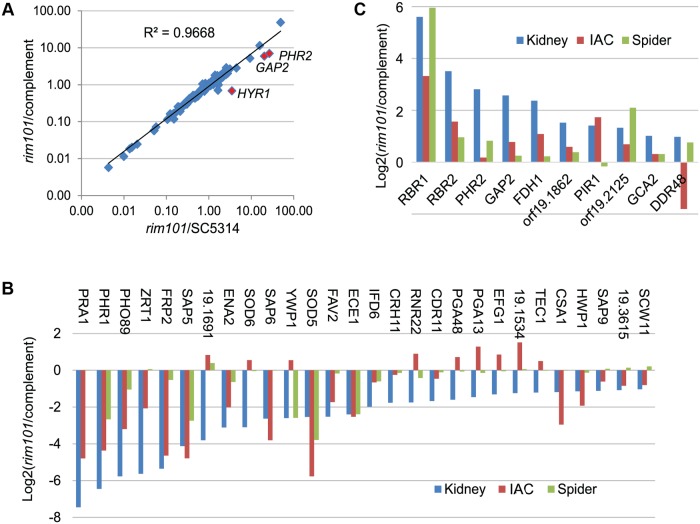
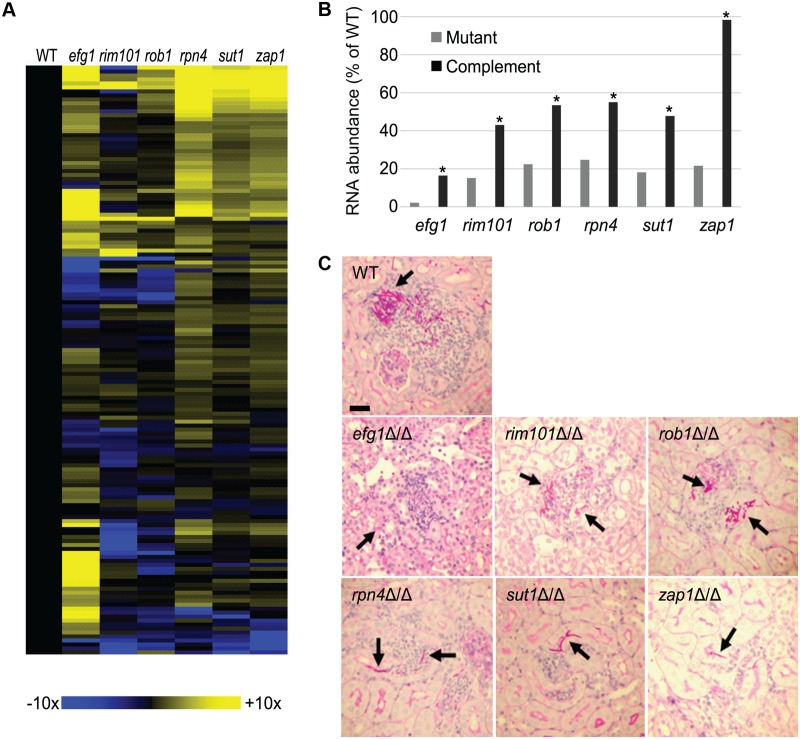
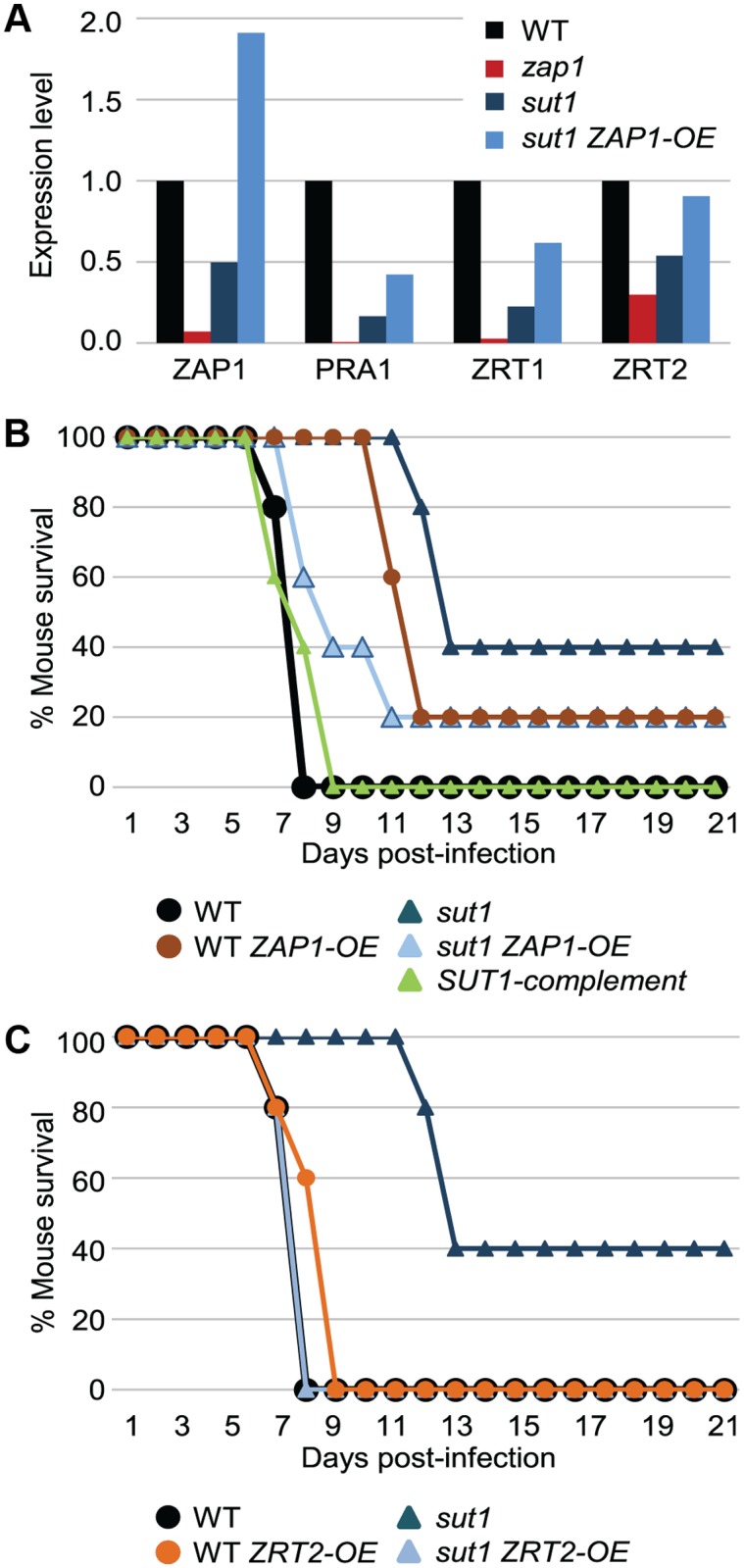
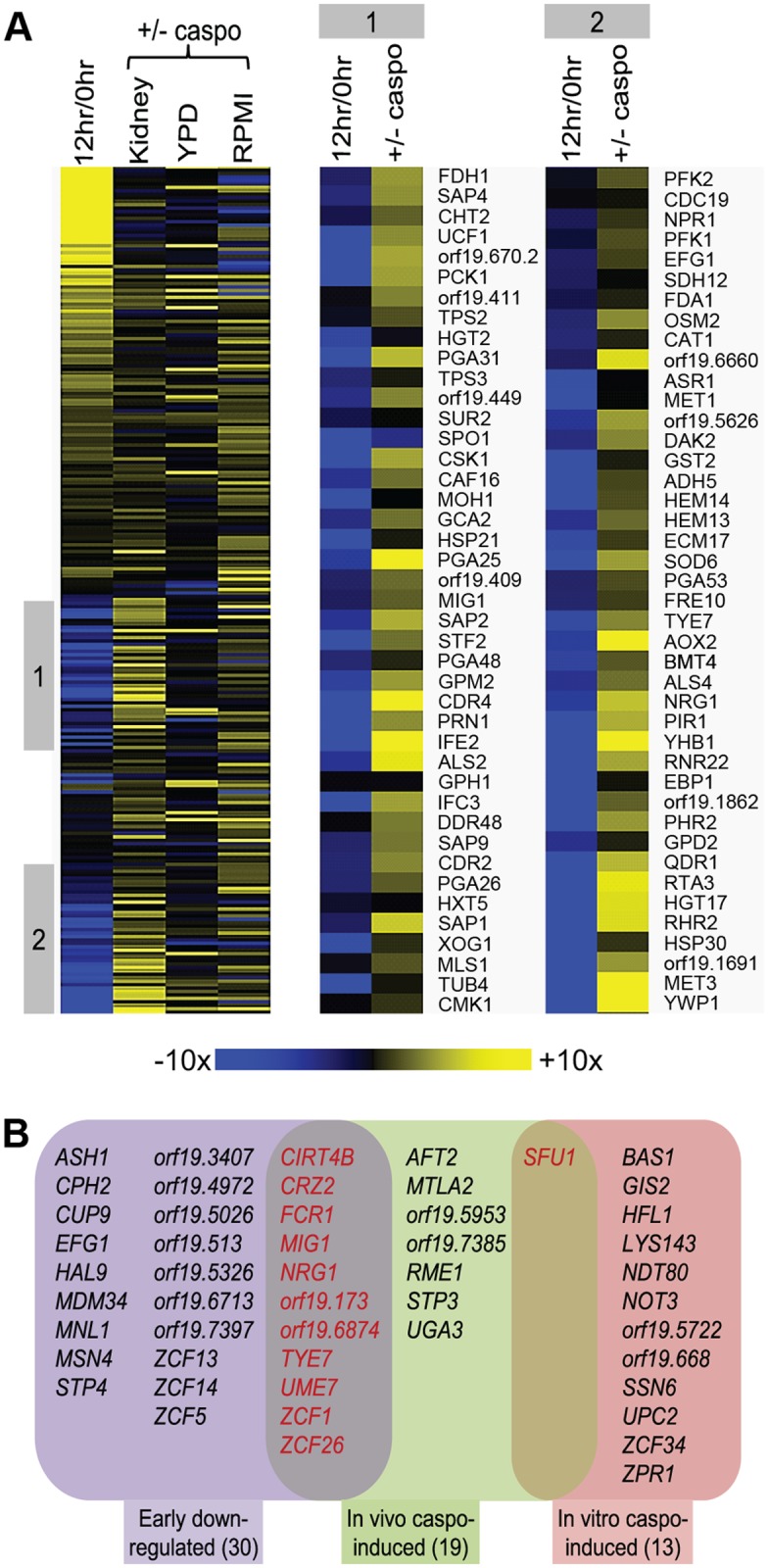
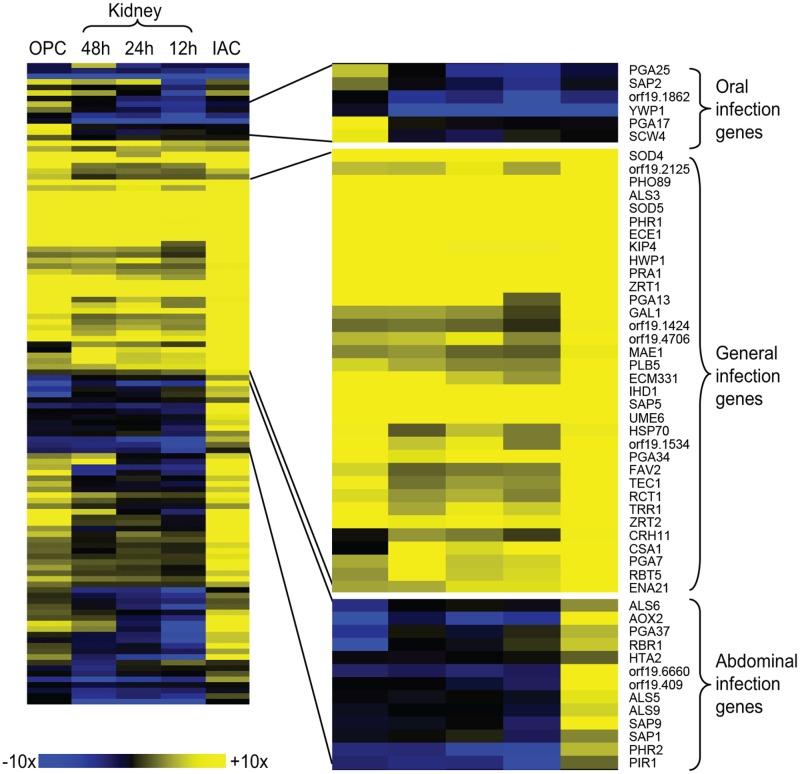
Gene expression dynamics have provided foundational insight into almost all biological processes. Here, we analyze expression of environmentally responsive genes and transcription factor genes to infer signals and pathways that drive pathogen gene regulation during invasive Candida albicans infection of a mammalian host. Environmentally responsive gene expression shows that there are early and late phases of infection. The early phase includes induction of zinc and iron limitation genes, genes that respond to transcription factor Rim101, and genes characteristic of invasive hyphal cells. The late phase includes responses related to phagocytosis by macrophages. Transcription factor gene expression also reflects early and late phases. Transcription factor genes that are required for virulence or proliferation in vivo are enriched among highly expressed transcription factor genes. Mutants defective in six transcription factor genes, three previously studied in detail (Rim101, Efg1, Zap1) and three less extensively studied (Rob1, Rpn4, Sut1), are profiled during infection. Most of these mutants have distinct gene expression profiles during infection as compared to in vitro growth. Infection profiles suggest that Sut1 acts in the same pathway as Zap1, and we verify that functional relationship with the finding that overexpression of either ZAP1 or the Zap1-dependent zinc transporter gene ZRT2 restores pathogenicity to a sut1 mutant. Perturbation with the cell wall inhibitor caspofungin also has distinct gene expression impact in vivo and in vitro. Unexpectedly, caspofungin induces many of the same genes that are repressed early during infection, a phenomenon that we suggest may contribute to drug efficacy. The pathogen response circuitry is tailored uniquely during infection, with many relevant regulatory relationships that are not evident during growth in vitro. Our findings support the principle that virulence is a property that is manifested only in the distinct environment in which host-pathogen interaction occurs.
Overview
The claims and statistics of this paper haven’t been checked yet.
Free: it reads the open-access text and checks the first 5 claims that cite a source we can check. Create a free account to check every claim.
Integrity signals
Registry
Cites
Statistics
Figures
Verification
Claims the paper makes
The claims and statistics of this paper haven’t been checked yet.
Free: it reads the open-access text and checks the first 5 claims that cite a source we can check. Create a free account to check every claim.
Claims other papers make about this one
Each is checked against this paper’s own text: does it say what the citing paper says it does?
The check wasn’t confident either way, so it gives no verdict — never disputed.
In the citing paper
“Previous studies have reported that AOX2 expression is upregulated upon phagocytosis by murine macrophages23 and during progressive infection of kidneys in systemically infected mice24.”
From Multifactor transcriptional control of alternative oxidase induction integrates diverse environmental inputs to enable fungal virulence (2023) · cites this paper as [24]
Experimental — accuracy not yet measured
Self-check
Percentages, sums and reported differences re-computed from the paper’s own numbers.
The self-check needs the paper’s full text.
Citations
Cites
Epidemiology of Invasive Candidiasis: a Persistent Public Health Problem
Pfaller, M. A., & Diekema, D. J. (2007) · Clinical Microbiology Reviews · doi:10.1128/cmr.00029-06 · Cited by 4,174 · cited 3×
“Caspofungin, a cell wall inhibitor, is an extremely effective antifungal drug [6].”
BackgroundInfluentialDirect multiplexed measurement of gene expression with color-coded probe pairs
Geiss, G. K., Bumgarner, R. E., Birditt, B., Dahl, T., Dowidar, N., Dunaway, D. L., Fell, H. P., Ferree, S., George, R. D., Grogan, T., et al. (2008) · Nature Biotechnology · doi:10.1038/nbt1385 · Cited by 2,066 · cited 2×
“While prior profiling studies have provided foundational insight into mammalian infection, the dynamic range and sensitivity of microarray signals [5,10,11] may have limited detection of key regulatory genes that govern the infection process.”
BackgroundMethodCandida albicans pathogenicity mechanisms
Mayer, F. L., Wilson, D., & Hube, B. (2013) · Virulence · doi:10.4161/viru.22913 · Cited by 1,848 · cited 2×
“Late genes reflect responses that have been logically inferred from interactions with innate immune cells: oxidative stress and the consequences of phagocytosis by macrophages [32,33].”
BackgroundNonfilamentous C. albicans Mutants Are Avirulent
Lo, H.-J., Köhler, J. R., DiDomenico, B., Loebenberg, D., Cacciapuoti, A., & Fink, G. R. (1997) · Cell · doi:10.1016/s0092-8674(00)80358-x · Cited by 1,809 · cited 1×
“albicans strains characterized [22,23].”
Nutritional immunity: transition metals at the pathogen–host interface
Hood, M. I., & Skaar, E. P. (2012) · Nature Reviews Microbiology · doi:10.1038/nrmicro2836 · Cited by 1,535 · cited 2×
“This correlation is consistent with the idea that nutritional immunity is used broadly as a defense mechanism [31].”
BackgroundGillum, A. M., Tsay, E. Y. H., & Kirsch, D. R. (1984) · Molecular and General Genetics MGG · doi:10.1007/bf00328721 · Cited by 1,251 · cited 1×
“It is derived from the SC5314 background [44] strain DAY286 [45], which in turn derives from strain BWP17 [43], as do all of the deletion mutants studied here.”
BackgroundRapid Hypothesis Testing with Candida albicans through Gene Disruption with Short Homology Regions
Wilson, R. B., Davis, D., & Mitchell, A. P. (1999) · Journal of Bacteriology · doi:10.1128/jb.181.6.1868-1874.1999 · Cited by 762 · cited 3×
“C. albicans Strains C. albicans deletion mutant strains were constructed in the BWP17 strain background through homologous recombination [43].”
BackgroundMethodSelf-citationDual RNA-seq of pathogen and host
Westermann, A. J., Gorski, S. A., & Vogel, J. (2012) · Nature Reviews Microbiology · doi:10.1038/nrmicro2852 · Cited by 760 · cited 2×
“While prior profiling studies have provided foundational insight into mammalian infection, the dynamic range and sensitivity of microarray signals [5,10,11] may have limited detection of key regulatory genes that govern the infection process.”
BackgroundTranscriptional Response of Candida albicans upon Internalization by Macrophages
Lorenz, M. C., Bender, J. A., & Fink, G. R. (2004) · Eukaryotic Cell · doi:10.1128/ec.3.5.1076-1087.2004 · Cited by 712 · cited 2×
“Interestingly, up-regulation of ICL1,MLS2, PCK1, and FOX2 occurs upon internalization by macrophages [17].”
BackgroundA Recently Evolved Transcriptional Network Controls Biofilm Development in Candida albicans
Nobile, C. J., Fox, E. P., Nett, J. E., Sorrells, T. R., Mitrovich, Q. M., Hernday, A. D., Tuch, B. B., Andes, D. R., & Johnson, A. D. (2012) · Cell · doi:10.1016/j.cell.2011.10.048 · Cited by 711 · cited 4×
“Among the 63 up-regulated genes, only four were up-regulated in the in vitro efg1Δ/Δ characterization [25], and their fold-change was much greater in vivo than in vitro.”
BackgroundResultInfluential
Cited by
Calpain research for drug discovery: challenges and potential
Ono, Y., Saido, T. C., & Sorimachi, H. (2016) · Nature Reviews Drug Discovery · doi:10.1038/nrd.2016.212 · Cited by 282
Gerwien, F., Skrahina, V., Kasper, L., Hube, B., & Brunke, S. (2018) · FEMS Microbiology Reviews · doi:10.1093/femsre/fux050 · Cited by 250
Witchley, J. N., Penumetcha, P., Abon, N. V., Woolford, C. A., Mitchell, A. P., & Noble, S. M. (2019) · Cell Host & Microbe · doi:10.1016/j.chom.2019.02.008 · Cited by 240
“To assess fungal transcript levels in commensally growing strains, we utilized a NanoString nCounter platform (Xu et al., 2015) that can quantify low-abundance fungal transcripts amid excess host, bacterial, archaeal, and viral RNAs.”
Self-citationDynamic Fungal Cell Wall Architecture in Stress Adaptation and Immune Evasion
Hopke, A., Brown, A. J. P., Hall, R. A., & Wheeler, R. T. (2018) · Trends in Microbiology · doi:10.1016/j.tim.2018.01.007 · Cited by 228
“Tools such as Nanostring pro fi ling , RNAseq , and cell intrinsic reporters have also enabled investigators to probe fungal physiology during infection [30,40 – 44].”
BackgroundRole of Calprotectin in Withholding Zinc and Copper from Candida albicans
Besold, A. N., Gilston, B. A., Radin, J. N., Ramsoomair, C., Culbertson, E. M., Li, C. X., Cormack, B. P., Chazin, W. J., Kehl-Fie, T. E., & Culotta, V. C. (2018) · Infection and Immunity · doi:10.1128/iai.00779-17 · Cited by 136
“evidence of causing decreased virulence in the mouse model of disseminated candidiasis (10, 64).”
BackgroundBiofilms and vulvovaginal candidiasis
Rodríguez-Cerdeira, C., Gregorio, M. C., Molares-Vila, A., López-Barcenas, A., Fabbrocini, G., Bardhi, B., Sinani, A., Sánchez-Blanco, E., Arenas-Guzmán, R., & Hernandez-Castro, R. (2019) · Colloids and Surfaces B: Biointerfaces · doi:10.1016/j.colsurfb.2018.11.011 · Cited by 133
An integrated genomic and transcriptomic survey of mucormycosis-causing fungi
Chibucos, M. C., Soliman, S. S. M., Gebremariam, T., Lee, H.-K., Daugherty, S. C., Orvis, J., Shetty, A. C., Crabtree, J., Hazen, T. H., Etienne, K. A., et al. (2016) · Nature Communications · doi:10.1038/ncomms12218 · Cited by 141
“Furthermore, in vivo infection studies with Candida albicans have suggested a correlation between gene expression and involvement in virulence without consideration for whether a gene’s expression is induced by interaction with the host cell 36,37 .”
Self-citationThammahong, A., Puttikamonkul, S., Perfect, J. R., Brennan, R. G., & Cramer, R. A. (2017) · Microbiology and Molecular Biology Reviews · doi:10.1128/mmbr.00053-16 · Cited by 125
Iron at the Centre of Candida albicans Interactions
Fourie, R., Kuloyo, O. O., Mochochoko, B. M., Albertyn, J., & Pohl, C. H. (2018) · Frontiers in Cellular and Infection Microbiology · doi:10.3389/fcimb.2018.00185 · Cited by 118
Adapting to survive: How Candida overcomes host-imposed constraints during human colonization
Alves, R., Barata-Antunes, C., Casal, M., Brown, A. J. P., Van Dijck, P., & Paiva, S. (2020) · PLOS Pathogens · doi:10.1371/journal.ppat.1008478 · Cited by 122
Crawford, A., & Wilson, D. (2015) · FEMS Yeast Research · doi:10.1093/femsyr/fov071 · Cited by 122
Li, C. X., Gleason, J. E., Zhang, S. X., Bruno, V. M., Cormack, B. P., & Culotta, V. C. (2015) · Proceedings of the National Academy of Sciences · doi:10.1073/pnas.1513447112 · Cited by 119
Overview of carbon and nitrogen catabolite metabolism in the virulence of human pathogenic fungi
Ries, L. N. A., Beattie, S., Cramer, R. A., & Goldman, G. H. (2018) · Molecular Microbiology · doi:10.1111/mmi.13887 · Cited by 103
“, 2013) and HGT2, 4, 7, 12 and 17 were induced during an infection time course experiment in mice with systemic candidiasis (Wenjie et al., 2015).”
BackgroundPromising Antifungal Targets Against Candida albicans Based on Ion Homeostasis
Li, Y., Sun, L., Lu, C., Gong, Y., Li, M., & Sun, S. (2018) · Frontiers in Cellular and Infection Microbiology · doi:10.3389/fcimb.2018.00286 · Cited by 85
Amorim-Vaz, S., Tran, V. D. T., Pradervand, S., Pagni, M., Coste, A. T., & Sanglard, D. (2015) · mBio · doi:10.1128/mbio.00942-15 · Cited by 80
“(24) in which the expression of a small set of genes (248) was measured from kidney lysates taken at early (12 h) and late (48 h) infection time points.”
BackgroundPlasticity of Candida albicans Biofilms
Soll, D. R., & Daniels, K. J. (2016) · Microbiology and Molecular Biology Reviews · doi:10.1128/mmbr.00068-15 · Cited by 78
“Profiling can be performed by assessing genome-wide transcription by using microarrays (195, 200, 244–248), NanoString nCounter technology (249, 250), and RNA sequencing (RNA-Seq) (197, 200) or by using quantitative reverse transcription-PCR (RT-PCR) or Northern blot analysis of a smaller, select group of genes (251).”
MethodPhagosomal Neutralization by the Fungal Pathogen Candida albicans Induces Macrophage Pyroptosis
Vylkova, S., & Lorenz, M. C. (2017) · Infection and Immunity · doi:10.1128/iai.00832-16 · Cited by 75
Robust Extracellular pH Modulation by Candida albicans during Growth in Carboxylic Acids
Danhof, H. A., Vylkova, S., Vesely, E. M., Ford, A. E., Gonzalez-Garay, M., & Lorenz, M. C. (2016) · mBio · doi:10.1128/mbio.01646-16 · Cited by 72
Biphasic zinc compartmentalisation in a human fungal pathogen
Crawford, A. C., Lehtovirta-Morley, L. E., Alamir, O., Niemiec, M. J., Alawfi, B., Alsarraf, M., Skrahina, V., Costa, A. C. B. P., Anderson, A., Yellagunda, S., et al. (2018) · PLOS Pathogens · doi:10.1371/journal.ppat.1007013 · Cited by 68
“albicans virulence, however, sut1Δ virulence was restored to wild type levels via ZRT2 overexpression, indicating that defective in vivo expression of ZRT2 was responsible for the attenuated virulence of sut1Δ [31].”
Innate Immunity to Mucosal Candida Infections
Verma, A., Gaffen, S., & Swidergall, M. (2017) · Journal of Fungi · doi:10.3390/jof3040060 · Cited by 66
Rossi, D. C. P., Gleason, J. E., Sánchez, H., Schatzman, S. S., Culbertson, E. M., Johnson, C. J., McNees, C. A., Coelho, C., Nett, J. E., Andes, D. R., et al. (2017) · PLoS Pathogens · doi:10.1371/journal.ppat.1006763 · Cited by 69
Mackie, J., Szabo, E. K., Urgast, D. S., Ballou, E. R., Childers, D. S., MacCallum, D. M., Feldmann, J., & Brown, A. J. P. (2016) · PLOS ONE · doi:10.1371/journal.pone.0158683 · Cited by 61
“This was consistent with a recent report indicating that fungal CRP1 expression increases early during systemic infection [52].”
BackgroundResultInfluentialHigh-resolution mapping of cis -regulatory variation in budding yeast
Kita, R., Venkataram, S., Zhou, Y., & Fraser, H. B. (2017) · Proceedings of the National Academy of Sciences · doi:10.1073/pnas.1717421114 · Cited by 63
“albicans has found that gene regulatory relationships differ between infection environments and laboratory media (67).”
BackgroundHebecker, B., Vlaic, S., Conrad, T., Bauer, M., Brunke, S., Kapitan, M., Linde, J., Hube, B., & Jacobsen, I. D. (2016) · Scientific Reports · doi:10.1038/srep36055 · Cited by 52
Ries, L. N. A., Pardeshi, L. A., Dong, Z., Tan, K., Steenwyk, J. L., Colabardini, A. C., Filho, J. A. F., de Castro, P. A., Silva, L. P., Preite, N. W., et al. (2020) · PLoS Pathogens · doi:10.1371/journal.ppat.1008645 · Cited by 54
“fumigatus [36] and Candida albicans [37].”
Ene, I. V., Lohse, M. B., Vladu, A., Morschhäuser, J., Johnson, A. D., & Bennett, R. J. (2016) · mBio · doi:10.1128/mbio.01269-16 · Cited by 59
Lagree, K., Woolford, C. A., Huang, M. Y., May, G., McManus, C. J., Solis, N. V., Filler, S. G., & Mitchell, A. P. (2020) · PLOS Genetics · doi:10.1371/journal.pgen.1008582 · Cited by 51
“FET was used as previously described [31].”
Self-citationMamouei, Z., Zeng, G., Wang, Y., & Wang, Y. (2017) · Molecular Microbiology · doi:10.1111/mmi.13864 · Cited by 49
“…in vitro conditions and during infection of mice have revealed the important principle that virulence is a property that is manifested only in the distinct environment in which host-pathogen interaction occurs (Xu et al., 2015) The GI tract is thought to be replete in iron (Miret et al., 2003).”
BackgroundInfluentialKämmer, P., McNamara, S., Wolf, T., Conrad, T., Allert, S., Gerwien, F., Hünniger, K., Kurzai, O., Guthke, R., Hube, B., et al. (2020) · mBio · doi:10.1128/mbio.02435-20 · Cited by 47
The ZIP family zinc transporters support the virulence ofCryptococcus neoformans
Do, E., Hu, G., Caza, M., Kronstad, J. W., & Jung, W. H. (2016) · Medical Mycology · doi:10.1093/mmy/myw013 · Cited by 56
Liu, H., Xu, W., Bruno, V. M., Phan, Q. T., Solis, N. V., Woolford, C. A., Ehrlich, R. L., Shetty, A. C., McCracken, C. L., Lin, J., et al. (2021) · PLoS Pathogens · doi:10.1371/journal.ppat.1009235 · Cited by 44
Self-citationBurgain, A., Pic, É., Markey, L., Tebbji, F., Kumamoto, C. A., & Sellam, A. (2019) · PLoS Pathogens · doi:10.1371/journal.ppat.1007823 · Cited by 49
“albicans utilizes different alternative carbon sources when persisting as a commensal [69] or infecting its host [70,71], SWI/SNF represents potentially an attractive target for antifungal therapy.”
BackgroundGlazier, V. E., Kramara, J., Ollinger, T. L., Solis, N. V., Żarnowski, R., Wakade, R. S., Kim, M.-J., Weigel, G. J., Liang, S.-H., Bennett, R. J., et al. (2023) · mBio · doi:10.1128/mbio.01521-23 · Cited by 52
“Briefly, cells were transformed with Cas9 and single ROB1 guide RNA cassettes and the rob1Δ::NAT1 repair template.”
MethodInfluentialSelf-citationJoshua, I., & Höfken, T. (2017) · International Journal of Molecular Sciences · doi:10.3390/ijms18040772 · Cited by 40
Vicentefranqueira, R., Amich, J., Marín, L., Sánchez, C. I., Leal, F., & Calera, J. A. (2018) · Genes · doi:10.3390/genes9070318 · Cited by 45
Sprague, J. L., Schille, T. B., Allert, S., Trümper, V., Lier, A., Großmann, P., Priest, E. L., Tsavou, A., Panagiotou, G., Naglik, J. R., et al. (2024) · PLoS Pathogens · doi:10.1371/journal.ppat.1012031 · Cited by 38
Aspergillus fumigatusvirulence through the lens of transcription factors: Table 1.
Bultman, K. M., Kowalski, C. H., & Cramer, R. A. (2016) · Medical Mycology · doi:10.1093/mmy/myw120 · Cited by 43
Ramani, K., Jawale, C. V., Verma, A. H., Coleman, B. M., Kolls, J. K., & Biswas, P. S. (2018) · JCI Insight · doi:10.1172/jci.insight.98241 · Cited by 34
Kumar, R., Breindel, C., Saraswat, D., Cullen, P. J., & Edgerton, M. (2017) · Scientific Reports · doi:10.1038/s41598-017-03082-4 · Cited by 31
Frank, D. M., Naseem, S., Russo, G. L., Li, C., Parashar, K., Konopka, J. B., & Carpino, N. (2018) · mBio · doi:10.1128/mbio.00782-18 · Cited by 31
“Fungal germination is evident within 2 h postinfection, and kidney fungal CFU levels increase by 2 orders of magnitude over the course of 48 h (24, 25).”
BackgroundWakade, R. S., Ristow, L. C., Wellington, M. A., & Krysan, D. J. (2023) · eLife · doi:10.7554/elife.85114 · Cited by 28
Anti-Candida albicans Activity of Thiazolylhydrazone Derivatives in Invertebrate and Murine Models
Cruz, L. I. B., Lopes, L. F. F., Ribeiro, F. D. C., de Sá, N. P., Lino, C. I., Tharmalingam, N., de Oliveira, R. B., Rosa, C. A., Mylonakis, E. E., Fuchs, B. B., et al. (2018) · Journal of Fungi · doi:10.3390/jof4040134 · Cited by 33
“albicans typically accumulates in the organs and leads to kidney failure [29,30].”
BackgroundPathogen Gene Expression Profiling During Infection Using a Nanostring nCounter Platform
Xu, W., Solis, N. V., Filler, S. G., & Mitchell, A. P. (2015) · Methods in molecular biology · doi:10.1007/978-1-4939-3079-1_3 · Cited by 27
“albicans gene expression during kidney infection, and discovered unexpected features of the gene expression response to antifungal drug treatment in vivo (4).”
BackgroundSelf-citationBöttcher, B., Palige, K., Jacobsen, I. D., Hube, B., & Brunke, S. (2015) · Eukaryotic Cell · doi:10.1128/ec.00078-15 · Cited by 35
“albicans csr1 / mutant showed no reduction in hypha-associated gene expression during kidney invasion (27).”
BackgroundInfluentialIntraspecies Transcriptional Profiling Reveals Key Regulators of Candida albicans Pathogenic Traits
Wang, J. M., Woodruff, A. L., Dunn, M. J., Fillinger, R. J., Bennett, R. J., & Anderson, M. Z. (2021) · mBio · doi:10.1128/mbio.00586-21 · Cited by 25
Candida albicans Filamentation Does Not Require the cAMP-PKA Pathway In Vivo
Wakade, R. S., Kramara, J., Wellington, M. A., & Krysan, D. J. (2022) · mBio · doi:10.1128/mbio.00851-22 · Cited by 26
Modulation of the complex regulatory network for methionine biosynthesis in fungi
Shrivastava, M., Feng, J., Coles, M., Clark, B., Islam, A., Dumeaux, V., & Whiteway, M. S. (2021) · Genetics · doi:10.1093/genetics/iyaa049 · Cited by 29
Spasskaya, D. S., Kotlov, M. I., Lekanov, D. S., Tutyaeva, V. V., Snezhkina, A. V., Kudryavtseva, A. V., Карпов, В. Л., & Karpov, D. S. (2021) · ACS Synthetic Biology · doi:10.1021/acssynbio.0c00426 · Cited by 26
Bose, S., Singh, D. V., Adhya, T. K., & Acharya, N. (2023) · Journal of Fungi · doi:10.3390/jof9030286 · Cited by 29
Zinc at the Host–Fungus Interface: How to Uptake the Metal?
Soares, L. W., Bailão, A. M., Soares, C. M. D. A., & Bailão, M. G. S. (2020) · Journal of Fungi · doi:10.3390/jof6040305 · Cited by 23
“Functional analysis of transcriptional regulators at different stages of infection demonstrated an associative effect between Zap1 and Sut1, a homolog of a zinc clu ter regulator involved in sterol uptake in S. cerevisiae [83].”
BackgroundInfluentialCandida albicans reprioritizes metal handling during fluconazole stress
Hunsaker, E. W., & Franz, K. J. (2019) · Metallomics · doi:10.1039/c9mt00228f · Cited by 22
Liu, Z., Basso, P., Hossain, S., Liston, S. D., Robbins, N., Whitesell, L., Noble, S. M., & Cowen, L. E. (2023) · Nature Communications · doi:10.1038/s41467-023-40209-w · Cited by 22
“Previous studies have reported that AOX2 expression is upregulated upon phagocytosis by murine macrophages 23 and during progressive infection of kidneys in systemically infected mice 24 .”
Functional convergence of gliP and aspf1 in Aspergillus fumigatus pathogenicity
Liu, H., Xu, W., Solis, N. V., Woolford, C. A., Mitchell, A. P., & Filler, S. G. (2018) · Virulence · doi:10.1080/21505594.2018.1482182 · Cited by 21
“We have previously used transcriptional profiling to understand the genetic control of pathogenicity in infected tissue [8,27,28].”
MethodSelf-citationCandida albicans Oropharyngeal Infection Is an Exception to Iron-Based Nutritional Immunity
Solis, N. V., Wakade, R. S., Filler, S. G., & Krysan, D. J. (2023) · mBio · doi:10.1128/mbio.00095-23 · Cited by 20
“nature of iron starvation during disseminated infection of the kidney (2, 3).”
BackgroundMethodSelf-citationBöhm, L., Muralidhara, P., & Pérez, J. C. (2015) · Molecular Microbiology · doi:10.1111/mmi.13320 · Cited by 18
“, 2012; Hall, 2015), yeast-to-filament transition (Lo et al., 1997; Xu et al., 2015) and metabolic flexibility (Brown et al.”
BackgroundThe role of zinc in the pathogenicity of human fungal pathogens
Wilson, D. (2021) · Advances in applied microbiology · doi:10.1016/bs.aambs.2021.09.001 · Cited by 18
Liu, Y., Wang, R., Liu, J., Fan, M., Ye, Z., Hao, Y., Xie, F., Wang, T., Jiang, Y., Liu, N., et al. (2024) · Nature Communications · doi:10.1038/s41467-024-48525-5 · Cited by 16
“As kidneys are the primary target organs in systemic candidiasis, decreased kidney function can also re fl ect the severity of C. albicans infections 37 .”
BackgroundSchrevens, S., Durandau, E., Tran, V. D. T., & Sanglard, D. (2022) · Virulence · doi:10.1080/21505594.2022.2095716 · Cited by 17
Transcriptional response of Candida albicans to Pseudomonas aeruginosa in a polymicrobial biofilm
Fourie, R., Cason, E. D., Albertyn, J., & Pohl, C. H. (2021) · G3 Genes Genomes Genetics · doi:10.1093/g3journal/jkab042 · Cited by 20
Nutritional immunity: targeting fungal zinc homeostasis
Alamir, O., Oladele, R. O., & Ibe, C. (2021) · Heliyon · doi:10.1016/j.heliyon.2021.e07805 · Cited by 23
“albicans by finding that overexpression of Zap1 or Zrt2 restores wild type pathogenicity to a sut1Δ mutants (Xu et al., 2015).”
BackgroundTranscriptomic meta-analysis to identify potential antifungal targets in Candida albicans
Hefny, Z. A., Ji, B., Elsemman, I. E., Nielsen, J., & Dijck, P. V. (2024) · BMC Microbiology · doi:10.1186/s12866-024-03213-8 · Cited by 18
“PRA1 and ZRT1 are upregulated during infection to facilitate zinc uptake [96].”
BackgroundAllert, S., Brunke, S., & Hube, B. (2016) · PLoS Pathogens · doi:10.1371/journal.ppat.1005471 · Cited by 16
“In vivo single-cell profiling, IVET, qRT-PCR, or NanoString of selected genes have provided important and sometimes surprising insights (Fig 2): (1) the expression of metabolic pathways of fungi during systemic infection is niche-specific, (2) the expression of known virulence factors can depend on the type of infecti…”
BackgroundMethodInfluentialWakade, R. S., Wellington, M. A., & Krysan, D. J. (2024) · mSphere · doi:10.1128/msphere.00110-24 · Cited by 14
“Second, we were most interested in the temporal dynamics of a set of well-studied hyphae-asso ciated environmentally responsive genes; therefore, genome-wide characterization of expression was not necessary for our purposes (11).”
BackgroundBudding off: bringing functional genomics to Candida albicans
Anderson, M. Z., & Bennett, R. J. (2016) · Briefings in Functional Genomics · doi:10.1093/bfgp/elv035 · Cited by 11
“albicans genes during systemic infection [119].”
de Souza, P. C., Corrêa, A. E. D. N., Gameiro, J. G., de Oliveira, A. G., Panagio, L. A., Venâncio, E. J., & Almeida, R. S. (2023) · Microbial Pathogenesis · doi:10.1016/j.micpath.2023.106166 · Cited by 11
Abe, Y., Yamamoto, N., Nakamura, K., Arai, K., Sakurai, C., Hatsuzawa, K., Ogura, Y., Iseki, K., Tase, C., & Kanemitsu, K. (2018) · Immunobiology · doi:10.1016/j.imbio.2018.11.002 · Cited by 12
Cramer, R. A., & Kowalski, C. H. (2021) · mBio · doi:10.1128/mbio.03483-20 · Cited by 6
“studies in animal models or performing in vivo transcriptomics at distinct stages of infection (30).”
Fungal Lysine Deacetylases in Virulence, Resistance, and Production of Small Bioactive Compounds
Bauer, I., & Graessle, S. (2021) · Genes · doi:10.3390/genes12101470 · Cited by 14
Use of the Iron-Responsive RBT5 Promoter for Regulated Expression in Candida albicans
Mao, Y., Solis, N. V., Sharma, A., Cravener, M. V., Filler, S. G., & Mitchell, A. P. (2022) · mSphere · doi:10.1128/msphere.00305-22 · Cited by 12
“RBT5 was chosen because its RNA displays a large expression difference between iron-replete and iron-limited growth conditions (14) and it is highly expressed in vivo (15).”
BackgroundSelf-citationIchikawa, Y., Bruno, V. M., Woolford, C. A., Kim, H., Do, E., Brewer, G. C., & Mitchell, A. P. (2021) · Genetics · doi:10.1093/genetics/iyab075 · Cited by 9
Self-citationRahman, S., van Rhijn, N., Papastamoulis, P., Thomson, D. D., Carter, Z., Gregson, L., Fortune‐Grant, R., Rattray, M., Bromley, J. M., & Bignell, M. E. (2022) · Frontiers in Cellular and Infection Microbiology · doi:10.3389/fcimb.2022.907519 · Cited by 9
Human Oropharyngeal Candidiasis: From Etiology to Current Treatment
Qadir, M. I., Bashir, H., & Ahmad, M. H. (2023) · Critical Reviews in Immunology · doi:10.1615/critrevimmunol.2023049730 · Cited by 8
Shinohara, T., Wada, A., Abe, M., Nakayama, N., Nagi, M., & Miyazaki, Y. (2023) · JAC-Antimicrobial Resistance · doi:10.1093/jacamr/dlad155 · Cited by 8
Morschhäuser, J. (2024) · PLoS Pathogens · doi:10.1371/journal.ppat.1012643 · Cited by 9
PCR-detectable Candida DNA exists a short period in the blood of systemic candidiasis murine model
He, Z., Zhao, H., & Wang, F. (2020) · Open Life Sciences · doi:10.1515/biol-2020-0075 · Cited by 11
In vivo veritas: Aspergillus fumigatusproliferation and pathogenesis – conditionally speaking
Cramer, R. A. (2015) · Virulence · doi:10.1080/21505594.2015.1134074 · Cited by 8
Novel Approaches for Fungal Transcriptomics from Host Samples
Amorim-Vaz, S., & Sanglard, D. (2016) · Frontiers in Microbiology · doi:10.3389/fmicb.2015.01571 · Cited by 11
“For example, genes with Frontiers in Microbiology | www.frontiersin.org 1 January 2016 | Volume 6 | Article 1571 known stress response functions, such as RIM101 (a pHdependent regulator), ENA1 (an ATPase transporter gene) and CFO1 (a ferroxidase) as well as several transporters were upregulated in host samples (Chen e…”
BackgroundMethodInfluentialIron Acquisition in the Pathobiology of Candida albicans
Srivastav, M. K., Nair, R., & Natarajan, K. (2017) · Springer eBooks · doi:10.1007/978-3-319-50409-4_17 · Cited by 5
Amorim-Vaz, S., Coste, A. T., Tran, V. D. T., Pagni, M., & Sanglard, D. (2021) · Frontiers in Fungal Biology · doi:10.3389/ffunb.2021.658899 · Cited by 6
“Supporting this observation, in vivo transcriptomics showed regulation of several genes from amino acid biosynthetic pathways, both in our work and in the work of Xu et al. (2015) (reviewed in Fanning and Mitchell, 2017).”
BackgroundSurviving the Storm: How Candida Species Master Adaptation for Pathogenesis
Rana, A., Gupta, N., Asif, S., & Thakur, A. (2024) · Springer eBooks · doi:10.1007/978-981-97-4909-6_5 · Cited by 5
ElGindi, M., Al-Baghdadi, R., Jackman, A. B., Antonyan, A. S., McMahon, D. L., Taj‐Aldeen, S. J., & Finkel, J. S. (2021) · Canadian Journal of Microbiology · doi:10.1139/cjm-2020-0215 · Cited by 4
Scott, J., & Amich, J. (2021) · Elsevier eBooks · doi:10.1016/b978-0-12-818731-9.00059-8 · Cited by 5
Glazier, V. E., Kramara, J., Ollinger, T. L., Solis, N. V., Żarnowski, R., Wakade, R. S., Kim, M.-J., Weigel, G. J., Liang, S.-H., Bennett, R. J., et al. (2023) · bioRxiv (Cold Spring Harbor Laboratory) · doi:10.1101/2023.06.17.545405 · Cited by 4
“The indicated strains were incubated in RPMI+1%BCS for 4 hr and RNA isolated as described in the materials and methods.”
BackgroundInfluentialSelf-citationTranslation regulation promotes stress adaptation in the human fungal pathogen Candida glabrata
Rana, A., & Thakur, A. (2025) · Genetics · doi:10.1093/genetics/iyaf134 · Cited by 4
Mishra, A. A., Palmer, S. N., Zarek, C. M., Coughlin, L. A., Poulides, N. A., Dakour, J., Chiu, R. S.-Y., Sabaeifard, P., Li, W., Morrill, A. C., et al. (2026) · Cell Host & Microbe · doi:10.1016/j.chom.2026.05.007 · Cited by 7
Hovhannisyan, H., Rodríguez, A., Saus, E., Vaneechoutte, M., & Gabaldón, T. (2023) · Frontiers in Cellular and Infection Microbiology · doi:10.3389/fcimb.2023.1093178 · Cited by 3
“albicans displays different transcriptional dynamics in vivo and in vitro, indicating that in vitro conditions only partially reflect real infections (Xu et al., 2015).”
BackgroundRole of carbon and nitrogen assimilation in Candida albicans survival and virulence
Sahoo, S., & Rao, K. H. (2024) · The Microbe · doi:10.1016/j.microb.2024.100127 · Cited by 5
Zap1 is required for Candida glabrata response to fluconazole
Gaspar‐Cordeiro, A., Afonso, G. S., Amaral, C., da Silva, S. M., & Pimentel, C. (2022) · FEMS Yeast Research · doi:10.1093/femsyr/foab068 · Cited by 2
Wakade, R. S., Wellington, M. A., & Krysan, D. J. (2024) · bioRxiv (Cold Spring Harbor Laboratory) · doi:10.1101/2024.02.20.581211 · Cited by 2
Wakade, R. S., Solis, N. V., Ristow, L. C., Wellington, M. A., Filler, S. G., & Krysan, D. J. (2026) · mBio · doi:10.1128/mbio.01492-26 · Cited by 1
“6B); the kidney expression pattern for SAP4/5/6 is consistent with that previously reported by Solis et al. in C. albicans -infected kidney (21).”
Self-citationGene Expression Profiling of Infecting Microbes Using a Digital Bar-coding Platform
Xu, W., Solis, N. V., Filler, S. G., & Mitchell, A. P. (2016) · Journal of Visualized Experiments · doi:10.3791/53460 · Cited by 3
“Note: The animal experiments were carried out as described in detail in Xu et al.(6).”
MethodSelf-citationClancy, C. J., Meslin, C., Badrane, H., Cheng, S., Losada, L. C., Nierman, W. C., Vergidis, P., Clark, N. L., & Nguyen, M. H. (2016) · Open Forum Infectious Diseases · doi:10.1093/ofid/ofw120 · Cited by 2
“processes like hyphal formation, cell wall regulation, oxidation-reduction and fatty acid biosynthesis, adhesion and biofilm formation make well-characterized contributions to virulence in various mouse models of Candida infection [3].”
BackgroundInfluentialAlharthi, R., Sueiro-Olivares, M., Storer, I. S. R., Shuraym, H. B., Scott, J., Al-Shidhani, R., Fortune‐Grant, R., Bignell, E., Tabernero, L., Bromley, M., et al. (2025) · Virulence · doi:10.1080/21505594.2024.2449075 · Cited by 1
Infection-Associated Gene Expression—The Pathogen Perspective
Fanning, S., & Mitchell, A. P. (2017) · Springer eBooks · doi:10.1007/978-3-319-50409-4_13 · Cited by 1
Self-citationAlharthi, R., Sueiro-Olivares, M., Storer, I., Shuraym, H. B., Scott, J., Al-Shidhani, R., Fortune-Grant, R., Bignell, E., Tabernero, L., Bromley, M., et al. (2024) · bioRxiv · doi:10.1101/2024.03.08.582945 · Cited by 1
Gene Expression Analysis in the Pneumococcus
Eutsey, R. A., Woolford, C. A., Aggarwal, S. D., Cuevas, R. A., & Hiller, N. L. (2019) · Methods in molecular biology · doi:10.1007/978-1-4939-9199-0_7
Self-citationCandida albicans filamentation does not require the cAMP-PKA pathway in vivoPreprint
Wakade, R. S., Kamara, J., Wellington, M. A., & Krysan, D. J. (2022) · bioRxiv (Cold Spring Harbor Laboratory) · doi:10.1101/2022.03.25.485899
Fungal genomics and transcriptomics
Munro, C. A., & Wilson, D. (2017) · Oxford University Press eBooks · doi:10.1093/med/9780198755388.003.0006
Comparative dynamics of gene expression during in vitro and in vivo Candida albicans filamentationPreprint
Wakade, R. S., & Krysan, D. J. (2023) · bioRxiv (Cold Spring Harbor Laboratory) · doi:10.1101/2023.09.21.558874
“Second, we were most interested in the temporal dynamics of a set of well-studied hyphae-associated genes and genes that are responsive to environmental conditions in C. albicans (11).”
Identification and Validation of Novel Metastasis-Related Immune Gene Signature in Breast Cancer
Ma, S., Hao, R., Lu, Y., Wang, H., Hu, J. H., & Qi, Y. (2024) · Breast Cancer Targets and Therapy · doi:10.2147/bctt.s448642
Metadata
- Authors
- Xu, W., Solis, N. V., Ehrlich, R. L., Woolford, C. A., Filler, S. G., & Mitchell, A. P.
- Affiliations
- Carnegie Mellon University (US)
- University of California, Los Angeles (US)
- Corresponding author
- Filler, Scott G.
- Mitchell, Aaron P.
- Venue
- PLOS Biology
- Publisher
- Public Library of Science (PLoS)
- Published
- 2015-02-18
- Volume
- 13
- Issue
- 2
- Pages
- e1002076
- ISSN
- 1544-9173 (ISSN-L)
- 1545-7885
- PMC
- PMC4333574
- OpenAlex
- W2004992298
- Cited by
- 103
- References
- 47
- Citations by year
- 2026: 3 · 2025: 2 · 2024: 10 · 2023: 11 · 2022: 6 · 2021: 13 · 2020: 7 · 2019: 4 · 2018: 11 · 2017: 13 · 2016: 15 · 2015: 8
- FWCI
- 6.80
- Type
- journal article
- Language
- en
- Open access
- gold
- doi.org
- Licence
- Locations
- PLoS Biology (publishedVersion, cc-by)
- Europe PMC (PubMed Central) (publishedVersion, cc-by)
- PubMed Central (publishedVersion, cc-by)
- PubMed (publishedVersion)
- DOAJ (DOAJ: Directory of Open Access Journals) (submittedVersion)
- eScholarship (California Digital Library) (submittedVersion, cc-by)
- Figshare (submittedVersion, cc-by)
- Funders
- Andrew W. Mellon Foundation
- Richard King Mellon Foundation
- National Institutes of Health
- National Institute of Allergy and Infectious Diseases (R01AI054928)
- National Institute of Dental and Craniofacial Research (R21DE023311)
- Topics
- Life Sciences › Biochemistry, Genetics and Molecular Biology › Molecular Biology › Fungal and yeast genetics research
- Health Sciences › Medicine › Infectious Diseases › Antifungal resistance and susceptibility
- Health Sciences › Medicine › Infectious Diseases › Fungal Infections and Studies
- Keywords
- Candida albicans, invasive candidiasis, host-pathogen interaction, transcription factor gene expression, Rim101, Zap1, SUT1, EFG1, Rpn4, zinc limitation, iron limitation, hyphal differentiation, macrophage phagocytosis, caspofungin, antifungal drug response, virulence
- MeSH terms
- Caspofungin, Animals, Antifungal Agents, Candida albicans, Candidiasis, DNA-Binding Proteins, Fungal Proteins, Injections, Intravenous, Kidney, Male, Mice, Inbred BALB C, Mutation, Transcription Factors, Virulence, Signal Transduction, Gene Expression Regulation, Fungal, Gene Expression Profiling, Cation Transport Proteins, Mice, Gene Regulatory Networks, Echinocandins, Host-Pathogen Interactions, Lipopeptides, Molecular Sequence Annotation
About these checks
Registry, retraction, Cites and statistics results are computed, not judged, with one exception: a printed reference that no index lists is read once by a model before it counts as a citation error. Claims are extracted by a model and kept only when their quote appears verbatim in the text; each cited source is then checked, with a model’s help, for whether it says what the claim relies on. Those verdicts can be wrong — read the claim’s quote and the cited source before relying on one.
Statistics and arithmetic are recomputed, not judged.
Confidence bands are shown only for fields calibrated on our annotated test set. None is calibrated yet, so no band is shown.
What counts as a claim ›How we measure confidence ›How we check this ›
Are you an author, or do you see a problem with this page? Request a review
Data sources
Bibliographic data: Semantic Scholar, OpenAlex, Crossref.
Contains information from the Semantic Scholar Academic Graph Datasets, made available under the ODC Attribution License (ODC-BY 1.0).
Semantic Scholar’s data is described in: Kinney, R., et al. (2023). The Semantic Scholar Open Data Platform. arXiv:2301.10140.
