

Statistical Computations Underlying the Dynamics of Memory Updating
Open accessThe DOI matches its Crossref record; 75 of the 76 references it cites were found in a registry or an index.
Abstract
Psychophysical and neurophysiological studies have suggested that memory is not simply a carbon copy of our experience: Memories are modified or new memories are formed depending on the dynamic structure of our experience, and specifically, on how gradually or abruptly the world changes. We present a statistical theory of memory formation in a dynamic environment, based on a nonparametric generalization of the switching Kalman filter. We show that this theory can qualitatively account for several psychophysical and neural phenomena, and present results of a new visual memory experiment aimed at testing the theory directly. Our experimental findings suggest that humans can use temporal discontinuities in the structure of the environment to determine when to form new memory traces. The statistical perspective we offer provides a coherent account of the conditions under which new experience is integrated into an old memory versus forming a new memory, and shows that memory formation depends on inferences about the underlying structure of our experience.
Overview
The claims and statistics of this paper haven’t been checked yet.
Free: it reads the open-access text and checks the first 5 claims that cite a source we can check. Create a free account to check every claim.
Integrity signals
Registry
Cites
Statistics
Figures



Verification
Claims the paper makes
The claims and statistics of this paper haven’t been checked yet.
Free: it reads the open-access text and checks the first 5 claims that cite a source we can check. Create a free account to check every claim.
Claims other papers make about this one
Each is checked against this paper’s own text: does it say what the citing paper says it does?
The cited source says what the claim attributes to it.
In the citing paper
“Behavioral experiments and mathematical models have argued that long-term memory reflects event structure during encoding (Ezzyat & Davachi, 2011; Gershman, Radulescu, Norman, & Niv, 2014; Sargent et al., 2013; Zacks, Tversky, et al., 2001)”
From Discovering Event Structure in Continuous Narrative Perception and Memory (2017) · cites this paper as Gershman et al., 2014
Self-check
Percentages, sums and reported differences re-computed from the paper’s own numbers.
The self-check needs the paper’s full text.
Citations
Cites
A New Approach to Linear Filtering and Prediction Problems
Kalman, R. E. (1960) · Journal of Basic Engineering · doi:10.1115/1.3662552 · Cited by 31,751
The Fractal Geometry of Nature
Mandelbrot, B. B., & Wheeler, J. A. (1983) · American Journal of Physics · doi:10.1119/1.13295 · Cited by 21,832
Neural networks and physical systems with emergent collective computational abilities.
Hopfield, J. J. (1982) · Proceedings of the National Academy of Sciences · doi:10.1073/pnas.79.8.2554 · Cited by 19,270 · cited 2×
“, [1–3]), input patterns are continuously assimilated into a distributed network of interconnected neurons via modification of synaptic connections.”
Background(1978) · UA Campus Repository (The University of Arizona) · Cited by 8,010
Information theory, inference, and learning algorithms
(2004) · Choice Reviews Online · doi:10.5860/choice.41-5949 · Cited by 6,362
McClelland, J. L., McNaughton, B. L., & O'Reilly, R. C. (1995) · Psychological Review · doi:10.1037/0033-295x.102.3.419 · Cited by 5,256 · cited 2×
“Although the idea of separate episodic and semantic memory systems has been very influential [13], it has been known since Bartlett’s investigations [66] that semantic knowledge exerts strong constraints on many aspects of episodic memory [67,68].”
BackgroundA theory of cortical responses.
Friston, K. (2005) · Philosophical Transactions of the Royal Society B: Biological Sciences · doi:10.1098/rstb.2005.1622 · Cited by 4,578 · cited 1×
“Indeed, predictive coding theories propose that prediction errors are computed throughout the neocortex [44].”
BackgroundEstimation and Tracking: Principles, Techniques, and Software
Bar‐Shalom, Y., & Li, X. (1993) · Medical Entomology and Zoology · Cited by 2,203
The Adaptive Character of Thought
Massaro, D. W., Friedman, D., & Anderson, J. R. (1991) · The American Journal of Psychology · doi:10.2307/1423253 · Cited by 2,174
Uncertainty, Neuromodulation, and Attention
Yu, A. J., & Dayan, P. (2005) · Neuron · doi:10.1016/j.neuron.2005.04.026 · Cited by 1,774 · cited 2×
“According to this generative model (see also [11,12]), the environment tends to change slowly over time, but occasionally jumps between completely different ‘‘modes.”
BackgroundInfluentialRaaijmakers, J. G., & Shiffrin, R. M. (1981) · Psychological Review · doi:10.1037/0033-295x.88.2.93 · Cited by 1,696 · cited 1×
“, [4–6]) adopt a diametrically opposed view: Input patterns are stored separately, and memory blending, if it occurs, happens at retrieval rather than during storage (though see [7–9] for notable exceptions which allow memory traces to be modified by multiple input patterns).”
BackgroundCompetitive learning: From interactive activation to adaptive resonance
Grossberg, S. (1987) · Cognitive Science · doi:10.1111/j.1551-6708.1987.tb00862.x · Cited by 1,471 · cited 1×
“Episodes are partitioned into modes by a competitive clustering process similar to mechanisms that have been proposed in many other psychological and neural models [23,24,34,37,38].”
MethodExchangeability and related topics
Aldous, D. J. (1985) · Lecture Notes in Mathematics · doi:10.1007/bfb0099421 · Cited by 1,345 · cited 1×
“The choice between modifying an existing memory versus creating a new one is formalized in our model using a nonparametric prior over partitions known as the Chinese restaurant process [33] (see [31] for an explanation of the Chinese restaurant metaphor and its origins).”
MethodHippocampal synaptic enhancement and information storage within a distributed memory system
McNaughton, B. L., & Morris, R. G. M. (1987) · Trends in Neurosciences · doi:10.1016/0166-2236(87)90011-7 · Cited by 1,304 · cited 1×
“, [1–3]), input patterns are continuously assimilated into a distributed network of interconnected neurons via modification of synaptic connections.”
BackgroundMidbrain dopamine neurons encode a quantitative reward prediction error signal
Bayer, H. M., & Glimcher, P. W. (2005) · Neuron · doi:10.1016/j.neuron.2005.05.020 · Cited by 1,304
A Distributed Representation of Temporal Context
Howard, M. W., & Kahana, M. J. (2002) · Journal of Mathematical Psychology · doi:10.1006/jmps.2001.1388 · Cited by 1,174 · cited 3×
“The dynamically updated posterior posited by our model bears some resemblance to the drifting context vector posited by several models in the memory literature [62,63].”
ResultJudgments of frequency and recognition memory in a multiple-trace memory model.
Hintzman, D. L. (1988) · Psychological Review · doi:10.1037//0033-295x.95.4.528 · Cited by 1,134
The adaptive nature of human categorization.
Anderson, J. R. (1991) · Psychological Review · doi:10.1037/0033-295x.98.3.409 · Cited by 1,069
Feature Discovery by Competitive Learning*
Rumelhart, D. E., & Zipser, D. (1985) · Cognitive Science · doi:10.1207/s15516709cog0901_5 · Cited by 1,057 · cited 1×
“Episodes are partitioned into modes by a competitive clustering process similar to mechanisms that have been proposed in many other psychological and neural models [23,24,34,37,38].”
MethodA model for recognition memory: REM—retrieving effectively from memory
Shiffrin, R. M., & Steyvers, M. (1997) · Psychonomic Bulletin & Review · doi:10.3758/bf03209391 · Cited by 928
Feature discovery by competitive learning
RUMELHART, D., & ZIPSER, D. (1985) · Cognitive Science · doi:10.1016/s0364-0213(85)80010-0 · Cited by 882
Distributed memory and the representation of general and specific information.
McClelland, J. L., & Rumelhart, D. E. (1985) · Journal of Experimental Psychology: General · doi:10.1037/0096-3445.114.2.159 · Cited by 838 · cited 1×
“, [1–3]), input patterns are continuously assimilated into a distributed network of interconnected neurons via modification of synaptic connections.”
BackgroundSegmentation in the perception and memory of events
Kurby, C. A., & Zacks, J. M. (2008) · Trends in Cognitive Sciences · doi:10.1016/j.tics.2007.11.004 · Cited by 776 · cited 1×
“Such discontinuities are typically accompanied by a large prediction error, suggesting a biologically plausible mechanism for implementing memory-trace formation: The brain may split off new memory traces when large prediction errors are registered [23–25,41].”
BackgroundSUSTAIN: A Network Model of Category Learning.
Love, B. C., Medin, D. L., & Gureckis, T. M. (2004) · Psychological Review · doi:10.1037/0033-295x.111.2.309 · Cited by 775
Attractor Dynamics in the Hippocampal Representation of the Local Environment
Wills, T. J., Lever, C., Cacucci, F., Burgess, N., & O'Keefe, J. (2005) · Science · doi:10.1126/science.1108905 · Cited by 655
Über die Wirkung von Bereichsbildungen im Spurenfeld
von Restorff, H. (1933) · Psychologische Forschung · doi:10.1007/bf02409636 · Cited by 642
A tutorial on Bayesian nonparametric models
Gershman, S. J., & Blei, D. M. (2012) · Journal of Mathematical Psychology · doi:10.1016/j.jmp.2011.08.004 · Cited by 605 · cited 2×
“The choice between modifying an existing memory versus creating a new one is formalized in our model using a nonparametric prior over partitions known as the Chinese restaurant process [33] (see [31] for an explanation of the Chinese restaurant metaphor and its origins).”
MethodSelf-citationNassar, M. R., Wilson, R. C., Heasly, B., & Gold, J. I. (2010) · The Journal of Neuroscience · doi:10.1523/jneurosci.0822-10.2010 · Cited by 560 · cited 2×
“Work on change detection [11,53–59] addresses a similar question: how does the brain detect a change in the statistics of sensory signals? The study of Nassar et al.”
Reasoning, Learning, and Creativity: Frontal Lobe Function and Human Decision-Making
Collins, A., & Koechlin, E. (2012) · PLoS Biology · doi:10.1371/journal.pbio.1001293 · Cited by 558 · cited 1×
“This prior has previously been used to model category formation [34,35], Pavlovian conditioning in multiple contexts [24,45], word segmentation [46] and task-set learning [47] (for a review of this literature, see [48]).”
MethodVinogradova, O. S. (2001) · Hippocampus · doi:10.1002/hipo.1073 · Cited by 548
Exemplar-based accounts of relations between classification, recognition, and typicality.
Nosofsky, R. M. (1988) · Journal of Experimental Psychology: Learning, Memory, and Cognition · doi:10.1037//0278-7393.14.4.700 · Cited by 525 · cited 1×
“, [4–6]) adopt a diametrically opposed view: Input patterns are stored separately, and memory blending, if it occurs, happens at retrieval rather than during storage (though see [7–9] for notable exceptions which allow memory traces to be modified by multiple input patterns).”
BackgroundSimplicity: a unifying principle in cognitive science?
Chater, N., & Vitányi, P. (2003) · Trends in Cognitive Sciences · doi:10.1016/s1364-6613(02)00005-0 · Cited by 494 · cited 2×
“This prior assigns higher probability to partitions with a small number of dynamical modes, and hence expresses a ‘‘simplicity principle’’ [32] –all else equal, sensory data are more likely to be generated by a simpler environment, comprised of fewer modes.”
BackgroundA model for interference and forgetting.
Mensink, G.-J., & Raaijmakers, J. G. (1988) · Psychological Review · doi:10.1037//0033-295x.95.4.434 · Cited by 461 · cited 1×
“The dynamically updated posterior posited by our model bears some resemblance to the drifting context vector posited by several models in the memory literature [62,63].”
ResultUnderstanding memory through hippocampal remapping
Colgin, L. L., Moser, E. I., & Moser, M.-B. (2008) · Trends in Neurosciences · doi:10.1016/j.tins.2008.06.008 · Cited by 450 · cited 1×
“We can apply the same logic used in the aforementioned psychophysical studies to the hippocampal representation of space [19], asking whether morphing one environment into another will lead to gradual changes in place cell firing rate (indicating a gradually changing spatial memory) or a global remapping of place fiel…”
MethodThe dynamics of memory as a consequence of optimal adaptation to a changing body
Kording, K. P., Tenenbaum, J. B., & Shadmehr, R. (2007) · Nature Neuroscience · doi:10.1038/nn1901 · Cited by 393 · cited 1×
“more or less ‘‘semantic,’’ in the sense that they aggregate information over individual episodes [13,14].”
BackgroundContext, learning, and extinction
Gershman, S. J., Blei, D. M., & Niv, Y. (2010) · Psychological Review · doi:10.1037/a0017808 · Cited by 386 · cited 2×
“This prior has previously been used to model category formation [34,35], Pavlovian conditioning in multiple contexts [24,45], word segmentation [46] and task-set learning [47] (for a review of this literature, see [48]).”
MethodSelf-citationProgressive Transformation of Hippocampal Neuronal Representations in “Morphed” Environments
Leutgeb, J. K., Leutgeb, S., Treves, A., Meyer, R., Barnes, C. A., McNaughton, B. L., Moser, M.-B., & Moser, E. I. (2005) · Neuron · doi:10.1016/j.neuron.2005.09.007 · Cited by 370 · cited 1×
“Gradually changing the enclosure shape (the ‘‘gradual’’ protocol) resulted in gradual changes in place fields [20], whereas presenting the same series of enclosures in a scrambled order (the ‘‘mixed’’ protocol) resulted in global remapping – enclosures that were more similar to the circle than to the square tended to…”
ResultRational approximations to rational models: alternative algorithms for category learning
Sanborn, A. N., Griffiths, T. L., & Navarro, D. J. (2010) · Psychological Review · doi:10.1037/a0020511 · Cited by 369 · cited 2×
“A similar rapprochement has emerged in theories of category learning, where ‘‘episodic’’ (exemplar) and ‘‘semantic’’ (prototype) representations are combined to form varying levels of abstraction [35,69,70].”
BackgroundMethodRedish, A. D., Jensen, S., Johnson, A., & Kurth-Nelson, Z. (2007) · Psychological Review · doi:10.1037/0033-295x.114.3.784 · Cited by 346 · cited 1×
“Episodes are partitioned into modes by a competitive clustering process similar to mechanisms that have been proposed in many other psychological and neural models [23,24,34,37,38].”
MethodList-strength effect: I. Data and discussion.
Ratcliff, R., Clark, S. E., & Shiffrin, R. M. (1990) · Journal of Experimental Psychology: Learning, Memory, and Cognition · doi:10.1037//0278-7393.16.2.163 · Cited by 321 · cited 1×
“For example, repeating items on a list tends to aid their recognition without degrading recognition of other items (the null list-strength effect [60]).”
BackgroundAdaptation to gradual as compared with sudden visuo-motor distortions
Kagerer, F. A., Contreras-Vidal, J. L., & Stelmach, G. E. (1997) · Experimental Brain Research · doi:10.1007/pl00005727 · Cited by 315 · cited 1×
“[72] had participants make arm movements to a target and then introduced a perturbation (by rotating the visual feedback) either gradually or abruptly.”
BackgroundWhat constitutes an episode in episodic memory?
Ezzyat, Y., & Davachi, L. (2011) · Psychological Science · doi:10.1177/0956797610393742 · Cited by 298 · cited 1×
“For our purposes, the key idea to take away from this model is that prediction errors are useful signals for determining when to infer new memory modes (see also [23–26]).”
BackgroundA sticky HDP-HMM with application to speaker diarization
Fox, E. B., Sudderth, E. B., Jordan, M. I., & Willsky, A. S. (2011) · The Annals of Applied Statistics · doi:10.1214/10-aoas395 · Cited by 231
Bayesian Nonparametric Inference of Switching Dynamic Linear Models
Fox, E., Sudderth, E. B., Jordan, M. I., & Willsky, A. S. (2011) · IEEE Transactions on Signal Processing · doi:10.1109/tsp.2010.2102756 · Cited by 229 · cited 3×
“This generative model is a simplification of the nonparametric switching LDS described in [28].”
BackgroundMethodInfluentialGallistel, C. R., Mark, T. A., King, A. P., & Latham, P. E. (2001) · Journal of Experimental Psychology: Animal Behavior Processes · doi:10.1037//0097-7403.27.4.354 · Cited by 225 · cited 1×
“Work on change detection [11,53–59] addresses a similar question: how does the brain detect a change in the statistics of sensory signals? The study of Nassar et al.”
Group structure, coding, and memory for digit series.
Bower, G. H., & Winzenz, D. (1969) · Journal of Experimental Psychology · doi:10.1037/h0027249 · Cited by 222 · cited 1×
“This is similar to what Bower and Winzenz [7] dubbed the ‘‘reallocation hypothesis,’’ according to which inputs are matched to memory traces and incorporated into an existing trace if the match is sufficiently high; otherwise, the input is routed to a new trace (see also [9]).”
ResultEffects of temporal association on recognition memory
Wallis, G., & Bülthoff, H. H. (2001) · Proceedings of the National Academy of Sciences · doi:10.1073/pnas.071028598 · Cited by 212 · cited 2×
“For example, Wallis and Bülthoff [15] presented participants with a rotating face that gradually morphed into a different face.”
BackgroundList-strength effect: II. Theoretical mechanisms.
Shiffrin, R. M., Ratcliff, R., & Clark, S. E. (1990) · Journal of Experimental Psychology: Learning, Memory, and Cognition · doi:10.1037//0278-7393.16.2.179 · Cited by 197 · cited 1×
“[8] assumed that repetition of items results in refinement of existing traces, rather than formation of new traces.”
BackgroundChanging Structures in Midstream: Learning Along the Statistical Garden Path
Gebhart, A. L., Aslin, R. N., & Newport, E. L. (2009) · Cognitive Science · doi:10.1111/j.1551-6709.2009.01041.x · Cited by 182 · cited 1×
“[61] found that changes in structural information can go undetected without the aid of additional cues (e.”
BackgroundModeling human performance in statistical word segmentation
Frank, M. C., Goldwater, S., Griffiths, T. L., & Tenenbaum, J. B. (2010) · Cognition · doi:10.1016/j.cognition.2010.07.005 · Cited by 171 · cited 1×
“This prior has previously been used to model category formation [34,35], Pavlovian conditioning in multiple contexts [24,45], word segmentation [46] and task-set learning [47] (for a review of this literature, see [48]).”
MethodGradual extinction prevents the return of fear: implications for the discovery of state
Gershman, S. J., Jones, C. E., Norman, K. A., Monfils, M.-H., & Niv, Y. (2013) · Frontiers in Behavioral Neuroscience · doi:10.3389/fnbeh.2013.00164 · Cited by 160 · cited 1×
“Finally, we have recently reported related findings in the domain of Pavlovian fear conditioning [41].”
BackgroundSelf-citationExploring a latent cause theory of classical conditioning
Gershman, S. J., & Niv, Y. (2012) · Learning & Behavior · doi:10.3758/s13420-012-0080-8 · Cited by 149 · cited 1×
“This prior has previously been used to model category formation [34,35], Pavlovian conditioning in multiple contexts [24,45], word segmentation [46] and task-set learning [47] (for a review of this literature, see [48]).”
MethodSelf-citationInferring Relevance in a Changing World
Wilson, R. C., & Niv, Y. (2012) · Frontiers in Human Neuroscience · doi:10.3389/fnhum.2011.00189 · Cited by 148 · cited 1×
“Work on change detection [11,53–59] addresses a similar question: how does the brain detect a change in the statistics of sensory signals? The study of Nassar et al.”
BackgroundSelf-citationA Bayesian Account of Reconstructive Memory
Hemmer, P., & Steyvers, M. (2009) · Topics in Cognitive Science · doi:10.1111/j.1756-8765.2008.01010.x · Cited by 148 · cited 1×
“Although the idea of separate episodic and semantic memory systems has been very influential [13], it has been known since Bartlett’s investigations [66] that semantic knowledge exerts strong constraints on many aspects of episodic memory [67,68].”
BackgroundDenève, S., Duhamel, J.-R., & Pouget, A. (2007) · The Journal of Neuroscience · doi:10.1523/jneurosci.3985-06.2007 · Cited by 137 · cited 1×
“Several authors have proposed neural implementations of the KF [51,52].”
BackgroundDetecting and predicting changes
Brown, S. D., & Mark Steyvers, B. (2008) · Cognitive Psychology · doi:10.1016/j.cogpsych.2008.09.002 · Cited by 129 · cited 1×
“Work on change detection [11,53–59] addresses a similar question: how does the brain detect a change in the statistics of sensory signals? The study of Nassar et al.”
BackgroundA Mixture of Delta-Rules Approximation to Bayesian Inference in Change-Point Problems
Wilson, R. C., Nassar, M. R., & Gold, J. I. (2013) · PLoS Computational Biology · doi:10.1371/journal.pcbi.1003150 · Cited by 118 · cited 1×
“Work on change detection [11,53–59] addresses a similar question: how does the brain detect a change in the statistics of sensory signals? The study of Nassar et al.”
BackgroundIn search of abstraction: The varying abstraction model of categorization
Vanpaemel, W., & Storms, G. (2008) · Psychonomic Bulletin & Review · doi:10.3758/pbr.15.4.732 · Cited by 114 · cited 1×
“A similar rapprochement has emerged in theories of category learning, where ‘‘episodic’’ (exemplar) and ‘‘semantic’’ (prototype) representations are combined to form varying levels of abstraction [35,69,70].”
BackgroundTrial-by-trial analysis of intermanual transfer during visuomotor adaptation
Taylor, J. A., Wojaczynski, G. J., & Ivry, R. B. (2011) · Journal of Neurophysiology · doi:10.1152/jn.01008.2010 · Cited by 90 · cited 1×
“The idea of comparing gradual and abrupt changes as a means of influencing memory updating has also been explored in the motor control literature [72–74].”
BackgroundIntegrating episodic memories and prior knowledge at multiple levels of abstraction
Hemmer, P., & Mark Steyvers, B. (2009) · Psychonomic Bulletin & Review · doi:10.3758/pbr.16.1.80 · Cited by 90 · cited 1×
“Although the idea of separate episodic and semantic memory systems has been very influential [13], it has been known since Bartlett’s investigations [66] that semantic knowledge exerts strong constraints on many aspects of episodic memory [67,68].”
BackgroundFast Bayesian Inference in Dirichlet Process Mixture Models
Wang, L., & Dunson, D. B. (2011) · Journal of Computational and Graphical Statistics · doi:10.1198/jcgs.2010.07081 · Cited by 90 · cited 1×
“This corresponds to a “local” approximation [34–36] that maintains only a single high probability partition ẑ1:t of previous observations to hidden causes.”
BackgroundProtection and Expression of Human Motor Memories
Pekny, S. E., Criscimagna-Hemminger, S. E., & Shadmehr, R. (2011) · The Journal of Neuroscience · doi:10.1523/jneurosci.1704-11.2011 · Cited by 86 · cited 1×
“The idea of comparing gradual and abrupt changes as a means of influencing memory updating has also been explored in the motor control literature [72–74].”
BackgroundDynamics of Memory Representations in Networks with Novelty-Facilitated Synaptic Plasticity
Blumenfeld, B., Preminger, S., Sagi, D., & Tsodyks, M. (2006) · Neuron · doi:10.1016/j.neuron.2006.08.016 · Cited by 79 · cited 2×
“[22] proposed a ‘‘salience-weighted’’ modification of the standard Hebbian learning rule to model these findings.”
BackgroundDaw, N. D., & Courville, A. C. (2007) · neural information processing systems · Cited by 77
Perceptual Classification in a Rapidly Changing Environment
Summerfield, C., Behrens, T. E., & Koechlin, E. (2011) · Neuron · doi:10.1016/j.neuron.2011.06.022 · Cited by 75 · cited 1×
“Work on change detection [11,53–59] addresses a similar question: how does the brain detect a change in the statistics of sensory signals? The study of Nassar et al.”
BackgroundA Neural Implementation of the Kalman Filter
Wilson, R. C., & Finkel, L. H. (2009) · neural information processing systems · Cited by 61
Rapid and Long-Lasting Plasticity of Input-Output Mapping
Yamamoto, K., Hoffman, D. S., & Strick, P. L. (2006) · Journal of Neurophysiology · doi:10.1152/jn.00209.2006 · Cited by 59 · cited 1×
“[75] have shown that learning a gradually changing motor task produces a motor memory that can be recovered over a year later.”
BackgroundConstructing Semantic Representations From a Gradually Changing Representation of Temporal Context
Howard, M. W., Shankar, K. H., & Jagadisan, U. K. K. (2011) · Topics in Cognitive Science · doi:10.1111/j.1756-8765.2010.01112.x · Cited by 57 · cited 1×
“The connection to TCM also highlights the way in which episodic and semantic memory are deeply intertwined in contemporary theories: ‘‘episodic’’ traces of individual items become bound to ‘‘semantic’’ representations that average over multiple items [65].”
BackgroundPerceptual estimation obeys Occam's razor
Gershman, S. J., & Niv, Y. (2013) · Frontiers in Psychology · doi:10.3389/fpsyg.2013.00623 · Cited by 45 · cited 2×
“Using a perceptual estimation paradigm [50] we have shown that participants can update two modes in an alternating fashion, if these are signaled externally (in that case, by the color of the stimuli).”
MethodResultSelf-citationA Bayesian Analysis of Dynamics in Free Recall
Socher, R., Gershman, S. J., Sederberg, P. B., Norman, K. A., Perotte, A., & Blei, D. M. (2009) · neural information processing systems · Cited by 36
Self-citationStructure and Flexibility in Bayesian Models of Cognition
Austerweil, J. L., Gershman, S. J., & Griffiths, T. L. (2015) · Oxford University Press eBooks · doi:10.1093/oxfordhb/9780199957996.013.9 · Cited by 30 · cited 1×
“This prior has previously been used to model category formation [32, 33], Pavlovian conditioning in multiple contexts [22, 41], word segmentation [42] and task-set learning [43] (for a review of this literature, see [44]).”
MethodSelf-citationThe effects of perceptual history on memory of visual objects
Preminger, S., Sagi, D., & Tsodyks, M. V. (2007) · Vision Research · doi:10.1016/j.visres.2007.01.003 · Cited by 29
Mapping dynamic memories of gradually changing objects
Preminger, S., Blumenfeld, B., Sagi, D., & Tsodyks, M. V. (2009) · Proceedings of the National Academy of Sciences · doi:10.1073/pnas.0802111106 · Cited by 24 · cited 1×
“Similar findings were reported by Preminger and colleagues [16,17] using a variety of memory tests.”
ResultPrediction and Change Detection
Mark Steyvers, B., & Brown, S. D. (2005) · Cited by 22
Rapid Object Category Adaptation during Unlabelled Classification
Hadas, D., Intrator, N., & Yovel, G. (2010) · Perception · doi:10.1068/p6658 · Cited by 2 · cited 2×
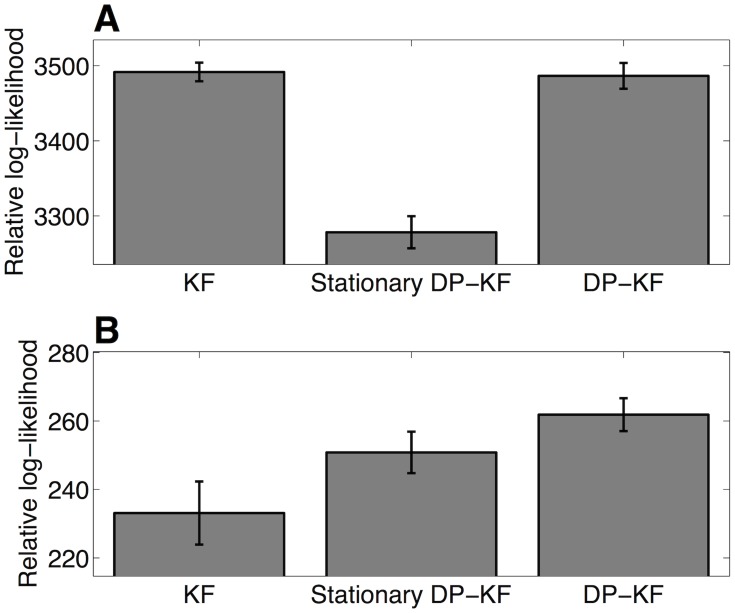
“Figure 1B shows the results of applying the DP-KF to the “gradual” and “mixed” experimental protocols described in the Introduction [15–17, 20, 21, 39].”
MethodResult
Research works printed but not linked: 1
- Bartlett FC (1932) Remembering: An Experimental and Social Study. Cambridge University Press.
Cited by
Discovering Event Structure in Continuous Narrative Perception and Memory
Baldassano, C., Chen, J., Zadbood, A., Pillow, J. W., Hasson, U., & Norman, K. A. (2017) · Neuron · doi:10.1016/j.neuron.2017.06.041 · Cited by 952
Self-citationLearning task-state representations
Niv, Y. (2019) · Nature Neuroscience · doi:10.1038/s41593-019-0470-8 · Cited by 356
Self-citationContextual inference underlies the learning of sensorimotor repertoires
Heald, J. B., Lengyel, M., & Wolpert, D. M. (2021) · Nature · doi:10.1038/s41586-021-04129-3 · Cited by 238
Structured Event Memory: A neuro-symbolic model of event cognition.
Franklin, N. T., Norman, K. A., Ranganath, C., Zacks, J. M., & Gershman, S. J. (2020) · Psychological Review · doi:10.1037/rev0000177 · Cited by 177
Self-citationThe computational nature of memory modification
Gershman, S. J., Monfils, M.-H., Norman, K. A., & Niv, Y. (2017) · eLife · doi:10.7554/elife.23763 · Cited by 172
“Our basic proposal is inspired by two lines of research, one on the role of hippocampus in structure learning ( Aggleton et al., 2007 ; Gershman et al., 2010 , 2014 ), and one on the role of the dopamine system and the amygdala ( Blair et al., 2001 ) in associative learning.”
BackgroundMethodInfluentialSelf-citation
Metadata
- Authors
- Gershman, S. J., Radulescu, A., Norman, K. A., & Niv, Y.
- Affiliations
- Massachusetts Institute of Technology (US)
- Princeton University (US)
- Corresponding author
- Gershman, Samuel J.
- Venue
- PLoS Computational Biology
- Publisher
- Public Library of Science (PLoS)
- Published
- 2014-11-06
- Volume
- 10
- Issue
- 11
- Pages
- e1003939
- ISSN
- 1553-734X (ISSN-L)
- 1553-7358
- PMC
- PMC4222636
- OpenAlex
- W2008094377
- Cited by
- 101
- References
- 76
- Citations by year
- 2026: 6 · 2025: 12 · 2024: 13 · 2023: 9 · 2022: 14 · 2021: 11 · 2020: 12 · 2019: 5 · 2018: 6 · 2017: 6 · 2016: 4 · 2015: 3
- FWCI
- 2.42
- Type
- journal article
- Language
- en
- Open access
- gold
- doi.org
- Locations
- PLoS Computational Biology (publishedVersion, cc-by)
- PubMed Central (publishedVersion, cc-by)
- PubMed (publishedVersion)
- RePEc: Research Papers in Economics (submittedVersion)
- DOAJ (DOAJ: Directory of Open Access Journals) (submittedVersion, cc-by-sa)
- DSpace@MIT (Massachusetts Institute of Technology) (submittedVersion, cc-by-nc)
- Funders
- National Science Foundation
- John Templeton Foundation
- National Institutes of Health
- National Institute of Mental Health (R01MH098861)
- Topics
- Life Sciences › Neuroscience › Cognitive Neuroscience › Memory and Neural Mechanisms
- Life Sciences › Neuroscience › Cognitive Neuroscience › Memory Processes and Influences
- Life Sciences › Neuroscience › Cognitive Neuroscience › Visual perception and processing mechanisms
- Keywords
- memory updating, memory formation, switching Kalman filter, dynamic environments, temporal discontinuity, visual memory
- MeSH terms
- Humans, Memory, Models, Neurological, Task Performance and Analysis, Models, Statistical, Computational Biology
About these checks
Registry, retraction, Cites and statistics results are computed, not judged, with one exception: a printed reference that no index lists is read once by a model before it counts as a citation error. Claims are extracted by a model and kept only when their quote appears verbatim in the text; each cited source is then checked, with a model’s help, for whether it says what the claim relies on. Those verdicts can be wrong — read the claim’s quote and the cited source before relying on one.
Statistics and arithmetic are recomputed, not judged.
Confidence bands are shown only for fields calibrated on our annotated test set. None is calibrated yet, so no band is shown.
What counts as a claim ›How we measure confidence ›How we check this ›
Are you an author, or do you see a problem with this page? Request a review
Data sources
Bibliographic data: Semantic Scholar, OpenAlex, Crossref.
Contains information from the Semantic Scholar Academic Graph Datasets, made available under the ODC Attribution License (ODC-BY 1.0).
Semantic Scholar’s data is described in: Kinney, R., et al. (2023). The Semantic Scholar Open Data Platform. arXiv:2301.10140.
