

A predictive coding account of bistable perception - a model-based fMRI study
Open accessThe DOI matches its Crossref record; 42 of the 43 references it cites were found in a registry or an index.
Abstract
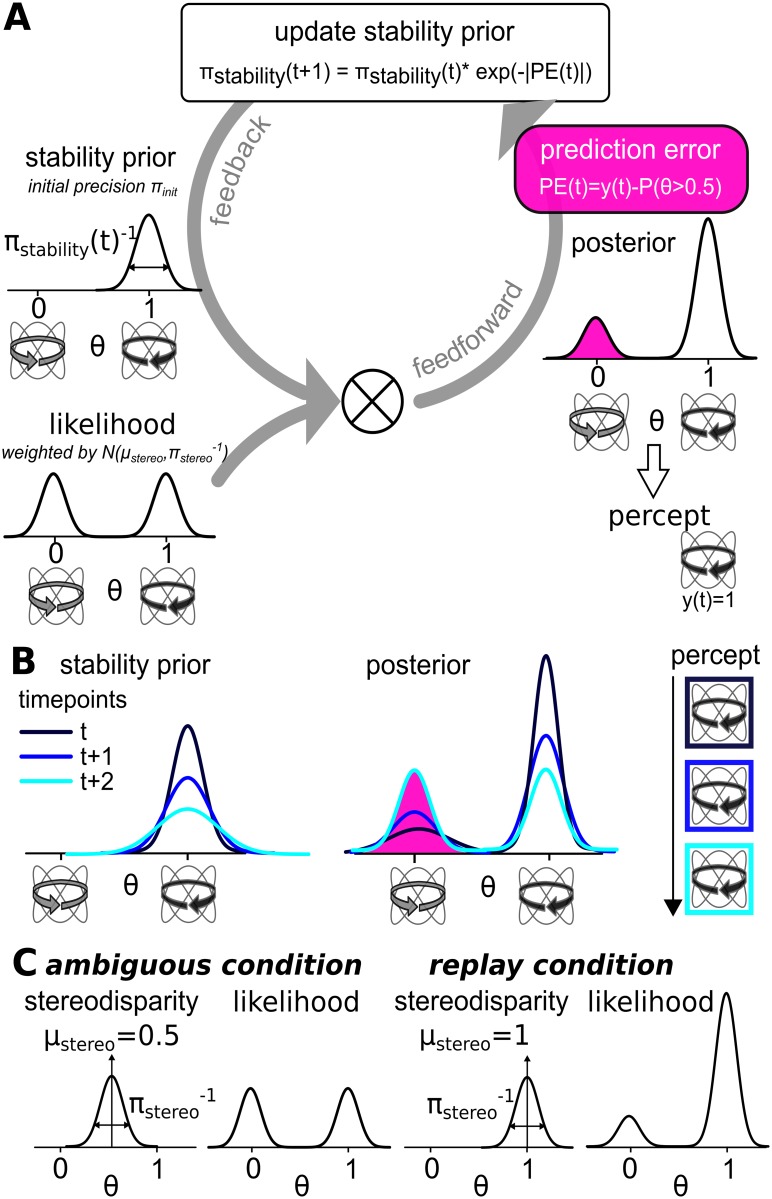
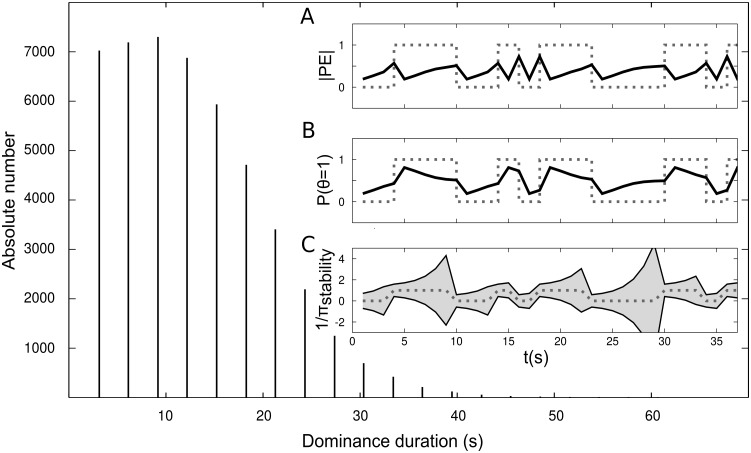
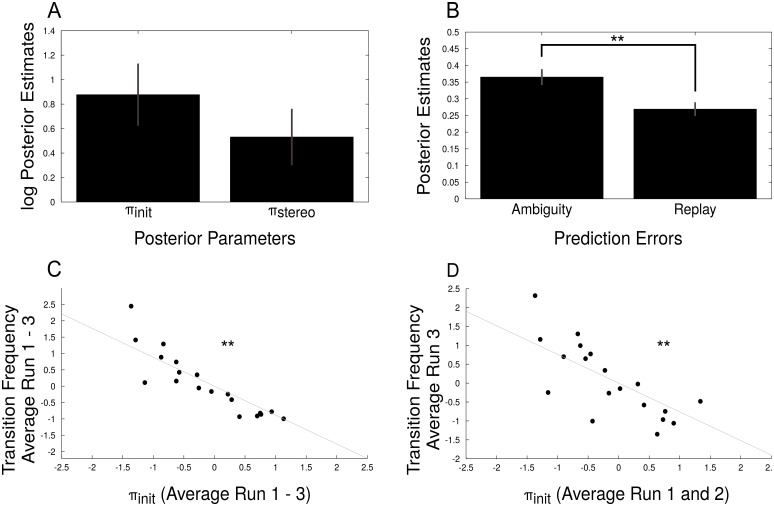
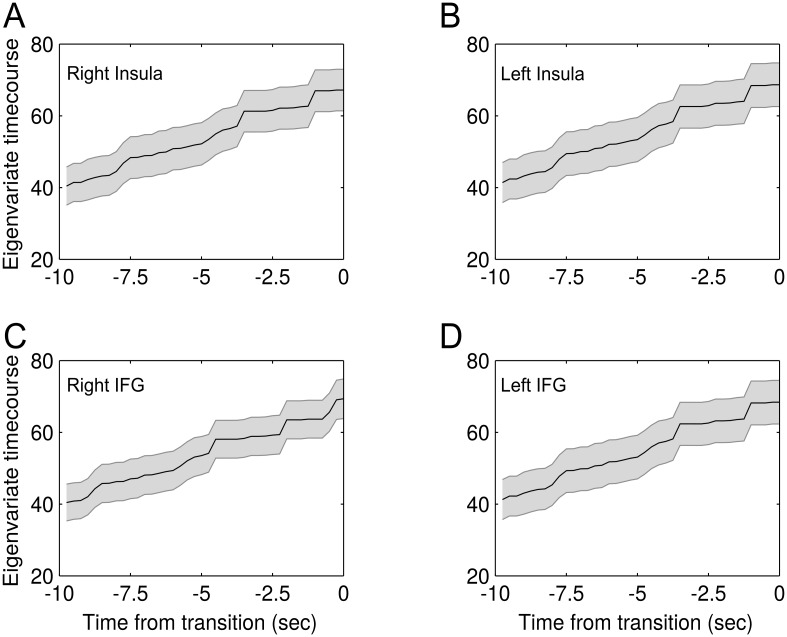
In bistable vision, subjective perception wavers between two interpretations of a constant ambiguous stimulus. This dissociation between conscious perception and sensory stimulation has motivated various empirical studies on the neural correlates of bistable perception, but the neurocomputational mechanism behind endogenous perceptual transitions has remained elusive. Here, we recurred to a generic Bayesian framework of predictive coding and devised a model that casts endogenous perceptual transitions as a consequence of prediction errors emerging from residual evidence for the suppressed percept. Data simulations revealed close similarities between the model's predictions and key temporal characteristics of perceptual bistability, indicating that the model was able to reproduce bistable perception. Fitting the predictive coding model to behavioural data from an fMRI-experiment on bistable perception, we found a correlation across participants between the model parameter encoding perceptual stabilization and the behaviourally measured frequency of perceptual transitions, corroborating that the model successfully accounted for participants' perception. Formal model comparison with established models of bistable perception based on mutual inhibition and adaptation, noise or a combination of adaptation and noise was used for the validation of the predictive coding model against the established models. Most importantly, model-based analyses of the fMRI data revealed that prediction error time-courses derived from the predictive coding model correlated with neural signal time-courses in bilateral inferior frontal gyri and anterior insulae. Voxel-wise model selection indicated a superiority of the predictive coding model over conventional analysis approaches in explaining neural activity in these frontal areas, suggesting that frontal cortex encodes prediction errors that mediate endogenous perceptual transitions in bistable perception. Taken together, our current work provides a theoretical framework that allows for the analysis of behavioural and neural data using a predictive coding perspective on bistable perception. In this, our approach posits a crucial role of prediction error signalling for the resolution of perceptual ambiguities.
Overview
The claims and statistics of this paper haven’t been checked yet.
Free: it reads the open-access text and checks the first 5 claims that cite a source we can check. Create a free account to check every claim.
Integrity signals
Registry
Cites
Statistics
Figures

Verification
Claims the paper makes
The claims and statistics of this paper haven’t been checked yet.
Free: it reads the open-access text and checks the first 5 claims that cite a source we can check. Create a free account to check every claim.
Claims other papers make about this one
Each is checked against this paper’s own text: does it say what the citing paper says it does?
The cited source says what the claim attributes to it.
In the citing paper
“The explanatory power of this framework, exemplified in simulations of PP that readily account for phenomena ranging from V1 neuron response properties 207 to bistable perception 29 to perceptual illusions, 30 , 31 has led some to argue that everything the brain does can ultimately be explained in terms of prediction error minimization.”
From Evaluating the neurophysiological evidence for predictive processing as a model of perception (2020) · cites this paper as [29]
Self-check
Percentages, sums and reported differences re-computed from the paper’s own numbers.
The self-check needs the paper’s full text.
Citations
Cites
Brainard, D. H. (1997) · Spatial Vision · doi:10.1163/156856897x00357 · Cited by 19,702
The free-energy principle: a unified brain theory?
Friston, K. (2010) · Nature Reviews Neuroscience · doi:10.1038/nrn2787 · Cited by 8,120
Whatever next? Predictive brains, situated agents, and the future of cognitive science
Clark, A. (2013) · Behavioral and Brain Sciences · doi:10.1017/s0140525x12000477 · Cited by 5,924
Rao, R. P. N., & Ballard, D. H. (1999) · Nature Neuroscience · doi:10.1038/4580 · Cited by 5,483
A theory of cortical responses.
Friston, K. (2005) · Philosophical Transactions of the Royal Society B: Biological Sciences · doi:10.1098/rstb.2005.1622 · Cited by 4,578
A new SPM toolbox for combining probabilistic cytoarchitectonic maps and functional imaging data
Eickhoff, S. B., Stephan, K. E., Mohlberg, H., Grefkes, C., Fink, G. R., Amunts, K., & Zilles, K. (2005) · NeuroImage · doi:10.1016/j.neuroimage.2004.12.034 · Cited by 4,033
The Bayesian brain: The role of uncertainty in neural coding and computation
Knill, D. C., & Pouget, A. (2004) · Trends in Neurosciences · doi:10.1016/j.tins.2004.10.007 · Cited by 2,588
Hierarchical Bayesian inference in the visual cortex
Lee, T. S., & Mumford, D. (2003) · Journal of the Optical Society of America A · doi:10.1364/josaa.20.001434 · Cited by 1,473
Bayesian model selection for group studies
Stephan, K. E., Penny, W. D., Daunizeau, J., Moran, R. J., & Friston, K. J. (2009) · NeuroImage · doi:10.1016/j.neuroimage.2009.03.025 · Cited by 1,423
Multistable phenomena: changing views in perception
Leopold, D. A., & Logothetis, N. K. (1999) · Trends in Cognitive Sciences · doi:10.1016/s1364-6613(99)01332-7 · Cited by 962
Cited by
Evaluating the neurophysiological evidence for predictive processing as a model of perception
Walsh, K. S., McGovern, D. P., Clark, A., & O'Connell, R. G. (2020) · Annals of the New York Academy of Sciences · doi:10.1111/nyas.14321 · Cited by 333
New directions in predictive processing
Hohwy, J. (2020) · Mind & Language · doi:10.1111/mila.12281 · Cited by 247
“That optimism now seems somewhat vindicated in light of recent empirical evidence and computational models (Weilnhammer et al., 2017, Parr et al., 2019).”
BackgroundPredictive processing as a systematic basis for identifying the neural correlates of consciousness
Hohwy, J., & Seth, A. (2020) · Philosophy and the Mind Sciences · doi:10.33735/phimisci.2020.ii.64 · Cited by 170
Multistable Perception and the Role of the Frontoparietal Cortex in Perceptual Inference
Brascamp, J., Sterzer, P., Blake, R., & Knapen, T. (2018) · Annual Review of Psychology · doi:10.1146/annurev-psych-010417-085944 · Cited by 164
Self-citationIllusory Motion Reproduced by Deep Neural Networks Trained for Prediction
Watanabe, E., Kitaoka, A., Sakamoto, K., Yasugi, M., & Tanaka, K. (2018) · Frontiers in Psychology · doi:10.3389/fpsyg.2018.00345 · Cited by 101
“…to generate illusions (Notredame et al., 2014; Nour and Nour, 2015; Raman and Sarkar, 2016; Shipp, 2016) and was used as an explanation for certain motion illusions (Watanabe et al., 2010), of bi-stable perception (Weilnhammer et al., 2017) and of an apparent motion illusion (Edwards et al., 2017).”
BackgroundMethodFradkin, I., Adams, R. A., Parr, T., Roiser, J. P., & Huppert, J. D. (2020) · Psychological Review · doi:10.1037/rev0000188 · Cited by 89
Predictive Coding Approximates Backprop Along Arbitrary Computation Graphs
Millidge, B., Tschantz, A., & Buckley, C. L. (2022) · Neural Computation · doi:10.1162/neco_a_01497 · Cited by 95
“…repetition-suppression (Auksztulewicz & Friston, 2016), end-stopping (Rao & Ballard, 1999), bistable perception (Hohwy, Roepstorff, & Friston, 2008; Weilnhammer, Stuke, Hesselmann, Sterzer, & Schmack, 2017) and illusory motions (Lotter, Kreiman, & Cox, 2016; Watanabe, Kitaoka, Sakamoto, Yasugi, &…”
If perception is probabilistic, why does it not seem probabilistic?
Block, N. (2018) · Philosophical Transactions of the Royal Society B: Biological Sciences · doi:10.1098/rstb.2017.0341 · Cited by 91
Perceptual awareness and active inference
Parr, T., Corcoran, A. W., Friston, K. J., & Hohwy, J. (2019) · Neuroscience of Consciousness · doi:10.1093/nc/niz012 · Cited by 91
An active role of inferior frontal cortex in conscious experience
Weilnhammer, V., Fritsch, M., Chikermane, M., Eckert, A.-L., Kanthak, K., Stuke, H., Kaminski, J., & Sterzer, P. (2021) · Current Biology · doi:10.1016/j.cub.2021.04.043 · Cited by 75
Self-citationFicco, L., Mancuso, L., Manuello, J., Teneggi, A., Liloia, D., Duca, S., Costa, T., Kovacs, G. Z., & Cauda, F. (2021) · Scientific Reports · doi:10.1038/s41598-021-95603-5 · Cited by 74
From symbols to icons: the return of resemblance in the cognitive neuroscience revolution
Williams, D., & Colling, L. (2018) · Synthese · doi:10.1007/s11229-017-1578-6 · Cited by 69
“…only tentative proposals about how the functional roles it identifies are realised in cortical circuitry (cf. Brodski et al. 2015; Gordon et al. 2017;Weilnhammer et al. 2017).6 Nevertheless, it nicely illustrates the points we aremaking, andmanifests how a regulative and thoroughly predictive…”
BackgroundAnterior insula reflects surprise in value-based decision-making and perception
Loued-Khenissi, L., Pfeuffer, A., Einhäuser, W., & Preuschoff, K. (2020) · NeuroImage · doi:10.1016/j.neuroimage.2020.116549 · Cited by 66
“…where perceptual transitions (see also: Dayan, 1998; Hohwy et al., 2008) correlated with anterior insulae and inferior frontal gyri responses (Weilnhammer et al., 2017), regions also associated with economic uncertainty (Platt and Huettel, 2008; Grinband et al., 2006; Brevers et al., 2015;…”
BackgroundPsychotic Experiences in Schizophrenia and Sensitivity to Sensory Evidence
Weilnhammer, V., Röd, L., Eckert, A.-L., Stuke, H., Heinz, A., & Sterzer, P. (2020) · Schizophrenia Bulletin · doi:10.1093/schbul/sbaa003 · Cited by 65
“28,29 Secondly, we found that the severity of perceptual anomalies and hallucinations correlated positively with the sensitivity to disambiguating stimulus evidence and negatively with average phase duration in Scz.”
InfluentialSelf-citationComputational Resource Demands of a Predictive Bayesian Brain
Kwisthout, J., & van Rooij, I. (2019) · Computational Brain & Behavior · doi:10.1007/s42113-019-00032-3 · Cited by 72
The neural correlates of hierarchical predictions for perceptual decisions
Weilnhammer, V. A., Stuke, H., Sterzer, P., & Schmack, K. (2018) · The Journal of Neuroscience · doi:10.1523/jneurosci.2901-17.2018 · Cited by 57
“In turn, “low-level” perceptual prediction errors ( q ) were associated with BOLD activity in areas such as left insula, right precentral gyrus, and left middle temporal gyrus (p 0.05, FWE), which is consistent with results from Weilnhammer et al. (2017).”
BackgroundResultSelf-citationThe Independent and Shared Mechanisms of Intrinsic Brain Dynamics: Insights From Bistable Perception
Cao, T. F., Wang, L., Sun, Z., Engel, S. A., & He, S. (2018) · Frontiers in Psychology · doi:10.3389/fpsyg.2018.00589 · Cited by 65
“A number of studies have suggested predictive coding as a possible candidate mechanism for explaining bistable rivalry (Hohwy et al., 2008; Megumi et al., 2015; Weilnhammer et al., 2017; Brascamp et al., 2018).”
BackgroundHybrid predictive coding: Inferring, fast and slow
Tscshantz, A., Millidge, B., Seth, A. K., & Buckley, C. L. (2023) · PLOS Computational Biology · doi:10.1371/journal.pcbi.1011280 · Cited by 51
From Unconscious Inference to the Beholder’s Share: Predictive Perception and Human Experience
Seth, A. K. (2019) · European Review · doi:10.1017/s1062798719000061 · Cited by 53
Predictive coding networks for temporal prediction
Millidge, B., Tang, M., Osanlouy, M., Harper, N. S., & Bogacz, R. (2024) · PLOS Computational Biology · doi:10.1371/journal.pcbi.1011183 · Cited by 44
Long-term priors influence visual perception through recruitment of long-range feedback
Hardstone, R., Zhu, M., Flinker, A., Melloni, L., Devore, S., Friedman, D., Dugan, P., Doyle, W. K., Devinsky, O., & He, B. J. (2021) · Nature Communications · doi:10.1038/s41467-021-26544-w · Cited by 42
Auditory Mismatch Negativity Under Predictive Coding Framework and Its Role in Psychotic Disorders
Fong, C. Y., Law, W. H. C., Uka, T., & Koike, S. (2020) · Frontiers in Psychiatry · doi:10.3389/fpsyt.2020.557932 · Cited by 41
An integrative view of the role of prefrontal cortex in consciousness
Panagiotaropoulos, T. I. (2024) · Neuron · doi:10.1016/j.neuron.2024.04.028 · Cited by 55
New Labels for Old Ideas: Predictive Processing and the Interpretation of Neural Signals
Cao, R. (2020) · Review of Philosophy and Psychology · doi:10.1007/s13164-020-00481-x · Cited by 54
“Conant ad Ashby (1970); Wolpert and Miall (1996) 6 Linear predictive coding was originally a method of compressing audio and video signals for transmission – a way to deliver the very same information in a signal, but using less bandwidth.”
MethodWhyte, C. J. (2019) · Consciousness and Cognition · doi:10.1016/j.concog.2019.102763 · Cited by 35
Bistable perception: neural bases and usefulness in psychological research
Martínez, R., & Castillo-Parra, H. (2018) · International journal of psychological research · doi:10.21500/20112084.3375 · Cited by 43
Dołęga, K., & Dewhurst, J. (2020) · Synthese · doi:10.1007/s11229-020-02548-9 · Cited by 41
“…description provided here is quite simple, a computational model inspired by this approach has recently been validated with fMRI data collected by Weilnhammer et al. (2017), who showed that the PEM model outperformed other competing accounts in predicting increased responses from cortical areas…”
ResultBinocular rivalry reveals an out-of-equilibrium neural dynamics suited for decision-making
Cao, R., Pastukhov, A., Aleshin, S. E., Mattia, M., & Braun, J. (2021) · eLife · doi:10.7554/elife.61581 · Cited by 41
“On the other hand, ‘sampling’ models based on discrete random processes preserve distribution shape (Taylor and Ladridge, 1974; Murata et al., 2003; Schrater and Sundareswara, 2006; Sundareswara and Schrater, 2008; Cao et al., 2016; Weilnhammer et al., 2017), but fail to reproduce the dependence on input strength.”
BackgroundResultVoluntary control of auditory hallucinations: phenomenology to therapeutic implications
Swyer, A., & Powers, A. R. (2020) · Schizophrenia · doi:10.1038/s41537-020-0106-8 · Cited by 32
Hohwy, J. (2021) · Review of Philosophy and Psychology · doi:10.1007/s13164-021-00578-x · Cited by 39
Watanabe, T. (2021) · eLife · doi:10.7554/elife.69079 · Cited by 29
de Jong, M. C., Vansteensel, M. J., van Ee, R., Leijten, F. S. S., Ramsey, N. F., Dijkerman, H. C., Dumoulin, S. O., & Knapen, T. H. J. (2020) · Current Biology · doi:10.1016/j.cub.2020.05.082 · Cited by 25
“Some authors argue that initiation of illusory changes requires a governing feedback signal, originating from higher order visual regions [34, 57–59] or anterior non-sensory regions [13, 26, 53, 60, 61].”
BackgroundLacroix, A., Dutheil, F., Logemann, A., Cserjesi, R., Peyrin, C., Biro, B., Gomot, M., & Mermillod, M. (2022) · Autism · doi:10.1177/13623613211062776 · Cited by 21
“…participants are influenced by ambiguity, it is not inconsistent with flexibility difficulties related to predictive coding specificities, as the purpose of predictive coding in the brain would be precisely to resolve perceptual ambiguity (Summerfield et al., 2006; Weilnhammer et al., 2017).”
BackgroundFarmaki, C., Sakkalis, V., Loesche, F., & Nisiforou, E. A. (2019) · Frontiers in Human Neuroscience · doi:10.3389/fnhum.2019.00345 · Cited by 31
“Recently, neuroimaging studies seem to focus on spatial aspects of brain activation in bistable perception and have, thus, used functional MRI (fMRI) and transcranial magnetic stimulation (TMS) (Knapen et al., 2011; Kleinschmidt et al., 2012; Wang et al., 2013, 2017; Weilnhammer et al., 2017).”
BackgroundA functional theory of bistable perception based on dynamical circular inference
Leptourgos, P., Bouttier, V., Jardri, R., & Denève, S. (2020) · PLoS Computational Biology · doi:10.1371/journal.pcbi.1008480 · Cited by 27
“In particular, an interesting model that bears some similarity with the dCI model was described by Hohwy and Friston [17] and formalized by Weilnhammer and colleagues [18].”
Agent-specific learning signals for self–other distinction during mentalising
Ereira, S., Dolan, R. J., & Kurth-Nelson, Z. L. (2018) · PLoS Biology · doi:10.1371/journal.pbio.2004752 · Cited by 22
Reverse Differentiation via Predictive Coding
Salvatori, T., Song, Y., Xu, Z., Lukasiewicz, T., & Bogacz, R. (2022) · Proceedings of the AAAI Conference on Artificial Intelligence · doi:10.1609/aaai.v36i7.20788 · Cited by 50
Neural oscillations promoting perceptual stability and perceptual memory during bistable perception
Zhu, M., Hardstone, R., & He, B. J. (2022) · Scientific Reports · doi:10.1038/s41598-022-06570-4 · Cited by 21
Bistable perception, precision and neuromodulation
Novický, F., Parr, T., Friston, K. J., Mirza, M. B., & Sajid, N. (2023) · Cerebral Cortex · doi:10.1093/cercor/bhad401 · Cited by 21
“The latter explanation include a formulation (Weilnhammer et al., 2017) that characterise perceptual switches as a consequence of prediction errors emerging from residual evidence for the suppressed percept.”
Synthetic surprise as the foundation of the psychedelic experience
Filippo, R. D., & Schmitz, D. (2024) · Neuroscience & Biobehavioral Reviews · doi:10.1016/j.neubiorev.2024.105538 · Cited by 19
“This framework can account for various perceptual phenomena, including perceptual illusions and the influence of prior knowledge on perception (Lerer et al., 2021; Weilnhammer et al., 2017; Lumer et al., 1998).”
BackgroundPredictive coding as a model of sensory disconnection: relevance to anaesthetic mechanisms
Sanders, R., Casey, C., & Saalmann, Y. B. (2020) · British Journal of Anaesthesia · doi:10.1016/j.bja.2020.08.017 · Cited by 18
Predictive Coding Can Do Exact Backpropagation on Convolutional and Recurrent Neural Networks
Salvatori, T., Song, Y., Lukasiewicz, T., Bogacz, R., & Xu, Z. (2021) · arXiv · doi:10.48550/arxiv.2103.03725 · Cited by 16
“…[4, 6, 7, 30] and probabilistic models [29], and offer a single mechanism that accounts for diverse perceptual phenomena observed in the brain, such as repetition-suppression [2], illusory motions [15, 26], bistable perception [8, 27], and attentional modulation of neural activity [5, 10].”
BackgroundLearning on Arbitrary Graph Topologies via Predictive Coding
Salvatori, T., Pinchetti, L., Millidge, B., Song, Y., Bao, T.-Y., Bogacz, R., & Lukasiewicz, T. (2022) · PubMed · doi:10.48550/arxiv.2201.13180 · Cited by 36
“…observed in the brain, examples of which are end-stopping [7], repetition-suppression [43], illusory motions [44, 45], bistable perception [46, 47], and even attentional modulation of neural activity [48, 49], and it has even been used to describe the retrieval and storage of memories in the…”
MethodLittle, D., Snyder, J. S., & Elhilali, M. (2020) · PLoS Computational Biology · doi:10.1371/journal.pcbi.1007746 · Cited by 13
A hierarchical stochastic model for bistable perception
Albert, S., Schmack, K., Sterzer, P., & Schneider, G. (2017) · PLoS Computational Biology · doi:10.1371/journal.pcbi.1005856 · Cited by 13
Self-citationLhotka, M., Ischebeck, A. K., Helmlinger, B., & Zaretskaya, N. (2023) · Frontiers in Psychology · doi:10.3389/fpsyg.2022.1067985 · Cited by 13
“As long as the sensory input remains the same, there is a constant mismatch between the currently selected interpretation and the ambiguous sensory input, which causes constant prediction updating, and hence a constant change in perception (Weilnhammer et al., 2017; Brascamp et al., 2018).”
BackgroundThe neural systems for perceptual updating
Stöttinger, E., Aichhorn, M., Anderson, B., & Danckert, J. A. (2018) · Neuropsychologia · doi:10.1016/j.neuropsychologia.2018.03.017 · Cited by 11
“The anterior insula is active when participants switch between interpretations of such stimuli (Lumer and Rees, 1999; Knapen et al., 2011; Müller et al., 2005; Weilnhammer et al., 2017).”
Wainstein, G., Whyte, C. J., Martens, K. A. E., Müller, E. J., Munn, B., Medel, V., Anderson, B., Stöttinger, E., Danckert, J., & Shine, J. M. (2025) · eLife · doi:10.7554/elife.93191.4 · Cited by 13
Editorial: Predictive Processing and Consciousness
Miller, M., Clark, A., & Schlicht, T. (2022) · Review of Philosophy and Psychology · doi:10.1007/s13164-022-00666-6 · Cited by 8
Marroquín-Ciendúa, F., Martínez, R., & Rodríguez-Celis, H. G. (2020) · Tesis Psicológica · doi:10.37511/tesis.v15n1a6 · Cited by 12
Martínez, R., Marroquín-Ciendúa, F., Rosa, P. J., & Castillo, H. (2021) · Interdisciplinaria Revista de Psicología y Ciencias Afines · doi:10.16888/interd.2022.39.1.16 · Cited by 8
Conscious perception and perceptual echoes: a binocular rivalry study
Luo, C., VanRullen, R., & Alamia, A. (2021) · Neuroscience of Consciousness · doi:10.1093/nc/niab007 · Cited by 14
Spontaneous Necker-cube reversals may not be that spontaneous
Wilson, M., Hecker, L., Joos, E., Aertsen, A., van Elst, L. T., & Kornmeier, J. (2023) · Frontiers in Human Neuroscience · doi:10.3389/fnhum.2023.1179081 · Cited by 13
Self-Knowledge in a Predictive Processing Framework
Schwengerer, L. (2018) · Review of Philosophy and Psychology · doi:10.1007/s13164-018-0416-1 · Cited by 10
Neural Mechanism Underlying the Sleep Deprivation-Induced Abnormal Bistable Perception
Zhou, L., Tang, Z., Zuo, Z., & Zhou, K. (2021) · Cerebral Cortex · doi:10.1093/cercor/bhab235 · Cited by 10
Poom, L., & Matin, M. (2022) · PLoS ONE · doi:10.1371/journal.pone.0273772 · Cited by 7
“Reversals may also involve both a bottom-up flow of prediction errors resulting from evidence for the suppressed percept, and top-down flow from the hypothesis generator that attempt to explain the sensory signals, as described in the predictive processing (PP) framework [15,78].”
BackgroundStaadt, R., Philipp, S. T., Cremers, J. L., Kornmeier, J., & Jancke, D. (2020) · PLoS ONE · doi:10.1371/journal.pone.0232349 · Cited by 8
Divergent mechanisms of perceptual reversals in spinning and wobbling structure-from-motion stimuli
Poom, L. (2024) · PLoS ONE · doi:10.1371/journal.pone.0297963 · Cited by 7
An Accumulating Neural Signal Underlying Binocular Rivalry Dynamics
Nie, S., Katyal, S., & Engel, S. A. (2023) · Journal of Neuroscience · doi:10.1523/jneurosci.1325-23.2023 · Cited by 6
From unconscious inference to the beholder's share: predictive perception and human experiencePreprint
Seth, A. K. (2017) · PsyArXiv (OSF Preprints) · doi:10.31234/osf.io/zvbkp · Cited by 7
Levin, A. W. (2024) · Journal of Psychopharmacology · doi:10.1177/02698811241303599 · Cited by 6
“…percepts in binocular rivalry (Britz et al., 2009; Kanai et al., 2010; Lumer et al., 1998; Meenan and Miller, 1994; Sterzer and Kleinschmidt, 2007; Weilnhammer et al., 2017; Wilcke et al., 2009; Wilcke et al., 2009; Zaretskaya et al., 2010), and, in both the ayahuasca study discussed above…”
Towards an active inference account of deep meditative deconstruction
Prest, S., & Berryman, K. (2026) · Neuroscience of Consciousness · doi:10.1093/nc/niag053 · Cited by 13
“Predictive processing accounts explain rivalry in terms of competing high-level beliefs about hidden causes that do not overlap spatially ( Hohwy et al. 2008, Weilnhammer et al. 2017).”
Perceptual Awareness and Its Relationship with Consciousness: Hints from Perceptual Multistability
Saracini, C. (2022) · NeuroSci · doi:10.3390/neurosci3040039 · Cited by 7
“In particular, this approach seems to apply for multistable phenomena [47,90], although there have been attempts to develop the PC perspective in other contexts [91], and even an attempt to integrate the GNW theory into the framework of predictive processing has been proposed [92].”
BackgroundNon‐stimulated regions in early visual cortex encode the contents of conscious visual perception
van Kemenade, B. M., Wilbertz, G., Müller, A., & Sterzer, P. (2021) · Human Brain Mapping · doi:10.1002/hbm.25731 · Cited by 5
“…hierarchical levels, while sensory evidence for the currently suppressed perceptual interpretation elicits prediction errors that act to destabilize the current percept, eventually leading to a perceptual change (Weilnhammer et al., 2021; Weilnhammer, Stuke, Hesselmann, Sterzer, & Schmack, 2017).”
BackgroundSelf-citationINFORMATION, COGNITION, AND OBJECTIVITY
Fresco, N. (2021) · American Philosophical Quarterly · doi:10.2307/48616059 · Cited by 6
Instability with a purpose: how the visual brain makes decisions in a volatile worldPreprint
Cao, R., Pastukhov, A., Aleshin, S. E., Mattia, M., & Braun, J. (2020) · bioRxiv (Cold Spring Harbor Laboratory) · doi:10.1101/2020.06.09.142497 · Cited by 5
Costa, G. N., Schaum, M., Duarte, J. V., Martins, R., Duarte, I. C., Castelhano, J., Wibral, M., & Castelo-Branco, M. S. (2024) · Human Brain Mapping · doi:10.1002/hbm.26779 · Cited by 4
“It is unlikely that in this area, it emerges from a motion sensitive process, but neural activity in the insula has been proposed as a source of error signals in a predictive model of bistability (Weilnhammer et al., 2017).”
BackgroundThe effect of context congruency on fMRI repetition suppression for objects
Li, C., Ficco, L., Trapp, S., Rostalski, S., Korn, L., & Kovács, G. (2023) · Neuropsychologia · doi:10.1016/j.neuropsychologia.2023.108603 · Cited by 2
Arani, E., Garobbio, S., Roinishvili, M., Chkonia, E. D., Herzog, M. H., & Wezel, R. J. A. V. (2024) · Schizophrenia Bulletin · doi:10.1093/schbul/sbae178 · Cited by 4
“40 It has been proposed that schizophrenia patients have altered error-dependent up-dating in a hierarchical Bayesian structure, leading to disruptions in predictive coding that require the system to change inferences more often.”
Advancing the science of consciousness: From ethics to clinical care
Farisco, M., Evers, K., Annen, J., Blandin, V., Camassa, A., Cecconi, B., Charland‐Verville, V., Deco, G., Gosseries, O., Laureys, S., et al. (2025) · Neuroscience & Biobehavioral Reviews · doi:10.1016/j.neubiorev.2025.106497 · Cited by 3
“…to detect neural activity in human subjects with increasing resolution (Kauppi et al., 2015; LaConte, 2011) that may be capable of detecting differences in the encoding of ambiguous and illusory stimuli (Hayashi et al., 2007; Kauppi et al., 2015; Kobayashi et al., 2007; Weilnhammer et al., 2017).”
Evidence for an Active Role of Inferior Frontal Cortex in Conscious ExperiencePreprint
Weilnhammer, V. A. (2020) · bioRxiv (Cold Spring Harbor Laboratory) · doi:10.17605/osf.io/ykm6x · Cited by 3
Self-citationNoradrenergic modulation of whole brain dynamics mediates perceptual switchesPreprint
Wainstein, G., Whyte, C. J., Martens, K. A. E., Müller, E. J., Munn, B., Medel, V., Anderson, B., Stöttinger, E., Danckert, J. A., & Shine, J. M. (2022) · Research Square · doi:10.21203/rs.3.rs-2356429/v1 · Cited by 3
Advancing the science of consciousness: from ethics to clinical carePreprint
Farisco, M., Evers, K., Annen, J., Blandin, V., Camassa, A., Cecconi, B., Charland‐Verville, V., Deco, G., Gosseries, O., Laureys, S., et al. (2023) · PsyArXiv (OSF Preprints) · doi:10.31234/osf.io/sutrc · Cited by 5
A survey on neuro-mimetic deep learning via predictive coding
Salvatori, T., Mali, A., Buckley, C. L., Lukasiewicz, T., Rao, R. P. N., Friston, K., & Ororbia, A. (2026) · Neural Networks · doi:10.1016/j.neunet.2025.108161 · Cited by 2
Poom, L. (2025) · i-Perception · doi:10.1177/20416695251342410 · Cited by 4
“…viewing, which can be used to investigate the in fl uences of endogenous processes, such as repeated adaptation-recovery cycles among neural populations (Nawrot & Blake, 1989), and contributions of top-down in fl uences (Megumi et al., 2015; Poom, 2024; Poom & Matin, 2022; Weilnhammer et al., 2017).”
Anterior insular activity signals perceptual conflicts induced by temporal and spatial context
Reichenbach, K., Rothkirch, M., Jaeckel, L., Sterzer, P., & Weilnhammer, V. A. (2025) · Neuroscience of Consciousness · doi:10.1093/nc/niaf030 · Cited by 2
“Based on the notion that switch-related neural activity reflects the peak of accumulating perceptual prediction errors (Weilnhammer et al. 2017, 2021), we contrasted trials in which participants’ perceptual reports differed from the preceding trial to those in which the perceptual report was…”
InfluentialSelf-citationHistory-dependent changes to distribution of dominance phases in multistable perception
Pastukhov, A., Styrnal, M., & Carbon, C. (2023) · Journal of Vision · doi:10.1167/jov.23.3.16 · Cited by 3
“In the former case, it is assumed to reflect noisy self-adaptation (van Ee, 2009), whereas in the case of the predictive coding framework, it corresponds to a weakening stability prior and an escalation of a prediction error (Weilnhammer et al., 2017).”
InfluentialConscious perception modulates perceptual echoesPreprint
Luo, C., Rufin Vanrullen, A., & Alamia, A. (2020) · bioRxiv (Cold Spring Harbor Laboratory) · doi:10.1101/2020.08.06.239202 · Cited by 2
“Several previous studies investigated conscious perception in light of the Predictive Coding framework (Hohwy et al., 2008; Lamme, 2015; Seth et al., 2012; Weilnhammer et al., 2017).”
BackgroundPredictive coding in the brain and deep neural networks
Pang, Z. (2022) · theses.fr (ABES) · doi:10.70675/5be60358z52c8z491az8255z94b8974e0118 · Cited by 2
Smelling x as y? On (the impossibility of) multistable perception in the chemical senses
Stefano, N. D., & Spence, C. J. (2025) · Consciousness and Cognition · doi:10.1016/j.concog.2025.103875 · Cited by 1
“Can computational models, such as predictive coding — which successfully explain multistability in vision and audition (e.g., Weilnhammer et al., 2017) — be adapted to account for the holistic processing in chemical perception?”
Probabilistic processing: Possible, probable, or preposterous? A dialectical essay
Loued‐Khenissi, L., & Pascucci, D. (2025) · New Ideas in Psychology · doi:10.1016/j.newideapsych.2025.101212 · Cited by 2
Effort expectation and strategic cue use in visual search
Han, S., Tünnermann, J., Hornung, S. K., & Schubö, A. (2025) · Cognitive Affective & Behavioral Neuroscience · doi:10.3758/s13415-025-01358-1 · Cited by 1
“…the brain updates its internal models to match reality, a process that is time-consuming and involves increased engagement of brain regions, such as the insula and the inferior frontal gyrus (IFG), which are central to prediction error computation (Ficco et al., 2021; Weilnhammer et al., 2017).”
Binocular Rivalry: Evaluating the Role of Theta Power as a Neural Index of Conflict
Drew, A. A., Gonzalez, J. S., Soto‐Faraco, S., & Cuello, M. T. (2026) · European Journal of Neuroscience · doi:10.1111/ejn.70372 · Cited by 3
“On one hand, as we discussed earlier, BR has been framed according to predictive coding terms (Hohwy et al. 2008; Weilnhammer et al. 2017).”
Schmitter, C. V., & Straube, B. (2026) · Schizophrenia · doi:10.1038/s41537-025-00721-y · Cited by 2
“Moreover, it is responsive to prediction errors across various domains, including perceptual errors, where expected sensory input does not match internal predictions 70,71 .”
A minimal physiological model of perceptual suppression and breakthrough in visual rivalry
Whyte, C. J., Wilson, H. R., Shine, J. M., & Alais, D. (2026) · Journal of Vision · doi:10.1167/jov.26.1.7 · Cited by 2
“Weilnhammer, Stuke, Hesselmann, Sterzer, & Schmack, 2017) and non-human primate electrophysiology (Dwarakanath et al., 2020; Hesse & Tsao, 2020; Kapoor et al., 2020; Leopold & Logothetis, 1996; Logothetis, 1998; Panagiotaropoulos, Deco, Kapoor, & Logothetis, 2012; Wilke, Mueller, & Leopold, 2009).”
Where is the ghost in the shell?
Weilnhammer, V. A. (2024) · Neuroscience of Consciousness · doi:10.1093/nc/niae015 · Cited by 1
“Computational models are able to quantify dynamic prediction errors from the sequence of conscious experiences that participants report during bistable perception (Weilnhammer et al. 2017).”
BackgroundSelf-citationAffect is the Evaluative Context for the Brain’s Shifting Goals
LaMotte, A. D. (2025) · Adaptive Behavior · doi:10.1177/10597123251379013 · Cited by 1
“…for this understanding of brain function includes research on binocular rivalry (e.g., Hohwy et al., 2008), bistable perception (Wang et al., 2013; Weilnhammer et al., 2017), the physiological blind spot (e.g., Abadi et al., 2011), recognition of “ Mooney ” images (e.g., Hsieh et al., 2010),…”
Expectancy Violation in Visual Perception: Characterising the Brain Signals of Prediction Error
Robinson, J. (2018) · Queensland University of Technology · doi:10.5204/thesis.eprints.123710 · Cited by 1
Non-stimulated regions in early visual cortex encode the contents of conscious visual perceptionPreprint
van Kemenade, B. M., Wilbertz, G., Müller, A., & Sterzer, P. (2020) · bioRxiv (Cold Spring Harbor Laboratory) · doi:10.1101/2020.11.13.381269 · Cited by 1
Self-citationSpontaneous Necker-Cube Reversals are not that SpontaneousPreprint
Wilson, M., Hecker, L., Joos, E., Aertsen, A., van Elst, L. T., & Kornmeier, J. (2023) · bioRxiv (Cold Spring Harbor Laboratory) · doi:10.1101/2023.03.06.531257 · Cited by 1
Wainstein, G., Whyte, C. J., Martens, K. A. E., Müller, E. J., Munn, B., Medel, V., Anderson, B., Stöttinger, E., Danckert, J. A., & Shine, J. M. (2024) · eLife · doi:10.7554/elife.93191.1 · Cited by 1
A decision-theoretic model of multistability: perceptual switches as internal actionsPreprint
Safavi, S., & Dayan, P. (2024) · bioRxiv (Cold Spring Harbor Laboratory) · doi:10.1101/2024.12.06.627286 · Cited by 5
“…1998; Schrater et al., 2007; Sundareswara et al., 2008; Hohwy et al., 2008a; Reichert et al., 2011; Moreno-Bote et al., 2011; Gershman et al., 2014; Weilnhammer et al., 2017; Leptourgos et al., 2020; Cao et al., 2021; Weilnhammer, Chikermane, et al., 2021) — also see Brascamp, Sterzer, et al.…”
Wainstein, G., Whyte, C. J., Martens, K. A. E., Müller, E. J., Medel, V., Anderson, B., Stöttinger, E., Danckert, J. A., Munn, B., & Shine, J. M. (2025) · eLife · doi:10.7554/elife.93191.2 · Cited by 3
Wainstein, G., Whyte, C. J., Martens, K. A. E., Müller, E. J., Medel, V., Anderson, B., Stöttinger, E., Danckert, J. A., Munn, B., & Shine, J. M. (2025) · eLife · doi:10.7554/elife.93191.3 · Cited by 1
Fritsch, M., Weilnhammer, V. A., & Sterzer, P. (2020) · Clinical Neurophysiology · doi:10.1016/j.clinph.2019.12.202
Self-citationHistory-dependent changes to distribution of dominance phases in multistable perceptionPreprint
Pastukhov, A., Styrnal, M., & Carbon, C. (2020) · bioRxiv (Cold Spring Harbor Laboratory) · doi:10.17605/osf.io/js3wv
Physics of Complex Present: Properties of Action Strategy Cloud
Lubashevsky, I., & Plavinska, N. (2021) · Understanding complex systems · doi:10.1007/978-3-030-82612-3_6
History-dependent changes of Gamma distribution in multistable perceptionPreprint
Pastukhov, A., Styrnal, M., & Carbon, C. (2020) · bioRxiv (Cold Spring Harbor Laboratory) · doi:10.1101/2020.08.06.239285
Sleep deprivation results in diminished perceptual stability independently of psychosis pronenessPreprint
Balter, L. J. T. (2022) · doi:10.31234/osf.io/sjva7
Gastrell, T. (2022) · Open Access Victoria University of Wellington | Te Herenga Waka (Figshare) · doi:10.26686/wgtn.21521652
Metadata
- Authors
- Weilnhammer, V., Stuke, H., Hesselmann, G., Sterzer, P., & Schmack, K.
- Affiliations
- Charité – Universitätsmedizin Berlin (DE)
- Humboldt-Universität zu Berlin (DE)
- Corresponding author
- Weilnhammer, Veith
- Venue
- PLOS Computational Biology
- Publisher
- Public Library of Science (PLoS)
- Published
- 2017-05-15
- Volume
- 13
- Issue
- 5
- Pages
- e1005536
- ISSN
- 1553-734X (ISSN-L)
- 1553-7358
- PMC
- PMC5448813
- OpenAlex
- W2615931912
- Cited by
- 120
- References
- 43
- Citations by year
- 2026: 12 · 2025: 13 · 2024: 12 · 2023: 12 · 2022: 12 · 2021: 15 · 2020: 24 · 2019: 5 · 2018: 10 · 2017: 5
- FWCI
- 6.91
- Type
- journal article
- Language
- en
- Update notices
- new_version (2017-05-30)
- Open access
- gold
- doi.org
- Licence
- Locations
- PLoS Computational Biology (publishedVersion, cc-by)
- Europe PMC (PubMed Central) (publishedVersion, cc-by)
- PubMed Central (publishedVersion, cc-by)
- PubMed (publishedVersion)
- RePEc: Research Papers in Economics (submittedVersion)
- DOAJ (DOAJ: Directory of Open Access Journals) (submittedVersion, cc-by-sa)
- Figshare (submittedVersion, cc-by)
- Refubium (Universitätsbibliothek der Freien Universität Berlin) (submittedVersion, cc-by)
- Universitätsbibliothek der FU Berlin Hochschulschriftenstelle u. Dokumentenserver (cc-by)
- Funders
- e:Med research and funding concept (01ZX1404A)
- German Research Foundation (HE 6244/1-2, STE 1430/7-1)
- Charité Clinical Scientist Program
- Charité Junior Clinical Scientist Program
- Topics
- Life Sciences › Neuroscience › Cognitive Neuroscience › Visual perception and processing mechanisms
- Life Sciences › Neuroscience › Cognitive Neuroscience › Embodied and Extended Cognition
- Social Sciences › Arts and Humanities › Philosophy › Philosophy and Theoretical Science
- Keywords
- bistable perception, predictive coding, prediction error, perceptual transitions, perceptual stabilization, Bayesian model, inferior frontal gyrus, anterior insula, model-based fMRI, model comparison, reciprocal inhibition, adaptation, noise
- MeSH terms
- Adult, Bayes Theorem, Computer Simulation, Female, Frontal Lobe, Humans, Magnetic Resonance Imaging, Male, Models, Neurological, Task Performance and Analysis, Visual Perception, Computational Biology, Young Adult
About these checks
Registry, retraction, Cites and statistics results are computed, not judged, with one exception: a printed reference that no index lists is read once by a model before it counts as a citation error. Claims are extracted by a model and kept only when their quote appears verbatim in the text; each cited source is then checked, with a model’s help, for whether it says what the claim relies on. Those verdicts can be wrong — read the claim’s quote and the cited source before relying on one.
Statistics and arithmetic are recomputed, not judged.
Confidence bands are shown only for fields calibrated on our annotated test set. None is calibrated yet, so no band is shown.
What counts as a claim ›How we measure confidence ›How we check this ›
Are you an author, or do you see a problem with this page? Request a review
Data sources
Bibliographic data: Semantic Scholar, OpenAlex, Crossref.
Contains information from the Semantic Scholar Academic Graph Datasets, made available under the ODC Attribution License (ODC-BY 1.0).
Semantic Scholar’s data is described in: Kinney, R., et al. (2023). The Semantic Scholar Open Data Platform. arXiv:2301.10140.
