

Genomic Islands in the Pathogenic Filamentous Fungus Aspergillus fumigatus
Open accessThe DOI matches its Crossref record; 75 of the 75 references it cites were found in a registry or an index.
Abstract
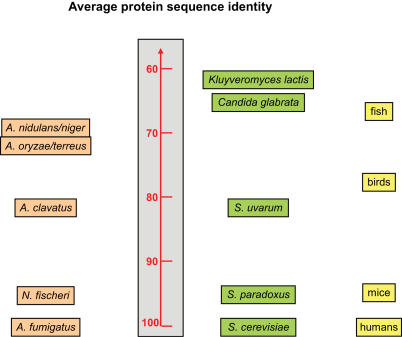
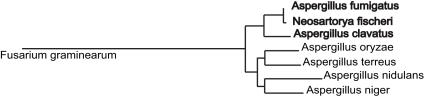
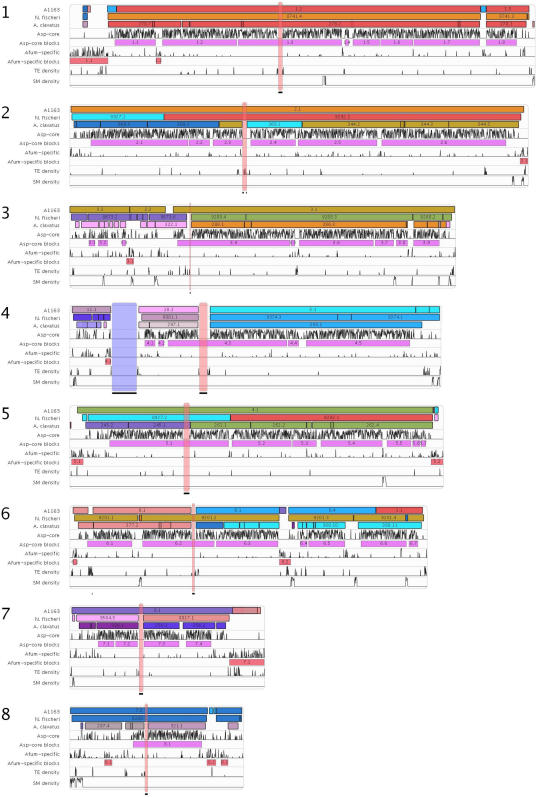
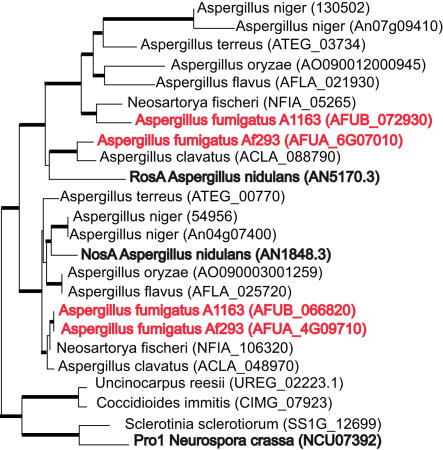
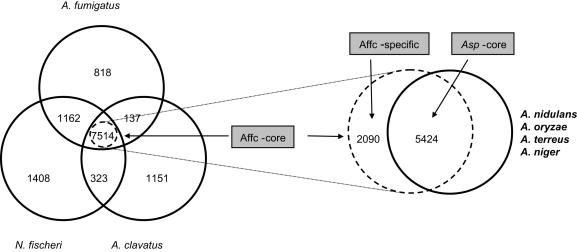
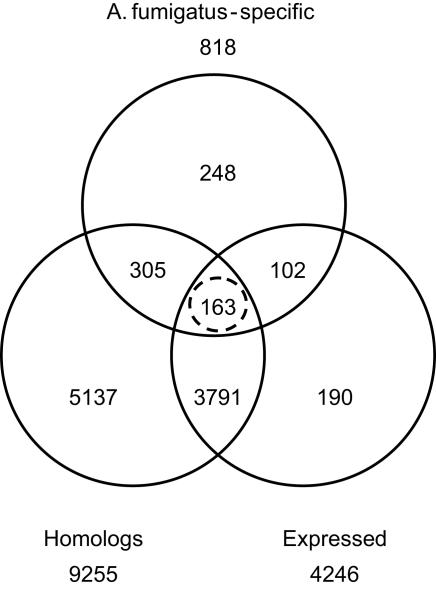
We present the genome sequences of a new clinical isolate of the important human pathogen, Aspergillus fumigatus, A1163, and two closely related but rarely pathogenic species, Neosartorya fischeri NRRL181 and Aspergillus clavatus NRRL1. Comparative genomic analysis of A1163 with the recently sequenced A. fumigatus isolate Af293 has identified core, variable and up to 2% unique genes in each genome. While the core genes are 99.8% identical at the nucleotide level, identity for variable genes can be as low 40%. The most divergent loci appear to contain heterokaryon incompatibility (het) genes associated with fungal programmed cell death such as developmental regulator rosA. Cross-species comparison has revealed that 8.5%, 13.5% and 12.6%, respectively, of A. fumigatus, N. fischeri and A. clavatus genes are species-specific. These genes are significantly smaller in size than core genes, contain fewer exons and exhibit a subtelomeric bias. Most of them cluster together in 13 chromosomal islands, which are enriched for pseudogenes, transposons and other repetitive elements. At least 20% of A. fumigatus-specific genes appear to be functional and involved in carbohydrate and chitin catabolism, transport, detoxification, secondary metabolism and other functions that may facilitate the adaptation to heterogeneous environments such as soil or a mammalian host. Contrary to what was suggested previously, their origin cannot be attributed to horizontal gene transfer (HGT), but instead is likely to involve duplication, diversification and differential gene loss (DDL). The role of duplication in the origin of lineage-specific genes is further underlined by the discovery of genomic islands that seem to function as designated "gene dumps" and, perhaps, simultaneously, as "gene factories".
Overview
The claims and statistics of this paper haven’t been checked yet.
Free: it reads the open-access text and checks the first 5 claims that cite a source we can check. Create a free account to check every claim.
Integrity signals
Registry
Cites
Statistics
Figures
Verification
Claims the paper makes
The claims and statistics of this paper haven’t been checked yet.
Free: it reads the open-access text and checks the first 5 claims that cite a source we can check. Create a free account to check every claim.
Claims other papers make about this one
Each is checked against this paper’s own text: does it say what the citing paper says it does?
The source backs part of the claim, not all of it — or backs it for a different population, condition or comparison.
In the citing paper
“Most of the studies have been performed with Neosartorya fischeri, a species very closely related taxonomically to A. fumigatus, which produced ascospores abundantly, in contrast to A. fumigatus (506).”
From Aspergillus fumigatus and Aspergillosis in 2019 (2019) · cites this paper as [506]
Experimental — accuracy not yet measured
Self-check
Percentages, sums and reported differences re-computed from the paper’s own numbers.
The self-check needs the paper’s full text.
Citations
Cites
Thompson, J. D., Higgins, D. G., & Gibson, T. J. (1994) · Nucleic Acids Research · doi:10.1093/nar/22.22.4673 · Cited by 64,617 · cited 1×
“Sequences were aligned using ClustalW [71].”
MUSCLE: multiple sequence alignment with high accuracy and high throughput
Edgar, R. C. (2004) · Nucleic Acids Research · doi:10.1093/nar/gkh340 · Cited by 44,662
Gene Ontology: tool for the unification of biology
Ashburner, M., Ball, C. A., Blake, J. A., Botstein, D., Butler, H., Cherry, J. M., Davis, A. P., Dolinski, K., Dwight, S. S., Eppig, J. T., et al. (2000) · Nature Genetics · doi:10.1038/75556 · Cited by 43,206
A Simple, Fast, and Accurate Algorithm to Estimate Large Phylogenies by Maximum Likelihood
Guindon, S., & Gascuel, O. (2003) · Systematic Biology · doi:10.1080/10635150390235520 · Cited by 16,806
Selection of Conserved Blocks from Multiple Alignments for Their Use in Phylogenetic Analysis
Castresana, J. (2000) · Molecular Biology and Evolution · doi:10.1093/oxfordjournals.molbev.a026334 · Cited by 10,508
Ohno, S. (1970) · doi:10.1007/978-3-642-86659-3 · Cited by 7,833
Whole-Genome Random Sequencing and Assembly of Haemophilus influenzae Rd
Fleischmann, R. D., Adams, M. D., White, O., Clayton, R. A., Kirkness, E. F., Kerlavage, A. R., Bult, C. J., Tomb, J.-F., Dougherty, B. A., Merrick, J. M., et al. (1995) · Science · doi:10.1126/science.7542800 · Cited by 5,654
Self-citationPAML: a program package for phylogenetic analysis by maximum likelihood
Yang, Z. (1997) · Bioinformatics · doi:10.1093/bioinformatics/13.5.555 · Cited by 5,373
Haas, B. J., Salzberg, S. L., Zhu, W., Pertea, M., Allen, J. E., Orvis, J., White, O., Buell, C. R., & Wortman, J. R. (2008) · Genome Biology · doi:10.1186/gb-2008-9-1-r7 · Cited by 4,079
Self-citationAspergillus fumigatus and Aspergillosis
Latgé, J.-P. (1999) · Clinical Microbiology Reviews · doi:10.1128/cmr.12.2.310 · Cited by 2,307 · cited 1×
“Aspergillus fumigatus is exceptional amongst the aspergilli in being both a primary and opportunistic pathogen as well as a major allergen associated with severe asthma and sinusitis [1–3].”
Background
Cited by
Items 201–300 of 510
Takahashi‐Nakaguchi, A., Muraosa, Y., Hagiwara, D., Sakai, K., Toyotome, T., Watanabe, A., Kawamoto, S., Kamei, K., Gonoi, T., & Takahashi, H. (2015) · Medical Mycology · doi:10.1093/mmy/myv003 · Cited by 38
“fumigatus A1163 (EDP51510) [27], which has additional residues flanking the C-terminal region of Afu5g07650 (Figure 2B), indicating that the length of Afu5g07650 in 17 strains used would be 373 aa, but not 222 aa.”
BackgroundEosinophil-Associated Innate IL-17 Response Promotes Aspergillus fumigatus Lung Pathology
Malacco, N. L. S. D. O., Rachid, M. A., Gurgel, I. L. D. S., Moura, T. R., Sucupira, P. H. F., Sousa, L. P., Souza, D. G., Russo, R. C., Teixeira, M. M., & Soriani, F. M. (2019) · Frontiers in Cellular and Infection Microbiology · doi:10.3389/fcimb.2018.00453 · Cited by 39
“These cellular functions can facilitate adaptation to different environments such as soil and mammalian hosts (Fedorova et al., 2008).”
Aspergilli: Models for systems biology in filamentous fungi
Brandl, J., & Andersen, M. R. (2017) · Current Opinion in Systems Biology · doi:10.1016/j.coisb.2017.09.005 · Cited by 44
“In a similar study performed in 2008[24] the authors compared two isolates of A.”
ResultZhao, S., & Gibbons, J. G. (2018) · PLoS ONE · doi:10.1371/journal.pone.0201611 · Cited by 38
Regulation of gliotoxin biosynthesis and protection in Aspergillus species
de Castro, P. A., Colabardini, A. C., Moraes, M., Horta, M. A. C., Knowles, S. L., Raja, H. A., Oberlies, N. H., Koyama, Y., Ogawa, M., Gomi, K., et al. (2022) · PLoS Genetics · doi:10.1371/journal.pgen.1009965 · Cited by 39
Self-citationVela‐Corcía, D., Bautista, R., de Vicente, A., Spanu, P. D., & Pérez‐García, A. (2016) · PLoS ONE · doi:10.1371/journal.pone.0163379 · Cited by 39
Sakamoto, T., Inui, M., Yasui, K., Hosokawa, S., & Ihara, H. (2012) · Applied Microbiology and Biotechnology · doi:10.1007/s00253-012-3978-3 · Cited by 38
Nierman, W. C., Abrams, N., & Andrianopoulos, A. (2015) · Genome Announcements · doi:10.1128/genomea.01559-14 · Cited by 33
“stipitatus ATCC10500 were determined using the whole-genome shotgun method as described in reference (8).”
MethodSelf-citationZhang, X., Zhu, Y., Bao, L., Gao, L., Yao, G., Li, Y., Yang, Z., Li, Z., Zhong, Y., Li, F., et al. (2016) · Fungal Genetics and Biology · doi:10.1016/j.fgb.2016.07.004 · Cited by 39
Genomic and exoproteomic diversity in plant biomass degradation approaches among Aspergilli
Mäkelä, M., DiFalco, M. R., McDonnell, E., Nguyen, T. T. M., Wiebenga, A., Hildén, K., Peng, M., Grigoriev, I. V., Tsang, A., & de Vries, R. P. (2018) · Studies in Mycology · doi:10.1016/j.simyco.2018.09.001 · Cited by 32
“2012) is a source of allergen and produces several mycotoxins (Fedorova et al. 2008).”
BackgroundAhamefule, C. S., Qin, Q., Odiba, A. S., Li, S., Moneke, A. N., Ogbonna, J. C., Jin, C., Wang, B., & Fang, W. (2020) · Frontiers in Cellular and Infection Microbiology · doi:10.3389/fcimb.2020.00320 · Cited by 38
“Worms were grown at 15◦C in 90mm Nematode Growth Medium (Fedorova et al., 2008) plates seeded with E. coli OP50.”
MethodThe Transcriptional Response to Nonself in the FungusPodospora anserina
Bidard, F., Clavé, C., & Saupe, S. J. (2013) · G3 Genes Genomes Genetics · doi:10.1534/g3.113.006262 · Cited by 41
“Imbeaud, S., E. Graudens, V. Boulanger, X. Barlet, P. Zaborski et al., 2005 Towards standardization of RNA quality assessment using userindependent classifiers of microcapillary electrophoresis traces.”
BackgroundMethodInfluentialBen‐Ami, R., Lamaris, G. A., Lewis, R. E., & Kontoyiannis, D. P. (2009) · Medical Mycology · doi:10.3109/13693780903148346 · Cited by 42
Drivers of genetic diversity in secondary metabolic gene clusters within a fungal speciesPreprint
Lind, A. L., Wisecaver, J. H., Lameiras, C., Wiemann, P., Palmer, J. M., Keller, N. P., Rodrigues, F., Goldman, G. H., & Rokas, A. (2017) · bioRxiv (Cold Spring Harbor Laboratory) · doi:10.1101/149856 · Cited by 35
Self-citationRibosomal and Mitochondrial DNA Target for Real-Time PCR Diagnosis of Invasive Aspergillosis
Millon, L., Grenouillet, F., Legrand, F., Loewert, S., Bellanger, A., Gbaguidi‐Haore, H., Scherer, É., Hénon, T., Rohrlich, P., & Deconinck, É. (2011) · Journal of Clinical Microbiology · doi:10.1128/jcm.01904-10 · Cited by 38
“fumigatus genome is about 29 Mb, and it is organized in 8 chromosomes with 9,631 (23) to 9,906 (11) genes.”
BackgroundGroße, V., & Krappmann, S. (2008) · Eukaryotic Cell · doi:10.1128/ec.00157-08 · Cited by 33
Beedessee, G., Hisata, K., Roy, M. C., Satoh, N., & Shoguchi, E. (2015) · BMC Genomics · doi:10.1186/s12864-015-2195-8 · Cited by 36
“, genes involved in secondary metabolite biosynthesis tend to be located in subtelomeric regions, which may contribute to their rapid evolution [36, 37].”
BackgroundLamacchia, M., Dyrka, W., Breton, A. M., Saupe, S. J., & Paoletti, M. (2016) · Frontiers in Microbiology · doi:10.3389/fmicb.2016.00471 · Cited by 33
“As expected versatile genes are not evenly distributed (Fedorova et al., 2008; Klosterman et al., 2011) and we identified a total of 19 regions of high density of versatile genes distributed between all chromosomes, eight of which appear to correspond to telomeric/subtelomeric regions (Figure 4F).”
BackgroundOdoni, D. I., Laothanachareon, T., Vázquez‐Vilar, M., van Gaal, M. P., Schonewille, T., Bruinsma, L., dos Santos, V. A. P. M., Tamayo‐Ramos, J. A., Diez, M. S., & Schaap, P. J. (2019) · FEMS Microbiology Letters · doi:10.1093/femsle/fnz071 · Cited by 32
New resources for functional analysis of omics data for the genus Aspergillus
Nitsche, B. M., Crabtree, J., Cerqueira, G., Meyer, V., Ram, A. F. J., & Wortman, J. R. (2011) · BMC Genomics · doi:10.1186/1471-2164-12-486 · Cited by 37
“The ortholog clustering approach as implemented in the Sybil comparative analysis package [10] has worked well for a number of comparative genome studies [24-33], but does have limitations, especially when there are a large number of strains and/or percentage of repetitive proteins.”
MethodSelf-citationQuandt, C. A., Kohler, A., Hesse, C. N., Sharpton, T. J., Martin, F. M., & Spatafora, J. W. (2015) · Environmental Microbiology · doi:10.1111/1462-2920.12840 · Cited by 37
Titan cell formation is unique to Cryptococcus species complex
Dyląg, M., Colón-Reyes, R. J., & Kozubowski, L. (2020) · Virulence · doi:10.1080/21505594.2020.1772657 · Cited by 36
“Thus, our study included species representing considerably diverse groups among basidiomycetous yeasts, an important aspect given that occasionally even closely related fungal strains reveal significant genetic divergence [42].”
BackgroundAmbati, S., Ellis, E. C., Pham, T., Lewis, Z., Lin, X., & Meagher, R. B. (2021) · mBio · doi:10.1128/mbio.00030-21 · Cited by 35
“fumigatus CEA10 (13, 14) is a clinical isolate commonly employed in mouse models of pulmonary aspergillosis (15).”
BackgroundLi, H., Wang, D., Zhang, D., Geng, Q., Li, J., Sheng, R., Xue, H.-S., Zhu, H., Kong, Z., Dai, X., et al. (2022) · BMC Biology · doi:10.1186/s12915-022-01330-2 · Cited by 35
Origin and fate of pseudogenes in Hemiascomycetes: a comparative analysis
Lafontaine, I., & Dujon, B. (2010) · BMC Genomics · doi:10.1186/1471-2164-11-260 · Cited by 36
“In Fungi, only pseudogenes of particular genes or pathways of interest have been described [21-24].”
BackgroundYu, Y., Amich, J., Will, C., Eagle, C. E., Dyer, P. S., & Krappmann, S. (2017) · Fungal Genetics and Biology · doi:10.1016/j.fgb.2017.09.001 · Cited by 38
Self-citationAnalysis and prediction of gene splice sites in four Aspergillus genomes
Wang, K., Ussery, D. W., & Brunak, S. (2008) · Fungal Genetics and Biology · doi:10.1016/j.fgb.2008.09.010 · Cited by 40
Aspergillus oerlinghausenensis , a new mould species closely related to A. fumigatus
Houbraken, J. A. M. P., Weig, M., Groß, U., Meijer, M., & Bader, O. (2015) · FEMS Microbiology Letters · doi:10.1093/femsle/fnv236 · Cited by 29
“fumigatus were among the first genome sequenced taxa in Aspergillus (Fedorova et al. 2008).”
BackgroundHarnessing Whole Genome Sequencing in Medical Mycology
Cuomo, C. A. (2017) · Current Fungal Infection Reports · doi:10.1007/s12281-017-0276-7 · Cited by 33
Cloning and characterization of a sialidase from the filamentous fungus, Aspergillus fumigatus
Warwas, M. L., Yeung, J. H. F., Indurugalla, D., Mooers, A. Ø., Bennet, A. J., & Moore, M. M. (2010) · Glycoconjugate Journal · doi:10.1007/s10719-010-9299-9 · Cited by 37
Biochemical characterization of three distinct polygalacturonases from Neosartorya fischeri P1
Xia, P., Li, K., Ma, R., Shi, P., Huang, H., Yang, P., Meng, K., & Yao, B. (2015) · Food Chemistry · doi:10.1016/j.foodchem.2015.05.022 · Cited by 30
“…the highest identity of 76%, 79% and 95% with functionally characterized polygalacturonases of Aspergillus spp. (Cary, Brown, Cleveland, Whitehead, & Dean, 1995), Penicillium janthinellum (Iguch, Hirano, Kishida, Kawasaki, & Sakai, 1997) and A. fumigatus (Fedorova et al., 2008), respectively.”
Horta, M. A. C., Steenwyk, J. L., Mead, M. E., dos Santos, L. H. B., Zhao, S., Gibbons, J. G., Marcet‐Houben, M., Gabaldón, T., Rokas, A., & Goldman, G. H. (2022) · mBio · doi:10.1128/mbio.01519-22 · Cited by 30
“Notably, the average number of genes in the entire dataset was nearly the same as the number of genes in the commonly used reference strains Af293 and A1163 (Supplementary Table 1).”
BackgroundResultInfluentialSelf-citationJernerén, F., Garscha, U., Hoffmann, I., Hámberg, M., & Oliw, E. H. (2010) · Biochimica et Biophysica Acta (BBA) - Molecular and Cell Biology of Lipids · doi:10.1016/j.bbalip.2009.12.012 · Cited by 30
Telomere Organization in the Ligninolytic Basidiomycete Pleurotus ostreatus
Pérez, G., Pangilinan, J. L., Pisabarro, A. G., & Ramírez, L. (2008) · Applied and Environmental Microbiology · doi:10.1128/aem.01889-08 · Cited by 32
“Two types of genes participate in this adaptive process: species-specific ( 18 ) and contingency genes (5).”
BackgroundInfluentialKale, S. D., Ayubi, T., Chung, D., Tubau‐Juni, N., Leber, A. J., Dang, H. X., Karyala, S. V., Hontecillas, R., Lawrence, C. B., Cramer, R. A., et al. (2017) · Scientific Reports · doi:10.1038/s41598-017-17000-1 · Cited by 33
“Genome sequences are available for several strains, including both the Af293 and Af1163 isolates 21,22 .”
Pazhakh, V., Ellett, F. E., Croker, B. A., O’Donnell, J. A., Pase, L. B., Schulze, K. E., Greulich, R. S., Gupta, A., Reyes‐Aldasoro, C. C., Andrianopoulos, A., et al. (2019) · PLoS Biology · doi:10.1371/journal.pbio.3000113 · Cited by 30
Lin, S.-Y., Oakley, C. E., Jenkinson, C. B., Chiang, Y., Lee, C., Jones, C. G., Seidler, P. M., Nelson, H. M., Todd, R. B., Wang, C. C. C., et al. (2023) · Chemical Science · doi:10.1039/d3sc02226a · Cited by 31
Amnuaykanjanasin, A., Phonghanpot, S., Sengpanich, N., Cheevadhanarak, S., & Tanticharoen, M. (2009) · Applied and Environmental Microbiology · doi:10.1128/aem.02744-08 · Cited by 28
“NRRL 1 (14), Aspergillus fumigatus 293 (31), Aspergillus nidulans FGSC A4 (16),”
BackgroundPuértolas-Balint, F., Rossen, J. W. A., dos Santos, C. O., Chlebowicz, M. A., Raangs, E. C., van Putten, M. L., Sola‐Campoy, P. J., Han, L., Schmidt, M., & García-Cobos, S. (2019) · Frontiers in Microbiology · doi:10.3389/fmicb.2019.01970 · Cited by 31
“Previous reports have suggested that these genes have most likely evolved from big duplication and diversification events and not from horizontal gene transfer (Fedorova et al., 2008).”
BackgroundInfluentialRoth, C., Murray, D., Scott, A., Fu, C., Averette, A. F., Sun, S., Heitman, J., & Magwene, P. M. (2021) · PLoS Genetics · doi:10.1371/journal.pgen.1009313 · Cited by 31
“…genome sequencing has greatly advanced the understanding of genetic variation and population structure for many fungal pathogens (Hu et al., 2008; Fedorova et al., 2008; Butler et al., 2009; Ngamskulrungroj et al., 2009; D’Souza et al., 2011; Hirakawa et al., 2015; Mixão et al., 2019).”
Background篠崎, 文., Kawakami, T., Hosokawa, S., & Sakamoto, T. (2014) · Enzyme and Microbial Technology · doi:10.1016/j.enzmictec.2014.03.005 · Cited by 32
Mgbeahuruike, A. C., Kovalchuk, A., Chen, H., Ubhayasekera, W., & Asiegbu, F. O. (2013) · BMC Evolutionary Biology · doi:10.1186/1471-2148-13-240 · Cited by 31
“Studies have shown that hydrophobins play important role in fungal pathogenesis where they act as virulence factors to enhance fungal infection [11-15].”
BackgroundHatmaker, E. A., Rangel‐Grimaldo, M., Raja, H. A., Pourhadi, H., Knowles, S. L., Fuller, K. K., Adams, E. M., Lightfoot, J. D., Bastos, R. W., Goldman, G. H., et al. (2022) · Microbiology Spectrum · doi:10.1128/spectrum.03069-22 · Cited by 36
Self-citationLubbers, R. J. M., Dilokpimol, A., Navarro-Muñoz, J. C., Peng, M., Wang, M., Lipzen, A., Ng, V., Grigoriev, I. V., Visser, J., Hildén, K., et al. (2019) · Frontiers in Bioengineering and Biotechnology · doi:10.3389/fbioe.2019.00249 · Cited by 29
Genome-scale data resolve ancestral rock-inhabiting lifestyle in Dothideomycetes (Ascomycota)
Ametrano, C. G., Grewe, F., Crous, P. W., Goodwin, S. B., Liang, C. B., Selbmann, L., Lumbsch, H. T., Leavitt, S. D., & Muggia, L. (2019) · IMA Fungus · doi:10.1186/s43008-019-0018-2 · Cited by 29
Umemura, M., Koike, H., & Machida, M. (2015) · Frontiers in Microbiology · doi:10.3389/fmicb.2015.00371 · Cited by 27
“fumigatus (Perrin et al., 2007; Fedorova et al., 2008), Magnaporthe oryzae (Rehmeyer et al.”
Too much of a good thing? Hybrid necrosis as a by-product of plant immune system diversification
Bomblies, K. (2009) · Botany · doi:10.1139/b09-072 · Cited by 29
How to Completely Squeeze a Fungus—Advanced Genome Mining Tools for Novel Bioactive Substances
Schüller, A., Studt, L., & Strauss, J. (2022) · Pharmaceutics · doi:10.3390/pharmaceutics14091837 · Cited by 33
“The diversification of BGCs increases with the phylogenetic distance [37,38] but in some cases, it can even be observed within the same or closely related species, which was shown for Aspergillus fumigatus [39,40], Aspergillus niger [41] as well as between A.”
BackgroundUnraveling the Molecular Basis of Temperature-Dependent Genetic Regulation in Penicillium marneffei
Yang, E., Wang, G., Woo, P. C. Y., Lau, S. K. P., Chow, F. W., Chong, K. T. K., Tse, H., Kao, R. Y. T., Chan, C.-M., Che, X., et al. (2013) · Eukaryotic Cell · doi:10.1128/ec.00159-13 · Cited by 30
Chapter 3 Genome Evolution in Plant Pathogenic and Symbiotic Fungi
Aguileta, G., Hood, M. E., Refrégier, G., & Giraud, T. (2009) · Advances in botanical research · doi:10.1016/s0065-2296(08)00603-4 · Cited by 30
“…of the genes were species‐specific, and that many of those were involved in carbohydrate and chitin catabolism, transport, detoxification, secondary metabolism and other functions that may facilitate the adaptation to their specific life styles, i.e. soil or mammalian host (Fedorova et al., 2008).”
BackgroundAntivirulence and avirulence genes in human pathogenic fungi
Siscar-Lewin, S., Hube, B., & Brunke, S. (2019) · Virulence · doi:10.1080/21505594.2019.1688753 · Cited by 30
“nonpathogenic relatives and mainly encode secondary metabolites, such as mycotoxins [27,28].”
BackgroundRefos, J. M., Vonk, A. G., Eadie, K., Foe, J. R. L. T., Verbrugh, H. A., van Diepeningen, A. D., & van de Sande, W. W. J. (2013) · PLoS ONE · doi:10.1371/journal.pone.0077381 · Cited by 33
“fumigatus putative het-genes have been identified in the genome sequences while also groups of vegetative compatible clinical isolates have been found [31].”
BackgroundFriedman, S., & Freitag, M. (2017) · Progress in molecular and subcellular biology · doi:10.1007/978-3-319-58592-5_4 · Cited by 24
Mahfooz, S., Singh, S. P., Mishra, N., & Mishra, A. (2017) · Frontiers in Microbiology · doi:10.3389/fmicb.2017.01774 · Cited by 27
“%) was obtained when compared to other Ascomycetes (Mahfooz et al., 2015, 2016), this again reflected its diverse genome architecture (Rokas et al., 2007; Fedorova et al., 2008).”
BackgroundResultNovel xylan degrading enzymes from polysaccharide utilizing loci of Prevotella copri DSM18205
Linares‐Pastén, J. A., Hero, J. S., Pisa, J. H., Teixeira, C., NYMAN, M. E., Adlercreutz, P., Martínez, M. A., & Karlsson, E. N. (2021) · Glycobiology · doi:10.1093/glycob/cwab056 · Cited by 48
Novy, V., Carneiro, L. V., Shin, J. H., Larsbrink, J., & Lisbeth Olsson, A. (2021) · Journal of Biological Chemistry · doi:10.1016/j.jbc.2021.101302 · Cited by 24
A Matter of Scale and Dimensions: Chromatin of Chromosome Landmarks in the Fungi
Erlendson, A. A., Friedman, S., & Freitag, M. (2017) · Microbiology Spectrum · doi:10.1128/microbiolspec.funk-0054-2017 · Cited by 28
Watkins, T. N., Liu, H., Chung, M. C., Hazen, T. H., Hotopp, J. C. D., Filler, S. G., & Bruno, V. M. (2018) · Microbial Genomics · doi:10.1099/mgen.0.000154 · Cited by 25
“fumigatus strains are highly similar and syntenic, they are not identical; each strain has many genes with no detectable orthologue in the other strain [28, 29].”
BackgroundPheromone expression reveals putative mechanism of unisexuality in a saprobic ascomycete fungus
Wilson, A. M., van der Nest, M. A., Wilken, P. M., Wingfield, M. J., & Wingfield, B. D. (2018) · PLoS ONE · doi:10.1371/journal.pone.0192517 · Cited by 27
Valdes, I. D., van den Berg, J., Haagsman, A. N., Escobar, N., Meis, J. F. G. M., Hagen, F., Haas, P. J. A., Houbraken, J. A. M. P., Wösten, H. A. B., & de Cock, H. (2018) · BMC Microbiology · doi:10.1186/s12866-018-1244-2 · Cited by 28
Malacco, N. L. S. D. O., Souza, J. A. M., Martins, F. R. B., Rachid, M. A., Simplicio, J. A., Tirapelli, C. R., Sabino, A. D. P., Queiroz‐Junior, C. M., Goes, G. R., Vieira, L. Q., et al. (2020) · eLife · doi:10.7554/elife.58855 · Cited by 30
To B or not to B: a tale of unorthodox chromosomes
Soyer, J. L., Balesdent, M., Rouxel, T., & Dean, R. A. (2018) · Current Opinion in Microbiology · doi:10.1016/j.mib.2018.01.012 · Cited by 23
Vondrák, J., Frolov, I. V., Košnar, J., Arup, U., Veselská, T., Halıcı, G., Malíček, J., & Søchting, U. (2019) · Journal of Systematics and Evolution · doi:10.1111/jse.12503 · Cited by 23
Mead, M. E., Steenwyk, J. L., Silva, L. P., de Castro, P. A., Saeed, N., Hillmann, F., Goldman, G. H., & Rokas, A. (2021) · Genetics · doi:10.1093/genetics/iyab066 · Cited by 22
Self-citationColabardini, A. C., Wang, F., Dong, Z., Pardeshi, L. A., Rocha, M. C., Costa, J. H., dos Reis, T. F., Brown, A. C., Jaber, Q. Z., Fridman, M., et al. (2021) · Genetics · doi:10.1093/genetics/iyab183 · Cited by 25
Self-citationKuprys, P. V., Davis, S. M., Hauer, T., Meltser, M., Tzfati, Y., & Kirk, K. E. (2013) · PLoS ONE · doi:10.1371/journal.pone.0058661 · Cited by 28
“fischeri NRRL 181 [41], A.”
IDEA: Interactive Display for Evolutionary Analyses
Simons, R., Mahurkar, A., Crabtree, J., Badger, J. H., Carlton, J. M., & da Silva, J. C. F. (2008) · BMC Bioinformatics · doi:10.1186/1471-2105-9-524 · Cited by 23
“Background The estimation of substitution rates and selective constraints is an essential step in the study of fundamental questions in evolutionary biology, including the evolution and organization of genomes [1-3], and the genetic basis of species differences [4-6].”
BackgroundSelf-citationEpigenetics of Filamentous Fungi
Smith, K., Phatale, P. A., Bredeweg, E., Connolly, L., Pomraning, K., & Freitag, M. (2012) · Wiley-VCH eBooks · doi:10.1002/3527600906.mcb.201100035 · Cited by 30
Translational selection on codon usage in the genus Aspergillus
Iriarte, A., Sanguinetti, M., Fernández-Calero, T., Naya, H., Ramón, A., & Musto, H. (2012) · Gene · doi:10.1016/j.gene.2012.06.027 · Cited by 25
Diversity and specificity of microsatellites within Aspergillus section Fumigati
Araújo, R., Amorim, A., & Gusmão, L. (2012) · BMC Microbiology · doi:10.1186/1471-2180-12-154 · Cited by 22
“fumigatus [20].”
Characterization of Recombinant Terrelysin, a Hemolysin of Aspergillus terreus
Nayak, A. P., Blachère, F. M., Hettick, J. M., Łukomski, S., Schmechel, D., & Beezhold, D. H. (2010) · Mycopathologia · doi:10.1007/s11046-010-9343-0 · Cited by 25
“terreus have been completed, and the sequences of aegerolysin-like proteins were reported [9, 15, 17, 29, 31, 51].”
BackgroundArif, S., Batool, A., Khalid, N., Ahmed, I., & Janjua, H. A. (2017) · RSC Advances · doi:10.1039/c6ra25806a · Cited by 28
5 Pezizomycotina: Eurotiomycetes
Geiser, D. M., LoBuglio, K. F., & Gueidan, C. (2015) · Springer eBooks · doi:10.1007/978-3-662-46011-5_5 · Cited by 23
Telomere-to-telomere genome sequence of the model mould pathogen Aspergillus fumigatus
Bowyer, P., Currin, A., Delneri, D., & Fraczek, M. G. (2022) · Nature Communications · doi:10.1038/s41467-022-32924-7 · Cited by 22
Self-citationComparative and Functional Characterization of Intragenic Tandem Repeats in 10 Aspergillus Genomes
Gibbons, J. G., & Rokas, A. (2008) · Molecular Biology and Evolution · doi:10.1093/molbev/msn277 · Cited by 24
“It is perhaps a testament to the relevance of this genus to human affairs that 10 draft genomes from eight species are already available (Galagan et al. 2005; Machida et al. 2005; Nierman et al. 2006; Pel et al. 2007; Fedorova et al. 2008).”
BackgroundTransposable Elements in Fungi: A Genomic Approach
Santana, M. (2015) · Scientific Journal of Genetics and Gene Therapy · doi:10.17352/sjggt.000003 · Cited by 21
“013 different capacities for niche exploitation [8].”
Comparative Genomics of Cochliobolus Phytopathogens
Condon, B. J., Wu, D. L., Kraševec, N., Horwitz, B. A., & Turgeon, B. G. (2014) · Springer eBooks · doi:10.1007/978-3-662-44053-7_2 · Cited by 23
Aspergillus and cystic fibrosis: old disease – new classifications
Felton, I. C., & Simmonds, N. J. (2014) · Current Opinion in Pulmonary Medicine · doi:10.1097/mcp.0000000000000106 · Cited by 25
“Furthermore, germination is associated with the production of allergens and virulence factors such as melanin and the ability to form hydrophobic, antifungal biofilms [19,44,45].”
BackgroundAraújo, R., & Sampaio‐Maia, B. (2017) · Advances in applied microbiology · doi:10.1016/bs.aambs.2017.10.003 · Cited by 28
Li, K., Meng, K., Xia, P., Ma, R., Yang, P., Huang, H., Yao, B., & Su, X. (2015) · Journal of Molecular Catalysis B Enzymatic · doi:10.1016/j.molcatb.2015.05.005 · Cited by 21
Malavazi, I., Ferreira, M. E. D. S., Soriani, F. M., Dinamarco, T. M., Savoldi, M., Uyemura, S. A., Goldman, M. H. S., & Goldman, G. H. (2009) · Fungal Genetics and Biology · doi:10.1016/j.fgb.2009.06.009 · Cited by 24
Self-citationHydrophobins from Aspergillus Mediate Fungal Interactions with Microplastics
Klauer, R. R., Silvestri, R., White, H., Das, M., Hayes, R. D., Riley, R. W., Lipzen, A., Barry, K., Grigoriev, I. V., Talag, J., et al. (2025) · Environmental Science & Technology · doi:10.1021/acs.est.5c01771 · Cited by 24
Lütkenhaus, R., Traeger, S., Breuer, J., Carreté, L., Kuo, A., Lipzen, A., Pangilinan, J. L., Dilworth, D. J., Sandor, L., Pöggeler, S., et al. (2019) · Genetics · doi:10.1534/genetics.119.302749 · Cited by 25
“2011), Neosartorya fischeri (Fedorova et al. 2008), Neurospora crassa (Galagan et al.”
BackgroundNLR Function in Fungi as Revealed by the Study of Self/Non-self Recognition Systems
Daskalov, A., Dyrka, W., & Saupe, S. J. (2020) · Springer eBooks · doi:10.1007/978-3-030-49924-2_6 · Cited by 23
Burco, J. D., Etienne, K. A., Massey, J. G., Ziccardi, M. H., & Balajee, S. A. (2012) · Medical Mycology · doi:10.3109/13693786.2011.592860 · Cited by 22
SNUGB: a versatile genome browser supporting comparative and functional fungal genomics
Jung, K., Park, J., Choi, J., Park, B., Kim, S., Ahn, K., Choi, J., Choi, D., Kang, S., & Lee, Y. (2008) · BMC Genomics · doi:10.1186/1471-2164-9-586 · Cited by 25
“2 9,929 29,094 N Y N TIGR [44]”
InfluentialIdentification of Antifungal Targets Based on Computer Modeling
Bencúrová, E., Gupta, S. K., Sarukhanyan, E., & Dandekar, T. (2018) · Journal of Fungi · doi:10.3390/jof4030081 · Cited by 26
“Insights into the candidacidal mechanism of Ctn[15-34]—A carboxyl-terminal, crotalicidin-derived peptide related to cathelicidins.”
BackgroundAlshareef, F., & Robson, G. D. (2014) · Microbiology · doi:10.1099/mic.0.072520-0 · Cited by 22
“…in the population (O’Gorman et al., 2009), and much of this diversity appears to be concentrated in discrete genomic islands within the DNA that encode for proteins involved in heterokaryon incompatibility and cell-wall-associated proteins that may be involved in virulence (Fedorova et al., 2008).”
A practical guide to fungal genome projects: strategy, technology, cost and completion
Ma, L., & Fedorova, N. D. (2010) · Mycology: An International Journal on Fungal Biology · doi:10.1080/21501201003680943 · Cited by 25
“2008 ) have provided systematic methods to improve annotation using conservation signatures.”
MethodSelf-citationEmri, T., Antal, K., Riley, R. W., Karányi, Z., Miskei, M., Orosz, E., Baker, S., Wiebenga, A., de Vries, R. P., & Pócsi, I. (2018) · Studies in Mycology · doi:10.1016/j.simyco.2018.10.003 · Cited by 19
“The rapid expansion and evolution of certain gene families functioning in the invasion of the host organisms by fungi typically takes place in genomic islands located at sub-telomeric regions, and which are also known as “gene factories” or “gene dumps” (Fedorova et al. 2008).”
BackgroundHage, H., Rosso, M., & Tarrago, L. (2021) · Free Radical Biology and Medicine · doi:10.1016/j.freeradbiomed.2021.04.013 · Cited by 22
Colabardini, A. C., Wang, F., Miao, Z., Pardeshi, L. A., Valero, C., de Castro, P. A., Akiyama, D. Y., Tan, K., Nora, L. C., Silva‐Rocha, R., et al. (2022) · PLoS Genetics · doi:10.1371/journal.pgen.1010001 · Cited by 18
Self-citationAspergillus Genomes and the Aspergillus Cloud
Gilsenan, J. M., Atherton, G. T., Bartholomew, J. S., Giles, P. F., Attwood, T. K., Denning, D. W., & Bowyer, P. (2008) · Nucleic Acids Research · doi:10.1093/nar/gkn876 · Cited by 19
“Data for 9630 predicted protein-coding genes were publicly released in 2008 (22).”
BackgroundMethodSelf-citationMohamed, N. Z., Shaaban, L., Safan, S., & El‐Sayed, A. S. A. (2023) · Microbiological Research · doi:10.1016/j.micres.2023.127385 · Cited by 22
The het-c heterokaryon incompatibility gene in Aspergillus niger
van Diepeningen, A. D., Pál, K., van der Lee, T., Hoekstra, R. F., & Debets, A. J. M. (2008) · Mycological Research · doi:10.1016/j.mycres.2008.10.003 · Cited by 19
“A. clavatus, A. flavus (Payne et al. 2006), Neosartorya fischeri (Fedorova et al. 2008), and A. fumigatus (Nierman et al. 2005) sequence data were obtained from The Institute for Genomic Research website at http://www.tigr.org.”
Ma, L., Chen, Z., Huang, D. W., Cissé, O. H., Rothenburger, J. L., Latinne, A., Bishop, L. R., Blair, R. V., Brenchley, J. M., Chabé, M., et al. (2020) · mBio · doi:10.1128/mbio.02878-19 · Cited by 18
“Their positioning is consistent with the notion that subtelomeric regions are favorable locations for fungal pathogens to acquire novel genes and foster evolution (36, 37).”
BackgroundHoh, D. Z., Lee, H., Wada, N., Liu, W., Lu, M., Lai, C., Ke, H., Sun, P.-F., Tang, S., Chung, W., et al. (2022) · BMC Biology · doi:10.1186/s12915-022-01436-7 · Cited by 22
“graminearum [40] and Aspergillus genomes [41], but not in FCCs, where the genes were distributed across the entire chromosome (Additional file 2: Fig.”
BackgroundTranscriptome profiling during a natural host-parasite interaction
McTaggart, S. J., Cezard, T., Garbutt, J. S., Wilson, P. J., & Little, T. J. (2015) · BMC Genomics · doi:10.1186/s12864-015-1838-0 · Cited by 17
“In bacteria, fungi, and plants 4-coumarate CoA ligase plays a metabolic role [14 – 16], however it is unclear if this is the case in other taxa.”
BackgroundFedorova, N. D., Harris, S., Chen, D., Denning, D. W., Yu, J., Cotty, P. J., & Nierman, W. C. (2009) · Medical Mycology · doi:10.1080/13693780802354029 · Cited by 21
“Access to the two recently sequenced strains of A. fumigatus (Af293 and A1163) [4, 8 ,15] gave us an opportunity to evaluate the feasibility of using aCGH to explore differences in gene content among fungal isolates.”
BackgroundInfluentialSelf-citationGautam, P., Mushahary, D., Hassan, W., Upadhyay, S. K., Madan, T., Sirdeshmukh, R., Sundaram, C. S., & Sarma, P. U. (2016) · Medical Mycology · doi:10.1093/mmy/myv122 · Cited by 18
Metadata
- Authors
- Fedorova, N. D., Khaldi, N., Joardar, V. S., Maiti, R., Amedeo, P., Anderson, M. J., Crabtree, J., Silva, J. C., Badger, J. H., Albarraq, A., Angiuoli, S., Bussey, H., Bowyer, P., Cotty, P. J., Dyer, P. S., Egan, A., Galens, K., Fraser-Liggett, C. M., Haas, B. J., Inman, J. M., Kent, R., Lemieux, S., Malavazi, I., Orvis, J., Roemer, T., Ronning, C. M., Sundaram, J. P., Sutton, G., Turner, G., Venter, J. C., White, O. R., Whitty, B. R., Youngman, P., Wolfe, K. H., Goldman, G. H., Wortman, J. R., Jiang, B., Denning, D. W., & Nierman, W. C.
- Affiliations
- J. Craig Venter Institute (US)
- Trinity College Dublin (IE)
- University of Manchester (GB)
- McGill University (CA)
- Agricultural Research Service (US)
- University of Nottingham (GB)
- Universidade de São Paulo (BR)
- Merck & Co., Inc., Rahway, NJ, USA (United States) (US)
- University of Sheffield (GB)
- Corresponding author
- Nierman, William C.
- ORCID
- Joardar, Vinita S.
- Amedeo, Paolo
- Anderson, Michael J.
- Crabtree, Jonathan
- Silva, Joana C.
- Badger, Jonathan H.
- Albarraq, Ahmed
- Bowyer, Paul
- Cotty, Peter J.
- Dyer, Paul S.
- Haas, Brian J.
- Inman, Jason M.
- Malavazi, Iran
- Orvis, Joshua
- Venter, J. Craig
- White, Owen R.
- Whitty, Brett R.
- Wolfe, Kenneth H.
- Goldman, Gustavo H.
- Wortman, Jennifer R.
- Jiang, Bo
- Denning, David W.
- Nierman, William C.
- Venue
- PLoS Genetics
- Publisher
- Public Library of Science (PLoS)
- Published
- 2008-04-11
- Volume
- 4
- Issue
- 4
- Pages
- e1000046
- ISSN
- 1553-7390 (ISSN-L)
- 1553-7404
- PMC
- PMC2289846
- OpenAlex
- W2104863787
- Cited by
- 508
- References
- 75
- Citations by year
- 2026: 11 · 2025: 14 · 2024: 20 · 2023: 13 · 2022: 25 · 2021: 27 · 2020: 25 · 2019: 23 · 2018: 28 · 2017: 30 · 2016: 19 · 2015: 34 · 2014: 41 · 2013: 33 · 2012: 32
- FWCI
- 18.26
- Type
- journal article
- Language
- en
- Open access
- gold
- doi.org
- Locations
- PLoS Genetics (publishedVersion, cc-by)
- PubMed Central (publishedVersion, cc-by)
- PubMed (publishedVersion)
- Portuguese National Funding Agency for Science, Research and Technology (RCAAP Project by FCT) (publishedVersion)
- Arrow@dit (Dublin Institute of Technology) (submittedVersion)
- DOAJ (DOAJ: Directory of Open Access Journals) (submittedVersion, cc-by-sa)
- White Rose Research Online (University of Leeds, The University of Sheffield, University of York) (submittedVersion, cc-by)
- Figshare (submittedVersion, cc-by)
- Research Explorer (The University of Manchester) (submittedVersion)
- Funders
- Merck
- Fundação de Amparo à Pesquisa do Estado de São Paulo
- National Institutes of Health (n01ai30071-19-0-3)
- National Institute of Allergy and Infectious Diseases (U01 AI48830, AI30071, R21AI052236, AI052236, N01 AI030071, U01AI048830, N01 AI30071)
- Topics
- Life Sciences › Biochemistry, Genetics and Molecular Biology › Molecular Biology › Fungal and yeast genetics research
- Life Sciences › Agricultural and Biological Sciences › Plant Science › Plant Pathogens and Fungal Diseases
- Health Sciences › Medicine › Infectious Diseases › Antifungal resistance and susceptibility
- Keywords
- Aspergillus fumigatus, genomic islands, Neosartorya fischeri, Aspergillus clavatus, Rosa, species-specific genes, pseudogenes, transposable elements, repetitive elements, gene duplication, horizontal gene transfer, comparative genomics
- MeSH terms
- Allergens, Aspergillus, Aspergillus fumigatus, Fungal Proteins, Humans, Phylogeny, Species Specificity, Virulence, Chromosomes, Fungal, Genome, Fungal, Evolution, Molecular, Eurotiales, Genomic Islands
About these checks
Registry, retraction, Cites and statistics results are computed, not judged, with one exception: a printed reference that no index lists is read once by a model before it counts as a citation error. Claims are extracted by a model and kept only when their quote appears verbatim in the text; each cited source is then checked, with a model’s help, for whether it says what the claim relies on. Those verdicts can be wrong — read the claim’s quote and the cited source before relying on one.
Statistics and arithmetic are recomputed, not judged.
Confidence bands are shown only for fields calibrated on our annotated test set. None is calibrated yet, so no band is shown.
What counts as a claim ›How we measure confidence ›How we check this ›
Are you an author, or do you see a problem with this page? Request a review
Data sources
Bibliographic data: Semantic Scholar, OpenAlex, Crossref.
Contains information from the Semantic Scholar Academic Graph Datasets, made available under the ODC Attribution License (ODC-BY 1.0).
Semantic Scholar’s data is described in: Kinney, R., et al. (2023). The Semantic Scholar Open Data Platform. arXiv:2301.10140.
