

Genomic Islands in the Pathogenic Filamentous Fungus Aspergillus fumigatus
Open accessThe DOI matches its Crossref record; 75 of the 75 references it cites were found in a registry or an index.
Abstract
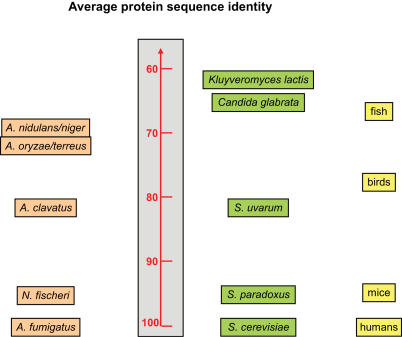
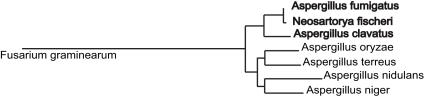
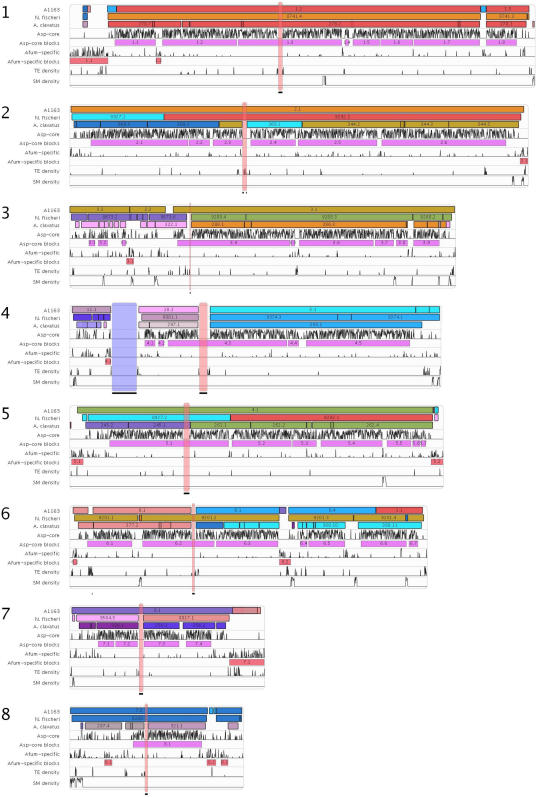
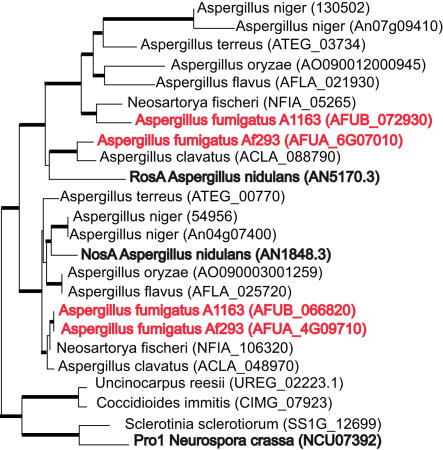
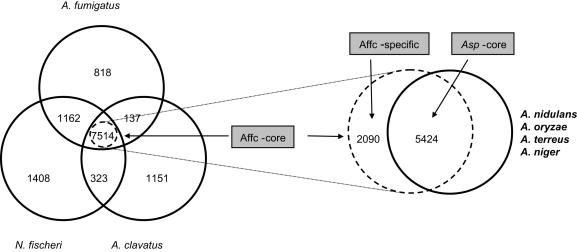
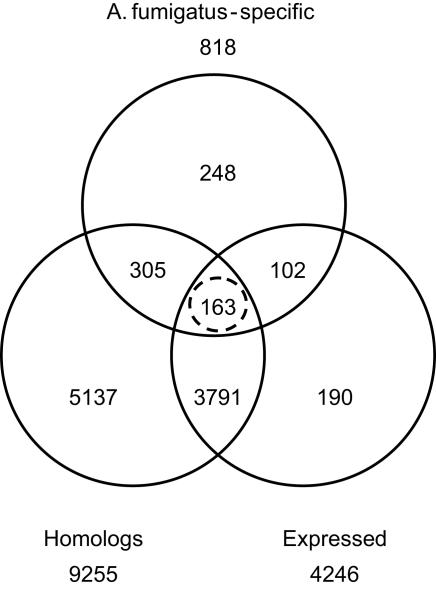
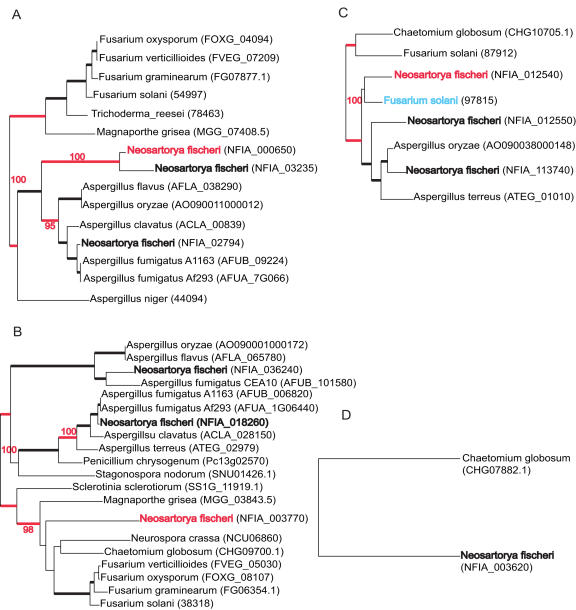
We present the genome sequences of a new clinical isolate of the important human pathogen, Aspergillus fumigatus, A1163, and two closely related but rarely pathogenic species, Neosartorya fischeri NRRL181 and Aspergillus clavatus NRRL1. Comparative genomic analysis of A1163 with the recently sequenced A. fumigatus isolate Af293 has identified core, variable and up to 2% unique genes in each genome. While the core genes are 99.8% identical at the nucleotide level, identity for variable genes can be as low 40%. The most divergent loci appear to contain heterokaryon incompatibility (het) genes associated with fungal programmed cell death such as developmental regulator rosA. Cross-species comparison has revealed that 8.5%, 13.5% and 12.6%, respectively, of A. fumigatus, N. fischeri and A. clavatus genes are species-specific. These genes are significantly smaller in size than core genes, contain fewer exons and exhibit a subtelomeric bias. Most of them cluster together in 13 chromosomal islands, which are enriched for pseudogenes, transposons and other repetitive elements. At least 20% of A. fumigatus-specific genes appear to be functional and involved in carbohydrate and chitin catabolism, transport, detoxification, secondary metabolism and other functions that may facilitate the adaptation to heterogeneous environments such as soil or a mammalian host. Contrary to what was suggested previously, their origin cannot be attributed to horizontal gene transfer (HGT), but instead is likely to involve duplication, diversification and differential gene loss (DDL). The role of duplication in the origin of lineage-specific genes is further underlined by the discovery of genomic islands that seem to function as designated "gene dumps" and, perhaps, simultaneously, as "gene factories".
Overview
The claims and statistics of this paper haven’t been checked yet.
Free: it reads the open-access text and checks the first 5 claims that cite a source we can check. Create a free account to check every claim.
Integrity signals
Registry
Cites
Statistics
Figures
Verification
Claims the paper makes
The claims and statistics of this paper haven’t been checked yet.
Free: it reads the open-access text and checks the first 5 claims that cite a source we can check. Create a free account to check every claim.
Claims other papers make about this one
Each is checked against this paper’s own text: does it say what the citing paper says it does?
The source backs part of the claim, not all of it — or backs it for a different population, condition or comparison.
In the citing paper
“Most of the studies have been performed with Neosartorya fischeri, a species very closely related taxonomically to A. fumigatus, which produced ascospores abundantly, in contrast to A. fumigatus (506).”
From Aspergillus fumigatus and Aspergillosis in 2019 (2019) · cites this paper as [506]
Experimental — accuracy not yet measured
Self-check
Percentages, sums and reported differences re-computed from the paper’s own numbers.
The self-check needs the paper’s full text.
Citations
Cites
Thompson, J. D., Higgins, D. G., & Gibson, T. J. (1994) · Nucleic Acids Research · doi:10.1093/nar/22.22.4673 · Cited by 64,617 · cited 1×
“Sequences were aligned using ClustalW [71].”
MUSCLE: multiple sequence alignment with high accuracy and high throughput
Edgar, R. C. (2004) · Nucleic Acids Research · doi:10.1093/nar/gkh340 · Cited by 44,662
Gene Ontology: tool for the unification of biology
Ashburner, M., Ball, C. A., Blake, J. A., Botstein, D., Butler, H., Cherry, J. M., Davis, A. P., Dolinski, K., Dwight, S. S., Eppig, J. T., et al. (2000) · Nature Genetics · doi:10.1038/75556 · Cited by 43,206
A Simple, Fast, and Accurate Algorithm to Estimate Large Phylogenies by Maximum Likelihood
Guindon, S., & Gascuel, O. (2003) · Systematic Biology · doi:10.1080/10635150390235520 · Cited by 16,806
Selection of Conserved Blocks from Multiple Alignments for Their Use in Phylogenetic Analysis
Castresana, J. (2000) · Molecular Biology and Evolution · doi:10.1093/oxfordjournals.molbev.a026334 · Cited by 10,508
Ohno, S. (1970) · doi:10.1007/978-3-642-86659-3 · Cited by 7,833
Whole-Genome Random Sequencing and Assembly of Haemophilus influenzae Rd
Fleischmann, R. D., Adams, M. D., White, O., Clayton, R. A., Kirkness, E. F., Kerlavage, A. R., Bult, C. J., Tomb, J.-F., Dougherty, B. A., Merrick, J. M., et al. (1995) · Science · doi:10.1126/science.7542800 · Cited by 5,654
Self-citationPAML: a program package for phylogenetic analysis by maximum likelihood
Yang, Z. (1997) · Bioinformatics · doi:10.1093/bioinformatics/13.5.555 · Cited by 5,373
Haas, B. J., Salzberg, S. L., Zhu, W., Pertea, M., Allen, J. E., Orvis, J., White, O., Buell, C. R., & Wortman, J. R. (2008) · Genome Biology · doi:10.1186/gb-2008-9-1-r7 · Cited by 4,079
Self-citationAspergillus fumigatus and Aspergillosis
Latgé, J.-P. (1999) · Clinical Microbiology Reviews · doi:10.1128/cmr.12.2.310 · Cited by 2,307 · cited 1×
“Aspergillus fumigatus is exceptional amongst the aspergilli in being both a primary and opportunistic pathogen as well as a major allergen associated with severe asthma and sinusitis [1–3].”
Background
Cited by
Items 401–500 of 510
Molecular Evolution of Aspergillus
Flores‐Gallegos, A. C., Veana, F., Michel, M. R., Lara-Victoriano, F., & Rodríguez-Herrera, R. (2016) · Elsevier eBooks · doi:10.1016/b978-0-444-63505-1.00003-8 · Cited by 6
Genetics of scleroglucan production by Sclerotium rolfsii
Schmid, J. (2011) · DepositOnce · doi:10.14279/depositonce-2748 · Cited by 4
“Analysis of their genomes has shown that there is only 68% of amino acids identity shared by all three species (Galagan et al. 2005), an evolutionary distance comparable to that between human and fish (Dujon et al. 2004; Fedorova et al. 2008).”
BackgroundMancha gris de la hoja del tomate: identificación, biología y genómica del agente etiológico
Franco, M. E. E. (2019) · El Servicio de Difusión de la Creación Intelectual (National University of La Plata) · doi:10.35537/10915/73593 · Cited by 4
de Andrade, A. C. M. M., Oliveira, N. L., Silva, A. E. N. E., Vaz, L. G., Martins, F. R. B., Lopes, M. E., Torres, L., Queiroz‐Junior, C. M., Russo, R. C., dos Santos, L. M., et al. (2024) · Inflammation Research · doi:10.1007/s00011-024-01895-4 · Cited by 3
“To determine the impact of probiotic intake on fungal pulmonary infection, male BALB/c AnNCrl mice were treated and infected intranasally with Aspergillus fumigatus A1163 strain [24].”
Schobert, J., Illmer, P., Vahedi‐Shahandashti, R., & Lass‐Flörl, C. (2025) · Microorganisms · doi:10.3390/microorganisms13061218 · Cited by 3
“The rise in invasive fungal infections caused by Aspergillus species has become a growing concern, particularly among immunocompromised patients, due to the associated high morbidity and mortality [1,2].”
Puerner, C. T. S., Morelli, K. A., Kerkaert, J. D., Jones, J. T., Quinn, K. G., DeMichaelis, N., Vellanki, S., Liao, C., & Cramer, R. A. (2025) · mSphere · doi:10.1128/msphere.00752-25 · Cited by 8
Kern, L., & Linkies, A. (2019) · Forest Pathology · doi:10.1111/efp.12511 · Cited by 3
Martín, J. F., & Liras, P. (2019) · Springer eBooks · doi:10.1007/978-3-030-21862-1_14 · Cited by 8
Jehangir, M., & Ahmad, S. F. (2013) · International Journal on Bioinformatics & Biosciences · doi:10.5121/ijbb.2013.3102 · Cited by 3
“The genome of Neosartorya fischeri consists of 80% intron and 47% coding gene have been studied [5].”
BackgroundTAXONOMIA POLIFÁSICA PARA IDENTIFICAÇÃO DE ASPERGILLUS SEÇÃO FLAVI: UMA REVISÃO
da Silva, F. C., Chalfoun, S. M., Batista, L. R., Santos, C. R., & Lima, N. (2015) · Revista Ifes Ciência · doi:10.36524/ric.v1i1.235 · Cited by 3
“Na verdade, os genomas de várias espécies de Aspergillus estão concluídos (FEDOROVA et al., 2008; GALAGAN et al., 2005; MACHIDA et al., 2005; NIERMAN et al., 2005; PAYNE et al., 2006; ROKAS et al., 2007) e sequências de inúmeras linhagens encontram-se disponíveis.”
Reconstructing Gene Histories in Ascomycota Fungi
Wapinski, I., & Regev, A. (2010) · Methods in enzymology on CD-ROM/Methods in enzymology · doi:10.1016/s0076-6879(10)70018-5 · Cited by 3
“We discarded singleton ORFs for most of our analyses, but recent works by others ( e.g. , Fedorova et al ., 2008; Kasuga et al ., 2009; Khaldi and Wolfe, 2008; Li et al ., 2008) have explored the origins and roles of these genes in different species.”
MethodConceptual and Empirical Investigations of Eukaryotic Transposable Element Evolution
Elliott, T. A. (2017) · The Atrium (University of Guelph) · doi:10.13140/rg.2.2.16651.49446 · Cited by 4
Pathogenicity is associated with population structure in a fungal pathogen of humansPreprint
Hatmaker, E. A., Barber, A. E., Drott, M. T., Sauters, T. J. C., Alastruey‐Izquierdo, A., Garcia‐Hermoso, D., Kurzai, O., & Rokas, A. (2024) · bioRxiv (Cold Spring Harbor Laboratory) · doi:10.1101/2024.07.05.602241 · Cited by 3
Xu, L., Wen, T.-T., Chen, C.-Y., Sun, L., Liu, Z.-Y., Wang, H., Sun, W.-J., & Cui, F. (2026) · Journal of Agricultural and Food Chemistry · doi:10.1021/acs.jafc.5c16146 · Cited by 4
Breaking the mould: cellulose in the cell walls of the Ophiostomatales
Marx, B., van Dijk, A., Steenkamp, E. T., Wingfield, M. J., & Wingfield, B. D. (2026) · Fungal Biology Reviews · doi:10.1016/j.fbr.2026.100489 · Cited by 2
Yoshino-Yasuda, S., Fujino, E., Matsui, J., Ono, N., Kato, M., & Kitamoto, N. (2013) · Food Science and Technology Research · doi:10.3136/fstr.19.505 · Cited by 2
“AmyR binds the CGGN8AGG sequence at approximately -200 in the taaG2 gene promoter which is required for inducible expression by starch or maltose (Petersen et al., 1999, Gomi et al., 2000, Tani et al., 2001a, Itoh et al., 2004).”
BackgroundMethodInfluentialLong-read Sequencing and de novo Genome Assembly of Three Aspergillus fumigatus Genomes
Hemmings, S., Rhodes, J. L., & Fisher, M. C. (2023) · Mycopathologia · doi:10.1007/s11046-023-00740-2 · Cited by 3
“Average nucleotide identity (ANI) between Af293 and A1163 was calculating to be 99.69% while ANI for the two Clade A isolates (C6, C87) compared to the Clade B isolate (E142) were calculated to be 99.64% and 99.66% respectively centrifuged (5000 rpm for 10 min) and resuspended in Yeast Cell Lysis Solution (Biosearch T…”
BackgroundInfluentialCeron‐Noriega, A., Schoonenberg, V. A. C., Butter, F., & Levin, M. (2023) · Genome Biology and Evolution · doi:10.1093/gbe/evad187 · Cited by 4
“…processes in comparative genomics (Clark et al. 2003; Chuang and Li 2004; Felsenstein and Felenstein 2004; Stark et al. 2007; Egan et al. 2008; Fedorova et al. 2008; Sánchez et al. 2011; Pan et al. 2013; Parker et al. 2013; Li et al. 2014; Bast et al. 2018; Glover et al. 2019; Liu et al.…”
BackgroundGenome-Wide Analysis of the Cytochromes P450 Gene Family in Aspergillus Oryzae
Zeng, Z., Wu, Q., He, B., & Zeng, B. (2018) · International Conference on Computational Biology and Bioinformatics (ICCBB) · doi:10.1145/3290818.3290828 · Cited by 2
“In Aspergillus nidulans, a total of 111 CYP genes were identified, 3 of which were previously unknown and 21 of which are unique [8].”
BackgroundSubtelomeres of Aspergillus Species
Bignell, E. (2013) · Springer eBooks · doi:10.1007/978-3-642-41566-1_6 · Cited by 3
Alcázar‐Fuoli, L., Cairns, T. C., López, J. F., Žonja, B., Pérez, S., Barceló, ., Igarashi, Y., Bowyer, P., & Bignell, E. (2014) · PLoS ONE · doi:10.1371/journal.pone.0111875 · Cited by 3
“fumigatus isolates identified the number of unique genes in each genome as up to 2% of total genomic cohorts [55].”
BackgroundSelf-citationLosada, L. C., Ghedin, E., Morris, A., Chu, H. W., & Nierman, W. C. (2010) · Springer eBooks · doi:10.1007/978-1-4419-7089-3_7 · Cited by 3
“While specific IgE antibody RAST and precipitin assays can be prepared using allergen prepared from the isolated species and correlated with the clinical presentation of allergic bronchopulmonary mycoses, these assays have not been commonly used to characterize the clinical significance of these fungal species recover…”
BackgroundSelf-citationCodon models applied to the study of fungal genomes
Aguileta, G., & Giraud, T. (2012) · Oxford University Press eBooks · doi:10.1093/acprof:osobl/9780199601165.003.0012 · Cited by 2
“Remarkably, allergic human hosts also respond abnormally to Aspergillus fumigatus, developing lung and sinus disease or aspergillosis (Fedorova et al., 2008).”
BackgroundUnderstanding the Diversity of Aspergillus by Next-Generation Sequencing
Shamim, M., Kumar, M., Kumar, R. R., Pandey, P., Srivastava, D., Kumar, D., Khan, N. A., Kumar, R. R., & Singh, K. N. (2016) · Elsevier eBooks · doi:10.1016/b978-0-444-63505-1.00002-6 · Cited by 3
A Matter of Scale and Dimensions: Chromatin of Chromosome Landmarks in the Fungi
Erlendson, A. A., Friedman, S., & Freitag, M. (2017) · ASM Press eBooks · doi:10.1128/9781555819583.ch27 · Cited by 2
Niu, J., Ram, A. F. J., & Punt, P. J. (2020) · Grand challenges in biology and biotechnology · doi:10.1007/978-3-030-29541-7_8 · Cited by 2
Kayode, O. A., Caroline, O. B., Lateefat, A. A., Abiodun, I. B., Ikosi, I. J., Olusoji, I. M., & Oladipo, A. O. (2020) · Malaysian Journal of Microbiology · doi:10.21161/mjm.180234 · Cited by 2
Sialic acid metabolism in the opportunistic fungal pathogen, Aspergillus fumigatus
Yeung, J. H. F. (2015) · Summit (Simon Fraser University) · Cited by 5
Fusarium solani species complex genomes reveal bases of compartmentalisation and animal pathogenesisPreprint
Hoh, D. Z., Lee, H., Wada, N., Liu, W., Lu, M., Lai, C., Ke, H., Sun, P.-F., Tang, S., Chung, W., et al. (2022) · bioRxiv (Cold Spring Harbor Laboratory) · doi:10.1101/2022.03.22.485422 · Cited by 2
Auxier, B., Zhang, J., Marquez, F. R., Senden, K., van den Heuvel, J., Aanen, D. K., Snelders, E., & Debets, A. J. M. (2022) · bioRxiv (Cold Spring Harbor Laboratory) · doi:10.1101/2022.11.25.517501 · Cited by 2
“Using bioinformatic tools, sequence divergence combined with gene function information has been used as criteria to identify putative het loci in A. fumigatus (Fedorova et al. 2008).”
BackgroundMethodPuerner, C., Morelli, K., Kerkaert, J. D., Jones, J. T., Quinn, K., Vellanki, S., & Cramer, R. (2025) · bioRxiv · doi:10.1101/2025.06.02.657448 · Cited by 2
“%) to the A1163 reference genome (Fedorova et al., 2008).”
Lehmann, A., Aguilar-Ramírez, E., Keller, N. P., & Heitman, J. (2025) · bioRxiv (Cold Spring Harbor Laboratory) · doi:10.1101/2025.09.29.679244 · Cited by 2
Advances in Genomics of Human Fungal Pathogens
Kollath, D. R., Teixeira, M. D. M., & Barker, B. M. (2018) · Population genomics · doi:10.1007/13836_2018_41 · Cited by 5
Starship Discovery: A Collaborative Approach to Uncover Massive Transposable Elements
Ament‐Velásquez, S. L., Gluck‐Thaler, E., Urquhart, A. S., McDonald, M. C., & Vogan, A. A. (2024) · The mycota · doi:10.1007/978-3-031-75666-5_1 · Cited by 1
Current Approaches in Genome Assembly of Human Fungal Pathogens
Rhodes, J. L. (2025) · Methods in molecular biology · doi:10.1007/978-1-0716-4702-8_11 · Cited by 1
Martin–Souto, L., Abio-Dorronsoro, L., Areitio, M., Aparicio-Fernandez, L., Rodriguez-Erenaga, O., Martín-Gómez, M. T., Antoran, A., Rementería, A., Buldain, I., & Ramirez‐Garcia, A. (2025) · Journal of Proteome Research · doi:10.1021/acs.jproteome.5c00260 · Cited by 1
Koundal, P., Manhas, S., Aman, S., Haque, S., Singh, B., Mohammed, S. A., Oellerich, M., Tuli, H. S., Ramniwas, S., Dangi, M., et al. (2026) · Annals of Clinical Microbiology and Antimicrobials · doi:10.1186/s12941-025-00846-z · Cited by 1
Human Dectin-1- and Dectin-2-targeted DectiSomes are effective against diverse pathogenic fungi
Ambati, S., Lin, X., Lewis, Z., PETER, J., & Meagher, R. B. (2026) · Antimicrobial Agents and Chemotherapy · doi:10.1128/aac.01689-25 · Cited by 2
“A. fumigatus CEA10 (54, 55) was grown in Vogel’s minimal medium (56) + 1% glucose + 100 µg/mL kanamycin and streptomycin (22).”
Lehmann, A., Aguilar-Ramírez, E., Keller, N. P., & Heitman, J. (2026) · Current Biology · doi:10.1016/j.cub.2026.05.047 · Cited by 4
Ament‐Velásquez, S. L., Bendett, C., Gluck‐Thaler, E., Daskalov, A., & Auxier, B. (2026) · Fungal Biology Reviews · doi:10.1016/j.fbr.2026.100499 · Cited by 1
Lameu, S. D. C., Galvão, M. H., Mello, I. T., & Squina, F. M. (2026) · Journal of Fungi · doi:10.3390/jof12080587 · Cited by 3
“Comparative genomic analyses of A. fumigatus , A. nidulans , and A. oryzae have revealed substantial genetic diversity among these species, providing an evolutionary framework for understanding the diversification of hydrophobin functions and their adaptation to distinct ecological niches [102–104].”
Genome Plasticity of Aspergillus Species
Heinekamp, T., & Brakhage, A. A. (2014) · ASM Press eBooks · doi:10.1128/9781555817213.ch19 · Cited by 1
Proteomics of Filamentous Fungi
van Passel, M. W. J., Schaap, P. J., & de Graaff, L. H. (2012) · Springer eBooks · doi:10.1007/978-1-4614-5626-1_28 · Cited by 1
Filamentous Fungi Fermentation
Nørregaard, A., Stocks, S. M., Woodley, J. M., & Gernaey, K. V. (2014) · Wiley eBooks · doi:10.1002/9783527683321.ch03 · Cited by 2
How transposons drive evolution of virulence in a fungal pathogenPreprint
Faino, L., Seidl, M. F., Shi‐Kunne, X., Pauper, M., van den Berg, G. C. M., Wittenberg, A. H. J., & Thomma, B. P. H. J. (2016) · bioRxiv (Cold Spring Harbor Laboratory) · doi:10.1101/038315 · Cited by 1
“…concern particular regions that are either embedded within the core chromosomes or reside on conditionally dispensable chromosomes (Thon et al. 2006; Fedorova et al. 2008; Haas et al. 2009; Ma et al. 2010; Goodwin et al. 2011; Klosterman et al. 2011; Rouxel et al. 2011; de Jonge et al. 2013).”
BackgroundGenômica comparativa de cepas de Aspergillus terreus visando a produção de lovastatina
Rocha, R. T. (2016) · RIUnB Institutional Repository (University of Brasília) · doi:10.26512/2016.12.d.23117 · Cited by 1
Steenwyk, J. L., Mead, M. E., Knowles, S. L., Raja, H. A., Roberts, C. D., Bader, O., Houbraken, J. A. M. P., Goldman, G. H., Oberlies, N. H., & Rokas, A. (2020) · bioRxiv (Cold Spring Harbor Laboratory) · doi:10.1101/2020.04.09.033902 · Cited by 1
“The power of pathogen-nonpathogen comparative genomics is best utilized when examining closely related species (Fedorova et al., 2008; Jackson et al., 2011; Moran et al., 2011; Mead et al., 2019a; Rokas et al., 2020a).”
BackgroundSelf-citationReiss, E., Shadomy, H. J., & Lyon, G. M. (2011) · Wiley eBooks · doi:10.1002/9781118101773.ch14 · Cited by 3
Evolution Of Nonribosomal Peptide Synthetase Proteins Involved In Secondary Metabolism In Fungi
Bushley, K. E. (2009) · eCommons (Cornell University) · Cited by 1
Puttikamonkul, S. (2012) · Montana State University ScholarWorks (Montana State University)
Prospecção de genes biossintéticos de policetídeos a partir de fungos isolados de cana-de-açúcar.
Rojas, J. D. R. (2010) · Digital Library of Theses and Dissertations (Universidade de São Paulo) · doi:10.11606/t.87.2010.tde-22122010-162031 · Cited by 2
Phylogenetics and Evolution of Virulence in the Kingdom Fungi
Garcia-Solache, M. A., & Casadevall, A. (2012) · Wiley eBooks · doi:10.1002/9781118308165.ch4 · Cited by 1
Genetic, Genomic, and Molecular Approaches to Define Virulence of Aspergillus Fumigatus
Muszkieta, L., Steinbach, W. J., & Latgé, J. (2012) · Wiley eBooks · doi:10.1002/9781118308165.ch27
Nitrate transport and assimilation in Aspergillus nidulans
Akhtar, N. (2012) · St Andrews Research Repository (St Andrews Research Repository)
The Aspergillus nidulans Galf biosynthesis pathway is a promising drug target
El-Ganiny, A. M. (2011) · University Library - University of Saskatchewan (University of Saskatchewan) · Cited by 1
In Silico Genomics of Fungal Oxidoreductase Genes
Détry, N. (2015) · Helda - University of Helsinki Institutional Repository
METHODS FOR HIGH-THROUGHPUT COMPARATIVE GENOMICS AND DISTRIBUTED SEQUENCE ANALYSIS
Angiuoli, S. V. (2011) · University Libraries (University of Maryland)
Self-citationAlfonso, S. Z.-P., Alicia, L. D., Horacio, C.-C., Conejo-Saucedo, U., & Mara, G. Z.-P. (2014) · African Journal of Microbiology Research · doi:10.5897/ajmr2013.6231
Current Trends in Fungal Genomics and Biology
Magill, C. (2012) · Fungal Genomics & Biology · doi:10.4172/2165-8056.1000e103
“A common feature is to find that the genomic differences between pathogens and nonpathogens can be traced to ‘islands’ of transposon-containing sequences in the pathogen DNA, suggesting gene duplication and following changes have contributed to the evolution of virulence [7,12].”
BackgroundMolecular mechanisms of azole resistance in Aspergillus fumigatus
Camps, S. M. T. (2013) · Radboud Repository (Radboud University)
Identification of culture-negative fungi in blood and respiratory samples
Sidiq, F. P. (2014) · OhioLink ETD Center (Ohio Library and Information Network)
Gleeson, G. (2015) · University of New Hampshire Scholars Repository (University of New Hampshire at Manchester)
Current Status of Genomics Research on Mycotoxigenic
Jurick, W. M., & Bennett, J. W. (2015)
Genome-wide characterization of folate transporter proteins of eukaryotic pathogens
Falade, M. O., & Otarigho, B. (2017) · F1000Research · doi:10.12688/f1000research.10561.1
Characterization of potential drug targeting folate transporter proteins from Eukaryotic Pathogens
Falade, M. O., & Otarigho, B. (2017) · F1000Research · doi:10.12688/f1000research.10561.2
A Rapid Method for Secondary-Structure Analysis of the Inulinases of Different Microbial Producers
Holyavka, M. G., Artyukhov, V. G., & Makin, S. M. (2018) · BIOPHYSICS · doi:10.1134/s0006350918010189
Wu, M.-Y., Mead, M. E., Lee, M.-K., Kim, S., Rokas, A., & Yu, J. (2018) · bioRxiv (Cold Spring Harbor Laboratory) · doi:10.1101/331868
“68 The three distantly related species Aspergillus nidulans, Aspergillus flavus, and Aspergillus 69 fumigatus, whose pairwise levels of genome similarity are similar to the genomic similarity 70 between the human and fish genomes (6), form distinct conidiophores with varying sizes of 71”
BackgroundNovel Trichomeristogenous Development of Pycnidium in Truncatella angustata BPF5 (Coelomycete)
Sahay, S. (2018) · Proceedings of the National Academy of Sciences India Section B Biological Sciences · doi:10.1007/s40011-018-1016-7
Ma, L., Chen, Z., Huang, D. W., Cissé, O. H., Rothenburger, J. L., Latinne, A., Bishop, L. R., Blair, R. V., Brenchley, J. M., Chabé, M., et al. (2019) · bioRxiv (Cold Spring Harbor Laboratory) · doi:10.1101/814236
“Their positioning is consistent with the notion that subtelomeric regions are 338 favorable locations for fungal pathogens to acquire novel genes and foster evolution (37, 38).”
BackgroundSEQUENCED STRAINS OF ASPERGILLUS SPECIES
Prakash, R., & Jha, S. (2020) · GLOBAL JOURNAL FOR RESEARCH ANALYSIS · doi:10.36106/gjra/8109578
Interaction between the opportunistic pathogen Aspergillus fumigatus and its host
Keizer, E. (2021) · Utrecht University Repository (Utrecht University) · doi:10.33540/632
Lubbers, R. J. M. (2021) · Utrecht University Repository (Utrecht University) · doi:10.33540/582 · Cited by 3
Draft Genome Sequence of the Ectomycorrhizal Fungus Astraeus odoratus from Northern Thailand
Kijpornyongpan, T., & Juntachai, W. (2021) · Microbiology Resource Announcements · doi:10.1128/mra.00044-21
Avaliação da produção e composição de vesículas extracelulares de Aspergillus fumigatus
Pessoni, A. M. (2021) · Digital Library of Theses and Dissertations (Universidade de São Paulo) · doi:10.11606/d.17.2021.tde-08092021-112744
Brown, A. C., Mead, M. E., Steenwyk, J. L., Goldman, G. H., & Rokas, A. (2021) · bioRxiv (Cold Spring Harbor Laboratory) · doi:10.1101/2021.10.26.465918
“…A. fumigatus Af293 (Nierman et al., 2005), A. fumigatus A1163 (Fedorova et al., 2008), A. oerlinghausenensis CBS139183 (Steenwyk et al., 2020), A. fischeri NRRL1881 (Fedorova et al., 2008), A. lentulus IFM54703 (Kusuya et al., 2016), A. novofumigatus IBT 16806 (GenBank accession: MSZS00000000.”
BackgroundInfluentialSelf-citationRech, G. E. (2014) · Gredos (University of Salamanca) · doi:10.14201/gredos.124203
Ohno, N. (2020) · Elsevier eBooks · doi:10.1016/b978-0-12-819475-1.00010-9
Telomere to telomere sequence of model Aspergillus fumigatus genomesPreprint
Bowyer, P., Currin, A., Delneri, D., & Fraczek, M. G. (2022) · bioRxiv (Cold Spring Harbor Laboratory) · doi:10.1101/2022.03.26.485923
“In particular, A1163 was not sequenced at sufficient depth to perform a full assembly and remains as poorly organised contigs and scaffolds (8).”
BackgroundResultInfluentialSelf-citationCánovas, D. (2018) · Faculty Opinions – Post-Publication Peer Review of the Biomedical Literature · doi:10.3410/f.733852413.793551878
Fungal genomics and transcriptomics
Munro, C. A., & Wilson, D. (2017) · Oxford University Press eBooks · doi:10.1093/med/9780198755388.003.0006
Hatmaker, E. A., Rangel‐Grimaldo, M., Raja, H. A., Pourhadi, H., Knowles, S. L., Fuller, K. K., Adams, E. M., Lightfoot, J. D., Bastos, R. W., Goldman, G. H., et al. (2022) · bioRxiv (Cold Spring Harbor Laboratory) · doi:10.1101/2022.07.12.499845
“fumigatus are not close relatives and are 105 in distinct taxonomic sections of Aspergillus, sections Flavi and Fumigati, respectively 106 (18); at the level of genome sequence divergence, the two species are as similar to 107 each other as humans are to fish (34).”
BackgroundSelf-citationda Rocha, V. D. (2023) · doi:10.47328/ufvbbt.2023.467 · Cited by 1
Luperini, R. S. (2023) · Digital Library of Theses and Dissertations (Universidade de São Paulo) · doi:10.11606/d.17.2023.tde-17102023-105339
Brown, A. C., Steenwyk, J. L., & Rokas, A. (2024) · bioRxiv (Cold Spring Harbor Laboratory) · doi:10.1101/2024.01.08.574724
Li, H., Wang, D., Zhang, D., Geng, Q., Li, J., Sheng, R., Xue, H.-S., Zhu, H., Kong, Z., Dai, X., et al. (2022) · Figshare · doi:10.6084/m9.figshare.19933068
Li, H., Wang, D., Zhang, D., Geng, Q., Li, J., Sheng, R., Xue, H.-S., Zhu, H., Kong, Z., Dai, X., et al. (2022) · Figshare · doi:10.6084/m9.figshare.19933062
Tanaka, Y., Asagiri, I., Komiya, R., Yamazaki, H., Yagi, A., Uchida, R., & Sasaki, M. (2024) · Research Square · doi:10.21203/rs.3.rs-4435109/v1
Singh, B., Koundal, P., Manhas, S., Dangi, M., Sharma, G. L., Oellerich, M., Bhadoria, D. P., Tuli, H. S., Haque, S., Mathkor, D. M., et al. (2024) · Research Square · doi:10.21203/rs.3.rs-4526742/v1
Moussa, T. A. A., Zaky, M. S., & Al-Qaysi, S. A. S. (2024) · Elsevier eBooks · doi:10.1016/b978-0-443-18866-4.00003-1
Zhang, J. B., Chen, W., Yang, Y., & Liu, Z. (2025) · Green Chemistry · doi:10.1039/d5gc01323b · Cited by 1
Schrettenbrunner, L., Maufrais, C., Janbon, G., Wallace, E. W. J., & Blango, M. G. (2025) · bioRxiv (Cold Spring Harbor Laboratory) · doi:10.1101/2025.07.04.662582
“A second commonly used laboratory strain of the CEA10 lineage (A1163) was sequenced in 2008 (Fedorova et al. 2008), and the genome has been further improved and expanded by additional sequencing efforts, including a major expansion in sequenced strains through study of the pangenome (Barber et al.…”
Gong, X., Ge, X., Qin, Q., Wang, B., Wang, L., Jin, C., & Fang, W. (2025) · Microbiology Spectrum · doi:10.1128/spectrum.00122-25 · Cited by 1
“Although both strains have eight chromosomes and over 97% gene identity, significant genetic variation exists (62).”
Alam, K. (2014) · University Library - University of Saskatchewan (University of Saskatchewan)
Additional file 3 of IDEA: Interactive Display for Evolutionary Analyses
Simons, R., Mahurkar, A., Crabtree, J., Badger, J. H., Carlton, J. M., & Silva, J. C. (2024) · Figshare · doi:10.6084/m9.figshare.26540193
Self-citationHoh, D. Z., Lee, H.-H., Wada, N., Liu, W.-A., Lu, M. R., ChengKuo, L., Ke, H.-M., Sun, P.-F., Tang, S.-L., Chung, W.-H., et al. (2022) · Figshare · doi:10.6084/m9.figshare.21376432
Additional file 4 of IDEA: Interactive Display for Evolutionary Analyses
Simons, R., Mahurkar, A., Crabtree, J., Badger, J. H., Carlton, J. M., & Silva, J. C. (2024) · Figshare · doi:10.6084/m9.figshare.26540196
Self-citationAdditional file 1 of IDEA: Interactive Display for Evolutionary Analyses
Simons, R., Mahurkar, A., Crabtree, J., Badger, J. H., Carlton, J. M., & Silva, J. C. (2024) · Figshare · doi:10.6084/m9.figshare.25123981
Self-citationAdditional file 2 of IDEA: Interactive Display for Evolutionary Analyses
Simons, R., Mahurkar, A., Crabtree, J., Badger, J. H., Carlton, J. M., & Silva, J. C. (2024) · Figshare · doi:10.6084/m9.figshare.25124050
Self-citation
Metadata
- Authors
- Fedorova, N. D., Khaldi, N., Joardar, V. S., Maiti, R., Amedeo, P., Anderson, M. J., Crabtree, J., Silva, J. C., Badger, J. H., Albarraq, A., Angiuoli, S., Bussey, H., Bowyer, P., Cotty, P. J., Dyer, P. S., Egan, A., Galens, K., Fraser-Liggett, C. M., Haas, B. J., Inman, J. M., Kent, R., Lemieux, S., Malavazi, I., Orvis, J., Roemer, T., Ronning, C. M., Sundaram, J. P., Sutton, G., Turner, G., Venter, J. C., White, O. R., Whitty, B. R., Youngman, P., Wolfe, K. H., Goldman, G. H., Wortman, J. R., Jiang, B., Denning, D. W., & Nierman, W. C.
- Affiliations
- J. Craig Venter Institute (US)
- Trinity College Dublin (IE)
- University of Manchester (GB)
- McGill University (CA)
- Agricultural Research Service (US)
- University of Nottingham (GB)
- Universidade de São Paulo (BR)
- Merck & Co., Inc., Rahway, NJ, USA (United States) (US)
- University of Sheffield (GB)
- Corresponding author
- Nierman, William C.
- ORCID
- Joardar, Vinita S.
- Amedeo, Paolo
- Anderson, Michael J.
- Crabtree, Jonathan
- Silva, Joana C.
- Badger, Jonathan H.
- Albarraq, Ahmed
- Bowyer, Paul
- Cotty, Peter J.
- Dyer, Paul S.
- Haas, Brian J.
- Inman, Jason M.
- Malavazi, Iran
- Orvis, Joshua
- Venter, J. Craig
- White, Owen R.
- Whitty, Brett R.
- Wolfe, Kenneth H.
- Goldman, Gustavo H.
- Wortman, Jennifer R.
- Jiang, Bo
- Denning, David W.
- Nierman, William C.
- Venue
- PLoS Genetics
- Publisher
- Public Library of Science (PLoS)
- Published
- 2008-04-11
- Volume
- 4
- Issue
- 4
- Pages
- e1000046
- ISSN
- 1553-7390 (ISSN-L)
- 1553-7404
- PMC
- PMC2289846
- OpenAlex
- W2104863787
- Cited by
- 508
- References
- 75
- Citations by year
- 2026: 11 · 2025: 14 · 2024: 20 · 2023: 13 · 2022: 25 · 2021: 27 · 2020: 25 · 2019: 23 · 2018: 28 · 2017: 30 · 2016: 19 · 2015: 34 · 2014: 41 · 2013: 33 · 2012: 32
- FWCI
- 18.26
- Type
- journal article
- Language
- en
- Open access
- gold
- doi.org
- Locations
- PLoS Genetics (publishedVersion, cc-by)
- PubMed Central (publishedVersion, cc-by)
- PubMed (publishedVersion)
- Portuguese National Funding Agency for Science, Research and Technology (RCAAP Project by FCT) (publishedVersion)
- Arrow@dit (Dublin Institute of Technology) (submittedVersion)
- DOAJ (DOAJ: Directory of Open Access Journals) (submittedVersion, cc-by-sa)
- White Rose Research Online (University of Leeds, The University of Sheffield, University of York) (submittedVersion, cc-by)
- Figshare (submittedVersion, cc-by)
- Research Explorer (The University of Manchester) (submittedVersion)
- Funders
- Merck
- Fundação de Amparo à Pesquisa do Estado de São Paulo
- National Institutes of Health (n01ai30071-19-0-3)
- National Institute of Allergy and Infectious Diseases (U01 AI48830, AI30071, R21AI052236, AI052236, N01 AI030071, U01AI048830, N01 AI30071)
- Topics
- Life Sciences › Biochemistry, Genetics and Molecular Biology › Molecular Biology › Fungal and yeast genetics research
- Life Sciences › Agricultural and Biological Sciences › Plant Science › Plant Pathogens and Fungal Diseases
- Health Sciences › Medicine › Infectious Diseases › Antifungal resistance and susceptibility
- Keywords
- Aspergillus fumigatus, genomic islands, Neosartorya fischeri, Aspergillus clavatus, Rosa, species-specific genes, pseudogenes, transposable elements, repetitive elements, gene duplication, horizontal gene transfer, comparative genomics
- MeSH terms
- Allergens, Aspergillus, Aspergillus fumigatus, Fungal Proteins, Humans, Phylogeny, Species Specificity, Virulence, Chromosomes, Fungal, Genome, Fungal, Evolution, Molecular, Eurotiales, Genomic Islands
About these checks
Registry, retraction, Cites and statistics results are computed, not judged, with one exception: a printed reference that no index lists is read once by a model before it counts as a citation error. Claims are extracted by a model and kept only when their quote appears verbatim in the text; each cited source is then checked, with a model’s help, for whether it says what the claim relies on. Those verdicts can be wrong — read the claim’s quote and the cited source before relying on one.
Statistics and arithmetic are recomputed, not judged.
Confidence bands are shown only for fields calibrated on our annotated test set. None is calibrated yet, so no band is shown.
What counts as a claim ›How we measure confidence ›How we check this ›
Are you an author, or do you see a problem with this page? Request a review
Data sources
Bibliographic data: Semantic Scholar, OpenAlex, Crossref.
Contains information from the Semantic Scholar Academic Graph Datasets, made available under the ODC Attribution License (ODC-BY 1.0).
Semantic Scholar’s data is described in: Kinney, R., et al. (2023). The Semantic Scholar Open Data Platform. arXiv:2301.10140.
