

Genomic Islands in the Pathogenic Filamentous Fungus Aspergillus fumigatus
Open accessThe DOI matches its Crossref record; 75 of the 75 references it cites were found in a registry or an index.
Abstract
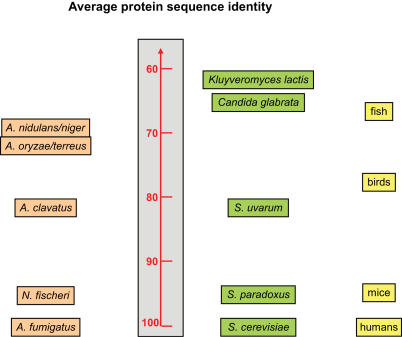
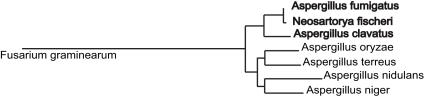
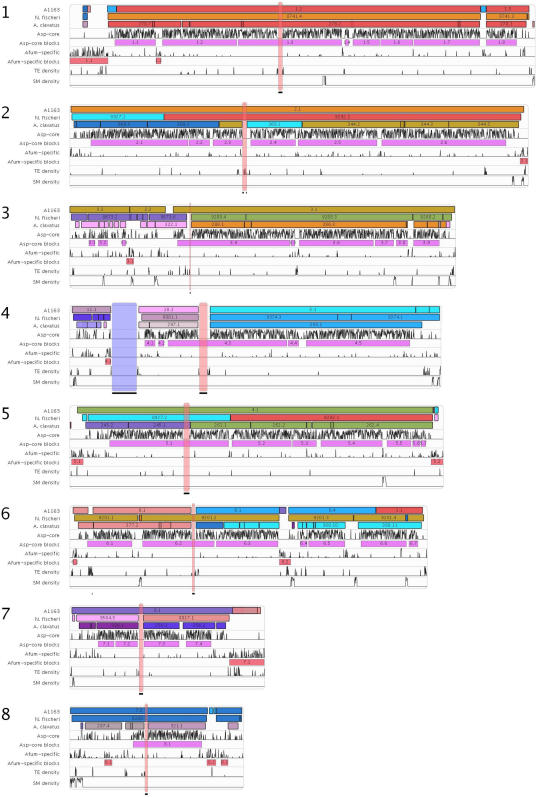
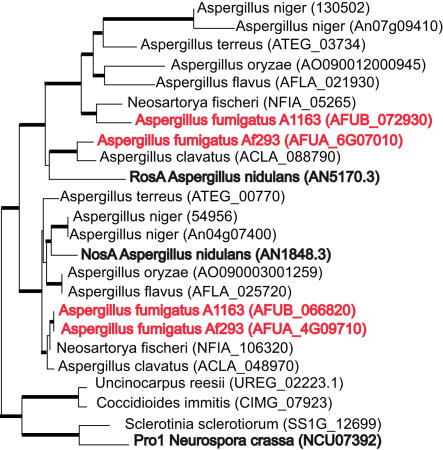
We present the genome sequences of a new clinical isolate of the important human pathogen, Aspergillus fumigatus, A1163, and two closely related but rarely pathogenic species, Neosartorya fischeri NRRL181 and Aspergillus clavatus NRRL1. Comparative genomic analysis of A1163 with the recently sequenced A. fumigatus isolate Af293 has identified core, variable and up to 2% unique genes in each genome. While the core genes are 99.8% identical at the nucleotide level, identity for variable genes can be as low 40%. The most divergent loci appear to contain heterokaryon incompatibility (het) genes associated with fungal programmed cell death such as developmental regulator rosA. Cross-species comparison has revealed that 8.5%, 13.5% and 12.6%, respectively, of A. fumigatus, N. fischeri and A. clavatus genes are species-specific. These genes are significantly smaller in size than core genes, contain fewer exons and exhibit a subtelomeric bias. Most of them cluster together in 13 chromosomal islands, which are enriched for pseudogenes, transposons and other repetitive elements. At least 20% of A. fumigatus-specific genes appear to be functional and involved in carbohydrate and chitin catabolism, transport, detoxification, secondary metabolism and other functions that may facilitate the adaptation to heterogeneous environments such as soil or a mammalian host. Contrary to what was suggested previously, their origin cannot be attributed to horizontal gene transfer (HGT), but instead is likely to involve duplication, diversification and differential gene loss (DDL). The role of duplication in the origin of lineage-specific genes is further underlined by the discovery of genomic islands that seem to function as designated "gene dumps" and, perhaps, simultaneously, as "gene factories".
Overview
The claims and statistics of this paper haven’t been checked yet.
Free: it reads the open-access text and checks the first 5 claims that cite a source we can check. Create a free account to check every claim.
Integrity signals
Registry
Cites
Statistics
Figures
Verification
Claims the paper makes
The claims and statistics of this paper haven’t been checked yet.
Free: it reads the open-access text and checks the first 5 claims that cite a source we can check. Create a free account to check every claim.
Claims other papers make about this one
Each is checked against this paper’s own text: does it say what the citing paper says it does?
The source backs part of the claim, not all of it — or backs it for a different population, condition or comparison.
In the citing paper
“Most of the studies have been performed with Neosartorya fischeri, a species very closely related taxonomically to A. fumigatus, which produced ascospores abundantly, in contrast to A. fumigatus (506).”
From Aspergillus fumigatus and Aspergillosis in 2019 (2019) · cites this paper as [506]
Experimental — accuracy not yet measured
Self-check
Percentages, sums and reported differences re-computed from the paper’s own numbers.
The self-check needs the paper’s full text.
Citations
Cites
Thompson, J. D., Higgins, D. G., & Gibson, T. J. (1994) · Nucleic Acids Research · doi:10.1093/nar/22.22.4673 · Cited by 64,617 · cited 1×
“Sequences were aligned using ClustalW [71].”
MUSCLE: multiple sequence alignment with high accuracy and high throughput
Edgar, R. C. (2004) · Nucleic Acids Research · doi:10.1093/nar/gkh340 · Cited by 44,662
Gene Ontology: tool for the unification of biology
Ashburner, M., Ball, C. A., Blake, J. A., Botstein, D., Butler, H., Cherry, J. M., Davis, A. P., Dolinski, K., Dwight, S. S., Eppig, J. T., et al. (2000) · Nature Genetics · doi:10.1038/75556 · Cited by 43,206
A Simple, Fast, and Accurate Algorithm to Estimate Large Phylogenies by Maximum Likelihood
Guindon, S., & Gascuel, O. (2003) · Systematic Biology · doi:10.1080/10635150390235520 · Cited by 16,806
Selection of Conserved Blocks from Multiple Alignments for Their Use in Phylogenetic Analysis
Castresana, J. (2000) · Molecular Biology and Evolution · doi:10.1093/oxfordjournals.molbev.a026334 · Cited by 10,508
Ohno, S. (1970) · doi:10.1007/978-3-642-86659-3 · Cited by 7,833
Whole-Genome Random Sequencing and Assembly of Haemophilus influenzae Rd
Fleischmann, R. D., Adams, M. D., White, O., Clayton, R. A., Kirkness, E. F., Kerlavage, A. R., Bult, C. J., Tomb, J.-F., Dougherty, B. A., Merrick, J. M., et al. (1995) · Science · doi:10.1126/science.7542800 · Cited by 5,654
Self-citationPAML: a program package for phylogenetic analysis by maximum likelihood
Yang, Z. (1997) · Bioinformatics · doi:10.1093/bioinformatics/13.5.555 · Cited by 5,373
Haas, B. J., Salzberg, S. L., Zhu, W., Pertea, M., Allen, J. E., Orvis, J., White, O., Buell, C. R., & Wortman, J. R. (2008) · Genome Biology · doi:10.1186/gb-2008-9-1-r7 · Cited by 4,079
Self-citationAspergillus fumigatus and Aspergillosis
Latgé, J.-P. (1999) · Clinical Microbiology Reviews · doi:10.1128/cmr.12.2.310 · Cited by 2,307 · cited 1×
“Aspergillus fumigatus is exceptional amongst the aspergilli in being both a primary and opportunistic pathogen as well as a major allergen associated with severe asthma and sinusitis [1–3].”
Background
Cited by
Items 301–400 of 510
van Wyk, S., Wingfield, B. D., Vos, L. D., Santana, Q. C., van der Merwe, N. A., & Steenkamp, E. T. (2018) · IMA Fungus · doi:10.5598/imafungus.2018.09.01.03 · Cited by 17
“Overall, such regions of variability are thought to accelerate genome evolution and plasticity and to promote adaptation (Fedorova et al. 2008, Coleman et al. 2009, Chiara et al. 2015).”
BackgroundKim, W., Park, J.-J., Gang, D. R., Peever, T. L., & Chen, W. (2015) · Eukaryotic Cell · doi:10.1128/ec.00084-15 · Cited by 20
Cloning and characterization of a putative β-glucosidase (NfBGL595) from Neosartorya fischeri
Ramachandran, P., Tiwari, M. K., Singh, R. K., Haw, J.-R., Jeya, M., & Lee, J.-K. (2011) · Process Biochemistry · doi:10.1016/j.procbio.2011.10.015 · Cited by 17
Characterization of a recombinant α-glucuronidase from Aspergillus fumigatus
Rosa, L., Ravanal, M. C., Mardones, W., & Eyzaguirre, J. P. (2013) · Fungal Biology · doi:10.1016/j.funbio.2013.04.002 · Cited by 18
Damak, N., Hadj-Taïeb, N., Bonnin, E., Bacha, A. G. B., & Gargouri, A. F. (2011) · Process Biochemistry · doi:10.1016/j.procbio.2010.12.014 · Cited by 17
The genome sequence of Podospora anserina, a classic model fungus
Paoletti, M., & Saupe, S. J. (2008) · Genome biology · doi:10.1186/gb-2008-9-5-223 · Cited by 17
McCluskey, K., & Baker, S. (2017) · Mycology: An International Journal on Fungal Biology · doi:10.1080/21501203.2017.1281849 · Cited by 18
“With an emphasis on pathogenicity (Fedorova et al. 2008), drug resistance (Mellado et al.”
Mgbeahuruike, A. C., Kovalchuk, A., & Asiegbu, F. O. (2013) · Mycologia · doi:10.3852/13-077 · Cited by 16
“In fungal pathogens, hydrophobins might act as virulence factors to enhance fungal infection (Felipe et al. 2003, Karlsson et al. 2007, Fedorova et al. 2008, Kubicek et al. 2008).”
BackgroundAlmyroudis, N. G., & Segal, B. H. (2010) · Expert Review of Anti-infective Therapy · doi:10.1586/eri.10.141 · Cited by 16
Genome Evolution in Plant Pathogenic and Symbiotic Fungi
Aguileta, G., Hood, M. E., & Giraud, T. (2009) · Cited by 15
He, B., Tu, Y., Hu, Z., Ma, L., Dai, J., Cheng, X., Li, H., Liu, L., & Zeng, B. (2018) · World Journal of Microbiology and Biotechnology · doi:10.1007/s11274-018-2419-6 · Cited by 14
Fourie, A., de Jonge, R., van der Nest, M. A., Duong, T. A., Wingfield, M. J., Wingfield, B. D., & Barnes, I. (2020) · Fungal Genetics and Biology · doi:10.1016/j.fgb.2020.103433 · Cited by 18
Auxier, B., Zhang, J., Marquez, F. R., Senden, K., van den Heuvel, J., Aanen, D. K., Snelders, E., & Debets, A. J. M. (2024) · Molecular Biology and Evolution · doi:10.1093/molbev/msae079 · Cited by 18
“Using bioinformatic tools, sequence divergence combined with gene function information has been used as criteria to identify putative het loci in A. fumigatus (Fedorova et al. 2008).”
BackgroundMethodRamšak, B., Markau, J., Pazen, T., Dahlmann, T. A., Krappmann, S., & Kück, U. (2020) · G3 Genes Genomes Genetics · doi:10.1093/g3journal/jkaa012 · Cited by 16
Keizer, E., Valdes, I. D., McCann, B. L., Bignell, E., Wösten, H. A. B., & de Cock, H. (2022) · mSphere · doi:10.1128/msphere.00874-21 · Cited by 15
“wild-type and derived strains were mapped back to the Af293 reference genome (30), while reads from the CEA10-derived strains were mapped back to the CEA10 reference genome (31).”
Regulation and Heterologous Expression of Lignocellulosic Enzymes in Aspergillus
Dimarogona, M., & Topakas, E. (2016) · Elsevier eBooks · doi:10.1016/b978-0-444-63505-1.00012-9 · Cited by 15
Towards Understanding the Function of Aegerolysins
Kraševec, N., & Skočaj, M. (2022) · Toxins · doi:10.3390/toxins14090629 · Cited by 27
Phylogenomic and Domain Analysis of Iterative Polyketide Synthases in Aspergillus Species
Lin, S.-H., Yoshimoto, M., Lyu, P. C., Tang, C. Y., & Arita, M. (2012) · Evolutionary Bioinformatics · doi:10.4137/ebo.s9796 · Cited by 14
Fungal Secondary Metabolites and Their Fundamental Roles in Human Mycoses
Garvey, G. S., & Keller, N. P. (2010) · Current Fungal Infection Reports · doi:10.1007/s12281-010-0032-8 · Cited by 14
“fumigatus [18] and a microarray analysis with a ΔlaeA strain revealed that 13 clusters were downregulated in one single experimental condition, including the known virulence determinant, gliotoxin [18, 22].”
BackgroundJernerén, F., & Oliw, E. H. (2012) · Lipids · doi:10.1007/s11745-012-3673-2 · Cited by 13
“fumigatus A1163, the second sequenced strain [28], or in other isolates.”
Thakur, R., Shishodia, S. K., Sharma, A., Chauhan, A., Kaur, S., & Shankar, J. (2024) · Current Research in Microbial Sciences · doi:10.1016/j.crmicr.2024.100220 · Cited by 16
“Aspergillus species have become a growing concern to both immunocompetent and immunocompromised individuals on a global scale (Fedorova et al., 2008; Fern ´ andez et al., 2013).”
BackgroundWang, C., Miller, N., Vines, D., Severns, P. M., Momany, M., & Brewer, M. T. (2024) · Applied and Environmental Microbiology · doi:10.1128/aem.02056-23 · Cited by 15
“The promoter regions were aligned and compared with A1163 genomic sequence v43 from Ensembl (55).”
MethodPopulation structure in a fungal human pathogen is potentially linked to pathogenicity
Hatmaker, E. A., Barber, A. E., Drott, M. T., Sauters, T. J. C., Gumilang, A., Alastruey‐Izquierdo, A., Garcia‐Hermoso, D., Eagan, J. L., Keller, N. P., Kontoyiannis, D. P., et al. (2025) · Nature Communications · doi:10.1038/s41467-025-62777-9 · Cited by 15
“Despite belonging to the same genus, these species exhibit high levels of genomic sequence divergence; for example, A. fumigatus and A. fl avus are as diverged as human and fi sh genomes 14 .”
Ionic Liquids as Unforeseen Assets to Fight Life-Threatening Mycotic Diseases
Hartmann, D. O., Petković, M., & Pereira, C. S. (2016) · Frontiers in Microbiology · doi:10.3389/fmicb.2016.00111 · Cited by 15
“There are nearly twenty fully described allergen peptides in this fungus and as many predicted ones (Kurup, 2005; Fedorova et al., 2008).”
BackgroundSchmoll, M., Seiboth, B., Druzhinina, I. S., & Kubicek, C. P. (2014) · Springer eBooks · doi:10.1007/978-3-642-45218-5_10 · Cited by 17
Morita, H., Haruka, A. B. O., Okamoto, A., Maeda, H. A., Yamagata, Y., Kusumoto, K.-I., AMANO, H., Ishida, H., & Takeuchi, M. (2011) · Bioscience Biotechnology and Biochemistry · doi:10.1271/bbb.100749 · Cited by 12
Swilaiman, S. S., O’Gorman, C. M., Du, W., Sugui, J. A., Buono, J. D., Brock, M., Kwon-Chung, K. J., Szakács, G., & Dyer, P. S. (2020) · Journal of Fungi · doi:10.3390/jof6040258 · Cited by 16
Self-citation10 Evolution of Genes for Secondary Metabolism in Fungi
Teichert, I., & Nowrousian, M. (2011) · Springer eBooks · doi:10.1007/978-3-642-19974-5_10 · Cited by 14
Epigenetics of Fungal Secondary Metabolism Related Genes
Wu, M.-Y., & Yu, J. (2015) · Fungal biology · doi:10.1007/978-1-4939-2531-5_3 · Cited by 14
Veselská, T., Svoboda, J., Růžičková, Ž., & Kolařík, M. (2014) · Cytometry Part A · doi:10.1002/cyto.a.22500 · Cited by 14
Trichoderma: Genomic Aspects of Mycoparasitism and Biomass Degradation
Kubicek, C. P., & Druzhinina, I. S. (2013) · Soil biology · doi:10.1007/978-3-642-39339-6_6 · Cited by 13
Differences and Similarities Amongst Pathogenic Aspergillus Species
Guarro, J., Xavier, M. O., & Severo, L. C. (2009) · Springer eBooks · doi:10.1007/978-90-481-2408-4_2 · Cited by 22
Noßmann, M., Boysen, J. M., Krüger, T., König, C. C., Hillmann, F., Münder, T., & Brakhage, A. A. (2018) · Current Genetics · doi:10.1007/s00294-018-0891-z · Cited by 12
Fungal Phytases as Useful Tools in Agricultural Practices
Gocheva, Y. G., Stoyancheva, G. D., Miteva‐Staleva, J., Abrashev, R., Dishliyska, V., Yovchevska, L., Angelova, M., & Krumova, E. T. (2024) · Agronomy · doi:10.3390/agronomy14123029 · Cited by 14
Yoshino-Yasuda, S., Karita, S., Kato, M., & Kitamoto, N. (2012) · Food Science and Technology Research · doi:10.3136/fstr.18.901 · Cited by 11
Gupta, S. K., Srivastava, M., Osmanoğlu, Ö., Xu, Z., Brakhage, A. A., & Dandekar, T. (2021) · Microorganisms · doi:10.3390/microorganisms9102014 · Cited by 15
“fischeri single-copy orthologs (SCOs) to identify virulence mechanisms that may be shared between the two or specific to one of the species [16].”
BackgroundGarcía, J. F., Morales‐Cruz, A., Cochetel, N., Minio, A., Figueroa-Balderas, R. E., Rolshausen, P. E., Baumgartner, K., & Cantù, D. (2023) · Molecular Plant-Microbe Interactions · doi:10.1094/mpmi-09-23-0129-r · Cited by 14
Morphology and Reproductive Mode of Aspergillus fumigatus
Samson, R. A., Varga, J., & Dyer, P. S. (2014) · ASM Press eBooks · doi:10.1128/9781555815523.ch2 · Cited by 11
Self-citationDetecting novel genes with sparse arrays
Arvas, M., Haiminen, N., Smit, B., Rautio, J. J., Vitikainen, M., Wiebe, M. G., Martinez, D., Chee, C. L., Kunkel, J., Sanchez, C., et al. (2010) · Gene · doi:10.1016/j.gene.2010.07.009 · Cited by 11
“Lineage specificity has been proposed to arise in fungi, for example through duplication and divergence (Fedorova et al., 2008), accelerated evolutionary rates (Cai et al., 2006; Kawahara and Imanishi, 2007) and horizontal gene transfer (Khaldi et al., 2008; Lieckfeldt et al., 2000).”
BackgroundKaryotype determination and gene mapping in two clinical isolates ofPenicillium marneffei
Gifford, T. D., & Cooper, C. R. (2008) · Medical Mycology · doi:10.1080/13693780802291437 · Cited by 11
mRNA decay: an adaptation tool for the environmental fungal pathogen Cryptococcus neoformans
Bloom, A. L. M., Leipheimer, J., & Panepinto, J. C. (2017) · Wiley Interdisciplinary Reviews - RNA · doi:10.1002/wrna.1424 · Cited by 11
“Genomic analysis of common opportunistic environmental fungi has not revealed particular genes present in those that are competent for mammalian infection that are absent in nonpathogens, and so work is needed to understand the processes that confer pathogenicity to this small group of environmental fungi.(3,4) Mammal…”
BackgroundElucidation of Substrate Specificity in Aspergillus nidulans UDP-Galactose-4-Epimerase
Dalrymple, S. A., Ko, J., Sheoran, I. S., Kaminskyj, S. G. W., & Sanders, D. A. R. (2013) · PLoS ONE · doi:10.1371/journal.pone.0076803 · Cited by 10
“environmental prevalence [5].”
Yang, E., Hulse‐Kemp, A. M., & Cai, J. J. (2012) · Evolutionary Bioinformatics · doi:10.4137/ebo.s10372 · Cited by 11
Regulation of Plant Cell Wall Degrading Enzymes Formation in Filamentous Fungi
Silva, R. N. (2013) · CRC Press eBooks · doi:10.1201/b15247-8 · Cited by 10
Genome Sequences of Two Strains of the Food Spoilage Mold Aspergillus fischeri
Zhao, S., Latgé, J., & Gibbons, J. G. (2019) · Microbiology Resource Announcements · doi:10.1128/mra.01328-19 · Cited by 9
“fischeri genome has been sequenced (16).”
Sensing the threat posed by Aspergillus infection
Obar, J. J. (2020) · Current Opinion in Microbiology · doi:10.1016/j.mib.2020.08.004 · Cited by 10
Aliouat‐Denis, C., Chabé, M., Delhaès, L., & Dei‐Cas, E. (2013) · Revista Iberoamericana de Micología · doi:10.1016/j.riam.2013.10.006 · Cited by 11
Roquefortine C and Related Prenylated Indole Alkaloids
Martı́n, J.-F., Liras, P., & García‐Estrada, C. (2014) · Fungal biology · doi:10.1007/978-1-4939-1191-2_6 · Cited by 9
Tragni, V., Cotugno, P., Grassi, A., Cavalluzzi, M. M., Mincuzzi, A., Lentini, G., Sanzani, S. M., Ippolito, A. M., & Pierri, C. L. (2020) · Biology · doi:10.3390/biology10010021 · Cited by 9
Takahashi, H., Umemura, M., Shimizu, M., Ninomiya, A., Kusuya, Y., Urayama, S., Watanabe, A., Kamei, K., Yaguchi, T., & Hagiwara, D. (2021) · Frontiers in Fungal Biology · doi:10.3389/ffunb.2021.656751 · Cited by 12
“fumigatus in terms of genome structure, pathogenicity, drug resistance, toxin production, and SMs (Fedorova et al., 2008; Mead et al., 2019; Knowles et al., 2020, Steenwyk et al., 2020).”
BackgroundInfluentialEvolutionary origin and population diversity of a cryptic hybrid pathogen
Steenwyk, J. L., Knowles, S., Bastos, R. W., Balamurugan, C., Rinker, D. C., Mead, M. E., Roberts, C. D., Raja, H. A., Li, Y., Colabardini, A. C., et al. (2024) · Nature Communications · doi:10.1038/s41467-024-52639-1 · Cited by 14
Self-citationAspergillus: Genomics of a Cosmopolitan Fungus
Benoit, I., Malavazi, I., Goldman, G. H., Baker, S., & de Vries, R. P. (2013) · Soil biology · doi:10.1007/978-3-642-39339-6_5 · Cited by 9
Self-citationAspergillus sp. A31 and Curvularia geniculata P1 mitigate mercury toxicity to Oryza sativa L
de Siqueira, K. A., Senabio, J. A., Pietro-Souza, W., Mendes, T. A. D. O., & Soares, M. A. (2021) · Archives of Microbiology · doi:10.1007/s00203-021-02481-6 · Cited by 10
Demené, A., Laurent, B., Cros‐Arteil, S., Boury, C., & Dutech, C. (2022) · Peer Community Journal · doi:10.24072/pcjournal.127 · Cited by 8
Paun, L., & Kempken, F. (2014) · Fungal biology · doi:10.1007/978-3-319-10503-1_6 · Cited by 8
Wiedner, S. D., Ansong, C. K., Webb‐Robertson, B., Pederson, L. M., Fortuin, S., Hofstad, B. A., Shukla, A. K., Panisko, E. A., Smith, R. D., & Wright, A. (2013) · Molecular & Cellular Proteomics · doi:10.1074/mcp.m112.026534 · Cited by 10
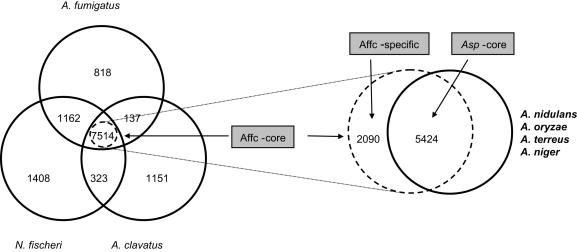
“Probe-Reactive Proteins Unique to Af—Comparative genomic analysis of the three aspergilli found 7514 orthologous genes between the three species (6).”
BackgroundBack to the Future for Dermatophyte Genomics
Rivera, Z. S., Losada, L. C., & Nierman, W. C. (2012) · mBio · doi:10.1128/mbio.00381-12 · Cited by 11
Self-citationAbdolrasouli, A., & Rhodes, J. L. (2022) · Mycopathologia · doi:10.1007/s11046-022-00665-2 · Cited by 9
“fumigatus is no exception, undergoing niche adaptation and consequently host adaptation via the generation of genetic diversity through means such as recombination [32].”
BackgroundFilho, J. A. F., Rosolen, R. R., Almeida, D. A., Azevedo, P., Motta, M. L. L., Aono, A. H., Santos, C. A., Horta, M. A. C., & de Souza, A. P. (2021) · 3 Biotech · doi:10.1007/s13205-021-03032-y · Cited by 10
Orłowska, M., & Muszewska, A. (2022) · Journal of Fungi · doi:10.3390/jof8010067 · Cited by 8
“fungal ABC transporters: Mdr1 protein, responsible for Aspergillus fumigatus drug resistance [107]; S.”
BackgroundBrown, A. C., Mead, M. E., Steenwyk, J. L., Goldman, G. H., & Rokas, A. (2022) · Frontiers in Fungal Biology · doi:10.3389/ffunb.2022.802494 · Cited by 9
Self-citationThe Effect of Cyclosporin A on Aspergillus niger and the Possible Mechanisms Involved
Li, F., Lv, Z., Zhong, Z.-J., Mao, L., Chua, L. S., Xu, L., & Huang, R. (2023) · Foods · doi:10.3390/foods12030567 · Cited by 12
“tRNA maturation was closely related to the transport of protein synthesis precursors and products [30].”
Background5 Fungal Chromatin and Its Role in Regulation of Gene Expression
Freitag, M. (2014) · Springer eBooks · doi:10.1007/978-3-642-45218-5_5 · Cited by 11
Veselská, T., & Kolařík, M. (2014) · Fungal ecology · doi:10.1016/j.funeco.2014.08.007 · Cited by 8
Garcı́a, A. M., Hernández, O., Aristizábal, B. H., Cano, L. E., McEwen, J. G., & Restrepo, Á. (2009) · Biomédica · doi:10.7705/biomedica.v29i3.12 · Cited by 8
“clavatus, Neosartorya fischeri (30) y Pyrenophora triticirepentis (http://kr.”
BackgroundZhang, F. R., Zhang, Y., Zhang, Z. Y., Yang, G. L., Jing, L., & Bai, Y. G. (2011) · Clinical and Experimental Dermatology · doi:10.1111/j.1365-2230.2011.04157.x · Cited by 8
Lofgren, L. A., Ross, B. S., Cramer, R. A., & Stajich, J. (2021) · bioRxiv (Cold Spring Harbor Laboratory) · doi:10.1101/2021.12.12.472145 · Cited by 8
“…al., 2005), such as genes involved in secondary metabolism and niche specificity, and tend to be concentrated in highly variable, rapidly evolving sub-telomeric regions and adjacent to Transposable Elements (TEs) (Fedorova et al., 2008; Brown et al., 2010; Faino et al., 2016; Wyatt et al., 2020).”
BackgroundEvolutionary origin, population diversity, and diagnostics for a cryptic hybrid pathogenPreprint
Steenwyk, J. L., Knowles, S., Bastos, R. W., Balamurugan, C., Rinker, D. C., Mead, M. E., Roberts, C. D., Raja, H. A., Li, Y., Colabardini, A. C., et al. (2023) · bioRxiv (Cold Spring Harbor Laboratory) · doi:10.1101/2023.07.03.547508 · Cited by 8
“Evolutionary approaches have not only proven to be highly informative in understanding how pathogens differ from their non-pathogenic close relatives 10–13 but also revealed the presence of cryptic species, defined as species that are genetically distinct from known species but difficult to…”
Self-citationJojić, K., Gherlone, F., Cseresnyés, Z., Bissell, A. U., Hoefgen, S., Hoffmann, S., Huang, Y., Janevska, S., Figge, M. T., & Valiante, V. (2024) · mBio · doi:10.1128/mbio.00195-24 · Cited by 8
“For the SPT complementation vectors, following genes were amplified with primer pairs: S. cerevisiae LCB1 [47 + 48], LCB2 [49 + 50], and A. fumigatus lcbA [51 + 52].”
MethodWan, J., Li, Y., Yi, R., Mongkolthanaruk, W., Kinjo, Y., Terashita, T., Yamanaka, K., Shimomura, N., Yamaguchi, T., & Aimi, T. (2011) · Mycoscience · doi:10.1007/s10267-011-0153-0 · Cited by 7
Targeting carbohydrates: a novel paradigm for fungal control
Ferrreira, R. M. S. B., Freitas, R. L., & Monteiro, S. (2012) · European Journal of Plant Pathology · doi:10.1007/s10658-011-9867-2 · Cited by 7
“Following nucleic acids and proteins, carbohydrates, or more specifically oligosaccharides, have recently been recognized as the third code/alphabet of life, with a coding capacity which far exceeds those of the other two polymers (Gabius 2009; Fig.”
BackgroundRecombination detection in A spergillus fumigatus through single nucleotide polymorphisms typing
Teixeira, J., Amorim, A., & Araújo, R. (2015) · Environmental Microbiology Reports · doi:10.1111/1758-2229.12321 · Cited by 9
Wang, Z., Wang, Y., Kasuga, T., Hassler, H. B., López‐Giráldez, F., Dong, C., Yarden, O., & Townsend, J. P. (2023) · Molecular Ecology · doi:10.1111/mec.17168 · Cited by 6
Isolation and Characterization of an Extracellular Antimicrobial Protein fromAspergillus oryzae
Park, S., Yoo, N. C., Kim, J., Park, H. K., Chae, B. J., Shin, S. Y., Cheong, H., Park, Y., & Hahm, K. (2008) · Journal of Agricultural and Food Chemistry · doi:10.1021/jf802373h · Cited by 7
Chi, M., & Craven, K. D. (2013) · PLoS ONE · doi:10.1371/journal.pone.0074805 · Cited by 7
“Aspergillus strains used in this study are displayed in Table S1 (references cited in the table [22,27,28,29,30,31,32,33,34,35,36, 37,38,39,40,41,42,43,44,45]).”
Clasen, F., Pierneef, R., Slippers, B., & Reva, O. N. (2018) · BMC Genomics · doi:10.1186/s12864-018-4724-8 · Cited by 7
“Exploiting the sequence composition bias of GIs with parametric methods commonly used in prokaryotes, is consequently limited in eukaryotes [23, 24].”
MethodExamining Signatures of Natural Selection in Antifungal Resistance Genes Across Aspergillus Fungi
Santos, R., Mead, M. E., Steenwyk, J. L., Rivero-Menéndez, O., Alastruey‐Izquierdo, A., Goldman, G. H., & Rokas, A. (2021) · Frontiers in Fungal Biology · doi:10.3389/ffunb.2021.723051 · Cited by 7
“In these cases, we relied on the conclusions and criteria established by the original authors (Fedorova et al., 2008; Tamiya et al., 2015; Houbraken et al., 2016; Kusuya et al., 2016; Lyskova et al., 2018; Parent-Michaud et al., 2019a,b; Talbot et al., 2019; Dos Santos et al., 2020b) in order to describe these strains…”
MethodSelf-citationMolecular Biology, Genomics and Bioinformatics Insights into Fungal Pectin Lyase: An overview
Yadav, S., Yadav, P. K., Dubey, A., Anand, G., Tanveer, A., Dwivedi, R., & Yadav, D. (2017) · Springer eBooks · doi:10.1007/978-981-10-5538-6_8 · Cited by 7
Mead, M. E., de Castro, P. A., Steenwyk, J. L., Gangneux, J., Hoenigl, M., Prattes, J., Rautemaa‐Richardson, R., Guegan, H., Moore, C. B., Lass‐Flörl, C., et al. (2023) · Microbiology Spectrum · doi:10.1128/spectrum.05128-22 · Cited by 6
“In contrast, none of the Month YYYY Volume XX Issue XX 10.1128/spectrum.05128-22 2 new CAPA isolates are closely related to A1163 and Af293 or the previously sequenced CAPA isolates; instead, these isolates span the A. fumigatus phylogeny.”
ResultInfluentialSelf-citationAnalysis of Genome-Wide Coexpression and Coevolution of Aspergillus oryzae and Aspergillus niger
Vongsangnak, W., Nookaew, I., Salazar, M. P., & Nielsen, J. (2010) · OMICS A Journal of Integrative Biology · doi:10.1089/omi.2009.0118 · Cited by 6
“fumigatus A1163 (Fedorova et al., 2008), Aspergillus flavus NRRL 3357 (Payne et al.”
InfluentialAdaptive evolution of Moniliophthora PR-1 proteins towards its pathogenic lifestyle
de Vasconcelos, A. A., José, J., Filho, P. T., Camargo, A. P., Teixeira, P. J. P. L., Thomazella, D. P. D. T., do Prado, P. F. V., Fiorin, G. L., Costa, J. L., Figueira, A., et al. (2021) · BMC Ecology and Evolution · doi:10.1186/s12862-021-01818-5 · Cited by 7
“Accelerated adaptive evolution evidenced by positive selection signs has also been observed in other virulence-associated genes of pathogenic fungi, such as the genes PabaA, fos-1, pes1, and pksP of Aspergillus fumigatus, which are involved in nutrient acquisition and oxidative stress response [36], and several gene f…”
BackgroundProteomic Differences between Azole-Susceptible and -Resistant Aspergillus fumigatus Strains
Vermeulen, E., Carpentier, S., Kniemeyer, O., Sillen, M., Maertens, J. A., & Lagrou, K. (2018) · Advances in Microbiology · doi:10.4236/aim.2018.81007 · Cited by 8
“81007 78 Advances in Microbiology failure in patients suffering from Aspergillus diseases [1].”
BackgroundInfluentialComparative Genomic Analysis of Pathogenic Yeasts and the Evolution of Virulence
Fitzpatrick, D. A., & Butler, G. (2009) · Springer eBooks · doi:10.1007/978-3-642-03150-2_1 · Cited by 7
Zhang, Y., Liu, X., Liu, M., Han, L., Zhao, D., Rao, H., Zhao, X., Wang, W. M., Hao, J., & Liu, X. (2025) · International Journal of Biological Macromolecules · doi:10.1016/j.ijbiomac.2025.142860 · Cited by 5
Guo, Y., Liu, J.-Z., Limwachiranon, J., Xu, F., Han, Y., Xu, L., Xiong, Z., Zhang, N., Ding, G., & Scharf, D. H. (2024) · Organic Letters · doi:10.1021/acs.orglett.4c01274 · Cited by 5
Rhodes, J. C., & Askew, D. S. (2014) · ASM Press eBooks · doi:10.1128/9781555816636.ch43 · Cited by 5
Zhao, S., Martín‐Vicente, A., Colabardini, A. C., Silva, L. P., Rinker, D. C., Fortwendel, J. R., Goldman, G. H., & Gibbons, J. G. (2022) · Microbiology Spectrum · doi:10.1128/spectrum.00519-22 · Cited by 8
Self-citationGenetic and Metabolic Engineering in Filamentous Fungi
Schmid, J., Ståhl, U., & Meyer, V. (2009) · Springer eBooks · doi:10.1007/978-3-642-00286-1_18 · Cited by 5
Espart, A., Gil‐Moreno, S., Palacios, Ò., Capdevila, M., & Atrian, S. (2015) · Molecular Microbiology · doi:10.1111/mmi.13171 · Cited by 6
“…fungal MTs – typically very short in size – can increase their Cu-sequestration capacity for detoxification purposes, besides gene number amplification (long known for the S. cerevisiae CUP1 MT) and gene transcription enhancement (as described in some Aspergillus species, Fedorova et al., 2008).”
BackgroundTurgeon, B. G., & Bushley, K. E. (2014) · ASM Press eBooks · doi:10.1128/9781555816636.ch26 · Cited by 5
Brown, A. C., Steenwyk, J. L., & Rokas, A. (2024) · G3 Genes Genomes Genetics · doi:10.1093/g3journal/jkae091 · Cited by 4
“Early genomic comparisons between 2 strains of A. fumigatus (Af293 and A1163) and 1 strain of A. fischeri (NRRL 181) revealed a set of genes uniquely present in A. fumigatus (Fedorova et al .”
BackgroundResultBader, O. (2021) · Microbiology Spectrum · doi:10.1128/spectrum.01214-21 · Cited by 5
“3 with the genome of strain A1163 as a reference (49), and the core SNPome using Snippy core, both as implemented in the https://usegalaxy.”
MethodMüller, A., Mäkelä, M., & de Vries, R. P. (2025) · Advances in applied microbiology · doi:10.1016/bs.aambs.2024.11.004 · Cited by 8
Cairns, T. C., Pohl, C., Birke, A. S., Regner, C., Jung, S., & Meyer, V. (2025) · Fungal Biology and Biotechnology · doi:10.1186/s40694-024-00192-3 · Cited by 6
“Firstly, the gene duplication, diversification and differential gene loss (DDL) hypothesis [82] proposes certain chromosomal loci may have high genetic and genomic variability (e.g., repeat-rich regions causing DNA polymerase slippage, or physical entanglement of subtelomeres causing mitotic…”
Reverse transcriptase and intron number evolution.
Zhou, K., Kuo, A., & Grigoriev, I. V. (2014) · Europe PMC (PubMed Central) · doi:10.3978/j.issn.2306-9759.2014.08.01 · Cited by 6
Retrospective Analysis of Opportunistic Brain Abscesses in Patients With Hematologic Malignancies
Raturi, R., Palacio, C., Baluch, A., Vargas, J., Kenney, P. A., & Greene, J. N. (2013) · Infectious Diseases in Clinical Practice · doi:10.1097/ipc.0b013e3182a1eca2 · Cited by 4
“Aspergillus describes a diverse genus of filamentous fungi found in soil and decomposing vegetation.(22) It is an opportunistic pathogen normally not leading to invasive disease in healthy individuals but is prevalent in the immunocompromised host.”
BackgroundResultRNA interference and CRISPR/Cas9 techniques for controlling mycotoxins
Thipe, V. C., Maloney, V., Klein, A., Gokul, A., Keyster, M., & Katti, K. V. (2021) · Elsevier eBooks · doi:10.1016/b978-0-12-821910-2.00012-6 · Cited by 5
11 Application of Genomics to the Study of Pathogenicity and Development in Fusarium
Trail, F., & Gardiner, D. M. (2014) · Springer eBooks · doi:10.1007/978-3-642-45218-5_11 · Cited by 4
What can the Aspergillus flavus genome offer to mycotoxin research?
Yu, J., Nierman, W. C., Fedorova, N. D., Bhatnagar, D., Cleveland, T. E., & Bennett, J. W. (2011) · Mycology: An International Journal on Fungal Biology · doi:10.1080/21501203.2011.605180 · Cited by 4
“Analysis using the software of Secondary Metabolite Unique Regions Finder (SMURF, http://jcvi. org/smurf/index.php) (Khaldi et al. 2010), led to the prediction of 55 secondary metabolism gene clusters (Table 3) (Fedorova et al. 2008, Georgianna, et al. 2010, Khaldi, et al. 2010).”
MethodSelf-citationHuber, F., & Bignell, E. (2014) · Fungal Genetics and Biology · doi:10.1016/j.fgb.2014.01.002 · Cited by 7
Metadata
- Authors
- Fedorova, N. D., Khaldi, N., Joardar, V. S., Maiti, R., Amedeo, P., Anderson, M. J., Crabtree, J., Silva, J. C., Badger, J. H., Albarraq, A., Angiuoli, S., Bussey, H., Bowyer, P., Cotty, P. J., Dyer, P. S., Egan, A., Galens, K., Fraser-Liggett, C. M., Haas, B. J., Inman, J. M., Kent, R., Lemieux, S., Malavazi, I., Orvis, J., Roemer, T., Ronning, C. M., Sundaram, J. P., Sutton, G., Turner, G., Venter, J. C., White, O. R., Whitty, B. R., Youngman, P., Wolfe, K. H., Goldman, G. H., Wortman, J. R., Jiang, B., Denning, D. W., & Nierman, W. C.
- Affiliations
- J. Craig Venter Institute (US)
- Trinity College Dublin (IE)
- University of Manchester (GB)
- McGill University (CA)
- Agricultural Research Service (US)
- University of Nottingham (GB)
- Universidade de São Paulo (BR)
- Merck & Co., Inc., Rahway, NJ, USA (United States) (US)
- University of Sheffield (GB)
- Corresponding author
- Nierman, William C.
- ORCID
- Joardar, Vinita S.
- Amedeo, Paolo
- Anderson, Michael J.
- Crabtree, Jonathan
- Silva, Joana C.
- Badger, Jonathan H.
- Albarraq, Ahmed
- Bowyer, Paul
- Cotty, Peter J.
- Dyer, Paul S.
- Haas, Brian J.
- Inman, Jason M.
- Malavazi, Iran
- Orvis, Joshua
- Venter, J. Craig
- White, Owen R.
- Whitty, Brett R.
- Wolfe, Kenneth H.
- Goldman, Gustavo H.
- Wortman, Jennifer R.
- Jiang, Bo
- Denning, David W.
- Nierman, William C.
- Venue
- PLoS Genetics
- Publisher
- Public Library of Science (PLoS)
- Published
- 2008-04-11
- Volume
- 4
- Issue
- 4
- Pages
- e1000046
- ISSN
- 1553-7390 (ISSN-L)
- 1553-7404
- PMC
- PMC2289846
- OpenAlex
- W2104863787
- Cited by
- 508
- References
- 75
- Citations by year
- 2026: 11 · 2025: 14 · 2024: 20 · 2023: 13 · 2022: 25 · 2021: 27 · 2020: 25 · 2019: 23 · 2018: 28 · 2017: 30 · 2016: 19 · 2015: 34 · 2014: 41 · 2013: 33 · 2012: 32
- FWCI
- 18.26
- Type
- journal article
- Language
- en
- Open access
- gold
- doi.org
- Locations
- PLoS Genetics (publishedVersion, cc-by)
- PubMed Central (publishedVersion, cc-by)
- PubMed (publishedVersion)
- Portuguese National Funding Agency for Science, Research and Technology (RCAAP Project by FCT) (publishedVersion)
- Arrow@dit (Dublin Institute of Technology) (submittedVersion)
- DOAJ (DOAJ: Directory of Open Access Journals) (submittedVersion, cc-by-sa)
- White Rose Research Online (University of Leeds, The University of Sheffield, University of York) (submittedVersion, cc-by)
- Figshare (submittedVersion, cc-by)
- Research Explorer (The University of Manchester) (submittedVersion)
- Funders
- Merck
- Fundação de Amparo à Pesquisa do Estado de São Paulo
- National Institutes of Health (n01ai30071-19-0-3)
- National Institute of Allergy and Infectious Diseases (U01 AI48830, AI30071, R21AI052236, AI052236, N01 AI030071, U01AI048830, N01 AI30071)
- Topics
- Life Sciences › Biochemistry, Genetics and Molecular Biology › Molecular Biology › Fungal and yeast genetics research
- Life Sciences › Agricultural and Biological Sciences › Plant Science › Plant Pathogens and Fungal Diseases
- Health Sciences › Medicine › Infectious Diseases › Antifungal resistance and susceptibility
- Keywords
- Aspergillus fumigatus, genomic islands, Neosartorya fischeri, Aspergillus clavatus, Rosa, species-specific genes, pseudogenes, transposable elements, repetitive elements, gene duplication, horizontal gene transfer, comparative genomics
- MeSH terms
- Allergens, Aspergillus, Aspergillus fumigatus, Fungal Proteins, Humans, Phylogeny, Species Specificity, Virulence, Chromosomes, Fungal, Genome, Fungal, Evolution, Molecular, Eurotiales, Genomic Islands
About these checks
Registry, retraction, Cites and statistics results are computed, not judged, with one exception: a printed reference that no index lists is read once by a model before it counts as a citation error. Claims are extracted by a model and kept only when their quote appears verbatim in the text; each cited source is then checked, with a model’s help, for whether it says what the claim relies on. Those verdicts can be wrong — read the claim’s quote and the cited source before relying on one.
Statistics and arithmetic are recomputed, not judged.
Confidence bands are shown only for fields calibrated on our annotated test set. None is calibrated yet, so no band is shown.
What counts as a claim ›How we measure confidence ›How we check this ›
Are you an author, or do you see a problem with this page? Request a review
Data sources
Bibliographic data: Semantic Scholar, OpenAlex, Crossref.
Contains information from the Semantic Scholar Academic Graph Datasets, made available under the ODC Attribution License (ODC-BY 1.0).
Semantic Scholar’s data is described in: Kinney, R., et al. (2023). The Semantic Scholar Open Data Platform. arXiv:2301.10140.
