

The DOI matches its Crossref record; 50 of the 51 references it cites were found in a registry or an index.
Clonal Expansion of Early to Mid-Life Mitochondrial DNA Point Mutations Drives Mitochondrial Dysfunction during Human Ageing
Open accessAbstract
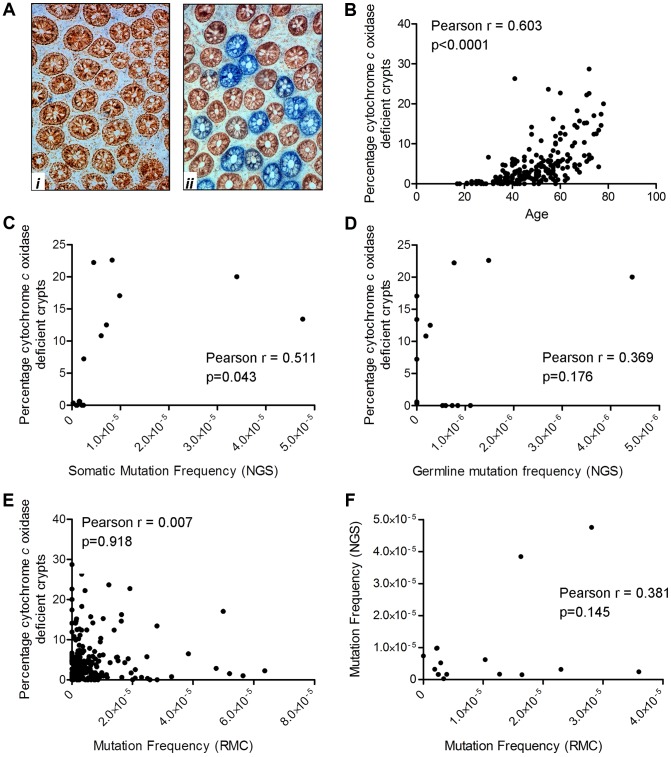
Age-related decline in the integrity of mitochondria is an important contributor to the human ageing process. In a number of ageing stem cell populations, this decline in mitochondrial function is due to clonal expansion of individual mitochondrial DNA (mtDNA) point mutations within single cells. However the dynamics of this process and when these mtDNA mutations occur initially are poorly understood. Using human colorectal epithelium as an exemplar tissue with a well-defined stem cell population, we analysed samples from 207 healthy participants aged 17-78 years using a combination of techniques (Random Mutation Capture, Next Generation Sequencing and mitochondrial enzyme histochemistry), and show that: 1) non-pathogenic mtDNA mutations are present from early embryogenesis or may be transmitted through the germline, whereas pathogenic mtDNA mutations are detected in the somatic cells, providing evidence for purifying selection in humans, 2) pathogenic mtDNA mutations are present from early adulthood (<20 years of age), at both low levels and as clonal expansions, 3) low level mtDNA mutation frequency does not change significantly with age, suggesting that mtDNA mutation rate does not increase significantly with age, and 4) clonally expanded mtDNA mutations increase dramatically with age. These data confirm that clonal expansion of mtDNA mutations, some of which are generated very early in life, is the major driving force behind the mitochondrial dysfunction associated with ageing of the human colorectal epithelium.
Overview
The claims and statistics of this paper haven’t been checked yet.
Run the check — free, no account needed. It reads the open-access text and checks the sources it cites.
Integrity signals
Registry
Cites
Statistics
Figures
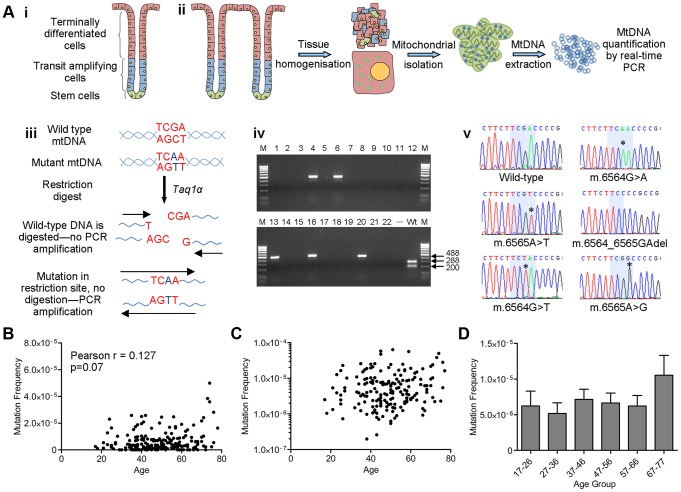
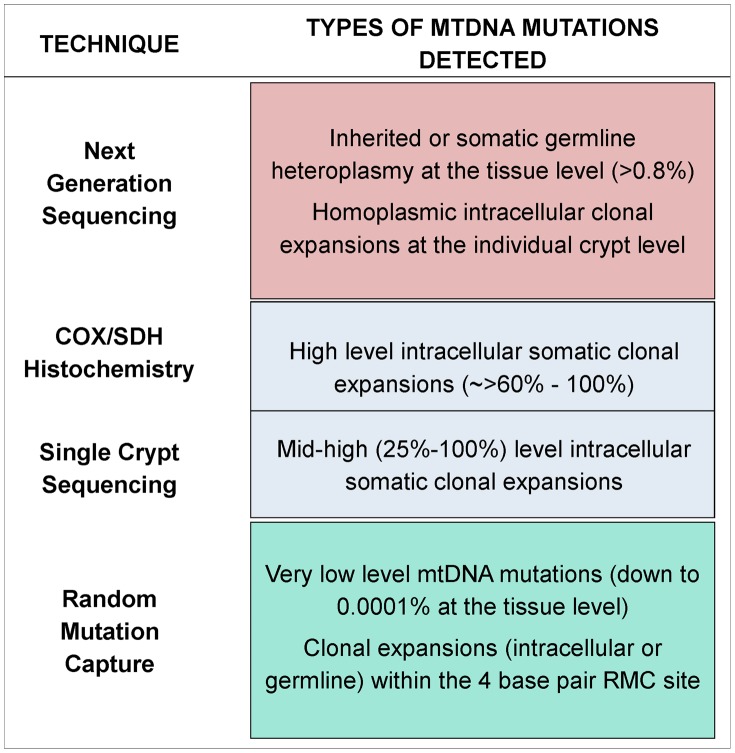
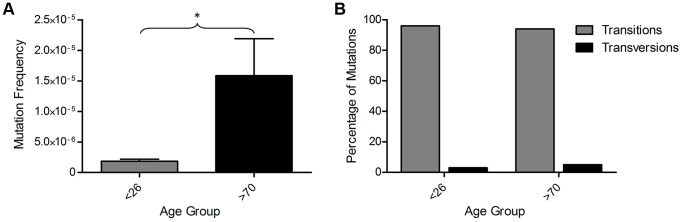
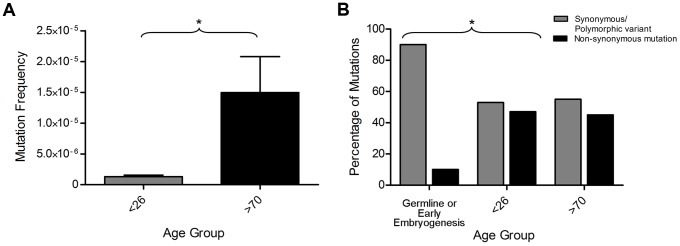
Verification
Claims the paper makes
The claims and statistics of this paper haven’t been checked yet.
Run the check — free, no account needed. It reads the open-access text and checks the sources it cites.
Claims other papers make about this one
Each is checked against this paper’s own text: does it say what the citing paper says it does?
The cited source says what the claim attributes to it.
In the citing paper
“However, deep-sequencing of aged cells revealed that their mtDNA mutational load may substantially increase through clonal expansion events 19 .”
From Hallmarks of aging: An expanding universe (2023) · cites this paper as [19]
In the citing paper
“Mitochondrial DNA mutations also accumulate with age, secondary to increased ROS and continuous replication, which enables mutations that impair function to, potentially, expand clonally (23).”
From Exercise Counters the Age-Related Accumulation of Senescent Cells (2022) · cites this paper as [23]
Self-check
Percentages, sums and reported differences re-computed from the paper’s own numbers.
The self-check needs the paper’s full text.
Citations
Cites
Premature ageing in mice expressing defective mitochondrial DNA polymerase
Trifunovic, A., Wredenberg, A., Falkenberg, M., Spelbrink, J. N., Rovio, A. T., Bruder, C. E., Bohlooly-Y, M., Gidlöf, S., Oldfors, A., Wibom, R., et al. (2004) · Nature · doi:10.1038/nature02517 · Cited by 2,734
Mitochondrial DNA mutations, oxidative stress, and apoptosis in mammalian aging
Kujoth, G. C., Hiona, A., Pugh, T. D., Someya, S., Panzer, K., Wohlgemuth, S. E., Hofer, T., Seo, A. Y., Sullivan, R., Jobling, W. A., et al. (2005) · Science · doi:10.1126/science.1112125 · Cited by 2,165
Mitochondrial DNA mutations as an important contributor to ageing and degenerative diseases
Linnane, A., Ozawa, T., Marzuki, S., & Tanaka, M. (1989) · The Lancet · doi:10.1016/s0140-6736(89)92145-4 · Cited by 983
How stem cells age and why this makes us grow old
Sharpless, N. E., & DePinho, R. A. (2007) · Nature Reviews Molecular Cell Biology · doi:10.1038/nrm2241 · Cited by 743
MITOMAP: a human mitochondrial genome database--2004 update
Brandon, M. (2004) · Nucleic Acids Research · doi:10.1093/nar/gki079 · Cited by 568
Mitochondrial mutations may increase oxidative stress: Implications for carcinogenesis and aging?
Bandy, B., & Davison, A. J. (1990) · Free Radical Biology and Medicine · doi:10.1016/0891-5849(90)90152-9 · Cited by 550
Mitochondrial DNA mutations in human colonic crypt stem cells
Taylor, R. W., Barron, M. J., Borthwick, G. M., Gospel, A., Chinnery, P. F., Samuels, D. C., Taylor, G. A., Plusa, S. M., Needham, S. J., Greaves, L. C., et al. (2003) · Journal of Clinical Investigation · doi:10.1172/jci19435 · Cited by 530
Self-citationStrong Purifying Selection in Transmission of Mammalian Mitochondrial DNA
Stewart, J. B., Freyer, C., Elson, J. L., Wredenberg, A., Cansu, Z., Trifunović, A., & Larsson, N. (2008) · PLoS Biology · doi:10.1371/journal.pbio.0060010 · Cited by 525
Self-citationMITOMAP: a human mitochondrial genome database
Kogelnik, A. M. (1996) · Nucleic Acids Research · doi:10.1093/nar/24.1.177 · Cited by 524
Heteroplasmic mitochondrial DNA mutations in normal and tumour cells
He, Y., Wu, J., Dressman, D. C., Iacobuzio–Donahue, C. A., Markowitz, S. D., Velculescu, V. E., Diaz, L. A., Kinzler, K. W., Vogelstein, B., & Papadopoulos, N. (2010) · Nature · doi:10.1038/nature08802 · Cited by 516
A mouse model of mitochondrial disease reveals germline selection against severe mtDNA mutations
Fan, W., Waymire, K. G., Narula, N., Li, P., Rocher, C., Coskun, P. E., Vannan, M. A., Narula, J., MacGregor, G. R., & Wallace, D. C. (2008) · Science · doi:10.1126/science.1147786 · Cited by 466
Mitochondrial point mutations do not limit the natural lifespan of mice
Vermulst, M., Bielas, J. H., Kujoth, G. C., Ladiges, W. C., Rabinovitch, P. S., Prolla, T. A., & Loeb, L. A. (2007) · Nature Genetics · doi:10.1038/ng1988 · Cited by 404
Universal heteroplasmy of human mitochondrial DNA
Payne, B. A. I., Wilson, I., Yu‐Wai‐Man, P., Coxhead, J., Deehan, D. J., Horváth, R., Taylor, R. W., Samuels, D. C., Santibanez‐Koref, M., & Chinnery, P. F. (2012) · Human Molecular Genetics · doi:10.1093/hmg/dds435 · Cited by 396
Self-citationIntestinal development and differentiation
Noah, T. K., Donahue, B., & Shroyer, N. F. (2011) · Experimental Cell Research · doi:10.1016/j.yexcr.2011.09.006 · Cited by 384
Kennedy, S. R., Salk, J. J., Schmitt, M. W., & Loeb, L. A. (2013) · PLoS Genetics · doi:10.1371/journal.pgen.1003794 · Cited by 363
Random intracellular drift explains the clonal expansion of mitochondrial DNA mutations with age
Elson, J. L., Samuels, D. C., Turnbull, D. M., & Chinnery, P. F. (2001) · The American Journal of Human Genetics · doi:10.1086/318801 · Cited by 340
Self-citationGreaves, L. C., Preston, S. L., Tadrous, P. J., Taylor, R. W., Barron, M. J., Oukrif, D., Leedham, S. J., Deheragoda, M. G., Sasieni, P. D., Novelli, M. R., et al. (2006) · Proceedings of the National Academy of Sciences · doi:10.1073/pnas.0505903103 · Cited by 293
Self-citationColler, H. A., Khrapko, K., Bodyak, N. D., Nekhaeva, E., Herrero-Jimenez, P., & Thilly, W. G. (2001) · Nature Genetics · doi:10.1038/88859 · Cited by 288
Self-citationMüller‐Höcker, J. (1990) · Journal of the Neurological Sciences · doi:10.1016/0022-510x(90)90006-9 · Cited by 284
Germline mitochondrial DNA mutations aggravate ageing and can impair brain development
Ross, J. M., Stewart, J. B., Hagström, E., Brené, S., Mourier, A., Coppotelli, G., Freyer, C., Lagouge, M., Hoffer, B. J., Olson, L., et al. (2013) · Nature · doi:10.1038/nature12474 · Cited by 273
Norddahl, G. L., Pronk, C. J., Wahlestedt, M., Sten, G., Nygren, J. M., Ugale, A., Sigvardsson, M., & Bryder, D. (2011) · Cell Stem Cell · doi:10.1016/j.stem.2011.03.009 · Cited by 249
Somatic mutations and aging: a re-evaluation
Vijg, J. (2000) · Mutation Research - Fundamental and Molecular Mechanisms of Mutagenesis · doi:10.1016/s0027-5107(99)00202-x · Cited by 243
McDonald, S. A. C., Greaves, L. C., Gutierrez–Gonzalez, L., Rodriguez–Justo, M., Deheragoda, M., Leedham, S. J., Taylor, R. W., Lee, C. Y., Preston, S. L., Lovell, M., et al. (2008) · Gastroenterology · doi:10.1053/j.gastro.2007.11.035 · Cited by 242
Self-citationAhlqvist, K. J., Hämäläinen, R. H., Yatsuga, S., Uutela, M., Terzioglu, M., Götz, A., Forsström, S., Salven, P., Angers-Loustau, A., Kopra, O. H., et al. (2012) · Cell Metabolism · doi:10.1016/j.cmet.2011.11.012 · Cited by 221
Ultra-deep sequencing of mouse mitochondrial DNA: mutational patterns and their origins
Ameur, A., Stewart, J. B., Freyer, C., Hagström, E., Ingman, M., Larsson, N.-G., & Gyllensten, U. (2011) · PLoS Genetics · doi:10.1371/journal.pgen.1002028 · Cited by 187
Locating the stem cell niche and tracing hepatocyte lineages in human liver #
Fellous, T. G., Islam, S., Tadrous, P. J., Elia, G., Kocher, H. M., Bhattacharya, S., Mears, L., Turnbull, D. M., Taylor, R. W., Greaves, L. C., et al. (2009) · Hepatology · doi:10.1002/hep.22791 · Cited by 157
Self-citationRecurrent Tissue-Specific mtDNA Mutations Are Common in Humans
Samuels, D. C., Li, C., Li, B., Song, Z., Torstenson, E. S., Clay, H. B., Rokas, A., Thornton‐Wells, T. A., Moore, J. H., Hughes, T. M., et al. (2013) · PLoS Genetics · doi:10.1371/journal.pgen.1003929 · Cited by 141
Müller‐Höcker, J., Schneiderbanger, K., Stefani, F. H., & Kadenbach, B. (1992) · Mutation Research/DNAging · doi:10.1016/0921-8734(92)90016-i · Cited by 111
Chen, M. L., Logan, T. D., Hochberg, M. L., Shelat, S. G., Yu, X., Wilding, G. E., Tan, W., Kujoth, G. C., Prolla, T. A., Selak, M. A., et al. (2009) · Blood · doi:10.1182/blood-2008-08-169474 · Cited by 108
Mitochondrial DNA segregation in the developing embryo
Shoubridge, E. A. (2000) · Human Reproduction · doi:10.1093/humrep/15.suppl_2.229 · Cited by 90
Decreased Mitochondrial DNA Mutagenesis in Human Colorectal Cancer
Ericson, N. G., Kulawiec, M., Vermulst, M., Sheahan, K. D., O'Sullivan, J. N., Salk, J. J., & Bielas, J. H. (2012) · PLoS Genetics · doi:10.1371/journal.pgen.1002689 · Cited by 87
Somatic mtDNA Mutation Spectra in the Aging Human Putamen
Williams, S. L., Mash, D. C., Zuchner, S. L., & Moraes, C. T. (2013) · PLoS Genetics · doi:10.1371/journal.pgen.1003990 · Cited by 84
A Methodological Approach to Tracing Cell Lineage in Human Epithelial Tissues
Fellous, T. G., McDonald, S. A. C., Burkert, J., Humphries, A., Islam, S., De-Alwis, N. M. W., Gutiérrez-González, L., Tadrous, P. J., Elia, G., Kocher, H. M., et al. (2009) · Stem Cells · doi:10.1002/stem.67 · Cited by 80
Self-citationGreaves, L. C., Elson, J. L., Nooteboom, M., Grady, J. P., Taylor, G. A., Taylor, R. W., Mathers, J. C., Kirkwood, T. B. L., & Turnbull, D. M. (2012) · PLoS Genetics · doi:10.1371/journal.pgen.1003082 · Cited by 72
Self-citationBlackwood, J. K., Williamson, S. C., Greaves, L. C., Wilson, L., Rigas, A. C., Sandher, R., PICKARD, R. S., Robson, C. N., Turnbull, D. M., Taylor, R. W., et al. (2011) · The Journal of Pathology · doi:10.1002/path.2965 · Cited by 66
Self-citationNooteboom, M., Johnson, R., Taylor, R. W., Wright, N. A., Lightowlers, R. N., Kirkwood, T. B. L., Mathers, J. C., Turnbull, D. M., & Greaves, L. C. (2009) · Aging Cell · doi:10.1111/j.1474-9726.2009.00531.x · Cited by 58
Self-citationDefects in multiple complexes of the respiratory chain are present in ageing human colonic crypts
Greaves, L. C., Barron, M. J., Plusa, S. M., Kirkwood, T. B. L., Mathers, J. C., Taylor, R. W., & Turnbull, D. M. (2010) · Experimental Gerontology · doi:10.1016/j.exger.2010.01.013 · Cited by 54
Self-citationSomatic Mitochondrial DNA Deletions Accumulate to High Levels in Aging Human Extraocular Muscles
Yu‐Wai‐Man, P., Lai‐Cheong, J. E., Borthwick, G. M., He, L., Taylor, G. A., Greaves, L. C., Taylor, R. W., Griffiths, P. G., & Turnbull, D. M. (2010) · Investigative Ophthalmology & Visual Science · doi:10.1167/iovs.09-4660 · Cited by 54
Self-citationMitochondrial DNA mutations and ageing
Greaves, L. C., & Turnbull, D. M. (2009) · Biochimica et Biophysica Acta (BBA) - General Subjects · doi:10.1016/j.bbagen.2009.04.018 · Cited by 53
Self-citationFox, R. G., Magness, S. T., Kujoth, G. C., Prolla, T. A., & Maeda, N. (2012) · American Journal of Physiology-Gastrointestinal and Liver Physiology · doi:10.1152/ajpgi.00402.2011 · Cited by 52
Kowald, A., & Kirkwood, T. B. L. (2013) · Aging Cell · doi:10.1111/acel.12098 · Cited by 45
Self-citationEarly determinants of the ageing trajectory
Langie, S. A. S., Lara, J., & Mathers, J. C. (2012) · Best Practice & Research Clinical Endocrinology & Metabolism · doi:10.1016/j.beem.2012.03.004 · Cited by 42
Self-citationQuantification of mitochondrial DNA mutation load
Greaves, L. C., Beadle, N. E., Taylor, G. A., Commane, D. M., Mathers, J. C., Khrapko, K., & Turnbull, D. M. (2009) · Aging Cell · doi:10.1111/j.1474-9726.2009.00505.x · Cited by 42
Self-citationShin, M., Kajigaya, S., McCoy, J. P., Levin, B. C., & Young, N. S. (2003) · Blood · doi:10.1182/blood-2003-05-1724 · Cited by 41
Seneca, S., Vancampenhout, K., Coster, R. V., Smet, J., Lissens, W., Vanlander, A. V., Paepe, B. D., Jonckheere, A. I., Stouffs, K., & Meırleır, L. D. (2014) · European Journal of Human Genetics · doi:10.1038/ejhg.2014.49 · Cited by 39
Mitochondrial DNA sequence heterogeneity in circulating normal human CD34 cells and granulocytes
Shin, M., Kajigaya, S., Tarnowka, M., McCoy, J. P., Levin, B. C., & Young, N. S. (2004) · Blood · doi:10.1182/blood-2003-11-3949 · Cited by 35
The timing of mitochondrial DNA mutations in aging
Khrapko, K. (2011) · Nature Genetics · doi:10.1038/ng.895 · Cited by 30
Self-citationDifferences in the accumulation of mitochondrial defects with age in mice and humans
Greaves, L. C., Barron, M. J., Campbell-Shiel, G., Kirkwood, T. B. L., & Turnbull, D. M. (2011) · Mechanisms of Ageing and Development · doi:10.1016/j.mad.2011.10.004 · Cited by 28
Self-citationExternal Contamination in Single Cell mtDNA Analysis
Yao, Y., Bandelt, H., & Young, N. S. (2007) · PLoS ONE · doi:10.1371/journal.pone.0000681 · Cited by 23
Trial and Error: How the Unclonable Human Mitochondrial Genome was Cloned in Yeast
Bigger, B., Liao, A., Sergijenko, A., & Coutelle, C. C. (2011) · Pharmaceutical Research · doi:10.1007/s11095-011-0527-1 · Cited by 11
Research works printed but not linked: 1
- Finch C, Kirkwood TBL. (2000) Chance, Development and Ageing: Oxford University Press.
Cited by
Sorted by citations
Hallmarks of aging: An expanding universe
López-Otín, C., Blasco, M. A., Partridge, L., Serrano, M., & Kroemer, G. (2023) · Cell · doi:10.1016/j.cell.2022.11.001 · Cited by 6,549
Mitochondrial dysfunction in cell senescence and aging
Miwa, S., Kashyap, S., Chini, E., & von Zglinicki, T. (2022) · Journal of Clinical Investigation · doi:10.1172/jci158447 · Cited by 1,061
Mitochondria in oxidative stress, inflammation and aging: from mechanisms to therapeutic advances
Xu, X., Pang, Y., & Fan, X. (2025) · Signal Transduction and Targeted Therapy · doi:10.1038/s41392-025-02253-4 · Cited by 1,016
Ovarian ageing: the role of mitochondria in oocytes and follicles
May‐Panloup, P., Boucret, L., de la Barca, J.-M. C., Desquiret‐Dumas, V., Ferré-L’Hôtellier, V., Morinière, C., Descamps, P., Procaccio, V., & Reynier, P. (2016) · Human Reproduction Update · doi:10.1093/humupd/dmw028 · Cited by 585
Mammalian Mitochondria and Aging: An Update
Kauppila, T. E. S., Kauppila, J. H. K., & Larsson, N.-G. (2017) · Cell Metabolism · doi:10.1016/j.cmet.2016.09.017 · Cited by 578
Metadata
- Authors
- Greaves, L. C., Nooteboom, M., Elson, J. L., Tuppen, H. A. L., Taylor, G. A., Commane, D. M., Arasaradnam, R. P., Khrapko, K., Taylor, R. W., Kirkwood, T. B. L., Mathers, J. C., & Turnbull, D. M.
- Affiliations
- Wellcome Centre for Mitochondrial Research (GB)
- North-West University (ZA)
- Newcastle University (GB)
- Beth Israel Deaconess Medical Center (US)
- Corresponding author
- Greaves, Laura C.
- ORCID
- Venue
- PLoS Genetics
- Publisher
- Public Library of Science (PLoS)
- Published
- 2014-09-18
- Volume
- 10
- Issue
- 9
- Pages
- e1004620
- ISSN
- 1553-7390 (ISSN-L)
- 1553-7404
- PMC
- PMC4169240
- OpenAlex
- W2132967521
- Cited by
- 172
- References
- 51
- Citations by year
- 2026: 13 · 2025: 19 · 2024: 19 · 2023: 9 · 2022: 14 · 2021: 8 · 2020: 24 · 2019: 13 · 2018: 12 · 2017: 14 · 2016: 17 · 2015: 8 · 2014: 2
- FWCI
- 5.57
- Type
- journal article
- Language
- en
- Open access
- gold
- doi.org
- Locations
- PLoS Genetics (publishedVersion, cc-by)
- PubMed Central (publishedVersion, cc-by)
- PubMed (publishedVersion)
- CentAUR (University of Reading) (acceptedVersion)
- Northumbria Research Link (Northumbria University) (acceptedVersion)
- Radboud Repository (Radboud University) (submittedVersion, other-oa)
- DOAJ (DOAJ: Directory of Open Access Journals) (submittedVersion)
- Figshare (submittedVersion, cc-by)
- Radboud Repository (Radboud University) (submittedVersion)
- Newcastle University ePrints (Newcastle Univesity) (cc-by)
- Funders
- Ellison Medical Foundation
- Wellcome Trust (096919, 096919/Z/11/Z, G0601943)
- National Institute for Health and Care Research (G0601943)
- Food Standards Agency (N12015)
- Newcastle University
- Medical Research Council (G0601943, G0700718)
- Engineering and Physical Sciences Research Council
- Biotechnology and Biological Sciences Research Council (BEP17 042, BB/C008200/1, G0700718)
- Economic and Social Research Council
- NIHR Newcastle Biomedical Research Centre (BH111030)
- Wellcome Trust Centre for Mitochondrial Research (096919Z/11/Z)
- National Institute on Aging (R01AG019787)
- Topics
- Life Sciences › Biochemistry, Genetics and Molecular Biology › Molecular Biology › Mitochondrial Function and Pathology
- Life Sciences › Biochemistry, Genetics and Molecular Biology › Aging › Genetics, Aging, and Longevity in Model Organisms
- Life Sciences › Biochemistry, Genetics and Molecular Biology › Cell Biology › Telomeres, Telomerase, and Senescence
- Keywords
- mitochondrial DNA point mutations, clonal expansion, mitochondrial dysfunction, human aging, colorectal epithelium, purifying selection, mtDNA mutation rate, early embryonic development, somatic mtDNA mutations
- MeSH terms
- Adolescent, Adult, Age Factors, Aged, Aging, DNA Mutational Analysis, DNA, Mitochondrial, Humans, Intestinal Mucosa, Middle Aged, Mitochondria, Sensitivity and Specificity, Point Mutation, Mitochondrial Proteins, Cytochromes c, Young Adult, High-Throughput Nucleotide Sequencing, Mutation Rate
About these checks
Registry, retraction, Cites and statistics results are computed, not judged, with one exception: a printed reference that no index lists is read once by a model before it counts as a citation error. Claims are extracted by a model and kept only when their quote appears verbatim in the text; each cited source is then checked, with a model’s help, for whether it says what the claim relies on. Those verdicts can be wrong — read the claim’s quote and the cited source before relying on one.
Statistics and arithmetic are recomputed, not judged.
Confidence bands are shown only for fields calibrated on our annotated test set. None is calibrated yet, so no band is shown.
What counts as a claim ›How we measure confidence ›How we check this ›
Are you an author, or do you see a problem with this page? Request a review
