

Genome-Wide Association Analyses in 128,266 Individuals Identifies New Morningness and Sleep Duration Loci
Open accessPublished version of a preprint
The DOI matches its Crossref record; 42 of the 42 references it cites were found in a registry or an index.
Abstract
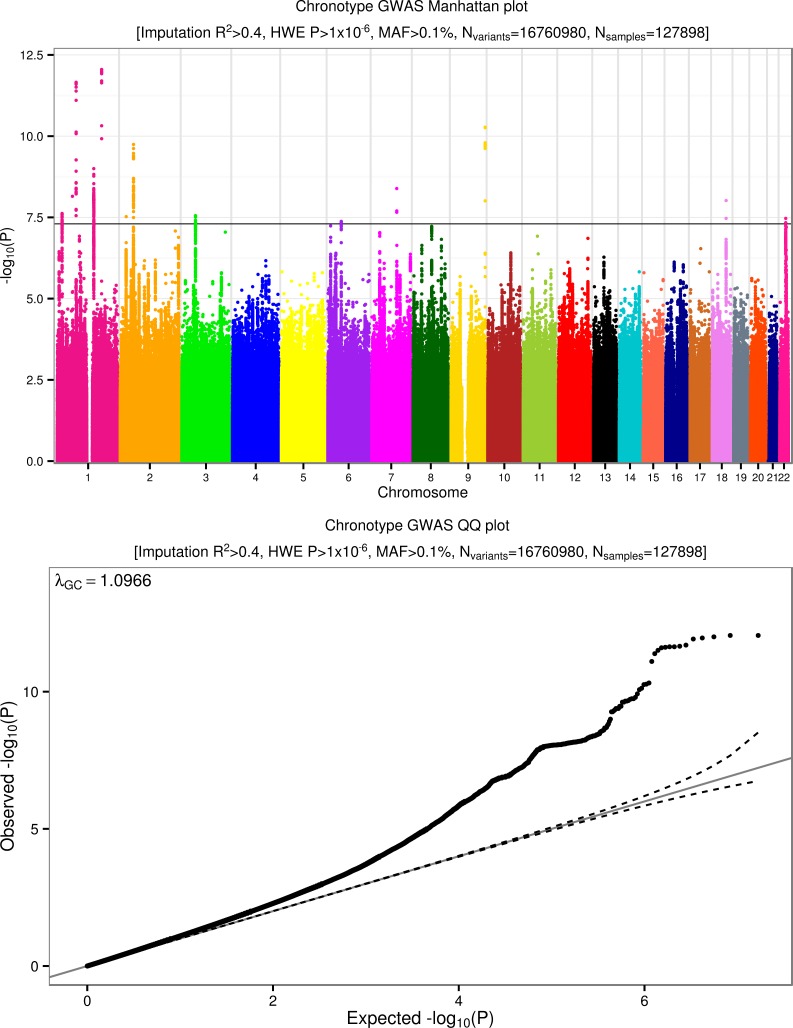
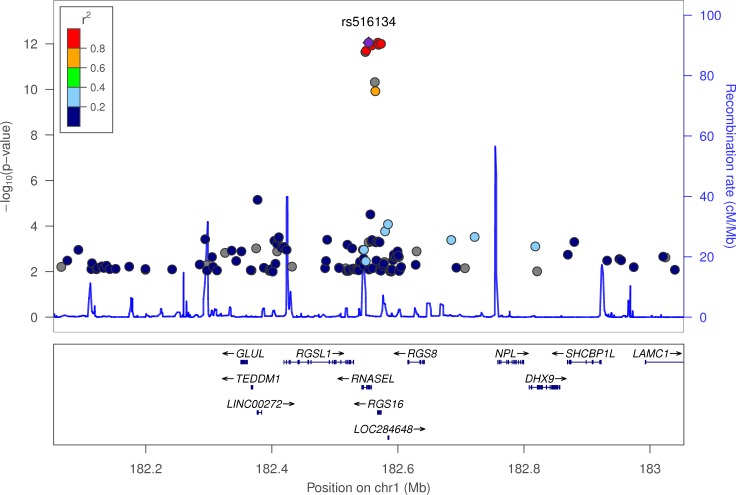
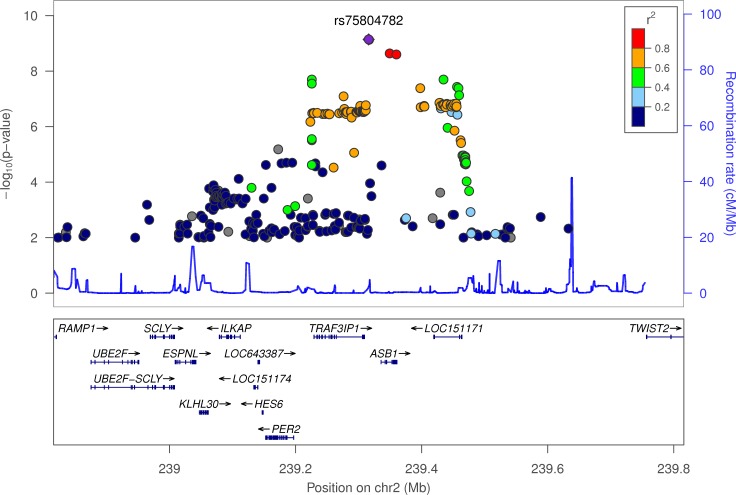
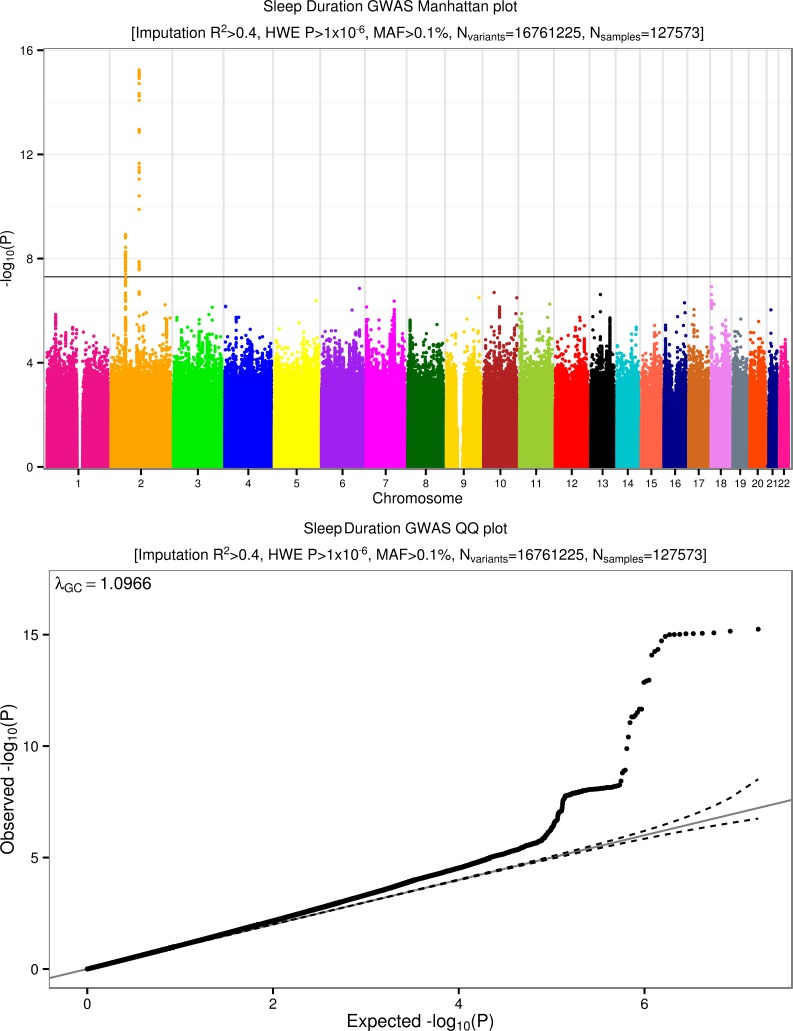
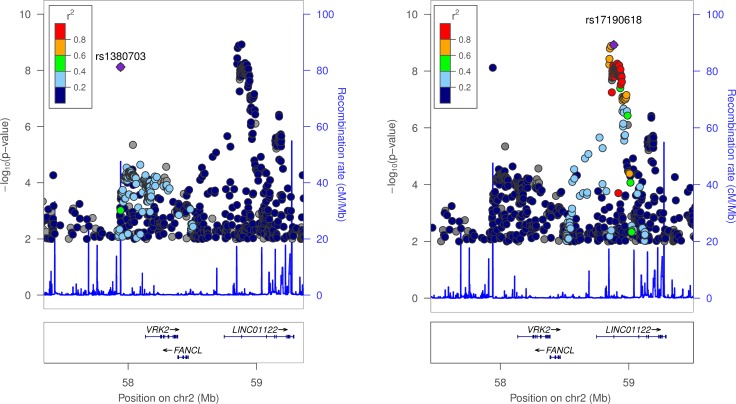
Disrupted circadian rhythms and reduced sleep duration are associated with several human diseases, particularly obesity and type 2 diabetes, but until recently, little was known about the genetic factors influencing these heritable traits. We performed genome-wide association studies of self-reported chronotype (morning/evening person) and self-reported sleep duration in 128,266 white British individuals from the UK Biobank study. Sixteen variants were associated with chronotype (P<5x10⁻⁸), including variants near the known circadian rhythm genes RGS16 (1.21 odds of morningness, 95% CI [1.15, 1.27], P = 3x10-12) and PER2 (1.09 odds of morningness, 95% CI [1.06, 1.12], P = 4x10⁻¹⁰). The PER2 signal has previously been associated with iris function. We sought replication using self-reported data from 89,283 23andMe participants; thirteen of the chronotype signals remained associated at P<5x10⁻⁸ on meta-analysis and eleven of these reached P<0.05 in the same direction in the 23andMe study. We also replicated 9 additional variants identified when the 23andMe study was used as a discovery GWAS of chronotype (all P<0.05 and meta-analysis P<5x10⁻⁸). For sleep duration, we replicated one known signal in PAX8 (2.6 minutes per allele, 95% CI [1.9, 3.2], P = 5.7x10⁻¹⁶) and identified and replicated two novel associations at VRK2 (2.0 minutes per allele, 95% CI [1.3, 2.7], P = 1.2x10⁻⁹; and 1.6 minutes per allele, 95% CI [1.1, 2.2], P = 7.6x10⁻⁹). Although we found genetic correlation between chronotype and BMI (rG = 0.056, P = 0.05); undersleeping and BMI (rG = 0.147, P = 1x10⁻⁵) and oversleeping and BMI (rG = 0.097, P = 0.04), Mendelian Randomisation analyses, with limited power, provided no consistent evidence of causal associations between BMI or type 2 diabetes and chronotype or sleep duration. Our study brings the total number of loci associated with chronotype to 22 and with sleep duration to three, and provides new insights into the biology of sleep and circadian rhythms in humans.
Overview
The claims and statistics of this paper haven’t been checked yet.
Free: it reads the open-access text and checks the first 5 claims that cite a source we can check. Create a free account to check every claim.
Integrity signals
Registry
Cites
Statistics
Figures
Verification
Claims the paper makes
The claims and statistics of this paper haven’t been checked yet.
Free: it reads the open-access text and checks the first 5 claims that cite a source we can check. Create a free account to check every claim.
Claims other papers make about this one
Each is checked against this paper’s own text: does it say what the citing paper says it does?
The source backs part of the claim, not all of it — or backs it for a different population, condition or comparison.
In the citing paper
“We found concordance for loci previously reported using UK Biobank data for overall (near PML) and moderate intensity activity8 (near LINC02210-CRHR1, and SYT4), sleep duration12,19,23,24 (near PUM1, CHCHD5, SAMMSON, BTBD9-AS1, LRP12, EBLN3P, BSX, KCNH5, PRKCB, and RPGRIP1L), and sedentary time (near LINC01930 and LY6H) (Supplementary Data 3).”
From GWAS identifies 14 loci for device-measured physical activity and sleep duration (2018) · cites this paper as [19]
Experimental — accuracy not yet measuredThe cited source says what the claim attributes to it.
In the citing paper
“More recently, genome-wide association studies that used questionnaire-based evaluations of individual chronotypes have characterized important polymorphisms in regions containing known clock genes as well as other loci (40–43).”
From Chronotype: Implications for Epidemiologic Studies on Chrono-Nutrition and Cardiometabolic Health (2019) · cites this paper as [42]
In the citing paper
“Recent genome-wide association studies with more than 100,000 subjects have identified novel loci associated with sleep duration, chronotype and metabolic phenotypes (for example, body mass index)320,321.”
From Rhythms of life: circadian disruption and brain disorders across the lifespan (2019) · cites this paper as [320]
Self-check
Percentages, sums and reported differences re-computed from the paper’s own numbers.
The self-check needs the paper’s full text.
Citations
Cites
Subramanian, A., Tamayo, P., Mootha, V. K., Mukherjee, S., Ebert, B. L., Gillette, M. A., Paulovich, A., Pomeroy, S. L., Golub, T. R., Lander, E. S., et al. (2005) · Proceedings of the National Academy of Sciences · doi:10.1073/pnas.0506580102 · Cited by 53,625 · cited 1×
“For the results presented in S4 Table, we used gene upstream and downstream limits of 250Kb, excluded the HLA region (default setting) and set the number of GSEA (Gene Set Enrichment Analysis) [34,35] permutations at 10,000 (default).”
MethodMootha, V. K., Lindgren, C. M., Eriksson, K.-F., Subramanian, A., Sihag, S., Lehar, J., Puigserver, P., Carlsson, E., Ridderstråle, M., Laurila, E., et al. (2003) · Nature Genetics · doi:10.1038/ng1180 · Cited by 10,197 · cited 1×
“For the results presented in S4 Table, we used gene upstream and downstream limits of 250Kb, excluded the HLA region (default setting) and set the number of GSEA (Gene Set Enrichment Analysis) [34,35] permutations at 10,000 (default).”
MethodBowden, J., Davey Smith, G., & Burgess, S. (2015) · International Journal of Epidemiology · doi:10.1093/ije/dyv080 · Cited by 9,816 · cited 2×
“We performed the Mendelian Randomisation analysis two ways; firstly using instrumental variables (IV) using STATA’s “IVreg2” function [40] and secondly through the inversevariance weighted (IVW) and MR-Egger methods described in [41].”
MethodBiological insights from 108 schizophrenia-associated genetic loci
Schizophrenia Working Group of the Psychiatric Genomics Consortium (2014) · Nature · doi:10.1038/nature13595 · Cited by 7,577
LD Score regression distinguishes confounding from polygenicity in genome-wide association studies
Schizophrenia Working Group of the Psychiatric Genomics Consortium, Bulik-Sullivan, B. K., Loh, P.-R., Finucane, H. K., Ripke, S., Yang, J., Patterson, N., Daly, M. J., Price, A. L., & Neale, B. M. (2015) · Nature Genetics · doi:10.1038/ng.3211 · Cited by 5,559
METAL: fast and efficient meta-analysis of genomewide association scans
Willer, C. J., Li, Y., & Abecasis, G. R. (2010) · Bioinformatics · doi:10.1093/bioinformatics/btq340 · Cited by 5,205 · cited 2×
“The combined P-value was generated by meta-analysing the 23andMe and UKB continuous chronotype P-values in the meta-analysis software METAL.”
MethodMendelian randomization: genetic anchors for causal inference in epidemiological studies
Davey Smith, G., & Hemani, G. (2014) · Human Molecular Genetics · doi:10.1093/hmg/ddu328 · Cited by 4,677 · cited 1×
“Identifying genetic variants associated with sleep duration and chronotype will provide instruments to help test the causality of epidemiological associations [11].”
BackgroundGenetic studies of body mass index yield new insights for obesity biology
Study, T. L. C., Locke, A. E., The ADIPOGen Consortium, The AGEN-BMI Working Group, The CARDIOGRAMplusC4D Consortium, The CKDGen Consortium, The, G. L. G. C., The, I. C. B. P., The MAGIC Investigators, The MuTHER Consortium, et al. (2015) · Nature · doi:10.1038/nature14177 · Cited by 4,534 · cited 3×
“Instrumental variables analyses using variants and their effect sizes identified by previous studies [26] provided no consistent evidence that BMI causally affects self-reported “morningness” (S7 Table).”
MethodInfluentialSelf-citationAn atlas of genetic correlations across human diseases and traits
ReproGen Consortium, Bulik-Sullivan, B., Psychiatric Genomics Consortium, Genetic Consortium for Anorexia Nervosa of the Wellcome Trust Case Control Consortium 3, Finucane, H. K., Anttila, V., Gusev, A., Day, F. R., Loh, P.-R., Duncan, L., et al. (2015) · Nature Genetics · doi:10.1038/ng.3406 · Cited by 4,255 · cited 1×
“Genetic correlations (see [38] for methodology) between traits were calculated using the LD Score Regression software LDSC (available at https://github.”
MethodLocusZoom: regional visualization of genome-wide association scan results
Pruim, R. J., Welch, R. P., Sanna, S., Teslovich, T. M., Chines, P. S., Gliedt, T. P., Boehnke, M., Abecasis, G. R., & Willer, C. J. (2010) · Bioinformatics · doi:10.1093/bioinformatics/btq419 · Cited by 2,707 · cited 1×
“LocusZoom plots (Figs 2, 3 and 5) were created using the LocusZoom tool [37] (found at http://locuszoom.”
Cited by
Items 301–390 of 390
Fibroblasts as an in vitro model of circadian genetic and genomic studies: A temporal analysisPreprint
Francia, M., Bot, M. H. M., Boltz, T. A., Hoz, J. D. L., Boks, M. P., Kahn, R. S., & Ophoff, R. A. (2023) · bioRxiv (Cold Spring Harbor Laboratory) · doi:10.1101/2023.05.19.541494 · Cited by 4
“…(Demontis et al. 2019), schizophrenia (Trubetskoy et al. 2022), PTSD (Post-traumatic stress disorder) (Nievergelt et al. 2019), MDD (Major depression disorder) (Howard et al. 2019), insomnia (Watanabe et al. 2022), and the circadian trait of morningness (Jones et al. 2016).”
Association Between Sleep Traits and Epilepsy Risk: A Two-Sample Mendelian Randomization StudyPreprint
Li, X., & Yue, W. (2024) · Research Square · doi:10.20944/preprints202412.0471.v1 · Cited by 2
Schmilovich, Z., Bourque, V.-R., Huguet, G., He, Q., Ross, J. P., Jean‐Louis, M., Saci, Z., Chaumette, B., Dion, P. A., Jacquemont, S., et al. (2023) · Journal of the Neurological Sciences · doi:10.1016/j.jns.2023.122516 · Cited by 1
Validation and TaqMan Conversion of a Molecular Chronotype Assessment Approach
Biscontin, A., Russo, A., Marnetto, D., Pagani, L., Costa, R., & Montagnese, S. (2024) · Journal of Biological Rhythms · doi:10.1177/07487304241298404 · Cited by 2
“…instances, this has resulted in genome-wide association studies (GWAS), which have identified several gene loci associated with chrono-type, using a morningness-eveningness binary approach (Burns et al., 2023; Hu et al., 2016; Jones et al., 2016, 2019; Lane et al., 2016; Maukonen et al., 2020).”
InfluentialDu, R., Maierdan, M., Yusufu, A., Dong, S., Cai, X. T., Xu, T., Sheng, W., & Maimaiti, M. (2025) · Journal of Molecular Neuroscience · doi:10.1007/s12031-025-02354-3 · Cited by 1
“The criteria for British descent included self-identification as white British and ancestral Caucasian classification confirmed through principal component analyses, details of which are available at UK Biobank.”
InfluentialChen, S. (2025) · Human Genetics and Genomics Advances · doi:10.1016/j.xhgg.2025.100449 · Cited by 2
Wang, Q., Zheng, S., Ye, W., Zhu, L., Huang, Y., Wang, Z., Liu, C., Sun, F., Luo, Z., Li, G., et al. (2025) · Journal of Affective Disorders · doi:10.1016/j.jad.2025.119439 · Cited by 1
An Atlas of Genetic Correlations Between Thyroid Hormone Levels and Human Health‐Related Traits
Li, J., & Sun, Y. (2025) · Health Science Reports · doi:10.1002/hsr2.71092 · Cited by 1
Chan, Z. M., Patel, P. P., Levitsky, G. M., McClung, C. A., Nouraie, S. M., & Kelly, N. J. (2026) · The Journal of Physiology · doi:10.1113/jp290337 · Cited by 2
“Additionally, the diverse ancestral makeup of our cohort may mask population-specific chronotype associations, as prior GWAS consisted of individuals with European ancestry (Hu et al., 2016; Jones et al., 2016, 2019).”
InfluentialMulti-Omics Dissection of the Shared Genetic Architecture Between Sleep Traits and Epilepsy
Wang, T., Li, J., Chen, D., Liu, Y., Fang, C., Wang, X., Song, Z., Guo, M., Wang, Y., Naumovski, N., et al. (2026) · Biology · doi:10.3390/biology15110892 · Cited by 1
“These extensive meta-analyses have successfully identified numerous genome-wide significant loci regulating both short and long sleep duration, as well as insomnia, providing a robust foundation for cross-trait genetic investigations [18–22].”
Abdalla, O. H. M. H., Dunlop, E., Wilson, T. S., Reardon, P. K., Iqbal, M., Tam, S. K. E., Vyazovskiy, V. V., Ray, D. W., Brown, L. A., Cheng, H. M., et al. (2026) · Neurobiology of Sleep and Circadian Rhythms · doi:10.1016/j.nbscr.2026.100149 · Cited by 1
“…a large number of genome wide association studies (GWAS) have been published for sleep-related traits (Dashti et al., 2019; Doherty et al., 2018; Jones et al., 2016, 2019; Lane et al., 2017, 2019; Wang et al., 2019), providing online resources for sleep genetics such as the Sleep Disorders…”
Kumar, N., & Krishnamurthy, S. (2026) · Journal of Internal Medicine · doi:10.1111/joim.70133 · Cited by 2
“Chronotype has a recognized genetic basis, with genome-wide association studies identifying multiple loci and polygenic influences associated with morningness–eveningness preference [44, 45].”
Circadian rhythm and host genetics
Odriozola, A., González, A., Álvarez‐Herms, J., & Corbi, F. (2024) · Advances in genetics · doi:10.1016/bs.adgen.2024.02.001 · Cited by 2
Randler, C., Wilde, M., Duman, İ., Kaymak, Z. D., & Horzum, M. B. (2024) · Chronobiology International · doi:10.1080/07420528.2024.2366504 · Cited by 1
“Morningness-eveningness is a biological trait which is related to specific genetic traits (Archer et al. 2003; Jones et al. 2016) and is normally distributed in the population.”
Modulation of neuronal excitability and plasticity by BHLHE41 conveys lithium non-responsiveness
Stephan, M., Papiol, S., Zhang, M., Song, J., Frommeyer, S. M., Haupt, H., Jensen, N., Kannaiyan, N. R., Gupta, R., Schuler, P., et al. (2026) · Molecular Psychiatry · doi:10.1038/s41380-026-03822-x · Cited by 1
Quan, J., Chen, L., Chen, W., Gong, Z., Li, S., Chen, H., Huang, Z., & Yi, B. (2025) · Renal Failure · doi:10.1080/0886022x.2025.2478320 · Cited by 1
“Exposure SNPs for long nighttime sleep duration were derived from a GWAS dataset comprising 91,306 individuals of European ancestry (Gwas ID: ebi-a-GCST006685), defining oversleepers as those with 9 or more hours of sleep per night [24].”
Kuroda, H., Yeung, S. L. A., Fujii, R., Iwagami, M., & Goto, A. (2025) · Journal of Diabetes Investigation · doi:10.1111/jdi.70039 · Cited by 4
Morning clock gene expression in young adults of early and late chronotypes
Krueger, B., Rajcsanyi, L. S., Hundertmark, K., Stutz, B., Hinney, A., & Buyken, A. E. (2025) · Scientific Reports · doi:10.1038/s41598-025-12423-7 · Cited by 2
Wei, J., Xiao, Y., Loh, K., Herrera-Ulloa, Á., Liu, J., & Xu, K. (2025) · Marine Life Science & Technology · doi:10.1007/s42995-025-00312-x · Cited by 1
“Variations in plcl1 correlated markedly with human sleeping habits, supporting its potential role in circadian rhythm regulation (Hu et al. 2016; Jones et al. 2016).”
Bimodal chronotype in night-shift workers
Gorokhova, S. G., Atkov, O. Y., Сериков, В. В., Muraseeva, E. V., & Пфаф, В. Ф. (2019) · Russian Journal of Occupational Health and Industrial Ecology · doi:10.31089/1026-9428-2018-12-59-63 · Cited by 1
Polygenic impact of morningness on the overnight dynamics of sleep spindle amplitude
Pesonen, A., Merikanto, I., Halonen, R., Ujma, P. P., Makkonen, T., Räikkönen, K., Lahti, J. M. T., & Kuula, L. (2020) · Genes Brain & Behavior · doi:10.1111/gbb.12641 · Cited by 2
“We computed the PGS for morningness using the beta and P-values from summary statistics of this GWAS for self-reported chronotype, based on data from 128 266 British adults, aged 37 to 73 years, from the UK Biobank study and replicated in 89 283 participants.(5) Before calculating the PGS, clumping was performed with…”
MethodSleep, Genetics, and Human Health
Fan, M., & Qi, L. (2020) · Elsevier eBooks · doi:10.1016/b978-0-12-816658-1.00006-5 · Cited by 2
Gene-Environment Interaction and Individual Susceptibility to Metabolic Disorders
Dahlman, I. A., & Rydén, M. (2020) · Springer eBooks · doi:10.1007/978-3-030-35213-4_5 · Cited by 2
Shared genetic architecture underlying sleep and weight in children
Garfield, V., Llewellyn, C. H., Wichstrøm, L., & Steinsbekk, S. (2021) · Sleep Medicine · doi:10.1016/j.sleep.2021.04.021 · Cited by 1
Old data and friends improve with age: Advancements with the updated tools of GeneNetworkPreprint
Chunduri, A., & Ashbrook, D. G. (2021) · bioRxiv (Cold Spring Harbor Laboratory) · doi:10.1101/2021.05.24.445383 · Cited by 1
“Lin54 is associated with conditions like loneliness, anxiety, tension, and sleep related phenotypes [49,70,71].”
BackgroundAshbrook, L. H., & Ptáček, L. J. (2022) · Elsevier eBooks · doi:10.1016/b978-0-12-822963-7.00309-1 · Cited by 1
Myopia and hyperopia are associated with opposite chronotypes in a sample of 71,016 individualsPreprint
Palumaa, T., Taba, N., Teder‐Laving, M., Kivi, K.-L., Reis, K., Võsa, U., Esko, T., & Abner, E. (2024) · medRxiv · doi:10.1101/2024.02.13.24302718 · Cited by 3
Self-citationFibroblasts as an in vitro model of circadian genetic and genomic studiesPreprint
Francia, M., Bot, M. H. M., Boltz, T. A., Hoz, J. D. L., Boks, M. P., Kahn, R. S., & Ophoff, R. A. (2024) · Research Square · doi:10.21203/rs.3.rs-4397132/v1 · Cited by 1
Schlaf beim alten Menschen: Was ist denn normal?
Frohnhofen, H. (2017) · Schlaf · doi:10.1055/s-0038-1626159
“Die Schlafdauer, die auch genetisch beeinflusst wird (5), nimmt nach dieser Untersuchung vom 40.”
BackgroundPain, O. (2018) · Birkbeck Institutional Research Online (BiRO) - Theses · doi:10.18743/pub.00040326
Groß, J. V., Fritschi, L., Hellmich, M., Schwert, I., Renner, R. A., Pinger, A., Wild, U., & Erren, T. C. (2018) · Biological Rhythm Research · doi:10.1080/09291016.2018.1525132
“…information for epidemiological studies is demanding: for instance, while several genetic loci are suspected to be associated with the chronotype (Jones et al. 2016), this information is not (yet) useful for epidemiological studies, where information is usually assessed via established…”
BackgroundSleep Medicine: What Can Ayurveda Contribute to the Contemporary Health Care?
Rastogi, S., & Rastogi, R. (2018) · Springer eBooks · doi:10.1007/978-981-13-2062-0_10 · Cited by 1
Partitioning the genetic architecture of amyotrophic lateral sclerosisPreprint
Broce, I., Fan, C. C., Olney, N. T., Lomen‐Hoerth, C., Finkbeiner, S. M., Atassi, N., Cudkowicz, M., Paganoni, S., Yokoyama, J. S., Kao, A. W., et al. (2018) · bioRxiv (Cold Spring Harbor Laboratory) · doi:10.1101/505693 · Cited by 3
“16 Chronotype CHRONOTYPE 128,266 17,032,430 [71]”
Differences in Genetic Liability for Insomnia and Hypersomnia in Bipolar Disorder SubtypesPreprint
Lewis, K. S., Richards, A. L., Leonenko, G., Jones, S. E., Jones, H. J., Gordon‐Smith, K., Forty, L., Escott‐Price, V., Owen, M. J., Weedon, M. N., et al. (2019) · bioRxiv (Cold Spring Harbor Laboratory) · doi:10.1101/569376
Self-citationSleep and Aging: Circadian Influences
Hood, S., & Amir, S. (2019) · Handbook of behavioral neuroscience · doi:10.1016/b978-0-12-813743-7.00043-8 · Cited by 1
Genome-wide association study of vegetarianism in UK Biobank identifies association with VRK2
Fensom, G. K., Smith‐Byrne, K., Andrews, C. D., Key, T. J., & Travis, R. C. (2020) · Wellcome Open Research · doi:10.12688/wellcomeopenres.16396.1
Circadian Rhythm and Polygenic Risk Scores
Park, Y. (2022) · Chronobiology in Medicine · doi:10.33069/cim.2022.0007
Is Icelanders' sleep duration getting shorter? Review on sleep duration and sleeping habits
Benediktsdóttir, B., Árnadóttir, T. K., Area, P. C. O. T. C., Gíslason, Þ., Cunningham, J., & THORLEIFSDOTTIR, B. (2022) · Læknablaðið · doi:10.17992/lbl.2022.04.687 · Cited by 4
Franken, P. (2020) · Faculty Opinions – Post-Publication Peer Review of the Biomedical Literature · doi:10.3410/f.734939485.793572513
Nürnberger, J. I. (2019) · Faculty Opinions – Post-Publication Peer Review of the Biomedical Literature · doi:10.3410/f.735152734.793563005 · Cited by 1
Faculty Opinions recommendation of Transcriptional architecture of the mammalian circadian clock.
Ueda, H. (2019) · Faculty Opinions – Post-Publication Peer Review of the Biomedical Literature · doi:10.3410/f.727120964.793558641
Corella, D., Sorlí, J. V., & Coltell, Ó. (2018) · Elsevier eBooks · doi:10.1016/b978-0-08-100596-5.22049-0
Molecular mechanisms of the mammalian circadian system
Tominaga, K., & Okamura, H. (2022) · Elsevier eBooks · doi:10.1016/b978-0-12-822963-7.00368-6
Evolving Approaches to Identifying Genetic Risk Variants for Sleep Disorders
Pack, A. I. (2022) · Translational medicine research · doi:10.1007/978-94-024-2168-2_1
ADN, histoire de nos différences
(2020) · Odile Jacob eBooks · doi:10.3917/oj.sablo.2020.01.0231
Гафаров, В. В., Громова, Е. А., Tripelgorn, A. N., Gagulin, I. V., Maksimov, V. N., & Гафарова, А. В. (2023) · S S Korsakov Journal of Neurology and Psychiatry · doi:10.17116/jnevro202312306188
Grundlagen und Begriffsklärungen zu Schlafstörungen
Frohnhofen, H. (2023) · Springer eBooks · doi:10.1007/978-3-662-60290-4_1
Гафаров, В. В., Громова, Е. А., Tripelgorn, A. N., Gagulin, I. V., Maksimov, V. N., & Гафарова, А. В. (2024) · Neuroscience and Behavioral Physiology · doi:10.1007/s11055-024-01561-6
“The underlying cause may be either a de fi ciency in the underlying clock mechanisms, leading to non-24-hour rhythms, or a de fi ciency in the input pathways and entrainment systems, resulting in displacement of the rhythm [31].”
Zhang, Y., Lu, Q., Ye, Y., Huang, K., Liu, W., Wu, Y., Zhong, X., Li, B., Yu, Z., Travers, B. G., et al. (2021) · Figshare · doi:10.6084/m9.figshare.16584360
Sleep regulation and host genetics
Odriozola, A., González, A., Álvarez‐Herms, J., & Corbi, F. (2024) · Advances in genetics · doi:10.1016/bs.adgen.2024.02.002
Fibroblasts as an in vitro model of circadian genetic and genomic studiesPreprint
Francia, M., Bot, M. H. M., Boltz, T. A., Hoz, J. D. L., Boks, M. P., Kahn, R. S., & Ophoff, R. A. (2024) · Research Square · doi:10.21203/rs.3.rs-4272425/v1
Bedeutung des circadianen Rhythmus bei psychischen Störungen
Cajochen, C., & Garbazza, C. (2024) · Elsevier eBooks · doi:10.1016/b978-3-437-21054-9.00007-0
Genetic Studies of Sleep in Children
Mitchell, J. A., & Cielo︎, C. M. (2024) · Springer eBooks · doi:10.1007/978-3-031-62723-1_17
Mendelian Randomization of Sleep and Circadian Traits
Sonti, S., & Grant, S. F. A. (2024) · Springer eBooks · doi:10.1007/978-3-031-62723-1_9
Genetics of Chronotype and Circadian Rhythm Disorders
Kunorozva, L., & Lane, J. M. (2024) · Springer eBooks · doi:10.1007/978-3-031-62723-1_11
Nisamudheen, N. A., Velayutham, D., & Jithesh, P. V. (2024) · medRxiv · doi:10.1101/2024.09.09.24313314
Sleep and Circadian Rhythm in Peripheral Inflammation: Realm of Interconnected Frontiers
Pandey, A., Kothari, A., & Kar, S. K. (2024) · Progress in inflammation research · doi:10.1007/978-3-031-74744-1_4 · Cited by 1
Zhou, D., Zhang, Z., Zhang, J., Lai, H., Zhou, Q., & Pei, C. W. (2025) · International Journal of Behavioral Medicine · doi:10.1007/s12529-025-10350-5
VRK2 kinase pathogenic pathways in cancer and neurological diseases
Lazo, P. A. (2025) · Biochimica et Biophysica Acta (BBA) - Molecular Cell Research · doi:10.1016/j.bbamcr.2025.119949 · Cited by 1
Epidemiology of Sleep and Circadian Health
Xiao, Q., & Stone, K. L. (2025) · Oxford University Press eBooks · doi:10.1093/oxfordhb/9780197602751.013.12
Drosophila Modeling of Insomnia-Associated Genes Reveals Diverse Underlying Sleep PhenotypesPreprint
Mandigo, T. R., Daya, F. A., Math, S., Ye, A., Maher, M., Saxena, R., & Walker, J. A. (2025) · bioRxiv (Cold Spring Harbor Laboratory) · doi:10.1101/2025.06.12.659376
Zheng, K., Zhang, J., Shi, Z., Yang, Z., & Li, Z. (2025) · Biological Rhythm Research · doi:10.1080/09291016.2025.2525368
“…GWAS data on insomnia ( n = 336,965) from the UK Biobank, excessive daytime sleepiness ( n = 452,071 Europeans) (Wang et al. 2019) sleep duration ( n = 446,118 Europeans) (Dashti et al. 2019) and GWAS data on 110,188 short sleepers and 91,306 long sleepers (Jones et al. 2016) were obtained.”
Zhang, C., Zheng, M., Lin, C., Li, M., Zhu, C., Zhu, M., & Wan, Q. (2025) · Journal of Craniofacial Surgery · doi:10.1097/scs.0000000000011976
Dimitriadis, S. I., & Salis, C. I. (2025) · medRxiv · doi:10.1101/2025.10.13.25337880
“As aforementioned, the SCN regulates the harmonic alterations of sleep-wake cycles over a near 24-h period and both environmental cues and genetic predisposition continuously modulate SCN’s functionality (Jones et al. 2016).”
Fu, Y., He, Y., & Wu, W. (2025) · Medicine · doi:10.1097/md.0000000000045084
“…intake, fat intake, protein intake, sugar intake, [15] physical activity (vigorous), physical activity (moderate to vigorous), [16] chro-notype, [17,18] snoring, insomnia, daytime napping, [19] drinks per week, smoking per day, smoking Initiation, [20] lifetime smoking index, [21] coffee…”
Zong, L., Liu, G., He, H., & Huang, D. (2024) · Figshare · doi:10.6084/m9.figshare.26722311
Zong, L., Liu, G., He, H., & Huang, D. (2024) · Figshare · doi:10.6084/m9.figshare.25853207
Zhang, Y., Lu, Q., Ye, Y., Huang, K., Liu, W., Wu, Y., Zhong, X., Li, B., Yu, Z., Travers, B. G., et al. (2021) · Figshare · doi:10.6084/m9.figshare.16584354
Zhang, Y., Li, S., Xie, Y., Xiao, W., Xu, H., Jin, Z., Li, R., Wan, Y., & Tao, F. (2024) · Figshare · doi:10.6084/m9.figshare.26656798
Zhang, Y., Lu, Q., Ye, Y., Huang, K., Liu, W., Wu, Y., Zhong, X., Li, B., Yu, Z., Travers, B. G., et al. (2021) · Figshare · doi:10.6084/m9.figshare.16584363
Zong, L., Liu, G., He, H., & Huang, D. (2024) · Figshare · doi:10.6084/m9.figshare.26722317
Zong, L., Liu, G., He, H., & Huang, D. (2024) · Figshare · doi:10.6084/m9.figshare.25853020
Yang, X., Cheng, B., Cheng, S., Liu, L., Pan, C., Meng, P., Li, C., Chen, Y., Zhang, J., Zhang, H., et al. (2024) · Figshare · doi:10.6084/m9.figshare.25884923
Yang, X., Cheng, B., Cheng, S., Liu, L., Pan, C., Meng, P., Li, C., Chen, Y., Zhang, J., Zhang, H., et al. (2024) · Figshare · doi:10.6084/m9.figshare.25885134
Yang, Q., Magnus, M. C., Kilpi, F., Santorelli, G., Soares, A. G., West, J., Magnus, P. M., Wright, J., Håberg, S. E., Sanderson, E. C. M., et al. (2022) · Figshare · doi:10.6084/m9.figshare.21078739
Zong, L., Liu, G., He, H., & Huang, D. (2024) · Figshare · doi:10.6084/m9.figshare.26722314
Zhang, Y., Lu, Q., Ye, Y., Huang, K., Liu, W., Wu, Y., Zhong, X., Li, B., Yu, Z., Travers, B. G., et al. (2021) · Figshare · doi:10.6084/m9.figshare.16584357
Buekenhout, I., Gomes, A. A., & Leitão, J. (2026) · Sleep Medicine · doi:10.1016/j.sleep.2026.108768
Multivariate genetic architecture of poor sleep quality
Wang, Q., Gao, L., Yang, X., Chen, B., Li, W., & Wang, H. R. (2026) · Frontiers in Neuroscience · doi:10.3389/fnins.2025.1647046
Genetic evidence for causality of late chronotype on metabolic syndrome in East Asians and Europeans
Lee, C.-Y., Chung, R., Zhuang, Y., Rotter, J. I., Chen, Y. I., & Sheu, W. H. (2026) · Sleep Medicine · doi:10.1016/j.sleep.2026.108845 · Cited by 1
Association between physical activity, sleep quality and diabetes: a population-based analysis
Liu, Y., Chen, F., Yin, Y., Deng, L., Wang, W., & Fan, J. (2026) · Diabetology & Metabolic Syndrome · doi:10.1186/s13098-026-02122-2
“Still, their etiology is unclear, while the current understanding of the genetic and biological pathways underpinning physical activity and sleep behavior remains limited [6, 7].”
Katada, Y., Kurokawa, D., Pettersson, M. E., Chen, J., Ren, L., Yamaguchi, T., Nakayama, T., Okimura, K., Maruyama, M., Enomoto, R., et al. (2026) · bioRxiv (Cold Spring Harbor Laboratory) · doi:10.64898/2026.03.31.715739
“In humans, two independent GWAS for chronotype identified ERC2, which belongs to the Rab3-interacting molecule-binding protein family, involved in neurotransmitter release 29–31 .”
Les données personnelles et la propriété du soi
Perbal, B. (2018) · theses.fr (ABES) · doi:10.70675/778dbd9bz675az4467za17bz8a28865439e1 · Cited by 3
A Journey Through Chronotype Changes in University Students
Domenie, E. D., Erminelli, D., Giusti, G., Mangini, C., Zarantonello, L., Costa, R., & Montagnese, S. (2026) · Journal of Biological Rhythms · doi:10.1177/07487304261445541 · Cited by 1
“…“inter-mediates,” who are more likely to change their self-assessment, do not exhibit specific allelic variants determining their chronotype, but rather the absence of combinations leading to more definite evening or morning propensity (Hu et al., 2016; Jones et al., 2016; Biscontin et al., 2025).”
黒田, 浩. (2026) · Institutional Repositories DataBase (IRDB)
Sleep disorders and cardiovascular diseases
Pan, X., Hussain, Y., & Dar, M. I. (2026) · Trends Open · doi:10.1016/j.treopn.2026.05.013
Попов, А. А., Евгеньевна, Т. Е., Yakimov, A. M., Vasilieva, A. A., Karnauhov, V. V., & Дмитренко, Д. В. (2026) · Vestnik of North-Eastern Federal University Medical Sciences · doi:10.25587/2587-5590-2026-2-102-123
Wang, Y., Xu, C., & Tong, J. (2026) · Frontiers in Physiology · doi:10.3389/fphys.2026.1872652
Wen, J., & Pu, Q. (2026) · Behavioural Brain Research · doi:10.1016/j.bbr.2026.116508
Li, Y., Liu, C., Zheng, H., & Lin, J. (2026) · Functional & Integrative Genomics · doi:10.1007/s10142-026-02102-9
Metadata
- Authors
- Jones, S. E., Tyrrell, J., Wood, A. R., Beaumont, R. N., Ruth, K. S., Tuke, M. A., Yaghootkar, H., Hu, Y., Teder-Laving, M., Hayward, C., Roenneberg, T., Wilson, J. F., Del Greco, F., Hicks, A. A., Shin, C., Yun, C.-H., Lee, S. K., Metspalu, A., Byrne, E. M., Gehrman, P. R., Tiemeier, H., Allebrandt, K. V., Freathy, R. M., Murray, A., Hinds, D. A., Frayling, T. M., & Weedon, M. N.
- Affiliations
- University of Exeter (GB)
- 23andMe (United States) (US)
- Institute of Genetics and Cancer (GB)
- Institut für Medizinische Psychologie (DE)
- Eurac Research (IT)
- Korea University Ansan Hospital (KR)
- Seoul National University Bundang Hospital (KR)
- Estonian Biocentre (EE)
- The University of Queensland (AU)
- University of Pennsylvania (US)
- Erasmus MC (NL)
- Corresponding author
- Weedon, Michael N.
- ORCID
- Jones, Samuel E.
- Tyrrell, Jessica
- Wood, Andrew R.
- Beaumont, Robin N.
- Ruth, Katherine S.
- Tuke, Marcus A.
- Yaghootkar, Hanieh
- Hayward, Caroline
- Roenneberg, Till
- Wilson, James F.
- Hicks, Andrew A.
- Shin, Chol
- Yun, Chang-Ho
- Lee, Seung Ku
- Metspalu, Andres
- Byrne, Enda M.
- Gehrman, Philip R.
- Tiemeier, Henning
- Allebrandt, Karla V.
- Freathy, Rachel M.
- Murray, Anna
- Hinds, David A.
- Frayling, Timothy M.
- Weedon, Michael N.
- Venue
- PLOS Genetics
- Publisher
- Public Library of Science (PLoS)
- Published
- 2016-08-05
- Volume
- 12
- Issue
- 8
- Pages
- e1006125
- ISSN
- 1553-7390 (ISSN-L)
- 1553-7404
- PMC
- PMC4975467
- OpenAlex
- W2491330173
- Cited by
- 388
- References
- 42
- Citations by year
- 2026: 18 · 2025: 32 · 2024: 43 · 2023: 30 · 2022: 34 · 2021: 43 · 2020: 40 · 2019: 56 · 2018: 47 · 2017: 35 · 2016: 9
- FWCI
- 31.11
- Type
- journal article
- Language
- en
- Open access
- gold
- doi.org
- Licence
- Locations
- PLoS Genetics (publishedVersion, cc-by)
- bioRxiv (Cold Spring Harbor Laboratory) (acceptedVersion, cc-by)
- PubMed Central (publishedVersion, cc-by)
- PubMed (publishedVersion)
- EUR Research Repository (Erasmus University Rotterdam) (publishedVersion, other-oa)
- Open Research Exeter (University of Exeter) (acceptedVersion)
- Edinburgh Research Explorer (University of Edinburgh) (submittedVersion, other-oa)
- EUR Research Repository (Erasmus University Rotterdam) (submittedVersion, other-oa)
- RePub (Erasmus University Rotterdam) (submittedVersion, other-oa)
- RePEc: Research Papers in Economics (submittedVersion)
- DOAJ (DOAJ: Directory of Open Access Journals) (submittedVersion, cc-by-sa)
- Open access LMU (Ludwid Maxmilian's Universitat Munchen) (submittedVersion)
- Figshare (submittedVersion)
- Figshare (submittedVersion, cc-by)
- RePub (Erasmus University Rotterdam) (submittedVersion)
- Open Research (University of Surrey) (submittedVersion)
- Funders
- Medical Research Council (MR/M005070/1)
- Wellcome Trust (WT097835MF)
- European Research Council (SZ-245, 50371-GLUCOSEGENES-FP7-IDEAS-ERC, 323195)
- Wellcome Trust/Royal Society (GB) (104150/Z/14/Z)
- Diabetes Research and Wellness Foundation
- Topics
- Life Sciences › Neuroscience › Endocrine and Autonomic Systems › Circadian rhythm and melatonin
- Life Sciences › Biochemistry, Genetics and Molecular Biology › Genetics › Genetic Associations and Epidemiology
- Social Sciences › Psychology › Experimental and Cognitive Psychology › Sleep and related disorders
- Keywords
- chronotype, morningness, sleep duration, circadian rhythm, genetic loci, RGS16, Per2, PAX8, VRK2, obesity, type 2 diabetes, genetic correlation, body mass index, sleep disorders, polygenic risk score, UK Biobank, 23andMe, replication study, self-reported sleep duration
- MeSH terms
- PAX8 Transcription Factor, Circadian Rhythm, Diabetes Mellitus, Type 2, Female, Humans, Male, Obesity, Sleep, Body Mass Index, Protein Serine-Threonine Kinases, White People, Genome-Wide Association Study, Mendelian Randomization Analysis
About these checks
Registry, retraction, Cites and statistics results are computed, not judged, with one exception: a printed reference that no index lists is read once by a model before it counts as a citation error. Claims are extracted by a model and kept only when their quote appears verbatim in the text; each cited source is then checked, with a model’s help, for whether it says what the claim relies on. Those verdicts can be wrong — read the claim’s quote and the cited source before relying on one.
Statistics and arithmetic are recomputed, not judged.
Confidence bands are shown only for fields calibrated on our annotated test set. None is calibrated yet, so no band is shown.
What counts as a claim ›How we measure confidence ›How we check this ›
Are you an author, or do you see a problem with this page? Request a review
Data sources
Bibliographic data: Semantic Scholar, OpenAlex, Crossref.
Contains information from the Semantic Scholar Academic Graph Datasets, made available under the ODC Attribution License (ODC-BY 1.0).
Semantic Scholar’s data is described in: Kinney, R., et al. (2023). The Semantic Scholar Open Data Platform. arXiv:2301.10140.
