

Genome-Wide Association Analyses in 128,266 Individuals Identifies New Morningness and Sleep Duration Loci
Open accessPublished version of a preprint
The DOI matches its Crossref record; 42 of the 42 references it cites were found in a registry or an index.
Abstract
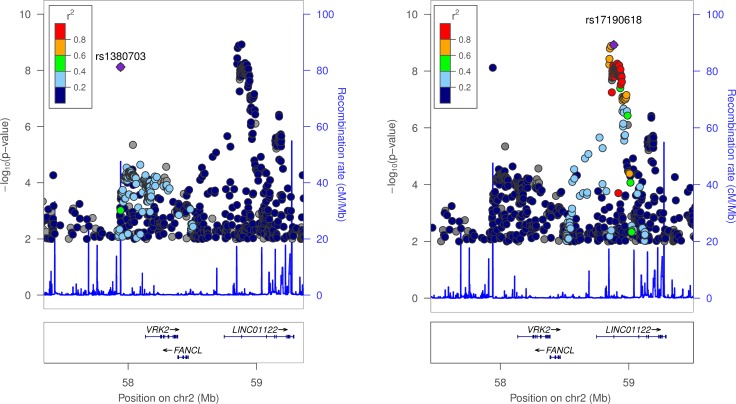
Disrupted circadian rhythms and reduced sleep duration are associated with several human diseases, particularly obesity and type 2 diabetes, but until recently, little was known about the genetic factors influencing these heritable traits. We performed genome-wide association studies of self-reported chronotype (morning/evening person) and self-reported sleep duration in 128,266 white British individuals from the UK Biobank study. Sixteen variants were associated with chronotype (P<5x10⁻⁸), including variants near the known circadian rhythm genes RGS16 (1.21 odds of morningness, 95% CI [1.15, 1.27], P = 3x10-12) and PER2 (1.09 odds of morningness, 95% CI [1.06, 1.12], P = 4x10⁻¹⁰). The PER2 signal has previously been associated with iris function. We sought replication using self-reported data from 89,283 23andMe participants; thirteen of the chronotype signals remained associated at P<5x10⁻⁸ on meta-analysis and eleven of these reached P<0.05 in the same direction in the 23andMe study. We also replicated 9 additional variants identified when the 23andMe study was used as a discovery GWAS of chronotype (all P<0.05 and meta-analysis P<5x10⁻⁸). For sleep duration, we replicated one known signal in PAX8 (2.6 minutes per allele, 95% CI [1.9, 3.2], P = 5.7x10⁻¹⁶) and identified and replicated two novel associations at VRK2 (2.0 minutes per allele, 95% CI [1.3, 2.7], P = 1.2x10⁻⁹; and 1.6 minutes per allele, 95% CI [1.1, 2.2], P = 7.6x10⁻⁹). Although we found genetic correlation between chronotype and BMI (rG = 0.056, P = 0.05); undersleeping and BMI (rG = 0.147, P = 1x10⁻⁵) and oversleeping and BMI (rG = 0.097, P = 0.04), Mendelian Randomisation analyses, with limited power, provided no consistent evidence of causal associations between BMI or type 2 diabetes and chronotype or sleep duration. Our study brings the total number of loci associated with chronotype to 22 and with sleep duration to three, and provides new insights into the biology of sleep and circadian rhythms in humans.
Overview
The claims and statistics of this paper haven’t been checked yet.
Free: it reads the open-access text and checks the first 5 claims that cite a source we can check. Create a free account to check every claim.
Integrity signals
Registry
Cites
Statistics
Figures
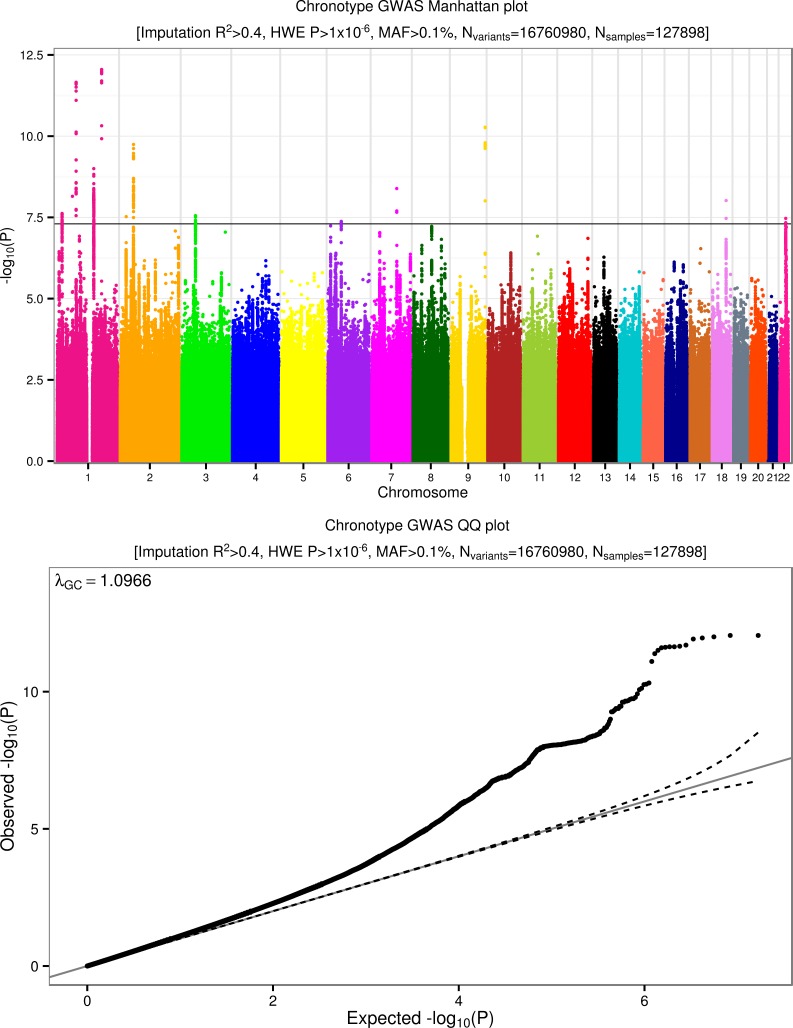
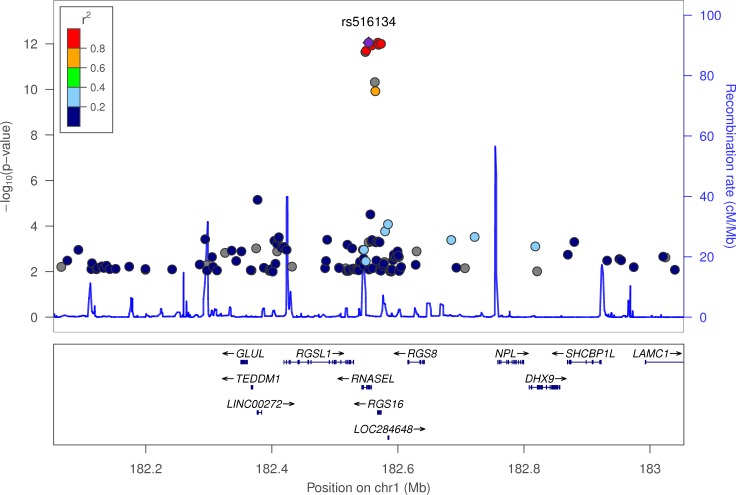
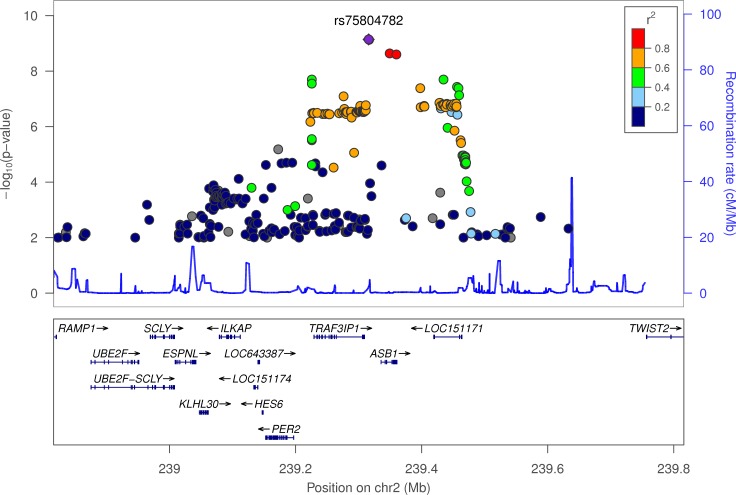
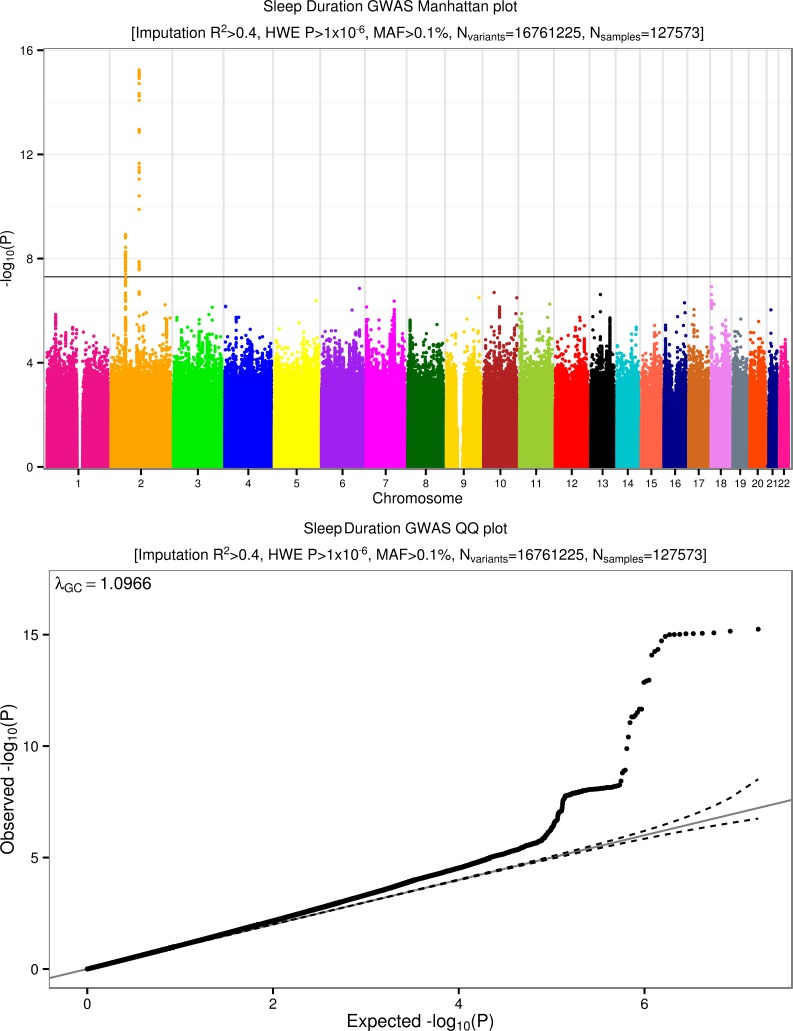
Verification
Claims the paper makes
The claims and statistics of this paper haven’t been checked yet.
Free: it reads the open-access text and checks the first 5 claims that cite a source we can check. Create a free account to check every claim.
Claims other papers make about this one
Each is checked against this paper’s own text: does it say what the citing paper says it does?
The source backs part of the claim, not all of it — or backs it for a different population, condition or comparison.
In the citing paper
“We found concordance for loci previously reported using UK Biobank data for overall (near PML) and moderate intensity activity8 (near LINC02210-CRHR1, and SYT4), sleep duration12,19,23,24 (near PUM1, CHCHD5, SAMMSON, BTBD9-AS1, LRP12, EBLN3P, BSX, KCNH5, PRKCB, and RPGRIP1L), and sedentary time (near LINC01930 and LY6H) (Supplementary Data 3).”
From GWAS identifies 14 loci for device-measured physical activity and sleep duration (2018) · cites this paper as [19]
Experimental — accuracy not yet measuredThe cited source says what the claim attributes to it.
In the citing paper
“More recently, genome-wide association studies that used questionnaire-based evaluations of individual chronotypes have characterized important polymorphisms in regions containing known clock genes as well as other loci (40–43).”
From Chronotype: Implications for Epidemiologic Studies on Chrono-Nutrition and Cardiometabolic Health (2019) · cites this paper as [42]
In the citing paper
“Recent genome-wide association studies with more than 100,000 subjects have identified novel loci associated with sleep duration, chronotype and metabolic phenotypes (for example, body mass index)320,321.”
From Rhythms of life: circadian disruption and brain disorders across the lifespan (2019) · cites this paper as [320]
Self-check
Percentages, sums and reported differences re-computed from the paper’s own numbers.
The self-check needs the paper’s full text.
Citations
Cites
Subramanian, A., Tamayo, P., Mootha, V. K., Mukherjee, S., Ebert, B. L., Gillette, M. A., Paulovich, A., Pomeroy, S. L., Golub, T. R., Lander, E. S., et al. (2005) · Proceedings of the National Academy of Sciences · doi:10.1073/pnas.0506580102 · Cited by 53,625 · cited 1×
“For the results presented in S4 Table, we used gene upstream and downstream limits of 250Kb, excluded the HLA region (default setting) and set the number of GSEA (Gene Set Enrichment Analysis) [34,35] permutations at 10,000 (default).”
MethodMootha, V. K., Lindgren, C. M., Eriksson, K.-F., Subramanian, A., Sihag, S., Lehar, J., Puigserver, P., Carlsson, E., Ridderstråle, M., Laurila, E., et al. (2003) · Nature Genetics · doi:10.1038/ng1180 · Cited by 10,197 · cited 1×
“For the results presented in S4 Table, we used gene upstream and downstream limits of 250Kb, excluded the HLA region (default setting) and set the number of GSEA (Gene Set Enrichment Analysis) [34,35] permutations at 10,000 (default).”
MethodBowden, J., Davey Smith, G., & Burgess, S. (2015) · International Journal of Epidemiology · doi:10.1093/ije/dyv080 · Cited by 9,816 · cited 2×
“We performed the Mendelian Randomisation analysis two ways; firstly using instrumental variables (IV) using STATA’s “IVreg2” function [40] and secondly through the inversevariance weighted (IVW) and MR-Egger methods described in [41].”
MethodBiological insights from 108 schizophrenia-associated genetic loci
Schizophrenia Working Group of the Psychiatric Genomics Consortium (2014) · Nature · doi:10.1038/nature13595 · Cited by 7,577
LD Score regression distinguishes confounding from polygenicity in genome-wide association studies
Schizophrenia Working Group of the Psychiatric Genomics Consortium, Bulik-Sullivan, B. K., Loh, P.-R., Finucane, H. K., Ripke, S., Yang, J., Patterson, N., Daly, M. J., Price, A. L., & Neale, B. M. (2015) · Nature Genetics · doi:10.1038/ng.3211 · Cited by 5,559
METAL: fast and efficient meta-analysis of genomewide association scans
Willer, C. J., Li, Y., & Abecasis, G. R. (2010) · Bioinformatics · doi:10.1093/bioinformatics/btq340 · Cited by 5,205 · cited 2×
“The combined P-value was generated by meta-analysing the 23andMe and UKB continuous chronotype P-values in the meta-analysis software METAL.”
MethodMendelian randomization: genetic anchors for causal inference in epidemiological studies
Davey Smith, G., & Hemani, G. (2014) · Human Molecular Genetics · doi:10.1093/hmg/ddu328 · Cited by 4,677 · cited 1×
“Identifying genetic variants associated with sleep duration and chronotype will provide instruments to help test the causality of epidemiological associations [11].”
BackgroundGenetic studies of body mass index yield new insights for obesity biology
Study, T. L. C., Locke, A. E., The ADIPOGen Consortium, The AGEN-BMI Working Group, The CARDIOGRAMplusC4D Consortium, The CKDGen Consortium, The, G. L. G. C., The, I. C. B. P., The MAGIC Investigators, The MuTHER Consortium, et al. (2015) · Nature · doi:10.1038/nature14177 · Cited by 4,534 · cited 3×
“Instrumental variables analyses using variants and their effect sizes identified by previous studies [26] provided no consistent evidence that BMI causally affects self-reported “morningness” (S7 Table).”
MethodInfluentialSelf-citationAn atlas of genetic correlations across human diseases and traits
ReproGen Consortium, Bulik-Sullivan, B., Psychiatric Genomics Consortium, Genetic Consortium for Anorexia Nervosa of the Wellcome Trust Case Control Consortium 3, Finucane, H. K., Anttila, V., Gusev, A., Day, F. R., Loh, P.-R., Duncan, L., et al. (2015) · Nature Genetics · doi:10.1038/ng.3406 · Cited by 4,255 · cited 1×
“Genetic correlations (see [38] for methodology) between traits were calculated using the LD Score Regression software LDSC (available at https://github.”
MethodLocusZoom: regional visualization of genome-wide association scan results
Pruim, R. J., Welch, R. P., Sanna, S., Teslovich, T. M., Chines, P. S., Gliedt, T. P., Boehnke, M., Abecasis, G. R., & Willer, C. J. (2010) · Bioinformatics · doi:10.1093/bioinformatics/btq419 · Cited by 2,707 · cited 1×
“LocusZoom plots (Figs 2, 3 and 5) were created using the LocusZoom tool [37] (found at http://locuszoom.”
Cited by
Heart Disease and Stroke Statistics—2020 Update: A Report From the American Heart Association
Virani, S. S., Alonso, A., Benjamin, E. J., Bittencourt, M. S., Callaway, C. W., Carson, A. P., Chamberlain, A. M., Chang, A. R., Cheng, S., Delling, F. N., et al. (2020) · Circulation · doi:10.1161/cir.0000000000000757 · Cited by 9,175
The MR-Base platform supports systematic causal inference across the human phenome
Hemani, G., Zheng, J., Elsworth, B., Wade, K. H., Haberland, V., Baird, D., Laurin, C., Burgess, S., Bowden, J., Langdon, R., et al. (2018) · eLife · doi:10.7554/elife.34408 · Cited by 7,959
“…using the UK Biobank resource ( Millard et al., 2017 ; Bycroft et al., 2017 ; Churchhouse and Neale, 2017 ; GIANT consortium et al., 2016 ; Jones et al., 2016 ; Pilling et al., 2016 ), 575 metabolomic traits from two studies ( Shin et al., 2014 ; Kettunen et al., 2016 ), 151 immunological…”
MethodHeart Disease and Stroke Statistics—2023 Update: A Report From the American Heart Association
Tsao, C. W., Aday, A. W., Almarzooq, Z. I., Anderson, C. A. M., Arora, P., Avery, C. L., Baker-Smith, C. M., Beaton, A. Z., Boehme, A. K., Buxton, A. E., et al. (2023) · Circulation · doi:10.1161/cir.0000000000001123 · Cited by 8,300
Heart Disease and Stroke Statistics—2022 Update: A Report From the American Heart Association
Tsao, C. W., Aday, A. W., Almarzooq, Z. I., Alonso, A., Beaton, A. Z., Bittencourt, M. S., Boehme, A. K., Buxton, A. E., Carson, A. P., Commodore-Mensah, Y., et al. (2022) · Circulation · doi:10.1161/cir.0000000000001052 · Cited by 5,987
The GTEx Consortium atlas of genetic regulatory effects across human tissues
The GTEx Consortium, Aguet, F., Anand, S., Ardlie, K. G., Gabriel, S., Getz, G. A., Graubert, A., Hadley, K., Handsaker, R. E., Huang, K. H., et al. (2020) · Science · doi:10.1126/science.aaz1776 · Cited by 5,547
Heart Disease and Stroke Statistics—2021 Update: A Report From the American Heart Association
Virani, S. S., Alonso, A., Aparicio, H. J., Benjamin, E. J., Bittencourt, M. S., Callaway, C. W., Carson, A. P., Chamberlain, A. M., Cheng, S., Delling, F. N., et al. (2021) · Circulation · doi:10.1161/cir.0000000000000950 · Cited by 5,784
Interpreting findings from Mendelian randomization using the MR-Egger method.
Burgess, S., & Thompson, S. G. (2017) · European Journal of Epidemiology · doi:10.1007/s10654-017-0255-x · Cited by 4,571
Identification of common genetic risk variants for autism spectrum disorder
Autism Spectrum Disorder Working Group of the Psychiatric Genomics Consortium, Grove, J., BUPGEN, Major Depressive Disorder Working Group of the Psychiatric Genomics Consortium, 23andMe Research Team, Ripke, S., Als, T. D., Mattheisen, M., Walters, R. K., Won, H., et al. (2019) · Nature Genetics · doi:10.1038/s41588-019-0344-8 · Cited by 2,421
Transcriptional architecture of the mammalian circadian clock
Takahashi, J. S. (2017) · Nature Reviews Genetics · doi:10.1038/nrg.2016.150 · Cited by 2,635
Genome-wide Analysis of Insomnia (N=1,331,010) Identifies Novel Loci and Functional Pathways
Jansen, P. R., Watanabe, K., Stringer, S., Skene, N., Bryois, J., Hammerschlag, A. R., de Leeuw, C. A., Benjamins, J., Muñoz-Manchado, A. B., Nagel, M., et al. (2018) · doi:10.1101/214973 · Cited by 860
Self-citationThe 23andMe Research Team, Jansen, P. R., Watanabe, K., Stringer, S., Skene, N., Bryois, J., Hammerschlag, A. R., de Leeuw, C. A., Benjamins, J. S., Muñoz-Manchado, A. B., et al. (2019) · Nature Genetics · doi:10.1038/s41588-018-0333-3 · Cited by 857
Self-citationChronotype and Social Jetlag: A (Self-) Critical Review
Roenneberg, T., Pilz, L. K., Zerbini, G., & Winnebeck, E. C. (2019) · Biology · doi:10.3390/biology8030054 · Cited by 733
Self-citationRhythms of life: circadian disruption and brain disorders across the lifespan
Logan, R. W., & McClung, C. A. (2019) · Nature Reviews Neuroscience · doi:10.1038/s41583-018-0088-y · Cited by 713
Jones, S. E., Lane, J. M., Wood, A. R., van Hees, V. T., Tyrrell, J., Beaumont, R. N., Jeffries, A. R., Dashti, H. S., Hillsdon, M., Ruth, K. S., et al. (2019) · Nature Communications · doi:10.1038/s41467-018-08259-7 · Cited by 691
Self-citationThe aging clock: circadian rhythms and later life
Hood, S., & Amir, S. (2017) · Journal of Clinical Investigation · doi:10.1172/jci90328 · Cited by 605
“org Volume 127 Number 2 February 2017 evidence for a genetic predisposition toward a morningness chronotype (155) may suggest that the transition toward morningness with increasing age could involve epigenetic mechanisms within the molecular clock, changes in inputs to or outputs of the master clock, downstream oscill…”
Dashti, H. S., Jones, S. E., Wood, A. R., Lane, J. M., van Hees, V. T., Wang, H., Rhodes, J. A., Song, Y., Patel, K., Anderson, S. G., et al. (2019) · Nature Communications · doi:10.1038/s41467-019-08917-4 · Cited by 609
Self-citationEstimating sleep parameters using an accelerometer without sleep diary
van Hees, V. T., Sabia, S., Jones, S. E., Wood, A. R., Anderson, K. N., Kivimäki, M., Frayling, T. M., Pack, A. I., Bucan, M., Trenell, M. I., et al. (2018) · Scientific Reports · doi:10.1038/s41598-018-31266-z · Cited by 554
Self-citationGoodarzi, M. O. (2018) · The Lancet Diabetes & Endocrinology · doi:10.1016/s2213-8587(17)30200-0 · Cited by 470
Characterizing sleep spindles in 11,630 individuals from the National Sleep Research Resource
Purcell, S. M., Manoach, D. S., Demanuele, C., Cade, B. E., Mariani, S., Cox, R., Panagiotaropoulou, G., Saxena, R., Pan, J. Q., Smoller, J. W., et al. (2017) · Nature Communications · doi:10.1038/ncomms15930 · Cited by 439
GWAS identifies 14 loci for device-measured physical activity and sleep duration
Doherty, A., Smith-Byrne, K., Ferreira, T., Holmes, M. V., Holmes, C., Pulit, S. L., & Lindgren, C. M. (2018) · Nature Communications · doi:10.1038/s41467-018-07743-4 · Cited by 408
Klimentidis, Y. C., Raichlen, D. A., Bea, J., Garcia, D. O., Wineinger, N. E., Mandarino, L. J., Alexander, G. E., Chen, Z., & Going, S. B. (2018) · International Journal of Obesity · doi:10.1038/s41366-018-0120-3 · Cited by 403
“PA with obesity [60, 76], psychiatric [77, 78], educational [79], chronotype [80], and other traits.”
BackgroundLane, J. M., Liang, J., Vlasac, I., Anderson, S. G., Bechtold, D. A., Bowden, J., Emsley, R., Gill, S., Little, M. A., Luik, A. I., et al. (2017) · Nature Genetics · doi:10.1038/ng.3749 · Cited by 350
Hu, Y., Shmygelska, A., Tran, D., Eriksson, N., Tung, J. Y., & Hinds, D. A. (2016) · Nature Communications · doi:10.1038/ncomms10448 · Cited by 321
Genetic studies of accelerometer-based sleep measures yield new insights into human sleep behaviour
Jones, S. E., van Hees, V. T., Mazzotti, D. R., Marques-Vidal, P., Sabia, S., van der Spek, A., Dashti, H. S., Engmann, J., Kocevska, D., Tyrrell, J., et al. (2019) · Nature Communications · doi:10.1038/s41467-019-09576-1 · Cited by 300
Self-citationHammerschlag, A. R., Stringer, S., de Leeuw, C. A., Sniekers, S., Taskesen, E., Watanabe, K., Blanken, T. F., Dekker, K., te Lindert, B. H. W., Wassing, R., et al. (2017) · Nature Genetics · doi:10.1038/ng.3888 · Cited by 289
Associations between chronotype, morbidity and mortality in the UK Biobank cohort
Knutson, K. L., & von Schantz, M. (2018) · Chronobiology International · doi:10.1080/07420528.2018.1454458 · Cited by 275
“Other investigators reporting UK Biobank data (Jones et al. 2016) have chosen to classify this group as a fifth, intermediate response.”
Chronotype, circadian rhythm, and psychiatric disorders: Recent evidence and potential mechanisms
Zou, H., Zhou, H., Yan, R., Yao, Z., & Lu, Q. (2022) · Frontiers in Neuroscience · doi:10.3389/fnins.2022.811771 · Cited by 269
“RGS16 regulates cAMP signaling by synchronizing intercellular communication between pacemaker neurons in the SCN (Jones et al., 2016).”
BackgroundResultInfluentialExposing the exposures responsible for type 2 diabetes and obesity
Franks, P. W., & McCarthy, M. I. (2016) · Science · doi:10.1126/science.aaf5094 · Cited by 265
Crouse, J. J., Carpenter, J. S., Song, Y. J. C., Hockey, S. J., Naismith, S. L., Grunstein, R. R., Scott, E. M., Merikangas, K. R., Scott, J., & Hickie, I. B. (2021) · The Lancet Psychiatry · doi:10.1016/s2215-0366(21)00034-1 · Cited by 255
The genetics of circadian rhythms, sleep and health
Jagannath, A., Taylor, L., Wakaf, Z., Vasudevan, S. R., & Foster, R. G. (2017) · Human Molecular Genetics · doi:10.1093/hmg/ddx240 · Cited by 256
“Two recent large scale genomic studies identified variants in several clock-related loci (92,93), particularly PER2/3, underlying morningness in the general population.”
BackgroundChronotype: Implications for Epidemiologic Studies on Chrono-Nutrition and Cardiometabolic Health
Almoosawi, S., Vingeliene, S., Gachon, F., Voortman, T., Palla, L., Johnston, J. D., Van Dam, R. M., Darimont, C., & Karagounis, L. G. (2019) · Advances in Nutrition · doi:10.1093/advances/nmy070 · Cited by 247
Genetic basis of chronotype in humans: insights from three landmark GWAS
Kalmbach, D. A., Schneider, L. D., Cheung, J., Bertrand, S. J., Kariharan, T., Pack, A. I., & Gehrman, P. R. (2017) · Sleep · doi:10.1093/sleep/zsw048 · Cited by 243
“Jones et al.(45) identified 16 significant loci associated with chronotype in the UK Biobank (Table 1).”
BackgroundMethodInfluentialSelf-citationWang, H., Lane, J. M., Jones, S. E., Dashti, H. S., Ollila, H. M., Wood, A. R., van Hees, V. T., Brumpton, B., Winsvold, B. S., Kantojärvi, K., et al. (2019) · Nature Communications · doi:10.1038/s41467-019-11456-7 · Cited by 237
Self-citationRichardson, T. G., Harrison, S., Hemani, G., & Davey Smith, G. (2019) · eLife · doi:10.7554/elife.43657 · Cited by 198
Genetics of circadian rhythms and sleep in human health and disease
Lane, J. M., Qian, J., Mignot, E., Redline, S., Scheer, F. A. J. L., & Saxena, R. (2023) · Nature Reviews Genetics · doi:10.1038/s41576-022-00519-z · Cited by 236
The origins and evolution of sleep
Keene, A. C., & Duboue, E. R. (2018) · Journal of Experimental Biology · doi:10.1242/jeb.159533 · Cited by 220
“A system was devised to Glossary Actigraphy Non-invasive method for measuring levels of activity in humans and other animal subjects.”
MethodInfluentialTwo sides of a coin: ecological and chronobiological perspectives of timing in the wild
Helm, B., Visser, M. E., Schwartz, W., Kronfeld-Schor, N., Gerkema, M., Piersma, T., & Bloch, G. (2017) · Philosophical Transactions of the Royal Society B: Biological Sciences · doi:10.1098/rstb.2016.0246 · Cited by 206
“Extreme human chronotypes are commonly referred to as "larks" - morning people (those who wake up early and are most alert in the first part of the day) and "owls" - evening people (those who are most alert in the late evening hours and prefer to go to bed late) [133, 134].”
BackgroundGarcia-Saenz, A., Sánchez de Miguel, A., Espinosa, A., Valentin, A., Aragonés, N., Llorca, J., Amiano, P., Martín Sánchez, V., Guevara, M., Capelo, R., et al. (2018) · Environmental Health Perspectives · doi:10.1289/ehp1837 · Cited by 204
“Genetic background has been shown to be related to preferential day or night pro fi le (chronotype) (Jones et al. 2016), adaptation to night work, and changes in sleep and wake schedules.”
Zhang, Y., Lu, Q., Ye, Y., Huang, K., Liu, W., Wu, Y., Zhong, X., Li, B., Yu, Z., Travers, B. G., et al. (2021) · Genome Biology · doi:10.1186/s13059-021-02478-w · Cited by 201
Vadnie, C. A., & McClung, C. A. (2017) · Neural Plasticity · doi:10.1155/2017/1504507 · Cited by 199
Tan, X., Chapman, C. D., Cedernaes, J., & Benedict, C. (2018) · Sleep Medicine Reviews · doi:10.1016/j.smrv.2017.11.001 · Cited by 193
Strausz, S., Ruotsalainen, S., Ollila, H. M., Karjalainen, J., Kiiskinen, T., Reeve, M., Kurki, M., Mars, N., Havulinna, A. S., Luonsi, E., et al. (2021) · European Respiratory Journal · doi:10.1183/13993003.03091-2020 · Cited by 194
Self-citationTaylor, A. E., Jones, H. J., Sallis, H., Euesden, J., Stergiakouli, E., Davies, N. M., Zammit, S., Lawlor, D. A., Munafò, M. R., Davey Smith, G., et al. (2018) · International Journal of Epidemiology · doi:10.1093/ije/dyy060 · Cited by 192
An atlas of gene regulatory elements in adult mouse cerebrum
Li, Y. E., Preissl, S., Hou, X., Zhang, Z., Zhang, K., Qiu, Y., Poirion, O. B., Li, B., Chiou, J., Liu, H., et al. (2021) · Nature · doi:10.1038/s41586-021-03604-1 · Cited by 185
Cerebrospinal fluid metabolomics identifies 19 brain-related phenotype associations
Panyard, D. J., Kim, K. M., Darst, B. F., Deming, Y. K., Zhong, X., Wu, Y., Kang, H., Carlsson, C. M., Johnson, S. C., Asthana, S., et al. (2021) · Communications Biology · doi:10.1038/s42003-020-01583-z · Cited by 180
A comparative atlas of single-cell chromatin accessibility in the human brain
Li, Y. E., Preissl, S., Miller, M., Johnson, N. D., Wang, Z., Jiao, H., Zhu, C., Wang, Z., Xie, Y., Poirion, O., et al. (2023) · Science · doi:10.1126/science.adf7044 · Cited by 173
Randler, C., & Engelke, J. (2019) · Chronobiology International · doi:10.1080/07420528.2019.1585867 · Cited by 169
“Basically, genetic markers (loci) have been identified, that are correlated with measures of chronotype in questionnaires (e.g., Jones et al. 2016).”
BackgroundMisalignment with the external light environment drives metabolic and cardiac dysfunction
West, A. C., Smith, L., Ray, D. W., Loudon, A. S. I., Brown, T. M., & Bechtold, D. A. (2017) · Nature Communications · doi:10.1038/s41467-017-00462-2 · Cited by 168
Suri, P., Palmer, M. R., Tsepilov, Y. A., Freidin, M. B., Boer, C. G., Yau, M. S., Evans, D. S., Gelemanović, A., Bartz, T. M., Nethander, M., et al. (2018) · PLoS Genetics · doi:10.1371/journal.pgen.1007601 · Cited by 162
“Although successful GWAS of self-reported symptoms have been conducted which replicate associations seen with more specific disease phenotypes,[66] our findings highlight potential challenges of GWAS of CBP: despite being one of the largest international studies of CBP ever conducted, our study detected only 3 signifi…”
BackgroundSelf-citationRichmond, R. C., Anderson, E. L., Dashti, H. S., Jones, S. E., Lane, J. M., Strand, L. B., Brumpton, B., Rutter, M. K., Wood, A. R., Straif, K., et al. (2019) · BMJ · doi:10.1136/bmj.l2327 · Cited by 149
Self-citationRole of chronotype in dietary intake, meal timing, and obesity: a systematic review
Teixeira, G. P., Guimarães, K. C., Soares, A. G. N. S., Marqueze, E. C., Moreno, C. R. D. C., Mota, M. C., & Crispim, C. A. (2022) · Nutrition Reviews · doi:10.1093/nutrit/nuac044 · Cited by 170
Off the Clock: From Circadian Disruption to Metabolic Disease
Maury, E. (2019) · International Journal of Molecular Sciences · doi:10.3390/ijms20071597 · Cited by 140
Girdhar, K., Hoffman, G. E., Jiang, Y., Brown, L., Kundakovic, M., Hauberg, M. E., Francoeur, N. J., Wang, Y.-C., Shah, H., Kavanagh, D. H., et al. (2018) · Nature Neuroscience · doi:10.1038/s41593-018-0187-0 · Cited by 139
Heart healthy cities: genetics loads the gun but the environment pulls the trigger
Münzel, T. F., Sørensen, M., Lelieveld, J., Hahad, O., Al-Kindi, S. G., Nieuwenhuijsen, M. J., Giles‐Corti, B., Daiber, A., & Rajagopalan, S. (2021) · European Heart Journal · doi:10.1093/eurheartj/ehab235 · Cited by 162
The role of the circadian system in the etiology and pathophysiology of ADHD: time to redefine ADHD?
Bijlenga, D., Vollebregt, M. A., Kooij, J. J. S., & Arns, M. (2019) · ADHD Attention Deficit and Hyperactivity Disorders · doi:10.1007/s12402-018-0271-z · Cited by 137
Gentry, N. W., Ashbrook, L. H., Fu, Y., & Ptáček, L. J. (2021) · Journal of Clinical Investigation · doi:10.1172/jci148282 · Cited by 158
“, using large data sets from private sequencing companies, found significant genetic associations between certain loci and “morningness” (59).”
BackgroundLoos, R. J. (2018) · Current Opinion in Genetics & Development · doi:10.1016/j.gde.2018.02.009 · Cited by 129
Genetics of the human circadian clock and sleep homeostat
Ashbrook, L. H., Krystal, A. D., Fu, Y.-H., & Ptáček, L. J. (2020) · Neuropsychopharmacology · doi:10.1038/s41386-019-0476-7 · Cited by 123
“Four large GWAS published in the last 4 years found loci near the PER2, FBXL13, RGS16, and AK5 genes [28, 40, 41, 43].”
BackgroundVera, B., Dashti, H. S., Gómez-Abellán, P., Hernández-Martínez, A. M., Esteban, A., Scheer, F. A. J. L., Saxena, R., & Garaulet, M. (2018) · Scientific Reports · doi:10.1038/s41598-017-18268-z · Cited by 115
The genetics of obstructive sleep apnoea
Mukherjee, S., Saxena, R., & Palmer, L. J. (2018) · Respirology · doi:10.1111/resp.13212 · Cited by 106
Genome-wide analysis of insomnia disorder
Stein, M. B., McCarthy, M. J., Chen, C., Jain, S., Gelernter, J. E., He, F., Heeringa, S. G., Kessler, R. C., Nock, M. K., Ripke, S., et al. (2018) · Molecular Psychiatry · doi:10.1038/s41380-018-0033-5 · Cited by 104
“org) [26] to test the genetic correlation between insomnia disorder and several other traits in European samples using publicly available meta-analytic GWAS for two sleep phenotypes (morningness and sleep duration) [20], two mental disorders frequently comorbid with insomnia (major depression and bipolar disorder) [37…”
Social and non-social autism symptoms and trait domains are genetically dissociable
Warrier, V., Toro, R., Won, H., Leblond, C. S., Cliquet, F., Delorme, R., De Witte, W., Bralten, J., Chakrabarti, B., Børglum, A. D., et al. (2019) · Communications Biology · doi:10.1038/s42003-019-0558-4 · Cited by 94
Self-citationTreur, J. L., Munafo, M. R., Logtenberg, E., Wiers, R. W. H. J., & Verweij, K. J. H. (2021) · Psychological Medicine · doi:10.1017/s003329172100180x · Cited by 112
Sleep Apnea and Sleep Habits: Relationships with Metabolic Syndrome
Borel, A. (2019) · Nutrients · doi:10.3390/nu11112628 · Cited by 105
“The role of gene variants that are associated with a latter chronotype to explain higher BMI and unfavorable metabolic traits has been evaluated in the GWAS based on UK-biobank data [37].”
BackgroundCircadian control of pain and neuroinflammation
Segal, J. P., Tresidder, K. A., Bhatt, C., Gilron, I., & Ghasemlou, N. (2017) · Journal of Neuroscience Research · doi:10.1002/jnr.24150 · Cited by 110
“, 2013)? Genetic studies using large patient populations, such as the UK Biobank or the 23andMe cohort (Hu et al., 2016; Jones et al., 2016; Kalmbach et al., 2017; Lane et al., 2016), can help identify new potential interactions between genes controlling circadian rhythms and pain or vice versa.”
BackgroundBeyond sleep: A multidimensional model of chronotype
Chauhan, S., Norbury, R., Faßbender, K., Ettinger, U., & Kumari, V. (2023) · Neuroscience & Biobehavioral Reviews · doi:10.1016/j.neubiorev.2023.105114 · Cited by 110
Common risk variants identified in autism spectrum disorder
Grove, J., Ripke, S., Als, T. D., Mattheisen, M., Walters, R., Won, H., Pallesen, J., Agerbo, E., Andreassen, O. A., Anney, R., et al. (2017) · doi:10.1101/224774 · Cited by 89
Neurogenetic basis for circadian regulation of metabolism by the hypothalamus
Cedernaes, J., Waldeck, N., & Bass, J. (2019) · Genes & Development · doi:10.1101/gad.328633.119 · Cited by 82
“Gene variants have been discovered thatmodulate the circadian timing of sleep (Hu et al. 2016; Jones et al. 2016), homeostatic sleep regulation (e.g., Dec2/Bhlhe41 and Homer1a) (Maret et al. 2007; Pellegrino et al. 2014; Hirano et al. 2018), sleep duration (e.g., the protein kinase Sik3) (Funato et…”
BackgroundThe role of CLOCK gene in psychiatric disorders: Evidence from human and animal research
Schuch, J. B., Genro, J. P., Bastos, C. R., Ghisleni, G., & Tovo‐Rodrigues, L. (2018) · American Journal of Medical Genetics Part B: Neuropsychiatric Genetics · doi:10.1002/ajmg.b.32599 · Cited by 80
“, sleep duration, oversleeping, and chronotype (Jones et al., 2016; Lane et al., 2016, 2017).”
BackgroundInfluentialHauberg, M. E., Creus-Muncunill, J., Bendl, J., Kozlenkov, A., Zeng, B., Corwin, C., Chowdhury, S., Kranz, H., Hurd, Y. L., Wegner, M., et al. (2020) · Nature Communications · doi:10.1038/s41467-020-19319-2 · Cited by 79
Mattheisen, M., Grove, J., Als, T. D., Martin, J., Voloudakis, G., Meier, S. M., Demontis, D., Bendl, J. M., Walters, R. K., Carey, C. E., et al. (2022) · Nature Genetics · doi:10.1038/s41588-022-01171-3 · Cited by 98
Longitudinal change of sleep timing: association between chronotype and longevity in older adults
Didikoğlu, A., Maharani, A., Payton, A., Pendleton, N., & Canal, M. M. (2019) · Chronobiology International · doi:10.1080/07420528.2019.1641111 · Cited by 83
“Genetic correlation can partially explain the link between chronotype and health disorders (Jones et al. 2019, 2016).”
BackgroundSleep and cognitive aging in the eighth decade of life
Cox, S. R., Ritchie, S. J., Allerhand, M. H., Hagenaars, S. P., Radaković, R., Breen, D. P., Davies, G., Riha, R. L., Harris, S. E., Starr, J. M., et al. (2019) · SLEEP · doi:10.1093/sleep/zsz019 · Cited by 81
“We used summary data of a recent GWAS of chronotype (morningness: “Definitely a ‘morning’ person”, “More a ‘morning’ than ‘evening’ person”, “More an ‘evening’ than a ‘morning’ person”, “Definitely an ‘evening’ person” or “Do not know”) and sleep duration (an estimate of the average number of hours slept in a 24-hour…”
Squires, K. E., Montañez‐Miranda, C., Pandya, R. R., Torres, M. P., & Hepler, J. R. (2018) · Pharmacological Reviews · doi:10.1124/pr.117.015354 · Cited by 77
“Interestingly, in humans, noncoding variants in RGS16 have been linked with self-reported “morning people” (Hu et al., 2016; Jones et al., 2016).”
BackgroundDijk, D., & Landolt, H. (2019) · Handbook of experimental pharmacology · doi:10.1007/164_2019_243 · Cited by 97
Ferguson, A., Lyall, L. M., Ward, J., Strawbridge, R. J., Cullen, B., Graham, N., Niedzwiedz, C. L., Johnston, K. J. A., MacKay, D., Biello, S. M., et al. (2018) · EBioMedicine · doi:10.1016/j.ebiom.2018.08.004 · Cited by 70
“Also, with the relatively small sample size of low RA cases, our analyses may be underpowered resulting in a lower estimate of SNP heritability than expected (for example, compared to chronotype) [18].”
BackgroundCircadian gene variants and breast cancer
Reszka, E., Lesicka, M., Muurlink, O. T., & Pepłońska, B. (2017) · Cancer Letters · doi:10.1016/j.canlet.2017.01.012 · Cited by 76
Dashti, H. S., Redline, S. S., & Saxena, R. (2018) · SLEEP · doi:10.1093/sleep/zsy247 · Cited by 72
Thorp, J. G., Marees, A. T., Ong, J., An, J., MacGregor, S., & Derks, E. M. (2019) · Psychological Medicine · doi:10.1017/s0033291719002526 · Cited by 71
Genetics of Sleep and Insights into Its Relationship with Obesity
Dashti, H. S., & Ordovás, J. M. (2021) · Annual Review of Nutrition · doi:10.1146/annurev-nutr-082018-124258 · Cited by 77
Chrononutrition—When We Eat Is of the Essence in Tackling Obesity
Ahluwalia, M. K. (2022) · Nutrients · doi:10.3390/nu14235080 · Cited by 64
Gibson, M., Munafo, M. R., Taylor, A. E., & Treur, J. L. (2018) · Nicotine & Tobacco Research · doi:10.1093/ntr/nty230 · Cited by 66
Pleiotropic genetic effects influencing sleep and neurological disorders
Veatch, O. J., Keenan, B. T., Gehrman, P., Malow, B. A., & Pack, A. I. (2017) · The Lancet Neurology · doi:10.1016/s1474-4422(16)30339-8 · Cited by 73
Self-citationAustin-Zimmerman, I., Levey, D. F., Giannakopoulou, O., Deak, J. D., Galimberti, M., Adhikari, K., Zhou, H., Denaxas, S., Irizar, H., Kuchenbaecker, K. B., et al. (2023) · Nature Communications · doi:10.1038/s41467-023-41249-y · Cited by 75
“VRK2 encodes a serine/threonine kinase protein which is essential to multiple signal transduction pathways 7,14,18 .”
BackgroundGarfield, V. (2019) · International Journal of Environmental Research and Public Health · doi:10.3390/ijerph16224327 · Cited by 82
“Jones and colleagues [54] were the first to publish an MR study of BMI and subjective sleep duration in ~127,000 adults and found no evidence of a causal relationship between the two.”
BackgroundDevelopment of Late Circadian Preference: Sleep Timing From Childhood to Late Adolescence
Kuula, L., Pesonen, A., Merikanto, I., Gradisar, M., Lahti, J. M. T., Heinonen, K., Kajantie, E., & Räikkönen, K. (2017) · The Journal of Pediatrics · doi:10.1016/j.jpeds.2017.10.068 · Cited by 66
Pathomechanisms of Blood-Brain Barrier Disruption in ALS
Kakaroubas, N., Brennan, S. E., Keon, M., & Saksena, N. (2019) · Neuroscience Journal · doi:10.1155/2019/2537698 · Cited by 66
Robinson, J. C. (2011) · PubMed · Cited by 71
A distinctive DNA methylation pattern in insufficient sleep
Lahtinen, A., Puttonen, S., Vanttola, P., Viitasalo, K., Sulkava, S., Pervjakova, N., Joensuu, A., Salo, P. P., Toivola, A., Härmä, M., et al. (2019) · Scientific Reports · doi:10.1038/s41598-018-38009-0 · Cited by 74
Wang, Z., Wilson, C. M., Mendelev, N., Ge, Y., Galfalvy, H., Elder, G. A., Ahlers, S. T., Yarnell, A. M., LoPresti, M. L., Kamimori, G. H., et al. (2020) · Journal of Neurotrauma · doi:10.1089/neu.2019.6742 · Cited by 62
Celis-Morales, C. A., Lyall, D. M., Guo, Y., Steell, L., Llanas, D., Ward, J., Mackay, D., Biello, S. M., Bailey, M. E. S., Pell, J. P., et al. (2017) · American Journal of Clinical Nutrition · doi:10.3945/ajcn.116.147231 · Cited by 65
“Similarly, chronotype is also heritable as estimated by twin and family studies (12–42%), and its genetic basis has been recently defined (12, 16).”
Lewis, K. J. S., Richards, A., Karlsson, R., Leonenko, G., Jones, S. E., Jones, H. J., Gordon-Smith, K., Forty, L., Escott-Price, V., Owen, M. J., et al. (2020) · JAMA Psychiatry · doi:10.1001/jamapsychiatry.2019.4079 · Cited by 51
Self-citationGenome-Wide Association Study of Circadian Behavior in Drosophila melanogaster
Harbison, S. T., Kumar, S., Huang, W., McCoy, L. J., Smith, K. R., & Mackay, T. F. C. (2018) · Behavior Genetics · doi:10.1007/s10519-018-9932-0 · Cited by 55
Madrid‐Valero, J. J., Rubio‐Aparicio, M., Gregory, A. M., Sánchez‐Meca, J., & Ordoñana, J. R. (2019) · Neuroscience & Biobehavioral Reviews · doi:10.1016/j.neubiorev.2019.12.028 · Cited by 55
“…sleep duration, insomnia, daytime sleepiness, or chronotype, and are detecting an increasing number of loci implicated (Dashti et al., 2019; Doherty et al., 2018; Jansen et al., 2019; Jones et al., 2019; Jones et al., 2016; Kalmbach et al., 2017; Lane et al., 2017; Nishiyama et al., 2019).”
APOE Genotype and Nonrespiratory Sleep Parameters in Cognitively Intact Older Adults
Spira, A. P., An, Y., Peng, Y., Wu, M. N., Simonsick, E. M., Ferrucci, L., & Resnick, S. M. (2017) · SLEEP · doi:10.1093/sleep/zsx076 · Cited by 52
Molecular genetic overlap between posttraumatic stress disorder and sleep phenotypes
Lind, M. J., Brick, L. A. D., Gehrman, P., Duncan, L. E., Gelaye, B., Maihofer, A. X., Nievergelt, C. M., Nugent, N. R., Stein, M. B., Amstadter, A. B., et al. (2019) · SLEEP · doi:10.1093/sleep/zsz257 · Cited by 52
“[20] Sleep duration, continuous 127 573 0.”
BackgroundInfluentialSelf-citationSun, X., Gustat, J., Bertisch, S. M., Redline, S. S., & Bazzano, L. (2019) · Chronobiology International · doi:10.1080/07420528.2019.1689398 · Cited by 55
“Lane et al. (2016) and Jones et al. (2016) found that a few chronotype loci discovered by Genome Wide Association Studies were significantly associated with BMI.”
BackgroundMethodCross-Disorder Group of the Psychiatric Genomics Consortium, Lee, P. H., Anttila, V., Won, H., Feng, Y.-C. A., Rosenthal, J., Zhu, Z., Tucker-Drob, E. M., Nivard, M. G., Grotzinger, A. D., et al. (2019) · bioRxiv (Cold Spring Harbor Laboratory) · doi:10.1101/528117 · Cited by 47
“, 2015), sleep duration(Jones et al., 2016), number of children ever born (Barban et al.”
BackgroundSleep disorders and Parkinson disease; lessons from genetics
Gan‐Or, Z., Alcalay, R. N., Rouleau, G. A., & Postuma, R. B. (2018) · Sleep Medicine Reviews · doi:10.1016/j.smrv.2018.01.006 · Cited by 53
Missing a beat: assessment of circadian rhythm abnormalities in bipolar disorder in the genomic era
McCarthy, M. J. (2018) · Psychiatric Genetics · doi:10.1097/ypg.0000000000000215 · Cited by 55
“If validated, CIART may indeed be a clock gene identified by GWAS as a risk factor for BD. Examining another dimension of circadian rhythms, the UK Biobank also conducted an actigraphy study in more than 90 000 patients who’s behavioral activity was tracked continuously for 7 days.”
BackgroundMethodInfluential
Metadata
- Authors
- Jones, S. E., Tyrrell, J., Wood, A. R., Beaumont, R. N., Ruth, K. S., Tuke, M. A., Yaghootkar, H., Hu, Y., Teder-Laving, M., Hayward, C., Roenneberg, T., Wilson, J. F., Del Greco, F., Hicks, A. A., Shin, C., Yun, C.-H., Lee, S. K., Metspalu, A., Byrne, E. M., Gehrman, P. R., Tiemeier, H., Allebrandt, K. V., Freathy, R. M., Murray, A., Hinds, D. A., Frayling, T. M., & Weedon, M. N.
- Affiliations
- University of Exeter (GB)
- 23andMe (United States) (US)
- Institute of Genetics and Cancer (GB)
- Institut für Medizinische Psychologie (DE)
- Eurac Research (IT)
- Korea University Ansan Hospital (KR)
- Seoul National University Bundang Hospital (KR)
- Estonian Biocentre (EE)
- The University of Queensland (AU)
- University of Pennsylvania (US)
- Erasmus MC (NL)
- Corresponding author
- Weedon, Michael N.
- ORCID
- Jones, Samuel E.
- Tyrrell, Jessica
- Wood, Andrew R.
- Beaumont, Robin N.
- Ruth, Katherine S.
- Tuke, Marcus A.
- Yaghootkar, Hanieh
- Hayward, Caroline
- Roenneberg, Till
- Wilson, James F.
- Hicks, Andrew A.
- Shin, Chol
- Yun, Chang-Ho
- Lee, Seung Ku
- Metspalu, Andres
- Byrne, Enda M.
- Gehrman, Philip R.
- Tiemeier, Henning
- Allebrandt, Karla V.
- Freathy, Rachel M.
- Murray, Anna
- Hinds, David A.
- Frayling, Timothy M.
- Weedon, Michael N.
- Venue
- PLOS Genetics
- Publisher
- Public Library of Science (PLoS)
- Published
- 2016-08-05
- Volume
- 12
- Issue
- 8
- Pages
- e1006125
- ISSN
- 1553-7390 (ISSN-L)
- 1553-7404
- PMC
- PMC4975467
- OpenAlex
- W2491330173
- Cited by
- 388
- References
- 42
- Citations by year
- 2026: 18 · 2025: 32 · 2024: 43 · 2023: 30 · 2022: 34 · 2021: 43 · 2020: 40 · 2019: 56 · 2018: 47 · 2017: 35 · 2016: 9
- FWCI
- 31.11
- Type
- journal article
- Language
- en
- Open access
- gold
- doi.org
- Licence
- Locations
- PLoS Genetics (publishedVersion, cc-by)
- bioRxiv (Cold Spring Harbor Laboratory) (acceptedVersion, cc-by)
- PubMed Central (publishedVersion, cc-by)
- PubMed (publishedVersion)
- EUR Research Repository (Erasmus University Rotterdam) (publishedVersion, other-oa)
- Open Research Exeter (University of Exeter) (acceptedVersion)
- Edinburgh Research Explorer (University of Edinburgh) (submittedVersion, other-oa)
- EUR Research Repository (Erasmus University Rotterdam) (submittedVersion, other-oa)
- RePub (Erasmus University Rotterdam) (submittedVersion, other-oa)
- RePEc: Research Papers in Economics (submittedVersion)
- DOAJ (DOAJ: Directory of Open Access Journals) (submittedVersion, cc-by-sa)
- Open access LMU (Ludwid Maxmilian's Universitat Munchen) (submittedVersion)
- Figshare (submittedVersion)
- Figshare (submittedVersion, cc-by)
- RePub (Erasmus University Rotterdam) (submittedVersion)
- Open Research (University of Surrey) (submittedVersion)
- Funders
- Medical Research Council (MR/M005070/1)
- Wellcome Trust (WT097835MF)
- European Research Council (SZ-245, 50371-GLUCOSEGENES-FP7-IDEAS-ERC, 323195)
- Wellcome Trust/Royal Society (GB) (104150/Z/14/Z)
- Diabetes Research and Wellness Foundation
- Topics
- Life Sciences › Neuroscience › Endocrine and Autonomic Systems › Circadian rhythm and melatonin
- Life Sciences › Biochemistry, Genetics and Molecular Biology › Genetics › Genetic Associations and Epidemiology
- Social Sciences › Psychology › Experimental and Cognitive Psychology › Sleep and related disorders
- Keywords
- chronotype, morningness, sleep duration, circadian rhythm, genetic loci, RGS16, Per2, PAX8, VRK2, obesity, type 2 diabetes, genetic correlation, body mass index, sleep disorders, polygenic risk score, UK Biobank, 23andMe, replication study, self-reported sleep duration
- MeSH terms
- PAX8 Transcription Factor, Circadian Rhythm, Diabetes Mellitus, Type 2, Female, Humans, Male, Obesity, Sleep, Body Mass Index, Protein Serine-Threonine Kinases, White People, Genome-Wide Association Study, Mendelian Randomization Analysis
About these checks
Registry, retraction, Cites and statistics results are computed, not judged, with one exception: a printed reference that no index lists is read once by a model before it counts as a citation error. Claims are extracted by a model and kept only when their quote appears verbatim in the text; each cited source is then checked, with a model’s help, for whether it says what the claim relies on. Those verdicts can be wrong — read the claim’s quote and the cited source before relying on one.
Statistics and arithmetic are recomputed, not judged.
Confidence bands are shown only for fields calibrated on our annotated test set. None is calibrated yet, so no band is shown.
What counts as a claim ›How we measure confidence ›How we check this ›
Are you an author, or do you see a problem with this page? Request a review
Data sources
Bibliographic data: Semantic Scholar, OpenAlex, Crossref.
Contains information from the Semantic Scholar Academic Graph Datasets, made available under the ODC Attribution License (ODC-BY 1.0).
Semantic Scholar’s data is described in: Kinney, R., et al. (2023). The Semantic Scholar Open Data Platform. arXiv:2301.10140.
