

Genome-Wide Association Analyses in 128,266 Individuals Identifies New Morningness and Sleep Duration Loci
Open accessPublished version of a preprint
The DOI matches its Crossref record; 42 of the 42 references it cites were found in a registry or an index.
Abstract
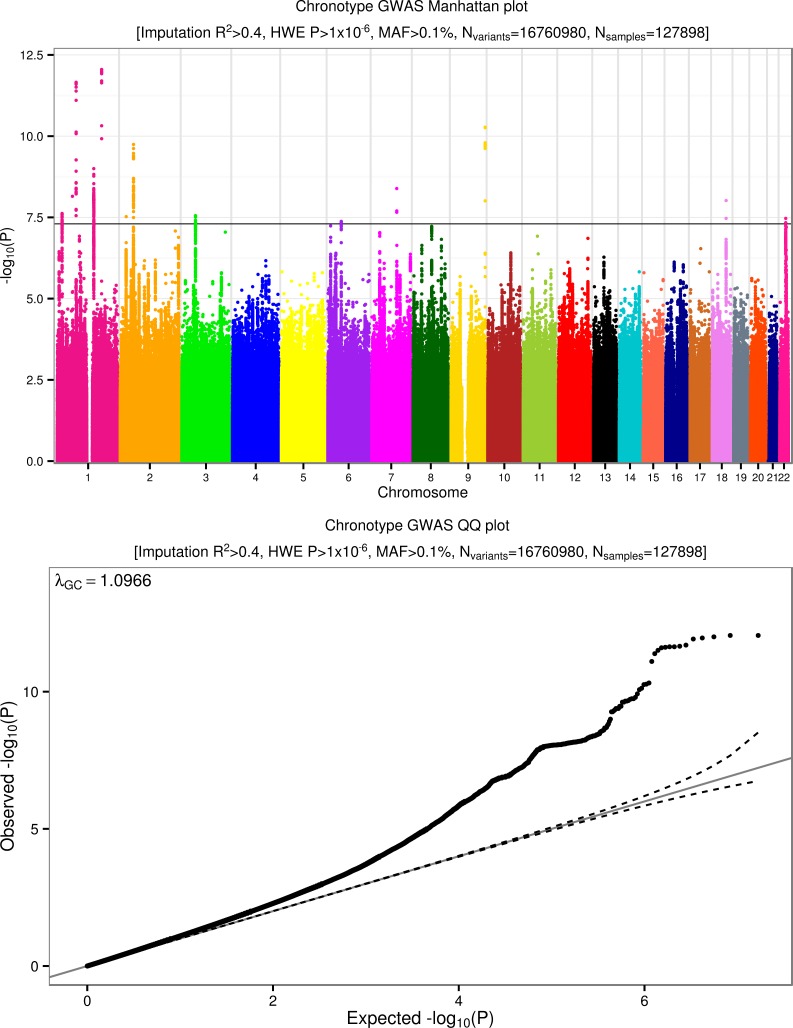
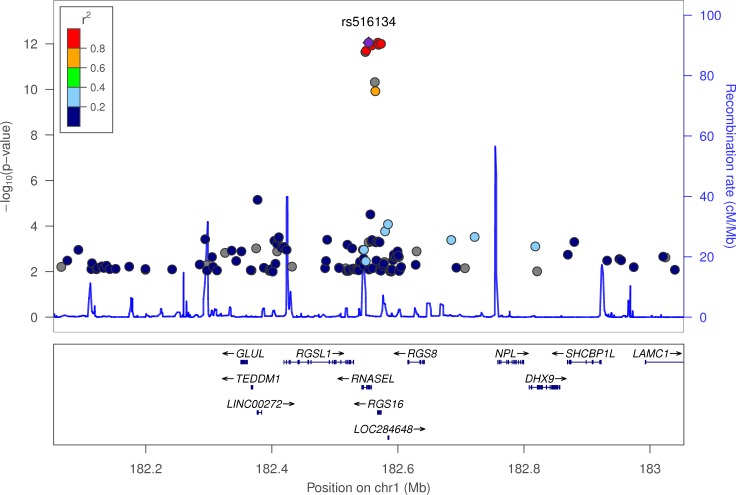
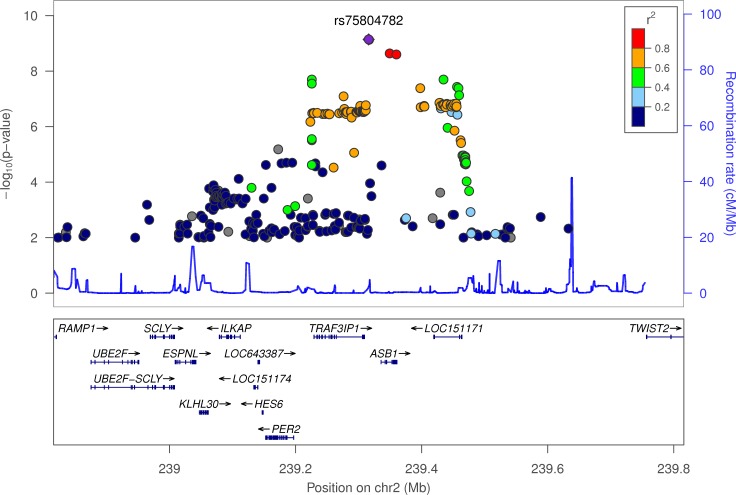
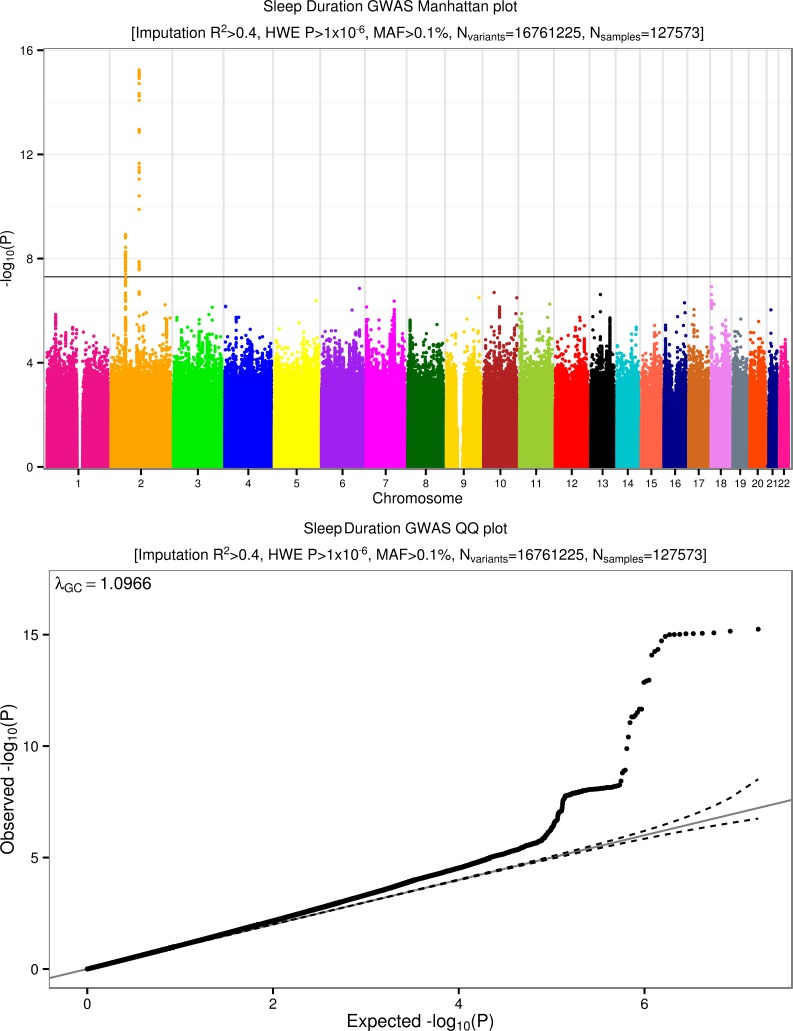
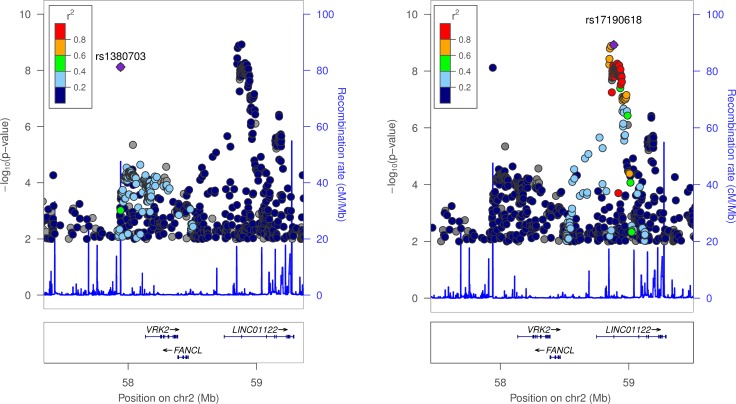
Disrupted circadian rhythms and reduced sleep duration are associated with several human diseases, particularly obesity and type 2 diabetes, but until recently, little was known about the genetic factors influencing these heritable traits. We performed genome-wide association studies of self-reported chronotype (morning/evening person) and self-reported sleep duration in 128,266 white British individuals from the UK Biobank study. Sixteen variants were associated with chronotype (P<5x10⁻⁸), including variants near the known circadian rhythm genes RGS16 (1.21 odds of morningness, 95% CI [1.15, 1.27], P = 3x10-12) and PER2 (1.09 odds of morningness, 95% CI [1.06, 1.12], P = 4x10⁻¹⁰). The PER2 signal has previously been associated with iris function. We sought replication using self-reported data from 89,283 23andMe participants; thirteen of the chronotype signals remained associated at P<5x10⁻⁸ on meta-analysis and eleven of these reached P<0.05 in the same direction in the 23andMe study. We also replicated 9 additional variants identified when the 23andMe study was used as a discovery GWAS of chronotype (all P<0.05 and meta-analysis P<5x10⁻⁸). For sleep duration, we replicated one known signal in PAX8 (2.6 minutes per allele, 95% CI [1.9, 3.2], P = 5.7x10⁻¹⁶) and identified and replicated two novel associations at VRK2 (2.0 minutes per allele, 95% CI [1.3, 2.7], P = 1.2x10⁻⁹; and 1.6 minutes per allele, 95% CI [1.1, 2.2], P = 7.6x10⁻⁹). Although we found genetic correlation between chronotype and BMI (rG = 0.056, P = 0.05); undersleeping and BMI (rG = 0.147, P = 1x10⁻⁵) and oversleeping and BMI (rG = 0.097, P = 0.04), Mendelian Randomisation analyses, with limited power, provided no consistent evidence of causal associations between BMI or type 2 diabetes and chronotype or sleep duration. Our study brings the total number of loci associated with chronotype to 22 and with sleep duration to three, and provides new insights into the biology of sleep and circadian rhythms in humans.
Overview
The claims and statistics of this paper haven’t been checked yet.
Free: it reads the open-access text and checks the first 5 claims that cite a source we can check. Create a free account to check every claim.
Integrity signals
Registry
Cites
Statistics
Figures
Verification
Claims the paper makes
The claims and statistics of this paper haven’t been checked yet.
Free: it reads the open-access text and checks the first 5 claims that cite a source we can check. Create a free account to check every claim.
Claims other papers make about this one
Each is checked against this paper’s own text: does it say what the citing paper says it does?
The source backs part of the claim, not all of it — or backs it for a different population, condition or comparison.
In the citing paper
“We found concordance for loci previously reported using UK Biobank data for overall (near PML) and moderate intensity activity8 (near LINC02210-CRHR1, and SYT4), sleep duration12,19,23,24 (near PUM1, CHCHD5, SAMMSON, BTBD9-AS1, LRP12, EBLN3P, BSX, KCNH5, PRKCB, and RPGRIP1L), and sedentary time (near LINC01930 and LY6H) (Supplementary Data 3).”
From GWAS identifies 14 loci for device-measured physical activity and sleep duration (2018) · cites this paper as [19]
Experimental — accuracy not yet measuredThe cited source says what the claim attributes to it.
In the citing paper
“More recently, genome-wide association studies that used questionnaire-based evaluations of individual chronotypes have characterized important polymorphisms in regions containing known clock genes as well as other loci (40–43).”
From Chronotype: Implications for Epidemiologic Studies on Chrono-Nutrition and Cardiometabolic Health (2019) · cites this paper as [42]
In the citing paper
“Recent genome-wide association studies with more than 100,000 subjects have identified novel loci associated with sleep duration, chronotype and metabolic phenotypes (for example, body mass index)320,321.”
From Rhythms of life: circadian disruption and brain disorders across the lifespan (2019) · cites this paper as [320]
Self-check
Percentages, sums and reported differences re-computed from the paper’s own numbers.
The self-check needs the paper’s full text.
Citations
Cites
Subramanian, A., Tamayo, P., Mootha, V. K., Mukherjee, S., Ebert, B. L., Gillette, M. A., Paulovich, A., Pomeroy, S. L., Golub, T. R., Lander, E. S., et al. (2005) · Proceedings of the National Academy of Sciences · doi:10.1073/pnas.0506580102 · Cited by 53,625 · cited 1×
“For the results presented in S4 Table, we used gene upstream and downstream limits of 250Kb, excluded the HLA region (default setting) and set the number of GSEA (Gene Set Enrichment Analysis) [34,35] permutations at 10,000 (default).”
MethodMootha, V. K., Lindgren, C. M., Eriksson, K.-F., Subramanian, A., Sihag, S., Lehar, J., Puigserver, P., Carlsson, E., Ridderstråle, M., Laurila, E., et al. (2003) · Nature Genetics · doi:10.1038/ng1180 · Cited by 10,197 · cited 1×
“For the results presented in S4 Table, we used gene upstream and downstream limits of 250Kb, excluded the HLA region (default setting) and set the number of GSEA (Gene Set Enrichment Analysis) [34,35] permutations at 10,000 (default).”
MethodBowden, J., Davey Smith, G., & Burgess, S. (2015) · International Journal of Epidemiology · doi:10.1093/ije/dyv080 · Cited by 9,816 · cited 2×
“We performed the Mendelian Randomisation analysis two ways; firstly using instrumental variables (IV) using STATA’s “IVreg2” function [40] and secondly through the inversevariance weighted (IVW) and MR-Egger methods described in [41].”
MethodBiological insights from 108 schizophrenia-associated genetic loci
Schizophrenia Working Group of the Psychiatric Genomics Consortium (2014) · Nature · doi:10.1038/nature13595 · Cited by 7,577
LD Score regression distinguishes confounding from polygenicity in genome-wide association studies
Schizophrenia Working Group of the Psychiatric Genomics Consortium, Bulik-Sullivan, B. K., Loh, P.-R., Finucane, H. K., Ripke, S., Yang, J., Patterson, N., Daly, M. J., Price, A. L., & Neale, B. M. (2015) · Nature Genetics · doi:10.1038/ng.3211 · Cited by 5,559
METAL: fast and efficient meta-analysis of genomewide association scans
Willer, C. J., Li, Y., & Abecasis, G. R. (2010) · Bioinformatics · doi:10.1093/bioinformatics/btq340 · Cited by 5,205 · cited 2×
“The combined P-value was generated by meta-analysing the 23andMe and UKB continuous chronotype P-values in the meta-analysis software METAL.”
MethodMendelian randomization: genetic anchors for causal inference in epidemiological studies
Davey Smith, G., & Hemani, G. (2014) · Human Molecular Genetics · doi:10.1093/hmg/ddu328 · Cited by 4,677 · cited 1×
“Identifying genetic variants associated with sleep duration and chronotype will provide instruments to help test the causality of epidemiological associations [11].”
BackgroundGenetic studies of body mass index yield new insights for obesity biology
Study, T. L. C., Locke, A. E., The ADIPOGen Consortium, The AGEN-BMI Working Group, The CARDIOGRAMplusC4D Consortium, The CKDGen Consortium, The, G. L. G. C., The, I. C. B. P., The MAGIC Investigators, The MuTHER Consortium, et al. (2015) · Nature · doi:10.1038/nature14177 · Cited by 4,534 · cited 3×
“Instrumental variables analyses using variants and their effect sizes identified by previous studies [26] provided no consistent evidence that BMI causally affects self-reported “morningness” (S7 Table).”
MethodInfluentialSelf-citationAn atlas of genetic correlations across human diseases and traits
ReproGen Consortium, Bulik-Sullivan, B., Psychiatric Genomics Consortium, Genetic Consortium for Anorexia Nervosa of the Wellcome Trust Case Control Consortium 3, Finucane, H. K., Anttila, V., Gusev, A., Day, F. R., Loh, P.-R., Duncan, L., et al. (2015) · Nature Genetics · doi:10.1038/ng.3406 · Cited by 4,255 · cited 1×
“Genetic correlations (see [38] for methodology) between traits were calculated using the LD Score Regression software LDSC (available at https://github.”
MethodLocusZoom: regional visualization of genome-wide association scan results
Pruim, R. J., Welch, R. P., Sanna, S., Teslovich, T. M., Chines, P. S., Gliedt, T. P., Boehnke, M., Abecasis, G. R., & Willer, C. J. (2010) · Bioinformatics · doi:10.1093/bioinformatics/btq419 · Cited by 2,707 · cited 1×
“LocusZoom plots (Figs 2, 3 and 5) were created using the LocusZoom tool [37] (found at http://locuszoom.”
Cited by
Items 101–200 of 390
Whole blood transcriptome analysis in bipolar disorder reveals strong lithium effect
Krebs, C. E., Ori, A. P. S., Vreeker, A., Wu, T., Cantor, R. M., Boks, M. P., Kahn, R. S., Loohuis, L. M. O., & Ophoff, R. A. (2019) · Psychological Medicine · doi:10.1017/s0033291719002745 · Cited by 50
Sládek, M., Röschová, M., Adámková, V., Hamplová, D., & Sumová, A. (2020) · Scientific Reports · doi:10.1038/s41598-020-58413-9 · Cited by 57
Sleep duration and risk of diabetes: Observational and Mendelian randomization studies
Wang, J., Kwok, M. K., Yeung, S. L. A., Li, A. M., Lam, H. S., Leung, J. Y. Y., Hui, L. L., Leung, G. M., & Schooling, C. M. (2018) · Preventive Medicine · doi:10.1016/j.ypmed.2018.11.019 · Cited by 44
ADHD 24/7: Circadian clock genes, chronotherapy and sleep/wake cycle insufficiencies in ADHD
Korman, M., Palm, D., Uzoni, A., Faltraco, F., Tucha, O. M., Thome, J., & Coogan, A. N. (2018) · The World Journal of Biological Psychiatry · doi:10.1080/15622975.2018.1523565 · Cited by 50
“As such, rare variants that have been reported to exert large effects on chronotype would not be captured in such analyses (Jones et al. 2016; Patke et al. 2017).”
BackgroundResultDoi, M., Shimatani, H., Atobe, Y., Murai, I., Hayashi, H., Takahashi, Y., Fustin, J., Yamaguchi, Y., Kiyonari, H., Koike, N., et al. (2019) · Nature Communications · doi:10.1038/s41467-019-10532-2 · Cited by 45
Inderkum, A. P., & Tarokh, L. (2018) · SLEEP · doi:10.1093/sleep/zsy004 · Cited by 47
“For example, due to the feasibility of data collection, genome-wide association studies (GWAS) [52, 53] with one exception [54] have used questionnaires to assess sleep duration.”
BackgroundEvolutionarily conserved regulation of sleep by epidermal growth factor receptor signaling
Lee, D. A., Liu, J., Hong, Y. K., Lane, J. M., Hill, A. J., Hou, S., Wang, H., Oikonomou, G., Pham, U., Engle, J., et al. (2019) · Science Advances · doi:10.1126/sciadv.aax4249 · Cited by 43
Ashley‐Koch, A. E., Kimbrel, N. A., Qin, X., Lindquist, J. H., Garrett, M. E., Dennis, M. F., Hair, L. P., Huffman, J. E., Jacobson, D., Madduri, R., et al. (2023) · PLoS Genetics · doi:10.1371/journal.pgen.1010623 · Cited by 41
“Importantly, a GWAS of PTSD in the MVP also detected an association with EXD3 [43] and our lead GWS SNP (rs77641763) in EXD3 has been previously associated with chronotype (“morningness”) [44] and insomnia [45].”
BackgroundDoldur-Balli, F., Imamura, T., Veatch, O. J., Gong, N. N., Lim, D. C., Hart, M. P., Abel, T. G., Kayser, M. S., Brodkin, E. S., & Pack, A. I. (2022) · Sleep Medicine Reviews · doi:10.1016/j.smrv.2022.101595 · Cited by 50
Luo, G., Yao, Y., Tao, J., Wang, T., & Yan, M. (2022) · Frontiers in Neuroscience · doi:10.3389/fnins.2022.1074605 · Cited by 47
“Other sleep traits such as sleep duration, short sleep duration, and long sleep duration, were described in detail in another GWAS summary statistics involving 128,266 subjects (Jones et al., 2016).”
BackgroundVRK2, a Candidate Gene for Psychiatric and Neurological Disorders
Li, M., & Yue, W. (2018) · Complex Psychiatry · doi:10.1159/000493941 · Cited by 44
Impact of chronotype on athletic performance: current perspectives
Roden, L. C., Rudner, T., & Rae, D. E. (2017) · ChronoPhysiology and Therapy · doi:10.2147/cpt.s99804 · Cited by 48
“Many studies have, inconsistently, identified single circadian clock gene associations with chronotype, while some recent genomewide association studies have indicated associations of variants at multiple loci with morningness.(59,60) The polygenic nature of the trait combined with the potential for masking due to env…”
Sleep duration: A review of genome-wide association studies (GWAS) in adults from 2007 to 2020
Garfield, V. (2020) · Sleep Medicine Reviews · doi:10.1016/j.smrv.2020.101413 · Cited by 38
Genetic Markers of Sleep and Sleepiness
Goel, N. (2017) · Sleep Medicine Clinics · doi:10.1016/j.jsmc.2017.03.005 · Cited by 39
Is Idiopathic Hypersomnia a Circadian Rhythm Disorder?
Landzberg, D. R., & Trotti, L. M. (2019) · Current Sleep Medicine Reports · doi:10.1007/s40675-019-00154-x · Cited by 35
Genetic Associations of Chronotype in the Finnish General Population
Maukonen, M., Havulinna, A. S., Männistö, S., Kanerva, N., Salomaa, V. V., & Partonen, T. (2020) · Journal of Biological Rhythms · doi:10.1177/0748730420935328 · Cited by 47
“These GWASs are based on 2 large cohorts, the 23andMe (Hu et al., 2016) and the UK biobank study (Jones et al., 2016; Lane et al., 2016), while the most recent one is a meta-analysis of these 2 cohorts (n = 697,828; Jones et al., 2019).”
MethodHuman genetics and sleep behavior
Shi, G., Wu, D., Ptáček, L. J., & Fu, Y. (2017) · Current Opinion in Neurobiology · doi:10.1016/j.conb.2017.02.015 · Cited by 35
Recent advances in understanding the genetics of sleep
Jan, M., O’Hara, B. F., & Franken, P. (2020) · F1000Research · doi:10.12688/f1000research.22028.1 · Cited by 28
Genetically proxied morning chronotype was associated with a reduced risk of prostate cancer
Sun, X., Ye, D., Jiang, M., Qian, Y., & Mao, Y. (2021) · SLEEP · doi:10.1093/sleep/zsab104 · Cited by 33
Kukkonen, J. P., Jacobson, L. H., Hoyer, D., Rinne, M. K., & Borgland, S. L. (2024) · Pharmacological Reviews · doi:10.1124/pharmrev.123.000953 · Cited by 36
Natural Variation in Human Clocks
von Schantz, M. (2017) · Advances in genetics · doi:10.1016/bs.adgen.2017.09.003 · Cited by 35
Biological Clocks and Rhythms of Anger and Aggression
Hood, S., & Amir, S. (2018) · Frontiers in Behavioral Neuroscience · doi:10.3389/fnbeh.2018.00004 · Cited by 32
“…activity (5htr6) as well as GABAergic activity in brain (plcl1; nol4), suggesting that the genetic profile that influences morningness or eveningness preference could also involve differences in the activation or sensitivity of these neurotransmitter systems (Hu et al., 2016; Jones et al., 2016).”
BackgroundYang, Q., Magnus, M. C., Kilpi, F., Santorelli, G., Soares, A. G., West, J., Magnus, P. M., Wright, J., Håberg, S. E., Sanderson, E. C. M., et al. (2022) · BMC Medicine · doi:10.1186/s12916-022-02494-y · Cited by 36
Sleep medicine: Practice, challenges and new frontiers
Parrino, L., Halász, P., Szűcs, A., THOMAS, R. J., Azzi, N., Rausa, F., Pizzarotti, S., Zilioli, A., Misirocchi, F., & Mutti, C. (2022) · Frontiers in Neurology · doi:10.3389/fneur.2022.966659 · Cited by 34
“Circadian rhythm is physiologically supported by endogenously generated oscillations over a near24-h period and continuously modulated by environmental cues and genetic predisposition (263).”
BackgroundAre your covariates under control? How normalization can re-introduce covariate effects
Pain, O., Dudbridge, F., & Ronald, A. (2018) · European Journal of Human Genetics · doi:10.1038/s41431-018-0159-6 · Cited by 39
“The latter approach has been used in a number of recent high profile studies (Locke et al. 2015; Wain et al. 2015; Jones et al. 2016) and is also automated in the ‘rntransform’ function within GenABEL, a popular R package (Aulchenko et al. 2007).”
BackgroundMethodAn Atlas of Gene Regulatory Elements in Adult Mouse Cerebrum
Li, Y. E., Preissl, S., Hou, X., Zhang, Z., Zhang, K., Fang, R., Qiu, Y., Poirion, O., Li, B., Liu, H., et al. (2020) · doi:10.1101/2020.05.10.087585 · Cited by 187
Carpena, M. X., Munhoz, T. N., Xavier, M. O., Rohde, L. A., Santos, I. S., Del‐Ponte, B., Barros, F. C., Matijasevich, A., & Tovo‐Rodrigues, L. (2019) · Journal of Attention Disorders · doi:10.1177/1087054719879500 · Cited by 34
“Recently, genome-wide association studies have indicated that the genetic markers of insomnia and sleep duration are not the same (S. E. Jones et al., 2016), although a negative genetic correlation between the traits was observed (Jansen et al., 2018; Lane et al., 2017).”
BackgroundEveningness associates with lower physical activity from pre- to late adolescence
Merikanto, I., Kuula, L., Lahti, J. M. T., Räikkönen, K., & Pesonen, A. (2020) · Sleep Medicine · doi:10.1016/j.sleep.2020.07.021 · Cited by 32
Chronovaccination: Harnessing circadian rhythms to optimize immunisation strategies
Otasowie, C., Tanner, R., Ray, D. W., Austyn, J. M., & Coventry, B. J. (2022) · Frontiers in Immunology · doi:10.3389/fimmu.2022.977525 · Cited by 31
Barclay, N. L., Rowe, R., O’Leary, R., Bream, D., & Gregory, A. M. (2016) · Journal of Biological Rhythms · doi:10.1177/0748730416653533 · Cited by 27
Merikanto, I., Lahti, J. M. T., Kuula, L., Heinonen, K., Räikkönen, K., Andersson, S., Strandberg, T. E., & Pesonen, A. (2018) · Sleep Medicine · doi:10.1016/j.sleep.2018.04.015 · Cited by 30
Carpena, M. X., Hutz, M. H., Salatino‐Oliveira, A., Polanczyk, G. V., Zeni, C., Schmitz, M. D., Chazan, R., Genro, J. P., Rohde, L. A., & Tovo‐Rodrigues, L. (2019) · Genes · doi:10.3390/genes10020088 · Cited by 33
Circadian clock genes and circadian phenotypes in patients with myocardial infarction
Škrlec, I., Milić, J., Heffer, M., Wagner, J., & Peterlin, B. (2019) · Advances in Medical Sciences · doi:10.1016/j.advms.2018.12.003 · Cited by 27
Wang, J., Li, A. M., Lam, H. S., Leung, G. M., & Schooling, C. M. (2019) · Obesity · doi:10.1002/oby.22469 · Cited by 27
“A previous genetic study showed genetic correlations of sleep duration with age of menarche (37), suggesting pubertal timing may affect sleep duration in adults.”
BackgroundResultPersonality traits relate to chronotype at both the phenotypic and genetic level
Lenneis, A., Vainik, U., Teder‐Laving, M., Ausmees, L., Lemola, S., Allïk, J., & Realo, A. (2021) · Journal of Personality · doi:10.1111/jopy.12645 · Cited by 32
Self-citationAbdul, F., Sreenivas, N., Kommu, J. V. S., Banerjee, M., Berk, M., Maes, M. H. J., Leboyer, M., & Debnath, M. (2021) · Reviews in the Neurosciences · doi:10.1515/revneuro-2021-0022 · Cited by 27
Marinac, C. R., Quante, M., Mariani, S., Weng, J. F., Redline, S. S., Feliciano, E. M. C., Hipp, J. A., Wang, D., Kaplan, E. R., James, P., et al. (2019) · Journal of Physical Activity and Health · doi:10.1123/jpah.2017-0389 · Cited by 27
Jones, S. E., Lane, J. M., Ar, W., van Hees, V. T., Tyrrell, J., Beaumont, R. N., Jeffries, A. R., Dashti, H. S., Hillsdon, M. M., Ruth, K. S., et al. (2019) · Yearbook of pediatric endocrinology · doi:10.1530/ey.16.1.1 · Cited by 26
Self-citationKeenan, B. T., Galante, R. J., Lian, J., Šimeček, P., Gatti, D. M., Zhang, L., Lim, D. C., Svenson, K. L., Churchill, G. A., & Pack, A. I. (2020) · SLEEP · doi:10.1093/sleep/zsz278 · Cited by 32
Statistical mechanics of clock gene networks underlying circadian rhythms
Sun, L., Dong, A., Griffin, C. H., & Wu, R. (2021) · Applied Physics Reviews · doi:10.1063/5.0029993 · Cited by 29
Chronotype in children and adolescents
Randler, C. (2016) · Somnologie - Schlafforschung und Schlafmedizin · doi:10.1007/s11818-016-0073-5 · Cited by 31
Age of puberty and Sleep duration: Observational and Mendelian randomization study
Wang, J., Kwok, M. K., Yeung, S. L. A., Zhao, J. V., Li, A. M., Lam, H. S., Leung, G. M., & Schooling, C. M. (2020) · Scientific Reports · doi:10.1038/s41598-020-59811-9 · Cited by 28
Genomic perspectives on the circadian clock hypothesis of psychiatric disorders
von Schantz, M., Leocádio-Miguel, M. A., McCarthy, M. J., Papiol, S., & Landgraf, D. (2020) · Advances in genetics · doi:10.1016/bs.adgen.2020.11.005 · Cited by 30
The circadian system: A neglected player in neurodevelopmental disorders
Bouteldja, A. A., Penichet, D., Srivastava, L. K., & Cermakian, N. (2024) · European Journal of Neuroscience · doi:10.1111/ejn.16423 · Cited by 30
“Using participants from the UK Biobank, genome-wide association analyses revealed that evening chronotype is positively correlated to increased SZ risk while morning chronotype is negatively correlated to SZ (Jones et al., 2016; Jones et al., 2019; Lane et al., 2016).”
Chronotype distribution in professional rugby players: Evidence for the environment hypothesis?
Kunorozva, L., Rae, D. E., & Roden, L. C. (2017) · Chronobiology International · doi:10.1080/07420528.2017.1322600 · Cited by 24
“Chronotype is a genetically co-determined behavioural phenotype, which is a representation of the underlying circadian rhythms for many physiological processes (Barclay et al., 2010; Duffy et al., 1999; Horne & Östberg, 1976; Hu et al., 2016; Jones et al., 2016; Kerkhof & Van Dongen, 1996).”
BackgroundMerikanto, I., Kantojärvi, K., Partonen, T., Pesonen, A., & Paunio, T. (2021) · Sleep Medicine · doi:10.1016/j.sleep.2021.01.054 · Cited by 29
Wang, S., Wang, K., Chen, X., & Lin, S. (2024) · Frontiers in Endocrinology · doi:10.3389/fendo.2023.1325538 · Cited by 27
Diurnal Regulation of the Orexin/Hypocretin System in Mice
Ventzke, K., Oster, H., & Jöhren, O. (2019) · Neuroscience · doi:10.1016/j.neuroscience.2019.10.002 · Cited by 24
Nishiyama, T., Nakatochi, M., Goto, A., Iwasaki, M., Hachiya, T., Sutoh, Y., Shimizu, A., Wang, C., Tanaka, H., Watanabe, M., et al. (2019) · SLEEP · doi:10.1093/sleep/zsz046 · Cited by 25
Adolescent circadian patterns link with psychiatric problems: A multimodal approach
Kuula, L., Halonen, R., Lipsanen, J. O., & Pesonen, A. (2022) · Journal of Psychiatric Research · doi:10.1016/j.jpsychires.2022.03.056 · Cited by 29
Yue, M., Jin, C., Jiang, X., Xue, X., Wu, N., Li, Z., & Zhang, L. (2023) · Clocks & Sleep · doi:10.3390/clockssleep5030037 · Cited by 26
“…of the sleep-wake schedule, sleep disorders and sleep apnoea) from the IEU Open GWAS project, UK Biobank [65], the Medical Research Council-Integrative Epidemiology Unit (MRC-IEU) [66], Jones SE [67], and the FinnGen consortium (https://www.finngen.fi/en/access_results, accessed on 17 June 2022).”
MethodSelection of genetic instruments in Mendelian randomisation studies of sleep traits
Paz, V., Dashti, H. S., Burgess, S., & Garfield, V. (2023) · Sleep Medicine · doi:10.1016/j.sleep.2023.10.036 · Cited by 26
Tesfaye, R., Wright, N., Zaidman‐Zait, A., Bedford, R., Zwaigenbaum, L., Kerns, C. M., Duku, E., Mirenda, P., Bennett, T. A., Georgiades, S., et al. (2021) · SLEEP · doi:10.1093/sleep/zsab122 · Cited by 27
Circadian leadership: A review and integration of chronobiology and leadership
Volk, S., Lowe, K. B., & Barnes, C. M. (2022) · Journal of Organizational Behavior · doi:10.1002/job.2659 · Cited by 26
Madrid‐Valero, J. J., & Gregory, A. M. (2023) · Sleep Medicine Reviews · doi:10.1016/j.smrv.2023.101769 · Cited by 29
“Other studies using samples of more than 100,000 individuals have found 3 and 5 signi fi cant variants with a replication in the PAX8 gene [83,84].”
An association study of clock genes with major depressive disorder
Li, Y., Miao, P., Li, F., Huang, J., Fan, L., Chen, Q., Zhang, Y., Feng, Y., & Gao, Y. P. (2023) · Journal of Affective Disorders · doi:10.1016/j.jad.2023.08.113 · Cited by 25
Exome sequencing identifies genes associated with sleep-related traits
Fei, C.-J., Li, Z.-Y., Ning, J., Yang, L., Wu, B., Kang, J., Liu, W., He, X., You, J., Chen, S.-D., et al. (2024) · Nature Human Behaviour · doi:10.1038/s41562-023-01785-5 · Cited by 27
“4f and Supplementary Table 20).”
Gaspar, L., Howald, C., Popadin, K. Y., Maier, B., Mauvoisin, D., Moriggi, E., Gutiérrez‐Arcelus, M., Falconnet, E., Borel, C., Kunz, D., et al. (2017) · eLife · doi:10.7554/elife.24994 · Cited by 23
“DOI: https://doi.org/10.7554/eLife.24994 1 of 23 mechanisms remains challenging (Allebrandt and Roenneberg, 2008; Hu et al., 2016; Jones et al., 2016; Lane et al., 2016).”
InfluentialPorcu, A., Gonzalez, R., & McCarthy, M. J. (2019) · CNS Drugs · doi:10.1007/s40263-019-00673-9 · Cited by 25
Miyagawa, T., Hida, A., Shimada, M., Uehara, C., Nishino, Y., Kadotani, H., Uchiyama, M., Ebisawa, T., Inoue, Y., Kamei, Y., et al. (2019) · Journal of Human Genetics · doi:10.1038/s10038-019-0665-6 · Cited by 24
Palm, D., Uzoni, A., Simon, F., Fischer, M., Coogan, A., Tucha, O., Thome, J., & Faltraco, F. (2021) · Neuroscience & Biobehavioral Reviews · doi:10.1016/j.neubiorev.2021.06.007 · Cited by 20
“Furthermore, genome-wide association studies (GWASs) showed an association between circadian genes and chronotype [176-180, 197-199].”
BackgroundDegenfellner, J., & Schernhammer, E. S. (2021) · Occupational Medicine · doi:10.1093/occmed/kqab138 · Cited by 23
The Genetics of Human Sleep and Sleep Disorders
Zou, X., Ptáček, L. J., & Fu, Y. (2024) · Annual Review of Genomics and Human Genetics · doi:10.1146/annurev-genom-121222-120306 · Cited by 22
Kantojärvi, K., Liuhanen, J., Saarenpää‐Heikkilä, O., Satomaa, A., Kylliäinen, A., Pölkki, P., Jaatela, J., Toivola, A., Milani, L. A., Himanen, S., et al. (2017) · PLoS ONE · doi:10.1371/journal.pone.0180652 · Cited by 20
Treur, J. L., Gibson, M., Taylor, A. E., Rogers, P. J., & Munafo, M. R. (2018) · Journal of Sleep Research · doi:10.1111/jsr.12695 · Cited by 23
“A limitation to our study is that for the Mendelian randomization analyses, we assumed the caffeine consumption SNPs to be associated with caffeine in the GWAS of the sleeping variables, but we were not able to test this.”
MethodInfluentialArchaic Introgression Shaped Human Circadian Traits
Velazquez-Arcelay, K., Colbran, L. L., McArthur, E., Brand, C. M., Rinker, D. C., Siemann, J. K., McMahon, D. G., & Capra, J. A. (2023) · Genome Biology and Evolution · doi:10.1093/gbe/evad203 · Cited by 18
Dashti, H. S., Jones, S. E., Wood, A. R., Lane, J. M., van Hees, V. T., Wang, H., Rhodes, J. A., Song, Y., Patel, K., Anderson, S. G., et al. (2018) · doi:10.1101/274977 · Cited by 614
Self-citationDivergent biological pathways linking short and long sleep durations to mental and physical health
Li, Y., Gong, W., Sahakian, B. J., Huang, S., Zhang, W., Zhao, Y., Ma, L., Naismith, S. L., Yu, J., Jia, T., et al. (2025) · Nature Mental Health · doi:10.1038/s44220-025-00395-6 · Cited by 25
“In terms of relationships with other health conditions, long sleep duration has been genetically correlated with an increased risk of schizophrenia and type 2 diabetes 17,18 , and short sleep duration has been genetically linked to insomnia 19 .”
Dai, X., Williams, G. J., Groeger, J. A., Jones, G., Brookes, K. J., Zhou, W., Hua, J., & Du, W. (2024) · Autism · doi:10.1177/13623613241258546 · Cited by 22
Disparities in Hypertension Among African-Americans: Implications of Insufficient Sleep
Covassin, N., Greene, E. L., Singh, P., & Somers, V. K. (2018) · Current Hypertension Reports · doi:10.1007/s11906-018-0855-1 · Cited by 19
García‐Marín, L. M., Campos, A. I., Martin, N. G., Cuéllar-Partida, G., & Rentería, M. E. (2020) · SLEEP · doi:10.1093/sleep/zsaa154 · Cited by 19
Recent advances in sleep genetics
Webb, J. M., & Fu, Y. (2020) · Current Opinion in Neurobiology · doi:10.1016/j.conb.2020.11.012 · Cited by 20
Using Chronobiological Phenotypes to Address Heterogeneity in Bipolar Disorder
Gonzalez, R., Gonzalez, S. D., & McCarthy, M. J. (2019) · Complex Psychiatry · doi:10.1159/000506636 · Cited by 17
Nakagawa, S., Pham, K. T. N., Shao, X., & Doi, M. (2020) · International Journal of Molecular Sciences · doi:10.3390/ijms21145055 · Cited by 19
Khoury, S., Wang, Q., Parisien, M., Gris, P., Bortsov, A. V., Linnstaedt, S. D., McLean, S. A., Tungate, A. S., Sofer, T., Lee, J., et al. (2020) · SLEEP · doi:10.1093/sleep/zsaa211 · Cited by 18
Compared Heritability of Chronotype Instruments in a Single Population Sample
Leocádio-Miguel, M. A., Ruiz, F. S., Ahmed, S. S., Taporoski, T. P., Horimoto, A. R. V. R., Beijamini, F., Pedrazzoli, M., Knutson, K. L., Pereira, A. C., & von Schantz, M. (2021) · Journal of Biological Rhythms · doi:10.1177/07487304211030420 · Cited by 21
Barley, B. K., Gao, C., Luster, T. G., Porro, A., Parizi‐Robinson, M., Quigley, D., Zinke, P., & Scullin, M. K. (2023) · Chronobiology International · doi:10.1080/07420528.2023.2203251 · Cited by 20
“(item #19 in the MorningnessEveningness Questionnaire; Horne and Östberg 1976; for a similar single-item approach to self-reported chronotype, see e.g., Jones et al. 2016; Lane et al. 2016).”
BackgroundGoto, K., Doi, M., Wang, T., Kunisue, S., Murai, I., & Okamura, H. (2017) · Endocrine Journal · doi:10.1507/endocrj.ej17-0130 · Cited by 19
Sleep in older adults and in subjects with dementia
Frohnhofen, H., Schlitzer, J., & Netzer, N. C. (2017) · Zeitschrift für Gerontologie und Geriatrie · doi:10.1007/s00391-017-1289-0 · Cited by 18
Minz, S., & Pati, A. K. (2019) · Biological Rhythm Research · doi:10.1080/09291016.2019.1616889 · Cited by 16
Varella, M. A. C., Luoto, S., Soares, R. B. D. S., & Valentová, J. V. (2021) · Frontiers in Psychology · doi:10.3389/fpsyg.2021.646711 · Cited by 18
“Largesample genome-wide association studies have found shared underlying genetic pathways between eveningness chronotype and schizophrenia (Jones et al., 2016; Lane et al., 2016), and that being a night person is causally associated with worse mental health (i.”
BackgroundDiurnal regulation of oxidative phosphorylation restricts hepatocyte proliferation and inflammation
Bai, X., Liao, Y., Sun, F., Xiao, X., & Fu, S. (2021) · Cell Reports · doi:10.1016/j.celrep.2021.109659 · Cited by 18
The genetic basis of diurnal preference in Drosophila melanogaster
Pegoraro, M., Flavell, L. M. M., Menegazzi, P., Colombi, P., Dao, P., Helfrich‐Förster, C., & Tauber, E. (2020) · BMC Genomics · doi:10.1186/s12864-020-07020-z · Cited by 19
DNA Methylation Patterns of Chronic Explosive Breaching in U.S. Military Warfighters
Wang, Z., Wilson, C. M., Ge, Y., Nemes, J., LaValle, C. R., Boutté, A. M., Carr, W. S., Kamimori, G. H., & Haghighi, F. G. (2020) · Frontiers in Neurology · doi:10.3389/fneur.2020.01010 · Cited by 17
Modifiable pathways for longevity: A Mendelian randomization analysis
Ni, X., Su, H., Lv, Y., Li, R., Liu, L., Zhu, Y. P., Yang, Z., & Hu, C. (2023) · Clinical Nutrition · doi:10.1016/j.clnu.2023.04.026 · Cited by 18
Gorgol, J., Waleriańczyk, W., & Randler, C. (2023) · Chronobiology International · doi:10.1080/07420528.2023.2212043 · Cited by 16
“Furthermore, there are associations between polymorphisms in candidate clock genes and morningness-eveningness measured with questionnaires (Jones et al. 2016; von Schantz 2017).”
Noise induced epigenetic effects: A systematic review.
Leso, V., Fontana, L., Finiello, F., Cicco, L. D., Ercolano, M. L., & Iavicoli, I. (2020) · PubMed Central · doi:10.4103/nah.nah_17_20 · Cited by 24
Jones, S. E., Hees, V. T. V., Mazzotti, D. R., Marques-Vidal, P., Sabia, S., der Spek, A. V., Dashti, H. S., Engmann, J., Kocevska, D., Tyrrell, J., et al. (2018) · doi:10.1101/303925 · Cited by 14
Self-citationShakoor, S., Zavos, H. M. S., Gregory, A. M., & Ronald, A. (2021) · Journal of Sleep Research · doi:10.1111/jsr.13321 · Cited by 19
“…identified from recent genome-wide association studies as being associated with insomnia (Jansen et al., 2018) and sleep length in children and adults (Jones et al., 2016; Marinelli et al., 2016) could be explored for their potential associations with vulnerability to bullying-victimisation.”
Machine learning and expression analyses reveal circadian clock features predictive of anxiety
Zafar, A., Overton, R., Attia, Z., Ay, A. A., & Ingram, K. K. (2022) · Scientific Reports · doi:10.1038/s41598-022-09421-4 · Cited by 18
Validation of Candidate Sleep Disorder Risk Genes Using Zebrafish
Tran, S., & Prober, D. A. (2022) · Frontiers in Molecular Neuroscience · doi:10.3389/fnmol.2022.873520 · Cited by 15
Human genetic variants disrupt RGS14 nuclear shuttling and regulation of LTP in hippocampal neurons
Squires, K. E., Gerber, K. J., Tillman, M. C., Lustberg, D. J., Montañez‐Miranda, C., Zhao, M., Ramineni, S., Scharer, C. D., Saha, R. N., Shu, F., et al. (2020) · Journal of Biological Chemistry · doi:10.1074/jbc.ra120.016009 · Cited by 16
“As an example, genetic variants within the noncoding region of RGS16 are linked with self-reported “ morning people ” (82, 83), a human trait not captured by studies focused exclusively on disease-linked SNPs. RGS14 protein harboring rare variants LR or RQ could lead to aberrant signaling in…”
BackgroundThe relationship between chronotype and intelligence: the importance of work timing
Ujma, P. P., Baudson, T. G., Bódizs, R., & Dresler, M. (2020) · Scientific Reports · doi:10.1038/s41598-020-62917-9 · Cited by 13
Pelczyńska, M., Moszak, M., Wojciechowska, J., Płócienniczak, A., Potocki, J., Blok, J., Balcerzak, J., Zblewski, M., & Bogdański, P. (2024) · Nutrients · doi:10.3390/nu17010080 · Cited by 22
“Similar results were obtained earlier in other GWASs [47,48].”
Lee, E. C., & Hu, V. W. (2020) · International Journal of Molecular Sciences · doi:10.3390/ijms21186877 · Cited by 14
“While PAX 6 is involved in modulating the fate of neural progenitor cells [37], genetic variants in PAX8 are associated with sleep disturbance [38,39], a frequent comorbidity of ASD.”
BackgroundAre Owls and Larks Different When it Comes to Aggression? Genetics, Neurobiology, and Behavior
Deibel, S. H., McDonald, R. J., & Kolla, N. J. (2020) · Frontiers in Behavioral Neuroscience · doi:10.3389/fnbeh.2020.00039 · Cited by 15
“For example, recent GWASs have identified loci near clock genes and those involved in the serotonergic system that highly influence morning or evening preferences (Hu et al., 2016; Jones et al., 2016; Hood and Amir, 2018).”
BackgroundAn unexpected INAD PDZ tandem-mediated plcβ binding in Drosophila photo receptors
Ye, F., Huang, Y., Li, J., Ma, Y., Xie, C., Liu, Z., Dèng, X., Wan, J., Xue, T., Liu, W., et al. (2018) · eLife · doi:10.7554/elife.41848 · Cited by 14
Effects of Physical Activity and Circadian Rhythm on SCL-90 Scores by Factors among College Students
Li, H., & Zhang, Y. (2023) · Behavioral Sciences · doi:10.3390/bs13070606 · Cited by 16
“Eveningness is a common circadian phenotype in depression, with some studies reporting an increased risk of suicidal behaviors and more severe depressive symptoms among evening types than among morning types [26–28].”
BackgroundCausal association of sleep traits with the risk of thyroid cancer: A mendelian randomization study
Zong, L., Liu, G., He, H., & Huang, D. (2024) · BMC Cancer · doi:10.1186/s12885-024-12376-6 · Cited by 14
“This study was a two-sample MR analysis with summary single nucleotide polymorphism (SNP)-phenotype association data were obtained from published GWASs data from UK Biobank and FinnGen [IEU OpenGWAS project (mrcieu.ac.uk)] [15–17] of Italian and Finnish population.”
MethodLight Hygiene for Circadian Health: A Molecular Perspective
Gubin, D. G., Stefani, O., & Cornélissen, G. (2025) · Frontiers in Bioscience-Landmark · doi:10.31083/fbl39097 · Cited by 13
Metadata
- Authors
- Jones, S. E., Tyrrell, J., Wood, A. R., Beaumont, R. N., Ruth, K. S., Tuke, M. A., Yaghootkar, H., Hu, Y., Teder-Laving, M., Hayward, C., Roenneberg, T., Wilson, J. F., Del Greco, F., Hicks, A. A., Shin, C., Yun, C.-H., Lee, S. K., Metspalu, A., Byrne, E. M., Gehrman, P. R., Tiemeier, H., Allebrandt, K. V., Freathy, R. M., Murray, A., Hinds, D. A., Frayling, T. M., & Weedon, M. N.
- Affiliations
- University of Exeter (GB)
- 23andMe (United States) (US)
- Institute of Genetics and Cancer (GB)
- Institut für Medizinische Psychologie (DE)
- Eurac Research (IT)
- Korea University Ansan Hospital (KR)
- Seoul National University Bundang Hospital (KR)
- Estonian Biocentre (EE)
- The University of Queensland (AU)
- University of Pennsylvania (US)
- Erasmus MC (NL)
- Corresponding author
- Weedon, Michael N.
- ORCID
- Jones, Samuel E.
- Tyrrell, Jessica
- Wood, Andrew R.
- Beaumont, Robin N.
- Ruth, Katherine S.
- Tuke, Marcus A.
- Yaghootkar, Hanieh
- Hayward, Caroline
- Roenneberg, Till
- Wilson, James F.
- Hicks, Andrew A.
- Shin, Chol
- Yun, Chang-Ho
- Lee, Seung Ku
- Metspalu, Andres
- Byrne, Enda M.
- Gehrman, Philip R.
- Tiemeier, Henning
- Allebrandt, Karla V.
- Freathy, Rachel M.
- Murray, Anna
- Hinds, David A.
- Frayling, Timothy M.
- Weedon, Michael N.
- Venue
- PLOS Genetics
- Publisher
- Public Library of Science (PLoS)
- Published
- 2016-08-05
- Volume
- 12
- Issue
- 8
- Pages
- e1006125
- ISSN
- 1553-7390 (ISSN-L)
- 1553-7404
- PMC
- PMC4975467
- OpenAlex
- W2491330173
- Cited by
- 388
- References
- 42
- Citations by year
- 2026: 18 · 2025: 32 · 2024: 43 · 2023: 30 · 2022: 34 · 2021: 43 · 2020: 40 · 2019: 56 · 2018: 47 · 2017: 35 · 2016: 9
- FWCI
- 31.11
- Type
- journal article
- Language
- en
- Open access
- gold
- doi.org
- Licence
- Locations
- PLoS Genetics (publishedVersion, cc-by)
- bioRxiv (Cold Spring Harbor Laboratory) (acceptedVersion, cc-by)
- PubMed Central (publishedVersion, cc-by)
- PubMed (publishedVersion)
- EUR Research Repository (Erasmus University Rotterdam) (publishedVersion, other-oa)
- Open Research Exeter (University of Exeter) (acceptedVersion)
- Edinburgh Research Explorer (University of Edinburgh) (submittedVersion, other-oa)
- EUR Research Repository (Erasmus University Rotterdam) (submittedVersion, other-oa)
- RePub (Erasmus University Rotterdam) (submittedVersion, other-oa)
- RePEc: Research Papers in Economics (submittedVersion)
- DOAJ (DOAJ: Directory of Open Access Journals) (submittedVersion, cc-by-sa)
- Open access LMU (Ludwid Maxmilian's Universitat Munchen) (submittedVersion)
- Figshare (submittedVersion)
- Figshare (submittedVersion, cc-by)
- RePub (Erasmus University Rotterdam) (submittedVersion)
- Open Research (University of Surrey) (submittedVersion)
- Funders
- Medical Research Council (MR/M005070/1)
- Wellcome Trust (WT097835MF)
- European Research Council (SZ-245, 50371-GLUCOSEGENES-FP7-IDEAS-ERC, 323195)
- Wellcome Trust/Royal Society (GB) (104150/Z/14/Z)
- Diabetes Research and Wellness Foundation
- Topics
- Life Sciences › Neuroscience › Endocrine and Autonomic Systems › Circadian rhythm and melatonin
- Life Sciences › Biochemistry, Genetics and Molecular Biology › Genetics › Genetic Associations and Epidemiology
- Social Sciences › Psychology › Experimental and Cognitive Psychology › Sleep and related disorders
- Keywords
- chronotype, morningness, sleep duration, circadian rhythm, genetic loci, RGS16, Per2, PAX8, VRK2, obesity, type 2 diabetes, genetic correlation, body mass index, sleep disorders, polygenic risk score, UK Biobank, 23andMe, replication study, self-reported sleep duration
- MeSH terms
- PAX8 Transcription Factor, Circadian Rhythm, Diabetes Mellitus, Type 2, Female, Humans, Male, Obesity, Sleep, Body Mass Index, Protein Serine-Threonine Kinases, White People, Genome-Wide Association Study, Mendelian Randomization Analysis
About these checks
Registry, retraction, Cites and statistics results are computed, not judged, with one exception: a printed reference that no index lists is read once by a model before it counts as a citation error. Claims are extracted by a model and kept only when their quote appears verbatim in the text; each cited source is then checked, with a model’s help, for whether it says what the claim relies on. Those verdicts can be wrong — read the claim’s quote and the cited source before relying on one.
Statistics and arithmetic are recomputed, not judged.
Confidence bands are shown only for fields calibrated on our annotated test set. None is calibrated yet, so no band is shown.
What counts as a claim ›How we measure confidence ›How we check this ›
Are you an author, or do you see a problem with this page? Request a review
Data sources
Bibliographic data: Semantic Scholar, OpenAlex, Crossref.
Contains information from the Semantic Scholar Academic Graph Datasets, made available under the ODC Attribution License (ODC-BY 1.0).
Semantic Scholar’s data is described in: Kinney, R., et al. (2023). The Semantic Scholar Open Data Platform. arXiv:2301.10140.
