

Genome-Wide Association Analyses in 128,266 Individuals Identifies New Morningness and Sleep Duration Loci
Open accessPublished version of a preprint
The DOI matches its Crossref record; 42 of the 42 references it cites were found in a registry or an index.
Abstract
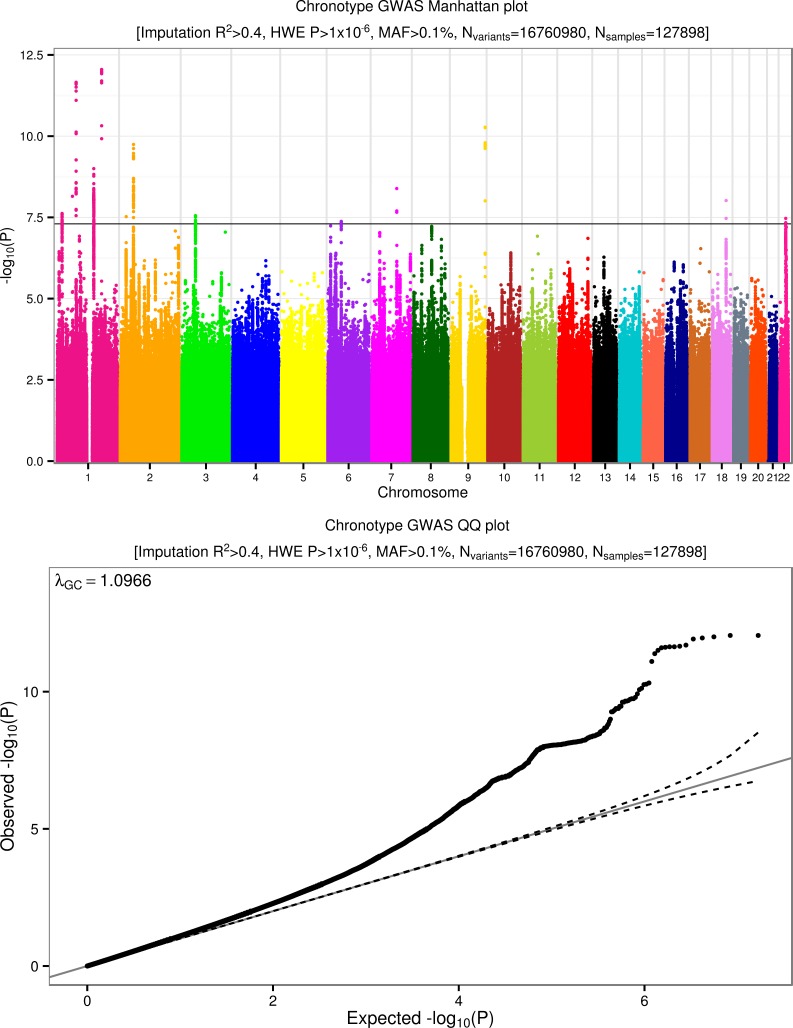
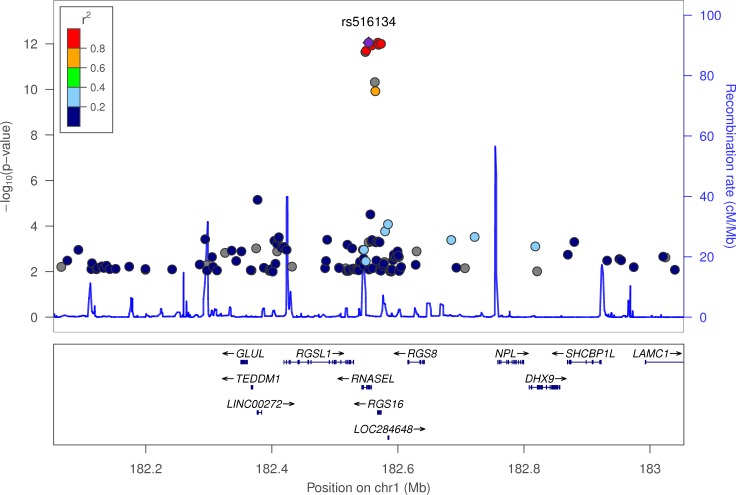
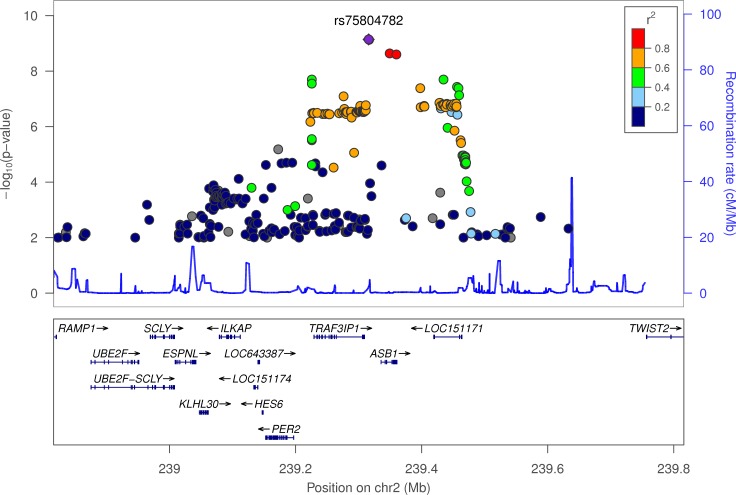
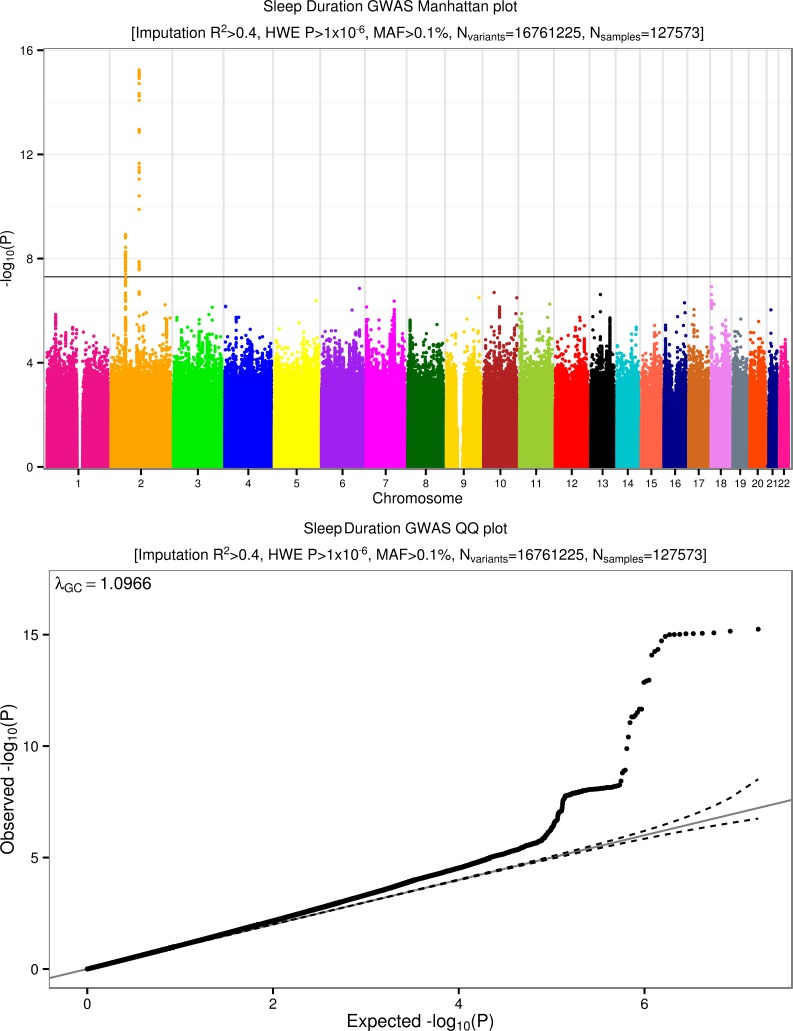
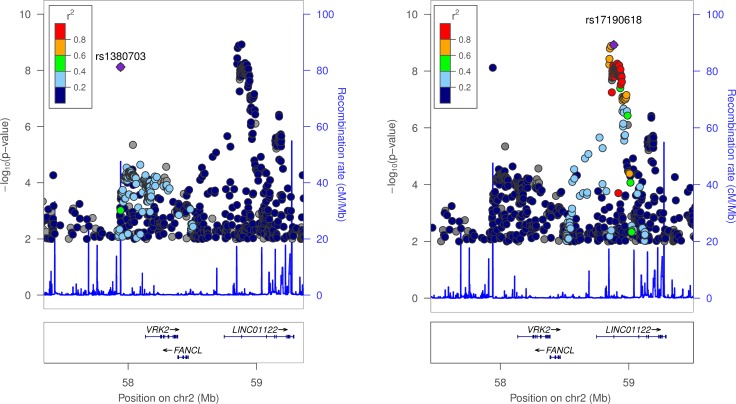
Disrupted circadian rhythms and reduced sleep duration are associated with several human diseases, particularly obesity and type 2 diabetes, but until recently, little was known about the genetic factors influencing these heritable traits. We performed genome-wide association studies of self-reported chronotype (morning/evening person) and self-reported sleep duration in 128,266 white British individuals from the UK Biobank study. Sixteen variants were associated with chronotype (P<5x10⁻⁸), including variants near the known circadian rhythm genes RGS16 (1.21 odds of morningness, 95% CI [1.15, 1.27], P = 3x10-12) and PER2 (1.09 odds of morningness, 95% CI [1.06, 1.12], P = 4x10⁻¹⁰). The PER2 signal has previously been associated with iris function. We sought replication using self-reported data from 89,283 23andMe participants; thirteen of the chronotype signals remained associated at P<5x10⁻⁸ on meta-analysis and eleven of these reached P<0.05 in the same direction in the 23andMe study. We also replicated 9 additional variants identified when the 23andMe study was used as a discovery GWAS of chronotype (all P<0.05 and meta-analysis P<5x10⁻⁸). For sleep duration, we replicated one known signal in PAX8 (2.6 minutes per allele, 95% CI [1.9, 3.2], P = 5.7x10⁻¹⁶) and identified and replicated two novel associations at VRK2 (2.0 minutes per allele, 95% CI [1.3, 2.7], P = 1.2x10⁻⁹; and 1.6 minutes per allele, 95% CI [1.1, 2.2], P = 7.6x10⁻⁹). Although we found genetic correlation between chronotype and BMI (rG = 0.056, P = 0.05); undersleeping and BMI (rG = 0.147, P = 1x10⁻⁵) and oversleeping and BMI (rG = 0.097, P = 0.04), Mendelian Randomisation analyses, with limited power, provided no consistent evidence of causal associations between BMI or type 2 diabetes and chronotype or sleep duration. Our study brings the total number of loci associated with chronotype to 22 and with sleep duration to three, and provides new insights into the biology of sleep and circadian rhythms in humans.
Overview
The claims and statistics of this paper haven’t been checked yet.
Free: it reads the open-access text and checks the first 5 claims that cite a source we can check. Create a free account to check every claim.
Integrity signals
Registry
Cites
Statistics
Figures
Verification
Claims the paper makes
The claims and statistics of this paper haven’t been checked yet.
Free: it reads the open-access text and checks the first 5 claims that cite a source we can check. Create a free account to check every claim.
Claims other papers make about this one
Each is checked against this paper’s own text: does it say what the citing paper says it does?
The source backs part of the claim, not all of it — or backs it for a different population, condition or comparison.
In the citing paper
“We found concordance for loci previously reported using UK Biobank data for overall (near PML) and moderate intensity activity8 (near LINC02210-CRHR1, and SYT4), sleep duration12,19,23,24 (near PUM1, CHCHD5, SAMMSON, BTBD9-AS1, LRP12, EBLN3P, BSX, KCNH5, PRKCB, and RPGRIP1L), and sedentary time (near LINC01930 and LY6H) (Supplementary Data 3).”
From GWAS identifies 14 loci for device-measured physical activity and sleep duration (2018) · cites this paper as [19]
Experimental — accuracy not yet measuredThe cited source says what the claim attributes to it.
In the citing paper
“More recently, genome-wide association studies that used questionnaire-based evaluations of individual chronotypes have characterized important polymorphisms in regions containing known clock genes as well as other loci (40–43).”
From Chronotype: Implications for Epidemiologic Studies on Chrono-Nutrition and Cardiometabolic Health (2019) · cites this paper as [42]
In the citing paper
“Recent genome-wide association studies with more than 100,000 subjects have identified novel loci associated with sleep duration, chronotype and metabolic phenotypes (for example, body mass index)320,321.”
From Rhythms of life: circadian disruption and brain disorders across the lifespan (2019) · cites this paper as [320]
Self-check
Percentages, sums and reported differences re-computed from the paper’s own numbers.
The self-check needs the paper’s full text.
Citations
Cites
Subramanian, A., Tamayo, P., Mootha, V. K., Mukherjee, S., Ebert, B. L., Gillette, M. A., Paulovich, A., Pomeroy, S. L., Golub, T. R., Lander, E. S., et al. (2005) · Proceedings of the National Academy of Sciences · doi:10.1073/pnas.0506580102 · Cited by 53,625 · cited 1×
“For the results presented in S4 Table, we used gene upstream and downstream limits of 250Kb, excluded the HLA region (default setting) and set the number of GSEA (Gene Set Enrichment Analysis) [34,35] permutations at 10,000 (default).”
MethodMootha, V. K., Lindgren, C. M., Eriksson, K.-F., Subramanian, A., Sihag, S., Lehar, J., Puigserver, P., Carlsson, E., Ridderstråle, M., Laurila, E., et al. (2003) · Nature Genetics · doi:10.1038/ng1180 · Cited by 10,197 · cited 1×
“For the results presented in S4 Table, we used gene upstream and downstream limits of 250Kb, excluded the HLA region (default setting) and set the number of GSEA (Gene Set Enrichment Analysis) [34,35] permutations at 10,000 (default).”
MethodBowden, J., Davey Smith, G., & Burgess, S. (2015) · International Journal of Epidemiology · doi:10.1093/ije/dyv080 · Cited by 9,816 · cited 2×
“We performed the Mendelian Randomisation analysis two ways; firstly using instrumental variables (IV) using STATA’s “IVreg2” function [40] and secondly through the inversevariance weighted (IVW) and MR-Egger methods described in [41].”
MethodBiological insights from 108 schizophrenia-associated genetic loci
Schizophrenia Working Group of the Psychiatric Genomics Consortium (2014) · Nature · doi:10.1038/nature13595 · Cited by 7,577
LD Score regression distinguishes confounding from polygenicity in genome-wide association studies
Schizophrenia Working Group of the Psychiatric Genomics Consortium, Bulik-Sullivan, B. K., Loh, P.-R., Finucane, H. K., Ripke, S., Yang, J., Patterson, N., Daly, M. J., Price, A. L., & Neale, B. M. (2015) · Nature Genetics · doi:10.1038/ng.3211 · Cited by 5,559
METAL: fast and efficient meta-analysis of genomewide association scans
Willer, C. J., Li, Y., & Abecasis, G. R. (2010) · Bioinformatics · doi:10.1093/bioinformatics/btq340 · Cited by 5,205 · cited 2×
“The combined P-value was generated by meta-analysing the 23andMe and UKB continuous chronotype P-values in the meta-analysis software METAL.”
MethodMendelian randomization: genetic anchors for causal inference in epidemiological studies
Davey Smith, G., & Hemani, G. (2014) · Human Molecular Genetics · doi:10.1093/hmg/ddu328 · Cited by 4,677 · cited 1×
“Identifying genetic variants associated with sleep duration and chronotype will provide instruments to help test the causality of epidemiological associations [11].”
BackgroundGenetic studies of body mass index yield new insights for obesity biology
Study, T. L. C., Locke, A. E., The ADIPOGen Consortium, The AGEN-BMI Working Group, The CARDIOGRAMplusC4D Consortium, The CKDGen Consortium, The, G. L. G. C., The, I. C. B. P., The MAGIC Investigators, The MuTHER Consortium, et al. (2015) · Nature · doi:10.1038/nature14177 · Cited by 4,534 · cited 3×
“Instrumental variables analyses using variants and their effect sizes identified by previous studies [26] provided no consistent evidence that BMI causally affects self-reported “morningness” (S7 Table).”
MethodInfluentialSelf-citationAn atlas of genetic correlations across human diseases and traits
ReproGen Consortium, Bulik-Sullivan, B., Psychiatric Genomics Consortium, Genetic Consortium for Anorexia Nervosa of the Wellcome Trust Case Control Consortium 3, Finucane, H. K., Anttila, V., Gusev, A., Day, F. R., Loh, P.-R., Duncan, L., et al. (2015) · Nature Genetics · doi:10.1038/ng.3406 · Cited by 4,255 · cited 1×
“Genetic correlations (see [38] for methodology) between traits were calculated using the LD Score Regression software LDSC (available at https://github.”
MethodLocusZoom: regional visualization of genome-wide association scan results
Pruim, R. J., Welch, R. P., Sanna, S., Teslovich, T. M., Chines, P. S., Gliedt, T. P., Boehnke, M., Abecasis, G. R., & Willer, C. J. (2010) · Bioinformatics · doi:10.1093/bioinformatics/btq419 · Cited by 2,707 · cited 1×
“LocusZoom plots (Figs 2, 3 and 5) were created using the LocusZoom tool [37] (found at http://locuszoom.”
Cited by
Items 201–300 of 390
Sonti, S., & Grant, S. F. A. (2022) · SLEEP · doi:10.1093/sleep/zsac180 · Cited by 14
Sleep behaviors and Parkinson's disease: A bidirectional Mendelian randomization analysis
Ling, Y., Zhu, J., Yan, F., Tse, L. A., Kinra, S., & Jiang, M. (2023) · Behavioural Brain Research · doi:10.1016/j.bbr.2022.114281 · Cited by 15
Scammell, B. H., Tchio, C. I. M., Song, Y., Nishiyama, T., Louie, T., Dashti, H. S., Nakatochi, M., Zee, P. C., Daghlas, I., Momozawa, Y., et al. (2023) · Human Molecular Genetics · doi:10.1093/hmg/ddad101 · Cited by 12
PER2 gene and its association with sleep-related disorders: A review
Pavithra, S., Aich, A., Chanda, A., Zohra, I. F., Gawade, P., & Das, R. K. (2023) · Physiology & Behavior · doi:10.1016/j.physbeh.2023.114411 · Cited by 19
Smith, B. R., & Macdonald, S. J. (2020) · Genes · doi:10.3390/genes11030294 · Cited by 12
Parrino, L., Rausa, F., Azzi, N., Pollara, I., & Mutti, C. (2021) · Current Opinion in Pulmonary Medicine · doi:10.1097/mcp.0000000000000825 · Cited by 12
Dorokhov, V. B., Puchkova, A. N., Taranov, A. O., Slominsky, P. A., Tupitsina, T. V., Ivanov, I. D., Vavilin, V. A., Nechunaev, V. V., Kolomeichuk, S. N., Morozov, A. V., et al. (2018) · Biological Rhythm Research · doi:10.1080/09291016.2017.1390823 · Cited by 11
“…was reliably identified at DNA regions located in closed proximity to several circadian genes, such as PER2 and PER3 (e.g. Hu et al. 2016; Jones et al. 2016; Lane et al. 2016), their mapping near but not within these structural genes pointed at their regulatory rather than protein-coding…”
BackgroundSteardo, L., D’Angelo, M., Stefano, V. D., Vignapiano, A., Panarello, E., Monaco, F., Fornaro, M., & Steardo, L. (2025) · Sleep Medicine Reviews · doi:10.1016/j.smrv.2025.102116 · Cited by 13
How to tell time: advances in decoding circadian phase from omics snapshots
Talamanca, L., & Naef, F. (2020) · F1000Research · doi:10.12688/f1000research.26759.1 · Cited by 12
The dihydropyrimidine dehydrogenase gene contributes to heritable differences in sleep in mice
Keenan, B. T., Galante, R. J., Lian, J., Zhang, L., Guo, X., Veatch, O. J., Chesler, E. J., O’Brien, W. T., Svenson, K. L., Churchill, G. A., et al. (2021) · Current Biology · doi:10.1016/j.cub.2021.09.049 · Cited by 16
Sakurada, K., Konta, T., Takahashi, S., Murakami, N., Sato, H., Murakami, R., Watanabe, M., Ishizawa, K., Ueno, Y., Yamashita, H., et al. (2021) · The Tohoku Journal of Experimental Medicine · doi:10.1620/tjem.255.325 · Cited by 12
“Three recent large-scale genome-wide association studies (GWASs) of chronotypes were conducted on subjects of European ancestry from the 23andME cohort and the UK biobank (Hu et al. 2016; Jones et al. 2016; Lane et al. 2016).”
BackgroundEffect of sleep patterns on levetiracetam induced mood changes
Taneja, R., Hunter, K. M., Burakgazi-Dalkilic, E., & Carran, M. A. (2017) · Epilepsy & Behavior · doi:10.1016/j.yebeh.2017.07.038 · Cited by 12
The Effects of Genetic Background for Diurnal Preference on Sleep Development in Early Childhood
Morales‐Muñoz, I., Kantojärvi, K., Uhre, V.-M., Saarenpää‐Heikkilä, O., Kylliäinen, A., Pölkki, P., Himanen, S., Karlsson, L., Karlsson, H., Paavonen, E. J., et al. (2021) · Nature and Science of Sleep · doi:10.2147/nss.s287163 · Cited by 13
Yoo, L., Mendoza, D., Richard, A. J., & Stephens, J. M. (2024) · Genes · doi:10.3390/genes15050639 · Cited by 12
Maternal Sleep Quality is Associated with Personal and Parenting Weight-Related Behaviors
Eck, K., Santiago, E., Martin‐Biggers, J. T., & Byrd‐Bredbenner, C. (2020) · International Journal of Environmental Research and Public Health · doi:10.3390/ijerph17155312 · Cited by 11
Absence of morningness alleles in non-European populations
Emmanuel, P., & von Schantz, M. (2018) · Chronobiology International · doi:10.1080/07420528.2018.1506928 · Cited by 12
“We systematically interrogated superpopulation groups of the 1000 Genomes database (via the NCBI interface) for the frequencies all 41 single nucleotide polymorphisms (SNPs) reported to associate with chronotype in at least one of the three published studies (Hu et al. 2016; Jones et al. 2016; Lane et al. 2016).”
BackgroundMethodYan, B., Yang, J., Li, Q., Gao, F., Bai, L., Wang, G., & Ma, X. (2021) · International Journal of Stroke · doi:10.1177/17474930211006285 · Cited by 10
“Potential confounders used in the multi-variable MR (MMR) analysis included BMI, type 2 DM, triglyceride (TG) levels, total cholesterol (TC) levels, low-density lipoprotein (LDL) levels, and high-density lipoprotein (HDL) levels.(22,23) Each study included in the GWAS used in this MR study was approved by an Instituti…”
MethodWang, J., Kwok, M. K., Yeung, S. L. A., Li, A. M., Lam, S. K., Leung, G. M., & Schooling, C. M. (2020) · SLEEP · doi:10.1093/sleep/zsz325 · Cited by 14
Genetic and environmental influences on sleep-wake behaviors in adolescence
O’Callaghan, V. S., Hansell, N. K., Guo, W., Carpenter, J. S., Shou, H., Strike, L. T., Crouse, J. J., McAloney, K., McMahon, K. L., Byrne, E. M., et al. (2021) · SLEEP Advances · doi:10.1093/sleepadvances/zpab018 · Cited by 13
“10 between self-reported sleep duration and chronotype [76] and identified a genetic variant (rs9382445) associated with sleep duration that was previously associated with chronotype [77].”
BackgroundSelf-citationRiggle, J. P., Onishi, K. G., Love, J. A., Beach, D. E., Zucker, I., & Prendergast, B. J. (2021) · Journal of Biological Rhythms · doi:10.1177/07487304211060896 · Cited by 8
“, 2019) and an early chronotype (Jones et al., 2016), and phosphorylation of hPER2 is linked to a short τ and heritable circadian sleep disorders (Toh et al.”
BackgroundLi, H., & Zhang, Y. (2022) · International Journal of Environmental Research and Public Health · doi:10.3390/ijerph20010095 · Cited by 9
“It is hypothesized that humans with a biologically abnormal component in the circadian system may be more susceptible to depression [12,13].”
BackgroundMelroy-Greif, W. E., Gizer, I. R., Wilhelmsen, K. C., & Ehlers, C. L. (2017) · Twin Research and Human Genetics · doi:10.1017/thg.2017.62 · Cited by 10
Adams, C. D., & Neuhausen, S. L. (2019) · Nutrition Metabolism and Cardiovascular Diseases · doi:10.1016/j.numecd.2019.06.020 · Cited by 11
Introduction to the Clock System
Cox, K. H., & Takahashi, J. S. (2021) · Advances in experimental medicine and biology · doi:10.1007/978-3-030-81147-1_1 · Cited by 12
Garfield, V., Fatemifar, G., Dale, C. E., Smart, M., Bao, Y., Llewellyn, C. H., Steptoe, A., Zabaneh, D., & Kumari, M. (2018) · Genetic Epidemiology · doi:10.1002/gepi.22174 · Cited by 9
Putilov, A. A., Dorokhov, V. B., & Poluektov, M. G. (2018) · Chronobiology International · doi:10.1080/07420528.2017.1417314 · Cited by 8
“…were reliably identified at DNA regions located in closed proximity to several circadian genes, such as PER2 and PER3 (e.g., Hu et al. 2016; Jones et al. 2016; Lane et al. 2016), their mapping near but not within these genes pointed at their regulatory rather than protein-coding function.”
BackgroundInfluentialAkimova, E. T., Taiji, R., Ding, X., & Mills, M. C. (2023) · SLEEP · doi:10.1093/sleep/zsad023 · Cited by 9
“[35, 36] by computing SNP-heritability and genetic overlap estimates using LD Score regression and LDSC software [40].”
MethodKui, L., Dong, C., Wu, J., Zhuo, F., Yan, B., Wang, Z., Yang, M., Xiong, C., & Qiu, P. (2024) · Frontiers in Endocrinology · doi:10.3389/fendo.2024.1407503 · Cited by 9
“Adjustments for sleep duration were based on summary-level statistics derived from a comprehensive genome-wide association study encompassing over 120,000 individuals (40).”
MethodYuri, G., Chamorro, R., Tobar, N., & Cifuentes, M. (2025) · Sleep Medicine Reviews · doi:10.1016/j.smrv.2025.102142 · Cited by 13
Faltraco, F., Palm, D., Uzoni, A., Simon, F. A. J., Tucha, O. M., & Thome, J. (2021) · Journal of Neural Transmission · doi:10.1007/s00702-021-02373-5 · Cited by 10
New Insights on Gene by Environmental Effects of Drugs of Abuse in Animal Models Using GeneNetwork
Chunduri, A., Watson, P. M., & Ashbrook, D. G. (2022) · Genes · doi:10.3390/genes13040614 · Cited by 8
“Lin54 is associated with conditions such as loneliness, anxiety, tension, and sleep related phenotypes (Figure 8 and Table 6) [50,72,73].”
BackgroundBarragán, R., Sorlí, J. V., Coltell, Ó., Gonzalez-Monje, I., Fernández-Carrión, R., Villamil, L. V., Portolés, O., Corella, D., Ortega‐Azorín, C., & Asensio, E. M. (2022) · Medicina · doi:10.3390/medicina58091294 · Cited by 13
“Moreover, recent genome-wide association studies GWASs have associated the Vaccinia-related Kinase (VRK) Serine/Threonine Kinase 2 (VRK2) gene with the circadian cycle and, more specifically, with sleep [6,7] although the mechanism has yet to be explained.”
BackgroundThe age differences of sleep disruption on mood states and memory performance
Liu, X., Peng, X.-R., Peng, P., Li, L., Lei, X., & Yu, J. (2019) · Aging & Mental Health · doi:10.1080/13607863.2019.1603286 · Cited by 11
Genetics of Circadian and Sleep Measures in Adults: Implications for Sleep Medicine
Yamazaki, E. M., & Goel, N. (2020) · Current Sleep Medicine Reports · doi:10.1007/s40675-020-00165-z · Cited by 11
Didikoğlu, A., Maharani, A., Canal, M. M., Pendleton, N., & Payton, A. (2020) · Mechanisms of Ageing and Development · doi:10.1016/j.mad.2020.111253 · Cited by 9
Recent Progress in Omics Studies of Sleep and Circadian Phenotypes
Wang, Z., & Sofer, T. (2025) · Current Sleep Medicine Reports · doi:10.1007/s40675-025-00335-x · Cited by 11
“…associations localized to variants in circadian regulation genes including PER1, PER2, PER3, cryptochrome circadian regulator 1 (CRY1), basic helix-loop-helix ARNT Like 1 (BAML1, also known as ARNTL), regulator of G protein signaling 16 (RGS16), hypocretin receptor 2 (HCRTR2), among others [21–24].”
Causal Relationship Between Micronutrient and Sleep Disorder: A Mendelian Randomization Study
Jiang, Y., Ge, S., Wang, C., Jin, C., Zhao, Y., & Liu, Q. (2024) · Nature and Science of Sleep · doi:10.2147/nss.s475171 · Cited by 9
“All data for micronutrient 21–25 and sleep disorder 26,27 in initial analysis were obtained from the publicly available Medical Research Council Integrative Epidemiology Unit (IEU) Open GWAS database.”
MethodWhat have we learned about sleep from selective breeding strategies?
Harbison, S. T. (2022) · SLEEP · doi:10.1093/sleep/zsac147 · Cited by 7
Upregulation of Tribbles decreases body weight and increases sleep duration
Popovic, R., Yu, Y., Leal, N. S., Fedele, G., Loh, S. H. Y., & Martins, L. M. (2023) · Disease Models & Mechanisms · doi:10.1242/dmm.049942 · Cited by 9
“The full protocol is publicly available, and summary data can be viewed on the UK Biobank website (www.ukbiobank.ac.uk).”
InfluentialWhen our body clocks run late: does it make us depressed?
Kripke, D. F. (2016) · Annals of Translational Medicine · doi:10.21037/atm.2016.04.20 · Cited by 8
Hazak, A., Kantojärvi, K., Liuhanen, J., Sulkava, S., Jääskeläinen, T., Salomaa, V. V., Koskinen, S. V. P., Perola, M., & Paunio, T. (2025) · Sleep Medicine · doi:10.1016/j.sleep.2025.106811 · Cited by 8
Low circadian amplitude and delayed phase are linked to seasonal affective disorder (SAD)
Dhawka, L., Cha, Y., Ay, A. A., & Ingram, K. K. (2022) · Journal of Affective Disorders Reports · doi:10.1016/j.jadr.2022.100395 · Cited by 7
The genetics of falling susceptibility and identification of causal risk factors
Smith, M. C., O’Loughlin, J., Karageorgiou, V., Casanova, F., Williams, G., Hilton, M. P., & Tyrrell, J. (2023) · Scientific Reports · doi:10.1038/s41598-023-44566-w · Cited by 7
“Genetic similarity was derived using principal component analysis using the 1000 Genomes Cohort as our reference, as previously described 20 .”
MethodSelf-citationAsking the Clock: How to Use Information from Questionnaires for Circadian Phenotyping
Vetter, C., Winnebeck, E. C., & Roenneberg, T. (2020) · Methods in molecular biology · doi:10.1007/978-1-0716-0381-9_6 · Cited by 6
Self-citationRatneswaran, C., Sagoo, M. K., & Steier, J. S. (2018) · Journal of Thoracic Disease · doi:10.21037/jtd.2017.10.162 · Cited by 6
Sleep quality and OPRM1 polymorphisms: a cross-sectional study among opioid-naive individuals
Zaharı, Z., Ibrahim, M. A., Musa, N., Tan, S. C., Mohamad, N., & Ismail, R. (2018) · Brazilian Journal of Pharmaceutical Sciences · doi:10.1590/s2175-97902018000117217 · Cited by 7
“Also, there are a number of recent genome-wide association analyses (GWAS) studies on sleep quality and quantity (Lane et al., 2017; Jones et al., 2016; Byrne et al., 2013).”
BackgroundKlimentidis, Y. C., Raichlen, D. A., Bea, J. W., Garcia, D. O., Mandarino, L. J., Alexander, G. E., Chen, Z., & Going, S. B. (2017) · bioRxiv (Cold Spring Harbor Laboratory) · doi:10.1101/179317 · Cited by 6
Sindiani, M., Korman, M., & Karni, A. (2022) · Learning and Instruction · doi:10.1016/j.learninstruc.2022.101630 · Cited by 5
Ye, R., Pan, J., Hu, X., Xie, J., & Li, P. (2024) · Geriatrics and gerontology international/Geriatrics & gerontology international · doi:10.1111/ggi.14877 · Cited by 5
Xu, H., Xu, P., Li, M., Jiang, Y., Xu, J., Feng, W., Jin, L., Li, L., & Wu, J. (2025) · Heart & Lung · doi:10.1016/j.hrtlng.2025.05.016 · Cited by 5
Investigation of gene-gene interactions of clock genes for chronotype in a healthy Korean population
Park, M., Kim, S. A., Shin, J., & Joo, E.-J. (2020) · Genomics & Informatics · doi:10.5808/gi.2020.18.4.e38 · Cited by 5
“There have been several GWASs regarding chronotype in European populations using data from 23andMe and the UK Biobank [11-13,15].”
BackgroundMethodPlante, D. T., Papale, L. A., Madrid, A., Cook, J. D., Prairie, M. L., & Alisch, R. S. (2021) · SLEEP · doi:10.1093/sleep/zsab108 · Cited by 5
Ma, M., Guo, L., Liu, X., Zheng, Y., Gu, C., & Li, B. (2022) · Health Science Reports · doi:10.1002/hsr2.797 · Cited by 7
“ieu‐a‐1088 Sleep duration Jones et al.(30) UKB 128,266 16,761,226”
Enhancer-priming in ageing human bone marrow mesenchymal stromal cells contributes to immune traitsPreprint
Lai, M. C., Ruiz-Velasco, M., Arnold, C., Sigalova, O. M., Bunina, D., Berest, I., Ding, X., Hennrich, M. L., Poisa-Beiro, L., Claringbould, A., et al. (2021) · bioRxiv (Cold Spring Harbor Laboratory) · doi:10.1101/2021.09.03.458728 · Cited by 5
Genetic-based signatures of the latitudinal differences in chronotype
Putilov, A. A., Dorokhov, V. B., Puchkova, A. N., Arsenyev, G. N., & Sveshnikov, D. S. (2019) · Biological Rhythm Research · doi:10.1080/09291016.2018.1465249 · Cited by 4
“Of 34 loci-significant associates of chronotype yielded by three GWASs (Hu et al. 2016; Jones et al. 2016; Lane et al. 2016; reviewed by Kalmbach et al. (2017)), several loci were located in close proximity to such circadian clock genes as PER2 and PER3, but not within these genes thus pointing at…”
BackgroundResultInfluentialMa, Q., Liu, T., Li, Y., Xu, H., Xiao, Q., & Yao, Q. Z. (2023) · Rejuvenation Research · doi:10.1089/rej.2023.0045 · Cited by 4
“67 Other studies mentioned that the genes, PER2 and PER3, were associated with sleep quality and sleep structure, 32,34,68,69 and one study showed that the PER2 gene methylation level was associated with shorter sleep duration.”
Shin, M., Crouse, J. J., Byrne, E. M., Mitchell, B. L., Lind, P. A., Parker, R., Tonini, E., Carpenter, J. S., Wray, N. R., Colodro‐Conde, L., et al. (2024) · BMJ Mental Health · doi:10.1136/bmjment-2024-301067 · Cited by 4
“42 Where applicable, leave- one-out summary statistics were used for Genome-wide association studies that included participants from the AGDS in order to avoid over-estimation of association results. sBayesR, a Bayesian PGS method, was used to generate allele weights for each PGS. 43 The posterior…”
Self-citationLi, J., Wu, W., Ye, L., & Zheng, B. J. (2025) · Brain Research · doi:10.1016/j.brainres.2025.149636 · Cited by 5
Liu, H.-Y., Xiang, J., Xie, Q., & Xiang, H. (2025) · Journal of Affective Disorders · doi:10.1016/j.jad.2025.119879 · Cited by 5
The Role of Chrononutrition in Global Wellness
Fatima, G. (2025) · Chronobiology in Medicine · doi:10.33069/cim.2025.0016 · Cited by 4
Isolating the Genetic Component of Mania in Bipolar Disorder
Merola, G. P., Zvrskovec, J., Wang, R., Li, Y. K., Castellini, G., Ricca, V., Coleman, J., Vassos, E., & Breen, G. D. (2026) · Biological Psychiatry · doi:10.1016/j.biopsych.2025.11.008 · Cited by 5
Time-of-Day Effects on Anaerobic Power and Concentration of Selected Hormones in Blind Men
Pałka, T., Pajor, P., Tyka, A. K., Pilch, W., Cebula, A., Teległów, A., Strzała, M., & Maciejczyk, M. (2021) · International Journal of Environmental Research and Public Health · doi:10.3390/ijerph18179353 · Cited by 4
“In recent large-scale genomic studies, variants have been identified in several clock-related loci [3,4], in particular, underlying mornings in the general population.”
BackgroundZhu, G., Tian, R., Zhou, D., & Qin, X. (2024) · Frontiers in Genetics · doi:10.3389/fgene.2024.1378802 · Cited by 4
Guo, S., Zhang, J., Li, H., Cheng, C., & Zhang, J. (2024) · Bioengineering · doi:10.3390/bioengineering11080797 · Cited by 4
Toward a Molecular Approach to Chronotype Assessment
Biscontin, A., Zarantonello, L., Russo, A., Costa, R., & Montagnese, S. (2022) · Journal of Biological Rhythms · doi:10.1177/07487304221099365 · Cited by 5
“…and Dmitrzak-Weglarz, 2017; Patke et al., 2017; Turco et al., 2017; Kurien et al., 2019) and genome-wide analyses (Gottlieb et al., 2007; Hu et al., 2016; Jones et al., 2016, 2019; Lane et al., 2016; Maukonen et al., 2020), were selected: PER1, PER2, PER3, CRY1, CRY2, ARNTL, CLOCK,…”
A conserved role for frizzled in sleep architecture
Gessner, N. R., Peiravi, M., Zhang, F., Yimam, S., Springer, D., & Harbison, S. T. (2023) · SLEEP Advances · doi:10.1093/sleepadvances/zpad045 · Cited by 4
Li, Y., Garg, P. K., & Wu, J. (2024) · Cardiovascular Diagnosis and Therapy · doi:10.21037/cdt-24-313 · Cited by 4
Schlaf und Schlafstörungen beim alten Menschen
Frohnhofen, H., Schlitzer, J., & Netzer, N. C. (2017) · Somnologie - Schlafforschung und Schlafmedizin · doi:10.1007/s11818-017-0102-z · Cited by 4
“Die Schlafdauer, die auch genetisch beeinflusst wird [5], nimmt nach dieser Untersuchung vom 40.”
Aouizerat, B. E., Byun, E., Pullinger, C. R., Gay, C., Lerdal, A., & Lee, K. A. (2020) · Sleep Medicine · doi:10.1016/j.sleep.2020.08.028 · Cited by 4
Artificial Light at Night and Breast Cancer
Al-Naggar, R. A., & Al-Maktari, L. (2022) · IntechOpen eBooks · doi:10.5772/intechopen.96896 · Cited by 4
“Genetic background plays a role in changes in wake and sleep time [19].”
BackgroundLecarie, E. K., Doane, L. D., Clifford, S., & Lemery‐Chalfant, K. (2022) · Sleep Health · doi:10.1016/j.sleh.2021.12.006 · Cited by 4
Hunt for mammalian sleep-regulating genes
Funato, H., & Yanagisawa, M. (2022) · Brain Science Advances · doi:10.26599/bsa.2022.9050012 · Cited by 4
Fibroblasts as an in vitro model of circadian genetic and genomic studies
Francia, M., Bot, M. H. M., Boltz, T. A., Hoz, J. D. L., Boks, M. P., Kahn, R. S., & Ophoff, R. A. (2024) · Mammalian Genome · doi:10.1007/s00335-024-10050-7 · Cited by 5
“…HyperactivityDisorder) (Demontis et al. 2019), schizophrenia (Trubetskoy et al. 2022), PTSD (Post-traumatic stress disorder) (Nievergelt et al. 2019), MDD (Major depression disorder) (Howard et al. 2019), insomnia (Watanabe et al. 2022), and the circadian trait of morningness (Jones et al. 2016).”
BackgroundOwens, H. (2019) · INQUIRY The Journal of Health Care Organization Provision and Financing · doi:10.1177/0046958019842001 · Cited by 4
Complex structure of INAD PDZ45 and NORPA CC-PBM
Ye, F., Li, J., Dèng, X., Liu, W., & Zhang, M. (2018) · Worldwide Protein Data Bank · doi:10.2210/pdb6ire/pdb · Cited by 4
Yang, X., Cheng, B., Cheng, S., Liu, L., Pan, C., Meng, P., Li, C., Chen, Y., Zhang, J., Zhang, H., et al. (2024) · Human Genomics · doi:10.1186/s40246-024-00609-5 · Cited by 3
“It has been widely recognized as one of circadian genes in the SCN and exerts important influence on the circadian rhythms [32].”
Understanding the Human Chronotype Research
Sultana, R. (2024) · Annual Research & Review in Biology · doi:10.9734/arrb/2024/v39i92123 · Cited by 4
Association of CLOCK rs1801260 Polymorphism with Sleep Quality in Residents of the Far North
Gubin, D. G., Kolomeichuk, S., Borisenkov, M. F., Petrov, I. M., Markov, A. A., Petrova, Y. A., Voronin, K. A., Mezhakova, M. S., Boldyreva, Y. V., Markov, V. A., et al. (2025) · Bulletin of Experimental Biology and Medicine · doi:10.1007/s10517-026-06637-6 · Cited by 3
Chen, X., Lin, J., Gao, H., Wang, J., Lin, T., Yang, J., Chen, F., & Xu, J. (2026) · Journal of obstetrics and gynaecology research · doi:10.1111/jog.70233 · Cited by 4
Sub‐types of insomnia in adolescents: Insights from a quantitative/molecular twin study
Madrid‐Valero, J. J., Rijsdijk, F. V., Selzam, S., Zavos, H. M. S., Schneider, M. N., Ronald, A., & Gregory, A. M. (2023) · JCPP Advances · doi:10.1002/jcv2.12167 · Cited by 3
“PGS was calculated from information reported in the largest study to date focusing on the genetics of insomnia (Jansen et al., 2019) and sleep duration (Jones et al., 2016).”
BackgroundMethodÜNİVERSİTE ÖĞRENCİLERİNDE KRONOTİPİN, YEME TUTUMU VE BEDEN ALGISI İLE İLİŞKİSİNİN İNCELENMESİ
Altınsoy, C., & YAVUZ, A. Y. (2021) · Samsun Sağlık Bilimleri Dergisi · doi:10.47115/jshs.895176 · Cited by 5
Souto-Maior, C., Negron, Y. L. S., & Harbison, S. T. (2023) · PLoS Computational Biology · doi:10.1371/journal.pcbi.1011389 · Cited by 5
Causal relationship between neuroticism and frailty: A bidirectional Mendelian randomization study
Chen, Q., Gan, D., Zhang, Y., Yan, R., Li, B., Tang, W., Han, S., & Gao, Y. (2024) · Journal of Affective Disorders · doi:10.1016/j.jad.2024.05.105 · Cited by 3
Determinant-based grouping of SNPs and its application for detecting disease-associated genomic loci
Khvorykh, G. V., & Владимирович, Х. А. (2025) · NAR Genomics and Bioinformatics · doi:10.1093/nargab/lqaf024 · Cited by 5
“Moreover, its intronic polymorphism rs12635074 was found to be associated with chronotype in GWAS [ 46 ].”
Regulators of G protein Signaling (RGS) proteins in GtoPdb v.2021.2
Ahlers‐Dannen, K. E., Alqinyah, M., Bodle, C., Dagher, J. B., Chakravarti, B., Choudhuri, S. P., Druey, K. M., Fisher, R. A., Gerber, K. J., Hepler, J. R., et al. (2021) · IUPHAR/BPS Guide to Pharmacology CITE · doi:10.2218/gtopdb/f891/2021.2 · Cited by 3
Minami, Y., Yuan, Y., & Ueda, H. R. (2022) · Journal of Biological Rhythms · doi:10.1177/07487304221075002 · Cited by 3
“They pointed out that RGS16, PER2, FBXL3, and AK5 were commonly recognized as the significant loci for chronotype through these 3 GWASs (Hu et al., 2016; Jones et al., 2016; Lane et al., 2016; Kalmbach et al., 2017).”
BackgroundZhang, S., Zhang, W., Feng, Y., Wan, S., Ge, J., Qu, Z., & Li, X. (2022) · Medicine · doi:10.1097/md.0000000000030509 · Cited by 4
Probing personalized genetic platforms for novel molecular clues for circadian chronotype
Goel, N. (2016) · Annals of Translational Medicine · doi:10.21037/atm.2016.05.25 · Cited by 3
Yu, M., Du, Y., Liu, K., Liang, X., Huang, C., He, R., Lei, W., Chen, J., Chen, J., Tan, Y., et al. (2021) · Journal of Affective Disorders · doi:10.1016/j.jad.2021.04.038 · Cited by 5
Austin-Zimmerman, I., Levey, D. F., Deak, J. D., Galimberti, M., Adhikari, K., Coleman, J. R. I., Program, T. V. M. V., Buysse, D. J., Wilson, P. W. F., Sofer, T., et al. (2025) · medRxiv · doi:10.1101/2025.05.19.25327902 · Cited by 3
“PAX8 is now a well-replicated gene associated with overall sleep duration as well as short and long sleep 5,6,9,32 , so these findings support its role in modulating sleep duration.”
Nowacka, A., Śniegocki, M., Bożiłow, D., & Ziółkowska, E. (2025) · International Journal of Molecular Sciences · doi:10.3390/ijms262110766 · Cited by 3
Genetic architecture of sleep in a genome wide association study of device measured sleep traits
Portas, L., Yuan, H., Cai, L., Smith-Byrne, K., van Duijvenboden, S., Kyle, S. D., Ray, D. W., Howson, J. M. M., & Doherty, A. (2026) · Nature Communications · doi:10.1038/s41467-026-71252-y · Cited by 2
Żebrowska, M., Wielscher, M., Zhang, J., Saksvik‐Lehouillier, I., Milia, L. V. D., Burns, A. C., Valliere, J., Vincenzi, L., Redline, S. S., Okereke, O. I., et al. (2026) · EBioMedicine · doi:10.1016/j.ebiom.2026.106380 · Cited by 2
Rhoades, S. D., Bastarache, L. A., Denny, J. C., & Hughey, J. (2018) · Chronobiology International · doi:10.1080/07420528.2018.1508152 · Cited by 2
Sleep in Elderly Adults and in Subjects with Dementia
Frohnhofen, H., & Hermann, D. M. (2020) · Springer eBooks · doi:10.1007/978-3-030-54359-4_18 · Cited by 4
Role of polygenic risk scores in the association between chronotype and health risk behaviors
Zhang, Y., Li, S., Xie, Y., Xiao, W., Xu, H., Jin, Z., Li, R., Wan, Y., & Tao, F. (2023) · BMC Psychiatry · doi:10.1186/s12888-023-05337-z · Cited by 3
“In addition, recent GWAS have identified specific genetic variants associated with self-reported chronotypes [29, 76].”
BackgroundLin, C., Yang, C., Li, C., Liu, C.-S., Lin, C., Yang, S.-Y., & Lin, C. (2025) · Diabetology & Metabolic Syndrome · doi:10.1186/s13098-025-01643-6 · Cited by 4
CACNA1D is a circadian gene and causes familial advanced sleep phase
Webb, J. M., Abderemane-Ali, F., Ashbrook, L. H., Ma, M., Nibber, N., Zou, X., Yamazaki, M., Wohler, E., Sobreira, N. L. D. M., Minor, D. L., et al. (2025) · Proceedings of the National Academy of Sciences · doi:10.1073/pnas.2424387122 · Cited by 2
Tao, Y., Qin, Y., Chen, S., Xu, T., Lin, J., Su, D., Yu, W., & Chen, X. (2023) · Frontiers in Neurology · doi:10.3389/fneur.2023.1264177 · Cited by 3
“Recent advancements in sleep research studies have been facilitated by experimental techniques such as genome-wide association studies (GWAS) analysis.”
BackgroundInfluentialGenetics of Sleep and Sleep Disorders
Kıraç, D., Akçay, T., & Ulucan, K. (2020) · Elsevier eBooks · doi:10.1016/b978-0-12-816658-1.00005-3 · Cited by 5
Metadata
- Authors
- Jones, S. E., Tyrrell, J., Wood, A. R., Beaumont, R. N., Ruth, K. S., Tuke, M. A., Yaghootkar, H., Hu, Y., Teder-Laving, M., Hayward, C., Roenneberg, T., Wilson, J. F., Del Greco, F., Hicks, A. A., Shin, C., Yun, C.-H., Lee, S. K., Metspalu, A., Byrne, E. M., Gehrman, P. R., Tiemeier, H., Allebrandt, K. V., Freathy, R. M., Murray, A., Hinds, D. A., Frayling, T. M., & Weedon, M. N.
- Affiliations
- University of Exeter (GB)
- 23andMe (United States) (US)
- Institute of Genetics and Cancer (GB)
- Institut für Medizinische Psychologie (DE)
- Eurac Research (IT)
- Korea University Ansan Hospital (KR)
- Seoul National University Bundang Hospital (KR)
- Estonian Biocentre (EE)
- The University of Queensland (AU)
- University of Pennsylvania (US)
- Erasmus MC (NL)
- Corresponding author
- Weedon, Michael N.
- ORCID
- Jones, Samuel E.
- Tyrrell, Jessica
- Wood, Andrew R.
- Beaumont, Robin N.
- Ruth, Katherine S.
- Tuke, Marcus A.
- Yaghootkar, Hanieh
- Hayward, Caroline
- Roenneberg, Till
- Wilson, James F.
- Hicks, Andrew A.
- Shin, Chol
- Yun, Chang-Ho
- Lee, Seung Ku
- Metspalu, Andres
- Byrne, Enda M.
- Gehrman, Philip R.
- Tiemeier, Henning
- Allebrandt, Karla V.
- Freathy, Rachel M.
- Murray, Anna
- Hinds, David A.
- Frayling, Timothy M.
- Weedon, Michael N.
- Venue
- PLOS Genetics
- Publisher
- Public Library of Science (PLoS)
- Published
- 2016-08-05
- Volume
- 12
- Issue
- 8
- Pages
- e1006125
- ISSN
- 1553-7390 (ISSN-L)
- 1553-7404
- PMC
- PMC4975467
- OpenAlex
- W2491330173
- Cited by
- 388
- References
- 42
- Citations by year
- 2026: 18 · 2025: 32 · 2024: 43 · 2023: 30 · 2022: 34 · 2021: 43 · 2020: 40 · 2019: 56 · 2018: 47 · 2017: 35 · 2016: 9
- FWCI
- 31.11
- Type
- journal article
- Language
- en
- Open access
- gold
- doi.org
- Licence
- Locations
- PLoS Genetics (publishedVersion, cc-by)
- bioRxiv (Cold Spring Harbor Laboratory) (acceptedVersion, cc-by)
- PubMed Central (publishedVersion, cc-by)
- PubMed (publishedVersion)
- EUR Research Repository (Erasmus University Rotterdam) (publishedVersion, other-oa)
- Open Research Exeter (University of Exeter) (acceptedVersion)
- Edinburgh Research Explorer (University of Edinburgh) (submittedVersion, other-oa)
- EUR Research Repository (Erasmus University Rotterdam) (submittedVersion, other-oa)
- RePub (Erasmus University Rotterdam) (submittedVersion, other-oa)
- RePEc: Research Papers in Economics (submittedVersion)
- DOAJ (DOAJ: Directory of Open Access Journals) (submittedVersion, cc-by-sa)
- Open access LMU (Ludwid Maxmilian's Universitat Munchen) (submittedVersion)
- Figshare (submittedVersion)
- Figshare (submittedVersion, cc-by)
- RePub (Erasmus University Rotterdam) (submittedVersion)
- Open Research (University of Surrey) (submittedVersion)
- Funders
- Medical Research Council (MR/M005070/1)
- Wellcome Trust (WT097835MF)
- European Research Council (SZ-245, 50371-GLUCOSEGENES-FP7-IDEAS-ERC, 323195)
- Wellcome Trust/Royal Society (GB) (104150/Z/14/Z)
- Diabetes Research and Wellness Foundation
- Topics
- Life Sciences › Neuroscience › Endocrine and Autonomic Systems › Circadian rhythm and melatonin
- Life Sciences › Biochemistry, Genetics and Molecular Biology › Genetics › Genetic Associations and Epidemiology
- Social Sciences › Psychology › Experimental and Cognitive Psychology › Sleep and related disorders
- Keywords
- chronotype, morningness, sleep duration, circadian rhythm, genetic loci, RGS16, Per2, PAX8, VRK2, obesity, type 2 diabetes, genetic correlation, body mass index, sleep disorders, polygenic risk score, UK Biobank, 23andMe, replication study, self-reported sleep duration
- MeSH terms
- PAX8 Transcription Factor, Circadian Rhythm, Diabetes Mellitus, Type 2, Female, Humans, Male, Obesity, Sleep, Body Mass Index, Protein Serine-Threonine Kinases, White People, Genome-Wide Association Study, Mendelian Randomization Analysis
About these checks
Registry, retraction, Cites and statistics results are computed, not judged, with one exception: a printed reference that no index lists is read once by a model before it counts as a citation error. Claims are extracted by a model and kept only when their quote appears verbatim in the text; each cited source is then checked, with a model’s help, for whether it says what the claim relies on. Those verdicts can be wrong — read the claim’s quote and the cited source before relying on one.
Statistics and arithmetic are recomputed, not judged.
Confidence bands are shown only for fields calibrated on our annotated test set. None is calibrated yet, so no band is shown.
What counts as a claim ›How we measure confidence ›How we check this ›
Are you an author, or do you see a problem with this page? Request a review
Data sources
Bibliographic data: Semantic Scholar, OpenAlex, Crossref.
Contains information from the Semantic Scholar Academic Graph Datasets, made available under the ODC Attribution License (ODC-BY 1.0).
Semantic Scholar’s data is described in: Kinney, R., et al. (2023). The Semantic Scholar Open Data Platform. arXiv:2301.10140.
