

Why Most Published Research Findings Are False
Open accessThe DOI matches its Crossref record; 40 of the 40 references it cites were found in a registry or an index.
Abstract
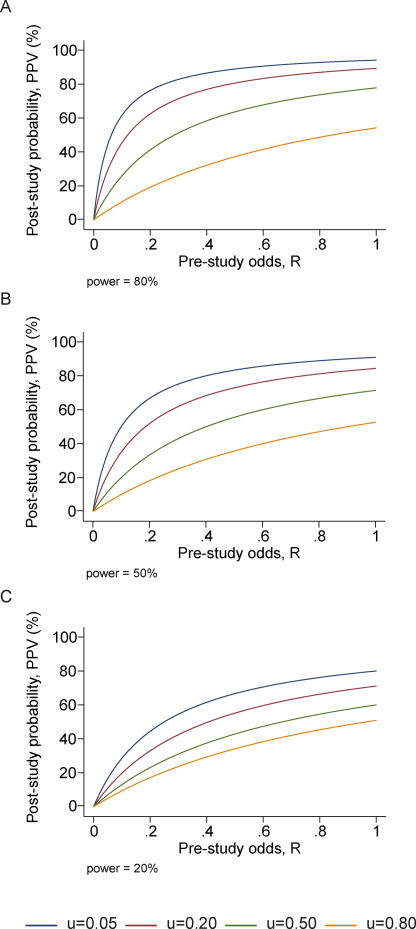
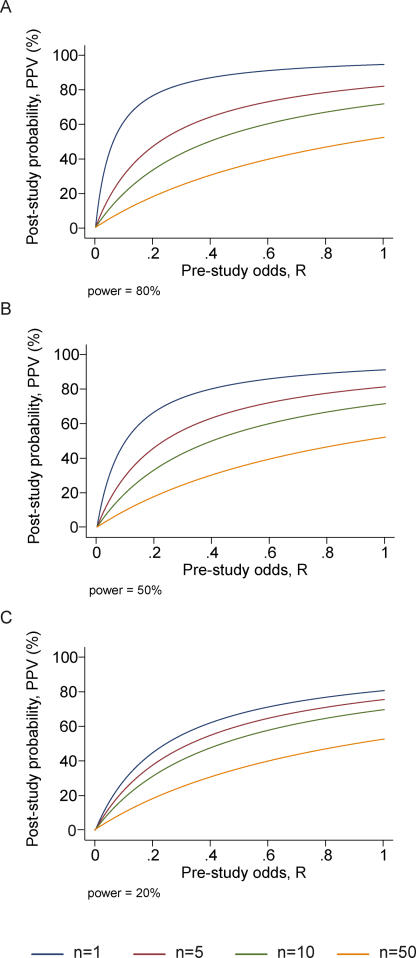
There is increasing concern that most current published research findings are false. The probability that a research claim is true may depend on study power and bias, the number of other studies on the same question, and, importantly, the ratio of true to no relationships among the relationships probed in each scientific field. In this framework, a research finding is less likely to be true when the studies conducted in a field are smaller; when effect sizes are smaller; when there is a greater number and lesser preselection of tested relationships; where there is greater flexibility in designs, definitions, outcomes, and analytical modes; when there is greater financial and other interest and prejudice; and when more teams are involved in a scientific field in chase of statistical significance. Simulations show that for most study designs and settings, it is more likely for a research claim to be false than true. Moreover, for many current scientific fields, claimed research findings may often be simply accurate measures of the prevailing bias. In this essay, I discuss the implications of these problems for the conduct and interpretation of research.
Overview
The claims and statistics of this paper haven’t been checked yet.
Free: it reads the open-access text and checks the first 5 claims that cite a source we can check. Create a free account to check every claim.
Integrity signals
Registry
Cites
Statistics
Figures
Verification
Claims the paper makes
The claims and statistics of this paper haven’t been checked yet.
Free: it reads the open-access text and checks the first 5 claims that cite a source we can check. Create a free account to check every claim.
Claims other papers make about this one
Each is checked against this paper’s own text: does it say what the citing paper says it does?
The source backs part of the claim, not all of it — or backs it for a different population, condition or comparison.
In the citing paper
“As noted, the pooled effect of risks and interventions trends towards the null result over time;189,190 the implication being that risks for which only a few studies have been done might have their effect overestimated compared with risks for which a large body of evidence exists.”
From A comparative risk assessment of burden of disease and injury attributable to 67 risk factors and risk factor clusters in 21 regions, 1990–2010: a systematic analysis for the Global Burden of Disease Study 2010 (2012) · cites this paper as [189]
Experimental — accuracy not yet measuredThe source backs part of the claim, not all of it — or backs it for a different population, condition or comparison.
In the citing paper
“Less clear, perhaps, is that low power can also increase the false discovery rate and the likelihood that reported effect sizes are inflated, due to their reduced ability to mute stochastic noise [13,63,64].”
From The natural selection of bad science (2016) · cites this paper as [13]
Experimental — accuracy not yet measuredThe source backs part of the claim, not all of it — or backs it for a different population, condition or comparison.
In the citing paper
“scholars have demonstrated that a large proportion of published articles contains flaws (Ioannidis 2005)”
From The ability of different peer review procedures to flag problematic publications (2019) · cites this paper as Ioannidis 2005
Experimental — accuracy not yet measuredThe source backs part of the claim, not all of it — or backs it for a different population, condition or comparison.
In the citing paper
“Furthermore, the publishing landscape in contemporary science rewards novel, positive findings over replications or negative results (Ioannidis 2005; Romero 2017).”
From The myth of the Bayesian brain (2025) · cites this paper as Ioannidis 2005
Experimental — accuracy not yet measuredThe source backs part of the claim, not all of it — or backs it for a different population, condition or comparison.
In the citing paper
“given the demonstrated association between small numbers and bias (Ioannidis 2005; Moore 2010; Nuesch 2009).”
From Psychological therapies for the management of chronic pain (excluding headache) in adults (2012) · cites this paper as Ioannidis 2005
Experimental — accuracy not yet measured
42 more claims about this paper
Create a free account to see every claim other papers make about this one.
Self-check
Percentages, sums and reported differences re-computed from the paper’s own numbers.
The self-check needs the paper’s full text.
Citations
Cites
Dermyshi, E., Wang, Y., Yan, C., Hong, W., Qiu, G., Gong, X., & Zhang, T. (2017) · Neonatology · doi:10.1159/000454668 · Cited by 24,451
Meta-analysis of Observational Studies in Epidemiology<SUBTITLE>A Proposal for Reporting</SUBTITLE>
Stroup, D. F. (2000) · JAMA · doi:10.1001/jama.283.15.2008 · Cited by 20,623
Golub, T. R., Slonim, D. K., Tamayo, P., Huard, C., Gaasenbeek, M., Mesirov, J. P., Coller, H., Loh, M. L., Downing, J. R., Caligiuri, M. A., et al. (1999) · Science · doi:10.1126/science.286.5439.531 · Cited by 11,516
Moher, D., Schulz, K. F., & Altman, D. G. (2001) · The Lancet · doi:10.1016/s0140-6736(00)04337-3 · Cited by 5,373
Moher, D., Cook, D. J., Eastwood, S., Olkin, I., Rennie, D., & Stroup, D. F. (1999) · The Lancet · doi:10.1016/s0140-6736(99)04149-5 · Cited by 4,826
Moher, D., Schulz, K. F., & Altman, D. G. (2001) · BMC Medical Research Methodology · doi:10.1186/1471-2288-1-2 · Cited by 2,755
Chan, A.-W., Hróbjartsson, A., Haahr, M. T., Gøtzsche, P. C., & Altman, D. G. (2004) · JAMA · doi:10.1001/jama.291.20.2457 · Cited by 1,845
Searching for genetic determinants in the new millennium
Risch, N. J. (2000) · Nature · doi:10.1038/35015718 · Cited by 1,839
Replication validity of genetic association studies
Ioannidis, J. P. A., Ntzani, E. E., Trikalinos, T. A., & Contopoulos-Ioannidis, D. G. (2001) · Nature Genetics · doi:10.1038/ng749 · Cited by 1,832
Self-citationWacholder, S., Chanock, S., Garcia-Closas, M., El ghormli, L., & Rothman, N. (2004) · JNCI: Journal of the National Cancer Institute · doi:10.1093/jnci/djh075 · Cited by 1,754
Cited by
Items 401–500 of 1,227
Choosing experiments to accelerate collective discovery
Rzhetsky, A., Foster, J. G., Foster, I. T., & Evans, J. A. (2015) · Proceedings of the National Academy of Sciences · doi:10.1073/pnas.1509757112 · Cited by 249
Tackett, J. L., Lilienfeld, S. O., Patrick, C. J., Johnson, S. L., Krueger, R. F., Miller, J. D., Oltmanns, T. F., & Shrout, P. E. (2017) · Perspectives on Psychological Science · doi:10.1177/1745691617690042 · Cited by 251
Uitterlinden, A. G., Ralston, S. H., Brandi, M. L., Carey, A. H., Grinberg, D., Langdahl, B. L., Lips, P., Lorenc, R., Obermayer-Pietsch, B., Reeve, J., et al. (2006) · Annals of Internal Medicine · doi:10.7326/0003-4819-145-4-200608150-00005 · Cited by 252
Self-citationBero, L., Oostvogel, F., Bacchetti, P., & Lee, K. (2007) · PLoS Medicine · doi:10.1371/journal.pmed.0040184 · Cited by 249
Valproic acid, valproate and divalproex in the maintenance treatment of bipolar disorder
Cipriani, A., Reid, K., Young, A. H., Macritchie, K., & Geddes, J. (2013) · Cochrane Database of Systematic Reviews · doi:10.1002/14651858.cd003196.pub2 · Cited by 247
Wood, S., Cooper, S., & Ross, S. (2014) · BJOG: An International Journal of Obstetrics & Gynaecology · doi:10.1111/1471-0528.12328 · Cited by 248
Specification Curve: Descriptive and Inferential Statistics on All Reasonable Specifications
Simonsohn, U., Simmons, J. P., & Nelson, L. D. (2015) · SSRN Electronic Journal · doi:10.2139/ssrn.2694998 · Cited by 248
Improving the odds of drug development success through human genomics: modelling study
Hingorani, A. D., Kuan, V., Finan, C., Kruger, F. A., Gaulton, A., Chopade, S., Sofat, R., MacAllister, R. J., Overington, J. P., Hemingway, H., et al. (2019) · Scientific Reports · doi:10.1038/s41598-019-54849-w · Cited by 247
Power, precision, and sample size estimation in sport and exercise science research
Abt, G., Boreham, C., Davison, G., Jackson, R., Nevill, A., Wallace, E., & Williams, M. (2020) · Journal of Sports Sciences · doi:10.1080/02640414.2020.1776002 · Cited by 241
Embracing failure: What the Phase III progesterone studies can teach about TBI clinical trials
Stein, D. G. (2015) · Brain Injury · doi:10.3109/02699052.2015.1065344 · Cited by 249
Improving Validation Practices in “Omics” Research
Ioannidis, J. P. A., & Khoury, M. J. (2011) · Science · doi:10.1126/science.1211811 · Cited by 246
Self-citationThe Chrysalis Effect: How Ugly Initial Results Metamorphosize Into Beautiful Articles
O’Boyle, E. H., Banks, G. C., & Gonzalez-Mulé, E. (2017) · Journal of Management · doi:10.1177/0149206314527133 · Cited by 246
Baez, S., Flichtentrei, D., Prats, M., Mastandueno, R., García, A. M., Cetkovich, M., & Ibáñez, A. (2017) · PLOS ONE · doi:10.1371/journal.pone.0179336 · Cited by 245
Reporting guidelines for simulation‐based research in social sciences
Rahmandad, H., & Sterman, J. D. (2012) · System Dynamics Review · doi:10.1002/sdr.1481 · Cited by 242
Power analysis for generalized linear mixed models in ecology and evolution
Johnson, P. C. D., Barry, S. J. E., Ferguson, H. M., & Müller, P. (2015) · Methods in Ecology and Evolution · doi:10.1111/2041-210x.12306 · Cited by 243
Ioannidis, J. P. A., Trikalinos, T. A., & Khoury, M. J. (2006) · American Journal of Epidemiology · doi:10.1093/aje/kwj259 · Cited by 246
Self-citationFunder, D. C., Levine, J. M., Mackie, D. M., Morf, C. C., Sansone, C., Vazire, S., & West, S. G. (2014) · Personality and Social Psychology Review · doi:10.1177/1088868313507536 · Cited by 245
A road map for efficient and reliable human genome epidemiology.
The Human Genome Epidemiology Network and the Network of Investigator Networks, Ioannidis, J. P. A., Gwinn, M., Little, J., Higgins, J. P. T., Bernstein, J. L., Boffetta, P., Bondy, M., Bray, M. S., Brenchley, P. E., et al. (2006) · Nature Genetics · doi:10.1038/ng0106-3 · Cited by 244
Self-citationYarkoni, T. (2019) · doi:10.31234/osf.io/jqw35 · Cited by 244
Revisiting the serotonin–aggression relation in humans: A meta-analysis.
Duke, A. A., Bègue, L., Bell, R., & Eisenlohr-Moul, T. (2013) · Psychological Bulletin · doi:10.1037/a0031544 · Cited by 242
Ki67 Expression and Docetaxel Efficacy in Patients With Estrogen Receptor–Positive Breast Cancer
Penault-Llorca, F., André, F., Sagan, C., Lacroix-Triki, M., Denoux, Y., Verriele, V., Jacquemier, J., Baranzelli, M. C., Bibeau, F., Antoine, M., et al. (2009) · Journal of Clinical Oncology · doi:10.1200/jco.2008.18.2808 · Cited by 243
Meaningful associations in the adolescent brain cognitive development study
Dick, A. S., Lopez, D. A., Watts, A. L., Heeringa, S., Reuter, C., Bartsch, H., Fan, C. C., Kennedy, D. N., Palmer, C., Marshall, A., et al. (2021) · NeuroImage · doi:10.1016/j.neuroimage.2021.118262 · Cited by 241
Aylett, E., Small, N., & Bower, P. (2018) · BMC Health Services Research · doi:10.1186/s12913-018-3313-5 · Cited by 242
Measuring Oxytocin and Vasopressin: Bioassays, Immunoassays and Random Numbers
Leng, G., & Sabatier, N. (2016) · Journal of Neuroendocrinology · doi:10.1111/jne.12413 · Cited by 237
Model Uncertainty and Robustness: A Computational Framework for Multimodel Analysis
Young, C., & Holsteen, K. (2017) · Sociological Methods & Research · doi:10.1177/0049124115610347 · Cited by 239
Research Design in Clinical Psychology
Kazdin, A. E. (2021) · doi:10.1017/9781108993647 · Cited by 240
Breckenridge, C. B., Berry, C., Chang, E. T., Sielken, R. L., & Mandel, J. S. (2016) · PLOS ONE · doi:10.1371/journal.pone.0151841 · Cited by 239
Semrau, M., Lempp, H., Keynejad, R., Evans-Lacko, S., Mugisha, J., Raja, S., Lamichhane, J., Alem, A., Thornicroft, G., & Hanlon, C. (2016) · BMC Health Services Research · doi:10.1186/s12913-016-1323-8 · Cited by 236
Exploratory data analysis as a foundation of inductive research
Jebb, A. T., Parrigon, S., & Woo, S. E. (2017) · Human Resource Management Review · doi:10.1016/j.hrmr.2016.08.003 · Cited by 237
Vinkers, C. H., Tijdink, J. K., & Otte, W. M. (2015) · BMJ · doi:10.1136/bmj.h6467 · Cited by 237
A tutorial on testing hypotheses using the Bayes factor.
Hoijtink, H., Mulder, J., van Lissa, C., & Gu, X. (2019) · Psychological Methods · doi:10.1037/met0000201 · Cited by 234
An umbrella review of the evidence associating diet and cancer risk at 11 anatomical sites
Papadimitriou, N., Markozannes, G., Kanellopoulou, A., Critselis, E., Alhardan, S., Karafousia, V., Kasimis, J. C., Katsaraki, C., Papadopoulou, A., Zografou, M., et al. (2021) · Nature Communications · doi:10.1038/s41467-021-24861-8 · Cited by 234
School and Residential Neighborhood Food Environment and Diet Among California Youth
An, R., & Sturm, R. (2012) · American Journal of Preventive Medicine · doi:10.1016/j.amepre.2011.10.012 · Cited by 236
Gibson, S. (2008) · Nutrition Research Reviews · doi:10.1017/s0954422408110976 · Cited by 236
Scarapicchia, T. M. F., Amireault, S., Faulkner, G., & Sabiston, C. M. (2017) · International Review of Sport and Exercise Psychology · doi:10.1080/1750984x.2016.1183222 · Cited by 235
The use of prophylactic antibiotics prior to dental procedures in patients with prosthetic joints
Sollecito, T. P., Abt, E., Lockhart, P. B., Truelove, E., Paumier, T. M., Tracy, S. L., Tampi, M., Beltrán-Aguilar, E. D., & Frantsve-Hawley, J. (2015) · The Journal of the American Dental Association · doi:10.1016/j.adaj.2014.11.012 · Cited by 235
A Practical Guide for Transparency in Psychological Science
Klein, O., Hardwicke, T. E., Aust, F., Breuer, J., Danielsson, H., Mohr, A. H., IJzerman, H., Nilsonne, G., Vanpaemel, W., & Frank, M. C. (2018) · Collabra: Psychology · doi:10.1525/collabra.158 · Cited by 233
Interpreting observational studies: why empirical calibration is needed to correct p‐values
Schuemie, M. J., Ryan, P. B., DuMouchel, W., Suchard, M. A., & Madigan, D. (2014) · Statistics in Medicine · doi:10.1002/sim.5925 · Cited by 234
Estimating the Difference Between Published and Unpublished Effect Sizes: A Meta-Review
Polanin, J. R., Tanner-Smith, E. E., & Hennessy, E. A. (2016) · Review of Educational Research · doi:10.3102/0034654315582067 · Cited by 234
Vassos, E., Collier, D. A., & Fazel, S. (2014) · Molecular Psychiatry · doi:10.1038/mp.2013.31 · Cited by 234
Ranehill, E., Dreber, A., Johannesson, M., Leiberg, S., Sul, S., & Weber, R. A. (2015) · Psychological Science · doi:10.1177/0956797614553946 · Cited by 233
Rigorous Large-Scale Educational RCTs Are Often Uninformative: Should We Be Concerned?
Lortie-Forgues, H., & Inglis, M. (2019) · Educational Researcher · doi:10.3102/0013189x19832850 · Cited by 234
Current sample size conventions: Flaws, harms, and alternatives
Bacchetti, P. (2010) · BMC Medicine · doi:10.1186/1741-7015-8-17 · Cited by 232
Hutton, C., Wagener, T., Freer, J., Han, D., Duffy, C., & Arheimer, B. (2016) · Water Resources Research · doi:10.1002/2016wr019285 · Cited by 233
Show Your Work: Improved Reporting of Experimental Results
Dodge, J., Gururangan, S., Card, D., Schwartz, R., & Smith, N. A. (2019) · Proceedings of the 2019 Conference on Empirical Methods in Natural Language Processing and the 9th International Joint Conference on Natural Language Processing (EMNLP-IJCNLP) · doi:10.18653/v1/d19-1224 · Cited by 233
Almost all articles on cancer prognostic markers report statistically significant results
Kyzas, P. A., Denaxa-Kyza, D., & Ioannidis, J. P. A. (2007) · European Journal of Cancer · doi:10.1016/j.ejca.2007.08.030 · Cited by 231
Self-citationKern, S. E. (2012) · Cancer Research · doi:10.1158/0008-5472.can-12-3232 · Cited by 231
Uttley, J. (2019) · LEUKOS · doi:10.1080/15502724.2018.1533851 · Cited by 231
Kharabian Masouleh, S., Eickhoff, S. B., Hoffstaedter, F., Genon, S., & Initiative, A. D. N. (2019) · eLife · doi:10.7554/elife.43464 · Cited by 230
Selective Reporting Biases in Cancer Prognostic Factor Studies
Kyzas, P. A., Loizou, K. T., & Ioannidis, J. P. A. (2005) · JNCI: Journal of the National Cancer Institute · doi:10.1093/jnci/dji184 · Cited by 231
Self-citationArtificial Intelligence for Drug Discovery: Are We There Yet?
Hasselgren, C., & Oprea, T. I. (2024) · Annual Review of Pharmacology and Toxicology · doi:10.1146/annurev-pharmtox-040323-040828 · Cited by 236
Comparison of evidence on harms of medical interventions in randomized and nonrandomized studies
Papanikolaou, P. N. (2006) · Canadian Medical Association Journal · doi:10.1503/cmaj.050873 · Cited by 229
Gender Differences in Subjective Well-Being and Their Relationships with Gender Equality
Meisenberg, G., & Woodley, M. A. (2015) · Journal of Happiness Studies · doi:10.1007/s10902-014-9577-5 · Cited by 226
Coveney, P. V., Dougherty, E. R., & Highfield, R. R. (2016) · Philosophical Transactions of the Royal Society A: Mathematical, Physical and Engineering Sciences · doi:10.1098/rsta.2016.0153 · Cited by 229
The historical roots of economic development
Nunn, N. (2020) · Science · doi:10.1126/science.aaz9986 · Cited by 222
Meta‐research: The art of getting it wrong
Ioannidis, J. P. A. (2010) · Research Synthesis Methods · doi:10.1002/jrsm.19 · Cited by 227
Self-citationSeven rules of thumb for web site experimenters
Kohavi, R., Deng, A., Longbotham, R., & Xu, Y. (2014) · Proceedings of the 20th ACM SIGKDD international conference on Knowledge discovery and data mining · doi:10.1145/2623330.2623341 · Cited by 226
Denaxas, S. C., George, J., Herrett, E., Shah, A. D., Kalra, D., Hingorani, A. D., Kivimaki, M., Timmis, A. D., Smeeth, L., & Hemingway, H. (2012) · International Journal of Epidemiology · doi:10.1093/ije/dys188 · Cited by 226
Short Telomere Length, Cancer Survival, and Cancer Risk in 47102 Individuals
Weischer, M., Nordestgaard, B. G., Cawthon, R. M., Freiberg, J. J., Tybjærg-Hansen, A., & Bojesen, S. E. (2013) · JNCI: Journal of the National Cancer Institute · doi:10.1093/jnci/djt016 · Cited by 228
Meta-analysis of molecular imaging of serotonin transporters in major depression
Gryglewski, G., Lanzenberger, R., Kranz, G. S., & Cumming, P. (2014) · Journal of Cerebral Blood Flow & Metabolism · doi:10.1038/jcbfm.2014.82 · Cited by 227
Learning from Data: An Empirics-First Approach to Relevant Knowledge Generation
Golder, P. N., Dekimpe, M. G., An, J. T., van Heerde, H. J., Kim, D. S. U., & Alba, J. W. (2023) · Journal of Marketing · doi:10.1177/00222429221129200 · Cited by 224
Power to Detect What? Considerations for Planning and Evaluating Sample Size
Giner-Sorolla, R., Montoya, A. K., Reifman, A., Carpenter, T., Lewis, N. A., Aberson, C. L., Bostyn, D. H., Conrique, B. G., Ng, B. W., Schoemann, A. M., et al. (2024) · Personality and Social Psychology Review · doi:10.1177/10888683241228328 · Cited by 221
Curses—Winner's and Otherwise—in Genetic Epidemiology
Kraft, P. (2008) · Epidemiology · doi:10.1097/ede.0b013e318181b865 · Cited by 225
Shining Light on the Microbial World
(2010) · Advances in Applied Microbiology · doi:10.1016/s0065-2164(10)70005-8 · Cited by 225
Increased Extra-axial Cerebrospinal Fluid in High-Risk Infants Who Later Develop Autism
Shen, M. D., Kim, S. H., McKinstry, R. C., Gu, H., Hazlett, H. C., Nordahl, C. W., Emerson, R. W., Shaw, D., Elison, J. T., Swanson, M. R., et al. (2017) · Biological Psychiatry · doi:10.1016/j.biopsych.2017.02.1095 · Cited by 225
Modelling science trustworthiness under publish or perish pressure
Grimes, D. R., Bauch, C. T., & Ioannidis, J. P. A. (2018) · Royal Society Open Science · doi:10.1098/rsos.171511 · Cited by 225
Self-citationAn application of deep reinforcement learning to algorithmic trading
Théate, T., & Ernst, D. (2021) · Expert Systems with Applications · doi:10.1016/j.eswa.2021.114632 · Cited by 224
Passi, S., & Jackson, S. J. (2018) · Proceedings of the ACM on Human-Computer Interaction · doi:10.1145/3274405 · Cited by 225
Responsible Conduct of Research
Shamoo, A. E., & Resnik, D. B. (2022) · doi:10.1093/oso/9780197547090.001.0001 · Cited by 224
Baker, D. H., Vilidaitė, G., Lygo-Frett, F., Smith, A. K., Flack, T. R., Gouws, A. D., & Andrews, T. J. (2021) · White Rose Research Online (University of Leeds, The University of Sheffield, University of York) · Cited by 224
Flegal, K. M., Graubard, B. I., Williamson, D. F., & Cooper, R. S. (2011) · American Journal of Epidemiology · doi:10.1093/aje/kwq341 · Cited by 223
Outcomes and endpoints in trials of cancer treatment: the past, present, and future
Wilson, M. K., Karakasis, K., & Oza, A. M. (2015) · The Lancet Oncology · doi:10.1016/s1470-2045(14)70375-4 · Cited by 219
Garner, J. P. (2014) · ILAR Journal · doi:10.1093/ilar/ilu047 · Cited by 221
Appropriate protein provision in critical illness: a systematic and narrative review
Hoffer, L. J., & Bistrian, B. R. (2012) · The American Journal of Clinical Nutrition · doi:10.3945/ajcn.111.032078 · Cited by 225
Robinson-Cimpian, J. P. (2014) · Educational Researcher · doi:10.3102/0013189x14534297 · Cited by 222
Clinical efficacy and effectiveness of 3D printing: a systematic review
Diment, L. E., Thompson, M. S., & Bergmann, J. H. M. (2017) · BMJ Open · doi:10.1136/bmjopen-2017-016891 · Cited by 220
The elephant in the room — healthy brains in later life, epidemiology and public health
Brayne, C. (2007) · Nature Reviews Neuroscience · doi:10.1038/nrn2091 · Cited by 220
Schizophrenia and abnormal brain network hubs
Rubinov, M., & Bullmore, E. (2013) · Dialogues in Clinical Neuroscience · doi:10.31887/dcns.2013.15.3/mrubinov · Cited by 220
Epistemologic Inquiries in Evidence-Based Medicine
Djulbegovic, B., Guyatt, G. H., & Ashcroft, R. E. (2009) · Cancer Control · doi:10.1177/107327480901600208 · Cited by 218
Comparative Efficacy and Harms of Duloxetine, Milnacipran, and Pregabalin in Fibromyalgia Syndrome
Häuser, W., Petzke, F., & Sommer, C. (2010) · The Journal of Pain · doi:10.1016/j.jpain.2010.01.002 · Cited by 264
Neuromyths: Why Do They Exist and Persist?
Pasquinelli, E. (2012) · Mind, Brain, and Education · doi:10.1111/j.1751-228x.2012.01141.x · Cited by 215
Cancer pharmacogenomics: strategies and challenges
Wheeler, H. E., Maitland, M. L., Dolan, M. E., Cox, N. J., & Ratain, M. J. (2013) · Nature Reviews Genetics · doi:10.1038/nrg3352 · Cited by 215
Learning Disabilities, Dyslexia, and Vision
Handler, S. M., Fierson, W. M., & the Section on Ophthalmology and Council on Children with Disabilities, A. A. O. O. (2011) · Pediatrics · doi:10.1542/peds.2010-3670 · Cited by 213
Blazing Angels or Resident Evil? Can Violent Video Games be a Force for Good?
Ferguson, C. J. (2010) · Review of General Psychology · doi:10.1037/a0018941 · Cited by 215
Reproducibility and replicability of rodent phenotyping in preclinical studies
Kafkafi, N., Agassi, J., Chesler, E. J., Crabbe, J. C., Crusio, W. E., Eilam, D., Gerlai, R., Golani, I., Gomez-Marin, A., Heller, R., et al. (2018) · Neuroscience & Biobehavioral Reviews · doi:10.1016/j.neubiorev.2018.01.003 · Cited by 215
Chapter 1. Complexity theory: The lessons continue
Larsen‐Freeman, D. (2017) · Language learning and language teaching · doi:10.1075/lllt.48.2lar · Cited by 240
Meta-analysis in applied ecology
Stewart, G. (2010) · Biology Letters · doi:10.1098/rsbl.2009.0546 · Cited by 214
Overcoming obstacles to developing new analgesics
Woolf, C. J. (2010) · Nature Medicine · doi:10.1038/nm.2230 · Cited by 214
Everything You Never Wanted to Know about Circular Analysis, but Were Afraid to Ask
Kriegeskorte, N., Lindquist, M. A., Nichols, T. E., Poldrack, R. A., & Vul, E. (2010) · Journal of Cerebral Blood Flow & Metabolism · doi:10.1038/jcbfm.2010.86 · Cited by 214
P. Simmons, J., D. Nelson, L., & Simonsohn, U. (2021) · Journal of Consumer Psychology · doi:10.1002/jcpy.1208 · Cited by 213
A Short (Personal) Future History of Revolution 2.0
Spellman, B. A. (2015) · Perspectives on Psychological Science · doi:10.1177/1745691615609918 · Cited by 213
D. Chambers, C., 1 Cardiff University Brain Research Imaging Centre, S. O. P., Feredoes, E., D. Muthukumaraswamy, S., & J. Etchells, P. (2014) · AIMS Neuroscience · doi:10.3934/neuroscience.2014.1.4 · Cited by 213
Clinical Outcome Prediction by MicroRNAs in Human Cancer: A Systematic Review
Nair, V. S., Maeda, L. S., & Ioannidis, J. P. A. (2012) · JNCI: Journal of the National Cancer Institute · doi:10.1093/jnci/djs027 · Cited by 214
Self-citationAnomalies and False Rejections
Chordia, T., Goyal, A., & Saretto, A. (2017) · doi:10.2139/ssrn.3017677 · Cited by 213
Ogino, S., Lochhead, P., Chan, A. T., Nishihara, R., Cho, E., Wolpin, B. M., Meyerhardt, J. A., Meissner, A., Schernhammer, E. S., Fuchs, C. S., et al. (2013) · Modern Pathology · doi:10.1038/modpathol.2012.214 · Cited by 212
Amur, S., LaVange, L., Zineh, I., Buckman‐Garner, S., & Woodcock, J. (2015) · Clinical Pharmacology & Therapeutics · doi:10.1002/cpt.136 · Cited by 211
Preregistering Qualitative Research: A Delphi Study
Haven, T. L., Errington, T. M., Gleditsch, K. S., van Grootel, L., Jacobs, A. M., Kern, F. G., Piñeiro, R., Rosenblatt, F., & Mokkink, L. B. (2020) · International Journal of Qualitative Methods · doi:10.1177/1609406920976417 · Cited by 211
Methods for meta-analysis in genetic association studies: a review of their potential and pitfalls
Kavvoura, F. K., & Ioannidis, J. P. A. (2008) · Human Genetics · doi:10.1007/s00439-007-0445-9 · Cited by 212
Self-citationPublication bias in meta‐analyses from the Cochrane Database of Systematic Reviews
Kicinski, M., Springate, D. A., & Kontopantelis, E. (2015) · Statistics in Medicine · doi:10.1002/sim.6525 · Cited by 210
p-Curve and p-Hacking in Observational Research
Bruns, S. B., & Ioannidis, J. P. A. (2016) · PLOS ONE · doi:10.1371/journal.pone.0149144 · Cited by 210
Self-citation
Metadata
- Authors
- Ioannidis, J. P. A.
- Affiliations
- University of Ioannina (GR)
- Corresponding author
- Ioannidis, John P. A.
- Venue
- PLoS Medicine
- Publisher
- Public Library of Science (PLoS)
- Published
- 2005-08-30
- Volume
- 2
- Issue
- 8
- Pages
- e124
- ISSN
- 1549-1277 (ISSN-L)
- 1549-1676
- PMC
- PMC1182327
- OpenAlex
- W2144981148
- Cited by
- 10,505
- References
- 40
- Citations by year
- 2026: 628 · 2025: 666 · 2024: 649 · 2023: 706 · 2022: 783 · 2021: 834 · 2020: 836 · 2019: 897 · 2018: 778 · 2017: 759 · 2016: 716 · 2015: 542 · 2014: 427 · 2013: 344 · 2012: 227
- FWCI
- 97.37
- Type
- journal article
- Language
- en
- Update notices
- correction (2022-08-25)
- Open access
- gold
- doi.org
- Locations
- PLoS Medicine (publishedVersion, cc-by)
- Europe PMC (PubMed Central) (publishedVersion, cc-by)
- PubMed Central (publishedVersion, cc-by)
- PubMed (publishedVersion)
- RePEc: Research Papers in Economics (submittedVersion, cc-by)
- DOAJ (DOAJ: Directory of Open Access Journals) (submittedVersion, cc-by-sa)
- Topics
- Social Sciences › Decision Sciences › Statistics, Probability and Uncertainty › Meta-analysis and systematic reviews
- Social Sciences › Library and Information Sciences › Academic Publishing and Open Access
- Social Sciences › Education › Academic integrity and plagiarism
- Keywords
- replication crisis, false positives, research credibility, statistical power, research bias, p-hacking, effect size, multiple comparisons, financial conflicts of interest, research misconduct, significance testing
- MeSH terms
- Data Interpretation, Statistical, Publishing, Research Design, Meta-Analysis as Topic, Reproducibility of Results, Bias, Likelihood Functions, Odds Ratio, Sample Size
About these checks
Registry, retraction, Cites and statistics results are computed, not judged, with one exception: a printed reference that no index lists is read once by a model before it counts as a citation error. Claims are extracted by a model and kept only when their quote appears verbatim in the text; each cited source is then checked, with a model’s help, for whether it says what the claim relies on. Those verdicts can be wrong — read the claim’s quote and the cited source before relying on one.
Statistics and arithmetic are recomputed, not judged.
Confidence bands are shown only for fields calibrated on our annotated test set. None is calibrated yet, so no band is shown.
What counts as a claim ›How we measure confidence ›How we check this ›
Are you an author, or do you see a problem with this page? Request a review
Data sources
Bibliographic data: Semantic Scholar, OpenAlex, Crossref.
Contains information from the Semantic Scholar Academic Graph Datasets, made available under the ODC Attribution License (ODC-BY 1.0).
Semantic Scholar’s data is described in: Kinney, R., et al. (2023). The Semantic Scholar Open Data Platform. arXiv:2301.10140.
