

CONSORT 2010 Statement: Updated Guidelines for Reporting Parallel Group Randomised Trials
Open accessThe DOI matches its Crossref record; 43 of the 43 references it cites were found in a registry or an index; 5 of the 23 sources its claims cite were checked for support.
Abstract
DOAJ is a unique and extensive index of diverse open access journals from around the world, driven by a growing community, committed to ensuring quality content is freely available online for everyone.
Overview
CoChat Summary
## TL;DR
CONSORT 2010 is an updated reporting guideline for randomized controlled trials, created to improve completeness, clarity, and transparency in trial reporting. It keeps the focus on parallel-group, two-arm trials but provides a 25-item checklist, a flow diagram, and updated explanation/elaboration material.
## Key findings
- The update was developed by 31 members of the CONSORT 2010 Group at a meeting in Montebello, Canada, in January 2007, followed by seven major iterations and additional feedback cycles before finalization.
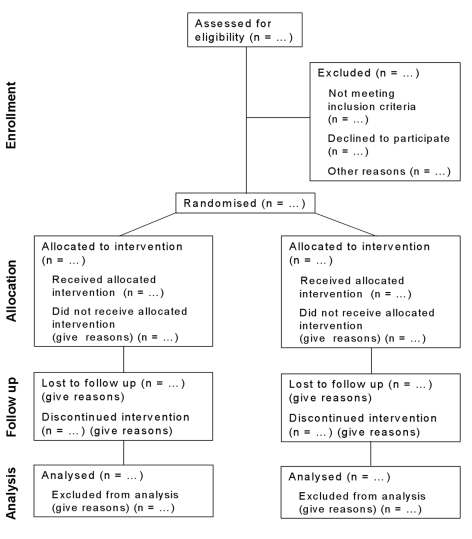
- CONSORT 2010 includes a 25-item checklist and a flow diagram; the paper states the flow diagram was not modified except for one word.
- The guideline was refined using a CONSORT database containing more than 700 studies as empirical support, and the paper notes that more than 400 journals around the world have explicitly supported CONSORT.
- The revision added or clarified several reporting items, including structured abstract reporting, trial design and allocation ratio, changes after trial commencement, selective outcome reporting, trial registration, protocol availability, and funding.
## Methods
- This is a guideline development/revision paper, not an empirical trial; the CONSORT Group met to update the 2001 CONSORT statement using accumulated methodological evidence and expert discussion.
- The group assigned members to synthesize evidence for checklist items, then used teleconferences, meetings, and iterative drafts to revise the statement and the accompanying explanation/elaboration document.
- The main analysis was consensus-based appraisal of checklist items against methodological evidence; the paper does not report a statistical analysis of original participant data.
## Limitations
- The paper states that CONSORT 2010 is not a guideline for designing, conducting, or analyzing trials; it addresses only the reporting of what was done and what was found.
- The guideline focuses predominantly on two-group, parallel randomized controlled trials, although many items apply more broadly; other designs may need additional CONSORT extensions.
- Evident from the text: as a reporting guideline, it can be misused if authors report what the checklist suggests rather than what was actually done; the authors explicitly warn against this and advise checking protocols, trial registers, and regulatory websites.
Model-written summary. Check it against the paper before relying on it.
Integrity signals
Registry
Cites
Statistics
Figures
Verification
Claims the paper makes
5 Valid · 0 Not valid · 11 Not checked · 5 Own results and interpretations
Every source the paper cites for this claim was checked and supports it.
In the paper
“However, randomised trials can yield biased results if they lack methodological rigour [1].”
§ CONSORT 2010 Statement: Updated Guidelines for Reporting Parallel Group Randomised Trials > Introduction
What the sources say
- Supportedcites [1] Jüni P Altman DG Egger M 2001 Systematic reviews in health care: assessing the quality of controlled clinical trials. BMJ 323 42 46 11440947 PMC1120670 source
The Conclusions section of our copy states there is 'ample evidence that many trials are methodologically weak and increasing evidence that deficiencies translate into biased findings of systematic reviews,' and the 'Empirical evidence of bias' section reports that biases 'do occur in practice, distorting the results of clinical trials,' with inadequate or unclear allocation concealment exaggerating treatment effects (combined ratio of odds ratios 0.70, 95% CI 0.62 to 0.80) across four methodological studies. This directly supports the attributed paraphrase that randomised trials can yield biased results when methodologically deficient. (LLM, conf=0.92)
plainstates a possible cause- Asserted: passes — The authors put it forward as true.
- Checkable: passes — It can be checked against evidence.
- Load-bearing: passes — The paper’s conclusions depend on it.
- Based: passes — The paper gives a reason why it holds.
- Supported
The cited sources support only part of this claim — read each source’s verdict below.
In the paper
“Empirical evidence suggests that authors often ignore, in the conduct and reporting of their trial, what they stated in the protocol. [4],[22]”
§ CONSORT 2010 Statement: Updated Guidelines for Reporting Parallel Group Randomised Trials > Changes in CONSORT 2010 > Box 2. Noteworthy Specific Changes in CONSORT 2010 Statement
What the sources say
- Partly supportedcites [4] Dwan K Altman DG Arnaiz JA Bloom J Chan AW 2008 Systematic review of the empirical evidence of study publication bias and outcome reporting bias. PLoS ONE 3 e3081 doi: 10.1371/journal.pone.0003081 18769481 PMC2518111 sourceExperimental — accuracy not yet measured
The Results (Publication and trial findings; page unavailable) report that 40–62% of trials had major discrepancies between protocol-specified primary outcomes and published articles, supporting the claim about reporting. The review compares protocols with publications; it does not establish that authors ignored protocols during trial conduct or that the discrepancies were intentional. (LLM, conf=0.84)
- Not checked yetcites [22] Chan AW Hróbjartsson A Haahr MT Gøtzsche PC Altman DG 2004 Empirical evidence for selective reporting of outcomes in randomized trials: comparison of protocols to published articles. JAMA 291 2457 2465 15161896 source
hedged- Asserted: passes — The authors put it forward as true.
- Checkable: passes — It can be checked against evidence.
- Load-bearing: passes — The paper’s conclusions depend on it.
- Based: passes — The paper gives a reason why it holds.
- Partly supported
Every source the paper cites for this claim was checked and supports it.
In the paper
“Empirical evidence points toward funding source sometimes being associated with estimated treatment effects [30].”
§ CONSORT 2010 Statement: Updated Guidelines for Reporting Parallel Group Randomised Trials > Changes in CONSORT 2010 > Box 2. Noteworthy Specific Changes in CONSORT 2010 Statement
What the sources say
- Supportedcites [30] Lexchin J Bero LA Djulbegovic B Clark O 2003 Pharmaceutical industry sponsorship and research outcome and quality: systematic review. BMJ 326 1167 1170 12775614 PMC156458 source
The section on funding source and clinical-trial outcomes reports that 13 of 16 studies found industry-sponsored research favoured the sponsor’s product. The paper also reports different estimated risks of venous thromboembolism in industry-funded and non-industry-funded studies, directly supporting the qualified claim that funding source is sometimes associated with estimated treatment effects. (LLM, conf=0.91)
hedgedstates an association- Asserted: passes — The authors put it forward as true.
- Checkable: passes — It can be checked against evidence.
- Load-bearing: passes — The paper’s conclusions depend on it.
- Based: passes — The paper gives a reason why it holds.
- Supported
The cited sources support only part of this claim — read each source’s verdict below.
In the paper
“We also eliminated text on “how the success of blinding (masking) was assessed” because of a lack of empirical evidence supporting the practice as well as theoretical concerns about the validity of any such assessment [23],[24].”
§ CONSORT 2010 Statement: Updated Guidelines for Reporting Parallel Group Randomised Trials > Changes in CONSORT 2010 > Box 2. Noteworthy Specific Changes in CONSORT 2010 Statement
What the sources say
- Partly supportedcites [23] Sackett DL 2007 Commentary: Measuring the success of blinding in RCTs: don't, must, can't or needn't? Int J Epidemiol 36 664 665 17675306 sourceExperimental — accuracy not yet measured
Sackett’s commentary (pp. 664–665) argues that tests of blinding can give invalid answers because they cannot distinguish loss of blinding from hunches about treatment efficacy. This supports the citing sentence’s concern about validity, but the paper does not explicitly establish a lack of empirical evidence supporting the practice. (LLM, conf=0.78)
- Not checked yetcites [24] Schulz KF Grimes DA 2002 Blinding in randomised trials: hiding who got what. Lancet 359 696 700 11879884 source
plain- Asserted: passes — The authors put it forward as true.
- Checkable: passes — It can be checked against evidence.
- Load-bearing: passes — The paper’s conclusions depend on it.
- Based: passes — The paper gives a reason why it holds.
- Partly supported
In the paper
“While those statements improved the reporting quality for some randomised controlled trials [9],[10], many trial reports still remain inadequate [2].”
§ CONSORT 2010 Statement: Updated Guidelines for Reporting Parallel Group Randomised Trials > Introduction
What the sources say
- Not checked yetcites [2] Chan AW Altman DG 2005 Epidemiology and reporting of randomised trials published in PubMed journals. Lancet 365 1159 1162 15794971 source
plain- Asserted: passes — The authors put it forward as true.
- Checkable: passes — It can be checked against evidence.
- Load-bearing: passes — The paper’s conclusions depend on it.
- Based: passes — The paper gives a reason why it holds.
9 more claims
Create a free account to see all 21 claims and to verify the 18 references still open.
- Probably not a substantial claim. 6
- It may state two separate claims as one. 1
Claims other papers make about this one
Each is checked against this paper’s own text: does it say what the citing paper says it does?
The source backs part of the claim, not all of it — or backs it for a different population, condition or comparison.
In the citing paper
“Compliance with GATHER is not an indicator of a study's quality.”
From Guidelines for accurate and transparent health estimates reporting: the GATHER statement (2016) · cites this paper as [18]
Experimental — accuracy not yet measuredThe source backs part of the claim, not all of it — or backs it for a different population, condition or comparison.
In the citing paper
“The Consolidated Standards of Reporting Trials (CONSORT) 2010 Statement 4 currently suggests in Item 5 that authors should report on 'The interventions for each group with sufficient details to allow replication, including how and when they were actually administered'.”
From Better reporting of interventions: template for intervention description and replication (TIDieR) checklist and guide (2014) · cites this paper as [4]
Experimental — accuracy not yet measuredThe cited source says what the claim attributes to it.
In the citing paper
“After extensive team discussions, the investigators decided to follow the approach of Maher et al [58], who devised a risk of bias assessment tool based on the CONSORT (Consolidated Standards of Reporting Trials) checklist [51].”
From Voice-Based Conversational Agents for the Prevention and Management of Chronic and Mental Health Conditions: Systematic Literature Review (2021) · cites this paper as [51]
The cited source says what the claim attributes to it.
In the citing paper
“Reporting issues have led to the creation of reporting checklists in other fields, such as the Consolidated Standards of Reporting Trials (CONSORT) checklist for randomized controlled trials [95].”
From The NASSS (Non-Adoption, Abandonment, Scale-Up, Spread and Sustainability) framework use over time: A scoping review (2025) · cites this paper as [95]
The cited source says what the claim attributes to it.
In the citing paper
“The results are reported in accordance with the CONSORT guidelines (Schulz et al., 2010).”
From Exercise combined with Acceptance and Commitment Therapy for chronic pain: One-year follow-up from a randomized controlled trial (2024) · cites this paper as Schulz et al., 2010
3 more claims about this paper
Create a free account to see every claim other papers make about this one.
Citations
Cites
Preferred Reporting Items for Systematic Reviews and Meta-Analyses: the PRISMA statement
Moher, D., Liberati, A., Tetzlaff, J., Altman, D. G., & for the PRISMA Group (2009) · BMJ · doi:10.1136/bmj.b2535 · Cited by 83,823
Self-citationPreferred Reporting Items for Systematic Reviews and Meta-Analyses: The PRISMA Statement
Moher, D., Liberati, A., Tetzlaff, J., Altman, D. G., & The PRISMA Group (2009) · PLoS Medicine · doi:10.1371/journal.pmed.1000097 · Cited by 64,042
Self-citationPreferred reporting items for systematic reviews and meta-analyses: the PRISMA Statement.
(2009) · PubMed Central · Cited by 44,859
Self-citationElm, E. V., Altman, D. G., Egger, M., Pocock, S. J., Gøtzsche, P. C., & Vandenbroucke, J. P. (2007) · BMJ · doi:10.1136/bmj.39335.541782.ad · Cited by 10,766
Self-citationMoher, D., Hopewell, S., Schulz, K. F., Montori, V., Gotzsche, P. C., Devereaux, P. J., Elbourne, D., Egger, M., & Altman, D. G. (2010) · BMJ · doi:10.1136/bmj.c869 · Cited by 8,883
Self-citationSchulz (1995) · doi:10.1001/jama.1995.03520290060030 · Cited by 5,634
Moher, D., Schulz, K. F., & Altman, D. G. (2001) · The Lancet · doi:10.1016/s0140-6736(00)04337-3 · Cited by 5,373
Self-citationMoher, D., Pham, B., Jones, A., Cook, D. J., Jadad, A. R., Moher, M., Tugwell, P., & Klassen, T. P. (1998) · The Lancet · doi:10.1016/s0140-6736(98)01085-x · Cited by 3,560
Self-citationConsort 2010 statement: extension to cluster randomised trials
Campbell, M. K., Piaggio, G., Elbourne, D. R., Altman, D. G., & for the CONSORT Group (2012) · BMJ · doi:10.1136/bmj.e5661 · Cited by 3,510
Self-citationAssessing the quality of controlled clinical trials
Jüni, P., Altman, D. G., & Egger, M. (2001) · BMJ · doi:10.1136/bmj.323.7303.42 · Cited by 3,309
Self-citation
Cited by
Items 601–700 of 1,021
Anwar, R. S., Hussein, Y. F., & Riad, M. (2024) · BDJ Open · doi:10.1038/s41405-024-00184-w · Cited by 30
Vanneste, A., Wens, I., Sinnaeve, P., Louati, C., Huys, I., Ioannidis, J. P. A., & Adriaenssens, T. (2025) · BMJ · doi:10.1136/bmj-2024-082697 · Cited by 35
An International Perspective on Improving the Quality and Potential of Behavioral Clinical Trials
for the International Behavioural Trials Network (IBTN), Bacon, S., Lavoie, K., Ninot, G., Czajkowski, S. M., Freedland, K. E., Michie, S., Montgomery, P., Powell, L. H., & Spring, B. J. (2014) · Current Cardiovascular Risk Reports · doi:10.1007/s12170-014-0427-0 · Cited by 36
Oral stimulation techniques in preterm infants – International research challenges
Greene, Z., O’Donnell, C. P., & Walshe, M. (2013) · Journal of Neonatal Nursing · doi:10.1016/j.jnn.2013.03.005 · Cited by 30
Hulst, A. H., Polderman, J. A. W., Ouweneel, E., Pijl, A. J., Hollmann, M. W., DeVries, J. H., Preckel, B., & Hermanides, J. (2017) · Diabetes Obesity and Metabolism · doi:10.1111/dom.13118 · Cited by 36
Abscess Incision and Drainage With or Without Ultrasonography: A Randomized Controlled Trial
Gaspari, R., Sanseverino, A. M., & Gleeson, T. (2018) · Annals of Emergency Medicine · doi:10.1016/j.annemergmed.2018.05.014 · Cited by 30
Rémy, P., Audard, V., Natella, P. A., Pellé, G., Dussol, B., Leray‐Moragues, H., Vigneau, C. M., Bouachi, K., Dantal, J., Vrigneaud, L., et al. (2018) · Kidney International · doi:10.1016/j.kint.2018.07.021 · Cited by 32
Reporting of randomized factorial trials was frequently inadequate
Kahan, B. C., Tsui, M., Jairath, V., Scott, A. M., Altman, D. G., Beller, E., & Elbourne, D. R. (2019) · Journal of Clinical Epidemiology · doi:10.1016/j.jclinepi.2019.09.018 · Cited by 33
Self-citationGasparino, R. C., Lima, M. H. M., Oliveira, A. R. D. S., da Silva, V. A., Meszaros, M. D. J., & Antunes, I. R. (2020) · Wound Repair and Regeneration · doi:10.1111/wrr.12877 · Cited by 30
Hendriks, N., Koeneman, M. M., van de Sande, A. J. M., Penders, C. G. J., Piek, J. M. J., Kooreman, L. F. S., van Kuijk, S. M. J., Hoosemans, L., Sep, S. J. S., van Steenwijk, P. J. D. V., et al. (2022) · Journal of Immunotherapy · doi:10.1097/cji.0000000000000414 · Cited by 30
Wang, H., Liu, W., Zailani, H., Yang, C., Chen, T., Chang, C., Tsai, I., Yang, C., & Su, K. (2024) · Brain Behavior and Immunity · doi:10.1016/j.bbi.2024.03.019 · Cited by 37
Mobarakeh, M. K., Mardani-Kivi, M., Mortazavi, A., Saheb-Ekhtiari, K., & Hashemi-Motlagh, K. (2014) · Knee Surgery Sports Traumatology Arthroscopy · doi:10.1007/s00167-014-2890-z · Cited by 30
Onakpoya, I., Davies, L., Posadzki, P., & Ernst, E. (2013) · Journal of Dietary Supplements · doi:10.3109/19390211.2012.760508 · Cited by 30
Morrison, J., Tumbahangphe, K. M., Budhathoki, B., Neupane, R., Sen, A., Dahal, K., Thapa, R., Manandhar, R., Manandhar, D. S., Costello, A. M. D. L., et al. (2011) · Trials · doi:10.1186/1745-6215-12-128 · Cited by 34
Omadacycline — The Newest Tetracycline
Chambers, H. F. “. (2019) · New England Journal of Medicine · doi:10.1056/nejme1900188 · Cited by 30
Vollbehr, N. K., Hoenders, H. J. R., Bartels-Velthuis, A. A., Nauta, M. H., Castelein, S., Schroevers, M. J., Stant, A. D., Albers, C. J., de Jong, P. J., & Ostafin, B. D. (2022) · Journal of Consulting and Clinical Psychology · doi:10.1037/ccp0000777 · Cited by 26
Yu, J., Tao, Q.-Y., He, Y., Liu, D., Niu, J.-Y., & Zhang, Y. (2023) · Journal of Pain Research · doi:10.2147/jpr.s432601 · Cited by 41
Thilly, N., Michel, M., Simon, M., Bocquier, A., Gagneux‐Brunon, A., Gauchet, A., Gilberg, S., Duc-Banaszuk, A.-S. L., Bruel, S., Mueller, J. E., et al. (2024) · JAMA Network Open · doi:10.1001/jamanetworkopen.2024.11938 · Cited by 37
Nair, N., Tripathy, P., Sachdev, H. S., Bhattacharyya, S., Gope, R., Gagrai, S., Rath, S., Rath, S., Sinha, R. K., Roy, S. S., et al. (2015) · BMC Public Health · doi:10.1186/s12889-015-1655-z · Cited by 36
Cervical Pessary After Arrested Preterm Labor: A Randomized Controlled Trial
Hermans, F. J. R., Schuit, E., Bekker, M. N., Woiski, M., de Boer, M. A., Sueters, M., Scheepers, H. C. J., Franssen, M. T. M., Pajkrt, E., Mol, B. W., et al. (2018) · Obstetrics and Gynecology · doi:10.1097/aog.0000000000002798 · Cited by 33
Zhang, Y., Zhu, Y., Zhao, Z., Zhao, J., Wang, T., Yang, J., Chen, D., & Lan, C. (2019) · European Journal of Gastroenterology & Hepatology · doi:10.1097/meg.0000000000001646 · Cited by 29
Norman, G., Westby, M. J., Vedhara, K., Game, F. L., & Cullum, N. A. (2020) · Diabetic Medicine · doi:10.1111/dme.14326 · Cited by 30
Alvarez, T. L., Scheiman, M. M., Santos, E. M., Yaramothu, C., & d’Antonio-Bertagnolli, J. V. (2020) · Optometry and Vision Science · doi:10.1097/opx.0000000000001606 · Cited by 34
Scott, J. G., Baker, A., Lim, C. C. W., Foley, S. R., Dark, F. L., Gordon, A., Ward, D. A., Richardson, D., Bruxner, G., Beckmann, K. M., et al. (2020) · JAMA Network Open · doi:10.1001/jamanetworkopen.2020.24335 · Cited by 31
Peng, R., Li, H., Yang, L., Zeng, L., Yi, Q., Xu, P., Pan, X., & Zhang, L. (2021) · PLoS ONE · doi:10.1371/journal.pone.0245317 · Cited by 34
Sel, S. A., Günel, M. K., Erdem, S., & Tunçdemir, M. (2023) · Children · doi:10.3390/children10030424 · Cited by 32
Jeong, C. W., Lee, J. K., Oh, J. J., Lee, S., Jeong, S. J., Hong, S. K., Byun, S., & Lee, S. E. (2014) · The Journal of Urology · doi:10.1016/j.juro.2014.10.023 · Cited by 29
Meerpohl, J. J., Wolff, R. F., Antes, G., & von Elm, E. (2011) · BMC Pediatrics · doi:10.1186/1471-2431-11-27 · Cited by 29
Lee, S., Shin, B., Lee, M. S., Han, C.-H., & Kim, J. (2012) · European Journal of Integrative Medicine · doi:10.1016/j.eujim.2012.10.006 · Cited by 30
Perioperative Ventilatory Management in Cardiac Surgery: A French Nationwide Survey
Fischer, M.-O., Courteille, B., Guinot, P., Dupont, H., Gérard, J.-L., Hanouz, J., & Lorne, E. (2016) · Medicine · doi:10.1097/md.0000000000002655 · Cited by 29
Mondelaers, V., Suciu, S., Moerloose, B. D., Ferster, A., Mazingue, F., Plat, G., Yakouben, K., Uyttebroeck, A., Lutz, P., Costa, V., et al. (2017) · Haematologica · doi:10.3324/haematol.2017.165845 · Cited by 29
Güven, Y., Aksakal, S. D., Avcu, N., Ünsal, G. S. Ç., Tuna, E. B., & Aktören, O. (2017) · BioMed Research International · doi:10.1155/2017/4059703 · Cited by 34
King, K. M., Pullmann, M. D., Lyon, A. R., Dorsey, S., & Lewis, C. C. (2019) · Journal of Abnormal Psychology · doi:10.1037/abn0000417 · Cited by 39
Autologous platelet‐rich plasma therapy for pattern hair loss: A systematic review
Dervishi, G., Liu, H., Peternel, S., Labeit, A. M., & Peinemann, F. (2019) · Journal of Cosmetic Dermatology · doi:10.1111/jocd.13113 · Cited by 33
for the PROMISE-PEP group, Nagot, N., Kankasa, C., Méda, N., Hofmeyr, G. J., Nikodem, C., Tumwine, J. K., Karamagi, C., Sommerfelt, H., Neveu, D., et al. (2012) · BMC Infectious Diseases · doi:10.1186/1471-2334-12-246 · Cited by 32
Self-citationWang, Y., Xie, C., Fu, D.-L., Lü, L., Lin, Y., Dong, Q.-Q., Wang, X., & Zheng, G. (2012) · Complementary Therapies in Medicine · doi:10.1016/j.ctim.2011.12.004 · Cited by 26
Gallo, V., Egger, M., McCormack, V., Farmer, P. B., Ioannidis, J. P. A., Kirsch‐Volders, M., Matullo, G., Phillips, D. H., Schoket, B., Strömberg, U., et al. (2011) · Journal of Epidemiology & Community Health · doi:10.1136/jech-2011-200318 · Cited by 29
Eshoj, H. R., Rasmussen, S., Frich, L. H., Hvass, I., Christensen, R., Jensen, S. L., Søndergaard, J., Søgaard, K., & Juul‐Kristensen, B. (2017) · Trials · doi:10.1186/s13063-017-1830-x · Cited by 36
Kraaijenga, V. J. C., Ramakers, G. G. J., Smulders, Y. E., van Zon, A., Stegeman, I., Smit, A. L., Stokroos, R. J., Hendrice, N., Free, R. H., Maat, B., et al. (2017) · JAMA Otolaryngology–Head & Neck Surgery · doi:10.1001/jamaoto.2017.0745 · Cited by 33
Older Adults’ Perceptions of a Novel Outdoor Exercise Initiative: A Qualitative Analysis
Sales, M., Polman, R. C. J., Hill, K., & Levinger, P. (2018) · The Journal of Aging and Social Change · doi:10.18848/2576-5310/cgp/v08i01/61-78 · Cited by 31
Bahammam, M. A., & Attia, M. (2018) · Journal of Immunology Research · doi:10.1155/2018/8481735 · Cited by 28
Grape, S., Pawa, A., Weber, E. W. G., & Albrecht, É. (2019) · British Journal of Anaesthesia · doi:10.1016/j.bja.2018.12.022 · Cited by 28
Pithon, M. M., Magno, M. B., Coqueiro, R. D. S., Paiva, S. M., Marques, L. S., Paranhos, L. R., Tanaka, O. M., & Maia, L. C. (2019) · American Journal of Orthodontics and Dentofacial Orthopedics · doi:10.1016/j.ajodo.2019.04.022 · Cited by 28
Oh, J. J., Kim, J. K., Lee, H., Lee, S., Jeong, S. J., Hong, S. K., Lee, S.-C., & Byun, S. (2019) · Neurourology and Urodynamics · doi:10.1002/nau.24247 · Cited by 28
Sinclair, C., Auret, K. A., Evans, S. F., Jane, F., Dormer, S., Wilkinson, A., Greeve, K., Koay, M. A., & Brims, F. (2019) · Journal of Pain and Symptom Management · doi:10.1016/j.jpainsymman.2019.11.018 · Cited by 35
Improving energy research practices: guidance for transparency, reproducibility and quality
Huebner, G. M., Fell, M. J., & Watson, N. E. (2021) · Buildings and Cities · doi:10.5334/bc.67 · Cited by 33
Maloca, P. M., Müller, P. L., Lee, A., Tufail, A., Balaskas, K., Niklaus, S., Kaiser, P., Suter, S. K., Zarranz‐Ventura, J., Egan, C. A., et al. (2021) · Communications Biology · doi:10.1038/s42003-021-01697-y · Cited by 30
Becerra, Á. I. L., Valencia, L., Saavedra, P., Rodríguez, A., & Villar, J. (2021) · Scientific Reports · doi:10.1038/s41598-021-00350-2 · Cited by 37
Graef, P., Michaelsen, S. M., Dadalt, M. L. R., Rodrigués, D. A. M. D. S., Pereira, F. S., & Pagnussat, A. S. (2016) · Brazilian Journal of Physical Therapy · doi:10.1590/bjpt-rbf.2014.0187 · Cited by 40
Ma, J., Williams, J. M., Morris, P. G., & Chan, S. W. Y. (2022) · EXPLORE · doi:10.1016/j.explore.2022.08.004 · Cited by 40
The effects of a digital health intervention on patient activation in chronic kidney disease
Lightfoot, C. J., Wilkinson, T. J., Sohansoha, G. K., Gillies, C., Vadaszy, N., Ford, E. C., Davies, M. J., Yates, T. E., Smith, A. C., Graham-Brown, M. P. M., et al. (2024) · npj Digital Medicine · doi:10.1038/s41746-024-01296-1 · Cited by 38
Ivorra-Carbonell, L., Almerich‐Silla, J. M., Paredes‐Gallardo, V., & Bellot‐Arcís, C. (2016) · Medicina oral, patología oral y cirugía bucal · doi:10.4317/medoral.21180 · Cited by 37
Hyde, A. J., May, B. H., Xue, C. C., & Zhang, A. L. (2017) · American Journal of Geriatric Psychiatry · doi:10.1016/j.jagp.2017.02.022 · Cited by 29
Pastena, M. D., Marchegiani, G., Paiella, S., Fontana, M., Esposito, A., Casetti, L., Secchettin, E., Manzini, G., Bassi, C., & Salvia, R. (2020) · British journal of surgery · doi:10.1002/bjs.11527 · Cited by 28
Impact of Treatment Delay on Outcome in the International Subarachnoid Aneurysm Trial
van Donkelaar, C. E., Bakker, N. A., Birks, J., Clarke, A. M., Sneade, M., Kerr, R. S. C., Veeger, N. J. G. M., van Dijk, J. M. C., & Molyneux, A. (2020) · Stroke · doi:10.1161/strokeaha.120.028993 · Cited by 27
Meireles, S. S., de Sousa, J. P., Lins, R. B. E., & Sampaio, F. C. (2020) · Journal of Esthetic and Restorative Dentistry · doi:10.1111/jerd.12605 · Cited by 34
Kafka‐Ritsch, R., Zitt, M., Perathoner, A., Gasser, E., Kaufman, C., Czipin, S., Aigner, F., & Öfner, D. (2020) · World Journal of Surgery · doi:10.1007/s00268-020-05762-1 · Cited by 27
Mykoniatis, I., Kalyvianakis, D., Zilotis, F., Kapoteli, P., Fournaraki, A., Poulios, E., & Hatzichristou, D. G. (2020) · Prostate Cancer and Prostatic Diseases · doi:10.1038/s41391-020-00284-2 · Cited by 27
Sunde, S., Hesseberg, K., Skelton, D. A., Ranhoff, A. H., Pripp, A. H., Aarønæs, M., & Brovold, T. (2020) · BMC Geriatrics · doi:10.1186/s12877-020-01829-9 · Cited by 37
Stolt, E. T. K., Olsén, T., Elshorbagy, A. K., Kožich, V., van Greevenbroek, M. M. J., Øvrebø, B., Thoresen, M., Refsum, H., Retterstøl, K., & Vinknes, K. J. (2021) · Journal of Translational Medicine · doi:10.1186/s12967-021-02824-3 · Cited by 30
Karnik, N. S., Marsden, J., McCluskey, C., Boley, R. A., Bradley, K. A., Campbell, C. I., Curtis, M. E., Fiellin, D. A., Ghitza, U. E., Hefner, K. R., et al. (2022) · Addiction · doi:10.1111/add.15875 · Cited by 28
Ozturk, C. S., & Törüner, E. K. (2022) · Perspectives In Psychiatric Care · doi:10.1111/ppc.13138 · Cited by 29
What is a clinically important change in the Unified Dyskinesia Rating Scale in Parkinson's disease?
Mestre, T., Beaulieu‐Boire, I., Aquino, C., Phielipp, N. M., Poon, Y. Y., Lui, J. P., So, J., & Fox, S. H. (2015) · Parkinsonism & Related Disorders · doi:10.1016/j.parkreldis.2015.09.044 · Cited by 32
Mardani-Kivi, M., Mobarakeh, M. K., Haghighi, M., Nabi, B. N., Sedighinejad, A., Hashemi-Motlagh, K., & Saheb-Ekhtiari, K. (2013) · Archives of Orthopaedic and Trauma Surgery · doi:10.1007/s00402-013-1852-0 · Cited by 27
Rodriguez-Pérez, M., Bravo-Perez, M., López, J. D. S., Munoz-Soto, E., Olid, M. N. R., & Baca, P. (2013) · Medicina oral, patología oral y cirugía bucal · doi:10.4317/medoral.18702 · Cited by 27
Double-Organ Bias in Published Randomized Controlled Trials of Glaucoma
Esen, F., Köstek, M., Emekli, A. S., & Eraslan, M. (2016) · Journal of Glaucoma · doi:10.1097/ijg.0000000000000369 · Cited by 27
Amir, L. R., Leonardy, I. C., Dewatmoko, S. N., Yanuar, R., Suniarti, D. F., Idrus, E., Sipiyaruk, K., & Puspitawati, R. (2023) · BMC Oral Health · doi:10.1186/s12903-023-03286-3 · Cited by 32
Preventing domestic abuse for children and young people (PEACH): a mixed knowledge scoping review
Stanley, N., Ellis, J. C., Farrelly, N., Hollinghurst, S. P., Bailey, S., & Downe, S. M. (2015) · Public Health Research · doi:10.3310/phr03070 · Cited by 44
Glesby, M. J., Albu, J., Chiu, Y., Ham, K., Engelson, E. S., He, Q. W., Muthukrishnan, V., Ginsberg, H. N., Donovan, D., Ernst, J., et al. (2013) · PLoS ONE · doi:10.1371/journal.pone.0061160 · Cited by 26
Reporting guidelines for primary research: Saying what you did
O'Connor, A. M. C. (2010) · Preventive Veterinary Medicine · doi:10.1016/j.prevetmed.2010.09.010 · Cited by 28
Cll Trialists' Collaborative Group (2011) · Haematologica · doi:10.3324/haematol.2011.053512 · Cited by 27
Standards for design and measurement would make clinical research reproducible and usable
Dickersin, K., & Mayo‐Wilson, E. (2018) · Proceedings of the National Academy of Sciences · doi:10.1073/pnas.1708273114 · Cited by 27
Strieth, S., Ernst, B. P., Both, I., Hirth, D., Pfisterer, L., Künzel, J., & Eder, K. (2019) · Head & Neck · doi:10.1002/hed.25474 · Cited by 26
Critically Evaluating Animal Research
Knight, A. (2019) · BRILL eBooks · doi:10.1163/9789004391192_015 · Cited by 35
Coronado, R. A., Devin, C. J., Pennings, J. S., Vanston, S. W., Fenster, D. E., Hills, J. M., Aaronson, O. S., Schwarz, J. P., Stephens, B. F., & Archer, K. R. (2019) · Spine · doi:10.1097/brs.0000000000003239 · Cited by 28
Smith, C., Mollon, B., Vannabouathong, C., Fu, J. M., Sales, B., Bhandari, M., & Whelan, D. B. (2020) · Journal of Bone and Joint Surgery · doi:10.2106/jbjs.18.00653 · Cited by 26
Interventions for basal cell carcinoma: abridged Cochrane systematic review and GRADE assessments
Thomson, J., Hogan, S., Leonardi‐Bee, J., Williams, H. C., & Bath-Hextall, F. J. (2021) · British Journal of Dermatology · doi:10.1111/bjd.19809 · Cited by 26
Missing clinical trial data: the evidence gap in primary data for potential COVID-19 drugs
Rodgers, F., Pepperrell, T., Keestra, S., & Pilkington, V. (2021) · Trials · doi:10.1186/s13063-021-05024-y · Cited by 30
Byrne, S. J., Bailey, E., Lamblin, M., McKay, S., Pirkis, J., Mihalopoulos, C., Spittal, M. J., Rice, S., Hetrick, S., Hamilton, M., et al. (2022) · Trials · doi:10.1186/s13063-022-06072-8 · Cited by 26
Marques, J., Pie-Sanchez, J., Figueiredo, R., Valmaseda‐Castellón, E., & Gay‐Escoda, C. (2013) · Medicina oral, patología oral y cirugía bucal · doi:10.4317/medoral.19280 · Cited by 34
Paul, M., Iyengar, K., Essén, B., Gemzell‐Danielsson, K., Iyengar, S. D., Bring, J., Soni, S., & Klingberg‐Allvin, M. (2015) · PLoS ONE · doi:10.1371/journal.pone.0133354 · Cited by 30
Tsukada, S., Kurosaka, K., Nishino, M., Maeda, T., Hirasawa, N., & Matsue, Y. (2020) · Journal of Bone and Joint Surgery · doi:10.2106/jbjs.19.01083 · Cited by 25
Lorenzo, A. J., Lynch, J., Matava, C. T., El‐Beheiry, H., & Hayes, J. (2014) · The Journal of Urology · doi:10.1016/j.juro.2014.01.026 · Cited by 28
Nayak, B. S., Lewis, L. E., Margaret, B., Bhat Y, R., D'Almeida, J., & Phagdol, T. (2019) · Journal of Advanced Nursing · doi:10.1111/jan.13879 · Cited by 24
Yorke, J., Fleming, S., Shuldham, C., Rao, H., & Smith, H. E. (2015) · Clinical & Experimental Allergy · doi:10.1111/cea.12511 · Cited by 25
Taghiakbari, M., Djinbachian, R., Haumesser, C., Sidani, S., Kiow, J. L. C., Panzini, B., & Renteln, D. A. V. (2023) · The American Journal of Gastroenterology · doi:10.14309/ajg.0000000000002623 · Cited by 28
Stellingwerff, T., Burke, L. M., Caldwell, H. G., Gathercole, R. J., McNeil, C. J., Napier, C., Purcell, S. A., Boegman, S., Johnson, E. A., Hoar, S., et al. (2025) · Sports Medicine · doi:10.1007/s40279-025-02227-0 · Cited by 38
The CancerGrid experience: Metadata-based model-driven engineering for clinical trials
Davies, J., Gibbons, J., Harris, S., & Crichton, C. (2013) · Science of Computer Programming · doi:10.1016/j.scico.2013.02.010 · Cited by 27
Mardani-Kivi, M., Mobarakeh, M. K., Jandaghi, A. B., Keyhani, S., Saheb-Ekhtiari, K., & Hashemi-Motlagh, K. (2017) · The Physician and Sportsmedicine · doi:10.1080/00913847.2018.1400897 · Cited by 25
Orard, M., Hue, E. S., Couroucé, A., Bizon, C., Toquet, M., Moore-Colyer, M. J. S., Couëtil, L. L., Pronost, S., Paillot, R., Demoor, M., et al. (2018) · BMC Veterinary Research · doi:10.1186/s12917-018-1636-4 · Cited by 29
Fischer, C. A., Flammer, S., Kauczor, H., Zeifang, F., Schmidmaier, G., & Kunz, P. (2019) · Archives of Orthopaedic and Trauma Surgery · doi:10.1007/s00402-019-03281-w · Cited by 25
Sandgren, S. S., Haycraft, E., & Plateau, C. R. (2020) · European Eating Disorders Review · doi:10.1002/erv.2704 · Cited by 29
Pajecki, D., Dantas, A. C. B., Tustumi, F., Kanaji, A. L., de Cleva, R., & Santo, M. A. (2021) · Obesity Surgery · doi:10.1007/s11695-021-05316-x · Cited by 26
“Reporting followed the CONSORT statement [13].”
Hou, Y.-H., Shi, W.-C., Cai, S., Liu, H., Zheng, Z., Qi, F.-W., Li, C., Feng, X.-M., Peng, K., & Ji, F. (2021) · Drug Design Development and Therapy · doi:10.2147/dddt.s316804 · Cited by 25
Wright, H., Martin, F., Clyne, W., Clark, C. C. T., Matouskova, G., McGillion, M., & Turner, A. (2021) · Journal of Medical Internet Research · doi:10.2196/28322 · Cited by 25
“In line with CONSORT (Consolidated Standards of Reporting Trials) guidelines [47], a per-protocol (PP) analysis was also performed on secondary outcome data from intervention completers and is reported in the AncillaryAnalyses section.”
Normative Approaches for Oral Health: Standards, Specifications, and Guidelines
Schmalz, G., Jakubovics, N. S., & Schwendicke, F. (2021) · Journal of Dental Research · doi:10.1177/00220345211049695 · Cited by 27
Darsaut, T. E., Magro, E., Bojanowski, M. W., Chaalala, C., Nico, L., Bacchus, E., Klink, R., Iancu, D., Weill, A., Roy, D., et al. (2022) · Journal of neurosurgery · doi:10.3171/2022.7.jns22813 · Cited by 25
Wang, M., Xiong, H.-P., Sheng, K., Sun, X.-B., Zhao, X., & Liu, Q.-R. (2023) · Drug Design Development and Therapy · doi:10.2147/dddt.s413273 · Cited by 25
Effectiveness of Centruroides scorpion antivenom compared to historical controls
Boyer, L., Theodorou, A. A., Chase, P. B., Osnaya, N., Berg, M., Mallie, J., Carbajal, Y., de Jesus-Hernandez, T., Olvera, F., & Alagón, A. (2013) · Toxicon · doi:10.1016/j.toxicon.2013.07.014 · Cited by 25
Seemann, R., Marincola, M., Seay, D., Perisanidis, C., Barger, N., & Ewers, R. (2014) · Journal of Oral and Maxillofacial Surgery · doi:10.1016/j.joms.2014.10.031 · Cited by 26
Metadata
- Authors
- Schulz, K. F., Altman, D. G., Moher, D., & for the CONSORT Group
- Affiliations
- Family Health International 360 (US)
- University of Oxford (GB)
- University of Ottawa (CA)
- Corresponding author
- Schulz, Kenneth F.
- Venue
- PLoS Medicine
- Publisher
- Public Library of Science (PLoS)
- Published
- 2010-03-24
- Volume
- 7
- Issue
- 3
- Pages
- e1000251
- ISSN
- 1549-1277 (ISSN-L)
- 1549-1676
- PMC
- PMC2844794
- OpenAlex
- W2008023699
- Semantic Scholar
- 433614cfe2dec7be6e55cd7ecc785f94ca74bbea
- Cited by
- 2,296
- References
- 43
- Citations by year
- 2026: 47 · 2025: 180 · 2024: 265 · 2023: 221 · 2022: 204 · 2021: 208 · 2020: 194 · 2019: 156 · 2018: 97 · 2017: 126 · 2016: 108 · 2015: 100 · 2014: 107 · 2013: 106 · 2012: 85
- FWCI
- 75.58
- Type
- journal article
- Language
- en
- Open access
- gold
- doi.org
- Locations
- PLoS Medicine (publishedVersion, cc-by)
- PubMed Central (publishedVersion, cc-by)
- PubMed (publishedVersion)
- RePEc: Research Papers in Economics (submittedVersion, cc-by)
- DOAJ (DOAJ: Directory of Open Access Journals) (submittedVersion, cc-by-sa)
- Figshare (submittedVersion, cc-by)
- Funders
- University of Pennsylvania
- Johns Hopkins University
- University of Ottawa
- Ottawa Hospital Research Institute
- McMaster University
- Janssen Scientific Affairs
- Cancer Research UK
- National Institute for Health and Care Research
- University of Oxford
- Institut National de la Santé et de la Recherche Médicale
- Johns Hopkins Bloomberg School of Public Health
- University of California, Irvine
- Canadian Institutes of Health Research
- Medical Research Council
- Topics
- Physical Sciences › Mathematics › Statistics and Probability › Statistical Methods in Clinical Trials
- Social Sciences › Decision Sciences › Statistics, Probability and Uncertainty › Meta-analysis and systematic reviews
- Social Sciences › Sociology and Political Science › Delphi Technique in Research
- Keywords
- CONSORT 2010, reporting guidelines, clinical trial reporting, clinical trial registration
- MeSH terms
- Health Planning Guidelines, Humans, Randomized Controlled Trials as Topic
About these checks
Registry, retraction, Cites and statistics results are computed, not judged, with one exception: a printed reference that no index lists is read once by a model before it counts as a citation error. Claims are extracted by a model and kept only when their quote appears verbatim in the text; each cited source is then checked, with a model’s help, for whether it says what the claim relies on. Those verdicts can be wrong — read the claim’s quote and the cited source before relying on one.
The claim verdicts this report counts are experimental: their accuracy is not yet measured.
A language model drew the claims from the paper on 2026-10-11, under version 3 of the claim definition (model deepseek-v4.1-flash, prompt extract-v3).
A second model labelled each claim on 2026-10-11 (model jev-1.13-20260917, definition revision gold-guideline-v0.2).
Cited sources are checked with a language model’s help (qwen3.8-omni-flash and gpt-6-sol).
Statistics and arithmetic are recomputed, not judged.
Confidence bands are shown only for fields calibrated on our annotated test set. None is calibrated yet, so no band is shown.
What counts as a claim ›How we measure confidence ›How we check this ›
Are you an author, or do you see a problem with this page? Request a review
Data sources
Bibliographic data: Semantic Scholar, OpenAlex, Crossref.
Contains information from the Semantic Scholar Academic Graph Datasets, made available under the ODC Attribution License (ODC-BY 1.0).
Semantic Scholar’s data is described in: Kinney, R., et al. (2023). The Semantic Scholar Open Data Platform. arXiv:2301.10140.
