

CONSORT 2010 Statement: Updated Guidelines for Reporting Parallel Group Randomised Trials
Open accessThe DOI matches its Crossref record; 43 of the 43 references it cites were found in a registry or an index; 5 of the 23 sources its claims cite were checked for support.
Abstract
DOAJ is a unique and extensive index of diverse open access journals from around the world, driven by a growing community, committed to ensuring quality content is freely available online for everyone.
Overview
CoChat Summary
## TL;DR
CONSORT 2010 is an updated reporting guideline for randomized controlled trials, created to improve completeness, clarity, and transparency in trial reporting. It keeps the focus on parallel-group, two-arm trials but provides a 25-item checklist, a flow diagram, and updated explanation/elaboration material.
## Key findings
- The update was developed by 31 members of the CONSORT 2010 Group at a meeting in Montebello, Canada, in January 2007, followed by seven major iterations and additional feedback cycles before finalization.
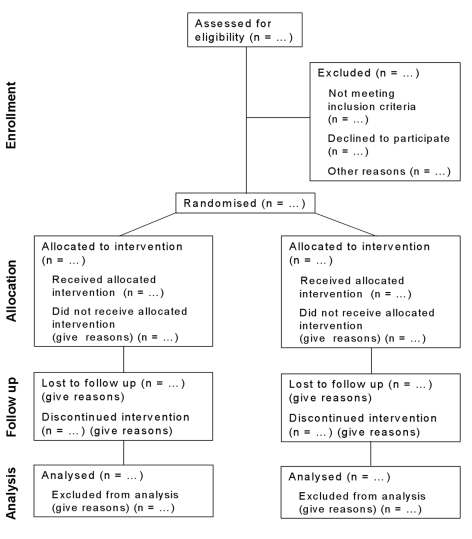
- CONSORT 2010 includes a 25-item checklist and a flow diagram; the paper states the flow diagram was not modified except for one word.
- The guideline was refined using a CONSORT database containing more than 700 studies as empirical support, and the paper notes that more than 400 journals around the world have explicitly supported CONSORT.
- The revision added or clarified several reporting items, including structured abstract reporting, trial design and allocation ratio, changes after trial commencement, selective outcome reporting, trial registration, protocol availability, and funding.
## Methods
- This is a guideline development/revision paper, not an empirical trial; the CONSORT Group met to update the 2001 CONSORT statement using accumulated methodological evidence and expert discussion.
- The group assigned members to synthesize evidence for checklist items, then used teleconferences, meetings, and iterative drafts to revise the statement and the accompanying explanation/elaboration document.
- The main analysis was consensus-based appraisal of checklist items against methodological evidence; the paper does not report a statistical analysis of original participant data.
## Limitations
- The paper states that CONSORT 2010 is not a guideline for designing, conducting, or analyzing trials; it addresses only the reporting of what was done and what was found.
- The guideline focuses predominantly on two-group, parallel randomized controlled trials, although many items apply more broadly; other designs may need additional CONSORT extensions.
- Evident from the text: as a reporting guideline, it can be misused if authors report what the checklist suggests rather than what was actually done; the authors explicitly warn against this and advise checking protocols, trial registers, and regulatory websites.
Model-written summary. Check it against the paper before relying on it.
Integrity signals
Registry
Cites
Statistics
Figures
Verification
Claims the paper makes
5 Valid · 0 Not valid · 11 Not checked · 5 Own results and interpretations
Every source the paper cites for this claim was checked and supports it.
In the paper
“However, randomised trials can yield biased results if they lack methodological rigour [1].”
§ CONSORT 2010 Statement: Updated Guidelines for Reporting Parallel Group Randomised Trials > Introduction
What the sources say
- Supportedcites [1] P Jüni, 2001, Systematic reviews in health care: assessing the quality of controlled clinical trials., BMJ source
The Conclusions section of our copy states there is 'ample evidence that many trials are methodologically weak and increasing evidence that deficiencies translate into biased findings of systematic reviews,' and the 'Empirical evidence of bias' section reports that biases 'do occur in practice, distorting the results of clinical trials,' with inadequate or unclear allocation concealment exaggerating treatment effects (combined ratio of odds ratios 0.70, 95% CI 0.62 to 0.80) across four methodological studies. This directly supports the attributed paraphrase that randomised trials can yield biased results when methodologically deficient. (LLM, conf=0.92)
plainstates a possible cause- Asserted: passes — The authors put it forward as true.
- Checkable: passes — It can be checked against evidence.
- Load-bearing: passes — The paper’s conclusions depend on it.
- Based: passes — The paper gives a reason why it holds.
- Supported
The cited sources support only part of this claim — read each source’s verdict below.
In the paper
“Empirical evidence suggests that authors often ignore, in the conduct and reporting of their trial, what they stated in the protocol. [4],[22]”
§ CONSORT 2010 Statement: Updated Guidelines for Reporting Parallel Group Randomised Trials > Changes in CONSORT 2010 > Box 2. Noteworthy Specific Changes in CONSORT 2010 Statement
What the sources say
- Partly supportedcites [4] K Dwan, 2008, Systematic review of the empirical evidence of study publication bias and outcome reporting bias., PLoS ONE sourceExperimental — accuracy not yet measured
The Results (Publication and trial findings; page unavailable) report that 40–62% of trials had major discrepancies between protocol-specified primary outcomes and published articles, supporting the claim about reporting. The review compares protocols with publications; it does not establish that authors ignored protocols during trial conduct or that the discrepancies were intentional. (LLM, conf=0.84)
- Not checked yetcites [22] AW Chan, 2004, Empirical evidence for selective reporting of outcomes in randomized trials: comparison of protocols to published articles., JAMA source
hedged- Asserted: passes — The authors put it forward as true.
- Checkable: passes — It can be checked against evidence.
- Load-bearing: passes — The paper’s conclusions depend on it.
- Based: passes — The paper gives a reason why it holds.
- Partly supported
Every source the paper cites for this claim was checked and supports it.
In the paper
“Empirical evidence points toward funding source sometimes being associated with estimated treatment effects [30].”
§ CONSORT 2010 Statement: Updated Guidelines for Reporting Parallel Group Randomised Trials > Changes in CONSORT 2010 > Box 2. Noteworthy Specific Changes in CONSORT 2010 Statement
What the sources say
- Supportedcites [30] J Lexchin, 2003, Pharmaceutical industry sponsorship and research outcome and quality: systematic review., BMJ source
The section on funding source and clinical-trial outcomes reports that 13 of 16 studies found industry-sponsored research favoured the sponsor’s product. The paper also reports different estimated risks of venous thromboembolism in industry-funded and non-industry-funded studies, directly supporting the qualified claim that funding source is sometimes associated with estimated treatment effects. (LLM, conf=0.91)
hedgedstates an association- Asserted: passes — The authors put it forward as true.
- Checkable: passes — It can be checked against evidence.
- Load-bearing: passes — The paper’s conclusions depend on it.
- Based: passes — The paper gives a reason why it holds.
- Supported
The cited sources support only part of this claim — read each source’s verdict below.
In the paper
“We also eliminated text on “how the success of blinding (masking) was assessed” because of a lack of empirical evidence supporting the practice as well as theoretical concerns about the validity of any such assessment [23],[24].”
§ CONSORT 2010 Statement: Updated Guidelines for Reporting Parallel Group Randomised Trials > Changes in CONSORT 2010 > Box 2. Noteworthy Specific Changes in CONSORT 2010 Statement
What the sources say
- Partly supportedcites [23] DL Sackett, 2007, Commentary: Measuring the success of blinding in RCTs: don't, must, can't or needn't?, Int J Epidemiol sourceExperimental — accuracy not yet measured
Sackett’s commentary (pp. 664–665) argues that tests of blinding can give invalid answers because they cannot distinguish loss of blinding from hunches about treatment efficacy. This supports the citing sentence’s concern about validity, but the paper does not explicitly establish a lack of empirical evidence supporting the practice. (LLM, conf=0.78)
- Not checked yetcites [24] KF Schulz, 2002, Blinding in randomised trials: hiding who got what., Lancet source
plain- Asserted: passes — The authors put it forward as true.
- Checkable: passes — It can be checked against evidence.
- Load-bearing: passes — The paper’s conclusions depend on it.
- Based: passes — The paper gives a reason why it holds.
- Partly supported
In the paper
“While those statements improved the reporting quality for some randomised controlled trials [9],[10], many trial reports still remain inadequate [2].”
§ CONSORT 2010 Statement: Updated Guidelines for Reporting Parallel Group Randomised Trials > Introduction
What the sources say
- Not checked yetcites [2] AW Chan, 2005, Epidemiology and reporting of randomised trials published in PubMed journals., Lancet source
plain- Asserted: passes — The authors put it forward as true.
- Checkable: passes — It can be checked against evidence.
- Load-bearing: passes — The paper’s conclusions depend on it.
- Based: passes — The paper gives a reason why it holds.
9 more claims
Create a free account to see all 21 claims and to verify the 18 references still open.
- Probably not a substantial claim. 6
- It may state two separate claims as one. 1
Claims other papers make about this one
Each is checked against this paper’s own text: does it say what the citing paper says it does?
The source backs part of the claim, not all of it — or backs it for a different population, condition or comparison.
In the citing paper
“Compliance with GATHER is not an indicator of a study's quality.”
From Guidelines for accurate and transparent health estimates reporting: the GATHER statement (2016) · cites this paper as [18]
Experimental — accuracy not yet measuredThe source backs part of the claim, not all of it — or backs it for a different population, condition or comparison.
In the citing paper
“The Consolidated Standards of Reporting Trials (CONSORT) 2010 Statement 4 currently suggests in Item 5 that authors should report on 'The interventions for each group with sufficient details to allow replication, including how and when they were actually administered'.”
From Better reporting of interventions: template for intervention description and replication (TIDieR) checklist and guide (2014) · cites this paper as [4]
Experimental — accuracy not yet measuredThe cited source says what the claim attributes to it.
In the citing paper
“After extensive team discussions, the investigators decided to follow the approach of Maher et al [58], who devised a risk of bias assessment tool based on the CONSORT (Consolidated Standards of Reporting Trials) checklist [51].”
From Voice-Based Conversational Agents for the Prevention and Management of Chronic and Mental Health Conditions: Systematic Literature Review (2021) · cites this paper as [51]
The cited source says what the claim attributes to it.
In the citing paper
“Reporting issues have led to the creation of reporting checklists in other fields, such as the Consolidated Standards of Reporting Trials (CONSORT) checklist for randomized controlled trials [95].”
From The NASSS (Non-Adoption, Abandonment, Scale-Up, Spread and Sustainability) framework use over time: A scoping review (2025) · cites this paper as [95]
The cited source says what the claim attributes to it.
In the citing paper
“The results are reported in accordance with the CONSORT guidelines (Schulz et al., 2010).”
From Exercise combined with Acceptance and Commitment Therapy for chronic pain: One-year follow-up from a randomized controlled trial (2024) · cites this paper as Schulz et al., 2010
3 more claims about this paper
Create a free account to see every claim other papers make about this one.
Citations
Cites
Preferred Reporting Items for Systematic Reviews and Meta-Analyses: the PRISMA statement
Moher, D., Liberati, A., Tetzlaff, J., Altman, D. G., & for the PRISMA Group (2009) · BMJ · doi:10.1136/bmj.b2535 · Cited by 83,823
Self-citationPreferred Reporting Items for Systematic Reviews and Meta-Analyses: The PRISMA Statement
Moher, D., Liberati, A., Tetzlaff, J., Altman, D. G., & The PRISMA Group (2009) · PLoS Medicine · doi:10.1371/journal.pmed.1000097 · Cited by 64,042
Self-citationPreferred reporting items for systematic reviews and meta-analyses: the PRISMA Statement.
(2009) · PubMed Central · Cited by 44,859
Self-citationElm, E. V., Altman, D. G., Egger, M., Pocock, S. J., Gøtzsche, P. C., & Vandenbroucke, J. P. (2007) · BMJ · doi:10.1136/bmj.39335.541782.ad · Cited by 10,766
Self-citationMoher, D., Hopewell, S., Schulz, K. F., Montori, V., Gotzsche, P. C., Devereaux, P. J., Elbourne, D., Egger, M., & Altman, D. G. (2010) · BMJ · doi:10.1136/bmj.c869 · Cited by 8,883
Self-citationSchulz (1995) · doi:10.1001/jama.1995.03520290060030 · Cited by 5,634
Moher, D., Schulz, K. F., & Altman, D. G. (2001) · The Lancet · doi:10.1016/s0140-6736(00)04337-3 · Cited by 5,373
Self-citationMoher, D., Pham, B., Jones, A., Cook, D. J., Jadad, A. R., Moher, M., Tugwell, P., & Klassen, T. P. (1998) · The Lancet · doi:10.1016/s0140-6736(98)01085-x · Cited by 3,560
Self-citationConsort 2010 statement: extension to cluster randomised trials
Campbell, M. K., Piaggio, G., Elbourne, D. R., Altman, D. G., & for the CONSORT Group (2012) · BMJ · doi:10.1136/bmj.e5661 · Cited by 3,510
Self-citationAssessing the quality of controlled clinical trials
Jüni, P., Altman, D. G., & Egger, M. (2001) · BMJ · doi:10.1136/bmj.323.7303.42 · Cited by 3,309
Self-citationTowards complete and accurate reporting of studies of diagnostic accuracy: The STARD Initiative.
Bossuyt, P. M., Reitsma, J. B., Bruns, D. E., Gatsonis, C. A., Glasziou, P. P., Irwig, L. M., Lijmer, J. G., Moher, D., Rennie, D., de Vet, H. C. W., et al. (2003) · Annals of Internal Medicine · doi:10.7326/0003-4819-138-1-200301070-00010 · Cited by 3,219
Self-citationTowards complete and accurate reporting of studies of diagnostic accuracy: the STARD initiative
Bossuyt, P. M., Reitsma, J. B., Bruns, D. E., Gatsonis, C. A., Glasziou, P. P., Irwig, L. M., Lijmer, J. G., Moher, D., Rennie, D., & de Vet, H. C. W. (2003) · BMJ · doi:10.1136/bmj.326.7379.41 · Cited by 3,215
Self-citationTowards Complete and Accurate Reporting of Studies of Diagnostic Accuracy: The STARD Initiative
Bossuyt, P. M., Reitsma, J. B., Bruns, D. E., Gatsonis, C. A., Glasziou, P. P., Irwig, L. M., Lijmer, J. G., Moher, D., Rennie, D., & de Vet, H. C. W. (2003) · Radiology · doi:10.1148/radiol.2261021292 · Cited by 3,215
Self-citationImproving the Quality of Reporting of Randomized Controlled Trials: The CONSORT Statement
Begg, C. (1996) · JAMA · doi:10.1001/jama.1996.03540080059030 · Cited by 3,127
Moher, D., Schulz, K. F., & Altman, D. G. (2001) · BMC Medical Research Methodology · doi:10.1186/1471-2288-1-2 · Cited by 2,755
Self-citationCONSORT statement: extension to cluster randomised trials
Campbell, M. K., Elbourne, D. R., & Altman, D. G. (2004) · BMJ · doi:10.1136/bmj.328.7441.702 · Cited by 2,557
Self-citationMoher, D. (2001) · JAMA · doi:10.1001/jama.285.15.1987 · Cited by 2,545
Self-citationPiaggio, G., Elbourne, D. R., Pocock, S. J., Evans, S. J. W., Altman, D. G., & CONSORT Group, F. T. (2012) · JAMA · doi:10.1001/jama.2012.87802 · Cited by 2,428
Self-citationBoutron, I., Moher, D., Altman, D. G., Schulz, K. F., Ravaud, P., & for the CONSORT Group* (2008) · Annals of Internal Medicine · doi:10.7326/0003-4819-148-4-200802190-00008 · Cited by 2,292
Self-citationWhat is meant by intention to treat analysis? Survey of published randomised controlled trials
Hollis, S., & Campbell, F. (1999) · BMJ · doi:10.1136/bmj.319.7211.670 · Cited by 2,160
Pharmaceutical industry sponsorship and research outcome and quality: systematic review
Lexchin, J., Bero, L. A., Djulbegovic, B., & Clark, O. (2003) · BMJ · doi:10.1136/bmj.326.7400.1167 · Cited by 2,147
Chan, A.-W., Hróbjartsson, A., Haahr, M. T., Gøtzsche, P. C., & Altman, D. G. (2004) · JAMA · doi:10.1001/jama.291.20.2457 · Cited by 1,845
Self-citationImproving the reporting of pragmatic trials: An extension of the CONSORT statement
Zwarenstein, M., Treweek, S., Gagnier, J. J., Altman, D. G., Tunis, S., Haynes, B., Oxman, A. D., Moher, D., & groups, F. T. C. A. P. T. I. H. (. (2008) · BMJ · doi:10.1136/bmj.a2390 · Cited by 1,813
Self-citationBetter Reporting of Harms in Randomized Trials: An Extension of the CONSORT Statement
Ioannidis, J. P. A., Evans, S. J. W., Gøtzsche, P. C., O'Neill, R. T., Altman, D. G., Schulz, K., Moher, D., & for the CONSORT Group* (2004) · Annals of Internal Medicine · doi:10.7326/0003-4819-141-10-200411160-00009 · Cited by 1,593
Self-citationSystematic Review of the Empirical Evidence of Study Publication Bias and Outcome Reporting Bias
Dwan, K., Altman, D. G., Arnaiz, J. A., Bloom, J., Chan, A.-W., Cronin, E., Decullier, E., Easterbrook, P. J., Von Elm, E., Gamble, C., et al. (2008) · PLoS ONE · doi:10.1371/journal.pone.0003081 · Cited by 1,546
Self-citationMoher, D., Schulz, K. F., Altman, D. G., & for the CONSORT Group* (2001) · Annals of Internal Medicine · doi:10.7326/0003-4819-134-8-200104170-00011 · Cited by 1,426
Self-citationClinical Trial Registration: A Statement from the International Committee of Medical Journal Editors
De Angelis, C., Drazen, J. M., Frizelle, F. A., Haug, C., Hoey, J., Horton, R., Kotzin, S., Laine, C., Marusic, A., Overbeke, A. J. P. M., et al. (2004) · New England Journal of Medicine · doi:10.1056/nejme048225 · Cited by 1,241
Reporting of Noninferiority and Equivalence Randomized Trials: An Extension of the CONSORT Statement
Piaggio, G., Elbourne, D. R., Altman, D. G., Pocock, S. J., Evans, S. J. W., & CONSORT Group, F. T. (2006) · JAMA · doi:10.1001/jama.295.10.1152 · Cited by 1,153
Self-citationBlinding in randomised trials: hiding who got what
Schulz, K. F., & Grimes, D. A. (2002) · The Lancet · doi:10.1016/s0140-6736(02)07816-9 · Cited by 952
Self-citationPlint, A. C., Moher, D., Morrison, A., Schulz, K., Altman, D. G., Hill, C., & Gaboury, I. (2006) · Medical Journal of Australia · doi:10.5694/j.1326-5377.2006.tb00557.x · Cited by 872
Self-citationHopewell, S., Clarke, M., Moher, D., Wager, E., Middleton, P., Altman, D. G., Schulz, K. F., & and the CONSORT Group (2008) · PLoS Medicine · doi:10.1371/journal.pmed.0050020 · Cited by 674
Self-citationWhat is missing from descriptions of treatment in trials and reviews?
Glasziou, P., Meats, E., Heneghan, C., & Shepperd, S. (2008) · BMJ · doi:10.1136/bmj.39590.732037.47 · Cited by 614
Reporting Randomized, Controlled Trials of Herbal Interventions: An Elaborated CONSORT Statement
Gagnier, J. J., Boon, H., Rochon, P., Moher, D., Barnes, J., Bombardier, C., & for the CONSORT Group* (2006) · Annals of Internal Medicine · doi:10.7326/0003-4819-144-5-200603070-00013 · Cited by 608
Self-citationHopewell, S., Dutton, S., Yu, L.-M., Chan, A.-W., & Altman, D. G. (2010) · BMJ · doi:10.1136/bmj.c723 · Cited by 504
Self-citationEpidemiology and reporting of randomised trials published in PubMed journals
Chan, A.-W., & Altman, D. G. (2005) · The Lancet · doi:10.1016/s0140-6736(05)71879-1 · Cited by 474
Self-citationCONSORT for reporting randomised trials in journal and conference abstracts
Hopewell, S., Clarke, M., Moher, D., Wager, E., Middleton, P., Altman, D. G., & Schulz, K. F. (2008) · The Lancet · doi:10.1016/s0140-6736(07)61835-2 · Cited by 458
Self-citationClinical trial registration: a statement from the International Committee of Medical Journal Editors
De Angelis, C., Drazen, J. M., Frizelle, F. A., Haug, C., Hoey, J., Horton, R., Kotzin, S., Laine, C., Marusic, A., Overbeke, A. J. P., et al. (2004) · The Lancet · doi:10.1016/s0140-6736(04)17034-7 · Cited by 408
A Proposal for Structured Reporting of Randomized Controlled Trials
Andrew, E. (1994) · JAMA: The Journal of the American Medical Association · doi:10.1001/jama.1994.03520240054041 · Cited by 309
Reporting Number Needed to Treat and Absolute Risk Reduction in Randomized Controlled Trials
Nuovo, J. (2002) · JAMA · doi:10.1001/jama.287.21.2813 · Cited by 241
Improving the quality of reporting of randomized controlled trials. The CONSORT statement
Begg, C., Cho, M., Eastwood, S., Horton, R., Moher, D., Olkin, I., Pitkin, R., Rennie, D., Schulz, K. F., Simel, D., et al. (1998) · Revista Española de Salud Pública · doi:10.1590/s1135-57271998000100002 · Cited by 177
Self-citationCommentary: Measuring the success of blinding in RCTs: don't, must, can't or needn't?
Sackett, D. L. (2007) · International Journal of Epidemiology · doi:10.1093/ije/dym088 · Cited by 150
Reporting Randomized Controlled Trials: An Experiment and a Call for Responses From Readers
Rennie, D. (1995) · JAMA · doi:10.1001/jama.1995.03520370096044 · Cited by 81
Randomized Trials Stopped Early for Benefit: A Systematic Review
Montori, V. M., Devereaux, P. J., Adhikari, N. K. J., Burns, K. E. A., Eggert, C. H., Briel, M., Lacchetti, C., Leung, T. W., Darling, E., Bryant, D. M., et al. (2005) · JAMA · doi:10.1001/jama.294.17.2203 · Cited by 26
Cited by
Hoffmann, T. C., Glasziou, P. P., Boutron, I., Milne, R., Perera, R., Moher, D., Altman, D. G., Barbour, V., Macdonald, H., Johnston, M., et al. (2014) · BMJ · doi:10.1136/bmj.g1687 · Cited by 10,548
Self-citationMoher, D., Hopewell, S., Schulz, K. F., Montori, V., Gotzsche, P. C., Devereaux, P. J., Elbourne, D., Egger, M., & Altman, D. G. (2010) · BMJ · doi:10.1136/bmj.c869 · Cited by 8,883
Self-citationUsing Big Data to Emulate a Target Trial When a Randomized Trial Is Not Available: Table 1.
Hernán, M. A., & Robins, J. M. (2016) · American Journal of Epidemiology · doi:10.1093/aje/kwv254 · Cited by 3,115
The COMET Handbook: version 1.0
Williamson, P. R., Altman, D. G., Bagley, H., Barnes, K. L., Blazeby, J. M., Brookes, S. T., Clarke, M., Gargon, E., Gorst, S., Harman, N., et al. (2017) · Trials · doi:10.1186/s13063-017-1978-4 · Cited by 2,011
Self-citationGuidelines for accurate and transparent health estimates reporting: the GATHER statement
Stevens, G. A., Alkema, L., Black, R. E., Boerma, J. T., Collins, G. S., Ezzati, M., Grove, J. T., Hogan, D. R., Hogan, M. C., Horton, R., et al. (2016) · The Lancet · doi:10.1016/s0140-6736(16)30388-9 · Cited by 1,798
Metadata
- Authors
- Schulz, K. F., Altman, D. G., Moher, D., & for the CONSORT Group
- Affiliations
- Family Health International 360 (US)
- University of Oxford (GB)
- University of Ottawa (CA)
- Corresponding author
- Schulz, Kenneth F.
- Venue
- PLoS Medicine
- Publisher
- Public Library of Science (PLoS)
- Published
- 2010-03-24
- Volume
- 7
- Issue
- 3
- Pages
- e1000251
- ISSN
- 1549-1277 (ISSN-L)
- 1549-1676
- PMC
- PMC2844794
- OpenAlex
- W2008023699
- Semantic Scholar
- 433614cfe2dec7be6e55cd7ecc785f94ca74bbea
- Cited by
- 2,296
- References
- 43
- Citations by year
- 2026: 47 · 2025: 180 · 2024: 265 · 2023: 221 · 2022: 204 · 2021: 208 · 2020: 194 · 2019: 156 · 2018: 97 · 2017: 126 · 2016: 108 · 2015: 100 · 2014: 107 · 2013: 106 · 2012: 85
- FWCI
- 75.58
- Type
- journal article
- Language
- en
- Open access
- gold
- doi.org
- Locations
- PLoS Medicine (publishedVersion, cc-by)
- PubMed Central (publishedVersion, cc-by)
- PubMed (publishedVersion)
- RePEc: Research Papers in Economics (submittedVersion, cc-by)
- DOAJ (DOAJ: Directory of Open Access Journals) (submittedVersion, cc-by-sa)
- Figshare (submittedVersion, cc-by)
- Funders
- University of Pennsylvania
- Johns Hopkins University
- University of Ottawa
- Ottawa Hospital Research Institute
- McMaster University
- Janssen Scientific Affairs
- Cancer Research UK
- National Institute for Health and Care Research
- University of Oxford
- Institut National de la Santé et de la Recherche Médicale
- Johns Hopkins Bloomberg School of Public Health
- University of California, Irvine
- Canadian Institutes of Health Research
- Medical Research Council
- Topics
- Physical Sciences › Mathematics › Statistics and Probability › Statistical Methods in Clinical Trials
- Social Sciences › Decision Sciences › Statistics, Probability and Uncertainty › Meta-analysis and systematic reviews
- Social Sciences › Sociology and Political Science › Delphi Technique in Research
- Keywords
- CONSORT 2010, reporting guidelines, clinical trial reporting, clinical trial registration
- MeSH terms
- Health Planning Guidelines, Humans, Randomized Controlled Trials as Topic
About these checks
Registry, retraction, Cites and statistics results are computed, not judged, with one exception: a printed reference that no index lists is read once by a model before it counts as a citation error. Claims are extracted by a model and kept only when their quote appears verbatim in the text; each cited source is then checked, with a model’s help, for whether it says what the claim relies on. Those verdicts can be wrong — read the claim’s quote and the cited source before relying on one.
The claim verdicts this report counts are experimental: their accuracy is not yet measured.
A language model drew the claims from the paper on 2026-10-11, under version 3 of the claim definition (model deepseek-v4.1-flash, prompt extract-v3).
A second model labelled each claim on 2026-10-11 (model jev-1.13-20260917, definition revision gold-guideline-v0.2).
Cited sources are checked with a language model’s help (qwen3.8-omni-flash and gpt-6-sol).
Statistics and arithmetic are recomputed, not judged.
Confidence bands are shown only for fields calibrated on our annotated test set. None is calibrated yet, so no band is shown.
What counts as a claim ›How we measure confidence ›How we check this ›
Are you an author, or do you see a problem with this page? Request a review
Data sources
Bibliographic data: Semantic Scholar, OpenAlex, Crossref.
Contains information from the Semantic Scholar Academic Graph Datasets, made available under the ODC Attribution License (ODC-BY 1.0).
Semantic Scholar’s data is described in: Kinney, R., et al. (2023). The Semantic Scholar Open Data Platform. arXiv:2301.10140.
