

CONSORT 2010 Statement: Updated Guidelines for Reporting Parallel Group Randomised Trials
Open accessThe DOI matches its Crossref record; 43 of the 43 references it cites were found in a registry or an index; 5 of the 23 sources its claims cite were checked for support.
Abstract
DOAJ is a unique and extensive index of diverse open access journals from around the world, driven by a growing community, committed to ensuring quality content is freely available online for everyone.
Overview
CoChat Summary
## TL;DR
CONSORT 2010 is an updated reporting guideline for randomized controlled trials, created to improve completeness, clarity, and transparency in trial reporting. It keeps the focus on parallel-group, two-arm trials but provides a 25-item checklist, a flow diagram, and updated explanation/elaboration material.
## Key findings
- The update was developed by 31 members of the CONSORT 2010 Group at a meeting in Montebello, Canada, in January 2007, followed by seven major iterations and additional feedback cycles before finalization.
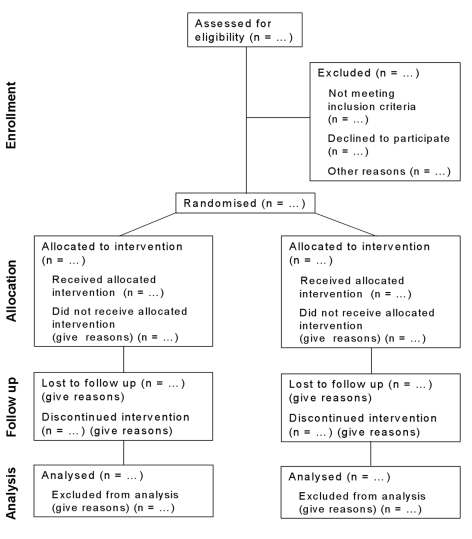
- CONSORT 2010 includes a 25-item checklist and a flow diagram; the paper states the flow diagram was not modified except for one word.
- The guideline was refined using a CONSORT database containing more than 700 studies as empirical support, and the paper notes that more than 400 journals around the world have explicitly supported CONSORT.
- The revision added or clarified several reporting items, including structured abstract reporting, trial design and allocation ratio, changes after trial commencement, selective outcome reporting, trial registration, protocol availability, and funding.
## Methods
- This is a guideline development/revision paper, not an empirical trial; the CONSORT Group met to update the 2001 CONSORT statement using accumulated methodological evidence and expert discussion.
- The group assigned members to synthesize evidence for checklist items, then used teleconferences, meetings, and iterative drafts to revise the statement and the accompanying explanation/elaboration document.
- The main analysis was consensus-based appraisal of checklist items against methodological evidence; the paper does not report a statistical analysis of original participant data.
## Limitations
- The paper states that CONSORT 2010 is not a guideline for designing, conducting, or analyzing trials; it addresses only the reporting of what was done and what was found.
- The guideline focuses predominantly on two-group, parallel randomized controlled trials, although many items apply more broadly; other designs may need additional CONSORT extensions.
- Evident from the text: as a reporting guideline, it can be misused if authors report what the checklist suggests rather than what was actually done; the authors explicitly warn against this and advise checking protocols, trial registers, and regulatory websites.
Model-written summary. Check it against the paper before relying on it.
Integrity signals
Registry
Cites
Statistics
Figures
Verification
Claims the paper makes
5 Valid · 0 Not valid · 11 Not checked · 5 Own results and interpretations
Every source the paper cites for this claim was checked and supports it.
In the paper
“However, randomised trials can yield biased results if they lack methodological rigour [1].”
§ CONSORT 2010 Statement: Updated Guidelines for Reporting Parallel Group Randomised Trials > Introduction
What the sources say
- Supportedcites [1] Jüni P Altman DG Egger M 2001 Systematic reviews in health care: assessing the quality of controlled clinical trials. BMJ 323 42 46 11440947 PMC1120670 source
The Conclusions section of our copy states there is 'ample evidence that many trials are methodologically weak and increasing evidence that deficiencies translate into biased findings of systematic reviews,' and the 'Empirical evidence of bias' section reports that biases 'do occur in practice, distorting the results of clinical trials,' with inadequate or unclear allocation concealment exaggerating treatment effects (combined ratio of odds ratios 0.70, 95% CI 0.62 to 0.80) across four methodological studies. This directly supports the attributed paraphrase that randomised trials can yield biased results when methodologically deficient. (LLM, conf=0.92)
plainstates a possible cause- Asserted: passes — The authors put it forward as true.
- Checkable: passes — It can be checked against evidence.
- Load-bearing: passes — The paper’s conclusions depend on it.
- Based: passes — The paper gives a reason why it holds.
- Supported
The cited sources support only part of this claim — read each source’s verdict below.
In the paper
“Empirical evidence suggests that authors often ignore, in the conduct and reporting of their trial, what they stated in the protocol. [4],[22]”
§ CONSORT 2010 Statement: Updated Guidelines for Reporting Parallel Group Randomised Trials > Changes in CONSORT 2010 > Box 2. Noteworthy Specific Changes in CONSORT 2010 Statement
What the sources say
- Partly supportedcites [4] Dwan K Altman DG Arnaiz JA Bloom J Chan AW 2008 Systematic review of the empirical evidence of study publication bias and outcome reporting bias. PLoS ONE 3 e3081 doi: 10.1371/journal.pone.0003081 18769481 PMC2518111 sourceExperimental — accuracy not yet measured
The Results (Publication and trial findings; page unavailable) report that 40–62% of trials had major discrepancies between protocol-specified primary outcomes and published articles, supporting the claim about reporting. The review compares protocols with publications; it does not establish that authors ignored protocols during trial conduct or that the discrepancies were intentional. (LLM, conf=0.84)
- Not checked yetcites [22] Chan AW Hróbjartsson A Haahr MT Gøtzsche PC Altman DG 2004 Empirical evidence for selective reporting of outcomes in randomized trials: comparison of protocols to published articles. JAMA 291 2457 2465 15161896 source
hedged- Asserted: passes — The authors put it forward as true.
- Checkable: passes — It can be checked against evidence.
- Load-bearing: passes — The paper’s conclusions depend on it.
- Based: passes — The paper gives a reason why it holds.
- Partly supported
Every source the paper cites for this claim was checked and supports it.
In the paper
“Empirical evidence points toward funding source sometimes being associated with estimated treatment effects [30].”
§ CONSORT 2010 Statement: Updated Guidelines for Reporting Parallel Group Randomised Trials > Changes in CONSORT 2010 > Box 2. Noteworthy Specific Changes in CONSORT 2010 Statement
What the sources say
- Supportedcites [30] Lexchin J Bero LA Djulbegovic B Clark O 2003 Pharmaceutical industry sponsorship and research outcome and quality: systematic review. BMJ 326 1167 1170 12775614 PMC156458 source
The section on funding source and clinical-trial outcomes reports that 13 of 16 studies found industry-sponsored research favoured the sponsor’s product. The paper also reports different estimated risks of venous thromboembolism in industry-funded and non-industry-funded studies, directly supporting the qualified claim that funding source is sometimes associated with estimated treatment effects. (LLM, conf=0.91)
hedgedstates an association- Asserted: passes — The authors put it forward as true.
- Checkable: passes — It can be checked against evidence.
- Load-bearing: passes — The paper’s conclusions depend on it.
- Based: passes — The paper gives a reason why it holds.
- Supported
The cited sources support only part of this claim — read each source’s verdict below.
In the paper
“We also eliminated text on “how the success of blinding (masking) was assessed” because of a lack of empirical evidence supporting the practice as well as theoretical concerns about the validity of any such assessment [23],[24].”
§ CONSORT 2010 Statement: Updated Guidelines for Reporting Parallel Group Randomised Trials > Changes in CONSORT 2010 > Box 2. Noteworthy Specific Changes in CONSORT 2010 Statement
What the sources say
- Partly supportedcites [23] Sackett DL 2007 Commentary: Measuring the success of blinding in RCTs: don't, must, can't or needn't? Int J Epidemiol 36 664 665 17675306 sourceExperimental — accuracy not yet measured
Sackett’s commentary (pp. 664–665) argues that tests of blinding can give invalid answers because they cannot distinguish loss of blinding from hunches about treatment efficacy. This supports the citing sentence’s concern about validity, but the paper does not explicitly establish a lack of empirical evidence supporting the practice. (LLM, conf=0.78)
- Not checked yetcites [24] Schulz KF Grimes DA 2002 Blinding in randomised trials: hiding who got what. Lancet 359 696 700 11879884 source
plain- Asserted: passes — The authors put it forward as true.
- Checkable: passes — It can be checked against evidence.
- Load-bearing: passes — The paper’s conclusions depend on it.
- Based: passes — The paper gives a reason why it holds.
- Partly supported
In the paper
“While those statements improved the reporting quality for some randomised controlled trials [9],[10], many trial reports still remain inadequate [2].”
§ CONSORT 2010 Statement: Updated Guidelines for Reporting Parallel Group Randomised Trials > Introduction
What the sources say
- Not checked yetcites [2] Chan AW Altman DG 2005 Epidemiology and reporting of randomised trials published in PubMed journals. Lancet 365 1159 1162 15794971 source
plain- Asserted: passes — The authors put it forward as true.
- Checkable: passes — It can be checked against evidence.
- Load-bearing: passes — The paper’s conclusions depend on it.
- Based: passes — The paper gives a reason why it holds.
9 more claims
Create a free account to see all 21 claims and to verify the 18 references still open.
- Probably not a substantial claim. 6
- It may state two separate claims as one. 1
Claims other papers make about this one
Each is checked against this paper’s own text: does it say what the citing paper says it does?
The source backs part of the claim, not all of it — or backs it for a different population, condition or comparison.
In the citing paper
“Compliance with GATHER is not an indicator of a study's quality.”
From Guidelines for accurate and transparent health estimates reporting: the GATHER statement (2016) · cites this paper as [18]
Experimental — accuracy not yet measuredThe source backs part of the claim, not all of it — or backs it for a different population, condition or comparison.
In the citing paper
“The Consolidated Standards of Reporting Trials (CONSORT) 2010 Statement 4 currently suggests in Item 5 that authors should report on 'The interventions for each group with sufficient details to allow replication, including how and when they were actually administered'.”
From Better reporting of interventions: template for intervention description and replication (TIDieR) checklist and guide (2014) · cites this paper as [4]
Experimental — accuracy not yet measuredThe cited source says what the claim attributes to it.
In the citing paper
“After extensive team discussions, the investigators decided to follow the approach of Maher et al [58], who devised a risk of bias assessment tool based on the CONSORT (Consolidated Standards of Reporting Trials) checklist [51].”
From Voice-Based Conversational Agents for the Prevention and Management of Chronic and Mental Health Conditions: Systematic Literature Review (2021) · cites this paper as [51]
The cited source says what the claim attributes to it.
In the citing paper
“Reporting issues have led to the creation of reporting checklists in other fields, such as the Consolidated Standards of Reporting Trials (CONSORT) checklist for randomized controlled trials [95].”
From The NASSS (Non-Adoption, Abandonment, Scale-Up, Spread and Sustainability) framework use over time: A scoping review (2025) · cites this paper as [95]
The cited source says what the claim attributes to it.
In the citing paper
“The results are reported in accordance with the CONSORT guidelines (Schulz et al., 2010).”
From Exercise combined with Acceptance and Commitment Therapy for chronic pain: One-year follow-up from a randomized controlled trial (2024) · cites this paper as Schulz et al., 2010
3 more claims about this paper
Create a free account to see every claim other papers make about this one.
Citations
Cites
Preferred Reporting Items for Systematic Reviews and Meta-Analyses: the PRISMA statement
Moher, D., Liberati, A., Tetzlaff, J., Altman, D. G., & for the PRISMA Group (2009) · BMJ · doi:10.1136/bmj.b2535 · Cited by 83,823
Self-citationPreferred Reporting Items for Systematic Reviews and Meta-Analyses: The PRISMA Statement
Moher, D., Liberati, A., Tetzlaff, J., Altman, D. G., & The PRISMA Group (2009) · PLoS Medicine · doi:10.1371/journal.pmed.1000097 · Cited by 64,042
Self-citationPreferred reporting items for systematic reviews and meta-analyses: the PRISMA Statement.
(2009) · PubMed Central · Cited by 44,859
Self-citationElm, E. V., Altman, D. G., Egger, M., Pocock, S. J., Gøtzsche, P. C., & Vandenbroucke, J. P. (2007) · BMJ · doi:10.1136/bmj.39335.541782.ad · Cited by 10,766
Self-citationMoher, D., Hopewell, S., Schulz, K. F., Montori, V., Gotzsche, P. C., Devereaux, P. J., Elbourne, D., Egger, M., & Altman, D. G. (2010) · BMJ · doi:10.1136/bmj.c869 · Cited by 8,883
Self-citationSchulz (1995) · doi:10.1001/jama.1995.03520290060030 · Cited by 5,634
Moher, D., Schulz, K. F., & Altman, D. G. (2001) · The Lancet · doi:10.1016/s0140-6736(00)04337-3 · Cited by 5,373
Self-citationMoher, D., Pham, B., Jones, A., Cook, D. J., Jadad, A. R., Moher, M., Tugwell, P., & Klassen, T. P. (1998) · The Lancet · doi:10.1016/s0140-6736(98)01085-x · Cited by 3,560
Self-citationConsort 2010 statement: extension to cluster randomised trials
Campbell, M. K., Piaggio, G., Elbourne, D. R., Altman, D. G., & for the CONSORT Group (2012) · BMJ · doi:10.1136/bmj.e5661 · Cited by 3,510
Self-citationAssessing the quality of controlled clinical trials
Jüni, P., Altman, D. G., & Egger, M. (2001) · BMJ · doi:10.1136/bmj.323.7303.42 · Cited by 3,309
Self-citation
Cited by
Items 701–800 of 1,021
Minimum data elements for research reports on CFS
Jason, L. A., Unger, E. R., Dimitrakoff, J. D., Fagin, A. P., Houghton, M., Cook, D. B., Marshall, G. D., Klimas, N. G., & Snell, C. R. (2012) · Brain Behavior and Immunity · doi:10.1016/j.bbi.2012.01.014 · Cited by 30
“For clinical trials, there are internationally accepted standards for reporting, like CONSORT, and they should be considered when reporting trials (Schulz et al., 2010).”
Wang, J., Xiong, X., & Feng, B. (2014) · Evidence-based Complementary and Alternative Medicine · doi:10.1155/2014/954863 · Cited by 25
Wisener, L. V., Sargeant, J. M., O'Connor, A. M. C., Faires, M. C., & Glass-Kaastra, S. K. (2013) · Zoonoses and Public Health · doi:10.1111/zph.12083 · Cited by 31
“…randomized controlled trials (RCTs) are considered to be the gold standard for demonstrating intervention efficacy in the human healthcare research (Schulz et al., 2010) and similarly in food animal health and safety research as outlined in the REFLECT statement (O’Connor et al., 2010; Sargeant et…”
Alcoholic versus aqueous chlorhexidine for skin antisepsis: the AVALANCHE trial
Charles, D., Heal, C. F., Delpachitra, M., Wohlfahrt, M., Kimber, D., Sullivan, J., Browning, S., Saednia, S., Hardy, A., Banks, J. L., et al. (2017) · Canadian Medical Association Journal · doi:10.1503/cmaj.161460 · Cited by 27
The impact of selection bias in randomized multi-arm parallel group clinical trials
Uschner, D., Hilgers, R.-D., & Heussen, N. M. (2018) · PLoS ONE · doi:10.1371/journal.pone.0192065 · Cited by 27
Alginate dressings for healing diabetic foot ulcers
Dumville, J. C., O’Meara, S., Deshpande, S., & Speak, K. (2012) · Cochrane Database of Systematic Reviews · doi:10.1002/14651858.cd009110.pub2 · Cited by 37
Roncato, R., Bignucolo, A., Peruzzi, E., Montico, M., Mattia, E. D., Foltran, L., Guardascione, M., D'Andrea, M. R., Favaretto, A. G., Puglisi, F., et al. (2024) · JAMA Network Open · doi:10.1001/jamanetworkopen.2024.49441 · Cited by 27
Finch, M., Wolfenden, L., Morgan, P. J., Freund, M., Wyse, R., & Wiggers, J. (2010) · BMC Public Health · doi:10.1186/1471-2458-10-534 · Cited by 28
“The research methods will be reported in accordance with the CONSORT statement [22].”
Clinical Trial of a Home Safety Toolkit for Alzheimer’s Disease
Horvath, K. J., Trudeau, S. A., Rudolph, J. L., Trudeau, P., Duffy, M. E., & Berlowitz, D. R. (2013) · International Journal of Alzheimer s Disease · doi:10.1155/2013/913606 · Cited by 31
Wang, S., Wu, S., Meng, Q., Li, X., Zhang, J., Chen, R., & Wang, M. (2016) · Scientific Reports · doi:10.1038/srep19229 · Cited by 24
Tucker, J. D., Bien, C. H., Easterbrook, P., Doherty, M. C., Penazzato, M., Vitória, M., & Peeling, R. W. W. (2014) · PubMed · doi:10.1097/qad.0000000000000230 · Cited by 25
Ahmed, K., Kyte, D., Keeley, T., Efficace, F., Armes, J., Brown, J. M., Calman, L., Copland, C., Gavin, A., Glaser, A., et al. (2016) · BMJ Open · doi:10.1136/bmjopen-2016-012863 · Cited by 24
ISPOR Code of Ethics 2017 (4th Edition)
Santos, J. C. P., Palumbo, F. B., Molsen-David, E., Willke, R. J., Binder, L., Drummond, M., Ho, A., Marder, W. D., Parmenter, L., Sandhu, G., et al. (2017) · Value in Health · doi:10.1016/j.jval.2017.10.018 · Cited by 32
Rufiange, M., Rousseau‐Blass, F., & Pang, D. (2019) · Veterinary Record Open · doi:10.1136/vetreco-2018-000322 · Cited by 26
APACHE II score validation in emergency abdominal surgery. A post hoc analysis of the InCare trial
Hansted, A. K., Møller, M. H., Møller, A. M., & Vester‐Andersen, M. (2019) · Acta Anaesthesiologica Scandinavica · doi:10.1111/aas.13476 · Cited by 29
van der Schans, J., Hak, E., Postma, M. J., Breuning, L., Brouwers, J. R. B. J., Ditters, K., Jansen, P. A. F., Kok, R., Maring, J. G., van Marum, R. J., et al. (2019) · Journal of Clinical Psychopharmacology · doi:10.1097/jcp.0000000000001129 · Cited by 27
Rhyner, P., Kirkham, K. R., Hirotsu, C., Farron, A., & Albrecht, É. (2019) · Anaesthesia · doi:10.1111/anae.14957 · Cited by 24
Sado-Filho, J., Corrêa‐Faria, P., Viana, K. A., Mendes, F. M., Mason, K. P., Costa, L. R., & Costa, P. S. (2021) · Journal of Clinical Medicine · doi:10.3390/jcm10132840 · Cited by 24
van Loon, M., van der Linden, C., Gussekloo, J., & van der Mast, R. C. (2021) · Journal of the American Geriatrics Society · doi:10.1111/jgs.17336 · Cited by 23
Corley, A., Marsh, N. M., Ullman, A. J., & Rickard, C. M. (2022) · Journal of Clinical Nursing · doi:10.1111/jocn.16237 · Cited by 35
Hydroxychloroquine for prophylaxis of COVID-19 in health workers: A randomized clinical trial
Rojas‐Serrano, J., Portillo-Vasquez, A. M., Thirión-Romero, I. I., Vázquez-Pérez, J. A., Mejía-Nepomuceno, F., Ramírez‐Venegas, A., Pérez-Kawabe, K. M., & Pérez‐Padilla, R. (2022) · PLoS ONE · doi:10.1371/journal.pone.0261980 · Cited by 24
Raman, S., GIBBONS, K. S., Mattke, A. C., Schibler, A., Trnka, P., Kennedy, M., Marsney, R. E. L., & Schlapbach, L. J. (2022) · Archives of Pediatrics and Adolescent Medicine · doi:10.1001/jamapediatrics.2022.4912 · Cited by 25
Maeda, A., Villela-Franyutti, D., Lumbreras-Marquez, M. I., Murthy, A., Fields, K. G., Justice, S. A., & Tsen, L. C. (2023) · Anesthesia & Analgesia · doi:10.1213/ane.0000000000006691 · Cited by 29
Fernández-Ferrer, L., Candel-Martí, E., Almerich‐Silla, J. M., Diago, M. P., & Bellot‐Arcís, C. (2016) · Medicina oral, patología oral y cirugía bucal · doi:10.4317/medoral.21208 · Cited by 24
Clopidogrel as prophylactic treatment for migraine: A pilot randomised, controlled study
Chambers, J. B., Seed, P. T., & Ridsdale, L. (2014) · Cephalalgia · doi:10.1177/0333102414531156 · Cited by 24
Schulz, R., Langen, G., Prill, R., Cassel, M., & Weissgerber, T. L. (2022) · BMJ Open · doi:10.1136/bmjopen-2021-059347 · Cited by 23
Morita therapy for anxiety disorders in adults
Wu, H., Yu, D., He, Y., Wang, J., Xiao, Z., & Li, C. (2015) · Cochrane Database of Systematic Reviews · doi:10.1002/14651858.cd008619.pub2 · Cited by 23
Will, A. J., Fishman, M. A., Schultz, D. M., Danko, M., Verrill, D., Davies, C., Retterath, P., Miller, N., Tonder, L., Johanek, L. M., et al. (2024) · Journal of Pain · doi:10.1016/j.jpain.2024.104646 · Cited by 30
Bando, H., Kumagai, S., Kotani, D., Mishima, S., Irie, T., Itahashi, K., Tanaka, Y., Habu, T., Fukaya, S., Kondo, M., et al. (2025) · Nature Cancer · doi:10.1038/s43018-025-00918-1 · Cited by 29
Unraveling Berberine's Molecular Mechanisms in Neuroprotection Against Neurodegeneration
Begh, M. Z. A., Amin, M. A., Shatu, M. M., Sweilam, S. H., Puri, S., Ramesh, R. B., Arjun, U. V. N. V., Shanmugarajan, T. S., Pommala, N., Durairaj, A., et al. (2025) · Chemistry & Biodiversity · doi:10.1002/cbdv.202500170 · Cited by 26
Compression stockings in ankle sprain: a multicenter randomized study
Bendahou, M., Khiami, F., Saïdi, K., Blanchard, C., Scépi, M., Riou, B., Besch, S., & Hausfater, P. (2014) · The American Journal of Emergency Medicine · doi:10.1016/j.ajem.2014.05.054 · Cited by 23
“Our study followed the CONSORT recommendations for parallel-group randomized trials [9].”
Forbes, G., Loudon, K., Treweek, S. P., Taylor, S. J., & Eldridge, S. M. (2017) · Journal of Clinical Epidemiology · doi:10.1016/j.jclinepi.2017.06.007 · Cited by 27
Větrovský, T., Širanec, M., Pařenica, J., Gřiva, M., Stastny, J., Přeček, J., Pelouch, R., Bunc, V., Linhart, A., & Bělohlávek, J. (2017) · Journal of Translational Medicine · doi:10.1186/s12967-017-1257-x · Cited by 26
A brief contextual behavioral intervention to improve relationships: A randomized trial
Kanter, J. W., Kuczynski, A. M., Tsai, M., & Kohlenberg, R. J. (2018) · Journal of Contextual Behavioral Science · doi:10.1016/j.jcbs.2018.09.001 · Cited by 32
Torres, C., Augusto, M. G., Mathias‐Santamaria, I. F., Nicoló, R. D., & Borges, A. B. (2019) · Operative Dentistry · doi:10.2341/19-079-c · Cited by 23
Could Avatar Therapy Enhance Mental Health in Chronic Patients? A Systematic Review
Franco, M., Monfort-Vinuesa, C., Mesa, A. P., & Rincón, E. (2021) · Electronics · doi:10.3390/electronics10182212 · Cited by 26
Elshafie, M. A., Khalil, M. K., ElSheikh, M. L., & Mowafy, N. I. (2022) · Local and Regional Anesthesia · doi:10.2147/lra.s343347 · Cited by 24
Bandholm, T., Thorborg, K., Ardern, C. L., Christensen, R., & Henriksen, M. (2022) · British Journal of Sports Medicine · doi:10.1136/bjsports-2021-105058 · Cited by 23
Zhang, Z., Zhang, S., Yang, X., Qin, Z., Xu, F., Jin, G., Hou, X., Liu, Y., Cai, J., Xiao, H., et al. (2022) · Psychiatry and Clinical Neurosciences · doi:10.1111/pcn.13512 · Cited by 25
Tian, Y., Yang, P., Guo, H., Liu, Y., Zhang, Z., Ding, P., Zheng, T., Deng, H., Ma, W., Li, Y., et al. (2023) · International Journal of Surgery · doi:10.1097/js9.0000000000000692 · Cited by 28
van Valkenhoef, G., Tervonen, T., de Brock, B., & Hillege, H. L. (2012) · BMC Medical Informatics and Decision Making · doi:10.1186/1472-6947-12-95 · Cited by 24
“The CONSORT statement [11, 12] aims to improve the situation by providing guidance on the proper reporting of clinical trials.”
van Beurden, K. M., Brouwers, E. P. M., Joosen, M. C. W., Terluin, B., van der Klink, J. J. L., & van Weeghel, J. (2013) · BMC Public Health · doi:10.1186/1471-2458-13-193 · Cited by 26
Gender‐sensitive reporting in medical research
Heidari, S., Karim, Q. A., Auerbach, J. D., Buitendijk, S. E., Cahn, P. E., Curno, M. J., Hankins, C. A., Katabira, E. T., Kippax, S. C., Marlink, R., et al. (2012) · Journal of the International AIDS Society · doi:10.1186/1758-2652-15-11 · Cited by 27
“Since the 2010 statement indicates that an aspiration of the group is to help improve design, conduct and reporting of trials, an important step in addressing the gender imbalance would be inclusion of a gender perspective in the next CONSORT guideline revision [7,8].”
Roumelioti, M., Steel, J. L., Yabes, J. G., Vowles, K. E., Vodovotz, Y., Beach, S. R., Rollman, B. L., Weisbord, S. D., Unruh, M. L., & Jhamb, M. (2018) · Contemporary Clinical Trials · doi:10.1016/j.cct.2018.09.002 · Cited by 24
Amine, M., Guelzim, Y., Benfaida, S., Bennani, A., & Andoh, A. (2018) · Journal of Stomatology Oral and Maxillofacial Surgery · doi:10.1016/j.jormas.2018.11.007 · Cited by 23
Paul, J., Chong, M., Buckley, N., Harsha, P., Shanthanna, H., Tidy, A., Buckley, D. N., Clarke, A., Young, C., Wong, T., et al. (2019) · Pilot and Feasibility Studies · doi:10.1186/s40814-019-0415-8 · Cited by 25
“This study will be reported according to the CONSORT extension to pilot trials [18].”
Legrand, K., Lecomte, E., Langlois, J., Muller, L., Saez, L., Quinet, M.-H., Böhme, P., Spitz, E., Omorou, A. Y., Briançon, S., et al. (2017) · Contemporary Clinical Trials Communications · doi:10.1016/j.conctc.2017.05.010 · Cited by 22
Arpaci, T., Altay, N., & Copur, G. Y. (2022) · Cancer Nursing · doi:10.1097/ncc.0000000000001091 · Cited by 28
Caspar, Y., Deves, A., Richarme, C., Maréchal, M. L., Pondérand, L., Mounayar, A.-L., Lejeune, S., Arata-Bardet, J., Gallouche, M., Recule, C., et al. (2024) · European Journal of Clinical Microbiology & Infectious Diseases · doi:10.1007/s10096-024-04820-z · Cited by 26
Ott, E., & Montgomery, P. (2015) · Campbell Systematic Reviews · doi:10.4073/csr.2015.4 · Cited by 30
Stebler, K., Martin, R., Kirkham, K. R., Küntzer, T., Bathory, I., & Albrecht, É. (2016) · The American Journal of Sports Medicine · doi:10.1177/0363546516669715 · Cited by 22
Torgerson, T., Johnson, A., Jellison, S., Tanghetti, M., Langley, J., Nguyen, L. H. P., & Vassar, M. B. (2019) · The Laryngoscope · doi:10.1002/lary.28404 · Cited by 23
Irwin, R., Gyawali, I., Kennedy, B. J., Garry, N., Milne, S., & Tan, T. T. (2020) · European Journal of Anaesthesiology · doi:10.1097/eja.0000000000001129 · Cited by 23
Murea, M., Geary, R. L., Houston, D. K., Edwards, M. S., Robinson, T. W., Davis, R. P., Hurie, J., Williams, T. K., Velázquez-Ramírez, G. A., Bagwell, B. M., et al. (2020) · Pilot and Feasibility Studies · doi:10.1186/s40814-020-00619-9 · Cited by 25
“Results are considered based on the CONSORT extension to pilot trials [35].”
Almeida, M., Brown, T. A., Campos, P. F., Amaral, A. C. S., & de Carvalho, P. H. B. (2020) · International Journal of Eating Disorders · doi:10.1002/eat.23423 · Cited by 25
Taguchi, K., Numata, N., Takanashi, R., Takemura, R., Yoshida, T., Kutsuzawa, K., Yoshimura, K., & Shimizu, E. (2021) · Medicine · doi:10.1097/md.0000000000023859 · Cited by 34
Quality criteria for randomized controlled studies: obstetrical journal guidelines
Anderson, K., Romero, R. J., Odibo, A. O., Rouse, D. J., Marsh, M., Acharya, G., Chitty, L. S., Ortmann, O., Geary, M. P., Gratacós, E., et al. (2021) · American Journal of Obstetrics & Gynecology MFM · doi:10.1016/j.ajogmf.2021.100334 · Cited by 24
Henshaw, H., Heinrich, A., Tittle, A., & Ferguson, M. (2021) · Ear and Hearing · doi:10.1097/aud.0000000000001096 · Cited by 25
Tamaru, Y., Kuwai, T., Miyakawa, A., Kanazawa, N., Kusunoki, R., Shimura, H., Uchiyama, S., Ishaq, S., & Kohno, H. (2022) · The American Journal of Gastroenterology · doi:10.14309/ajg.0000000000002019 · Cited by 22
Brandsma, H.-T., Hansson, B. M. E., Aufenacker, T. J., de Jong, N., Engelenburg, K. C. V., Mahabier, C., Donders, R., Steenvoorde, P., Reilingh, T. S. D. V., van Westreenen, H. L., et al. (2023) · Annals of Surgery · doi:10.1097/sla.0000000000005801 · Cited by 33
Mahmoud, A., Abuelazm, M. T., Ahmed, A. A. S., Elshinawy, M. A., Abdelwahab, O. A., Abdalshafy, H., & Abdelazeem, B. (2023) · Annals of Translational Medicine · doi:10.21037/atm-22-4663 · Cited by 25
Sukpiriyagul, A., Chartchaiyarerk, R., Tabtipwon, P., Smanchat, B., Prommas, S., Bhamarapravatana, K., & Suwannarurk, K. (2023) · International Journal of Women's Health · doi:10.2147/ijwh.s401938 · Cited by 13
“Creative Commons Attribution License.(12)”
Goli, R., Faraji, N., Maroofi, H., & Hassanpour, A. (2023) · International Journal of Surgery · doi:10.1097/js9.0000000000000813 · Cited by 30
Engaging Parents in Technology-Assisted Interventions for Childhood Adversity: Systematic Review
Aldridge, G., Tomaselli, A., Nowell, C., Reupert, A., Jorm, A. F., & Yap, M. B. H. (2024) · Journal of Medical Internet Research · doi:10.2196/43994 · Cited by 31
Reifsnider, E., McCormick, D. P., Cullen, K., Szalacha, L. A., Moramarco, M. W., Diaz, A., & Reyna, L. (2013) · BMC Public Health · doi:10.1186/1471-2458-13-880 · Cited by 23
Wolff, R. F., Reid, K., Nisio, M. D., Aune, D., Truyers, C., Hernández, A. V., Misso, K., Riemsma, R., & Kleijnen, J. (2012) · Pain Management · doi:10.2217/pmt.12.22 · Cited by 27
Ghahramanlou‐Holloway, M., Brown, G. K., Currier, G. W., Brenner, L. A., Knox, K. L., Grammer, G. G., Carreno-Davidson, J. T., & Stanley, B. (2014) · Contemporary Clinical Trials · doi:10.1016/j.cct.2014.07.003 · Cited by 23
Strech, D., Metz, C., & Kahrass, H. (2014) · PLoS ONE · doi:10.1371/journal.pone.0097492 · Cited by 27
Siena, F. D., Corbella, S., Taschieri, S., FABBRO, M. D., & Francetti, L. A. (2014) · International Journal of Dental Hygiene · doi:10.1111/idh.12114 · Cited by 25
Raes, V., Jong, C. A. D., Bacquer, D. D., Broekaert, E., & Maeseneer, J. D. (2011) · BMC Health Services Research · doi:10.1186/1472-6963-11-123 · Cited by 24
Kubo, Y., Sterling, L. R., Parfrey, P. S., Gill, K., Mahaffey, K. W., Gioni, I., Trotman, M., Dehmel, B., & Chertow, G. M. (2015) · Pharmaceutical Statistics · doi:10.1002/pst.1680 · Cited by 23
Krleža-Jerić, K., Lemmens, T., Revéiz, L., Cuervo, L. G., & Bero, L. A. (2011) · PubMed · Cited by 27
Jones, J. Z., Wolfenden, L., Wyse, R., Finch, M., Yoong, S. L., Dodds, P., Pond, N., Gillham, K. E., Freund, M., McElduff, P., et al. (2014) · BMJ Open · doi:10.1136/bmjopen-2014-005312 · Cited by 26
Brito, V., & Niederman, M. S. (2010) · Thorax · doi:10.1136/thx.2010.138131 · Cited by 22
Forster, D. A., McLachlan, H., Davey, M., Amir, L. H., Gold, L. H., Small, R. E., Mortensen, K., Moorhead, A. M., Grimes, H. A., & McLardie-Hore, F. E. (2014) · BMC Pregnancy and Childbirth · doi:10.1186/1471-2393-14-177 · Cited by 25
Howie‐Esquivel, J. (2014) · Cardiology Research · doi:10.14740/cr346w · Cited by 28
Inadverdent Perioperative Hypothermia
Bilgin, H. (2017) · Türk anesteziyoloji ve reanimasyon derneği dergisi · doi:10.5152/tjar.2017.200501 · Cited by 22
Suri, J., Gupta, A., Bhattacharya, D., Sen, M., Chakrabarti, S., Singh, A., & Adhikari, T. (2017) · Lung India · doi:10.4103/lungindia.lungindia_208_17 · Cited by 22
“the CONSORT guidelines for optimal reporting of parallel group randomized trials.[14]”
Wang, Y., Xie, C., Lü, L., Fu, D.-L., & Zheng, G. (2012) · Evidence-based Complementary and Alternative Medicine · doi:10.1155/2012/534861 · Cited by 24
Howick, J., Glasziou, P., & Aronson, J. K. (2013) · Journal of the Royal Society of Medicine · doi:10.1177/0141076813476498 · Cited by 25
Quality of reporting of randomised controlled trials in chiropractic using the CONSORT checklist
Karpouzis, F., Bonello, R., Pribicevic, M., Kalamir, A., & Brown, B. T. (2016) · Chiropractic & Manual Therapies · doi:10.1186/s12998-016-0099-6 · Cited by 24
Stanworth, S. J., & Hunt, B. J. (2011) · Critical Care · doi:10.1186/cc10510 · Cited by 22
Garcia-Manau, P., Bonacina, E., Martin-Alonso, R., Martin, L., Palacios, A., Sanchez-Camps, M. L., Lesmes, C., Hurtado, I., Perez, E., Tubau, A., et al. (2025) · Nature Medicine · doi:10.1038/s41591-024-03421-9 · Cited by 21
Immersive virtual reality simulation training for cesarean section: a randomized controlled trial
Kim, H. J., Lee, H. K., Jang, J. Y., Lee, K., Suh, D. H., Kong, H., Lee, S. H., & Park, J. Y. (2023) · International Journal of Surgery · doi:10.1097/js9.0000000000000843 · Cited by 25
Krueger, E., Seçinti, E., Stewart, J. C., Rand, K. L., & Mosher, C. E. (2023) · Psycho-Oncology · doi:10.1002/pon.6259 · Cited by 29
Wygnanski-Jaffe, T., Kushner, B. J., Moshkovitz, A., Belkin, M., & Yehezkel, O. (2024) · American Journal of Ophthalmology · doi:10.1016/j.ajo.2024.08.011 · Cited by 26
Guidelines for standardizing and increasing the transparency in the reporting of biomedical research
Khan, A. M. (2017) · Journal of Thoracic Disease · doi:10.21037/jtd.2017.07.30 · Cited by 22
Bianchi, C., Tettelbach, W. H., Istwan, N. B., Hubbs, B. S., Kot, K., Harris, S., & Fetterolf, D. E. (2019) · International Wound Journal · doi:10.1111/iwj.13094 · Cited by 22
Witham, M. D., Band, M. M., Chong, H. Y., Donnan, P. T., Hampson, G., Hu, M. K., Littleford, R. C., Lamb, E. J., Kalra, P. A., Kennedy, G., et al. (2020) · Health Technology Assessment · doi:10.3310/hta24270 · Cited by 23
Effects of Intensive Blood Pressure Control in Patients with and without Albuminuria
Chang, A. R., Kramer, H., Wei, G., Boucher, R. E., Grams, M. E., Berlowitz, D. R., Bhatt, U. Y., Cohen, D. L., Drawz, P. E., Punzi, H. A., et al. (2020) · Clinical Journal of the American Society of Nephrology · doi:10.2215/cjn.12371019 · Cited by 21
“As recommended by the Consolidated Standards of Reporting Trials 2010 guideline, we examined both the absolute and relative effects of intensive systolic BP lowering (12).”
Pimentel, J., Cockcroft, A., & Andersson, N. (2021) · BMC Medical Education · doi:10.1186/s12909-021-02545-7 · Cited by 31
DeBoer, M. D., Platts-Mills, J. A., Elwood, S., Scharf, R. J., McDermid, J. M., Wanjuhi, A. W., Jatosh, S., Katengu, S., Parpia, T. C., McQuade, E. T. R., et al. (2021) · PLoS Medicine · doi:10.1371/journal.pmed.1003617 · Cited by 20
Abushamma, F., Nassar, N., Najjar, S. O., Hijaze, S. M., Koni, A. A., Zyoud, S. H., Aghbar, A., Hanbali, R., & Hashim, H. (2021) · International Journal of General Medicine · doi:10.2147/ijgm.s333423 · Cited by 21
Wee, I. J. Y., Moe, F. N. N., Sultana, R., Ang, R. W., Quek, P., Goh, B. K. P., Chan, C. Y., Cheow, P. C., Chung, A. Y., Jeyaraj, P. R., et al. (2022) · Journal of Hepatocellular Carcinoma · doi:10.2147/jhc.s370212 · Cited by 23
Zhu, S. N., Liu, Y., Wang, X., Wang, L., Li, J., Xue, X., Zhao, L., Liu, J., Liu, X., & Zhao, S. (2023) · Drug Design Development and Therapy · doi:10.2147/dddt.s439543 · Cited by 24
Drug Approval and Drug Effectiveness
Spielmans, G. I., & Kirsch, I. (2013) · Annual Review of Clinical Psychology · doi:10.1146/annurev-clinpsy-050212-185533 · Cited by 23
Sanhueza, J. M., Wilson, P., Benschop, J., Collins-Emerson, J. M., & Heuer, C. (2018) · Preventive Veterinary Medicine · doi:10.1016/j.prevetmed.2018.02.015 · Cited by 21
Hofmeyr, G. J., Vogel, J. P., Singata‐Madliki, M., Habib, N., Landoulsi, S., & Gülmezoglu, A. M. (2018) · BMJ Global Health · doi:10.1136/bmjgh-2018-000906 · Cited by 21
Comparison of veterinary drugs and veterinary homeopathy: part 2
Lees, P., Pelligand, L., Whiting, M. C., Chambers, D., Toutain, P., & Whitehead, M. L. (2017) · Veterinary Record · doi:10.1136/vr.104279 · Cited by 29
Assikar, S., Labrunie, A., Kérob, D., Couraud, A., & Bédane, C. (2020) · Journal of the European Academy of Dermatology and Venereology · doi:10.1111/jdv.16208 · Cited by 25
Metadata
- Authors
- Schulz, K. F., Altman, D. G., Moher, D., & for the CONSORT Group
- Affiliations
- Family Health International 360 (US)
- University of Oxford (GB)
- University of Ottawa (CA)
- Corresponding author
- Schulz, Kenneth F.
- Venue
- PLoS Medicine
- Publisher
- Public Library of Science (PLoS)
- Published
- 2010-03-24
- Volume
- 7
- Issue
- 3
- Pages
- e1000251
- ISSN
- 1549-1277 (ISSN-L)
- 1549-1676
- PMC
- PMC2844794
- OpenAlex
- W2008023699
- Semantic Scholar
- 433614cfe2dec7be6e55cd7ecc785f94ca74bbea
- Cited by
- 2,296
- References
- 43
- Citations by year
- 2026: 47 · 2025: 180 · 2024: 265 · 2023: 221 · 2022: 204 · 2021: 208 · 2020: 194 · 2019: 156 · 2018: 97 · 2017: 126 · 2016: 108 · 2015: 100 · 2014: 107 · 2013: 106 · 2012: 85
- FWCI
- 75.58
- Type
- journal article
- Language
- en
- Open access
- gold
- doi.org
- Locations
- PLoS Medicine (publishedVersion, cc-by)
- PubMed Central (publishedVersion, cc-by)
- PubMed (publishedVersion)
- RePEc: Research Papers in Economics (submittedVersion, cc-by)
- DOAJ (DOAJ: Directory of Open Access Journals) (submittedVersion, cc-by-sa)
- Figshare (submittedVersion, cc-by)
- Funders
- University of Pennsylvania
- Johns Hopkins University
- University of Ottawa
- Ottawa Hospital Research Institute
- McMaster University
- Janssen Scientific Affairs
- Cancer Research UK
- National Institute for Health and Care Research
- University of Oxford
- Institut National de la Santé et de la Recherche Médicale
- Johns Hopkins Bloomberg School of Public Health
- University of California, Irvine
- Canadian Institutes of Health Research
- Medical Research Council
- Topics
- Physical Sciences › Mathematics › Statistics and Probability › Statistical Methods in Clinical Trials
- Social Sciences › Decision Sciences › Statistics, Probability and Uncertainty › Meta-analysis and systematic reviews
- Social Sciences › Sociology and Political Science › Delphi Technique in Research
- Keywords
- CONSORT 2010, reporting guidelines, clinical trial reporting, clinical trial registration
- MeSH terms
- Health Planning Guidelines, Humans, Randomized Controlled Trials as Topic
About these checks
Registry, retraction, Cites and statistics results are computed, not judged, with one exception: a printed reference that no index lists is read once by a model before it counts as a citation error. Claims are extracted by a model and kept only when their quote appears verbatim in the text; each cited source is then checked, with a model’s help, for whether it says what the claim relies on. Those verdicts can be wrong — read the claim’s quote and the cited source before relying on one.
The claim verdicts this report counts are experimental: their accuracy is not yet measured.
A language model drew the claims from the paper on 2026-10-11, under version 3 of the claim definition (model deepseek-v4.1-flash, prompt extract-v3).
A second model labelled each claim on 2026-10-11 (model jev-1.13-20260917, definition revision gold-guideline-v0.2).
Cited sources are checked with a language model’s help (qwen3.8-omni-flash and gpt-6-sol).
Statistics and arithmetic are recomputed, not judged.
Confidence bands are shown only for fields calibrated on our annotated test set. None is calibrated yet, so no band is shown.
What counts as a claim ›How we measure confidence ›How we check this ›
Are you an author, or do you see a problem with this page? Request a review
Data sources
Bibliographic data: Semantic Scholar, OpenAlex, Crossref.
Contains information from the Semantic Scholar Academic Graph Datasets, made available under the ODC Attribution License (ODC-BY 1.0).
Semantic Scholar’s data is described in: Kinney, R., et al. (2023). The Semantic Scholar Open Data Platform. arXiv:2301.10140.
